Posts mit dem Label Arceneaux_Curtis John werden angezeigt. Alle Posts anzeigen

Freitag, 25. November 2016

25.11. Eddie Boyd, Jerry Portnoy, Jimmy Johnson, Johnny Embry, Eric Demmer * Fenton Robinson, Coco Robicheaux, Henry Lee "Shot" Williams, Little Willie Foster +


1914 Eddie Boyd*
1928 Jimmy Johnson (James Earl Thompson)*
1931 Johnny Embry*
1943 Jerry Portnoy*
1987 Little Willie Foster+
1997 Fenton Robinson+
2011 Henry Lee "Shot" Williams+
2011 Coco Robicheaux+
Eric Demmer*


Happy Birthday


Eddie Boyd Geb. 25.11.1914


Eddie Boyd (* als Edward Riley 25. November 1914 in Clarksdale, Mississippi; † 13. Juli 1994 in Helsinki, Finnland) war ein US-amerikanischer Bluesmusiker.
Eddie Boyd wurde auf einer Plantage im Coahoma County bei Clarksdale (Mississippi), geboren. Als sein Geburtsdatum wird bisweilen auch der 13. November 1914 angegeben.
Mit 15 Jahren musste Boyd fliehen, da er im Streit den Plantagenbesitzer mit der Mistgabel gestochen hatte. Er brachte sich zuerst das Gitarrespielen bei, wechselte dann zum Klavier und verdiente seinen Lebensunterhalt als Musiker im Mississippi-Delta. 1936 zog er nach Memphis, wo er fünf Jahre mit den Dixie Rhythm Boys spielte.
1941 folgte Boyd seinem Halbbruder Memphis Slim und seinem Vetter Muddy Waters nach Chicago, um sich nach besseren Bedingungen umzusehen. Er arbeitete in einem Stahlwerk und spielte abends in den Clubs mit Kollegen wie Muddy Waters, Johnny Shines und Sonny Boy Williamson I. Mit Letzterem machte er 1945 erste Plattenaufnahmen.
1952 hatte Boyd mit Five Long Years und 24 Hours für das Label J.O.B. die ersten Hits in den Rhythm&Blues-Charts; die Aufnahmen hatte er selbst finanziert. 1953 folgte der dritte Hit Third Degree. 1957 hatte Boyd einen schweren Autounfall, der ihn für drei Monate ans Bett fesselt. Zu dieser Zeit ließ seine Popularität nach.
1965 trat Boyd beim American Folk Blues Festival in Europa auf. Der Erfolg veranlasste ihn, in Europa zu bleiben. 1968 nahm er mit Fleetwood Mac das Album 7936 South Rhodes auf. Er ging mit John Mayall auf Tour und machte Aufnahmen mit Buddy Guy und Eric Clapton.
1970 heiratete Boyd eine Finnin und blieb mit ihr in Finnland, wo er unter anderem mit Jukka Tolonen zusammenarbeitete. Eddie Boyd nahm in den 1960er und 1970er Jahren mit vielen europäischen Blues Bands LPs auf, mit bekannten wie Cuby & Blizzards (Niederlande) oder unbekannten wie Ulli’s Bluesband (BRD). 1980 hatte er eine Herzoperation. 1986 trat er noch einmal beim Chicago Blues Festival auf.
Eddie Boyd starb 1994 im Meilahti-Krankenhaus in Helsinki.

Edward Riley Boyd known as Eddie Boyd (November 25, 1914 – July 13, 1994)[1] was an American blues pianist. He was born on Stovall's Plantation near Clarksdale, Mississippi.[2]
Life and career
Boyd moved to the Beale Street district of Memphis, Tennessee in 1936 where he played piano and guitar with his group, the Dixie Rhythm Boys. Boyd followed the great migration northward to the factories of Chicago in 1941.[2]
He wrote and recorded the songs "Five Long Years" (1952), "24 Hours" (1953), and the "Third Degree" (co-written by Willie Dixon, also 1953).[2] Boyd toured Europe with Buddy Guy's band in 1965 as part of the American Folk Blues Festival.[2] He later toured and recorded with Fleetwood Mac and John Mayall and the Bluesbreakers.
Tired of the racial discrimination he experienced in the United States, he first moved to Belgium[1] where he recorded with the Dutch band Cuby and the Blizzards. He settled in Helsinki, Finland in 1970,[2] where he recorded ten blues records, the first being Praise to Helsinki (1970). He married his wife, Leila, in 1977.
Boyd died in 1994 in Helsinki, Finland, just a few months before Eric Clapton released the chart-topping blues album, From the Cradle that included Boyd's "Five Long Years" and "Third Degree".


Eddie Boyd - Five Long Years 


Jerry Portnoy   *25.11.1943


Jerry Portnoy (* 25. November 1943 in Evanston, Illinois) ist ein US-amerikanischer Blues-Musiker, ein Virtuose auf der Mundharmonika.
Jerry Portnoy wurde in Evanston geboren, wuchs aber in der bluesgeschwängerten Umgebung von Chicagos Maxwell Street auf. Ende der 1960er-Jahre begann er seine Karriere als professioneller Musiker. In den 1970ern spielte Portnoy in der Band von Muddy Waters. 1980 gründete er zusammen mit Calvin „Fuzz“ Jones (Bass), Pinetop Perkins (Piano) und Willie „Big Eyes“ Smith (Schlagzeug), alle aus der Band von Muddy Waters, die Legendary Blues Band.
Im Jahre 1986 zog sich Portnoy vorübergehend aus dem Musikgeschäft zurück. 1987 gründete er mit Ronnie Earl die Broadcasters. Ab 1989 hatte er seine eigene Band, die Streamliners. Von 1991 bis 1993 spielte Portnoy in Eric Claptons Blues Band. Gelegentlich ist Jerry Portnoy, neben eigenen Auftritten, mit der „Muddy Waters Tribute Band“ unterwegs.
Portnoy fasste sein Können auf der Mundharmonika in Jerry Portnoy’s Blues Harmonica Masterclass zusammen, einem Lehrbuch mit drei CDs.

Jerry Portnoy (born November 25, 1943, Chicago, Illinois, United States) is an American harmonica blues musician, who has toured with Muddy Waters and Eric Clapton.
Biography
Portnoy grew up in Chicago. He first heard the blues played outside his father’s carpet store in the Maxwell Street market in the late 1940s and early 1950s. Maxwell Street was a mecca for blues musicians, who would play on the street for tips. Little Walter, Jimmy Rogers, Johnny Young, Big Walter Horton and many others all played on Maxwell Street.
Portnoy began to perform professionally in 1970, touring the Midwest with the band of Johnny Young (guitar/mandolin). Two years later, he left Johnny Young, but continued to perform around the Midwest in the bands of guitarist Johnny Littlejohn and, later, drummer Sam Lay. For a time, he was also a member of the house band at Buddy Guy's Checkerboard Lounge. He joined the Muddy Waters Blues Band in May 1974 and appeared on the albums I'm Ready, Muddy's "Mississippi" Waters Live, and King Bee. He remained until June 1980 when he and other members of Waters' band (pianist Pinetop Perkins, drummer Willie "Big Eyes" Smith and bassist Calvin "Fuzz" Jones) formed The Legendary Blues Band, where he remained until 1986.
Life of Ease was released in 1981 and Red Hot and Blue two years later. After a brief hiatus from touring and the music business, he returned to music in 1987 when Ronnie Earl asked him to help start a band which became the Broadcasters. He formed his own band, called the Streamliners, in 1989. They released the CD Poison Kisses in 1991 (later re-issued as Home Run Hitter with three extra tracks). That same year Eric Clapton invited Portnoy to join an all-star blues band for the six blues shows at London's Royal Albert Hall as part of Clapton's 24-night stand. In 1993, he joined Clapton's band and remained with it through 1996. During this time, the band recorded Clapton's blues album From the Cradle.
Portnoy has performed in twenty-eight foreign countries on six continents, including performances at the White House, Carnegie Hall, Radio City Music Hall, the Smithsonian, the Newport Jazz Festival and other major jazz and blues festivals worldwide. He was a Grammy Award nominee in 1996 for his work with the Muddy Waters Tribute Band on their recording You're Gonna Miss Me When I'm Dead and Gone, and released an instructional package, Jerry Portnoy's Blues Harmonica Masterclass, in 1997. In 2001, he released his second solo album, Down in the Mood Room.
Known for his dark, amplified tone, he has long been a favorite of both critics and peers. The New York Times (1987) said, "Mr. Portnoy crests like an alto saxophone." Down Beat Magazine (2002) said, "Portnoy has few equals as a harmonica player, blues or otherwise." Rick Estrin, a leading professional player as well, was quoted in Blues Revue (2002) as saying, "He can get so much sound out of that harp—such a beautiful, just enormous, fat, rich tone."[citation needed]
He currently has available an online harmonica playing tutorial.

Jerry Portnoy, Josh Fulero & La Argentina Blues Band: "My Babe". La Trastienda 27-05-12 


https://www.youtube.com/watch?v=SS8DoD9T-8o 


Jimmy Johnson (James Earl Thompson)  *25.11.1928


Jimmy Johnson (born James Earl Thompson,[1] November 25, 1928) is an American blues guitarist and singer.
Born in Holly Springs, Mississippi, United States, several of Johnson's brothers had careers in music; among them are soul musician Syl Johnson and Magic Sam bassist Mack Thompson. In his younger years he played piano and sang in gospel groups. He and his family moved to Chicago in 1950, where he worked as a welder and played guitar in his spare time. He began playing professionally with Slim Willis in 1959, changing his last name to Johnson like his brother Syl. As a guitarist he was influenced by both Buddy Guy and Otis Rush and he played with Freddy King, Albert King, Magic Sam, Otis Rush, and Eddy Clearwater among others.
In the 1960s he played more R&B music, working with Otis Clay, Denise LaSalle, and Garland Green. He also had his own group from the early 1960s, and by the mid 1960s he had released his first single. In 1965, he released the original version of "Don't Answer the Door" which was his only chart single reaching #16 on the Billboard R&B chart.[2] A year later, it became a #2 R&B hit for B. B. King[3] who featured it in his live shows and albums throughout the 1970s. By 1974, Johnson had returned to blues playing, working with Jimmy Dawkins and touring Japan with Otis Rush in 1975.[4]
His first solo material appeared on Alligator Records and Delmark Records in 1978-79, when he was fifty years old. He was an award-winner at the first Blues Music Awards held in Memphis in November 1980. His career continued to pick up until December 2, 1988, when his touring van crashed in Indiana, killing his keyboardist St. James Bryant and bassist Larry Exum.[4] Johnson was injured and took an extended hiatus from the music industry, but returned to record for Verve Records in 1994. In 2002, he recorded with his brother, Syl. He remained active and among other things toured Europe in 2009, playing both the UK as well as Copenhagen Blues Festival in Denmark.
He collaborated in 2014 Persian traditional music album Beyond Any Form.

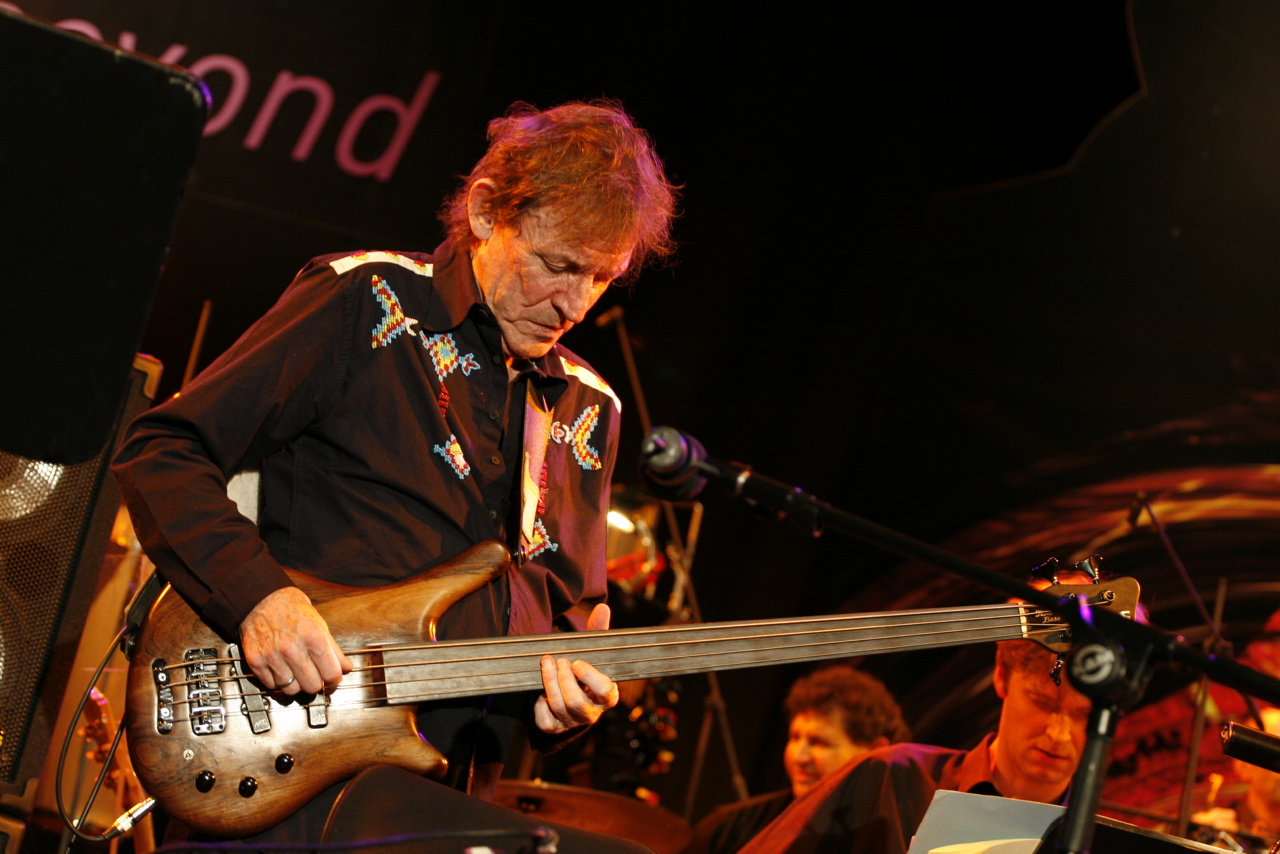
 Jimmy Johnson, Chicago Blues Legends 


https://www.youtube.com/watch?v=WHsz8W88gFs 


Johnny Embry Geb. 25.11.1931 


http://www.wirz.de/music/embryfrm.htm


 Singer/bassist Queen Sylvia Embry and her guitarist husband John Embry were staples on Chicago’s blues scene in the ‘70s performing on both South and North Sides. This CD, now retitled Troubles, was originally released by Razor Records in 1979.

That same year, Razor issued the 45 “I Love the Woman/Johnny’s Bounce” and later released the original version of this album which was then entitled After Work.  John “Guitar” Embry and his ex-wife Queen Sylvia Embry remained friends and recorded this album on January 19, 1979, just 35 years ago; it was also during the perilous blizzard of 1979.  Like many sessions at Chess studios, the After Work studio session was recorded live to give the disc a more authentic sound. The original album did not include the single’s sides as the recording levels had not been properly set and the sound was more focused on John’s playing.  Half of the ten tracks were originals and the other half a mix of superb covers. The two sides from the 45 have been added to this re-release along with five other cuts featuring John and Sylvia. The result is a meaty 17 track CD; After Work had only 10 cuts.

John Embry was a superb blues guitar player.  He passed away in 1987, and only left us a small recorded legacy.  Schooled by the likes of Muddy Waters and Hound Dog Taylor and influenced by Buddy Guy, Albert King and Sammy Lawhorn, he was also befriended by Jimmy Reed who became his best friend.  Reed would stay with Embry every time he was in town.  Queen Sylvia passed in 1992 before her 51st birthday.  She was best known as the vocalist and bass player for Lefty Dizz and the Shock Treatment and also worked extensively with Jimmy Dawkins.  On the brink of huge success, cancer robbed her of her life and blues fans of a truly great artist.  Her recordings on Razor on L&R/Evidence have also been released on Arhoolie, Alligator, L+R, EPM and Leric/Delmark.

The album opens to their tune “Wonder Why” with Sylvia testifying in a style that hints a bit at her gospel background.  John offers up a huge and stinging guitar solo here that is superb.  The title track follows, a slow blues original by the Embrys.  John’s guitar rings out loud and clear as he plays with great support and a long solo as Sylvia testifies to us with power and poise. The first cover is next, “Lie to Me,” which swings nicely. “I’m Hurtin’” is pure Chicago blues, penned by Sylvia and with the former couple delivering the goods.  John offers up another immense solo here.  “I Found A Love” is a slow Wilson Pickett ballad on which the Embrys turn the heat up; drummer Woody Williams also shares the lead vocals.  It’s a great cover with the two vocalists belting some soaring, soulful harmonies, singing back and forth divinely.  Jimmy Reed’s “Goin’ to New York” follows; this is where the sequencing changes from the original album.  Williams backs Sylvia here again and it’s a great ride to the Big Apple with them.  Reed’s version is more laid back; Sylvia belts it out big time and John offers his immense guitar to the piece.

“Mustang Sally” follows, again with Williams in support.  Being that it was 1979 the “No Mustang Sally Rule” was not yet in effect, but even if it was, these guys would get a pass as they deliver a really fine rendition.  Williams starts it off soulfully as John provides a bouncing guitar line.  Sylvia comes in for the chorus and blows things away and then John offers up another burning solo.  Williams and the Queen finish by singing the chorus together, over and over, to close it out.

The next five tracks are the add-on cuts.  “Gonna Find My Baby” is soulful and the big guitar solo sound is sweet and even a little out of tune, but very cool. “Early Time Blues” is similar, with stinging vocals and guitar.  “Razor Sharp” is a beautiful and driving instrumental with John showing us what he could do.  He really laid it all out here.  “Keep Your Hands Off Her” brings Williams back for vocal support.  Recorded live, the audio quality of this one is lacking but the emotion in their playing makes up for it on this Roosevelt Sykes cut.  “Blues This Morning” is more sweet, straight up stuff that also is live.  John delivers another giant solo on this cut.

For track 13, Delmark returns to the original release with the re-sequenced “After Work” title track from the original album.  It is a thoughtful piece with John opening with an almost tender approach; he maintains that feel throughout the instrumental.  Another live cut; they come from a session at the Bold One Lounge.  “Worry Worry” follows with Riler Robinson offering up the vocals and some guitar for a nice twist. “62nd Street Luau” concludes the live stuff and the songs from the original album.  It’s a very short and soulful instrumental with a bit of a Hawaiian flare inside of some Chicago blues.

Taken from the 45 record, the final two cuts are the A and B sides that were previously released alone.  No tape of these songs remains.  “I Love the Woman” begins with a ringing guitar intro and John on vocals. It’s a nice change of pace with this single obviously focusing on John.  The final number, “Johnny’s Bounce,” is a cool cut but suffers a little from some surface noise from the 45.  The guitar work is really special, though, and we see what a great loss his early death delivered to Chicago’s music scene.

Delmark once again has given us a special piece of history to appreciate and savor note by note and song by song. Kudos to Bob Koester and his team for restoring this body of work and providing the recordings to us to enjoy.  I urge you to pick this one up as it offers the only glimpses on CD that is out there of this great duo and their bands. The recording on vinyl is long out of print but this 


Johnny "Guitar" Embry - I Love The Woman (1979) 


https://www.youtube.com/watch?v=QXc4CgYkHAU 


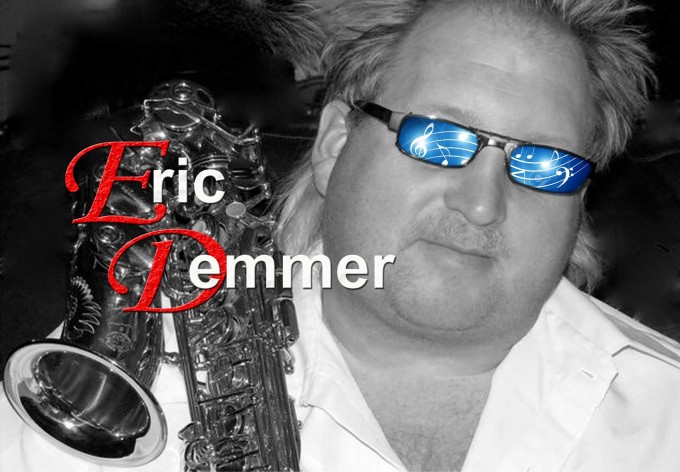
Eric Demmer  *25.11.


At the age of 10, ERIC found a saxophone under the Christmas tree. So began the journey of a natural-born musician, playing anywhere at any time with anyone. He grew up steeped in the blues and rock and roll of the 70's and 80's. He absorbed the sounds of The Rolling Stones, The Eagles, B.B. King, and fellow Texan, Stevie Ray Vaughn. One night, ERIC was invited to perform onstage with the legendary Clarence "Gatemouth" Brown. From that night forward, ERIC joined Gate's band and traveled all over the world for the next 12 years, until Gate's death in 2005. The journey with "Gate's" band led them to tour extensively as the opening act for Eric Clapton during his "From The Cradle" tour.

ERIC has performed with many well-known and respected musicians: Carlos Santana, B.B. King, George Duke, Joe Sample, David Sanborn, Todd Rundgren, Shamika Copeland, Johnnie "Clyde" Copeland, Johnnie "Be Good" Johnson (pianist with Chuck Berry), Duke Robillard, Buddy Guy, Delbert McClinton, The Allman Brothers, Dr. John, Kim Wilson, and many others.

ERIC describes his style of music as, "high energy, funky blues with a mix of jazz" and combines a variety of influences while reminding everyone that, "The real thing comes from the heart and soul".
http://www.ericdemmer.com/


Eric Demmer performs at Dan Electro's Guitar Bar (2 of 2) 9/19/2014 


R.I.P.


Fenton Robinson   +25.11.1997


 Fenton Robinson (September 23, 1935 — November 25, 1997[1]) was an American blues singer and exponent of the Chicago blues guitar.
Born in Greenwood, Mississippi, United States, Robinson left his home at the age of 18 to move to Memphis, Tennessee where he recorded his first single "Tennessee Woman" in 1957.[2] He settled in Chicago in 1962.[2] He recorded his signature song, "Somebody Loan Me a Dime", in 1967 on the Palos label, the nationwide distribution of which was aborted by a freak snow storm hitting the Windy City. Covered by Boz Scaggs in 1969, the song was misattributed, resulting in legal battles. It has since become a blues standard, being "part of the repertoire of one out of every two blues artists", according to 1997's Encyclopedia of Blues.[3]

Robinson re-recorded the song for the critically acclaimed album Somebody Loan Me a Dime in 1974, the first of three he would produce under the Alligator Records label.[4][5] Robinson was nominated for a Grammy Award for the second, 1977's I Hear Some Blues Downstairs.[4]

In the 1970s he was arrested and imprisoned for involuntary manslaughter in connection with a car accident. Paroled after nine months, he continued playing in Chicago clubs and later taught guitar.

Robinson died of complications from brain cancer,[1] in Rockford, Illinois.


FENTON ROBINSON / SOMEBODY LOAN ME A DIME


https://www.youtube.com/watch?v=dkG3kvcej74 


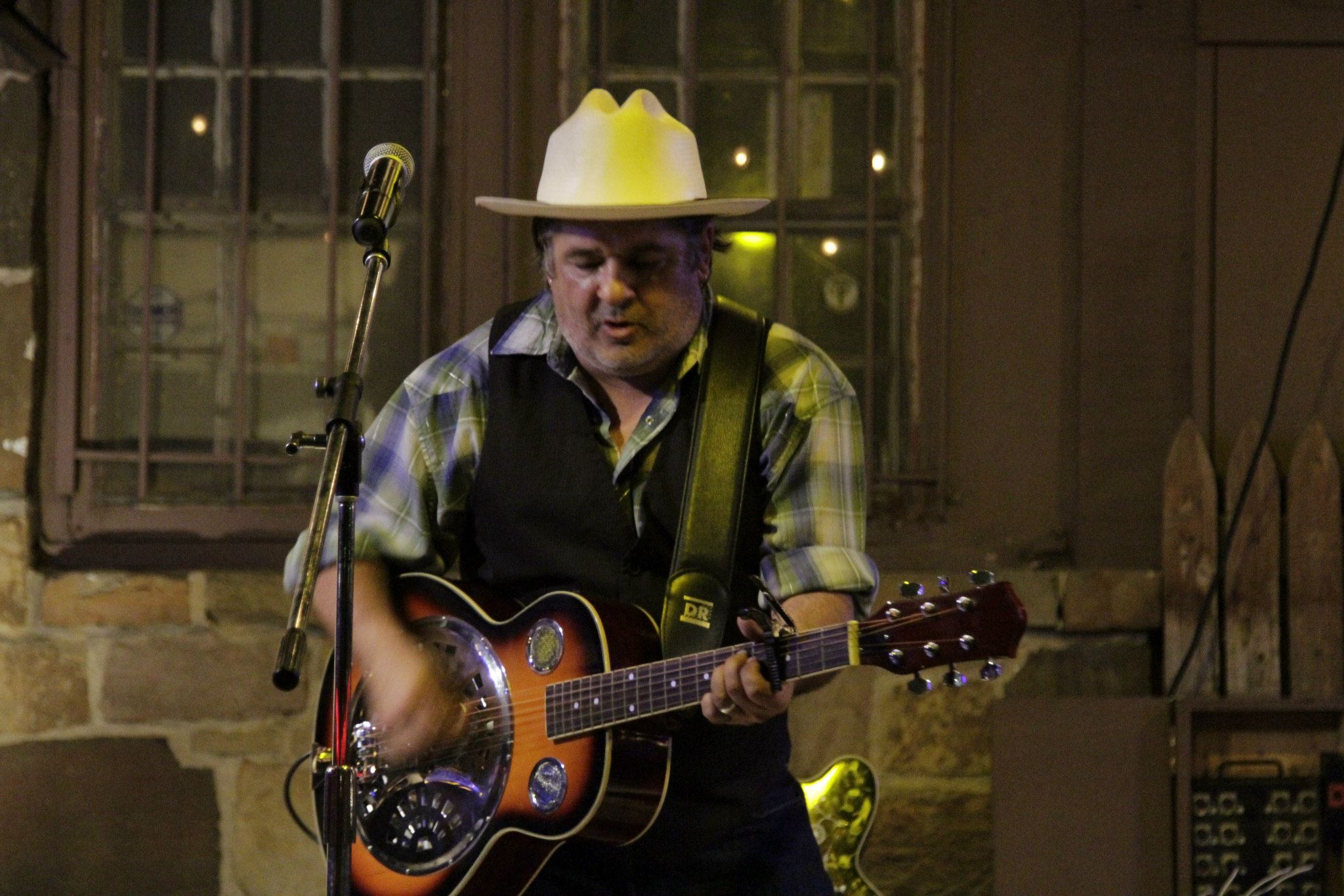
Coco Robicheaux   +25.11.2011 


http://www.greenparrot.com/coco-robicheaux-new-orleans-hoodoo-bluesman-has-died/ 


Curtis John Arceneaux (October 25, 1947 – November 25, 2011)[1] better known by the name Coco Robicheaux, was an American blues musician and artist, from Ascension Parish, Louisiana, United States.
He was born in Merced, California, the son of Herman Arceneaux from Ascension Parish in Louisiana and Virginia Grant of Waushara County, Wisconsin. His father was of Acadian (Cajun) descent, while on his mother's side his ancestry included English, Norwegian, Scottish, German, Dutch, Welsh, and Native American (Mohawk). Also on his mother's side he was a direct descendent of accused Salem witch Sarah Cloyce. He spent some of his preteen/early teens in France where his Air Force father was stationed for 3 years. The accent and other Cajun flails were manufactured. Curtis was a genius with an extremely high IQ. He could master and did master every musical instrument he tried. He was also an accomplished artist. He was a master story teller who could and did embellish every story he told. [2] He spent some of his childhood in the French countryside.[3] Arceneaux took his stage name from a Louisiana legend, in which a naughty child called Coco Robicheaux, is abducted by a werewolf (Loup Garou or Rougarou). Also, the name 'Coco Robicheaux' is repeated in the song "I Walk on Gilded Splinters" from Dr. John the Night Tripper's 1968 album, Gris-Gris.[4]
Robicheaux appeared in the episode "Hotshots", of the USA Network series Big Easy, playing a New Orleans musician named "Coco", who had sold his soul to the devil. Two of Robicheaux's songs were also featured in the episode, "Broken String" and "Spiritland". Coco Robicheaux appeared as himself in the second episode of HBO's Treme, first broadcast in the US on April 18, 2010.
Coco Robicheaux died in November 2011 in New Orleans, Louisiana, at the age of 64.[1]
One of his last recordings were for the Danish singer Naja Rosa Koppel´s album "The Place I Call Home" (2012)
His very last recording took place on his 64th birthday, one month before his death, with singer Frenchie Moe. Mike Hood, Leon "Kid Chocolate" Brown, Jimmy Carpenter and Jack Cruz also contributed to the song.

http://en.wikipedia.org/wiki/Coco_Robicheaux 


Coco Robicheaux - Cottonmouth 


https://www.youtube.com/watch?v=qztmuAWyBYo 


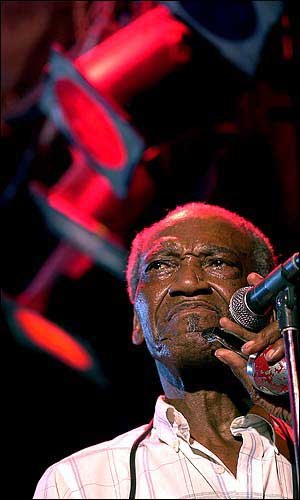
Henry Lee "Shot" Williams  +25.11.2011


http://www.soulbluesmusic.com/leeshotwilliams.htm

Henry Lee "Shot" Williams (May 21, 1938 – November 25, 2011) was an American blues singer. He got the nickname "Shot" from his mother at a young age, owing to his fondness for wearing suits and dressing up as a "big shot."
Williams grew up in the country close to his cousin and fellow blues man, Little Smokey Smothers. "Shot" moved to Detroit in 1954 and to Chicago in 1958. He joined Smothers there and began singing with Smokey's band in 1960 and a few years later joined Magic Sam's band as a vocalist. In 1962, Williams recorded his first singles for Chicago's Foxy label, "Hello Baby" and "I'm Trying." He recorded a series of singles for other labels, including King/Federal, Palos, Gamma, Shama and Tchula. His 1964 recording "Welcome to the Club" was a hit in Chicago, and was later covered by guitarist/singer Little Milton for Checker Records in 1965. Another regional hit, "I Like Your Style," came out in 1969 and was later covered by Junior Parker. Several more singles followed including the very popular "Drop Your Laundry Baby". His first album under his own name, "Country Disco", was released on the Roots label in 1977. In the 1980s, Williams released a slew of singles on labels like Tchula, 4-Way, True & Dis-Muke. He released an album on cassette with many of these cuts called "I Like Your Style". In 1994 the Japanese label Vivid Sound released an album called "A Shot of Rhythm and Blues" containing tracks Williams recorded in Memphis apparently for (but not released by) Quinton Claunch's SoulTrax imprint. The Black Magic label decided to give Lee a "Shot" behind his own band. The result, "Cold Shot" was released in 1995 and was voted the Best Blues Album of 1995 (New Recording - Soul/Blues) by the Living Blues readers' poll.[citation needed]
His debut for the Memphis-based Ecko Records, "Hot Shot", brought Williams home to the "Southern Soul Blues" world with the hit "I'll Take The Risk". In 2000 Williams scored another hit with "She Made A Freak Out Of Me", followed by "Somebody's After My Freak". Williams left the label again and recorded one disc for Charles Wilson's label called "Let The Good Times Roll" before returning to Ecko for four more successful albums, establishing him as one of the icons of the genre.[citation needed]
In 2008 Williams signed with CDS Records. His first CD for the label was released in 2008 and produced the hits "It's Friday (Time To Get Paid)" and "Wrong Bed". Two more albums were released by CDS Records, "I'm The Man For The Job" & "The First Rule Of Cheating" in 2010.


Lee Shot Williams - Hello baby - Foxy 


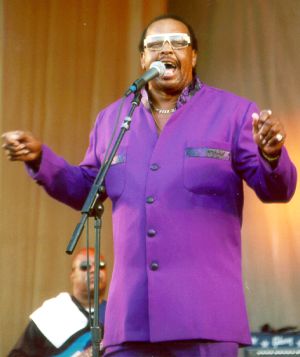
Little Willie Foster  +25.11.1987


https://www.pinterest.com/pin/529173024935561572/

Little Willy Foster or Little Willie Foster (April 20, 1922[nb 1] – November 25, 1987)[4] was an American Chicago blues harmonicist, singer, and songwriter.
Biography
Foster was born in Dublin, Mississippi, United States.[2] Born to Major Foster and Rosie Brown, Willy was raised on a plantation, around ten miles south of Clarksdale. His mother died when Willy was aged five and he was raised by his father, who was a local musician. Willy worked the fields from a young age and had little by way of a formal education. His father taught him to play the family's piano, although Willy later taught himself to master both the guitar and harmonica. By 1942, Foster worked briefly in Clarksdale itself. Around 1943, Foster relocated to Chicago.[2] He played the blues round the city, originally teaming up with Floyd Jones, Lazy Bill Lucas, and the latter's cousin, Leroy Foster. Having befriended Big Walter Horton, Little Willy Foster learned to play the harmonica in Horton's Chicago blues style. From the mid 1940s, this led to periodic work for Foster on Maxwell Street, and around the city's clubs, for over a decade.[1][2] Foster also worked during this time in a band comprising himself, Homesick James, Moody Jones and Floyd Jones.[1]
In January 1955, Foster recorded two sides for Parrot. These were his own compositions, "Falling Rain Blues" and "Four Day Jump". His accompaniment included playing from Lucas, Jones and Eddie Taylor.[1][2][4] Foster reportedly incurred the displeasure of the record label owner, Al Benson, for reporting him to the American Federation of Musicians, over underpaid dues on the recordings.[5] In March 1957, Foster was back in a recording studio in Chicago, where he waxed two more of his songs, "Crying the Blues" and "Little Girl".[2] Regarding the former title, AllMusic noted that it "reflected both his emotional singing and his wailing, swooping harmonica".[1]
From this point onwards, his personal life started to degenerate. Attending a house party, Foster was accidentally shot in the head by a woman playing with a hand gun. This led to semi-paralysis for Foster and seriously affected his ability to speak.[2] Although he made a slow recovery, Foster rarely played in public thereafter.[1] In January 1974, Foster voluntarily surrendered himself to the local police after he had shot dead his room mate. Pleading self-defense, his impaired judgement due to his previous brain injury, led to a verdict of not guilty due to insanity and Foster was sent to a state hospital in 1975.[2]
In November 1987, Foster died in Chicago from cancer, aged 65.[2][3]
In 1996, an album produced by Bobby Mack, who also played guitar on the work, was released.[1]
Foster's four released tracks have variously appeared on numerous compilation albums, issued both before and after his death.[4]
Confusion
The anomaly surrounding the spelling of his first name arises from the differences used on his two single releases.[4]
He is not to be confused, although often is in both literature and record listings etc., with another blues harmonica player, Willie James Foster (September 19, 1921 – May 20, 2001).


Little Willie Foster - Four Day Jump 


Dienstag, 25. Oktober 2016

25.10., Eberhard Stolle, auch Big Joe Stolle, Little Hatch, Coco Robicheaux, Kevin Sekhani, Till Theisen * Jack Bruce +


1921 Little Hatch*
1947 Coco Robicheaux*
1950 Eberhard Stolle, auch Big Joe Stolle*
2014 Jack Bruce+
Kevin Sekhani*
Till Theisen*


Happy Birthday 


Eberhard Stolle, auch Big Joe Stolle   *25.10.1950


Eberhard Stolle, auch Big Joe Stolle, ist ein deutscher Bluesmusiker, Gitarrist, Mundharmonikaspieler und Songwriter aus Berlin.
Ende der 1960er Jahre spielte Stolle in verschiedenen Amateurbands der Leipziger Beatszene, u. a. bei Bordband und Kaleidoskop. Während seines Grundwehrdienstes 1972 bis 1973 in der Armee der DDR war er Mitglied in einer Soldatenband. Von 1973 bis 1977 studierte er anfangs klassischen Gesang und später Tanzmusik an der Musikhochschule in Leipzig. Nach der Armeezeit schloss er sich der Leipziger Band Soft an, spielte zeitweilig bei Karussell und Mama Basuto. Gleichsam vollzog sich seine Hinwendung zum Blues, dem er bis heute treu geblieben ist. Anfang der 1980er Jahre wechselte er mit weiteren ehemaligen Basuto-Kollegen zu Zenit. Die Band, welche 1975 in Rostock gegründet wurde und später nach Ost-Berlin wechselte, erhielt 1979 Profistatus und bestand bis 1990. Zur Band, deren Besetzung mehrfach wechselte, gehörten: Eberhard Stolle (Gesang, Gitarre, Mundharmonika), Wilfried Kaminski (Gesang, Gitarre), Joachim Rudolf (Gesang, Gitarre), Reinhard Daisy Kehl (Gesang, Gitarre), Klaus-Dieter Brieger (Gesang, Schlagzeug), Jürgen Schötz (Schlagzeug), Berndt Schumacher (Piano, Saxophon), Hans-Jörg Erbse Moser († 2006/Bass), Andreas Schrödter (Bass), Rene Moosgraber (Bass), Jens Stache (Piano) und Alexander Blume (Gesang, Piano, Keyboard). Die Band erspielte sich eine Spitzenposition in der Blueserszene der DDR und Stolle entwickelte sich neben Bernd Kleinow zu einem herausragenden Blues-Harp-Spieler. Ende der 1980er Jahre war die Band regelmäßig in den DDR-Medien präsent und 1985 produzierte das DDR-Label Amiga die erste Langspielplatte mit Zenit.
Anfang der 1990er Jahre trat Stolle gemeinsam mit Alexander Blume, der heute als Boogie-Pianist aus Thüringen bekannt ist, und der Intercity Blues Band auf. Seit Mitte der 1990er Jahre ist er solistisch tätig, stand mit internationalen Musikern wie Champion Jack Dupree, Charlie Musselwhite und Jack Bruce gemeinsam auf der Bühne und tritt zeitweilig mit Bernd Kleinow, Reinhard Daisy Kehl oder Band Bluesmachine auf. Musikalisch präsentiert Stolle heute eine Mischung aus Boogie, Soul und Blues.


11.Blues Open Air Niederlehme - Big Joe Stolle - "Whisky" 


Big Joe Stolle Record Release - pt.6 - "Mein Bruder Blues" 


Big Joe Stolle - Dirk Zöllner - Cäsars Blues 


Little Hatch   *25.10.1921


Little Hatch (October 25, 1921 – January 14, 2003)[1] was an American electric blues singer, musician, and harmonica player. He variously worked with George Jackson and John Paul Drum.
Born Provine Hatch, Jr. in Sledge, Mississippi,[1] he learned to play harmonica from his father. Hearing blues and gospel music, Hatch knew he wanted to make music for a living. At age 14, his family moved to Helena, Arkansas and the blues scene caught his attention.
Hatch joined the Navy in 1943; after his tour of duty, he relocated to Kansas City, Missouri in 1946. After working for a cartage company for two years, he founded his own cartage business and married.
In the early 1950s, Hatch began jamming in blues clubs of Kansas City. He closed his business in 1954 and took a job with Hallmark Cards. In 1955, he formed and fronted his own band, playing on the weekends and a few nights a week. This act would continue for more than 20 years. By the late 1950s, Hatch's harmonica style became influenced by Chicago blues players such as Little Walter, Snooky Pryor and Junior Wells.
In 1971 German exchange university students recorded a Little Hatch performance. This became an album, entitled The Little Hatchet Band, but distribution was limited to Germany and Belgium. He retired from Hallmark in 1986 and his band, 'Little Hatch and the House Rockers', were hired as the house band of the Grand Emporium Saloon in Kansas City.[1] A cassette of his blues performances at the Grand Emporium was released in 1988.
In 1993, the Modern Blues label released Well, All Right! and became his first nationally-distributed album. In 1997, Chad Kassem opened Blue Heaven Studios and founded the APO label. Kassem had befriended Little Hatch in the mid 1980s and asked him to be his first signed recording artist. In 2000, the album Goin' Back was released and was followed by Rock with Me Baby in 2003.
From 1999 to 2001, Hatch occasionally toured other parts of the United States, and twice toured Europe. He settled back down as a Kansas City performer, frequently playing at BB's Lawnside Bar-B-Q and other venues. In 2002, Hatch was diagnosed with cancer.
Hatch died in El Dorado Springs, Missouri, in January 2003.


Little Hatch accoustic, Everything Gonna Be All Right 


Coco Robicheaux   *25.10.1947


Curtis John Arceneaux (October 25, 1947 – November 25, 2011)[1] better known by the name Coco Robicheaux, was an American blues musician and artist, from Ascension Parish, Louisiana, United States.
He was born in Merced, California, the son of Herman Arceneaux from Ascension Parish in Louisiana and Virginia Grant of Waushara County, Wisconsin. His father was of Acadian (Cajun) descent, while on his mother's side his ancestry included English, Norwegian, Scottish, German, Dutch, Welsh, and Native American (Mohawk). Also on his mother's side he was a direct descendent of accused Salem witch Sarah Cloyce. He spent some of his preteen/early teens in France where his Air Force father was stationed for 3 years. The accent and other Cajun flails were manufactured. Curtis was a genius with an extremely high IQ. He could master and did master every musical instrument he tried. He was also an accomplished artist. He was a master story teller who could and did embellish every story he told. [2] He spent some of his childhood in the French countryside.[3] Arceneaux took his stage name from a Louisiana legend, in which a naughty child called Coco Robicheaux, is abducted by a werewolf (Loup Garou or Rougarou). Also, the name 'Coco Robicheaux' is repeated in the song "I Walk on Gilded Splinters" from Dr. John the Night Tripper's 1968 album, Gris-Gris.[4]
Robicheaux appeared in the episode "Hotshots", of the USA Network series Big Easy, playing a New Orleans musician named "Coco", who had sold his soul to the devil. Two of Robicheaux's songs were also featured in the episode, "Broken String" and "Spiritland". Coco Robicheaux appeared as himself in the second episode of HBO's Treme, first broadcast in the US on April 18, 2010.
Coco Robicheaux died in November 2011 in New Orleans, Louisiana, at the age of 64.[1]
One of his last recordings were for the Danish singer Naja Rosa Koppel´s album "The Place I Call Home" (2012)
His very last recording took place on his 64th birthday, one month before his death, with singer Frenchie Moe. Mike Hood, Leon "Kid Chocolate" Brown, Jimmy Carpenter and Jack Cruz also contributed to the song.

Coco Robicheaux - Walking With The Spirit (Treme) 


https://www.youtube.com/watch?v=Z5zgqWXahYo  


Kevin Sekhani  *25.10.


As a 20 year veteran of the Austin music scene, Kevin Sekhani has done it all. From blazing rock-n-roll to Holy Ghost Honkytonk, for years Sekhani has entertained crowds with heartfelt enthusiasm and poignant lyrics. In Austin, Sekhani spent his time working with Michael Ramos (John Mellencamp, Patty Griffin), Andrew Duplantis (Son Volt), and Austin Chronicle’s three-time String Player of the Year winner Warren Hood. In 2010, Sekhani moved back to his home town of Lafayette, Louisiana to front The Mercy Brothers, a Gospel group walking the fine line of sinners and saints. Since the prodigal son’s return home, he has won over the hearts of Jazz Fest and Festival International audiences, landed a top 5 spot on the Americana charts in Europe with The Mercy Brothers debut release, toured Sweden, and signed his Gospel group to Louisiana Red Hot Records.

Kevin Sekhani’s veracious songwriting extends beyond Gospel into secular territory with his new solo album “Day Ain’t Done” set for release on Louisiana Red Hot Records early 2015. No Depression praises the album saying, “With a voice slightly reminiscent of a young Steve Earle, solid songwriting, and musicians that include a member of Son Volt and veterans of the backing bands of Patty Griffin and John Mellencamp, Kevin Sekhani’s Day Ain’t Done is one of the best debut albums I have heard in years”. Day Ain’t Done is layered with Americana staple instrumentation, taking the earthy tones of violin, mandolin, accordion and acoustic guitars to give the feel of a back porch jam on a Louisiana Saturday night. The album’s track “Oilfield Tan” has found its way into regular rotation on local Louisiana and Texas radio stations, resonating amongst an area all too familiar with the demanding industry of oilfield work.

Kevin Sekhani celebrates his Louisiana roots bringing  Day Ain’t Down to the worldwide stage.With stops at 2014’s South by Southwest music festival, Sekhani has already began to garner an excitement for his solo career. You may catch Kevin Sekhani at a large festival or even on a small front porch, but wherever it is, it is guaranteed to be one hell of a performance.


Kevin Sekhani - Jimmy 


Till Theisen  *25.10.


https://www.facebook.com/till.theisen.9/photos_albums

Mr. T und Big Tom – das ist die deutsche Vater und Sohn Kombi des Blues. Till Theisen, einer der aufstrebenden jungen Harp-Virtuosen in Deutschland, jung und cool mit einem modernen Twist weg vom klischeehaften „Mundharmonica-Spielen“ - der Wolf und nicht der Hirte!! Er lässt es krachen zusammen Big Tom, dem Mann, dessen Stimme das Bier im Glas zum schwingen bringt und nicht nur dass – ein Shouter allerbester Güte mit akustischer Gitarre in allen Variationen. Die moderne

Version des akustischen Folk-Blues fernab von Freight Train Romantik der 60er Jahre.


 Blue Moon Session im Zwick Altona - Till Theissen und Band 


R.I.P.


Jack Bruce  +25.10.2014


John Symon Asher „Jack“ Bruce (* 14. Mai 1943 in Bishopbriggs, Schottland; † 25. Oktober 2014 in Suffolk) war ein britischer Rock-, Blues- und Jazzmusiker. Er spielte hauptsächlich E-Bass, aber auch Cello, Piano und Mundharmonika, sang und schrieb Songs. Bekannt wurde er als Gründungsmitglied von Cream.
Leben
Jugend
Bruce erhielt als 17-Jähriger ein Stipendium für Cello und Komposition an der Royal Scottish Academy Of Music. Seine frühen Interessen galten der schottischen Folklore, dem Jazz und Bach. Auf Grund der Tatsache, dass man als Cellist in einer Jazzband weniger gefragt ist, wechselte er zum Kontrabass. Er spielte dieses Instrument dann in der Scotstoun Jazzband. Seine Art, Bass zu spielen, profitierte von seiner (abgebrochenen) klassischen Ausbildung auf dem Cello. Von ihm stammt der Ausspruch, Johann Sebastian Bach habe die besten Bassläufe aller Zeiten geschrieben.
Werdegang
Bruce suchte Anfang der 1960er Jahre Kontakt zur britischen Bluesszene. Er spielte bei Mike Taylor, in Alexis Korners Blues Incorporated, der Graham Bond Organization, zu der er bereits eigene Songs beisteuerte, John Mayalls Bluesbreakers und der Manfred Mann Combo, bevor er 1966 zusammen mit Eric Clapton und Ginger Baker Cream bildete. Er hatte in der damals neuartigen Power-Trio-Besetzung die zentrale Rolle des Bassisten und Leadsängers und zudem des Komponisten der meisten Songs. Texte steuerte der englische Beat-Dichter (und später auch Rockmusiker) Pete Brown bei.[1] Die Zeit mit Cream war es auch, die den Ruf von Jack Bruce als außerordentlichem Musiker begründete. Ähnlich wie zur selben Zeit auch sein Kollege John Entwistle (The Who) arbeitete er darauf hin, den Bass innerhalb des Bandgefüges der Lead-Gitarre gleichzustellen. Der Jack-Bruce-Sound ist knurrig und aggressiv. Sein Markenzeichen waren lange, auf seinem Gibson EB-3-Bass vorgetragene Improvisationen in Interaktion mit den anderen Musikern, bei denen gelegentlich kaum noch zu unterscheiden war, welche Teile von Bruce und welche vom Gitarristen Clapton stammten. Bruce hat später scherzhaft behauptet, sie hätten damals so lange improvisiert, dass er am Ende des Solos Schwierigkeiten hatte, sich zu erinnern, welchen Song sie gerade spielten („… we’d get to the end of a long improv and I’d be wracking my brain to remember what the song was!“).
Nach der Auflösung von Cream Ende 1968 arbeitete Bruce mit dem New Jazz Orchestra, Tony Williams’ Lifetime, Mike Gibbs, Dick Heckstall-Smith, Larry Coryell und weiteren Kollegen aus dem Jazzbereich, so mit Carla Bley als Sänger und Bassist im Jazz-Oratorium Escalator over the Hill und für einige Konzerte auch mit Ian Carrs Nucleus. Von 1972 bis 1973 spielte er gemeinsam mit den Ex-Mountain-Musikern Leslie West (Gitarre) und „Corky“ Laurence Gordon Laing (Schlagzeug) in der Hard-Rock-Gruppe West, Bruce & Laing, die drei Alben veröffentlichte. Er brachte einige Soloalben heraus, darunter Songs For A Tailor (mit Mitspielern wie Chris Spedding, Jon Hiseman, Dick Heckstall-Smith, Harry Beckett und George Harrison), Harmony Row und Out Of The Storm. Anfang 1977 stellte er mit Tony Hymas, Simon Phillips und Hughie Burnd die Jack Bruce Band zusammen und brachte mit dieser Formation das Album How’s Tricks heraus. 1980 versuchte Keith Emerson, eine Band mit Bruce und dem südafrikanischen Sänger und Gitarristen Trevor Rabin zusammenzubringen, der Versuch scheiterte allerdings, da Rabin sich für ein Projekt mit dem Bassisten Chris Squire und dem Schlagzeuger Alan White entschied, aus dem später eine neue Yes-Besetzung entstand. Im selben Jahr trat die neu gegründete Formation Jack Bruce & Friends (Clem Clempson, Billy Cobham und David Sancious)[2] unter anderem bei der 7. Rockpalast Nacht in Essen auf.[3] [4]
Für die zwei Alben B.L.T. und Truce spielte Bruce 1981 mit Robin Trower zusammen. In den Jahren 1982 und 1983 war die Jan Hammer Band mit Carsten Bohn, Jack Bruce und Colin Hodgkinson auf Tournee in den USA und Europa. 1994 erschien das Album Around The Next Dream unter der Bandbezeichnung BBM, das er zusammen mit Ginger Baker und Gary Moore eingespielt hatte. Später war er an unterschiedlichen Projekten von Kip Hanrahan beteiligt und spielte auch in der Charlie Watts Bigband und in Ringo Starrs All-Starr Band.
Im Sommer 2003 wurde bei Bruce Leberkrebs diagnostiziert. Im September starb er beinahe bei einer Lebertransplantation, da er sich in erschöpftem Zustand noch eine Lungenentzündung zugezogen hatte. Im Oktober war er auf dem Wege der Besserung. Im Jahre 2005 war die Gesundheit des Musikers so stabil, dass er im Mai an mehreren Reunion Concerts in der Londoner Royal Albert Hall teilnehmen konnte, bei denen er zusammen mit Eric Clapton und Ginger Baker in der Originalbesetzung von Cream die Klassiker des seiner Zeit als erste Supergroup des Rock gefeierten Trios spielte. Von diesen Konzerten gibt es einen repräsentativen Querschnitt auf DVD (mit aktuellen Interviews). 2006 sang er auf dem Jazzfestival in Frankfurt am Main seine Songs mit der hr-Bigband.
Er war mit seiner Managerin Margrit Bruce, die aus Schwaben stammt, verheiratet. Die beiden hatten zwei Töchter und einen Sohn und lebten auf La Palma sowie in der Nähe von London, wo er am 25. Oktober 2014 im Alter von 71 Jahren an den Folgen eines Leberleidens starb.

John Symon Asher "Jack" Bruce (14 May 1943 – 25 October 2014) was a Scottish musician, composer and vocalist, known primarily for his multi-faceted contributions to the legendary British supergroup Cream, which included guitarist-singer Eric Clapton and drummer-founder Ginger Baker. In March, 2011, Rolling Stone readers selected him as the eighth greatest bass guitarist of all time. "Most musicians would have a very hard time distinguishing themselves if they wound up in a band with Eric Clapton and Ginger Baker," the magazine said at the time, "but Jack Bruce was so gifted on the bass that he did it with ease."
Bruce maintained a solo career that spanned several decades and also played in several musical groups. Although recognized first and foremost as a vocalist, bassist and songwriter, he also played double bass, harmonica, piano and cello. He was trained as a classical cellist and considered himself a jazz musician, although much of his catalogue of compositions and recordings tended toward blues and rock and roll.
Early life
Bruce was born on 14 May 1943 in Bishopbriggs, Lanarkshire, to Betty (Asher) and Charlie Bruce,[1] musical parents who moved frequently, resulting in the young Bruce attending 14 different schools, ending up at Bellahouston Academy. He began playing the jazz bass in his teens and won a scholarship to study cello and musical composition at the Royal Scottish Academy of Music and Drama while playing in Jim McHarg's Scotsville Jazzband to support himself.[2] The academy disapproved of its students playing jazz. "They found out", Bruce told Musician correspondent Jim Macnie, "and said 'you either stop, or leave college.' So I left college."[citation needed]
Career
Early career
After leaving school he toured Italy, playing double bass with the Murray Campbell Big Band.[3] In 1962 Bruce became a member of the London-based band Blues Incorporated,[4] led by Alexis Korner, in which he played the upright bass. The band also included organist Graham Bond, saxophonist Dick Heckstall-Smith and Ginger Baker. In 1963 the group broke up and Bruce went on to form the Graham Bond Quartet with Bond, Baker and guitarist John McLaughlin.[2] They played an eclectic range of music genres, including bebop, blues and rhythm and blues. As a result of session work at this time, Bruce switched from the upright bass to the electric bass guitar. The move to electric bass happened as McLaughlin was dropped from the band; he was replaced by Heckstall-Smith on saxophone and the band pursued a more concise R&B sound and changed their name to the Graham Bond Organisation. They released two studio albums and several singles but were not commercially successful.
During the time that Bruce and Baker played with the Graham Bond Organisation, they were known for their hostility towards each other. There were numerous stories of the two sabotaging each other's equipment and fighting on stage. Relations grew so bad between the two that Bruce left the group in August 1965.[5]
After leaving, Bruce recorded a solo single, "I'm Gettin Tired", for Polydor Records.[2] He joined John Mayall and his Bluesbreakers group, which featured guitarist Eric Clapton. Although his stay was brief; the Universal Deluxe double album Blues Breakers with Eric Clapton contains all the known tracks featuring Bruce.
After the Bluesbreakers, Bruce had his first commercial success as a member of Manfred Mann in 1966, including "Pretty Flamingo" which reached number one in the UK singles chart (one of two number one records of his career - the other being an uncredited bass part on The Scaffold's "Lily the Pink")[2] as well as the free-wheeling and ground-breaking jazz-rock of Instrumental Asylum. When interviewed on the edition of the VH1 show Classic Albums which featured Disraeli Gears, Mayall said that Bruce had been lured away by the lucrative commercial success of Manfred Mann, while Mann himself recalled that Bruce attended recording sessions without having rehearsed but played songs straight through without error, commenting that perhaps the chord changes seemed obvious to Bruce.[6]
While with Manfred Mann, Bruce again collaborated with Eric Clapton as a member of Powerhouse, which also featured the Spencer Davis Group vocalist Steve Winwood credited as "Steve Anglo". Three tracks were featured on the Elektra sampler album What's Shakin'. Two of the songs, "Crossroads" and "Steppin' Out", became staples in the live set of his next band.
Cream
In July 1966 Bruce, Eric Clapton and drummer Ginger Baker founded the power trio Cream, which gained international recognition playing blues-rock and jazz-inflected rock music. Bruce sang most of the lead vocals, with Clapton backing him up and eventually assuming some leads himself.[6]
With his Gibson EB-3 electric bass, Bruce became one of the most famous bassists in rock, winning musicians' polls and influencing the next generation of bassists such as Sting, Geddy Lee and Jeff Berlin.[7] Bruce co-wrote most of Cream's single releases with lyricist Pete Brown, including the hits "Sunshine of Your Love", "White Room", and "I Feel Free". Cream broke up in 1968.[8]
Post-Cream: 1960s–70s
Collaborative efforts with musicians, in many genres – hard rock, jazz, blues, R&B, fusion, avant-garde, world music, third stream classical – continued as a theme of Bruce's career. Alongside these he has produced a long line of highly regarded solo albums. In contrast to his collaborative works, the solo albums usually maintain a common theme: melodic songs with a complex musical structure, songs with lyrics frequently penned by Pete Brown, and a core band of world-class musicians. This structure was loosened on his live solo albums and DVDs, where extended improvisations similar to those employed by Cream in live performance were sometimes still used.
In August 1968, before Cream officially disbanded, Bruce recorded an acoustic free jazz album with John McLaughlin, Dick Heckstall-Smith, and Jon Hiseman.[2] This was issued in 1970 as Bruce's second solo album, Things We Like. The album was a precursor to the jazz fusion boom in the early 1970s, and more recently has been sampled by many[who?] hip hop artists.
Bruce's first solo release, Songs for a Tailor, was issued in September 1969; it too featured Heckstall-Smith and Hiseman.[2] It was a worldwide hit, but after a brief supporting tour backed by Larry Coryell and Mitch Mitchell, Bruce joined the jazz fusion group Lifetime. With drummer Tony Williams, guitarist McLaughlin, and organist Larry Young, the group recorded two albums. Bruce joined on the second album, Turn It Over. However, Lifetime did not receive much critical or commercial acclaim at the time, and the band broke up in 1971. Bruce then recorded his third solo album Harmony Row, but this was not as commercially successful as Songs for a Tailor.[2] The song "The Consul at Sunset" from Harmony Row, which was inspired by the Malcolm Lowry novel Under the Volcano, was released as a single in 1971 (Polydor 2058-153, b/w "A Letter of Thanks"), but did not chart.
In 1972 Bruce formed a blues rock power trio, West, Bruce & Laing. Besides Bruce, the group included singer/guitarist Leslie West and drummer Corky Laing, both formerly of the Cream-influenced American band Mountain. West, Bruce & Laing produced two studio albums, Why Dontcha and Whatever Turns You On, and one live album, Live 'n' Kickin'.
The band's break-up was announced shortly before Live 'n' Kickin's release in early 1974, and Bruce released his fourth solo album Out of the Storm later that year. Also in 1974 he made a guest appearance on the title track of Frank Zappa's album Apostrophe. Bruce was credited with bass and for co-writing the song. However, when asked about Zappa in a 1992 interview Bruce tried to change the subject and jokingly insisted that he had played only cello parts. In 1973 Bruce recorded bass guitar for Lou Reed's Berlin album, playing on all but two tracks.
A 1975 tour was lined up to support the Out of the Storm album with a band featuring former Rolling Stones guitarist Mick Taylor and jazz keyboard player Carla Bley, with whom he had collaborated in 1971 on Escalator over the Hill. The tour was documented on Live '75 (at Manchester's Free Trade Hall),[9] but it ended with Taylor's departure, and no studio album was completed.
In 1977 Bruce formed a new band with drummer Simon Phillips and keyboardist Tony Hymas. The group recorded an album, called How's Tricks. A world tour followed, but the album was a commercial failure.[2] The follow-up album Jet Set Jewel, while since commercially released, was rejected by Bruce's record label RSO upon its initial completion as not being marketable, and RSO ultimately dropped Bruce from their roster in 1978. In 1979 Bruce toured with members from the Mahavishnu Orchestra, reuniting him with John McLaughlin, and introducing him to drummer Billy Cobham. A 3-CD collection of his 1970s BBC recordings, entitled Spirit, was released in 2008.
1980s
By 1979, Bruce's drug habit had reached such a level that he had lost most of his money. Bruce contributed as a session musician to recordings by Cozy Powell, Gary Moore and Jon Anderson to raise money. By 1980 his career was back on track with his new band, Jack Bruce & Friends, consisting of drummer Billy Cobham, guitarist Clem Clempson, and keyboardist/guitarist David Sancious. After releasing an album, I've Always Wanted to Do This, at the end of 1980, they undertook a long tour to support the record, but it was not a commercial success and they disbanded. In the early 1980s, he also joined up to play with friends from the Alexis Korner days in Rocket 88, the back-to-the-roots band that Ian Stewart had arranged, and Bruce appears on the album of the same name, recorded live in Germany in 1980. They also recorded a "live in the studio" album called Blues & Boogie Explosion for the German audiophile record label Jeton. That year he also collaborated on the Soft Machine album Land of Cockayne (1981).
In 1981, Bruce collaborated with guitarist Robin Trower and released two power trio albums, BLT and Truce, the first of which was a minor hit in the United States.[2] By 1983 Bruce was out of contract with the major record companies, and he released his next solo album, Automatic, only on a minor German label, Intercord. A European tour followed to promote the album enlisting Bruce Gary from The Knack (who had also played in Jack Bruce's 1975 band) on drums and Sancious from his 1980 band (Jack Bruce & Friends) on guitar and keyboards. In 1982 Bruce played with a short-lived ensemble A Gathering of Minds comprising Billy Cobham, Allan Holdsworth, Didier Lockwood and David Sancious at Montreux. In 1983 he sang on tracks 5–6 of the Allan Holdsworth album Road Games.
In 1983 Bruce began working with the Latin/world music producer Kip Hanrahan, and released the collaborative albums Desire Develops an Edge, Vertical's Currency, A Few Short Notes from the End Run, Exotica and All Roads Are Made of the Flesh. They were all critically successful, and in 2001 he went on to form his own band using Hanrahan's famous Cuban rhythm section. Other than his partnership with lyricist Pete Brown, the musical relationship with Hanrahan has been the most consistent and long-lasting of his career.
In 1985 he sang lead and played blues harp on the song "Silver Bullet" with Anton Fier's Golden Palominos. It appears on the album Visions of Excess. In 1986 he re-recorded the Cream song "I Feel Free" and released it as a single to support an advertising campaign for the Renault 21 motor car. A solo album, Something Els, recorded in Germany between 1986 and 1992, reunited him with Eric Clapton, and brought belated, but widespread critical acclaim.[10]
1990s
In 1989, Bruce began recording material with Ginger Baker and released another solo album, A Question of Time.[2] Baker and Bruce toured the United States at turn of the decade. Bruce played at the Montreux Jazz Festival in 1990, and was invited by Irish blues rock performer, Rory Gallagher (who had a long-standing relationship with Bruce, having supported Cream's farewell concert in the band Taste in 1968) to perform a couple of songs together on stage. In 1991 he was one of the supporting musicians for Vivian Stanshall's solo show "Rawlinson Dog-ends", but quit over a lack of adequate rehearsals.[11]
In 1993 Baker appeared, along with a host of former Bruce band colleagues, at a special concert in Cologne to celebrate Bruce's 50th birthday. A special guest was another Irish blues-rock guitarist Gary Moore. The concert recordings with Moore were released as the live double album Cities of the Heart. On the back of this successful gig Bruce, Baker and Moore formed the power trio BBM, and their subsequent (and only) album Around the Next Dream was a top ten hit in the UK.[2] However, the old Bruce/Baker arguments arose again and the subsequent tour was cut short and the band broke up. A low-key solo album, Monkjack, followed in 1995, featuring Bruce on piano and vocals accompanied by Funkadelic organist Bernie Worrell.
Bruce then began work producing and arranging the soundtrack to the independently produced Scottish film The Slab Boys with Lulu, Edwyn Collins, Eddi Reader and the Proclaimers. The soundtrack album appeared in 1997. In 1997 he returned to touring as a member of Ringo Starr's All-Starr Band, which also featured Peter Frampton on guitar. At the gig in Denver, Colorado the band was joined on stage by Ginger Baker, and Bruce, Baker and Frampton played a short set of Cream classics. He continued to tour with Starr through 2000.
2000s
In 2001 Bruce reappeared with a band featuring Bernie Worrell, Vernon Reid of Living Colour on guitar and Kip Hanrahan's three-piece Latin rhythm section. Hanrahan also produced the accompanying album Shadows in the Air, which included a reunion with Eric Clapton on a new version of "Sunshine of Your Love". The band released another Hanrahan produced studio album, More Jack than God, in 2003, and a live DVD, Live at Canterbury Fayre.
Bruce had suffered a period of declining health, after many years of addictions which he finally beat with clinical treatment, and in 2003 was diagnosed with liver cancer.[12] In September 2003, he underwent a liver transplant, which was almost fatal, as his body initially rejected the new organ.[13] He recovered, and in 2004 reappeared to perform "Sunshine of Your Love" at a Rock Legends concert in Germany organised by the singer Mandoki.
In May 2005, he reunited with former Cream bandmates Clapton and Baker for a series of well-received concerts at London's Royal Albert Hall,[14] released as the album Royal Albert Hall London May 2–3–5–6 2005, and New York's Madison Square Garden.
In between the UK and US Cream dates he also played live with Gary Moore and drummer Gary Husband at the Dick Heckstall-Smith tribute concert in London.
Subsequent concert appearances were sparse because of recovery after the transplant, but in 2006 Bruce returned to the live arena with a show of Cream and solo classics performed with the German HR (Hessischer Rundfunk) Big Band. This was released on CD in Germany in 2007. In 2007, he made a brief concert appearance, opening a new rehearsal hall named in his honour at the Royal Scottish Academy of Music and Drama, Glasgow with Clem Clempson, keyboard player Ronnie Leahy and Husband.
In 2008, Bruce collaborated again with guitarist Robin Trower on the album Seven Moons. It also featured Husband.
In May 2008 Bruce was 65 years old and to commemorate this milestone two box sets of recordings were released. Spirit is a three-CD collection of Bruce's BBC recordings from the 1970s. Can You Follow? is a six-CD retrospective anthology released by the Esoteric label in the UK. This anthology is a wide ranging collection covering his music from 1963 to 2003 and, aside from his work with Kip Hanrahan, is a comprehensive overview of his career.
Improved health led to Bruce playing a series of live outdoor concerts across the US starting in July 2008 as part of the Hippiefest Tour. He was supported by members of the late Who bassist John Entwistle's The John Entwistle Band, and headlined at a tribute concert to the bassist.
In November 2008 he recorded a concert in Birmingham, England for Radio Broadcast with the BBC Big Band, where he again played the Big Band arrangements of his classic songs. In December he was reunited with Ginger Baker at the drummer's Lifetime Achievement Award concert in London. They played jazz classics with saxophonist Courtney Pine and for the first time in 40 years played the Graham Bond–Cream classic "Traintime".
The same month, Bruce, with guitarist Vernon Reid, drummer Cindy Blackman and organist John Medeski played a series of Blue Note Club tribute concerts to The Tony Williams Lifetime in Japan. These shows were broadcast in high definition on television in Japan.
In 2009 a series of concerts was performed with Trower and Husband in Europe. Proposed dates in the US in April were cancelled because of a further bout of ill health. Bruce recovered and the band played summer concerts in Italy, Norway and the UK during 2009. This promoted the release of the Seven Moons live CD and DVD, recorded in February during the European leg of the tour in Nijmegen, Netherlands.
During the Scottish dates of the 2009 tour Bruce was presented with an Honorary Doctorate of Letters from Glasgow Caledonian University for services to the culture of Glasgow and music in general.
In August 2009, the 1983 Bruce solo album Automatic was released on CD. With this release, all his solo albums from his 1969 debut Songs for a Tailor onwards have become available on CD as well. In addition, all the discs up to and including How's Tricks contain previously unreleased material.
In October 2009, Bruce performed at the 50th anniversary of Ronnie Scott's Club with the Ronnie Scott's Blues Band.
2010s
Composing Himself: Jack Bruce The Authorised Biography by Harry Shapiro was released by Jawbone Press in February 2010. Shapiro had previously written biographies of Bruce collaborators Alexis Korner, Graham Bond and Eric Clapton. The book followed biographies from his Cream bandmates Clapton (Clapton, 2007) and Baker (Hellraiser, 2009). His songwriting partner, Pete Brown's, biography White Rooms & Imaginary Westerns was published in September 2010. They each have differing recollections of forming Cream, playing and writing together.
On 14 January, at the 2011 North American Music Merchants Show, Bruce became only the third recipient of the International Bassist Award, a lifetime achievement award for bassists, after Jaco Pastorius and Nathan Watts.
His first independent CD release, Live at the Milkyway, Amsterdam 2001, featuring his Latin-based band of the time, was issued in October 2010. The double album received an official worldwide release, distributed by EMI in February 2011. To support this release Bruce again played four dates in London at Ronnie Scott's Jazz Club with the Ronnie Scott's Blues Experience, followed by a further ten dates across the UK with the band. On 4 June 2011, Bruce played a special concert at the Royal Festival Hall in London, which was celebrating its 60th anniversary. The evening celebrated the 50th anniversary of the blues in Great Britain, and Bruce played with his Big Blues Band and special guest Joe Bonamassa.
Bruce started 2012 playing the Gerry Rafferty tribute concert in Glasgow, followed by a date with the traditional Celtic band Lau. BBC Scotland recorded a one-hour special on Bruce, which also included a performance with Lau. The completed documentary Jack Bruce – The Man behind the Bass was transmitted in February 2012 by BBC Scotland. It featured new interviews with Bruce, Clapton, Baker and Brown. It was transmitted again on November 9, 2014 on BBC2 Scotland and on November 17, 2014 on BBC4 in the UK.[15]
February 2012 saw Bruce playing in Havana, Cuba, along with guitarist Phil Manzanera, supporting the mambo band of Augusto Enriquez. March saw another residency at Ronnie Scott's in London supported by his Big Blues Band, followed by a UK tour. The concert at the Stables, Milton Keynes on 18 March was due to be recorded as an Instant Live CD release, but technical issues prevented this. The following evenings performance at the same location was recorded and a 2CD version issued by Instant Live.
Spectrum Road was released in June 2012 by the US jazz record label Palmetto Records[16] and was accompanied by a series of dates at large jazz festivals in North America and Europe throughout June and July.
Bruce released Silver Rails, in March 2014 on the Esoteric Antenna label, his first solo studio album in over a decade.[17] Silver Rails was recorded at Abbey Road Studios in London, produced and mixed by Rob Cass and features contributions from Cream, lyricist Pete Brown, Kip Hanrahan and wife Margrit Seyffer as well as musicians Robin Trower, Cindy Blackman, Phil Manzanera, Uli Jon Roth, John Medeski and Bernie Marsden.[18] The deluxe version of the album featured a behind the scenes documentary "The Making of Silver Rails" which was filmed on location at the studios and directed by Bruce's daughter Kyla Simone Bruce. This film was shown on the BBC Channel Four website on the BBC iPlayer on November 17 2014 for 30 days[19] Bruce's son Malcolm Bruce pre-produced the album and played guitar on several tracks, while Bruce's daughter Aruba Red was featured on "Hidden Cities" singing backing vocals.
Personal life
In 1964 Bruce married Janet Godfrey, who had been the secretary of the Graham Bond Organisation fan club and had collaborated with Bruce on two songs written for the group.[3] Together, Godfrey and Bruce had two sons, Jonas (Jo) Bruce, who grew up to play keyboards in his father's band and formed a band called AfroCelts, and Malcolm Bruce, who grew up to play the guitar with his father and played with Ginger Baker's son, Kofi. Jonas died in 1997 from respiratory problems.
In 1982 he married his second wife, Margrit Seyffer.[20] With her he had two daughters, Natascha a.k.a. Aruba Red and Kyla, and a son Corin.[21]
Death
Bruce died of liver disease on 25 October 2014, in Suffolk, England, aged 71.[22] His publicist Claire Singers said: "He died today at his home in Suffolk surrounded by his family."[23] He is survived by his wife, Margrit, as well as four children; Malcolm Bruce, Aruba Red, Kyla Simone Bruce, Corin Bruce and granddaughter Maya Sage.[22]
His funeral was held in London on 5 November 2014 and was attended by Clapton, Baker and noted musicians Phil Manzanera, Gary Brooker, Vernon Reid and Nitin Sawhney among others. Dozens assembled at the Golders Green Crematorium paying a last tribute singing "Morning Has Broken", "Strawberry Fields Forever" and "Theme for an Imaginary Western". Bruce's remains were later cremated[24] and then buried at a private family ceremony on 31 December 2014 at the Golders Green Crematorium.[25]
Tributes and legacy
Writing in The Sunday Times in 2008, Dan Cairns had suggested: "many consider him to be one of the greatest bass players of all time."[26] Steve Anderson, writing in The Independent said ".. he became one of the most famous and influential bass players in rock."[27] Roger Waters of Pink Floyd recently described Bruce as "probably the most musically gifted bass player who's ever been."[22] Eric Clapton posted on Facebook about Bruce "He was a great musician and composer, and a tremendous inspiration to me" and composed an acoustic song in his honour[28] and Ginger Baker wrote "I am very sad to learn of the loss of a fine man, Jack Bruce... My thoughts & wishes are with his family at this difficult time."[29] Guitarist Leslie West, of rock group Mountain, posted on Facebook, "It is with great sadness that one of the worlds greatest musicians and bass players, who I had the honor of playing with in West Bruce and Laing, Jack Bruce has died. I was hoping somehow that we might have gotten together one last time. Rest in Peace my friend."[30] Black Sabbath guitarist Tony Iommi said on Twitter that Bruce had been his favourite bass player, saying "He was a hero to so many" and Black Sabbath bassist Geezer Butler regarded him as his "biggest influence and favourite bass player".[31] Guitarist John McLaughlin said on Twitter, "Very sad to have lost my old friend Jack Bruce."[32] Long-standing collaborator Robin Trower wrote on Facebook, "It has always been a great source of pride to me to have made music with Jack (one of the few musicians that can be truly called a force of nature) and Jack and I were proud of that music. He will be greatly missed".[33] Fellow bassist Billy Cox also posted a tribute to Bruce on Facebook.[34] Writing in The Daily Telegraph, Neil McCormick said, "There was a time when Jack Bruce was synonymous with the bass guitar in rock history, when he was widely revered as the best there was on four strings."[35] Rush bassist Geddy Lee wrote: “The sudden passing of Jack Bruce is terribly sad news. One of the greatest rock bassists to ever live and a true and profound inspiration to countless musicians. He was one of my first bass heroes and was a major influence on my playing and my music. My heartfelt condolences to his family and fans.”[36] In March 2015, a tribute concert at London's Roundhouse scheduled for October 2015 was announced. Guest artists confirmed were, Joss Stone, Phil Manzanera, Ginger Baker, Ian Anderson and Mark King and musical directer Nitin Sawhney.

Jack Bruce & Gary Moore - White Room