1917 Alberta Adams*
1930 Little Howlin' Wolf *
1942 Willie Popsy Dixon*
1943 Mick Jagger*
1950 Papa Charlie McCoy+
1958 Andrea Fiore*
1980 Danny Bryant*
1987 Joe Liggins+
2006 Floyd Dixon+
2007 Uncle John Turner+
2013 J.J. Cale+
Beth Kohnen*
1980 Danny Bryant*
1987 Joe Liggins+
2006 Floyd Dixon+
2007 Uncle John Turner+
2013 J.J. Cale+
Beth Kohnen*
Happy Birthday
Mick Jagger *26.07.1943

 Sir
Michael Philip Jagger, Kt (* 26. Juli 1943 in Dartford, Kent, England)
ist ein britischer Musiker, Sänger und Songwriter. Berühmt geworden ist
er als Frontmann der britischen Rockgruppe The Rolling Stones. Jagger
spielt Mundharmonika, Gitarre und Klavier. Er wirkte auch als
Schauspieler, Produzent und Komponist bei mehreren Filmen mit. Als
Künstler verwendet er den Namen Mick Jagger.
Sir
Michael Philip Jagger, Kt (* 26. Juli 1943 in Dartford, Kent, England)
ist ein britischer Musiker, Sänger und Songwriter. Berühmt geworden ist
er als Frontmann der britischen Rockgruppe The Rolling Stones. Jagger
spielt Mundharmonika, Gitarre und Klavier. Er wirkte auch als
Schauspieler, Produzent und Komponist bei mehreren Filmen mit. Als
Künstler verwendet er den Namen Mick Jagger.Mick Jaggers Vater, Basil Fanshawe (‚Joe‘) Jagger (1913–2006), stammte aus Nordengland und war Sportlehrer. Seine Mutter Eva Ensley Mary Jagger (geborene Scutts, 1913–2000) kam als Teenager von Australien nach England und arbeitete gelegentlich als Avon-Beraterin. Jaggers vier Jahre jüngerer Bruder Chris ist ebenfalls Musiker.
Bereits als Jugendlicher lernte Jagger Keith Richards kennen, der ebenfalls in Dartford aufgewachsen ist. 1961, in seiner Studienzeit an der London School of Economics and Political Science, trafen sich Jagger und Keith Richards zufällig wieder, als sie in Dartford auf den Zug warteten. Jagger hatte ein paar Schallplatten (Blues, Rock ’n’ Roll) dabei, und so unterhielten sie sich über Musik und verabredeten sich schließlich, um mit Freunden Blues und Rock ’n’ Roll zu spielen.
Vorzugsweise an den Wochenenden fuhren Mick und Keith nach London, um in den angesagten Clubs der Stadt Live-Musik zu hören. So trafen sie auf Alexis Korner, spielten von Zeit zu Zeit in seiner Band mit und lernten den aus Cheltenham stammenden Gitarristen Brian Jones kennen. Zusammen mit Brian Jones gründeten Mick und Keith The Rolling Stones. Die Band hatte im Juli 1962 ihren ersten Auftritt im Marquee Club in London.
Jagger als Sänger und Richards an der Rhythmusgitarre führten die Gruppe zu Weltruhm. Jaggers markante Stimme wurde zum Markenzeichen der Stones. Mick Jagger und Keith Richards komponierten zusammen hunderte Lieder, darunter Klassiker wie Tell Me, The Last Time, (I Can’t Get No) Satisfaction, Paint It, Black, Lady Jane, Under My Thumb, Out Of Time, Ruby Tuesday, Sympathy for the Devil, Jumpin’ Jack Flash, Street Fighting Man, Honky Tonk Women, Gimme Shelter, You Can’t Always Get What You Want, Brown Sugar, Wild Horses, Angie und Start Me Up.
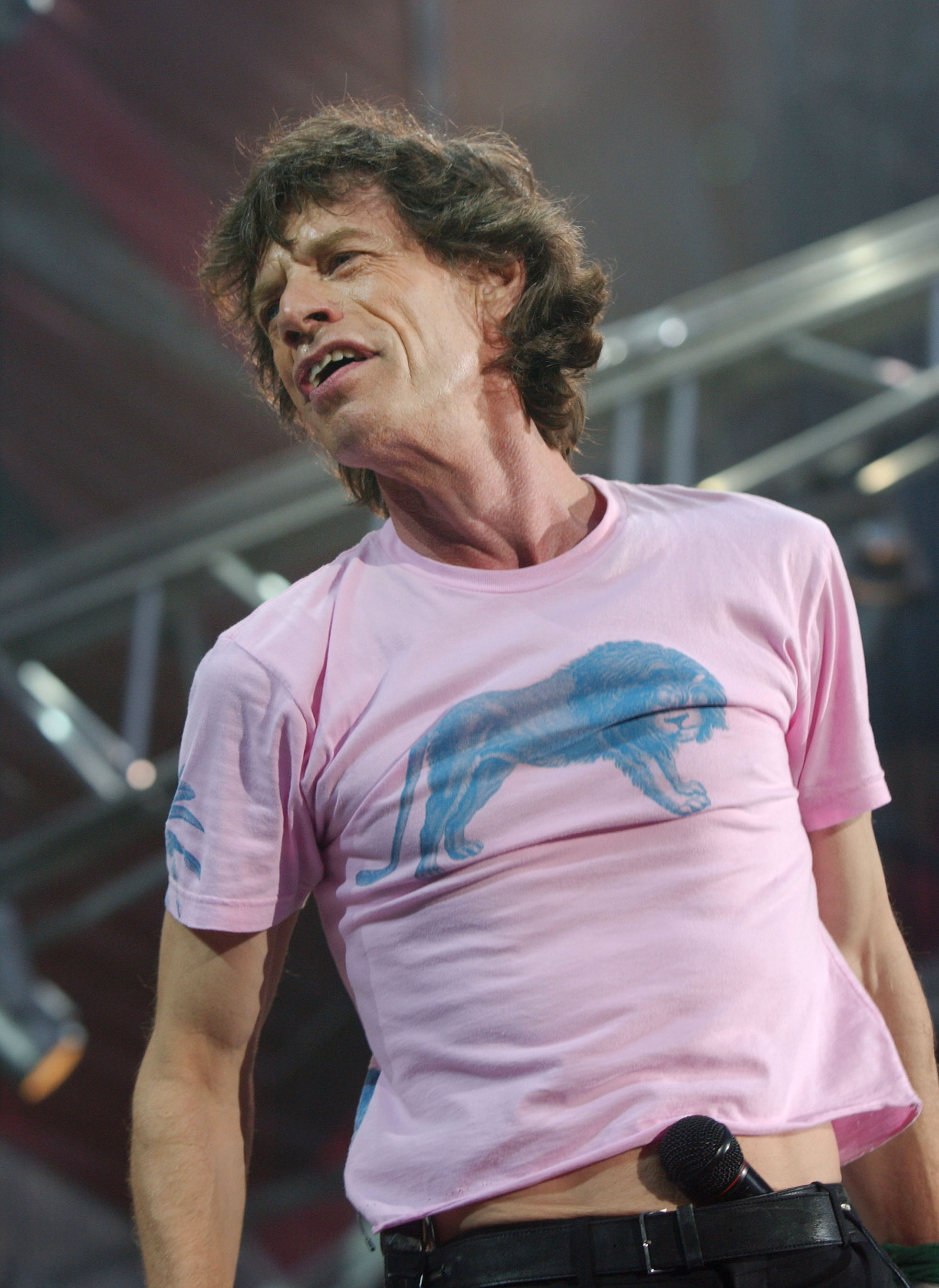 Sir Michael Philip "Mick" Jagger (born 26 July 1943)[1] is an English singer, songwriter and one-time actor, best known as the lead singer and a founder member of The Rolling Stones.
Jagger's career has spanned over 50 years, and he has been described as "one of the most popular and influential frontmen in the history of rock & roll".[3] His distinctive voice and performance, along with Keith Richards' guitar style, have been the trademark of the Rolling Stones throughout the career of the band. Jagger gained press notoriety for his admitted drug use and romantic involvements, and was often portrayed as a countercultural figure. In the late 1960s Jagger began acting in films (starting with Performance and Ned Kelly), to mixed reception. In 1985 Jagger released his first solo album, She's the Boss. In early 2009 he joined the electric supergroup SuperHeavy.
In 1989 Jagger was inducted into the Rock and Roll Hall of Fame, and in 2004 into the UK Music Hall of Fame with the Rolling Stones. In 2003 he was knighted for his services to popular music.
Michael Philip Jagger was born into a middle-class family in Dartford, Kent.[4] His father, Basil Fanshawe "Joe" Jagger (13 April 1913 – 11 November 2006), and grandfather, David Ernest Jagger, were both teachers. His mother, Eva Ensley Mary (née Scutts; 6 April 1913 – 18 May 2000), born in New South Wales, Australia, of English descent,[5][6] was a hairdresser[7] and an active member of the Conservative Party. Jagger's younger brother, Chris (born 19 December 1947) is also a musician.[8] The two have performed together.[9][10]
Although brought up to follow his father's career path, Jagger "was always a singer" as he stated in According to the Rolling Stones. "I always sang as a child. I was one of those kids who just liked to sing. Some kids sing in choirs; others like to show off in front of the mirror. I was in the church choir and I also loved listening to singers on the radio--the BBC or Radio Luxembourg--or watching them on TV and in the movies."[11]
From September 1950 Keith Richards and Jagger were classmates at Wentworth Primary School, Dartford, Kent. In 1954 Jagger passed the eleven-plus and went to Dartford Grammar School, which now has the Mick Jagger Centre installed within the school's site, named for its most famous alumnus. Jagger and Richards lost contact with each other when they went to different schools, but after a chance encounter in July 1960, resumed their friendship and discovered their shared love of rhythm and blues, which for Jagger had begun with Little Richard.[12]
Jagger left school in 1961 after obtaining seven O-levels and three A-levels. Jagger and Richards moved into a flat in Edith Grove in Chelsea, London with a guitarist they had encountered named Brian Jones. While Richards and Jones planned to start their own rhythm and blues group, Jagger continued studying business courses at the London School of Economics,[13] and had seriously considered becoming either a journalist or a politician, comparing the latter to a pop star.
Muddy Waters & The Rolling Stones - Mannish Boy - Live At Checkerboard Lounge
Alberta Adams *26.07.1917

Alberta Adams (* 26. Juli 1917[1]in Indianapolis, Indiana ) ist eine US-amerikanische Bluessängerin, die mit dem Detroit Blues, Jump Blues und Chicago Blues verbunden wird. Manchmal wird sie auch als die "Grand Dame des Detroit Blues" bezeichnet.
Alberta Adams wurde als Roberta Louise Osborn geboren und wuchs bei einer Tante in Detroit, Michigan auf. Sie begann in den späten 1930er-Jahren als Tänzerin in der Clubszene der Hastings Street in Detroit. Dort begann sie bald zu singen und der Besitzer des Clubs, in dem sie auftrat ermutigte sie, ihr Repertoire zu erweitern und weiter zu singen. Im Club B&C trat sie mit solchen späteren Größen wie John Lee Hooker, Big Maceo, Eddie Burns und Eddie Kirkland auf. Adams nennt Big Joe Turner, Dinah Washington, Sarah Vaughan und LaVern Baker als ihre ersten musikalischen Einflüsse, doch hat sie sich das meiste selbst beigebracht.[3]
Im B & C hörten sie auch die Chess-Brüder und gaben ihr 1952 einen Vertrag bei Chess Records, wo sie mit Red Saunders aufnahm. Für das Savoy Label nahm sie eine Single auf (Say Baby Say mit der T. J. Fowler Band) und als Mitglied der Bluesettes, einer Gesangsgruppe, tourte sie mit Tiny Bradshaw's Big Band. Hier entwickelte sie eine kräftige Stimme, die man auch noch bei stark besetzten Bläsergruppen hören konnte[4]Als sich ihr Ruf über Detroit hinaus verbreitete, sang sie mit verschiedenen Bands darunter die von Duke Ellington, Louis Jordan, Wynonie Harris, James Moody, Eddie „Cleanhead“ Vinson und T-Bone Walker.
In den 1990er Jahren gelang ihr ein Comeback, nachdem sie sich vorher zurückgezogen hatte und nur mehr in Detroits Klubszene zu hören war."Born With the Blues" (1999) und "Say Baby Say: Life's Trials and Tribulations According to Miss Alberta Adams" (2000 )wurden von der Kritik freundlich aufgenommen,so wurde "Born with the Blues" vom Living Blues Magazine unter die 25 besten Bluesalben des Jahres 1999 gewählt.Noch im Alter von über 90 Jahren ging sie ins Studio und nahm "Detroit is my Home" auf, in diesem Album sang sie verschiedene Bluesstile, gab aber jedem Track ihren persönlichen Touch. Auf der CD sind auch Gastauftritte von Ann Rabson, Cee Cee Collins und Thornetta Davis zu hören.[5] Auch tritt sie noch regelmäßig bei verschiedenen Bluesfestivals und in Konzerten auf. Adams freut sich über die Anerkennung, die sie bekommen hat, aber "ich springe aber nicht auf und ab wie Julius Caesar."
http://de.wikipedia.org/wiki/Alberta_Adams
Alberta Adams (July 26, 1917 – December 25, 2014) was an American Detroit blues, jump blues, and Chicago blues singer.
Raised in Detroit, she began performing as a tap dancer and nightclub singer in the 1930s. In 1952, she landed a recording contract with Chess Records and recorded alongside Red Saunders for the record label. Adams toured alongside Duke Ellington, Eddie Vinson, Louis Jordan, Lionel Hampton, and T-Bone Walker among others.
Her solo career saw her secure a recording contract with the now defunct Cannonball Records, and she recorded two albums for them: 1999's Born With the Blues and 2000s Say Baby Say. Her 2004 album, I'm on the Move, was released on Eastlawn Records label. In 2006 she released the EP Detroit's Queen of the Blues, which was named Outstanding Blues/R&B Recording at the 2006 Detroit Music Awards.[1] At age 91 she recorded Detroit Is My Home, with Ann Rabson and Thornetta Davis as guest artists.[2][3]
Early life
Alberta Adams was born as Roberta Louise Osborn on July 26, 1917[4] in Indianapolis, Indiana. She was raised in Detroit, Michigan by family members, initially an aunt.[2] From a young age she wanted to be an entertainer.[5] After escaping a difficult home life, at age fourteen she began living on her own, getting a small apartment near Woodward, where she stayed for five or six years.[6]
She first began performing as a tap dancer on Detroit's Hastings Street club scene, and began singing shortly after.[2] In the 1940s, she appeared at the B&C club as a tap dancer, amidst other artists such as John Lee Hooker. When headliner Kitty Stevenson was too ill to perform one night, Adams sang an impromptu two-song performance that led to the club hiring her as a vocalist for a five-year stint.[6] Among her contemporaries and musical teachers on Hastings Street were John Lee Hooker, Big Maceo, Eddie Burns, and Eddie Kirkland.[2]
Music career
Early years
It was on Hastings Street that Adams was first heard by the Chess Records brothers of Chicago, who signed her as a vocalist in the 1950s.[7] While with Chess she recorded with Red Saunders' band among other artists, and a number of her tracks were later included on Chess compilations in the 1990s. For a time she was a member of the vocal group The Bluesettes, who toured as part of Tiny Bradshaw's big band. She also recorded for Savoy Records in Newark, N.J., releasing the single "Say Baby Say" with the T.J. Fowler Band.[2]
Adams toured alongside Louis Jordan, T-Bone Walker, Duke Ellington, Eddie Vinson, and Lionel Hampton among others.[2] After a hiatus from heavy performing and recording, in the 1990s Adams began touring with guitarist Johnnie Bassett.[8]
In 1997 she contributed to the Detroit edition of Blues Across America. Allmusic stated that, "Chanteuse Alberta Adams, a long time fixture on the scene, closes things out with four wonderful sides using a core band that revolves around Johnnie Bassett. With this entry in this important series, it's obvious that Detroit blues is alive, well and thriving."[9] According to Allmusic the album gave her career a jump start,[10] and led to the recording contract for her upcoming solo albums.[2]
Solo albums
Cannonball Records
Her solo career saw her secure a recording contract with the now defunct Cannonball Records, and she recorded two albums for them: 1999's Born With the Blues and 2000s Say Baby Say. According to Allmusic, "Both albums were well received by blues critics and blues DJs, and they helped relaunch her touring career, as she frequented festivals around the U.S. and Canada in the late '90s and in 2000."[2]
Her debut solo album Born With the Blues was released on February 16, 1999.[10] She composed most of the songs, and the core band featured guitarist Johnnie Bassett,[10] with musicians such as Bill Heid on piano.[10] Born With the Blues made Living Blues' Top 25 Albums for 1999.[2] It received 3/5 stars and a positive review from Allmusic, who described the album by stating that "Adams runs through a batch of tunes ranging from jump blues, New Orleans R&B, smoky ballads and jazzy slow blues. A seasoned performer, Adams still has a sizable amount of honey in her voice...just solid singing by a true American music treasure."[10]
Her sophomore solo album Say Baby Say, released on June 6, 2000, was recorded over three days in October 1999. She again composed many of the songs, with Bill Heid, the pianist from her last release, contributing production and some composition. Drummer RJ Spangler co-produced. MTV praised the backing band, saying they offered "tasteful support," but went to state that "the main attraction here is the forcefully husky-voiced Adams. Emphasizing her candid attitude and masterful timing helps overcome the occasional moments where her expressive voice has been thinned by age."[7] According to MTV, Adams has "stared down considerable challenges and wastes no time with pity or tact on her new album Say Baby Say: Life’s Trials and Tribulations According to Miss Alberta Adams."[7] The album received 4/5 stars from Allmusic, who stated that in the album, "Adams looked back on a life raising three children and three stepchildren, four marriages, and decades of blues performance. Such a life has its contrasts of ups and downs reflected in the album."[11]
Eastlawn Records
According to JP Blues, "her solo career enjoyed a resurgence starting in the 1990s with her association with manager/musician RJ Spangler [of Eastlawn Records]."[12]
"[In I'm on the Move] her voice oozes with a seasoned blues singer's gruffness, but never falters on pitch, and she knows exactly how to phrase a line. Despite some of her darker days, Adams also brings a wicked sense of humor to the proceedings."[8]
— Matt Collar of Allmusic[8]
Her 2004 album, I'm on the Move, was released on Eastlawn Records, a Detroit label operated by her drummer RJ Spangler. I'm on the Move included a number of backing musicians who were billed as The Rhythm Rockers; musicians such as Paul Carey contributed guitar and co-produced, while RJ Spangler was bandleader, drummer, and co-producer. The album was recorded over three days in July 2003, and released in 2004.[8] Allmusic gave it a glowing review and 4.5/5 stars, stating the album "finds Adams at the top of her game and seeming to enjoy herself."[8] The review also praised the production team, stating that Carey and Spangler "add an electric R&B aesthetic to the proceedings riding nicely between gutbucket shouters, mid-tempo swing and funky urban blues."[8]
In 2006 she released the EP Detroit's Queen of the Blues with The Rhythm Rockers on Eastlawn Records. It was named Outstanding Blues/R&B Recording at the 2006 Detroit Music Awards.[1]
At age 91, Adams returned to the studio and recorded Detroit Is My Home for Eastlawn Records. The album was released in 2008.[3][13] Adams composed many of the songs, while background vocals were contributed by CeeCee Collins and Thornetta Davis. Among the band members were Shawn McDonald (organ), Ann Rabson on piano and composition, and RJ Spangler on drums and producing.[13]
Final years and death
Adams continued to be an active performer and recording artist in her final years. In 2009 she contributed vocals and composition the album Local Boys by The Motor City Horns, and in 2010 was a composer and guest artist on Blowin' Away the Blues by Planet D Nonet. The following year she was a primary artist on the compilation album The Eternal Myth Revealed Vol.1, featuring her older tracks with Red Saunders on Chess Records, and in 2013 she was a primary artist on the Definitive Detroit Blues compilation album by Not Now Music.[2]
In February 2014, singer Thornetta Davis and guest singer Tosha Owens were featured in a tribute concert to Adams, titled "To Alberta With Love." At the time Adams was 96 years old.[12]
Adams died in Dearborn, Michigan after a period of failing health, aged 97, on Christmas Day 2014.[14][15] Surviving relatives include a daughter, nine grandchildren, and numerous great-grandchildren.[16]
Style
Allmusic has called her "the personification of the Detroit blues scene," stating that "the undisputed, unrivaled, peerless Detroit Queen of the Blues is Alberta Adams."[11] Mostly a self-taught vocalist,[2] Adams has referenced some of her earliest musical influences as blues shouter Big Joe Turner and singer-songwriters Dinah Washington, Sarah Vaughan, and LaVern Baker.
Raised in Detroit, she began performing as a tap dancer and nightclub singer in the 1930s. In 1952, she landed a recording contract with Chess Records and recorded alongside Red Saunders for the record label. Adams toured alongside Duke Ellington, Eddie Vinson, Louis Jordan, Lionel Hampton, and T-Bone Walker among others.
Her solo career saw her secure a recording contract with the now defunct Cannonball Records, and she recorded two albums for them: 1999's Born With the Blues and 2000s Say Baby Say. Her 2004 album, I'm on the Move, was released on Eastlawn Records label. In 2006 she released the EP Detroit's Queen of the Blues, which was named Outstanding Blues/R&B Recording at the 2006 Detroit Music Awards.[1] At age 91 she recorded Detroit Is My Home, with Ann Rabson and Thornetta Davis as guest artists.[2][3]
Early life
Alberta Adams was born as Roberta Louise Osborn on July 26, 1917[4] in Indianapolis, Indiana. She was raised in Detroit, Michigan by family members, initially an aunt.[2] From a young age she wanted to be an entertainer.[5] After escaping a difficult home life, at age fourteen she began living on her own, getting a small apartment near Woodward, where she stayed for five or six years.[6]
She first began performing as a tap dancer on Detroit's Hastings Street club scene, and began singing shortly after.[2] In the 1940s, she appeared at the B&C club as a tap dancer, amidst other artists such as John Lee Hooker. When headliner Kitty Stevenson was too ill to perform one night, Adams sang an impromptu two-song performance that led to the club hiring her as a vocalist for a five-year stint.[6] Among her contemporaries and musical teachers on Hastings Street were John Lee Hooker, Big Maceo, Eddie Burns, and Eddie Kirkland.[2]
Music career
Early years
It was on Hastings Street that Adams was first heard by the Chess Records brothers of Chicago, who signed her as a vocalist in the 1950s.[7] While with Chess she recorded with Red Saunders' band among other artists, and a number of her tracks were later included on Chess compilations in the 1990s. For a time she was a member of the vocal group The Bluesettes, who toured as part of Tiny Bradshaw's big band. She also recorded for Savoy Records in Newark, N.J., releasing the single "Say Baby Say" with the T.J. Fowler Band.[2]
Adams toured alongside Louis Jordan, T-Bone Walker, Duke Ellington, Eddie Vinson, and Lionel Hampton among others.[2] After a hiatus from heavy performing and recording, in the 1990s Adams began touring with guitarist Johnnie Bassett.[8]
In 1997 she contributed to the Detroit edition of Blues Across America. Allmusic stated that, "Chanteuse Alberta Adams, a long time fixture on the scene, closes things out with four wonderful sides using a core band that revolves around Johnnie Bassett. With this entry in this important series, it's obvious that Detroit blues is alive, well and thriving."[9] According to Allmusic the album gave her career a jump start,[10] and led to the recording contract for her upcoming solo albums.[2]
Solo albums
Cannonball Records
Her solo career saw her secure a recording contract with the now defunct Cannonball Records, and she recorded two albums for them: 1999's Born With the Blues and 2000s Say Baby Say. According to Allmusic, "Both albums were well received by blues critics and blues DJs, and they helped relaunch her touring career, as she frequented festivals around the U.S. and Canada in the late '90s and in 2000."[2]
Her debut solo album Born With the Blues was released on February 16, 1999.[10] She composed most of the songs, and the core band featured guitarist Johnnie Bassett,[10] with musicians such as Bill Heid on piano.[10] Born With the Blues made Living Blues' Top 25 Albums for 1999.[2] It received 3/5 stars and a positive review from Allmusic, who described the album by stating that "Adams runs through a batch of tunes ranging from jump blues, New Orleans R&B, smoky ballads and jazzy slow blues. A seasoned performer, Adams still has a sizable amount of honey in her voice...just solid singing by a true American music treasure."[10]
Her sophomore solo album Say Baby Say, released on June 6, 2000, was recorded over three days in October 1999. She again composed many of the songs, with Bill Heid, the pianist from her last release, contributing production and some composition. Drummer RJ Spangler co-produced. MTV praised the backing band, saying they offered "tasteful support," but went to state that "the main attraction here is the forcefully husky-voiced Adams. Emphasizing her candid attitude and masterful timing helps overcome the occasional moments where her expressive voice has been thinned by age."[7] According to MTV, Adams has "stared down considerable challenges and wastes no time with pity or tact on her new album Say Baby Say: Life’s Trials and Tribulations According to Miss Alberta Adams."[7] The album received 4/5 stars from Allmusic, who stated that in the album, "Adams looked back on a life raising three children and three stepchildren, four marriages, and decades of blues performance. Such a life has its contrasts of ups and downs reflected in the album."[11]
Eastlawn Records
According to JP Blues, "her solo career enjoyed a resurgence starting in the 1990s with her association with manager/musician RJ Spangler [of Eastlawn Records]."[12]
"[In I'm on the Move] her voice oozes with a seasoned blues singer's gruffness, but never falters on pitch, and she knows exactly how to phrase a line. Despite some of her darker days, Adams also brings a wicked sense of humor to the proceedings."[8]
— Matt Collar of Allmusic[8]
Her 2004 album, I'm on the Move, was released on Eastlawn Records, a Detroit label operated by her drummer RJ Spangler. I'm on the Move included a number of backing musicians who were billed as The Rhythm Rockers; musicians such as Paul Carey contributed guitar and co-produced, while RJ Spangler was bandleader, drummer, and co-producer. The album was recorded over three days in July 2003, and released in 2004.[8] Allmusic gave it a glowing review and 4.5/5 stars, stating the album "finds Adams at the top of her game and seeming to enjoy herself."[8] The review also praised the production team, stating that Carey and Spangler "add an electric R&B aesthetic to the proceedings riding nicely between gutbucket shouters, mid-tempo swing and funky urban blues."[8]
In 2006 she released the EP Detroit's Queen of the Blues with The Rhythm Rockers on Eastlawn Records. It was named Outstanding Blues/R&B Recording at the 2006 Detroit Music Awards.[1]
At age 91, Adams returned to the studio and recorded Detroit Is My Home for Eastlawn Records. The album was released in 2008.[3][13] Adams composed many of the songs, while background vocals were contributed by CeeCee Collins and Thornetta Davis. Among the band members were Shawn McDonald (organ), Ann Rabson on piano and composition, and RJ Spangler on drums and producing.[13]
Final years and death
Adams continued to be an active performer and recording artist in her final years. In 2009 she contributed vocals and composition the album Local Boys by The Motor City Horns, and in 2010 was a composer and guest artist on Blowin' Away the Blues by Planet D Nonet. The following year she was a primary artist on the compilation album The Eternal Myth Revealed Vol.1, featuring her older tracks with Red Saunders on Chess Records, and in 2013 she was a primary artist on the Definitive Detroit Blues compilation album by Not Now Music.[2]
In February 2014, singer Thornetta Davis and guest singer Tosha Owens were featured in a tribute concert to Adams, titled "To Alberta With Love." At the time Adams was 96 years old.[12]
Adams died in Dearborn, Michigan after a period of failing health, aged 97, on Christmas Day 2014.[14][15] Surviving relatives include a daughter, nine grandchildren, and numerous great-grandchildren.[16]
Style
Allmusic has called her "the personification of the Detroit blues scene," stating that "the undisputed, unrivaled, peerless Detroit Queen of the Blues is Alberta Adams."[11] Mostly a self-taught vocalist,[2] Adams has referenced some of her earliest musical influences as blues shouter Big Joe Turner and singer-songwriters Dinah Washington, Sarah Vaughan, and LaVern Baker.
2010 Detroit All Star Revue » Alberta Adams - Detroit Is My Home
Willie Popsy Dixon *26.07.1942

Willie "Popsy" Dixon, drummer and vocalist of the critically acclaimed soul/blues band The Holmes Brothers, died in Richmond, Virginia on Friday, January 9. He had recently been diagnosed with stage four bladder cancer. He was 72 years old.
Dixon, born in Virginia Beach, Virginia on July 26, 1942, was celebrated for his soaring, soulful multi-octave vocals and his driving, in-the-pocket drumming. He first met brothers Sherman and Wendell Holmes at a New York gig in 1967. Dixon sat in with the brothers and sang two songs. "After that second song," recalls Wendell, "Popsy was a brother." They played in a variety of Top 40 bar bands until 1979, when the three officially joined forces and formed The Holmes Brothers, which The New York Times described as "deeply soulful, uplifting and timeless." They toured the world, releasing 12 albums starting with 1990's In The Spirit on Rounder. Their most recent release is 2014's Brotherhood on Alligator.
Dixon first played the drums when he was seven. He told Blues On Stage, "My mom and dad took me to the store and told me to get anything I liked. There was this tiny red drum set, with a tiny little kick drum and snare...little cymbals. Now, that's what I wanted! By the next morning, the thing was in the trash can. I beat it all to death. But, I tell you what...I knew how to play after that. I just knew. I had the rhythm down pat and had timing too. Just that fast. I been playing ever since."
The Chicago Tribune described Dixon's voice as "otherworldly...a gift to the world of music." Living Blues said, "Popsy’s voice is a wonder...spontaneous and raw."
In September 2014, The Holmes Brothers were honored with a National Endowment For The Arts National Heritage Fellowship, the highest honor the United States bestows upon its folk and traditional artists.
Dixon is survived by daughter Desiree Berry and longtime partner Isobel Prideaux.
Funeral service information is pending. Interment will be at the Holmes' family plot in Saluda, Virginia.
The Holmes Brothers • live in Vienna
Danny Bryant *26.07.1980
 Danny Bryant (born 26 July 1980) is an English blues guitarist and singer-songwriter.[1] He was born and grew up in Royston, Hertfordshire, England. At the age of 15 he began playing the guitar and became a professional guitar player at the age of 18. Since then he has appeared on bills alongside a number of notable artists such as Buddy Guy, Carlos Santana, Joe Cocker and Mick Taylor.[2]
RedEyeBand
He formed Danny Bryant's RedEyeBand[3] together with his father, Ken Bryant, on bass guitar. They toured and recorded together with drummer Trevor Barr until Kens retirement in July 2013.[2] Bryant signed with the German based label, Jazzhaus Records, in 2011 and went on the record his first live DVD/CD on 17 September 2011, titled Night Life – Live in Holland.[4] 2013 seen Bryant release his first studio album for Jazzhaus Records titled 'Hurricane'.[5] As of 2013 the title 'Redeyeband' was dropped, and the band are now billed as 'Danny Bryant'.
Endorsements
Bryant is endorsed by the British guitar brand Fret-King, designed by Trev Wilkinson. He uses the Corona SP model.[6] In 2013 Fret-King announced the release of the Corona DBR, the Danny Bryant signature model. Guitarist Magazine described the guitar as "A powerful and versatile instrument that offers quality and bags of canny design upgrades for extremely sensible money".[7] Danny is also endorsed by Marshall Amplification,[8] and Elixir Strings.
Danny Bryant - 2014 Cleethorpes Blues Festival - 22/06/2014
Beth Kohnen *26.07.

"You know what you get with Beth Kohnen: Great harmonica tone and hard workin' Blues played with feeling!" - Willy Jordan, drummer for John Lee Hooker
Beth Kohnen has performed in the SF Bay Area since 1998 sharing the stage with blues legends Steve Freund, Rusty Zinn, Willy Jordan, Birdlegg, RJ Mischo, Lara Price, and Bonnie Hayes. She has also toured in New Orleans, Paris, Florence, Venice, Scotland, and Dublin. She has released three albums--the first two with a rocking full band and the latest a mellow duo with renown blues guitarist Rusty Zinn.
Fans of Big Walter Horton have often exclaimed that they can hear echoes of his deep tone and phrasing in Beth's music - not strange since he is her favorite musician and primary influence.
Beth brings a full seven piece dance band to the big stage and a three piece after-hours combo to intimate venues.
She also does a very successful 'bread and butter' duo at local farmer's markets and street festivals.
Beth is pleasant to work with, willing to travel, and currently available for booking.
Beth Kohnen has performed in the SF Bay Area since 1998 sharing the stage with blues legends Steve Freund, Rusty Zinn, Willy Jordan, Birdlegg, RJ Mischo, Lara Price, and Bonnie Hayes. She has also toured in New Orleans, Paris, Florence, Venice, Scotland, and Dublin. She has released three albums--the first two with a rocking full band and the latest a mellow duo with renown blues guitarist Rusty Zinn.
Fans of Big Walter Horton have often exclaimed that they can hear echoes of his deep tone and phrasing in Beth's music - not strange since he is her favorite musician and primary influence.
Beth brings a full seven piece dance band to the big stage and a three piece after-hours combo to intimate venues.
She also does a very successful 'bread and butter' duo at local farmer's markets and street festivals.
Beth is pleasant to work with, willing to travel, and currently available for booking.
A blues lover's delight. Tasty, soulful harmonica blues.
Harmonica player and vocalist Beth Kohnen plays blues in the San Francisco Bay Area. She has also taken her music to New Orleans, Paris, Florence, Venice, Scotland, and Dublin. Her musical hero is Big Walater Horton.
She started playing blues professionally in 1999, sharing a stage with Grammy winner Steve Freund, Big Walter's last guitarist. (For the full story go to Beth's website, www.bessiemaeblues.com)
In 2001 she recorded her first CD "Hard Hearted Woman" with Steve Freund, Wendy DeWitt, Randy Bermudez, and June Core.
In 2005 Beth's band was booked at San Francisco's renown Biscuits and Blues and she released her 2nd CD, "Knee Action". You can order this CD on www.cdbaby.com/bethkohnen.
In 2011 Beth released her third CD, "Ease My Worried Mind" as a duo with WC Handy nominee guitarist Rusty Zinn. Many songs from this CD are posted here on Jango. The full 18 song CD is available online at www.cdbaby.com/bethkohnen2
Her band, a new project called "The Red Quilt Trio" with Willy Jordan and Bob Welsh specializes in vintage harmonica blues originally made famous by Otis Spann and Big Walter Horton.
http://www.jango.com/music/Beth+Kohnen+Blues/_full_bio Harmonica player and vocalist Beth Kohnen plays blues in the San Francisco Bay Area. She has also taken her music to New Orleans, Paris, Florence, Venice, Scotland, and Dublin. Her musical hero is Big Walater Horton.
She started playing blues professionally in 1999, sharing a stage with Grammy winner Steve Freund, Big Walter's last guitarist. (For the full story go to Beth's website, www.bessiemaeblues.com)
In 2001 she recorded her first CD "Hard Hearted Woman" with Steve Freund, Wendy DeWitt, Randy Bermudez, and June Core.
In 2005 Beth's band was booked at San Francisco's renown Biscuits and Blues and she released her 2nd CD, "Knee Action". You can order this CD on www.cdbaby.com/bethkohnen.
In 2011 Beth released her third CD, "Ease My Worried Mind" as a duo with WC Handy nominee guitarist Rusty Zinn. Many songs from this CD are posted here on Jango. The full 18 song CD is available online at www.cdbaby.com/bethkohnen2
Her band, a new project called "The Red Quilt Trio" with Willy Jordan and Bob Welsh specializes in vintage harmonica blues originally made famous by Otis Spann and Big Walter Horton.
Rambler's Blues Beth Kohnen
Beth Kohnen and Rusty Zinn Bad Break Blues
Honest I do - Beth Kohnen
R.I.P.
Floyd Dixon +26.07.2006
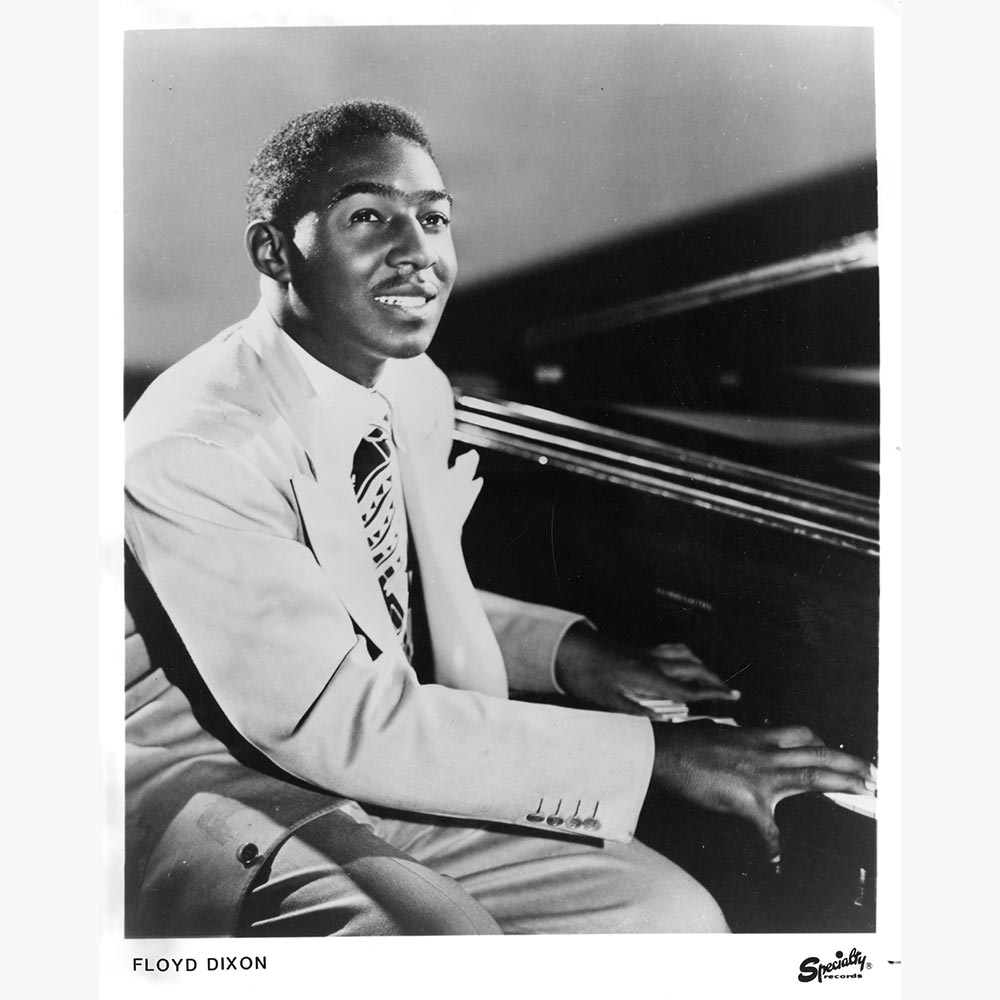
Floyd Dixon (* 8. Februar 1929 in Marshall, Texas als Jay Riggins Jr.; † 26. Juli 2006 in Los Angeles, Kalifornien) war ein US-amerikanischer R&B-Pianist und Sänger, der sich selbst als "Mr. Magnificent" bezeichnete. Er wird dem Jump und West Coast Blues zugerechnet, gilt als Wegbereiter des Soul und beeinflusste Musiker wie Ray Charles.
Dixon wuchs an der texanischen Grenze zu Louisiana auf und kam früh mit Blues, Gospel, Jazz und Country-Musik in Berührung. Als Kind brachte er sich das Klavierspielen selbst bei.
1942 zog die Familie nach Los Angeles in Kalifornien, wo Dixon den Bluesmusiker Charles Brown kennenlernte, der sein Mentor wurde. Nach Aufnahmen mit der Band von Johnny Otis bekam Dixon 1949 seinen ersten eigenen Plattenvertrag. Zu seinen Hits in der ersten Hälfte der 1950er, die er für Aladdin einspielte, gehören „Telephone Blues“, „Wine Wine Wine“, „Too Much Jelly Roll“ und „Hey Bartender“ – später von den Blues Brothers neu eingespielt.
In den 1960ern zog sich Dixon weitgehend aus dem Musikgeschäft zurück und ging nur noch vereinzelt auf Tour. 1975 erschien in Schweden ein Album mit seinen alten Hits und bescherte ihm ein Comeback. Er trat in Europa auf und gab u. a. mit Charles Brown und Robert Cray Konzerte. 1984 schrieb er den „Olympic Blues“ für die Olympischen Sommerspiele in Los Angeles.
1993 erhielt Dixon einen Pioneer Award der Rhythm and Blues Foundation. Er spielte beim Monterey Jazz Festival und beim Chicago Blues Festival. 1996 veröffentlichte er das vielfach gelobte Album Wake Up And Live, das einen Handy Award gewann. 2005 erschien das Album Fine! Fine! Thing!.
Floyd Dixon starb 2006 im Alter von 77 Jahren an Nierenversagen, nur wenige Wochen nach einer Tournee mit Pinetop Perkins und Henry Clay.
http://de.wikipedia.org/wiki/Floyd_Dixon
https://www.youtube.com/watch?v=soC9Yj6RSkk#t=11
Floyd Dixon (February 8, 1929 – July 26, 2006)[1] was an American rhythm and blues pianist and singer.
Life and career
Dixon was born Jay Riggins, Jr. in Marshall, Texas, United States.[1] He was influenced by blues, gospel, jazz and country music growing up. His family moved to Los Angeles, California in 1942 and Dixon met his influence Charles Brown there.[1]
The self-dubbed "Mr. Magnificent", Dixon signed a recording contract with Modern Records in 1949, specializing in jump blues and sexualized songs like "Red Cherries", "Wine Wine Wine", "Too Much Jelly Roll" and "Baby Let's Go Down to The Woods". Dixon replaced Brown on piano and vocals in the band Johnny Moore's Three Blazers in 1950 when Brown departed to start a solo career. The group recorded on Aladdin Records.[2] Staying with the record label, Dixon had a small hit under his own name in 1952 with "Call Operator 210".[2]
Dixon switched to the Specialty Records label in 1952, and the Atlantic Records subsidiary Cat Records in 1954. "Hey Bartender" (later covered by The Blues Brothers) and "Hole In The Wall" were hit singles during this time.
In the 1970s Dixon left the music industry for a quieter life in Texas, though he did occasional tours in the 1970s and 1980s.[2] In 1984 he was commissioned to write "Olympic Blues" for the 1984 Summer Olympics.[1]
In 1993, Dixon received a Pioneer Award from the Rhythm and Blues Foundation.[1] In the mid-1990s, he secured a contract with Alligator Records, releasing the critically acclaimed album, Wake Up And Live.[1]
On June 1 and 2, 2006, Dixon hosted a concert with Pinetop Perkins and Henry Gray, celebrating the intergenerational aspect of blues piano. The band was led by Kid Ramos and included Larry Taylor and Richard "Bigfoot" Innes. Kim Wilson, Fred Kaplan (from the Hollywood Blue Flames) and Lynwood Slim also performed. This concert was filmed and released on DVD, March 6 2013 on HighJohn Records as Time Brings About A Change.[3]
Dixon died in Orange County, California in July 2006, at the age of 77, from kidney failure, having suffered with cancer.[1] A public memorial service was held at Grace Chapel, in the grounds of the Inglewood Park Cemetery.
Life and career
Dixon was born Jay Riggins, Jr. in Marshall, Texas, United States.[1] He was influenced by blues, gospel, jazz and country music growing up. His family moved to Los Angeles, California in 1942 and Dixon met his influence Charles Brown there.[1]
The self-dubbed "Mr. Magnificent", Dixon signed a recording contract with Modern Records in 1949, specializing in jump blues and sexualized songs like "Red Cherries", "Wine Wine Wine", "Too Much Jelly Roll" and "Baby Let's Go Down to The Woods". Dixon replaced Brown on piano and vocals in the band Johnny Moore's Three Blazers in 1950 when Brown departed to start a solo career. The group recorded on Aladdin Records.[2] Staying with the record label, Dixon had a small hit under his own name in 1952 with "Call Operator 210".[2]
Dixon switched to the Specialty Records label in 1952, and the Atlantic Records subsidiary Cat Records in 1954. "Hey Bartender" (later covered by The Blues Brothers) and "Hole In The Wall" were hit singles during this time.
In the 1970s Dixon left the music industry for a quieter life in Texas, though he did occasional tours in the 1970s and 1980s.[2] In 1984 he was commissioned to write "Olympic Blues" for the 1984 Summer Olympics.[1]
In 1993, Dixon received a Pioneer Award from the Rhythm and Blues Foundation.[1] In the mid-1990s, he secured a contract with Alligator Records, releasing the critically acclaimed album, Wake Up And Live.[1]
On June 1 and 2, 2006, Dixon hosted a concert with Pinetop Perkins and Henry Gray, celebrating the intergenerational aspect of blues piano. The band was led by Kid Ramos and included Larry Taylor and Richard "Bigfoot" Innes. Kim Wilson, Fred Kaplan (from the Hollywood Blue Flames) and Lynwood Slim also performed. This concert was filmed and released on DVD, March 6 2013 on HighJohn Records as Time Brings About A Change.[3]
Dixon died in Orange County, California in July 2006, at the age of 77, from kidney failure, having suffered with cancer.[1] A public memorial service was held at Grace Chapel, in the grounds of the Inglewood Park Cemetery.
Floyd Dixon - Hey Bartender
https://www.youtube.com/watch?v=soC9Yj6RSkk#t=11
J.J. Cale +26.07.2013
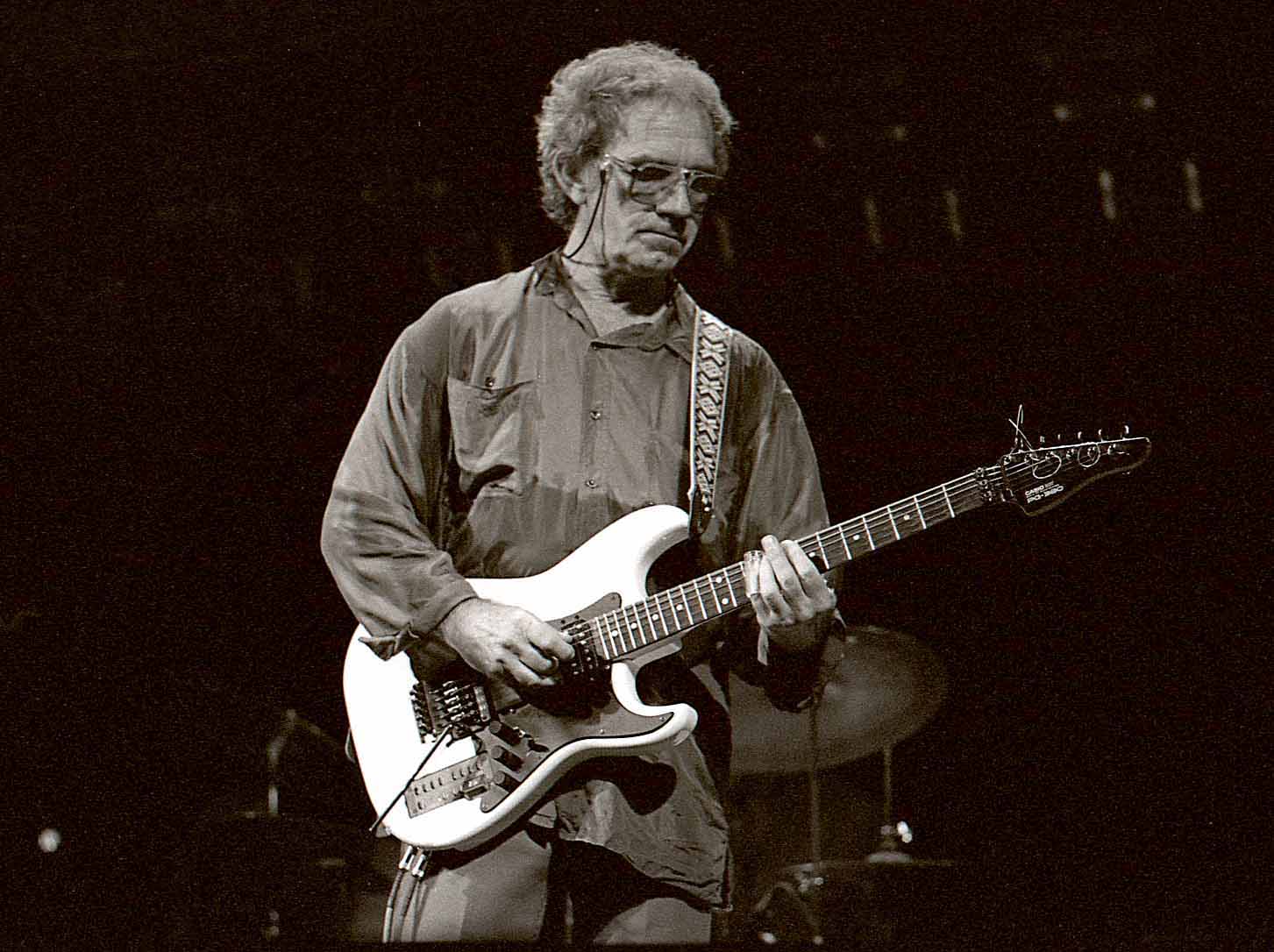
J.J. Cale (* 5. Dezember 1938 in Oklahoma City,[1] Oklahoma, als John Weldon Cale; † 26. Juli 2013 in San Diego, Kalifornien) war ein US-amerikanischer Musiker und Komponist. Er zählt zu den Begründern des Tulsa-Sounds, stilistisch zwischen Rockabilly, Blues, Jazz und Country einzuordnen. Er spielte oftmals alle Instrumente seiner Aufnahmen selbst.
Leben
Cale wuchs in Tulsa im US-Staat Oklahoma auf.[2] Der Name J.J. (ohne Leerzeichen und häufig auch ohne Punkte geschrieben) war ein Künstlername, der ihm in seinen Anfangsjahren als Musiker von einem Clubbesitzer des „Whisky a Go Go“ in Los Angeles gegeben wurde, da es bereits den Musiker John Cale (ex-Velvet Underground) gab. Fälschlicherweise wird selbst in seriösen Quellen (zum Beispiel im All Music Guide to the Blues) der Geburtsname von J.J. Cale mit „Jean Jacques“ angegeben. Diesen Namen hatte ein französischer Journalist ins Spiel gebracht, worauf er dann in einigen Biografien von J.J. Cale genannt wurde.
J.J. Cale war mit der Gitarristin Christine Lakeland verheiratet, die auf den meisten seiner Touren als Bandmitglied teilnahm.[3]
Typisch für Cale sind kurze, eher sparsam instrumentierte Songs. Die Texte sind oft lakonisch und wurden ohne jedes Pathos vorgetragen, so dass seine Musik für typischen Rock zu ruhig ist. Dafür sind die Details der Musik sehr sorgfältig ausgearbeitet. Eric Clapton beschrieb in einem Interview diesen Stil: “… really, really minimal…, it’s all about finesse.” (etwa „… wirklich sehr minimalistisch; das Wesentliche sind die Feinheiten.“)[4]
Cale ließ sich für die Produktion einer Platte oft mehrere Jahre Zeit und hat in seiner Musik den sogenannten Laid-back-Stil (zurückgelehnt, entspannt) geprägt. Das bedeutet, dass er seine wohldosierten Soli immer leicht hinter dem eigentlichen Beat des jeweiligen Stückes spielte. Der Laid-back-Stil erinnert an den Stil von Billie Holiday, die ihn nach Cales eigenen Aussagen inspirierte.
J.J. Cale und Eric Clapton veröffentlichten im November 2006 das gemeinsame Album The Road to Escondido, das 2008 mit einem Grammy als Best Contemporary Blues Album (Bestes zeitgenössisches Bluesalbum) ausgezeichnet wurde. Christine Lakeland spielt auf diesem Album Gitarre.
Am 26. Juli 2013 starb J.J. Cale in La Jolla, San Diego, nach einem Herzinfarkt.
Rezeption
J.J. Cale, der die Öffentlichkeit eher mied und nur einen eigenen großen Hit hatte (Cocaine, 1977 Nr. 22 in der Bundesrepublik Deutschland, Nr. 2 in der Schweiz, Nr. 5 in Österreich), ist in Musikerkreisen wegen seiner Kompositionen hoch angesehen. Das Instrumentalstück Okie wurde als Erkennungsmelodie im damaligen SWF3-Radioclub mit Frank Laufenberg verwendet. J.J. Cale wurde insbesondere durch zahlreiche Interpretationen seiner Songs durch andere Musiker bekannt, wie die Coverversionen von After Midnight und Cocaine durch Eric Clapton.
http://de.wikipedia.org/wiki/J._J._Cale
Zum ersten Todestag brachte Eric Clapton die CD
Zum ersten Todestag brachte Eric Clapton die CD
The Breeze - An Appreciation of JJ Cale
Eric Clapton & Friends verneigen sich vor J.J. Cale!
http://www.amazon.de/The-Breeze-An-Appreciation-Cale/dp/B00KOEQTJI/ref=sr_1_1?ie=UTF8&qid=1406315940&sr=8-1&keywords=Eric+Clapton%3A+An+Appreciation+of+JJ+Cale
http://jjcale.com/
https://www.youtube.com/watch?v=4yW2UnZLXSs#t=17
John Weldon Cale [1] (December 5, 1938 – July 26, 2013), professionally known as J.J. Cale, was an American singer-songwriter, recording artist and influential guitar stylist. Though he deliberately avoided the limelight (being temperamentally averse to celebrity)[2] his influence as a musical artist has been widely acknowledged by figures such as Mark Knopfler, Neil Young and Eric Clapton who described him as “one of the most important artists in the history of rock”.[3] He is considered to be one of the originators of the Tulsa Sound, a loose genre drawing on blues, rockabilly, country, and jazz.
Many songs written by Cale have been recorded by other artists, including "After Midnight" by Eric Clapton; "Call Me the Breeze" by Lynyrd Skynyrd, John Mayer, Johnny Cash and Bobby Bare; "Cocaine" by Eric Clapton and Jerry Garcia; "Clyde" by Waylon Jennings and Dr. Hook; "I Got The Same Old Blues" by Captain Beefheart, Lynyrd Skynyrd and Freddie King; and "Magnolia" by Beck and Lucinda Williams.
In 2008 he, along with Clapton, received a Grammy Award for their album, The Road to Escondido.
Life and career
John Cale was born on December 5, 1938, in Oklahoma City, Oklahoma.[1] He was raised in Tulsa, Oklahoma, and graduated from Tulsa Central High School in 1956. As well as learning to play the guitar he began studying the principles of sound engineering early on while still living at home with his parents in Tulsa where he built himself a recording studio.[4] After graduation he was drafted into military service studying at the Air Force Institute of Technology in Champaign, Illinois. Cale recalled, "I didn't really want to carry a gun and do all that stuff so I joined the Air Force and what I did is I took technical training and that's kind of where I learned a little bit about electronics." [5] Cale's knowledge of mixing and sound recording turned out to play an important role in creating the distinctive sound of his studio albums.[6]
Along with a number of other young Tulsa musicians, Cale moved to Los Angeles in the early 1960s, where he found employment as a studio engineer.[7] While living in Los Angeles he cut a demo single in 1966 (in those days professional demos were actual 45 rpm vinyl singles) with Liberty Records of his composition 'After Midnight'. He distributed copies of this single to his Tulsa musician friends living in L.A. many of whom were successfully finding work as session musicians. However, Cale, although he managed to find a regular spot at the Whisky a Go Go (which is where, according to his own testimony, Elmer Valentine suggested he call himself J.J. Cale to avoid confusion with John Cale of the Velvet Underground [8][9]) found little success as a recording artist and not being able to make enough money as a studio engineer, sold his guitar and returned to Tulsa where he joined a band with Tulsa musician Don White.
In 1970 it came to his attention that Eric Clapton had recorded a cover of "After Midnight" on his debut album in 1970. As a result of this coup it was suggested to Cale that he should take advantage of this publicity and cut a record of his own. His first album, Naturally, established his style, described by Los Angeles Times writer Richard Cromelin as a "unique hybrid of blues, folk and jazz, marked by relaxed grooves and Cale's fluid guitar and laconic vocals. His early use of drum machines and his unconventional mixes lend a distinctive and timeless quality to his work and set him apart from the pack of Americana roots music purists."[10]
In his 2003 biography Shakey, Neil Young remarked, "Of all the players I ever heard, it's gotta be [Jimi] Hendrix and JJ Cale who are the best electric guitar players."[11] In the 2005 documentary To Tulsa and Back: On Tour with J.J. Cale, Cale's guitar style is characterized by Eric Clapton as "really, really minimal", and he states precisely, "it's all about finesse".
His biggest U.S. hit single, "Crazy Mama", peaked at #22 on the U.S. Billboard Hot 100 chart in 1972. In the 2005 documentary film To Tulsa and Back, Cale recounts the story of being offered the opportunity to appear on Dick Clark's American Bandstand to promote the song, which would have moved it higher on the charts. Cale declined when told he could not bring his band to the taping and would be required to lip-sync the words.[12]
Cale often acted as his own producer, engineer and session player. His vocals, sometimes whispery, would be buried in the mix. He attributed his unique sound to being a recording mixer and engineer, saying, "Because of all the technology now you can make music yourself and a lot of people are doing that now. I started out doing that a long time ago and I found when I did that I came up with a unique sound."[13]
In live performances, Cale played with minimal stage lighting.
His catalogue is published for the World excluding North America by independent music publishers Fairwood Music (UK) Ltd.
J.J. Cale died in La Jolla, California, on July 26, 2013, at the age of 74, after suffering a heart attack.[14][15][16][17]
Covers
Songs written by Cale that have been covered by other musicians include: "After Midnight" and "Cocaine" by Eric Clapton ("Cocaine" also was covered by Jerry Garcia and Nazareth); "Bringing It Back" by Kansas; "Call Me The Breeze" by Lynyrd Skynyrd, Johnny Cash, Bobby Bare, John Mayer, and Eric Clapton; "Clyde" by Waylon Jennings and Dr. Hook; "I Got the Same Old Blues" by Captain Beefheart (on his 1974 album Bluejeans & Moonbeams, Lynyrd Skynyrd and Freddie King; "Magnolia" by Poco, Beck and Lucinda Williams; "Ride Me High" and "Travelin' Light" by Widespread Panic; and "The Sensitive Kind" by Santana (on their 1981 album Zebop!).
The 1992 track "Run" on Spiritualized's debut album, Lazer Guided Melodies, is essentially a cover of Cale's "Call Me the Breeze" with some additional lyrics. Cale is given songwriting credit on the album.
The Band covered "Crazy Mama" on their 1996 album High on the Hog.
Bill Wyman's Rhythm Kings 1999 album and lead-off song is "Any Way the Wind Blows" from his 1974 album Okie.
Phish has played "Ain't Love Funny" from his 1994 album Closer to You live a number of times. One such version appears on Phish's 2015 Amsterdam box set, taken from the July 1, 1997 performance.
George Thorogood & The Destroyers covered "Devil In Disguise" on their 2003 album Ride 'Til I Die.
As well as "After Midnight" on his self-titled debut album in 1970 and "Cocaine" on Slowhand in 1977, Eric Clapton has covered Cale's "I'll Make Love To You Anytime" on his 1978 album Backless. Other Clapton covers of Cale originals include "Travelin' Light" on his 2001 album Reptile, "River Runs Deep" and "Everything Will Be Alright" on his 2010 self-titled album Clapton, and "Angel" on his 2013 album Old Sock.
In 2014 Eric Clapton & Friends released the tribute album The Breeze: An Appreciation of JJ Cale. Here Cale's tunes are covered by Clapton with Tom Petty, Mark Knopfler, John Mayer, Don White, Willie Nelson, Cale's wife Christine Lakeland, and others. In the video version of Call Me The Breeze for this album, Clapton declares of Cale, "He was a fantastic musician. And he was my hero."
Many songs written by Cale have been recorded by other artists, including "After Midnight" by Eric Clapton; "Call Me the Breeze" by Lynyrd Skynyrd, John Mayer, Johnny Cash and Bobby Bare; "Cocaine" by Eric Clapton and Jerry Garcia; "Clyde" by Waylon Jennings and Dr. Hook; "I Got The Same Old Blues" by Captain Beefheart, Lynyrd Skynyrd and Freddie King; and "Magnolia" by Beck and Lucinda Williams.
In 2008 he, along with Clapton, received a Grammy Award for their album, The Road to Escondido.
Life and career
John Cale was born on December 5, 1938, in Oklahoma City, Oklahoma.[1] He was raised in Tulsa, Oklahoma, and graduated from Tulsa Central High School in 1956. As well as learning to play the guitar he began studying the principles of sound engineering early on while still living at home with his parents in Tulsa where he built himself a recording studio.[4] After graduation he was drafted into military service studying at the Air Force Institute of Technology in Champaign, Illinois. Cale recalled, "I didn't really want to carry a gun and do all that stuff so I joined the Air Force and what I did is I took technical training and that's kind of where I learned a little bit about electronics." [5] Cale's knowledge of mixing and sound recording turned out to play an important role in creating the distinctive sound of his studio albums.[6]
Along with a number of other young Tulsa musicians, Cale moved to Los Angeles in the early 1960s, where he found employment as a studio engineer.[7] While living in Los Angeles he cut a demo single in 1966 (in those days professional demos were actual 45 rpm vinyl singles) with Liberty Records of his composition 'After Midnight'. He distributed copies of this single to his Tulsa musician friends living in L.A. many of whom were successfully finding work as session musicians. However, Cale, although he managed to find a regular spot at the Whisky a Go Go (which is where, according to his own testimony, Elmer Valentine suggested he call himself J.J. Cale to avoid confusion with John Cale of the Velvet Underground [8][9]) found little success as a recording artist and not being able to make enough money as a studio engineer, sold his guitar and returned to Tulsa where he joined a band with Tulsa musician Don White.
In 1970 it came to his attention that Eric Clapton had recorded a cover of "After Midnight" on his debut album in 1970. As a result of this coup it was suggested to Cale that he should take advantage of this publicity and cut a record of his own. His first album, Naturally, established his style, described by Los Angeles Times writer Richard Cromelin as a "unique hybrid of blues, folk and jazz, marked by relaxed grooves and Cale's fluid guitar and laconic vocals. His early use of drum machines and his unconventional mixes lend a distinctive and timeless quality to his work and set him apart from the pack of Americana roots music purists."[10]
In his 2003 biography Shakey, Neil Young remarked, "Of all the players I ever heard, it's gotta be [Jimi] Hendrix and JJ Cale who are the best electric guitar players."[11] In the 2005 documentary To Tulsa and Back: On Tour with J.J. Cale, Cale's guitar style is characterized by Eric Clapton as "really, really minimal", and he states precisely, "it's all about finesse".
His biggest U.S. hit single, "Crazy Mama", peaked at #22 on the U.S. Billboard Hot 100 chart in 1972. In the 2005 documentary film To Tulsa and Back, Cale recounts the story of being offered the opportunity to appear on Dick Clark's American Bandstand to promote the song, which would have moved it higher on the charts. Cale declined when told he could not bring his band to the taping and would be required to lip-sync the words.[12]
Cale often acted as his own producer, engineer and session player. His vocals, sometimes whispery, would be buried in the mix. He attributed his unique sound to being a recording mixer and engineer, saying, "Because of all the technology now you can make music yourself and a lot of people are doing that now. I started out doing that a long time ago and I found when I did that I came up with a unique sound."[13]
In live performances, Cale played with minimal stage lighting.
His catalogue is published for the World excluding North America by independent music publishers Fairwood Music (UK) Ltd.
J.J. Cale died in La Jolla, California, on July 26, 2013, at the age of 74, after suffering a heart attack.[14][15][16][17]
Covers
Songs written by Cale that have been covered by other musicians include: "After Midnight" and "Cocaine" by Eric Clapton ("Cocaine" also was covered by Jerry Garcia and Nazareth); "Bringing It Back" by Kansas; "Call Me The Breeze" by Lynyrd Skynyrd, Johnny Cash, Bobby Bare, John Mayer, and Eric Clapton; "Clyde" by Waylon Jennings and Dr. Hook; "I Got the Same Old Blues" by Captain Beefheart (on his 1974 album Bluejeans & Moonbeams, Lynyrd Skynyrd and Freddie King; "Magnolia" by Poco, Beck and Lucinda Williams; "Ride Me High" and "Travelin' Light" by Widespread Panic; and "The Sensitive Kind" by Santana (on their 1981 album Zebop!).
The 1992 track "Run" on Spiritualized's debut album, Lazer Guided Melodies, is essentially a cover of Cale's "Call Me the Breeze" with some additional lyrics. Cale is given songwriting credit on the album.
The Band covered "Crazy Mama" on their 1996 album High on the Hog.
Bill Wyman's Rhythm Kings 1999 album and lead-off song is "Any Way the Wind Blows" from his 1974 album Okie.
Phish has played "Ain't Love Funny" from his 1994 album Closer to You live a number of times. One such version appears on Phish's 2015 Amsterdam box set, taken from the July 1, 1997 performance.
George Thorogood & The Destroyers covered "Devil In Disguise" on their 2003 album Ride 'Til I Die.
As well as "After Midnight" on his self-titled debut album in 1970 and "Cocaine" on Slowhand in 1977, Eric Clapton has covered Cale's "I'll Make Love To You Anytime" on his 1978 album Backless. Other Clapton covers of Cale originals include "Travelin' Light" on his 2001 album Reptile, "River Runs Deep" and "Everything Will Be Alright" on his 2010 self-titled album Clapton, and "Angel" on his 2013 album Old Sock.
In 2014 Eric Clapton & Friends released the tribute album The Breeze: An Appreciation of JJ Cale. Here Cale's tunes are covered by Clapton with Tom Petty, Mark Knopfler, John Mayer, Don White, Willie Nelson, Cale's wife Christine Lakeland, and others. In the video version of Call Me The Breeze for this album, Clapton declares of Cale, "He was a fantastic musician. And he was my hero."
Eric Clapton & Friends - Call Me The Breeze (Official Lyric Video)
J.J. Cale - 1983 Eureka, CA
https://www.youtube.com/watch?v=4yW2UnZLXSs#t=17
Joe Liggins +26.07.1987

Joe Liggins (* 9. Juli 1915 in Guthrie, Oklahoma; † 26. Juli 1987 in Lynwood, Kalifornien) war ein US-amerikanischer Jazz- und Blues-Pianist, der in den 1940ern und 1950ern mit seiner Band Joe Liggins and the Honeydrippers erfolgreich war. Ihr größter Hit war The Honeydripper (1945), der über zwei Millionen Mal verkauft worden ist.
Geboren in Oklahoma, lebte Liggins ab 1932 in San Diego, Kalifornien. 1939 zog er nach Los Angeles, wo er in verschiedenen Bands spielte, zuletzt bei "Sammy Franklin's California Rhythm Rascals". Als Franklin den von Liggins komponierten Song The Honeydripper nicht aufnehmen wollte, gründete Liggins seine eigene Band. Das Stück wurde ein Hit, dem weitere folgten, darunter Got a Right to Cry, Tanya (später bekannt in der Version von Earl Hooker) und Roll 'Em.
1950 folgte Liggins nach der Pleite der Plattenfirma Eclusive Records seinem Bruder Jimmy zu Specialty Records, wo er noch eine ganze Reihe von Hits hatte, etwa Rag Mop, Boom-Chick-A-Boogie, Pink Champagne und Little Joe's Boogie. Ende der 1950er ließ der Erfolg nach, doch blieb Joe Liggins bis zu seinem Tod 1987 als Bandleader aktiv.
1992 wurde Liggins in die Oklahoma Jazz Hall of Fame aufgenommen.
http://de.wikipedia.org/wiki/Joe_Liggins
Joe Liggins (July 9, 1915 – July 26, 1987)[1] was an American R&B, jazz and blues pianist, who was the frontman in the 1940s and 1950s with the band, Joe Liggins and his Honeydrippers.
His band was often a staple on the US Billboard R&B chart in those years, with their biggest hit being "The Honeydripper", released in 1945. That single topped the R&B chart, then called the race chart, for 18 weeks. More than 60 years later, "The Honeydripper" remains tied with Louis Jordan's "Choo Choo Ch'Boogie" for the longest-ever stay at the top of that chart. It logged a reported two million sales.[2]
Life
Liggins was born in Guthrie, Oklahoma, and moved to San Diego, California in 1932.[1] He moved to Los Angeles in 1939, where he played with Sammy Franklin's California Rhythm Rascals and other groups. When Franklin turned down a chance to record Liggins' song "The Honeydripper", Liggins decided to start his own band. The original Joe Liggins and His Honeydrippers recordings were issued on the Exclusive Records imprint of brothers Leon and Otis Rene. Joe Liggins' Honeydrippers was formed in the basement of the Los Angeles home of the saxophonist Little Willie Jackson, who co-founded the group and who, at the time of his death in 2000, was the last original surviving member of the Honeydrippers.
In March 1954, the band took part in a benefit show held at the Club 5-4 in Los Angeles for the wife of Stan Getz.
Joe signed with Specialty Records in 1950, where he gained more hits, including "Rag Mop", "Boom-Chick-A-Boogie", "Pink Champagne", and "Little Joe's Boogie".[1] His songs were mostly a blend of jump blues and basic R&B. With Roy Milton, he was an architect of the small-band jump blues of the first post-war decade.[2] Liggins often toured with such acts as Jimmy Witherspoon, Amos Milburn and the jump blues shouter H-Bomb Ferguson. His 1950 releases, "Pink Champagne" and "I've Got A Right To Cry," both sold over one million copies and were awarded gold discs.[3]
Although Liggins' success stopped in the late 1950s, he continued to perform until his death following a stroke, in Lynwood, California,[1] at the age of 72.
https://en.wikipedia.org/wiki/Joe_LigginsHis band was often a staple on the US Billboard R&B chart in those years, with their biggest hit being "The Honeydripper", released in 1945. That single topped the R&B chart, then called the race chart, for 18 weeks. More than 60 years later, "The Honeydripper" remains tied with Louis Jordan's "Choo Choo Ch'Boogie" for the longest-ever stay at the top of that chart. It logged a reported two million sales.[2]
Life
Liggins was born in Guthrie, Oklahoma, and moved to San Diego, California in 1932.[1] He moved to Los Angeles in 1939, where he played with Sammy Franklin's California Rhythm Rascals and other groups. When Franklin turned down a chance to record Liggins' song "The Honeydripper", Liggins decided to start his own band. The original Joe Liggins and His Honeydrippers recordings were issued on the Exclusive Records imprint of brothers Leon and Otis Rene. Joe Liggins' Honeydrippers was formed in the basement of the Los Angeles home of the saxophonist Little Willie Jackson, who co-founded the group and who, at the time of his death in 2000, was the last original surviving member of the Honeydrippers.
In March 1954, the band took part in a benefit show held at the Club 5-4 in Los Angeles for the wife of Stan Getz.
Joe signed with Specialty Records in 1950, where he gained more hits, including "Rag Mop", "Boom-Chick-A-Boogie", "Pink Champagne", and "Little Joe's Boogie".[1] His songs were mostly a blend of jump blues and basic R&B. With Roy Milton, he was an architect of the small-band jump blues of the first post-war decade.[2] Liggins often toured with such acts as Jimmy Witherspoon, Amos Milburn and the jump blues shouter H-Bomb Ferguson. His 1950 releases, "Pink Champagne" and "I've Got A Right To Cry," both sold over one million copies and were awarded gold discs.[3]
Although Liggins' success stopped in the late 1950s, he continued to perform until his death following a stroke, in Lynwood, California,[1] at the age of 72.
Papa Charlie McCoy +26.07.1950
Charles „Papa Charlie“ McCoy (* 26. Mai 1909 in Jackson, Mississippi; † 26. Juli 1950 in Chicago, Illinois) war ein US-amerikanischer Blues-Gitarrist, Sänger und Mandolinen-Spieler. Er war der jüngere Bruder von Kansas Joe McCoy.
Charles McCoy wurde als „Papa Charlie“ bekannt. Mit seiner Band Mississippi Hot Footers trat er in seiner Heimatgegend auf. Er begleitete unter anderem Tommy Johnson und spielte bei den Mississippi Sheiks. McCoy zog nach Chicago, wo er zwei Bands hatte, Papa Charlie’s Boys und mit seinem Bruder Joe die Harlem Hamfats. Er spielte auch in der Band von Memphis Minnie. Im Zweiten Weltkrieg wurde McCoy zum Militär eingezogen. Danach war er gesundheitlich angegriffen und starb schließlich 1950, nur wenige Monate nach seinem Bruder.
http://de.wikipedia.org/wiki/Papa_Charlie_McCoy
Charles "Papa Charlie" McCoy (May 26, 1909 – July 26, 1950)[1] was an African American delta blues musician and songwriter.
Career
Born in Jackson, Mississippi, McCoy was best known by the nickname 'Papa Charlie'. He became one of the major blues accompanists of his time.[2] A guitarist and mandolin player, he played in the Mississippi area with his band, The Mississippi Hot Footers.
McCoy recorded several sides with Bo Carter as the 'Mississippi Mud Steppers'. Among the tracks recorded with Carter were two variations of Cow Cow Davenport's "Cow Cow Blues" . The first, an instrumental, was released as "The Jackson Stomp". The second, with lyrics and vocals by McCoy, as "The Lonesome Train, That Took My Girl From Town". They also wrote and recorded "The Vicksburg Stomp" which was resurrected and recorded by Mike Compton, of O Brother, Where Art Thou? fame.
As a slide guitarist, McCoy recorded under the name of Tampa Kid, and released "Keep on Trying".
McCoy also joined and performed with his brother (Kansas Joe McCoy) for many years, and they released records under the title of "The McCoy Brothers".
He eventually migrated to Chicago where he organized two bands, "Papa Charlie's Boys" and with his older brother Kansas Joe McCoy, the Harlem Hamfats, that performed and recorded during the second half of the 1930s.[1] However, service with the United States Army during World War II cut short McCoy's career.
In poor health, McCoy never returned to music after the war, and he died in Chicago, Illinois in 1950 from paralytic brain disease,[3] only a few months after his brother had died. They are both buried in the Restvale Cemetery in Alsip, Illinois.
McCoy's composition "Too Long" was covered several times.
Career
Born in Jackson, Mississippi, McCoy was best known by the nickname 'Papa Charlie'. He became one of the major blues accompanists of his time.[2] A guitarist and mandolin player, he played in the Mississippi area with his band, The Mississippi Hot Footers.
McCoy recorded several sides with Bo Carter as the 'Mississippi Mud Steppers'. Among the tracks recorded with Carter were two variations of Cow Cow Davenport's "Cow Cow Blues" . The first, an instrumental, was released as "The Jackson Stomp". The second, with lyrics and vocals by McCoy, as "The Lonesome Train, That Took My Girl From Town". They also wrote and recorded "The Vicksburg Stomp" which was resurrected and recorded by Mike Compton, of O Brother, Where Art Thou? fame.
As a slide guitarist, McCoy recorded under the name of Tampa Kid, and released "Keep on Trying".
McCoy also joined and performed with his brother (Kansas Joe McCoy) for many years, and they released records under the title of "The McCoy Brothers".
He eventually migrated to Chicago where he organized two bands, "Papa Charlie's Boys" and with his older brother Kansas Joe McCoy, the Harlem Hamfats, that performed and recorded during the second half of the 1930s.[1] However, service with the United States Army during World War II cut short McCoy's career.
In poor health, McCoy never returned to music after the war, and he died in Chicago, Illinois in 1950 from paralytic brain disease,[3] only a few months after his brother had died. They are both buried in the Restvale Cemetery in Alsip, Illinois.
McCoy's composition "Too Long" was covered several times.
Uncle John Turner +26.07.2007
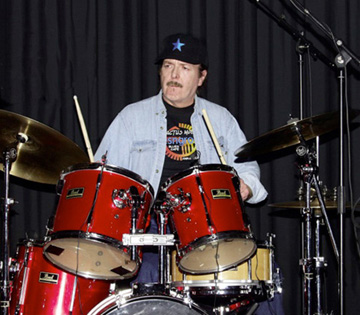
Uncle John Turner was born and raised in Port Arthur, Texas. He first played drums with Jerry LaCroix. Unc met the Winter brothers and performed with them a few times as a substitute. In 1968, Unc convinced Johnny to try a full blown blues band and sent for his friend Tommy Shannon to play bass. This group quickly got natonal recognition and began making records and shortly after that played Woodstock, with Edgar Winter as the fourth member.
By late 1970, they had split up and Uncle John and Tommy moved to Austin and formed a band called Krackerjack, which had Stevie Ray Vaughan as one of the major guitarists, along with Jesse Taylor, John Stahely, and Robin Siler.
Unc then moved to Houston for a while and made records with Isaac Payton Sweat, Ezra Charles, and Joey Long and played and recorded the next four years with Alan Haynes.
After this, Johnny Winter, Tommy Shannon, and Uncle John did some recording on Johnny's Third Degree album.
Uncle John then joined Paul Orta and made three albums with him before he and Appa Perry began the Blues Power project, which was Uncle John and Appa and different artists, including Alan Haynes, Tony Redman, Mike Keller, Matt Farrell, Matthew Robinson, John McVey, Mark Goodwin, Erin "Icewater" James, Eve Moncees, Gary Clark Jr., Shawn Pittman, and Sweet Basil McJagger.
Uncle John has jammed with B. B. King, Jimi Hendrix, Freddie King, Muddy Waters, Junior Wells, Lightnin' Hopkins, and many more. Unc has also recorded with Walter "Shakey" Horton, Willie Dixon, Albert Collins, Nuno Mindelis (the Blues King of Brazil), Benoît Blue Boy (the godfather of French blues), Lazy Lester, and many more.
Johnny Winter - Be Careful With A Fool
Johnny Winter from Danish TV in 1970 with Tommy Shannon on bass and Uncle John Turner on Drums


.jpg)
_2.jpg)


