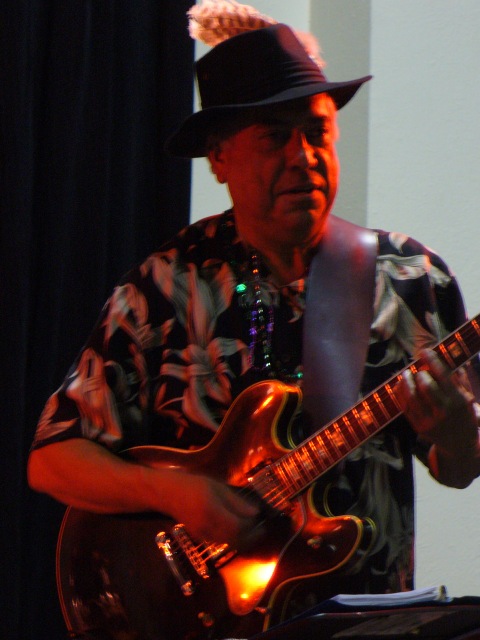
1929 Gene Taylor*
1953 Schorsch Hampel*
1955 Pino Daniele*
1972 Eric "Guitar" Davis*
1974 Roy Hawkins+
1976 Paul Kossoff+
1981 Tampa Red+
1983 Dik Banovich*
1991 Bee Houston+
1996 Magnus Berg*
1999 Peppermint Harris+
2000 Ray Goren*
Mariëlla Tirotto *19.03.
James “Jaimie” Ransom*
Happy Birthday
Gene Taylor *19.03.1929
Gene Taylor (* 19. März 1929 in Toledo (Ohio) als Calvin Eugene Taylor; † 22. Dezember 2001 in Sarasota, Florida) war ein US-amerikanischer Jazz-Bassist des Hardbop, der aber auch New Orleans Blues spielte.
Gene Taylor begann auf dem Sousaphon, spielt kurze Zeit Klavier und wandte sich dann dem Bass zu. Am meisten wird Taylor als Mitglied des Quintetts von Horace Silver in Erinnerung bleiben, in dem er von 1958 bis 1962 wirkte. Mit Silver besuchte er 1962 Europa. Ab 1964 arbeitete er bei Blue Mitchell und tourte mit dessen Quintett 1965 durch Japan. Außerdem spielte er freelance (freischaffend) mit Thelonious Monk, Howard McGhee, Duke Pearson, Junior Cook. In den späten 1960er Jahren arbeitete er mit Coleman Hawkins, mit dem er eines seiner letzten Alben einspielte, sowie mit Eddie Jefferson. 1975 nahm er noch mit Barry Harris auf.
Calvin Eugene "Gene" Taylor (March 19, 1929[1] – December 22, 2001[2]), was an American jazz double bassist. He was born in Toledo, Ohio and began his career in Detroit, Michigan.[2] Taylor worked with Horace Silver from 1958 until 1963.[1][3][4] He then joined Blue Mitchell's quintet, with whom he recorded and performed until 1965.[2] From 1966 until 1968, he toured and recorded with Nina Simone.[2] Simone recorded the song "Why? (The King of Love is Dead)", which Taylor wrote following the assassination of Martin Luther King, Jr..[2][5][6] Taylor began teaching music in New York public schools.[2] Taylor worked with Judy Collins from 1968 until 1976, and made numerous television appearances accompanying Simone and Collins.[2] He died on December 22, 2001, in Sarasota, Florida, where he had been living since 1990.
BLUE
MITCHELL, Perception (Corea, Mitchell)
2nd
track from Blue Mitchell's "Down With It!" album. Blue
Mitchell (trumpet); Junior Cook (tenor saxophone); Chick Corea
(piano); Gene Taylor (bass); Al Foster (drums).
Ray Goren *19.03.2000

Ray Goren (born on March 19, 2000 in New York City) is an American musician from Southern California who sings and plays guitar and keyboard. .
Before the age of three, Ray was playing nursery songs on a toy keyboard. By the age of five Ray was listening to jazz and playing by ear his own versions of songs by his favorite artists, Thelonious Monk, J.J. Johnson, Lee Morgan, Milt Jackson, Miles Davis, Jackie McLean and Oscar Peterson.
Ray’s musical life took a turn when while surfing the web he stumbled on a clip of BB King, Eric Clapton, Buddy Guy, Albert Collins and Jeff Beck all playing together “Sweet Little Angel”. With the Internet at his disposal, before the day was over Ray discovered and was listening to, Albert King, Luther Alison, Stevie Ray Vaughn, Otis Rush and others.
In the fall of 2009, Ray sat-in with blues legend Deacon Jones (band leader for John Lee Hooker and Freddie King). Deacon later said that: “It was love at first note”. Ray became a regular part of Deacon’s band, playing in numerous venues in Southern California.
Since then, through grass-roots support, Ray has appeared on the main stages of the nationally acclaimed Chicago Blues Festival (2013), Doheny Blues Festival (2012) and the Detroit Jazz Festival (2011) to name just a few.
Reviewer Jason Debord wrote the following on RockSubculture.com about Ray’s 2013 performance opening for BB King in Monterey: Ray “is a real phenomenon, and you sit there not believing what you are seeing and hearing… It was really one of the most unbelievable moments I’ve experienced at any concert. Amazing.”
Renowned Chicago Tribune music critic Howard Reich noted that: “No one rattles the place like Ray Goren, from the Los Angeles area. He plays electric guitar — and sings — with a fluency, ease and depth of expression that defy easy explanation”.
Reviewer Robert Kinsler wrote the following about Ray’s performance at Doheny Blues Festival opening for Buddy Guy and Steve Miller:
“The festivities began with an impressive set from singer-guitarist Ray Goren, who at the mere age of 12 already plays his Fender like a master….. Kinsler noted that Ray “sings with convincing emotion while improvising on artful arrangements of the Beatles’ “Let It Be” and Bill Withers’ “Ain’t No Sunshine”.f
Chicago Sun Times Music Critic, Thomas Conner Wrote the following about Ray’s performance on opening night of the 2013 Chicago Blues Festival “young Ray Goren stepped up Thursday night and ripped out a guitar solo that would have made some hairs fall out of Stevie Ray Vaughan's soul patch”.
Kourtney Richard reviewed Ray’s performance of the 2013 Long Beach & Bayou Blues Festival for the Grammy blog (www.Grammy.com) and wrote that Ray “was more than amazing; he was probably one of the most talented young guitarists I've ever seen. The crowd grew as he performed. Before I knew it, I was standing on my toes to see this young soulful musician. He performed some classic covers such as B.B. King's "Rock Me Baby," Freddie King's "Going Down" and Prince's "Purple Rain."
Before the age of three, Ray was playing nursery songs on a toy keyboard. By the age of five Ray was listening to jazz and playing by ear his own versions of songs by his favorite artists, Thelonious Monk, J.J. Johnson, Lee Morgan, Milt Jackson, Miles Davis, Jackie McLean and Oscar Peterson.
Ray’s musical life took a turn when while surfing the web he stumbled on a clip of BB King, Eric Clapton, Buddy Guy, Albert Collins and Jeff Beck all playing together “Sweet Little Angel”. With the Internet at his disposal, before the day was over Ray discovered and was listening to, Albert King, Luther Alison, Stevie Ray Vaughn, Otis Rush and others.
In the fall of 2009, Ray sat-in with blues legend Deacon Jones (band leader for John Lee Hooker and Freddie King). Deacon later said that: “It was love at first note”. Ray became a regular part of Deacon’s band, playing in numerous venues in Southern California.
Since then, through grass-roots support, Ray has appeared on the main stages of the nationally acclaimed Chicago Blues Festival (2013), Doheny Blues Festival (2012) and the Detroit Jazz Festival (2011) to name just a few.
Reviewer Jason Debord wrote the following on RockSubculture.com about Ray’s 2013 performance opening for BB King in Monterey: Ray “is a real phenomenon, and you sit there not believing what you are seeing and hearing… It was really one of the most unbelievable moments I’ve experienced at any concert. Amazing.”
Renowned Chicago Tribune music critic Howard Reich noted that: “No one rattles the place like Ray Goren, from the Los Angeles area. He plays electric guitar — and sings — with a fluency, ease and depth of expression that defy easy explanation”.
Reviewer Robert Kinsler wrote the following about Ray’s performance at Doheny Blues Festival opening for Buddy Guy and Steve Miller:
“The festivities began with an impressive set from singer-guitarist Ray Goren, who at the mere age of 12 already plays his Fender like a master….. Kinsler noted that Ray “sings with convincing emotion while improvising on artful arrangements of the Beatles’ “Let It Be” and Bill Withers’ “Ain’t No Sunshine”.f
Chicago Sun Times Music Critic, Thomas Conner Wrote the following about Ray’s performance on opening night of the 2013 Chicago Blues Festival “young Ray Goren stepped up Thursday night and ripped out a guitar solo that would have made some hairs fall out of Stevie Ray Vaughan's soul patch”.
Kourtney Richard reviewed Ray’s performance of the 2013 Long Beach & Bayou Blues Festival for the Grammy blog (www.Grammy.com) and wrote that Ray “was more than amazing; he was probably one of the most talented young guitarists I've ever seen. The crowd grew as he performed. Before I knew it, I was standing on my toes to see this young soulful musician. He performed some classic covers such as B.B. King's "Rock Me Baby," Freddie King's "Going Down" and Prince's "Purple Rain."
Ray Goren is a musician and singer who plays guitar and several other instruments. Initially self-taught, Ray started playing piano and grew up listening to jazz and blues. Ray says, “I started messing with piano when I was three but got really serious about it at the age of five when I was listening to Theolonius Monk, Oscar Peterson, Milt Jackson, and Coltrane as well as Miles Davis and all those guys. My father got me a boombox and some jazz CDs and I had a little keyboard at home and would try to play like those guys.”
When Ray was seven, his family moved to California from New York City and he got into the guitar. “I had been looking online for jazz musician J.J. Johnson, who was an incredible trombone player, and instead of typing J.J., I typed B.B. by accident. The first thing that came up was B.B. King and I don’t know why I clicked on it. I saw B.B. King, Albert Collins, Jeff Beck, Buddy Guy and Eric Clapton. I watched the video of them playing ‘Sweet Little Angel’. I was moved by the energy and their charisma. It was deep and soulful — it got to my heart.”
Ray says “The soul of my music is tied to the Blues, which is my foundation. Instead of growing and evolving from the blues into rock, I listened to Stevie Wonder, D’Angelo, Amy Winehouse, Donny Hathaway, Prince, and others. Later I listened to all the Rock greats as well as to more recent bands like Maroon 5, Arctic Monkeys, Radiohead, Imagine Dragons, and pop music such as the Weeknd, J. Cole, Drake and others.” Ray’s diverse musical tastes have influenced his original music; a mixture of pop, rock and R&B.
Ray is an explosive live performer who has been playing all around the United States. He has shared the stage with BB King, Leon Russell, Robby Krieger, Buddy Guy, Jonny Lang, Alice Cooper and Eric Gales to name just a few. Chicago Sun Times music critic Thomas Conner wrote after Ray’s performance opening night on the main stage for the 2013 Chicago Blues Festival “Ray Goren stepped up Thursday night and ripped out a guitar solo that would have made some hairs fall out of Stevie Ray Vaughan’s soul patch.” After seeing Ray open for BB King in Monterey, reviewer Jason Debord wrote on Rocksubculture.com: “Ray is a real phenomenon, and you sit there not believing what you are seeing and hearing… It was really one of the most unbelievable moments I’ve experienced at any concert. Amazing.”
Ray’s “Save My Soul” EP charted on the Root’s charts for about six months, peaking at number 13. Ray and his original music were featured on the home page of Guitar World and Guitar Center. In reflecting on Ray Goren, Steve Jordan, who produced Ray’s recent “Songs For You EP, says, “Ray is not just a musician, he’s a great singer who writes great songs….I’ve worked with a ton of great and legendary musicians in my career and Ray is one of the most gifted artists I’ve ever witnessed. Between his guitar playing, piano playing, songwriting and singing, He’s a special talent.” Steve Jordan is a highly-respected Grammy and Emmy Award-winning musician, producer and writer who has worked with Keith Richards, John Mayer, Alicia Keys, and Kelly Clarkson, to name just a few.
Ray has two bands. The first, called Ray Goren and the Soul Fixers, is a dynamic pop/rock band that plays Ray’s original music. The other band, Ray Goren & the Generation Blues Experience is a blues band comprised of several blues veterans who have been mentoring Ray since he was 12.
Ray Goren Doheny Blues Festival 2012
Biscuits and Blues Presents Ray Goren
Magnus Berg *19.03.1996

Sensational 18-year old Norwegian guitarist/songwriter Magnus Berg has been leading his own band since age 16. Having toured all over Norway from top to bottom, from the West to the East, he began to perform on the same coveted Norwegian festival lineups as established international touring artists coming through his homeland. During those appearances, Berg made an impression not just with his inspired guitar work, but also by overcoming his teenage shyness and making an effort to meet, and develop lasting relationships with, artists he admired, such as Mike Zito, Bryan Lee, and Damon Fowler.
As Berg began to catch the eye of many in the American blues community, he knew just how to use his family’s yearly winter trips to Florida; he took to the road (with Dad at the wheel for the time being), going out to jams nightly and often being invited to sit in with the American artists who saw him play in Norway. On one such occasion, Berg was spotted by singer/songwriter Kirsten Thien. Thien took an interest in Berg’s album project already underway, releasing Cut Me Loose on her own Screen Door Records and making sure that the worthy debut gets the international attention it well-deserves.
While Berg finishes high school (June 2015), he currently setting his touring schedule for the year to come, booking dates internationally. Having toured in 2013/14 as lead guitarist for The Kirsten Thien Band in France, Germany, Belgium and The Netherlands, there is a growing list of venues across Europe who know the name Magnus Berg, and eagerly await his return.
Magnus Berg was born in Norway in 1996. He received his first guitar (built by his grandfather) at the age of seven. Early on, Berg discovered classic rock and the first guitarist he tried to emulate was Angus Young (AC/DC). He took his admiration of Young and other classic rock guitarists even further, setting out to discover the roots of the music he was listening to. This is where he found the Blues and artists such as B.B King, Howlin Wolf, Muddy Waters, Stevie Ray Vaughan, Otis Rush and Jimmy Reed. These musicians have become the inspiration behind his melodic and gutsy guitar style.
As Berg began to catch the eye of many in the American blues community, he knew just how to use his family’s yearly winter trips to Florida; he took to the road (with Dad at the wheel for the time being), going out to jams nightly and often being invited to sit in with the American artists who saw him play in Norway. On one such occasion, Berg was spotted by singer/songwriter Kirsten Thien. Thien took an interest in Berg’s album project already underway, releasing Cut Me Loose on her own Screen Door Records and making sure that the worthy debut gets the international attention it well-deserves.
While Berg finishes high school (June 2015), he currently setting his touring schedule for the year to come, booking dates internationally. Having toured in 2013/14 as lead guitarist for The Kirsten Thien Band in France, Germany, Belgium and The Netherlands, there is a growing list of venues across Europe who know the name Magnus Berg, and eagerly await his return.
Magnus Berg was born in Norway in 1996. He received his first guitar (built by his grandfather) at the age of seven. Early on, Berg discovered classic rock and the first guitarist he tried to emulate was Angus Young (AC/DC). He took his admiration of Young and other classic rock guitarists even further, setting out to discover the roots of the music he was listening to. This is where he found the Blues and artists such as B.B King, Howlin Wolf, Muddy Waters, Stevie Ray Vaughan, Otis Rush and Jimmy Reed. These musicians have become the inspiration behind his melodic and gutsy guitar style.
29/29 Magnus Berg - I Got My Eyes On You
Magnus Berg Swing Wespelaar 22 augustus 2015 How blue can you get
Mariëlla Tirotto *19.03.

Frontfrau der Band ist die leidenschaftliche halb italienische Sängerin Mariëlla Tirotto, die mit ihrer manchmal sinnlichen, manchmal rauen Stimme mal ihre Emotionen flüsternd und dann wieder hemmungslos hören läst.
Obwohl ihre Stimme regelmäßig mit denen von Sängerinnen wie Etta James, Carmen McRae, Cassandra Wilson, Eartha Kitt, Diane Schuur, Grace Jones und Tina Turner verglichen wird, hat sie eine unverkennbare, charakteristische Klangfarbe.
Sie trat für das Nationalen Fernsehen und Radio auf, hat u. a. mit Bob Malach, Ronald Snijders and Carlo de Wijs zusammen gearbeitet und hat u. a. mit Rolf Delfos, Eelco Gelling, Toon de Gouw, Chris Strik, Gé Bijvoet und Maurizio Pugno auf der Bühne gestanden.
… Mariëlla Tirotto erotisiert das Flames. In ihrem weißen Kleid präsentiert sie sich nicht nur als Frühlingsbotin, sondern auch als eine ausgesprochen faszinierende Sängerin, die mit tiefen, rauen oder, um es auf den Punkt zu bringen, erotischen Stimme, zu überzeugen weiß…
(Tobias Tschapka, Donaukurier.de)
…Eine Powerfrau mit großer Stimme und viel Humor…
(Hans von Draminski, Hipoltsteiner Zeitung)
…Mariëlla Tirottos Bühnenpräsenz ist hervorragend, ihr Auftreten sympathisch, und sie kann verdammt gut singen…
(Claus Kohlmann, Hildesheimer Allgemeine Zeitung)
Obwohl ihre Stimme regelmäßig mit denen von Sängerinnen wie Etta James, Carmen McRae, Cassandra Wilson, Eartha Kitt, Diane Schuur, Grace Jones und Tina Turner verglichen wird, hat sie eine unverkennbare, charakteristische Klangfarbe.
Sie trat für das Nationalen Fernsehen und Radio auf, hat u. a. mit Bob Malach, Ronald Snijders and Carlo de Wijs zusammen gearbeitet und hat u. a. mit Rolf Delfos, Eelco Gelling, Toon de Gouw, Chris Strik, Gé Bijvoet und Maurizio Pugno auf der Bühne gestanden.
… Mariëlla Tirotto erotisiert das Flames. In ihrem weißen Kleid präsentiert sie sich nicht nur als Frühlingsbotin, sondern auch als eine ausgesprochen faszinierende Sängerin, die mit tiefen, rauen oder, um es auf den Punkt zu bringen, erotischen Stimme, zu überzeugen weiß…
(Tobias Tschapka, Donaukurier.de)
…Eine Powerfrau mit großer Stimme und viel Humor…
(Hans von Draminski, Hipoltsteiner Zeitung)
…Mariëlla Tirottos Bühnenpräsenz ist hervorragend, ihr Auftreten sympathisch, und sie kann verdammt gut singen…
(Claus Kohlmann, Hildesheimer Allgemeine Zeitung)
Mariëlla Tirotto & the Blues Federation is fronted by the passionate, half-Italian singer Mariëlla Tirotto, who sometimes whispers with a sultry voice, sometimes screams out her emotions raw and unrestrained.
Although her voice is frequently compared with those of singers like Etta James, Carmen McRae, Cassandra Wilson, Eartha Kitt, Diane Schuur, Grace Jones en Tina Turner, she has an obvious characteristic sound.
She appeared on national television and radio, has worked together – a.o. – with Bob Malach, Ronald Snijders and Carlo de Wijs and has shared the stage with –a.o. – Rolf Delfos, Eelco Gelling, Toon de Gouw, Chris Strik, Gé Bijvoet and Maurizio Pugno.
… but also as a distinctly fascinating singer, that totally convinces with her deep, raw, or, to put it bluntly, erotic voice ...(Tobias Tschapka, Donaukurier.de)
… Mariëlla Tirotto's stage performance is fabulous, her behaviour is sympathetic and she can sing damned well…(Claus Kohlmann, Hildesheimer Allgemeine Zeitung)
… A power woman with a big voice and lots of humour… (Hans von Draminski, Hipoltsteiner Zeitung)
Although her voice is frequently compared with those of singers like Etta James, Carmen McRae, Cassandra Wilson, Eartha Kitt, Diane Schuur, Grace Jones en Tina Turner, she has an obvious characteristic sound.
She appeared on national television and radio, has worked together – a.o. – with Bob Malach, Ronald Snijders and Carlo de Wijs and has shared the stage with –a.o. – Rolf Delfos, Eelco Gelling, Toon de Gouw, Chris Strik, Gé Bijvoet and Maurizio Pugno.
… but also as a distinctly fascinating singer, that totally convinces with her deep, raw, or, to put it bluntly, erotic voice ...(Tobias Tschapka, Donaukurier.de)
… Mariëlla Tirotto's stage performance is fabulous, her behaviour is sympathetic and she can sing damned well…(Claus Kohlmann, Hildesheimer Allgemeine Zeitung)
… A power woman with a big voice and lots of humour… (Hans von Draminski, Hipoltsteiner Zeitung)
Gunslinger / Mariëlla Tirotto & the Blues Federation
Pino Daniele *19.03.1955

Pino Daniele (* 19. März 1955 in Neapel; † 5. Januar 2015 in der Toskana) war ein italienischer Sänger, Musiker und Songtexter.
Leben
Als Sohn eines Hafenarbeiters aus einfachen Verhältnissen stammend, brachte sich der Autodidakt Pino Daniele das Gitarrenspiel selbst bei.
Schon seine erste Veröffentlichung Terra mia war eine gelungene Verschmelzung aus Blues und Elementen der traditionellen neapolitanischen Volksmusik. Dieser Linie der Fusion von regionaler Folklore, Blues und anderen musikalischen Stilen, wie Rock und Jazz sowie den musikalischen Strukturen anderer Ethnien, blieb er im Laufe seiner weiteren Karriere stets treu. Dabei beschritt er auch unkonventionelle Wege, fand jedoch immer zu einem eingängigen Sound. Folglich wurden seine Werke nicht nur von Kritikern und Kennern gewürdigt, sondern verkauften sich auch national wie international überaus erfolgreich. Alleine sein 1995 veröffentlichtes Album Non calpestare i fiori nel deserto erreichte eine Auflage von 800.000 Exemplaren.
Die oft sozialkritischen, zuweilen aber auch persönlich-melancholischen Texte trägt er sowohl in neapolitanischem Dialekt wie auch in italienischer und englischer Sprache vor.
Im Laufe seiner langen Karriere kam es zu zahlreichen gemeinsamen Projekten mit anderen namhaften italienischen und internationalen Künstlern. Zum Beispiel trat er 1995 live mit Eros Ramazzotti und Pat Metheny auf,[2] wirkte 1983 auf Richie Havens' Album Common Ground und auf Al di Meolas Album The Infinite Desire[3] mit. Später arbeitete er unter anderem mit Chick Corea und den Simple Minds zusammen und trat bei dem Konzert Pavarotti & Friends for the children of Liberia auf. Bei allen Erfolgen, Kooperationen und von ihm beschrittenen neuen Wegen blieb er seinen neapolitanischen Wurzeln persönlich wie musikalisch stets verbunden.
Pino Daniele (19 March 1955 – 5 January 2015) was an Italian singer-songwriter, and guitarist,[1] whose influences covered a wide number of genres, including pop, blues, jazz, and Italian and Middle Eastern music.
Biography
Daniele was born to a working-class family in Naples, his father being a port worker. A self-taught guitarist, he began his career as a musician playing for other successful singers of the 1970s.
His striking debut in the Italian music world was in 1977 with the album Terra mia, which proved to be a successful mix of Neapolitan tradition and Blues sounds. Daniele defined his music with the term "taramblu", which indicated a mix of tarantella, blues and rumba. His lyrics also attracted critical praise: written and sung in an intense Neapolitan, they contained strong though bitter accusations against the social injustices of Naples, as well as Italian society in general, and included melancholic personal themes. Several of the later songs are characterized by a free intermingling of English, Italian and Neapolitan passages.[citation needed]
Daniele's talent was confirmed on the following album Pino Daniele (1979). He scored his greatest success in 1980, with Nero a metà ("Half-Black Skinned"), which was noted by some authorities as the hallmark of the rebirth of Neapolitan song. In that year Daniele opened the Bob Marley concert at the San Siro stadium in Milan. In 1981 Vai Mo was released. The presence of some of the most renowned musicians of the Neapolitan musical milieu, including James Senese, Enzo Avitabile, Tullio De Piscopo and Tony Esposito, as session men on his albums has also been widely praised.
In 1982 Daniele gradually shifted to a personal and early version of world music: in Bella 'mbriana musicians such as Alphonso Johnson and Wayne Shorter appeared as guest players. In the following year Daniele held a concert in Havana, and later formed a Latin-American band featuring Juan Pablo Torres, Adalberto Lara and Nanà Vasconcelos. In (1984), the former King Crimson member Mel Collins played on Daniele's album Musicante. Daniele's skills in creating well-balanced blends of Mediterranean, Blues, rock, music, salsa and Neapolitan melodies are well shown in his first live work, Live Sciò of 1984.[citation needed]
Later Daniele collaborated with the American singer/guitarist Richie Havens on Common Ground[disambiguation needed], an album written and played together. His interest in Arabic music is emphasized on Bonne Soirée (1987), while the subsequent Schizzechea With Love (1988) was more Mediterranean-oriented. In the same year he started a collaboration with the Italian actor and director Massimo Troisi: Daniele completed the soundtracks for Troisi's films Le vie del Signore sono finite and Pensavo fosse amore invece era un calesse.
A certain loss of inspiration and a move to a more pop-oriented songwriting can be detected in his greatest commercial success, Mascalzone Latino (1989), a success confirmed by the following albums Un uomo in Blues (1991) and Che Dio ti benedica (1993). The latter contains two songs produced by Chick Corea.
Non calpestare i fiori nel deserto, released in Spring 1995, is an attempt to revive inspiration through African and Ethnic influences, and sold more than 800,000 copies. The subsequent tour ended with a double date with Jazz guitarist Pat Metheny.[citation needed]
In 2002, after a collaboration with Eros Ramazzotti, Daniele sang and toured with two other famous Italian singers, Francesco De Gregori and Fiorella Mannoia. His latest album containing previously unpublished songs is Passi d'autore of 2004.
On January 05 2015, it was announced via Instragram by Daniele's longtime friend Eros Ramazzotti that he had passed away from a heart attack between January 4th and 5th. Pino Daniele is considered one of the best singer-songwriters in Italian history.
Pino Daniele - live 83 - a me me piace o blues
James “Jaimie” Ransom *19.03.


from the CD more than ever: “my baby is gone”
GProject Blues Band - Blues Deluxe
R.I.P.
Tampa Red +19.03.1981

Das Besondere an seinem Gitarrenspiel war, dass er einen kurzen Bottleneck benutzte, der nicht über das gesamte Griffbrett ging und es so ermöglichte, den Finger zum Greifen der Saiten zu benutzen. Im Gegensatz zu fast allen anderen Slidegitarristen dieser Zeit spielte er auf einer normal gestimmten Gitarre (sogenannte spanische Stimmung), während das Gros der Gitarristen zum Slidespiel offene Stimmungen einsetzte.
Tampa Red zog in den 1920er Jahren nach Chicago, wo er mit Georgia Tom Dorsey das Duo Hokum Boys bildete, das mit dem Titel It's Tight Like That einen Hit landete. Von den 20er bis in die 1950er Jahre hinein zählte Tampa Red neben Big Bill Broonzy und später Muddy Waters zu Chicagos führenden Bluesmusikern. Er half vielen vom Lande zugereisten Musikern, wie beispielsweise Big Maceo Merriweather, über die erste Zeit und machte sein Haus zum Übungsraum für die Bluesszene. Tampa Red machte viele Einspielungen im Bereich Hokum, Pop, Jive und vor allem Blues. Mit Anna Lou Blues, Black Angel Blues, Crying Won't Help You, It Hurts Me Too und Love Her with a Feeling stammen einige klassische Blues-Kompositionen von ihm.
Nach dem Tod seiner Ehefrau im Jahr 1953, den er nie überwand, wurden seine Alkoholprobleme akut und seine Karriere brach ab.
Anfang der 1960er Jahre nahm Tampa Red noch einige LPs auf. Es handelte sich meist um Solo-Aufnahmen, auf denen er sich mit Gitarre und Kazoo begleitete. Auf einigen Stücken unterstützte ihn der Pianist Cow Cow Davenport. Trotz des Interesses an Bluesmusik aus den 20er und 30er Jahren konnte Tampa Red keine neue Karriere mehr aufbauen. Nach dem Tod seiner neuen Lebensgefährtin in den 1970er Jahren, die seinen Tagesablauf strukturierte und ihn versorgte hatte, lebte der Bluesmusiker in einem Altenheim. 1981, im selben Jahr, in dem er verarmt starb, wurde Tampa Red in die Blues Hall of Fame aufgenommen.
http://de.wikipedia.org/wiki/Tampa_Red

 http://acerecords.co.uk/peppermint-harris
:format(jpeg):mode_rgb():quality(96)/discogs-images/A-631837-1378913093-3697.jpeg.jpg)
Roy Theodore Hawkins (* 7. Februar 1903 in Jefferson, Marion County, Texas; † 19. März 1974 in Compton, Kalifornien) war ein US-amerikanischer Bluespianist, Sänger und Songwriter, der dem West Coast Blues zugerechnet wird. Über sein Leben ist wenig bekannt.
Geboren in Texas spielte Hawkins nach dem Zweiten Weltkrieg in Clubs in Oakland und Richmond in Kalifornien, wo ihn der Produzent Bob Geddins entdeckte. 1947/48 machte Hawkins seine ersten Aufnahmen. Mit „Why Do Everything Happen to Me“ (1950) und „The Thrill Is Gone“ (1951) hatte er zwei Hits.
In den Song „Why Do Everything Happen to Me“ – später von James Brown neu eingespielt – verarbeitete Hawkins einen Autounfall, nach dem sein (je nach Quelle rechter oder linker) Arm gelähmt blieb. Als B. B. King 1970 mit „The Thrill Is Gone“ einen Superhit hatte, wurde zunächst der Komponist falsch angegeben. Auch Ray Charles hatte mit einem Song von Hawkins – „Bad Luck Is Falling“ – Erfolg.
Bis auf die erhaltenen Aufnahmen ist über Roy Hawkins' weiteres Leben wenig bekannt. Er starb 1974 in Kalifornien.

Tampa Red (January 8, 1904[1] – March 19, 1981), born Hudson Woodbridge but known from childhood as Hudson Whittaker, was an American Chicago blues musician.
Tampa Red is best known as an accomplished and influential blues guitarist who had a unique single-string slide style. His songwriting and his silky, polished "bottleneck" technique influenced other leading Chicago blues guitarists, such as Big Bill Broonzy and Robert Nighthawk, as well as Muddy Waters, Elmore James, Mose Allison and many others.[2] In a career spanning over 30 years he also recorded pop, R&B and hokum records. His best known recordings include the "classic compositions 'Anna Lou Blues', 'Black Angel Blues', 'Crying Won't Help You', 'It Hurts Me Too', and 'Love Her with a Feeling'".[3]
Biography
He was born Hudson Woodbridge in Smithville, Georgia, United States. His parents died when he was a child, and he moved to Tampa, Florida, where he was raised by his aunt and grandmother and adopted their surname, Whittaker.[4] He emulated his older brother, Eddie, who played guitar, and he was especially inspired by an old street musician called Piccolo Pete, who first taught him to play blues licks on a guitar.[2]
In the 1920s, having already perfected his slide technique, he moved to Chicago, Illinois, and began his career as a musician, adopting the name 'Tampa Red' from his childhood home and light colored skin.[4] His big break was being hired to accompany Ma Rainey and he began recording in 1928 with "It's Tight Like That", in a bawdy and humorous style that became known as "hokum".[4] Early recordings were mostly collaborations with Thomas A. Dorsey, known at the time as Georgia Tom.[4] Tampa Red and Georgia Tom recorded almost 90 sides, sometimes as "The Hokum Boys" or, with Frankie Jaxon, as "Tampa Red's Hokum Jug Band".
In 1928, Tampa Red became the first black musician to play a National steel-bodied resonator guitar, the loudest and showiest guitar available before amplification, acquiring one in the first year they were available. This allowed him to develop his trademark bottleneck style, playing single string runs, not block chords, which was a precursor to later blues and rock guitar soloing.[5] The National guitar he used was a gold-plated tricone, which was found in Illinois in the 1990s by music-shop owner and guitarist Randy Clemens and later sold to the "Experience Music Project" in Seattle.[6] Tampa Red was known as "The Man With The Gold Guitar", and, into the 1930s, he was billed as "The Guitar Wizard".
His partnership with Dorsey ended in 1932, but he remained much in demand as a session musician, working with John Lee "Sonny Boy" Williamson, Memphis Minnie, Big Maceo, and many others.[4] In 1934 he signed for Victor Records, remaining on their artist roster until 1953. He formed the Chicago Five, a group of session musicians who created what became known as the Bluebird sound, a precursor of the small group style of later jump blues and rock and roll bands.[4] He was a close friend and associate of Big Bill Broonzy and Big Maceo Merriweather. He enjoyed commercial success and reasonable prosperity, and his home became a centre for the blues community, informally providing rehearsal space, bookings, and lodgings for the flow of musicians who arrived in Chicago from the Mississippi Delta as the commercial potential of blues music grew and agricultural employment in the south diminished.
By the 1940s he was playing electric guitar. In 1942 "Let Me Play With Your Poodle" was a # 4 hit on Billboard's new "Harlem Hit Parade", forerunner of the R&B chart, and his 1949 recording "When Things Go Wrong with You (It Hurts Me Too)", another R&B hit, was covered by Elmore James. He was 'rediscovered' in the late 1950s, like many other surviving early recorded blues artists such as Son House and Skip James, as part of the blues revival. His final recordings were in 1960.
He became an alcoholic after his wife's death in 1953.[7] He died destitute in Chicago, aged 77.
Tampa Red is best known as an accomplished and influential blues guitarist who had a unique single-string slide style. His songwriting and his silky, polished "bottleneck" technique influenced other leading Chicago blues guitarists, such as Big Bill Broonzy and Robert Nighthawk, as well as Muddy Waters, Elmore James, Mose Allison and many others.[2] In a career spanning over 30 years he also recorded pop, R&B and hokum records. His best known recordings include the "classic compositions 'Anna Lou Blues', 'Black Angel Blues', 'Crying Won't Help You', 'It Hurts Me Too', and 'Love Her with a Feeling'".[3]
Biography
He was born Hudson Woodbridge in Smithville, Georgia, United States. His parents died when he was a child, and he moved to Tampa, Florida, where he was raised by his aunt and grandmother and adopted their surname, Whittaker.[4] He emulated his older brother, Eddie, who played guitar, and he was especially inspired by an old street musician called Piccolo Pete, who first taught him to play blues licks on a guitar.[2]
In the 1920s, having already perfected his slide technique, he moved to Chicago, Illinois, and began his career as a musician, adopting the name 'Tampa Red' from his childhood home and light colored skin.[4] His big break was being hired to accompany Ma Rainey and he began recording in 1928 with "It's Tight Like That", in a bawdy and humorous style that became known as "hokum".[4] Early recordings were mostly collaborations with Thomas A. Dorsey, known at the time as Georgia Tom.[4] Tampa Red and Georgia Tom recorded almost 90 sides, sometimes as "The Hokum Boys" or, with Frankie Jaxon, as "Tampa Red's Hokum Jug Band".
In 1928, Tampa Red became the first black musician to play a National steel-bodied resonator guitar, the loudest and showiest guitar available before amplification, acquiring one in the first year they were available. This allowed him to develop his trademark bottleneck style, playing single string runs, not block chords, which was a precursor to later blues and rock guitar soloing.[5] The National guitar he used was a gold-plated tricone, which was found in Illinois in the 1990s by music-shop owner and guitarist Randy Clemens and later sold to the "Experience Music Project" in Seattle.[6] Tampa Red was known as "The Man With The Gold Guitar", and, into the 1930s, he was billed as "The Guitar Wizard".
His partnership with Dorsey ended in 1932, but he remained much in demand as a session musician, working with John Lee "Sonny Boy" Williamson, Memphis Minnie, Big Maceo, and many others.[4] In 1934 he signed for Victor Records, remaining on their artist roster until 1953. He formed the Chicago Five, a group of session musicians who created what became known as the Bluebird sound, a precursor of the small group style of later jump blues and rock and roll bands.[4] He was a close friend and associate of Big Bill Broonzy and Big Maceo Merriweather. He enjoyed commercial success and reasonable prosperity, and his home became a centre for the blues community, informally providing rehearsal space, bookings, and lodgings for the flow of musicians who arrived in Chicago from the Mississippi Delta as the commercial potential of blues music grew and agricultural employment in the south diminished.
By the 1940s he was playing electric guitar. In 1942 "Let Me Play With Your Poodle" was a # 4 hit on Billboard's new "Harlem Hit Parade", forerunner of the R&B chart, and his 1949 recording "When Things Go Wrong with You (It Hurts Me Too)", another R&B hit, was covered by Elmore James. He was 'rediscovered' in the late 1950s, like many other surviving early recorded blues artists such as Son House and Skip James, as part of the blues revival. His final recordings were in 1960.
He became an alcoholic after his wife's death in 1953.[7] He died destitute in Chicago, aged 77.
Tampa Red - Jelly whipping blues

Peppermint Harris +19.03.1999
Harrison Nelson

Peppermint
Harris (* 17. Juli 1925 in Texarkana (Texas) als Harrison Nelson Jr.; †
19. März 1999 in Elizabeth, New Jersey) war ein US-amerikanischer
Rhythm and Blues-Gitarrist und Sänger, der dem West Coast Blues
zuzurechnen ist
Harrison Nelson begann Ende der 1940er Jahre erste
Aufnahmen in Houston für das Label Gold Star einzuspielen, bei denen er
von seinem Freund Lightnin' Hopkins sowie von Elmore Nixon begleitet
wurde, mit denen er jedoch keinen Erfolg hatte. Schließlich bekam er für
Aufnahmen wie „Fat Girl Boogie“ einen Vertrag bei dem Produzenten Bob
Shad, der Nelsons Namen vergessen und die Titel unter dem Pseudonym
Peppermint Harris auf dem Label Sittin´in With veröffentlichte. 950
hatte er mit „Rainin´in My Heart“ einen ersten Charterfolg. 1951
wechselte er zum Label Aladdin in Los Angeles und hatte mit „I Got
Loaded“ (en: Ich bin betrunken) seinen größten Hit in den
R&B-Charts, der im November #1 erreichte. Seine weiteren Songs waren
jedoch weniger erfolgreich, von denen viele den Alkohol zum Thema
hatten, wie „Have Another Drink On Me and Talk to Me“, „Cadillac
Funeral“, „Right Back on It“ oder „Three Sheets in the Wind“. Mit Albert
Collins nahm er um 1960 Material für das Album Houston Can't Be Heaven
auf.
Später nahm er weitere Stücke in Shreveport, Louisiana auf (u.a.
eine weitere Version von „Raining in My Heart“ für das Label Jewel,
1965), außerdem für Lunar („Sweet Black Angels“) und Duke Records
(„Angel Child“), und arbeitete in Sacramento und New Jersey, bevor ein
letztes Album 1995 auf dem Label Home Cooking entstand. Er starb 1999 in
Elizabeth, New Jersey.
Harrison D. Nelson Jr. (July 17, 1925 – March 19, 1999)[1] known as Peppermint Harris, was an American rhythm and blues and jump blues singer and guitarist.[2]
Originally from Texarkana, Texas, he first recorded in Houston, as Peppermint Nelson, in the late 1940s, accompanied by his friend Lightnin' Hopkins. He then made further recordings including "Raining In My Heart" for a record label run by Bob Shad, who allegedly forgot Nelson's name and released them as by Peppermint Harris.[2]
In 1951 he moved to Modern Records in Los Angeles, California, and had his biggest R&B hit with "I Got Loaded", which reached number one on the U.S. Billboard R&B chart in November that year.[2] However, later releases on various small Southern California labels were less successful.
He later recorded in Shreveport, Louisiana, and worked in Sacramento and New Jersey, before recording a final album on the Home Cooking label in 1995.[2]
He died in Elizabeth, New Jersey in 1999, at the age of 73.
Originally from Texarkana, Texas, he first recorded in Houston, as Peppermint Nelson, in the late 1940s, accompanied by his friend Lightnin' Hopkins. He then made further recordings including "Raining In My Heart" for a record label run by Bob Shad, who allegedly forgot Nelson's name and released them as by Peppermint Harris.[2]
In 1951 he moved to Modern Records in Los Angeles, California, and had his biggest R&B hit with "I Got Loaded", which reached number one on the U.S. Billboard R&B chart in November that year.[2] However, later releases on various small Southern California labels were less successful.
He later recorded in Shreveport, Louisiana, and worked in Sacramento and New Jersey, before recording a final album on the Home Cooking label in 1995.[2]
He died in Elizabeth, New Jersey in 1999, at the age of 73.
Roy Hawkins +19.03.1974
Roy Theodore Hawkins (* 7. Februar 1903 in Jefferson, Marion County, Texas; † 19. März 1974 in Compton, Kalifornien) war ein US-amerikanischer Bluespianist, Sänger und Songwriter, der dem West Coast Blues zugerechnet wird. Über sein Leben ist wenig bekannt.
Geboren in Texas spielte Hawkins nach dem Zweiten Weltkrieg in Clubs in Oakland und Richmond in Kalifornien, wo ihn der Produzent Bob Geddins entdeckte. 1947/48 machte Hawkins seine ersten Aufnahmen. Mit „Why Do Everything Happen to Me“ (1950) und „The Thrill Is Gone“ (1951) hatte er zwei Hits.
In den Song „Why Do Everything Happen to Me“ – später von James Brown neu eingespielt – verarbeitete Hawkins einen Autounfall, nach dem sein (je nach Quelle rechter oder linker) Arm gelähmt blieb. Als B. B. King 1970 mit „The Thrill Is Gone“ einen Superhit hatte, wurde zunächst der Komponist falsch angegeben. Auch Ray Charles hatte mit einem Song von Hawkins – „Bad Luck Is Falling“ – Erfolg.
Bis auf die erhaltenen Aufnahmen ist über Roy Hawkins' weiteres Leben wenig bekannt. Er starb 1974 in Kalifornien.
Roy Hawkins (February 7, 1903, Jefferson, Texas - March 19, 1974, Compton, California[1]) was an American pianist, songwriter and blues musician. After working in clubs and recording unsuccessful singles, he broke through with his song "Why Do Everything Happen to Me?," inspired by an auto accident which paralyzed his right arm. His later years were spent working in a furniture store.[1]
Career
Hawkins first began recording in the San Francisco Bay Area in 1948 for Cava-Tone and Down Town Records. He signed with Modern Records the following year and stayed with that label until 1954. Singles released include "Why Do Everything Happen To Me" (1950) and "The Thrill Is Gone" (1951). A few later singles were released by Flair Records (1953), RPM Records (1955), Rhythm Records (1958), and Kent Records (1962). He died in 1974.[1][2] Several of his songs were covered by later artists, including "Bad Luck Is Falling" (Ray Charles), "Why Do Everything Happen To Me" (B.B. King and James Brown), and "The Thrill Is Gone" (B.B. King).
Career
Hawkins first began recording in the San Francisco Bay Area in 1948 for Cava-Tone and Down Town Records. He signed with Modern Records the following year and stayed with that label until 1954. Singles released include "Why Do Everything Happen To Me" (1950) and "The Thrill Is Gone" (1951). A few later singles were released by Flair Records (1953), RPM Records (1955), Rhythm Records (1958), and Kent Records (1962). He died in 1974.[1][2] Several of his songs were covered by later artists, including "Bad Luck Is Falling" (Ray Charles), "Why Do Everything Happen To Me" (B.B. King and James Brown), and "The Thrill Is Gone" (B.B. King).
Roy Hawkins-The Thrill Has Gone
Paul Kossoff +19.03.1976
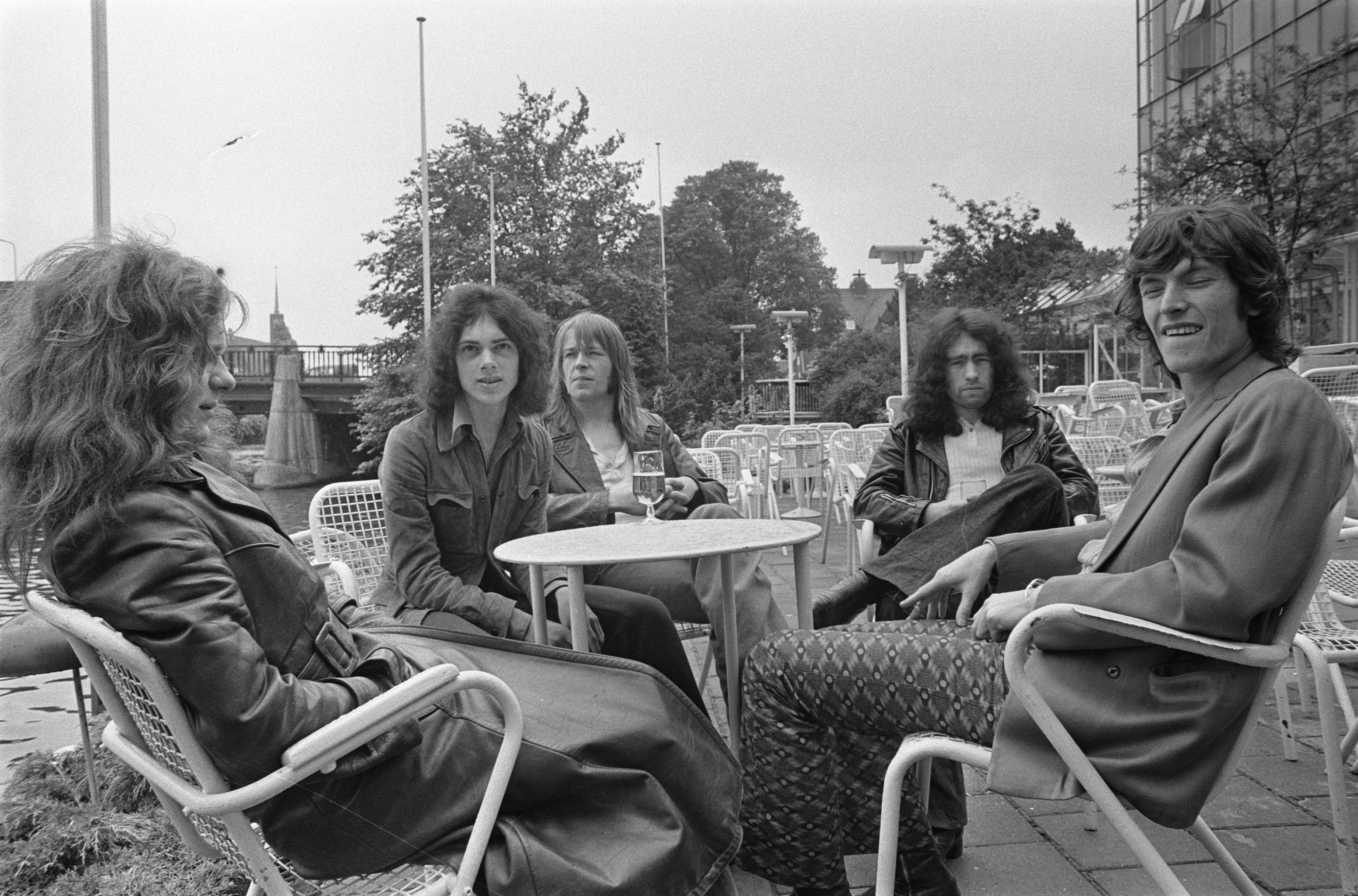
Amsterdam, 16 July 1970 From left to right: Paul Kossoff, Andy Fraser, Simon Kirke, Paul Rodgers & Steve Winwood
Paul
Francis Kossoff (* 14. September 1950 in London; † 19. März 1976 in Los
Angeles) war ein englischer Rock- und Blues-Gitarrist.[1]
Inhaltsverzeichnis
Allgemein
Paul Kossoff wurde als Gitarrist der englischen Rockgruppe Free bekannt, die mit „All Right Now“ 1970 ihren größten Single-Hit hatten. Er ist der Sohn des britischen Charakterdarstellers David Kossoff.
Anfangsjahre
Mitte der 1960er Jahre gründete er gemeinsam mit dem späteren Free-Drummer Simon Kirke die Gruppe Black Cat Bones, benannt nach einem Zitat aus dem Muddy Waters-Blues „Hoochie Coochie Man“. Im Frühjahr 1968 stießen sie zur Tournee-Band des Blues-Interpreten Champion Jack Dupree. An seinem 1969er Album When You Feel The Feeling You Was Feeling waren dann beide beteiligt.[2] Hierdurch lernte Kossoff den englischen Bluesmusiker Alexis Korner kennen, der ihn wiederum mit dem Bassisten Andy Fraser und dem Sänger Paul Rodgers zusammenführte. Daraus entstand schließlich die Gruppe Free, der er bis 1972 als festes Mitglied angehörte und auf deren Abschiedsalbum „Heartbreaker“ er noch als Gastmusiker mitwirkte. Als die Band sich 1971 zeitweise trennte, nahm er mit Free-Drummer Simon Kirke und den späteren Free-Musikern dem amerikanischen Keyboarder und Sänger John Bundrick sowie dem japanischen Bassisten Tetsu Yamauchi das Album Kossoff, Kirke, Tetsu and Rabbit auf.
Nach Free
1973 nahm Kossoff seine erste Solo-LP „Back Street Crawler“ auf. Das Album war in sich stilistisch und personell etwas uneinheitlich aufgebaut. Anstelle einer festen Begleitband arbeitete er mit verschiedenen Sessionmusikern wie etwa dem gelegentlichen Free-Sideman John „Rabbit“ Bundrick (Keyboards), dem Yes-Schlagzeuger Alan White sowie dem von Brian Auger und Jeff Beck bekannten Bassisten Clive Chaman. Die überwiegend instrumental gehaltenen Stücke bestehen zumeist aus einfachen Riffs und Hooklines, über die Kossoff ausschweifende Improvisationen aufbaut. Bemerkenswert ist die Mitwirkung des Folkjazz-Gitarristen John Martyn auf dem gemeinsam komponierten „Time Away“: über die elektronisch verfremdete Akustik-Gitarre Martyns baut Kossoff expressive langgezogene Melodielinien auf. Lediglich der Song „Molten Gold“ ist ein Song im eigentlichen Sinne. Hierfür führte Kossoff noch einmal die komplette Free-Besetzung zusammen. Basierend auf dem Titel seines Debüt-Albums formierte er kurz darauf mit Keyboarder Mike Montgomery, Bassist Terry Wilson, Sänger Terry Wilson-Slesser und Drummer Tony Braunagel (zuvor Studiomusiker bei John Martyn) die Band Back Street Crawler.
Kossoffs angegriffene Gesundheit war in den letzten Jahren seines Lebens stark von seiner Drogenabhängigkeit (Mandrax) gezeichnet. Er starb 1976 im Alter von 25 Jahren auf einem Flug von Los Angeles nach New York aufgrund von Herzproblemen, die seine Drogensucht verursacht hatte. Seinem Sohn zu Ehren gründete sein Vater David Kossoff die Paul-Kossoff-Foundation, mit der er die Drogenproblematik aktiv bekämpfte.[3]
Ein Tribut an den verstorbenen Kossoff gab es am 24. März 1976 in Santa Monica. The Sweet befanden sich auf einer US-Tournee, bei der Back Street Crawler ursprünglich als Support auftreten sollten. Sie spielten gemeinsam mit Ritchie Blackmore, der sich im Publikum befunden hatte, zu Ehren von Kossoff den Free-Song All Right Now.
Der Gitarrist
Kossoffs Spielweise war eng verwandt mit dem frühen Eric Clapton. Im Gegensatz zu vergleichbaren Gitarristen im Feld des englischen Bluesrocks der späten sechziger Jahre verzichtete Kossoff auf überlange und auf reine Virtuositäts-Demonstration angelegte Solo-Einlagen. Sein melodischer, atmosphärischer und lyrischer Gitarrenstil zeichnet sich zumindest im Kontext von Free durch eine songdienliche Spielweise aus, die oft mit wenigen Noten die Grundstimmung eines Songs umreißt. Eine besondere Spezialität ist sein gefühlvolles Vibrato, das seinen Gitarrensoli eine nahezu gesangliche Ausdrucksstärke verleiht.
Instrumente
Paul Kossoffs Hauptinstrument war anfänglich eine aus dem Jahr 1960 stammende Gibson Les Paul Standard mit „Flametop“-Maserung. Auch andere „Bursts“ von 1958 und 1959 kamen zum Einsatz.
Später spielte er auch Les Paul Deluxes (mit Mini-„Humbucker“-Tonabnehmern), eine Les Paul Custom, sowie eine ES 335 von Gibson. In Verbindung mit den zeitgenössischen Marshall Plexi Verstärkern machte dies seinen typischen, bluesigen und sustainreichen Gitarrensound aus. Es handelt sich bei diesen Marshalls im Grunde genommen um „Clean“-Verstärker, die erst bei sehr hoher Lautstärke anfangen zu verzerren. Es fällt auf, dass Kossoff auf alten Videomitschnitten von Auftritten häufig mit Bass-Cabinets unter den Topteilen zu sehen ist. Auch Orange Matamps kamen des Öfteren zum Einsatz.
Er benutzte auch Fender Stratocaster Gitarren (von denen eine auch auf dem Cover seines ersten Solo-Albums abgebildet ist), u. a. zu hören im Lied „The Stealer“ oder auf dem gesamten „Kossoff, Kirke, Tetsu and Rabbit“-Album.
Inhaltsverzeichnis
Allgemein
Paul Kossoff wurde als Gitarrist der englischen Rockgruppe Free bekannt, die mit „All Right Now“ 1970 ihren größten Single-Hit hatten. Er ist der Sohn des britischen Charakterdarstellers David Kossoff.
Anfangsjahre
Mitte der 1960er Jahre gründete er gemeinsam mit dem späteren Free-Drummer Simon Kirke die Gruppe Black Cat Bones, benannt nach einem Zitat aus dem Muddy Waters-Blues „Hoochie Coochie Man“. Im Frühjahr 1968 stießen sie zur Tournee-Band des Blues-Interpreten Champion Jack Dupree. An seinem 1969er Album When You Feel The Feeling You Was Feeling waren dann beide beteiligt.[2] Hierdurch lernte Kossoff den englischen Bluesmusiker Alexis Korner kennen, der ihn wiederum mit dem Bassisten Andy Fraser und dem Sänger Paul Rodgers zusammenführte. Daraus entstand schließlich die Gruppe Free, der er bis 1972 als festes Mitglied angehörte und auf deren Abschiedsalbum „Heartbreaker“ er noch als Gastmusiker mitwirkte. Als die Band sich 1971 zeitweise trennte, nahm er mit Free-Drummer Simon Kirke und den späteren Free-Musikern dem amerikanischen Keyboarder und Sänger John Bundrick sowie dem japanischen Bassisten Tetsu Yamauchi das Album Kossoff, Kirke, Tetsu and Rabbit auf.
Nach Free
1973 nahm Kossoff seine erste Solo-LP „Back Street Crawler“ auf. Das Album war in sich stilistisch und personell etwas uneinheitlich aufgebaut. Anstelle einer festen Begleitband arbeitete er mit verschiedenen Sessionmusikern wie etwa dem gelegentlichen Free-Sideman John „Rabbit“ Bundrick (Keyboards), dem Yes-Schlagzeuger Alan White sowie dem von Brian Auger und Jeff Beck bekannten Bassisten Clive Chaman. Die überwiegend instrumental gehaltenen Stücke bestehen zumeist aus einfachen Riffs und Hooklines, über die Kossoff ausschweifende Improvisationen aufbaut. Bemerkenswert ist die Mitwirkung des Folkjazz-Gitarristen John Martyn auf dem gemeinsam komponierten „Time Away“: über die elektronisch verfremdete Akustik-Gitarre Martyns baut Kossoff expressive langgezogene Melodielinien auf. Lediglich der Song „Molten Gold“ ist ein Song im eigentlichen Sinne. Hierfür führte Kossoff noch einmal die komplette Free-Besetzung zusammen. Basierend auf dem Titel seines Debüt-Albums formierte er kurz darauf mit Keyboarder Mike Montgomery, Bassist Terry Wilson, Sänger Terry Wilson-Slesser und Drummer Tony Braunagel (zuvor Studiomusiker bei John Martyn) die Band Back Street Crawler.
Kossoffs angegriffene Gesundheit war in den letzten Jahren seines Lebens stark von seiner Drogenabhängigkeit (Mandrax) gezeichnet. Er starb 1976 im Alter von 25 Jahren auf einem Flug von Los Angeles nach New York aufgrund von Herzproblemen, die seine Drogensucht verursacht hatte. Seinem Sohn zu Ehren gründete sein Vater David Kossoff die Paul-Kossoff-Foundation, mit der er die Drogenproblematik aktiv bekämpfte.[3]
Ein Tribut an den verstorbenen Kossoff gab es am 24. März 1976 in Santa Monica. The Sweet befanden sich auf einer US-Tournee, bei der Back Street Crawler ursprünglich als Support auftreten sollten. Sie spielten gemeinsam mit Ritchie Blackmore, der sich im Publikum befunden hatte, zu Ehren von Kossoff den Free-Song All Right Now.
Der Gitarrist
Kossoffs Spielweise war eng verwandt mit dem frühen Eric Clapton. Im Gegensatz zu vergleichbaren Gitarristen im Feld des englischen Bluesrocks der späten sechziger Jahre verzichtete Kossoff auf überlange und auf reine Virtuositäts-Demonstration angelegte Solo-Einlagen. Sein melodischer, atmosphärischer und lyrischer Gitarrenstil zeichnet sich zumindest im Kontext von Free durch eine songdienliche Spielweise aus, die oft mit wenigen Noten die Grundstimmung eines Songs umreißt. Eine besondere Spezialität ist sein gefühlvolles Vibrato, das seinen Gitarrensoli eine nahezu gesangliche Ausdrucksstärke verleiht.
Instrumente
Paul Kossoffs Hauptinstrument war anfänglich eine aus dem Jahr 1960 stammende Gibson Les Paul Standard mit „Flametop“-Maserung. Auch andere „Bursts“ von 1958 und 1959 kamen zum Einsatz.
Später spielte er auch Les Paul Deluxes (mit Mini-„Humbucker“-Tonabnehmern), eine Les Paul Custom, sowie eine ES 335 von Gibson. In Verbindung mit den zeitgenössischen Marshall Plexi Verstärkern machte dies seinen typischen, bluesigen und sustainreichen Gitarrensound aus. Es handelt sich bei diesen Marshalls im Grunde genommen um „Clean“-Verstärker, die erst bei sehr hoher Lautstärke anfangen zu verzerren. Es fällt auf, dass Kossoff auf alten Videomitschnitten von Auftritten häufig mit Bass-Cabinets unter den Topteilen zu sehen ist. Auch Orange Matamps kamen des Öfteren zum Einsatz.
Er benutzte auch Fender Stratocaster Gitarren (von denen eine auch auf dem Cover seines ersten Solo-Albums abgebildet ist), u. a. zu hören im Lied „The Stealer“ oder auf dem gesamten „Kossoff, Kirke, Tetsu and Rabbit“-Album.
Paul Francis Kossoff (14 September 1950 – 19 March 1976) was an English guitarist best known as a member of the band Free.
Kossoff was ranked 51st in Rolling Stone magazine list of the "100 Greatest Guitarists of All Time".[1]
Early days
Kossoff was the son of Margaret (Jenkins) and the British actor David Kossoff.[2][3][4] His father was of Russian-Jewish descent. Kossoff started playing the guitar in the mid-1960s, being taught by session guitarist Colin Falconer, and at age 15 helped to found the band Black Cat Bones. The band played with touring blues piano player Champion Jack Dupree, did many supporting shows for Fleetwood Mac and other gigs with Fleetwood Mac cofounder Peter Green. Kossoff jammed and spent hours discussing blues playing and players. Kossoff's bandmate in Black Cat Bones was drummer Simon Kirke, and the two went on to play on Champion Jack Dupree's April 1968 album When You Feel the Feeling You Was Feeling.[5]
Free
In April 1968 Kossoff and Kirke teamed up with Paul Rodgers (vocals) and Andy Fraser (bass) to form Free. They did the Transit circuit for two years and recorded two albums: Tons of Sobs (1968) and Free (1969). Both albums showcased the band's blues- and soul-influenced sound, a style which was in contrast to some of their progressive and heavier counterparts at the time.
Success came in 1970 when their third album, Fire and Water (1970), spawned the big hit "All Right Now". The band played the Isle of Wight festival to both audience and critical acclaim. Sellout tours in the United Kingdom, Europe, and Japan followed, but after the release of the next album, Highway (1970), band pressures led to a split. The live album Free Live, recorded in 1970, was released in 1971 as a farewell record. While Rodgers and Fraser pursued unsuccessful solo projects, Kossoff and Kirke teamed up with Texan keyboard player John "Rabbit" Bundrick and Japanese bass player Tetsu Yamauchi to release the 1971 album Kossoff, Kirke, Tetsu and Rabbit.
Free reformed and released the album Free at Last (1972). Following its release Fraser decided he had had enough and quit to form Sharks. Free drafted Tetsu and Rabbit for Free's 1973 album Heartbreaker (1973) after which the group disbanded.
Rodgers and Kirke went on to form the successful Bad Company while Kossoff released a solo album, Back Street Crawler (1973). He then accompanied John Martyn on a 1975 tour before assembling a group called Back Street Crawler.
Back Street Crawler released two albums: The Band Plays On in 1975 and 2nd Street in 1976. Recordings from one of the band's UK concerts in 1975 were also released under the title Live at Croydon Fairfield Halls 15/6/75.
When Free supported Blind Faith in the United States(1969), Eric Clapton was impressed enough to ask Kossoff to demonstrate his vibrato technique to him.[citation needed] Kossoff's guitar playing was also much in demand for session work and he contributed solos on several albums including: Jim Capaldi's Oh How We Danced (1972), Martha Veléz's Fiends and Angels (1969); Blondel's Mulgrave Street (1974); Uncle Dog's Old Hat (1972), Michael Gately's Gately's Cafe (1971) and Mike Vernon's 1971 album Bring It Back Home.
He also played on four demos by Ken Hensley (eventually released on the 1994 album titled From Time to Time) and three tracks which appear on the CD-only issue of John Martyn's Live At Leeds album from 1975.
An unreleased guitar solo also surfaced in 2006 on the title track to the album All One by David Elliot who recorded with Paul Kossoff in the 70s.
The song "Seagull", from Jim Capaldi's 1975 solo album Short Cut Draw Blood, was reputedly written about Kossoff.[citation needed]
A 16-track career retrospective, Koss, was issued in 1977.
The late 1990s saw a renewed interest in Kossoff, and another career retrospective was released, 1997's 14-track Blue Soul (actually a reissue of a double vinyl release from the mid-1980s of the same name), as well as the five-disc Free box set Songs of Yesterday, and a Free biography entitled Heavy Load: The Story of Free.
Death
Kossoff's unhappiness with the end of Free and his drug addictions contributed to a drastic decline in the guitarist's health. On a flight from Los Angeles to New York on 19 March 1976, Kossoff died from heroin-related heart problems. The day before, he had a jam session with keyboard player Dennis Provisor. He was cremated and interred at the Golders Green Crematorium. His epitaph reads "All Right Now".
Legacy
Following Kossoff's death, his father, actor David Kossoff, established the Paul Kossoff Foundation which aimed to present the realities of drug addiction to children. Kossoff's father spent the remainder of his life campaigning against drugs, touring a one-man stage performance about the death of Paul and its effect on the family.
Kossoff was ranked 51st in Rolling Stone magazine list of the "100 Greatest Guitarists of All Time".[1]
Early days
Kossoff was the son of Margaret (Jenkins) and the British actor David Kossoff.[2][3][4] His father was of Russian-Jewish descent. Kossoff started playing the guitar in the mid-1960s, being taught by session guitarist Colin Falconer, and at age 15 helped to found the band Black Cat Bones. The band played with touring blues piano player Champion Jack Dupree, did many supporting shows for Fleetwood Mac and other gigs with Fleetwood Mac cofounder Peter Green. Kossoff jammed and spent hours discussing blues playing and players. Kossoff's bandmate in Black Cat Bones was drummer Simon Kirke, and the two went on to play on Champion Jack Dupree's April 1968 album When You Feel the Feeling You Was Feeling.[5]
Free
In April 1968 Kossoff and Kirke teamed up with Paul Rodgers (vocals) and Andy Fraser (bass) to form Free. They did the Transit circuit for two years and recorded two albums: Tons of Sobs (1968) and Free (1969). Both albums showcased the band's blues- and soul-influenced sound, a style which was in contrast to some of their progressive and heavier counterparts at the time.
Success came in 1970 when their third album, Fire and Water (1970), spawned the big hit "All Right Now". The band played the Isle of Wight festival to both audience and critical acclaim. Sellout tours in the United Kingdom, Europe, and Japan followed, but after the release of the next album, Highway (1970), band pressures led to a split. The live album Free Live, recorded in 1970, was released in 1971 as a farewell record. While Rodgers and Fraser pursued unsuccessful solo projects, Kossoff and Kirke teamed up with Texan keyboard player John "Rabbit" Bundrick and Japanese bass player Tetsu Yamauchi to release the 1971 album Kossoff, Kirke, Tetsu and Rabbit.
Free reformed and released the album Free at Last (1972). Following its release Fraser decided he had had enough and quit to form Sharks. Free drafted Tetsu and Rabbit for Free's 1973 album Heartbreaker (1973) after which the group disbanded.
Rodgers and Kirke went on to form the successful Bad Company while Kossoff released a solo album, Back Street Crawler (1973). He then accompanied John Martyn on a 1975 tour before assembling a group called Back Street Crawler.
Back Street Crawler released two albums: The Band Plays On in 1975 and 2nd Street in 1976. Recordings from one of the band's UK concerts in 1975 were also released under the title Live at Croydon Fairfield Halls 15/6/75.
When Free supported Blind Faith in the United States(1969), Eric Clapton was impressed enough to ask Kossoff to demonstrate his vibrato technique to him.[citation needed] Kossoff's guitar playing was also much in demand for session work and he contributed solos on several albums including: Jim Capaldi's Oh How We Danced (1972), Martha Veléz's Fiends and Angels (1969); Blondel's Mulgrave Street (1974); Uncle Dog's Old Hat (1972), Michael Gately's Gately's Cafe (1971) and Mike Vernon's 1971 album Bring It Back Home.
He also played on four demos by Ken Hensley (eventually released on the 1994 album titled From Time to Time) and three tracks which appear on the CD-only issue of John Martyn's Live At Leeds album from 1975.
An unreleased guitar solo also surfaced in 2006 on the title track to the album All One by David Elliot who recorded with Paul Kossoff in the 70s.
The song "Seagull", from Jim Capaldi's 1975 solo album Short Cut Draw Blood, was reputedly written about Kossoff.[citation needed]
A 16-track career retrospective, Koss, was issued in 1977.
The late 1990s saw a renewed interest in Kossoff, and another career retrospective was released, 1997's 14-track Blue Soul (actually a reissue of a double vinyl release from the mid-1980s of the same name), as well as the five-disc Free box set Songs of Yesterday, and a Free biography entitled Heavy Load: The Story of Free.
Death
Kossoff's unhappiness with the end of Free and his drug addictions contributed to a drastic decline in the guitarist's health. On a flight from Los Angeles to New York on 19 March 1976, Kossoff died from heroin-related heart problems. The day before, he had a jam session with keyboard player Dennis Provisor. He was cremated and interred at the Golders Green Crematorium. His epitaph reads "All Right Now".
Legacy
Following Kossoff's death, his father, actor David Kossoff, established the Paul Kossoff Foundation which aimed to present the realities of drug addiction to children. Kossoff's father spent the remainder of his life campaigning against drugs, touring a one-man stage performance about the death of Paul and its effect on the family.
Free - "Moonshine" - live - best guitar solo ever (Paul Kossoff)