Posts mit dem Label Daniels_Julius werden angezeigt. Alle Posts anzeigen

Sonntag, 20. November 2016

20.11., Duane Allman, Julius Daniels, Pernell Charity * Little Smokey Smothers, Chris Whitley, Earl Phillips +


1901 Julius Daniels*
1920 Pernell Charity*
1946 Duane Allman*
1990 Earl Phillips+
2005 Chris Whitley+
2010 Little Smokey Smothers+


Happy Birthday


Duane Allman Geb. 20.11.1946
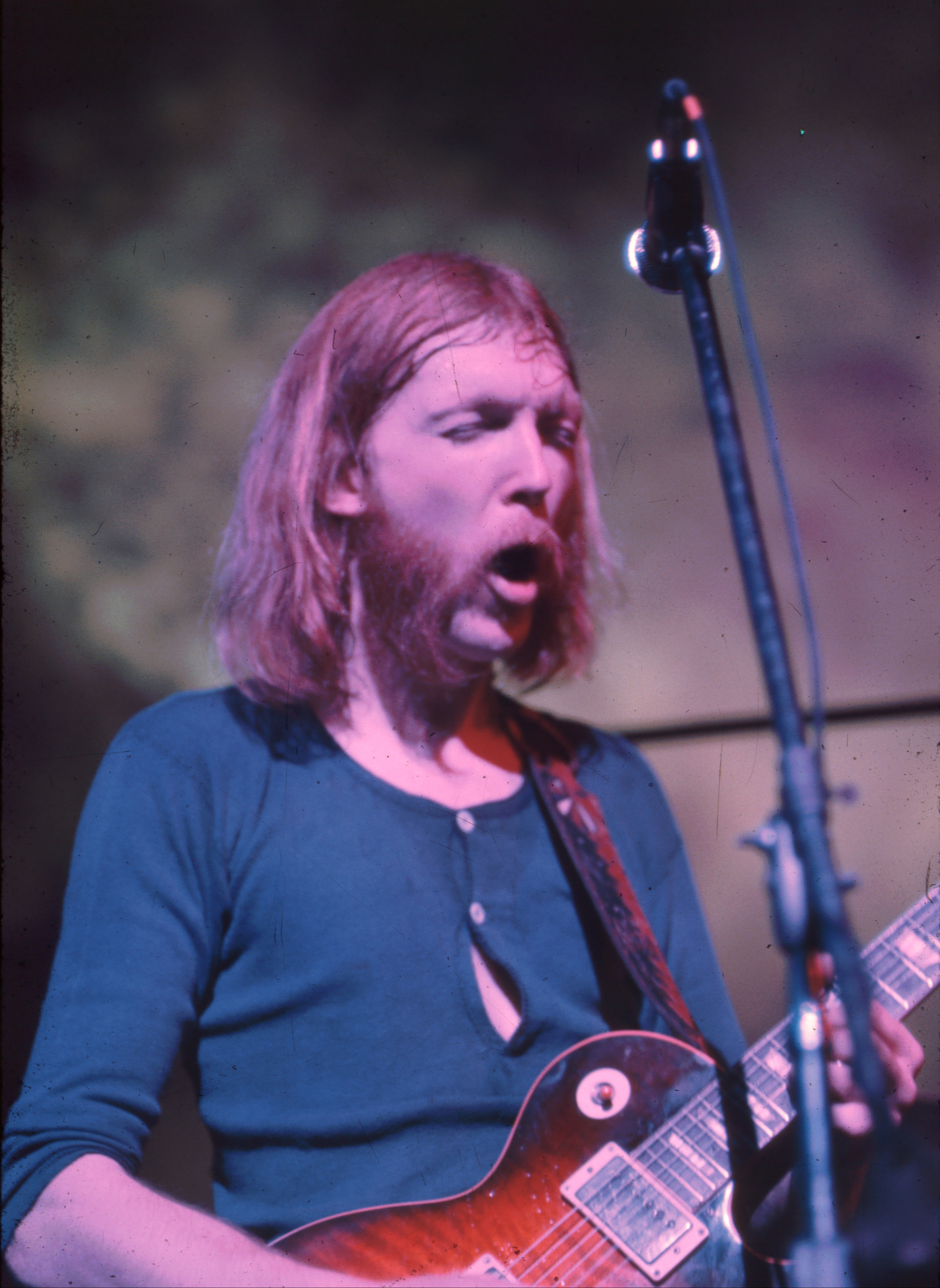


Howard Duane Allman (* 20. November 1946 in Nashville, Tennessee; † 29. Oktober 1971 in Macon, Georgia) gilt als Slide-Gitarren-Legende und als einer der besten Rock- und Blues-Gitarristen aller Zeiten. Auf der Liste der 100 Greatest Guitarists of All Time der amerikanischen Musikzeitschrift Rolling Stone findet sich Allman auf Rang 9 hinter Jimi Hendrix, Eric Clapton, Jimmy Page, Keith Richards, Jeff Beck, B.B. King, Chuck Berry und Eddie Van Halen.
Nachdem Duane Allman im Alter von etwa 14 Jahren von seinem Bruder Gregg die ersten Gitarrengriffe gelernt hatte, spielten die Brüder zusammen in verschiedenen Gruppen, wobei Duane seinen Bruder, was das Können auf der Gitarre anbelangt, schon bald übertraf. Dieser wechselte dann auch im Lauf der Zeit zu Orgel und Klavier über; später, bei den Allman Brothers, sollte er auch das Gros der Stücke für die Gruppe komponieren.
1965 gründeten die Allman-Brüder die Band Allman Joys; 1967 folgte Hour Glass. Diese Band nahm während eines Kalifornien-Aufenthaltes auch zwei später auf Doppel-LP veröffentlichte Alben auf.
1969 spielte Duane, der inzwischen nach Florida gegangen war, zwischen Sessions als Studio-Musiker für die Fame-Studios in Muscle Shoals, Alabama (u. a. für Aretha Franklin, Wilson Pickett und King Curtis) mit dem Schlagzeuger Butch Trucks, der Band des Gitarristen Dickey Betts und dem Schlagzeuger Jai Johanny „Jaimoe“ Johanson, und ihm wurde schnell klar, dass dies genau das war, was alle Beteiligten machen wollten. Nach einer Jam-Session im Green House und dem Hinzukommen von Duanes Bruder Gregg aus Kalifornien war die Allman Brothers Band komplett. Neben Duane [lead-g, slide-g, voc] und Gregg Allman [lead-voc, org, p] bestand die Band aus Dickey Betts [lead-g, slide-g, voc], Berry Oakley [el-b, voc] sowie den beiden Schlagzeugern Jai Johanny Johanson [dr, congas, perc] und Butch Trucks [dr, tympani]. Auch war es Duane, der Don Felder, dem späteren Gitarristen der Eagles, die Slide-Gitarre näher brachte.
Duane Allman nahm zusammen mit der Ur-Besetzung der Allman Brothers Band insgesamt vier Alben – davon zwei Doppelalben – auf. Neben den Alben der Allman Brothers Band wirkte er auch auf dem Layla-Album von Eric Clapton/Derek & The Dominos mit.
Duane Allman verunglückte am 29. Oktober 1971 bei einem Motorradunfall in Macon tödlich, als er einem plötzlich ausscherenden Lastwagen ausweichen wollte. Posthum wurde das zu seinen Lebzeiten begonnene Doppelalbum Eat a Peach vom Rest der Band fertiggestellt und veröffentlicht.
Ein Jahr nach Duanes Tod verunglückte der Bassist der Gruppe, Berry Oakley, ebenfalls mit dem Motorrad an fast derselben Stelle wie Duane tödlich. Bis zum heutigen Tag besteht die Allman Brothers Band – unterbrochen von mehr oder weniger langen Pausen – nach wie vor.
Technisches
Die Gitarren, die Duane Allman spielte, waren zu Zeiten der Allman Brothers Band entweder eine 1957er Gibson Les Paul Goldtop, eine 59er Gibson Les Paul Darkburst oder eine 68er Gibson SG Standard.[2] Für die Aufnahme des allerersten Allman-Brothers-Albums The Allman Brothers Band verwendete er eine Gibson ES-345. Als Verstärker benutzte er hauptsächlich einen 50-Watt Marshall Bass Head, als Slide ein Coricidinfläschchen.

Howard Duane Allman (November 20, 1946 – October 29, 1971) was an American guitarist, session musician, co-founder and leader of the The Allman Brothers Band until his death in a motorcycle accident in 1971 at the age of 24.
The Allman Brothers Band was formed in 1969 and based in the Southeastern United States. In the early 1970s, the band had major success. Allman is best remembered for his brief but influential tenure in the band and in particular for his expressive slide guitar playing and inventive improvisational skills.[1] In 2003, Rolling Stone magazine ranked Allman at #2 in their list of the 100 greatest guitarists of all time, second only to Jimi Hendrix and in 2011 he was ranked #9.[2] His tone (achieved with a Gibson Les Paul and two 50-watt bass Marshall amplifiers) was named one of the greatest guitar tones of all time by Guitar Player.[3]
A sought-after session musician both before and during his tenure with the band, Duane Allman performed with such established stars as King Curtis, Aretha Franklin, Wilson Pickett, and Herbie Mann. He also contributed heavily to the 1970 album Layla and Other Assorted Love Songs by Derek and the Dominos.
Duane Allman's skills as a guitarist were complemented by personal qualities such as his intensity, drive and ability to draw the best out of others in making music.[4] He is still referred to by his nickname "Skydog".
Early years
Duane Allman was born on November 20, 1946 in Nashville, Tennessee. He was the eldest son of Willis Allman, a career United States Army sergeant, and Geraldine (née Robbins). His younger brother Gregg Allman was born in late 1947.
While the family was living near Norfolk, Virginia, his father was murdered by a fellow veteran hitchhiker.[6] In order to retrain as an accountant, Geraldine "Mama A" Allman sent Duane and Gregg to Castle Heights Military Academy in Lebanon, Tennessee, which they both disliked intensely.[7] In 1957, the family moved to Daytona Beach, Florida where the boys attended Seabreeze High School.
The boys returned to Nashville to spend summers with their grandmother where Gregg learned guitar basics from a neighbor. In 1960, Gregg had saved enough money to buy his first guitar, a Japanese-made Teisco Silvertone while Duane acquired a Harley 165 motorbike. Duane began to take an interest in the guitar, leading to fights over it, and eventually their mother bought Duane a Gibson Les Paul Junior.[8]
It was also in Nashville that the boys became musically inspired by a rhythm and blues concert they attended, at which blues guitar legend B. B. King performed. Apparently, Duane turned to Gregg and said, "We got to get into this."[8]
Duane learned to play very quickly and soon became the better guitarist of the two, dropping out of high school to stay home during the day and focus on developing his guitar skills.
Allman Joys and Hour Glass
The two Allman brothers started playing publicly in 1961, joining or forming a number of small, local groups. Shortly thereafter, Duane quit high school to stay home during the day and focus on his guitar playing. Their band the Escorts opened for The Beach Boys in 1965 but disbanded and eventually became the Allman Joys. After Gregg graduated from Seabreeze High School in 1965, the Allman Joys went on the road, performing throughout the Southeast and eventually being based in Nashville and St. Louis, Missouri.
The Allman Joys morphed into another not-completely-successful band, The Hour Glass, which moved to Los Angeles in early 1967. There the Hour Glass produced two albums that left the band unsatisfied. Liberty, their record company, tried to market them as a pop band, completely ignoring the band's desire to play more blues-oriented material.
In 1968, Gregg Allman went to visit Duane on his 22nd birthday. Duane was laid up in bed, nursing an injured left elbow suffered from a fall from a horse. Gregg brought along a bottle of Coricidin pills for his fever and the debut album by guitarist Taj Mahal as a gift. He left it on the front porch and rang the bell, as Duane was angry with him for the injury. "About two hours after I left, my phone rang," Gregg states. "Baby brother, baby brother, get over here now!" When Gregg got there, he found that Duane had poured the pills out of the bottle, washed off the label and was using it as a slide to play "Statesboro Blues", an old Blind Willie McTell song that Taj Mahal covered. "Duane had never played slide before," says Gregg, "he just picked it up and started burnin'. He was a natural."[citation needed] The song would go on to become a part of the Allman Brothers Band's repertoire, and Duane's slide guitar became crucial to their sound.
The Hour Glass broke up in early 1968, and Duane and Gregg Allman went back to Florida, where they played on demo sessions with February 31, a folk rock outfit whose drummer was Butch Trucks. Gregg returned to California to fulfill Hour Glass obligations, while Duane jammed around Florida for months but didn't get another band going.
Session musician
Allman's playing on the two Hour Glass albums and an Hour Glass session in early 1968 at FAME Studios in Muscle Shoals, Alabama had caught the ear of Rick Hall, owner of FAME. In November 1968 Hall hired Allman to play on an album with Wilson Pickett. Allman's work on that album, Hey Jude (1968), got him hired as a full-time session musician at Muscle Shoals and brought him to the attention of a number of other musicians, such as Eric Clapton, who later said, "I remember hearing Wilson Pickett's 'Hey Jude' and just being astounded by the lead break at the end. I had to know who that was immediately—right now."
Allman's performance on "Hey Jude" blew away Atlantic Records producer and executive Jerry Wexler when Hall played it over the phone for him. Wexler immediately bought Allman's recording contract from Hall and wanted to use him on sessions with all sorts of Atlantic R&B artists. While at Muscle Shoals, Allman was featured on releases by a number of artists, including Doris Duke, Clarence Carter, King Curtis, Aretha Franklin, Laura Nyro, Wilson Pickett, Otis Rush, Percy Sledge, Johnny Jenkins, Boz Scaggs, Delaney & Bonnie and jazz flautist Herbie Mann.
Formation of The Allman Brothers Band
The limits of full-time session playing frustrated Allman. The few months in Muscle Shoals were by no means a waste, however; besides meeting the great artists and other industry professionals with whom he was working, Allman had rented a small, secluded cabin on a lake and spent many solitary hours there refining his playing. Perhaps most significantly, Allman got together with R&B and jazz drummer Jaimoe Johanson, who came to meet Allman at the urging of Otis Redding's manager, Phil Walden, who by now was managing Allman and wanted to build a three-piece band around him. Allman and Jaimoe got Chicago-born bassist Berry Oakley to come up from Florida and jam as a trio, but Berry was committed to his rock band with guitarist Dickey Betts, the Second Coming, and returned south.
Getting fed up with Muscle Shoals, in March Allman took Jaimoe with him back to Jacksonville, Florida, where they moved in with Butch Trucks. Soon a jam session of these three plus Betts, Oakley, and Reese Wynans took place and forged what all present recognized as a natural, or even magical, bond. With the addition of brother Gregg, called back from Los Angeles to sing and replace Wynans on keyboards, at the end of March 1969, the Allman Brothers Band was formed. (Wynans became well known over a decade later as organist with Stevie Ray Vaughan & Double Trouble.) After a bit of rehearsing and gigging, the sextet moved to Macon, Georgia, in April to be near Walden and his Capricorn Sound Studios. While living in Macon, Allman met Donna Roosman, who bore his only child, Galadrielle. Despite their child, the relationship quickly ended.
Success: Layla, At Fillmore East
The Allman Brothers Band went on to become one of the most influential rock groups of the 1970s, described by Rolling Stone's George Kimball in 1971 as "the best damn rock and roll band this country has produced in the past five years."[9] After months of nonstop rehearsing and gigging, including free shows in Macon's Central City Park and Atlanta's Piedmont Park, the group was ready to settle on the Allman Brothers Band name, and to record. Their debut album, The Allman Brothers Band, was recorded in New York in September 1969 and released a few months later. In the midst of intense touring, work began in Macon and Miami (Atlantic South – Criteria Studios), and a little bit in New York, on the band's second album, Idlewild South. Produced mostly by Tom Dowd, Idlewild South was released in August 1970 and broke new ground for them by quickly hitting the Billboard charts.
A group date in Miami, also that August, gave Allman the chance to participate in Eric Clapton's Layla and Other Assorted Love Songs. Clapton had long wanted to meet Allman; when he heard that the Allman Brothers were due to play in Miami, where he had just started work on Layla with producer Tom Dowd, he insisted on going to see their concert, where he met Allman. At one point, Allman approached Clapton, fully admiring his ability to play guitar as much as Clapton admired his, and cautiously asked Clapton if he could come by the studio to watch. Clapton eagerly agreed, since he knew that his masterful playing combined with Allman's would be greater than the sum of its parts. After the show the two bands—the Allman Brothers Band and Derek and the Dominos—returned to Criteria, where Allman and Clapton quickly formed a deep rapport during an all-night jam session.[10] Allman wound up participating on most of the album's tracks, contributing some of his best-known work. Allman never left the Allman Brothers Band, though, despite being offered a permanent position with Clapton. Allman never toured with Derek and the Dominos, but he did make three appearances with them on December 1, 1970 at the Curtis Hixon Hall in Tampa (Soulmates LP) and the following day at Onondaga County War Memorial in Syracuse, NY, and one appearance (or possibly just Delaney Bramlett or both Allman and Delaney) November 20, 1970[11] at the Santa Monica Civic Auditorium, California.
In an interview, Allman told listeners how to tell who played what: Eric played the Fender parts and Duane played the Gibson parts. He continued by nonchalantly noting that the Fender had a sparklier sound, while the Gibson produced more of a "full-tilt screech".[12] Clapton wrote later in his autobiography that he and Allman were inseparable during the sessions in Florida; he talked about Allman as the "musical brother I'd never had but wished I did."[13]
The Allman Brothers went on to record At Fillmore East in March 1971. Meanwhile, Allman continued contributing session work to other artists' albums whenever he could. According to Skydog: the Duane Allman Story, Allman was in the habit of spontaneously dropping in at recording sessions and contributing to whatever was being taped that day. He received cash payments but no recording credits, making it virtually impossible to compile a complete discography of his works.
Allman was well known for his melodic, extended and attention-holding guitar solos. During this period two of his stated influences were Miles Davis and John Coltrane, having listened extensively to Kind of Blue for two years.[12][14]
Death
Duane Allman was killed in a motorcycle accident only months after the release and initial success of At Fillmore East.[15] On October 29, 1971, in the western part of Macon, Georgia, during a band break from touring and recording, Allman was riding his motorcycle at a high speed on Hillcrest Avenue as he approached Bartlett Street, when a flatbed truck carrying a lumber crane stopped suddenly in the intersection, forcing Allman to swerve his Harley-Davidson Sportster motorcycle sharply to the left to avoid a collision. As he was doing so, he struck either the back of the truck or the ball on the lumber crane and was immediately thrown from the motorcycle. The motorcycle bounced into the air, landed on Allman and skidded another 90 feet with Allman pinned underneath, crushing his internal organs. Though he was alive when he arrived at the hospital, despite immediate emergency surgery, he died several hours later from massive internal injuries.
Memorial
After Allman's funeral and some weeks of mourning, the five surviving members of the Allman Brothers Band carried on, resuming live performances and finishing the recording work interrupted by Allman's death. They named their next album Eat a Peach for Allman's response to an interviewer's question: "How are you helping the revolution?" Allman replied: "There ain't no revolution, only evolution, but every time I'm in Georgia I 'eat a peach' for peace." Released in February 1972, this double album contains a side of live and studio tracks with Allman, two sides of "Mountain Jam", recorded with Allman at the same At Fillmore East stand in March, and a side of tracks by the surviving five member band.
Bass guitarist Berry Oakley died less than 13 months later in a similar motorcycle crash with a city bus, three blocks from the site of Duane Allman's fatal accident. Oakley's remains were laid to rest beside Duane Allman's in Macon, Georgia's Rose Hill Cemetery.
The variety of Allman's session work and Allman Brothers Band bandleading can be heard to good effect on two posthumous Capricorn releases, An Anthology (1972) and An Anthology Volume II (1974). There are also several archival releases of live Allman Brothers Band performances from what the band calls "Duane's Era".
Shortly after Allman's death, Ronnie Van Zant of Lynyrd Skynyrd dedicated the song "Free Bird", to the memory of Duane Allman. Van Zant would sometimes allude to this in concert; in the "Free Bird" performance at Skynyrd's famed 1976 appearance at Knebworth, England, Van Zant says to pianist Billy Powell, "Play it for Duane Allman." Many people assume the song was written about Allman. However, it had actually been written well before he died. (Allen Collins wrote the song after his then girlfriend asked him the question "if I leave here tomorrow, would you still remember me?")
In 1973, fans carved the very large letters "REMEMBER DUANE ALLMAN" in a dirt embankment along Interstate Highway 20 near Vicksburg, Mississippi.[16][17] A photograph was published in Rolling Stone magazine and in the Rolling Stone Illustrated History of Rock & Roll; the carving itself lasted for over ten years.[18]
In 1998 the Georgia State Legislature passed a resolution designating a stretch of State Highway 19, US 41, within Macon as the "Duane Allman Boulevard" in his honor.[19]
Country singer Travis Tritt, in the song "Put Some Drive in Your Country" on his debut album, sings "Now I still love old country/I ain't tryin' to put it down/But damn I miss Duane Allman/I wish he was still around."
In 2013, Skydog, a seven-CD box set tracing the virtuosity of Duane Allman on the slide guitar was released with the help of his daughter, Galadrielle Allman. A March 16 interview with her on NPR's Weekend Edition Saturday by Scott Simon ran over eight minutes, includes many details, and is highlighted with clips of his playing,[20] including links to an audio file prepared for the broadcast.
Equipment
Allman Joys, Hour Glass
    Fender Telecaster, modified with a Stratocaster neck.[21]
    Marshall amplifier, with six 10-inch speakers and two horns.[21]
Early session work
    1954 Fender Stratocaster, used on the Muscle Shoals Sound Studio studio sessions, now
    at the Hard Rock Cafe in London at the Vault.[22]
    Dallas Arbiter Fuzz Face, which used old 9V batteries because "they make a special
    sound."
    Fender Twin Reverb with JBL speakers.[21]
    Maestro Echoplex.[21]
    1959 Fender Bassman.[21]

"Blue Sky", Duane Allman's Solo, at Stonybrook, 1971-09-19


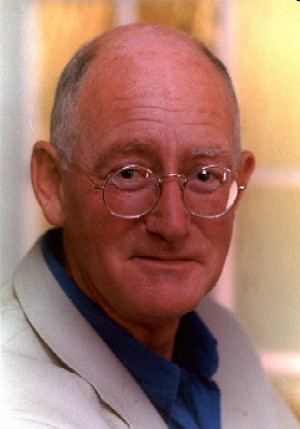
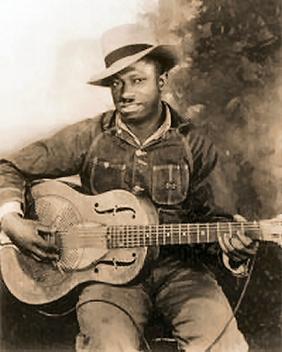
Julius Daniels   *20.11.1901


Julius Daniels (November 20, 1901 – October 18, 1947)[1][2] was an American Piedmont blues musician. His song "99 Year Blues" appeared on the box set Anthology of American Folk Music and has been covered by Jim Kweskin, Chris Smither, Johnny Winter, Charlie Parr and Hot Tuna on their album Burgers.[3]
Daniels was born in Denmark, South Carolina, United States. He lived in Pineville, North Carolina, from 1912 to 1930, when he moved to Charlotte, North Carolina. He first recorded in 1927, joined first by guitarist Bubba Lee Torrence and later by Wilbert Andrews.[2] Daniels is buried at the Silver Mount Church Cemetery near Fort Mill, South Carolina.
The Historic Society of Bamberg County held the first Julius Daniels Memorial Blues Festival at the Dane Theater in Denmark, South Carolina, on October 23, 2010. Performers included Drink Small, Beverly Watkins, The Meeting Street Sheiks and Hitman. Gary Erwin was the artistic director. The 2nd JDMBF was held on October 22, 2011, and featured Sandra Hall, Roy Roberts and The King Bees with Rob Baskerville serving as artistic director. The Historic Society moved the JDMBF to the last Saturday in February. Juke Joint Johnny and Elliot & the Untouchables performed at the 3rd Julius Daniels Memorial Blues Festival on February 25, 2012. The 4th JDMBF was on February 23, 2013 and featured Jeff Liberty and Fatback & The Groove Band. The 5th JDMBF was held on Saturday, February 22, 2014 featuring Anthony Charles & the Blues Dolphins, The Front Porch Three and Warren Peay. The 6th JDMBF will feature Mac Arnold and Plate Full O' Blues and will be held on Saturday, February 28, 2015.

Julius Daniels - Crow Jane Blues 


https://www.youtube.com/watch?v=66xwq9NYFv4 


Pernell Charity   *20.11.1920


b. 20 November 1920, Waverly, Virginia, USA, d. 12 April 1979, Waverly, Virginia, USA. Although Charity’s guitar playing and singing show many and varied influences, he appears to have spent most of his life in the town where he was born. His compositions, such as all the tracks on his 1972 album, suggest an awareness of the wider world, even if it was one in which he chose not to travel, and of the history of the blues and its practitioners as well as of the culture of the deep south: ‘War Blues’, ‘Pig Meat Mama’, ‘Mamie’, ‘Richmond Blues’, ‘Blind Man’ and ‘Blind Lemon’s Blues’.


Pernell Charity Blind Lemon's Blues (1972) 


R.I.P.


Little Smokey Smothers   +20.11.2010


Otis „Big Smokey“ Smothers (* 21. März 1929 in Lexington, Mississippi; † 23. Juli 1993 in Chicago, Illinois) war ein US-amerikanischer Blues-Gitarrist und -Sänger.
Als Howlin' Wolf Smothers 1956/57 als Rhythmus-Gitarrist ins Studio holte, hatte Smothers bereits eine etwa zehnjährige Erfahrung als Bluesmusiker hinter sich. Mit Howlin' Wolf nahm er während dieser Zeit Songs wie Who's Been Talking und Tell Me. 1960 arbeitete Smothers mit Freddy King zusammen und bekam einen Plattenvertrag bei Federal Records, wo er auch einige Solo-Aufnahmen machte. So veröffentlichte er 1961 sein Debüt-Album Sings the Backporch Blues.
Außer einer Single (I Got My Eyes on You 1968) hörte man nun lange Zeit nichts mehr von Smothers, bis 1987 auf Red Beans Records die LP Got My Eyes on You erschien. Am 23. Juli 1993 verstarb Smokey Smothers in Chicago.

 In den 60er Jahren heuerte der Gitarrist Albert Abraham "Little Smokey" Smothers den weißen Bluesharp-Spieler Paul Butterfield an. Wenig später nahm er auch noch den Gitarristen Elvin Bishop unter seine Fittiche. Beide wurden mit der Paul Butterfield Blues Band schnell wesentlich bekannter als ihr Mentor. Auch wenn der am 20. November 2010 verstorbene Bluesman Little Smokey Smothers nur recht wenige eigene Platten veröffentlichte, zählt er dennoch zu den ganz wichtigen Musikern des Chicago-Blues.

Geboren wurde Little Smokey Smothers am 2. Januar 1939 in Tchula, Mississippi. Bald schon zog die musikalische Familie nach Chicago. Sein älterer Bruder "Big" Smokey Smothers wurde als Gitarrist in den Bands von Little Walter, Howlin' Wolf und Muddy Waters einer der Gitarristen, die ständig für Plattenaufnahmen eingeladen wurden. Sein Cousin Lee "Shot" Williams wurde als Soulsänger bekannt.

Little Smokey entwickelte einen Gitarrenstil, der sehr stark von B.B. und Albert King - aber auch vom Jazzgitarristen Kenny Burrell - geprägt war. Damit war er in der mehr rockig ausgerichteten Bluesszene Chicagos etwas Besonderes. Und so konnte er sich seit den späten 50er Jahren in der Clubszene der South Side von Chicago einen Namen erspielen. Ähnlich wie sein Bruder wurde er auch schon bald als Sessiongitarrist zu Plattenaufnahmen der berühmten Blueshelden der Stadt eingeladen.

Als er allerdings eine Familie gegründet hatte, zog er sich für etliche Jahre aus der Musikwelt zurück. Denn um die Kinder zu ernähren reichten die Einkünfte als Gitarrist nicht aus.Erst 1978 kehrte er zurück, spielte etwa seit Ende der 80er Jahre für The Legendary Blues Band, die Drummer Willie Smith und andere gegründet hatten, als sie Muddy Waters 1980 im Streit verlassen hatten.

Seine ersten eigenen Platten nahm Smothers allerdings erst in den 90er Jahren auf. "Bossman!" erschien beim holländischen Label Black Magic, "Second Time Around" bei CrossCut in Deutschland. In den USA war sein Plattendebüt die gemeinsam mit seinem ehemaligen Schüler Elvin Bishop bei Alligator veröffentlichte Platte "That's My Partner", die live in San Francisco mitgeschnitten worden war. Daneben wurde Smothers auch in der von Martin Scorsese parallel zu der Kinoreihe "The Blues" entwickelten Fernsehserie vorgestellt. Dabei wurde beispielsweise ein Auftritt in Koko Taylors Nachtclub mit ihm gefilmt.

Little Smokey Smothers (January 2, 1939[1] – November 20, 2010)[2] was an African American, Chicago blues guitarist and singer.

His elder brother, Otis (died 1993), was known as the bluesman Otis "Big Smokey" Smothers, with whom he was sometimes confused.

Biography

Albert Abraham "Abe" Smothers was born in Tchula, Mississippi,[1][2] learned guitar at the age of 15, and relocated to Chicago two years later.[3][4] He soon appeared on stage playing alongside Arthur “Big Boy” Spires, Magic Sam, Otis Rush and Lazy Bill Lucas.[4] In 1958 he joined up with Howlin' Wolf, and played on Wolf's recording session for Chess Records the following year. Tracks Smothers contributed to included "I've Been Abused," "Howlin' for My Darling," and "Mr. Airplane Man."[1]

In 1961 he founded Little Smokey Smothers and the Pipeplayers.[4] He later met Paul Butterfield and became a founding member of the Paul Butterfield Blues Band. He was replaced in the band by Elvin Bishop, but developed a friendship that lasted a lifetime.[4] Throughout the 1960s Smothers appeared with Buddy Guy, James Cotton, Earl Hooker, and Junior Wells.[3] Musical opportunities dried up in the 1970s, and Smothers worked in construction.[4] He recorded again, after several years break, in 1979 as part of Mojo Buford's Chicago Blues Summit album.[5] He re-appeared in the 1980s with The Legendary Blues Band.[6] Their 1989 recording, Woke up with the Blues, included contributions from Smothers.[4][7]

In 1993, Bishop made a guest appearance on Smothers first solo album with the Dutch Black Magic label, Bossman! The Chicago Blues of Little Smokey Smothers. The recording also included work from Smothers' cousin, Lee "Shot" Williams.[1] Bishop and Smothers played at the 1993 Chicago Blues Festival.[8] Smothers had open heart surgery in 1995, but the following year issued Second Time Around.[4] Smothers performed at the 1999 San Diego Blues Festival, and at a party for Mick Jagger's 55th birthday.[3]

Alligator Records then issued That's My Partner (2000), a live album recorded in San Francisco, which saw Smothers reunited with Bishop.[1] Smothers also appeared at the 2000 Chicago Blues Festival.[9] He also featured in Martin Scorsese's 2003 television series The Blues, with excerpts from his live show.[5] In 2006 Smothers and Bishop played live at the Ground Zero club in Clarksdale, Mississippi. Latterly Smothers experienced health problems, and had both legs amputated due to diabetes.

In 2009, Bishop compiled the benefit album, Chicago Blues Buddies, incorporating recordings made by Smothers and Bishop dating back to 1992. Proceeds from the album helped to pay for Smothers' medical costs.[8]

On November 20, 2010, after a spell in a Chicago hospital, Smothers died of natural causes.

Little Smokey Smothers - 43rd Street Blues 


Chris Whitley  +20.11.2005


Christopher Becker Whitley, genannt: Chris Whitley, (* 31. August 1960 in Houston, Texas, USA; † 20. November 2005 in Houston, Texas, USA) war ein US-amerikanischer Musiker und Songwriter.

Leben

Chris Whitley arbeitete mit vielen bekannten Musikern zusammen. 1991 wurde sein Debütalbum Living With the Law von Malcom Burns produziert, einem Protegé von Daniel Lanois. Im Jahr 2000 arbeitete er zusammen mit Chris Wood und Billy Martin (vom Trio Medeski, Martin and Wood) am Album Perfect Day. Auf seinem Album Rocket House (2001) fanden sich unter anderem auch Gastauftritte von Dave Matthews und Bruce Hornsby. Für die Untermalung einer Liebesszene im Film Thelma & Louise mit Geena Davis und Brad Pitt wurde vom Regisseur Ridley Scott der Titel Kick the Stones von Whitley ausgewählt.

Während der Aufnahmen zum Soundtrack Pigs Will Fly (2003) arbeitete Whitley mit den beiden Deutschen Heiko Schramm (Bass) und Matthias Macht (Schlagzeug) zusammen. Schramm war bereits auf der „Rocket-House“-Tournee als ständiger Bassist dabei. Im Folgenden entstand das Album Hotel Vast Horizon (ebenfalls 2003). Während dieser Arbeit entwickelte sich eine gewisse Liebe zur Stadt Dresden, die in den folgenden Jahren bis kurz vor seinem Tod auch seine neue Heimat werden sollte.

Chris Whitley, Vater der Musikerin Trixie Whitley (* 1987), starb am 20. November 2005 im Kreise seiner Familie im Alter von 45 Jahren an Lungenkrebs.

Stil

Whitley spielte unter anderem Resonatorgitarre und Banjo. Besonders auffällig war dabei die spröde Art und Weise, in der Whitley seine Songs instrumentierte. Seinen Stil könnte man als psychedelischen Blues beschreiben. In seinen Texten mischten sich politische, religiöse und sexuelle Themen auf surreale, aber poetische Weise.

Whitleys Gitarrenspiel gilt für viele als wegweisend und äußerst eigenständig. Seine Technik entspricht nicht den Regeln, aber bestach dennoch durch atemberaubende Intonation und Schnelligkeit (siehe z. B. Home is Where You Get Across auf der CD Live At Martyrs von 1999). Auch verwendete er eine Vielzahl an Gitarrenstimmungen („Tunings“), was wohl auch auf seine Verehrung für Nick Drake zurückgehen mochte.

Das in nur zwei Tagen in seines Vaters Scheune in Vermont eingespielte Album Dirt Floor charakterisierte die MusikWoche: „Nur mit Akustikgitarre oder Banjo schuf er eine faszinierende Songkollektion, die in ihrer Intimität und Intensität an Country-Blues-Legenden wie Robert Johnson und Son House, zuweilen auch an Songwriter-Größen wie Nick Drake oder Townes van Zandt erinnert. Whitleys soulige Stimme und seine feinfühligen Saitenkünste bringen schöne, schlichte Melodien und meist traurige, allegorische Texte über die Härten, Hindernisse und unerfüllten Sehnsüchte des Lebens eindrucksvoll zur Geltung.“

Christopher Becker Whitley (August 31, 1960[1] – November 20, 2005)[2] was an American blues/rock singer-songwriter and guitarist. During his 25-year career he released more than a dozen albums, had two songs in the top 50 of the Billboard mainstream rock charts and received two Independent Music Awards. Whitley's sound was drawn from the traditions of blues, jazz and rock and he recorded songs by artists from many genres. He died in 2005 of lung cancer at the age of 45.

Early life

Whitley was born in Houston, Texas and learned to play guitar when he was fifteen.[3] His father was an art director and his mother was a sculptor. During his youth he lived in Dallas, Texas, Oklahoma, Connecticut, Mexico and Vermont. His parents "grew up on race radio in the South" and their musical tastes—including Muddy Waters, Howlin' Wolf, Bob Dylan and Jimi Hendrix—influenced Whitley.[4]

Career

During the early 1980s Whitley was busking on the streets of New York City and collaborating with musicians Marc Miller, Arto Lindsay and Michael Beinhorn.[4][5] He was given a plane ticket to Ghent, Belgium in 1981, and lived there for six years, recording several albums and playing with the bands Kuruki, 2 Belgen, Nacht Und Nebel, Alan Fawn, and A Noh Rodeo.[6]

In 1988, producer Daniel Lanois heard Whitley perform at the Mondo Cane club in New York City and he helped Whitley obtain a recording contract with Columbia Records. In 1991 two of Whitley's songs charted on the Billboard Mainstream Rock charts: "Big Sky Country" (#36) and "Living with the Law" (#28).[7]

In 2000, Whitley recorded his album Perfect Day, an album of cover songs, with Chris Wood and Billy Martin and followed up with the album Rocket House in 2001.[citation needed]

Whitley's song "Breaking Your Fall" from the album Hotel Vast Horizon (2003) won in The 3rd Annual Independent Music Awards for Folk/Singer-Songwriter Song.[8] In 2004 he won The 4th Annual Independent Music Award for Blues/R&B Song for his composition "Her Furious Angels" from the album War Crime Blues.[9] Whitley was an inaugural member of The Independent Music Awards' judging panel to support independent artists[10] and collaborated with Jeff Lang on an album called Dislocation Blues in 2005.[11]

Style

Whitley's style drew on an array of influences.[2] In 2001, the New York Times described him as "restless, moving into noise-rock and minimalist jazz evoking Chet Baker and Sonic Youth as much as Robert Johnson".[12] He recorded songs by Robert Johnson and Bob Dylan as well as Lou Reed, James Brown, J.J. Cale, The Clash, Nat King Cole, The Doors, Willie Dixon, The Flaming Lips, Jimi Hendrix, Howlin' Wolf, The Jesus and Mary Chain, Kraftwerk, Gary Numan, The Passions, Prince, The Stooges, and Sonny Boy Williamson II.[11]

Notable fans of Whitley's music include, ATO co-founder Dave Matthews,[13] blues guitarist Robert Lockwood, Jr., Bruce Springsteen, Bruce Hornsby, Tom Petty, Jacob Golden, Myles Kennedy, Don Henley, Iggy Pop, Alanis Morissette, Sandi Thom, John Mayer, Gavin DeGraw, Joey DeGraw, Johnny A., Joe Bonamassa and Keith Richards.[14][15][16][17]

Whitley used various alternate tunings and often played slide guitar on a National resonator guitar and other musical equipment such as:[18]

Death

In fall 2005, Whitley canceled his tour due to health issues. In November he was reported to be terminally ill with lung cancer and under the care of hospice. He died on November 20, 2005 in Houston, Texas at the age of 45.[2][13][19] After his death, musician John Mayer said, "[Whitley's] somewhat prostrated place in pop culture earned him a sidebar of an obituary, but to those who knew his work, it registers as one of the most under appreciated losses in all of music."[14] Whitley is survived by his brother Dan and his musician daughter, Trixie Whitley.


I Forget You Every Day - Chris Whitley 


https://www.youtube.com/watch?v=e5Zu5CJOQh4#t=13  


Earl Phillips  +20.11.1990


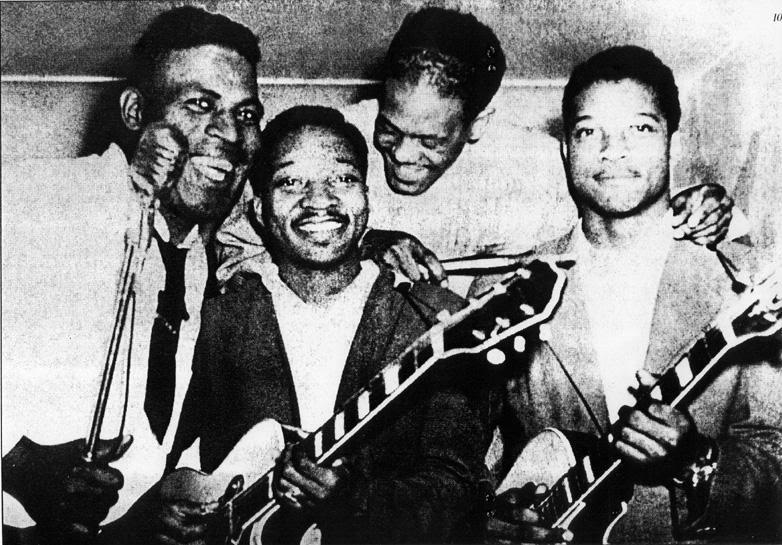
Howlin Wolf, Jody Williams, Hubert Sumlin and drummer Earl Phillips (at back)
https://www.iorr.org/talk/read.php?1,2289925,2290048 

 Legendary blues drummer EARL PHILLIPS would have been 75 today. He was
   born on Sunday, April 25, 1920, Harlem, NY.  He first recorded in NYC with
   bass player Dallas Bartley's jump group with R&B vocalist Annie Laurie
   ("They raided the Joint", Cosmo Records, 1945) and jazz trumpeter
   Roy "Little Jazz" Eldridge ("Yard Dog", Decca Records, May/1946).
   By the early 50s, he had moved to Chicago, and began is long association
   with the Chicago blues scene, especially with Howlin' Wolf & Jimmy Reed.

   He recorded extensively for Chance/VeeJay records - they even issued one
   single under his own name (VeeJay 158 : Oop-de-oop / Nothing but
   love).  But it's as an accompanyists, especially for Jimmy Reed, that
   his VeeJay sessions will be remembered for : Dr. JoJo Adams (Chance'52),
   Billy Boy Arnold ("I ain't got you", "I was Fooled', VeeJay'55),
   John Lee Hooker ("Maudie", "I'm goin' upstairs", VeeJay'59-61),
   Snooky Pryor ("Someone to love", VeeJay'56), Eddie Taylor ("Big Town
   Playboy", VeeJay'55).  His 1955-1961 recordings with Jimmy Reed are
   legendary :

         "Ain't that lovin' you Baby"     "Honest I do"
         "Baby, what you want me to do"   "Hush Hush"
         "Big Boss Man"                   "My First Plea"
         "Bright lights, Big City"        "Take out some insurance"
         "Going to New York"              "You got me dizzy"

   During the VeeJay period, he was also Howlin' Wolf's drummer between
   1954 & 1958. He's on the following Chess Recordings :

         "Evil (is goin' on)"            "No Place to go"
         "Forty Four"                    "Rocking Daddy"
         "Goin' back Home"               "Smokestack Lightnin'"
         "Howlin' Blues"                 "Sittin' on top of the World"
         "Moaning for my Baby"           "Who will be next?"
         "Nachez Burnin'"                "Who's been talking"

  EARL PHILLIPS died on Tuesday, November 20, 1990. Chicago, IL.  He
  belongs in the same group as the other 50s Chicago blues drummers :
  Fred Below, Al Duncan, Jump Jackson, Odie Payne, and S.P. Leary.


Howlin' Wolf - Howlin' Blues 
Howlin' Blues (8780) [remastered/retitled alt tk of I'm Going Away (8719-3)]
rec. April 3, 1958 in Chicago, IL; Howlin' Wolf, voc, hca; Hosea Lee Kennard, p; Jody Williams, Hubert Sumlin, g; Alfred Elkins, b; Earl Phillips, dr
Info via and Thank you Stefan Wirz -

Dienstag, 18. Oktober 2016

18.10. Billy Cox, Chuck Berry, Robert Petway, Jessie Mae Hemphill, Johnny Temple, Boogie Woogie Red, Thomas Christan * Snooky Pryor, Julius Daniels, K. C. Douglas, Robert "Bob" Brunning +


1906 Johnny Temple*

1907 Robert Petway*

1923 Jessie Mae Hemphill*

1925 Boogie Woogie Red*

1926 Chuck Berry*

1941 Billy Cox*

1947 Julius Daniels+

1963 Thomas Christan*

1975 K. C. Douglas+

2006 Snooky Pryor+

2011 Robert "Bob" Brunning+


Happy Birthday


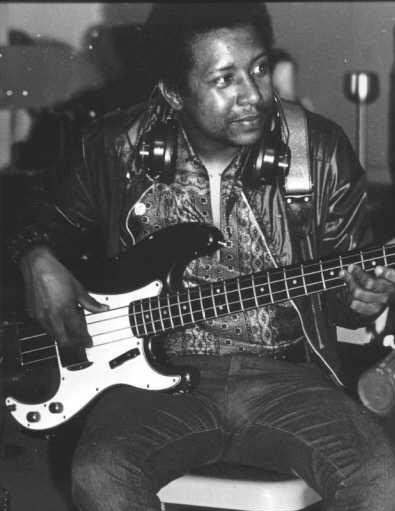
Billy Cox  *18.10.1941


Billy Cox (* 18. Oktober 1941 in Wheeling, West Virginia) ist ein US-amerikanischer Bassist. Bekanntheit erlangte er insbesondere durch die Zusammenarbeit mit Jimi Hendrix. Seit dessen Tod ist Cox überwiegend als Studiomusiker sowie als Bassist in ausgewählten Hendrix-Tribute-Bands tätig.

Kindheit und Jugend

Billy Cox wurde in Wheeling, West Virginia, geboren und wuchs in Pittsburgh auf. Seine Mutter war Pianistin und sein Onkel, ein Saxophonist, hatte gemeinsam mit Duke Ellington gespielt.[1] Während seiner Schulzeit versuchte er sich an verschiedenen Instrumenten. Unter dem Eindruck von Musikern wie Ray Brown und Charlie Mingus wählte er schließlich den Kontrabass und spielte in der Folgezeit im Schulorchester sowie in außerschulischen Jazz-Projekten. 1961 begann er den Militärdienst in der US-Army.
Musikalische Zusammenarbeit mit Jimi Hendrix

Sowohl Cox als auch Jimi Hendrix waren als Soldaten in Fort Campbell stationiert. Dort trafen sich beide in einem Übungsraum, wo Cox Hendrix das erste Mal Gitarre spielen hörte.[1] Hendrix' Gitarrenspiel beeindruckte Cox so, dass er, nachdem er zwei Monate nach Hendrix die Army verlassen hatte, sofort Kontakt zu ihm aufnahm. Die Musiker gründeten die King Kasuals, eine RnB-Band, mit der sie in Clubs in den Vereinigten Staaten auf dem so genannten Chitlin’ Circuit auftraten.[1] Mitte der 1960er Jahre sollte Hendrix eine Band mit dem Namen The Jimi Hendrix Experience in London formieren und fragte auch Cox an. Dieser allerdings lehnte das Angebot ab, weil er sich von den ausgedehnten Live-Tourneen ausgebrannt fühlte und ihm zudem das finanzielle Risiko zu groß war.[1] An seine Stelle trat Noel Redding.

Cox und Hendrix trafen sich 1969 wieder, als Hendrix eine neue Band unter dem Namen Band of Gypsys formierte. Neben Hendrix und Cox gehörte Schlagzeuger Buddy Miles zur Besetzung der Gruppe. Diese gilt als das erste so genannte Power Trio[2], das ausschließlich aus farbigen Musikern bestand.[1] Aus dieser Band ging wenig später die reformierte Jimi Hendrix Experience hervor, deren Mitglied Cox bis zum Tode von Hendrix im September 1970 blieb.

Cox ist außerdem auf den posthum veröffentlichten Jimi Hendrix-Alben South Saturn Delta, Live at Woodstock, Live at the Fillmore East und einer rekonstruierten Version von First Rays of the New Rising Sun zu hören. Sehr bekannt ist sein Auftritt beim Woodstock-Festival mit Gypsy Sun and Rainbows unter der Führung von Jimi Hendrix sowie die Cry of Love-Tour mit Jimi Hendrix und Mitch Mitchell im Jahre 1970.
Die Zeit nach Hendrix

Nach dem Tod von Jimi Hendrix veröffentlichte Billy Cox 1971 sein Soloalbum mit dem Titel Nitro Function, auf dem Char Vinnedge und Robert Tarrant zu hören sind. In der Folgezeit betätigte er sich als Studio- und Sessionmusiker und spielte mit einigen anderen Bands und Musikern zusammen, unter anderem mit der Charlie Daniels Band. Cox siedelte nach Nashville um, wo er 1985 an einem lokalen Hendrix-Tribut teilnahm. Die Reaktionen waren so positiv, dass er eine Band mit dem Namen Gypsy Suns and Rainbows gründete.[3] Höhepunkt war 1986 ein gemeinsamer Auftritt mit Stevie Ray Vaughan, bei dem die beiden Musiker gemeinsam Come On Part 1 und Voodoo Child (Slight Return) spielten. Für Vaughan war dieser Auftritt der Höhepunkt seiner damals laufenden Tournee.[3]

Im Jahr 1998 formierte Billy Cox mit Schlagzeuger Mitch Mitchell und Gitarrist Gary Serkins die Gypsy Sun Experience, mit der er eine Reihe von Auftritten absolvierte.[3] 1999 nahm er neben Michell, Buddy Miles, Jack Bruce und anderen an den Aufnahmen für das Album Midnight Daydream von Bruce Cameron teil. 2006 veröffentlichte er mit seinem Rhythmuspartner Buddy Miles ein neues Album, auf dem sich unter anderem auch Neuaufnahmen einiger Songs von Jimi Hendrix befinden, im Oktober und November 2008 nahm er an den 19 Shows der Hendrix Experience teil.
Equipment

Während seiner Zeit mit Hendrix verwendete Billy Cox im Studio Precision- und live Jazz-Bässe, da letztere sich seiner Aussage nach besser im Bandgefüge durchsetzten. An Verstärkern benutzte er Marshall. Heute spielt er den „Billy Cox Freedom Bass“, den ihm die Gitarrenfirma Cort gewidmet hat, über Ampeg-SVT-Verstärker.


William "Billy" Cox (born October 18, 1941) is an American bassist, best known for performing with Jimi Hendrix. Cox is the only surviving member of Jimi Hendrix's three main bands, including the original Experience lineup (which did not include Cox); he was in the Band of Gypsys and afterwards the Cry Of Love (a.k.a. Jimi Hendrix New Experience) trio. Cox was also in the short-lived Hendrix band Gypsy Sun and Rainbows (there are other surviving members from this group) which played Woodstock, prior to the Band of Gypsys formation. Cox continues to perform dates with the Band of Gypsys Experience and the Experience Hendrix Tour.

Early years

Born in Wheeling, West Virginia, Billy Cox was raised in Pittsburgh, Pennsylvania, and attended Schenley High School.[1] Cox met Jimi Hendrix when they were serving in the Army at Fort Campbell, Kentucky in 1961. While using the bathroom at Service Club #1 during a sudden rainstorm, he heard guitar playing inside. Impressed with what he heard, he introduced himself, told Hendrix he played bass, and they were jamming soon after. They became, and remained, fast friends. They left the military around the same time and they played clubs around Clarksville, Tennessee, finally moving to Nashville. They formed a group called the King Kasuals. They played at Nashville clubs, mostly the Del Morocco, and occasional outlying gigs in the southeast, once as far north as Indianapolis playing what was called the "Chitlin' Circuit". Hendrix eventually left Nashville, playing all over the US in the backing groups of several famous artists, most notably Little Richard and The Isley Brothers, until he was "discovered" by Chas Chandler in New York. Chandler took Hendrix to England (from which began Hendrix's meteoric rise to fame), but before Hendrix left, he called Cox and asked him to join him. Cox (in his own words) "Only had three strings on my bass" and no money to travel to New York, so he thanked Hendrix and wished him well. From 1962 to 1968 Cox gained musical experience and developed his expertise. Cox played bass on the pioneering R&B television shows, Nashville’s “Night Train” and then the “The!!!! Beat” from Dallas, Texas, working closely with Hoss Allen and John Richbourg of WLAC Radio. Billy Cox has played behind many famous artists. He has either been a member of the house or touring band or recorded sessions for Sam Cooke, Slim Harpo, Joe Simon, Charlie Daniels, Rufus Thomas, Carla Thomas, Lou Rawls, Etta James, Jackie Wilson and Little Richard.

Band of Gypsys & The Jimi Hendrix New Experience (a.k.a. The Cry of Love Band)

In 1969, several months before bassist Noel Redding left the Jimi Hendrix Experience, Hendrix called his old friend Cox, who joined him in New York as his studio bassist. Following the break-up of the Experience, Cox became a member of Hendrix's experimental group, tentatively titled Gypsy Sun and Rainbows. This group went on to play at Woodstock and two low-key New York gigs before being disbanded. Hendrix then formed another short-lived group with Cox and Buddy Miles, the Band of Gypsys. They recorded the eponymously titled live LP that he owed former manager Ed Chalpin as part of a legal settlement. Following their demise, Cox played a series of shows with Hendrix and Mitch Mitchell in the reformed New Experience, formerly called The Cry of Love. In addition to the Band of Gypsys release, Cox's bass playing can be heard on such posthumously released Hendrix albums as South Saturn Delta, Live at Woodstock, Live at the Fillmore East, Nine to the Universe, and a reconstructed version of First Rays of the New Rising Sun, in addition to such home-videos as Live at the Isle of Wight 1970, Live at Woodstock, The Dick Cavett Show, Rainbow Bridge, and Jimi Hendrix.

On September 8, 2006, Cox mentioned in an interview on the KQRS-FM morning show that he can be heard playing bass on five of the first notes of Jimi Hendrix's famous Woodstock "Star Spangled Banner". The rendition was completely impromptu according to him. He said he thought to himself at the moment, "I realized we had not rehearsed this, I had better lay off." He toured with Hendrix (with Mitch Mitchell on drums), usually billed as 'the Jimi Hendrix Experience', from 25 April until 6 September 1970 on the Cry of Love tour. Cox lives in Nashville, Tennessee, where he remains active in music, and acts as an ambassador for Jimi Hendrix, his music and philosophy.

After Hendrix's death
1970s–1980s

In 1971, Cox released his album Nitro Function with Char Vinnedge (from Luv'd Ones) and Robert Tarrant and Jim Dant. Cox played with others, including the Charlie Daniels Band, as well as session work and live dates. Throughout the '70s and '80s, Cox would continue to be a part of Jimi's music as posthumous releases continued to pour out.

1990s

In 1995, Cox along with Mitchell, Redding and Miles began participating in Hendrix tributes and tours. In 1999, Cox appeared on the late Bruce Cameron's album, Midnight Daydream, that included other Hendrix alumni Mitchell and Miles along with Jack Bruce and others. Cox has also performed some dates along with Mitchell and guitarist Gary Serkin with a Hendrix-tribute outfit called the Gypsy Sun Experience.[2]

Cox worked on First Rays of the New Rising Sun, Hendrix's fourth studio album, which was cut off by Hendrix's death. Cox has also been known to guest speak at University level music seminars. In this capacity he has been helpful to the aspiring musicians by spending time with them in discussion and demonstration sessions. This spirit of sharing and helping other musicians is similar to his former bandleader Hendrix's vision of providing musicians with a no-pressure (including cost breaks if needed) recording environment in the now legendary Electric Lady studios located in Greenwich Village, NYC.

2000s

In 2004, Miles reunited yet again with Cox of the Band of Gypsys to re-record songs from the original live album of 1970 with guitarists Eric Gales, Kenny Olsen, Sheldon Reynolds, Andy Aledort and Gary Serkin. The album, titled The Band Of Gypsys Return, was released in 2006.

As of November 12, 2008, Cox is the only surviving member of both The Jimi Hendrix Experience and the Band Of Gypsys. On Monday, October 12, 2009, Cox was inducted into Musician's Hall of Fame in ceremonies held at The Schermerhorn Symphony Center in Nashville, Tennessee. He currently plays with the Experience Hendrix, a semi-regular touring Hendrix tribute band featuring top guitarists and former Hendrix collaborators. Billy's solo album Last Gypsy Standing was released in 2009. In 2009, he was also inducted into the Musicians Hall of Fame and Museum in Nashville, TN.[3]

2010s

Today, Billy Cox owns a video production company. He has produced numerous blues and a myriad of gospel shows. He co-authored the books, Jimi Hendrix Sessions and Ultimate Hendrix with John McDermott and Eddie Kramer. Billy has been the recipient of numerous awards and honors among which: In 2009 Billy Cox was inducted into The Musicians Hall Of Fame; Billy received The Founders Award in 2010. It was given by Microsoft co-founder, Paul Allen and in 2011 Billy was inducted into the West Virginia Music Hall Of Fame. Billy released his latest album, Old School Blue Blues, in 2011 and continues to tour with "The Experience Hendrix Tour" each year and his own Band of Gypsys Experience. He released the single Run featuring the androgynous singer and songwriter Marlon Alarm in November 2011.


Gary Moore & Billy Cox - Red House


Billy Cox and Nick Nixon 9-10-08 


Chuck Berry  *18.10.1926

Congratulations to the 90.


Charles Edward Anderson „Chuck“ Berry (* 18. Oktober 1926 in St. Louis, Missouri) ist ein US-amerikanischer Sänger, Gitarrist, Komponist und ein Pionier des Rock ’n’ Roll.[1] Berry wurde 1985 in die Blues Hall of Fame aufgenommen und war 1986 das erste Mitglied der Rock and Roll Hall of Fame. Berrys Vorbilder waren Nat King Cole, Louis Jordan und Muddy Waters. Chuck Berry gilt als der Erfinder des Duckwalk.
Chuck Berry begann an der High School mit dem Gesang und dem Gitarrespielen. Wegen einiger Vergehen saß er drei Jahre lang in einem Jugendgefängnis ein. Nach seiner vorzeitigen Entlassung arbeitete er in einer Autofabrik. 1948 heiratete er Themetta Suggs, aus der Ehe gingen zwei Kinder hervor.
Ab 1951 war er Pförtner beim Radiosender WEW und kaufte dort einem Musiker eine E-Gitarre ab. Er erwarb ein Tonbandgerät und begann damit, seine Musik aufzunehmen. Im Jahr 1952 hatte Chuck Berry seine ersten öffentlichen Auftritte im Huff’s Garden, einem Club in St. Louis. Mit einem Auftritt als Ersatzmann im Johnnie Johnson Trio begann seine schließlich fast zwanzig Jahre dauernde Zusammenarbeit mit dem Pianisten und Komponisten Johnnie Johnson. Ende des Jahres wechselte er in den Cosmopolitan Club. Dort spielte er zunächst vor fast ausschließlich schwarzem Publikum. Es sprach sich jedoch schnell herum, dass dort ein schwarzer Hillbilly auftrat und schon bald war fast die Hälfte der Zuschauer weiß.
Im Mai 1955 machte er zusammen mit einem Schulfreund einen Ausflug nach Chicago, um dort Howlin’ Wolf, Elmore James und Muddy Waters live zu sehen. Als er sich bei Muddy Waters ein Autogramm holte, fragte er, wo er denn selbst Aufnahmen machen könne. Dieser verwies ihn an Chess Records. Nach ein paar Tagen war ein Demoband fertig und Berry wandte sich damit an Chess. Der Produzent Leonard Chess war von dem Stück Ida Red beeindruckt und er versprach Berry eine Aufnahme-Session. Am 21. Mai wurden die beiden Stücke Ida Red, umbenannt in Maybellene, und Wee Wee Hours aufgenommen.
Mit Maybellene gelang ihm auf Anhieb ein Top-Ten-Hit in den Billboard Charts. Außerdem erhielt er einen Dreijahresvertrag. Während der anschließenden Tourneen präsentierte er dann seinen Duckwalk (Entengang), der seitdem zu seinem Markenzeichen geworden ist. Nach eigener Aussage erfand er diese Showeinlage ursprünglich, um von den Falten in seinem Anzug abzulenken. Im April 1956 nahm Chuck Berry mit Roll Over Beethoven einen seiner bekanntesten Hits auf. In den folgenden Jahren entstanden so bekannte Songs wie Sweet Little Sixteen, Rock and Roll Music, Memphis, Tennessee, Carol und Johnny B. Goode, wobei Johnson seine Rechte dem Komponisten Berry überließ. Der zuletzt genannte, Johnson gewidmete Titel wurde später als Beispiel der „irdischen Pop-/Rockmusik“ Teil der Voyager Golden Record und mit den Raumsonden Voyager 1 und Voyager 2 ins Weltall geschickt.
Im Dezember 1959 geriet Berry mit der Justiz in Konflikt. Des Vergehens gegen den sogenannten Mann Act beschuldigt, wurde er in zweiter Instanz im März 1961 zu drei Jahren Gefängnis verurteilt. Nach seiner vorzeitigen Entlassung im Oktober 1963 konnte er erneut Fuß fassen. Insbesondere in Großbritannien hatte er eine Reihe weiterer Hits mit Songs wie No Particular Place to Go und You Never Can Tell.
1964 veröffentlichte er eines seiner besten Alben mit dem Titel St. Louis to Liverpool. Nachdem die Beatles mit Coverversionen von Roll Over Beethoven und Rock and Roll Music recht erfolgreich waren, wurde auch Berry wieder gefragter. 1966/1967 wechselte er von Chess Records zu Mercury. Dort war man jedoch nicht in der Lage, seinen früheren Sound adäquat zu produzieren und zu vermarkten. Nach fünf relativ verkaufsschwachen Alben verließ Berry das Label im Jahre 1969 wieder.
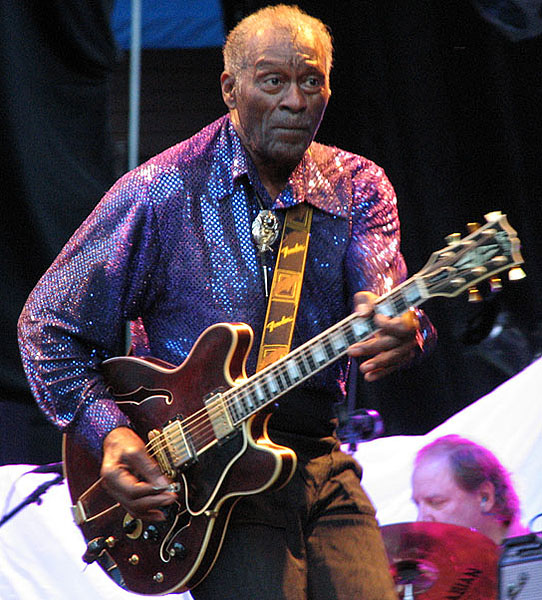
Chuck Berry bei einem Konzert im Jahr 1987
Wieder zurück bei Chess entstand 1970 Back Home. 1972 kam sein meistverkauftes Album The London Chuck Berry Sessions heraus. Die Single-Auskoppelung My Ding-a-Ling wurde sein erster Nummer-eins-Hit in den Pop-Charts, wurde aber von einigen Radiosendern nicht gespielt, weil der Text sexuelle Anspielungen enthielt. Anfang der 1970er avancierte Berry zu einem der gefragtesten Rock-Idole und hatte zahlreiche Fernsehauftritte. Beispielsweise war er 1973 als eine von vielen Attraktionen zum 25-jährigen Jubiläum bei Dick Clarks „American Bandstand“ geladen. Als er auftrat, wollte das Publikum ihn nicht mehr gehen lassen und forderte eine Zugabe nach der anderen. So geriet die Veranstaltung schließlich ungewollt zu einer kleinen Chuck-Berry-Show. Berry gab weiterhin zahlreiche Konzerte weltweit und ging immer seltener ins Plattenstudio. 1979 spielte er sein letztes Studioalbum ein. Im selben Jahr trat er unter anderem auch für Präsident Jimmy Carter auf.
Seit Mitte der 1960er Jahre lösen Berrys Auftritte bei den Zuhörern mitunter gemischte Gefühle aus. Kritisiert wird oft, dass er keine eigene Begleitband mitbringt, sondern mit örtlichen Bands – etwa The Firebirds – spielt, mit denen er so gut wie nie probt. Dass seine Konzerte trotzdem ein Erlebnis sein können, mag nicht zuletzt an der Ausstrahlung des Musikers liegen, der seine alten Hits durch Synkopierung seit 50 Jahren in immer neuem Gewand vorträgt. Ungeachtet seines Alters tritt er noch regelmäßig auf und unternimmt weiterhin Tourneen, oft zusammen mit Jerry Lee Lewis.
2008 wurde er in Deutschland für sein Lebenswerk mit der Goldenen Kamera ausgezeichnet.
2013 widmete ihm das britische Fachmagazin Guitar & Bass in seiner Septemberausgabe die Titelstory. Auf mehreren Seiten wird das Leben und Wirken nachgezeichnet. Im Herbst gab er einige wenige Konzerte in Europa. Kurz nach seinem 87. Geburtstag gab es Auftritte in Moskau, beim Steinegg Live Festival in Südtirol (Italien), in Helsinki und Oulu in Finnland und Oslo. Musikalisch begleitet wurde er dabei von seinem Sohn Charles Berry jun. (Gitarre), James Marsala (Bass), Robert Lohr (Keyboards) und Keith Robinson (Schlagzeug). Ursprünglich war geplant, dass seine Tochter Ingrid Berry-Clay (Gesang und Mundharmonika) in der Band dabei wäre. In Helsinki erlitt er einen Schwächeanfall und musste ins Krankenhaus gebracht werden. Anschließend gab er aber noch die beiden letzten Konzerte dieser Europatournee.
Im August 2014 wurde Chuck Berry neben dem US-amerikanischen Operndirektor Peter Sellars mit dem schwedischen Polar Music Prize geehrt.[2]
Chuck Berry ist aufgrund seines fortgeschrittenen Alters und seiner Konstitution allerdings kaum mehr imstande Gitarre zu spielen oder zu singen. Konzertbesucher kritisierten die 60-minütigen Auftritte als eher peinlich oder bezeichneten die Shows als Demontage einer Legende.
Musikalischer Einfluss
Chuck Berry etablierte in den 1950er Jahren fast im Alleingang die Gitarre als führendes Instrument in der Rockmusik. Andere Künstler der Zeit zeigten sich zwar auch gerne mit einer Gitarre, verwendeten sie aber nur zur rhythmischen Begleitung; Soli und Einwürfe kamen von der Begleitband. Berry präsentierte die Gitarre gleichberechtigt zum Gesang. Er setzte sie sowohl zur Begleitung ein, meist mit Powerchords auf den tiefen Saiten, aber auch für Soli, Fills und Licks in den höheren Lagen. Bei letzteren spielte er meist über wenigstens zwei Saiten („double stops“), was einen volleren, dynamischen Ton erzeugte. Auch seine Bendings erfolgten oft auf zwei Saiten.
Wohl eines der berühmtesten Gitarren-Intros überhaupt ist das von Johnny B. Goode, das von der Terz zur Oktave aufsteigt, dann abfällt und mit einem Staccato von Grundton und Quinte Spannung aufbaut.
Danach folgen vier Takte auf einem Ton, der Quinte, die er synkopisch verschoben abwechselnd auf der G-Saite von der Quarte hochgezogen und auf der h-Saite gerade anschlägt. Gerade das ist seitdem ein obligates Stilmittel für alle Rock-’n’-Roll-Gitarristen geworden.
Großen Einfluss hatten auch die Texte, die er zu seinen Liedern schrieb. Durch seine bürgerliche Herkunft mit Literatur, Theater und Bibel vertraut, machte er durch hintergründige und sprachverliebte Lyrik anspruchsvollere Texte für den Pop salonfähig und inspirierte maßgeblich die Frühwerke von Bob Dylan, Mick Jagger und John Lennon.[3]
Chuck Berry, der sich musikalisch stets treu geblieben ist, gehört zu den lebenden Legenden des Rock ’n’ Roll. Er steht in einer Reihe mit Stars wie Little Richard und Fats Domino. Seine Riffs und Licks prägen nach wie vor den Rock ’n’ Roll. Viele seiner Hits wurden von Rockgrößen wie den Beatles, den Beach Boys, den Rolling Stones, Jimi Hendrix, Elvis Presley, Buddy Holly, Paul McCartney, The Sonics oder Electric Light Orchestra nachgespielt. Die Beatles äußerten einmal, dass sie ohne Berry niemals angefangen hätten, Musik zu machen. Die Rolling Stones starteten ihre Karriere mit Chuck-Berry-Songs, und Keith Richards bezeichnete sich wiederholt als seinen größten Fan. Musiker wie Simon and Garfunkel, Eric Clapton, Bruce Springsteen, AC/DC (deren Gitarrist Angus Young als glühender Verehrer von Berrys Musik gilt) und Motörhead coverten ebenfalls seine Stücke. Status Quo beenden seit über 40 Jahren ihre Konzerte mit Bye Bye Johnny und spielten auch andere Berry-Kompositionen wie Rock and Roll Music, Carol oder Roll over Beethoven live.
Equipment
Chuck Berry spielte in den 1950ern bis Anfang der 60er eine Gibson ES-350T, danach hauptsächlich eine Gibson ES-335 in Rot oder eine Gibson ES-355 in Braun.

 
Charles Edward Anderson "Chuck" Berry (born October 18, 1926) is an American guitarist, singer and songwriter, and one of the pioneers of rock and roll music. With songs such as "Maybellene" (1955), "Roll Over Beethoven" (1956), "Rock and Roll Music" (1957) and "Johnny B. Goode" (1958), Berry refined and developed rhythm and blues into the major elements that made rock and roll distinctive, with lyrics focusing on teen life and consumerism and utilizing guitar solos and showmanship that would be a major influence on subsequent rock music.[1]

Born into a middle-class family in St. Louis, Missouri, Berry had an interest in music from an early age and gave his first public performance at Sumner High School. While still a high school student he was arrested, and served a prison sentence for armed robbery from 1944 to 1947. After his release, Berry settled into married life and worked at an automobile assembly plant. By early 1953, influenced by the guitar riffs and showmanship techniques of blues player T-Bone Walker, Berry began performing with the Johnnie Johnson Trio.[2] His break came when he traveled to Chicago in May 1955, and met Muddy Waters, who suggested he contact Leonard Chess of Chess Records. With Chess he recorded "Maybellene"—Berry's adaptation of the country song "Ida Red"—which sold over a million copies, reaching number one on Billboard's Rhythm and Blues chart. By the end of the 1950s, Berry was an established star with several hit records and film appearances to his name as well as a lucrative touring career. He had also established his own St. Louis-based nightclub, called Berry's Club Bandstand. But in January 1962, Berry was sentenced to three years in prison for offenses under the Mann Act—he had transported a 14-year-old girl across state lines.[2][3][4]

After his release in 1963, Berry had more hits in the mid 60's, including "No Particular Place to Go," "You Never Can Tell," and "Nadine." By the mid-1970s, he was more in demand as a nostalgic live performer, playing his past hits with local backup bands of variable quality.[2] In 1979 he served 120 days in prison for tax evasion.

Berry was among the first musicians to be inducted into the Rock and Roll Hall of Fame on its opening in 1986, with the comment that he "laid the groundwork for not only a rock and roll sound but a rock and roll stance."[5] Berry is included in several Rolling Stone "Greatest of All Time" lists, including being ranked fifth on their 2004 list of the 100 Greatest Artists of All Time.[6] The Rock and Roll Hall of Fame's 500 Songs that Shaped Rock and Roll included three of Berry's songs: "Johnny B. Goode," "Maybellene," and "Rock and Roll Music."[7] Berry's "Johnny B. Goode" is the only rock and roll song included on the Voyager Golden Record.[8]

Early life (1926–54)

Born in St. Louis, Missouri,[9] Berry was the fourth child in a family of six. He grew up in the north St. Louis neighborhood known as The Ville, an area where many middle class St. Louis people lived at the time. His father, Henry, was a contractor and deacon of a nearby Baptist church, his mother Martha a certified public school principal. His middle class upbringing allowed him to pursue his interest in music from an early age and he gave his first public performance in 1941 while still at Sumner High School.[10] Just three years later, in 1944, while still at Sumner High School, he was arrested and convicted of armed robbery after robbing three shops in Kansas City and then stealing a car at gunpoint with some friends.[11][12] Berry's own account in his autobiography is that his car broke down and he then flagged down a passing car and stole it at gunpoint with a non-functional pistol.[13][14] Berry was sent to the Intermediate Reformatory for Young Men at Algoa, near Jefferson City, Missouri,[9] where he formed a singing quartet and did some boxing.[11] The singing group became competent enough that the authorities allowed it to perform outside the detention facility.[15] After his release from prison on his 21st birthday in 1947, Berry married Themetta "Toddy" Suggs on October 28, 1948, who gave birth to Darlin Ingrid Berry on October 3, 1950.[16] Berry supported his family doing a number of jobs in St. Louis: working briefly as a factory worker at two automobile assembly plants, as well as being janitor for the apartment building where he and his wife lived. Afterwards he trained as a beautician at the Poro College of Cosmetology, founded by Annie Turnbo Malone.[17] He was doing well enough by 1950 to buy a "small three room brick cottage with a bath" in Whittier Street,[18] which is now listed as the Chuck Berry House on the National Register of Historic Places.[19]

By the early 1950s, Berry was working with local bands in the clubs of St. Louis as an extra source of income.[17] He had been playing the blues since his teens, and he borrowed both guitar riffs and showmanship techniques from blues player T-Bone Walker,[20] as well as taking guitar lessons from his friend Ira Harris that laid the foundation for his guitar style.[21]

Apprenticeship with Johnnie Johnson

By early 1953 Berry was performing with Johnnie Johnson's trio, starting a long-time collaboration with the pianist.[22] Although the band played mostly blues and ballads, the most popular music among whites in the area was country. Berry wrote, "Curiosity provoked me to lay a lot of our country stuff on our predominantly black audience and some of our black audience began whispering 'who is that black hillbilly at the Cosmo?' After they laughed at me a few times they began requesting the hillbilly stuff and enjoyed dancing to it."[9]

Berry's calculated showmanship, along with mixing country tunes with R&B tunes, and singing in the style of Nat King Cole to the music of Muddy Waters, brought in a wider audience, particularly affluent white people.[2][23]

Signing with Chess: "Maybellene" to "Come On" (1955–62)

In May 1955, Berry traveled to Chicago where he met Muddy Waters, who suggested he contact Leonard Chess of Chess Records. Berry thought his blues material would be of most interest to Chess, but to his surprise it was an old country and western recording by Bob Wills,[24] entitled "Ida Red" that got Chess's attention. Chess had seen the rhythm and blues market shrink and was looking to move beyond it, and he thought Berry might be the artist for that purpose. So on May 21, 1955 Berry recorded an adaptation of "Ida Red"—"Maybellene"—which featured Johnnie Johnson on piano, Jerome Green (from Bo Diddley's band) on the maracas, Jasper Thomas on the drums and Willie Dixon on the bass. "Maybellene" sold over a million copies, reaching number one on Billboard's Rhythm and Blues chart and number five on the September 10, 1955 Billboard Best Sellers in Stores chart.[9][25]

At the end of June 1956, his song "Roll Over Beethoven" reached number 29 on the Billboard Top 100 chart, and Berry toured as one of the "Top Acts of '56." He and Carl Perkins became friends. Perkins said that "I knew when I first heard Chuck that he'd been affected by country music. I respected his writing; his records were very, very great." As they toured, Perkins discovered that Berry not only liked country music, but knew about as many songs as he did. Jimmie Rodgers was one of his favorites. "Chuck knew every Blue Yodel and most of Bill Monroe's songs as well," Perkins remembered. "He told me about how he was raised very poor, very tough. He had a hard life. He was a good guy. I really liked him."[26]
Berry in The Casino Deauville, France, July 13, 1987

In late 1957, Berry took part in Alan Freed's "Biggest Show of Stars for 1957" United States tour with the Everly Brothers, Buddy Holly, and others.[27] He also guest starred on ABC's The Guy Mitchell Show, having sung his hit song "Rock 'n' Roll Music." The hits continued from 1957 to 1959, with Berry scoring over a dozen chart singles during this period, including the top 10 US hits "School Days," "Rock and Roll Music," "Sweet Little Sixteen," and "Johnny B. Goode". He appeared in two early rock and roll movies. The first was Rock Rock Rock, (1956) in which he sings "You Can't Catch Me." He had a speaking role as himself in Go, Johnny, Go! (1959) along with Alan Freed, and performs his songs "Johnny B. Goode," "Memphis, Tennessee," and "Little Queenie." His performance of "Sweet Little Sixteen" at the Newport Jazz Festival in 1958 is captured in the motion picture Jazz on a Summer's Day.[28]

By the end of the 1950s, Berry was a high-profile established star with several hit records and film appearances to his name, as well as a lucrative touring career. He had opened a racially integrated St. Louis-based nightclub, called Berry's Club Bandstand, and was investing in real estate.[29] But in December 1959, Berry was arrested under the Mann Act after questionable allegations that he had sexual intercourse with a 14-year-old Apache waitress, Janice Escalante,[30] whom he had transported over state lines to work as a hat check girl at his club.[31] After an initial two-week trial in March 1960, Berry was convicted, fined $5,000, and sentenced to five years in prison.[32] Berry's appeal that the judge's comments and attitude were racist and prejudiced the jury against him was upheld,[3][33] and a second trial was heard in May and June 1961,[34] which resulted in Berry being given a three-year prison sentence.[13] After another appeal failed, Berry served one and one half years in prison from February 1962 to October 1963.[35] Berry had contined recording and performing during the trials, though his output had slowed down as his popularity declined; his final single released before being imprisoned was "Come On".[36]

"Nadine" and move to Mercury (1963–69)

When Berry was released from prison in 1963, he was able to return to recording and performing due to the British invasion acts of the 1960s—most notably the Beatles and the Rolling Stones—having kept up an interest in his music by releasing cover versions of his songs;[37][38] along with other bands reworking his songs, such as the Beach Boys 1963 hit "Surfin' U.S.A." based on Berry's "Sweet Little Sixteen".[39] In 1964–65 Berry released eight singles, including three, "No Particular Place to Go" (a humorous reworking of "School Days" concerning the introduction of car seat belts),[40] "You Never Can Tell", and the rocking "Nadine,"[41] which achieved commercial success, reaching the top 20 of the Billboard 100. Between 1966 and 1969 Berry released five albums on the Mercury label, including his first live album Live at Fillmore Auditorium in which he was backed by the Steve Miller Band.[42][43]

While this was not a successful period for studio work,[44] Berry was still a top concert draw. In May 1964, he did a successful tour of the UK,[40] but when he returned in January 1965 his behavior was erratic and moody, and his touring style of using unrehearsed local backing bands and a strict non-negotiable contract was earning him a reputation as a difficult yet unexciting performer.[45] He also played at large events in North America, such as the Schaefer Music Festival in New York City's Central Park in July 1969, and the Toronto Rock and Roll Revival festival in October.[46]

Back to Chess: "My Ding-a-Ling" to White House concert (1970–79)

Berry helped give life to a subculture ... Even "My Ding-a-Ling", a fourth-grade wee-wee joke that used to mortify true believers at college concerts, permitted a lot of twelve-year-olds new insight into the moribund concept of "dirty" when it hit the airwaves ...
Robert Christgau[47]

Berry returned to Chess from 1970 to 1973. There were no hit singles from the 1970 album Back Home, then in 1972 Chess released a live recording of "My Ding-a-Ling," a novelty song which Berry had recorded in a different version on his 1968 LP From St. Louie to Frisco as "My Tambourine".[48] The track became Berry's only number one single. A live recording of "Reelin' And Rockin'" was also issued as a follow-up single that same year and would prove to be Berry's final top-40 hit in both the US and the UK. Both singles were featured on the part-live/part-studio album The London Chuck Berry Sessions which was one of a series of London Sessions albums which included other Chess mainstay artists Muddy Waters and Howlin' Wolf. Berry's second tenure with Chess ended with the 1975 album Chuck Berry, after which he did not make a studio record until 1979's Rock It for Atco Records, his last studio album to date.[49]

In the 1970s Berry toured on the basis of his earlier successes. He was on the road for many years, carrying only his Gibson guitar, confident that he could hire a band that already knew his music no matter where he went. AllMusic has said that in this period his "live performances became increasingly erratic, ... working with terrible backup bands and turning in sloppy, out-of-tune performances" which "tarnished his reputation with younger fans and oldtimers" alike.[50] Among the many bandleaders performing a backup role with Berry were Bruce Springsteen and Steve Miller when each was just starting his career. Springsteen related in the video Hail! Hail! Rock 'n' Roll that Berry did not even give the band a set list and just expected the musicians to follow his lead after each guitar intro. Berry neither spoke to nor thanked the band after the show. Nevertheless, Springsteen backed Berry again when he appeared at the concert for the Rock and Roll Hall of Fame in 1995. At the request of Jimmy Carter, Berry performed at the White House on June 1, 1979.[43]

Berry's type of touring style, traveling the "oldies" circuit in the 1970s (where he was often paid in cash by local promoters) added ammunition to the Internal Revenue Service's accusations that Berry was a chronic income tax evader. Facing criminal sanction for the third time, Berry pleaded guilty to tax evasion and was sentenced to four months in prison and 1,000 hours of community service—doing benefit concerts—in 1979.[51]

Still on the road (1980–present)

Berry continued to play 70 to 100 one-nighters per year in the 1980s, still traveling solo and requiring a local band to back him at each stop. In 1986, Taylor Hackford made a documentary film, Hail! Hail! Rock 'n' Roll, of a celebration concert for Berry's sixtieth birthday, organized by Keith Richards.[52] Eric Clapton, Etta James, Julian Lennon, Robert Cray and Linda Ronstadt, among others, appeared with Berry on stage and film. During the concert, Berry played a Gibson ES-355, the luxury version of the ES-335 that he favored on his 1970s tours. Richards played a black Fender Telecaster Custom, Cray a Fender Stratocaster and Clapton a Gibson ES 350T, the same guitar Berry used on his early recordings.[53]

In the late 1980s, Berry bought a restaurant in Wentzville, Missouri, called The Southern Air,[54] and in 1990 he was sued by several women who claimed that he had installed a video camera in the ladies' bathroom. Berry claimed that he had the camera installed to catch red-handed a worker who was suspected of stealing from the restaurant. Though his guilt was never proven in court, Berry opted for a class action settlement with 59 women. Berry's biographer, Bruce Pegg, estimated that it cost Berry over $1.2 million plus legal fees.[55] It was during this time that he began using Wayne T. Schoeneberg as his legal counsel. Reportedly, a police raid on his house did find videotapes of women using the restroom, and one of the women was a minor. Also found in the raid were 62 grams of marijuana. Felony drug and child-abuse charges were filed. In order to avoid the child-abuse charges, Berry agreed to plead guilty to misdemeanor possession of marijuana. He was given a six-month suspended jail sentence, two years' unsupervised probation, and ordered to donate $5,000 to a local hospital.[56]

In November 2000, Berry again faced legal charges when he was sued by his former pianist Johnnie Johnson, who claimed that he co-wrote over 50 songs, including "No Particular Place to Go", "Sweet Little Sixteen" and "Roll Over Beethoven", that credit Berry alone. The case was dismissed when the judge ruled that too much time had passed since the songs were written.[57]

In 2008, Berry toured Europe, with stops in Sweden, Norway, Finland, the United Kingdom, the Netherlands, Ireland, Switzerland, Poland and Spain. In mid-2008, he played at Virgin Festival in Baltimore, Maryland.[58] He presently lives in Ladue, Missouri, approximately 10 miles west of St. Louis.[59] During a New Year's Day 2011 concert in Chicago, Berry, suffering from exhaustion, passed out and had to be helped off stage.[60] Berry usually performs one Wednesday each month at Blueberry Hill, a restaurant and bar located in the Delmar Loop neighborhood in St. Louis.

Legacy

While no individual can be said to have invented rock and roll, Chuck Berry comes the closest of any single figure to being the one who put all the essential pieces together. It was his particular genius to graft country & western guitar licks onto a rhythm & blues chassis in his very first single, "Maybellene."
Rock and Roll Hall of Fame[61]

A pioneer of rock music, Berry was a significant influence on the development of both the music and the attitude associated with the rock music lifestyle. With songs such as "Maybellene" (1955), "Roll Over Beethoven" (1956), "Rock and Roll Music" (1957) and "Johnny B. Goode" (1958), Berry refined and developed rhythm and blues into the major elements that made rock and roll distinctive, with lyrics successfully aimed to appeal to the early teenage market by using graphic and humorous descriptions of teen dances, fast cars, high-school life, and consumer culture,[2] and utilizing guitar solos and showmanship that would be a major influence on subsequent rock music.[1] His records are a rich storehouse of the essential lyrical, showmanship and musical components of rock and roll; and, in addition to the Beatles and the Rolling Stones, a large number of significant popular-music performers have recorded Berry's songs.[2] Though not technically accomplished, his guitar style is distinctive—he incorporated electronic effects to mimic the sound of bottleneck blues guitarists, and drew on the influence of guitar players such as Charlie Christian and T-Bone Walker[2] to produce a clear and exciting sound that many later guitar musicians would acknowledge as a major influence in their own style.[56] Berry's showmanship has been influential on other rock guitar players,[62] particularly his one-legged hop routine,[63] and the "duck walk",[64] which he first used as a child when he walked "stooping with full-bended knees, but with my back and head vertical" under a table to retrieve a ball and his family found it entertaining; he used it when "performing in New York for the first time and some journalist branded it the duck walk."[65][66]

The rock critic Robert Christgau considers him "the greatest of the rock and rollers,"[67] while John Lennon said, "if you tried to give rock and roll another name, you might call it 'Chuck Berry'."[68] Ted Nugent said "If you don't know every Chuck Berry lick, you can't play rock guitar."[69]

Among the honors Berry has received, have been the Grammy Lifetime Achievement Award in 1984,[70] the Kennedy Center Honors in 2000,[71] and being named seventh on Time magazine's 2009 list of the 10 best electric guitar players of all-time.[72] On May 14, 2002, Berry was honored as one of the first BMI Icons at the 50th annual BMI Pop Awards. He was presented the award along with BMI affiliates Bo Diddley and Little Richard.[73] In August 2014, Berry was made a laureate of the Polar Music Prize.[74]

Berry is included in several Rolling Stone "Greatest of All Time" lists. In September 2003, the magazine named him number 6 in their list of the "100 Greatest Guitarists of All Time".[75] This was followed in November of the same year by his compilation album The Great Twenty-Eight being ranked 21st in the Rolling Stone's 500 Greatest Albums of All Time.[76] The following year, in March 2004, Berry was ranked fifth out of "The Immortals – The 100 Greatest Artists of All Time".[6][77] In December 2004, six of his songs were included in the "Rolling Stone's 500 Greatest Songs of All Time", namely "Johnny B. Goode" (#7), "Maybellene" (#18), "Roll Over Beethoven" (#97), "Rock and Roll Music" (#128), "Sweet Little Sixteen" (#272) and "Brown Eyed Handsome Man" (#374).[78] In June 2008, his song "Johnny B. Goode" ranked first place in the "100 Greatest Guitar Songs of All Time".

Chuck Berry - Johnny B. Goode live


https://www.youtube.com/watch?v=AEq62iQo0eU 


Chuck Berry live concert London 1972 


Robert Petway  *18.10.1907


Robert Petway (* vermutlich 1907 in Yazoo City, Mississippi; † vermutlich in Chicago, Illinois, Sterbedatum unbekannt) war ein US-amerikanischer Blues-Gitarrist. Seine Version des trad. Catfish Blues (1941) wurde von Muddy Waters zum Hit Rollin' Stone verarbeitet, nach dem sich später die Rolling Stones benannten. Auch Jimi Hendrix nahm den Catfish Blues auf.
Über sein Leben ist wenig bekannt. Petway ist vermutlich am 18. Oktober 1907 in Yazoo City geboren.[1] Er hatte 1941 und 1942 seine einzigen Aufnahme-Sessions. Es gibt nur ein Foto von ihm. Er lebte in Mississippi, wo er auch auftrat, oft zusammen mit Tommy McClennan.

Robert Petway (October 18, 1907 – May 1978)[2] was an African-American blues singer and guitarist.

Very little is known about Robert Petway. His birthplace is usually speculated to have been at or near J.F. Sligh Farm near Yazoo City, Mississippi, birthplace of his close friend and fellow bluesman Tommy McClennan, although some recent research suggests that Petway may have been born at Gee's Bend, Alabama.[1] As per his Social Security registration, he was born in 1907 and the exact date and even the occurrence of his death is unknown. There is only one known picture of Petway, a publicity photo from 1941. He only recorded 16 songs, but he is said to have been an influence on many notable blues and rock musicians, including John Lee Hooker, Muddy Waters, and Jimi Hendrix.

Career

Like many bluesmen from the Mississippi Delta, Petway traveled around as a musician, playing at parties, roadhouses, and other venues available. Petway and McClennan often travelled and performed together. After McClennan had been in Chicago for a few years, Petway travelled north to join him and cut records, as did Georgia's Frank Edwards who met them in Mississippi.

"Catfish Blues"

One of Petway's most influential songs is "Catfish Blues", which he recorded in 1941. Amongst many other reworked versions, Muddy Waters used the arrangement and lyrics of "Catfish Blues" for his single "Rollin' Stone", the song from which the rock group The Rolling Stones chose their band name. The composition credit given to Petway is based entirely on the recording date of his version of the song; however it would be impossible to evidence that song as the conclusive and original source. There is speculation that Tommy McClennan had actually written the song, as he himself recorded it as "Deep Blues Sea". When David "Honeyboy" Edwards, a follower of Petway, was asked if Petway wrote the song, he replied, "He just made that song up and used to play it at them old country dances. He just made it up and kept it in his head."[3] In his autobiography, David Honeyboy Edwards also remembers a delta blues guitarist he met called Tom Toy, who came from Leland, Mississippi. Apparently Toy was well-known locally for his version of "Catfish Blues". Toy never recorded and he is forgotten today.

Second verse of "Catfish Blues"

    What if I were a catfish, mama
    I said swimmin’ deep down in, deep blue sea
    Have these gals now, sweet mama, settin’ out,
    Settin’ out hooks for me, settin’ out hook for me
    Settin’ out hook for me, settin’ out hook for me
    Settin’ out hook for me, settin’ out hook for me[4]

First verse of "Rollin' Stone"

    Well, I wish I was a catfish,
    swimmin in a oh, deep, blue sea
    I would have all you good lookin women,
    fishin, fishin after me
    Sure 'nough, a-after me
    Sure 'nough, a-after me
    Oh 'nough, oh 'nough, sure 'nough [5]

Death/disappearance

There is no record, official or unofficial, of Petway's death. The last record of his public life is a quote from Honeyboy Edwards: "nobody I know heard what become of him."[6] Blues researcher Jason Rewald has suggested, on the basis of social security records, that Petway may in fact have been born in Gee's Bend, Alabama on October 18, 1907, and died in Chicago on May 30, 1978.[1] In his autobiography David Honeyboy Edwards actually tells that he heard that Petway might have moved to Chicago, but living there himself Honeyboy never actually met him there.

  Robert Petway - Rockin' Chair Blues (1941)


https://www.youtube.com/watch?v=kTF7tCe2lAk 


Jessie Mae Hemphill  *18.10.1923


Jessie Mae Hemphill (October 18, 1923 – July 22, 2006) was an American electric guitarist, songwriter, and vocalist specializing in the primal, North Mississippi hill country blues traditions of her family and regional heritage.
Life and career
Hemphill was born near Como and Senatobia, Mississippi,[2] in northern Mississippi just east of the Mississippi Delta. She began playing the guitar at the age of seven and also played drums in various local Mississippi fife and drum bands.[1] Her musical background began with playing snare drum and bass drum in the fife-and-drum band led by her grandfather, Sid Hemphill.[2] Aside from sitting in at Memphis bars a few times in the 1950s, most of her playing was done in family and informal settings such as picnics with fife and drum music until her 1979 recordings.
The first field recordings of her work were made by blues researcher George Mitchell in 1967 and ethnomusicologist Dr. David Evans in 1973 when she was known as Jessie Mae Brooks, using the surname from a brief early marriage, but the recordings were not released. In 1978, Dr. Evans came to Memphis to teach at Memphis State University (now University of Memphis). The school founded the High Water label in 1979 to promote interest in the indigenous music of the South. Evans made the first high-quality field recordings of Hemphill in that year and soon after produced her first sessions for the High Water label.
Hemphill then launched a recording career in the early 1980s, a period which was her heyday.[3] In 1981 her first full-length album, She-Wolf, was licensed from High Water and released on France's Vogue Records. In the early 1980s, she performed in a Mississippi drum corps put together by Evans composed of herself, Abe Young, and Jim Harper on Tav Falco's Panther Burns' Behind the Magnolia Curtain album; she also appeared in another drum group with Young and fife-and-drum band veteran Othar Turner in a televised appearance in Mr. Rogers' Neighborhood. Other recordings of hers were released on the French label Black and Blue, and she performed concerts across the United States and other countries including France, Germany, Spain, Italy, Belgium, The Netherlands, Sweden, Switzerland, and Canada. She received the W. C. Handy Award for best traditional female blues artist in 1987 and 1988.[1]
In 1990, her first American full length album, Feelin' Good, was released, which also won a Handy Award for best acoustic album.[1] Hemphill suffered a stroke that paralyzed her left side in 1993, preventing her from playing guitar, resulting in her retiring at that time from her blues career.[4] However, she did continue to play, accompanying her band on the tambourine.[5]
In 2004, the Jessie Mae Hemphill Foundation released Dare You to Do It Again, a double album of gospel standards, newly recorded by the ailing vocalist singing and playing tambourine with accompaniment from Steve Gardner, DJ Logic, and descendants of the late musicians Junior Kimbrough, R. L. Burnside, and Otha Turner. The release, her first recordings since the 1993 stroke, also included a DVD.[1] Also in 2004, Inside Sounds released Get Right Blues, containing material recorded from 1979 through the early 1980s; Black & Blue released Mississippi Blues Festival, which included seven live tracks by her from a Paris concert in 1986.
On July 22, 2006, Jessie Mae Hemphill died at The Regional Medical Center in Memphis, after experiencing complications from an ulcer.[1]
Influence
As one of the earliest successful female blues musicians, Hemphill has been an influential and pioneering artists. Her songs have been performed by indie musician Chan Marshall.[6] Marshall used Hemphill's song "Lord, Help the Poor and Needy" on her album Jukebox without credit, to much controversy.[7] In 2003, her protégé and collaborator, Olga Wilhelmine Munding founded the Jessie Mae Hemphill Foundation to preserve and archive the indigenous music of northern Mississippi and to provide assistance for musicians in need from the region who could not survive on meager publishing royalties.[1][7] One of her songs was also featured in the dance performance Tales From the Creek, by Reggie Wilson's Fist and Heel Performance Group in a series of events celebrating black culture in Union Square Park in 1998.[8]


 Jessie Mae Hemphill - Go Back To Your Used To Be 


https://www.youtube.com/watch?v=vSf0Z0hYXvQ 


Johnny Temple  *18.10.1906


Johnny Temple (October 18, 1906 – November 22, 1968)[1] was an American Chicago blues guitarist and singer, who was active in the 1930s and 1940s.[2] He was variously billed as Johnny Temple, Johnnie Temple and Johnnie "Geechie" Temple.

Life and career

Temple was born in Canton, Mississippi, United States. Growing up around Jackson, he moved to Chicago in early 1930s, and started playing with Joe McCoy in the clubs.[3] His most popular record, "Louise Louise Blues," on the Decca label, was a hit in 1936.[4] The Harlem Hamfats, a Chicago jazz band formed in 1936, provided backup music for Temple, and other singers.[3]

Temple continued recording with various labels through most of the 1940s. His connection with the record producer Mayo Williams, earned him recording opportunities until 1949.[3] He returned to Mississippi in the mid-1950s, where he continued to perform in and around Jackson, Mississippi.

He died from cancer on November 22, 1968,[1] aged 62, in Jackson.


Johnnie Temple - Louise Louise Blues 


Boogie Woogie Red  *18.10.1925


Boogie Woogie Red (October 18, 1925 - July 2, 1992)[2] was a Detroit blues, boogie-woogie and jazz pianist, singer and songwriter.[1] He variously worked with Sonny Boy Williamson I, Washboard Willie, Baby Boy Warren, Lonnie Johnson, Tampa Red, John Lee Hooker and Memphis Slim.[2]

Biography

He was born Vernon Harrison in Rayville, Louisiana,[2] moving to Detroit in 1927.[1] In his adolescence, he began performing in local clubs and went on to work alongside Sonny Boy Williamson I, Baby Boy Warren and John Lee Hooker.[1]

In the mid 1970s, Red used to play solo piano at the Blind Pig, a small bar in Ann Arbor, Michigan. He recorded his own albums in 1974 and 1977, and toured Europe that same decade.[1] Red appeared on BBC Television's Old Grey Whistle Test in May 1973.[3]

He died in Detroit, in July 1992, at the age of 66.


Boogie Woogie Red - Brighton Polytecnic - Sussex - England (1973) 


Thomas Christan  *18.10.1963


Wir sind eine fünfköpfige Hobby-Band aus den Regionen Hamburg, Winsen und Buchholz. Dem Namen entsprechend sind wir dem Teenie-Alter schon entwachsen und geben dem Blues, Blues-Rock und Rock & Roll noch eine Chance.
Wir haben uns 2011 über eine Anzeige Gefunden: "E-Bass (Anfänger) sucht gleichgesinnte Gitarre und/oder Schlagzeug".
Erst kam das Schlagzeug, dann die Gitarre. Keiner hatte Erfahrung, die heimische Waschküche bot uns Platz zum Üben.
Das Glück wollte es, dass ein Saxophon und schließlich auch ein Keyboard den Weg zu uns fanden. Zwischen Wäscheständer und Waschmaschine wurde es eng. Wir wagten den ersten Schritt und mieteten einen Proberaum im fantastischem Soundhouse in Buchholz.
Hier üben viele Professionelle Band´s, was uns etwas einschüchterte. Denn von uns hatte nur einer etwas Bühnenerfahrung.
Wir zündeten spät, aber wir zündeten.
Es entstand sogar ein eigener Song der "WaschküchenBlues".


Schubi und die Spätzünder - Mean old City (cover) 


R.I.P. 


Snooky Pryor  +18.10.2006


James Edward „Snooky“ Pryor (* 15. September 1921 in Lambert, Mississippi; † 18. Oktober 2006 in Cape Girardeau, Missouri) war ein einflussreicher afroamerikanischer Blues-Sänger und Mundharmonikaspieler.
Pryor war – neben Little Walter – einer der Pioniere der 'fetten', verstärkten Spielweise der 'Bluesharp'. Während er in der Army diente, blies er zunächst auf einer Militärtrompete Signale durch ein Verstärkersystem, was ihn darauf brachte, das gleiche mit seiner Mundharmonika auszuprobieren. Nach der Entlassung aus der Army erwarb er einen eigenen Verstärker und begann, in Chicago auf der Maxwell Street, aber auch in Clubs zu spielen und nahm bis Ende der 1950er Jahre eine Reihe von Schellack-Schallplatten auf verschiedenen Plattenlabeln auf, so auch für das Label J.O.B..
Pryor zählte Sonny Boy Williamson I. und Sonny Boy Williamson II. zu seinen musikalischen Vorbildern.
Nine Below Zero, Judgement Day, Crazy 'Bout My Baby, How'd You Learn to Shake It Like That und Shake My Hand sind seine bekanntesten Songs.
Snooky Pryor starb am 18. Oktober 2006 in einem Krankenhaus in Cape Girardeau, Missouri, im Alter von 85 Jahren.

Snooky Pryor (September 15, 1921 – October 18, 2006) was a Chicago blues harmonica player.[1][2] He claimed to have pioneered the now-common method of playing amplified harmonica by cupping a small microphone in his hands along with the harmonica, although on his earliest records in the late 1940s and early '50s he did not utilize this method.

Career

James Edward Pryor was born in Lambert, Mississippi and developed a Delta blues style influenced by both Sonny Boy Williamson I (John Lee Williamson) and Sonny Boy Williamson II (Aleck Ford "Rice" Miller). He moved to Chicago around 1940.

While serving in the U.S. Army he would blow bugle calls through the powerful PA system which led him to experiment with playing the harmonica that way. Upon discharge from the Army in 1945, he obtained his own amplifier and began playing harmonica at the outdoor Maxwell Street market, becoming a regular on the Chicago blues scene.

Pryor recorded some of the first postwar Chicago blues records in 1948,[1] including "Telephone Blues" and "Snooky & Moody's Boogie" with guitarist Moody Jones, and "Stockyard Blues" and "Keep What You Got" with singer/guitarist Floyd Jones. "Snooky & Moody's Boogie" is of considerable historical significance: Pryor claimed that harmonica ace Little Walter directly copied the signature riff of Pryor's song into the opening eight bars of his own blues harmonica instrumental, "Juke," an R&B hit in 1952.[3] In 1967, Pryor moved south to Ullin, Illinois. He quit music for carpentry in the late 1960s but was persuaded to make a comeback.[4] After he dropped out of sight, Pryor was later re-discovered and resumed periodic recording until his death in nearby Cape Girardeau, Missouri at the age of 85.

In January 1973 he appeared with the American Blues Legends tour which played throughout Europe alongside Homesick James. Whilst on this tour they recorded an album in London, Homesick James & Snooky Pryor, on Jim Simpson's label Big Bear Records.

Some of his better known songs include "Judgement Day" (1956), and "Crazy 'Bout My Baby" from Snooky (1989), "How'd You Learn to Shake It Like That" from Tenth Anniversary Anthology (1989) and "Shake My Hand" (1999).

Pryor's son Richard "Rip Lee" Pryor is also a blues musician, and performs in and around his residential city of Carbondale, Illinois.

  Snooky Pryor - I've Got My Eyes On You 


https://www.youtube.com/watch?v=H7UInX2p-IQ 


Julius Daniels  +18.10.1947 


http://thetandd.com/news/local/tickets-sponsorships-available-for-julius-daniels-memorial-blues-festival/article_cee1b9b0-f517-11e0-89b1-001cc4c03286.html 

Julius Daniels (November 20, 1901 – October 18, 1947)[1][2] was an American Piedmont blues musician. His song "99 Year Blues" appeared on the box set Anthology of American Folk Music and has been covered by Jim Kweskin, Chris Smither, Johnny Winter, Charlie Parr and Hot Tuna on their album Burgers.[3]
Daniels was born in Denmark, South Carolina, United States. He lived in Pineville, North Carolina, from 1912 to 1930, when he moved to Charlotte, North Carolina. He first recorded in 1927, joined first by guitarist Bubba Lee Torrence and later by Wilbert Andrews.[2] Daniels is buried at the Silver Mount Church Cemetery near Fort Mill, South Carolina.
The Historic Society of Bamberg County held the first Julius Daniels Memorial Blues Festival at the Dane Theater in Denmark, South Carolina, on October 23, 2010. Performers included Drink Small, Beverly Watkins, The Meeting Street Sheiks and Hitman. Gary Erwin was the artistic director. The 2nd JDMBF was held on October 22, 2011, and featured Sandra Hall, Roy Roberts and The King Bees with Rob Baskerville serving as artistic director. The Historic Society moved the JDMBF to the last Saturday in February. Juke Joint Johnny and Elliot & the Untouchables performed at the 3rd Julius Daniels Memorial Blues Festival on February 25, 2012. The 4th JDMBF was on February 23, 2013 and featured Jeff Liberty and Fatback & The Groove Band. The 5th JDMBF was held on Saturday, February 22, 2014 featuring Anthony Charles & the Blues Dolphins, The Front Porch Three and Warren Peay. The 6th JDMBF will be held on Saturday, February 28, 2015.


Julius Daniels - Crow Jane Blues 


K. C. Douglas  +18.10.1975


http://www.allmusic.com/album/mercury-blues-mw0000044338 

K. C. Douglas (November 21, 1913 — October 18, 1975[1]) was an American blues singer and guitarist.
Born in Sharon, Mississippi, Douglas was a rural blues stylist in the San Francisco/Oakland area of California. Douglas was influenced by Tommy Johnson,[1] whose "Canned Heat Blues" he adapted on his album, Big Road Blues. Douglas produced a blues classic when he recorded "Mercury Boogie" (later renamed "Mercury Blues") in 1949. The song was covered by Steve Miller, David Lindley and Dwight Yoakam. Alan Jackson had a number one hit when he recorded the tune in 1992. Meat Loaf also covered the song as a bonus hidden track that appears on his 2003 album Couldn't Have Said It Better. The Ford Motor Company purchased rights to the song and used it in a TV commercial.[1]
In the early 1960s Douglas recorded "Born in the Country," "Catfish Blues," "Fanny Lou," "Hear Me Howlin'," "K.C.'s Doctor Blues," and "Wake Up Workin' Woman" for Chris Strachwitz, mostly released on Strachwitz's Arhoolie Records and the Prestige Bluesville label. In 1961, Douglas played guitar on Sidney Maiden's album, Trouble An' Blues, thus reuniting a partnership that had started in the 1940s.[2]
Douglas played at the San Francisco Blues Festival in 1973 and 1974. He formed a quartet that performed in the East Bay/Modesto/Stockton area.[1]
Douglas died of a heart attack in Berkeley, California in October 1975, and was buried in the Pleasant Green Cemetery in Sharon, Mississippi.

http://en.wikipedia.org/wiki/K._C._Douglas 


K.C. Douglas - Mercury Blues 


Robert "Bob" Brunning +18.10.2011


Robert "Bob" Brunning (29 June 1943 – 18 October 2011)[1][2] was a British musician who was, as a small part of a long musical career, the original bass guitar player with the blues rock band Fleetwood Mac.[3]

Career
Fleetwood Mac

When Peter Green left the Bluesbreakers in 1967, he decided to form his own group, naming it Fleetwood Mac after the rhythm section he wanted for the band – Mick Fleetwood and John McVie. Fleetwood joined up straight away, and slide guitar player Jeremy Spencer was recruited, but McVie preferred to stay with the Bluesbreakers, where he was earning a regular wage. In the meantime, Green hired Brunning on a temporary basis, hoping that McVie would change his mind.

After a few weeks McVie did change his mind, claiming that Bluesbreakers leader John Mayall was turning too far in the direction of jazz for his liking. So McVie joined, and Brunning stood down. Brunning did contribute bass guitar to one track on Fleetwood Mac's debut album Fleetwood Mac, that song being "Long Grey Mare".

Savoy Brown and teaching career

After his stint in Fleetwood Mac, he joined Savoy Brown before embarking on a career in teaching, training at The College of St. Mark & St. John, Chelsea.[4] His teaching career lasted 30 years and included appointments as the headmaster of Clapham Manor Primary School, Lambeth in the 1980s and Churchill Gardens Primary School, Pimlico in the 1990s.[5] He did not abandon music however, and played in the Brunning Sunflower Blues Band, Tramp, and later the DeLuxe Blues Band.

In 1972 he played bass guitar on the 22nd Streatham Cub Scouts LP Songs for Your Enjoyment. The album featured folk songs as well as the Scout theme song "Kumbaya".[6]

As an author

Brunning also authored many books, and wrote several about Fleetwood Mac, the British blues scene, and music in general. His works about his former group include Behind The Masks, published in 1990, 1998's Fleetwood Mac: The First 30 Years, and The Fleetwood Mac Story: Rumours and Lies'.

Death

Brunning died on 18 October 2011, aged 68, after suffering a massive heart attack at his home in Colliers Wood.

https://en.wikipedia.org/wiki/Bob_Brunning

 I started playing bass in my teens in Bournemouth on the UK's South Coast. I played with well known UK DJ Tony Blackburn plus a few garage bands. I moved to London in 1964, and joined the college band, Fives Company, whilst I was training to become a teacher. We recorded three singles for Pye records, and had a thoroughly good time.

When I quit college I joined Fleetwood Mac for a short time, and then gained promotion (!!) by moving to Savoy Brown - more money and more gigs! Listen to Taste And Try, Before You Buy to see what we sounded like! (Be warned - it may take a little while to download this track.) However, the lure of teaching was too strong, and I started my 30 years teaching career in 1969. But I never abandoned my beloved blues music.

I formed The Brunning Sunflower Blues Band with my ex Savoy Brown chum Bob Hall (piano). For a quick taste of The Brunning Sunflower Blues Band, listen to this - If You Let Me Love You, with Peter Green.

We also recorded a couple of albums with my old Fleetwood Mac mates Mick Fleetwood and Danny Kirwan under the name Tramp , with Jo-anne and Dave Kelly. Here is Put a Record On, from the group's first album.

In subsequent years I played and/or recorded with J.B. Hutto, Johnny Mars, Eddie Burns, Jimmy Dawkins, Lightnin' Slim, Whisperin' Smith, Homesick James, Snooky Prior, Eddie Taylor, John Wrencher, Erwin Heffer, Dr. Ross, Errol Dixon, Jimmy Rodgers, Dave Peabody, Otis Grand, Paul Lamb, Chuck Berry, Memphis Slim, Jimmy Witherspoon, Eddie Clearwater, Georgie Fame, Charley Musselwhite, and many more blues artists.

In 1980, The De Luxe Blues Band featuring Danny Adleer, Bob Hall, Mickey Waller and myself was formed. Sax player Dick Heckstall Smith would subsequently join us.

Twenty one yeary and two line ups later, the De Luxes are still recording and playing. Our new CD is available now.

I'm married, with three grown up children, and four grandchildren.

http://www.brunningonline.net/history.html 

Brunning Hall Sunflower Blues Band - Bullen Street Blues