Posts mit dem Label Lutcher_Nellie werden angezeigt. Alle Posts anzeigen

Samstag, 15. Oktober 2016

15.10. Nellie Lutcher, Victoria Spivey, Robert Ward, Mickey „Guitar“ Baker, Lamar Chase * Gus Cannon +


1906 Victoria Spivey*
1912 Nellie Lutcher*
1925 Mickey „Guitar“ Baker*
1938 Robert Ward*
1953 Lamar Chase*
1979 Gus Cannon+


Happy Birthday


Nellie Lutcher  *15.10.1912


Nellie Lutcher (* 15. Oktober 1912 (oftmals fälschlicherweise mit 1915 angegeben) in Lake Charles, Louisiana; † 8. Juni 2007 in Los Angeles, Kalifornien) war eine US-amerikanische Sängerin und Pianistin im Bereich von Swing und Rhythm and Blues.
Nellie Lutcher stammte aus einer kinderreichen Familie, ihr Vater, Isaac Lutcher, war Bassist und arbeitete mit Bunk Johnson, und ihre Mutter Susie war Kirchenorganistin. Ihr Bruder war der Saxophonist Joe Lutcher und ihr Neffe der Latin Jazz-Perkussionist Daryl „Munyungo“ Jackson. Als Kind erhielt sie, nachdem die Mutter ihr Talent erkannte, Unterricht auf Gitarre, Geige, Mandoline und Klavier. Bereits im Alter von zwölf Jahren begleitete sie Ma Rainey bei einem Auftritt, als deren regulärer Pianist erkrankte. Mit 14 Jahren schloss sie sich nach Genehmigung durch ihren Vater Clarence Harts Imperial Jazz Band an, in der sie fünf oder sechs Jahre spielte. Angeblich führte sie auch eine kurze Ehe mit dem Trompeter der Band.[1] 1933 wurde sie Mitglied der von Paul Barnes geleiteten Southern Rhythm Boys, mit denen sie durch das Land tourte und für die sie einige Arrangements schrieb.
1935 zog sie nach Los Angeles, wo sie Leonel Lewis heiratete, mit dem sie einen Sohn hatte.[2] Dort spielte sie Swing-Piano und trat regelmäßig im Club Alabam auf der Central Avenue auf. Auch begleitete sie als Studiomusikerin u. a. Lena Horne und Ivie Anderson[3] und begann selbst zu singen. Im Raum Los Angeles trat sie mit kleinen Combos auf und entwickelte, beeinflusst von Earl Hines, Duke Ellington und ihrem Freund Nat King Cole, langsam ihren eigenen Gesangsstil. Sie hielt sich selbst nicht für eine Sängerin; die Nachfrage nach ihr stieg aber, als sie zu singen begann.[4] Auch fing sie an, eigene Songs wie He's a Real Gone Guy oder Hurry On Down zu schreiben.[5]
Einer breiteren Öffentlichkeit war sie kaum bekannt, als sie 1947 bei einer Wohltätigkeitsveranstaltung für March of Dimes in Hollywood auftrat. Diese Show wurde im Radio gesendet, wodurch Capitol Records auf sie aufmerksam wurde und ihr einen Plattenvertrag anbot. Ihr fälschlich angegebenes Geburtsjahr wird oftmals damit erklärt, dass die Manager von Capitol der Meinung waren, Nellie Lutcher sei mit 35 Jahren zu alt für den Beginn einer Musikkarriere und daraufhin 1915 als ihr Geburtsjahr lancierten, womit sie 3 Jahre jünger gemacht worden wäre. Dieser Darstellung widersprach Nellie Lutcher in einem Interview und erklärte die Abweichung mit einem „Irrtum oder Druckfehler“. Nellie Lutcher spielte für Capitol einige Titel ein, darunter „The One I Love Belongs to Somebody Else“ und ihren ersten Hit „Hurry on Down“, der bis auf Platz 2 der Rhythm and Blues-Charts stieg. Auch der nachfolgende Song „He's a Real Gone Guy“ erreichte den zweiten Platz und war zudem in den Pop-Charts auf Platz 15 erfolgreich.
1948 hatte sie eine Reihe weiterer Hits in den R&B-Charts, am höchsten konnte sich „Fine Brown Frame“ bis auf Position 2 platzieren. Landesweit bekannt wurde sie durch mehrere Tourneen, und so landeten ihre Songs regelmäßig in den US-Pop-, Jazz- und R&B-Hitparaden.[6] 1950 brachte Capitol eine Platte von Nat King Cole und Nellie Lutcher heraus, auf welcher sie die Duette „For You My Love“ und „Can I Come in for a Second“ sangen. Durch diese Zusammenarbeit mit Nat King Cole wurde Nellie Lutcher auch in Europa bekannt, es folgten Anfang der 1950er Jahre zwei Europatourneen, wo sie besonders in London großen Erfolg hatte. 1951 nahm sie mit Orchester-Begleitung „The Birth of the Blues“ und „I Want to Be Near You“ auf, die Schallplatte war jedoch wenig erfolgreich, sodass Capitol ihren Vertrag im Jahr 1952 nicht mehr verlängerte.
1953 wurde ihre Lebensgeschichte in einem TV-Special vorgestellt, was kurzfristig eine erhöhte Nachfrage nach ihren frühen Capitol-Hits generierte. Sie spielte einige weitere Schallplatten für Labels wie Okeh, Decca und Liberty ein, konnte aber bei weitem nicht mehr an ihre früheren Erfolge anknüpfen. Das nachlassende Publikumsinteresse und die Erziehung ihres Sohnes veranlasste sie dann schließlich, bei der Musikergewerkschaft in Los Angeles eine Stellung anzunehmen.[7] Ab und zu ging Nellie Lutcher doch noch ins Tonstudio und nahm Platten auf, so z. B. 1957 ein Remake ihres Erkennungslieds „Hurry On Down“ für das Label Imperial, mit „I Never Got Tired“ auf der Rückseite. 1973 und dann wieder 1980 trat sie in New York City auf.[8] Mitte der 1980er Jahre stellte Marian McPartland sie in ihrer Radio-Sendung Piano Jazz vor.[9] Sie hatte bis in die späten 1990er Jahre zudem unregelmäßig Auftritte in Clubs oder Fernsehsendungen; 1994 spielte sie sich selbst in der deutschen Komödie „Sunny Side Up“ der Regisseurin Bettina Speer.
Im Jahr 1992 wurde sie mit dem Pioneer Award der Rhythm and Blues Foundation ausgezeichnet.
Gesangsstil
Ihr Gesangsstil, den sie mit ihrem vom Swing beeinflussten Klavierspiel begleitete, war durch exaltierten Scat und übertriebene Betonung einzelner Worte geprägt. Typisch für sie und den frühen Rhythm & Blues dieser Jahre war zudem die Beschäftigung mit erotischen Themen, die aufgrund der amerikanischen Zensurbestimmungen mit teilweise stark verklausulierten Texten besungen wurden.
Musikalische Wirkung
Obwohl Nellie Lutcher nicht viele Platten veröffentlicht hat und nur wenige dieser Aufnahmen überhaupt eine größere Bekanntheit erreichten, hat sie mit ihrem ungewöhnlichen, expressiven Stil viele Künstler nachhaltig beeinflusst, dabei ist besonders Nina Simone zu nennen. Als sich Nellie Lutcher Ende der 1950 Jahre aus dem Musikgeschäft zurückzog, begann gleichzeitig die Karriere von Nina Simone, die viele Elemente von Nellie Lutchers Gesangs- und Pianostil übernommen hatte.


Nellie Lutcher (October 15, 1912 – June 8, 2007) was an African-American R&B and jazz singer and pianist, who gained prominence in the late 1940s and early 1950s. She was the sister of saxophonist Joe "Woodman" Lutcher and aunt of Latin jazz percussionist Daryl "Munyungo" Jackson and singer Jacqueline Levy. Lutcher was most recognizable for her diction and exaggerated pronunciation, and was credited as an influence by Nina Simone among others.

Childhood

She was born in Lake Charles, Louisiana, the eldest daughter of the 15 children of Isaac and Suzie Lutcher. Her father was a bass player, and her mother a church organist. She received piano lessons, and her father formed a family band with Nellie playing piano. At age 12, she played with Ma Rainey, when Rainey's regular pianist fell ill and had to be left behind in the previous town. Searching for a temporary replacement in Lake Charles, one of the neighbors told her there was a little girl who played in church who might be able to do it.

Career

Aged 14, Lutcher joined her father in Clarence Hart's Imperial Jazz Band, and in her mid-teens also briefly married the band's trumpet player. In 1933, she joined the Southern Rhythm Boys, writing their arrangements and touring widely. In 1935, she moved to Los Angeles, where she married Leonel Lewis and had a son. She began to play swing piano, and also to sing, in small combos throughout the area, and began developing her own style, influenced by Earl Hines, Duke Ellington and her friend Nat "King" Cole.

She was not widely known until 1947 when she learned of the March of Dimes talent show at Hollywood High School, and performed. The show was broadcast on the radio and her performance caught the ear of Dave Dexter, a scout for Capitol Records. She was signed by Capitol and made several records, including "The One I Love Belongs To Someone Else" and her first hit single, the risqué "Hurry On Down", which went to # 2 on the rhythm and blues chart. This was followed by her equally successful composition "He's A Real Gone Guy", which also made # 2 on the R&B chart and crossed over to the pop charts where it reached # 15.

In 1948 she had a string of further R&B chart hits, the most successful being "Fine Brown Frame", her third # 2 R&B hit. Her songs charted on the pop, jazz, and R&B charts, she toured widely and became widely known. She wrote many of her own songs and, unlike many other African-American artists of the period, retained the valuable publishing rights to them.

In 1950, Lutcher duetted with Nat "King" Cole on "For You My Love" and "Can I Come in for a Second". The same year, her records began to be released in the UK and were actively promoted by radio DJ Jack Jackson. She headlined a UK variety tour, compered by Jackson, with great success, later returning there to tour on her own.

With an orchestra for the first time, Lutcher recorded "The Birth of the Blues" and "I Want to Be Near You" in 1951, but she was losing her appeal with the record-buying public and Capitol dropped her the following year. She went on to record, much less successfully, for other labels including Okeh, Decca and Liberty, and gradually wound down her performance schedule.

In 1952 Lucther was contacted to perform on first a "happy new years" television special, however after she finished her song, it was revealed that she was on the set of, and the honoree of a "This Is Your Life" episode.[1]

By 1957, she had joined the board of the Los Angeles Musicians Union, but continued to perform occasionally until the 1990s under the management of Alan Eichler, with many successful engagements including the Cookery and Michael's Pub in New York, the Hollywood Roosevelt Hotel's Cinegrill in Los Angeles and the New Orleans Jazz and Heritage Festival. She also starred in her own TV special "Nellie" on PBS and recorded a one-hour concert with Marian McPartland for the NPR series Piano Jazz. She invested successfully in property and managed her own apartment building in the Crenshaw area of Los Angeles.

 
Nellie Lutcher Lake Charles Boogie 1948 


Victoria Spivey  *15.10.1906


Victoria Regina Spivey (* 15. Oktober 1906 in Houston, Texas; † 3. Oktober 1976 in New York City, New York) war eine US-amerikanische Blues-Sängerin, Pianospielerin und Komponistin.
Spiveys Vater hatte eine Band in Houston, Texas. Sehr früh schon spielte sie Klavier auf Partys, bald auch in Bars und Clubs, bisweilen mit so bekannten Blues-Größen wie Blind Lemon Jefferson.
1926 ging sie nach St. Louis, Missouri, wo sie mit dem Black Snake Blues ihre erste Aufnahme machte. Es folgten weitere Hits, bei denen sie von Stars wie Louis Armstrong, Lonnie Johnson und Henry „Red“ Allen begleitet wurde.
1929 spielte Spivey „Missy Rose“ in dem Musicalfilm Hallelujah (Regie: King Vidor) und nahm mit J. C. Higginbotham und George „Pops“ Foster auf. In den 1930ern und 1940er Jahren war sie als Schauspielerin und in Bühnenshows erfolgreich. Oft trat sie zusammen mit ihrem Ehemann, dem Vaudeville-Tänzer Billy Adams, auf.
1951 zog Spivey sich von der Bühne zurück und leitete einen Kirchenchor. Im Zuge des Blues-Revivals der 1960er hatte sie ein Comeback. Mit Len Kunstadt gründete sie die Plattenfirma „Spivey Records“. Sie machte Aufnahmen mit ihren Freundinnen Sippie Wallace, Lucille Hegamin und Hannah Sylvester, aber auch mit jungen Künstlern wie Luther Johnson, Sugar Blue und Bob Dylan. 1973 trat sie mit Roosevelt Sykes beim „Ann Arbor Blues & Jazz Festival“ auf.

Victoria Spivey (October 15, 1906 – October 3, 1976)[1][2] was an American blues singer and songwriter. During a recording career that spanned forty years, from 1926 to the mid-1960s, she worked with Louis Armstrong, King Oliver, Clarence Williams, Luis Russell, Lonnie Johnson, and Bob Dylan.[3] She also performed in vaudeville and clubs, sometimes with her sister, Addie "Sweet Pease" Spivey. Among her compositions are "Black Snake Blues", "Dope Head Blues" and "Organ Grinder Blues". In 1962 she initiated her own recording label, Spivey Records.

Life and career

She was born Victoria Regina Spivey in Houston, Texas, United States,[4] the daughter of Grant and Addie (Smith) Spivey. Her father was a part-time musician and a flagman for the railroad; her mother was a nurse. Her sisters were Addie "Sweet Peas" Spivey (1910–1943), also a singer and musician, who recorded for several major record labels between 1929 and 1937; and Elton Island Spivey (1900–1971), who also sang professionally.[5]

Spivey's first professional experience was in a family string band led by her father in Houston. After Grant Spivey died, the seven-year-old Victoria played on her own at local parties and, in 1918, was hired to accompany films at the Lincoln Theater in Dallas.[6] As a teenager, she worked in local bars, nightclubs, and buffet flats, mostly alone, but occasionally with singer-guitarists such as Blind Lemon Jefferson.[4] In 1926, she moved to St. Louis, Missouri, where she was signed by Okeh Records. Her first recording, "Black Snake Blues" (1926),[7] did well, and her association with the record label continued. She made numerous Okeh sides in New York until 1929, then switched to the RCA Victor label. Between 1931 and 1937, more recordings followed on the Vocalion and Decca labels,[4] and, working out of New York, she maintained an active performance schedule. Spivey's recorded accompanists included King Oliver, Louis Armstrong, Lonnie Johnson, and Red Allen.[5]

The Depression did not put an end to Spivey's musical career; she found a new outlet for her talent in the year of the crash, when film director King Vidor cast her to play "Missy Rose" in his first sound film, Hallelujah! (1929).[8] Through the 1930s and 1940s, Spivey continued to work in musical films and stage shows, often with her husband, vaudeville dancer Billy Adams, including the Hellzapoppin' Revue.[4]

In 1951, Spivey retired from show business to play the pipe organ and lead a church choir, but she returned to secular music in 1961, when she was reunited with an old singing partner, Lonnie Johnson, to appear on four tracks on his Prestige Bluesville album, Idle Hours. The folk music revival of the 1960s gave her further opportunities to make at least a semblance of a comeback. She recorded again for Prestige Bluesville, sharing an album Songs We Taught Your Mother with fellow veterans Alberta Hunter and Lucille Hegamin and began making personal appearances at festivals and clubs, including the 1963 European tour of the American Folk Blues Festival.

In 1962, Spivey and jazz historian Len Kunstadt launched Spivey Records, a low-budget label dedicated to blues and related music. They recorded prolifically such performers as Sippie Wallace, Lucille Hegamin, Otis Rush, Otis Spann, Willie Dixon, Roosevelt Sykes, Big Joe Turner, Buddy Tate and Hannah Sylvester, as well as newer artists including Luther Johnson, Brenda Bell, Washboard Doc, Bill Dicey, Robert Ross, Sugar Blue, Paul Oscher, Danny Russo and Larry Johnson.[4]

In March 1962, Bob Dylan contributed harmonica and back-up vocals, accompanying Victoria Spivey and Big Joe Williams on a recording for Spivey Records. The recordings were released on Three Kings And The Queen (Spivey LP 1004) and Kings And The Queen Volume Two (Spivey LP 1014). (Dylan was listed under his own name on the record covers.)[9] In 1964 Spivey made her only recording with an all-white band: the Connecticut based Easy Riders Jazz Band, led by trombonist Big Bill Bissonnette. It was released first on an LP and later re-released on compact disc.

Spivey married four times; her husbands included Ruben Floyd and Billy Adams.[1]

Victoria Spivey died in New York on October 3, 1976, at the age of 69, from an internal haemorrhage.

 
Victoria Spivey & Lonnie Johnson - Dope Head Blues (1927) 


Robert Ward  *15.10.1938
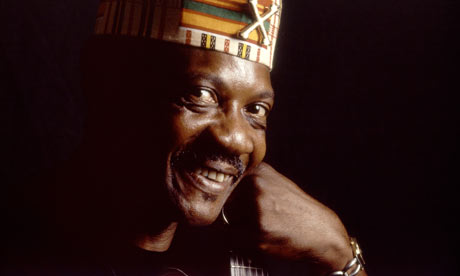
 

Robert Jeryl Ward (* 15. Oktober 1938 in Luthersville, Georgia, USA; † 25. Dezember 2008 in Dry Branch) war ein US-amerikanischer Bluessänger und -gitarrist. Er war von 1959 bis 1965 Frontmann der Band Ohio Players.
Ward zog mit seinen Eltern 1960 nach Daytown, Ohio, wo er dann mit Marshal Jones (Bass), Clarence Satchell (Saxophon, Gitarre), Cornelius Johnson (Schlagzeug) und Ralph Middlebrooks (Trompete, Posaune) die Ohio Players gründete. Ward schrieb viele Songs für die Band, unter anderem Your Love is amazing. 1965 verließ er die Gruppe, um eine Solokarriere zu starten.
Später zog er in die Gegend von Detroit mit einem Wohnsitz in Toledo, Ohio und veröffentlichte einige Singles nach seinem Namen aus den 1960er Jahren. In den 1970er Jahren arbeitete er als Session-Musiker für Motown.
In den frühen 1990er Jahren kam er zurück ins Rampenlicht. Er wurde von Black Top Records entdeckt und veröffentlichte Fear no evil, sein erstes Album in voller Länge.
Am 25. Dezember 2008 starb Robert Ward im Alter von 70 Jahren. 

http://de.wikipedia.org/wiki/Robert_Ward_%28Bluesmusiker%29  

Robert Ward (October 15, 1938[1] – December 25, 2008)[2] was an American blues and soul guitarist. He was known for founding the Ohio Untouchables, the band that later would become the Ohio Players. He played the guitar with a unique tone soaked in vibrato coming from the Magnatone amplifier.

Biography

Born Robert Jeryl Ward in Luthersville, Georgia,[3] he moved to Dayton, Ohio in 1960 and formed the Ohio Untouchables. The group released series of singles from LuPine label[1] including "Your Love Is Amazing" which would become one of Ward's signature songs. Ward left the group in 1965.[2]

Then he moved to the Detroit area, actually residing in Toledo, Ohio and released some single under his name in the late 60's. He disappeared from the music scene sometime in the 70's after working as a session player for Motown.[1][2]

It was in the early 1990s that he came back into the spotlight. He was "rediscovered" by Black Top Records and released his first full-length album Fear No Evil in 1991. He released two more albums in the next four years for the label. In the mid-1990s he did limited touring, including a date in Minneapolis with Curtis Obeda and "The Butanes", and several dates in Michigan including Kalamazoo, Three Rivers and Grand Rapids. After the label folded in the late 1990s, WRKR Kalamazoo blues DJ Marty Spaulding, who Robert had appointed his manager, arranged a recording contract with Delmark Records to release New Role Soul in 2000. In his last years he faced a series of health problems, including two strokes, which prevented him from performing or recording.

He died at his home in Dry Branch, Georgia, about six miles from Macon, on December 25, 2008.

Robert Ward-Blessings 


Mickey „Guitar“ Baker  *15.10.1925
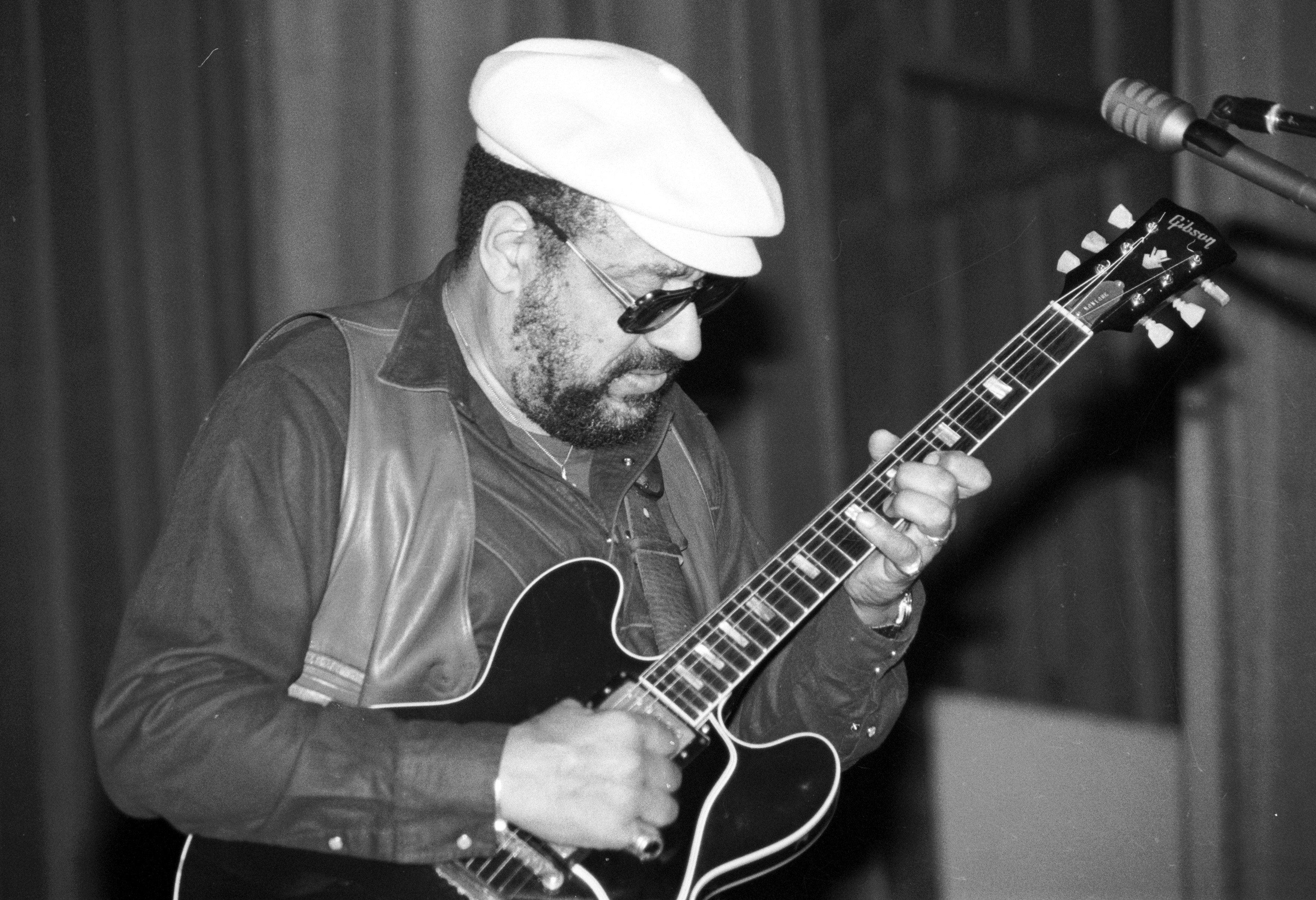
 

Mickey „Guitar“ Baker (gebürtig McHouston Baker; * 15. Oktober 1925 in Louisville, Kentucky; † 27. November 2012 bei Toulouse, Frankreich[1]) war ein US-amerikanischer Blues- und Jazz-Gitarrist.
Jugend
Als Jugendlicher riss Mickey Baker von zu Hause aus und verbrachte seine restliche Teenagerzeit in verschiedenen Waisenhäusern. In einer dieser Institutionen lernte er zwischen 1937 und 1940 Notenlesen und das Gitarrespiel. Mit 15 Jahren trampte er in Richtung Norden nach New York City. Eine andere Quelle besagt, dass er erst in New York mit Musik und der Gitarre in Berührung kam und über keinerlei musikalische Vorkenntnisse verfügte. Da er noch zu jung war, um in den Clubs zu spielen und in New York City die Musiker-Gewerkschaft straff organisiert war und Minderjährigen den Zugang zu Clubs auch als Künstler untersagte, musste Baker seinen Lebensunterhalt mit Jobs, die nichts mit Musik zu tun hatten, verdienen. Ab 1945 widmete er sich dem Erlernen der Jazzgitarre und war nach wenigen Jahren gut genug, um seinen Lebensunterhalt unter anderem mit Gitarrenunterricht bestreiten zu können. Eine andere Einnahmequelle waren Auftritte mit einer Calypso-Band (etwa um 1948). Darüber hinaus nahm er so gut wie jeden halbwegs lukrativen Gig an, was zur Folge hatte, dass er seinen Radius als Musiker über die Grenzen von New York City ausweitete.
Die 1950er Jahre – ein vielseitiger Musiker
Mickey Baker war, was Stilrichtungen betraf, vom Beginn seiner Karriere an ein vielseitiger Musiker: So spielte er Jazz bei Live-Auftritten mit dem Altsaxophonisten Earle Warren, der unter anderem schon mit Count Basie, dem Trompeter Buck Clayton und später mit dem Jazzgitarristen Kenny Burrell Platten aufgenommen hatte, Rhythm and Blues mit den Sängern Nappy Brown, Ruth Brown und Big Maybelle, mit den Pianisten Amos Milburn, Little Willie John (Lead-Gitarre auf I’ll need your love so bad von 1956) und Ray Charles; Blues mit dem Pianisten Champion Jack Dupree und dem Mundharmonikaspieler Sonny Terry; Rock ’n’ Roll mit dem Sänger, Gitarristen und Songschreiber Earl King (bekannt zum Beispiel durch das Original von Come on baby let the good times roll, gecovert von Jimi Hendrix) und mit dem Sänger Joe Clay (Ducktail); Doo Wop mit den Gesangsgruppen The Drifters featuring Clyde McPhatter und den Cardinals; Pop mit der Sängerin Connie Francis (Lead-Gitarre auf Lipstick on your Collar).
So unterschiedlich die Stile waren, so vielfältig waren auch die Plattenfirmen, für die Baker Titel als Sideman oder Hauptinterpret einspielte: Savoy, Victor, King, Aladdin, Atlantic, Rainbow, Groove sowie sein eigenes Label Willow (1961 gegründet mit Sitz in New York City). Während Mickey Baker seit ca. 1953 Teil der Studioband von Atlantic Records unter Leitung von Jesse Stone (mit Musikern wie Panama Francis und King Curtis) war, spielte er Live-Auftritte unter anderem mit der Band des Tenorsaxophonisten Red Prysock.
Mickey Baker war die eine Hälfte des Duos Mickey & Sylvia, die 1957 einen Hit mit Love Is Strange landeten. Dieser kommerzielle Erfolg hatte zur Folge, dass das Duo Teil von sogenannten „Rock and Roll Package Tourneen“ wurde wie zum Beispiel der Alan Freed Rock And Roll Extravaganza und der Ray Charles and Joe Turner Universal Attraction Show. Obwohl das Duo über einige Jahre immer wieder Platten aufnahm, blieb Love Is Strange der einzige Hit. Viele Folgeplatten waren zu nahe am Original angelehnt, ohne dessen Originalität zu erreichen. Auch ein anderes Duo, Mickey & Kitty (Kitty Noble), konnte daran nichts ändern. Insgeheim hatte Mickey Baker kurioserweise doch noch kommerziellen Erfolg mit einem anderen Duo: Auf der Aufnahme des Lieds It’s Gonna Work Out Fine von Ike & Tina Turner aus dem Jahr 1961 singt/spricht nicht Ike Turner, sondern Mickey Baker den männlichen Part.
In den USA veröffentlichte Mickey Baker nur ein einziges Album, The Wildest Guitar mit instrumentalen Coverversionen bekannter Musikstücke. Dazu zählen Versionen der Jazzstandards Autumn Leaves und Night and Day, eine E-Gitarren-Version des Liedes Gloomy Sunday sowie eine Version der Filmmelodie Der dritte Mann von Anton Karas aus dem gleichnamigen Kinofilm von Orson Welles.[2]
Emigration nach Europa
Anfang der 1960er Jahre wanderte Mickey Baker nach Paris aus und tourte von dort aus durch große Teile Europas. Er nahm weiterhin Platten mit einer großen Bandbreite von Künstlern auf und ließ sich weiterhin stilistisch nicht festlegen. Sehr häufig trat er mit ebenfalls immigrierten US-Musikern auf beziehungsweise spielte auf deren Veröffentlichungen wie denen von Champion Jack Dupree (auf Vogue 1968, auf Crescendo 1971), Memphis Slim (auf Polydor 1967), Willie Mabon (auf Big Bear 1973) und mit US-Musikern, die auf Tournee durch Europa waren, wie Jimmy Dawkins (auf Vogue 1971). 1961 wirkte er in einem Kurzfilm über den ebenfalls nach Europa immigrierten Tenorsaxophonisten Coleman Hawkins mit (Coleman Hawkins Quartett). Er selbst nahm für folgende Label in den 1960er- und 70er-Jahren unter eigenem Namen auf: Big Bear, Black And Blue, Roots, Kicking Mule, Versailles. 1973 nahm er eine Platte mit dem Fingerpicking-Spezialisten Stefan Grossman (und anderen Musikern) in London auf. Hier waren neben Coverversionen von Charley Patton, J. B. Lenoir und Robert Johnson auch Originale zu hören. Für einige Lieder wurden Streicherarrangements geschrieben.
1969 schrieb Mickey Baker die Filmmusik für den Film Float Like a Butterfly, Sting Like a Bee, der sich mit der Karriere des Boxers und politischen Aktivisten Muhammad Ali auseinandersetzte. Der Schwerpunkt lag dabei nicht so sehr auf den sportlichen Aspekten, sondern auf dem Konflikt zwischen den Rassen. Bei der Musik handelt es sich nicht um Songs, sondern um Filmmusik, die versuchte, diese Konflikte musikalisch darzustellen. Da Baker genau wie Muhammad Ali in Louisville, Kentucky geboren wurde, kannte er die sozialen Bedingungen, unter denen Schwarze zu dieser Zeit leben mussten, aus eigener Erfahrung.
Über den Werdegang Mickey Bakers nach Ende der 1970er-/Anfang der 1980er-Jahre liegen kaum Informationen vor: 1978 spielte er auf dem Groninger Blues Festival in den Niederlanden und trat einige Jahre später mit Champion Jack Dupree live in einer westdeutschen Talkshow (Drittes Programm) auf. Vermutlich hat er sich etwas später ganz aus dem Musikgeschäft zurückgezogen.
Bedeutung
1999 erhielt Baker den Pioneer Award der Rhythm and Blues Foundation. Er ist seit 2003 in der Liste des Magazins Rolling Stone Rolling Stone’s List of the 100 Greatest Guitarists of All Time eingetragen.[3] Er wird – zusammen mit Bo Diddley und Chuck Berry – als musikalisches Bindeglied zwischen Rhythm and Blues und Rock ’n’ Roll angesehen. Er hat eine Reihe von Lehrbüchern geschrieben, wie zum Beispiel eine Anleitung zum Gitarrespiel, Complete Course in Jazz Guitar, sowie ein Handbuch für Arrangeure, das Complete Handbook For The Music Arranger. Zusammen mit Les Paul ist Mickey Baker ein wichtiger früher Vertreter des Spiels auf der elektrischen Gitarre ohne Resonanzkörper (Solidbody guitar) in Jazz und populärer Musik.
Verschiedenes
Baker spielte aber nicht nur Solidbody-Gitarren wie die Gibson Les Paul, sondern auch Archtop- und Westerngitarren. Seine meist verwendete Technik war das Spiel mit einem Plektrum.

http://de.wikipedia.org/wiki/Mickey_Baker 

  MacHouston Baker[1] (October 15, 1925 – November 27, 2012), known as Mickey Baker and Mickey "Guitar" Baker, was an American guitarist. He is widely held to be a critical force in the bridging of rhythm and blues and rock and roll, along with Bo Diddley, Ike Turner, and Chuck Berry.[2]

Early life

Baker was born in Louisville, Kentucky.[3] His mother was black, and his father, whom he had never met, was believed to be white.[4] His dark complexion and red hair supports this theory.

In 1936, at the age of 11, Baker was put into an orphanage. He ran away frequently, and had to be retrieved by the staff from St. Louis, New York City, Chicago, and Pittsburgh. Eventually the orphanage quit looking for him, and at the age of 16 he stayed in New York City. He found work as a laborer and then a dishwasher. But after hanging out in the pool halls of 26th Street, he gave up work to become a full-time pool shark.

At 19, Baker decided to make a change in his life. He went back to dishwashing, and was determined to become a jazz musician. The trumpet was his first choice for an instrument, but with only $14 saved up, he could not find a pawnshop with anything but guitars for that price.[5]

He enrolled at The New York School of Music, but found the learning pace too slow. He dropped out and resolved to teach himself, but gave up shortly afterwards. Six months later he met a street guitarist who inspired him to start playing again. He continued taking private lessons from different teachers over the next few years. His musical style was influenced by saxophonist Charlie Parker.

Career

By 1949, Baker had his own combo, and a few paying jobs. He decided to move west, but found that audiences there were not receptive to progressive jazz music. Baker was stranded without work in California when he saw a show by blues guitarist Pee Wee Crayton.[6] Baker said of the encounter:

"I asked Pee Wee, 'You mean you can make money playing that stuff on guitar?' Here he was driving a big white Eldorado and had a huge bus for his band. So I started bending strings. I was starving to death, and the blues was just a financial thing for me then."

He found a few jobs in Richmond, California, and made enough money to return to New York.[5]

After returning east, Baker began recording for Savoy, King and Atlantic Records. He did sessions with Doc Pomus, The Drifters, Ray Charles, Ivory Joe Hunter, Ruth Brown, Big Joe Turner, Louis Jordan, Coleman Hawkins, and numerous other artists.[7] During this time, Baker (along with either Paramour Crampton or Connie Kay on drums, Sam "The Man" Taylor on tenor, and Lloyd Trotman on bass) played on numerous hit records on the Atlantic, Savoy, and King labels.

Inspired by the success of Les Paul & Mary Ford, he formed the pop duo Mickey & Sylvia (with Sylvia Robinson, one of his guitar students) in the mid-1950s.[6] Together, they had a hit single with "Love Is Strange" in 1956.[6] The duo split up in the late 1950s, but sporadically worked together on additional tracks until the mid-1960s.[2]

It was around this time that he moved to France, where he worked with Ronnie Bird and Chantal Goya and made a few solo records.[2] He would remain in France for the rest of his life. Up until the end of his life, Baker was rarely without work.

Baker appeared at the 1975 version of the Roskilde Festival.

Because Baker revealed very few details about his private life, reasons for his move to France were never made completely clear. Some media sources claimed that Baker had grown tired of the business aspects of the commercial music industry in the United States, while others stated that the bi-racial Baker was angered by the growing rate of hate crimes in the southern United States during the burgeoning civil rights movement.

In 1999, Baker received a Pioneer Award from the Rhythm and Blues Foundation.

In 2003, he was listed at #53 on Rolling Stone's "100 Greatest Guitarists of All Time".[8]

Books

His self-tuition method book series, the Complete Course in Jazz Guitar is a mainstay for introducing students of guitar to the world of jazz. They have remained in print for over 50 years.

Personal life

Baker guarded his personal life as much as possible, giving few interviews and only making sporadic public appearances. After moving to France, he rarely left the country, and made very few trips to the United States.

Baker was married six times. Among his wives were Barbara Castellano from the mid-1950s to the mid-70s, and Marie France-Drei, a singer with whom he stayed from the early 1980s until his death.

Baker had two children: a son, MacHouston, Jr., and a daughter, Bonita Lee.

Death

Baker died on November 27, 2012 near Toulouse, France, aged 87.[9][10] His wife Marie, said he died of heart and kidney failure.

https://en.wikipedia.org/wiki/Mickey_Baker 


McHouston (Mickey) Baker with Coleman Hawkins Quintet South Of France Blues.mp4 


Lamar Chase *15.10.1953


 https://fandalism.com/kingbee1

Der farbige, aus Kalifornien stammende Lamar Chase hat den Blues-Rhythmus im Blut. Chase, vom amerikanischen Blues-Sänger Haskell Robert „Papa“ Sadler liebevoll „King Bee“ genannt, stand in seiner jahrzehntelangen Musikkarriere schon mit Größen wie John Lee Hooker, J. J. Malone, Sly and the Family Stone sowie Lowell Folson auf der Bühne. Zudem spielte er unter anderem mit bekannten Musikern wie Carlos Santana und den Pointer Sisters.

Musikalisch beeinflusst ist Lamar Chase von Gitarristenlegende Jimi Hendrix, US-Countrysänger und Songwriter Willie Nelson und allem, „was musikalisch dazwischen liegt“, schreibt Chase.

http://www.haz.de/Hannover/Aus-der-Region/Garbsen/Nachrichten/Lamar-Chase-hat-den-Rhythmus-im-Blut 


Lamar(King Bee)Chase plays and sings and sings and plays till you surrender

Lamar Chase is originally from Oakland, California. He has played with John Lee Hooker, J.J.Malone and members of Santana, Tower of Power, Sly and the Family Stone and many other Bay Area greats.

Lamar's musical influences are everyone from Jimi Hendrix to Willy Nelson and everything in between!

Lamar Chase Band - Sitting on the dock of the bay @ Bourbon Street 


Lamar Chase, Castle Rock Festival, 07.09.2013 


R.I.P. 


Gus Cannon  +15.10.1979


 Gus Cannon (links) und seine Jug Stompers

Gus Cannon (* 12. September 1883 in Red Banks, Mississippi; † 15. Oktober 1979 in Memphis, Tennessee) war ein amerikanischer Blues-Musiker, der vor allem mit seiner Band Cannon’s Jug Stompers Ende der 1920er bekannt wurde.
Cannon wurde 1883 als der jüngste von zehn Söhnen der Sharecropper John und Ellen Cannon geboren. Mit zwölf Jahren arbeitete er in Clarksdale, Mississippi auf den Baumwollfeldern. Hier kam er mit dem Blues in Berührung. Er brachte sich das Musizieren selbst bei, wobei er zunächst auf einem Banjo spielte, das er sich aus einer Pfanne und einem Gitarrenhals gebaut hatte.
Karriere
Um 1900 spielte Cannon in verschiedenen Bands in der Gegend von Clarksdale. Er gründete seine erste Jugband, als er für die Eisenbahn in Greenville arbeitete. Er lernte den Mundharmonikaspieler Noah Lewis und den jungen Gitarristen Ashley Thompson kennen, mit denen er häufig zusammen spielte. 1910 heiratete Cannon. Ab 1914 trat er regelmäßig bei Medicine Shows auf. In den 1920er Jahren hielt er sich in der Gegend von Memphis (Tennessee) auf und trat auch in der berüchtigten Beale Street auf. In dieser Zeit kam die Memphis Jug Band zu einigem Ruhm. 1927 begann seine professionelle Karriere als Musiker. Seine ersten Platten spielte er 1927 als „Banjo Joe“ bei den Paramount Records ein, wobei er von Blind Blake an der Gitarre begleitet wurde. 1928 machte Gus Cannon mit Lewis und Thompson unter dem Namen Cannon’s Jug Stompers erste Aufnahmen. Später spielten unter anderem auch Hosea Wood und Elijah Avery in der Gruppe. Weitere Aufnahmen, auch solo, folgten bis 1930. Danach ließ der Erfolg rasch nach. Cannon wohnte weiterhin in Memphis, wo er Anfang der 1950er-Jahre den jungen Johnny Cash kennenlernte, der zu der damaligen Zeit noch Haushaltswarenvertreter war.
Erst in den späten 1950er-Jahren wurde Gus Cannon wieder „entdeckt“. Mit Will Shade und Milton Ruby nahm er 1963 ein Album bei Stax Records auf. Nach seinem Tod 1979 gaben die The Lovin’ Spoonful ein Benefizkonzert, um Geld für Gus Cannons Grabstein zu sammeln. 2010 wurde Gus Cannon, gemeinsam mit den Cannon’s Jug Stompers in die Blues Hall of Fame aufgenommen.


Gus Cannon (September 12, 1883 – October 15, 1979) was an American blues musician who helped to popularize jug bands (such as his own Cannon's Jug Stompers) in the 1920s and 1930s. There is doubt about his birth year; his tombstone gives the date as 1874.[1]
Career

Born on a plantation at Red Banks, Mississippi, Cannon moved a hundred miles to Clarksdale, then the home of W. C. Handy, at the age of 12. Cannon's musical skills came without training; he taught himself to play using a banjo that he made from a frying pan and raccoon skin. He ran away from home at the age of fifteen and began his career entertaining at sawmills and levee and railroad camps in the Mississippi Delta around the turn of the century.

While in Clarksdale, Cannon was influenced by local musicians Jim Turner and Alec Lee. Turner's fiddle playing in W. C. Handy’s band so impressed Cannon that he decided to learn the fiddle himself. Lee, a guitarist, taught Cannon his first folk blues, "Po' Boy, Long Ways from Home", and showed him how to use a knife blade as a slide, a technique that Cannon adapted to his banjo playing.[2]

Cannon left Clarksdale around 1907. He soon settled near Memphis, Tennessee and played in a jug band led by Jim Guffin.[2] He began playing in Memphis with Jim Jackson. He met harmonica player Noah Lewis, who introduced him to a young guitar player named Ashley Thompson. Both Lewis and Thompson would eventually become members of Cannon's Jug Stompers. The three of them formed a band to play parties and dances. In 1914 Cannon began touring in medicine shows.[2] He supported his family through a variety of jobs, including sharecropping, ditch digging, and yard work, but supplemented his income with music.

Cannon began recording as "Banjo Joe" for Paramount Records in 1927. At that session he was backed up by Blind Blake.[2] After the success of the Memphis Jug Band's first records, he quickly assembled a jug band featuring Noah Lewis and Ashley Thompson (later replaced by Elijah Avery).[3] Cannon's Jug Stompers first recorded at the Memphis Auditorium for the Victor record label in January 1928.[4] Hosea Woods joined the Jug Stompers in the late 1920s, playing guitar, banjo and kazoo, and also providing some vocals. Modern listeners can hear Cannon's Jug Stompers recording of "Big Railroad Blues" on the compilation album The Music Never Stopped: Roots of the Grateful Dead.

Although their last recordings were made in 1930, Cannon's Jug Stompers were one of Beale Street's most popular jug bands through the 1930s. A few songs Cannon recorded with Cannon's Jug Stompers are "Minglewood Blues", "Pig Ankle Strut", "Wolf River Blues", "Viola Lee Blues", "White House Station" and "Walk Right In" (later made into a pop hit by The Rooftop Singers[3] in the 1960s, and later a hit rock/pop version by Dr. Hook in the 1970s). By the end of the 1930s, Cannon had effectively retired, although he occasionally performed as a solo musician.

He returned in 1956 to make a few recordings for Folkways Records. In the "blues revival" of the 1960s, he made some college and coffee house appearances with Furry Lewis and Bukka White,[3] but he had to pawn his banjo to pay his heating bill the winter before the Rooftop Singers had a hit with "Walk Right In".[5]

In the wake of becoming a hit composer, he recorded an album for Stax Records in 1963, with fellow Memphis musicians Will Shade, the former leader of the Memphis Jug Band, on jug and Milton Roby on washboard. Cannon performs a series of traditional songs, including "Kill It," "Salty Dog," "Going Around," "The Mountain," "Ol' Hen", "Gonna Raise A Ruckus Tonight," "Ain't Gonna Rain No More," "Boll-Weevil," "Come On Down To My House," "Make Me a Pallet on Your Floor," "Get Up In The Morning Soon," and "Crawdad Hole" along with his own "Walk Right In," plus various stories and introductions between the songs.[6]

Cannon can be seen in the King Vidor produced film, Hallelujah! (1929), during the late night wedding scene.

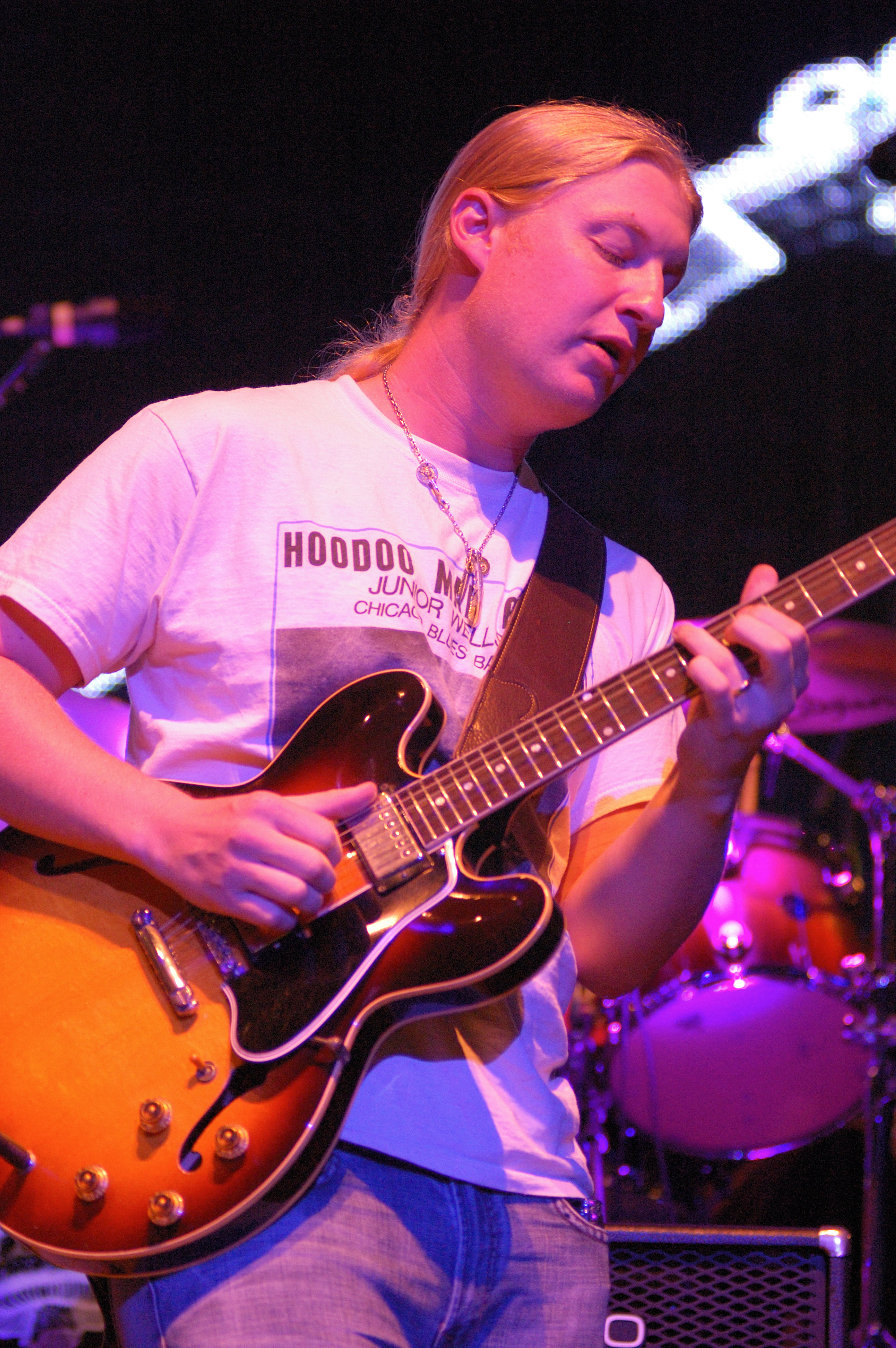
'Viola Lee Blues' GUS CANNON (1928) Banjo Blues Legend 


Mittwoch, 8. Juni 2016

08.06. Derek Trucks, James Harman, Wolf-Gang Kuhlmann, James Solberg, Gary White, Bozs Scaggs * Alan Rubin, Bumble Bee Slim, Jimmy Rushing, Nellie Lutcher +


1944 Boz Scaggs*
1946 James Harman*
1951 James Solberg*
1968 Bumble Bee Slim+
1972 Jimmy Rushing+
1979 Derek Trucks*
2007 Nellie Lutcher+
2011 Alan Rubin+
Wolf-Gang Kuhlmann*
Gary White*


Happy Birthday


Derek Trucks   *08.06.1979


Derek Trucks (* 8. Juni 1979 in Jacksonville, Florida) ist ein US-amerikanischer Gitarrist. Neben seiner Funktion als Bandleader der Derek Trucks Band ist er Mitglied bei den Allman Brothers. Zusammen mit seiner Frau Susan Tedeschi gründete er 2010 die Tedeschi Trucks Band. Bekannt ist er für sein herausragendes Slidespiel sowie seinen Stilmix aus Blues, Southern Rock, Funk, Jazz und Weltmusik.
Trucks nahm zum ersten Mal im Alter von neun Jahren eine Gitarre in die Hand. Er war schnell in sein Instrument vernarrt und spielte mit zahlreichen lokalen Musikern, die ihm ausgesprochenes Talent bescheinigten. Mit elf Jahren hatte er seinen ersten eigenen Auftritt und mit zwölf seine erste Band. Ab diesem Zeitpunkt spielte er so viel wie ein professioneller Musiker. 1994 entstand schließlich die Derek Trucks Band. Die heutige Besetzung ist:
    Derek Trucks – Gitarre
    Kofi Burbridge – Keyboard, Flöte, Gesang
    Todd Smallie – Bass und Gesang (1994-heute)
    Yonrico Scott – Schlagzeug, Percussion, Gesang (1995-heute)
    Mike Mattison – Gesang (2002-heute)
    Count M'Butu – Percussion
1999 wurde er neben seinem Onkel Butch Trucks Mitglied bei den Allman Brothers. Außerdem war er für kurze Zeit Teil der Eric Clapton Band und ist der Jüngste der "100 Greatest Guitarists of All Time" des amerikanischen Rolling Stone Magazine. 2011 wurde die Band mit dem Blues Music Award als "Band of the Year" ausgezeichnet.
Trucks entwickelte früh eine Vorliebe für klassische indische Musik. Er erhielt Unterricht vom indischen Sarod-Virtuosen Ali Akbar Khan in San Rafael, Kalifornien.
Derek Trucks ist seit 2001 mit der 9 Jahre älteren Bluessängerin und -gitarristin Susan Tedeschi verheiratet. Die Bands des Künstlerehepaares spielten in der Vergangenheit auch oft unter dem Namen Soul Stew Revival zusammen. Die beiden haben zwei Kinder, die von den Eltern regelmäßig mit auf Tour genommen werden.
2010 beschlossen Trucks und Tedeschi, eine gemeinsame Band zu gründen. Nach einer erfolgreichen Tournee und Auftritten u.a. bei Eric Claptons „Crossroads 2010“-Festival wurde 2011 das Album Revelator der Tedeschi Trucks Band veröffentlicht.[1] Den Aufnahmen gingen intensive Songwriting-Sessions auf dem gemeinsamen Anwesen der beiden Musiker in Jacksonville, Florida, voraus. Gäste hier waren unter anderem John Leventhal (Johnny Cash, Paul Simon), Jeff Trout (Counting Crows), Ryan Harris (John Mayer) und Gary Louris (The Jayhawks). Tedeschi beschreibt die Arbeit als "ein echtes Songwriting Camp".[2]
Stil & Equipment
Trucks' Stil ist vor allem von Blues- und Slidegitarristen wie Duane Allman oder Elmore James geprägt. Auf ein Plektrum verzichtet er völlig. Trucks spielt in seinen Soli vor allem die klassische Blues-Skala, jedoch oft mit klassischen indischen Einschlägen. In den meisten seiner Gitarren-Soli sind indische Raga-Elemente hörbar.
Als Gitarre kommt hauptsächlich eine Gibson SG Custom 1962 Reissue zum Einsatz, die von zahlreichen Musikern wie B.B. King, Bob Dylan oder John Lee Hooker signiert ist. Als Verstärker benutzt er seit 15 Jahren den gleichen 1965 Fender Super Reverb Amp, in den Pyle Driver Speaker verbaut sind. Insgesamt hält Derek Trucks sein Equipment sehr puristisch.
http://de.wikipedia.org/wiki/Derek_Trucks 

Derek Trucks (born June 8, 1979) is an American guitarist, songwriter and founder of the Grammy Award-winning[1] The Derek Trucks Band. He became an official member of The Allman Brothers Band in 1999 and formed the Tedeschi Trucks Band in 2010 with his wife Susan Tedeschi. His musical style encompasses several genres and he has twice appeared on Rolling Stone's list of 100 Greatest Guitarists of All Time.

Early life

Trucks was born in Jacksonville, Florida, United States. According to Trucks, the name of Eric Clapton's band, Derek and the Dominos, had "something to do with the name [Derek] if not the spelling”.[2]

Trucks bought his first guitar at a yard sale for $5 at age nine and became a child prodigy who played his first paid performance at age 11.[3][4] Trucks began playing the guitar using a "slide" bar because it allowed him to play the guitar despite his small, young hands.[5] By his thirteenth birthday Trucks had played alongside Buddy Guy[6] and gone on tour with Thunderhawk.[4][7]

Career
   
Trucks formed The Derek Trucks Band in 1996, and[3][8] by his twentieth birthday he had played with such artists as Bob Dylan, Joe Walsh and Stephen Stills.[9] After performing with The Allman Brothers Band for several years as a guest musician, Trucks became a formal member in 1999 [3] and appeared on the albums Live at the Beacon Theatre, Hittin' the Note and One Way Out (album). In 2006 Trucks began a studio collaboration with Eric Clapton called The Road to Escondido and performed with three bands in 17 different countries that year.[3] Trucks was invited to perform at the 2007 Crossroads Guitar Festival and after the festival he toured as part of Clapton's band.[3][10]

Trucks built a studio in his home in January 2008, and he and his band recorded the album Already Free.[11] Trucks and his wife, Susan Tedeschi, combined their bands to form the Soul Stew Revival in 2007 and performed at the Bonnaroo Music Festival in June 2008.[11][12][13][14][14] In late 2009, Trucks and his band went on hiatus and then dissolved. In 2010, Trucks formed the Tedeschi Trucks Band with his wife.[15][16][17] On January 8, 2014, Trucks announced that he and fellow guitarist Warren Haynes planned to leave the Allman Brothers Band at the end of 2014. [18] The band subsequently announced their retirement, with Trucks playing as a member up through their final show on October 28, 2014 at the Beacon Theatre in New York City.

Musical style

Trucks credits guitarist Duane Allman and blues man Elmore James as the two slide guitarists that influenced his early style but has since been inspired by John Lee Hooker,[19] Howlin' Wolf and Albert King, Miles Davis, Sun Ra, John Coltrane, Charlie Parker, Django Reinhardt, Charlie Christian, Wayne Shorter, Toy Caldwell, Freddie King and B.B. King.[19][20][21]

His music is reported to encompass categories such as jam band, Southern rock and jazz [22] while simultaneously being rooted in the blues and rock genres.[23] Trucks plays an eclectic blend of blues, soul, jazz, rock, qawwali music (a genre of music from Pakistan and Eastern India), Latin music, and other kinds of world music[24] Trucks became a fan of Ali Akbar Khan and studied at the Ali Akbar College of Music in San Rafael.[25][26]

Trucks often plays the guitar in an open E tuning[27] using the Dunlop Blues Bottle slide.[10] In 2006, two vintage (1965 and 1968) Fender Super Reverb amplifiers, a Hammond B-3 organ, two Leslie speaker cabinets and a Hohner E-7 Clavinet were stolen from Trucks and later recovered by the Atlanta police department.[8]

Reception

Trucks has appeared twice in Rolling Stone's list of "The 100 Greatest Guitarists of All Time".[24][28][29] He was listed as 81st in 2003 and 16th in 2011. An article in The Wall Street Journal described him as "the most awe-inspiring electric slide guitar player performing today".[26] In 2007, Trucks appeared on the cover of Rolling Stone for an article called the "New Guitar Gods".[20][dead link]Trucks is reported to be a creative guitarist and according to his uncle, Allman Brothers drummer Butch Trucks, "He never does the same thing twice".[30] An article in The Washington Post described Trucks's guitar style as "notes and chords that soar, slice and glide, sounding like a cross between Duane Allman on a '61 Gibson Les Paul and John Coltrane on tenor sax".[31] The Derek Trucks Band's album Already Free debuted at No. 19 on the Billboard Top 200 Chart,[32] and No. 1 on the Internet chart, No. 4 on the Rock chart and No. 1 on the Blues chart.[11][32]

In 2010, The Derek Trucks Band won the Grammy Award for Best Contemporary Blues Album for the album Already Free. In 2012, Trucks and Tedeschi as the Tedeschi Trucks Band won the Grammy Award for Best Blues Album for the band's debut album Revelator.[33] On February 12, 2012, Trucks accepted a Grammy Lifetime Achievement Award along with ten other members of The Allman Brothers Band.[34][35] On February 21, 2012, Derek Trucks and his wife joined other blues musicians for a performance at the White House for President Obama and his guests.[36]

Private life

Trucks's uncle, Butch, is a founding member and drummer of The Allman Brothers Band.[7] His great-uncle, Virgil Trucks, was a professional baseball player.[37] In 2001, Trucks married singer and musician, Susan Tedeschi, and they had a son in March 2002 and a daughter in 2004.[38][39][40]

Trucks is an avid fan of the Atlanta Braves and his hometown Jacksonville Jaguars.


DEREK TRUCKS AMAZING SOLOS COMPILATION part 1 


DEREK TRUCKS AMAZING SOLOS COMPILATION part 2 
Song titles:

Anyday
The Sky is Crying
Angel From Montgomery/Sugaree
Midnight in Harlem


James Harman   *08.06.1946


James Harman (born June 8, 1946, Anniston, Alabama, United States) is an American blues harmonica player, singer, and songwriter.[1] Music journalist Tony Russell described Harman as an "amusing songwriter and an excellent, unfussy blues harp player".
Born Leslie James Harman, at the age of four, Harman began lessons in piano playing, and also sang in his local church choir. Harmonicas owned by his father were stored in the piano bench, and James tried playing them after his piano lessons ended. In time, he became capable in several other musical instruments, including guitar, electric organ, and drums.[3]
In 1962 he relocated to Panama City, Florida, where he played in many rhythm and blues bands, of which The Icehouse Blues Band was the last. Earl Caldwell, manager of The Swinging Medallions, signed Harman to a recording contract. In 1964 in Atlanta, Georgia, Harman recorded the first of nine early singles, which were variously released on five different record labels.[3]
Harman performed as a blues harmonica player and singer in Chicago, New York, and elsewhere before moving to southern California in the 1970s.[2] There, his Icehouse Blues Band played alongside Big Joe Turner, John Lee Hooker, Freddie King, Muddy Waters, Albert King, B. B. King, T-Bone Walker, Lowell Fulsom, Eddie "Cleanhead" Vinson, Johnny "Guitar" Watson, and Albert Collins.[3] In 1977 he formed the James Harman Band. Over the years their line-up has included Phil Alvin and Bill Bateman, who left in 1978 to form The Blasters; Gene Taylor, who departed in 1981, also to join the Blasters before moving on to The Fabulous Thunderbirds; and Kid Ramos. Alumni also included the late Hollywood Fats who, after leaving his own band in 1980, played alongside Harman for five years.[3]
Harman became known as a skilled, reliable musician, whether for a backing band or leading his own ensemble. His band recorded several albums during the 1980s, before settling in 1990 at Black Top Records.[2]
Numerous Harman songs have been used in films and on television, including "Kiss of Fire" (from Those Dangerous Gentlemen), which was on the soundtrack of The Accused. Harman has received several W. C. Handy Blues Award nominations, for songs on his own releases and on other artists' albums. He has been inducted into the Alabama Music Hall of Fame and received the "Best Blues Album of the Year" award from the Real Blues magazine.[3]
In 1995 Harman recorded a song named for the Zoo Bar club in Lincoln, Nebraska.[4] "Everybody's Rockin' (At The Zoo Bar)" can be found on Harman's Black & White album.[5]
Harman has also performed at the Long Beach Blues Festival, and around the world in concert.[3]
In 2003 Harman appeared on the ZZ Top album Mescalero, on the song "Que Lastima" and, in 2012, on La Futura,[6] on the song "Heartache In Blue".
http://en.wikipedia.org/wiki/James_Harman 


James Harman ~Jollo~ at the Sin City Soul & Blues Revival 


Wolf-Gang Kuhlmann *08.06.


Steckbrief
Name: Wolf-Gang Kuhlmann
Alias: WOLLE  Coolmann
Instrument: BLUES-HARP,  Lap - Steel  Gitarre,   Hammond Orgel
Band`s : THEY, SMILE, THE OUTLAWS & andere.
LEGALIZE `IT , SCHRÖEDER`S BluesBand Opener bei : THE EASY BEATS,   SPOOKY TOOTH,
Eric Burdon & the new ANIMAL`S
Musik : Dirthy Blues, R & B, Hard Rock, Clean Musik & alles was Spaß macht.
Essen : Fleisch ist mein Gemüse
Getränk : Rotwein
Mag nicht : Miss & Mister Wichtig
Reiseziele : Das Meer
Schwächen : Meine Frau


Musikbeispiele hier:http://www.wolf-harp-gang.de/Home
 

Doc Tom and the Wolf Harp Gang, Hauptsinger Prof. Dr. Ing. Thomas Steinhäuser von Uni-DUE 


James Solberg  *08.06.1951


GRAMMY nominated, two time winner of the prestigious W.C. HANDY AWARD for “BLUES BAND OF THE YEAR”, JAMES SOLBERG is now releasing his long awaited fifth solo release, “REAL TIME”, on the BLUES ECLIPSE label. Already being referred to as “unlike any blues record you’ve ever heard”  this incredible CD is the culmination of  JAMES’ “extraordinary guitar work, vocals and stellar songwriting”.

Born in 1951, James first learned to play 5-string banjo, violin and guitar as a young kid. His real musical career began in the mid‘60s while performing in R&R cover bands around the Midwest. At age 15 he left school and headed for the source of the music he loved most…Chicago. He got to be friends with EDDIE TAYLOR, who showed him a lot of tricks on guitar. During this time, Solberg played with JOHNNY YOUNG, BIG WALTER HORTON and JIMMY REED, as well as with TAYLOR. Moving to Milwaukee in the early ‘70s he formed a rockin’ blues band with JOHNNY WINTER bassist JON PARIS. Also living in Milwaukee at that time was LUTHER ALLISON, just signed to the  MOTOWN label, who would frequent the Monday night jams held at BROTHERS LOUNGE. SOLBERG and PARIS were soon opening for LUTHER on the college “showcase” circuit and before long JAMES became a member of LUTHER’S band. Touring together from ‘75 till ’79, they released “NIGHTLIFE” and “LUTHER ALLISON THE MOTOWN YEARS 1972-1976” (Motown- the latter released in ’94),  “LIVE AT MONTREAUX ’76-‘94” (released in ’95),  “LIVE IN PARIS” and “LUTHER ALLISON LIVE”.

The next three years, JAMES was touring with “Midwest legends” SHORT STUFF, including JUNIOR BRANTLEY, (THE FABULOUS THUNDERBIRDS and JIMMY VAUGHN) and harp virtuoso JIM LIBAN and recorded the album “TALK IS CHEAP”, the title track later recorded by guitar legend, JOHNNY WINTER.

In 1981, after a decade of touring more than 300 one niters a year, SOLBERG packed it up and headed for the “North Country” to ride and build Harleys and Indians. As a machinist and mechanic at the local Harley dealership he began designing and fabricating his own innovative MC parts.

Having “dried out” JAMES was back on the road with THE LEGENDARY BLUES BAND, featuring MUDDY WATERS’ alumni, PINETOP PERKINS, WILLIE SMITH, CALVIN JONES and JERRY PORNOY. (ERIC CLAPTON) In 1986 and ’87 JAMES was touring with THE NIGHTHAWKS and ELVIN BISHOP. At this time, James fired up the JAMES SOLBERG BAND who’s members included ROBB STUPKA on drums, MIKE VLAHAKIS on keys and KEN FALTINSON on the bass, all later to become the touring and recording unit for LUTHER ALLISON AND THE JAMES SOLBERG BAND.

One of their first gigs as THE JAMES SOLBERG BAND found them at a posh night spot in Eau Claire, WI known as THE STONES THROW, where after a late night poker game following the gig, JAMES walked out owning the place! From 1987 through 1993 JAMES had a run of success which included appearances of virtually every major blues act currently on the road. While still touring occasionally, JAMES and the band never missed their weekly appearance at the club for the “WEDNESDAY NITE BLUES PARTY”. One of those acts to make appearances at THE STONES THROW was JAMES’ ol’ soul mate, LUTHER ALLISON who in 1993, desiring to return from his long and successful hiatus overseas, approached JAMES with the idea to reunite and “conquer the USA”. Soon, LUTHER ALLISON AND THE JAMES SOLBERG BAND would be headlining almost every major festival stage in the world! Before LUTHER”S untimely death in ‘97, LUTHER and JAMES began a “tour de force” that included the recordings often referred to as “the best three contemporary back to back blues albums of all time”.  “SOUL FIXIN’ MAN”, “BLUE STREAK”, and “RECKLESS” won innumerable awards and accolades around the world. Considered “the definitive live record”, “LIVE IN CHICAGO”, was released posthumously, and also received W.C. HANDY AWARDS and GRAMMY nominations, as well as critical acclaim for LUTHER ALLISON and JAMES SOLBERG’S Creative work together. JAMES was there for all of it! JAMES the songwriter, JAMES the guitarist, JAMES the producer, arranger and bandleader.

All during this period JAMES somehow found the time to release even more well received and critically acclaimed albums of his own. “SEE THAT MY GRAVE IS KEPT CLEAN” and “ONE OF THESE DAYS”, were each touted as “one of the best releases of the year”, respectively.

Shortly following LUTHER’S death, feeling the need to “say something”, JAMES was back in the studio recording “L.A. BLUES”, a cathartic tribute album conveying his suffering and anguish at the loss of his close friend and partner. One of the cuts from that session found its way on “TANGLED UP IN BLUES: THE SONGS OF BOB DYLAN”. SOLBERG’S rendition of “BALLAD OF A THIN MAN” being hailed as “one of the strongest, most honest tracks” on the CD. Typical of his arranging and performing skills, he “grasped all the implications of DYLAN’S recording and then cranked them all up to a higher level, both instrumentally and vocally”. Another powerful release, “THE HAND YOU’RE DEALT” followed in 2000, expanding the diversity and prowess of his songs, guitar work and touching on the emotional highs and lows that accompany the sounds of Soul, R&B, Gospel and hard-drivin’ blues.

Besides being a gifted musician, SOLBERG is also talented in helping other musicians sound good. Besides his work with ALLISON, he has arranged, written, produced, as well as played guitar on CDs for DEBORAH COLEMAN, THE NIGHTHAWKS, SANDY CARROLL, JAY STULO, BONNIE LEE and BARKIN’ BILL SMITH, to name a few. He has a “love for the creative process” and feels he’s “good at getting the most out of a musician”, being able to convey their message with a greater clarity after listening to their ideas. Despite his extra musical foray, the true artist within him states that “nothing beats doin’ it live”.


James Solberg - L.A. Blues


James Solberg at the Black Diamond on Beale Street in Memphis Tenn. 4-3-1998 


Gary White  *08.06.


In New Orleans geboren, die Musik „bereits mit der Muttermilch aufgesogen“, von frühester Kindheit mit der Musik beschäftigt, über Schlagzeug, Piano und Harp bei der Gitarre gelandet (aber nichts wirklich ad acta gelegt…), in Jugendjahren mit B.B. King gejamt und gespielt, mit 17 regelmässig in einer Fernsehshow aufgetreten. 1991 beim 1. Robert Johnson-Blues-Festival als einziger weisser Musiker im Programm – die Latte liesse sich endlos fortsetzen… Musik im Blut und im Herz, festigte er diese Instinkte durch namhafte Ausbildung in Musik, für’s Komponieren und Texten in Nashville/Tennessee (u.a. bei Mae Boren Axton, ohne die es „Heartbreak Hotel“ von Elvis kaum gäbe…). Clarence „Gatemouth“ Brown, wahrlich ein klangvoller Name der Blues-Szene der Staaten, riet ihm in einer der zahllosen gemeinsamen Jam-Sessions: „Du kannst ruhig covern – aber mache das in Deinem eigenen Stil…“ Gary entwickelte sein eigenständiges umfangreiches Programm mit einer würzigen Mischung eigenwilliger Interpretationen von Songs aus fremder Feder mit Eigenkomposi-tionen, die von den abwechslungsreichen und tiefgreifenden Einflüssen seines bewegten Werdegangs geprägt sind. Anfang 2000 zog es ihn nach Europa und ist eine wahrliche Bereicherung. Mit mehr Musik im Blut als Wasser im Mississippi fasziniert er alleine durch seine Ausstrahlung: Er „spielt“ den Blues nicht – er lebt ihn…. Er macht keine Musik – er wird „einfach eingeschaltet und losgelassen“. Nach diversen musikalischen und privaten Highlights und Tiefschlägen begann er getreu dem Motto „back to the roots“ sich von unten wieder nach oben zu arbeiten und begeistert sein Publikum in kleinen Kneipen und feinen Pubs bis hin zu erlesenen und renommierten Live-Clubs. Ob ein Festival mit 60.000 Besuchern, ob kleine Eck-Kneipe im Nachbardorf:  Natürlich, bescheiden und Musiker durch und durch macht Gary keine Unterschiede. Er freut sich über jede/n im Kreise einer beeindruckenden Reise an die Wurzeln des Blues aus dem Herzen von New Orleans, wo auch heute noch am Strande des ehrwürdigen „Old Mississippi“ derartige Klänge zu vernehmen sind.

Gary White, was born in New Orleans and raised in Mendenhall, Mississippi. As a child he absorbed a great deal of music, from Country Blues to Rock`n roll and Jazz as well. He is a multi-instrumentalist and vocalist, as well as a songwriter. He has worked with many people in the music business, from sitting in with BB King at a early age to studying songwriting with the late Mae Boren Axton, author of Heartbreak Hotel, ELVIS PRESLEY’S biggest hit. He has appeared on TV several times including ` THE JOBIE MARTIN SHOW `WAPT/ABC/ TV-Jackson, Ms. He recently appeared on WDSU/ NBC television show, “NEW ORLEANS AFTER MIDNIGHT” where he has interviewed and performed songs from his current CD “For the Spirit of it!” which is already making waves in the music industry. He has toured Europe extensively and recently returned from Italy where he performed to enthusiastic audiences. The Louisiana Music Commission endorsed Gary White with a  Letter of Recommendation and described him as one of Louisiana’s ” CRÈME DE LA CRÈME” musical artists. He has been featured in several USA newspapers including the Times-Picayune, New Orleans and Mississippi newspapers and magazines as well. He also had a song licensed in New York for a Audio commercial and a story to be published in a book in Hollywood, California about experiences in the music business. While living in Nashville, Tennessee for a while he met and worked with many famous songwriters and performers including Hoyt Axton, Tanya Tucker, Sammy Kershaw and others. A true Southern, USA , Musical experience, don’t miss this talented Singer, Songwriter and Musician.

Gary White was born in New Orleans and raised in Mendenhall, Mississippi.
As a child he absorbed a great deal of music, from Country Blues to Rock n roll, and Jazz as well.
He is a multi-instrumentalist and Vocalist, as well as a Songwriter.
He has worked with many people in the music business, also studying song writing
with the late Mae Boren Axton, author of Heartbreak Hotel, Elvis Presley’s biggest hit. He is featured on the "Best of the Piney Woods Opry" CD which includes one of his new songs, and was taped for New Orleans Television.
Ralph Martin Presents included Gary in the Europa Park Christmas Special 2006. Filmed for Switzerland TV,
He has toured Europe extensively, from Spain to Poland, The Chec Republic,
And other Eastern Bloc countries and recently returned from Italy where he performed to enthusiastic audiences.
The Louisiana Music Commission endorsed Gary White with a letter of recommendation,
and described him as one of Louisiana’s ''Crème de la Crème'' musical artists.
He has been featured in several USA newspapers including The Times-Picayune, New Orleans and Mississippi newspapers and magazines as well.
He also had a song licensed in New York for an Audio commercial and a story published in a book in Hollywood, California about experiences in the music business.
While living in Nashville, Tennessee for a while he met and worked with many famous songwriters and performers including Hoyt Axton, and others.
A true Southern USA Musical experience, don’t miss this talented Singer-Songwriter and Musician.

Gary White Music - House of the Rising Sun.wmv


https://www.youtube.com/watch?v=UWsD14Ya0ZA


Gary White 
Highlights - Gary White - Acoustic Guitar, Vocals, Harmonica. Featuring the Choirboys and The Fundamentals Unplugged


Boz Scaggs  *08.06.1944


Boz Scaggs (* 8. Juni 1944 in Canton, Ohio, USA, als William Royce Scaggs) ist ein US-amerikanischer Musiker und Grammy-Gewinner, der sich als Bandleader, Gitarrist und Sänger über die Jahre hinweg einen sehr guten Namen im Rock, R&B, Blues und in jüngerer Vergangenheit auch noch als Jazz-Crooner gemacht hat.

Biografie

Boz Scaggs wuchs in Oklahoma und Texas auf und war in jungen Jahren ein Schulfreund des Gitarristen Steve Miller, mit dem er in Dallas bereits in den späten 1950ern als Sänger Musik in einer Band namens The Marksmen machte. Später besuchten beide die Universität von Wisconsin und spielten zusammen in diversen Blues-/Rock-Bands mit. 1963 kehrte Scaggs nach Dallas zurück und schloss sich dort einer R&B-Band mit Namen The Wigs an, mit der er 1964 nach Europa ging. Als sich diese Gruppe in England aber wieder auflöste, blieb Scaggs für zwei weitere Jahre in Europa und versuchte sich hier als Straßenmusikant. Dabei nahm er 1965 in Schweden sein erstes Solo-Album unter dem Titel Boz auf. Nachdem Scaggs 1967 in die USA zurückgekehrt war, ließ er sich in San Francisco nieder und traf dort erneut auf Jugendfreund Steve Miller. Als Mitglied der Steve Miller Band war er an der Produktion von zwei ihrer frühen Alben (Children of the Future und Sailor) beteiligt. 1968 entschied sich Scaggs endgültig, zukünftig an seiner Solo-Karriere zu arbeiten.

Ende der 1960er-Jahre unterschrieb Boz Scaggs zwar einen Vertrag mit dem renommierten Label Atlantic Records, brachte 1969 unter Mitwirkung von Duane Allman und der Muscle Shoals Band sein vermeintliches Debüt-Album Boz Scaggs heraus, wurde dann aber doch nur zu einem Liebling der Kritiker und fand kein breites Publikum für seine stark vom Blues geprägte Musik. Auch nach dem Wechsel zu Columbia Records Anfang der 1970er-Jahre und dem von Glyn Johns produzierten Album Moments blieb ihm kommerzieller Erfolg weiterhin versagt. Obwohl die Kritiken zu seinen Alben meist voll des Lobes waren, reüssierten diese aber nicht in den Verkaufslisten. Erst die 1976er-Platte Silk Degrees sorgte endlich für den erhofften Durchbruch, sie etablierte sich mehrere Wochen auf dem zweiten Rang der US-Album-Hitparade und verkaufte sich bis heute in den USA 4 Millionen mal. Mit Single Auskopplungen wie Lowdown, Lido Shuffle und What Can I Say konnte Boz Scaggs sich auch in den britischen Charts platzieren. Als Band auf Silk Degrees fungierten unter anderen die späteren Toto-Musiker Schlagzeuger Jeff Porcaro, Bassist David Hungate sowie Keyboarder David Paich, der bei einem Großteil der Songs auch als Co-Autor in Erscheinung tritt. Das Folgealbum Down Two Then Left erhielt mit einer Million verkaufter Tonträger ebenfalls Platin, konnte allerdings keine Single-Hits vorweisen. Erst mit Middle Man erreichte Boz Scaggs 1980 auch wieder die Top Ten der US Billboard Charts # 8. Die Singles Breakdown Dead Ahead und Jojo kamen in die Top 20 der US-Hot-100. Das von David Foster produzierte Album erhielt ebenfalls wieder Platin und war dank des Toto-Guitaristen Steve Lukather deutlich rockiger als die Vorgänger. Mit der Singleballade Look What You’ve Done To Me aus dem Soundtrack Urban Cowboy hatte Scaggs im gleichen Jahr noch einen dritten Top-20-Hit. Die Musiker dieses Titels waren die Toto-Mitglieder Steve Porcaro, Mike Porcaro und Steve Lukather sowie die Eagles-Musikern Don Felder, Glenn Frey, Don Henley und Timothy B. Schmit.

Nach einem Greatest-Hits-Album Hits 1981 mit der Hitsingle Miss Sun zog sich Boz Scaggs für einige Jahre weitgehend aus dem Musikgeschäft zurück und kümmerte sich fast ausschließlich um seinen eigenen Nachtclub Slim’s in San Francisco. Erst 1988 kam sein „Comeback-Album“ Other Roads heraus, und ein gereifter Scaggs startete den zweiten Teil seiner Karriere als Musiker, der aber weit weniger vom Rock ’n’ Roll geprägt ist als der erste Zeitabschnitt. Nach seiner Zusammenarbeit mit Donald Fagen und dessen New York Rock and Soul Revue 1992 und CDs wie Some Change, Come On Home und Dig, gilt Boz Scaggs heute als abgeklärter und sehr routinierter Profimusiker. Mit dem Album But Beautiful versuchte sich Scaggs zuletzt sogar als Crooner an Interpretationen von Jazzstandards aus dem Great American Songbook.

William Royce Scaggs (known professionally as Boz Scaggs; born June 8, 1944) is an American singer, songwriter, and guitarist.[1] He gained fame in the 1960s as a guitarist and one-time lead singer with the Steve Miller Band, and in the 1970s with several solo Top 20 hit singles in the United States, including the hits "Lowdown" and "Lido Shuffle" from the critically acclaimed album Silk Degrees (1976), which peaked at #2 on the Billboard 200. Scaggs continues to write, record music, and tour.[2]

Early life and career

Scaggs was born in Canton, Ohio,[1] the son of a traveling salesman. The family moved to McAlester, Oklahoma, then to Plano, Texas (at that time a farm town), just north of Dallas. He attended a Dallas private school, St. Mark's School of Texas, where schoolmate Mal Buckner gave him the nickname "Bosley", later shortened to "Boz".[3]

After learning guitar at the age of 12, he met Steve Miller at St. Mark's School. In 1959, he became the vocalist for Miller's band, the Marksmen. The pair later attended the University of Wisconsin–Madison together, playing in blues bands like the Ardells and the Fabulous Knight Trains.[1]

Leaving school, Scaggs briefly joined the burgeoning rhythm and blues scene in London, then traveled on to Sweden as a solo performer, and in 1965 recorded his solo debut album, Boz, which failed commercially.[1] Scaggs also had a brief stint with the band the Other Side with Mac MacLeod and fellow American Jack Downing.

Returning to the U.S., Scaggs promptly headed for the booming psychedelic music center of San Francisco in 1967. Linking up with Steve Miller again, he appeared on the Steve Miller Band's first two albums, Children of the Future and Sailor in 1968. Scaggs secured a solo contract with Atlantic Records in 1968, releasing his second album, Boz Scaggs, featuring the Muscle Shoals Rhythm Section and session guitarist Duane Allman, in 1969. Despite good reviews, this release achieved only moderate sales. He then briefly hooked up with Bay Area band Mother Earth in a supporting role on their second album Make a Joyful Noise on guitar and backup vocals. Scaggs then signed with Columbia Records; his first four albums for Columbia all charted, with his best peaking at #81.[1]

1976-81: the hit years

In 1976, using session musicians who would later form Toto, he recorded Silk Degrees.[1] The album reached #2 on the US Billboard 200, and #1 in a number of other countries, spawning four hit singles: "It's Over", "Lowdown", "What Can I Say", and "Lido Shuffle",[1] as well as the poignant ballad "We're All Alone", later recorded by Rita Coolidge and Frankie Valli. "Lowdown" sold over one million copies in the US.[4]

A sellout world tour followed, but his follow-up album in 1977 Down Two Then Left did not sell as well as Silk Degrees and neither of its singles reached the Top 40.[1] The 1980 album Middle Man spawned two top 20 hits, "Breakdown Dead Ahead" and "Jojo"; and Scaggs enjoyed two more hits in 1980-81: "Look What You've Done to Me", from the Urban Cowboy soundtrack, and "Miss Sun", from a greatest hits set. Both were US #14 hits.

Later career

Scaggs took a long break from recording and his next LP, Other Roads, did not appear until 1988. "Heart of Mine", from Other Roads, is Scaggs' last Top 40 hit to date.[1] Also in 1988, he opened the San Francisco nightclub, Slim's, and remained a co-owner of the venue as of 2011.[5]

From 1989 to 1992, Scaggs joined Donald Fagen, Phoebe Snow, Michael McDonald and others in The New York Rock and Soul Revue. His next solo release was the album Some Change in 1994. He issued Come On Home, an album of blues, and My Time: A Boz Scaggs Anthology, an anthology, in 1997.

He garnered good reviews with Dig although the CD, which was released on September 11, 2001, got less attention than it might have received in a calmer time. In May 2003, Scaggs released But Beautiful, a collection of jazz standards that debuted at #1 on the jazz chart. In 2008 he released Speak Low, which he described in the liner notes as "a sort of progressive, experimental effort ... along the lines of some of the ideas that Gil Evans explored." During 2004, the artist released a DVD and a live 16 track CD Greatest Hits Live that was recorded August 2003 at the Great American Music Hall in San Francisco.

After a break in recording, in 2008, he undertook a series of shows across the US. Two years followed when the performer began a tour with Donald Fagen and Michael McDonald. Together they took the opportunity with concerts entitled Dukes of September Rhythm Revue. Aside from that, Boz's next album Memphis was released a few months later in March 2013. It was recorded in that Southern American city at the Royal Studios. The album included some of his favorite compositions he choose to cover from other artists. An expansive tour of the United States, Canada and Japan followed with the anticipated release. Boz got himself a great reception on the road in 2013, and before the year ended, added new live dates across North America, including Australia for 2014. In 2015, he released "A Fool to Care", a compilation of mostly covers, including "Whispering Pines" with Lucinda Williams, and one original blues composition, "Hell to Pay", performed with Bonnie Raitt. The album rose to #1 on the Billboard Blues Album chart, and #54 on the Billboard 200.[6]

Personal life and family

Scaggs' first marriage was to Carmella Storniola and they had two sons Austin, a music journalist with a column called "The Smoking Section" in Rolling Stone, and Oscar, who died of a heroin overdose on New Year's Eve 1998 aged just 21 at the decrepit Hotel Royan in the rough areas of San Francisco.[7][8] Scaggs and Carmella divorced in 1980[9] and after a child custody battle, they were awarded joint custody of their sons.[10]

Scaggs and his current wife Dominique (whom he married in 1992)[11] grow grapes in Napa County, California, and have produced their own wine.

“I’m at a point where I’m having a lot of fun with music, more than ever,” Boz Scaggs says about his spellbinding new album, A Fool to Care. “It’s like I’m just going wherever I want to go with it.”

You can hear that sense of fun, as well as that ability and willingness to wander in any musical direction throughout the album’s twelve tracks. The inspirational heart of those songs lies in the sounds of Texas, Louisiana and Oklahoma that played such a vital role in shaping Scaggs’ musical sensibility, but they venture forth boldly from there, ranging from the seductive New Orleans rumble of the title track to the wry social commentary of “Hell to Pay” and a heartbreakingly wistful interpretation of The Band’s “Whispering Pines.” As he did on his most recent previous album, Memphis (2013), Scaggs worked with producer Steve Jordan and a telepathic core band consisting of Jordan on drums, Willie Weeks on bass, Ray Parker, Jr. on rhythm guitar and Jim Cox on keyboards. “Steve works on a high energy level,” Scaggs says of his prized collaborator. “It’s relaxed and easy, but also very highly charged. His direction is laser-focused, and his playing is intense. It’s a whirlwind and he’s a strong leader, but it’s also lovely and loose and cool. That’s all a comfort to me. I’ve produced myself and I feel pretty solid in the studio, but it’s really nice for me not to have to do anything but help select the material and be free to be a singer and a guitar player.”

Fans who have followed Scaggs’ remarkable career dating back to the late Sixties with the Steve Miller Band; his solo triumphs with such classic albums as Silk Degrees (1976) and Middle Man (1980); and the splendid assurance of late-period high points like Some Change (1994) and Dig (2001), will instantly recognize Scaggs’ characteristically deft touch as a singer. He brings a sly drawl to a funky workout like Li’l Millet and the Creoles’ “Rich Woman,” a conversational intimacy to Bobby Charles’s “Small Town Talk,” and an elegant delicacy to the Impressions’ “I’m So Proud.” He easily negotiates the Latin flavoring of “Last Tango on 16th Street” and “I Want to See You,” both written by San Francisco bluesman (and longtime Scaggs compatriot) Jack Walroth. His soul is effortless and deeply felt, never making a show of itself, but unmistakably evident in every lyric he delivers.

Recording the album over four days at Blackbird Studio in Nashville made possible the participation of such notable guests as guitarist Reggie Young, who lights up a sinuous cover of Al Green’s “Full of Fire,” and steel guitarist Paul Franklin (“one of the greatest steel players alive, and one of the greatest ever,” in Scaggs’ estimation), who lifts a gorgeous reading of Richard Hawley’s “There’s A Storm A Comin’” into the stratosphere. Horns, strings and soulful background vocalists allow the album to render with equal power the bruising groove of Huey “Piano” Smith’s “High Blood Pressure,” the sophisticated Philly Soul of the Spinners’ “Love Don’t Love Nobody” and the torrid, big-band R&B of “Rich Woman.”

Two guests, in particular, make definitive contributions to A Fool to Care. Bonnie Raitt duets sassily with Scaggs on vocals, and adds her characteristically sizzling slide guitar to “Hell to Pay,” a knowing indictment of corruption on both the personal and political level that Scaggs wrote himself. “That’s one of those songs that writers talk about that just falls out of the sky,” Scaggs says. “It just appears, and if you don’t look it too hard in the eye, it keeps talking to you. We perform it with that little extra twang, but Bonnie really put the touch on it. She brought it home for me.”

Finally, Lucinda Williams closes out the album with Scaggs on “Whispering Pines.” The two perform the song as a kind of prayer for deliverance, each of their voices yearning for a redemption that alternately seems barely within reach or drifting just out of reach. “The Band’s original version of ‘Whispering Pines’ has an exotic quality to it that I’m not sure anybody else who’s done it has quite tapped into,” Scaggs says. “The melody is strange, and there are some chord changes that are quite unexpected. But I heard a live version of it that Lucinda did that was very touching. She seemed extremely vulnerable in the way she approached it, and that vulnerability made for an amazing reading of the song. I couldn’t resist asking her to join me, and she was way into it. It was very special to me to be able to do that song with her.”

What ultimately communicates about A Fool to Care is how fully Boz Scaggs inhabits these songs. They seem less like interpretations than realizations, proofs that when you truly make someone else’s song your own, you paradoxically restore something essential to it. Scaggs believes that this album and Memphis, its immediate predecessor, might turn out to be the first two parts of a trilogy, a three-album collaboration with producer Steve Jordan and the band of extraordinarily empathetic musicians they love to work with. Let’s hope so, but let’s also not get ahead of ourselves. A Fool to Care is here right now, and to overlook its many great pleasures by thinking about more that might come in the future would be foolish and uncaring indeed. – Anthony DeCurtis


Boz Scaggs - Georgia - Live 

https://www.youtube.com/watch?v=gyIt3atHEjQ 


Boz Scaggs w/ Anson Funderburgh - Running Blue (Live on Sunday Night 1988) 

https://www.youtube.com/watch?v=wt9Zf7YO7wk 


BOZ SCAGGS - YOU GOT ME CRYIN 


R.I.P.


Alan Rubin  +08.06.2011


Alan Rubin (* 11. Februar 1943 in New York City; † 8. Juni 2011 ebenda[1], auch bekannt als „Mr. Fabulous“, war ein US-amerikanischer Musiker. Er spielte Trompete, Flügelhorn und Piccolotrompete.
Rubin war Absolvent der Juilliard School of Music. Er war Mitglied der Saturday Night Live Band, mit dieser spielte er 1996 bei der Abschlusszeremonie der Olympischen Spiele. Weiterhin war er Mitglied der Blues Brothers, er war Darsteller des „Mr. Fabulous“ in dem Film Blues Brothers von 1980, außerdem in der Fortsetzung Blues Brothers 2000.
Rubin hat mit einer Vielzahl von Künstlern gespielt, darunter Frank Sinatra, Frank Zappa, Duke Ellington, Blood, Sweat & Tears, Eumir Deodato, Sting, Aerosmith, The Rolling Stones, Paul Simon, James Taylor, Frankie Valli, Eric Clapton, Billy Joel, B. B. King, Miles Davis, Yoko Ono, Peggy Lee, Aretha Franklin, James Brown und Dr. John. Er starb im Juni 2011 im Memorial Sloan-Kettering Cancer Center in New York City an Lungenkrebs.
http://de.wikipedia.org/wiki/Alan_Rubin 

Alan Rubin (February 11, 1943 – June 8, 2011), also known as Mr. Fabulous, was an American musician. He played trumpet, flugelhorn, and piccolo trumpet.

Rubin was a graduate of the Juilliard School of Music in New York. He was a member of the Saturday Night Live Band, with whom he played at the Closing Ceremony of the 1996 Olympic Games. As a member of The Blues Brothers, he portrayed Mr. Fabulous in the 1980 film, the 1998 sequel and was a member of the touring band.

Rubin played with an array of artists, such as Frank Sinatra, Frank Zappa, Duke Ellington, Blood, Sweat and Tears, Eumir Deodato, Sting, Aerosmith, The Rolling Stones, Paul Simon, James Taylor, Frankie Valli, Eric Clapton, Billy Joel, B.B. King, Miles Davis, Yoko Ono, Peggy Lee, Aretha Franklin, James Brown, Ray Charles, Cab Calloway and Dr. John.

Rubin died from lung cancer at Memorial Sloan–Kettering Cancer Center in New York City and he was cremated. Rubin is survived by his wife, Mary and two siblings, Sharyn Soleimani and Marshall Rubin.

Alan Rubin Tribute "Mr. Fabulous" 


https://www.youtube.com/watch?v=odpe6Brve38 


Bumble Bee Slim   +08.06.1968


Bumble Bee Slim (* 7. Mai 1905 in Brunswick, Georgia; † 1968 in Los Angeles, Kalifornien), eigentlich Amos Easton, war ein US-amerikanischer Blues-Gitarrist, Sänger und Songschreiber, einer der erfolgreichsten Blues-Musiker der 1930er und früher Vertreter des Chicago Blues.
Nach einer unruhigen Jugend, zeitweise bei einem Zirkus, kam Easton 1928 nach Indianapolis, wo er Leroy Carr kennenlernte, der mit Scrapper Blackwell das angesagteste Blues-Duo der Zeit bildete. Easton trat unter dem Namen Bumble Bee Slim auf. 1931 machte er in Chicago seine erste Aufnahme Chain Gang Bound. Im Jahr darauf hatte er mit B&O Blues einen Hit.
Zwischen 1934 und 1937 nahm Bumble Bee Slim über 150 Titel auf, wobei er von so bekannten Musikern wie Big Bill Broonzy, Memphis Minnie und Peetie Wheatstraw begleitet wurde.
1937 kehrte Slim nach Georgia zurück. Anfang der 1940er ging er nach Los Angeles, wo er hoffte, im Filmgeschäft Fuß fassen zu können. Bald wandte er sich wieder dem Blues zu. Er nahm noch einige Alben auf und trat bis zu seinem Tod in der Gegend um Los Angeles auf, konnte jedoch nicht mehr an seine früheren Erfolge anschließen.
Bumble Bee Slim starb vermutlich 1968.
http://de.wikipedia.org/wiki/Bumble_Bee_Slim 

Amos Easton (May 7, 1905[1] – June 8, 1968), better known by the stage name Bumble Bee Slim, was an American Piedmont blues singer and guitarist.

Biography

Easton was born in Brunswick, Georgia, United States. Around 1920 he joined the Ringling Brothers circus before returning to Georgia, marrying briefly, and then heading north on a freight train to Indianapolis where he settled in 1928. There he met and was influenced by pianist Leroy Carr and guitarist Scrapper Blackwell.[1]

By 1931 he had moved to Chicago, where he first recorded as "Bumble Bee Slim" for Paramount Records. The following year his song "B&O Blues" was a hit for Vocalion Records, inspiring a number of other railroad blues and eventually becoming a popular folk song. Over the next five years he recorded over 150 songs for the Decca, Bluebird and Vocalion labels,[2] often accompanied by other musicians such as Big Bill Broonzy, Peetie Wheatstraw, Tampa Red, Memphis Minnie, and Washboard Sam.

In 1937, he returned to Georgia, then relocated to Los Angeles, California, in the early 1940s; he apparently hoped to break into motion pictures as a songwriter and comedian. During the 1950s he recorded several albums, but these had little impact.[1] His last album came out in 1962 on the Pacific Jazz label.[3]

He continued to perform in clubs around Los Angeles until his death in 1968.

'Slave Man Blues' BUMBLE BEE SLIM (1936) Georgia Blues Legend 


Jimmy Rushing  +08.06.1972


Jimmy Rushing (* 26. August 1903[1] in Oklahoma City, Oklahoma; † 8. Juni 1972 in New York; eigentlich James Andrew Rushing) war ein US-amerikanischer Blues- und Jazzsänger und Liedtexter.
Rushing stammte aus einer musikalischen Familie; sein Vater war Trompeter in Brass Bands und bei Paraden; die Mutter sang im Kirchenchor und deren Bruder, der Pianist und Sänger Wesley Manning, brachte ihn mit dem Blues in Berührung. Einen Bordellsong seines Onkels, „Tricks Ain’t Walkin’ No More“, einen unanständigen Dialog zwischen einem Zuhälter und seiner Bediensteten, nahm er später auf.
Er spielte früh autodidaktisch Violine und Klavier. Schon 1923/24 tourte er im Mittleren Westen und Kalifornien als Blues-Sänger. In Los Angeles sang er mit Jelly Roll Morton und Harvey Brooks, kehrte dann aber nach Oklahoma zurück.[2] 1927 ging er zu den Blue Devils von Walter Page, einer der bekanntesten Territory Bands im Südwesten der USA, (wo er bald darauf mit Count Basie zusammentraf[3]) und in das Orchester von Bennie Moten (ab 1929 bis zu nach Motens Tod 1935). Er arbeitete dann weiter im neu gegründeten Count Basie Orchestra; zwischen 1937 und 1939 nahm er mit der Basie-Band zwanzig Titel für Decca Records auf.
Rushing gehörte zur Gruppe der „Blues-Shouter“, und er wurde zu seinem Bluesgesang oft von Basies Band begleitet, die mit Wurzeln im Kansas City Jazz einen stark Blues beeinflussten Swing spielte. In der Basie-Band war er von 1935 bis 1948. Neben den obligatorischen Jump-Nummern, die Rushing häufig sang, ließ Basie spezielle Blues-Titel für ihn schreiben; schon seine erste Plattenaufnahme, der „Blue Devil Blues“ von 1929 mit den Blue Devils gab diese Form vor, und seine dritte Platte, „That’s Too, Do“ (1930) nimmt zwei spätere Klassiker aus der Basie-Ära vorweg, „Good Morning Blues“[4] und „Sent for You Yesterday“ (1938). Als wohl berühmteste Aufnahme von Rushing mit Basie gilt „Goin’ to Chicago Blues“, der auch mit der Band als „I Left My Baby“ eingespielt wurde. Alle Rushing Blues-Titel verbanden alte Volkstexte mit den eigenen des Sängers; er komprimierte sie zu kompakten und beweglichen, aus Viertelnoten bestehenden Phrasen wie „sayin’ Son, you've a home, as long as I've got mine“ oder „I sent for you yesterday, here I come today.“[5]
In seine Zeit in der Basie-Band fallen auch Aufnahmen mit Benny Goodman, Bob Crosby und anderen Bandleadern; nach rund 13 Jahren bei Basie zog er sich, als Basie die Band 1950 vorübergehend auflöste, zunächst zurück und bildete dann eine eigene Gruppe. In der Folge hatte er Gastauftritte u.a. 1957 bei der Basie-Band auf dem Newport Jazz Festival und 1959 bei Duke Ellingtons Jazz Party (Columbia). Rushings Solokarriere begann mit einer Reihe reiner Bluesplatten, die er mit einem eigenen Sextett für Vanguard und Columbia (Little Jimmy Rushing und The Big Brass) einspielte; Vorbilder waren dafür auch die klassischen Aufnahmen von Bessie Smith und Clara Smith. Er arbeitete auch mit dem Dave Brubeck Quartett zusammen; 1959 trat er mit den Buck Clayton All-Stars in Kopenhagen auf. 1963 entstand sein Album Five Feet of Soul mit dem Arrangeur Al Cohn. Er trat dann mit dem Tenorsaxophonisten Zoot Sims im New Yorker Half Note auf, mit ihm entstanden jedoch keine Aufnahmen. 1967 nahm der mit Earl Hines Quartett auf; für ein letztes Album für RCA Victor (The You and Me That Used to Be) nahm er 1970 mit seiner Band um Zoot Sims, Al Cohn mit den Gastsolisten Budd Johnson und Ray Nance meist Jazz-Standards auf.
Wegen seiner rundlichen Figur hatte er den Spitznamen „Mr. Five by Five“ (was auch sein Erkennungssong wurde, „he is five feet tall and he’s five feet wide“). Eine Leukämieerkrankung 1971 beendete seine Karriere.
Würdigung
Nach Ansicht von Leonard Feather etablierte sich Rushing mit einer „ausgeprägren Klangfarbe, einem überschäumenden Vortrag und rhythmischen Schwung als ein ausgezeichneter Blues-Shouter, obwohl er von sich selbst meinte, dass er die Blues-Merkmale eher beschränke.“[6] Für die Kritiker Richard Cook und Brian Morton ging seine schiere physische Präsenz einher mit einer großartigen Stimme; er sei ein „netter und freundlicher Mann“ gewesen, der bis zu seinem Tod 1972 aktiv gewesen sei. Sein Begleitmusiker Rudy Powell äußerte über ihn: „Jims größter Einfluss ist das funky feeling. Er kennt den Blues (...)“. Ähnlich wie seine Lieblingssänger Louis Armstrong und Bing Crosby „vermittelt Rushing den Eindruck einer schweren, rauhen Stimme, die so geschmeidig wirkt, weil er Rhythmus und Akzente in einer bestimmten Weise einsetzt. Um die Geschmeidigkeit zu erreichen, muss er swingen oder aber es geht gar nichts, etwas, das er von Coleman Hawkins gelernt hatte,“ schrieb der Autor Will Friedwald.
http://de.wikipedia.org/wiki/Jimmy_Rushing

James Andrew Rushing (August 26, 1901[1][2] – June 8, 1972), known as Jimmy Rushing, was an American blues shouter, balladeer, and swing jazz singer from Oklahoma City, Oklahoma, United States, best known as the featured vocalist of Count Basie's Orchestra from 1935 to 1948.[3]

Rushing was known as "Mr. Five by Five" and was the subject of an eponymous 1942 popular song that was a hit for Harry James and others—the lyrics describing Rushing's rotund build: "he's five feet tall and he's five feet wide".[3] He joined Walter Page's Blue Devils in 1927, then joined Bennie Moten's band in 1929.[3] He stayed with the successor Count Basie band when Moten died in 1935.[3]

Rushing said that his first time singing in front of an audience was in 1924. He was playing piano at a club when the featured singer, Carlyn Williams, invited him to do a vocal. "I got out there and broke it up. I was a singer from then on," he said.[4]

Rushing was a powerful singer who had a range from baritone to tenor. He could project his voice so that it soared over the horn and reed sections in a big-band setting. Basie claimed that Rushing "never had an equal" as a blues vocalist, though Rushing "really thought of himself as a ballad singer."[5][6] George Frazier, author of Harvard Blues, called Rushing's distinctive voice "a magnificent gargle". Dave Brubeck defined Rushing's status among blues singers as "the daddy of them all."[4] Late in his life Rushing said of his singing style, "I don't know what kind of blues singer you'd call me. I just sing 'em"[4] Among his best known recordings are "Going to Chicago" with Basie, and "Harvard Blues", with a famous saxophone solo by Don Byas.

Life and career

Rushing was born into a family with musical talent and accomplishments. His father, Andrew Rushing, was a trumpeter and his mother, Cora and her brother were singers. He studied music theory with Zelia N. Breaux at Oklahoma City's Douglass High School, and was unusual among his musical contemporaries for having attended college, at Wilberforce University.[7][8][9] Rushing was inspired to pursue music and eventually sing blues by his uncle Wesley Manning and George "Fathead" Thomas of McKinney's Cotton Pickers.[10] Rushing toured the Mid-West and California as an itinerant blues singer in 1923 and 1924 before moving to Los Angeles, California, where he played piano and sang with Jelly Roll Morton. Rushing also sang with Billy King before moving on to Page's Blue Devils in 1927. He, along with other members of the Blue Devils, defected to the Bennie Moten band in 1929.

Moten died in 1935, and Rushing joined Count Basie for what would be a 13-year tenure. Due to his tutelage under his mentor Moten, Rushing was a proponent of the Kansas City jump blues tradition, well exemplified by his performances of "Sent For You Yesterday" and "Boogie Woogie" for the Count Basie Orchestra. After leaving Basie, his recording career soared, as a solo artist and a singer with other bands.

When the Basie band broke up in 1950 he briefly retired, then formed his own group. He also made a guest appearance with Duke Ellington for the 1959 album Jazz Party.[11] In 1960, he recorded an album with the Dave Brubeck Quartet, known for their cerebral cool jazz sound, but the album was nonetheless described by critic Scott Yanow as "a surprising success."[12]

Rushing appeared in the 1957 television special Sound of Jazz, singing one of his signature songs "I Left My Baby" backed by many of his former Basie band compatriots. In 1958 he was among the legendary musicians included in an Esquire magazine photo by Art Kane later memorialized in the documentary film A Great Day in Harlem.[13]

In 1958 Rushing toured the UK with Humphrey Lyttelton and his Band. A BBC broadcast with Rushing accompanied by Lyttelton's specially organised big band was released on CD in 2009.

In 1969 Rushing appeared in The Learning Tree, the first major studio feature film directed by an African-American, Gordon Parks.[14]

After he became ill with leukemia in 1971, Rushing's performing career ended. He died on June 8, 1972, in New York City, and was buried at the Maple Grove Cemetery, Kew Gardens, in Queens, New York.

Rushing was married twice. He had two sons, Robert and William, with his second wife Connie, with whom he was married from the 1940s until his death. Connie Rushing is credited with two compositions on her husband's 1968 solo album, "livin' the blues."[15]

Jimmy Rushing was one of eight jazz and blues legends honored in a set of United States Postal Service stamps issued in 1994.[16]

Critical Assessment

Rushing was held in high critical esteem during his career, and this has continued after his death. Whitney Balliett, jazz critic for The New Yorker, wrote of Rushing that "His supple, rich voice and his elegant accent have the curious effect of making the typical roughhouse blues lyric seem like a song by Noël Coward".[17] Critic Nat Hentoff, who ranks Rushing as one of the "greatest blues singers," credits him as a seminal influence in the development of post-World War II popular Black music. Hentoff writes that rhythm and blues "has its roots in the blues shouting of Jimmy Rushing...and in the equally stentorian delivery of Joe Turner..."[18] Scott Yanow describes Rushing as the "perfect big band singer," who "was famous for his ability to sing blues, but in reality he could sing almost anything."[19] In an essay about his fellow Oklahoman, author Ralph Ellison writes that it was "when Jimmy's voice began to soar with the spirit of the blues that the dancers – and the musicians – achieve that feeling of communion which was true meaning of the public jazz dance." Ellison says Rushing began as a singer of ballads, "bringing to them a sincerity and a feeling for dramatizing the lyrics in the musical phrase which charged the banal lines with the mysterious potentiality of meaning which haunts the blues." In contrast with Rushing's reputation, he "seldom comes across as a blues 'shouter,' but maintains the lyricism which has always been his way with the blues," says Ellison.[20] According to Gary Giddins, Rushing "brought operatic fervor to the blues,"[21] and of his time with Count Basie notes that "just about every record they made together is a classic."[22]

During his career Rushing was honored with many awards by music critics, including four-time Best Male Singer in the Critic's Poll of Melody Maker, and four-time Best Male Singer in the International Critic's Poll of Down Beat.[23] His 1970 album, The You And Me That Used To Be, was named Jazz Album of the Year by Down Beat.

Little Jimmy Rushing Going to Chicago 


Nellie Lutcher   +08.06.2007


Nellie Lutcher (* 15. Oktober 1912 (oftmals fälschlicherweise mit 1915 angegeben) in Lake Charles, Louisiana; † 8. Juni 2007 in Los Angeles, Kalifornien) war eine US-amerikanische Sängerin und Pianistin im Bereich von Swing und Rhythm and Blues.
Nellie Lutcher stammte aus einer kinderreichen Familie, ihr Vater, Isaac Lutcher, war Bassist und arbeitete mit Bunk Johnson, und ihre Mutter Susie war Kirchenorganistin. Ihr Bruder war der Saxophonist Joe Lutcher und ihr Neffe der Latin Jazz-Perkussionist Daryl „Munyungo“ Jackson. Als Kind erhielt sie, nachdem die Mutter ihr Talent erkannte, Unterricht auf Gitarre, Geige, Mandoline und Klavier. Bereits im Alter von zwölf Jahren begleitete sie Ma Rainey bei einem Auftritt, als deren regulärer Pianist erkrankte. Mit 14 Jahren schloss sie sich nach Genehmigung durch ihren Vater Clarence Harts Imperial Jazz Band an, in der sie fünf oder sechs Jahre spielte. Angeblich führte sie auch eine kurze Ehe mit dem Trompeter der Band.[1] 1933 wurde sie Mitglied der von Paul Barnes geleiteten Southern Rhythm Boys, mit denen sie durch das Land tourte und für die sie einige Arrangements schrieb.
1935 zog sie nach Los Angeles, wo sie Leonel Lewis heiratete, mit dem sie einen Sohn hatte.[2] Dort spielte sie Swing-Piano und trat regelmäßig im Club Alabam auf der Central Avenue auf. Auch begleitete sie als Studiomusikerin u. a. Lena Horne und Ivie Anderson[3] und begann selbst zu singen. Im Raum Los Angeles trat sie mit kleinen Combos auf und entwickelte, beeinflusst von Earl Hines, Duke Ellington und ihrem Freund Nat King Cole, langsam ihren eigenen Gesangsstil. Sie hielt sich selbst nicht für eine Sängerin; die Nachfrage nach ihr stieg aber, als sie zu singen begann.[4] Auch fing sie an, eigene Songs wie He's a Real Gone Guy oder Hurry On Down zu schreiben.[5]
Einer breiteren Öffentlichkeit war sie kaum bekannt, als sie 1947 bei einer Wohltätigkeitsveranstaltung für March of Dimes in Hollywood auftrat. Diese Show wurde im Radio gesendet, wodurch Capitol Records auf sie aufmerksam wurde und ihr einen Plattenvertrag anbot. Ihr fälschlich angegebenes Geburtsjahr wird oftmals damit erklärt, dass die Manager von Capitol der Meinung waren, Nellie Lutcher sei mit 35 Jahren zu alt für den Beginn einer Musikkarriere und daraufhin 1915 als ihr Geburtsjahr lancierten, womit sie 3 Jahre jünger gemacht worden wäre. Dieser Darstellung widersprach Nellie Lutcher in einem Interview und erklärte die Abweichung mit einem „Irrtum oder Druckfehler“. Nellie Lutcher spielte für Capitol einige Titel ein, darunter „The One I Love Belongs to Somebody Else“ und ihren ersten Hit „Hurry on Down“, der bis auf Platz 2 der Rhythm and Blues-Charts stieg. Auch der nachfolgende Song „He's a Real Gone Guy“ erreichte den zweiten Platz und war zudem in den Pop-Charts auf Platz 15 erfolgreich.
1948 hatte sie eine Reihe weiterer Hits in den R&B-Charts, am höchsten konnte sich „Fine Brown Frame“ bis auf Position 2 platzieren. Landesweit bekannt wurde sie durch mehrere Tourneen, und so landeten ihre Songs regelmäßig in den US-Pop-, Jazz- und R&B-Hitparaden.[6] 1950 brachte Capitol eine Platte von Nat King Cole und Nellie Lutcher heraus, auf welcher sie die Duette „For You My Love“ und „Can I Come in for a Second“ sangen. Durch diese Zusammenarbeit mit Nat King Cole wurde Nellie Lutcher auch in Europa bekannt, es folgten Anfang der 1950 Jahre zwei Europatourneen, wo sie besonders in London großen Erfolg hatte. 1951 nahm sie mit Orchester-Begleitung „The Birth of the Blues“ und „I Want to Be Near You“ auf, die Schallplatte war jedoch wenig erfolgreich, sodass Capitol ihren Vertrag im Jahr 1952 nicht mehr verlängerte.
1953 wurde ihre Lebensgeschichte in einem TV-Special vorgestellt, was kurzfristig eine erhöhte Nachfrage nach ihren frühen Capitol-Hits generierte. Sie spielte einige weitere Schallplatten für Labels wie Okeh, Decca und Liberty ein, konnte aber bei weitem nicht mehr an ihre früheren Erfolge anknüpfen. Das nachlassende Publikumsinteresse und die Erziehung ihres Sohnes veranlasste sie dann schließlich, bei der Musikergewerkschaft in Los Angeles eine Stellung anzunehmen.[7] Ab und zu ging Nellie Lutcher doch noch ins Tonstudio und nahm Platten auf, so z. B. 1957 ein Remake ihres Erkennungslieds „Hurry On Down“ für das Label Imperial, mit „I Never Got Tired“ auf der Rückseite. 1973 und dann wieder 1980 trat sie in New York City auf.[8] Mitte der 1980er Jahre stellte Marian McPartland sie in ihrer Radio-Sendung Piano Jazz vor.[9] Sie hatte bis in die späten 1990 Jahre zudem unregelmäßig Auftritte in Clubs oder Fernsehsendungen; 1994 spielte sie sich selbst in der deutschen Komödie „Sunny Side Up“ der Regisseurin Bettina Speer.
Im Jahr 1992 wurde sie mit dem Pioneer Award der Rhythm and Blues Foundation ausgezeichnet.
Gesangsstil
Ihr Gesangsstil, den sie mit ihrem vom Swing beeinflussten Klavierspiel begleitete, war durch exaltierten Scat und übertriebene Betonung einzelner Worte geprägt. Typisch für sie und den frühen Rhythm & Blues dieser Jahre war zudem die Beschäftigung mit erotischen Themen, die aufgrund der amerikanischen Zensurbestimmungen mit teilweise stark verklausulierten Texten besungen wurden.
Musikalische Wirkung
Obwohl Nellie Lutcher nicht viele Platten veröffentlicht hat und nur wenige dieser Aufnahmen überhaupt eine größere Bekanntheit erreichten, hat sie mit ihrem ungewöhnlichen, expressiven Stil viele Künstler nachhaltig beeinflusst, dabei ist besonders Nina Simone zu nennen. Als sich Nellie Lutcher Ende der 1950 Jahre aus dem Musikgeschäft zurückzog, begann gleichzeitig die Karriere von Nina Simone, die viele Elemente von Nellie Lutchers Gesangs- und Pianostil übernommen hatte.
http://de.wikipedia.org/wiki/Nellie_Lutcher 

Nellie Lutcher (October 15, 1912 – June 8, 2007) was an African-American R&B and jazz singer and pianist, who gained prominence in the late 1940s and early 1950s. She was the sister of saxophonist Joe "Woodman" Lutcher and aunt of Latin jazz percussionist Daryl "Munyungo" Jackson and singer Jacqueline Levy. Lutcher was most recognizable for her diction and exaggerated pronunciation, and was credited as an influence by Nina Simone among others.

Childhood

She was born in Lake Charles, Louisiana, the eldest daughter of the 15 children of Isaac and Suzie Lutcher. Her father was a bass player, and her mother a church organist. She received piano lessons, and her father formed a family band with Nellie playing piano. At age 12, she played with Ma Rainey, when Rainey's regular pianist fell ill and had to be left behind in the previous town. Searching for a temporary replacement in Lake Charles, one of the neighbors told her there was a little girl who played in church who might be able to do it.

Career

Aged 14, Lutcher joined her father in Clarence Hart's Imperial Jazz Band, and in her mid-teens also briefly married the band's trumpet player. In 1933, she joined the Southern Rhythm Boys, writing their arrangements and touring widely. In 1935, she moved to Los Angeles, where she married Leonel Lewis and had a son. She began to play swing piano, and also to sing, in small combos throughout the area, and began developing her own style, influenced by Earl Hines, Duke Ellington and her friend Nat "King" Cole.

She was not widely known until 1947 when she learned of the March of Dimes talent show at Hollywood High School, and performed. The show was broadcast on the radio and her performance caught the ear of Dave Dexter, a scout for Capitol Records. She was signed by Capitol and made several records, including "The One I Love Belongs To Someone Else" and her first hit single, the risqué "Hurry On Down", which went to # 2 on the rhythm and blues chart. This was followed by her equally successful composition "He's A Real Gone Guy", which also made # 2 on the R&B chart and crossed over to the pop charts where it reached # 15.

In 1948 she had a string of further R&B chart hits, the most successful being "Fine Brown Frame", her third # 2 R&B hit. Her songs charted on the pop, jazz, and R&B charts, she toured widely and became widely known. She wrote many of her own songs and, unlike many other African-American artists of the period, retained the valuable publishing rights to them.

In 1950, Lutcher duetted with Nat "King" Cole on "For You My Love" and "Can I Come in for a Second". The same year, her records began to be released in the UK and were actively promoted by radio DJ Jack Jackson. She headlined a UK variety tour, compered by Jackson, with great success, later returning there to tour on her own.

With an orchestra for the first time, Lutcher recorded "The Birth of the Blues" and "I Want to Be Near You" in 1951, but she was losing her appeal with the record-buying public and Capitol dropped her the following year. She went on to record, much less successfully, for other labels including Okeh, Decca and Liberty, and gradually wound down her performance schedule.

By 1957, she had joined the board of the Los Angeles Musicians Union, but continued to perform occasionally until the 1990s under the management of Alan Eichler, with many successful engagements including the Cookery and Michael's Pub in New York, the Hollywood Roosevelt Hotel's Cinegrill in Los Angeles and the New Orleans Jazz and Heritage Festival. She also starred in her own TV special "Nellie" on PBS and recorded a one-hour concert with Marian McPartland for the NPR series Piano Jazz. She invested successfully in property and managed her own apartment building in the Crenshaw area of Los Angeles.

Nellie Lutcher - Cool Water


https://www.youtube.com/watch?v=TpRb63Sm4L4#t=15