1890 Henry "Son" Sims*
1920 John Lee Hooker*
1922 Sonny Thompson*
1923 Carolina Slim*
1931 Roscoe Shelton*
1936 Dale Hawkins*
1952 Debbie Davies*
1978 Lillian Glinn+
1979 John Lee Granderson+
1987 Leonard "Baby Doo" Caston+
1990 Boogie Bill Webb+
Pura Fé*
Happy Birthday
Carolina Slim *22.08.1923
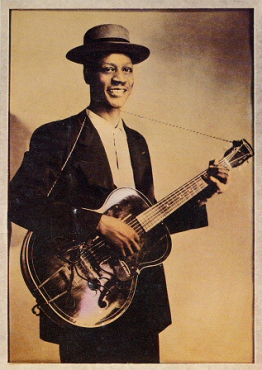
Edward P. Harris (* 22. August 1923 in Leasburg, North Carolina; † 22. Oktober 1953 in Newark, New Jersey), bekannt geworden unter dem Namen Carolina Slim, war ein US-amerikanischer Blues-Gitarrist und Sänger. Seine Schallplatten wurden auch unter den Pseudonymen Jammin' Jim, Lazy Slim Jim, Country Paul und Paul Howard veröffentlicht.
Viele Details seines Lebens sind unbekannt, doch glaubt man, dass Harris das Gitarrespiel von seinem Vater gelernt hat. In seiner Zeit als Wandermusikant nahm er auch Einflüsse von Musikern außerhalb des Piedmont-Gebietes auf. Um 1950 zog er nach Newark, New Jersey, dort nahm er unter dem Namen Carolina Slim seine erste Platte für das Savoylabel auf. Bis 1953 nahm er 27 Songs unter verschiedenen Namen und für verschiedene Labels auf. [1] [2]
1953 begab er sich wegen eines Rückenleidens in ein Krankenhaus in Newark, starb aber während der Operation an einem Herzanfall.
http://de.wikipedia.org/wiki/Carolina_Slim
https://www.youtube.com/watch?v=6aUTc1eAEmg
Carolina Slim (August 22, 1923 – October 22, 1953)[3] was an American Piedmont blues guitarist and singer.[2] His best known tracks were "Black Cat Trail" and "I'll Never Walk in Your Door".[3] He used various pseudonyms during his relatively brief recording career, including Country Paul, Jammin' Jim, Lazy Slim Jim and Paul Howard.[4] In total he recorded 27 songs, but details of his life outside of his music career are scant, and the exact reasons concerning the usage of differing names are also unclear.[2]
Biography
Carolina Slim was born Edward P. Hughes in Leasburg, North Carolina, United States. He learned to play the guitar from his father, and was influenced by Lightnin' Hopkins and Blind Boy Fuller.[2][5] He later found work as an itinerant musician around Durham, North Carolina.[6]
In 1950, he relocated to Newark, New Jersey, and made his recording debut for the Savoy label, billed as Carolina Slim.[2] His first single was "Black Chariot Blues" b/w "Mama's Boogie", recorded on July 24, 1950, and released on Acorn Records (Acorn 3015), a subsidiary of Savoy.[4] In 1951 and 1952, he recorded eight tracks for the King label in New York, this time using the name of Country Paul.[2][7] Henry Glover met Slim at these recordings, and later commented that Slim was "a very sickly young man at the time".[7] Slim's style blended Piedmont blues, prominent in songs such as "Carolina Boogie" and his cover version of Fuller's "Rag Mama Rag", with the influence of Hopkins meaning that he increasingly veered towards Texas blues.[6] Occasionally, Slim incorporated a washboard as well as his more regular guitar, as if to emphasise his Carolina rootstock.[6]
His recordings were not hugely popular, but sold in sufficient amounts for him to retain his recording contract. In June 1952, Slim recorded four more tracks for Savoy, but these were to be his final offerings.[6]
Carolina Slim died in Newark, New Jersey, from a heart attack suffered whilst undergoing surgery for a back complaint. He was 30 years old.[2]
In 1994, Document released a compilation album, Complete Recorded Works 1950-1952, which incorporated all of his 27 tracks.
Biography
Carolina Slim was born Edward P. Hughes in Leasburg, North Carolina, United States. He learned to play the guitar from his father, and was influenced by Lightnin' Hopkins and Blind Boy Fuller.[2][5] He later found work as an itinerant musician around Durham, North Carolina.[6]
In 1950, he relocated to Newark, New Jersey, and made his recording debut for the Savoy label, billed as Carolina Slim.[2] His first single was "Black Chariot Blues" b/w "Mama's Boogie", recorded on July 24, 1950, and released on Acorn Records (Acorn 3015), a subsidiary of Savoy.[4] In 1951 and 1952, he recorded eight tracks for the King label in New York, this time using the name of Country Paul.[2][7] Henry Glover met Slim at these recordings, and later commented that Slim was "a very sickly young man at the time".[7] Slim's style blended Piedmont blues, prominent in songs such as "Carolina Boogie" and his cover version of Fuller's "Rag Mama Rag", with the influence of Hopkins meaning that he increasingly veered towards Texas blues.[6] Occasionally, Slim incorporated a washboard as well as his more regular guitar, as if to emphasise his Carolina rootstock.[6]
His recordings were not hugely popular, but sold in sufficient amounts for him to retain his recording contract. In June 1952, Slim recorded four more tracks for Savoy, but these were to be his final offerings.[6]
Carolina Slim died in Newark, New Jersey, from a heart attack suffered whilst undergoing surgery for a back complaint. He was 30 years old.[2]
In 1994, Document released a compilation album, Complete Recorded Works 1950-1952, which incorporated all of his 27 tracks.
Carolina Slim - Pour Me One More Drink
https://www.youtube.com/watch?v=6aUTc1eAEmg
Debbie Davies *22.08.1952

Debbie Davies (* 22. August 1952, Los Angeles, Kalifornien) ist eine US-amerikanische Bluesgitarristin.
Ihre musikalischen Kenntnisse erhielt sie von ihrem Vater, der Arrangements für Ray Charles schrieb und im Aufnahmestudio mit Frank Sinatra stand.[1] Sie wuchs in den 1960er-Jahren in Los Angeles auf, als für sie als Mädchen nur die akustische Gitarre in Frage zu kommen schien, denn elektrische Gitarren galten nur für Buben als passend. [2]
Als sie die britischen Blues- und Bluesrockbands - besonders Eric Clapton und John Mayalls Bluesbreakers - hörte, stand für sie fest, dass sie E-Gitarre spielen wollte. Sie wurde Gitarristin bei verschiedenen Frauenbands, darunter der von John Mayalls Frau gegründeten Band „Maggie Mayall and the Cadillacs". Von 1988 bis 1991 spielte sie bei „The Icebreakers", der Band von Albert Collins, dessen Einfluss auf ihr Gitarrespiel oft noch hörbar ist.
Neben ihrer solistischen Arbeit trat sie mit verschiedenen Bands und Musikern auf, darunter Double Trouble, , J. Geils Band, Duke Robillard und Coco Montoya.
http://de.wikipedia.org/wiki/Debbie_Davies

Debbie Davies (born August 22, 1952) is an American blues guitarist.
She has been the featured guitarist in several female based bands including Maggie Mayall and the Cadillacs (led by John Mayall's wife),[1] and Fingers Taylor and the Ladyfinger Revue (who opened for Jimmy Buffett during his 1991 tour). Besides her solo work, Davies is best known for her work with Albert Collins as a member of his band, the Icebreakers, from 1988 to 1991. Over the years she has collaborated with several well-known musicians such as Tommy Shannon and Chris Layton (aka Double Trouble), Coco Montoya, J. Geils and Duke Robillard. She continues to record and tour.
Awards
Davies won the 1997 W. C. Handy Award for Best Contemporary Female Artist.[1] and the 2010 Blues Music Award for Best Traditional Female Artist.
She has been the featured guitarist in several female based bands including Maggie Mayall and the Cadillacs (led by John Mayall's wife),[1] and Fingers Taylor and the Ladyfinger Revue (who opened for Jimmy Buffett during his 1991 tour). Besides her solo work, Davies is best known for her work with Albert Collins as a member of his band, the Icebreakers, from 1988 to 1991. Over the years she has collaborated with several well-known musicians such as Tommy Shannon and Chris Layton (aka Double Trouble), Coco Montoya, J. Geils and Duke Robillard. She continues to record and tour.
Awards
Davies won the 1997 W. C. Handy Award for Best Contemporary Female Artist.[1] and the 2010 Blues Music Award for Best Traditional Female Artist.
Debbie Davies - Done Sold Everything - Don Odells Legends.mov
John Lee Hooker *22.08.1920


John Lee Hooker (* 22. August 1920[1] in Clarksdale, Mississippi; † 21. Juni 2001 in Los Altos, Kalifornien) war ein einflussreicher US-amerikanischer Bluesmusiker.
John Lee Hooker war eines der elf Kinder von William und Minnie Hooker. Nach deren Trennung heiratete seine Mutter 1923 den Baumwollpflücker William Moore aus Shreveport, Louisiana. William Moore war in seiner Freizeit auch Bluesmusiker. Er bewegte den jungen John Lee dazu, sich neben dem Chorgesang auch für andere Musikrichtungen zu interessieren. In einem Interview sagte Hooker einmal, dass sein Stiefvater ihn zu seinem eigenen, unverwechselbaren Stil gebracht habe. Wie groß sein Einfluss war, lässt sich nicht mehr nachvollziehen, da es von Moore keine Plattenaufnahmen gibt. Zu Hookers Stil gehören auch die Liedtexte, die sich oft sogar dann nicht reimen, wenn der Reim eigentlich fast unvermeidbar ist. In seinem Song I'm in the mood heißt es beispielsweise:
Everytime I see you, baby, walking down the street,
know I get a thrill now, baby, from my head down to my toes (anstelle von feet)
Schon in jungen Jahren zog Hooker durch die Südstaaten, um mit seiner Musik sein Brot zu verdienen. Während dieser Zeit traf er auch auf die beiden Musiker Tony Hollins und Tommy McClennan. Der Einfluss dieser beiden spiegelte sich zum einen im stampfenden Rhythmus wider, zum anderen auch darin, dass er Songs der beiden spielte. Mit vierzehn Jahren machte John Lee Hooker dann in Memphis, Tennessee Station. Aufgrund seines Alters und seines jugendlichen Erscheinungsbildes hatte es der junge Musiker aber schwer, in die Clubs zu kommen. Und wenn er es einmal schaffte, wurde er von seinen älteren Kollegen in der Regel als störend empfunden. Bis auf seine Bekanntschaft mit dem Gitarristen Robert Nighthawk war die Zeit in Memphis nicht sehr fruchtbar für Hooker, so dass er sich weiter Richtung Norden nach Cincinnati, Ohio aufmachte. Dort schlug er sich ab 1933 mit ein paar Auftritten in Gospelquartetts und Gelegenheitsjobs durch.
Karriere
Im Jahre 1934 heiratete er und zog nach Detroit, Michigan um. Dort hatte er in einem Club in der Hastings Street im Jahr 1937 seinen ersten Auftritt. Nach einigen nicht kommerziellen Aufnahmeversuchen spielte er am 3. September 1948 im United Sound Studio die Titel Boogie Chillen, Sally May (oder Sally Mae), Highway Blues oder Wednesday Evening Blues, insgesamt 10 Titel, ein, allesamt produziert von Bernard Besman. Auf der ersten Single wurden Sally May / Boogie Chillen[2] platziert, veröffentlicht am 3. November 1948 (Modern #627). Die Aufnahmebedingungen waren technisch so einwandfrei, dass man Hookers Hand die Gitarrensaiten berühren hört. Toningenieur bei dem Song mit den typischen Gitarren-Staccatos und dem ungewöhnlichen Fußstampfen war Joe Siracuse; Hooker begleitet sich lediglich auf der Gitarre. Die ersten drei Titel verbrauchten einen großen Teil der für 3 Stunden anberaumten Aufnahmezeit, so dass Boogie Chillen unter Zeitdruck entstand.[3] Boogie Chillen belegte am 19. Februar 1949 für eine Woche den ersten Rang in der Rhythm & Blues-Hitparade und war mit einer Million verkaufter Platten[4] der erste Erfolg für John Lee Hooker und für das Detroiter Studio. Die zweite Session mit Hooker fand am 18./19. Februar 1949 statt (Weeping Willow Boogie, Hobo Blues und Crawling King Snake). Hookers I’m in the Mood wurde am 7. August 1951 aufgenommen, belegte für 4 Wochen die Topposition und erreichte ebenfalls Millionenseller-Status.[5] Am 22. Mai 1952 entstanden It Hurts me So, I Got Eyes For You, I Got The Key, Bluebird Blues und Key to the Highway. Der Studiotermin vom 18. Oktober 1954 brachte insgesamt 4 Titel hervor (Odds Against Me, Nothin‘ But Trouble, I Need Love so Bad und Don’t Trust Nobody). Es war die letzte Aufnahmesession von Hooker bei United Sound. Von den über 200 Titeln Hookers entstanden die musikhistorisch wichtigsten in den United Sound Studios.
Mit seiner Mischung aus Gesang und Sprache und den ansteckenden Beats traf er den Nerv der farbigen Plattenkäufer dieser Zeit. Hinzu kam seine elektrisch verstärkte Gitarre, mit der er einen neuartigen und richtungsweisenden Sound schuf. Ebenfalls neu waren seine Instrumentalstücke, die er, nur durch das Klacken der Kronkorken unter seinen Schuhsohlen begleitet, auf seiner Gitarre spielte. Hooker spielte in dieser Zeit meistens solo. Ab und zu wurde er von Musikern wie Eddie Burns, Boogie Woogie Red oder Eddie Kirkland begleitet.
In den kommenden Jahren wuchs durch zahlreiche Plattenaufnahmen und Tourneen seine Popularität. Anfang der 1950er-Jahre folgte allerdings ein Karriereknick. Durch Musiker wie beispielsweise B. B. King, die über eine ausgefeiltere Spieltechnik verfügten, wurde er in den Hintergrund gedrängt. Erst Mitte der 1950er konnte er ein Comeback feiern. Mit Jimmy Reed (Gitarre), Eddie Taylor (Mundharmonika), George Washington (Bass) und Tom Whitehead (Schlagzeug) verfügte er über eine starke Begleitband. Als dann gegen Ende der 1950er der Blues zunehmend das Interesse der Studenten und Intellektuellen weckte, rückte John Lee Hooker in den Blickpunkt junger Weißer. Zunächst aber galt das Interesse dieser Kreise mehr einer der ursprünglichsten Spielarten des Blues, dem Country Blues. Das veranlasste zahlreiche Bluesmusiker dazu, zu den Wurzeln ihrer Musik zurückzukehren, unter ihnen auch Hooker. Aus dieser Zeit stammen Plattenaufnahmen wie The Folk Blues of John Lee Hooker und The Folklore of John Lee Hooker.
Anfang der 1960er-Jahre gewann Hooker auch in der Popwelt immer mehr an Beachtung. Im Zuge des Rhythm and Blues-Booms in England schaffte er sogar den Sprung in die Pop-Hitparaden. 1967 landete die umstrittene Band MC 5 mit dem Stück The Motor City is Burning von Hookers Album Urban Blues einen Hit. Das veranlasste Hooker dazu, sich ebenfalls im Rock-Geschäft zu versuchen. Gruppen wie Canned Heat oder Musiker wie Van Morrison waren sehr an der Zusammenarbeit mit ihrem Vorbild interessiert und spielten mit ihm Songs wie etwa The World Today ein.
Gegen Ende der 1970er wurde es still um John Lee Hooker. Er trat zwar noch regelmäßig auf und arbeitete an einigen Filmen mit (unter anderem sah und hörte man ihn im Kultfilm Blues Brothers mit Boogie Chillun und Boom Boom), aber er verschwand fast völlig aus dem Licht der Öffentlichkeit. 1980 wurde er in die Blues Hall of Fame aufgenommen, 2009 sein Song "Boom Boom".
1989 war er auf dem Album The Iron Man von Pete Townshend zu hören. Dort übernahm er den Part des Iron Man. Um so furioser war dann sein Comeback Ende desselben Jahres mit seinem Album The Healer, bei dem so bekannte Größen wie Bonnie Raitt oder Carlos Santana mitwirkten und für das er einen Grammy erhielt. Fast 40 Wochen hielt sich The Healer allein in den US-Charts. Gekrönt wurde John Lee Hookers Comeback durch einen Grammy, den der inzwischen 72-jährige am 21. Februar 1990 für I’m in the Mood, sein Duett mit Bonnie Raitt, in der Kategorie „beste traditionelle Blues-Aufnahme“ in Empfang nehmen durfte. Eine weitere Ehrung wurde ihm im Oktober des gleichen Jahres zuteil: Im Rahmen eines Blues-Festivals im New Yorker Madison Square Garden spielte eine erlesene Musiker- und Sängerschar, darunter Albert Collins, Joe Cocker, Bo Diddley, Huey Lewis und Little Feat, unter dem Motto „A Tribute To John Lee Hooker“ auf. Wenige Monate später, im Januar 1991, folgte noch eine wichtige Auszeichnung: die Aufnahme in die Rock and Roll Hall of Fame[6]. In seiner Dankesrede sagte er, dass er sich sehr über dieses Geschenk freue, und er versprach dafür seinem Publikum, „bis an sein Lebensende für sie da zu sein und den Blues für sie zu spielen“.
Im folgenden Jahr erschien dann das Album Mr. Lucky in Zusammenarbeit mit Van Morrison, Keith Richards, Johnny Winter und Robert Cray. Aber seine Musik überwand wieder die Grenzen des reinen Blues: so bedienten sich Depeche Mode bei ihrem Hit Personal Jesus eines John-Lee-Hooker-Gitarrenriffs.
John Lee Hooker blieb in Spiellaune, fand aber 1992 „ ... den Weg zurück zum ungeschliffenen, authentischen Blues“. Er war inzwischen zum kleinen britischen Point-Blank-Label gewechselt und hatte, diesmal nur mit wenigen Sessionmusikern (Robert Cray, Charlie Musselwhite, Fabulous Thunderbird, Jimmie Vaughan und John Hammond), das Album Boom Boom eingespielt. Der Titelsong ist eine Neuauflage (Remake) seines Hits aus den 1960ern und fand auch in einem Werbespot für eine Blue-Jeans-Marke Verwendung.
1993 spielte er auf dem Album Blues Summit von B.B. King mit, obwohl die beiden Musiker stilistisch meilenweit voneinander entfernt waren. Trotzdem konnte der Manager Kings, Sid Seidenberg, die beiden dazu überreden.[7]
Im Oktober 1997 eröffnete Hooker den Boom Boom Room in San Francisco, einen Blues-, Boogie-, Soul-, Groove- und Funk-Club. John Lee Hooker war nicht der Besitzer des Clubs, er erlaubte lediglich die Verwendung seines Namens für die Dauer von fünf Jahren.
Zu Beginn der 1990er-Jahre sagte John Lee Hooker bei einem Interview mit dem Rolling Stone Magazine, dass er sich in Zukunft etwas mehr Ruhe gönnen möchte. Er wolle keine Platten mehr aufnehmen und keine großen Konzerte mehr geben. Allerdings schränkte er das auch direkt wieder ein:
„Wenn ich aber hier bei mir zu Hause bin, dann kommt oft der Wunsch auf, wieder zu spielen. Dann nehme ich meine Gitarre, gehe zur Bushaltestelle und fahre zum nächsten Pub, spiele ein paar Songs und fahre dann wieder“.
John Lee Hooker starb am Donnerstag, 21. Juni 2001 im Schlaf. Noch fünf Tage zuvor hatte er zum letzten Mal auf der Bühne gestanden.

Early life
There is some debate as to the year of Hooker's birth[3][4] in Coahoma County, Mississippi,[5] the youngest of the eleven children of William Hooker (1871–1923),[6] a sharecropper and Baptist preacher, and Minnie Ramsey (born 1875, date of death unknown);[7] according to his official website, he was born on August 22, 1917.
Hooker and his siblings were home-schooled. They were permitted to listen only to religious songs, with his earliest exposure being the spirituals sung in church. In 1921, his parents separated. The next year, his mother married William Moore, a blues singer who provided Hooker with his first introduction to the guitar (and whom John would later credit for his distinctive playing style).[8] John's stepfather was his first outstanding blues influence. William Moore was a local blues guitarist who learned in Shreveport, Louisiana to play a droning, one-chord blues that was strikingly different from the Delta blues of the time.[5] Around 1923 his biological father died. At the age of 14, John Lee Hooker ran away from home, reportedly never seeing his mother or stepfather again.[9]
Throughout the 1930s, Hooker lived in Memphis, Tennessee where he worked on Beale Street at The New Daisy Theatre and occasionally performed at house parties.[5] He worked in factories in various cities during World War II, drifting until he found himself in Detroit in 1948 working at Ford Motor Company. He felt right at home near the blues venues and saloons on Hastings Street, the heart of black entertainment on Detroit's east side. In a city noted for its pianists, guitar players were scarce. Performing in Detroit clubs, his popularity grew quickly and, seeking a louder instrument than his acoustic guitar, he bought his first electric guitar.[10]
Career
Hooker's recording career began in 1948 when his agent placed a demo, made by Hooker, with the Bihari brothers, owners of the Modern Records label. The company initially released an up-tempo number, "Boogie Chillen'", which became Hooker's first hit single.[5] Though they were not songwriters, the Biharis often purchased or claimed co-authorship of songs that appeared on their labels, thus securing songwriting royalties for themselves, in addition to their own streams of income.
Sometimes these songs were older tunes that Hooker renamed, as with B.B. King's "Rock Me Baby", anonymous jams "B.B.'s Boogie", or songs by employees (bandleader Vince Weaver). The Biharis used a number of pseudonyms for songwriting credits: Jules was credited as Jules Taub; Joe as Joe Josea; and Sam as Sam Ling. One song by John Lee Hooker, "Down Child", is solely credited to Taub, with Hooker receiving no credit. Another, "Turn Over a New Leaf" is credited to Hooker and Ling.
In 1949, Hooker was recorded performing in an informal setting for Detroit jazz enthusiasts. His repertoire included down-home and spiritual tunes that he would not record commercially.[11] The recorded set has been made available in the album Jack O'Diamonds.[12]
Despite being illiterate, Hooker was a prolific lyricist. In addition to adapting the occasionally traditional blues lyric (such as "if I was chief of police, I would run her right out of town..."), he freely invented many songs from scratch. Recording studios in the 1950s rarely paid black musicians more than a pittance, so Hooker would spend the night wandering from studio to studio, coming up with new songs or variations on his songs for each studio. Because of his recording contract, he would record these songs under obvious pseudonyms such as John Lee Booker, notably for Chess Records and Chance Records in 1951/52,[13] as Johnny Lee for De Luxe Records in 1953/54[13] as John Lee, and even John Lee Cooker,[14] or as Texas Slim, Delta John, Birmingham Sam and his Magic Guitar, Johnny Williams, or The Boogie Man.[15]
His early solo songs were recorded under Bernie Besman. John Lee Hooker rarely played on a standard beat, changing tempo to fit the needs of the song. This often made it difficult to use backing musicians who were not accustomed to Hooker's musical vagaries. As a result, Besman would record Hooker, in addition to playing guitar and singing, stomping along with the music on a wooden pallet.[16] For much of this time period he recorded and toured with Eddie Kirkland, who was still performing until his death in a car accident in 2011. Later sessions for the VeeJay label in Chicago used studio musicians on most of his recordings, including Eddie Taylor, who could handle his musical idiosyncrasies very well. His biggest UK hit, "Boom Boom", (originally released on VeeJay) was recorded with a horn section.
Later life
He appeared and sang in the 1980 movie The Blues Brothers. Due to Hooker's improvisational style, his performance was filmed and sound-recorded live at the scene at Chicago's Maxwell Street Market, in contrast to the usual "playback" technique used in most film musicals.[17] Hooker was also a direct influence in the look of John Belushi's character Jake Blues.
In 1989, he joined with a number of musicians, including Carlos Santana and Bonnie Raitt to record the album The Healer, for which he and Santana won a Grammy Award. Hooker recorded several songs with Van Morrison, including "Never Get Out of These Blues Alive", "The Healing Game", and "I Cover the Waterfront". He also appeared on stage with Van Morrison several times, some of which was released on the live album A Night in San Francisco. The same year he appeared as the title character on Pete Townshend's The Iron Man: The Musical by Pete Townshend.
On December 19, 1989, Hooker appeared with The Rolling Stones and Eric Clapton to perform "Boogie Chillen'"in Atlantic City, N.J., as part of The Rolling Stones Steel Wheels tour. The show was broadcast live on cable television on a pay-per-view basis.
Hooker recorded over 100 albums. He lived the last years of his life in Long Beach, California.[18] In 1997, he opened a nightclub in San Francisco's Fillmore District called John Lee Hooker's Boom Boom Room, after one of his hits.[19]
Death
Hooker fell ill just before a tour of Europe in 2001 and died in his sleep on June 21 at the age of 83, two months before his 84th birthday. He was interred at the Chapel of the Chimes in Oakland, California.[20]
His last live in the studio recording on guitar and vocal was of a song he wrote with Pete Sears called "Elizebeth", featuring members of his Coast to Coast Blues Band with Sears on piano. It was recorded on January 14, 1998 at Bayview Studios in Richmond, California. The last song Hooker recorded before his death was "Ali D'Oro", a collaboration with the Italian soul singer Zucchero, in which Hooker sang the chorus "I lay down with an angel." He is survived by eight children, nineteen grandchildren, eighteen great-grandchildren, a nephew, and fiance Sidora Dazi. He has two children that followed in his footsteps, Zakiya Hooker and John Lee Hooker, Jr.
Among his many awards, Hooker has a star on the Hollywood Walk of Fame and in 1991 he was inducted into the Rock and Roll Hall of Fame. Two of his songs, "Boogie Chillen" and "Boom Boom" were included in the list of The Rock and Roll Hall of Fame's 500 Songs that Shaped Rock and Roll. "Boogie Chillen" was included as one of the Songs of the Century. He was also inducted in 1980 into the Blues Hall of Fame. In 2000, Hooker was awarded the Grammy Lifetime Achievement Award.
Music and legacy
Hooker's guitar playing is closely aligned with piano boogie-woogie. He would play the walking bass pattern with his thumb, stopping to emphasize the end of a line with a series of trills, done by rapid hammer-ons and pull-offs. The songs that most epitomize his early sound are "Boogie Chillen", about being 17 and wanting to go out to dance at the Boogie clubs, "Baby, Please Don't Go", a blues standard first recorded by Big Joe Williams, and "Tupelo Blues",[21] a song about the flooding of Tupelo, Mississippi, in April 1936.
He maintained a solo career, popular with blues and folk music fans of the early 1960s and crossed over to white audiences, giving an early opportunity to the young Bob Dylan. As he got older, he added more and more people to his band, changing his live show from simply Hooker with his guitar to a large band, with Hooker singing.
His vocal phrasing was less closely tied to specific bars than most blues singers. This casual, rambling style had been gradually diminishing with the onset of electric blues bands from Chicago but, even when not playing solo, Hooker retained it in his sound.
Though Hooker lived in Detroit during most of his career, he is not associated with the Chicago-style blues prevalent in large northern cities, as much as he is with the southern rural blues styles, known as delta blues, country blues, folk blues, or front porch blues. His use of an electric guitar tied together the Delta blues with the emerging post-war electric blues.[22]
His songs have been covered by Buddy Guy, Cream, AC/DC, ZZ Top, Led Zeppelin, Tom Jones, Bruce Springsteen, Jimi Hendrix, Eric Clapton, Nick Cave & The Bad Seeds, Van Morrison, The Yardbirds, The Animals, The Doors, The White Stripes, MC5, George Thorogood, R. L. Burnside, The J. Geils Band, Big Head Todd and the Monsters, The Gories, Cat Power, and The Jon Spencer Blues Explosion.
Awards and recognition
A Star on the Hollywood Walk of Fame
Inducted into the Blues Hall of Fame in 1980.
Inducted into the Rock and Roll Hall of Fame in 1991.
Grammy Awards:
Best Traditional Blues Recording, 1990 for I'm in the Mood (with Bonnie Raitt).
Best Traditional Blues Recording, 1998 for Don't Look Back.
Best Pop Collaboration with Vocals, 1998, Don't Look Back (with Van Morrison).
Grammy Lifetime Achievement Award in 2000.
Two of his songs, Boogie Chillen and Boom Boom were named to the list of The Rock and Roll Hall of Fame's 500 Songs that Shaped Rock and Roll. Boogie Chillen was included as one of the Songs of the Century.
John Lee Hooker - ONLY BLUES MUSIC
Roscoe Shelton *22.08.1931

Roscoe Shelton (August 22, 1931 – July 27, 2002)[2] was an American electric blues and R&B singer.[1] He is best remembered for his 1965 hit single, "Strain on My Heart," and his working relationships with both The Fairfield Four and Bobby Hebb. Other notable recordings include "Think It Over" and "Baby Look What You're Doin' To Me".[2] Fred James, who produced much of Shelton's later work, noted that Shelton moved effortlessly into soul, unlike many of his 1950s blues and R&B recording contemporaries.
Shelton was born in Lynchburg, Tennessee and was raised in Nashville, Tennessee.[3][4] In 1949 he joined the Fairfield Four, singing lead vocals on their gospel music output, before spending four years conscripted in the United States Air Force.[3] Upon discharge he joined The Skylarks in 1956 and recorded for Excello's subsidiary label, Nashboro Records. After the group disbanded Shelton sang alongside and toured with both Bobby Hebb and DeFord Bailey, Jr.[1]
In 1961 Shelton's debut album Roscoe Shelton Sings was released by Excello, before various singles followed, including "Strain on My Heart" (1965).[1] The track was a Top 40 success in the Billboard R&B chart. By this time Shelton's work appeared on Sound Stage 7, and another Top 40 hit was "Easy Going Fellow."[5] In 1966 his next album Soul in His Music, Music in His Soul was released, but the long gap between albums stalled his career. However, Shelton performed on the same bill as Otis Redding at the Apollo Theater.[1]
The deaths of both Redding and Sam Cooke, who had been friends of Shelton, took their toll.[6] Shelton left the music industry in 1969, working for Nashville's Meharry Medical College.[3] Finally in 1994 Shelton, Earl Gaines, and Clifford Curry found work billed as the 'Excello Legends'.[1] In 1995, Shelton's song "You Were the Dream" appeared on the soundtrack of the film, Blue Juice.
His recording resumed under the production of Fred James, spawning amongst others, Let It Shine in 1998,[3] plus Shelton's and Gaines' joint effort, Let's Work Together.[1] In July 2002, at the age of 70, Shelton died of cancer in Nashville.[2][6]
Two years after his death, Shelton's "Say You Really Care" was included on the Grammy Award winning compilation album, Night Train to Nashville.

Roscoe
Shelton - Easy Going Fellow
Sonny Thompson *22.08.1922
:format(jpeg):mode_rgb():quality(40)/discogs-images/A-332600-1182302053.jpeg.jpg)
Sonny Thompson (* 22. August 1922 in Centreville, Mississippi als Alphonso Thompson; † 11. August 1989 in Chicago) war ein US-amerikanischer Rhythm and Blues-Pianist, Songwriter, Musikproduzent und Bandleader.
Leben und Wirken
Der Bandleader und Pianist Sonny Thompson gehörte zu den profiliertesten R&B- und Jump Blues Instrumentalisten, die Ende der 40er bis Anfang der 50er Jahre populär waren. Er wuchs in Chicago auf; nach dem Besuch der Wendell Phillips High School studierte er am Chicago Conservatory of Music. In den Clubs der Stadt wurde er von der Musik Art Tatums und Earl Hines’ geprägt. Ab 1940 arbeitete er als Profimusiker, kurz unterbrochen von der Zeit in der Armee, aus der er nach einem Unfall wieder entlassen wurde. Ab Anfang 1944 trat er als Solopianist auf; kurze Zeit leitete er auch eine 1945 ein Bigband im El Grotto, dem Basement-Club des Pershing Hotels, dessen Auftritte im Rundfunk übertragen wurden. Nach Auflösung des Ensembles arbeitete er weiter als Solist; es entstanden die ersten 78er-Aufnahmen unter eigenem Namen 1946 für das kleine Detroiter Label Sultan Records („Southside Boogie“ / „Sonny's Boogie“), später für Sunrise Records. In diese Zeit fallen auch Aufnahmen mit der Sängerin June Richmond für Mercury, die er mit einer Combo begleitete sowie mit dem Dick Davis Orchestra („Memphis Train“).
Im Jahr 1948 hatte er zwei #1 Hiterfolge in den R&B-Charts mit „Long Gone (Parts I and II)“ und „Late Freight“, die er mit dem Saxophonisten Eddie Chamblee für das Chicagoer Label Miracle Records eingespielt hatte; „Long Gone“ wurde zu einer der meistverkaufesten R&B-Schallplatten der Ära und zu Thompsons Erkennungsmelodie.[1] Weitere Nummern entstanden für die Label Federal und Deluxe; weniger erfolgreich waren die Titel „Blue Dreams“ und „Still Gone“. Seiner Band gehörten 1951 der Tenorsaxophonist Tina Brooks und der Trompeter Henry Glover an. 1951 wechselte er zu King Records, wo er Aufnahmen mit dem Sänger Jesse Edwards einspielte, den „Smoke Stack Blues“ und „Uncle Sam Blues“ sowie „The Mellow Blues (parts one and two)“ unter eigenem Namen. Weitere Top-Ten-Hits in den R&B-Charts hatte er dann mit der Sängerin Lula Reed; den größten Erfolg hatte „I'll Drown in My Tears“, der #5 der Hitparade erreichte und später von Ray Charles gecovert wurde. Danach begann eine erfolgreiche Periode der Zusammenarbeit mit Lula Reed, die gemeinsam zahlreiche Tourneen durch die Vereinigten Staaten unternahmen. Thompson nahm bis 1959 Platten mit Reed auf. Als Songwriter arbeitete er 1960 für den Blues-Gitarristen Freddie King, für den er u.a. den Titel „Hideaway“ schrieb. Noch 1961/62 wirkte an bei dessen Titeln „Side Tracked“ und „Driving Sideways“ mit.
In den 1960er Jahren betätigte er sich ansonsten nicht mehr als aktiver Musiker, sondern arbeitete als musikalische Direktor, Produzent und A&R für King Records im Raum Chicago.
http://de.wikipedia.org/wiki/Sonny_Thompson
 http://www.allaboutbluesmusic.com/henry-son-simms/

Sonny Thompson (August 22, 1916[1][2] or 1923[3][4] – August 11, 1989)[1] was an American R&B bandleader and pianist, popular in the 1940s and 1950s.
Born Alfonso Thompson in Centreville, Mississippi,[1] he began recording in 1946, and in 1948 achieved two #1 R&B chart hits on the Miracle label – "Long Gone (Parts I and II)" and "Late Freight", both featuring saxophonist Eddie Chamblee. The follow-ups "Blue Dreams" and "Still Gone" were smaller hits.[1]
By 1952 he had moved on to King Records. There, he had further R&B Top 10 successes with the singer Lula Reed, the biggest hit being "I'll Drown in My Tears" (Thompson married Reed sometime in the early 1950s). He continued to work as a session musician, and to perform with Reed into the early 1960s. He also had success as a songwriter, often co-writing with blues guitarist, Freddie King.
Thompson died in 1989 in Chicago.
Born Alfonso Thompson in Centreville, Mississippi,[1] he began recording in 1946, and in 1948 achieved two #1 R&B chart hits on the Miracle label – "Long Gone (Parts I and II)" and "Late Freight", both featuring saxophonist Eddie Chamblee. The follow-ups "Blue Dreams" and "Still Gone" were smaller hits.[1]
By 1952 he had moved on to King Records. There, he had further R&B Top 10 successes with the singer Lula Reed, the biggest hit being "I'll Drown in My Tears" (Thompson married Reed sometime in the early 1950s). He continued to work as a session musician, and to perform with Reed into the early 1960s. He also had success as a songwriter, often co-writing with blues guitarist, Freddie King.
Thompson died in 1989 in Chicago.
Screaming Boogie - Sonny Thompson
Henry "Son" Sims *22.08.1890

Henry "Son" Sims (* 22. August 1890 in Anguilla, Mississippi; † 23. Dezember 1958 in Memphis, Tennessee) war ein US-amerikanischer Bluesmusiker. Sims beherrschte mehrere Instrumente (Klavier, Gitarre, Violine, Viola da gamba und Mandoline), spielte aber hauptsächlich Fiddle und Gitarre als Begleiter für zahlreiche bedeutende Bluesmusiker.
Sims war der einzige Sohn von fünf Kindern, seine Kindheit verbrachte er größtenteils in Renova nahe Cleveland in Mississippi. Seinen Spitznamen Son erhielt er von seiner Mutter. Trotz religiöser Vorbehalte gegen die musikalische Neigung des Jungen unterstützten seine Eltern ihn darin, sein Geigenlehrer war sein eigener Großvater, Warren Scott. Bereits seit seiner frühen Kindheit war Sims ein religiöser Mensch, Berichte schildern ihn als einen ernsthaften und ruhigen Charakter, anders als viele andere Bluesmusiker war sein Lebensstil von Gleichmaß und Ausgeglichenheit geprägt. Sein gesamtes Leben als Erwachsener verbrachte er in einer kinderlos gebliebenen Ehe mit der zwölf Jahre älteren Lizzie Smith.
Während des Ersten Weltkriegs wurde er zur Armee eingezogen und leistete seinen Dienst in Frankreich ab. Danach zog er nach Farrell nahe Clarksdale und begann um diese Zeit auch mit dem Gitarristen Percy Thomas zusammenzuarbeiten, das Duo baute Sims dann durch Hinzunahme eines Bassisten und eines Mandolinisten allmählich zu einer Band aus, die er Mississippi Corn Shuckers taufte, die aber als Son Sims Four regional bekannt wurde und über ein Vierteljahrhundert in unveränderter Besetzung zusammenblieb. Die Shuckers/Sims Four spielten hauptsächlich Squaredance und ähnliche Musik für ein weißes Publikum und bildeten für Sims einen Nebenerwerb zum Sharecropping.
Sims war seit seiner Jugendzeit bekannt mit Charley Patton, der ihm 1929 eine erste Möglichkeit zu Aufnahmen bei der Firma Paramount Records verschaffte. Bei der Aufnahmesitzung wurde Sims von Patton begleitet, im Gegenzug spielte Sims bei acht Aufnahmen von Patton Fiddle. Anfang der 30er Jahre war Sims auch Sideman von Patton bei einigen Auftritten. 1942 begleitete er Muddy Waters bei Aufnahmen für Alan Lomax und spielte häufiger in dessen Juke Joint. Ab dem Anfang der 40er Jahre trat er zeitweise mit Robert Nighthawk bei Auftritten im Mississippi-Delta[Anm. 1] auf, ungefähr zu dieser Zeit auch montierte er sich einen Pickup auf seine Geige und wurde so zu einem der ersten elektrischen Violinisten überhaupt.
1946 zerbrachen die Son Sims Four, als ihr Bassist verstarb. Sims blieb noch zwölf Jahre weiter aktiv, bis er an den Folgen einer Nierenstein-Operation starb. Sein Grab in Clarksdale ist anonym.
Im Rückblick zeigen sich Kritiker uneinig über die Qualität seines Spiels, Wardlow/Calt bezeichnen es als „unpräzise“ und „schrill“, Robert Palmer hingegen erwähnt wohlwollend sein „unsentimentales [...] Timbre“.
Sims war der einzige Sohn von fünf Kindern, seine Kindheit verbrachte er größtenteils in Renova nahe Cleveland in Mississippi. Seinen Spitznamen Son erhielt er von seiner Mutter. Trotz religiöser Vorbehalte gegen die musikalische Neigung des Jungen unterstützten seine Eltern ihn darin, sein Geigenlehrer war sein eigener Großvater, Warren Scott. Bereits seit seiner frühen Kindheit war Sims ein religiöser Mensch, Berichte schildern ihn als einen ernsthaften und ruhigen Charakter, anders als viele andere Bluesmusiker war sein Lebensstil von Gleichmaß und Ausgeglichenheit geprägt. Sein gesamtes Leben als Erwachsener verbrachte er in einer kinderlos gebliebenen Ehe mit der zwölf Jahre älteren Lizzie Smith.
Während des Ersten Weltkriegs wurde er zur Armee eingezogen und leistete seinen Dienst in Frankreich ab. Danach zog er nach Farrell nahe Clarksdale und begann um diese Zeit auch mit dem Gitarristen Percy Thomas zusammenzuarbeiten, das Duo baute Sims dann durch Hinzunahme eines Bassisten und eines Mandolinisten allmählich zu einer Band aus, die er Mississippi Corn Shuckers taufte, die aber als Son Sims Four regional bekannt wurde und über ein Vierteljahrhundert in unveränderter Besetzung zusammenblieb. Die Shuckers/Sims Four spielten hauptsächlich Squaredance und ähnliche Musik für ein weißes Publikum und bildeten für Sims einen Nebenerwerb zum Sharecropping.
Sims war seit seiner Jugendzeit bekannt mit Charley Patton, der ihm 1929 eine erste Möglichkeit zu Aufnahmen bei der Firma Paramount Records verschaffte. Bei der Aufnahmesitzung wurde Sims von Patton begleitet, im Gegenzug spielte Sims bei acht Aufnahmen von Patton Fiddle. Anfang der 30er Jahre war Sims auch Sideman von Patton bei einigen Auftritten. 1942 begleitete er Muddy Waters bei Aufnahmen für Alan Lomax und spielte häufiger in dessen Juke Joint. Ab dem Anfang der 40er Jahre trat er zeitweise mit Robert Nighthawk bei Auftritten im Mississippi-Delta[Anm. 1] auf, ungefähr zu dieser Zeit auch montierte er sich einen Pickup auf seine Geige und wurde so zu einem der ersten elektrischen Violinisten überhaupt.
1946 zerbrachen die Son Sims Four, als ihr Bassist verstarb. Sims blieb noch zwölf Jahre weiter aktiv, bis er an den Folgen einer Nierenstein-Operation starb. Sein Grab in Clarksdale ist anonym.
Im Rückblick zeigen sich Kritiker uneinig über die Qualität seines Spiels, Wardlow/Calt bezeichnen es als „unpräzise“ und „schrill“, Robert Palmer hingegen erwähnt wohlwollend sein „unsentimentales [...] Timbre“.
Henry "Son" Sims (August 22, 1890 – December 23, 1958)[1] was an American delta blues fiddler and songwriter. He is best known for his accompanist role to both Charley Patton and a young Muddy Waters.
Life and career
Sims was born in Anguilla, Mississippi, United States,[1] the only son of five children. He learned to play the fiddle from his grandfather.[1] Sims saw active service in France during World War I, whilst serving in the US Army.
Sims went on to be the leader of the Mississippi Corn Shuckers, a rural based string ensemble and played with them for a number of years. His profile was extended by joining his childhood friend, Charley Patton, on a recording session for Paramount Records, which took place in Grafton, Wisconsin in June 1929.[1][3][4][5] Sims both accompanied Patton on fiddle on thirteen tracks,[4] including "Elder Greene Blues", "Going to Move to Alabama" and "Devil Sent the Rain Blues";[3] as well as recording four tunes of his own. These included "Tell Me Man Blues", his best-known composition, and "Farrell Blues".[1] Sims played alongside Patton at times until the latter's death in 1934,[5] when Sims returned to working on a plantation.[3] Sims had by then extended his playing repertoire to include the mandolin, guitar and piano.[1]
On August 28, 1941, Sims accompanied Muddy Waters on a recording session.[1][6] This took place under the direction of Alan Lomax, as part of his recordings for the Library of Congress.[3] In the 1940s, Sims also accompanied Robert Nighthawk on several joint appearances, and continued a solo career in to the 1950s.[5]
Sims died following renal surgery in December 1958 in Memphis, Tennessee, at the age of 68.[2] He was buried in an unmarked grave in Bell Grove Baptist Church Cemetery, Clarksdale, Coahoma County, Mississippi.
Life and career
Sims was born in Anguilla, Mississippi, United States,[1] the only son of five children. He learned to play the fiddle from his grandfather.[1] Sims saw active service in France during World War I, whilst serving in the US Army.
Sims went on to be the leader of the Mississippi Corn Shuckers, a rural based string ensemble and played with them for a number of years. His profile was extended by joining his childhood friend, Charley Patton, on a recording session for Paramount Records, which took place in Grafton, Wisconsin in June 1929.[1][3][4][5] Sims both accompanied Patton on fiddle on thirteen tracks,[4] including "Elder Greene Blues", "Going to Move to Alabama" and "Devil Sent the Rain Blues";[3] as well as recording four tunes of his own. These included "Tell Me Man Blues", his best-known composition, and "Farrell Blues".[1] Sims played alongside Patton at times until the latter's death in 1934,[5] when Sims returned to working on a plantation.[3] Sims had by then extended his playing repertoire to include the mandolin, guitar and piano.[1]
On August 28, 1941, Sims accompanied Muddy Waters on a recording session.[1][6] This took place under the direction of Alan Lomax, as part of his recordings for the Library of Congress.[3] In the 1940s, Sims also accompanied Robert Nighthawk on several joint appearances, and continued a solo career in to the 1950s.[5]
Sims died following renal surgery in December 1958 in Memphis, Tennessee, at the age of 68.[2] He was buried in an unmarked grave in Bell Grove Baptist Church Cemetery, Clarksdale, Coahoma County, Mississippi.
henry sims/farewell blues
Pura Fé *22.08.

Die in New York aufgewachsene Tochter eines Puertorikaners und einer Tuscarora-Indianerin aus North Carolina bezieht ihr Vokalerbe aus vier Generationen singender Frauen, deren Repertoire aus Blues, Gospel, Songs der Native Americans und Opern bestand. Eine stilistische Bandbreite, der Pura Fe treu geblieben ist: Sie schauspielerte am Broadway, wirkte als Jazzsängerin, gründete das legendäre A-cappella-Trio Ulali.
Heute mischt sie als begnadete Songschreiberin die Farben von Rock, R&B und besonders dem Blues. Ganz in der Philosophie von Taj Mahal versucht sie, die kulturellen Bande zwischen den Native Americans und den Afro-Amerikanern herauszuheben. Mit ihrer rauen und seelenvollen Stimme sowie Ihrer Fingerfertigkeit auf der Slide-Gitarre lässt Pura Fé die Bedeutung der „Indianer“ für die Musiktraditionen der USA in ganz neuem Licht erscheinen.
Heute mischt sie als begnadete Songschreiberin die Farben von Rock, R&B und besonders dem Blues. Ganz in der Philosophie von Taj Mahal versucht sie, die kulturellen Bande zwischen den Native Americans und den Afro-Amerikanern herauszuheben. Mit ihrer rauen und seelenvollen Stimme sowie Ihrer Fingerfertigkeit auf der Slide-Gitarre lässt Pura Fé die Bedeutung der „Indianer“ für die Musiktraditionen der USA in ganz neuem Licht erscheinen.
Pura Fé (born: Pura Fé Antonia ("Toni") Crescioni) is a Native singer-songwriter, musician, composer, seamstress, teacher and activist. She is also the founding member of the world renowned Native American women's a capella trio, Ulali.
Personal life
Pura Fé was born in New York City and brought up by her mother, grandparents and family of women singers who are Tuscarora. They count eight generations of singing sisters from North Carolina. The family moved to New York from North Carolina in the 1930s. [1]
Her mother, Nanice Lund was a classically trained opera singer who toured with Duke Ellington and his Sacred Concert Series.
Her father, Juan Antonio Crescioni-Collazo, was born in Maunabo, Puerto Rico, of both Taíno Indian and Corsican immigrant grandparents.
In New York City, Pura Fé was on the board of the American Indian Community House (AICH).
She currently lives in Saskatchewan, Canada. [2]
Training
As an adolescent, Pura Fé studied and performed with the American Ballet Theatre, briefly trained at Martha Graham school and performed in Broadway musicals The Me Nobody Knows, Ari and Via Galactica. She also sang with the Mercer Ellington Orchestra.
She attended Lincoln Square Academy. In the late 1970s, she worked as a waitress at club Max's Kansas City in New York. Soon after, she began singing in bands and as a studio singer. She recorded jingles, commercials, backup vocals and lead on demos and recordings such as Good Enough written by James McBride.[3]
Career
In 1994, she was nominated and performed at the Juno Awards for Best Global Recording, for the album Condor Meets the Eagle by Kanatan Aski with Pura Fé. She released the CD, Mahk Jchi with Ulali on Corn, Beans and Squash Music and she appeared with Ulali on Robbie Robertson’s Music for the Native Americans.
In 1995, she released her first solo album, the R&B inspired, Caution to the Wind, written and produced by James McBride on Shanachie Records. She also appeared on The Tonight Show with Jay Leno with Ulali and Robbie Robertson, debuting the Ulali song Mahk Jchi (Heartbeat Drum Song), which went platinum in Italy. In 1996, she appeared and toured on The Indigo Girls, Shaming of the Sun Album with Ulali.
She has appeared on many recordings and film soundtracks including Miramax’s Smoke Signals soundtrack, the Turner Documentary series The Native Americans, 1 Giant Leap DVD, The World Festival of Sacred Music for the Dalai Lama, Showtime's The L-Word, and "A Thousand Roads" soundtrack.
After hearing guitarist Kelly Joe Phelps perform, Pura Fé began to play the acoustic lap slide guitar and recorded her second solo album, Follow Your Heart's Desire, released on the Music Maker label.[4]
A year later, she opened for Neil Young in Berkeley, California, singing Rise Up Tuscarora Nation and Find the Cost of Freedom. As a solo artist, she has also opened for Herbie Hancock, Taj Mahal, Al Jarreau and George Duke.
Pura Fé won a NAMMY (Native American Music Award) for best female artist in 2006 and a L'Académie Charles Cros Award for best world album.
Her third album, Hold The Rain, was released in 2007 with guitarist Danny Godinez.
In late 2009, she released Full Moon Rising for DixieFrog Records and toured extensively throughout Europe.
Her fifth solo album, a live double CD, was released in the spring of 2011: "A Blues Night in North Carolina." She currently performs internationally with her band and the Deer Clan Singers and has announced a new Ulali Project album for 2017.
Activism
Pura Fé has lent her voice to many environmental and Indigenous rights groups and campaigns. In 2013, she rowed in the Two Row Wampum Renewal Campaign canoe journey[5] In 2014, she participated in the Honor the Earth Love Water Not Oil Tour with Winona LaDuke to oppose the Enbridge expansions of the tar sands and fracked oil pipelines. [6] She marched with Ulali Project in the front lines of the People's Climate March singing the song, "Idle No More," which she co wrote with Cary Morin for the Idle No More movement. [7]
Pura Fé moved to North Carolina in the 1990s and volunteered to teach young people in the rural Indian communities of Robeson County, North Carolina. She won the Community Spirit Award from the First Peoples Fund of the Tides Foundation and later won its fellowship award for her volunteer contributions.
Personal life
Pura Fé was born in New York City and brought up by her mother, grandparents and family of women singers who are Tuscarora. They count eight generations of singing sisters from North Carolina. The family moved to New York from North Carolina in the 1930s. [1]
Her mother, Nanice Lund was a classically trained opera singer who toured with Duke Ellington and his Sacred Concert Series.
Her father, Juan Antonio Crescioni-Collazo, was born in Maunabo, Puerto Rico, of both Taíno Indian and Corsican immigrant grandparents.
In New York City, Pura Fé was on the board of the American Indian Community House (AICH).
She currently lives in Saskatchewan, Canada. [2]
Training
As an adolescent, Pura Fé studied and performed with the American Ballet Theatre, briefly trained at Martha Graham school and performed in Broadway musicals The Me Nobody Knows, Ari and Via Galactica. She also sang with the Mercer Ellington Orchestra.
She attended Lincoln Square Academy. In the late 1970s, she worked as a waitress at club Max's Kansas City in New York. Soon after, she began singing in bands and as a studio singer. She recorded jingles, commercials, backup vocals and lead on demos and recordings such as Good Enough written by James McBride.[3]
Career
In 1994, she was nominated and performed at the Juno Awards for Best Global Recording, for the album Condor Meets the Eagle by Kanatan Aski with Pura Fé. She released the CD, Mahk Jchi with Ulali on Corn, Beans and Squash Music and she appeared with Ulali on Robbie Robertson’s Music for the Native Americans.
In 1995, she released her first solo album, the R&B inspired, Caution to the Wind, written and produced by James McBride on Shanachie Records. She also appeared on The Tonight Show with Jay Leno with Ulali and Robbie Robertson, debuting the Ulali song Mahk Jchi (Heartbeat Drum Song), which went platinum in Italy. In 1996, she appeared and toured on The Indigo Girls, Shaming of the Sun Album with Ulali.
She has appeared on many recordings and film soundtracks including Miramax’s Smoke Signals soundtrack, the Turner Documentary series The Native Americans, 1 Giant Leap DVD, The World Festival of Sacred Music for the Dalai Lama, Showtime's The L-Word, and "A Thousand Roads" soundtrack.
After hearing guitarist Kelly Joe Phelps perform, Pura Fé began to play the acoustic lap slide guitar and recorded her second solo album, Follow Your Heart's Desire, released on the Music Maker label.[4]
A year later, she opened for Neil Young in Berkeley, California, singing Rise Up Tuscarora Nation and Find the Cost of Freedom. As a solo artist, she has also opened for Herbie Hancock, Taj Mahal, Al Jarreau and George Duke.
Pura Fé won a NAMMY (Native American Music Award) for best female artist in 2006 and a L'Académie Charles Cros Award for best world album.
Her third album, Hold The Rain, was released in 2007 with guitarist Danny Godinez.
In late 2009, she released Full Moon Rising for DixieFrog Records and toured extensively throughout Europe.
Her fifth solo album, a live double CD, was released in the spring of 2011: "A Blues Night in North Carolina." She currently performs internationally with her band and the Deer Clan Singers and has announced a new Ulali Project album for 2017.
Activism
Pura Fé has lent her voice to many environmental and Indigenous rights groups and campaigns. In 2013, she rowed in the Two Row Wampum Renewal Campaign canoe journey[5] In 2014, she participated in the Honor the Earth Love Water Not Oil Tour with Winona LaDuke to oppose the Enbridge expansions of the tar sands and fracked oil pipelines. [6] She marched with Ulali Project in the front lines of the People's Climate March singing the song, "Idle No More," which she co wrote with Cary Morin for the Idle No More movement. [7]
Pura Fé moved to North Carolina in the 1990s and volunteered to teach young people in the rural Indian communities of Robeson County, North Carolina. She won the Community Spirit Award from the First Peoples Fund of the Tides Foundation and later won its fellowship award for her volunteer contributions.
Pura Fé - Summertime HQ
Pura Fe - My people My Land - clip
R.I.P.
John Lee Granderson +22.08.1979
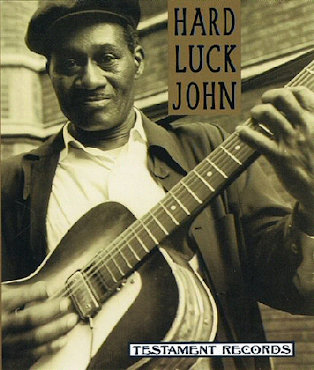
b. 11 April 1913, Ellendale, Tennessee, USA, d. 22 August 1979, Chicago, Illinois, USA. Granderson left home when he was in his teens, moving to Chicago, Illinois, in 1928. Although not a professional musician, he did work with John Lee ‘Sonny Boy’ Williamson, among others. He turned to music full-time in the 60s and was featured as sideman and leader on many anthologies, although he never made a full album in his own right. Granderson sang and played guitar close to the style of the Memphis musicians of his youth. He stopped performing in public in 1975 and died of cancer in 1979.
http://www.allmusic.com/artist/john-lee-granderson-mn0000234726/biography
John Lee Granderson - I Don't Feel Good
Leonard "Baby Doo" Caston +22.08.1987

Leonard "Baby Doo" Caston (June 2, 1917 – August 22, 1987)[1] was an American blues pianist and guitarist. He is best noted for the tracks "Blues At Midnight" and "I'm Gonna Walk Your Log".
Leonard Caston Sr. was born in Sumrall, Mississippi, United States,[1] and raised in Meadville, Mississippi from age eight. He lived in Chicago from 1934 to 1936 but then moved back to Mississippi after his family relocated to Natchez. He learned to play piano under the influence of Leroy Carr and Art Tatum; he has also credited Andy Kirk and Jimmy Rogers, as well as his relative Kim Weathersby, as stylistic influences.
In 1938 he returned to Chicago, where he met with Mayo Williams, a producer for Decca Records. Williams recorded him in a trio with Eugene Gilmore and Arthur Dixon; Dixon introduced him to his brother, Willie Dixon. Willie and Caston then formed the Five Breezes, along with Jimmy Gilmore, Joe Bell, and Willie Hawthorne, a group in the style of The Ink Spots. In 1940, Caston recorded his first solo record for Decca, "The Death of Walter Barnes", which also included Robert Nighthawk on harmonica.
The Five Breezes disbanded in 1941, and Caston began playing in the Rhythm Rascals Trio with Alfred Elkins and Ollie Crawford. The group did USO tours, and in 1945 performed at a conference for Dwight Eisenhower, Bernard Montgomery, and Georgy Zhukov. After the war, he recorded under his own name as well as for Roosevelt Sykes and Walter Davis, and did myriad studio sessions. He also recorded again with Dixon as the Four Jumps of Jive and the Big Three Trio, playing in both groups with Bernardo Dennis as well. Ollie Crawford joined this group soon after Dennis's departure. The Big Three Trio recorded for Columbia Records and Okeh Records.
The Big Three Trio's last sides were recorded in 1952, but the group did not officially break up until 1956. Caston continued performing for decades afterwards, returning to perform with Dixon in 1984.
Caston also released an album, Baby Doo's House Party, shortly before his death of heart disease in Minneapolis, Minnesota, in 1987.[1]
His son, Leonard Caston, Jr., is an R&B singer and songwriter who sang with The Radiants among other endeavors.
Lillian Glinn +22.07.1978

Lillian Glinn (May 10, 1902 – July 22, 1978)[2] was an American classic female blues and country blues singer and songwriter. She spent most of her career in black vaudeville.[1] Her most popular recordings were "Black Man Blues," "Doggin' Me Blues" and "Atlanta Blues."[3] The blues historian, Paul Oliver, commented that there are a number of women blues singers who "deserve far greater recognition than they have had" and that one such was Lillian Glinn.
Glinn was born in Hillsboro, Texas, United States, and later moved to Dallas.[3]
She was first noticed singing spirituals in church by her future fellow performer Hattie Burleson. Under Burleson's guidance, Glinn became successful in vaudeville, and by 1927 was signed to a recording contract by Columbia. Glinn took part in six separate recording sessions in a two-year period up to 1929.[1] She recorded a total of twenty-two tracks.[3] Her speciality was singing slow blues ballads utilising her rich and heavy contralto voice.[1] Her songs concentrated on the harsher side of life and sometimes included sexual innuendo.[3] Her recordings gained her national recognition, and included her April 1928 recording of "Shake It Down".[4] Her sessions took place variously in New Orleans and Atlanta, as well as her home base of Dallas.[3]
The author and researcher, David Evans, noted that "it is quite likely that many of Lillian Glinn's blues without any listed composer were her own material. If so, she would be the exception among Columbia's female blues singers", he concluded.[5]
Following this period of activity, Glinn retreated back to church based life, and moved to California where she married the Rev. O.P. Smith. Her future became distant from her previous professional career.[3]
Her entire recorded work was made available in 1994 by Document Records.[6]
She was interviewed and photographed by Paul Oliver in 1971.
Boogie Bill Webb +22.08.1990

Boogie Bill Webb (March 24, 1924 – August 22, 1990)[2] was an American Louisiana blues and R&B guitarist, singer and songwriter. Webb's own style of music combined Mississippi country blues with New Orleans R&B.[1] His best known recordings were "Bad Dog" and "Drinkin' and Stinkin'".[2] Despite a lengthy, albeit stuttering, career, Webb nevertheless only released one album.[1]
Biography
Born in Jackson, Mississippi, Webb's first guitar at the age of eight was stringed with screen wire and made from a cigar box.[1] His greatest influence was Tommy Johnson.[3] With a real guitar obtained whist a teenager, in 1947 Webb won a talent show, and subsequently briefly appeared in the musical film, The Jackson Jive, before settling in New Orleans in 1952.[1]
Webb obtained a recording contract with Imperial Records, after his friendship with Fats Domino led to his introduction to Dave Bartholomew.[3] In 1953 Webb released his debut single, "Bad Dog," a non commercial slice of country boogie-woogie. Frustrated by lack of recognition, Webb relocated to Chicago, where he worked in various factories.[1] In Chicago, Webb met and sat in with Muddy Waters, John Lee Hooker, Jimmy Reed, and Chuck Berry.[4]
Webb returned to New Orleans in 1959 to work as a stevedore, performing music infrequently. However, in 1968 he recorded several songs for the folklorist David Evans, which eventually appeared on the Arhoolie Records album Roosevelt Holts and His Friends.[3] The 1972 compilation album, The Legacy of Tommy Johnson contained five tracks performed by Webb.[5]
A combination of the exposure at home and in Europe led to visits to Webb from blues fans, and invitations to tour. In 1982 Webb appeared at the Dutch Utrecht Festival.[1] Finally in 1989, with financial assistance from the Louisiana Endowment for the Humanities, Webb released Drinkin' and Stinkin'.[1] His experience of encountering three drunken women, who had been out drinking for three days without bathing, inspired the lyrics for the title track of the album.[6]
Boogie Bill Webb died in New Orleans in August 1990, at the age of 66.
Harmonica Slim with Boogie Bill Webb 1991 - Live video


.jpg)