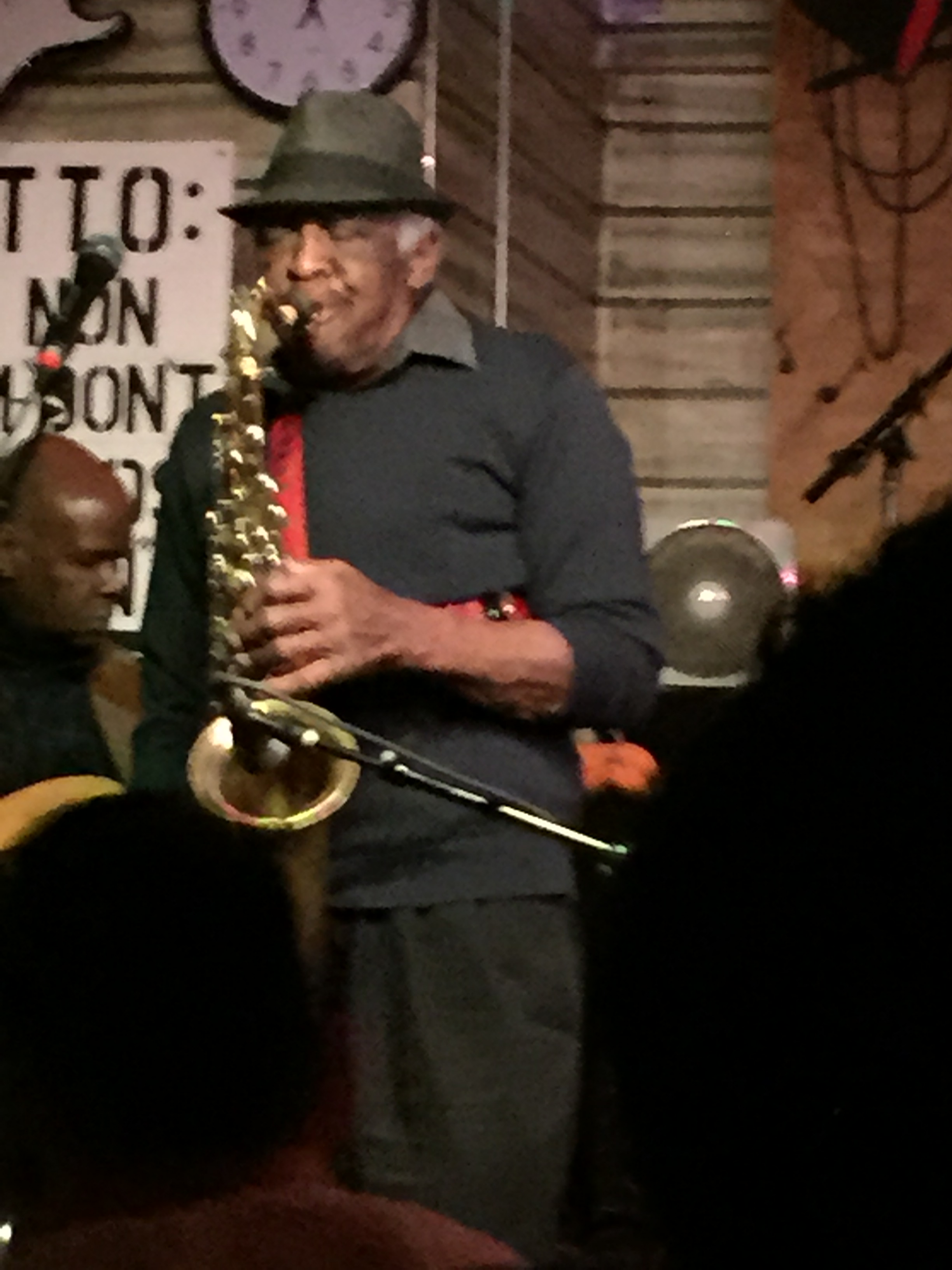
1939 Mel Brown*
1939 Tony Glover*
1939 Colin Cooper*
1962 Scrapper Blackwell+
1966 Smiley Lewis+
1968 Alex Behning*
1979 Josh Smith*
1983 Belton Sutherland+
2012 Wiley Reed+
Donnie Pendleton*
1983 Belton Sutherland+
2012 Wiley Reed+
Donnie Pendleton*
.
Happy Birthday
Mel Brown *07.10.1939

Mel Brown (* 7. Oktober 1939 in Jackson, Mississippi; † 20. März 2009 in Kitchener, Ontario[1]) war ein US-amerikanischer Blues-Gitarrist, Bassist und Pianist.
Brown wuchs in Jackson (Mississippi) auf; frühe Idole waren die Bluesgitarristen B. B. King and T-Bone Walker. Er zog dann nach Los Angeles, wo er seit Ende der 1950er Jahre vorwiegend als Sessionmusiker arbeitete und u.a an Aufnahmen von Bobby Darin, Bill Cosby, aber auch bei T-Bone Walkers Album Funky Town mitwirkte. Ende 1960 ging er mit der Formation The Olympics auf Tournee; dann spielte er zwei Jahre in der Begleitband der Sängerin Etta James; später spielte er auch in der Band von Oliver Nelson (Live from Los Angeles, 1967), Jimmy McGriff (The Starting Five, 1986) oder mit dem West Coast-Bassisten Leroy Vinnegar (Walking the Basses, 1992). Außerdem spielte er in verschiedenen lokalen Blues-Bands.
Im Sommer 1967 entstand auf Jazz-Label Impulse! Records ein erstes Blues-Funk-Album unter eigenem Namen (Chicken Fat), an dem Gerald Wiggins, Herb Ellis, Arthur Wright, Ronald Brown und Paul Humphrey mitwirkten. Es folgten auf Impulse! Alben wie The Wizard, I'd Rather Suck My Thumb und Big Foot Country Gal.
1971 wurde Brown Mitglied der Band des Sängers Bobby „Blue“ Bland, wirkte an dessen California Album (1973) mit. 1979 trat Brown auf dem San Francisco Blues Festival auf. Außerdem arbeitete Brown in dieser Zeit mit Blues-Legenden wie John Lee Hooker und Lightnin' Hopkins; er blieb bis 1982 bei Bland.
Brown arbeitete 1983 in einer Bluesband in Austin, Texas in der Hausband in dem Club Antone's; später begleitete er Musiker wie Buddy Guy, Stevie Ray Vaughan und Clifton Chenier. 1986 wurde er Mitglied von Albert Collins' Band the Icebreakers und wirkte an dessen Album Cold Snap mit; danach arbeitete er weiter im Club Antone's in Austin.
Anfang 1990 zog Brown nach Kitchener, Ontario in Kanada, wo er eine eigene Band gründete, The Homewreckers. Es entstand das Album Neck Bones & Caviar (1999). Im Jahr darauf wurde er mit dem W.C. Handy Award ausgezeichnet. 2001 und 2002 erhielt er den Juno Award. 2006 nahm Brown sein letztes Album auf (Blues: A Beautiful Thing). 2007 erhielt er den Living Blues Award als bester Gitarrist. Im April 2008 stand er ein letztes Mal auf der Bühne; er trat er mit Buddy Guy im Kitchener Ontario. Brown starb im März 2009 an Emphysem-Komplikationen.
Brown vereinte in seinem Stil Elemente des Soul, Funk und Jazz zu einer zeitgenössischen Blues-Spielweise.
Brown was nominated for a Juno Award in both 2001 and 2002. Brown, a long-time smoker, died aged 69, on March 20, 2009, in Kitchener, Ontario, of complications from emphysema.[1][2]
One of his most celebrated tracks is the 11+ minute guitar solo "Eighteen Pounds of Unclean Chitluns", which is on his "I'd Rather Suck My Thumb" LP, and was reissued as the lead track (and title) on a Blueway collection released sometime after the Impulse albums. In 1969-1970, it got quite a bit of airplay on the San Francisco FM rock station, KSAN.
A documentary film, titled "Love Lost & Found: The Story of Mel Brown" directed by Sean Jasmins for Blue Fusion Productions is slated for theatrical release in 2014.
"Crosstown" - Mel Brown

http://en.wikipedia.org/wiki/Koerner,_Ray_%26_Glover
Tony "Little Sun" Glover (born Dave Glover, October 7, 1939, Minneapolis, Minnesota, United States) is an American blues musician and music critic.[1] He is a harmonica player and singer who was most notably associated with "Spider" John Koerner and Dave "Snaker" Ray in the early Sixties Folk Revival. Together, the three released albums under the name Koerner, Ray & Glover. He is also known as author of diverse 'harp song books', and was co-author, along with Ward Gaines and Scott Dirks, of the award-winning Little Walter biography Blues with a Feeling – The Little Walter Story.
Biography
Glover was born in Minneapolis, Minnesota in 1939. As a teenager he performed in various local bands, playing guitar before taking up the blues harp. In 1963 he joined John Koerner and Dave Ray to form the blues trio Koerner, Ray & Glover. From 1963 to 1971, either solo or in some combination of the trio, they released at least one album a year.[2] The group never rehearsed together or did much at all together. Ray referred to the group as "Koerner and/or Ray and/or Glover".[3]
In the late sixties, Glover was an all-night underground disc-jockey on KDWB-AM in Minneapolis before forming the band Nine Below Zero. He also often performed as a duo with Ray and with Koerner, Ray & Glover reunion concerts.[3] In 2007, he produced a documentary video on the trio titled Blues, Rags and Hollers: The Koerner, Ray & Glover Story.
Glover is the author of several blues harp song books, and was co-author, along with Ward Gaines and Scott Dirks, of the award-winning Little Walter biography Blues with a Feeling – The Little Walter Story, published by Routledge Press in 2002.[4]
Glover is a prolific rock critic, having penned articles for the Little Sandy Review (1962–63), Sing Out! (1964–65), Hullabaloo/Circus (1968–71), Hit Parader (1968), Crawdaddy (1968), Eye (1968), Rolling Stone (1968–73), Junior Scholastic (1970), CREEM (1974–76), Request (1990–99), MNBLUES.COM (1999–present) and The Reader and City Pages. He has also authored liner notes for John Hammond, Sonny Terry, John Lee Hooker, Michael Lessac, Sonny & Brownie, Willie & The Bees, The Jayhawks, and The Bootleg Series Vol. 4: Bob Dylan Live 1966, The "Royal Albert Hall" Concert.
Glover has taught harmonica to David Johansen and Mick Jagger.
Biography
Glover was born in Minneapolis, Minnesota in 1939. As a teenager he performed in various local bands, playing guitar before taking up the blues harp. In 1963 he joined John Koerner and Dave Ray to form the blues trio Koerner, Ray & Glover. From 1963 to 1971, either solo or in some combination of the trio, they released at least one album a year.[2] The group never rehearsed together or did much at all together. Ray referred to the group as "Koerner and/or Ray and/or Glover".[3]
In the late sixties, Glover was an all-night underground disc-jockey on KDWB-AM in Minneapolis before forming the band Nine Below Zero. He also often performed as a duo with Ray and with Koerner, Ray & Glover reunion concerts.[3] In 2007, he produced a documentary video on the trio titled Blues, Rags and Hollers: The Koerner, Ray & Glover Story.
Glover is the author of several blues harp song books, and was co-author, along with Ward Gaines and Scott Dirks, of the award-winning Little Walter biography Blues with a Feeling – The Little Walter Story, published by Routledge Press in 2002.[4]
Glover is a prolific rock critic, having penned articles for the Little Sandy Review (1962–63), Sing Out! (1964–65), Hullabaloo/Circus (1968–71), Hit Parader (1968), Crawdaddy (1968), Eye (1968), Rolling Stone (1968–73), Junior Scholastic (1970), CREEM (1974–76), Request (1990–99), MNBLUES.COM (1999–present) and The Reader and City Pages. He has also authored liner notes for John Hammond, Sonny Terry, John Lee Hooker, Michael Lessac, Sonny & Brownie, Willie & The Bees, The Jayhawks, and The Bootleg Series Vol. 4: Bob Dylan Live 1966, The "Royal Albert Hall" Concert.
Glover has taught harmonica to David Johansen and Mick Jagger.
Josh Smith *07.10.1979

Seit Sommer 2008 arbeitet er eng mit dem Grammy-Gewinner, Musiker, Komponisten und Produzenten Raphael Saadiq (Produzent u. a. von Macy Gray, TLC, Joss Stone, John Legend) zusammen und begleitet ihn als Gitarrist auf seinen weltweiten Tourneen. Over Your Head wird das kommende, neue Album von Ausnahmegitarrist Josh Smith heißen, das im Februar 2015 bei CrossCut Records veröffentlicht wird. Gemeinsam mit Calvin Turner, Bass, (Raphael Saadiq, Joe Cocker), Lemar Carter, Drums, (Josh Stone, Raphael Saadiq, Robben Ford) und hochkarätigen Gastmusikern hat Josh Smith elf neue, allesamt selbst geschriebene Songs eingespielt. Das kommende Album besticht durch improvisationsfreudiges Zusammenspiel großartiger Musiker, kommt energiegeladen und rockig daher ... und bleibt doch stets authentisch. Für den Titelsong Over Your Head holte sich Josh Smith mit Joe Bonamassa einen der derzeit weltweit erfolgreichsten Gitarristen ins Studio, um sich mit ihm ein hörenswertes, siebenminütiges Gitarrenduell zu liefern.
Josh Smith was born October 7, 1979 in Middletown, Connecticut. Before he was 1, his family relocated to Florida, eventually settling in Pembroke Pines, a suburb of Fort Lauderdale. At age 3, he received his first guitar and at 6, he started taking guitar lessons.
Josh was exposed to the blues at an early age. He listened to a variety of artists, such as Muddy Waters, B.B. King, Albert King and T-Bone Walker. He also started going to concerts, including the Allman Brothers, Rolling Stones and Bruce Springsteen.
By 12, Josh was playing at established professional blues jams in South Florida, such as Musicians Exchange Café in Fort Lauderdale and Club M in Hollywood, FL.
When Josh was 13, the Rhino Cats, house band at Club M, asked him to be the lead guitarist. Musicians Exchange owner Don Cohen was so taken aback by the talent of this young musician that he offered to help manage and develop Josh’s career.
The Café was renowned for bringing in the best national touring blues bands, and Josh was quick to learn how to approach these blues greats, many of whom would invite Josh to sit in with them, thinking it may be a “novelty” to have a 14-year-old kid playing the blues. The novelty quickly wore off and was replaced by musicians stopping, watching and listening as this “kid” wailed out blues licks better than many of the touring guitarists on the circuit. Josh began sitting in with such greats as Jimmy Thackery, Tinsley Ellis, Kenny Neal, Lucky Peterson, Matt “Guitar” Murphy, Johnny “Clyde” Copeland, Double Trouble, Joanna Connor and Kim Simmonds, among others. Jimmy Thackery said of the 14-year-old, “Josh is three heartbreaks away from being a true blues guitar genius.” At 14, Josh released his first CD, Born Under a Blue Sign, and at 15, he released his second CD, Woodsheddin.
While performing all over South Florida, Josh Smith and the Rhino Cats quickly became one of the most in-demand blues bands in the area. In 1994, while Josh was only 15, they received the Florida Jammy Award for best blues band and were selected as XS Readers Choice Winners in 1995 for best blues band. In 1996, then a senior in high school, Josh was put on the cover of the national magazine High School Senior, which hailed him as an “Up and Coming Guitar Legend.” That same year, Washburn Guitars Int’l recognized Josh’s talent and offered him an endorsement. They flew Josh to Chicago and guitar luthier Grover Jackson built him a custom guitar.
Although Josh was an honor student, after graduation from high school in June 1997, Josh followed his heart and began pursuing what he was best at. His first national tour ensued with his newly formed power trio, Josh Smith and the Frost. Josh was now the band leader and vocalist, so he not only had to continue developing his guitar chops, but had to concentrate on his vocal prowess. In September 1997, Josh enlisted world-renowned producer Jim Gaines, whose credits include Santana, Stevie Ray Vaughn, Luther Allison, Steve Miller and Jimmy Thackery, to produce his third CD, Too Damn Cold.
By 1998, Josh had completed four national tours with his band. In January 1998, Billboard Magazine took note of the rising young talent in a Continental Drift article. In February 1998, Josh was asked to support B.B. King on a number of theatre dates. In March 1998, the TV show Chicago Hope purchased the rights to the tune “32 degrees” from Too Damn Cold. An international CD release, The Mentos Freshmaker Tour, included the title cut, “Too Damn Cold,” in the spring of 1998.
Josh toured nationally all of 1999 and in October of that year, he entered the recording studio again with Jim Gaines and produced Woman, his fourth CD. This CD was released and well received in the spring of 2000. Josh continued to tour the East Coast from New York to Florida through 2001 with his band. In June 2002, he married and he and his wife decided to move to Los Angeles. Josh was ready for something new and wanted to be around a variety of musicians. He also began being a sideman.
Within a year of moving to L.A., he was retained by Virgin recording artist Ricky Fante. He played nationally and internationally with Ricky for the next two years.
In May 2006, Josh recorded his fifth CD, Deep Roots. A more traditional blues CD, his music was once again well received by Blueswax and Blues Revue magazine. Josh continued to play with a variety of artists, such as actress Taryn Manning, Universal hip-hop artist Benny Cassette and Tara Ellis, to name a few. In January 2007, Josh was hired by 2006 American Idol winner Taylor Hicks to be his lead guitarist. They completed two national tours from February-September 2007 with monthly dates and charity events until June 2008 when Taylor started Grease! on Broadway. In July 2008, Josh was hired by Raphael Saadiq. Since that time, Josh has played such high profile gigs with Raphael as backing Mick Jagger at the Grammy Awards in 2011 and the Kennedy Center Honors in December 2011. Josh continues to tour nationally and internationally with Raphael.
Josh released his 6th studio CD, “Inception,” in 2009. This is an all-instrumental CD with a variety of genres that was once again well received by the public and critics alike.
In 2010, Josh was signed to Crosscut Records, a label based out of Germany. Crosscut re-released Josh’s CD, “Deep Roots,” as “I’m Gonna Be Ready.” In October 2012, Josh’s CD, “Don’t Give Up On Me,” was released in Germany.
Josh continues to live in the Los Angeles area with his wife and two children.
Josh Smith and Bruce Forman - Bemsha Swing
Josh Smith in Chicago w/ Pete Galanis at Rosa's Blues Lounge
Colin Cooper *07.10.1939

Colin Cooper (* 7. Oktober 1939 in Stafford; † 3. Juli 2008 ebenda) war ein britischer Sänger und Multiinstrumentalist. Er war Gründungsmitglied der Climax Blues Band.
Biografie
Mit zwölf Jahren lernte Cooper das Mundharmonikaspielen, mit 16 wechselte er auf Klarinette um. Anschließend lernte er Gitarre. Er spielte in mehreren lokalen Schulbands und gründete dann 1963 die Climax Jazz Band. Seine erste Veröffentlichung ist die Single Can’t Let Her Go b/w Make Her Mine mit der Mod-Band Hipster Image, die 1965 auf Decca Records veröffentlicht wurde. Er sang und spielte Saxophon. Das Lied der B-Seite wurde 1999 für einen Levi’s-Spot in Japan benutzt.
1967 gründete er die Climax Blues Band und spielte mit ihnen bis zu seinem Tode. In ihrer Karriere veröffentlichten sie 18 Alben und hatten zwei Hit-Singles. Er war einziges Originalmitglied der von Line-up-Wechseln geplagten Band. Am 3. Juli 2008 verstarb Cooper an den Folgen einer Krebserkrankung.
Colin’s interest in music was ignited at a young age and continued to be the major influence in his life. At the age of 29 he became a professional musician after holding down a regular job as a Metallurgist for a number of years.
Growing up in Stafford, England in the 1950’s, he began playing the harmonica before switching to the clarinet. He then expanded his musical repertoire by teaching himself the saxophone and guitar. His love of music permeated his whole life. He played, practiced and sang every day until his untimely death in 2008. Although his musical interests and influences changed over the years, as can be seen through Climax Blues Band’s 19 albums, he remained loyal to his greatest musical love – the Blues. By the time of Colin’s death in 2008 he had a 40-year history of making music and playing to audiences around the world.
In the early 1960’s, while in his mid-twenties and working full-time, Colin formed Colin Cooper’s Climax Jazz Band. The group played regular gigs in the local area and undertook a tour of the South of France, an experience that influenced him greatly. During that early period of his career, Cooper also worked with the 60’s mod band The Hipster Image. This band was produced by Alan Price and had hits with, ‘Can’t let her go’ and ‘Make her mine’ (the latter was successfully used in a recent Levi advert in Asia).
Alongside this, Colin then began doing blues sessions as well as jazz sessions at a local pub. This shift in focus became the impetus for the Climax Chicago Blues Band, which over the years became Climax Blues Band (the new band grew directly from those early days and even retained the logo Colin designed back in the early 60’s). The band became one of the leading lights of the 1960’s Blues Boom.
Colin loved to play live and, as the success of the band grew, he moved on from playing local pubs and clubs. By the mid 70’s Climax Blues Band was drawing huge crowds in the States while continuing to have a loyal following in the UK and in Europe. Alongside the live success the band found increasing commercial success with their studio work. By 1979 they had 11 albums to their name.
During the 70’s the band was increasingly influenced by the music of the time and Colin was influential in shifting the band’s emphasis into a slicker style, clearly influenced by contemporary soul and funk. This shift led to Climax Blues Band performing alongside bands such as Sly and the Family Stone and War.
The releases Stamp album and Gold Plated brought greater commercial success for the group. Cooper’s distinctive vocals were crucial to the mainstream success of Couldn’t Get it Right (1978), a big hit on both sides of the Atlantic. The record was later successfully covered by The Fun Lovin’ Criminal’s in 1999. Following the achievement of that single the band flirted with producing new music that intended to court increasing commercial recognition, however Colin’s love of the blues remained.
After the departure of some band members in early 1980’s, Colin once again returned to the blues in his everyday work. He refocused the group and re-established them in the UK and across Europe. His continued enthusiasm for, and focus on, live performance led to a well-received concert album Blues from the Attic (1994) and in 2003 the band issued Big Blues (the Songs of Willie Dixon). He did however guest on the Steel Pulse album African Holocaust performing on two tracks of this legendary roots reggae band.
Throughout this period Colin continued to listen to and research the Blues, while also working alone and making solo recordings of the tracks that had influenced and inspired him musically. These ‘lost’ tapes were a personal project and a labour of love over a period of 14 years. Since his untimely death they have been collated and re mastered. This previously unreleased work demonstrates Colin’s unique vocal style, accomplished musicianship and deep knowledge of the music he loved.
Growing up in Stafford, England in the 1950’s, he began playing the harmonica before switching to the clarinet. He then expanded his musical repertoire by teaching himself the saxophone and guitar. His love of music permeated his whole life. He played, practiced and sang every day until his untimely death in 2008. Although his musical interests and influences changed over the years, as can be seen through Climax Blues Band’s 19 albums, he remained loyal to his greatest musical love – the Blues. By the time of Colin’s death in 2008 he had a 40-year history of making music and playing to audiences around the world.
In the early 1960’s, while in his mid-twenties and working full-time, Colin formed Colin Cooper’s Climax Jazz Band. The group played regular gigs in the local area and undertook a tour of the South of France, an experience that influenced him greatly. During that early period of his career, Cooper also worked with the 60’s mod band The Hipster Image. This band was produced by Alan Price and had hits with, ‘Can’t let her go’ and ‘Make her mine’ (the latter was successfully used in a recent Levi advert in Asia).
Alongside this, Colin then began doing blues sessions as well as jazz sessions at a local pub. This shift in focus became the impetus for the Climax Chicago Blues Band, which over the years became Climax Blues Band (the new band grew directly from those early days and even retained the logo Colin designed back in the early 60’s). The band became one of the leading lights of the 1960’s Blues Boom.
Colin loved to play live and, as the success of the band grew, he moved on from playing local pubs and clubs. By the mid 70’s Climax Blues Band was drawing huge crowds in the States while continuing to have a loyal following in the UK and in Europe. Alongside the live success the band found increasing commercial success with their studio work. By 1979 they had 11 albums to their name.
During the 70’s the band was increasingly influenced by the music of the time and Colin was influential in shifting the band’s emphasis into a slicker style, clearly influenced by contemporary soul and funk. This shift led to Climax Blues Band performing alongside bands such as Sly and the Family Stone and War.
The releases Stamp album and Gold Plated brought greater commercial success for the group. Cooper’s distinctive vocals were crucial to the mainstream success of Couldn’t Get it Right (1978), a big hit on both sides of the Atlantic. The record was later successfully covered by The Fun Lovin’ Criminal’s in 1999. Following the achievement of that single the band flirted with producing new music that intended to court increasing commercial recognition, however Colin’s love of the blues remained.
After the departure of some band members in early 1980’s, Colin once again returned to the blues in his everyday work. He refocused the group and re-established them in the UK and across Europe. His continued enthusiasm for, and focus on, live performance led to a well-received concert album Blues from the Attic (1994) and in 2003 the band issued Big Blues (the Songs of Willie Dixon). He did however guest on the Steel Pulse album African Holocaust performing on two tracks of this legendary roots reggae band.
Throughout this period Colin continued to listen to and research the Blues, while also working alone and making solo recordings of the tracks that had influenced and inspired him musically. These ‘lost’ tapes were a personal project and a labour of love over a period of 14 years. Since his untimely death they have been collated and re mastered. This previously unreleased work demonstrates Colin’s unique vocal style, accomplished musicianship and deep knowledge of the music he loved.
The Climax Blues Band (originally known as the Climax Chicago Blues Band) are a British blues rock band. The band was formed in Stafford, England in 1968 by vocalist and harmonica player Colin Cooper (1939-2008), guitarist and vocalist Pete Haycock (1951-2013), guitarist Derek Holt (b. 1949), bassist and keyboardist Richard Jones (b. 1949), drummer George Newsome (b. 1947), and keyboardist Arthur Wood (1929-2005).[1]
History
In 1972 the group shortened its name to the Climax Blues Band due to pressure from the American band Chicago Transit Authority.[citation needed] The band has released at least 17 albums and had a Top 10 hit in the UK with "Couldn't Get It Right".[2] That song and "I Love You" were American hits as well; "Couldn't Get It Right" reached No. 3 on the Billboard Hot 100 in 1977, and "I Love You" peaked at No. 12 in 1981.[3]
Jones left the group in 1969, so Holt switched to bass. They switched to Harvest Records in 1970 and their records had a more rock-oriented feel.[4] John Cuffley replaced Newsome in 1971. In 2006 George Newsome teamed up with Wolverhampton blues rock guitarist Tim Jenks. He has since recorded 2 albums with Jenks, "Tear Down the Walls" in 2008 a collection of original material by Jenks and more recently "Realms of Glory" a collection of both original and traditional Christmas songs. Newsome continues to drum with Jenks on regular basis around Wolverhampton's local pub blues rock scene. When Wood quit in 1972, the group decided to continue as a foursome and dropped "Chicago" from their name.[1]
Albums issued in the 1970s include FM/Live (1974), a double set recorded at a concert in New York,[5] and studio albums Stamp Album (1975), and Gold Plated (1976), featuring the single "Couldn't Get It Right". In the 1970s, their concerts in the U.S. were attended by up to 20,000 people.[6] By 1981 the band was moving towards a pop-rock sound.[6] Holt and Cuffley left in 1983.
Major League Productions (MLP) record label released an until then unknown vault recording of a 1976 live performance, Climax Blues Band/World Tour 1976.
When it came time to record 1983's Sample and Hold album on Virgin Records, Pete Haycock, Colin Cooper, George Glover,and Session rhythm section Dave Marquee and Henry Spinetti were holding down the fort.[7] A follow-up album was in the works, but Cooper bowed out, citing personal reasons. Haycock went on to record several solo projects, first of which was an album entitled Total Climax, which was recorded by his band, Pete Haycock's Climax. Pete Haycock's Climax toured extensively in Europe, including Communist East Germany, as well as a well-received tour in Australia. After that, Pete was asked by his former Climax Blues Band manager, Miles Copeland, to record an instrumental album for the I.R.S. No Speak label entitled Guitar and Son, as well as the Night of the Guitars live album (from the tour of the same name)[8] After that tour, Haycock teamed up with fellow guitarist Steve Hunter and former Climax Blues bandmate, Derek Holt, to record an album under the name, H Factor. He was later recruited by Bev Bevan as a member of Electric Light Orchestra Part II when they recorded and toured from 1990 onwards. He also started his film score career at this time by playing the lead on Hans Zimmer's score to Thelma and Louise, as well as performing on the Night Of The Guitars tours which also featured Derek Holt on bass, keys and occasional vocals.
Derek Holt penned "I Love You," which was one of the Climax Blues Band's biggest hits.[9] It can be found on the Climax Blues Band double album, 25 Years 1968-1993 which was released by the German record label Repertoire in 1993. "I Love You" still gets over 20,000 radio hits a year in the U.S. and has recently been included in Finn Taylor's 2002 film Cherish, and in Kevin Smith's 2008 film Zach and Miri Make a Porno. Holt released six solo albums - I Love You, After the Climax, Sunflowers, Hear and Now, Paradise Lost and Full Circle.
"Couldn't Get It Right" was covered by the Fun Lovin' Criminals on their album Mimosa.[9] Holt revealed in an interview that the song was "about being on the road in America".[10]
In 1985 Cooper and Glover recruited guitarist Lester Hunt, drummer Roy Adams, and original member Derek Holt to record the Climax Blues Band album Drastic Steps, and this lineup toured the album in the UK, Europe and America.[6] The new lineup soon became established with Colin Cooper, George Glover, Lester Hunt, Roy Adams and Neil Simpson in the early 1990s, releasing the live album Blues from the Attic in 1993 and Big Blues in 2004.[1][11]
Cooper died of cancer, aged 69, in July 2008.[6] He is survived by his wife and two children.[9] Cooper desired for the band to continue with his wishes, as the other musicians within the band had all been longserving; with George Glover serving since 1980, Roy Adams and Lester Hunt since 1985, and Neil Simpson since 1991, respectively. Cooper was originally replaced by singer, saxophone and harmonica player Johnny Pugh, who retired in 2012, and later by vocalist Graham Dee and saxophone player Chris Aldridge. The band still continues to perform with this latest lineup to the present day.
Haycock died on October 30, 2013, of a heart attack aged 62.
History
In 1972 the group shortened its name to the Climax Blues Band due to pressure from the American band Chicago Transit Authority.[citation needed] The band has released at least 17 albums and had a Top 10 hit in the UK with "Couldn't Get It Right".[2] That song and "I Love You" were American hits as well; "Couldn't Get It Right" reached No. 3 on the Billboard Hot 100 in 1977, and "I Love You" peaked at No. 12 in 1981.[3]
Jones left the group in 1969, so Holt switched to bass. They switched to Harvest Records in 1970 and their records had a more rock-oriented feel.[4] John Cuffley replaced Newsome in 1971. In 2006 George Newsome teamed up with Wolverhampton blues rock guitarist Tim Jenks. He has since recorded 2 albums with Jenks, "Tear Down the Walls" in 2008 a collection of original material by Jenks and more recently "Realms of Glory" a collection of both original and traditional Christmas songs. Newsome continues to drum with Jenks on regular basis around Wolverhampton's local pub blues rock scene. When Wood quit in 1972, the group decided to continue as a foursome and dropped "Chicago" from their name.[1]
Albums issued in the 1970s include FM/Live (1974), a double set recorded at a concert in New York,[5] and studio albums Stamp Album (1975), and Gold Plated (1976), featuring the single "Couldn't Get It Right". In the 1970s, their concerts in the U.S. were attended by up to 20,000 people.[6] By 1981 the band was moving towards a pop-rock sound.[6] Holt and Cuffley left in 1983.
Major League Productions (MLP) record label released an until then unknown vault recording of a 1976 live performance, Climax Blues Band/World Tour 1976.
When it came time to record 1983's Sample and Hold album on Virgin Records, Pete Haycock, Colin Cooper, George Glover,and Session rhythm section Dave Marquee and Henry Spinetti were holding down the fort.[7] A follow-up album was in the works, but Cooper bowed out, citing personal reasons. Haycock went on to record several solo projects, first of which was an album entitled Total Climax, which was recorded by his band, Pete Haycock's Climax. Pete Haycock's Climax toured extensively in Europe, including Communist East Germany, as well as a well-received tour in Australia. After that, Pete was asked by his former Climax Blues Band manager, Miles Copeland, to record an instrumental album for the I.R.S. No Speak label entitled Guitar and Son, as well as the Night of the Guitars live album (from the tour of the same name)[8] After that tour, Haycock teamed up with fellow guitarist Steve Hunter and former Climax Blues bandmate, Derek Holt, to record an album under the name, H Factor. He was later recruited by Bev Bevan as a member of Electric Light Orchestra Part II when they recorded and toured from 1990 onwards. He also started his film score career at this time by playing the lead on Hans Zimmer's score to Thelma and Louise, as well as performing on the Night Of The Guitars tours which also featured Derek Holt on bass, keys and occasional vocals.
Derek Holt penned "I Love You," which was one of the Climax Blues Band's biggest hits.[9] It can be found on the Climax Blues Band double album, 25 Years 1968-1993 which was released by the German record label Repertoire in 1993. "I Love You" still gets over 20,000 radio hits a year in the U.S. and has recently been included in Finn Taylor's 2002 film Cherish, and in Kevin Smith's 2008 film Zach and Miri Make a Porno. Holt released six solo albums - I Love You, After the Climax, Sunflowers, Hear and Now, Paradise Lost and Full Circle.
"Couldn't Get It Right" was covered by the Fun Lovin' Criminals on their album Mimosa.[9] Holt revealed in an interview that the song was "about being on the road in America".[10]
In 1985 Cooper and Glover recruited guitarist Lester Hunt, drummer Roy Adams, and original member Derek Holt to record the Climax Blues Band album Drastic Steps, and this lineup toured the album in the UK, Europe and America.[6] The new lineup soon became established with Colin Cooper, George Glover, Lester Hunt, Roy Adams and Neil Simpson in the early 1990s, releasing the live album Blues from the Attic in 1993 and Big Blues in 2004.[1][11]
Cooper died of cancer, aged 69, in July 2008.[6] He is survived by his wife and two children.[9] Cooper desired for the band to continue with his wishes, as the other musicians within the band had all been longserving; with George Glover serving since 1980, Roy Adams and Lester Hunt since 1985, and Neil Simpson since 1991, respectively. Cooper was originally replaced by singer, saxophone and harmonica player Johnny Pugh, who retired in 2012, and later by vocalist Graham Dee and saxophone player Chris Aldridge. The band still continues to perform with this latest lineup to the present day.
Haycock died on October 30, 2013, of a heart attack aged 62.
Climax Blues Band - Couldn't Get It Right (Top of the Pops)
Donnie Pendleton *07.10.

Donnie Pendleton started playing guitar at age 9 while living in West Texas. Back then, Donnie's mother sang in a popular Texas country band and he grew up around country music legends like Bob Wills & The Texas Playboys and Ernest Tubb. His mother would bring him onstage for guest appearances and he played songs like "Johnny B. Goode" and "Kansas City" and the crowds really loved it.
In junior high, Donnie won his first talent show at Meadow Brook Middle School in Ft. Worth, Texas and he soon got an offer to play in a novelty act called, "STACY PFEIL AND THE COUNTRY GEMS" who were an all-kid band with an eight year old female vocalist. They played shows at The State Fair of Texas, Six Flags Over Texas, Seven Seas (Sea World), and many more places. Donnie's band mates in the Country Gems also turned him on to Rock and Roll .... and this is when his passion for music really ignited.
In high school Donnie started his own band called, "COBALT". They covered bands like Judas Priest, Triumph, Rush and Black Sabbath. They gained a lot of experience and made plenty of mistakes. They played parties and then the band graduated to playing clubs, resorts, and even at Air Force bases.
In the early 1980's Donnie hooked up with some players in Dallas and it was awesome. This band was named "KEEPER". As his confidence level grew, he started pestering some of the bigger bands to sit in with them and one night in Waco, Texas he lucked out and got to jam with Texas rockers "BLACKHORSE" and had a great time indeed. It was totally different than anything he had ever done before and Donnie got the opportunity to really let go and express himself musically.
Blackhorse was a regional touring band that already had an album out and they played big shows all over Texas, Oklahoma and Louisiana. What he didn't realize at the time was that the band was on the verge of changing not only its name but its entire image. He joined Blackhorse. The band was already in the studio working on their debut album as THE CAUZE, so he became an original member of this new incarnation.
The Cauze signed to USA Records International. Their self titled release came out in 1984 and sold over 60,000 copies within the first 8 weeks. The band also released a video via the label called "No Way" which received airplay on MTV and VH1. THE CAUZE toured the U.S., opening for bands in large venues. They also toured with the world renown wrestlers Kevin and Kerry Von Erich, playing a 30 minute show right before the main events.
While in the Cauze, Donnie got an offer to play bass in a band called "RAFFERTY RULE". Their management made him an offer he couldn't refuse, so he quit The Cauze and joined up with the new act. Donnie helped them finish final production on their debut release "HARD TIMES EASY". This band played shows with bands like HELIX and MOLLY HATCHETT. During this time, RAFFERTY RULE’s management asked him to help produce some acts in the studio. Donnie decided to take a shot at it. In the mid to late 80's, Donnie was involved in the production of three acts, one of which was Ricky Lynn Gregg. Ricky was changing his style from Rock to Country and Donnie was involved with the demo which helped Ricky get signed to LIBERTY RECORDS. When Ricky went Country, his rock and roll band mates were left behind so Donnie moved to East Texas and joined them. These guys were fantastic players who had been all over so FOURPLAY was born, later to become the U.S.LORDS. This band played with everyone from ALDO NOVA to STARSHIP and won every "BATTLE OF THE BANDS" competition they entered. Donnie stayed in that band for over thirteen years, gaining an endorsement with JACKSON GUITARS during that time.
Thirteen years is a long time however nothing lasts forever. Afterwards Donnie started his own recording studio and helped up and coming bands get started while also hosting a jam on Sundays at MOM'S BIKER BAR in Longview, Texas. Donnie played in several different bands during that time while trying to find that special something. Mom's is where Donnie met Alan Fox, an East Texas blues guitarist. They appeared together at a bike rally and have been together ever since.
Donnie was nominated for and received the award for "2012 Guitarist Of The Year" at The East Texas Music Awards and also received a surprising guitar endorsement from Goulding Lindsay Wilson Guitars in 2013.
Along with new music on the horizon with AFB, Donnie also appeared, engineered and produced the theme song "Your Tough Love" for the movie "Tough Love", directed by Curtis French.
Also in 2013, Donnie was nominated for and received the award for "Guitarist of the Year" from the Los Angeles Music Awards.

Waxahachie Whirlwind The Alan Fox Band
Alex Behning *07.10.1968

Alex Behning (* 7. Oktober 1968 als Alexander Friedrichs in Wilster) ist ein deutscher Sänger und Songwriter/Liedermacher.
Leben
Behning war Sänger und Songwriter der Hamburger Band Neulich, mit der er Preise wie den John Lennon Talent Award oder die VW-Soundfoundation gewann. Er überzeugte Fachleute aus der Musikindustrie von Smudo (Die Fantastischen Vier), Edo Zanki bis Klaus Meine (Scorpions) und spielte u. a. Auftritte bei der Popkomm, dem Taubertal Festival, im Vorprogramm von Gentleman, Liquido, den Bananafishbones und einen Live-Fernsehauftritt bei GIGA TV.
Als Künstler arbeitete er mit Frank Bornemann (Eloy), Dirk Riegner (Guano Apes, Him) und Modo Bierkamp (Die Prinzen, Donots). Mit einer weiteren Band namens "EDDIE E" (mit Marco Schmedtje, Georg Schröder und Arne Jens) trat er u. a. beim Wacken Open Air auf.
Sein 2014 erschienenes Blues-Folk-Album Hinterhofschuhe aus New York ist zweifach nominiert für den Preis der deutschen Schallplattenkritik, der Song Abfahrt nach Liverpool schaffte es auf Platz 1 der deutschen Liederbestenliste.
Am 07. Oktober 2016 veröffentlicht Alex Behning sein neues Album "Trickster und Propheten".
https://de.wikipedia.org/wiki/Alex_Behning
Provinzialität muss kein Schimpfwort sein. Alexander Friedrichs, der sich für die Bühne den nicht weniger bürgerlich klingenden Künstlernamen Alex Behning verpasst, liebt die Provinz. Aus seiner Wahlheimat Konstanz am Bodensee heraus singt er Lieder über die stillen, nachdenklichen, melancholischen Momente des Lebens.
Dabei scheint die Grenze am Horizont sehr bewusst gewählt. Denn als 2014 sein Solodebüt mit dem reichlich sperrigen Namen erscheint, hat der Jahrgang 1968 bereits etliche Musikerfahrung auf dem Gepäckträger. So gewinnt der gebürtige Wilsteraner (ein Vorort des norddeutschen Itzehoe) mit seiner ersten Band Neulich Auszeichnungen wie den John Lennon-Talent Award und tritt im Rahmen der VW Soundfoundation auf.
Über die Jahre ist Alexander mit Neulich, Behning Und Die Renaissance, Eddie E sowie Wilster Ortseinfahrt an zahlreichen Spielorten des Landes vertreten. Auch auf der Popkomm oder im Vorprogramm von Liquido und Bananafishbones findet er sich. Diverse Alben erscheinen in der Folge der LP-Premiere mit Neulich ("Raushörer", 2001). Doch der große Durchbruch, der lässt trotz alledem auf sich warten.
Aber wie gesagt - auf den schielt der nebenberufliche Tontechniker und Produzent mutmaßlich auch gar nicht wirklich. "Ich spiele eine Mischung aus Folk, Blues und Country mit deutschen Texten", sagt er kurz und bündig. Für den Liedermacher Alex Behning ist Sprache schlicht und ergreifend das direkteste Mittel, um Menschen zu erreichen.
"Ich bin geprägt von Musikgrößen wie Bob Dylan, John Lee Hooker oder Van Morrison. Doch neben diesen Giganten fühlt man sich schnell wie ein Erstklässler, der versucht dahinter zu kommen, wie sie ihren Sound prägen." Bescheidenheit prägt auch sein Spiel an Folkgitarre und Mundharmonika. Das gefällt wiederum hinreichend Menschen so gut, dass sie "Hinterhofschuhe Aus New York" via Crowdfunding finanzieren.
http://www.laut.de/Alex-Behning
Alex Behning - Hinterzimmerferngespräch [Blues]
R.I.P.
Scrapper Blackwell +07.10.1962

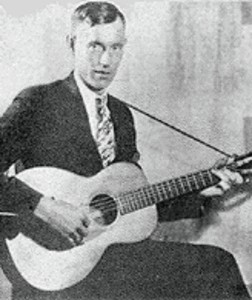
Francis Hillman "Scrapper" Blackwell (* 21. Februar 1903 in Syracuse, North Carolina; † 7. Oktober 1962 in Indianapolis) war ein US-amerikanischer Blues-Gitarrist, der vor allem als Partner von Leroy Carr bekannt wurde.
Nach eigenen Angaben hatte Scrapper Blackwell Cherokee-Vorfahren. Als Kind kam er mit seiner Familie nach Indianapolis, wo er die meiste Zeit seines Lebens verbrachte. Er brachte sich das Gitarrespielen selbst bei, beeinflusst von Blues-Aufnahmen vor allem von Blind Lemon Jefferson.
Blackwell war ein Freizeitmusiker, ein ausgezeichneter Gitarrist, der einen eigenen Stil entwickelt hatte. Seinen Lebensunterhalt verdiente er sich hauptsächlich durch Alkoholschmuggel. Der Pianist Leroy Carr hatte einige Mühe, Blackwell 1928 zu gemeinsamen Aufnahmen zu überreden. Unter den ersten Aufnahmen des Duos war How Long How Long Blues, das ein Hit wurde. Bis zu Carrs Tod 1935 folgten viele weitere Aufnahmen des Duos.
Scrapper Blackwell spielte auch mit anderen Partnern, etwa Georgia Tom Dorsey oder Black Bottom McPhail. Daneben machte er Soloaufnahmen. Sein bekanntester Titel dürfte Kokomo Blues sein, das von Kokomo Arnold zu Original Old Kokomo Blues verarbeitet wurde, woraus Robert Johnson schließlich Sweet Home Chicago machte.
Nach Carrs Tod zog sich Blackwell gänzlich aus der Musikszene zurück. Erst 1959 wurde er von Duncan Scheidt wiederentdeckt und zu neuen Aufnahmen überredet. 1962 starb Scrapper Blackwell bei einer Schießerei in Indianapolis.
Francis Hillman "Scrapper" Blackwell (February 21, 1903[1] – October 7, 1962[2]) was an American blues guitarist and singer; best known as half of the guitar-piano duo he formed with Leroy Carr in the late 1920s and early 1930s, he was an acoustic single-note picker in the Chicago blues and Piedmont blues style, with some critics noting that he veered towards jazz.
Biography
Blackwell was born in Syracuse, South Carolina, as one of sixteen children of Payton and Elizabeth Blackwell. Part Cherokee, he grew up and spent most of his life in Indianapolis, Indiana. Blackwell was given the nickname, "Scrapper", by his grandmother, due to his fiery nature.[3] His father played the fiddle, but Blackwell was a self-taught guitarist, building his first guitar out of cigar boxes, wood and wire. He also learned the piano, occasionally playing professionally. By his teens, Blackwell was a part-time musician, traveling as far as Chicago. Known for being withdrawn and hard to work with, Blackwell established a rapport with pianist Leroy Carr, whom he met in Indianapolis in the mid-1920s, creating a productive working relationship. Carr convinced Blackwell to record with him for the Vocalion label in 1928;[4] the result was "How Long, How Long Blues", the biggest blues hit of that year.
Blackwell also made solo recordings for Vocalion, including "Kokomo Blues" which was transformed into "Old Kokomo Blues" by Kokomo Arnold before being redone as "Sweet Home Chicago" by Robert Johnson. Blackwell and Carr toured throughout the American Midwest and South between 1928 and 1935 as stars of the blues scene, recording over 100 sides. "Prison Bound Blues" (1928), "Mean Mistreater Mama" (1934), and "Blues Before Sunrise" (1934) were popular tracks.[4]
Blackwell made several solo excursions; a 1931 visit to Richmond, Indiana to record at Gennett studios is notable. Blackwell, dissatisfied with the lack of credit given his contributions with Carr, was remedied by Vocalion's Mayo Williams after his 1931 breakaway. In all future recordings, Blackwell received equal credit with Carr in terms of recording contracts and songwriting credits. Blackwell's last recording session with Carr was in February 1935 for the Bluebird label. The recording session ended bitterly, as both musicians left the studio mid-session and on bad terms, stemming from payment disputes. Two months later Blackwell received a phone call informing him of Carr's death due to heavy drinking and nephritis. Blackwell soon recorded a tribute to his musical partner of seven years ("My Old Pal Blues") before seemingly retiring from the music industry.[4]
Blackwell returned to music in the late 1950s and was first recorded in June 1958 by Colin C. Pomroy (those recordings were released as late as 1967 on the Collector label). Soon afterwards he was recorded by Duncan P. Schiedt for Doug Dobell's 77 Records.
Scrapper Blackwell was then recorded in 1961, in Indianapolis, by a young Art Rosenbaum for the Prestige/Bluesville Records label. The story is recounted by Rosenbaum as starting three years before the recordings were made. While still growing up in his hometown of Indianapolis, an African American woman that Rosenbaum knew said he "had to meet a man that she knew, who played guitar, played blues and christian songs, they'll make the hairs stand up on the back of your neck." Rosenbaum goes into more details of meeting Blackwell; "I met the gentleman across the street from the Methodist hospital in Indianapolis". Scrapper's friend said, "well he hasn't got a guitar", so Art said "well I got a guitar." Scrapper than said that he needed some 'bird food', with Rosenbaum being confused as to what he was referring to, Scrapper continued, "you gotta get some bird food for the bird, before the bird sings... beer!" Rosenbaum said, "I'm too young!" Scrapper and his friend continued, "we'll buy the beer, you just give us some money." Art concludes the meeting, "So we did, and he started playing these beautiful blues. I didn't realize he was Scrapper Blackwell til I mentioned his name to a blues collecting friend." To which then the friend exclaimed, "you met Scrapper Blackwell!?"
He was ready to resume his blues career when he was shot and killed during a mugging in an Indianapolis alley. He was 59 years old. Although the crime remains unsolved, police arrested his neighbour at the time for the murder. Blackwell is buried in New Crown Cemetery, Indianapolis.
'Kokomo Blues' SCRAPPER BLACKWELL (1928) Guitar Hero Legend Of Blues
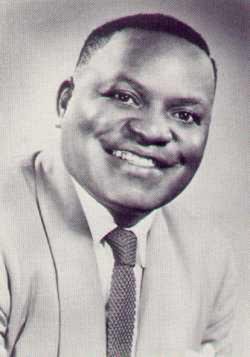
Als Jugendlicher ging Lewis nach New Orleans, um dort Musik zu machen. Lewis - ein guter Gitarrist - trat ab 1946 als Trio mit dem Pianisten Tuts Washington und dem Schlagzeuger Herman Seal auf. „Wir waren das heißeste Trio in der Stadt und spielten in allen wichtigen Clubs im French Quarter“, erinnert sich Tuts.[1] Das blieb DeLuxe Records nicht verborgen, und so lud man das Trio im Jahre 1947 zu einem Aufnahmetest ein. Das Ergebnis war Turn On Your Volume Babe / Here comes Smiley (DeLuxe 1099), das im Oktober 1947 erschien. Mit Love Is Like a Gamble / Swimming Blues (DeLuxe 1108) kam im November 1947 die Nachfolgesingle heraus, beide tituliert als „Smiling Lewis“. Beide Songs - noch ohne Hitparadenresonanz - wurden übrigens von Leo Franks, einem Barkeeper aus dem French Quarter, komponiert.[2] Beide Singles zeigen den typischen Boogie-Woogie-Piano-Sound von Tuts Washington und die volle Shout-Stimme von Lewis. DeLuxe verlor danach das Interesse an Lewis.
Smiley Lewis bekam seine nächste Chance im März 1950, als der Interpret und Produzent Dave Bartholomew auf ihn aufmerksam wurde. Bartholomew hatte gerade Fats Dominos erste Single The Fat Man produziert und lud Lewis mit seiner Band zu einer Session ins Studio von Cosimo Matassa ein. Mit der Studio-Band als Begleitung entstand im März 1950 Tee Nah Nah / Lowdown (Imperial 5067). Der Titel verhalf ihm zum Durchbruch. Er vergrößerte seine Band um Joe Harris (Saxophon), Albert Fernandez (Trompete), James Provost (Bass) und Buddy Williams (Schlagzeug). Im Mai berichtete sogar Louisiana Weekly kurz über deren Tournee außerhalb der Stadt und dem Musikbox-Erfolg von Tee Nah Nah. Imperial Records beeilte sich deshalb, mit Slide Me Down / Growing Old im Juni 1950 (Imperial 5072) zwei weitere Aufnahmen aus der ersten Studiosession nachzulegen - diesmal ohne Erfolg. Nach ein paar weiteren erfolglosen Singles zahlte sich die Geduld von Imperial Records aus, als Bells Are Ringing im September 1952 mit einer # 10 (R&B-Charts) die erste nationale Hitparadennotiz für Lewis wurde. Die nachfolgende hohe Frequenz weiterer Singleveröffentlichungen fiel wiederum durch, auch Blue Monday vom März 1954. Als sein Label-Kollege Fats Domino den Song nach über zwei Jahren im Dezember 1956 coverte, machte er ihn zur # 1 der R&B-Charts.
Lewis’ größter Erfolg kam erst im Juli 1955 auf den Markt, als I Hear You Knocking (mit Huey Piano Smith auf dem Piano) bis zur # 2 der R&B-Charts vordrang. Es folgten wieder einige Misserfolge, bis er mit One Night (Of Sin) im März 1956 immerhin eine # 11 erreichte. Selbst der Versuch, mit dem Country-Standard You Are My Sunshine zu punkten, misslang. Imperial verlor nun die Geduld und brachte ab 1958 nur noch wenige Smiley-Lewis-Platten auf den Markt. Im September 1960 beendete Imperial Records dann den zehn Jahre bestehenden Plattenvertrag mit Lewis. Sein Produzent und Komponist der meisten Lewis-Titel Dave Bartholomew: „Wir konnten Smiley kommerziell einfach nicht in Fahrt bringen. Er hatte immer das beste Songmaterial, doch außerhalb von New Orleans verkauften sich seine Platten kaum“.[3] In der Tat hatte Lewis nicht mehr als 100.000 Exemplare einer einzigen Single verkaufen können. Lewis stand stets im Schatten seines Label-Kollegen Fats Domino, der einen sehr ähnlichen Musikstil pflegte, im selben Tonstudio aufnahm und die gleiche Begleitband nutzte.
Nach zweimaligem Label-Wechsel landete er schließlich bei Loma Records, wo er unter dem Produzenten Allen Toussaint im Dezember 1965 noch einmal The Bells Are Ringing aufnahm. Bereits krebskrank, kam er kurz darauf ins Krankenhaus, wo er im Oktober 1966 verstarb.
Cover-Versionen
Andere Interpreten erzielten mit einigen Songs von Smiley Lewis wesentlich größere Erfolge. So machte Fats Domino aus Blue Monday einen Crossover-Hit mit # 5 der Pop-Charts. I Hear You Knocking wurde gleich dreimal erfolgreich gecovert. Gale Storms erste Platte schaffte auf Anhieb im Oktober 1955 die # 2 der Pop-Charts hiermit, Fats Domino kam damit im Dezember 1961 auf untere Ränge der US-Pop-Charts (# 67), und im November 1970 gelangte sie in der Fassung von Dave Edmunds zur # 4 in den US-Pop-Charts und sogar zur # 1 in England. Elvis Presley ließ One Night (Of Sin) im Oktober 1958 textlich entschärfen, brachte seine Version, lediglich als One Night tituliert, zu einer US-Pop # 4 und britischen # 1 und erreichte Millionsellerstatus. Shame, Shame, Shame wurde 1957 durch den Hollywoodfilm "Baby Doll" bekannt und 1964 von den Merseybeats aufgenommen.
Overton Amos Lemons (July 5, 1913 – October 7, 1966),[1] known as Smiley Lewis, was an American New Orleans rhythm and blues musician. The journalist Tony Russell, in his book The Blues - From Robert Johnson to Robert Cray, stated "Lewis was the unluckiest man in New Orleans. He hit on a formula for slow-rocking, small-band numbers like 'The Bells Are Ringing' and 'I Hear You Knocking' only to have Fats Domino come up behind him with similar music more ingratiatingly delivered. Lewis was practically drowned in Domino's backwash."[2]
Life and career
Overton Amos Lemons was born in DeQuincy, Louisiana, United States, a rural hamlet near Lake Charles, to Jeffrey and Lillie Mae Lemons. He was the second of three sons.[3] His mother died while he was a child, and later Lewis named a song[4] and several automobiles after her. In his mid-teens, he hopped onto a slow-moving freight train with some friends, who jumped off when the train began to speed up. Lewis alone remained on the train, getting off when it reached its stop in New Orleans. He found boarding with a Caucasian family in the Irish Channel, eventually adopting their surname of Lewis.[5]
He began playing clubs in the French Quarter and "Tan bars" in the 7th Ward, at times billed as Smiling Lewis, a variation of the nickname earned by his lack of front teeth, and often accompanied by pianist Isidore "Tuts" Washington, whom he spent the mid-1930s with in Thomas Jefferson's Dixieland band. When the band dissolved, Lewis turned to going from one club to another, playing gigs for only tips.[6]
Lewis married Leona Robinson in 1938, the couple living with her mother until they began having children, when they moved to South Tonti Street while Lewis spent the daytime hours working odd manual labor jobs and the nights singing. During World War II, he joined Washington again, this time with Ernest "Kid" Mollier's band entertaining soldiers stationed at Fort Polk outside of Bunkie, Louisiana while also serving as the house band at the Boogie Woogie Club. The two formed a trio with drummer Herman Seals after the war ended, and again began playing the French Quarter and down Bourbon Street.
An invitation by David Braun to record a session with his DeLuxe Records followed in 1947 for the trio and resulted in the release of his debut record, Here Comes Smiley,[7] though Papa John French replaced Seals and played bass. The single "Turn On Your Volume" was a hit in local jukeboxes, but DeLuxe requested no more material and even left two other recorded sides unreleased. An invitation by Dave Bartholomew, who grew up in the same neighborhood as Lewis and was then beginning a production career with Imperial Records, led the trio to record a session in March 1950 that resulted in the song "Tee Nah Nah". Lewis scored his first national hit song with "The Bells Are Ringing" in 1952. In 1954 he recorded the original version of Bartholomew's song "Blue Monday", a hit for Fats Domino two years later.[8][9] In 1955 he achieved his biggest sales with the original recorded version of "I Hear You Knocking" (written by Bartholomew and Pearl King) featuring Huey Smith on piano.[10]
An attempt prompted by Imperial Records president Lew Chudd to attract new record buyers in 1957 saw Lewis recording pop and country music songs; the experiment failed and did nothing to boost Lewis's declining record sales. He was released from the label, and spent the early 1960s as an opening act for new performers, including Lee Dorsey, Irma Thomas, and Ernie K-Doe, the money short and Lewis arriving at gigs via the city bus. His career rounded out with a brief stint at Okeh Records in 1961 that consisted of one single, a 45 produced by Bill "Hoss" Allen in 1964 for Dot Records, and ended with a Loma Records release of "The Bells Are Ringing", remade with record producer Allen Toussaint.
He was hospitalized in 1965 and diagnosed with an ulcer; the operation led to the discovery that Lewis had stomach cancer, and quickly a benefit was organized by Bartholomew at La Ray's on Dryades Street. In the arms of his second wife, Dorothy Ester Lemons, whom he had married only six months prior, Lewis died on October 7, 1966, three days before the benefit.
Although Lewis' Imperial singles never sold more than 100,000 copies individually, they often lent themselves success to other artists.[10] Gale Storm's pop version of "I Hear You Knocking" found its way into the top five on the charts.[11] In the 1970s, Dave Edmunds covered the song as his first hit.[12]
Elvis Presley's cover of the Lewis song "One Night" (altering one risque lyric) was #4 on the U.S. Billboard Hot 100 chart, and #1 on UK Singles Chart.[13] Where Lewis' "I Hear You Knocking" had been too early to break from segregation involved in U.S. radio at the time of its release,[14] Dave Edmunds' cover of the song reached number one in the UK[12] and peaked at number four in the U.S.[15] His version of the song lyrics actually names Lewis (alongside Chuck Berry, Fats Domino and Huey Smith).
Lewis' track "Shame, Shame, Shame" appeared on the soundtrack accompanying a dramatic chase through a collapsing attic in the film Baby Doll in 1956. The song failed to find entry to the R&B chart. It was covered by The Merseybeats on their EP On Stage in 1964.[1] Later, Aerosmith included it on their blues album, Honkin' on Bobo. The song also provided the title for the fifth episode of HBO's original series Treme and included a re-written version of the song with lyrics critical of the government's response to Hurricane Katrina.
A short clip from "I Hear You Knocking" is included on Buchanan and Goodman's novelty hit, "The Flying Saucer." There, in an ironic nod to his original stage name, he is referred to as "Laughing Lewis." Like everyone else whose music was appropriated for the record, Lewis did not get paid.
Life and career
Overton Amos Lemons was born in DeQuincy, Louisiana, United States, a rural hamlet near Lake Charles, to Jeffrey and Lillie Mae Lemons. He was the second of three sons.[3] His mother died while he was a child, and later Lewis named a song[4] and several automobiles after her. In his mid-teens, he hopped onto a slow-moving freight train with some friends, who jumped off when the train began to speed up. Lewis alone remained on the train, getting off when it reached its stop in New Orleans. He found boarding with a Caucasian family in the Irish Channel, eventually adopting their surname of Lewis.[5]
He began playing clubs in the French Quarter and "Tan bars" in the 7th Ward, at times billed as Smiling Lewis, a variation of the nickname earned by his lack of front teeth, and often accompanied by pianist Isidore "Tuts" Washington, whom he spent the mid-1930s with in Thomas Jefferson's Dixieland band. When the band dissolved, Lewis turned to going from one club to another, playing gigs for only tips.[6]
Lewis married Leona Robinson in 1938, the couple living with her mother until they began having children, when they moved to South Tonti Street while Lewis spent the daytime hours working odd manual labor jobs and the nights singing. During World War II, he joined Washington again, this time with Ernest "Kid" Mollier's band entertaining soldiers stationed at Fort Polk outside of Bunkie, Louisiana while also serving as the house band at the Boogie Woogie Club. The two formed a trio with drummer Herman Seals after the war ended, and again began playing the French Quarter and down Bourbon Street.
An invitation by David Braun to record a session with his DeLuxe Records followed in 1947 for the trio and resulted in the release of his debut record, Here Comes Smiley,[7] though Papa John French replaced Seals and played bass. The single "Turn On Your Volume" was a hit in local jukeboxes, but DeLuxe requested no more material and even left two other recorded sides unreleased. An invitation by Dave Bartholomew, who grew up in the same neighborhood as Lewis and was then beginning a production career with Imperial Records, led the trio to record a session in March 1950 that resulted in the song "Tee Nah Nah". Lewis scored his first national hit song with "The Bells Are Ringing" in 1952. In 1954 he recorded the original version of Bartholomew's song "Blue Monday", a hit for Fats Domino two years later.[8][9] In 1955 he achieved his biggest sales with the original recorded version of "I Hear You Knocking" (written by Bartholomew and Pearl King) featuring Huey Smith on piano.[10]
An attempt prompted by Imperial Records president Lew Chudd to attract new record buyers in 1957 saw Lewis recording pop and country music songs; the experiment failed and did nothing to boost Lewis's declining record sales. He was released from the label, and spent the early 1960s as an opening act for new performers, including Lee Dorsey, Irma Thomas, and Ernie K-Doe, the money short and Lewis arriving at gigs via the city bus. His career rounded out with a brief stint at Okeh Records in 1961 that consisted of one single, a 45 produced by Bill "Hoss" Allen in 1964 for Dot Records, and ended with a Loma Records release of "The Bells Are Ringing", remade with record producer Allen Toussaint.
He was hospitalized in 1965 and diagnosed with an ulcer; the operation led to the discovery that Lewis had stomach cancer, and quickly a benefit was organized by Bartholomew at La Ray's on Dryades Street. In the arms of his second wife, Dorothy Ester Lemons, whom he had married only six months prior, Lewis died on October 7, 1966, three days before the benefit.
Although Lewis' Imperial singles never sold more than 100,000 copies individually, they often lent themselves success to other artists.[10] Gale Storm's pop version of "I Hear You Knocking" found its way into the top five on the charts.[11] In the 1970s, Dave Edmunds covered the song as his first hit.[12]
Elvis Presley's cover of the Lewis song "One Night" (altering one risque lyric) was #4 on the U.S. Billboard Hot 100 chart, and #1 on UK Singles Chart.[13] Where Lewis' "I Hear You Knocking" had been too early to break from segregation involved in U.S. radio at the time of its release,[14] Dave Edmunds' cover of the song reached number one in the UK[12] and peaked at number four in the U.S.[15] His version of the song lyrics actually names Lewis (alongside Chuck Berry, Fats Domino and Huey Smith).
Lewis' track "Shame, Shame, Shame" appeared on the soundtrack accompanying a dramatic chase through a collapsing attic in the film Baby Doll in 1956. The song failed to find entry to the R&B chart. It was covered by The Merseybeats on their EP On Stage in 1964.[1] Later, Aerosmith included it on their blues album, Honkin' on Bobo. The song also provided the title for the fifth episode of HBO's original series Treme and included a re-written version of the song with lyrics critical of the government's response to Hurricane Katrina.
A short clip from "I Hear You Knocking" is included on Buchanan and Goodman's novelty hit, "The Flying Saucer." There, in an ironic nod to his original stage name, he is referred to as "Laughing Lewis." Like everyone else whose music was appropriated for the record, Lewis did not get paid.

http://jukegh.blogspot.de/2014/12/delta-blues-anthology-of-blues.html
Eine dieser eher unbekannten Legenden des ursprünglichen Blues ist Belton Sutherland.
Schon in den 30er Jahren war Alan Lomax mit seinem Vater John durch die USA gezogen, um die ursprünglichen Formen der verschiedenen Arten der Volksmusik zu dokumentieren und so für die Nachwelt zu erhalten. Die rasche Entwicklung der mobilen Tonaufnahmetechniken begünstigte dabei ihre Arbeit. Dennoch entstanden bis in die späten 50er Jahre nur wenige Filmaufnahmen. Geräte und Material waren teuer, der Aufwand für Filmaufnahmen sehr hoch. Doch in den 70er Jahren traf Alan Lomax auf den jungen, ambitionierten Filmemacher John Bishop. Zusammen begaben sie sich auf eine Reise durch den Süden der USA, deren Ergebnis der Dokumentarfilm The Land Where The Blues Began werden sollte.
In seinen Erinnerungen beschreibt John Bishop anschaulich den Aufwand, der die Filmaufnahmen in der Hitze Mississippis begleitete. Am 3. September 1978 besuchten Lomax und Bishop Clyde Maxwells Farm, nahe des Ortes Canton.
An jenem Abend hatten sich mehrere Musiker und Neugierige aus der nahen Umgebung bei Clyde Maxwell zu einer Aufnahmesession eingefunden. Unter den Zuschauern befand sich auch Belton Sutherland mit seiner Frau.
John Bishop schreibt auf Anfrage von bluestruth, dass sich vor einigen Jahren ein weißer Bluesmusiker bei ihm meldete, der zu wissen meinte, dass Belton Southerland Kirchgänger war, weshalb seine Frau nicht wollte, dass er Blues spielt, was vermutlich der Grund dafür ist, dass er nur sehr selten öffentlich auftrat. Doch an jenem Abend griff sich Southerland so plötzlich die Gitarre, dass Bishop es beinahe verpasst hätte, die Kamera einzuschalten.
Offensichtlich – so jedenfalls Bishops Eindruck – war Belton Sutherland der Meinung gewesen, dass die anderen Musiker den Blues nicht in angemessener Weise repräsentiert hatten, weshalb er zeigen wollte wie es wirklich klingen soll. John Bishop schließt seine Erinnerungen gegenüber bluestruth mit dem Satz: „I guess he’s just a legend now.“.
Diesem kurzen Anflug von – aus der Sicht eines frommen Kirchgängers – Hochmut, verdanken eine nicht unbeträchtliche Zahl an Bluesliebhabern immerhin zwei Aufnahmen eines Mannes, aus dessen Leben sonst nichts bekannt ist.
Update:
bluestruth erreichte jüngst die Nachricht, dass Belton Sutherland im Jahr 1983 verstarb und zwischen Camden und Canton, im Bundesstaat Mississippi beerdigt wurde.
Weiterhin hat sich herausgestellt, dass Sutherland seinerzeit nicht nur zwei, sondern insgesamt drei Song aufnahm. Nun ist auch das dritte Video im überaus empfehlenswerten Kanal des AlanLomaxArchive veröffentlicht worden.
Belton Sutherland was a Mississipi Delta bluesman. There is no Wiki article for him and little other information about him on the internest. There’s no entry for him in Lawrence Cohn’s “Nothing But The Blues” either. Sutherland was filmed in 1978 by Alan Lomax at Maxwell’s Farm, near Canton Mississippi.
Belton Sutherland: I Have Trouble (1978)
Wiley Reed +07.10.2012

Wiley
Dean Reed (5 January 1944 – 7 October 2012) was an Australian-based
African-American blues musician and songwriter, who sang and accompanied
himself on the piano. He was a multi-award winning artist[1] who played
with some of the genre's biggest artists.
Born in Jacksonville,
Florida on 5 January 1944, Reed began singing in the local church choir
at the age of nine, and was already an accomplished musician in his
native United States before he arrived in Australia in 1967. He toured
extensively throughout the United States, Australia and Europe, and made
three trips to Vietnam (1967, 68, 69) to entertain troops.
Reed
began his career in Australia at the Two Eyes Club where he performed
with fellow blues artists Billy Thorpe, Phil Manning, Doug Parkinson and
Jeff St John.
He became well known for his deep soulful style and
his generosity, helping many musicians over the years in the style of
great mentors such as Miles Davis.
In 1996, he was personally selected by Michael Jackson for a private welcoming concert during his History tour.
His
last recording titled 'Straight from the heart' (2003) won several
awards including three 'Sunnie' awards for Best Male Vocalist, Best
Blues Album and Best Male Vocalist at the Gold Coast International Jazz
and Blues Festival.
Recent Activity
In November 2010, Reed
collaborated with a new lineup of Brisbane musicians to create and
record original material under the pseudonym Moses 'Turkey Slap'
Washington, a fictional Delta Bluesman who sings blues-rock with comedic
lyrics. This was slated for release in 2011.
In 2012 Wiley Reed and
his band opened the 2012 Broadbeach Blues Festival with Bob Malone,
Chris Jagger, Phil Emmanuel and other international acts and was a
highlight act on the main stage at the 2012 Noosa Jazz Festival.
Reed
died in hospital due to complications from an earlier fall on 7 October
2012 in Brisbane, Australia.[2] At the time of his death, he had a
large following in Queensland and other states where he had played in
festivals.
WILEY REED AWESOME BLUES SINGER LIVE @LEGENDS
WILEY REED (BRISBANE)
SINGS THE SKY IS CRYING
GUITAR LEFT STEVE LOTT (USA)
GUITAR RIGHT PAUL CHEESEMAN(AUS)
DRUMS DON LEBBLER (AUS)
BASS?
SINGS THE SKY IS CRYING
GUITAR LEFT STEVE LOTT (USA)
GUITAR RIGHT PAUL CHEESEMAN(AUS)
DRUMS DON LEBBLER (AUS)
BASS?

_Jimmie_Vaughan_and_Band_jm13059.jpg)