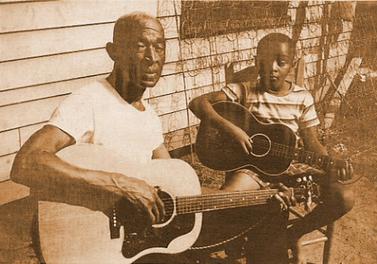
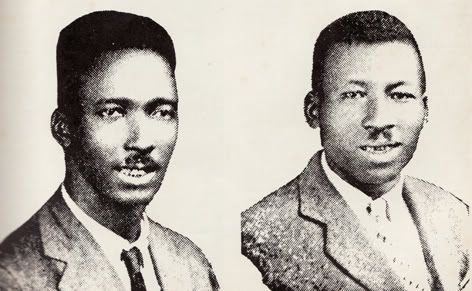
1941 Blind Boy Fuller+
1949 Chicago Beau*
1969 Sugaray Rayford*
1989 Hip Linkchain+
1992 Laurence Jones*
2015 David Maxwell+
Virgil Thrasher*
1949 Chicago Beau*
1969 Sugaray Rayford*
1989 Hip Linkchain+
1992 Laurence Jones*
2015 David Maxwell+
Virgil Thrasher*
Happy Birthday
Sugaray Rayford *13.02.1969

Der Sänger Sugaray Rayford stammt aus Texas und begann, wie so viele Vokalisten, sein Talent im Kirchenchor einzubringen. Außerdem spielte er in der frühen Zeit seines Lebens Schlagzeug. Mit zwei Brüdern in sehr ärmlichen Verhältnissen aufgewachsen, startete sein musikalischer Werdegang dann in der Gegend von San Diego. Er trat mit der R&B-/Funk-Band Urban Gypsys auf und die Gruppe teilte die Bühne unter anderem mit The Average White Band, Dennis Quaid oder Joe Louis Walker.
Als seine Vorliebe für den Blues immer größer wurde, verließ er die Urban Gypsys und wurde Leadsänger bei den Aunt Kizzy'z Boys. Mit dem Album "Trunk Full Of Bluez" (2004) und rund zweihundert Auftritten im Jahr erreichte man eine viel größere Menge von Bluesfans. Der von ihnen gespielte 12-Takter musste gut sein, denn 2006 endeten die Aunt Kizzy'z Boyz auf dem zweiten Platz der International Blues Challenge. 2007 kam "It's Tight Like That" auf den Markt.
2011 ließ er sich dann in Los Angeles nieder und dort wurde der Delta Groove-Labelchef Randy Chortkoff auf an den Mann aufmerksam. Da fügte sich ein Puzzelteil zum anderen ... Mannish Boys suchten einen neuen Sänger und Sugaray Rayford war auf Double Dynamite sowie Liveauftritten mit von der Partie. Ein Tonträger unter eigenem Namen war überfällig und "Dangerous" markiert das Debüt auf dem erfolgreichen Label.
Womit wir nun in media res gehen können. Von Sugaray Rayfords Gesang wird man begeistert sein. Da regieren Soul, R&B und eine Prise Eisenpulver hat er auch noch auf den Stimmbändern. Genau die passende Mischung, um dem Blues über das Mikrofon die richtige Färbung zu geben. Auch als Songwriter hat der Frontmann einen Platz im Herzen der Zwölftakteranhänger gefunden. Die Mixtur aus Eigenkompositionen und eingestreuten Coversongs fällt auf fruchtbaren Boden und bei den Begleitmusikern eines so mächtigen Sängers, der fast zwei Meter groß ist, hat man sich nicht lumpen lassen.
Sugaray has fronted his own band since 2010, called the Sugaray Rayford Band. This band is currently made up of world-class musicians. Ralph Carter on bass who is also his writing partner, Gino Matteo on guitar, Leo Dombecki on keyboards, Lavelle Jones on drums, Allan Walker on sax, and Gary Bivona on trumpet. But the Sugaray Rayford Band is only one of his projects. As of May 2011, Sugaray became one of the lead vocalists for the Mannish Boys, who are under Delta Groove management. This international act performs 6-8 times a year. He sang lead vocals on 9 songs on Double Dynamite the Mannish Boys CD that won Best Traditional Blues Album in May 2013 at the Blues Music Awards. His first solo CD Blind Alley was a self-release in 2010, which garnered critical acclaim. His second solo CD Dangerous, was just released on 9/17/2013 under the Delta Groove label and debuted at # 2 on Blues Debut Chart, #6 on the Roots Music Chart and is currently #2 on The Living Blues Chart. Below is the journey that has taken Sugaray to this point in his career.
Texas born Caron “Sugaray” Rayford began his musical career at the age of 7 singing & playing drums in church, and his gospel influence can be heard and felt in his music. Rayford's phrasing is intimate and conversational and the soulful gravel in his voice hints at his firsthand experience with hardship. He grew up in Texas, his childhood marked by poverty and loss. He remembered a sad game he played with his brothers, a competition that determined who was skinniest by counting the number of belt holes left unused. His mother struggled to raise three boys alone while battling cancer. When she died, it was a kind of relief. "She suffered and we suffered," Rayford said. "Then, we moved in with my grandmother and our lives were a lot better. We ate every day and we were in church every day, which I loved. I grew up in gospel and soul.”
When Sugaray belts out a song, you not only hear it, you feel it. The excitement in the room is palpable when he takes the stage; he is a superb vocalist and entertainer. His dynamic voice is large just like the man. With his old school vocal style, echoes of Muddy Waters, Otis Redding and Teddy Pendergrass can be heard. At 6’5” he is a big man, but he moves with grace and energy. His fluid dance steps will remind you of the Legendary James Brown.
His switch to contemporary music began about 15 years ago in the San Diego area, where he sang lead vocals with a R&B/Funk band called Urban Gypsys. With this band he had the privilege of sharing the stage with many notable artists such as The Average White Band, Dennis Quaid, Joe Luis Walker, Kal David, Super Diamond & Venice, to name a few. After dabbling in blues, Suga realized that the blues was where his heart and soul belonged. So after some soul searching he left the Urban Gypsys and became lead vocalist for Aunt Kizzy’z Boyz, a Temecula area blues band. Shortly after joining the band in 2004, they released their first CD “Trunk Full of Bluez”. This band was hungry and did over 200 gigs a year over the next few years and their popularity rose exponentially. Aunt Kizzy’z Boyz represented San Diego (Blues Lovers United San Diego) in Memphis Tennessee January 26th- 28th, 2006 at the International Blues Challenge (IBC), and brought home the 2nd place prize. The band began playing higher profile gigs and in 2007 released their 2nd CD “It’s Tight Like That”. In September 2008, the Boyz won the LAMN Jam Grand Slam Urban Artist of the Year title by a landslide; they beat out hundreds of competitors. The band was offered a distribution deal on the spot by RBC Records. Tabitha Berg wrote, “The band’s most valuable ingredient is that of the band’s dynamic front man Sugaray, he knows how to read and work a room. While most artists simply perform, exceptional artists are responsive to the mood of the crowd. The energy shifted when AKB took the stage, and they had the crowd on its feet within seconds.”
After moving to Los Angeles several years ago, Sugaray was asked to host a blues jam at Cozy’s in Sherman Oaks. It is through this venue that Sugaray met and played with innumerable world-class musicians. Suga’s desire to explore and expand his musical vision has been nourished by these musicians. His solo career has flourished in LA.
He also travels the world singing with other bands like Igor Prado Band, “Big Pete” van der Pluijm, Sax Gordon and several other musical bands.
He has done studio vocals on several projects, such as the theme for Judge Joe Brown, the movie trailer City Lights, a couple of songs on Person of Interest and many other projects.
May 2012 he made his stage debut starring in the Tony award winning play “Ain’t Nuthin’ But The Blues” at the Portland Center Stage in Portland Oregon. He joined members of the New York Broadway cast playing the part previously played by the late Ron Taylor. It had a 6-week run where every show ended with a standing ovation.
http://sugarayblues.com/
Le Buis Blues Festival 2012 SUGARAY RAYFORD & FLYIN' SAUCERS GUMBO SPECIAL
Sugaray Rayford & Flyin' Saucers Gumbo Special : Baby, What You Want Me To Do
jimmy reed cover.
Sugaray Rayford vcls
Vincent Keyser : keyboards
Fabrice Joussot : Guitare
Jean Charle Duchein : Bass
Fabio Izquierdo : Harmonica
Stéphane Stranger : drums
Le Buis Blues Festival, 17 & 18 aout 2012.
https://www.youtube.com/watch?v=scf9vLWVthA&x-yt-ts=1422503916&x-yt-cl=85027636
Sugaray Rayford & Flyin' Saucers Gumbo Special : Baby, What You Want Me To Do
jimmy reed cover.
Sugaray Rayford vcls
Vincent Keyser : keyboards
Fabrice Joussot : Guitare
Jean Charle Duchein : Bass
Fabio Izquierdo : Harmonica
Stéphane Stranger : drums
Le Buis Blues Festival, 17 & 18 aout 2012.
https://www.youtube.com/watch?v=scf9vLWVthA&x-yt-ts=1422503916&x-yt-cl=85027636
Virgil Thrasher *13.02.
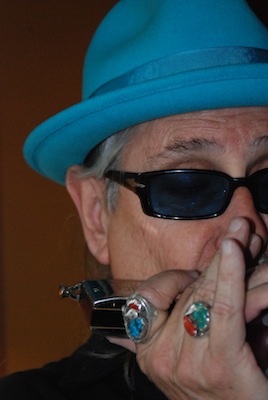
Sweet Home Chicago (Baby Don't You Want To Go...)
Laurence Jones *13.02.1992

"Laurence is like a young Robin Trower, exciting and full of energy" - BBC Radio 2
The young gunslinger of the blues Laurence Jones has sensationally signed a deal with "Ruf Records". His Debut album for the label and 2nd album for Laurence was recorded at the Legendary Dockside Studio in Louisiana where artists such as B.B King and Derek trucks have recorded. A catalogue of big names appear on the album including Walter Trout, Aynsley Lister, Yonrico Scott, Charlie Wooton and producer Mike Zito.
Walter Trout invited the band to support them on his 2013 U.K tour
"Laurence is a cross between Eric Clapton & Buddy Guy he is a genius" - "Walter Trout"
A Buzz has been building rapidly around Laurence Jones, starting well before the release of his 2012 "Thunder In The Sky".
Since then Laurence has clocked up some serious road miles from touring through out the U.K and Europe.
"Classic Rock - Blues Magazine" - Call him the "Future of the blues" and the "next big thing".. with 2nd album "Temptation" british band leader Laurence Jones has turned his hot-tip potentil into fully formed brilliance, and officially graduated from boy wonder to main man.
The future of British blues? On the strength of this album, don't bet against it
"Blues & Soul" - The brand new album on Ruf Records "Temptation" will scoop awards and put Laurence firmly on the map.
Get ready to Rock Magazine gave the debut album "Thunder In The Sky" a 5/5***** rating “Laurence Jones is a wise musical head on young shoulders and ‘Thunder in the Sky’ is an excellent debut album, its worth five stars”.
Classic Rock magazine quoted Laurence as "Blues Rocks youngest Talent" and was featured on the "Blues Fury C.D along with
Joe Bonamassa, Kenny Wayne Shepherd, Popa Chubby and many more.
Laurence is influenced by, Walter Trout Eric Clapton, Gary Moore, Rory Gallagher, Albert Collins...
Laurence Jones - Thunder in the Sky - Live at Bluesmoose Café
Chicago Beau *13.02.1949

Chicago Beau (* 13. Februar 1949 in Chicago, Illinois als Lincoln T. Beauchamp, junior) ist ein amerikanischer Bluesmusiker (Bluesharp, Gesang), Musikproduzent und Autor.
Chicago Beau war seit seinem zehnten Lebensjahr zunächst Steptänzer, der von Jimmy Payne ausgebildet wurde, und nahm bis zum 15. Lebensjahr an vielen Cabaret-Shows teil. Dann gab ihm Billy Boy Arnold Harmonika-Unterricht; seinen Künstlernamen erhielt er von Muddy Waters. Seitdem er 17 Jahre alt war, trat er in kleinen Clubs und in Lagern sowie als Straßenmusiker auf, nicht nur in seiner Heimatstadt, sondern auch in Neuenglandstaaten und in Kanada, um dann in Amsterdam und in Paris zu arbeiten. In Paris begegnete er Archie Shepp, der ihn mit einem weiteren Mundharmonikaspieler, Julio Finn, an den Aufnahmen seines Creativ-Jazz-Klassikers Blasé , des Albums Pitchin Can und eines weiteren Albums mit Philly Joe Jones und Anthony Braxton beteiligte. Kurz darauf zog ihn auch das Art Ensemble of Chicago zu Auftritten und Aufnahmen (Certain Blacks, 1970) heran.
In den nächsten Jahrzehnten nahm Chicago Beau mit eigenen Bands, aber auch mit seinem Lehrer Billy Boy Arnold und mit Cal Massey, Pinetop Perkins, Fontella Bass, James Carter, Frank Zappa, Sunnyland Slim, Famoudou Don Moye sowie mit dem südafrikanischen Amakhono We Sinto Choir auf. In den 1990er Jahren war er mit seiner eigenen Gruppe, aber auch mit dem Art Ensemble of Chicago auf Europatournee.
Als Musikproduzent nahm er in Chicago Musiker wie Junior Wells, Valerie Wellington, Billy Branch, Willie Kent, Deitra Farr oder Tommy McCracken auf. 1988 gründete er den Verlag Literati Internazionale, der sich dem Schreiben über Blues und Jazz sowie dem Multikulturalismus widmete und neben Büchern auch Zeitschriften veröffentlichte. Er verfasste drei Bücher.
Chicago Beau erhielt den Clio Award für seine Musik, die Anfang der 1990er Jahre in der Kabelfernseh-Kampagne der Chicago Bulls verwendet wurde.
Bluesman
Lincoln McGraw-Beauchamp, or Chicago Beau, as he is known in local and
international blues circles, grew up in the 50s in a boardinghouse near
39th and Ellis, a place he recalls as "a house of blues." The building
was populated with hustlers, drug dealers, prostitutes, and gamblers.
The landlady ran a numbers operation on the first floor; her son was a
junkie who lived in the attic. The tenants shared one kitchen, which
served as a center of gambling, boozing, and carousing. Beauchamp
remembers his eyes being level with the kitchen table. He saw women in
colorful dresses and elaborate hats with veils who smoked cigarettes in
ornate holders and crossed their legs, dangling high-heeled shoes from
their toes; men in double-breasted suits with betting tickets stuck in
the bands of their Stetson hats swayed to the bebop that flowed
incessantly from a record player. These people lived by their wits. They
fascinated Lincoln. And a blues club they frequented down the street
filled him with wonder.
Today Beauchamp lives in Wicker Park and stays busy as a blues harmonica player, record producer, publisher, writer, and lecturer. His new book, Blues Stories, is a collection of essays, articles, poetry, and interviews with other blues players. In his preface--rich with autobiographical anecdotes, including scenes from the boardinghouse--he establishes the theme that informs the rest of the text: freedom and dignity through creative adventure and cultural expression.
Some of the book's material originally appeared in two magazines that Beauchamp publishes and edits: The Original Chicago Blues Annual and Literati International, the latter a semiannual journal of African American arts. Chicago Beau, who says he was given his moniker by Muddy Waters, has always considered the "blues" a cultural whole made up of a variety of elements, including jazz, poetry, theater, and African dance. Blues Stories is drawn from his various lines of work, but is above all a proclamation of his devotion to the blues.
That devotion started early. Beauchamp's godmother gave him a set of harmonicas when he was 12. His father--who had come off a southern plantation and gone on to become an attorney--disapproved of musicians, viewing them as drug addicts. He tried to discourage his son's musical aspirations. But when one of young Lincoln's baby-sitters took him to the Sanctified Church on the south side, where he witnessed an intense display of wildly celebratory gospel music and dancing, he was hooked. A musician named Billy Boy Arnold taught him, at age 14, the fundamentals of playing the blues.
In Blues Stories Beauchamp tells of leaving Chicago at age 17 "to play the blues and embrace a life of adventure and risks." He writes of landing first in Boston, drifting then to Montreal, Quebec City, San Francisco, and eventually New York. A natural raconteur, Beauchamp happily romanticizes his own history. In the preface he tells of hitting a winning streak shooting craps in Manhattan one night in 1969. As the story goes, he and companion Julio Finn counted the take after the game: $3,800. "My brother," Beauchamp said, "tomorrow we leave for Paris."
Paris became the first in a long itinerary of international cities where Beauchamp has since worked as a musician, poet, writer, and lecturer. Piano player Memphis Slim, who at the time of Beauchamp's arrival was also working in Paris, helped guide the 20-year-old through the unfamiliar city's maze of narrow streets. He also allowed the young harmonica player to join him onstage, introducing him to audiences and friends as a guest artist. This was the break Beauchamp needed to start his career.
He still plays mostly overseas, where, he says, audiences consider blues an art form and the money is better. His portfolio of press clippings is dominated by articles from French, Italian, and Japanese publications. "We were part of an era now exhausted," Beauchamp writes in Blues Stories. "No longer does youth take to the road, no longer does youth in America shout." A similar sentiment becomes central to the book, as he and other senior blues people express frustration at the younger generation's inevitable lack of interest in their values, music, and culture.
Sitting in Kiki's Bistro, a French restaurant in River North that's one of his current haunts, Beauchamp recalls a vibrant scene in Paris in the late 60s and early 70s--cafes filled with energetic, able, and enthused black artists and musicians who were always collaborating on projects. He laments the absence of such passion here in Chicago, and, echoing his father, blames drugs for lassitude and indifference among the players. Polemical harangues, like adventure stories, are staples of Beau's social and literary discourse.
"Cocaine is the drug of choice here," he says. "So many local blues people are messed up on it, and they're unable to take care of business." He says cocaine has left a depressing haze hanging over the Chicago blues scene: "It's not a healthy environment, and it's not conducive to creativity." Most blues musicians today don't write new material, he says, preferring instead to endlessly rehash a short list of old songs, not even playing them correctly.
Alcohol has done its part too. In an introduction to his interview with pianist and songwriter Eddie Boyd Beauchamp writes: "There are a few Blues players today who have to be literally led to the stage and propped up to the microphone because they are so drunk. Others have suffered violent death and injury due to drunkenness."
Also interviewed are senior bluesmen Junior Wells and Pinetop Perkins--who, like Beauchamp, have traveled the world playing the blues. We learn that in the late 60s Wells was hired by the State Department, under Hubert Humphrey, to tour the world giving cultural presentations of the blues. He visited Africa, Australia, and Vietnam, among other places.
The lectures Beauchamp has given--at institutions such as the University of Copenhagen, the Sorbonne, and Chicago's Field and DuSable museums--have titles like "Blues as Literature," and "Blues as a Social and Political Condition." He also has taught a course in Blues as Literature at Columbia College. But he worries that not enough of his peers are doing their part to sustain blues culture.
Beauchamp and Wells think that black idols like Michael Jordan have sold out their responsibilities as role models. "Heroes with all that money never address the cultural issues," Beauchamp says. "They'll talk about gym shoes or some goofy cereal before they'll ever utter anything positive for our young people regarding our culture and dignity."
Wells says young blacks "don't want to be bothered with the blues, but the white boys imitating the blues [get] richer and richer."
Beauchamp acknowledges, perhaps reluctantly, the contribution rap has made to the evolving black cultural body, but resents it as the music that has stolen young people's attentions away from the blues. In one of his Blues Stories poems, "The Poet's Bitter Observation," Beauchamp writes, "If the people are not taught to curate their own culture, then they will always be in a quandary about their identity."
Like many of Beauchamp's writing projects, Blues Stories is self-published. The book has more than its share of typos and sometimes betrays the lack of a good editor, but it is a compelling read and serves well as a chronicle of a culture. Beau will be reading from Blues Stories and playing harmonica with guitarist Pete Crawford, Thursday, February 25, at Barnes & Noble, 659 W. Diversey. The program starts at 7 PM and it's free. For more information call 871-9004.
Today Beauchamp lives in Wicker Park and stays busy as a blues harmonica player, record producer, publisher, writer, and lecturer. His new book, Blues Stories, is a collection of essays, articles, poetry, and interviews with other blues players. In his preface--rich with autobiographical anecdotes, including scenes from the boardinghouse--he establishes the theme that informs the rest of the text: freedom and dignity through creative adventure and cultural expression.
Some of the book's material originally appeared in two magazines that Beauchamp publishes and edits: The Original Chicago Blues Annual and Literati International, the latter a semiannual journal of African American arts. Chicago Beau, who says he was given his moniker by Muddy Waters, has always considered the "blues" a cultural whole made up of a variety of elements, including jazz, poetry, theater, and African dance. Blues Stories is drawn from his various lines of work, but is above all a proclamation of his devotion to the blues.
That devotion started early. Beauchamp's godmother gave him a set of harmonicas when he was 12. His father--who had come off a southern plantation and gone on to become an attorney--disapproved of musicians, viewing them as drug addicts. He tried to discourage his son's musical aspirations. But when one of young Lincoln's baby-sitters took him to the Sanctified Church on the south side, where he witnessed an intense display of wildly celebratory gospel music and dancing, he was hooked. A musician named Billy Boy Arnold taught him, at age 14, the fundamentals of playing the blues.
In Blues Stories Beauchamp tells of leaving Chicago at age 17 "to play the blues and embrace a life of adventure and risks." He writes of landing first in Boston, drifting then to Montreal, Quebec City, San Francisco, and eventually New York. A natural raconteur, Beauchamp happily romanticizes his own history. In the preface he tells of hitting a winning streak shooting craps in Manhattan one night in 1969. As the story goes, he and companion Julio Finn counted the take after the game: $3,800. "My brother," Beauchamp said, "tomorrow we leave for Paris."
Paris became the first in a long itinerary of international cities where Beauchamp has since worked as a musician, poet, writer, and lecturer. Piano player Memphis Slim, who at the time of Beauchamp's arrival was also working in Paris, helped guide the 20-year-old through the unfamiliar city's maze of narrow streets. He also allowed the young harmonica player to join him onstage, introducing him to audiences and friends as a guest artist. This was the break Beauchamp needed to start his career.
He still plays mostly overseas, where, he says, audiences consider blues an art form and the money is better. His portfolio of press clippings is dominated by articles from French, Italian, and Japanese publications. "We were part of an era now exhausted," Beauchamp writes in Blues Stories. "No longer does youth take to the road, no longer does youth in America shout." A similar sentiment becomes central to the book, as he and other senior blues people express frustration at the younger generation's inevitable lack of interest in their values, music, and culture.
Sitting in Kiki's Bistro, a French restaurant in River North that's one of his current haunts, Beauchamp recalls a vibrant scene in Paris in the late 60s and early 70s--cafes filled with energetic, able, and enthused black artists and musicians who were always collaborating on projects. He laments the absence of such passion here in Chicago, and, echoing his father, blames drugs for lassitude and indifference among the players. Polemical harangues, like adventure stories, are staples of Beau's social and literary discourse.
"Cocaine is the drug of choice here," he says. "So many local blues people are messed up on it, and they're unable to take care of business." He says cocaine has left a depressing haze hanging over the Chicago blues scene: "It's not a healthy environment, and it's not conducive to creativity." Most blues musicians today don't write new material, he says, preferring instead to endlessly rehash a short list of old songs, not even playing them correctly.
Alcohol has done its part too. In an introduction to his interview with pianist and songwriter Eddie Boyd Beauchamp writes: "There are a few Blues players today who have to be literally led to the stage and propped up to the microphone because they are so drunk. Others have suffered violent death and injury due to drunkenness."
Also interviewed are senior bluesmen Junior Wells and Pinetop Perkins--who, like Beauchamp, have traveled the world playing the blues. We learn that in the late 60s Wells was hired by the State Department, under Hubert Humphrey, to tour the world giving cultural presentations of the blues. He visited Africa, Australia, and Vietnam, among other places.
The lectures Beauchamp has given--at institutions such as the University of Copenhagen, the Sorbonne, and Chicago's Field and DuSable museums--have titles like "Blues as Literature," and "Blues as a Social and Political Condition." He also has taught a course in Blues as Literature at Columbia College. But he worries that not enough of his peers are doing their part to sustain blues culture.
Beauchamp and Wells think that black idols like Michael Jordan have sold out their responsibilities as role models. "Heroes with all that money never address the cultural issues," Beauchamp says. "They'll talk about gym shoes or some goofy cereal before they'll ever utter anything positive for our young people regarding our culture and dignity."
Wells says young blacks "don't want to be bothered with the blues, but the white boys imitating the blues [get] richer and richer."
Beauchamp acknowledges, perhaps reluctantly, the contribution rap has made to the evolving black cultural body, but resents it as the music that has stolen young people's attentions away from the blues. In one of his Blues Stories poems, "The Poet's Bitter Observation," Beauchamp writes, "If the people are not taught to curate their own culture, then they will always be in a quandary about their identity."
Like many of Beauchamp's writing projects, Blues Stories is self-published. The book has more than its share of typos and sometimes betrays the lack of a good editor, but it is a compelling read and serves well as a chronicle of a culture. Beau will be reading from Blues Stories and playing harmonica with guitarist Pete Crawford, Thursday, February 25, at Barnes & Noble, 659 W. Diversey. The program starts at 7 PM and it's free. For more information call 871-9004.

Vinir Dóra And Chicago Beau
https://www.youtube.com/watch?v=nX3hykPwpR0&x-yt-ts=1421914688&x-yt-cl=84503534
https://www.youtube.com/watch?v=nX3hykPwpR0&x-yt-ts=1421914688&x-yt-cl=84503534
Chicago Beau & Band - Jazzwoche Burghausen 2013 fragm. 2
R.I.P.
Blind Boy Fuller +13.02.1941
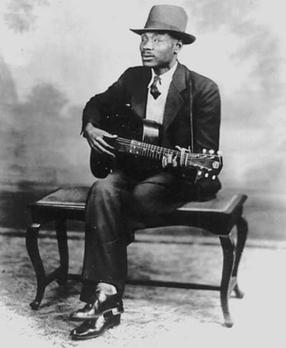
Blind Boy Fuller (eigentlich Fulton Allen; * 10. Juli 1907 in Wadesboro, North Carolina; † 13. Februar 1941 in Durham, North Carolina) war ein einflussreicher US-amerikanischer Blues-Musiker. Blind Boy Fuller, der Star des Piedmont Blues, wird bisweilen mit Robert Johnson, dem König des Delta Blues verglichen.
Über die frühen Jahre von Blind Boy Fuller ist wenig bekannt. Er ist wohl zwischen 1903 und 1908 in Wadesboro, North Carolina, geboren. Der Blues-Forscher Bruce Bastin legt sich auf den 10. Juli 1907 als Geburtstag fest.
Als Fullers Mutter starb, zog die Familie nach Rockingham, North Carolina. Hier lernte er Cora Mae Martin kennen, die er 1926 heiratete. Bei der Hochzeit war sie 14, er 18 Jahre alt. Wenig später erblindete Fuller vollständig; als Ursache wird ein Tumor vermutet. Eine unbestätigte Legende berichtet jedoch von einer eifersüchtigen Geliebten, die ihm Chemikalien in die Augen schüttete.
Das junge Paar zog nach Durham, North Carolina. Hier lernte Fuller Reverend Gary Davis kennen, der sein Lehrmeister wurde. Fuller verdiente seinen Lebensunterhalt als Straßenmusiker. Der Geschäftsmann und Talentsucher James Baxter Long ermöglichte ihm 1935 Aufnahmen in New York, zusammen mit Gary Davis und Bull City Red. Es folgten Soloaufnahmen 1936 und 1937, die sich recht gut verkauften.
Um diese Zeit begann Fuller, mit dem Mundharmonika-Virtuosen Sonny Terry aufzutreten, mit dem er einige gemeinsame Aufnahmen machte. 1938 wurde bei Fuller Syphilis diagnostiziert; sein Zustand verschlechterte sich zusehends. Anfang 1941 machte Fuller in Chicago seine letzten Aufnahmen zusammen mit Red und Terry. Er starb im Februar 1941 und wurde in Durham beigesetzt.
2004 wurde Blind Boy Fuller in die Blues Hall of Fame aufgenommen.
Blind Boy Fuller (born Fulton Allen, July 10, 1907[1] – February 13, 1941) was an American blues guitarist and vocalist. He was one of the most popular of the recorded Piedmont blues artists with rural Black Americans, a group that also included Blind Blake, Josh White, and Buddy Moss.
Life and career
Fulton Allen was born in Wadesboro, North Carolina, United States, to Calvin Allen and Mary Jane Walker. He was one of a family of 10 children, but after his mother's death he moved with his father to Rockingham. As a boy he learned to play the guitar and also learned from older singers the field hollers, country rags, and traditional songs and blues popular in poor, rural areas.
He married Cora Allen young and worked as a labourer, but began to lose his eyesight in his mid-teens. According to researcher Bruce Bastin, "While he was living in Rockingham he began to have trouble with his eyes. He went to see a doctor in Charlotte who allegedly told him that he had ulcers behind his eyes, the original damage having been caused by some form of snow-blindness." Only the first part of this diagnosis was correct. A 1937 eye examination attributed his vision loss to the long-term effects of untreated neonatal conjunctivitis.[2]
By 1928 he was completely blind, and turned to whatever employment he could find as a singer and entertainer, often playing in the streets. By studying the records of country blues players like Blind Blake and the "live" playing of Gary Davis, Allen became a formidable guitarist, and played on street corners and at house parties in Winston-Salem, NC, Danville, VA, and then Durham, North Carolina. In Durham, playing around the tobacco warehouses, he developed a local following which included guitarists Floyd Council and Richard Trice, as well as harmonica player Saunders Terrell, better known as Sonny Terry, and washboard player/guitarist George Washington.
In 1935, Burlington record store manager and talent scout James Baxter Long secured him a recording session with the American Recording Company (ARC). Allen, Davis and Washington recorded several tracks in New York City, including the traditional "Rag, Mama, Rag". To promote the material, Long decided to rename Allen as "Blind Boy Fuller", and also named Washington Bull City Red.
Over the next five years Fuller made over 120 sides, and his recordings appeared on several labels. His style of singing was rough and direct, and his lyrics explicit and uninhibited as he drew from every aspect of his experience as an underprivileged, blind Black person on the streets—pawnshops, jailhouses, sickness, death—with an honesty that lacked sentimentality. Although he was not sophisticated, his artistry as a folk singer lay in the honesty and integrity of his self-expression. His songs contained desire, love, jealousy, disappointment, menace and humor.[3]
In April 1936, Fuller recorded ten solo performances, and also recorded with guitarist Floyd Council. The following year, after auditioning for J. Mayo Williams, he recorded for the Decca label, but then reverted to ARC. Later in 1937, he made his first recordings with Sonny Terry. In 1938 Fuller, who was described as having a fiery temper,[citation needed] was imprisoned for shooting a pistol at his wife, wounding her in the leg, causing him to miss out on John Hammond's "From Spirituals to Swing" concert in NYC that year. While Fuller was eventually released, it was Sonny Terry who went in his stead, the beginning of a long "folk music" career. Fuller's last two recording sessions took place in New York City during 1940.
Fuller's repertoire included a number of popular double entendre "hokum" songs such as "I Want Some Of Your Pie", "Truckin' My Blues Away" (the origin of the phrase "keep on truckin'"), and "Get Your Yas Yas Out" (adapted as "Get Your Ya-Yas Out" for the origin of a later Rolling Stones album title), together with the autobiographical "Big House Bound" dedicated to his time spent in jail. Though much of his material was culled from traditional folk and blues numbers, he possessed a formidable finger-picking guitar style. He played a steel National resonator guitar.[4] He was criticised by some as a derivative musician, but his ability to fuse together elements of other traditional and contemporary songs and reformulate them into his own performances, attracted a broad audience.[citation needed] He was an expressive vocalist and a masterful guitar player, best remembered for his uptempo ragtime hits including "Step It Up and Go". At the same time he was capable of deeper material, and his versions of "Lost Lover Blues", "Rattlesnakin' Daddy" and "Mamie" are as deep as most Delta blues. Because of his popularity, he may have been overexposed on records, yet most of his songs remained close to tradition and much of his repertoire and style is kept alive by other Piedmont artists to this day.
Death
Fuller underwent a suprapubic cystostomy in July 1940 (probably an outcome of excessive drinking) but continued to require medical treatment. He died at his home in Durham, North Carolina on February 13, 1941 at 5 p.m. of pyemia due to an infected bladder, gastrointestinal tract and perineum, plus kidney failure.
He was so popular when he died that his protégé Brownie McGhee recorded "The Death of Blind Boy Fuller" for the Okeh label, and then reluctantly began a short lived career as Blind Boy Fuller No. 2 so that Columbia Records could cash in on his popularity.
Burial location
Blind Boy Fuller's final resting place is Grove Hill Cemetery, located on private property in Durham, North Carolina. State records indicate that this was once an official cemetery, and Fuller's interment is recorded. The only remaining headstone is that of Mary Caston Langey. The funeral arrangements were handled by McLaurin Funeral Home of Durham, North Carolina, and the burial took place on February 15, 1941.[5]
Blind Boy Fuller has been recognized on two different plaques in the City of Durham. The North Carolina Division of Archives and History plaque is located a few miles north of Fuller's gravesite, along Fayetteville St. in Durham. The City of Durham officially recognized Fuller on July 16, 2001, and the commemorating plaque is located along the American Tobacco Trail, adjacent to the property where Fuller's unmarked grave is located (several hundred feet east of Fayetteville St.).
Life and career
Fulton Allen was born in Wadesboro, North Carolina, United States, to Calvin Allen and Mary Jane Walker. He was one of a family of 10 children, but after his mother's death he moved with his father to Rockingham. As a boy he learned to play the guitar and also learned from older singers the field hollers, country rags, and traditional songs and blues popular in poor, rural areas.
He married Cora Allen young and worked as a labourer, but began to lose his eyesight in his mid-teens. According to researcher Bruce Bastin, "While he was living in Rockingham he began to have trouble with his eyes. He went to see a doctor in Charlotte who allegedly told him that he had ulcers behind his eyes, the original damage having been caused by some form of snow-blindness." Only the first part of this diagnosis was correct. A 1937 eye examination attributed his vision loss to the long-term effects of untreated neonatal conjunctivitis.[2]
By 1928 he was completely blind, and turned to whatever employment he could find as a singer and entertainer, often playing in the streets. By studying the records of country blues players like Blind Blake and the "live" playing of Gary Davis, Allen became a formidable guitarist, and played on street corners and at house parties in Winston-Salem, NC, Danville, VA, and then Durham, North Carolina. In Durham, playing around the tobacco warehouses, he developed a local following which included guitarists Floyd Council and Richard Trice, as well as harmonica player Saunders Terrell, better known as Sonny Terry, and washboard player/guitarist George Washington.
In 1935, Burlington record store manager and talent scout James Baxter Long secured him a recording session with the American Recording Company (ARC). Allen, Davis and Washington recorded several tracks in New York City, including the traditional "Rag, Mama, Rag". To promote the material, Long decided to rename Allen as "Blind Boy Fuller", and also named Washington Bull City Red.
Over the next five years Fuller made over 120 sides, and his recordings appeared on several labels. His style of singing was rough and direct, and his lyrics explicit and uninhibited as he drew from every aspect of his experience as an underprivileged, blind Black person on the streets—pawnshops, jailhouses, sickness, death—with an honesty that lacked sentimentality. Although he was not sophisticated, his artistry as a folk singer lay in the honesty and integrity of his self-expression. His songs contained desire, love, jealousy, disappointment, menace and humor.[3]
In April 1936, Fuller recorded ten solo performances, and also recorded with guitarist Floyd Council. The following year, after auditioning for J. Mayo Williams, he recorded for the Decca label, but then reverted to ARC. Later in 1937, he made his first recordings with Sonny Terry. In 1938 Fuller, who was described as having a fiery temper,[citation needed] was imprisoned for shooting a pistol at his wife, wounding her in the leg, causing him to miss out on John Hammond's "From Spirituals to Swing" concert in NYC that year. While Fuller was eventually released, it was Sonny Terry who went in his stead, the beginning of a long "folk music" career. Fuller's last two recording sessions took place in New York City during 1940.
Fuller's repertoire included a number of popular double entendre "hokum" songs such as "I Want Some Of Your Pie", "Truckin' My Blues Away" (the origin of the phrase "keep on truckin'"), and "Get Your Yas Yas Out" (adapted as "Get Your Ya-Yas Out" for the origin of a later Rolling Stones album title), together with the autobiographical "Big House Bound" dedicated to his time spent in jail. Though much of his material was culled from traditional folk and blues numbers, he possessed a formidable finger-picking guitar style. He played a steel National resonator guitar.[4] He was criticised by some as a derivative musician, but his ability to fuse together elements of other traditional and contemporary songs and reformulate them into his own performances, attracted a broad audience.[citation needed] He was an expressive vocalist and a masterful guitar player, best remembered for his uptempo ragtime hits including "Step It Up and Go". At the same time he was capable of deeper material, and his versions of "Lost Lover Blues", "Rattlesnakin' Daddy" and "Mamie" are as deep as most Delta blues. Because of his popularity, he may have been overexposed on records, yet most of his songs remained close to tradition and much of his repertoire and style is kept alive by other Piedmont artists to this day.
Death
Fuller underwent a suprapubic cystostomy in July 1940 (probably an outcome of excessive drinking) but continued to require medical treatment. He died at his home in Durham, North Carolina on February 13, 1941 at 5 p.m. of pyemia due to an infected bladder, gastrointestinal tract and perineum, plus kidney failure.
He was so popular when he died that his protégé Brownie McGhee recorded "The Death of Blind Boy Fuller" for the Okeh label, and then reluctantly began a short lived career as Blind Boy Fuller No. 2 so that Columbia Records could cash in on his popularity.
Burial location
Blind Boy Fuller's final resting place is Grove Hill Cemetery, located on private property in Durham, North Carolina. State records indicate that this was once an official cemetery, and Fuller's interment is recorded. The only remaining headstone is that of Mary Caston Langey. The funeral arrangements were handled by McLaurin Funeral Home of Durham, North Carolina, and the burial took place on February 15, 1941.[5]
Blind Boy Fuller has been recognized on two different plaques in the City of Durham. The North Carolina Division of Archives and History plaque is located a few miles north of Fuller's gravesite, along Fayetteville St. in Durham. The City of Durham officially recognized Fuller on July 16, 2001, and the commemorating plaque is located along the American Tobacco Trail, adjacent to the property where Fuller's unmarked grave is located (several hundred feet east of Fayetteville St.).
Roots of Blues -- Blind Boy Fuller „Pistol Slapper Blues"
https://www.youtube.com/watch?v=7up2b4keW_k&x-yt-cl=85027636&x-yt-ts=1422503916
https://www.youtube.com/watch?v=7up2b4keW_k&x-yt-cl=85027636&x-yt-ts=1422503916
Hip Linkchain +13.02.1989
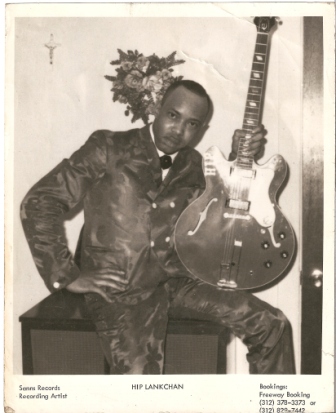
Hip Linkchain (November 10, 1936 – February 13, 1989) was an American Chicago blues guitarist, singer and songwriter.[1]
His best known numbers were "Change My Blues" and "That Will Never Do".[2] Allmusic described him as a "solid, no-frills bluesman".[3] Another music journalist noted, "his composer's talents put him much above the average bluesmen".[4] Linkchain variously worked with Lester Davenport, Pinetop Perkins, Tyrone Davis, and Little Walter.
He was born Willie Richard in Jackson, Mississippi, United States. His stage name was in deference to his father's nickname of 'Linkchain', due to his habit of sporting logging chains around his neck, and the boy's own childhood nickname of 'Hipstick'.[1][6] He was inspired by the blues playing of Sonny Boy Williamson II, Elmore James and Little Milton, all of whom Linkchain heard in the Mississippi delta, prior to him relocating to Chicago, Illinois, in 1954.[1] He had been raised in Louise, Mississippi, and picked cotton before his move north.[7] Linkchain found regular employment playing blues guitar in the clubs of Chicago throughout the 1950s and 1960s, and he variously worked with the harmonica players, Lester Davenport, Dusty Brown, and Willie Foster.
By 1959, Linkchain had formed his own band known as the Chicago Twisters, who had Tyrone Davis as their frontman. Linkchain recorded spasmodically, mainly for small independent record labels based in Chicago, and a handful of his singles were released in the 1960s. It was not until 1983 that Linkchain saw his debut album issued, when the small Teardrop Records outfit released Change My Blues.[1] The recording saw Linkchain play alongside Pinetop Perkins (piano), Rich Kirch (guitar), Right Hand Frank Bandy (bass) and Fred Grady (drums).[7]
His best known album, Airbusters, was originally released by the Netherlands based Black Magic record label in 1988.[8] It was re-issued on the Evidence label, but Linkchain was to experience only a short period of fame, before his death from cancer in Chicago in February 1989.
HIP LINKCHAIN cold chills
https://www.youtube.com/watch?x-yt-ts=1422503916&v=peZhlC_tv9M&x-yt-cl=85027636
https://www.youtube.com/watch?x-yt-ts=1422503916&v=peZhlC_tv9M&x-yt-cl=85027636
David Maxwell +13.02.2015
Pianist
David Maxwell has been a part of the Boston blues scene as a sideman
since the late 1960s, but has only in the '90s begun leading his own
band and recording under his own name.
Maxwell took some of his early stylistic cues from the likes of Spann, Sunnyland Slim and Pinetop Perkins, also listening to the recordings of Big Maceo, Ray Charles and Memphis Slim; he became friendly with Muddy Waters' longtime piano player, Otis Spann, in the late 1960s.
Maxwell went on to back many great players over the years, including Freddie King, whom he worked with for two years in the early 1970s; Bonnie Raitt, whom he worked with in 1974 and '75, while she was still based in Boston; and James Cotton from 1977 to 1979. He toured Europe and Japan with Otis Rush in the 1990s, and has performed over the years with dozens of others, including John Lee Hooker, Jimmy Rogers, Paul Oscher, Hubert Sumlin, Bob Margolin, John Primer and Ronnie Earl. He has joined many of these same people on their studio efforts, including Cotton for his 1997 Grammy-winning Deep in the Blues. Maxwell also can be heard on the soundtrack to the movie Fried Green Tomatoes with longtime Boston musicians Ronnie Earl and Peter Wolf.
Maxwell's debut record for Tone-Cool, Maximum Blues Piano, is a collection of instrumental tunes that showcase many of the Boston scene's veteran players: Ronnie Earl and Duke Levine on guitars, Kaz Kazanoff and Gordon Beadle on saxophones, drummer Marty Richards and bassist Marty Ballou. Echoes of all of his influences can be heard throughout the tracks, including Pete Johnson on "Down at A.J.'s Place," and Otis Spann on "Deep Into It."
Maxwell took some of his early stylistic cues from the likes of Spann, Sunnyland Slim and Pinetop Perkins, also listening to the recordings of Big Maceo, Ray Charles and Memphis Slim; he became friendly with Muddy Waters' longtime piano player, Otis Spann, in the late 1960s.
Maxwell went on to back many great players over the years, including Freddie King, whom he worked with for two years in the early 1970s; Bonnie Raitt, whom he worked with in 1974 and '75, while she was still based in Boston; and James Cotton from 1977 to 1979. He toured Europe and Japan with Otis Rush in the 1990s, and has performed over the years with dozens of others, including John Lee Hooker, Jimmy Rogers, Paul Oscher, Hubert Sumlin, Bob Margolin, John Primer and Ronnie Earl. He has joined many of these same people on their studio efforts, including Cotton for his 1997 Grammy-winning Deep in the Blues. Maxwell also can be heard on the soundtrack to the movie Fried Green Tomatoes with longtime Boston musicians Ronnie Earl and Peter Wolf.
Maxwell's debut record for Tone-Cool, Maximum Blues Piano, is a collection of instrumental tunes that showcase many of the Boston scene's veteran players: Ronnie Earl and Duke Levine on guitars, Kaz Kazanoff and Gordon Beadle on saxophones, drummer Marty Richards and bassist Marty Ballou. Echoes of all of his influences can be heard throughout the tracks, including Pete Johnson on "Down at A.J.'s Place," and Otis Spann on "Deep Into It."