1887 Papa Charlie Jackson*
1914 Big Chief Ellis*
1929 George Buford*
1933 Mack Rice*
1936 Hip Linkchain*
1938 James "Thunderbird" Davis*
1940 Bobby Rush*
1947 Billy Price*
1958 Brooks Williams*
1963 Flávio Guimarães*
1967 Ida Cox+
1970 Eric Sardinas*
Christoph "Jimmy" Reiter*
Happy Birtday
Bobby Rush *10.11.1940

Bobby Rush (* 10. November 1940 in Homer, Louisiana), eigentlich Emmit Ellis Jr., ist ein US-amerikanischer Blues- und R&B-Musiker, Multiinstrumentalist, Sänger und Komponist. Seinen Stil bezeichnete er selbst als "Folk-Funk", eine Mischung aus Blues, Soul und Funk.
1953 zog seine Familie nach Chicago, wo er in der Blues-Szene der West Side Fuß fasste. Er spielte in Bands mit Größen wie Luther Allison und Freddie King.
1971 hatte er mit Chicken Heads seinen ersten Hit. 1979 erschien sein erstes Album Rush Hour. In den 1980ern wurde sein Stil zunehmend funkiger. Mitte der 1990er kehrte Rush zum Soul-Blues zurück.
Im April 2001 verunglückte sein Tourbus, wobei es mehrere Verletzte und einen Toten gab. Im selben Jahr wurde er mit dem Living Blues Award als bester Livemusiker ausgezeichnet, auch im Jahr 2002 wurde er in dieser Kategorie mit dem Preis bedacht. 2003 hatte Rush sein Comeback.
2006 wurde Bobby Rush in die Blues Hall of Fame aufgenommen.
Bobby Rush (born November 10, 1933, Homer, Louisiana, United States) is an American blues musician, composer and singer.[1] His style incorporates elements of blues, rap and funk.
Biography
Born Emmit Ellis, Jr. in Homer, Louisiana, Rush was the son of Ellis Sr. and Mattie Ellis. His father was a pastor whose guitar and harmonica playing provided early musical influences. As a young child he began experimenting with music using a sugar-cane syrup-bucket and a broom-wire diddley bow. Around 1946, he and the family moved to Pine Bluff, Arkansas where his father took on the pastorate of a church. It was here that Rush would become friends with Elmore James, slide-player Boyd Gilmore (Elmore's cousin), and piano-player Moose John Walker; eventually forming a band to support his singing, as well as harp and guitar playing.
Still a teen, Rush donned a fake moustache to play in local juke joints with the band fascinated by enthusiasm of the crowds. His family relocated to Chicago in 1953 where he became part of the local blues scene in the following decade.[1] In Chicago he met and befriended his neighbor, Muddy Waters, and began working for Jimmy Reed. Through these connections he began performing on a circuit with Etta James, Howlin' Wolf, Muddy Waters, and Jimmy Reed.
It was in the early 1970s that his self-penned "Chicken Heads" cracked the Billboard R&B chart on Galaxy, after being picked up from a small label started by former Vee Jay Records producer, Calvin Carter (#34, 1971). He later recorded with leading black music label, Philadelphia International, releasing his first album, Rush Hour produced by Leon Huff, with one track, I Wanna Do The Do also charting in 1979 (#75). Chicken Heads would become Rush's first gold certified record in 1971, and would later re-enter the Billboard chart 30 years after its release as a result of its feature in the film Black Snake Moan.[2] His next album to become gold certified would be “Sue” in 1981, and “Ain’t Studdin’ Ya” in 1991.[3]
In the early 1980s, he moved to Jackson, Mississippi, where he recorded a series of records for the LaJam label, Malaco's Waldoxy imprint, and in 2003, his own Deep Rush label with partner Greg Preston, a former Malaco Records executive. One of the artists on the label is Crystal Springs, Mississippi native and former band mate Dexter Allen. 2004's FolkFunk was a return to a more rootsier sound, featuring guitarist Alvin Youngblood Hart. He appeared in the film, The Road to Memphis which is part of the series The Blues, produced by Martin Scorsese. As a result of the Scorsese film, Rolling Stone magazine named him "'King of the Chitlin' Circuit' because of his 50 years of relentless touring and colorful live show."[4] Rush was also a judge for the second annual Independent Music Awards to support independent artists' careers.[5] He also performed at the White House along with James Brown when Bill Clinton went into office. In 2014 he again performed for Bill and Hillary Clinton for a state event in Arkansas.
In 2007, he became the first blues artist to perform in China, earning him the title “International Dean of the Blues.” He was later named Friendship Ambassador to the Great Wall of China after performing the largest concert ever held at that site.[6] In addition, Rush has toured in most major markets around the world, including Sydney, Australia; Paris, France; Tokyo, Japan; Shanghai, China; Johannesburg, South Africa; Berlin, Germany; Rome, Italy; Barcelona, Spain; Lucerne, Switzerland; New York, New York; Chicago, Illinois; Memphis, Tennessee; Los Angeles, California; to Jackson, Mississippi.
Awards and recognition
Rush received recognition for his music after the release of his 22nd album Rush, when he was awarded "Best Male Soul Blues Artist" at the Blues Music Awards. He also received "best acoustic artist" and "best acoustic album" for his album Raw. His album, Hoochie Mama was nominated for a Grammy award in the blues music section in 2000. Rush has been awarded 17 blues music awards in his lifetime, and in 2006 he was inducted into the Blues Hall of Fame.[7] In May of 2015, Rush cut the ribbon for the Blues Hall of Fame with an introduction by the Memphis Head of Tourism and aired live on local news.
In 2013, Rush was nominated for a Blues Music Award in the 'Soul Blues Male Artist' category.[8] In 2014, Rush's album Down in Louisiana, was Grammy-nominated for "Best Blues Album",[9] and won a Blues Music Award in the 'Soul Blues Album of the Year' category, whilst Rush was also nominated in two other categories.[10] Following 2014's Grammy nomination, Rush was nominated again for "Best Blues Album" in 2015 for Decisions, with Blinddog Smokin' and featuring Rock n' Roll Hall of Famer Dr. John.[11]
In July 2014, Rush performed with Dan Aykroyd one of James Brown's songs on The Tonight Show Starring Jimmy Fallon.[12]
In 2015, Rush won two Blues Music Awards in the 'Soul Blues Male Artist' and 'B.B. King Entertainer of the Year' categories.[13] On June 6, 2015 Rush was inducted into the Official Rhythm & Blues Music Hall of Fame in Clarksdale, MS.
George Buford *10.11.1929
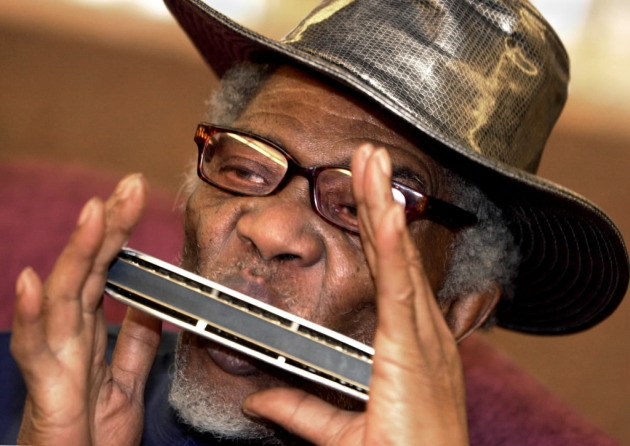
In den 1960ern und Anfang der 1970er spielte Buford zeitweilig in der Band von Muddy Waters und war auch mit ihm auf Tour, u. a. in Australien und Europa. Zuletzt ersetzte er Jerry Portnoy, als dieser die Muddy Waters Band verließ, um bei der Legendary Blues Band mitzumachen.
Seinen Spitznamen "Mojo" erhielt er von seinen Fans in St.Paul, die von seiner Version von "I got my Mojo working" nicht genug bekommen konnten.
George "Mojo" Buford
(November 10, 1929 – October 11, 2011) was an American blues
harmonica player, best known for his work in Muddy Waters'
band.
Biography
Biography
Buford relocated from Hernando, Mississippi to Memphis, Tennessee in his youth, where he studied the blues.[1] He relocated to Chicago in 1952,[2] forming the Savage Boys that eventually became known as the Muddy Waters, Jr. Band. They substituted for Muddy Waters at local nightclubs whilst he was touring.[1]
Buford first played in Muddy Waters' backing band in 1959, replacing Little Walter, but in 1962 moved to Minneapolis to front his own band, and record albums.[1] It was in Minneapolis that Buford gained his nickname "Mojo", because of the audiences requesting him to perform his cover version of "Got My Mojo Working."[3] Buford returned to Muddy Waters' combo in 1967 for a year when he replaced James Cotton.[3] He had a longer tenure with Muddy Waters in the early 1970s, and returned for the final time after Jerry Portnoy departed to form The Legendary Blues Band.[1]
He also recorded for the Mr. Blues label (later re-issued on Rooster Blues), Blue Loon Records, and the British JSP label.[1]
Buford died on October 11, 2011, in Minneapolis, after a long hospitalization.[1][4] He was 81.
Flávio Guimarães *10.11.1963

Flávio Guimarães ist ein Mundharmonikaspieler, Sänger und brasilianischer Bluespionier. In zwei Jahrzehnten lang brachte er 19 CDs, davon 9 Soloalben und 10 Alben mit seiner Band "Blues Etilicos" heraus. Flavio eröffnete Konzerte für B.B. King und Robert Cray und spielte zusammen mit Buddy Guy, Taj Mahal, Charlie Musselwhite, Sugar Blue und Rick Estrin and the Nightcats. Howard Levy, Charlie Musselwhite und Sugar Blue nahmen mit ihm zusammen Songs für seine Alben auf.
Flávio gehört zu den Top Harmonikaspielern in Brasilien, nicht nur wegen seiner Pionierarbeit mit der diatonischen Bluesharmonika, sondern auch aufgrund seines sich stetig entwickelnden Mundharmonikaspiels. Er brachte einer ganzen Generation das Harmonikaspielen bei und trat so eine neue Bewegung in Brasilien los.
Flávio organisiert auch seit 12 Jahren das internationale Mundharmonikatreffen. Dieses findet jährlich in Sao Paulo statt und gehört zu den wichtigsten Harmonikatreffen in Lateinamerika mit über 2000 Teilnehmern.
Flavios aktuellste CD ist "Flavio Guimaraes and Friends" mit den Gastspielern Charlie Musselwhite, Rick Estrin and the Nightcats, Steve Guyger, Gary Smith, Peter Madcat und Joe Filisko. Aktuell arbeitet er an seinem Duoalbum mit Gitarrist Alamo Leal.
Flávio Guimarães (born November 10, 1963) is a Brazilian composer, harmonica player and singer. Considered a blues pioneer in Brazil, he founded the band Blues Etílicos in 1986, which is considered the most successful Brazilian blues group.[1] He has also played with many famous artists along his career, such as Alceu Valença, Ed Motta, Luiz Melodia, Paulo Moura, Zeca Baleiro, Buddy Guy, Charlie Musselwhite, Sugar Blue e Taj Mahal.
Flávio Guimarães was born in Rio de Janeiro, Brazil, and in that city he studied harmonica with Maurício Einhorn.[4]
He started his musical career around 1985. In 1986, he formed the group Blues Etílicos, with Greg Wilson (vocals and guitar), Otávio Rocha (guitar), Gil Eduardo (drums) and Cláudio Bedran (bass). With the group, Guimarães did many show around Brazil and world and recorded several albums.[2]
In 1988, Guimarães travelled to Chicago, where he played with many American musician, including the harmonicist Sugar Blue. One year later, he opened Festival de Blues, in Ribeirão Preto, São Paulo, Brazil, playing with Buddy Guy. In that same year, he also opened shows for John Lee Hooker and John Mayall, during Free Jazz Festival. In the following years, Guimarães played in the most important festival in Brazil, such as Blues Fest, Rock in Rio II and Nescafé in Blues. During this period, he also played with many famous Brazilian artists, like Ed Motta, Roberto Frejat and Paulo Moura. He played with internacional artists too, such as Midnight Blues Band.[2]
Since 1990, when Bizz magazine indicated Guimarães as one of the best hamonicists of Brazil, he has participated of many hamonica players meetings. In fact, Guimarães became famous between Brazilian harmonicists because he was the first one to play diatonic harmonicas in that country, introducing new possibilities of timbre to the music of his nation.[5] In 1998, he participated of Harmonica's Night, with Carey Bell and Peter Madcat. In this same period, with a new band, he opened show for B. B. King, in Via Funchal, Brazil.[2] He, with Tavares da Gaita, was considered one of the most important attractions in the history of Rec-Beat festival, in Recife, Brazil.[6]
Along his career, Guimarães recorded many album. His first solo album was Little blues, in 1995. In 2000, he recorded his second disc, named On the loose.[2] In 2007, celebrating 20 years of Blues Etílicos, his band recorded an album in honor of Muddy Waters, one of the biggest exponent blues musician.[7] Around two years later, Guimarães recorded another solo album, named The blues follows me, and he realized many shows around Brazil, spreading this work.
Big Chief Ellis *10.11.1914

Wilbert Thirkield "Big Chief" Ellis (* 10. November 1914 in Birmingham, Alabama; † 20. Dezember 1977 ebenda) war ein US-amerikanischer Bluespianist und Sänger.
Klavierspielen lernte er autodidaktisch im Alter von 11 Jahren.Seinen Spitznamen "Big Chief" erhielt er in seiner Kindheit von einem Freund, da seine Mutter eine Black Creek-Indianerin war.[1] In den späten 1920er Jahren spielte er auf lokalen Partys und Tanzveranstaltungen. Er verließ seine Heimatstadt und zog in den USA herum, wobei er sich mit Gelegenheitsarbeiten über Wasser hielt. Zwischen 1939 und 1942 diente er in der Armee. Am Ende seiner Dienstzeit übersiedelte er nach New York, wo er eine Bar betrieb, die Treffpunkt von ortsansässigen Bluesmusikern wurde. Einer von ihnen, Brownie McGhee, verschaffte ihm die Möglichkeit, Platten aufzunehmen, nachdem er ihn zum ersten Mal am Klavier gehört hatte. In den 1950er-Jahren einige Platten auf und spielte bei Aufnahmen, unter anderem für Brownie McGhee. Ellis wurde ein Fixpunkt in der kleinen New Yorker Bluesszene.
Schlussendlich gab er die Musik auf, da er glaubte, seinen Lebensunterhalt nicht mit ihr verdienen zu können. 1972 übersiedelte er nach Washington, D.C. und kaufte sich ein Schnapsgeschäft. Nach seiner Rückkehr ins Musikgeschäft, ein 75 $ Scheck für einen Auftritt von 15 Minuten [2] hatte ihn überzeugt, gründete er mit einem unbekannten Piedmont-Gitarristen namens John Cephas die Barrelhouse Rockers. Zur Band gehörte auch der Mundharmonikaspieler Phil Wiggins. 1977 ging er zurück nach Alabama und starb kurz vor Antritt seiner ersten Europatournee. John Cephas und Phil Wiggins arbeiteten als Duo weiter (Cephas & Wiggins).
http://de.wikipedia.org/wiki/Wilbert_Ellis Klavierspielen lernte er autodidaktisch im Alter von 11 Jahren.Seinen Spitznamen "Big Chief" erhielt er in seiner Kindheit von einem Freund, da seine Mutter eine Black Creek-Indianerin war.[1] In den späten 1920er Jahren spielte er auf lokalen Partys und Tanzveranstaltungen. Er verließ seine Heimatstadt und zog in den USA herum, wobei er sich mit Gelegenheitsarbeiten über Wasser hielt. Zwischen 1939 und 1942 diente er in der Armee. Am Ende seiner Dienstzeit übersiedelte er nach New York, wo er eine Bar betrieb, die Treffpunkt von ortsansässigen Bluesmusikern wurde. Einer von ihnen, Brownie McGhee, verschaffte ihm die Möglichkeit, Platten aufzunehmen, nachdem er ihn zum ersten Mal am Klavier gehört hatte. In den 1950er-Jahren einige Platten auf und spielte bei Aufnahmen, unter anderem für Brownie McGhee. Ellis wurde ein Fixpunkt in der kleinen New Yorker Bluesszene.
Schlussendlich gab er die Musik auf, da er glaubte, seinen Lebensunterhalt nicht mit ihr verdienen zu können. 1972 übersiedelte er nach Washington, D.C. und kaufte sich ein Schnapsgeschäft. Nach seiner Rückkehr ins Musikgeschäft, ein 75 $ Scheck für einen Auftritt von 15 Minuten [2] hatte ihn überzeugt, gründete er mit einem unbekannten Piedmont-Gitarristen namens John Cephas die Barrelhouse Rockers. Zur Band gehörte auch der Mundharmonikaspieler Phil Wiggins. 1977 ging er zurück nach Alabama und starb kurz vor Antritt seiner ersten Europatournee. John Cephas und Phil Wiggins arbeiteten als Duo weiter (Cephas & Wiggins).
Wilbert Thirkield "Big Chief" Ellis (November 10, 1914 – December 20, 1977)[1] was an American blues pianist and vocalist.
Biography
Ellis was born in Birmingham, Alabama, United States,[2] and was an autodidact at piano. He played at local parties and dances in the late 1920s before leaving Alabama, traveling the United States and working odd jobs. He served in the Army from 1939 to 1942, then moved to New York, where he accompanied touring blues performers for their concerts in the city. He recorded with Lenox Records in 1945, and recorded for Capitol Records with Sonny Terry and Brownie McGhee in the 1950s.
In 1972, Ellis moved to Washington, D.C., where he operated a liquor store. Towards the end of his life, Ellis began recording for Trix Records, where he played again with McGhee as well as Tarheel Slim and John Cephas.[2]
Ellis died in Birmingham, Alabama, of heart failure aged 63.
Biography
Ellis was born in Birmingham, Alabama, United States,[2] and was an autodidact at piano. He played at local parties and dances in the late 1920s before leaving Alabama, traveling the United States and working odd jobs. He served in the Army from 1939 to 1942, then moved to New York, where he accompanied touring blues performers for their concerts in the city. He recorded with Lenox Records in 1945, and recorded for Capitol Records with Sonny Terry and Brownie McGhee in the 1950s.
In 1972, Ellis moved to Washington, D.C., where he operated a liquor store. Towards the end of his life, Ellis began recording for Trix Records, where he played again with McGhee as well as Tarheel Slim and John Cephas.[2]
Ellis died in Birmingham, Alabama, of heart failure aged 63.
Hip Linkchain *10.11.1936
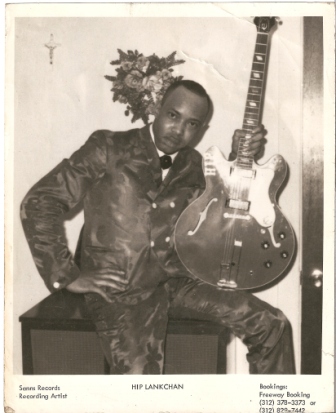
Hip Linkchain (November 10, 1936 – February 13, 1989) was an American Chicago blues guitarist, singer and songwriter.[1]
His best known numbers were "Change My Blues" and "That Will Never Do".[2] Allmusic described him as a "solid, no-frills bluesman".[3] Another music journalist noted, "his composer's talents put him much above the average bluesmen".[4] Linkchain variously worked with Lester Davenport, Pinetop Perkins, Tyrone Davis, and Little Walter.
He was born Willie Richard in Jackson, Mississippi, United States. His stage name was in deference to his father's nickname of 'Linkchain', due to his habit of sporting logging chains around his neck, and the boy's own childhood nickname of 'Hipstick'.[1][6] He was inspired by the blues playing of Sonny Boy Williamson II, Elmore James and Little Milton, all of whom Linkchain heard in the Mississippi delta, prior to him relocating to Chicago, Illinois, in 1954.[1] He had been raised in Louise, Mississippi, and picked cotton before his move north.[7] Linkchain found regular employment playing blues guitar in the clubs of Chicago throughout the 1950s and 1960s, and he variously worked with the harmonica players, Lester Davenport, Dusty Brown, and Willie Foster.
By 1959, Linkchain had formed his own band known as the Chicago Twisters, who had Tyrone Davis as their frontman. Linkchain recorded spasmodically, mainly for small independent record labels based in Chicago, and a handful of his singles were released in the 1960s. It was not until 1983 that Linkchain saw his debut album issued, when the small Teardrop Records outfit released Change My Blues.[1] The recording saw Linkchain play alongside Pinetop Perkins (piano), Rich Kirch (guitar), Right Hand Frank Bandy (bass) and Fred Grady (drums).[7]
His best known album, Airbusters, was originally released by the Netherlands based Black Magic record label in 1988.[8] It was re-issued on the Evidence label, but Linkchain was to experience only a short period of fame, before his death from cancer in Chicago in February 1989.
HIP LINKCHAIN cold chills
James "Thunderbird" Davis *10.11.1938

James "Thunderbird" Davis wurde am 10.11.1938 in Prichard, AL unter dem Namen James Houston geboren. Die Werke von James "Thunderbird" Davis wurden unter anderem von Bobby "Blue" Bland, Guitar Slim und Lloyd Lambert beeinflusst. Die verschiedenen Musikstile (Texas-Blues, Zeitgenössische Bluesmusik und Regional Blues) von James "Thunderbird" Davis erinnern an ähnliche Blues-Bands und Künstler, wie Z.Z. Hill, Little Milton oder Grady Gaines. James "Thunderbird" Davis arbeitete nebenbei als Songschreiber für verschiedene Künstler, dabei schrieb James "Thunderbird" Davis unter anderem für Arthur Williams Songs.
James Davis went out the way entertainers often dream of. While performing at the Blues Saloon in St. Paul, MN, he suffered a fatal heart attack in mid-set and died on-stage. The tragic event ended a comeback bid that warmed the heart of blues aficionados; Davis' whereabouts were so unknown prior to his triumphant re-emergence that he was rumored to be dead.
His melismatic vocal delivery betraying strong gospel roots, Davis secured his first pro gig in 1957 as opening act for Guitar Slim. The flamboyant guitarist was responsible for tagging Davis with his "Thunderbird" moniker. Davis lost a drinking contest to his boss that sent him to the hospital; the singer's libation of choice that fateful day was Thunderbird wine (which Davis swore off for life).
Davis signed on with Don Robey's Houston-based Duke Records in 1961. Robey utilized his new discovery as a demo singer for Bobby Bland when Davis wasn't cutting his own singles. Two of Davis' Duke offerings, the tortured blues numbers "Blue Monday" and "Your Turn to Cry," rank with finest blues 45s of the early '60s, but did little for Davis at the time. He left Duke in 1966, opening for Joe Tex and O.V. Wright on the road before settling down.
After just about giving up entirely on show biz, Davis was tracked down in Houma, LA, by Black Top Records boss Hammond Scott and two cohorts. A 1989 album called Check Out Time was the happy result; sidemen on the date included two former cohorts, bassist Lloyd Lambert (Guitar Slim's bandleader) and guitarist Clarence Hollimon. The resultant acclaim catapulted Davis back into the limelight for the last years of his life.
Eric Sardinas *10.11.1970

Eric Sardinas (* 1970 in Fort Lauderdale, Florida) ist ein US-amerikanischer Bluesrock-Gitarrist.
Sardinas lernte bereits mit 6 Jahren, den Blues auf der Gitarre zu spielen. Als Vorlagen dienten ihm Aufnahmen von Barbecue Bob, Charlie Patton, Bukka White, Big Bill Broonzy, Elmore James und Muddy Waters.
Nach unsteten Jahren kam Sardinas 1990 nach Los Angeles. Er spielte auf der Straße, bevor er das Eric Sardinas Project (ESP) gründete, zunächst nur mit dem Bassisten Paul Loranger, später auch mit dem Schlagzeuger Scott Palacios.
Lange Jahre spielten sie in Clubs, bis die Musikbranche auf sie aufmerksam wurde. Sie wurden als Johnny Winters Vorgruppe engagiert und konnten 1999 ihr erstes Album bei Evidence aufnehmen. Nach einer weiteren Platte (Devil's Train), wechselte die Band zu dem von Steve Vai gegründeten Label Favored Nations Entertainment unter dem ihr drittes Werk erschien. Steve war Gastmusiker.
2001 und 2005 spielte die Eric Sardinas Band als Vorgruppe von Steve Vai auf dessen Welttourneen. Am 19. Februar 2008 erschien das Album Eric Sardinas And Big Motor. 2011 folgte das Album Sticks & Stones auf dem Provogue Label mit Levell Price am Bass und Chris Fraizure an Schlagzeug. An den Tasten sitzt Dave Shultz.
http://de.wikipedia.org/wiki/Eric_Sardinas
Slide guitarist and singer-songwriter Eric Sardinas has a reputation for packing intensity into his live performances. Since the late-90s’ Sardinas has taken the stage thousands of times across the globe, with audiences growing exponentially each passing year. His six albums have displayed a distinct style that musically pushes the boundaries of rock and blues, and the world has taken notice.
Now Sardinas has put his onstage lighting in a bottle for the new album Sticks & Stones, an 11-song powerhouse of his trademark slide guitar that is a vehicle to drive his inspiration from the roadhouse in to mainstream music. Sardinas’ unique mixture weaves his heavy blues and rock threads in to a flamethrower to the listener and takes them on a ride encompassing the past, present and future of what music is meant to be.
"Playing with intensity all over the world non-stop and loving every minute of it has been my inspiration," Sardinas explains. "That’s why I get up in the morning and what I live for. Making music keeps me in the moment, allowing my heart to speak to people."
More fans have heard that voice with each tour Sardinas and his band Big Motor have made, and with each of the previous six albums he’s recorded. Those discs include 2003’s live-in-the-studio Black Pearls, which was produced by Jimi Hendrix’s engineer Eddie Kramer, and 2009’s Eric Sardinas and Big Motor, helmed by Matt Gruber.
Gruber, whose credits range from Ricky Martin and Carrie Underwood to the Scorpions and Lit, returns for Sticks & Stones — an album that Sardinas says captures the full range of his playing and the energy and excitement of the trio’s ‘Big Motor’ sound. "It’s really about pushing myself," Sardinas continues. "My goal is to keep growing every time I play, which is why there is so much musical freedom in improvisation when Big Motor performs live."
For Sticks & Stones, the trio approached the studio with a no holds barred approach. Whether acoustic and electric, they stayed true to their live sound, recording with no rules. Levell Price (bass) and Chris Frazier (drums), join Sardinas in delivering a kaleidoscope that melds all the shades and hues of the band’s intensity. "As always, every note is meaningful and has something to say from each player," says Sardinas.
His instrument of choice is his signature electrified resonator guitar (pictured above). Sardinas modernized an instrument made famous by traditional Blues artists in electrifying the instrument, and expanding the usual spectrum of what these guitars historically deliver musically. It is Eric’s connection and homage to his roots, and in finding his own voice, comes the electrified resonator. His trademark expression and words to live by are "Respect Tradition," and the resonator is a deep part of this.
By deftly controlling his guitar’s volume Sardinas can make the resonator emote the mood he’s feeling with its acoustic energy or electrified growl, as it does during the breakdown on Sticks & Stones’ pure spirited country blues "County Line," or roar like a lion on the hard-driving "Full Tilt Mama" and "Road To Ruin." The latter features one of Sardinas’ highest flying slide solos: a sexy, sizzling break that’s a perfect fusion of gutty energy and piquant melody — two qualities Sardinas displays in spades.
The chugging instrumental "Behind the 8" puts his slide to the fore. One reason for his always-recognizable sound is his signature slide. The Dunlop company has begun reproducing a replica of the brass pipe that travelled a million miles with Sardinas. The calibration, weight, and wear of the infamous ‘preaching pipe’ has become accessible to players worldwide. Sardinas shares, "the original pipe has so much mojo on it from over a decade of worldwide travel, and being by my side through every beer soaked bar and venue the road has to offer, the original is now only used for studio. To Sardinas, it is irreplaceable. He offers, "If Dunlop offered me a million bucks for it, I’d have to turn it down."
The common thread in all the tunes on Sticks & Stones is the essence of affairs of the heart – passions, hopes and dreams are all inspirational in a positive and negative way to Sardinas. He shares, "I like writing about universal themes. The trick is to find my own unique way of expressing myself within those themes. Every breathing moment if you walk with yours eyes open, there is song there."
A Florida-born Sardinas picked up a guitar at age six. He was inspired by the energy of roots music from his mom’s soul, Motown, gospel, and early rock n’ roll collection. From his elder brother, classic rock was always being played. Sardinas reflects, "Music was always heard in the house. I woke up to, and fell asleep to it. Still do". In his teens, he submersed himself in the Blues. "That was it for me," he says. "In blending my influences, I found my own sound. I feel very fulfilled being able to make this music my life for more than 20 years now. And my goal is to keep growing and improving, and to respect this music and stick by it the way its has supported and inspired me."
Slide guitarist and singer-songwriter Eric Sardinas has a reputation for packing intensity into his live performances. Since the late-90s’ Sardinas has taken the stage thousands of times across the globe, with audiences growing exponentially each passing year. His six albums have displayed a distinct style that musically pushes the boundaries of rock and blues, and the world has taken notice.
Now Sardinas has put his onstage lighting in a bottle for the new album Sticks & Stones, an 11-song powerhouse of his trademark slide guitar that is a vehicle to drive his inspiration from the roadhouse in to mainstream music. Sardinas’ unique mixture weaves his heavy blues and rock threads in to a flamethrower to the listener and takes them on a ride encompassing the past, present and future of what music is meant to be.
"Playing with intensity all over the world non-stop and loving every minute of it has been my inspiration," Sardinas explains. "That’s why I get up in the morning and what I live for. Making music keeps me in the moment, allowing my heart to speak to people."
More fans have heard that voice with each tour Sardinas and his band Big Motor have made, and with each of the previous six albums he’s recorded. Those discs include 2003’s live-in-the-studio Black Pearls, which was produced by Jimi Hendrix’s engineer Eddie Kramer, and 2009’s Eric Sardinas and Big Motor, helmed by Matt Gruber.
Gruber, whose credits range from Ricky Martin and Carrie Underwood to the Scorpions and Lit, returns for Sticks & Stones — an album that Sardinas says captures the full range of his playing and the energy and excitement of the trio’s ‘Big Motor’ sound. "It’s really about pushing myself," Sardinas continues. "My goal is to keep growing every time I play, which is why there is so much musical freedom in improvisation when Big Motor performs live."
For Sticks & Stones, the trio approached the studio with a no holds barred approach. Whether acoustic and electric, they stayed true to their live sound, recording with no rules. Levell Price (bass) and Chris Frazier (drums), join Sardinas in delivering a kaleidoscope that melds all the shades and hues of the band’s intensity. "As always, every note is meaningful and has something to say from each player," says Sardinas.
His instrument of choice is his signature electrified resonator guitar (pictured above). Sardinas modernized an instrument made famous by traditional Blues artists in electrifying the instrument, and expanding the usual spectrum of what these guitars historically deliver musically. It is Eric’s connection and homage to his roots, and in finding his own voice, comes the electrified resonator. His trademark expression and words to live by are "Respect Tradition," and the resonator is a deep part of this.
By deftly controlling his guitar’s volume Sardinas can make the resonator emote the mood he’s feeling with its acoustic energy or electrified growl, as it does during the breakdown on Sticks & Stones’ pure spirited country blues "County Line," or roar like a lion on the hard-driving "Full Tilt Mama" and "Road To Ruin." The latter features one of Sardinas’ highest flying slide solos: a sexy, sizzling break that’s a perfect fusion of gutty energy and piquant melody — two qualities Sardinas displays in spades.
The chugging instrumental "Behind the 8" puts his slide to the fore. One reason for his always-recognizable sound is his signature slide. The Dunlop company has begun reproducing a replica of the brass pipe that travelled a million miles with Sardinas. The calibration, weight, and wear of the infamous ‘preaching pipe’ has become accessible to players worldwide. Sardinas shares, "the original pipe has so much mojo on it from over a decade of worldwide travel, and being by my side through every beer soaked bar and venue the road has to offer, the original is now only used for studio. To Sardinas, it is irreplaceable. He offers, "If Dunlop offered me a million bucks for it, I’d have to turn it down."
The common thread in all the tunes on Sticks & Stones is the essence of affairs of the heart – passions, hopes and dreams are all inspirational in a positive and negative way to Sardinas. He shares, "I like writing about universal themes. The trick is to find my own unique way of expressing myself within those themes. Every breathing moment if you walk with yours eyes open, there is song there."
A Florida-born Sardinas picked up a guitar at age six. He was inspired by the energy of roots music from his mom’s soul, Motown, gospel, and early rock n’ roll collection. From his elder brother, classic rock was always being played. Sardinas reflects, "Music was always heard in the house. I woke up to, and fell asleep to it. Still do". In his teens, he submersed himself in the Blues. "That was it for me," he says. "In blending my influences, I found my own sound. I feel very fulfilled being able to make this music my life for more than 20 years now. And my goal is to keep growing and improving, and to respect this music and stick by it the way its has supported and inspired me."

31. Leverkusener Jazztage:
Sendung vom 08.11.2010
Eric Sardinas & Big Motor (Leverkusener Jazztage 2010)
Christoph "Jimmy" Reiter *10.11.

 "Dieser Kerl ist definitiv einer der besten jungen Gitarristen der europäischen Bluesszene", schreibt das britische Magazin Blues & Rhythm über den Osnabrücker Musiker Christoph "Jimmy" Reiter, und auch hierzulande scheint man sich einig zu sein – Kommentare wie "Gitarrenkunst der Extraklasse" (Saarbrücker Zeitung) und "meisterliche Saitenarbeit" (Kieler Nachrichten) sind in der hiesigen Presse häufiger zu finden.
Angefangen hat seine Liebe zur Musik früh: Noch ohne seinen späteren Spitznamen "Jimmy" begann der kleine Christoph das Gitarrespielen als Neunjähriger auf der akustischen Version des Instruments, um jedoch bald zu erkennen, daß er seinen Vorbildern auf den LPs seiner Eltern mit ihren E-Gitarren samt Verstärkern alleine lautstärketechnisch hoffnungslos unterlegen war. Diesem Umstand trug glücklicherweise bald der Weihnachtsmann Rechnung, und mit neuem Equipment beschenkt war man dem angestrebten Sound gleich einen großen Schritt näher.
Als Teenager begann Jimmy Reiter, sich mit einer Musikrichtung besonders anzufreunden – dem Blues. Die wöchentliche Blues-Jam-Session in der Osnabrücker Szenekneipe "Pink Piano" gab ihm die Gelegenheit, sein Interesse zu vertiefen, zunächst als Zuhörer, dann bald auf der Bühne. Mitte der Neunziger kam es zu ersten Auftritten mit den Bands verschiedener Kollegen, es folgten CD Aufnahmen, und spätestens jetzt wurde klar, wohin der Weg einmal gehen sollte.
Im Jahre 1999 lernte Jimmy den Washingtoner Harpspieler und Sänger Doug Jay kennen und schloß sich dessen Band "The Blue Jays" an. Innerhalb der nächsten Jahre erspielte sich die Band europaweit einen hervorragenden Ruf, ausgedehnte Tourneen durch Skandinavien, England und Italien folgten, und die beiden Studioalben "Jackpot!" und "Under The Radar" (beide auf CrossCut Records) wurden sowohl von der Kritik als auch den Fans hoch gelobt.
Als ihm 2008 der Posten des Gitarristen in der "Bluesnight Band" angeboten wurde, sagte Jimmy Reiter gerne zu, denn mit dieser Formation kann er seitdem monatlich wechselnde Stargäste wie z.B. Darrell Nulisch, Larry Garner und Deitra Farr auf kurzen Tourneen begleiten. Nebenbei ist Jimmy immer wieder ein gefragter Musiker für Studioalben anderer Kollegen, so z.B. bei "Love Is The Key" von Big Daddy Wilson (Ruf Records), Keith Dunns "Collection" und "Kinky At The Root" von Dede Priest, sowie für Liveshows - sei es für Memo Gonzalez & The Bluescasters, Boo Boo Davis oder Albie Donnelly's Supercharge.
Schon früh in seiner Laufbahn hatte sich Jimmy zwischendurch auch immer wieder am Gesangsmikrofon wiedergefunden, was ihn noch im letzten Jahrtausend dazu veranlasst hatte, seine eigene Band ins Leben zu rufen, um neben allen anderen Projekten seine Qualitäten als Frontmann und Sänger unter Beweis stellen zu können. Auch als Komponist war Jimmy Reiter bereits bei den "Blue Jays" in Erscheinung getreten, wo er sowohl alleine als auch im Team mit Doug Jay Stücke für beide Alben beigesteuert hatte.
2011 ist die Zeit endlich reif für das erste Jimmy Reiter Solo-Album. Unter dem Titel "High Priest Of Nothing" hat Reiter eine Platte mit zwölf überwiegend eigenen Stücken aufgenommen und sich dafür tatkräftige Unterstützung bekannter Kollegen ins Studio holen können. Der Bostoner Saxophonist "Sax" Gordon Beadle folgte ebenso dem Ruf des Osnabrückers wie Bluespianomeister Chris Rannenberg, und auch der Rest der Besetzung kann sich sehen und hören lassen. Entstanden ist so ein abwechslungsreiches Album mit viel Blues, jeder Menge R&B, spannenden Kompositionen mit intelligenten Texten und nicht zuletzt einigen Überraschungen, denen man den Spaß bei der Studioarbeit förmlich anhört. Live ist Jimmy Reiter derzeit mit seiner Band unterwegs, um das neue Album vorzustellen, und damit es ihm bestimmt nicht langweilig wird, präsentiert er auch weiterhin mit der Bluesnight Band verschiedene Gaststars und tourt mit seinem alten Weggefährten Doug Jay durch die Lande.
http://www.jimmyreiter.de/de/bio.html
Jimmy Reiter, who for over 10 years was lead guitarist with US Blues singer/harmonica player Doug Jay as well as supporting player for numerous international Blues artists on their European tours, released High Priest Of Nothing (PogoPop Musik / Membran) in 2011, his solo debut as a front man. The CD, winning the German Record Critics' Award and gaining praise by fans and critics alike, launched his career as a bandleader & frontman in his own right. Extensive European touring quickly established the Jimmy Reiter Band as a class act in the international Blues scene, and on his new release Told You So, Reiter once again shows his talents as a guitarist and singer, and proves to be a convincing songwriter, firmly rooted in the tradition of Blues and R&B, but with a fresh style of his own.
He is supported by his German/Dutch band consisting of Mo Fuhrhop – organ/piano, Jasper Mortier – bass and Björn Puls – drums. On Told You So, this quartet is augmented by Reiter's long-time friends and musical colleagues Kai Strauss (guitar on two tracks) and Boston saxophone virtuoso Sax Gordon (on four tracks), the latter having provided highlights on Reiter's debut album as well. The twelve songs on this recording – nine of which are originals – offer a blend of Blues, R&B and funky grooves, with Jimmy Reiter and his band sounding tight, soulful, and most definitely like themselves.
He is supported by his German/Dutch band consisting of Mo Fuhrhop – organ/piano, Jasper Mortier – bass and Björn Puls – drums. On Told You So, this quartet is augmented by Reiter's long-time friends and musical colleagues Kai Strauss (guitar on two tracks) and Boston saxophone virtuoso Sax Gordon (on four tracks), the latter having provided highlights on Reiter's debut album as well. The twelve songs on this recording – nine of which are originals – offer a blend of Blues, R&B and funky grooves, with Jimmy Reiter and his band sounding tight, soulful, and most definitely like themselves.
Jimmy Reiter "Get down to the Nitty-Gritty"
R.I.P.
Ida Cox +10.11.1967
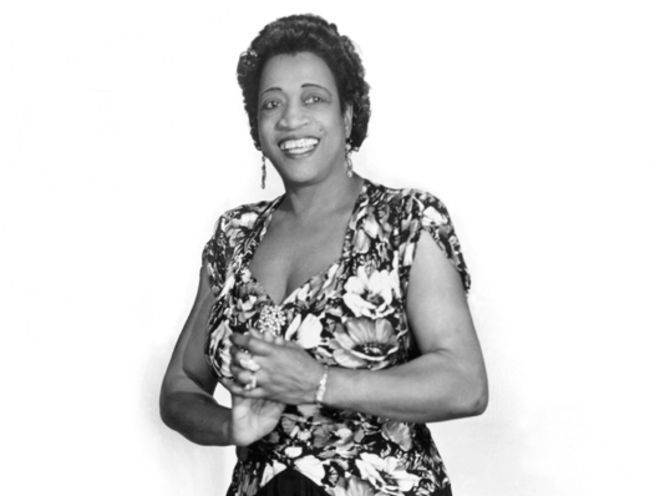
Ida Cox (* 25. Februar 1896 in Toccoa, Georgia als Ida Prather; † 10. November 1967 in Knoxville, Tennessee) war eine US-amerikanische Blues- und Jazzsängerin.
Cox begann als Darstellerin und Sängerin in Minstrel Shows, wechselte dann zum Vaudeville und war zu Beginn der 1920er Jahre der Star der Theater Owners Booking Association. Sie machte makabre Titel mit einprägsamen Namen („Monkey Man Blues“, „Death Letter Blues“, „Graveyard Bound Blues“) bekannt, behauptete aber auch „Wild Woman Don't Have The Blues“. Zwischen 1923 und 1929 nahm Cox regelmäßig für Paramount auf (u.a. mit Lovie Austins Blues Serenaders und der Band von Fletcher Henderson). Ab 1927 wurde sie von Jesse Crump begleitet, den sie später heiratete.
1939 brachte sie John Hammond nach New York, um im Cafe Society aufzutreten, Radiosendungen zu machen und Platten mit Hot Lips Page aufzunehmen. Höhepunkt dieser Marketingstrategie war ihr Auftritt in Hammonds epochemachenden Spirituals To Swing-Konzert am 24. Dezember 1939. Anschließend war sie mit zwei erfolgreichen Shows („Raising Cain!“, „Darktown Scandals“) auf Tournee, bis sie 1944 einen Schlaganfall erlitt. Der ist ihr auf ihrer letzten, 1961 aufgenommenen Schallplatte mit dem Quintett von Coleman Hawkins, dem Roy Eldridge und Milt Hinton angehörten, nicht anzumerken. Cox nahm außerdem mit Charlie Christian, Lionel Hampton, J. C. Higginbotham, Jelly Roll Morton, Elmer Chambers und Tommy Ladnier auf.
Ida Cox (February 26, 1896 – November 10, 1967)[1] was an African American singer and vaudeville performer, best known for her blues performances and recordings. She was billed as "The Uncrowned Queen of the Blues".[2]
Childhood and early career
Cox was born February 26, 1896 to sharecropper parents as Ida Prather in Toccoa, Habersham County, Georgia,[3] Georgia, United States, the daughter of Lamax and Susie (Knight) Prather, and grew up in Cedartown, Polk County, Georgia.[4] Her family lived and worked in the shadow of the Riverside Plantation, the private residence of the wealthy Prather family, from which her namesake came.[5] She faced a future of desperate poverty and limited educational and employment opportunities.[6]
Cox joined the local African Methodist Choir at a young age and thus developed a strong interest in gospel music and performance.[6] At the young age of 14, she left her home to tour with the White and Clark's Black & Tan Minstrels.[7] She began her career on stage by playing Topsy, a "pickaninny" role prevalent on the vaudeville stage at the time and often performed in blackface. Cox's early road show experience also included stints with other African American travelling minstrel shows in the Theater Owners Booking Association (T.O.B.A) vaudeville circuit, including the Florida Orange Blossom Minstrels, the Silas Green Show, and the Rabbit Foot Minstrels.[8] The Rabbit Foot Minstrels, organized by F. S. Wolcott and based after 1918 in Port Gibson, Mississippi, was important not only for the development of Cox’s performing career but was also instrumental in launching the careers of fellow blueswomen and Cox’s idols, Ma Rainey and Bessie Smith.[9]
The Rabbit Foot Minstrels, known colloquially as “The Foots”, provided a nurturing environment for Cox to develop her career and stage presence, but life on the vaudeville circuit was trying for performers and workers alike. In his book The Story of the Blues, Paul Oliver wrote: "The 'Foots' travelled in two cars and had a 80' x 110' tent which was raised by the roustabouts and canvassmen, while a brass band would parade in town to advertise the coming of the show...The stage would be of boards on a folding frame and Coleman lanterns – gasoline mantle lamps – acted as footlights. There were no microphones; the weaker voiced singers used a megaphone, but most of the featured women blues singers scorned such aids to volume..."[9] When not singing, Cox earned money performing as a sharp-witted comedienne in vaudeville variety shows, gaining valuable stage experience and cultivating her characteristic charismatic stage presence.[6]
Personal life
In 1916, she married Adler Cox, who performed as a trumpeter with the Florida Blossoms Minstrels, a group with which Ida briefly toured. Their marriage was cut short by Adler Cox’s untimely death during World War I, though Ida kept her married name throughout the rest of her performing career. During the early 1920s, Cox remarried to Eugene Williams and the couple gave birth to a daughter, Helen. Few other details are known of this marriage, which ended in divorce. In 1927 Cox married Jesse “Tiny” Crump, a blues piano accompanist active in the Theater Owners’ Booking Association vaudeville circuits. Crump collaborated with Cox in the composition of many of her songs, including “Gypsy Glass Blues” and “Death Letter Blues,” provided piano and organ accompaniment on several of her recordings, and also served as manager of her blossoming career during this time.[6]
Gaining popularity
By 1915, Cox had advanced from the pickaninny roles of her early minstrel years to singing the blues almost exclusively. In 1920, she left the vaudeville circuit briefly to appear as a headline act at the 81 Theatre in Atlanta, Georgia with blues piano great, Jelly Roll Morton.[10] Her commanding stage presence and expressive delivery earned Cox star billing, and by the early 1920s, Cox was regarded as one of the finest solo acts offered by the shows that travelled the Theater Owners’ Booking Association circuit. In March 1922 a performance by Cox at the Beale Street Palace of Memphis, Tennessee, was aired on WMC Radio, leading to positive reviews as well as wider audience exposure to her music.
Recording career
After the success of Mamie Smith's pioneering 1920 recording of "Crazy Blues", record labels realized there was a demand for recordings of race music. The classic female blues era had begun, and would extend through the 1920s. With her popularity in the South rapidly increasing, Cox caught the attention of talent scouts and secured a record contract with Paramount, a label that she shared with her idol Ma Rainey. Paramount touted Cox as the “Uncrowned Queen of Blues,” a title that she proved deserved though her prolific recording career. Between September 1923 and October 1929, Cox recorded a total of 78 titles for Paramount.[8] For her numerous recording sessions, Paramount provided Cox with outstanding back-up musicians including female pianist Lovie Austin and her band the Blues Serenaders, featuring Jimmy O'Bryant (clarinet) and Tommy Ladnier (cornet).[6] During this period, Cox also recorded a number of songs for other labels such as Broadway Records and Silvertone using pseudonyms such as Kate Lewis, Velma Bradley, Julia Powers, and Jane Smith.
Raisin’ Cain
In 1929, Ida Cox and husband Jesse Crump formed their own tent show revue, aptly named Raisin’ Cain (after the biblical story of Cain and Abel and resulting colloquialism).[11] Cox performed as the title act and Crump acted as both accompanist and manager.[8] Through the end of the 1920s and into the early 1930s, Raisin’ Cain toured black theaters across the Southeast and westward through Texas, with Cox and Crump managing to book shows in Florida, Alabama, Tennessee, Texas, Missouri, and Oklahoma as well as a number of performances in Chicago. The Raisin’ Cain tent show proved so popular that in 1929 it became the first show associated with the Theater Owners’ Booking Association circuit to open at the famed Apollo Theater in Harlem, New York. Cox, sometimes billed as the "Sepia Mae West", headlined touring companies into the 1930s.[12] This represented the pinnacle of Cox’s performing career.
By the end of the decade, the Great Depression as well as the waning popularity of women blues singers proved difficult for Cox and her show, and Raisin’ Cain suffered from difficulty maintaining its performers, frequent layoffs as well as gaps in the show's touring schedule.[8] Still, while other blueswomen all but disappeared from public performance, Cox managed to continue her performing career through the 1930s. In 1935, Cox and Crump reorganized Raisin’ Cain, which had by then been renamed as the Darktown Scandals, and continued to tour throughout the South and Midwest until 1939. In the early 1930s, notable American rock & roll and R&B drummer Earl Palmer entered show business as a tap dancer in Cox's Darktown Scandals Review.[13]
Later career and comeback
The year 1939 proved a very industrious and successful year for Cox. That year, Cox was invited to participate in John Hammond's historic Carnegie Hall concert series, From Spirituals to Swing.[10] In the concert, Cox gave a performance of "Four Day Creep", backed by James P. Johnson (piano), Lester Young (tenor saxophone), Buck Clayton (trumpet), and Dicky Wells (trombone), which proved to be a highlight of the concert series and gave her performing career a much needed boost after the Depression-era decline.[6] That same year, Cox also resumed her recording career with a series of sessions for Vocalion Records and, in 1940, Okeh Records, with groups that at various times included guitarist Charlie Christian, trumpeters Hot Lips Page and Henry "Red" Allen, trombonist J. C. Higginbotham, and percussionist Lionel Hampton. She continued to perform until 1945, when a debilitating stroke she suffered during a show at a nightclub in Buffalo, New York, forced her into retirement.[8] Cox retired to Knoxville, Tennessee where she assumed a low profile, became very active in her church, and lived with her daughter, Helen Goode.[6]
Cox had effectively fallen off the map of the music world until 1959 when John Hammond took out an ad in Variety magazine in search of Cox. After successfully locating her, Hammond as well as record producer Chris Albertson urged the blues singer to make one final recording, an album for Riverside Records titled Blues For Rampart Street. In 1961, after a 15-year hiatus, Cox made a successful recording comeback. The album was backed by an all-star group composed of Roy Eldridge, Coleman Hawkins, pianist Sammy Price, bassist Milt Hinton, and drummer Jo Jones.[6] The album featured her revisiting songs from her old repertoire, including "Wild Women Don't Have the Blues", which found a new audience, including such singers as Nancy Harrow and Barbara Dane, who recorded their own versions of the tune. A review in the New York Times said that Cox at the age of 65 had lost quality in both range and intonation, but retained her charismatic and expressive delivery of many of the classic tunes that had launched her into stardom.[14] Cox referred to the album as her "final statement". After recording Blues for Rampart Street, she returned once again to live with her daughter in Knoxville, Tennessee. Cox suffered another stroke in 1965, and in 1967, she entered East Tennessee Baptist Hospital where she died of cancer on November 10, 1967, aged 71. She was buried in Longview Cemetery, Knoxville.
Singing style
Reflective of her early career in the vaudeville circuits, Cox's style leaned more toward vaudeville than pure blues. Although possessing a less powerful and rugged voice than some of her better-known contemporaries such as Bessie Smith and Ma Rainey, Cox kept her audiences spellbound with the fiery spirit of her delivery.[6] At the height of the classic female blues era, competition was stiff due to the great number of talented blueswomen performing, and thus Cox's talent constituted only part of her act. As her career developed, Cox assumed and embodied the title bestowed to her as the “Uncrowned Queen of the Blues.” Onstage, she exuded a glamorous sophistication and confidence that captivated her fans. She embellished her stage presence with a stylish and regal wardrobe that often included a tiara, cape and a rhinestone wand.[8]
Independent spirit
The independent spirit that governed Cox's life and career was a characteristic shared by many early blues stars, including Bessie Smith, Ma Rainey, Sippie Wallace, and Victoria Spivey. Forced to exercise independence from an early age as a result of her teenage career in the minstrel circuits, Cox further proved herself as an independent and astute businesswoman through her ability to organize and maintain her own troupe, Raisin’ Cain, which lasted for a decade. In this way, Cox was responsible for breaking barriers, as virtually no black females owned and managed their own businesses in the 1920s and 1930s.[6] Cox was one of the few female blues singers of the time to write her own songs.
Legacy and cultural significance
Through her raw and sharp lyricism, Cox was able to introduce the complex social realities of poor and working class African Americans in the early twentieth century.[5] Her tunes address topics of female independence, sexual liberation, and the social and political struggles of black Americans from a decidedly female perspective that became her trademark. One of Cox's most famous and enduring tunes, "Wild Women Don't Have The Blues", is remembered as one of the earliest feminist anthems:
“I've got a disposition and a way of my own,
When my man starts to kicking I let him find a new home,
I get full of good liquor, walk the street all night
Go home and put my man out if he don’t act right
Wild women don't worry,
Wild women don't have the blues.



.JPG)