1920 Annisteen Allen*
1927 Mose Allison*
1928 Ernestine Anderson*
1929 LaVern Baker*
1936 Buddy Ace*
1942 Jim Schwall*
1944 William Christopher Smither*
1955 Dave Alvin*
1972 Berry Oakley III+
2014 Johnny Dyer+
Happy Birtday
Dave Alvin *11.11.1955

Dave Alvin (* 11. November 1955 in Downey, Kalifornien) ist ein US-amerikanischer Country- und Folk-Musiker.
1979 gründete Dave zusammen mit seinem Bruder Phil und einigen weiteren Musikern in Los Angeles die Band Blasters. Nach sieben Jahren verließ er die Gruppe, um eine Country-Musik-orientierte Solokarriere zu starten. Sein erstes Album Romeo's Escape verkaufte sich aber nur schlecht, und Alvin verlor seinen Plattenvertrag.
Als Songwriter war er zunächst erfolgreicher. Dwight Yoakam hatte mit einem von ihm geschriebenen Titel einen Hit. Dave Alvin konnte dadurch 1991 ein zweites Album finanzieren: Blue Blvd, auf dem auch sein Idol, der Saxophonist Lee Allen zu hören ist. Dieses Mal fand er Anerkennung sowohl bei der Kritik als auch beim Publikum.
In seinen weiteren Produktionen trat die elektrische Gitarre zunehmend zugunsten der akustischen in den Hintergrund. Im Jahr 2000 spielte er mit Public Domain ein Album mit traditionellen Folksongs ein, für das er im darauf folgenden Jahr den Grammy des "Best Contemporary Folk Album" erhielt.
Im Jahr 2011 wirkte Alvin an der Musikdokumentation Troubadour Blues mit.
Dave Alvin helped to kick-start the American roots rock scene in the early '80s with the band the Blasters, and has since gone on to a career as a solo performer, songwriter, producer, and sideman that's been as well respected as it is eclectic. Born in Downey, California in 1955, Alvin was raised by a family of music fans, and as teenagers Dave and his older brother Phil immersed themselves in blues, rockabilly, and vintage country sounds, collecting rare records and attending nightclub performances by the likes of T-Bone Walker, Big Joe Turner, and Lee Allen. Like many fans, the Alvin brothers wanted to play music influenced by the sounds they loved, and in 1979 they formed the Blasters with fellow Downey residents Bill Bateman and John Bazz. Combining the revved-up energy of punk rock with an enthusiastic embrace of classic American sounds, the Blasters became a sensation in Los Angeles and won an enthusiastic cult following across the United States and Europe. However, the Blasters were unable to translate their critical respect and enthusiastic fan base into mainstream success, and in 1986 Dave left the band. Phil Alvin continued to front various lineups of the Blasters, and in 2002 Dave joined forces with Phil, Bill Bateman, and John Bazz for a short series of Blasters reunion shows.
While playing with the Blasters, Alvin had already displayed a broad range of enthusiasms with two side projects, Chris D.'s literate goth-punk collective the Flesh Eaters and the Knitters, an acoustic ensemble in which Alvin performed vintage country and folk numbers with John Doe and Exene Cervenka of X. Shortly after leaving the Blasters, Alvin joined X as lead guitarist after the departure of Billy Zoom; however, Alvin amicably left the group to work on a solo project shortly after the recording sessions for their album See How We Are. Alvin's first solo album, entitled Romeo's Escape in the United States and Every Night About This Time in England, added a purer country influence along with a larger side portion of the blues; while the album was critically well received, it didn't fare well in the marketplace, and Alvin was dropped by his American record label, Columbia. Alvin suffered health problems that sidelined him for a while, except for a wild tour with friends Mojo Nixon and Country Dick Montana as the Pleasure Barons, which was described as "a Las Vegas revue from acts who aren't going to be asked to play Vegas." (A live album was released of a second Pleasure Barons tour in 1993.)
In 1989, Dwight Yoakam scored a hit on the country charts with Alvin's song "Long White Cadillac," and Alvin used the royalties to start work on his second solo set, Blue Blvd. Released by the California-based roots-music label Hightone Records, Blue Blvd received enthusiastic reviews and sold well enough to reestablish Alvin as a significant artist in the roots rock scene. After releasing Museum of Heart in 1993, Alvin began to turn his attention to acoustic music with 1994's King of California, and over the next several years Alvin moved back and forth between hard-edged roots rock and more introspective acoustic material that still honored his influences (and allowed him to display a greater range as a vocalist). In 2000, Alvin recorded a collection of traditional folk and blues classics, Public Domain: Songs from the Wild Land, which earned him a Grammy Award for Best Contemporary Folk Album. In 2004, Alvin signed with the upstart roots rock label Yep Roc Records, which released his album Ashgrove, a low-key but hard-edged set of blues and rock. It was followed in 2006 by West of the West and a year later by Live from Austin TX (a performance on Austin City Limits from 1999).
He changed his approach a bit with Dave Alvin and the Guilty Women, which was issued by Yep Roc in 2009, by recording with five women, and it seemed to revitalize him. Eleven Eleven, Alvin's first solo studio album of original material in some seven years, appeared in 2011, again on Yep Roc. Eleven Eleven included a duet with Phil Alvin on the tune "What's Up with Your Brother?," and in 2014 Dave and Phil recorded a full album together for the first time since Dave left the Blasters; Common Ground: Dave Alvin & Phil Alvin Play and Sing the Songs of Big Bill Broonzy was a celebration of one of their first and strongest musical influences that found them both in strong form. The Alvin brothers supported Common Ground with a concert tour, and in 2015 Dave and Phil returned with a lively set of electric blues, Lost Time.
When not busy recording his own music, Alvin has also worked as a producer for several other roots-oriented acts, including Tom Russell, the Derailers, and Big Sandy & His Fly-Rite Boys, and he has collaborated with rockabilly legend Sonny Burgess. As a sideman, Alvin has recorded sessions with the likes of Ramblin' Jack Elliott, Little Milton, Katy Moffatt, and Syd Straw.
"Boss of the Blues" -Dave Alvin & The Guilty Women - Live at the Santa Monica Pier 8/6/09
LaVern Baker *11.11.1929

LaVern Baker (* 11. November 1929 in Chicago, Illinois; † 10. März 1997 in New York City; eigentlich Delores Baker, nicht jedoch Delores Williams, wie oft fälschlich angegeben (angeheirateter Name)), war eine US-amerikanische Rhythm-and-Blues-Sängerin.
Sie begann in einem Chicagoer Gospel-Kirchenchor, von dem aus sie mit siebzehn Jahren in einen Chicagoer sowie in einen Detroiter Nachtclub wechselte, wo man sie unter dem Namen Little Miss Sharecropper buchen konnte. Der Bühnenname bezog sich auf die seit Anfang der 40er Jahre in Chicago auftretende Little Miss Cornshucks, deren Erkennungsmelodie „So Long“ auch Baker sang. In Detroit wurde sie von dem Jazz-Orchesterleiter Fletcher Henderson entdeckt, der ihr einen Plattenvertrag bei Okeh Records verschaffte. Zusammen mit dem Orchester von Todd Rhodes nahm sie für King Records in Cincinnati ihre ersten Singles auf, die allerdings völlig unbeachtet blieben. Sie nannte sich von nun an LaVern Baker.
1954 erhielt sie einen Plattenvertrag bei Atlantic Records. Ihr Manager wurde Al Green, der sich bei ihren weiteren Rhythm-and-Blues-Aufnahmen bis zu seinem Tod im Jahre 1957 um Baker kümmerte. Eine unter ihnen war der Klassiker „Tweedlee Dee“, der später ein großer Hit für Georgia Gibbs wurde. Baker verklagte daraufhin Gibbs' Plattenfirma auf Schadenersatz wegen geistigen Diebstahls. Dieser Diebstahl bezog sich nicht auf die Songwriter-Tantiemen, sondern auf das Arrangement, das Ton für Ton übernommen wurde. Der damals in der Fachbranche beachtete Prozess entschied sich zu Ungunsten von Baker und Atlantic. Baker schaffte mit „Tweedle Dee“ gerade mal einen Platz 14 in den R&B-Charts.
Ab 1956 gelangten ihre Singles dann aber regelmäßig in die Pop-Charts. Ihre Alben verkauften sich nicht besonders gut, nennenswert ist allein LaVern Baker Sings Bessie Smith von 1958, auf dem Baker verschiedene von Smith' Blues-Klassikern vorträgt und dabei von Jazz-Musikern begleitet wird. Bis 1960 hielt die Hitwelle an (darunter ihr wohl bekanntester Song I Cried A Tear), doch dann drängte "Hitsville" Motown Baker immer mehr in den Hintergrund. Durch Zusammenarbeit mit dem Komponisten- und Produzenten-Duo Leiber/Stoller hatte sie 1962 mit See See Rider ihren letzten größeren Single-Erfolg.
Nachdem auch einige Duette mit Jackie Wilson ihr kein Comeback verschaffen konnten, wanderte sie nach Japan aus, wo sie sich als Entertainerin betätigte. 1969 vereitelte ihr eine Lungenentzündung eine weitere Karriere im Showbusiness und sie zog auf die Philippinen. Dort lebte sie zusammen mit ihrem Ehemann und leitete einen Nachtclub.
Erst 1988 kehrte sie zum 40-jährigen Jubiläum von Atlantic nach New York zurück und wurde Nachfolgerin Ruth Browns in dem Broadway-Musical Black And Blue. 1991 wurde sie in die Rock and Roll Hall of Fame aufgenommen[1] und sie begann ein Comeback. Obwohl ihr als Folge einer Diabetes-Erkrankung im Jahre 1995 beide Beine unterhalb des Knies amputiert werden mussten, trat sie weiterhin - nun im Rollstuhl sitzend - auf. Am 10. März 1997 starb LaVern Baker in einem New Yorker Krankenhaus an Herzversagen.
Delores LaVern Baker (November 11, 1929 – March 10, 1997) was an American rhythm and blues singer, who had several hit records on the pop chart in the 1950s and early 1960s. Her most successful records were "Tweedlee Dee" (1955), "Jim Dandy" (1956), and "I Cried a Tear" (1958).
Early life
Baker was born in Chicago and is occasionally referred to as Delores Williams because of an early marriage to Eugene Williams.[1][2]
Career
She began singing in Chicago clubs such as the Club DeLisa around 1946, often billed as Little Miss Sharecropper,[3] and first recorded under that name in 1949. She changed her name briefly to Bea Baker when recording for Okeh Records in 1951, and then became LaVern Baker when singing with Todd Rhodes and his band in 1952.[1]
In 1953 she signed for Atlantic Records as a solo artist, her first release being "Soul on Fire". Her first hit came in early 1955, with the Latin-tempo "Tweedlee Dee" reaching #4 on the R&B chart and #14 on the national US pop charts. Georgia Gibbs' note-for-note cover of Baker's "Tweedle Dee" reached #1; subsequently Baker made an unsuccessful attempt to sue her and petitioned Congress to consider such covers copyright violations.[4][5]
Baker had a succession of hits on the R&B charts over the next couple of years with her backing group The Gliders, including "Bop-Ting-A-Ling" (#3 R&B), "Play It Fair" (#2 R&B), and "Still" (#4 R&B). At the end of 1956 she had another smash hit with "Jim Dandy" (#1 R&B, #17 pop). It sold over one million copies, and was awarded a gold disc.[6] Further hits followed for Atlantic, including the follow-up "Jim Dandy Got Married" (#7 R&B), "I Cried a Tear" (#2 R&B, #6 pop in 1958, with sax by King Curtis), "I Waited Too Long" (#5 R&B, #3 pop, written by Neil Sedaka), "Saved" (#17 R&B, written by Leiber and Stoller), and "See See Rider" (#9 R&B in 1963). In addition to singing, she did some work with Ed Sullivan[7] and Alan Freed on TV and in films, including Rock, Rock, Rock and Mr. Rock & Roll. In 1964, she recorded a Bessie Smith tribute album, before leaving Atlantic and joining Brunswick Records, where she recorded the album "Let Me Belong to You".[citation needed]
In 1966, Baker recorded a duet single with Jackie Wilson. The controversial song, "Think Twice", featured raunchy lyrics that were not considered appropriate for airplay at that time or even today. Three versions were recorded, one of which is the X-rated version with the raunchy lyrics.[8]
Baker and comedian Slappy White were married in 1959.[2] After the couple was divorced in 1969, Baker signed on for a USO tour; she became seriously ill with bronchial pneumonia after a trip to Vietnam. While recovering at the US Subic Bay Naval Base in the Philippines, a friend recommended that she stay on as the entertainment director at the Marine Corps Staff NCO club there. She remained there for 22 years, returning to the US after the base was closed in 1988.[9]
In 1988 she returned to perform at Madison Square Garden for Atlantic Records' 40th anniversary. She then worked on the soundtracks to films such as Shag, (1989), Dick Tracy, (1990) and A Rage in Harlem (1991), which were all issued on CD. She performed a song on Alan Parker's film Angel Heart (1987), which appeared on the original vinyl soundtrack album, but was not included on the later CD issue "for contractual reasons".[10]
In 1990, she made her Broadway debut replacing Ruth Brown as star of the hit musical Black and Blue.[9] In 1991, Rhino Records released a new album Live in Hollywood recorded at the Hollywood Roosevelt Cinegrill, as well as a compilation of her greatest Atlantic hits entitled Soul on Fire. In 1992, she recorded a well-received studio album, Woke Up This Morning, for DRG Records.[9] She continued performing after having both legs amputated from diabetes complications in 1994.[9] Baker made her last recording, "Jump Into the Fire," for the 1995 Harry Nilsson tribute CD, For the Love of Harry on the Music Masters label.[11]
In 1990 she was among the first eight recipients of the Pioneer Award from the Rhythm and Blues Foundation. In 1991, Baker became the second female solo artist inducted into the Rock and Roll Hall of Fame, following Aretha Franklin in 1987. Her song "Jim Dandy" was named one of The Rock and Roll Hall of Fame's 500 Songs that Shaped Rock and Roll, and was ranked #343 on the Rolling Stone's 500 Greatest Songs of All Time.
Death
LaVern Baker died from cardiovascular disease on March 10, 1997, at the age of 67. She was originally buried in an unmarked plot in Maple Grove Cemetery, Kew Gardens, New York, but her grave received a headstone on May 4, 2008, after a fundraiser was held by local historians.
LAVERN BAKER- "VOODOO VOODOO" (1958)

Buddy Ace (November 11, 1936 – December 26, 1994)[1] was an American blues singer, known as the "Silver Fox of the Blues." His best known tracks were "Root Doctor" and "Pouring Water on a Drowning Man".[1]
Born James Lee Land in Jasper, Texas, United States,[1] he was raised in Baytown, Texas, and began his singing career by singing gospel in a group that included Joe Tex. He joined up with other blues singers, Bobby "Blue" Bland and Junior Parker, before signing to Duke/Peacock Records in 1955. His hits included "Nothing In the World Can Hurt Me (Except You)", which reached Number 25 in 1966. His second and last hit in the R&B charts was in the following year, "Hold On (To This Old Fool)", which made Number 33.[2] In the late 1960s, he moved to California and continued to perform on live shows.
Buddy Ace died of a heart attack aged 58, while performing in Waco, Texas in December 1994.
Jim Schwall *11.11.1942

Jim Schwall (* 11. November 1942 in Chicago, Illinois) ist ein US-amerikanischer Musiker (Gitarre, Mandoline, Bass u. a.), Sänger, Songwriter und Fotograf. Er ist Mitglied der Siegel-Schwall Band und Gründer der Jim Schwall Band.
1964 gründeten die beiden Musikstudenten Jim Schwall und Corky Siegel die Bluesrock-Gruppe Siegel-Schwall Band. Nach deren Ende Mitte der 1970er hatte Schwall seine eigene Gruppe, die Jim Schwall Band. Daneben machte er seinen Doktor in Kompositionslehre und arbeitete seitdem als Universitätslehrer.
Zudem war Jim Schwall in sozialen Projekten und als Fotograf tätig. 2002 bewarb er sich für das Bürgermeisteramt in Madison, Wisconsin.
Jim Schwall (born November 11, 1942) is an American musician, singer-songwriter, and photographer. He is best known as a co-founder and member of the Siegel-Schwall Band.[1][2][3]
Musical career
Jim Schwall was born in Chicago, Illinois, and currently resides in the Madison, Wisconsin area. A singer-songwriter, he plays guitar, as well as mandolin, bass guitar, and other instruments. He studied music at Roosevelt University. There he met Corky Siegel, and became interested in blues music. Schwall and Seigel formed a blues duo in 1964, playing at Chicago bars and clubs. They performed regularly at Pepper's Lounge and at Big John's, where well known, established blues musicians such as Muddy Waters, Howlin' Wolf, and Willie Dixon would often sit in.[4] The duo expanded to a quartet and became the Siegel-Schwall Band. Schwall's amplified Gibson B-25 acoustic guitar was a distinctive component of the band's sound.
The Siegel-Schwall Band became quite popular, and by 1967 were touring nationally, performing at large venues like the Fillmore West and sharing the bill with well-known rock bands.[5][6] Between 1966 and 1974, they released ten albums. They were also noted for their collaborations with Seiji Ozawa, combining blues with classical music. After 1974, they disbanded, but the band re-formed in 1987. They still play occasional live dates and have released two albums of new material.[2]
Schwall is the leader of his own blues-rock band, the Jim Schwall Band. This band formed in the mid-1970s, and has continued playing live on an intermittent basis to the present time.
Schwall has also been involved in numerous other musical projects. He plays guitar and accordion in the band So Dang Yang, and is the bassist for the Cajun Strangers. He holds a Ph.D. in musical composition from the University of Wisconsin-Madison, 1993, and has taught music at the college level.
Photography
Jim Schwall is also a professional photographer, and has done many different types of photography. In recent years he has worked at creating art prints that combine human figures and natural landscapes. He sometimes uses a 19th-century photographic technique known as non-silver printing that predates the gelatin silver process.
Political activism
Schwall has been active in progressive political causes. In 2002 he ran for mayor of Madison, Wisconsin.
Jim Schwall at the WORT benefit at the High Noon Saloon 3-10-2013
Annisteen Allen *11.11.1920

Annisteen Allen (* 11. November 1920 in Champaign (Illinois) als Ernestine Letitia Allen; † 10. August 1992 in Harlem, New York City) war eine US-amerikanische Blues- und Rhythm and Blues-Sängerin. Als Solistin nahm sie von 1951 bis 1953 für King, Capitol (1954/55) und Decca (1956/57) auf.
Allen wuchs in Toledo (Ohio) auf und nahm 1945 erste Songs auf, deren Interpretation unter dem Einfluss von Ella Fitzgerald war, „Miss Annie's Blues“ und den Standard „Love for Sale“. Sie sang dann Ende der 1940er Jahre bei Big John Greer, Wynonie Harris und Lucky Millinder, mit denen sie auf Tourneen ging; 1945/46 veröffentlichte für Syd Nathans Label Queen Records unter dem Titel Annisteen Allen & Her Home Town Boys mit Mitgliedern der Millinder Band; es folgten Einspielungen von Songs wie „More, More, More“, „Let It Roll“, „Moanin' The Blues“ und „I'll Never Be Free“ für Decca Records und RCA Victor. 1953 erschien beim King-Label „Baby I'm Doin It“, ein ironischer Antwortsong auf den Hit "Baby Don't Do It" von den 5 Royales. Obwohl diese Single bis auf Platz 8 in den R&B-Verkaufs-Charts kam[1], setzte das King-Label 1954 den Vertrag nicht fort, weil es wegen Urheberrechts-Verletzung bei "Baby, I'm Doin It" verklagrt wurde[2]. Allen wechselte zu Capitol und ging mit Joe Morris and His Blues Cavalcade und The Orioles auf Tour. 1955 brachte sie den Erfolgstitel „Fujiyama Mama“ heraus, der schon bald von Eileen Barton und später auch von Wanda Jackson gecovert wurde. Am Ende der Dekade entstanden einige Single-Veröffentlichungen für kleinere Label wie Todd, Warwick und Wig Records, bevor sie sich aus dem Musikgeschäft zurückzog und eine Anstellung in der Verwaltung eines Krankenhauses annahm. An freien Wochenenden nahm sie 1961 ein Album mit King Curtis und seiner Band für das Label Tru-Sound auf, das unter dem Titel "Let It Roll" unter ihrem Geburtsnamen Ernestine Allen erschien.
Annisteen Allen born Ernestine Letitia Allen (November 11, 1920 – August 10, 1992) was an American blues singer.
Annisteen Allen was born in Champaign, Illinois. Her first recordings were made in 1945, and included "Miss Annie's Blues" and "Love for Sale". She sang with Big John Greer, Wynonie Harris, and Lucky Millinder. In 1951, Federal Records signed her to sing with Millinder's orchestra. She scored other hits with Millinder such as "I'll Never Be Free", "Let It Roll", "Moanin' the Blues", and "More, More, More". Federal's parent company, King Records, acquired her in 1953.
Her single "Baby I'm Doin' It" released in 1953 charted on Billboard R&B chart (#8).[2] After releasing the single, Apollo Records sued King for copyright infringement, and as a result King dropped her from its roster. She then signed with Capitol Records and did tours with Joe Morris and The Orioles. In 1955 she scored a hit in the U.S. with "Fujiyama Mama". She became a solo artist in the 1960s.
Annisteen Allen died in Harlem, New York City at age 71.
Mose Allison *11.11.1927

John Mose Allison Jr. (* 11. November 1927, Tippo (Mississippi) im Tallahatchie County, Mississippi) ist ein US-amerikanischer Jazzpianist und Sänger.
Leben und Wirken
Allison fing während seiner Schulzeit an Piano zu spielen und spielte Trompete, während er an der Highschool war. Allison ging auf die University of Mississippi und die Louisiana State University und machte dort seinen Abschluss in Anglistik. Nachdem er in der US Army gedient hatte, zog er nach New York City, wo seine Jazz-Karriere begann. Während der 1950er arbeitete er mit Stan Getz, Gerry Mulligan, Al Cohn und Zoot Sims. Dann konzentrierte er sich auf die Arbeit in seinem Trio und gastierte zuweilen auch in Europa.
Er ist der Vater der Countrysängerin Amy Allison.
Im Jahr 2006 wurde er in die Long Island Music Hall of Fame aufgenommen.
Wirkung
Seine Musik hat viele Blues- und Rock-Interpreten beeinflusst, darunter The Rolling Stones, John Mayall, J. J. Cale und The Who, die seinen Song "Young Man Blues" bei mehreren Touren spielten. Blue Cheer nahm eine Version des Songs Parchman Farm für ihr Debütalbum auf. The Yardbirds und The Misunderstood coverten beide seinen Song I'm Not Talking. Sein Song Look Here wurde von The Clash auf deren Album Sandinista! gecovert. Van Morrison veröffentlichte ein Album mit seinen Stücken unter dem Namen Tell Me Something: The Songs of Mose Allison. Elvis Costello nahm den Song Everybody's Cryin' Mercy für sein Album Kojak Variety auf. Joe Bonamassa spielte Young Man Blues auf dem Livealbum Beacon Theatre - Live from New York. Außerdem widmeten die Pixies ihm einen Song namens „Allison“.
Parchman Farm ist ein Bluestitel des US-amerikanischen Sängers und Pianisten Mose Allison, der auf seinem Album Local Color (veröffentlicht 1957) erstmals zu finden ist.
Der Titel bezieht sich auf das 1901 errichtete Mississippi State Penitentiary, die älteste und größte Haftanstalt des US-Bundesstaates Mississippi, das sich als einziges Hochsicherheitsgefängnis Mississippis nahe der im Sunflower County gelegenen Ortschaft Parchman befindet und in dem verschiedene bekannte Bluesmusiker inhaftiert waren, darunter Bukka White (der den Parchman Farm Blues schrieb) sowie Son House.
Das Lied wurde von folgenden Interpreten eingespielt (Veröffentlichungsjahr, Album):[1]
Duffy Power mit The Paramounts (1964)
Larry Bright (1966)
John Mayall (1966, Blues Breakers mit Eric Clapton)
Blue Cheer (1968, Vincebus Eruptum)
Bobbie Gentry (1968, The Delta Sweete')
Johnny Winter (1970, About Blues)
Cactus (1970, Cactus; 1996, Cactology; 2004, Fully Unleashed: The Live Gigs)
Blues Image (1970, Open)
Hot Tuna (1990, Pair a Dice Found; 1997, Live in Japan; 2004, Live At Sweetwater Two)
The Ford Blues Band (1991, The Ford Blues Band)
Brendan Croker & The Serious Offenders (1993, Time Off)
Poison 13 (1994, Wine Is Red, Poison Is Blue)
Sam Mitchell (2000, Resonating)
Rick Derringer (2000, Jackhammer Blues)
Michael Chapman (2000, Growing Pains)
Als Parchment Farm (vermutlich einfach falsch geschrieben) wurde das Lied von Blue Cheer (1968, Vincebus Eruptum) und On Trial (2003, Head) aufgenommen.

Mose Allison - Parchman Farm
William Christopher Smither *11.11.1944

William Christopher Smither (born November 11, 1944) is an American folk/blues singer, guitarist, and songwriter. His music draws deeply from the blues, American folk music, modern poets and philosophers.
Early life, influences and education
Smither’s family lived in Ecuador and the Rio Grande Valley in Texas before settling in New Orleans when Chris was three years old. He grew up in New Orleans, and lived briefly in Paris where he and his twin sister Mary Catherine attended French public school. It was in Paris that Smither got his first guitar - one his father brought him from Spain. Shortly after, the family returned to New Orleans where his father taught at Tulane University.[1][2]
In 1960, Smither and two friends entered and won a folk “Battle of the Bands” at the New Orleans Saenger Theatre. Two years later, Smither graduated from Benjamin Franklin High School in New Orleans and went on to attend the University of the Americas in Mexico City planning to study anthropology. It was there that a friend played Smither the Lightnin' Hopkins' record “Blues in My Bottle”. After one year in Mexico, Smither returned to New Orleans where he attended Tulane for one year and discovered Mississippi John Hurt’s music through the Blues at Newport 1963 album on Vanguard Records. Hurt and Hopkins would become cornerstone influences on Smither’s own music.
In 1964, Smither flew to New York City two days prior to boarding the SS United States for the five-day transatlantic voyage to Paris for his Junior Year Abroad program. While in New York, he stopped at The Gaslight Cafe to see his hero, Mississippi John Hurt. Once in Paris, Smither often spent time playing his guitar instead of attending classes.[2]
Smither returned to New Orleans in 1965. With a few clothes and his guitar, he soon took off for Florida to meet another musical hero, Eric von Schmidt. Smither arrived uninvited at von Schmidt’s door; Von Schmidt welcomed Smither in, and upon listening to him play, advised him to go north to seek a place in the burgeoning folk scene in New York City or Cambridge, Massachusetts.[3] Smither followed this advice, and arrived at Club 47 in Harvard Square several weeks later only to find von Schmidt performing. Von Schmidt invited Smither on stage to play three songs.
Professional career
Smither soon began writing and performing his own songs. He achieved some local notice and by 1967 was featured on the cover of The Broadside of Boston Magazine,[4] and in 1968 music photographer David Gahr’s book, The Face of Folk Music featured Smither’s picture.
By 1969, after living in several places around Cambridge, Smither moved to Garfield Street in Cambridge and often visited Dick Waterman's house where Fred McDowell, Son House and other blues legends were known to congregate. It was there that Smither first performed his song "Love You Like A Man" for Waterman's friend, Bonnie Raitt. That summer, he appeared at the Philadelphia Folk Festival for the first time.
In 1970, he released his first album I'm A Stranger, Too! on Poppy Records, followed by Don’t It Drag On the next year. He recorded a follow up, Honeysuckle Dog, in 1973 for United Artists Records but Smither was dropped from the label and the album went unreleased until 2004, when it was issued by Tomato Records.[2] Despite no longer having a recording contract Smither continued to tour and became a fixture in New England's folk clubs.
In 1972, a longstanding working relationship with Bonnie Raitt[2] took shape as Raitt's cover of "Love Me Like a Man" appeared on her second album Give It Up. Raitt has since made it a signature song of her live performances, and the song has been included on several of her live albums and collections. She has openly expressed admiration for Smither's songwriting and guitar playing, once calling Smither "my Eric Clapton."[5] In 1973, Raitt covered Smither's song "I Feel The Same" on her Takin' My Time album.
Following this mixed early success, Smither's recording and songwriting career had a long fallow period while he struggled with personal issues.[2][6] In his official biography, Smither is quoted: "I was basically drunk for 12 years, and somehow I managed to climb out of it; I don't know why."
Smither began to re-emerge as a performer in the late 1970s, and gained a few press notices. In 1979, he was featured in Eric von Schmidt and Jim Rooney's book, Baby Let Me Follow You Down,[7] and the next year in the UK's Melody Maker magazine.
In 1984, Smither's belated third album, It Ain’t Easy was released on Adelphi Records, which the Boston Phoenix acoustic music critic Jon Herman quickly recognized as "the naked and sophisticated blues album that Eric von Schmidt, Rolf Cahn, Spider John Koerner, and other white revivalists groped for more than 20 years ago, at the dawn of the folk revival." He recorded his next album, Another Way To Find You, in front of a live audience at Soundtrack Studio in Boston and in 1991 released it on Flying Fish Records. Later that year he received a Boston Music Award. Two years later, he was invited to compose music for a documentary on Southern folk artists and met Southern folk artist Mose T.
In 1993, Smither recorded and released his fifth album, Happier Blue (Flying Fish), which earned Smither a National American Independent Record Distributors NAIRD award. Another two years later, he released Up On The Lowdown (Hightone Records), which was recorded at the Hit Shack in Austin, Texas. This was the first of three records produced by Stephen Bruton. Also that year, the Chris Smither Songbook I was published.
In 1996 he began recording live concerts in the US and Ireland for what would later become a live CD. The next year, he released his seventh album, Small Revelations (Hightone), and filmed an instructional guitar video for Happy Traum’s Homespun Tapes in Woodstock, NY.
In 1997 Smither's music was used exclusively on the entire score of the short film, The Ride, directed by John Flanders and produced by Flanders's company, RoughPine Productions. Flanders plays a folk-singer in the film who is largely influenced by Smither. The Ride won the Audience Best Film Award at the 2002 Moscow Film Festival.
1998 was a year of small breakthroughs and the start of a fertile songwriting and recording period for Smither. HighTone Records reissued Another Way To Find You and Happier Blue and Jorma Kaukonen invited Smither to teach at his Fur Peace Ranch in Ohio. In addition, Smither toured with Dave Alvin, Ramblin' Jack Elliott and Tom Russell as Hightone’s "Monsters of Folk" tour, and Emmylou Harris recorded his song "Slow Surprise", for the Horse Whisperer soundtrack CD.[6]
In 1999, Smither released Drive You Home Again (HighTone Records). Also in 1999 he went to New Zealand and played at the Sweetwaters Music Festival.
2000 brought the release of another CD, Live As I’ll Ever Be (HighTone Records ), comprising the live recordings made two years earlier. His song "No Love Today" was featured in the Bravo network program Tale Lights. The following year, songwriter Peter Case invited Smither to be part of a Mississippi John Hurt tribute record for which he contributed the opening track, “Frankie and Albert”.[8]
In 2003, Train Home was released on Hightone. In 2004, jazz singer Diana Krall covered “Love Me Like A Man” on her CD, The Girl in the Other Room.
In September 2006, Smither released Leave the Light On (Signature Sounds Recordings) produced by David 'Goody' Goodrich. His song, "Diplomacy," from the CD was named #42 on Rolling Stone Magazine's list of 100 Best Songs of the Year 2006. Smither was also named as 2007's Outstanding Folk Act by the Boston Music Awards. That year he also contributed an essay entitled "Become a Parent" to the book Sixty Things To Do When You Turn Sixty (Ronnie Sellers Productions).[9] And he narrated a two-CD audio book recording of Will Rogers' Greatest Hits (Logofon Recordings).
Smither released a 78-minute live concert DVD, One More Night, (Signature Sounds Recordings) in February, 2008.
In May 2009, Smither's short story "Leroy Purcell" was published in Amplified (Melville House Publishing), a collection of fiction by fifteen prominent performing songwriters.
Smither's thirteenth CD Time Stands Still was released on September 29, 2009 on Signature Sounds Recordings.[10] On this, his most stripped down recording in some time, Smither worked with just two accompanists after the same trio had played a rare band performance – a non-solo setup required in order to play a Netherlands festival. About the recording Smither says, “We’re the only three guys on this record, and most of the songs only have three parts going on. We had a freewheeling feeling at that festival gig, and we managed to make a lot of that same feeling happen in this record.”
On February 8, 2011, Smither was profiled in The New York Times "Frequent Flier" column,[11] entitled, "The Drawbacks of a Modest Celebrity," in which he recounts anecdotes from his four decades as a traveling musician.
Always wanting to treat his fans well, in 2011 Smither put out two fan projects: a collection of live tracks from newly discovered concert recordings from the 1980s-1990s titled Lost and Found and the rollicking EP, What I Learned in School, on which Smither covered six classic rock and roll songs.
Smither followed these fan-projects with Hundred Dollar Valentine (2012), a five-star (MOJO) studio record. With longtime producer David “Goody” Goodrich at the helm, this collection sported the unmistakable sound Smither has made his trademark: fingerpicked acoustic guitar and evocative sonic textures meshed with spare, brilliant songs, delivered in a bone-wise, hard-won voice. American Songwriter published Smither's blog about making his first record of all original material in his four decade career.[12]
In 2014 Chris Smither marked 50 Years of Songwriting with the release of "Still On the Levee" – a double-CD retrospective. Recorded in New Orleans at the Music Shed, this career-spanning project features fresh new takes on 24 iconic songs from his vast career – including Devil Got Your Man, the first song he penned, on up to several of his most recent originals.
Coming out at the same time as Still On the Levee, the book Chris Smither Lyrics 1966-2012 features his complete set of lyrics complemented by select images of Chris and performance memorabilia from his decades-long career. To commemorate his career to-date, on September 30, 2014 Signature Sounds released an all-star tribute record including a stellar list of artists offering their takes on some Smither favorites including Josh Ritter, Bonnie Raitt, Loudon Wainwright III, Dave Alvin, Peter Case, Tim O’Brien, Patty Larkin, and many others.
Honing a synthesis of folk and blues for 50 years, Chris Smither is truly an American original. As Acoustic Guitar magazine wrote, Smither sings about “the big things – life, love, loss – in a penetrating and poetic yet unpretentious way.”
Smither continues to tour worldwide, performing at clubs, concert halls, and festivals in the US, Canada, UK, Ireland, Europe, Australia.
In pop culture
Several of author Linda Barnes’ books make reference to Chris Smither.[2]
Keys to Tetuan by Israeli novelist Moshe Benarroch uses a line from Smither's song “I Am The Ride” on the opening page.
The Extended Play Sessions with Chris Smither
Ernestine Anderson *11.11.1928

Ernestine Irene Anderson (* 11. November 1928 in Houston, Texas; † 10. März 2016 in Shoreline, Washington[1]) war eine US-amerikanische Jazz- und Blues-Sängerin.
Leben
Ernestine Anderson stand bereits als Teenager auf der Bühne; Anfang der 1940er sang sie einmal wöchentlich in Russell Jacquets Bigband. 1944 zog ihre Familie nach Seattle. Dort sang sie bald in Blackwell’s Junior Band – in der zur selben Zeit auch Quincy Jones spielte.
Von 1947 bis 1949 verließ Anderson Seattle und tourte mit der Band des Rhythm-and-Blues-Pioniers Johnny Otis. Ebenfalls 1947 nahm sie in Los Angeles mit Shifty Henry’s Orchestra ihre erste Platte auf (Good Lovin’ Babe / K.C. Lover, Black & White Records). Anderson heiratete und zog nach der Geburt ihres ersten Kindes 1949 wieder nach Seattle.
1952/53 kehrte sie ins Musikgeschäft zurück, fand eine Anstellung beim Lionel Hampton-Orchestra, mit dem sie nach New York ging. 1955 sang sie zwei Titel auf der Gigi-Gryce-Platte Nica’s Tempo (Savoy Records). Woraufhin sie 1956 von Rolf Ericson zu einer Skandinavien-Tour eingeladen wurde. 1957 nahm sie mit der Bigband von Harry Arnold ihre erste Langspielplatte auf. Die Platte wurde in den Vereinigten Staaten 1958 von Mercury Records unter dem Titel Hot Cargo herausgebracht. Hot Cargo bescherte ihr den großen Erfolg: 1958 sang sie auf dem Monterey Jazz Festival, 1959 wurde sie vom Down-Beat-Magazin zum „Best New Vocal Star“ gewählt.
In den 1960ern veränderte sich der Musikgeschmack zu Ungunsten des Jazz. Mitte der 1960er zog sie für zwei Jahre nach London, danach kehrte Anderson wieder an die amerikanische Westküste zurück. Als sie 1975 dem Jazzbassisten Ray Brown wiederbegegnete, wurde dieser ihr Manager und besorgte ihr einen Auftritt beim Concord Jazz Festival 1976, der zum Vertragsabschluss bei Concord Records führte. Es folgten Auftritte in Japan und Europa – sie trat mehrfach auf dem Monterey Jazz Festival auf (zuletzt 2003 mit Lafayette Harris) und 1988 in der Carnegie Hall. Anderson blieb bis 1993 bei Concord, wo sie annähernd zwanzig Platten veröffentlichte, auch mit dem Clayton-Hamilton Jazz Orchestra. 1993 unterzeichnete sie bei Quincy Jones’ Label Qwest Records, bei dem sie bis Ende der 1990er blieb.
Das Bumbershoot Arts Festival Seattle verlieh ihr 2002 die Golden Umbrella Auszeichnung für ihr Lebenswerk.[2]
Anderson hatte drei Kinder und lebte zuletzt in einem Seniorenheim. Am 10. März 2016 starb Ernestine Anderson im Alter von 87 Jahren in Shoreline, Washington.
Ernestine Anderson (November 11, 1928 – March 10, 2016) was an American jazz and blues singer.[1] In a career spanning more than six decades, she recorded over 30 albums. She was nominated four times for a Grammy Award. She sang at Carnegie Hall, the Kennedy Center,[2] the Monterey Jazz Festival (six times over a 33-year span), as well as at jazz festivals all over the world. In the early 1990s she joined Qwest Records, the label of fellow Garfield High School grad Quincy Jones.
Life and career
Ernestine Anderson (and her twin sister Josephine) were born, in Houston, Texas,[3] on November 11, 1928. By the age of 3, Anderson showed a talent for singing along with her parent’s old blues 78 rpm records by the likes of Bessie "The Empress of the Blues" Smith. Anderson started singing at a local church, singing solos in its gospel choir.
Anderson tells of her early life in the 1998 book The Jazz Scene):
"My parents used to play blues records all the time," Ernestine Anderson told me. "John Lee Hooker, Muddy Waters, all the blues greats. In Houston, where I grew up, you turned on the radio and what you got was country and western and gospel. I don't even remember what my first experience with music was. I sort of grew into it. My father sang in a gospel quartet and I used to follow him around, and both my grandparents sang in the Baptist church choir. And they had big bands coming through Houston like Jimmie Lunceford, Billy Eckstine, Erskine Hawkins, and Count Basie." Ernestine's godmother entered her in a local talent contest when she was twelve years old. "I only knew two songs," she admitted, "'On the Sunny Side of the Street' and 'So Long'. The piano player asked me what key did I do these songs in and I just said 'C' for some reason and it was the wrong key. In order to save face I sang around the melody, improvised among the melody, and when I finished one of the musicians told me I was a jazz singer."[4]
Her family moved to Seattle, Washington in 1944,[3] when she was sixteen. Anderson attended Garfield High School, graduating in 1946. While a teenager, she was discovered by bandleader "Bumps" Blackwell, who hired her as a singer for his Junior Band. Anderson's first show was at the Washington Social Club on East Madison Street. The band (which later included Quincy Jones on trumpet, and a young Ray Charles on keyboard) performed regularly in jazz clubs on Seattle's Jackson Street.
When she was eighteen, Anderson left Seattle, to tour for a year with the Johnny Otis band. In 1952, she went on tour with Lionel Hampton's orchestra. After a year with the legendary band, she settled in New York City, determined to make her way as a singer. Her appearance on Gigi Gryce's 1955 album Nica's Tempo (Savoy)[5] led to a partnership with trumpeter Rolf Ericson for a three-month Scandinavian tour. Ernestine's first album in the United States was made after her debut album, recorded in Sweden and released here by Mercury Records under the title Hot Cargo (1958) the dean of America jazz critics, Ralph J. Gleason, began airing it on his hit-making radio show. In addition his nationally distributed San Francisco Chronicle jazz column, saying: "she is the best new jazz singer in a decade. She has good diction, time, an uncanny ability to phrase well, great warmth in her voice, a true tone and, on top of all that, she swings like mad", which created a huge sensation. In 1959 Anderson won the Down Beat "New Star" Award and recorded for Mercury to more acclaim, before dividing her time from the mid-'60s between America and Europe.
"I don't think jazz ever died. It suffered a setback during the sixties. I had to move to London in order to work because a jazz person couldn't work in the United States when rock 'n' roll became the music. I didn't think it would last this long, and I don't think the rock 'n' roll people thought it would last this long, but Quincy it had."[6]
Her re-emergence in the mid-1970s (at which time Ray Brown was her manager) came as a result of a sensational appearance at the 1976 Concord Jazz Festival, a string of albums for Concord Records followed. The next 17 years sealed Anderson’s reputation as a top-tier jazz and blues singer. She performed headlining shows far and wide and recorded almost 20 albums for Concord, two of which—1981’s Never Make Your Move Too Soon and 1983’s Big City—earned GRAMMY Best Jazz Vocal Performance nominations. In the years that followed Anderson toured widely—a triumphant series of dates in Japan led to the release of a four-disc live set in 1988—and that same year she made her debut at the prestigious Carnegie Hall. In addition, Anderson has performed at the Hollywood Bowl, at the Women In Jazz event at the Kennedy Center in 1999, at Monterey (1959, 1982, 1984, 1987, 1990, 2007), and at numerous other jazz festivals from New Orleans to Brazil, Berlin, Austria, and all around the globe.
After leaving Concord Records in 1993, Anderson signed on with her old Seattle jazz scene pal, Quincy Jones, and his happening new label, Qwest, which issued two albums—1993’s Now and Then, and 1996’s Blues, Dues & Love News—that also both received GRAMMY nominations. By the late 1990s she was signed to the Koch International label which issued her Isn’t It Romantic album, in 2003 her High Note label CD, Love Makes the Changes was a breakout hit, and her 2004 JVC CD, Hello Like Before, brought further accolades.[7]
Anderson was represented by Addeo Music International (AMI).
She died peacefully, surrounded by her family in Shoreline, Washington on March 10, 2016 at the age of 87.[8]
Honors and awards
Ernestine Anderson was featured in an article in Time magazine, August 4, 1958: "the voice belongs to Negro Singer Ernestine Anderson, at 29 perhaps the best-kept jazz secret in the land" after her first album release. She is inevitably compared to Ella Fitzgerald, Sarah Vaughan, Billie Holiday. Ernestine invariably rejects the comparisons. "I wish," she says, "they would let me be just me."[9]
Anderson was one of 75 women chosen for the book, I Dream a World: Portraits of Black Women Who Changed America (1999), by Pulitzer Prize winning photographer Brian Lanker. Within this book Ernestine Anderson joins such company as Rosa Parks, Coretta Scott King, Oprah Winfrey, Lena Horne, and Sarah Vaughan.[10]
She won the Golden Umbrella award at the Bumbershoot Seattle arts festival in 2002.[11] The award honors artists from the Northwestern United States "who have significantly contributed to the cultural landscape of our region."
Anderson was chosen by the Pacific Northwest Chapter of the Recording Academy (an organization best known for the Grammy Awards) to receive its 2004 IMPACT Award. The IMPACT Award honors Northwest music professionals whose creative talents and accomplishments have crossed all musical boundaries and who have been recognized as an asset to the music community.[12]
In 2012, the Low Income Housing Institute named a housing project the "Ernestine Anderson Place" in her honor, noting Anderson's long residence in Seattle's Central District where the units are located.
Ernestine Anderson sings I'll Be Seeing You
Ernestine Anderson, going to Chicago blues
In September of 1989 I first heard this cut in the wee hours of the
morning when KUSF Radio was doing a late night blues show featuring
musicians scheduled to perform the next day at the two day San
Francisco Blues Festival. This is the best version of "Going to
Chicago Blues" I've ever heard. Joe Williams, on his "Nothing but the
Blues" album does the next best version in my ears. Enjoy.
R.I.P.
Johnny Dyer +11.11.2014

Johnny Dyer (born December 7, 1938 in Rolling Fork, Mississippi, died November 11th, 2014) is an American electric blues harmonicist and singer.[1] He has received a nomination for a Blues Music Award, and been involved in a number of recordings in the last three decades, both as a solo performer and with other musicians.
Biography
Dyer grew up on the Stovall Plantation in Rolling Fork, and learnt to play the harmonica from the age of seven. His initial inspiration came from hearing Little Walter on a Nashville, Tennessee, based radio station, and by his teenage years Dyer was playing acoustic harmonica and had formed his own band. He started playing amplified harmonica in the early 1950s, when he first performed alongside Smokey Wilson.[2][3]
Dyer relocated to Los Angeles, California in January 1958,[3] where he met George "Harmonica" Smith. Together they played concerts with a "father and son" billing. Dyer commented on that time stating, "Smith was the hottest thing around and the blues was really swinging! He taught me a lot. Everybody loved George." Following this Dyer set up his own combo, Johnny Dyer and the Blue Notes, and played with Jimmy Reed, J.B. Hutto, and Jimmy Rogers.[2]
Times took a downturn for Dyer in the 1960s, and he stepped away from the music industry for some time. Finally appearing again in the 1980s, Dyer found work with other harmonica players, such as Shakey Jake Harris, Harmonica Fats (pseudonym for Harvey Blackston; 1927–2000), and Rod Piazza.[2] Dyer released a couple of singles including "Overdose of Love"[4] and, in 1983, issued the Johnny Dyer and the LA Jukes album.[3] The Netherlands record label, Black Magic featured Dyer on their Hard Times: L.A. Blues Anthology compilation album.[2]
Dyer later collaborated with guitarist Rick Holmstrom, and together they issued two albums on Black Top Records: Listen Up (1994) and Shake It! (1995). Listen Up included Dyer's cover version of the blues standard, "Driftin' Blues".[5] The album, Jukin', also released in 1995, was a re-issue of Dyer's debut LP with additional tracks.[2] It contained Dyer's version of "Baby What You Want Me to Do".[6]
Dyer appeared on the bill at the Long Beach Blues Festival in 2000, where he sang alongside James Cotton. Over the years he has also been a featured performer on Mark Hummel's annual Blues Harmonica Blowout tours.
Dyer received a Blues Music Award nomination in 2004, in the 'Blues Song Of The Year' category, for the track "Hard Times Won." He has also spent time in recent years playing with The Mannish Boys, and has appeared on a number of their album releases.[7]
Dyer's most recent album was Rolling Fork Revisited (2004), recorded with Mark Hummel. The album contained reworkings of songs by another Rolling Fork native, Muddy Waters.[8][9]
Johnny Dyer And The L.A. Jukes – Johnny Dyer And The L.A. Jukes (1983)
01 Feel Like Cryin Again
02 Aw Baby
03 Natural Ball
04 Hoochie Koochie Man
05 Johnny's Boogie
06 Oh Baby
07 Overdose Of Love
08 Okie Dokie Stomp
09 Two Hound Dogs
01 Feel Like Cryin Again
02 Aw Baby
03 Natural Ball
04 Hoochie Koochie Man
05 Johnny's Boogie
06 Oh Baby
07 Overdose Of Love
08 Okie Dokie Stomp
09 Two Hound Dogs
Berry Oakley III +11.11.1972
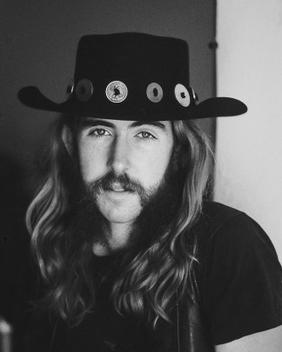
https://en.wikipedia.org/wiki/Berry_Oakley
Raymond Berry Oakley (* 4. April 1948 in Chicago, Illinois; † 11. November 1972 in Macon, Georgia) war ein US-amerikanischer Bassist und eines der Gründungsmitglieder der Allman Brothers Band.
Biografie
In den 60er Jahren machte er mit seinem Wirken bei kleineren Bands auf sich aufmerksam, so dass er die Möglichkeit erhielt, bei der Begleitband von Tommy Roe einzusteigen. Diese Tätigkeit brachte ihn nach Florida, wo er Dickey Betts kennenlernte und in dessen Band The Second Coming spielte.[1] Zusammen mit ihm, Gregg Allman, Duane Allman, Butch Trucks und Jai Johanny Johanson wurde 1969 die Allman Brothers Band gegründet.[2] Mit dem Live-Album At Fillmore East stellte sich der kommerzielle Erfolg der Band ein, wurde jedoch bereits im Oktober 1971 durch den tödlichen Motorradunfall von Duane Allman überschattet. Nur gut ein Jahr später ereignete sich unweit des Unfallortes erneut ein Zusammenstoß, bei dem Oakley mit seinem Motorrad mit einem Bus kollidierte.[3] Er starb an den Unfallfolgen am 11. November 1972.
https://de.wikipedia.org/wiki/Berry_Oakley
Raymond Berry Oakley III (April 4, 1948 – November 11, 1972), was an American bassist and one of the founding members of The Allman Brothers Band.
Biography
Oakley was born in Chicago, Illinois, raised in the suburb of Park Forest, Illinois,[1] then moved to Florida where he met and joined Dickey Betts's band, The Second Coming. He was a founding member of The Allman Brothers Band in 1969, along with guitarist Duane Allman, Gregg Allman, who was the band's vocalist and keyboardist, Dickey Betts on co-lead guitar, and drummers Butch Trucks and Jai Johanny "Jaimoe" Johanson, both on drums, congas, and the band's percussionist.
With the Allman Brothers, Oakley was known for his long, melodic bass runs underneath Allman and Betts' furious guitar solos and jams. "In Memory of Elizabeth Reed", "Mountain Jam" and "Whipping Post" from the live album At Fillmore East capture Oakley at his best. Oakley was also the band member most involved in establishing domestic unity among the band's extended family. When Duane Allman died in a motorcycle accident, Oakley was devastated.
Equipment
Oakley's bass guitar, nicknamed "The Tractor Bass", was a Fender Jazz Bass with a Guild bass pickup (manufactured by Hagström, a Swedish company).[2]
Death and tribute
On November 11, 1972, Oakley was involved in a motorcycle accident in Macon, Georgia, just three blocks from where Duane Allman had his fatal motorcycle accident the year before. Oakley was driving around a sharp right bend of the road on Napier Avenue at Inverness when he crossed the line and collided at an angle with a city bus making the bend from the opposite direction. After striking the front and then the back of the bus, Oakley was thrown from his bike, just as Allman had been, and struck his head. Oakley said he was okay after the accident, declined medical treatment, and caught a ride home. Three hours later, he was rushed to the hospital, delirious and in pain, and died of cerebral swelling caused by a fractured skull. Attending doctors stated that even if Oakley had gone straight to the hospital from the scene of the accident, he could not have been saved.[3]
In 1998, the Georgia state legislature passed a resolution designating a bridge on State Highway 19, in Macon, Georgia, as the 'Raymond Berry Oakley III Bridge' in "honor and remembrance" of the late founding member of the Allman Brothers Band".[4]
Family
He is survived by his sister, Candace Rose Oakley, his wife Linda Diane Oakley (an artist in Florida) and daughter, Brittany Ann Oakley (who was a massage therapist, and is currently an esthetician in Florida). Brittany's photo appeared on the back cover of the Allmans' 1973 album, "Brothers and Sisters", as well as on the inside photo with sister Candace Oakley, wife Linda Miller, roadies, and extended family. After his death, his son, Berry Duane Oakley (aka Berry Oakley Jr.) was born in March 1973. Berry Jr. is also a bass guitarist. Grandson Shaun Berry Oakley is a musician in training in Florida.
https://en.wikipedia.org/wiki/Berry_Oakley
The Allman Brothers Band - Ramblin' Man (Isolated Rhythm Section)
Bassist Berry Oakley (RIP) and drummer Butch Trucks' isolated parts to
The Allman Brothers Band song "Ramblin' Man" off the 1973 album
"Brothers and Sisters". Enjoy!
Duane Allman & Berry Oakley, Rose Hill Cemetery, Macon Ga.
How to find Duane Allman & Berry Oakley in Rose Hill Cemetery, Macon Ga.