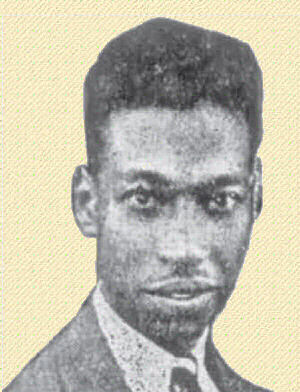
1927 Harmonica Fats*
1939 Guitar Shorty*
1967 Juanma Montero*
1977 Big Pete*
2015 Smokey Wilson+
Sonny Boy Terry*
Happy Birthday
Big Pete *08.09.1977
Big Pete (Pieter van der Pluijm)

Der 33-jährige niederländische Blues-Sänger und Harp-Spieler Pieter „Big Pete" van der Pluijm mag in Deutschland noch unbekannt sein, gilt in seinem Heimatland jedoch bereits seit längerer Zeit als ernstzunehmender Musiker.
Als 23-Jähriger wurde Pete zur Teilnahme an einer Europa-Tournee zu Ehren des legendären verstorbenen Mundharmonikaspielers Lester Butler und seiner Musik (Red Devils und Thirteen) eingeladen. Dabei wurde er von mehreren ursprünglichen Bandmitgliedern Lesters begleitet. Das Projekt war bei Publikum und Kritik ein voller Erfolg und so standen schon schnell weitere Tourneen und eine CD mit der Lester Butler Tribute Band auf dem Programm, welche Petes Ruf als Blues-Hoffnungsträger der Benelux-Länder festigte.
Pete trat auf zusammen mit internationalen Stars wie Alex Schultz, Mitch Kashmar, Monster Mike Welch, Hook Herrera, Matt Schofield, and Ian Siegal.
Inzwischen wächst sein internationaler Bekanntheitsgrad und Projekte in den USA folgen.
Randy Chortkoff , Geschäftsführer und –Inhaber von ‘Delta Groove Music' in den USA eröffnet ihm 2010 die Möglichkeit nach Los Angeles zu kommen und mit den „The Mannish Boys“ das Album „Shake form e“ zu produzieren.
Ein voller Erfolg.
Darauf folgte im Oktober 2011 sein erstes Solo Album 'Choice Cuts' (DGPCD149) unter dem beliebten Label "Delta Groove Music", welches 2012 in den weltweiten Radio Playlists Nummer Eins Status in der Blues Musik erreicht. Das Album wurde sogar für den beliebten BMA (Blues Music Award) nominiert, den sogenannten „Grammy“ in der Bluesszene.
36 year old Dutch blues vocalist and harp master Pieter “Big Pete” van der Pluijm may not yet be a familiar name in ‘mainstream’ music, but he’s already well-established in the international Blues World.
At 23, Pete was handpicked for a European memorial tour to honor the music and memory of legendary harmonica player and vocalist Lester Butler (the Red Devils and Thirteen), backed by several of Lester’s original band mates. The project was met with great success and critical acclaim, so more tours and a CD by the Lester Butler Tribute Band soon followed, securing Pete’s arrival on the scene as one of the premier next generation blues performers out of the Benelux region.
Since then, Big Pete has gone on to form and record many other successful projects including his debut release ‘Bathroom Acoustics’ by The Strikes, a couple of CDs by the rockin’ 50’s Chicago blues outfit The Backbones, and most recently, the more progressive and forward-thinking group M.O.C.T. (Men Of Considerable Taste). Pete’s growing reputation has also led to tours and performances backing many internationally acclaimed blues artists including Alex Schultz, Mitch Kashmar, Monster Mike Welch, Hook Herrera, Matt Schofield, and Ian Siegal.
The album ‘ Look At The Time ‘ (CLBZ 28), with M.O.C.T. (Men Of Considerable Taste), can be seen as one of the best blues/roots albums in Netherlands (and beyond) released in 2010. By then, the talents of Big Pete where also noticed by Director/owner Randy Chortkoff of ‘Delta Groove Music’ in the USA. Chortkoff offered him the opportunity to come out to Los Angeles, CA to perform on the album “Shake For Me” by The Mannish Boys.
After the success of his first US adventure, Pete recorded his first album for Delta Groove Records in Los Angeles, in May 2011.
The result, Pete’s first ‘solo’ album , ‘Choice Cuts’ (DGPCD149) was released October 18th 2011 and gained world-wide success.
In various radio playlists from all over the world, ‘Choice Cuts’ was picked as the # 1 blues album in 2012.
The album was even nominated for a prestigious ‘BMA’ (blues music award) in the category ‘best new artist debut’. These awards are known to be ‘the Grammys’ in blues music.
Since then, Pete with his own ‘Big Pete Blues Band’ went on to perform on many of the big blues festivals, both in Europe and beyond, and is regarded as one of the premier blues harmonica players in the world today.
Big Pete and Band - Red headed Woman
Harmonica Fats *08.09.1927

Harmonica Fats was actually Harvey Blackston, a former Louisianan who learned the blues growing up on his grandfather's farm; his longtime partner, Bernie Pearl, a native Angeleno, learned the blues from the musicians who frequented the fabled Ash Grove (a folk and blues club run by Pearl's brother Ed), including Lightnin' Hopkins and Mance Lipscomb.
In the early '50s, Fats took up harmonica as self-prescribed therapy while recuperating from an auto accident. Once confident, he formed a band, playing clubs around Los Angeles, and was known then as "Heavy Juice." Just as carefully, he perfected his songwriting, scoring on the R&B charts in 1961 with the self-penned single "Tore Up." After changing his name to Harmonica Fats, this success led to work as a studio musician, playing dates with performers as diverse as Bill Cosby, Ringo Starr, and Lou Rawls. He even did a stint as a traveling solo musician, seeking gigs as he drove in a station wagon around the country.
Pearl, through the Ash Grove, backed artists Big Mama Thornton, Bukka White, Mississippi Fred McDowell, Freddie King, and more. In the late '60s,'80s, and early '90s, he was a blues DJ, not only entertaining but educating with the knowledge he acquired during the Ash Grove days. Perhaps his best-known accomplishment was founding one of the West Coast's top blues events, the Long Beach Blues Festival, and he was also the promoter of the Big Time Blues Festival, also held in Long Beach.
The Bernie Pearl Blues Band originated in 1984, with Robert Lucas on harmonica. Fats replaced Lucas in 1986. Fats' witty songs and on-stage magnetism is captured on Live at Cafe Lido, an album originally intended as a demo. The high demand for that album led Fats and Pearl to form Bee Bump Records, with its first release being I Had to Get Nasty. Pearl convinced Fats to work as an acoustic duo, releasing Two Heads Are Better in 1995. The following year, they released Blow, Fat Daddy, Blow!, dedicated to the memory of Fats' wife and civil rights activist Johnnie Tillman.
The Bernie Pearl Blues Band originated in 1984, with Robert Lucas on harmonica. Fats replaced Lucas in 1986. Fats' witty songs and on-stage magnetism is captured on Live at Cafe Lido, an album originally intended as a demo. The high demand for that album led Fats and Pearl to form Bee Bump Records, with its first release being I Had to Get Nasty. Pearl convinced Fats to work as an acoustic duo, releasing Two Heads Are Better in 1995. The following year, they released Blow, Fat Daddy, Blow!, dedicated to the memory of Fats' wife and civil rights activist Johnnie Tillman.
http://www.allmusic.com/artist/harmonica-fats-mn0000557182
https://www.youtube.com/watch?v=Q4tqOJ-ZFPQ
.jpg)
https://www.youtube.com/watch?v=Q4tqOJ-ZFPQ
Guitar Shorty *08.09.1934
David William Kearney
Guitar Shorty (born David William Kearney, September 8, 1939, Houston, Texas, United States) is an American blues guitarist. He is well known for his explosive guitar style and wild stage antics. Billboard magazine said, “his galvanizing guitar work defines modern, top-of-the-line blues-rock. His vocals remain as forceful as ever. Righteous shuffles...blistering, sinuous guitar solos.
Shorty was born in Houston but grew up mainly in Kissimmee, Florida where he began playing the guitar at an early age and began leading a band not long after. During his time in Tampa Bay, Florida, at age 16 he received his nickname, Guitar Shorty, when it mysteriously showed up on the marquee of the club he was playing as 'The Walter Johnson Band featuring Guitar Shorty.'[2] He steadily began to garner accloades from his peers and, soon after, he joined the Ray Charles Band for a year.[2] He recorded his first single in 1957, "You Don't Treat Me Right", for the Cobra label under the direction of Willie Dixon after Dixon saw him playing with the Walter Johnson Orchestra.[3] Eventually, he joined Guitar Slim's band and move to New Orleans, Louisiana. Slim inspired Shorty to incorporate more showmanship into his live performance style. Before long, Shorty was doing somersaults and flips on stage.
While in New Orleans, Shorty also fronted his own band which played regularly at the Dew Drop Inn where he was joined by special guests such as T-Bone Walker, Big Joe Turner and Little Richard.[2] Not one to stay in one place long, Shorty next moved to the West Coast at 19 in order to play with Sam Cooke. He played up and down the west coast and Canada until he met his future wife, Marcia, in Seattle, Washington Marcia was the half-sister of Jimi Hendrix. Jimi was so enthralled with Shorty’s playing, he attended several of Shorty's gigs in the Seattle area.[2][3][4] As Shorty’s popularity grew, he recorded three singles for the Los Angeles-based Pull Records label in 1959.
Shorty gigged steadily through the late 1950s and 1960s. During the 1970s he worked as a mechanic, playing music at nights and on weekends. He again became a full-time musician in 1975, struggling at times to make ends meet. In 1976 he made an appearance on Chuck Barris' Gong Show, winning first prize for performing the song "They Call Me Guitar Shorty" while balanced on his head.[4]
In 1985, he released his first album On the Rampage on Olive Branch Records. He went on his first tour to the UK in 1991, and there he recorded “My Way or the Highway” with Otis Grand which came out on JSP Records that year. This won him a W.C. Handy Award and garnering him interest from labels in the United States.[3] Shorty soon got a record deal with New Orleans based Black Top Records.
Topsy Turvy, his first on Black Top, came out in 1993. The album featured some fresh new songs as well as remakes of three classic numbers from his Pull days back in 1959. He released two more albums on Black Top in the 1990s. When Black Top folded in 1999, Shorty moved to Evidence Music, and released I Go Wild! in 2001.
In 2002, he was featured on the Bo Diddley tribute album Hey Bo Diddley - A Tribute!, performing the song "Don't Let It Go (Hold On To What You Got)". He joined Alligator Records in 2004. His album that year, Watch Your Back and his 2006 album We the People both charted on the Billboard Top Blues Albums at numbers eleven and twelve, respectively. Billboard said of We The People, "it’s difficult to imagine that he ever tracks a better album than this one."[1]
A new Alligator Records CD ' Bare Knuckles was released in March 2010. He was then based out of Harlingen Texas where he met an up and coming guitarist named Sal Gomez. He mentored the guitarist and brought him on with his road band from 2010 until 2012. Sal left a lasting impression on Guitar Shorty for some of the more modern techniques he applied with the standard playing of blues guitar. "He is a baaaaaaaaaad boy" was frequently said by Guitar Shorty at most of the shows Sal played.
Guitar Shorty's guitar is named Red.
Another blues musician, John Henry Fortescue (1923–1976) on Trix Records was also named Guitar Shorty.
Shorty was born in Houston but grew up mainly in Kissimmee, Florida where he began playing the guitar at an early age and began leading a band not long after. During his time in Tampa Bay, Florida, at age 16 he received his nickname, Guitar Shorty, when it mysteriously showed up on the marquee of the club he was playing as 'The Walter Johnson Band featuring Guitar Shorty.'[2] He steadily began to garner accloades from his peers and, soon after, he joined the Ray Charles Band for a year.[2] He recorded his first single in 1957, "You Don't Treat Me Right", for the Cobra label under the direction of Willie Dixon after Dixon saw him playing with the Walter Johnson Orchestra.[3] Eventually, he joined Guitar Slim's band and move to New Orleans, Louisiana. Slim inspired Shorty to incorporate more showmanship into his live performance style. Before long, Shorty was doing somersaults and flips on stage.
While in New Orleans, Shorty also fronted his own band which played regularly at the Dew Drop Inn where he was joined by special guests such as T-Bone Walker, Big Joe Turner and Little Richard.[2] Not one to stay in one place long, Shorty next moved to the West Coast at 19 in order to play with Sam Cooke. He played up and down the west coast and Canada until he met his future wife, Marcia, in Seattle, Washington Marcia was the half-sister of Jimi Hendrix. Jimi was so enthralled with Shorty’s playing, he attended several of Shorty's gigs in the Seattle area.[2][3][4] As Shorty’s popularity grew, he recorded three singles for the Los Angeles-based Pull Records label in 1959.
Shorty gigged steadily through the late 1950s and 1960s. During the 1970s he worked as a mechanic, playing music at nights and on weekends. He again became a full-time musician in 1975, struggling at times to make ends meet. In 1976 he made an appearance on Chuck Barris' Gong Show, winning first prize for performing the song "They Call Me Guitar Shorty" while balanced on his head.[4]
In 1985, he released his first album On the Rampage on Olive Branch Records. He went on his first tour to the UK in 1991, and there he recorded “My Way or the Highway” with Otis Grand which came out on JSP Records that year. This won him a W.C. Handy Award and garnering him interest from labels in the United States.[3] Shorty soon got a record deal with New Orleans based Black Top Records.
Topsy Turvy, his first on Black Top, came out in 1993. The album featured some fresh new songs as well as remakes of three classic numbers from his Pull days back in 1959. He released two more albums on Black Top in the 1990s. When Black Top folded in 1999, Shorty moved to Evidence Music, and released I Go Wild! in 2001.
In 2002, he was featured on the Bo Diddley tribute album Hey Bo Diddley - A Tribute!, performing the song "Don't Let It Go (Hold On To What You Got)". He joined Alligator Records in 2004. His album that year, Watch Your Back and his 2006 album We the People both charted on the Billboard Top Blues Albums at numbers eleven and twelve, respectively. Billboard said of We The People, "it’s difficult to imagine that he ever tracks a better album than this one."[1]
A new Alligator Records CD ' Bare Knuckles was released in March 2010. He was then based out of Harlingen Texas where he met an up and coming guitarist named Sal Gomez. He mentored the guitarist and brought him on with his road band from 2010 until 2012. Sal left a lasting impression on Guitar Shorty for some of the more modern techniques he applied with the standard playing of blues guitar. "He is a baaaaaaaaaad boy" was frequently said by Guitar Shorty at most of the shows Sal played.
Guitar Shorty's guitar is named Red.
Another blues musician, John Henry Fortescue (1923–1976) on Trix Records was also named Guitar Shorty.
Guitar Shorty - "Hey Joe" [Lucerne 16/11/2012]
Sonny Boy Terry *08.09.

But that didn't last long. Terry realized he may actually have a knack for the instrument. He practiced day and night, driving all his friends crazy. Childhood friend and guitarist Mike Sowers mentored Terry on music basics. He taught Terry about playing in different keys and how to learn rock songs the right way. Mike then joined the local rock band Voyager and lobbied for Terry to run sound and play harmonica on a few songs. "I started by playing Doobie Brothers, Ozark Mountain Daredevils - stuff that was on the radio," Terry explains. "Crowds loved it so I was given more songs. Donn Dunno (band leader) and the guys were really kind to me. I appreciate them now more than ever. They gave me a crack at a dream," he says as he thinks back on those days.
Terry loved the opportunities playing with Voyager but the band was moving in different directions. At the time, the economy in Ohio and the rust belt was falling in depression - like mode. He had an after high school job at a cheese factory for Bordens Foods but was asked to resign allegedly for missing too many Fridays because gigging was more important. Terry remembers those days well, adding, "I couldn't work in a factory. I was too noisy and I was interested in doing something - anything with my life to get away from that type of life."
With a hometown band winding down and no decent jobs, Terry's dream was to go to the big city and play with the old black guys. He learned early on blues records were where all the good harmonica playing was. He was driving over to Mind Dust Music in near by Elida, Ohio buying every discount blues record he could get his hands on. He would also pick up Living Blues magazine and learn about contemporary blues scene all over the USA. "I had nothin' to lose", he says. "I knew if I wanted to play harmonica, I had to go somewhere else to do it."
In 1981, after winter broke, a friend in Houston had a job for him, so Terry hit the road in a '66 Chevy Impala SS, his album collection and blues harps never looking back. Little did he know what was in front of him.
Arriving in Houston, Terry instantly began checking out the blues scene. And oh what a scene it was! First he went to see Stevie Ray Vaughn at Fitzgeralds before he was famous. With his beat up strat, kimono, duct taped cowboy boots, and trademark hat, Terry was in awe. "Comng from a small town, SRV was the most exotic artist I had ever seen, " Terry states with amazement. If that wasn't enough, the following week he went to see Texas' best blues act, The Fabulous Thunderbirds with Kim Wilson on harmonica and Stevie's brother Jimmy Vaughn on guitar. What a band, he thought!
Terry thought God dropped here in Texas for a reason - for a chance at having a life doing what he truly loved. Right in the middle of a roots and blues boom in the early 1980s, Terry could see any band he wanted on tour while checking a vibrant local scene.
It wasn't long before Terry was getting itchy himself to get in a band. He would sit in here and there but couldn't buy a gig. "I had chops, but not much discipline." he adds, "i wasn't used to improvising and I needed to do that to get started". He kept at it eventually meeting Johnny Winter's former and sometimes drummer Uncle John Turner. "I couldn't buy a gig before I met Uncle John. I guess hanging with him gave me a little credibility," he says. Through Uncle John, Terry met Rocky Hill, Johnny Winter, Joey Long, Alan Haynes and many others.
By this time, the bad US economy followed Terry to Texas and he was sleeping on Uncle John's apartment floor doing anything he could to avoid going back to Ohio. His first gig in Texas was with TC and the Cannonballs in 1983. TC was a legit Texas talent and a great way to break into the scene. They opened for The Fabulous T-Birds, The Nighhawks, John Hammond, Los Lobos, Robert Cray, Mighty Joe Young, The Sir Douglas Quintet, NRBQ, Paul Butterfield and just about everybody else it seemed.
After a year or so, Terry joined white hot and hard core local bluesman Jerry Lightfoot's band. Jerry had a huge foot in the door of Houston's black blues community and was instrumental in bringing many of these artists to white audiences revitalizing thier careers. They did shows with Jimmy T99 Nelson, Teddy Cry Cry Reynolds, Peppermint Harris, Sonny Tippet, Trudy Lynn, Pete Mayes, Joe Guitar Hughes, Grady Gaines and Big Walter Price. No name dropping here. This was the real deal.
Each experience Terry has had as a musician has always lef to a richer, more rewarding one. With Lightfoot, Terry was beginning to realize his dream. In fact, this is where Terry Jerome became "Sonny Boy" Terry. The story goes one night backstage Lighfoot and Terry were joking around about all the long monikers several local musicians had. Lightfoot jokingly called Terry Little Junior Sonny Boy Terry. That evening, KPFT radio dee jay Bud Jackson was emceeing the gig and introduced Terry as Sonny Boy Terry. The next day, Houston Chronicle music critic Marty Racine published Terry's name as "Sonny Boy Terry" and that was that. The name stuck.
"That experience was fantastic," the now Sonny Boy Terry reveals. "Not only was I realizing my dreams playing with the old black guys, we did shows backing band for Bo Diddley, John Lee Hooker and other touring acts. I was actually calling this a career".
In 1990 while Sonny Boy Terry was attending college, he hooked up with Lighnin' Hopkins protege' and jazz musician Kinney Abair. They performed as an acoustic mixed race duo that caught a lot of attention, but also with a band. They also worked shows with genuine Louisiana bluesman, Jimmy Dotson, who recorded with Excello V-Jay and Slim Harpo in the late 50s. This led to Terry first trip to Europe, performing at Blues Estafette - Holland's largest indoor blues festival. Terry returned the floowing year with Jimmy for a two week tour.
In 1991 Sonny Boy Terry joined major blues legend Joe Guitar Hughes band where held his seat for nearly four years. With Joe, Terry played over 200 gigs a year in Europe and the US. He recorded two fine albums with Joe: Live In Vrendenburg and Down Depressed and Dangerous. Like T-Bone Walker said, "A bluesman plays the high places and the low places".
Because of Joe's life-long friendship with blues legend Johnny Clyde Copeland, Terry was asked to play on Johnny's Catch up with the Blues album in 1993 recorded in Memphis at KIVA Studios wher Stevie ray recorded parts of In Step. Terry is featured on JCs Life's Rainbow, The Nature Song, the title cut Catch up with the Blues, and Rain. Recorded for Verve/Polygram, this was Terry first recording on a major label.
Around this same period, Terry was deeply entrenched in Houston's blues scene. With the blessings of Joe Hughes, Johnny Copeland and Pete Mayes, Terry founded the 501(C)3 non-profit Houston Blues Society. "It was started on 300 bucks of HBS T-shirts," he honestly says "It was money I used to get tees instead of getting my car out of the shop", They sold 50 shirts with a membership the very first night. Terry got his 300 dollar invesment back and that was the beginning of HBS. Sonny Boy Terry served as president for three and a half years winning the prestigious "Keepin the Blues Alive" award for best organization in 1996 at the Blues Foundation's WC Handy Awards in Memphis. "My goal was to put Houston on the map", Terry boldly states. he adds, "I think we did a great job in short period. We brought alot of musicians from Houston to light."
In 1996, Terry had all the best experience in imagineable. He was a full blown blues musician now with firey chops to burn. And after playing so many years with Joe Hughes, he was ready to lead a band. It was slim pickins at first. Terry had never fronted a band singing before. But Terry says "I peaked playing Joe. I needed to be a self reliant adult and musician." Terry goes on by saying, " If I wanted to grow and get better, I need to sing and write my own songs."
Actually, it wasn't that tough to get rolling. Playing with Joe and Copeland, Sonny Boy had lots of street cred. Getting his singing up to speed took a few years but eventually led to a Monday night house gig at Billy Blues and a steady Thursday night at Houston's Shakespeare's Pub, where he has been for 12 years now. He's performed at festivals all over the world including the Costa Rica Blues fest, The Blind Lemon Jefferson Blues Fest (Dallas), The Navasota Blues Festival and The Houston International Festival, among others.
In 2004 Sonny Boy Terry signed on with Austin imprint Doc Blues Records. They, in turn reissued his acclaimed Breakfast Dance album along with a newly minted "Live at Miss Ann's Playpen". Both these albums recieved strong reviews making the industry take notice making his future bright on the international blues scene. Sonny Boy Terry is now the biggest selling artist on Doc Blues. How did this happen? Terry explains, "I go out and gig as much as I can. Johnny Copeland always told me a bluesman has to make the record work for him." He adds, "There is no fat man with a cigar going to make you famous. That's an illusion. Selling albums off the bandstand is part of the job. That's reality in blues."
Now, an established session musician, solo recording artist, and an artist who has deep tied to Houston's rich blues history, Sonny Boy terry is pushing his career to another level. In 2005, terry appeared on BB King bandleader Calvin Owens' Keepin the Big Band Blues Alive. Talk about music history - that same year, he also joined rock and roll pioneer Roy Head for a remake of his 1965 number 5 hit "Treat her Right" - a version that was repleat with Little Richard's saxaphonist Grady Gaines on a honking Texas tenor solo. In 2009, he added harmonica solos to Houston alt.country rock act Whiskeyboat's debut album Congress Hotel.
2011 holds alot of promise for Sonny Boy Terry. He has a newly formed band and a new album is planned. He is releasing all his video footage on YouTube, and with a show in the midwest coming up with Brownsville Station drummer Henry H-Bomb Weck, if all goes well Sonny Boy Terry hopes to break out more in the US in the upcoming year.
Sonny Boy Terry 95
https://www.youtube.com/watch?v=EBSPzjnq4Ck

https://www.facebook.com/juanma1montero/photos_albums
https://www.facebook.com/The-44-Dealers-1403567106540311/about/?entry_point=page_nav_about_item&tab=page_info
https://www.youtube.com/watch?t=11&v=XqVVhd0oI5Q

http://www.blindpigrecords.com/index.cfm?section=artists&artistid=65

Juanma Montero *08.09.1967
https://www.facebook.com/juanma1montero/photos_albums
https://www.facebook.com/The-44-Dealers-1403567106540311/about/?entry_point=page_nav_about_item&tab=page_info
The 44 Dealers - Searching For My Baby
Leganés Blues Festival, Plaza de España, sábado 11 Abril 2015 (Filmado por Eugenio Moirón)
Juanma Montero (voz, guitarra), Fernando Jiménez (armónica), Román Mateo (guitarra), Javier Díaz (piano), Diego de la Torre (bajo), Pascu Monje (batería)
Juanma Montero (voz, guitarra), Fernando Jiménez (armónica), Román Mateo (guitarra), Javier Díaz (piano), Diego de la Torre (bajo), Pascu Monje (batería)
https://www.youtube.com/watch?t=11&v=XqVVhd0oI5Q
R.I.P.
Smokey Wilson +08.09.2015

http://www.blindpigrecords.com/index.cfm?section=artists&artistid=65
Smokey Wilson (July 11, 1936 – September 8, 2015)[1][2] was an American West Coast blues guitarist. He spent most of his career performing West Coast blues and juke joint blues in Los Angeles, California. He recorded a number of albums for record labels such as P-Vine Records, Bullseye Blues and Texmuse Records. His career got off to a late start, with international recognition eluding him until the 1990s.
Biography
Born in Glen Allan, Mississippi, United States,[1] and raised in Lake Village, Arkansas, Robert Lee Wilson played alongside Roosevelt "Booba" Barnes, Big Jack Johnson, and Frank Frost, before his move to Los Angeles in 1970.[3] He opened the Pioneer Club in Watts, where he was the frontman of their house band. In addition his duties included booking blues musicians to appear at the club, which included Big Joe Turner, Percy Mayfield, Pee Wee Crayton and Albert Collins.[1] His down to earth guitar playing is typical of his Mississippi Delta background. "I bring the cotton-field with me," he said, "and I got the juke-joint inside."[3]
Wilson released two albums on Big Town Records in the 1970s.[1][3] His 1983 album, 88th Street Blues, for the Murray Brothers label (later re-issued on Blind Pig Records) had contributions from Rod Piazza (harmonica and record producer) and Hollywood Fats (rhythm guitar).[1] Wilson has performed three times at the Long Beach Blues Festival, in 1980, 1981 and 1999;[4] having earlier appeared at the San Francisco Blues Festival in 1978.
Smoke N' Fire (1993) and The Real Deal (1995) followed, as Wilson's reputation began to grow as he reached his sixtieth year.[1]
Whilst Wilson's years of residency at the Pioneer Club did little to try to secure nationwide recognition, he appeared on the PBS special, Three Generation of Blues, with Robert Cray and John Lee Hooker. He has also featured in various television commercials including UPN's "The Watcher," and FOX's "Divas", plus in a music video made by Babyface.[4]
On September 8, 2015, Wilson died in his sleep.
Biography
Born in Glen Allan, Mississippi, United States,[1] and raised in Lake Village, Arkansas, Robert Lee Wilson played alongside Roosevelt "Booba" Barnes, Big Jack Johnson, and Frank Frost, before his move to Los Angeles in 1970.[3] He opened the Pioneer Club in Watts, where he was the frontman of their house band. In addition his duties included booking blues musicians to appear at the club, which included Big Joe Turner, Percy Mayfield, Pee Wee Crayton and Albert Collins.[1] His down to earth guitar playing is typical of his Mississippi Delta background. "I bring the cotton-field with me," he said, "and I got the juke-joint inside."[3]
Wilson released two albums on Big Town Records in the 1970s.[1][3] His 1983 album, 88th Street Blues, for the Murray Brothers label (later re-issued on Blind Pig Records) had contributions from Rod Piazza (harmonica and record producer) and Hollywood Fats (rhythm guitar).[1] Wilson has performed three times at the Long Beach Blues Festival, in 1980, 1981 and 1999;[4] having earlier appeared at the San Francisco Blues Festival in 1978.
Smoke N' Fire (1993) and The Real Deal (1995) followed, as Wilson's reputation began to grow as he reached his sixtieth year.[1]
Whilst Wilson's years of residency at the Pioneer Club did little to try to secure nationwide recognition, he appeared on the PBS special, Three Generation of Blues, with Robert Cray and John Lee Hooker. He has also featured in various television commercials including UPN's "The Watcher," and FOX's "Divas", plus in a music video made by Babyface.[4]
On September 8, 2015, Wilson died in his sleep.
Smokey
Wilson - Low rider (Deuce & a quarter)