1890 Jelly Roll Morton* (or 20.10.)
1930 Edwin Joseph Bocage*
1938 Eric Gale*
1962 Curley Weaver+
1989 Charley Booker+
2008 Nappy Brown+
Rusty Stone*
Happy Birthday
Reverend Rusty Stone *20.09.

Ein großartiger Musiker zwischen Rock, Blues, Americana und Jam. Wie bei seinen beiden Mitmusikern hört der musikalische Horizont jedoch hier nicht auf, viele andere Musikstile haben ihren Einfluss hinterlassen. Rusty Stone ist ein ausgezeichneter Gitarrist, Songwriter, großartiger Sänger und spielt u.a. dreckige High-Energy-Slide-Guitar auf der Dobro als wäre der Teufel hinter ihm her. Mr. C. P. (Electric bass, Upright bass, Tuba, Vocals): C.P. spielt seine Instrumente groovig und druckvoll. Mit seiner sehr dynamischen und ausdrucksstarken Spielweise begeistert er immer wieder das Publikum.Al Wood (Drums, Cajon, Percussion, Vocals): Allein Al Wood's eindrucksvolles Spiel auf dem Cajon ("Magic Box") mit bloßen Händen (und damit war er 1994 einer der ersten in Europa) muss man gesehen haben. Einfach ein aussergewöhnlicher und vielseitiger Drummer – John Bonham von Led Zeppelin lässt grüssen.
Nur drei Musiker sind nötig um eine stilistische Vielfalt auf die Bühnenbretter zu bringen, die ihresgleichen sucht. Sie schöpfen aus dem reichhaltigen Fundes von Blues, Rock, Jazz, Funk, Soul, Country und Bluegrass.
Mit
Sicherheit gehören sie zu den am härtesten arbeitenden Bands in der
Live-Music-Szene. Wer glaubt das sei eine Übertreibung, sollte
schleunigst ein Concert dieses Trios besuchen. Ihre Musik ist saftig wie
ein T-Bone-Steak, scharf wie Tex-Mex-Food und geht runter wie Öl.
Einfach eine gnadenlose, erdige, unverwüstliche Live-Show mit
ungewöhnlichen Instrumenten-einsatz wie Mandoline, Cajon oder Tuba.
Reverend Rusty & The Case steht für explosiven American Blues made in Germany und begeistert das Publikum mit einem außergewöhnlichen Sound unter anderem aus Rock, Reggae, Funk, Country, Blues und Rhythm & Blues. Konzerte bis zu 3 Stunden sind keine Seltenheit.
Three roadwarriors with the roots in the Blues. Long before the sweat dries, you're sure of one thing: like hurricanes, tornadoes and earthquakes, there's no holding back.
Reverend Rusty & The Case steht für explosiven American Blues made in Germany und begeistert das Publikum mit einem außergewöhnlichen Sound unter anderem aus Rock, Reggae, Funk, Country, Blues und Rhythm & Blues. Konzerte bis zu 3 Stunden sind keine Seltenheit.
Three roadwarriors with the roots in the Blues. Long before the sweat dries, you're sure of one thing: like hurricanes, tornadoes and earthquakes, there's no holding back.
http://www.breakingblues.com/REV_Rusty/rev_rusty.htm
http://wasser-prawda.de/musik/11-mai-reverend-rusty-pr%C3%A4sentiert-live-neue-cd-rusty
http://wasser-prawda.de/musik/11-mai-reverend-rusty-pr%C3%A4sentiert-live-neue-cd-rusty
Reverend Rusty & The Case - K.i.S.H. 17.02.2006

The songs:
Back To The Blues (unreleased)
Voodoo King - featuring Mr. C.P. on tuba
Lonesome Guitar (Album »Born For The Blues«)
Preacher Man (Album »Preacher Man«)
Edwin Joseph Bocage *20.09.1930

Eddie Bo (eigentlich Edwin Joseph Bocage; * 20. September 1930 in New Orleans; † 18. März 2009 ebenda) war ein US-amerikanischer Musiker und Veteran der New Orleanser R&B-Szene.
Leben und Wirken
Bo wuchs in einer musikalischen Familie auf; seine Mutter spielte Piano im Stil von Professor Longhair. Nach Ableistung seines Wehrdienstes studierte er an der Grundwald School of Music in seiner Heimatstadt, wo er sich mit dem Jazzpiano von Art Tatum und Oscar Peterson beschäftigte. In den 1950ern begleitete er Big Joe Turner, Earl King, Guitar Slim, Johnny Adams, Lloyd Price, Ruth Brown, Smiley Lewis und The Platters auf Tourneen.
Während der späten 1960er- und 1970er-Jahre war Eddie Bo als Sänger, Songwriter, Produzent und Pianist tätig. Er nahm seit 1955 für Label wie Ace, Apollo, Arrow, At Last, Blue-Jay, Bo-Sound, Checker, Chess, Cinderella, Nola, Ric, Scram, Seven B oder Swan auf und kam mit Titeln wie Check Mr Popeye (1961), Hook and Sling (1969)[1] oder Check Your Bucket (1970) in die Charts. Einige seiner Songs wurden von Musikern wie Little Richard (Slippin’ and Slidin'), Etta James (My Dearest Darling) oder Tommy Ridgley (In the Same Old Way) erfolgreich übernommen. Als Produzent und Arrangeur arbeitete er für Al “Carnival Time” Johnson, Art Neville, Chris Kenner, Chuck Carbo, Irma Thomas, Johnny Adams, Mary Jane Hooper, Robert Parker, The Vibrettes und The Explosions.
Weiterhin nahm er mit der Dirty Dozen Brass Band auf und tourte mit Willy DeVille, auf dessen Alben Victory Mixture und Big Easy Fantasy er auch zu hören ist. Mit Raful Neal und Rockin’ Tabby Thomas hatte er seit den 1990er-Jahren Projekte unter den Namen The Louisiana Legends, The District Court und The Hoodoo Kings.
Preise und Auszeichnungen
Unter den Preisen, die Bo erhielt, sind zwei Lifetime Achievement Awards der South Louisiana Music Association und Music/Offbeat Best of the Beat. Seine Geburtsstadt nominierte ihn als ihren Musikalischen Botschafter für Pakistan.
Leben und Wirken
Bo wuchs in einer musikalischen Familie auf; seine Mutter spielte Piano im Stil von Professor Longhair. Nach Ableistung seines Wehrdienstes studierte er an der Grundwald School of Music in seiner Heimatstadt, wo er sich mit dem Jazzpiano von Art Tatum und Oscar Peterson beschäftigte. In den 1950ern begleitete er Big Joe Turner, Earl King, Guitar Slim, Johnny Adams, Lloyd Price, Ruth Brown, Smiley Lewis und The Platters auf Tourneen.
Während der späten 1960er- und 1970er-Jahre war Eddie Bo als Sänger, Songwriter, Produzent und Pianist tätig. Er nahm seit 1955 für Label wie Ace, Apollo, Arrow, At Last, Blue-Jay, Bo-Sound, Checker, Chess, Cinderella, Nola, Ric, Scram, Seven B oder Swan auf und kam mit Titeln wie Check Mr Popeye (1961), Hook and Sling (1969)[1] oder Check Your Bucket (1970) in die Charts. Einige seiner Songs wurden von Musikern wie Little Richard (Slippin’ and Slidin'), Etta James (My Dearest Darling) oder Tommy Ridgley (In the Same Old Way) erfolgreich übernommen. Als Produzent und Arrangeur arbeitete er für Al “Carnival Time” Johnson, Art Neville, Chris Kenner, Chuck Carbo, Irma Thomas, Johnny Adams, Mary Jane Hooper, Robert Parker, The Vibrettes und The Explosions.
Weiterhin nahm er mit der Dirty Dozen Brass Band auf und tourte mit Willy DeVille, auf dessen Alben Victory Mixture und Big Easy Fantasy er auch zu hören ist. Mit Raful Neal und Rockin’ Tabby Thomas hatte er seit den 1990er-Jahren Projekte unter den Namen The Louisiana Legends, The District Court und The Hoodoo Kings.
Preise und Auszeichnungen
Unter den Preisen, die Bo erhielt, sind zwei Lifetime Achievement Awards der South Louisiana Music Association und Music/Offbeat Best of the Beat. Seine Geburtsstadt nominierte ihn als ihren Musikalischen Botschafter für Pakistan.
Edwin Joseph Bocage (September 20, 1930 – March 18, 2009),[1] known as Eddie Bo, was an American singer and pianist from New Orleans. Schooled in jazz, he was known for his blues, soul and funk recordings, compositions, productions and arrangements. He debuted on Ace Records in 1955 and released more single records than anyone else in New Orleans other than Fats Domino.[2]
Eddie Bo worked and recorded for more than 40 different record labels, including Ace, Apollo Records, Arrow, At Last, Blue-Jay, Bo-Sound, Checker, Chess, Cinderella, Nola, Ric (for which his carpentry skills were used to build them a studio), Scram, Seven B, and Swan. He is described at Allmusic as "a sorely underappreciated veteran of the New Orleans R&B scene."[3]
Biography
Early life
Eddie Bo grew up in Algiers, Louisiana and in the Ninth Ward of New Orleans.[1] He came from a long line of ship builders with the male members of his family being bricklayers, carpenters and masons by day and musicians by night. Eddie's mother was a self-taught pianist in the style of friend, Professor Longhair. The Bocage family was involved in the traditional jazz community with cousins Charles, Henry and Peter, who played with Sidney Bechet, contributing to jazz orchestras before World War II.[2]
Eddie graduated from Booker T. Washington High School before going into the army. After his army stint, he returned to New Orleans to study at the Grunewald School of Music.[3] There he learned piano, music theory and to sight read, and arrange music. It was at this time that he was influenced by Russian classical pianist Vladimir Horowitz[4] and was introduced to bebop pianists Art Tatum and Oscar Peterson. He began playing in the New Orleans jazz scene, but made a switch to R&B after deciding it was more popular and brought in more money.[3] Like a lot of other local musicians Eddie frequented the premier blues venue in town, the Dew Drop Inn on LaSalle Street.[5] He played at the Club Tijuana under the name of Spider Bocage, later forming the Spider Bocage Orchestra, which toured the country supporting singers Big Joe Turner, Earl King, Guitar Slim, Johnny Adams, Lloyd Price, Ruth Brown, Smiley Lewis, and The Platters.[3][6]
Recording and production career
His first released record in 1955 was "Baby", recorded for Johnny Vincent's Ace Records. His next release, in 1956 on Apollo Records, was "I'm Wise" which Little Richard later recorded as "Slippin' and Slidin'".[7] After several releases on Ace he recorded "My Dearest Darling" in 1957 for Chess Records; the song, co-written by Bo and Paul Gayten, became a national chart hit in 1960 when recorded by Etta James.[8] From 1959, he recorded for Ric Records, and had regional hits including "Every Dog Has Its Day" and "Tell It Like It Is", and in 1961 recorded the novelty dance song "Check Mr Popeye", reissued nationally by Swan Records, which became one of his best-known recordings though not a national hit.[1][7]
During the 1960s, Bo continued to release singles on a string of local record labels, including Rip, Cinderella, and Blue Jay, though only a few achieved national distribution.[9] On these records, his style got funkier, and he used more of his jazz training, helping to create a distinctively different and influential New Orleans piano style.[3] He recorded the renowned "Pass The Hatchet" under the nom de disque, Roger and the Gypsies for Joe Banashak's Seven B label as well as "Fence of Love" and "SGB" (Stone Graveyard Business) under his own name. He either wrote or produced most of the titles on Seven B records.[citation needed] He also worked as a record producer, with musicians including Irma Thomas, Chris Kenner, Johnny Adams.[3] Al "Carnival Time" Johnson, Art Neville, Chuck Carbo, Mary Jane Hooper, Robert Parker, and The Explosions. In 1969, at the height of funk, he had his only national chart hit, "Hook and Sling, Pts. 1 & 2," which reached number 13 on the Billboard R&B chart and number 73 on the pop chart.[10][11] The song, on the Scram label, was recorded in just one take. He then formed his own label, Bo-Sound, and had another regional hit with "Check Your Bucket."[3]
From the early 1970s Bo worked in the music business only sporadically, after setting up his own renovation business. In 1977 he released two albums, The Other Side of Eddie Bo and Watch for the Coming, which he produced himself.[3] In the late 1980s and 1990s he recorded with the Dirty Dozen Brass Band, with whom he toured Europe, and resurrected his Bo-Sound label.[3] He joined Willy DeVille to play on two DeVille records, Victory Mixture and Big Easy Fantasy, and he toured with DeVille as well. He later joined up with Raful Neal and Rockin' Tabby Thomas playing and recording under the names The Louisiana Legends, The District Court and The Hoodoo Kings.[12] He continued to perform frequently in New Orleans and at festivals elsewhere, and toured intermittently.[3] He also bought a doctor's office and salon on Banks Street which he and his manager converted into an eatery for fans called "Check Your Bucket" after his 1970 hit.[13] Like his home and recording studio it was hit by Hurricane Katrina while Bo was on tour in Paris.[14] Due to Bo's carpentry and bricklaying skills he took on the task of completing the hurricane damage repairs himself.[15]
Death and aftermath
Eddie Bo died on March 18, 2009, in Picayune, Mississippi, United States, of a heart attack, aged 78.[1][15] After his death, his body was cremated on the instructions of a woman claiming to be his sister, though other close relatives of Bo have subsequently claimed that she was unrelated to him.[15]
A memorial concert was held in his memory on April 1, 2009, with guests including Dr. John, Irma Thomas and Allen Toussaint.[15]
Family
Eddie Bo was survived by two sisters; Gloria Bocage-Sterling, who lives in Oakland, California, and Lisa Bocage-Howard, and two brothers; Oliver and Cornelius; plus eight children: Valeri Ann Bocage, Edwin Joseph Bocage, Jr., Owen David Bocage, Nancy Marie Bocage-Siegel, Cheryl Bocage-Joseph, Tanya Bocage-Sales, Sonjia Bocage-Anderson, and Tomekia Bocage-Jones.
Awards and recognitions
He won many music awards including two Lifetime Achievement awards from the South Louisiana Music Association and Music/Offbeat Best of the Beat.[6] His song "Hook & Sling" was featured on the breakbeat compilation Ultimate Breaks and Beats. May 22, 1997 was declared "Eddie Bo Day" in New Orleans by mayor Marc Morial while Bo was playing in Karachi, Pakistan. Bo was also named New Orleans' music ambassador to Pakistan.
Eddie Bo worked and recorded for more than 40 different record labels, including Ace, Apollo Records, Arrow, At Last, Blue-Jay, Bo-Sound, Checker, Chess, Cinderella, Nola, Ric (for which his carpentry skills were used to build them a studio), Scram, Seven B, and Swan. He is described at Allmusic as "a sorely underappreciated veteran of the New Orleans R&B scene."[3]
Biography
Early life
Eddie Bo grew up in Algiers, Louisiana and in the Ninth Ward of New Orleans.[1] He came from a long line of ship builders with the male members of his family being bricklayers, carpenters and masons by day and musicians by night. Eddie's mother was a self-taught pianist in the style of friend, Professor Longhair. The Bocage family was involved in the traditional jazz community with cousins Charles, Henry and Peter, who played with Sidney Bechet, contributing to jazz orchestras before World War II.[2]
Eddie graduated from Booker T. Washington High School before going into the army. After his army stint, he returned to New Orleans to study at the Grunewald School of Music.[3] There he learned piano, music theory and to sight read, and arrange music. It was at this time that he was influenced by Russian classical pianist Vladimir Horowitz[4] and was introduced to bebop pianists Art Tatum and Oscar Peterson. He began playing in the New Orleans jazz scene, but made a switch to R&B after deciding it was more popular and brought in more money.[3] Like a lot of other local musicians Eddie frequented the premier blues venue in town, the Dew Drop Inn on LaSalle Street.[5] He played at the Club Tijuana under the name of Spider Bocage, later forming the Spider Bocage Orchestra, which toured the country supporting singers Big Joe Turner, Earl King, Guitar Slim, Johnny Adams, Lloyd Price, Ruth Brown, Smiley Lewis, and The Platters.[3][6]
Recording and production career
His first released record in 1955 was "Baby", recorded for Johnny Vincent's Ace Records. His next release, in 1956 on Apollo Records, was "I'm Wise" which Little Richard later recorded as "Slippin' and Slidin'".[7] After several releases on Ace he recorded "My Dearest Darling" in 1957 for Chess Records; the song, co-written by Bo and Paul Gayten, became a national chart hit in 1960 when recorded by Etta James.[8] From 1959, he recorded for Ric Records, and had regional hits including "Every Dog Has Its Day" and "Tell It Like It Is", and in 1961 recorded the novelty dance song "Check Mr Popeye", reissued nationally by Swan Records, which became one of his best-known recordings though not a national hit.[1][7]
During the 1960s, Bo continued to release singles on a string of local record labels, including Rip, Cinderella, and Blue Jay, though only a few achieved national distribution.[9] On these records, his style got funkier, and he used more of his jazz training, helping to create a distinctively different and influential New Orleans piano style.[3] He recorded the renowned "Pass The Hatchet" under the nom de disque, Roger and the Gypsies for Joe Banashak's Seven B label as well as "Fence of Love" and "SGB" (Stone Graveyard Business) under his own name. He either wrote or produced most of the titles on Seven B records.[citation needed] He also worked as a record producer, with musicians including Irma Thomas, Chris Kenner, Johnny Adams.[3] Al "Carnival Time" Johnson, Art Neville, Chuck Carbo, Mary Jane Hooper, Robert Parker, and The Explosions. In 1969, at the height of funk, he had his only national chart hit, "Hook and Sling, Pts. 1 & 2," which reached number 13 on the Billboard R&B chart and number 73 on the pop chart.[10][11] The song, on the Scram label, was recorded in just one take. He then formed his own label, Bo-Sound, and had another regional hit with "Check Your Bucket."[3]
From the early 1970s Bo worked in the music business only sporadically, after setting up his own renovation business. In 1977 he released two albums, The Other Side of Eddie Bo and Watch for the Coming, which he produced himself.[3] In the late 1980s and 1990s he recorded with the Dirty Dozen Brass Band, with whom he toured Europe, and resurrected his Bo-Sound label.[3] He joined Willy DeVille to play on two DeVille records, Victory Mixture and Big Easy Fantasy, and he toured with DeVille as well. He later joined up with Raful Neal and Rockin' Tabby Thomas playing and recording under the names The Louisiana Legends, The District Court and The Hoodoo Kings.[12] He continued to perform frequently in New Orleans and at festivals elsewhere, and toured intermittently.[3] He also bought a doctor's office and salon on Banks Street which he and his manager converted into an eatery for fans called "Check Your Bucket" after his 1970 hit.[13] Like his home and recording studio it was hit by Hurricane Katrina while Bo was on tour in Paris.[14] Due to Bo's carpentry and bricklaying skills he took on the task of completing the hurricane damage repairs himself.[15]
Death and aftermath
Eddie Bo died on March 18, 2009, in Picayune, Mississippi, United States, of a heart attack, aged 78.[1][15] After his death, his body was cremated on the instructions of a woman claiming to be his sister, though other close relatives of Bo have subsequently claimed that she was unrelated to him.[15]
A memorial concert was held in his memory on April 1, 2009, with guests including Dr. John, Irma Thomas and Allen Toussaint.[15]
Family
Eddie Bo was survived by two sisters; Gloria Bocage-Sterling, who lives in Oakland, California, and Lisa Bocage-Howard, and two brothers; Oliver and Cornelius; plus eight children: Valeri Ann Bocage, Edwin Joseph Bocage, Jr., Owen David Bocage, Nancy Marie Bocage-Siegel, Cheryl Bocage-Joseph, Tanya Bocage-Sales, Sonjia Bocage-Anderson, and Tomekia Bocage-Jones.
Awards and recognitions
He won many music awards including two Lifetime Achievement awards from the South Louisiana Music Association and Music/Offbeat Best of the Beat.[6] His song "Hook & Sling" was featured on the breakbeat compilation Ultimate Breaks and Beats. May 22, 1997 was declared "Eddie Bo Day" in New Orleans by mayor Marc Morial while Bo was playing in Karachi, Pakistan. Bo was also named New Orleans' music ambassador to Pakistan.
You Got Your Mojo Working - Eddie Bo
Jelly Roll Morton *20.09.1885

„Jelly
Roll“ Morton (* 20. September 1885[1] in Gulfport/Mississippi als
Ferdinand Joseph La Menthe; † 10. Juli 1941 in Los Angeles) war ein
US-amerikanischer Pianist, Komponist und Bandleader. Er gilt als einer
der einflussreichen Jazzmusiker seiner Zeit.
Jelly Roll Morton wurde in Gulfport (Mississippi) geboren und wuchs in New Orleans (Louisiana) auf. Seine Mutter Laura La Menthe, geborene Monette, verließ ihren Ehemann F. P. „Ed“ La Menthe, den Vater Jelly Rolls, zu einer Zeit, als dieser noch ein Kind war. Sie heiratete daraufhin Willie Morton. Neben den Eltern spielten seine Großmutter Laura „Mimi“ Monette, geborene Baudoin, seine jüngeren Halbschwestern, von denen eine den Vornamen Amède trug, sein Cousin Dink Johnson sowie seine Patin Laura Hunter, von der in der Regel als Eulalie Echo berichtet wird, eine prägende Rolle im Leben von Jelly Roll Morton.
Sein Spitzname „Jelly Roll“ hatte einen sexuellen Hintersinn, der (zumindest) damals allgemein verstanden wurde, nach der herrschenden puritanischen Sprachnorm aber als unsittlich galt, und diente ursprünglich als Anspielung auf Mortons zahlreiche Affairen. Aus demselben Grunde gilt seine Interpretation des „Winin' Boy Blues“ als eine Art Erkennungsmelodie. Diese Komposition mit alternativem Text ist auch als „I'm Alabama Bound“ veröffentlicht.
Mortons Geburtsdatum ist umstritten. Eine Geburtsurkunde existiert nicht; die Angaben schwanken zwischen 1884 und 1890:
Jelly Roll Morton wurde in Gulfport (Mississippi) geboren und wuchs in New Orleans (Louisiana) auf. Seine Mutter Laura La Menthe, geborene Monette, verließ ihren Ehemann F. P. „Ed“ La Menthe, den Vater Jelly Rolls, zu einer Zeit, als dieser noch ein Kind war. Sie heiratete daraufhin Willie Morton. Neben den Eltern spielten seine Großmutter Laura „Mimi“ Monette, geborene Baudoin, seine jüngeren Halbschwestern, von denen eine den Vornamen Amède trug, sein Cousin Dink Johnson sowie seine Patin Laura Hunter, von der in der Regel als Eulalie Echo berichtet wird, eine prägende Rolle im Leben von Jelly Roll Morton.
Sein Spitzname „Jelly Roll“ hatte einen sexuellen Hintersinn, der (zumindest) damals allgemein verstanden wurde, nach der herrschenden puritanischen Sprachnorm aber als unsittlich galt, und diente ursprünglich als Anspielung auf Mortons zahlreiche Affairen. Aus demselben Grunde gilt seine Interpretation des „Winin' Boy Blues“ als eine Art Erkennungsmelodie. Diese Komposition mit alternativem Text ist auch als „I'm Alabama Bound“ veröffentlicht.
Mortons Geburtsdatum ist umstritten. Eine Geburtsurkunde existiert nicht; die Angaben schwanken zwischen 1884 und 1890:
Seine Musterungspapiere für den Ersten Weltkrieg nennen den 13. September 1884.
Morton selbst gab den 20. September 1885 an.
Seine erste Ehefrau Anita Gonzales und seine elf Jahre jüngere Halbschwester Amède gaben
1886 als Geburtsjahr an.
Eine Versicherungspolice nennt das Jahr 1888.
Seine Todesurkunde weist 1889 als Geburtsjahr aus.
Eine Taufbescheinigung von 1894 gibt als Geburtstag den 20. Oktober 1890 an.
Er interessierte sich seit frühester Kindheit für Musik, was vermutlich darauf zurückzuführen ist, dass in seiner Familie große Begeisterung für amerikanische Volksmusik sowie für Opern und Operetten geherrscht hat. Vor diesem Hintergrund ist dann auch seine musikalische Anspielung auf die Verdi-Oper „Der Troubadour“ während der „Library of Congress Recordings“ („The Miserere“) zu sehen und zu verstehen. Als aktiver Musiker (Posaune) war bislang aber einzig Mortons Vater F. P. La Menthe in Erscheinung getreten. Darüber hinaus ist zu berücksichtigen, dass die kulturelle Vielfalt in New Orleans dem jungen Ferdinand Morton den Einblick in ein sehr breites Spektrum an musikalischen Strömungen ermöglicht haben dürfte. Als er im Alter von etwa zehn Jahren einen Pianisten in der französischen Oper in New Orleans spielen hörte, war er so fasziniert, dass er begann, Klavierunterricht zu nehmen. Belegt ist, dass er ab 1895 von dem angesehenen Lehrer Professor Nickerson in New Orleans unterrichtet wurde.
Karriere und Weggefährten
Zunächst fiel Morton als talentierter Gitarrist, Sänger und Harmonikaspieler auf. In seinen Erinnerungen nannte er Lieder wie „Hot Time in the Old Town Tonight“, „Wearing My Heart for You“, „Old Oaden Bucket“, „Bird in a Gilded Cage“, „Mr Johnson Turn Me Loose“ als Beispiele aus seinem Repertoire dieser Zeit. Als Beleg für seine Qualitäten sowohl auf der Gitarre als auch als Sänger dienen vor allem jene späten Aufnahmen, die Morton gemeinsam mit seinem Biographen Alan Lomax im Jahre 1938 in der Library of Congress in Washington D.C. getätigt hat.
1902 begann Morton, in der Öffentlichkeit, insbesondere im Vergnügungs- und Rotlichtviertel rund um die Basin Street in New Orleans, auf Paraden sowie auf Volksfesten in den vornehmen Vororten dieser Stadt (beispielhaft dafür die Aufnahmen „Milenberg Joys“ und „New Orleans Blues“), zeitgenössische Ragtimes, Lieder und Tänze zu spielen. Als seine streng gläubige Großmutter, bei der er nach dem Tod der Mutter gemeinsam mit seinen jüngeren Schwestern lebte, von der „unseriösen“ Tätigkeit ihres Enkels erfuhr, zwang sie ihn, auszuziehen. Nachdem er übergangsweise bei seiner Patin Laura Hunter / Eulalie Echo unterkommen konnte, reiste er durch viele Städte der Südstaaten der USA (Gulfport/Mississippi, Mobile/Alabama, Memphis/Tennessee, St. Louis/Missouri, Kansas City/Kansas) sowie durch Kalifornien und nach Chicago/Illinois. Überall dort trat er als Pianist auf.
1917 kehrte er zunächst nach Chicago zurück, um anschließend für einen vergleichsweise langen Zeitraum nach Kalifornien überzusiedeln. Dort kam es 1918 zu ersten Aufnahmen mit Reb Spikes, Mutt Carey, Wade Waley und Kid Ory. Diese Aufnahmen gelten heute als unauffindbar.
Zwischen 1923 und 1928 lebte und arbeitete Morton schließlich wieder in Chicago, das mittlerweile als das neue Jazz-Zentrum galt. Es kam zu zahlreichen Aufnahmen für die Plattenfirmen Paramount Records, Gennett Records, Vocalion Records, Victor Records und Columbia Records. Am 17. Juli 1923 entstand als Mortons überhaupt zweite Studioaufnahme der von ihm komponierte Jazzstandard King Porter Stomp, später häufig in der Bigband-Ära gecovert. Im September 1926 gründet er die legendären „Red Hot Peppers“. In ihrer ursprünglichen Besetzung bestand diese Formation aus George Mitchell, Kid Ory, Omer Simeon, Johnny St. Cyr, John Lindsay, Andrew Hilaire und Jelly Roll Morton.
Mit Beginn der Swing-Ära ging das Interesse an Mortons zu diesem Zeitpunkt bereits als eher traditionell geltendem Jazz-Stil zurück. Die Jahre 1929 und 1930 verbrachte er in New York City. Sieben Jahre später kam es in der Bar „Jungle Inn“ in Washington D. C. zu einem ersten Kontakt mit dem Musik-Journalisten Alan Lomax. In den Monaten Mai und Juli 1938 trafen sich Morton und Lomax dann regelmäßig in der Library of Congress in Washington D. C., wobei es zu den Aufnahmen der sogenannten „Library of Congress Recordings“ kam.
Ab 1939 erarbeitete Morton zahlreiche neue Aufnahmen - unter anderem mit Sidney Bechet. Darauf aufbauend kam es zu einem späten Comeback des Musikers. Im November 1940 zog er nach Los Angeles. Nachdem er Opfer einer Messer-Attacke geworden war, litt er an gesundheitlichen Problemen und starb am 10. Juli 1941 in Los Angeles an Herzversagen.
Neben seiner Hauptbeschäftigung als Pianist, Komponist und Bandleader betätigte sich Morton als Manager verschiedener Bars. Zwischenzeitlich versuchte er sich auch als Theaterschauspieler, wobei er in diesem Bereich nie auch nur annähernd an seine Erfolge als Musiker anknüpfen konnte. Darüber hinaus kannte man ihn als exzellenten Poolbillard-Spieler.
Wirken
Er wurde auch als Pianist für kommerzielle Produktionen engagiert. So z. B. für den Showman und Klarinettisten Wilton Crawley, der zu den Protagonisten der „gas-pipe“-Klarinettenspielweise[2] zählte, einer Spielweise, die sich am Duktus menschlicher Stimmen orientierte und Blastechniken der Klezmermusik mit anderen zum Teil skurrilen Blastechniken kombinierte. Einige diese Techniken wurden von Klarinettisten des Avantgarde Jazz in den 1980ern wieder neu aufgegriffen. „Jelly Roll“ Morton war dafür bekannt, dass er am liebsten eigene Kompositionen spielte. Fremdkompositionen versuchte er nach Möglichkeit in seinem Sinne zu interpretieren. Bei einer Produktion mit Wilton Crawley kam es zwischen Morton und Crawley zu einer Konfrontation, die von Crawley beendet wurde, indem er folgendes zu Morton sagte: “Look, Jelly this is my date and we are going to use my arrangements and my way of doing things, not yours! That sort of took him (Morton) down a peg and he didn't have much to say after that for the rest of the day.”[3]
Morton setzte sich als einer der ersten Jazzmusiker mit den theoretischen Grundlagen dieser Musikrichtung auseinander. Bedauerlicherweise gibt es kaum Dokumente, auf die sich diese Behauptung stützen ließe. Angesichts seiner Vorgehensweise beim Komponieren und Arrangieren sowie des hohen Schwierigkeitsgrades seiner Werke liegt aber die Vermutung nahe, dass Morton nicht nur intuitiv komponierte und spielte, sondern auf der Grundlage spezifischer Kenntnisse über die Merkmale der Jazzmusik arbeitete. Diese Auffassung lässt sich mit umso mehr Nachdruck vertreten, wenn man bedenkt, dass Morton viele seiner Werke bereits komponiert und notiert hatte, noch bevor sie von dem jeweiligen Orchester gespielt und aufgenommen wurden. Es war in Musikerkreisen bekannt, dass Morton sich immer intensiv mit der zu spielenden Musik auseinandersetzte. “Morton, who rarely played tunes other than his own, sat down at the piano to familiarize himself with the music and get the session under way.”[4] Mit dieser planenden und manchmal aufwendigen Arbeitsweise ragte er aus der Riege der vielen Jazzband-Leader, die spontan arbeiteten und weitenteils improvisierend ihr Repertoire fanden, weit hervor. Als Beispiel nannte Morton als erster den sogenannten „spanish tinge“ (spanische Färbung)[5], der unter anderem in den Begleittexten zu dem Album „Sketches of Spain“ von Miles Davis Erwähnung findet und sich anschaulich in „The Crave“, „Mamanita“ und „The Pearls“ findet.
Schließlich darf nicht in Vergessenheit geraten, dass es wiederholt zur Zusammenarbeit mit anderen bekannten Musikern, insbesondere Sidney Bechet kam. Morton und Bechet spielten unter anderem den bereits erwähnten „Windin' Boy Blues“ zusammen ein. Mit Louis Armstrong spielte er den „Wild Man Blues“. Zu den weniger bekannten, aber erstklassigen Musikern, mit denen Morton oft zusammenarbeitete, gehörten unter anderem Bunk Johnson, Johnny St. Cyr, Buddy Bertrand sowie Sidney de Paris und Albert Nicholas. Die Zusammenarbeit Mortons mit Johnny Dodds und dessen Bruder Baby Dodds wird eindrucksvoll in der Einspielung des „Wolverine Blues“ dokumentiert.
Künstlerische Rezeption
Morton stammte aus einer frankophonen, aufstiegsorientierten Mittelklasse-Familie mit kreolischem Selbstverständnis. Er mochte es nicht, eine untergeordnete Rolle zu spielen und lehnte den teils offenen, teils latenten Rassismus in den USA ab. Er hatte ausweislich seines geschriebenen Oeuvres ein hohes Arbeitsethos und stellte ebenso hohe Anforderungen an seine Kollegen, was diese nicht immer sämtlich akzeptierten. Die Geschichte der „Red Hot Peppers“ in ihren wechselnden Besetzungen und Mortons streckenweise Zurückgezogenheit zeugen von einem intelligenten und tatkräftigen, aber auch schwierigen und zwiespältigen Menschen. Ohne Zweifel handelte es sich bei Jelly Roll Morton um eine oft sensible, weil exzentrische, ich-bezogene und stolze Persönlichkeit, die bei fast jeder Gelegenheit ihre eigenen Leistungen hervorhob und Fehlleistungen anderer lauthals benannte. Aber er wurde auch nicht müde, an die Verdienste anderer großer Komponisten und Interpreten zu erinnern, die selbst nie die Popularität eines Jelly Roll Morton, eines Sidney Bechet oder eines Louis Armstrong erreichten. Zu ihnen gehört insbesondere sein früher Wegbegleiter und von ihm als sein Vorbild bezeichnete Pianist Tony Jackson.
Daher war aus vielen Gründen die Person Mortons der Kritik ausgesetzt. Allerdings erscheint es mehr als fragwürdig auch seine musikalischen Leistungen in Frage zu stellen. In diesem Punkt lässt die einschlägige Literatur häufig die gewünschte Sachlichkeit und Objektivität vermissen. Bei Morton handelte es sich um einen der wenigen Menschen, die nicht nur Zeuge der ersten Schritte der Jazzmusik wurden, sondern die selbst an diesem originären Schöpfungsakt beteiligt waren. Selbst seine schärfsten Kritiker können ihm nicht ein Mindestmaß an Glaubwürdigkeit absprechen, da ein erheblicher Teil seiner Erzählungen von Zeitzeugen bestätigt wurde oder auf anderem Wege bewiesen werden kann. Auch sind seine Erzählungen eine der wichtigsten Quellen über die frühe Entwicklung der Jazzmusik. Die Behauptung hingegen, Morton sei rückblickend nicht nur als ein hervorragender Musiker, sondern darüber hinaus auch als der erste Jazz-Historiker anzusehen, geht jedoch zu weit.
Rückblickend kann man dem Musiker
Art Hodes daher nur zustimmen, wenn er sagt: „Für die kleine Band war
Morton das, was Ellington für die Big Band war.“
Ferdinand Joseph LaMothe (October 20, 1890 –
July 10, 1941),[1] known professionally as Jelly Roll Morton, was an
American ragtime and early jazz pianist, bandleader and composer who
started his career in New Orleans, Louisiana.
Widely recognized as a pivotal figure in early jazz, Morton is perhaps most notable as jazz's first arranger, proving that a genre rooted in improvisation could retain its essential spirit and characteristics when notated.[2] His composition "Jelly Roll Blues" was the first published jazz composition, in 1915. Morton is also notable for naming and popularizing the "Spanish Tinge" (habanera rhythm and tresillo), and for writing such standards as "King Porter Stomp", "Wolverine Blues", "Black Bottom Stomp", and "I Thought I Heard Buddy Bolden Say", the last a tribute to New Orleans musicians from the turn of the 19th century to 20th century.
Reputed for his arrogance and self-promotion as often as recognized in his day for his musical talents, Morton claimed to have invented jazz outright in 1902—much to the derision of later musicians and critics.[3] The jazz historian, musician, and composer Gunther Schuller says of Morton's "hyperbolic assertions" that there is "no proof to the contrary" and that Morton's "considerable accomplishments in themselves provide reasonable substantiation".[4] However, the scholar Katy Martin has argued that Morton's bragging was exaggerated by Alan Lomax in the book Mister Jelly Roll, and this portrayal has influenced public opinion and scholarship on Morton since.[5]
Biography
Early life and education
Morton was born into a creole of color family in the Faubourg Marigny neighborhood of downtown New Orleans, Louisiana. Sources differ as to his birth date: a baptismal certificate issued in 1894 lists his date of birth as October 20, 1890; Morton and his half-sisters claimed he was born on September 20, 1885.[citation needed] His World War I draft registration card showed September 13, 1884, but his California death certificate listed his birth as September 20, 1889. He was born to F. P. Lamothe and Louise Monette (written as Lemott and Monett on his baptismal certificate). Eulaley Haco (Eulalie Hécaud) was the godparent. Hécaud helped choose his christening name of Ferdinand. His parents lived in a common-law marriage and were not legally married. No birth certificate has been found to date.
Ferdinand started playing music as a child, showing early talent. After his parents separated, his mother married a man named Mouton. Ferdinand took his stepfather's name and anglicized it as "Morton".
Musical career
At the age of fourteen, Morton began working as a piano player in a brothel (or, as it was referred to then, a sporting house). While working there, he was living with his religious, church-going great-grandmother; he had her convinced that he worked as a night watchman in a barrel factory.
In that atmosphere, he often sang smutty lyrics; he took the nickname "Jelly Roll",[6] which was black slang for female genitalia.[7]
After Morton's grandmother found out that he was playing jazz in a local brothel, she kicked him out of her house.
He said:
When my grandmother found out that I was playing jazz in one of the sporting houses in the District, she told me that I had disgraced the family and forbade me to live at the house... She told me that devil music would surely bring about my downfall, but I just couldn't put it behind me.[8]
Tony Jackson, also a pianist at brothels and an accomplished guitar player, was a major influence on Morton's music. Jelly Roll said that Jackson was the only pianist better than he was.
Touring
Around 1904, Morton also started touring in the American South, working with minstrel shows, gambling and composing. His works "Jelly Roll Blues", "New Orleans Blues", "Frog-I-More Rag", "Animule Dance", and "King Porter Stomp" were composed during this period. He got to Chicago in 1910 and New York City in 1911, where future stride greats James P. Johnson and Willie "The Lion" Smith caught his act, years before the blues were widely played in the North.[9]
In 1912–1914, Morton toured with his girlfriend Rosa Brown as a vaudeville act before settling in Chicago for three years. By 1914, he had started writing down his compositions. In 1915, his "Jelly Roll Blues" was arguably the first jazz composition ever published, recording as sheet music the New Orleans traditions that had been jealously guarded by the musicians. In 1917, he followed bandleader William Manuel Johnson and Johnson's sister Anita Gonzalez to California, where Morton's tango, "The Crave", made a sensation in Hollywood.[10]
Vancouver
Morton was invited to play a new Vancouver, British Columbia, nightclub called The Patricia, on East Hastings Street. The jazz historian Mark Miller described his arrival as "an extended period of itinerancy as a pianist, vaudeville performer, gambler, hustler, and, as legend would have it, pimp".[11]
Chicago
Morton returned to Chicago in 1923 to claim authorship of his recently published rag, "The Wolverines", which had become a hit as "Wolverine Blues" in the Windy City. He released the first of his commercial recordings, first as piano rolls, then on record, both as a piano soloist and with various jazz bands.[12]
In 1926, Morton succeeded in getting a contract to record for the largest and most prestigious company in the United States, Victor. This gave him a chance to bring a well-rehearsed band to play his arrangements in Victor's Chicago recording studios. These recordings by Jelly Roll Morton & His Red Hot Peppers are regarded as classics of 1920s jazz. The Red Hot Peppers featured such other New Orleans jazz luminaries as Kid Ory, Omer Simeon, George Mitchell, Johnny St. Cyr, Barney Bigard, Johnny Dodds, Baby Dodds, and Andrew Hilaire. Jelly Roll Morton & His Red Hot Peppers were one of the first acts booked on tours by MCA.[13]
Marriage and family
In November 1928, Morton married the showgirl Mabel Bertrand in Gary, Indiana.
New York City
They moved that year to New York City, where Morton continued to record for Victor. His piano solos and trio recordings are well regarded, but his band recordings suffer in comparison with the Chicago sides, where Morton could draw on many great New Orleans musicians for sidemen.[14] Although he recorded with the noted musicians clarinetists Omer Simeon, George Baquet, Albert Nicholas, Wilton Crawley, Barney Bigard, Russell Procope, Lorenzo Tio and Artie Shaw, trumpeters Bubber Miley, Johnny Dunn and Henry "Red" Allen, saxophonists Sidney Bechet, Paul Barnes and Bud Freeman, bassist Pops Foster, and drummers Paul Barbarin, Cozy Cole and Zutty Singleton, Morton generally had trouble finding musicians who wanted to play his style of jazz. His New York sessions failed to produce a hit.[15]
With the Great Depression and the near collapse of the record industry, Victor did not renew Morton's recording contract for 1931. Morton continued playing in New York, but struggled financially. He briefly had a radio show in 1934, then took on touring in the band of a traveling burlesque act for some steady income. In 1935, Morton's 30-year-old composition King Porter Stomp, as arranged by Fletcher Henderson, became Benny Goodman's first hit and a swing standard, but Morton received no royalties from its recordings.[16]
Washington, D.C.
In 1935, Morton moved to Washington, D.C., to become the manager/piano player of a bar called, at various times, the "Music Box", "Blue Moon Inn", and "Jungle Inn" in the African-American neighborhood of Shaw. (The building that hosted the nightclub stands at 1211 U Street NW.) Morton was also the master of ceremonies, bouncer, and bartender of the club. He lived in Washington for a few years; the club owner allowed all her friends free admission and drinks, which prevented Morton from making the business a success.[17]
In 1938, Morton was stabbed by a friend of the owner and suffered wounds to the head and chest. After this incident, his wife Mabel demanded that they leave Washington.[17]
During Morton's brief residency at the Music Box, the folklorist Alan Lomax heard the pianist playing in the bar. In May 1938, Lomax invited Morton to record music and interviews for the Library of Congress. The sessions, originally intended as a short interview with musical examples for use by music researchers in the Library of Congress, soon expanded to record more than eight hours of Morton talking and playing piano. Lomax also conducted longer interviews during which he took notes but did not record. Despite the low fidelity of these non-commercial recordings, their musical and historical importance have attracted numerous jazz fans, and they have helped to ensure Morton's place in jazz history.[18]
Lomax was very interested in Morton's Storyville days in New Orleans and the ribald songs of the time. Although reluctant to recount and record these, Morton eventually obliged Lomax. Because of the suggestive nature of the songs, some of the Library of Congress recordings were not released until 2005.[18]
In his interviews, Morton claimed to have been born in 1885. He was aware that if he had been born in 1890, he would have been slightly too young to make a good case as the inventor of jazz. He said in the interview that Buddy Bolden played ragtime but not jazz; this is not accepted by the consensus of Bolden's other New Orleans contemporaries. The contradictions may stem from different definitions for the terms ragtime and jazz. These interviews, released in different forms over the years, were released on an eight-CD boxed set in 2005, The Complete Library of Congress Recordings. This collection won two Grammy Awards.[18] The same year, Morton was honored with the Grammy Lifetime Achievement Award.
Later years
When Morton was stabbed and wounded, a nearby whites-only hospital refused to treat him, as the city had racially segregated facilities. He was transported to a black hospital farther away.[citation needed] When he was in the hospital, the doctors left ice on his wounds for several hours before attending to his eventually fatal injury. His recovery from his wounds was incomplete, and thereafter he was often ill and easily became short of breath. Morton made a new series of commercial recordings in New York, several recounting tunes from his early years that he discussed in his Library of Congress interviews.[citation needed]
Worsening asthma sent him to a New York hospital for three months at one point. He continued to suffer from respiratory problems when visiting Los Angeles with a series of manuscripts of new tunes and arrangements, planning to form a new band and restart his career. Morton died on July 10, 1941, after an eleven-day stay in Los Angeles County General Hospital.
According to the jazz historian David Gelly in 2000, Morton's arrogance and "bumptious" persona alienated so many musicians over the years that no colleagues or admirers attended his funeral.[19] But, a contemporary news account of the funeral in the August 1, 1941, issue of Downbeat says that fellow musicians Kid Ory, Mutt Carey, Fred Washington and Ed Garland were among his pall bearers. The story notes the absence of Duke Ellington and Jimmie Lunceford, both of whom were appearing in Los Angeles at the time. (The article is reproduced in Alan Lomax's biography of Morton, Mister Jelly Roll, University of California Press, 1950.)
Piano style
Morton's piano style was formed from early secondary ragtime and "shout",[citation needed] which also evolved separately into the New York school of stride piano. Morton's playing was also close to barrelhouse, which produced boogie woogie.[citation needed]
Morton often played the melody of a tune with his right thumb, while sounding a harmony above these notes with other fingers of the right hand. This added a rustic or "out-of-tune" sound (due to the playing of a diminished 5th above the melody). This may still be recognized as belonging to New Orleans. Morton also walked in major and minor sixths in the bass, instead of tenths or octaves. He played basic swing rhythms in both the left and right hand.
Widely recognized as a pivotal figure in early jazz, Morton is perhaps most notable as jazz's first arranger, proving that a genre rooted in improvisation could retain its essential spirit and characteristics when notated.[2] His composition "Jelly Roll Blues" was the first published jazz composition, in 1915. Morton is also notable for naming and popularizing the "Spanish Tinge" (habanera rhythm and tresillo), and for writing such standards as "King Porter Stomp", "Wolverine Blues", "Black Bottom Stomp", and "I Thought I Heard Buddy Bolden Say", the last a tribute to New Orleans musicians from the turn of the 19th century to 20th century.
Reputed for his arrogance and self-promotion as often as recognized in his day for his musical talents, Morton claimed to have invented jazz outright in 1902—much to the derision of later musicians and critics.[3] The jazz historian, musician, and composer Gunther Schuller says of Morton's "hyperbolic assertions" that there is "no proof to the contrary" and that Morton's "considerable accomplishments in themselves provide reasonable substantiation".[4] However, the scholar Katy Martin has argued that Morton's bragging was exaggerated by Alan Lomax in the book Mister Jelly Roll, and this portrayal has influenced public opinion and scholarship on Morton since.[5]
Biography
Early life and education
Morton was born into a creole of color family in the Faubourg Marigny neighborhood of downtown New Orleans, Louisiana. Sources differ as to his birth date: a baptismal certificate issued in 1894 lists his date of birth as October 20, 1890; Morton and his half-sisters claimed he was born on September 20, 1885.[citation needed] His World War I draft registration card showed September 13, 1884, but his California death certificate listed his birth as September 20, 1889. He was born to F. P. Lamothe and Louise Monette (written as Lemott and Monett on his baptismal certificate). Eulaley Haco (Eulalie Hécaud) was the godparent. Hécaud helped choose his christening name of Ferdinand. His parents lived in a common-law marriage and were not legally married. No birth certificate has been found to date.
Ferdinand started playing music as a child, showing early talent. After his parents separated, his mother married a man named Mouton. Ferdinand took his stepfather's name and anglicized it as "Morton".
Musical career
At the age of fourteen, Morton began working as a piano player in a brothel (or, as it was referred to then, a sporting house). While working there, he was living with his religious, church-going great-grandmother; he had her convinced that he worked as a night watchman in a barrel factory.
In that atmosphere, he often sang smutty lyrics; he took the nickname "Jelly Roll",[6] which was black slang for female genitalia.[7]
After Morton's grandmother found out that he was playing jazz in a local brothel, she kicked him out of her house.
He said:
When my grandmother found out that I was playing jazz in one of the sporting houses in the District, she told me that I had disgraced the family and forbade me to live at the house... She told me that devil music would surely bring about my downfall, but I just couldn't put it behind me.[8]
Tony Jackson, also a pianist at brothels and an accomplished guitar player, was a major influence on Morton's music. Jelly Roll said that Jackson was the only pianist better than he was.
Touring
Around 1904, Morton also started touring in the American South, working with minstrel shows, gambling and composing. His works "Jelly Roll Blues", "New Orleans Blues", "Frog-I-More Rag", "Animule Dance", and "King Porter Stomp" were composed during this period. He got to Chicago in 1910 and New York City in 1911, where future stride greats James P. Johnson and Willie "The Lion" Smith caught his act, years before the blues were widely played in the North.[9]
In 1912–1914, Morton toured with his girlfriend Rosa Brown as a vaudeville act before settling in Chicago for three years. By 1914, he had started writing down his compositions. In 1915, his "Jelly Roll Blues" was arguably the first jazz composition ever published, recording as sheet music the New Orleans traditions that had been jealously guarded by the musicians. In 1917, he followed bandleader William Manuel Johnson and Johnson's sister Anita Gonzalez to California, where Morton's tango, "The Crave", made a sensation in Hollywood.[10]
Vancouver
Morton was invited to play a new Vancouver, British Columbia, nightclub called The Patricia, on East Hastings Street. The jazz historian Mark Miller described his arrival as "an extended period of itinerancy as a pianist, vaudeville performer, gambler, hustler, and, as legend would have it, pimp".[11]
Chicago
Morton returned to Chicago in 1923 to claim authorship of his recently published rag, "The Wolverines", which had become a hit as "Wolverine Blues" in the Windy City. He released the first of his commercial recordings, first as piano rolls, then on record, both as a piano soloist and with various jazz bands.[12]
In 1926, Morton succeeded in getting a contract to record for the largest and most prestigious company in the United States, Victor. This gave him a chance to bring a well-rehearsed band to play his arrangements in Victor's Chicago recording studios. These recordings by Jelly Roll Morton & His Red Hot Peppers are regarded as classics of 1920s jazz. The Red Hot Peppers featured such other New Orleans jazz luminaries as Kid Ory, Omer Simeon, George Mitchell, Johnny St. Cyr, Barney Bigard, Johnny Dodds, Baby Dodds, and Andrew Hilaire. Jelly Roll Morton & His Red Hot Peppers were one of the first acts booked on tours by MCA.[13]
Marriage and family
In November 1928, Morton married the showgirl Mabel Bertrand in Gary, Indiana.
New York City
They moved that year to New York City, where Morton continued to record for Victor. His piano solos and trio recordings are well regarded, but his band recordings suffer in comparison with the Chicago sides, where Morton could draw on many great New Orleans musicians for sidemen.[14] Although he recorded with the noted musicians clarinetists Omer Simeon, George Baquet, Albert Nicholas, Wilton Crawley, Barney Bigard, Russell Procope, Lorenzo Tio and Artie Shaw, trumpeters Bubber Miley, Johnny Dunn and Henry "Red" Allen, saxophonists Sidney Bechet, Paul Barnes and Bud Freeman, bassist Pops Foster, and drummers Paul Barbarin, Cozy Cole and Zutty Singleton, Morton generally had trouble finding musicians who wanted to play his style of jazz. His New York sessions failed to produce a hit.[15]
With the Great Depression and the near collapse of the record industry, Victor did not renew Morton's recording contract for 1931. Morton continued playing in New York, but struggled financially. He briefly had a radio show in 1934, then took on touring in the band of a traveling burlesque act for some steady income. In 1935, Morton's 30-year-old composition King Porter Stomp, as arranged by Fletcher Henderson, became Benny Goodman's first hit and a swing standard, but Morton received no royalties from its recordings.[16]
Washington, D.C.
In 1935, Morton moved to Washington, D.C., to become the manager/piano player of a bar called, at various times, the "Music Box", "Blue Moon Inn", and "Jungle Inn" in the African-American neighborhood of Shaw. (The building that hosted the nightclub stands at 1211 U Street NW.) Morton was also the master of ceremonies, bouncer, and bartender of the club. He lived in Washington for a few years; the club owner allowed all her friends free admission and drinks, which prevented Morton from making the business a success.[17]
In 1938, Morton was stabbed by a friend of the owner and suffered wounds to the head and chest. After this incident, his wife Mabel demanded that they leave Washington.[17]
During Morton's brief residency at the Music Box, the folklorist Alan Lomax heard the pianist playing in the bar. In May 1938, Lomax invited Morton to record music and interviews for the Library of Congress. The sessions, originally intended as a short interview with musical examples for use by music researchers in the Library of Congress, soon expanded to record more than eight hours of Morton talking and playing piano. Lomax also conducted longer interviews during which he took notes but did not record. Despite the low fidelity of these non-commercial recordings, their musical and historical importance have attracted numerous jazz fans, and they have helped to ensure Morton's place in jazz history.[18]
Lomax was very interested in Morton's Storyville days in New Orleans and the ribald songs of the time. Although reluctant to recount and record these, Morton eventually obliged Lomax. Because of the suggestive nature of the songs, some of the Library of Congress recordings were not released until 2005.[18]
In his interviews, Morton claimed to have been born in 1885. He was aware that if he had been born in 1890, he would have been slightly too young to make a good case as the inventor of jazz. He said in the interview that Buddy Bolden played ragtime but not jazz; this is not accepted by the consensus of Bolden's other New Orleans contemporaries. The contradictions may stem from different definitions for the terms ragtime and jazz. These interviews, released in different forms over the years, were released on an eight-CD boxed set in 2005, The Complete Library of Congress Recordings. This collection won two Grammy Awards.[18] The same year, Morton was honored with the Grammy Lifetime Achievement Award.
Later years
When Morton was stabbed and wounded, a nearby whites-only hospital refused to treat him, as the city had racially segregated facilities. He was transported to a black hospital farther away.[citation needed] When he was in the hospital, the doctors left ice on his wounds for several hours before attending to his eventually fatal injury. His recovery from his wounds was incomplete, and thereafter he was often ill and easily became short of breath. Morton made a new series of commercial recordings in New York, several recounting tunes from his early years that he discussed in his Library of Congress interviews.[citation needed]
Worsening asthma sent him to a New York hospital for three months at one point. He continued to suffer from respiratory problems when visiting Los Angeles with a series of manuscripts of new tunes and arrangements, planning to form a new band and restart his career. Morton died on July 10, 1941, after an eleven-day stay in Los Angeles County General Hospital.
According to the jazz historian David Gelly in 2000, Morton's arrogance and "bumptious" persona alienated so many musicians over the years that no colleagues or admirers attended his funeral.[19] But, a contemporary news account of the funeral in the August 1, 1941, issue of Downbeat says that fellow musicians Kid Ory, Mutt Carey, Fred Washington and Ed Garland were among his pall bearers. The story notes the absence of Duke Ellington and Jimmie Lunceford, both of whom were appearing in Los Angeles at the time. (The article is reproduced in Alan Lomax's biography of Morton, Mister Jelly Roll, University of California Press, 1950.)
Piano style
Morton's piano style was formed from early secondary ragtime and "shout",[citation needed] which also evolved separately into the New York school of stride piano. Morton's playing was also close to barrelhouse, which produced boogie woogie.[citation needed]
Morton often played the melody of a tune with his right thumb, while sounding a harmony above these notes with other fingers of the right hand. This added a rustic or "out-of-tune" sound (due to the playing of a diminished 5th above the melody). This may still be recognized as belonging to New Orleans. Morton also walked in major and minor sixths in the bass, instead of tenths or octaves. He played basic swing rhythms in both the left and right hand.
Jelly Roll Morton Finger Breaker
Eric Gale *20.09.1938

Eric J. Gale (* 20. September 1938 in Brooklyn; † 25. Mai 1994 in Baja California, Mexiko) war ein US-amerikanischer Gitarrist in den Bereichen Rhythm and Blues, Fusion, Easy Listening und Jazz.
Leben und Wirken
Im Alter von 12 Jahren begann er als Autodidakt mit dem Gitarrenspiel. Obwohl er einen Abschluss in Chemie an der Niagara-Universität hatte, wendete er sich der Musik zu. Er wurde Begleitmusiker von Maxine Brown, The Drifters und Jesse Belvin, nahm aber ab 1963 auch mit King Curtis auf. Als Sessionmusiker wurde er in den 1960er Jahren bekannt und war an Aufnahmen von Aretha Franklin, Bob James, Johnny Hodges, Jimmy Smith und Sonny Stitt beteiligt. In den Studios arbeitete er an ungefähr 500 Alben mit, insbesondere für Creed Taylors Label CTI. Zu den Künstlern, an deren Aufnahmen er mitwirkte, zählen Stanley Turrentine, Paul Simon, Lena Horne, Quincy Jones, Bob Marley, Nina Simone, Peter Tosh, Grover Washington, Jr., Herbie Mann, Esther Phillips, Joe Cocker, Carly Simon, Van Morrison, Al Jarreau, Phil Upchurch und Billy Joel. Einige Zeit war er auch Gitarrist in Aretha Franklins Bühnenband. In den späten 1970er und frühen 1980er Jahren trat er mit Stuff, einer New Yorker Jazzfunk-Band auf.
Leben und Wirken
Im Alter von 12 Jahren begann er als Autodidakt mit dem Gitarrenspiel. Obwohl er einen Abschluss in Chemie an der Niagara-Universität hatte, wendete er sich der Musik zu. Er wurde Begleitmusiker von Maxine Brown, The Drifters und Jesse Belvin, nahm aber ab 1963 auch mit King Curtis auf. Als Sessionmusiker wurde er in den 1960er Jahren bekannt und war an Aufnahmen von Aretha Franklin, Bob James, Johnny Hodges, Jimmy Smith und Sonny Stitt beteiligt. In den Studios arbeitete er an ungefähr 500 Alben mit, insbesondere für Creed Taylors Label CTI. Zu den Künstlern, an deren Aufnahmen er mitwirkte, zählen Stanley Turrentine, Paul Simon, Lena Horne, Quincy Jones, Bob Marley, Nina Simone, Peter Tosh, Grover Washington, Jr., Herbie Mann, Esther Phillips, Joe Cocker, Carly Simon, Van Morrison, Al Jarreau, Phil Upchurch und Billy Joel. Einige Zeit war er auch Gitarrist in Aretha Franklins Bühnenband. In den späten 1970er und frühen 1980er Jahren trat er mit Stuff, einer New Yorker Jazzfunk-Band auf.
Eric J. Gale (September 20, 1938 – May 25, 1994) was a leading American jazz and session guitarist.
Early life and career
Born in Brooklyn, New York, Gale began playing guitar at the age of 12.[1] Although he majored in chemistry at Niagara University, Gale was determined to pursue a musical career, and began contributing to accompaniments for such stars as Maxine Brown, the Drifters, and Jesse Belvin. He soon began to attract the attention of King Curtis and Jimmy Smith, who began recommending him for studio work.[2] He became known first as a session musician in the 1960s, eventually appearing on an estimated 500 albums. Among the many artists he recorded with were Aretha Franklin, Bob James, Paul Simon (Gale plays a supporting role in the 1980 film One-Trick Pony, written by and starring Simon), Lena Horne, Quincy Jones, Bob Marley, Nina Simone, Peter Tosh, Grover Washington, Jr., Herbie Mann, Esther Phillips, Joe Cocker, Carly Simon, Van Morrison, Al Jarreau, Dave Grusin and Billy Joel.[3] He also had played in Aretha Franklin's stage band.
Death
Gale died of lung cancer in May 1994, at the age of 55.
Early life and career
Born in Brooklyn, New York, Gale began playing guitar at the age of 12.[1] Although he majored in chemistry at Niagara University, Gale was determined to pursue a musical career, and began contributing to accompaniments for such stars as Maxine Brown, the Drifters, and Jesse Belvin. He soon began to attract the attention of King Curtis and Jimmy Smith, who began recommending him for studio work.[2] He became known first as a session musician in the 1960s, eventually appearing on an estimated 500 albums. Among the many artists he recorded with were Aretha Franklin, Bob James, Paul Simon (Gale plays a supporting role in the 1980 film One-Trick Pony, written by and starring Simon), Lena Horne, Quincy Jones, Bob Marley, Nina Simone, Peter Tosh, Grover Washington, Jr., Herbie Mann, Esther Phillips, Joe Cocker, Carly Simon, Van Morrison, Al Jarreau, Dave Grusin and Billy Joel.[3] He also had played in Aretha Franklin's stage band.
Death
Gale died of lung cancer in May 1994, at the age of 55.
Eric Gale - Multiplication Live 1982 at Montreux Jazz Festival
Late In The Evening
Paul Simon
Live in Philadelphia 1980
Eric Gale Steve Gadd Richard Tee Tony Levin
Live in Philadelphia 1980
Eric Gale Steve Gadd Richard Tee Tony Levin
R.I.P.
Curley Weaver +20.09.1962

Curley Weaver (* 26. März 1906 in Covington, Georgia; † 20. September 1962 in Almon, Georgia), bekannt als der Georgia Guitar Wizard (Gitarrenhexer aus Georgia), war ein US-amerikanischer Blues-Gitarrist und Sänger. Bekannt wurde Weaver vor allem im Duo mit Blind Willie McTell. Beide waren Gitarrenvirtuosen, McTell auf der 12-saitigen, Weaver auf der 6-saitigen Gitarre.
Als Kind lernte Weaver das Gitarrespielen von seiner Mutter Savanah Shepard, von der es auch die Brüder Charlie (bekannt als Laughing Charley Lincoln) und Robert Hicks (bekannt als Barbecue Bob) lernten. Von den legendären frühen Bluesmännern Nehemiah Smith und Blind Buddy Keith erlernte Weaver das Slidegitarrenspiel. Mit 19 Jahren zog er nach Atlanta, zusammen mit dem Mundharmonikaspieler Eddie Mapp. Die beiden taten sich mit den Hicks-Brüdern zusammen und musizierten in Bars und Clubs.
1928 machte Weaver auf Empfehlung von Barbecue Bob seine ersten Aufnahmen Sweet Petunia und No No Blues. Weitere Aufnahmen folgten, sowohl solo als auch mit Eddie Mapp, Barbecue Bob und den Georgia Cotton Pickers. Er lernte den erst 16-jährigen Mundharmonikaspieler Buddy Moss kennen, mit dem er als die Georgia Browns auftrat. Seine fruchtbarste, mehr als 20-jährige Zusammenarbeit hatte Weaver jedoch mit Blind Willie McTell.
Die 1930er waren schwere Jahre für Curley Weaver: die große Depression lähmte den Plattenmarkt, Barbecue Bob starb jung, Eddie Mapp wurde ermordet und der 21-jährige Moss ging für Jahre ins Gefängnis. Weaver machte weiterhin Musik, u. a. mit McTell, später wieder mit Moss. Ende der 1950er erblindete er.
Curley Weaver starb 1962 und erlebte das Bluesrevival der 1960er nicht mehr.
Curley James Weaver (March 25, 1906 - September 20, 1962[2]) was an American blues musician, also known as Slim Gordon.
Biography
Early years
He was born in Covington, Georgia, United States,[2] and raised on a farm near Porterdale. His mother, Savannah "Dip" Shepard Weaver, was a well-respected pianist and guitarist, who taught Curley together with her friend's sons, "Barbecue Bob" Hicks and Charlie Hicks.[3] The three formed a group with harmonica player Eddie Mapp, and played in the local area.[3]
Early career
In 1925 Weaver moved to Atlanta, working as a laborer and playing on the streets and at various social events.[1] In 1928, he first recorded with Columbia Records, later releasing records on several different record labels. Although he recorded on his own during the 1920s and 1930s, first in the style taught by his mother and later with the spreading Piedmont style, he was best known for duets with Blind Willie McTell - with whom he worked until the 1950s - as well as Barbecue Bob, Fred McMullen, and harmonica and guitar player Buddy Moss.[3] He was also a member of the recording groups The Georgia Browns (Weaver, Moss, McMullen) and The Georgia Cotton Pickers (Bob, Weaver, Moss), examples of the sort of bands that played house parties in those days.[3]
Later years
After World War II he recorded in New York and Atlanta both solo, and with McTell.[3] His final recordings were in 1949. Weaver lost his sight in the 1950s after working on the railroad, and died of uremia[2] in Almon, Georgia,[4] in 1962, at the age of 56.
Children
His daughter Cora Mae Bryant (born May 1, 1926) continued in her father's tradition as a blues musician until her own death in late 2008.
Biography
Early years
He was born in Covington, Georgia, United States,[2] and raised on a farm near Porterdale. His mother, Savannah "Dip" Shepard Weaver, was a well-respected pianist and guitarist, who taught Curley together with her friend's sons, "Barbecue Bob" Hicks and Charlie Hicks.[3] The three formed a group with harmonica player Eddie Mapp, and played in the local area.[3]
Early career
In 1925 Weaver moved to Atlanta, working as a laborer and playing on the streets and at various social events.[1] In 1928, he first recorded with Columbia Records, later releasing records on several different record labels. Although he recorded on his own during the 1920s and 1930s, first in the style taught by his mother and later with the spreading Piedmont style, he was best known for duets with Blind Willie McTell - with whom he worked until the 1950s - as well as Barbecue Bob, Fred McMullen, and harmonica and guitar player Buddy Moss.[3] He was also a member of the recording groups The Georgia Browns (Weaver, Moss, McMullen) and The Georgia Cotton Pickers (Bob, Weaver, Moss), examples of the sort of bands that played house parties in those days.[3]
Later years
After World War II he recorded in New York and Atlanta both solo, and with McTell.[3] His final recordings were in 1949. Weaver lost his sight in the 1950s after working on the railroad, and died of uremia[2] in Almon, Georgia,[4] in 1962, at the age of 56.
Children
His daughter Cora Mae Bryant (born May 1, 1926) continued in her father's tradition as a blues musician until her own death in late 2008.
Curley Weaver - She don't treat me good no more
Nappy Brown +20.09.2008

Nappy Brown (* 12. Oktober 1929 in Charlotte, North Carolina; † 20. September 2008 in Charlotte, North Carolina; eigentlich Napoleon Brown Goodson Culp) war ein vor allem in den 1950er Jahren populärer Blues-Sänger. Brown war bekannt dafür, die Konsonanten auf eine besondere Weise zu rollen. Angeblich glaubte Herman Lubinsky, der Leiter von Savoy Records, beim erstmaligen Hören, Brown sänge auf Jiddisch.
Brown wuchs in Charlotte, North Carolina auf, wo er schon früh begann, Gospel zu singen. Später wurde er Leadsänger der Heavenly Lights, einer religiösen Band, die schließlich nach Newark (New Jersey) zog, um bei dem dort ansässigen Plattenlabel Savoy Records zu unterschreiben. 1954 trennte sich Brown dann von den Heavenly Lights um eine blues- und R&B-orientierte Solo-Karriere zu starten.
Unmittelbar nach Veröffentlichung seiner wenig erfolgreichen Debütsingle Is It True kam noch im gleichen Jahr, 1955, der Durchbruch mit Don't Be Angry. Bis Ende der 1950er Jahre erschien noch eine Reihe weiterer Singles, darunter Open up That Door, Little by Little, Piddily Patter Patter und The Right Time. Auf vielen von Browns Songs waren markante Saxophon-Solos von Größen wie Sam „The Man“ Taylor, Budd Johnson und Al Sears zu hören. Doch das Ende des Jahrzehntes stellte vorerst auch das Ende von Browns Musikkarriere dar.
Mitte der 1980er Jahre hatte Brown ein Comeback, als er 1984 mit den Heartfixers als Backing-Band das Blues-Album Tore Up veröffentlichte. Bis in die 1990er Jahre hinein veröffentlichte er regelmäßig Alben.
Brown starb am 20. September 2008 in seiner Heimatstadt Charlotte.
Napoleon Brown Goodson Culp[1] (October 12, 1929 – September 20, 2008)[2][3] better known by his stage name Nappy Brown, was an American R&B singer. His hits include the 1955 Billboard chart #2, "Don't Be Angry"[4] and "Night Time Is the Right Time". His style is instantly recognizable; Brown used a wide vibrato, melisma, and distinctive extra syllables, in particular, "li-li-li-li-li."
Biography
Brown was the son of Kathryn Culp and Sammie Lee Brown. After his mother died he was brought up by Fred and Maggie Culp. They attended Gethsemane AME Zion Church and he attended school in Charlotte, North Carolina.
Early career
He began his career singing gospel music before switching to R&B.[5] In 1954 he won a recording contract with Savoy Records, which yielded a series of hits, including "Don't Be Angry" (#2 R&B, #25 pop, 1955), "Pitter Patter" (#10 R&B, 1955), and "It Don't Hurt No More" (#8 R&B, #89 pop, 1958).[6] Brown was among the biggest stars in R&B,[7][8] frequently touring with the revues of Alan Freed.[9]
His songs, along with those of his peers and contemporaries (such as Little Richard, Chuck Berry, and Fats Domino), were among the first wave of African-American pop music to become noticed and popular with white audiences.[10] Elvis Presley reportedly used to see Brown perform whenever he appeared in Memphis.[5] In addition to Brown's influence on blues music, and 1950s R&B and pop, Brown's powerful and protean voice, combined with his distinctive emotive style, is widely viewed as a key link in the development of soul music.[8][11]
1980s comeback
In the early 1980s, a renewed interest in R&B led to some of Brown's early songs being released on European albums. At the urging of Bob Margolin, former guitarist for Muddy Waters's band and a fan of Brown, Brown returned to the music industry, beginning with a successful tour of Scandinavia in 1983.[12] In 1984, 14 years since his last recording, Brown signed with Landslide Records and released the album Tore Up[13] with The Heartfixers.[14][15] Other recordings followed.[16]
Brown's Savoy Records hit, "Piddly Patter" was featured in the John Waters film, Cry-Baby, starring Johnny Depp.[17]
Later life
Nappy Brown's final album, Long Time Coming, recorded in May 2007, on Blind Pig Records, was released on September 25, 2007. Reviews were overwhelmingly positive (4-1/2 stars from Allmusic);[18][19][20] the album and Brown were each nominated for a Blues Music Award (the genre's highest honor).[21] The album, produced by Scott Cable, featured the guitarists Sean Costello, Bob Margolin, Junior Watson, and other special guests including baritone saxophonist Joe Sunseri performing Brown's hits and several new songs. In the fall of 2007, Nappy Brown was Living Blues Magazine's September cover artist, and followed that honor with a European tour.[22] Brown was a musical guest on Garrison Keillor's Prairie Home Companion on October 20, 2007.[23]
At the ceremony for the Blues Music Awards in May 2008, Brown gave one last electrifying performance, capping an incredible comeback year.[24][25]
On June 1, 2008 following a performance at the Crawfish Festival in Augusta, New Jersey, Brown fell ill due to series of ailments and was hospitalized.[26] He died in his sleep on September 20, 2008 at Mercy Hospital in Charlotte, North Carolina.[3][27]
Brown was inducted into the Blues Hall of Fame on August 24, 2002.
Charley Booker +20.09.1989
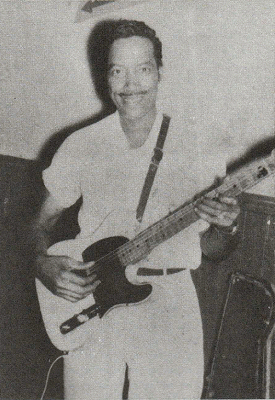
Charley
Booker (September 3, 1925 – September 20, 1989) was a blues singer and
guitarist from the Mississippi Delta, who recorded in the early 1950s
for Modern Records.
Charley Booker was born in 1925 on a plantation between the Mississippi communities of Moorhead and Sunflower, the son of Lucius Booker.[1] There is some doubt about his date of birth: while the 1925 birth date was given by Booker in interviews, social security records give the earlier date of September 3, 1919.[2]
He learned to play guitar from his uncle, who had played with Charley Patton, and Booker stated that as a child he had himself seen Patton perform near Indianola.[3] He worked occasionally as a musician from the late 1930s.[1] By the early 1940s Booker had moved to Leland, and in 1947 he moved to Greenville,[3] where he worked with pianist Willie Love,[1] and also met or worked with musicians such as Elmore James, Sonny Boy Williamson II, Little Milton, Ike Turner and Houston Boines. By 1951 he had his own radio show (possibly on the WDVM station), and in 1952 he was approached by Ike Turner to record for Modern Records.[3]
Recordings
The recording session was set up by Joe Bihari of Modern Records at the Club Casablanca on Nelson Street, Greenville[2] on January 23, 1952. Booker was backed by Houston Boines on harmonica, Turner on piano and Jesse "Cleanhead" Love on drums, with the same band also backing several songs by Boines.[4] Despite the piano being "horribly out of tune", and problems with local law enforcement,[5] the session resulted in two singles released under Booker's name, one on Modern Records and the other on the associated Blues & Rhythm label,[4] as well as releases by Boines. The Blues & Rhythm release, pairing "No Ridin' Blues" with "Rabbit Blues", sold strongly locally[3] but Booker did not record again for Modern, and a session later the same year for Sam Phillips was unreleased at the time.[4]
Later life and death
Early the following year he moved to South Bend, Indiana and ceased music as a full-time occupation.[3] Although he continued to play locally, his only further recording was a live guest appearance with Joe Willie Wilkins at a 1973 blues festival at Notre Dame in South Bend.[2] He died on September 30, 1989.
Charley Booker was born in 1925 on a plantation between the Mississippi communities of Moorhead and Sunflower, the son of Lucius Booker.[1] There is some doubt about his date of birth: while the 1925 birth date was given by Booker in interviews, social security records give the earlier date of September 3, 1919.[2]
He learned to play guitar from his uncle, who had played with Charley Patton, and Booker stated that as a child he had himself seen Patton perform near Indianola.[3] He worked occasionally as a musician from the late 1930s.[1] By the early 1940s Booker had moved to Leland, and in 1947 he moved to Greenville,[3] where he worked with pianist Willie Love,[1] and also met or worked with musicians such as Elmore James, Sonny Boy Williamson II, Little Milton, Ike Turner and Houston Boines. By 1951 he had his own radio show (possibly on the WDVM station), and in 1952 he was approached by Ike Turner to record for Modern Records.[3]
Recordings
The recording session was set up by Joe Bihari of Modern Records at the Club Casablanca on Nelson Street, Greenville[2] on January 23, 1952. Booker was backed by Houston Boines on harmonica, Turner on piano and Jesse "Cleanhead" Love on drums, with the same band also backing several songs by Boines.[4] Despite the piano being "horribly out of tune", and problems with local law enforcement,[5] the session resulted in two singles released under Booker's name, one on Modern Records and the other on the associated Blues & Rhythm label,[4] as well as releases by Boines. The Blues & Rhythm release, pairing "No Ridin' Blues" with "Rabbit Blues", sold strongly locally[3] but Booker did not record again for Modern, and a session later the same year for Sam Phillips was unreleased at the time.[4]
Later life and death
Early the following year he moved to South Bend, Indiana and ceased music as a full-time occupation.[3] Although he continued to play locally, his only further recording was a live guest appearance with Joe Willie Wilkins at a 1973 blues festival at Notre Dame in South Bend.[2] He died on September 30, 1989.
Charley Booker No Ridin' Blues (1952)