1954 Gromus Gromotka*
1962 Steve Clayton*
1966 Dirk Rolle*
1976 Thomas Troussier*
1977 Ethel Waters (Sweet Mama Stringbean)+
2004 Raful Neal+
2005 R. L. Burnside+
2013 Joe Kelley+
Gerrit A. Brockmann*
Laurie Lacross-Wright*
Happy Birthday
Steve Clayton *01.09.1962

Wie alles begann
Geboren 1962 in Birmingham (GB), begann STEVE CLAYTON im Alter von 10 Jahren, sich für Musik zu interessieren. Dies veranlaßte seinen Vater, ihm ein altes Klavier zu kaufen und ihn zum Klavierunterricht anzumelden.
Gegen Ende des fünf Jahre dauernden Studiums komponierte seine Musiklehrerin für ihn einen Blues, den er lernen sollte.
Diese unterschiedlichen Klänge und Rhythmen waren etwas ganz und gar neues für den jungen Steve, der in klassischem Klavier unterrichtet wurde, und hatte einen enormen Effekt. Seine Plattenkollektion stieg sprunghaft an, opferte er doch sein gesamtes Taschengeld, um sich Platten von Cow Cow Davenport, Albert Ammons und Memphis Slim zu kaufen. Um nur einige zu nennen.
Nun saß er nicht mehr am Klavier, um klassische Musik zu lernen, nun saß er am Klavier um zu reproduzieren, was er hörte.
Auf der Bühne
Nach Beendigung seiner Ausbildung verfeinerte er seine Fertigkeiten bei der Mitwirkung in verschiedenen Bluesbands.
Es dauerte nicht lange, bis man ihm Beinamen wie „The Ivory Maradona“ oder „The Big Man of Boogie Woogie“ verlieh und ihn bat, Legenden wie Louisiana Red, Shuggy Otis sowie Carey Bell auf einigen ihrer Europa-Tourneen am Piano zu begleiten. Auch wirkte er mit bei verschiedenen CD-Produktionen anderer Musiker, so z. B. auf der mit einem Preis ausgezeichneten CD „He knows the blues“ von Otis Grand.
Singen - Texten - Komponieren und eine eigene Band
Die logische Folge seiner Arbeit am Piano war, nun auch das Singen zu lernen, was ihn wiederum zum Texten und Komponieren eigener Stücke führte.
Das Resultat ist festgehalten auf seiner ersten CD „Can’t Stop The Boogie“, die 1991 mit seiner englischen Band „The 44s“ aufgenommen wurde.
Das deutsche Plattenlabel „Hot Fox“ schickte ihn 1993 nach Chicago, um dort, zusammen mit den Legenden S. P. Leary und Lester „Mad Dog“ Davenport, sein zweites Album „I Got A Right“ aufzunehmen. Mit „I got to sing these blues“ (1999), „You know what I mean“ (2000) , „Dirty Mistreater“ (2004) „Goin´ back to Birmingham“ (2007), „I Like It Like That“ (2011), „Barrelhouse Blues & Boogie Woogie Piano“ (2014) und “Homecoming” (2014) folgten sieben weitere Aufnahmen.
Auszeichnungen
Als bester Pianist in England wurde STEVE CLAYTON in den Jahren 1995, 1997 und 1998 von der British Blues Connection ausgezeichnet. Nachdem er 1998 seinen Wohnsitz nach Deutschland verlegt hat, dauerte es auch hier nicht lange, auf sich aufmerksam zu machen. Im Jahr 2001 wurde ihm der oberschwäbische Kleinkunstpreis, das „Kupferle“ verliehen und im Jahr 2015 der German-Boogie-Woogie Award Pinetop als Bester Entertainer.
Seit über 35 Jahren singt und spielt er in der Liga der Großen.
Er nahm den alten Stil, gab ihm seinen persönlichen Touch und, in der Tat, „ .......er ist nicht zu verwechseln, der einzigartige Sound von STEVE „BIG MAN“ CLAYTON“.
Steve "Big Man" Clayton, (born 1 September 1962) is a British barrelhouse pianist.
He has been awarded: Best Piano Player in 1995, 1997 and 1998 presented by the British Blues Connection[1] and, in 2001, the oberschwaebischer Kleinkunstpreis presented by the Zehntscheuer, Ravensburg, Germany.
Background
Clayton was born in Birmingham, England.
He began to show an interest in music at the age of 10. This prompted his father to buy an old upright piano and he promptly shipped him off for weekly piano lessons, which he would keep up for the next 5 years.
Towards the end of his music lessons, his music teacher composed a blues for him to learn. The different tones and rhythms were something totally new to somebody learning the classics.
This new found music had an enormous effect on him; the record collection mounted, spending all his pocket money on records by Cow Cow Davenport, Albert Ammons and Memphis Slim, to name only a few. His time was spent at the piano, trying to reproduce the sounds he was hearing.
It didn’t take long for Clayton to find his way into his first blues band after leaving school, and he would spend the next few years learning his craft in numerous local bands, being hailed as "The Ivory Maradona" and "The Big Man of Boogie Woogie".
The "Big Man" was requested to back visiting U.S. artists like Louisiana Red, Shuggy Otis and Carey Bell. He toured Europe with them and he learnt from them. He is also the man pounding the keys on the award winning CD "He knows the blues", by Otis Grand.
Learning to sing was a real turning point because it led him to song writing, the results of which can be heard on his highly acclaimed debut album "Can’t Stop The Boogie" which he recorded in 1991 with his long-time band "The 44’s". This prompted the German record label Hot Fox, to send him to Chicago to record his second album "I Got A Right", which features legends S.P. Leary and Lester "Mad Dog" Davenport (1993). Four more recordings would follow; "I got to sing these blues" (1999), "You know what I mean" (2000), "Dirty Mistreater" (2004), and "Goin' back to Birmingham" (2007).
The "Big Man" was honoured as best piano player by the British Blues Connection in 1995, 1997 and 1998 before leaving for the Boogie Woogie capitol of the world, Germany, where he now resides.
It didn’t take long for him to make his mark here neither, winning a south German prize as best artist for 2001.
The "Big Man" sings and plays the blues as good as you could hear anywhere in the world. He has taken the old style and put his own personal touch to it, indeed ... "there is no mistaking the unique sound of Steve "Big Man" Clayton".
Recordings
Clayton has recorded with; Jean Vincent, The Mighty Houserockers, Richard Ray Farrel, Otis Grand, Rudy Rotta, and Dana Gillespie.
His own recordings are:
"Can´t stop the boogie" 1991 Hot fox records
"I got a right" 1993 Hot fox records, recorded at Delmark Studios, Chicago, and featuring S.P. Leary on drums and Lester "Mad Dog" Davenport on harmonica.
"I got to sing these blues" 1999 Stormy Monday Records
"You know what I mean" 2000 Stormy Monday Records
"Dirty Mistreater" 2004 Stormy Monday Records
"Goin' back to Birmingham" 2007 Stormy Monday Records
Clayton is currently living in Germany where he continues to compose and perform.
Gromus Gromotka *01.09.1954
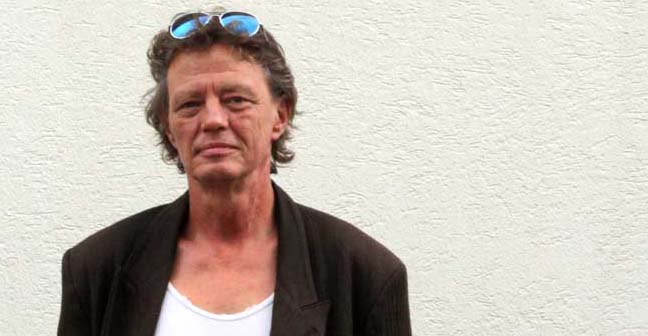
Unser Gitarrist gehört nicht zu der Urbesetzung aus den Achtzigern, er spielte zu diesen Zeiten bei der national wie international renommierten Stormy Monday Bluesband. Mit allen Mississippiwassern gewaschen ist er ein ebenso versierter Begleiter wie einfallsreicher Solist, der sogar noch weiß, wie man Slideguitar richtig spielt.
1987 formierte sich der Aufstand Alter Männer als Zufallsbefund aus den Musikern der damals renommierten Essener Stormy Monday Bluesband. Frontman LoneCat Erichson suchte für eine private Party eine Hand voll Männer, die kurzfristig eine brauchbare Blues Combo auf die Beine stellen konnten.
Gäste wie Musiker hatten einen Mordsspaß. Die Band blieb nach diesem Gig zusammen, weil es einfach Klasse war den Blues so zu spielen wie der war, wie er ist und wie er sein könnte. Ohne Tournee-Streß, ohne Streß mit Veranstaltern und Plattenlabels. Und wenn nötig auch mit dem 13. Takt, den auch der schwarze Bluesmusiker im Alter so gerne spielt.
Die CD Kansas City wurde nach 25 Jahren ohne jede kommerzielle Absicht nur zum eigenen Spaß am Blues und falls mal einer den Löffel abgibt eingespielt.
“Pate” LoneCat Erichson voc & 88 keys
Gromus Gromotka guit
Cony Barck bass
Bill Bergemann, harp
„Onkel“ Wolf Huhn, drums
Ludi Ettrich guit & voc
Gromus Gromotka guit
Cony Barck bass
Bill Bergemann, harp
„Onkel“ Wolf Huhn, drums
Ludi Ettrich guit & voc

Aufstand Alter Maenner Gromus Gromotka Nordrhein-Westfalen, Germany

Delta Bluesband
Aufstand alter Männer - Old Man Chop
Dirk Rolle *01.09.1966
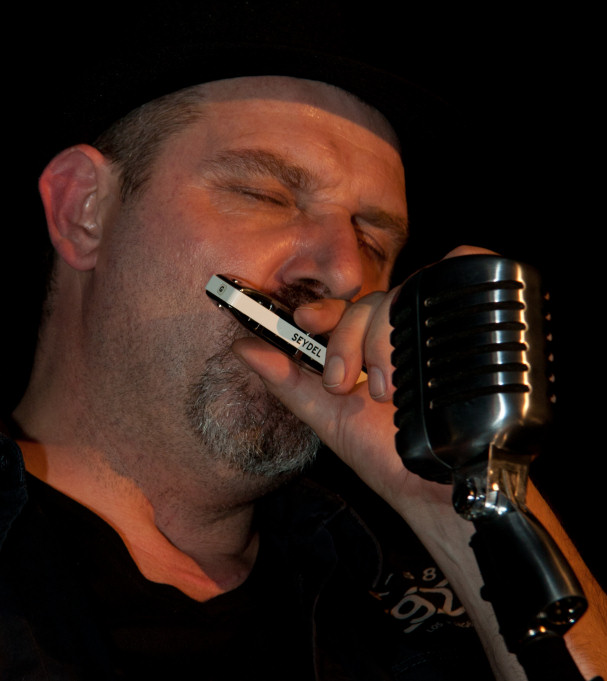
Der 1966 geborene Dirk Rolle, gelernter Flugzeugtechniker, kam erst durch den Kontakt mit Musiker Stefan Diestelmann zur Jahrtausendwende mit dem Instrument in Berührung und wurde durch Igor Flach unterrichtet und geschult. Er war ihm Mentor und guter Freund.
Seit einigen Jahren unterrichtet Dirk Rolle nun auch selbst beruflich auf diesem Instrument.
Medienerfahrungen: Sat-1, RTL, RBB, ARD, MDR, Deutschlandradio, Deutschlandradio-Kultur und Goitscheradio. Bühnenerfahrungen: 1A-Bluesband mit Igor Flach und Blues-Rudi, Axel Winde (Boogie-Pianist), Kat Baloun, NinaT. und Eb Davis, Bernd Kleinow, JR-Bluesband (Jan u. Mark Rose),Engerling, Jürgen Kerth, Hollys-Bluesband, Big Joe Stolle, Waldi Weiz-Band und Tom Blacksmith, Klaus Renft, Brendan Power, Jimi Lee, Jimmi Kelly+Band, Peter Schmidt (East Blues Exp.), Lausitzblues uvm. aktive Projekte: TB-Session-Band mit Jürgen Gerhardt und das Duo: „Youngmanblues“ mit Denny Hertel
mundharmonika-live 2008 (05) Youngman Blues Duo - Baby Please Don't Go
Laurie Lacross-Wright *01.09.

I have been a singer/guitarist for most of my life, and also spent a number of years as a newspaper reporter and magazine feature writer. Both are demanding careers so I never got around to having a kids. Some things are just not meant to be, I guess. From the age of 14 I typically juggled 2-3 jobs so of course I worked in numerous other occupations but would rather forget about most of those - especially a 30-day stint working in a dangerous canning facility in the mid-1980s <shudder>.
I grew up in Davison, Michigan but also spent time living in Ellsworth and also Manistee, Michigan, and in Richmond, Indiana. For a number of years I made my living touring the country as a solo/duo entertainer. My belongings resided in a storage unit while I lived out of a suitcase. It was a strange but interesting existence.
I moved back to Genesee County in the early 1990s. In 1998 I started performing with guitarist Rusty Wright. We married in 2001. He is the defender of my universe.
In 2004 we finally formed the band we both envisioned. The second show we played was opening for Lynyrd Skynyrd. It seemed to be an auspicious start and they were very gracious people to work with.
In August 2006 we released our first CD "Ain't No Good Life" as Rusty Wright Blues, but modified the band name to Rusty Wright Band for the release of our second CD "Playin' With Fire" which came out in early 2009. In January 2010 we released our first live concert dvd and the band is also featured on a concert DVD of the 2009 St. John Blues Fest. In July, 2011 we released "Live Fire" a digital album of live concert cuts.
In April 2011 we were invited to perform on WKAR's Backstage Pass, a nationally-syndicated, 60-minute PBS music program produced on the campus of East Lansing, Michigan. Our first Christmas single emerged from that show taping. The holiday segment featuring the RWB original "Santa's in Jail" aired in December 2011 and episode featuring RWB performing for a live studio audience aired in January, 2012.
Our fourth album This, That & the Other Thing" was released in January, 2013, making its chart debut in February at #5 on the Relix Magazine jam bands chart & #21 on the Living Blues chart. The album has made multiple appearances on the Roots Music Report Blues chart and the Americana Music Association chart and received Blues411's Jimi Award for Contemporary Blues Release of the Year.
In March the album was made available on more than 57,000 TouchTunes jukeboxes across North America.
Wonder Man was released in May, 2015. The album peaked at #8 on the Billboard Blues Charts, #4 on the Billboard Heatseeker Chart, #3 on the Hit Tracks Top 100 chart, #1 on the Blues411 chart, Top 10 on Relix Magazine's jambands chart, and was named to numerous "Years Best" lists by radio presenters. The album was also nominated for Album of the Year in Vintage Guitar Magazine's Reader's Choice Awards.
Life is good.
I grew up in Davison, Michigan but also spent time living in Ellsworth and also Manistee, Michigan, and in Richmond, Indiana. For a number of years I made my living touring the country as a solo/duo entertainer. My belongings resided in a storage unit while I lived out of a suitcase. It was a strange but interesting existence.
I moved back to Genesee County in the early 1990s. In 1998 I started performing with guitarist Rusty Wright. We married in 2001. He is the defender of my universe.
In 2004 we finally formed the band we both envisioned. The second show we played was opening for Lynyrd Skynyrd. It seemed to be an auspicious start and they were very gracious people to work with.
In August 2006 we released our first CD "Ain't No Good Life" as Rusty Wright Blues, but modified the band name to Rusty Wright Band for the release of our second CD "Playin' With Fire" which came out in early 2009. In January 2010 we released our first live concert dvd and the band is also featured on a concert DVD of the 2009 St. John Blues Fest. In July, 2011 we released "Live Fire" a digital album of live concert cuts.
In April 2011 we were invited to perform on WKAR's Backstage Pass, a nationally-syndicated, 60-minute PBS music program produced on the campus of East Lansing, Michigan. Our first Christmas single emerged from that show taping. The holiday segment featuring the RWB original "Santa's in Jail" aired in December 2011 and episode featuring RWB performing for a live studio audience aired in January, 2012.
Our fourth album This, That & the Other Thing" was released in January, 2013, making its chart debut in February at #5 on the Relix Magazine jam bands chart & #21 on the Living Blues chart. The album has made multiple appearances on the Roots Music Report Blues chart and the Americana Music Association chart and received Blues411's Jimi Award for Contemporary Blues Release of the Year.
In March the album was made available on more than 57,000 TouchTunes jukeboxes across North America.
Wonder Man was released in May, 2015. The album peaked at #8 on the Billboard Blues Charts, #4 on the Billboard Heatseeker Chart, #3 on the Hit Tracks Top 100 chart, #1 on the Blues411 chart, Top 10 on Relix Magazine's jambands chart, and was named to numerous "Years Best" lists by radio presenters. The album was also nominated for Album of the Year in Vintage Guitar Magazine's Reader's Choice Awards.
Life is good.
''ALARM CLOCK BLUES'' - RUSTY WRIGHT BAND, july 2014
Rusty Wright, Laurie LaCross-Wright on guitars and vocals, Dennis
Bellinger on bass & vocals, Robert Manzitti on keyboards &
vocals, and Marc Friedman on drums. Filmed in 1080HD in Plymouth, MI,
July 4, 2014
R.I.P.
R. L. Burnside +01.09.2005
.jpg)
R. L. Burnside (eigentlich Robert Lee Burnside, * 23. November 1926 bei Oxford, Mississippi, USA; † 1. September 2005 in Memphis, Tennessee) war ein US-amerikanischer Bluessänger, der durch seinen einfachen, rauen Blues bekannt wurde.
Leben
Burnside wurde 1926 wie der Bluesmusiker Fred McDowell im nördlichen Mississippi-Delta geboren. Bei McDowell lernte er Gitarre spielen, aber auch bei seinen Nachbarn Son Hibbler, Ranie Burnette, Willie Thomas und Jessie Vortis. Er wurde zudem von John Lee Hooker, Lightnin’ Hopkins und Muddy Waters stark beeinflusst. Burnside lebte in Chicago und Memphis, bevor er 1959 in seiner Heimat Mississippi ansässig wurde und eine kleine Bar eröffnete, in der er seinen Blues spielte. Nebenbei verkaufte er selbstgemachten Whiskey und war als Baumwollfarmer tätig.
Seine erste Schallplatte nahm Burnside 1966 im Alter von 40 Jahren auf, nachdem er den Folkloresammler George Mitchell kennengelernt hatte. 1979 fand seine erste Tournee statt, auch in Europa. 1991 wurde er Berufsmusiker und gab seine Tätigkeit als Farmer auf. In den 1990er Jahren war er auch zusammen mit den Beastie Boys und der Band The Jon Spencer Blues Explosion auf Tournee. Mit Jon Spencer nahm er 1996 das Album A Ass Pocket of Whiskey auf. 1991 war er in dem Dokumentarfilm Deep Blues von Robert Mugge zu sehen und zu hören. 2001 erhielt er den Living Blues Award als bester männlicher Blueskünstler. 2004 trat er zusammen mit den North Mississippi Allstars beim Bonnaroo-Festival auf. Das Konzert wurde auf CD veröffentlicht. Seine letzte Platte A Bothered Mind nahm er 2004 mit seinem langjährigen Label Fat Possum Records auf.
R. L. Burnside starb am 1. September 2005 im St. Francis Hospital in Memphis an den Folgen eines Herzinfarktes und einer Bypass-Operation aus dem Jahr 2004. Er hinterließ seine Frau Alice Mae, zwölf Kinder und zahlreiche Enkel.
http://de.wikipedia.org/wiki/R._L._Burnside
R. L. Burnside (November 23, 1926 – September 1, 2005) was an American blues singer, songwriter, and guitarist who lived much of his life in and around Holly Springs, Mississippi. He played music for much of his life, but did not receive much attention until the early 1990s. In the latter half of the 1990s, Burnside recorded and toured with Jon Spencer, garnering crossover appeal and introducing his music to a new fan base within the punk and garage rock scene.
Life and career
1926–1959: Early years
Burnside was born in 1926[1] to Earnest Burnside and Josie,[2] in Harmontown,[3] or College Hill,[4][5] or Blackwater Creek.[6] All of which are in the rural part of Lafayette County, Mississippi, United States, close to the area that would be covered by Sardis lake a few years later. His first name is variously given as R. L., Rl, Robert Lee, Rural, Ruel or Rule. His father left home early on, and he grew up with his mother, grandparents, and several siblings.
Although he tried the harmonica, then dabbled in guitar playing ever since he was sixteen, Burnside has reported he first played in public at age 21 or 22.[7][8] He learned mostly from Mississippi Fred McDowell, who lived nearby since Burnside was a child. He first heard his playing at age 7 or 8,[9] and eventually joined his gigs to play a late set.[8][10] Other local teachers were his uncle-in-law Ranie Burnette,[9] who was a popular player from Senatobia,[11] Son Hibbler, Jesse Vortis, and Burnside's brother-in-law.[7] Burnside cited church singing[12][10] and fife and drum picnics as elements of his childhood's musical landscape, and Muddy Waters, Lightnin' Hopkins and John Lee Hooker as influences in adulthood.[7][8][9]
In the late 1940s[13] he moved to Chicago, where his father has lived since he separated from his mother,[8] in the hope of finding better economic opportunities.[8] He did find jobs at metal and glass factories,[9][14][15] had the company of Muddy Waters (his cousin-in-law),[8] and enjoyed the modern blues scene at Maxwell Street.[13] But things did not turn out as he had hoped; within the span of one year his father, two brothers, and two uncles were all murdered in the city.[10][n 1]
Three years after he came,[10][13] Burnside went back south, and married Alice Mae Taylor in 1949 or 1950,[16][17][15] his second marriage.[7][n 2]. The 1950s were characterised by circles of relocation between Memphis, Tennessee, the Mississippi Delta and the hill country.[18][19][20] The time in the Delta allowed him to meet bluesmen Robert Lockwood, Jr. and Aleck "Rice" Miller.[7][8] It seems it was around that time that Burnside killed a man at a Craps game, was convicted of murder and incarcerated in Parchman farm.[17][21] He would later relate that his boss at the time had arranged to release him after six months, as he needed Burnside's skills as a tractor driver.[n 3]
1960–1990: Part-time musician
He spent the next 45 years, not unlike his early years, in the Marshall and Tate counties in the north of Mississippi. At first he kept to particularly remote dwellings,[16] working into the 1980s as a sharecropper growing cotton and soybean, and a commercial fisherman on the Tallahatchie River, selling his catch from door to door.[23][7] Later he moved closer to Holly Springs. Since he came back south he picked more local gigs,[13] playing guitar in juke joints and bars[3] (some under his management),[9][19][24] picnics and his own open house parties,[20][n 4] and an occasional festival. His career boomed in the last twenty years of his life.
His earliest recordings were made in 1967 by George Mitchell, then a graduate student of journalism. He went with his wife to a 13-day summer trip in Mississippi, that resulted in the first recordings of several country blues artists.[25] He came to Burnside's house near Coldwater on the advice of fife player and maker, Othar Turner.[26] Mitchell wrote that Fred McDowell likely had not told him about Burnside, because he posed "big-time competition".[27] Six of the songs, played on an acoustic guitar lent by Mitchell, were released on Arhoolie Records after two years, while nine other are on later products.
Another album of acoustic material was recorded in 1969 for Adelphi Records, not to be released until thirty years later; material from 1975 has had similar fate.[28][29] These featured Burnside playing acoustic guitar and singing, and a few tracks had harmonica accompanists, namely W.C. Veasey or Ulysse Red Ramsey. Although not recorded, by that time he already played also on electric guitar.[20][19] In 1969 at Montreal, he played for the first time out of the country, in one program with his models Lightnin' Hopkins and John Lee Hooker.[7][8] Three tours of his solo performances found enthusiastic audiences in several European countries.[20]
In 1974 Tav Falco visited and videotaped Burnside in the Brotherhood Sportsmen's Lodge, a juke joint he ran at the time near Como.[30][31][n 5] His performance featured the slide guitarist Kenny Brown. Brown was Burnside's friend and understudy, whom he began tutoring in 1971 and claimed as his "adopted son."[35][36] In 1978 Burnside was filmed by Alan Lomax in what remained mostly outtakes of the Mississippi Authority for Educational Television documentary The Land Where the Blues Began.[n 6]
A 1979 a series of recordings by David Evans for his record label, High Water, was the first to feature Burnside's Sound Machine, an accompaniment from family members on drums (Calvin Jackson, son-in-law), bass (Joseph, son) and guitar (Duwayne or Daniel Burnside, sons).[16] The band was active mostly in home settings, but did join Burnside in Europe in 1980[20] and 1983. They offered a rare fusion of rural and urban blues, funk, RnB and soul,[19][n 7] that appealed to young Mississippians.[20] While an EP by the title Sound Machine Groove was released by Evans' label in the US, it had next to no distribution.[37][38] Apart from it, one full album of the same title, a debut of sorts, was licensed for prompt European release by Disques Vogue,[20] and another hour's worth, was only released by Memphis' Inside Sounds in 2001.[39] When he recorded between 1980 and 1986 for the Old Swingmaster label of Netherlands, and for the French label Arion, Burnside went back to play mostly solo, or accompanied by harpists: Johnny Woods served on some occasions, as he also recorded as lead artist with Burnside's guitar accompaniment; Curtis Salgado served once in a New Orleans session. The results were four more LP releases under his name, in European markets.
In the same decade he retired from farm work and became more busy with the music.[13] For 12-odd years He worked with New Orleans-based harpist Jon (Joni) Morris Neremberg (or Nuremberg),[7][16][19] and appeared before American crowds in such occasions as the 1982 World's Fair, 1984 Louisiana World Exposition,[16] and 1986 San Francisco Blues Festival,[40] between international tours.[16][41] By the mid-1980s he toured about "once a year or maybe twice",[13] and by one report of 1985 he had been to Europe 17 times.[7] Recordings from his time with Morris wound up in two releases, both produced by M.C. Records and Louis X. Erlanger: a session from 1988 as Acoustic Stories, and a 2001 compilation of informal recordings provided by Morris, as Well, Well, Well.[9]
1991–2005: Commercial success and physical decline
In the late seventies or early eighties Burnside was introduced and struck a partnership with Junior Kimbrough.[13] Roughly a decade later, his own "Burnside Palace" had shut down[24][n 8] and the family lived next to the Kimbroughs' new "Junior's Place" in Chulahoma, Mississippi and collaborated with the counterpart musical family.[9][43][37] Music writer Robert Palmer, teaching for a time in the University of Mississippi in Oxford, frequented the scene with some celebrity musicians, which led to the making in 1990 of a documentary that featured Burnside prominently, Deep Blues.
Burnside began recording for the Oxford, Mississippi label, Fat Possum Records in 1991.[1] The label, dedicated to recording aging North Mississippi bluesmen such as Burnside and Kimbrough,[17][44] was founded by two students who have been catching the elders' performances for some years[45][46] - Living Blues magazine editor Peter Redvers-Lee and a writer there, Matthew Johnson. Burnside remained with Fat Possum from that time until his death. Their first output was Bad Luck City (1992), featuring The Sound Machine. The next, Too Bad Jim (1994), was recorded at Junior's Place, produced by Palmer and had support from Calvin Jackson and Kenny Brown.[47][43] After Jackson moved to Holland,[35][36] Burnside found a new stable band and would usually perform with Brown and drummer Cedric Burnside, his grandson.
In a New York concert around the release of Deep Blues, he attracted the attention of Jon Spencer, the leader of the Jon Spencer Blues Explosion.[48] He started touring with this group in 1995, both as an opening act and sitting in,[48] gaining much new audience.[49] The 1996 album A Ass Pocket of Whiskey was recorded with Jon Spencer' band and was marketed for their audience, but was credited to Burnside.[48] It gained critical acclaim and praise from Bono and Iggy Pop; while Billboard wrote "it sound like no other blues album ever released"[48] and an author there picked it to year's end critics' poll,[50] Living Blues opined it is "perhaps the worst blues album ever made."[51][n 9]
Burnside at the Double Door Inn in Charlotte, N.C. in 1998
After parting ways with the Blues Explosion, the label turned to produce music in which recorded materials were remixed by producer Tom Rothrock with an eye to techno, downtempo and hip-hop listeners. The experiment started with a track in Mr. Wizard (1997),[52][53] an album based on a variety of sessions, and matured into a full album with Come On In (1998).[54] The recording artists themselves heard only the final product, but they conceded that with time they came to like it, in part influenced by its popularity.[55][35]
Burnside continued to tour, perhaps more extensively than ever. A 1999 date in Paris' "New Morning", with Brown and Cedric, was the occasion for filming a 52 minutes documentary by French blues singer Sophie Kay (Kertesz). He warmed for the Beastie Boys,[9][56] was musical guest in Late Night with Conan O'Brien and HBO's Reverb, provided entertainment at private events such as Richard Gere's birthday party,[17] and participated in shared or showcase bills with other Fat Possum artists, like T-Model Ford, Paul "Wine" Jones, CeDell Davis, Robert Cage and Robert Belfour. An influx of visitors and young musicians were attracted to Junior's Place, but it burned down in 2000.
In short time, however, Burnside was in declining health. He had an ear infection and underwent a heart surgery in 1999.[3][57][58][59] As his tours decreased to a minimum,[60] Wish I Was In Heaven Sitting Down (2000) was released, which relegated guitar work to other players but used Burnside's vocals.[9] After a heart attack in 2001, his doctor advised him to stop drinking; Burnside did, but he reported that change left him unable to play.[22] Fat Possum rebounded with A Bothered Mind (2004), an album that used previously recorded guitar tracks, and included collaborations with Kid Rock and Lyrics Born.[61]
The three remix albums received mixed reviews, some describing the results as "unnatural"[62] while others lauded the playful spirit,[63] or "the way it yokes authentic blues feeling to new technology".[64] Commercially, the remixes were successful; each surpassed its previous in Billboard's Top Blues Albums chart, as they stayed there for 12–18 weeks' periods (but none entered into the more competitive Hot R&B/Hip-Hop Songs),[65][n 10] and two tracks from Come On In were included in The Sopranos ' soundtrack. "Let My Baby Ride" off Come On In received significant airplay and an ensuing music clip was slotted in MTV's 120 Minutes;[55] the album's "Rollin' & Tumblin'" accompanied a 2002 Nissan TV commercial.[9][67][68] But it was the live, unremixed album Burnside on Burnside (2001) that peaked at number 4 of Billboard's Blues Albums chart[65] and was nominated for a Grammy.[69] - the last article to catch Burnside as an active bandleader, recorded in January that year with Brown and Cedric.
In between, Fat Possum licensed and released First Recording (2003), comprising George Mitchell's 1967 recordings in its fullest edition yet, in traditional format.[n 11] In addition, the 1990s and 2000s saw release of several recordings from previous decades by other labels (see above), as well as a couple of new recordings by HighTone Records.
Death and legacy
Another heart attack in November 2002 resulted in a surgery in 2003, and sealed any career plans he had,[9][57] though he continued as guest singer on occasions, such as Bonnaroo Music Festival, 2004, his last public appearance.[71] He died at St. Francis Hospital in Memphis, Tennessee on September 1, 2005 at the age of 78.[72] Services were held at Rust College in Holly Springs, with burial in the Free Springs Cemetery in Harmontown. Around the time of his death, he resided in Byhalia, Mississippi and his immediate survivors included:[72]
His wife: Alice Mae Taylor Burnside (1932-2008),[73] married 1949;[15][17]
Daughters: Mildred Jean Burnside (1949-2010),[74] Linda Jackson, Brenda Kay Brooks, and Pamela Denise Burnside;
Sons: Melvin Burnside, R.L. Burnside Jr. (1954-2010),[75] Calvin Burnside, Joseph Burnside, Daniel Burnside, Duwayne Burnside, Dexter Burnside, Garry Burnside, and Rodger Harmon
Sisters: Lucille Burnside, Verelan Burnside, and Mat Burnside
Brother: Jesse Monia
35 grandchildren
32 great-grandchildren
Members of his large extended family continue to play blues in the Holly Springs area or in wider circles. Son Duwayne Burnside has played guitar with the North Mississippi Allstars (Polaris; Hill Country Revue with R. L. Burnside). He has operated a row of music venues named after Burnside and Alice Mae: in Chulahoma and Memphis,[76][77] Waterford,[78] and Holly Springs.[79] Grandson Cedric Burnside has released six albums with four musical partners, and toured with Kenny Brown and others. Son Garry Burnside used to play bass guitar with Junior Kimbrough, North Mississippi Allstars, and Hill Country Revue; in 2006 he released an album with Cedric. Son in law Calvin Jackson (died 2015) recorded with blues musicians of Burnside's generation and younger. Grandson Kent is a musician, as was Cody (died 2012). Kenny Brown has released four albums and toured with the family and his own band.
Burnside won one W. C. Handy Award in 2000 (Traditional Blues Male Artist of The Year),[80] two in 2002 (Traditional Blues Male Artist of The Year; Traditional Blues Album of The Year: Burnside on Burnside),[81][82] and one in 2003 (Traditional Blues Male Artist of The Year);[83] he had 11 unsuccessful nominations in 8 years for the awards, starting in 1982,[84] as well as one for a Grammy. Several of the Mississippi Blues Trail markers, which have been erected since 2006, mention him. In 2014 he was induced to the Blues Hall of Fame in Memphis.[85]
Burnside's fellow Fat Possum musicians The Black Keys also credit him as an influence and interpolated his "Skinny Woman" into their track "Busted".
Style
Burnside had a powerful, expressive voice, that did not fail with old age but rather grew richer,[17][9] and played both electric and acoustic guitar, with and without a slide. His drone-heavy style was more characteristic of North Mississippi hill country blues than Delta blues. Like other country blues musicians, he did not always adhere to strict 12- or 16-bar blues patterns, often adding extra beats to a measure as he saw fit.[86] His rhythms are often based on the fife and drum blues of north Mississippi.[87][47][n 12]
As was the case with his role model John Lee Hooker, Burnside's earliest recordings sound quite similar to one another, even repetitive, in vocal and instrumental styling. Many of these songs eschew traditional chord changes in favor of a single chord[19][47][26] or a simple bassline pattern that repeats throughout. Burnside played the guitar fingerstyle—without a pick—and often in open-G tuning.[88] His vocal style is characterized by a tendency to "break" briefly into falsetto, usually at the end of long notes.
Like his contemporary T-Model Ford, Burnside favored a stripped-down approach to the blues, marked by a quality of rawness. He and his later managers and reviewers maintained his persona as a hard-working man leading a life of struggle,[89] a heavy drinker, latent criminal singing songs of swagger and rebellion.
Burnside knew many toasts—African American narrative folk poems such as "Signifying monkey" and "Tojo Told Hitler"—and fondly recited them between songs at his concerts and on recordings. He narrated long jokes in concerts and social events,[49][90] and many sources noted his quick wit and charisma.
Life and career
1926–1959: Early years
Burnside was born in 1926[1] to Earnest Burnside and Josie,[2] in Harmontown,[3] or College Hill,[4][5] or Blackwater Creek.[6] All of which are in the rural part of Lafayette County, Mississippi, United States, close to the area that would be covered by Sardis lake a few years later. His first name is variously given as R. L., Rl, Robert Lee, Rural, Ruel or Rule. His father left home early on, and he grew up with his mother, grandparents, and several siblings.
Although he tried the harmonica, then dabbled in guitar playing ever since he was sixteen, Burnside has reported he first played in public at age 21 or 22.[7][8] He learned mostly from Mississippi Fred McDowell, who lived nearby since Burnside was a child. He first heard his playing at age 7 or 8,[9] and eventually joined his gigs to play a late set.[8][10] Other local teachers were his uncle-in-law Ranie Burnette,[9] who was a popular player from Senatobia,[11] Son Hibbler, Jesse Vortis, and Burnside's brother-in-law.[7] Burnside cited church singing[12][10] and fife and drum picnics as elements of his childhood's musical landscape, and Muddy Waters, Lightnin' Hopkins and John Lee Hooker as influences in adulthood.[7][8][9]
In the late 1940s[13] he moved to Chicago, where his father has lived since he separated from his mother,[8] in the hope of finding better economic opportunities.[8] He did find jobs at metal and glass factories,[9][14][15] had the company of Muddy Waters (his cousin-in-law),[8] and enjoyed the modern blues scene at Maxwell Street.[13] But things did not turn out as he had hoped; within the span of one year his father, two brothers, and two uncles were all murdered in the city.[10][n 1]
Three years after he came,[10][13] Burnside went back south, and married Alice Mae Taylor in 1949 or 1950,[16][17][15] his second marriage.[7][n 2]. The 1950s were characterised by circles of relocation between Memphis, Tennessee, the Mississippi Delta and the hill country.[18][19][20] The time in the Delta allowed him to meet bluesmen Robert Lockwood, Jr. and Aleck "Rice" Miller.[7][8] It seems it was around that time that Burnside killed a man at a Craps game, was convicted of murder and incarcerated in Parchman farm.[17][21] He would later relate that his boss at the time had arranged to release him after six months, as he needed Burnside's skills as a tractor driver.[n 3]
1960–1990: Part-time musician
He spent the next 45 years, not unlike his early years, in the Marshall and Tate counties in the north of Mississippi. At first he kept to particularly remote dwellings,[16] working into the 1980s as a sharecropper growing cotton and soybean, and a commercial fisherman on the Tallahatchie River, selling his catch from door to door.[23][7] Later he moved closer to Holly Springs. Since he came back south he picked more local gigs,[13] playing guitar in juke joints and bars[3] (some under his management),[9][19][24] picnics and his own open house parties,[20][n 4] and an occasional festival. His career boomed in the last twenty years of his life.
His earliest recordings were made in 1967 by George Mitchell, then a graduate student of journalism. He went with his wife to a 13-day summer trip in Mississippi, that resulted in the first recordings of several country blues artists.[25] He came to Burnside's house near Coldwater on the advice of fife player and maker, Othar Turner.[26] Mitchell wrote that Fred McDowell likely had not told him about Burnside, because he posed "big-time competition".[27] Six of the songs, played on an acoustic guitar lent by Mitchell, were released on Arhoolie Records after two years, while nine other are on later products.
Another album of acoustic material was recorded in 1969 for Adelphi Records, not to be released until thirty years later; material from 1975 has had similar fate.[28][29] These featured Burnside playing acoustic guitar and singing, and a few tracks had harmonica accompanists, namely W.C. Veasey or Ulysse Red Ramsey. Although not recorded, by that time he already played also on electric guitar.[20][19] In 1969 at Montreal, he played for the first time out of the country, in one program with his models Lightnin' Hopkins and John Lee Hooker.[7][8] Three tours of his solo performances found enthusiastic audiences in several European countries.[20]
In 1974 Tav Falco visited and videotaped Burnside in the Brotherhood Sportsmen's Lodge, a juke joint he ran at the time near Como.[30][31][n 5] His performance featured the slide guitarist Kenny Brown. Brown was Burnside's friend and understudy, whom he began tutoring in 1971 and claimed as his "adopted son."[35][36] In 1978 Burnside was filmed by Alan Lomax in what remained mostly outtakes of the Mississippi Authority for Educational Television documentary The Land Where the Blues Began.[n 6]
A 1979 a series of recordings by David Evans for his record label, High Water, was the first to feature Burnside's Sound Machine, an accompaniment from family members on drums (Calvin Jackson, son-in-law), bass (Joseph, son) and guitar (Duwayne or Daniel Burnside, sons).[16] The band was active mostly in home settings, but did join Burnside in Europe in 1980[20] and 1983. They offered a rare fusion of rural and urban blues, funk, RnB and soul,[19][n 7] that appealed to young Mississippians.[20] While an EP by the title Sound Machine Groove was released by Evans' label in the US, it had next to no distribution.[37][38] Apart from it, one full album of the same title, a debut of sorts, was licensed for prompt European release by Disques Vogue,[20] and another hour's worth, was only released by Memphis' Inside Sounds in 2001.[39] When he recorded between 1980 and 1986 for the Old Swingmaster label of Netherlands, and for the French label Arion, Burnside went back to play mostly solo, or accompanied by harpists: Johnny Woods served on some occasions, as he also recorded as lead artist with Burnside's guitar accompaniment; Curtis Salgado served once in a New Orleans session. The results were four more LP releases under his name, in European markets.
In the same decade he retired from farm work and became more busy with the music.[13] For 12-odd years He worked with New Orleans-based harpist Jon (Joni) Morris Neremberg (or Nuremberg),[7][16][19] and appeared before American crowds in such occasions as the 1982 World's Fair, 1984 Louisiana World Exposition,[16] and 1986 San Francisco Blues Festival,[40] between international tours.[16][41] By the mid-1980s he toured about "once a year or maybe twice",[13] and by one report of 1985 he had been to Europe 17 times.[7] Recordings from his time with Morris wound up in two releases, both produced by M.C. Records and Louis X. Erlanger: a session from 1988 as Acoustic Stories, and a 2001 compilation of informal recordings provided by Morris, as Well, Well, Well.[9]
1991–2005: Commercial success and physical decline
In the late seventies or early eighties Burnside was introduced and struck a partnership with Junior Kimbrough.[13] Roughly a decade later, his own "Burnside Palace" had shut down[24][n 8] and the family lived next to the Kimbroughs' new "Junior's Place" in Chulahoma, Mississippi and collaborated with the counterpart musical family.[9][43][37] Music writer Robert Palmer, teaching for a time in the University of Mississippi in Oxford, frequented the scene with some celebrity musicians, which led to the making in 1990 of a documentary that featured Burnside prominently, Deep Blues.
Burnside began recording for the Oxford, Mississippi label, Fat Possum Records in 1991.[1] The label, dedicated to recording aging North Mississippi bluesmen such as Burnside and Kimbrough,[17][44] was founded by two students who have been catching the elders' performances for some years[45][46] - Living Blues magazine editor Peter Redvers-Lee and a writer there, Matthew Johnson. Burnside remained with Fat Possum from that time until his death. Their first output was Bad Luck City (1992), featuring The Sound Machine. The next, Too Bad Jim (1994), was recorded at Junior's Place, produced by Palmer and had support from Calvin Jackson and Kenny Brown.[47][43] After Jackson moved to Holland,[35][36] Burnside found a new stable band and would usually perform with Brown and drummer Cedric Burnside, his grandson.
In a New York concert around the release of Deep Blues, he attracted the attention of Jon Spencer, the leader of the Jon Spencer Blues Explosion.[48] He started touring with this group in 1995, both as an opening act and sitting in,[48] gaining much new audience.[49] The 1996 album A Ass Pocket of Whiskey was recorded with Jon Spencer' band and was marketed for their audience, but was credited to Burnside.[48] It gained critical acclaim and praise from Bono and Iggy Pop; while Billboard wrote "it sound like no other blues album ever released"[48] and an author there picked it to year's end critics' poll,[50] Living Blues opined it is "perhaps the worst blues album ever made."[51][n 9]
Burnside at the Double Door Inn in Charlotte, N.C. in 1998
After parting ways with the Blues Explosion, the label turned to produce music in which recorded materials were remixed by producer Tom Rothrock with an eye to techno, downtempo and hip-hop listeners. The experiment started with a track in Mr. Wizard (1997),[52][53] an album based on a variety of sessions, and matured into a full album with Come On In (1998).[54] The recording artists themselves heard only the final product, but they conceded that with time they came to like it, in part influenced by its popularity.[55][35]
Burnside continued to tour, perhaps more extensively than ever. A 1999 date in Paris' "New Morning", with Brown and Cedric, was the occasion for filming a 52 minutes documentary by French blues singer Sophie Kay (Kertesz). He warmed for the Beastie Boys,[9][56] was musical guest in Late Night with Conan O'Brien and HBO's Reverb, provided entertainment at private events such as Richard Gere's birthday party,[17] and participated in shared or showcase bills with other Fat Possum artists, like T-Model Ford, Paul "Wine" Jones, CeDell Davis, Robert Cage and Robert Belfour. An influx of visitors and young musicians were attracted to Junior's Place, but it burned down in 2000.
In short time, however, Burnside was in declining health. He had an ear infection and underwent a heart surgery in 1999.[3][57][58][59] As his tours decreased to a minimum,[60] Wish I Was In Heaven Sitting Down (2000) was released, which relegated guitar work to other players but used Burnside's vocals.[9] After a heart attack in 2001, his doctor advised him to stop drinking; Burnside did, but he reported that change left him unable to play.[22] Fat Possum rebounded with A Bothered Mind (2004), an album that used previously recorded guitar tracks, and included collaborations with Kid Rock and Lyrics Born.[61]
The three remix albums received mixed reviews, some describing the results as "unnatural"[62] while others lauded the playful spirit,[63] or "the way it yokes authentic blues feeling to new technology".[64] Commercially, the remixes were successful; each surpassed its previous in Billboard's Top Blues Albums chart, as they stayed there for 12–18 weeks' periods (but none entered into the more competitive Hot R&B/Hip-Hop Songs),[65][n 10] and two tracks from Come On In were included in The Sopranos ' soundtrack. "Let My Baby Ride" off Come On In received significant airplay and an ensuing music clip was slotted in MTV's 120 Minutes;[55] the album's "Rollin' & Tumblin'" accompanied a 2002 Nissan TV commercial.[9][67][68] But it was the live, unremixed album Burnside on Burnside (2001) that peaked at number 4 of Billboard's Blues Albums chart[65] and was nominated for a Grammy.[69] - the last article to catch Burnside as an active bandleader, recorded in January that year with Brown and Cedric.
In between, Fat Possum licensed and released First Recording (2003), comprising George Mitchell's 1967 recordings in its fullest edition yet, in traditional format.[n 11] In addition, the 1990s and 2000s saw release of several recordings from previous decades by other labels (see above), as well as a couple of new recordings by HighTone Records.
Death and legacy
Another heart attack in November 2002 resulted in a surgery in 2003, and sealed any career plans he had,[9][57] though he continued as guest singer on occasions, such as Bonnaroo Music Festival, 2004, his last public appearance.[71] He died at St. Francis Hospital in Memphis, Tennessee on September 1, 2005 at the age of 78.[72] Services were held at Rust College in Holly Springs, with burial in the Free Springs Cemetery in Harmontown. Around the time of his death, he resided in Byhalia, Mississippi and his immediate survivors included:[72]
His wife: Alice Mae Taylor Burnside (1932-2008),[73] married 1949;[15][17]
Daughters: Mildred Jean Burnside (1949-2010),[74] Linda Jackson, Brenda Kay Brooks, and Pamela Denise Burnside;
Sons: Melvin Burnside, R.L. Burnside Jr. (1954-2010),[75] Calvin Burnside, Joseph Burnside, Daniel Burnside, Duwayne Burnside, Dexter Burnside, Garry Burnside, and Rodger Harmon
Sisters: Lucille Burnside, Verelan Burnside, and Mat Burnside
Brother: Jesse Monia
35 grandchildren
32 great-grandchildren
Members of his large extended family continue to play blues in the Holly Springs area or in wider circles. Son Duwayne Burnside has played guitar with the North Mississippi Allstars (Polaris; Hill Country Revue with R. L. Burnside). He has operated a row of music venues named after Burnside and Alice Mae: in Chulahoma and Memphis,[76][77] Waterford,[78] and Holly Springs.[79] Grandson Cedric Burnside has released six albums with four musical partners, and toured with Kenny Brown and others. Son Garry Burnside used to play bass guitar with Junior Kimbrough, North Mississippi Allstars, and Hill Country Revue; in 2006 he released an album with Cedric. Son in law Calvin Jackson (died 2015) recorded with blues musicians of Burnside's generation and younger. Grandson Kent is a musician, as was Cody (died 2012). Kenny Brown has released four albums and toured with the family and his own band.
Burnside won one W. C. Handy Award in 2000 (Traditional Blues Male Artist of The Year),[80] two in 2002 (Traditional Blues Male Artist of The Year; Traditional Blues Album of The Year: Burnside on Burnside),[81][82] and one in 2003 (Traditional Blues Male Artist of The Year);[83] he had 11 unsuccessful nominations in 8 years for the awards, starting in 1982,[84] as well as one for a Grammy. Several of the Mississippi Blues Trail markers, which have been erected since 2006, mention him. In 2014 he was induced to the Blues Hall of Fame in Memphis.[85]
Burnside's fellow Fat Possum musicians The Black Keys also credit him as an influence and interpolated his "Skinny Woman" into their track "Busted".
Style
Burnside had a powerful, expressive voice, that did not fail with old age but rather grew richer,[17][9] and played both electric and acoustic guitar, with and without a slide. His drone-heavy style was more characteristic of North Mississippi hill country blues than Delta blues. Like other country blues musicians, he did not always adhere to strict 12- or 16-bar blues patterns, often adding extra beats to a measure as he saw fit.[86] His rhythms are often based on the fife and drum blues of north Mississippi.[87][47][n 12]
As was the case with his role model John Lee Hooker, Burnside's earliest recordings sound quite similar to one another, even repetitive, in vocal and instrumental styling. Many of these songs eschew traditional chord changes in favor of a single chord[19][47][26] or a simple bassline pattern that repeats throughout. Burnside played the guitar fingerstyle—without a pick—and often in open-G tuning.[88] His vocal style is characterized by a tendency to "break" briefly into falsetto, usually at the end of long notes.
Like his contemporary T-Model Ford, Burnside favored a stripped-down approach to the blues, marked by a quality of rawness. He and his later managers and reviewers maintained his persona as a hard-working man leading a life of struggle,[89] a heavy drinker, latent criminal singing songs of swagger and rebellion.
Burnside knew many toasts—African American narrative folk poems such as "Signifying monkey" and "Tojo Told Hitler"—and fondly recited them between songs at his concerts and on recordings. He narrated long jokes in concerts and social events,[49][90] and many sources noted his quick wit and charisma.
Raful Neal +01.09.2004
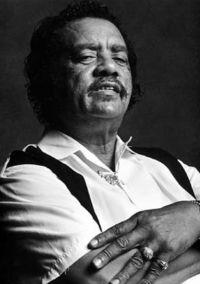
Raful Neal (* 6. Juni 1936 in Baton Rouge; † 1. September 2004 ebenda) war ein US-amerikanischer Bluessänger, Mundharmonikaspieler und Songwriter.
Raful Neal ist der Vater des Baton Rouge Blues, ein Titel, den er sich durch seine Diskographie, seinen Einfluss auf andere Musiker und als Vater von zehn Kindern, von denen neun Bluesmusik spielen, verdient hat. Einer seiner Söhne, Kenny Neal, hat eine große Karriere als Bluesmusiker gemacht, in der Band spielen auch einige seiner Brüder.
Er und seine Schwester verloren schon früh ihre Eltern, und die beiden wuchsen bei einer Tante auf. Im Alter von 14 Jahren begann er mit dem Mundharmonikaspiel, unterstützt von Ike Brown, einem lokalen Musiker und beeinflusst von Little Walter. Zu seiner ersten Band, The Clouds, gehörte Lester Johnson (Lazy Lester), der später durch den sehr jungen Buddy Guy ersetzt wurde.[2] Als ihn Little Walter, sein großes Vorbild, in Baton Rouge spielen hörte, lud er die Band ein, nach Chicago zu kommen und für ihn Auftritte zu machen, die er nicht selbst wahrnehmen konnte.[3][4] Buddy Guy ging nach Chicago, Raful Neal blieb in Baton Rouge und machte seine erste Aufnahme für Peacock Records, Sunny Side; sie war aber nicht erfolgreich. Bei Peacock nahm er keine Platten mehr auf, erst in den 1960er Jahren nahm er wieder Singles für Whit, La Louisiane und Fantastic auf.
In den 1980er Jahren tourte er mit Buddy Guy, und 1987 nahm er sein erstes Album, Louisiana Legend, für King Snake Records auf. Das Album wurde 1990 von Alligator Records übernommen. Bis 1987 war er nur eine lokale Berühmtheit. Erst die Aufnahme von Man, Watch Your Woman machte ihn überregional bekannt. Die Single wurde für einen Blues Music Award in der Kategorie „Best Blues Single“ nominiert. Bei der Aufnahme seines nächsten Albums I been mistreated wurde er von seinen Söhnen Noel (Bass) und Raful Jr. (Schlagzeug) unterstützt. In den 1990ern tourte er um die ganze Welt. 1995 wurde er in die Louisiana Blues Hall of Fame aufgenommen. 1998 nahm er noch Old Friends auf, danach erkrankte er an Krebs, dem er 2004 erlag.
http://de.wikipedia.org/wiki/Raful_Neal
Raful Neal (June 6, 1936 – September 1, 2004[1]) was an American, Louisiana blues singer, harmonicist and songwriter.[2]
Born in Baton Rouge, Louisiana and reared by his aunt and uncle on a tenant farm in Chamberlin, West Baton Rouge Parish, Louisiana, United States, Neal began playing the harmonica at age 14. He played with Buddy Guy in a band called the Clouds. His first record, "Sunny Side of Love" (1958) on Peacock Records, was not successful.[1]
Neal's first album, called Louisiana Legend, was initially issued by King Snake Records and later by Alligator Records in 1990. His 1991 album I Been Mistreated was released on Ichiban Records. Neal toured globally. In 1997 his harmonica playing was featured on the album Live: Swampland Jam by Tab Benoit. Neal's album Old Friends was issued in 1998.
Neal died of cancer in Baton Rouge in September 2004.[1] Nine of his ten children are also blues musicians, and several performed with him on his later releases on the Alligator label.
Born in Baton Rouge, Louisiana and reared by his aunt and uncle on a tenant farm in Chamberlin, West Baton Rouge Parish, Louisiana, United States, Neal began playing the harmonica at age 14. He played with Buddy Guy in a band called the Clouds. His first record, "Sunny Side of Love" (1958) on Peacock Records, was not successful.[1]
Neal's first album, called Louisiana Legend, was initially issued by King Snake Records and later by Alligator Records in 1990. His 1991 album I Been Mistreated was released on Ichiban Records. Neal toured globally. In 1997 his harmonica playing was featured on the album Live: Swampland Jam by Tab Benoit. Neal's album Old Friends was issued in 1998.
Neal died of cancer in Baton Rouge in September 2004.[1] Nine of his ten children are also blues musicians, and several performed with him on his later releases on the Alligator label.
Joe Kelley +01.09.2013

Joe Kelley, who played bass and guitar for the group Shadows of Knight and was a major blues guitarist in the Chicago area, died on Sunday after battling cancer.
Kelley originally played in a local Chicago bands the Exides and the Vectors but was recruited to join the Shadows of Knight in 1965. The group had formed the previous year but original bassist Wayne Pursell left and Kelley was brought in.
Later that year, it was discovered that Kelley was actually the best guitarist in the group so he took the place of original member Noel Gotsch while guitarist Warren Rogers moved to bass. It was this lineup that went into the studio and cut a cover of Gloria, originally by Them with Van Morrison, cleaning up some of the lyrics so it would get airplay.
The single was released on the small, regional label Dunwich Records who couldn't afford to release the record in one batch nationwide, so it rolled out across the country, most likely dampening its ability to become a major hit. Still, it managed to make it to number 10 in Billboard and 7 in Cashbox.
The band followed with three more singles, two of which only made it to the 90's in Billboard (Bad Little Woman and I'm Gonna Make You Mine) and Oh, Yeah which hit 36.
Kelley left the group in 1967 to form his own blues band and, over the decades, became a well respected blues player, working with the Allman Brothers, Buddy Miles, Willie Dixon, Freddie King and the Outsiders where he played on their hit Time Won't Let Me.
He released his only solo record, The Blue Shadow, in 2002 on Teardrop Records.
https://www.reverbnation.com/joekelleytheblueshadow
Joe Kelley - Busted blues part 1
Ethel Waters (Sweet Mama Stringbean ) +01.09.1977

The
child of a teenage rape victim, Ethel Waters grew up in the slums of
Philadelphia and neighboring cities, seldom living anywhere for more
than a few weeks at a time. "No one raised me, " she recollected, "I
just ran wild." She excelled not only at looking after herself, but also
at singing and dancing; she began performing at church functions, and
as a teenager was locally renowned for her "hip shimmy shake". In 1917
she made her debut on the black vaudeville circuit; billed as "Sweet
Mama Stringbean" for her tall, lithe build, she broke through with her
rendition of "St. Louis Blues", which Waters performed in a softer and
subtler style than her rivals, Ma Rainey and Bessie Smith. Beginning
with her appearances in Harlem nightclubs in the late 1920s, then on the
lucrative "white time" vaudeville circuit, she became one of America's
most celebrated and highest-paid entertainers. At the Cotton Club, she
introduced "Stormy Weather", composed for her by Harold Arlen: she wrote
of her performance, "I was singing the story of my misery and
confusion, the story of the wrongs and outrages done to me by people I
had loved and trusted". Impressed by this performance, Irving Berlin
wrote "Supper Time", a song about a lyncing, for Waters to perform in a
Broadway revue. She later became the first African-American star of a
national radio show. In middle age, first on Broadway and then in the
movies, she successfully recast herself as a dramatic actress. Devoutly
religious but famously difficult to get along with, Waters found few
roles worthy of her talents in her later years.
Ethel Waters - His Eye Is On The Sparrow ( 1975 )