1945 Leslie West*
1953 Carolina Slim+
1962 Torsten Buncher*
1963 Walter Davis+
1981 Edward Ernest Griffin+
Stacie Collins*
Jackie Scott*
Chris Conz*
1953 Carolina Slim+
1962 Torsten Buncher*
1963 Walter Davis+
1981 Edward Ernest Griffin+
Stacie Collins*
Jackie Scott*
Chris Conz*
Happy Birthday
Stacie Collins *22.10.

Stacie ist eine unvergleichlich powervolle Sängerin und Harpspielerin, die mit einer proffessionellen Band um ihren Mann Al Collins ( Jason & the Scorchers ) im Hintergrund alles gibt….Der Stage ist ihre Welt …
Stacie Collins ist bereits eine echte Hausnummer in den Staaten, wenn es um satten Roots Rock mit Southern Boogie, Blues und etwas Country geht, mit Sometimes Ya Gotta… sollte sie auch die Rock’n Roll-Herzen hier bei uns im Sturm erobern !.Die neue Live-DVD/CD Shinin` Live unterstreicht dies eindrucksvoll.
Die neue Blickrichtung heißt Southern Roots Rock in den Koordinaten Blues, Boogie, Rock’n Roll, Country Rock und die dreckige, rohe Seite von Americana !
Dan Baird, der natürlich auf Ewigkeit als Boss der legendären Georgia Satellites in den Rock Music-Annalen eingehen wird, gab dem neuesten Collins-Werk unverkennbar seine Produzenten-Handschrift: rumpelnd-frech, slow-swampig, Bayou-schwül oder acoustic country-rockig.
Stacie Collins selbst singt, schreit, gospelt sich die Seele aus dem Leib, pustet auf mehr als der Hälfte der Stücke in ihre Blues Harp, dass es noch weit über den Mississippi hinaus schallt. Das Ergebnis klingt laut, riffig, rockig, bad-ass Boogie.
http://www.wunderbar-weitewelt.de/events/stacie-collins-band-bluesrock-usa/
Stacie Collins hears it every night. Same thing. “Over and over I get, “I’ve never seen a girl do that,’” says Collins, who tends to smile sweetly and just say, “Thank you,” after finishing shows where she and her harmonica howl, moan, rock and roll through hours of high-intensity, table-jumping, rejuvenating, exhilarating, rock & roll music. “Imagine a late-night lock-in jam with Aerosmith, the Stones, and ZZ Top, fronted by the equivalent of Ronnie Van Zant, or maybe even Shania Twain with balls,” is how Classic Rock magazine described this thing that Collins does.
She’s a favorite of Dan Baird, a Chuck ’n’ duck rocker who took the Georgia Satellites to chart-topping heights. She’s a favorite of Warner E. Hodges and Jason Ringenberg of Jason & the Scorchers, who invented country-punk music. Her husband, co-writer, and producer, Al Collins, plays bass these days for the Scorchers, but Scorcher-dom isn’t cause for fandom. Warner and Jason don’t like her ‘cause she’s related. They like her ‘cause she’s badass.
The latest iteration of Collins’ badassery is Roll the Dice, her fifth album and the best-yet showcase for her exuberant, harmonica-drenched, cocktail of rock, blues, and Americana. For this one, Collins brought in her bass-playing husband, guitar slingers Baird and Audley Freed (The Black Crowes, Dixie Chicks, Jakob Dylan), drummer, Brad Pemberton (Ryan Adams, Patty Griffin, Willie Nelson), and other master musicians. “With players like that, the energy comes from the music, and it becomes all about heart,” she says. “You leave your brain somewhere else. I don’t know how to classify this stuff, but people say it’s unique and familiar at the same time.”
Collins was born in Muskogee, Oklahoma, the setting for her hero Merle Haggard’s best-known song. Like Haggard, she was raised in Bakersfield, California, moving there when she was five, in time to soak up that town’s considerable music history. Bakersfield is where Haggard cut his teeth, where Buck Owens developed his signature blend of hyper-twang aggression and down-home harmonies. “When I lived there, Buck was still in town,” Collins says. “My mom worked at a golf course, and he’d come out and play. She said he was really nice. Then Dwight Yoakam came along, singing with Buck about Bakersfield and helping that whole scene out. It was a great place to grow up. I feel like, man, I come by this shit honestly.”
She also comes by it unexpectedly. At age 30, she picked up a harmonica, started listening to Sonny Boy Williamson, and began blending Bakersfield-bred bluster with distorted Chicago blues. What emerged was transformative for Collins, and highly entertaining for audiences. Beat-up cowboy hat, blues harp, rock attitude… unique and familiar, at the same time.
Al and Stacie Collins moved to Nashville on Jan. 1, 2001, and she soon came to the attention of Music City’s patron carnie saint of indie music promoters, Billy Block. “I owe Billy Block, because he took my demo to Europe, gave it to promoters, and that allowed me a career overseas,” she says. “For the past six years, I’ve gone there three or four times a year, playing for everyone from little kids to 80-year-olds.”
Block is gone now. Cancer. Collins remains, and thrives. On Roll the Dice, she rocks with fury, then spreads out over an expansive roots music terrain. “I don’t know how people are going to perceive it,” she says. But, really, she knows. Every night, same thing, over and over. “I’ve never seen a girl do that.”
And once they do, they want to see it again.
http://www.staciecollins.com/biography-2015/
http://mattizwoo.blogspot.de/2013/10/stacie-collins.html
STACIE COLLINS - MEDLEY "Baby Please Don't Go / Folsom Prison Blues / Radar Love"

Stacie Collins im Red River HN - Zugabe 10.06.2016
Leslie West *22.10.1945

Leslie West (* 22. Oktober 1945 in New York als Leslie Weinstein) ist Gründer, Sänger und Gitarrist der Rockband Mountain.
West wurde in New York geboren und wuchs in Hackensack, New Jersey auf. Nach der Scheidung seiner Eltern änderte er seinen Nachnamen von Weinstein in West. Er lernte im Alter von 12 Jahren klassische Gitarre zu spielen. Später interessierten ihn besonders Cream und The Beatles. Er war zuerst Mitglied der Band The Vagrants, die im Jahr 1967 mit der Cover-Version des Songs Respect erfolgreich wurde. Die Veröffentlichungen der Band The Vagrants wurden teilweise von Felix Pappalardi produziert.
Mountain wurde im Jahr 1969 von West und Pappalardi gegründet. West hatte zuvor sein gleichnamiges erstes Soloalbum veröffentlicht. Mountain wurde oft mit Cream verglichen, mit der Pappalardi zusammengearbeitet hatte. Rolling Stone nannte Mountain „eine lautere Version von Cream“. Wests Gitarrenspiel wies jedoch immer Richtung Rock, während Eric Clapton zu dieser Zeit noch klar im Bluesrock verhaftet war. Nicht nur deshalb wurde Mountain oft auch als erste Hardrockband der Welt bezeichnet. Hierbei muss aber bedacht werden, dass Led Zeppelins Debütalbum auch 1969 erschien. Leslie West wurde später von einigen Gitarristen aus dem Hard&Heavy-Bereich wie Eddie Van Halen oder Zakk Wylde als Vorbild bzw. Jugendidol genannt.
Am Samstag, den 16. August 1969 trat die Band beim Woodstock-Festival auf, ergänzt durch den Keyboarder Steve Knight. Die Band hatte ihre größten Erfolge mit Mississippi Queen und dem von Jack Bruce geschriebenen Theme for an Imaginary Western.
Nach der Trennung von Mountain veröffentlichten West und Mountains Schlagzeuger Corky Laing zusammen mit Jack Bruce zwei Studio- und ein Livealbum unter dem Namen West, Bruce and Laing.
1974 kam es zur Reunion von Mountain, die aber nicht bis zum Ende des gleichen Jahres hielt. Es wurde in dieser Zeit das letzte unter Mitwirkung Pappalardis aufgenommene Studioalbum „Avalanche“ veröffentlicht. Mountain trat dann bis heute sporadisch immer mal wieder in Erscheinung.
West arbeitete musikalisch in den 1970er Jahren noch mit The Who auf ihrem Album „Who´s next“ und Bo Diddleys 1976 veröffentlichtem Album zusammen. Ende 1975 war West einige Zeit als Ersatz für den bei Lynyrd Skynyrd ausgestiegenen Ed King im Gespräch. Es folgten auch noch gemeinsame Veröffentlichungen bzw. Gastauftritte mit Joe Bonamassa und Ozzy Osbourne.
West zählt heute Eric Clapton zu seinen größten musikalischen Einflüssen.
Im Juni 2011 wurde West ein Teil des unteren rechten Beines aufgrund von lebensgefährlichen Komplikationen seiner Diabeteserkrankung amputiert.[1] Sein erster öffentlicher Auftritt bereits zwei Monate nach der Operation war das Rock 'N' Roll Fantasy Camp in den Gibson Studios am 13. August 2011 in New York.[2]
Equipment
Obwohl er im weiteren Verlaufs seines Lebens zahlreiche andere Instrumente und Verstärker benutzte, die seinen veränderten Klangvorstellungen entsprachen, wird Leslie West heute vor allem mit einer Gibson Les Paul Junior in Verbindung gebracht. Während der Mountain-Periode favorisierte er eine in dem Farbton „sunburst“ und eine in „TV Yellow“. Als Verstärker benutzte er zu der Zeit Sunn Amplifiers. Der Klang dieser Kombination wird heute in der Gitarrenszene direkt mit Leslie West assoziiert und ist sein Markenzeichen geworden. Von der Firma Dean Guitars gibt es ein Leslie-West-Signaturmodell, das bis auf den Tonabnehmer sehr stark an eine Les Paul Junior erinnert.
http://de.wikipedia.org/wiki/Leslie_West
Leslie West (born Leslie Weinstein; October 22, 1945) is an American rock guitarist, vocalist, and songwriter. He is best known as a founding member of the hard rock and heavy metal band Mountain.
Life and career
West was born in New York City, to a Jewish family. He grew up in Hackensack, New Jersey, and in East Meadow, New York, Forest Hills, New York and Lawrence, New York.[1] After his parents divorced, he changed his surname to West. His musical career began with The Vagrants, an R&B/Blue-eyed soul-rock band influenced by the likes of The Rascals that was one of the few teenage garage rock acts to come out of the New York metropolitan area itself (as opposed to the Bohemian Greenwich Village scene of artists, poets and affiliates of the Beat Generation, which produced bands like The Fugs and The Velvet Underground). The Vagrants had two minor hits in the Eastern US: 1966's "I Can't Make a Friend" and a cover of Otis Redding's "Respect" the following year.
Some of the Vagrants' recordings were produced by Felix Pappalardi, who was also working with Cream on their album Disraeli Gears. In 1969, West and Pappalardi formed the pioneering hard rock act Mountain, which was also the title of West's debut solo album. Rolling Stone identified the band as a "louder version of Cream".[2] With Steve Knight on keyboards and original drummer N. D. Smart, the band appeared on the second day of the Woodstock Festival on Saturday, August 16, 1969 starting an 11-song set at 9 pm.
The band's original incarnation saw West and Pappalardi sharing vocal duties and playing guitar and bass, respectively. New drummer Corky Laing joined the band shortly after Woodstock. They had success with "Mississippi Queen", which reached No. 21 on the Billboard charts and No. 4 in Canada. It was followed by the Jack Bruce-penned "Theme For an Imaginary Western". Mountain is one of the bands considered to be forerunners of heavy metal music.[3]
After Pappalardi left Mountain to concentrate on various production projects, West and Laing produced two studio albums and a live release with Cream bassist Jack Bruce under the name West, Bruce and Laing. Mountain reformed in 1973 only to break up again in late 1974. But since 1981 it has continued to reform, tour and record on a regular basis.
West, along with keyboard player Al Kooper of Blood, Sweat & Tears, recorded with The Who during the March 1971 Who's Next New York sessions. Tracks included a cover of Marvin Gaye's "Baby Don't You Do It," and early versions of "Love Ain't For Keepin'" and The Who's signature track "Won't Get Fooled Again". Though the tracks were not originally included on the album (recording restarted in England a few months later without West or Kooper), they appear as bonus tracks on the 1995 and 2003 reissues of Who's Next and on the 1998 reissue of Odds & Sods.
West also played guitar for the track "Bo Diddley Jam" on Bo Diddley's 1976 20th Anniversary of Rock 'n' Roll all-star album.
Leslie West teamed up with Ian Gillan of Deep Purple fame, to co-write and play guitar on the song "Hang Me Out To Dry" from the Gillan album "ToolBox," released in Europe in 1991.
Leslie West and Joe Bonamassa recorded Warren Haynes' "If Heartaches Were Nickels" together. West released it on Guitarded (2005), and Bonamassa on A New Day Yesterday (2000).
West contributed the music and co-wrote the lyrics to the song "Immortal" on Clutch's 2001 album Pure Rock Fury, which was a reworked cover of the song "Baby I'm Down" on Leslie West's first album.
In 2005 he contributed to Ozzy Osbourne's Under Cover album, performing guitar on a remake of "Mississippi Queen"
In addition to fronting Mountain, West continues to record and perform on his own. His latest solo album, entitled Blue Me, was released in 2006 on the Blues Bureau International label. In 2007 Mountain released Masters of War on Big Rack Records, an album featuring 12 Bob Dylan covers that sees Ozzy Osbourne providing guest vocals on a rendition of the title track.
West was inducted into the Long Island Music Hall of Fame on October 15, 2006.[4]
West married his fiancée Jenni Maurer on stage after Mountain's performance at the Woodstock 40th anniversary concert in Bethel, New York (August 15, 2009). Over 15,000 people were present and the couple walked through a bridge of guitars held by Levon Helm, Larry Taylor and Corky Laing among others. West now lives in New Jersey.[5]
Johnny Ramone, a fan of West, has called him, "one of the top five guitar players of his era".[6]
West continues to make occasional appearances on radio, notably on Howard Stern's radio show.[2]
In May 1987, West played the band leader in a series of late night pilot shows for Howard Stern on the FOX network. He taped a total of five shows with Stern, which never aired. Stern went on to form a new show dubbed the Channel 9 show without Leslie.
West was affectionately nicknamed "The King of Tone" by his legions of fans, referring to his influential and world-renowned guitar tone. West was also nicknamed "The Fattest Fingers in Rock N' Roll", due to his large build.
On June 20, 2011 West had his lower right leg amputated as a result of complications from diabetes.[7] Leslie made his first public appearance after his surgery on August 13, 2011[8]
Equipment
West is renowned for helping popularize use of the Gibson Les Paul Jr. guitar with P-90 pickups, along with the use of Sunn Amplifiers, to create a tone which became his trademark sound.
Guitars
West frequently used two Les Paul Juniors, one "TV Yellow" and the other a sunburst.[9] West also used a modified Gibson Flying V, with the neck pickup removed (he used the hole for an ashtray) and a P-90 pickup fitted at the bridge position, West also had a two-pickup Flying V which he used after the ash tray vee broke (the s/n of that flying V is s/n 906965).[clarification needed] West also used a plexiglass Electra guitar, which is a Japanese copy of the better known Ampeg made Dan Armstrong guitar, for slide. He threw one of these into the audience at a Holyoke Massachusetts show during his "Wild West" tour in the 1970s, tossing it into the air and shooting blanks at it from a pistol, then catching it and throwing it off the stage.[10][unreliable source?][not in citation given]
Photo of an Electra Plexiglass guitar of the type West used for slide guitar during the 1970s. This guitar was often mistaken for the nearly identical Dan Armstrong from which it was copied
West also played a Westone Pantera guitar. The only evidence for this guitar being associated with West is a previously unknown photograph of him playing it.[citation needed] From 1977 to 1982, he used a signature on-board effects MPC model guitar, created by the Japanese company Electra.[9] He currently uses a signature model from Dean Guitars, the USA Soltero Leslie West Signature model,[9] fitted with a custom-designed Dean pickup called "Mountain of Tone." Based on an endorsing contract in the Seventies, West played British made Burns guitars.
West has also long favored "headless" guitars, and can be seen playing them on some of the videos he has appeared in. In an interview segment on "Night of the Guitars – Live!" West stated that he had narrowed his commonly played instruments down to two: an off-the-shelf Steinberger and an Ed Roman LSR with DiMarzio pickups. So impressed was he with the LSRs that he agreed to serve as spokesperson and de facto salesman, the specific styles with his name on them available only directly from Ed Roman or else from West himself.[11]
Amplifiers
In 2005, West received a sponsorship with Carlsbro amplifiers, and could frequently be seen playing through "Carlsbro 50 Top" valve heads. His studio amplifier is a Marshall JMP. Live, he used Marshall JCM 900s. He started endorsing and using Budda Amplification in 2008.[9] He was also associated with Sunn amplifiers, and used a Sunn Coliseum PA head, when it was shipped to him by accident. He claims that this is the amp that gave him his signature sound in this Gibson Interview with West.
Effects
West uses octaver, chorus and delay effects.
Life and career
West was born in New York City, to a Jewish family. He grew up in Hackensack, New Jersey, and in East Meadow, New York, Forest Hills, New York and Lawrence, New York.[1] After his parents divorced, he changed his surname to West. His musical career began with The Vagrants, an R&B/Blue-eyed soul-rock band influenced by the likes of The Rascals that was one of the few teenage garage rock acts to come out of the New York metropolitan area itself (as opposed to the Bohemian Greenwich Village scene of artists, poets and affiliates of the Beat Generation, which produced bands like The Fugs and The Velvet Underground). The Vagrants had two minor hits in the Eastern US: 1966's "I Can't Make a Friend" and a cover of Otis Redding's "Respect" the following year.
Some of the Vagrants' recordings were produced by Felix Pappalardi, who was also working with Cream on their album Disraeli Gears. In 1969, West and Pappalardi formed the pioneering hard rock act Mountain, which was also the title of West's debut solo album. Rolling Stone identified the band as a "louder version of Cream".[2] With Steve Knight on keyboards and original drummer N. D. Smart, the band appeared on the second day of the Woodstock Festival on Saturday, August 16, 1969 starting an 11-song set at 9 pm.
The band's original incarnation saw West and Pappalardi sharing vocal duties and playing guitar and bass, respectively. New drummer Corky Laing joined the band shortly after Woodstock. They had success with "Mississippi Queen", which reached No. 21 on the Billboard charts and No. 4 in Canada. It was followed by the Jack Bruce-penned "Theme For an Imaginary Western". Mountain is one of the bands considered to be forerunners of heavy metal music.[3]
After Pappalardi left Mountain to concentrate on various production projects, West and Laing produced two studio albums and a live release with Cream bassist Jack Bruce under the name West, Bruce and Laing. Mountain reformed in 1973 only to break up again in late 1974. But since 1981 it has continued to reform, tour and record on a regular basis.
West, along with keyboard player Al Kooper of Blood, Sweat & Tears, recorded with The Who during the March 1971 Who's Next New York sessions. Tracks included a cover of Marvin Gaye's "Baby Don't You Do It," and early versions of "Love Ain't For Keepin'" and The Who's signature track "Won't Get Fooled Again". Though the tracks were not originally included on the album (recording restarted in England a few months later without West or Kooper), they appear as bonus tracks on the 1995 and 2003 reissues of Who's Next and on the 1998 reissue of Odds & Sods.
West also played guitar for the track "Bo Diddley Jam" on Bo Diddley's 1976 20th Anniversary of Rock 'n' Roll all-star album.
Leslie West teamed up with Ian Gillan of Deep Purple fame, to co-write and play guitar on the song "Hang Me Out To Dry" from the Gillan album "ToolBox," released in Europe in 1991.
Leslie West and Joe Bonamassa recorded Warren Haynes' "If Heartaches Were Nickels" together. West released it on Guitarded (2005), and Bonamassa on A New Day Yesterday (2000).
West contributed the music and co-wrote the lyrics to the song "Immortal" on Clutch's 2001 album Pure Rock Fury, which was a reworked cover of the song "Baby I'm Down" on Leslie West's first album.
In 2005 he contributed to Ozzy Osbourne's Under Cover album, performing guitar on a remake of "Mississippi Queen"
In addition to fronting Mountain, West continues to record and perform on his own. His latest solo album, entitled Blue Me, was released in 2006 on the Blues Bureau International label. In 2007 Mountain released Masters of War on Big Rack Records, an album featuring 12 Bob Dylan covers that sees Ozzy Osbourne providing guest vocals on a rendition of the title track.
West was inducted into the Long Island Music Hall of Fame on October 15, 2006.[4]
West married his fiancée Jenni Maurer on stage after Mountain's performance at the Woodstock 40th anniversary concert in Bethel, New York (August 15, 2009). Over 15,000 people were present and the couple walked through a bridge of guitars held by Levon Helm, Larry Taylor and Corky Laing among others. West now lives in New Jersey.[5]
Johnny Ramone, a fan of West, has called him, "one of the top five guitar players of his era".[6]
West continues to make occasional appearances on radio, notably on Howard Stern's radio show.[2]
In May 1987, West played the band leader in a series of late night pilot shows for Howard Stern on the FOX network. He taped a total of five shows with Stern, which never aired. Stern went on to form a new show dubbed the Channel 9 show without Leslie.
West was affectionately nicknamed "The King of Tone" by his legions of fans, referring to his influential and world-renowned guitar tone. West was also nicknamed "The Fattest Fingers in Rock N' Roll", due to his large build.
On June 20, 2011 West had his lower right leg amputated as a result of complications from diabetes.[7] Leslie made his first public appearance after his surgery on August 13, 2011[8]
Equipment
West is renowned for helping popularize use of the Gibson Les Paul Jr. guitar with P-90 pickups, along with the use of Sunn Amplifiers, to create a tone which became his trademark sound.
Guitars
West frequently used two Les Paul Juniors, one "TV Yellow" and the other a sunburst.[9] West also used a modified Gibson Flying V, with the neck pickup removed (he used the hole for an ashtray) and a P-90 pickup fitted at the bridge position, West also had a two-pickup Flying V which he used after the ash tray vee broke (the s/n of that flying V is s/n 906965).[clarification needed] West also used a plexiglass Electra guitar, which is a Japanese copy of the better known Ampeg made Dan Armstrong guitar, for slide. He threw one of these into the audience at a Holyoke Massachusetts show during his "Wild West" tour in the 1970s, tossing it into the air and shooting blanks at it from a pistol, then catching it and throwing it off the stage.[10][unreliable source?][not in citation given]
Photo of an Electra Plexiglass guitar of the type West used for slide guitar during the 1970s. This guitar was often mistaken for the nearly identical Dan Armstrong from which it was copied
West also played a Westone Pantera guitar. The only evidence for this guitar being associated with West is a previously unknown photograph of him playing it.[citation needed] From 1977 to 1982, he used a signature on-board effects MPC model guitar, created by the Japanese company Electra.[9] He currently uses a signature model from Dean Guitars, the USA Soltero Leslie West Signature model,[9] fitted with a custom-designed Dean pickup called "Mountain of Tone." Based on an endorsing contract in the Seventies, West played British made Burns guitars.
West has also long favored "headless" guitars, and can be seen playing them on some of the videos he has appeared in. In an interview segment on "Night of the Guitars – Live!" West stated that he had narrowed his commonly played instruments down to two: an off-the-shelf Steinberger and an Ed Roman LSR with DiMarzio pickups. So impressed was he with the LSRs that he agreed to serve as spokesperson and de facto salesman, the specific styles with his name on them available only directly from Ed Roman or else from West himself.[11]
Amplifiers
In 2005, West received a sponsorship with Carlsbro amplifiers, and could frequently be seen playing through "Carlsbro 50 Top" valve heads. His studio amplifier is a Marshall JMP. Live, he used Marshall JCM 900s. He started endorsing and using Budda Amplification in 2008.[9] He was also associated with Sunn amplifiers, and used a Sunn Coliseum PA head, when it was shipped to him by accident. He claims that this is the amp that gave him his signature sound in this Gibson Interview with West.
Effects
West uses octaver, chorus and delay effects.
Rare Johnny Winter and Leslie West jam - Red House.
LESLIE WEST Of MOUNTAIN - Mississippi Queen
Torsten Buncher, Bert Halbwachs, Torsten U Bert aka Mister Blues *22.10.1962
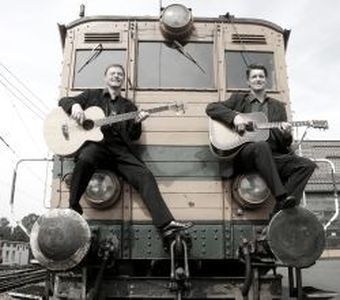
Mister Blues, das sind die Zwillingsbrüder Torsten Buncher (Harp, Bass, Gesang) und Bert Halbwachs (Gitarre, Gesang). Unzertrennlich verbunden mit den "Kuh-Senks" Locke Habich (Schlagezug) und Chris Beuthner (Bass) Lipper, die seit "Jahrenden" unter dem Einfluss der lippischen Frauen stehen. Die Jungs hatten eine schwere Kindheit.
Im Schatten des Brakenberges aufzuwachsen heißt:
von der Welt abgeschnitten zu sein
von Müttern erzogen zu werden, die Brüder waren
in einem Vorkriegskinderwagen zu liegen
den Tipps von Tante Tilde folgen zu müssen
mitten im Hotten-Totten-Verein zu leben
der Schwarm aller Mädchen aus dem Dorf zu sein
Baumwollplantagen? - Nee, wir haben Erdbeerfelder
Das ist Blues in Reinkultur. Da geht nix mehr, außer Blueser zu werden.
Im Schatten des Brakenberges aufzuwachsen heißt:
von der Welt abgeschnitten zu sein
von Müttern erzogen zu werden, die Brüder waren
in einem Vorkriegskinderwagen zu liegen
den Tipps von Tante Tilde folgen zu müssen
mitten im Hotten-Totten-Verein zu leben
der Schwarm aller Mädchen aus dem Dorf zu sein
Baumwollplantagen? - Nee, wir haben Erdbeerfelder
Das ist Blues in Reinkultur. Da geht nix mehr, außer Blueser zu werden.
Bert Halbwachs and Torsten Buncher, guitar and harp players respectively, play the blues the way it was played in the beginning.
The duo tell stories about work, women, wine and life's hardships in general.
Always with tongue in cheek they maintain a strong relation with their audience.
Captive word play, innuendo, intimation and allusion play an important role in their texts never crossing the line into using profanity.
The twins from Brakenberg, a hamlet in Lippe, have suffered tremendously during their deprived childhood in postwar Germany.
Being disadvantaged is a good topsoil.
Bert and Torsten have been on the road for a number of years both nationally and internationally.
Locke Habich (dr) and Chris Beuthner (bass) complete the band for a Chicago sound if needed.
Locke Habich (dr) and Chris Beuthner (bass) complete the band for a Chicago sound if needed.
Mister Blues - Kamasutra Kati
Mister Blues - Ich bin Lipper
Jackie Scott *22.10.

Jackie Scott & The Housewreckers have local roots that make Hampton Roads home. Coming from varied backgrounds and influences makes for a hot combination of blues and r&b packed with soul when you encounter and fall under the power of Jackie Scott & The Housewreckers.
Jackie has spent the last few years honing her craft as a vocalist and her quest lead her to the steamy windows of Chicago's blues scene. It was in Chicago that Jackie received her baptism into the blues. Musicians and performers, great and small, all freely shared in their wealth of skill, time and talent to help her grow as a blues entertainer. Nellie Travis, Chicago blues woman and westside bluesman and Howlin' Wolf sidekick, Eddie Shaw, played a major part in mentoring her into the blues Chicago style.
Opening for the likes of BB King, Keb Mo, Taj Mahal, Lyle Lovett and many more has definitely been a plus . Touring trips and festivals across the country have all played a part in making Jackie Scott & The Housewreckers the ultimate entertainment machine
R.I.P.
Walter Davis +22.10.1963

Walter Davis (* 1. März 1912 in Grenada, Mississippi; † 22. Oktober 1963 in St. Louis, Missouri) war ein US-amerikanischer Blues-Pianist und -Sänger.
Walter Davis war in den 1930ern einer der führenden Vertreter des St.-Louis-Blues, zusammen mit Roosevelt Sykes und Henry Townsend. Zwischen 1931 und 1941 nahm Davis über 160 Titel auf. Von 1946 bis 1952 folgten etliche weitere Aufnahmen.
Zu den bekanntesten Stücken von Walter Davis gehören Come Back Baby (das Ray Charles 1950 zu einem Top-Hit machte), Angel Child (1949 ein Hit für Memphis Slim), Think You Need A Shot, Pet Cream Blues und Ashes In My Whiskey. Titel von Davis wurden von B. B. King, Fred McDowell, Eddie Boyd, Champion Jack Dupree und anderen bearbeitet.
Nach einem Schlaganfall in den 1950ern war Davis als Prediger aktiv. Er starb 1963 in St. Louis. 2005 wurde er in die Blues Hall of Fame aufgenommen.
Walter Davis (March 1, 1911 – October 22, 1963) [1][2] was an African American blues singer and pianist. Born in Grenada, Mississippi, United States, he died in St. Louis, Missouri.
Davis had a rich singing voice that was as expressive as the best of the Delta blues vocalists. His best-known recording, a version of the train blues standard "Sunnyland Blues", which he released in 1931, is more notable for the warmth and poignancy of his singing than for his piano playing.[3] Two more of his best known songs were "Ashes In My Whiskey" and "Blue Blues".[2]
He was also billed as 'Hooker Joe'.[2]
Career
Davis was born on a farm in Grenada, Mississippi, United States,[2][4] and ran away from home at about 13 years of age, landing in St. Louis, Missouri. During the period from the late 1920s through the early 1950s he played club dates in the South and the lower Midwest, often with guitarist Henry Townsend and fellow pianist Peetie Wheatstraw, and recorded prolifically. He was accompanied by Roosevelt Sykes on his first recordings (1930–33).[5]
He recorded around 180 singles between 1930 and 1952. In 1940, he had a hit with his recording of "Come Back Baby".[6] Some of his material has been covered by other performers.[5]
Davis appears to have stopped performing professionally around 1953. Suffering from health problems, primarily a stroke, he settled in St. Louis, Missouri, supporting himself as a night clerk at a hotel and as a preacher.[7] He died in St. Louis in 1963, aged 52.[7]
He was posthumously inducted into the Blues Hall of Fame in 2005.
In October 2012, the Killer Blues Headstone Project, a nonprofit organization, placed a headstone on Davis's unmarked grave at Greenwood Cemetery in Hillsdale, Missouri.[8] The stone was unveiled at the 2012 Big Muddy Blues Festival in St. Louis, Missouri.
Davis is no relation to the jazz pianist, Walter Davis, Jr.
Carolina Slim +22.10.1953
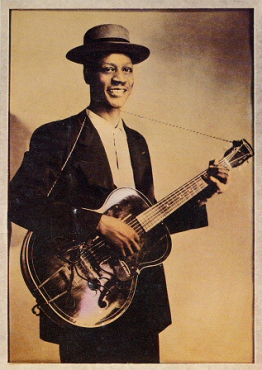
Edward P. Harris (* 22. August 1923 in Leasburg, North Carolina; † 22. Oktober 1953 in Newark, New Jersey), bekannt geworden unter dem Namen Carolina Slim, war ein US-amerikanischer Blues-Gitarrist und Sänger. Seine Schallplatten wurden auch unter den Pseudonymen Jammin' Jim, Lazy Slim Jim, Country Paul und Paul Howard veröffentlicht.
Viele Details seines Lebens sind unbekannt, doch glaubt man, dass Harris das Gitarrespiel von seinem Vater gelernt hat. In seiner Zeit als Wandermusikant nahm er auch Einflüsse von Musikern außerhalb des Piedmont-Gebietes auf. Um 1950 zog er nach Newark, New Jersey, dort nahm er unter dem Namen Carolina Slim seine erste Platte für das Savoylabel auf. Bis 1953 nahm er 27 Songs unter verschiedenen Namen und für verschiedene Labels auf. [1] [2]
1953 begab er sich wegen eines Rückenleidens in ein Krankenhaus in Newark, starb aber während der Operation an einem Herzanfall.
Viele Details seines Lebens sind unbekannt, doch glaubt man, dass Harris das Gitarrespiel von seinem Vater gelernt hat. In seiner Zeit als Wandermusikant nahm er auch Einflüsse von Musikern außerhalb des Piedmont-Gebietes auf. Um 1950 zog er nach Newark, New Jersey, dort nahm er unter dem Namen Carolina Slim seine erste Platte für das Savoylabel auf. Bis 1953 nahm er 27 Songs unter verschiedenen Namen und für verschiedene Labels auf. [1] [2]
1953 begab er sich wegen eines Rückenleidens in ein Krankenhaus in Newark, starb aber während der Operation an einem Herzanfall.
Carolina Slim (August 22, 1923 – October 22, 1953)[3] was an American Piedmont blues guitarist and singer.[2] His best known tracks were "Black Cat Trail" and "I'll Never Walk in Your Door".[3] He used various pseudonyms during his relatively brief recording career, including Country Paul, Jammin' Jim, Lazy Slim Jim and Paul Howard.[4] In total he recorded 27 songs, but details of his life outside of his music career are scant, and the exact reasons concerning the usage of differing names are also unclear.[2]
Biography
Carolina Slim was born Edward P. Hughes in Leasburg, North Carolina, United States. He learned to play the guitar from his father, and was influenced by Lightnin' Hopkins and Blind Boy Fuller.[2][5] He later found work as an itinerant musician around Durham, North Carolina.[6]
In 1950, he relocated to Newark, New Jersey, and made his recording debut for the Savoy label, billed as Carolina Slim.[2] His first single was "Black Chariot Blues" b/w "Mama's Boogie", recorded on July 24, 1950, and released on Acorn Records (Acorn 3015), a subsidiary of Savoy.[4] In 1951 and 1952, he recorded eight tracks for the King label in New York, this time using the name of Country Paul.[2][7] Henry Glover met Slim at these recordings, and later commented that Slim was "a very sickly young man at the time".[7] Slim's style blended Piedmont blues, prominent in songs such as "Carolina Boogie" and his cover version of Fuller's "Rag Mama Rag", with the influence of Hopkins meaning that he increasingly veered towards Texas blues.[6] Occasionally, Slim incorporated a washboard as well as his more regular guitar, as if to emphasise his Carolina rootstock.[6]
His recordings were not hugely popular, but sold in sufficient amounts for him to retain his recording contract. In June 1952, Slim recorded four more tracks for Savoy, but these were to be his final offerings.[6]
Carolina Slim died in Newark, New Jersey, from a heart attack suffered whilst undergoing surgery for a back complaint. He was 30 years old.[2]
In 1994, Document released a compilation album, Complete Recorded Works 1950-1952, which incorporated all of his 27 tracks.
Biography
Carolina Slim was born Edward P. Hughes in Leasburg, North Carolina, United States. He learned to play the guitar from his father, and was influenced by Lightnin' Hopkins and Blind Boy Fuller.[2][5] He later found work as an itinerant musician around Durham, North Carolina.[6]
In 1950, he relocated to Newark, New Jersey, and made his recording debut for the Savoy label, billed as Carolina Slim.[2] His first single was "Black Chariot Blues" b/w "Mama's Boogie", recorded on July 24, 1950, and released on Acorn Records (Acorn 3015), a subsidiary of Savoy.[4] In 1951 and 1952, he recorded eight tracks for the King label in New York, this time using the name of Country Paul.[2][7] Henry Glover met Slim at these recordings, and later commented that Slim was "a very sickly young man at the time".[7] Slim's style blended Piedmont blues, prominent in songs such as "Carolina Boogie" and his cover version of Fuller's "Rag Mama Rag", with the influence of Hopkins meaning that he increasingly veered towards Texas blues.[6] Occasionally, Slim incorporated a washboard as well as his more regular guitar, as if to emphasise his Carolina rootstock.[6]
His recordings were not hugely popular, but sold in sufficient amounts for him to retain his recording contract. In June 1952, Slim recorded four more tracks for Savoy, but these were to be his final offerings.[6]
Carolina Slim died in Newark, New Jersey, from a heart attack suffered whilst undergoing surgery for a back complaint. He was 30 years old.[2]
In 1994, Document released a compilation album, Complete Recorded Works 1950-1952, which incorporated all of his 27 tracks.
Carolina Slim Blues Knocking At My Door (1951)