Posts mit dem Label Coleman_Jaybird werden angezeigt. Alle Posts anzeigen

Freitag, 20. Mai 2016

20.05.Blind Bud Spires, Jaybird Coleman, Joe Cocker * Clarence Edwards, Johnny Fuller, Willie Foster, Ray Manzarek, Joe „Guitar“ Hughes +


1896 Jaybird Coleman*
1931 Blind Bud Spires*
1944 Joe Cocker*
1985 Johnny Fuller+
1993 Clarence Edwards+
2001 Willie Foster+
2003 Joe Guitar Hughes+
2013 Ray Manzarek+


Happy Birthday


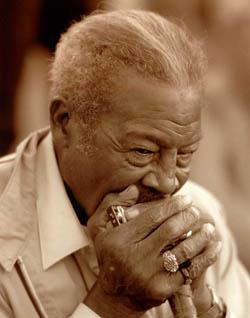
Blind Bud Spires   *20.05.1931
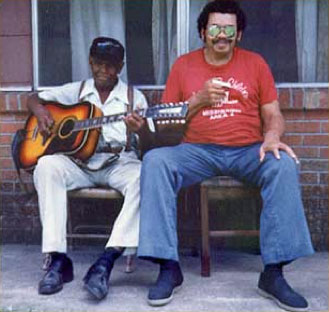
 

 Bud's the big guy in the bright red shirt, sitting next to his friend Jack Owens


Bud Spires is the son of Arthur “Big Boy” Spires who recorded for Chess Records during the 1950′s & 60′s. Bud was born May 20th, 1931 just north of Bentonia in Anding, MS. Not much more than a wide place in the road, Anding is located just off Highway 49 in Yazoo County. Says he got his first harp from Santa Clause and started playing at 5 years old. At around 12 remembers hearing Cornelius Bright and Bud Slater playing in a juke joint and loved it. He wanted a guitar but settled for a harmonica. Quote Roger Stolle in Blues Revue: “Back that long, they had them high-priced guitars. He (his father) said, ‘No, boy, I’ll give you a harp. I ain’t going to give you a guitar.’ [Laughs.] Back then, for a harp, you didn’t pay but 25 cents.”

Bud wasn’t born blind. It came on slow, likely due to exposure to cotton pesticide. Once while chopping cotton with his mother he was unable to see an airplane overhead. The bossman said he could go see and eye doctor when a rainy day came. But when a rainy day did come he’d have something else for him to do. Vision got progressively worse until he couldn’t drive a tractor and went to work in the gin. Eventually he couldn’t work at all.

 Jaybird Coleman  *20.05.1896


Burl C. „Jaybird“ Coleman (* 20. Mai 1896 in Gainesville, Alabama; † 28. Januar 1950 in Tuskegee, Alabama) war ein US-amerikanischer Bluesmundharmonikaspieler, -gitarrist und -sänger. Obwohl sein Mundharmonikaspiel nicht richtungsweisend war, ist er doch ein gutes Beispiel für den Sound der Mundharmonika im Country Blues der frühen 1930er Jahre.[1]
Coleman war das Kind einer Pächterfamilie und arbeitete und wuchs auf der Farm seiner Eltern auf, die neben ihm noch drei weitere Kinder aufzogen. Im Alter von zwölf Jahren begann er mit dem Mundharmonikaspiel. Er spielte auf Partys für seine Familie und seine Freunde. Mit dem Blues wurde er während seiner Dienstzeit in der US-Army bekannt, wo er im Ersten Weltkrieg in der Truppenbetreuung beschäftigt war. Nach seiner Entlassung übersiedelte er nach Birmingham, Alabama wo er an Straßenecken auftrat und manchmal auch bei der Birmingham Jug Band mitspielte. Seine erste Platte nahm er 1927 auf, seine Aufnahmekarriere endete aber bereits 1930. In den 1930er und 1940er Jahren spielte er als Straßenmusikant in ganz Alabama.
Er starb 1950 an Krebs. 1993 veröffentlichte Document Records seine Werke.[2] Seine Werke sind auch auf vielen verschiedenen Zusammenstellungen von Country Blues vertreten.
http://de.wikipedia.org/wiki/Jaybird_Coleman 

Burl C. "Jaybird" Coleman (May 20, 1896 – January 28, 1950) was an American country blues harmonica player, guitarist and singer.
Born in Gainesville, Alabama, United States, the son of sharecroppers and one of four children. He was born, raised and worked on a farm, and picked up and learned the harmonica at 12 years of age. Coleman began performing the blues as an entertainer for American soldiers while serving in the United States Army. It was during this period that he was given the nickname "Jaybird" due to his independent manner.[1][2] In the early 1920s, he teamed with fellow bluesman Big Joe Williams as a performer in the Birmingham Jug Band which toured through the American South.[1]
Coleman made his first recordings as a solo artist in 1927. His career as a recording artist lasted only until 1930, after which he performed mostly on street corners throughout Alabama.[2]
He died of cancer at the age of 53 in Tuskegee, Alabama in 1950.Burl C. "Jaybird" Coleman (May 20, 1896 – January 28, 1950) was an American country blues harmonica player, guitarist and singer.
Born in Gainesville, Alabama, United States, the son of sharecroppers and one of four children. He was born, raised and worked on a farm, and picked up and learned the harmonica at 12 years of age. Coleman began performing the blues as an entertainer for American soldiers while serving in the United States Army. It was during this period that he was given the nickname "Jaybird" due to his independent manner.[1][2] In the early 1920s, he teamed with fellow bluesman Big Joe Williams as a performer in the Birmingham Jug Band which toured through the American South.[1]
Coleman made his first recordings as a solo artist in 1927. His career as a recording artist lasted only until 1930, after which he performed mostly on street corners throughout Alabama.[2]
He died of cancer at the age of 53 in Tuskegee, Alabama in 1950.
Jaybird Coleman - Coffee Grinder Blues 


https://www.youtube.com/watch?v=9OyOcdoAOjc 


Joe Cocker   *20.05.1944

 http://blueskalender.blogspot.de/p/joe-cocker-20.html


John Robert „Joe“ Cocker OBE (* 20. Mai 1944 in Sheffield, England; † 22. Dezember 2014 in Crawford (Colorado), USA) war ein britischer Rock- und Blues-Sänger. Er nannte sich auch Vance Arnold.
Leben
Von 1944 bis Ende der 1960er Jahre
Joe Cocker wuchs in seinem Geburtsort Sheffield auf. Der gelernte Gasinstallateur begann seine Musikerkarriere im Alter von 15 Jahren in mehreren kleineren Bands in seiner Heimatstadt Sheffield. Seine erste Band war Vance Arnold and the Avengers (sein Künstlername war Vance Arnold), die immerhin einen Auftritt der Rolling Stones eröffnete. Die nächste Band hieß Big Blues (1963). Damals unterzeichnete Cocker einen Vertrag bei Decca Records, beendete seine Installateurtätigkeit und gründete schließlich The Grease Band (1966). 1968 schaffte er es zum ersten Mal mit seiner Musik in die britischen Singlecharts. Der Song „Marjorine“, den er zusammen mit Chris Stainton komponierte, kletterte im Mai 68 bis Platz 48.
Der große Durchbruch gelang ihm dann Ende 1968, mit einer Coverversion des Beatles-Liedes With a Little Help from My Friends, Platz 1 im Vereinigten Königreich,[1] in Deutschland Rang 3.[2] Um Finanzen oder Verträge kümmerte sich Cocker zunächst nur sehr nachlässig, so dass er im selben Jahr eine 56-tägige US-Tournee absolvieren musste, obwohl er sich gerade von seiner Band getrennt hatte und aufgrund der Vertragsbedingungen kaum finanziellen Nutzen daraus ziehen konnte. Seine Manager ließen ihn auf zahlreichen Festivals auftreten, um ihn zu bewerben.
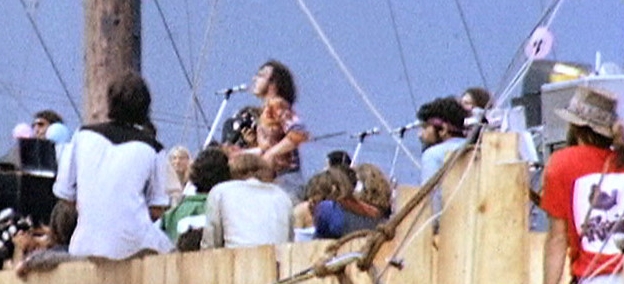
Im August 1969 eröffnete er den dritten Tag des Woodstock-Festivals. Seine gefühlvoll zappelnde und zuckende Bühnengestik, die er vor dem Mikrofon pflegte, wurde von da an sein Markenzeichen. Während des Gitarrensolos von With a Little Help from My Friends bildete er die Musik unbewusst mit bloßen Händen nach und prägte so die Bewegungsformen der Luftgitarre.[3][4][5][6] Ebenfalls 1969 trat er in den USA in Ed Sullivans Fernsehshow auf.
In den 1970er Jahren
Auch ein Großteil seiner weiteren Plattenerfolge waren Cover-Versionen wie She Came In Through the Bathroom Window, ebenfalls von den Beatles, oder The Letter von The Box Tops, beide 1970. Andere frühe Hits hatte Cocker mit Cry Me a River (1970), im Original 1955 von Julie London, Dave Masons Feelin’ Alright (1969/1972) und das von Billy Preston und Bruce Fisher geschriebene You Are so Beautiful (1974), die sich allesamt, teilweise als Live-Versionen, in den Top-40 der US-Billboard-Charts platzieren konnten.[7]
Ein wichtiger Songwriter für Cocker war Leon Russell, der für ihn unter anderem den britischen Top-Ten-Hit Delta Lady[1] im Jahr 1969 komponierte, die als Mad Dogs & Englishmen bekannte Tournee organisierte und auch selbst als Gitarrist und Keyboarder zur Band gehörte. Während der 56-tägigen Tour quer durch die USA, von Detroit nach San Bernardino (Kalifornien), spielte Cocker 1970 zusammen mit einer Big Band von 40 Musikern das gleichnamige Live-Album ein, das in Großbritannien bis auf Platz 16 der LP-Charts kam.[8]
Zusammen mit dem ebenfalls in Sheffield 1944 geborenen Bassisten Chris Stainton verfasste Cocker aber auch eigene Songs. Stainton war schon in Cockers frühen Bands Mitglied, gehörte zur Live-Formation beim Woodstock-Festival und auf der Mad Dogs & Englishmen Tour, und war bis einschließlich des 1972 erschienenen Albums Something to Say an nahezu allen Aufnahmen beteiligt. Während dieser Zusammenarbeit entstanden Lieder wie High Time We Went (Platz 22 in den USA[7]), Pardon Me Sir oder Woman to Woman, dessen Groove und markantes Piano-Riff unter anderem von 2Pac in dessen 1996er Top-Hit California Love gesampelt wurde.[7]
Anfang der 1970er Jahre bekam Cocker Probleme mit verschiedenen Suchtmitteln, was sich negativ auf die Qualität und den Verkauf seiner Musik auswirkte. Nach seinen ersten Erfolgen hatte er bald wieder Geldprobleme. Laut eigener Aussage vergaß Cocker zudem einen 100.000 Dollar-Scheck in seiner Jeans, die seine Mutter in der Waschmaschine gewaschen hatte. Er habe sich auch nicht darum bemüht, einen Ersatzscheck zu bekommen, weil er drogenabhängig war.[3][9]
Jahrelang nahm er nichts Neues auf, sondern tourte permanent, um seine Rechnungen zahlen zu können. Psychische Probleme machten seine Konzerte oftmals zu einem Risiko und führten 1974 sogar zu einem Haftaufenthalt. Wegen dieses Haftaufenthaltes aufgrund von verschiedenen Straftaten (unter anderem Drogendelikten und Körperverletzung) konnte ein Konzert in Wien nicht stattfinden.
Seit den 1980er Jahren
1981 ging er eine Kooperation mit den Crusaders ein. Er veröffentlichte den Titel I'm So Glad I'm Standing Here Today und das Album Sheffield Steel (1982). Cocker landete in den folgenden Jahren mehrere große Charts-Hits wie When The Night Comes (US Platz 11[7]), N’oubliez jamais, Unchain My Heart (von Bobby Sharp) oder Up Where We Belong im Duett mit Jennifer Warnes (Platz 1 in den USA,[7] 7 im UK,[1] 6 in D[10]). Randy Newmans You Can Leave Your Hat On wurde in Cockers Version 1986 weltberühmt. Der Song wurde im Film 9½ Wochen gespielt.
Am 11. Oktober 1987 heiratete Joe Cocker die US-amerikanische Erzieherin Pam Baker[11] und lebte danach recht zurückgezogen in Crawford, Colorado, wo er eine Ranch namens Mad Dog Ranch betrieb. Er besaß dort auch eine Eisdiele, die seine Frau führte.[12]
Ebenfalls 1987 kam es zur Zusammenarbeit mit dem deutschen Rocksänger und Komponisten Klaus Lage sowie dem Sänger, Komponisten, Liedermacher und Texter Diether Dehm. Unter anderem entstand der Titelsong Now, That You’re Gone für die WDR-Kinoproduktion Zabou. Im Jahr 1988 durfte Cocker als einer von wenigen westlichen Musikern zweimal vor insgesamt 170.000 Menschen[13] in der DDR auftreten, nämlich in Berlin und in Dresden, wo seitdem die Cockerwiese im Volksmund seinen Namen trägt. Cocker sang 1995 den Beck’s-Bier-Werbesong Sail Away (im Original von Hans Hartz) für die Bremer Brauerei Beck & Co.. 1996 trat er in der Fernsehproduktion Crossroads zusammen mit der Kelly Family auf. Unter anderem präsentierte er dort Up Where We Belong zusammen mit Kathy Kelly.
1999 gründete er, zusammen mit seiner Frau, eine karitative Stiftung, die "Cocker Kids' Foundation", die sich für Kinder aus dem zu Crawford gehörigen Landkreis, in dem sich auch Joe Cockers Farm befindet, mit Sport-, Schul- und Kulturprojekten engagiert.[14]
Seit den 2000er Jahren
2002 trat er zusammen mit Phil Collins und Brian May bei der Party at the Palace auf, das anlässlich des goldenen Thronjubiläums von Königin Elisabeth II. stattfand.
Am 16. Juni 2007 wurde Joe Cocker von Königin Elisabeth II. zum Officer of the Order of the British Empire (OBE) ernannt und am 22. September 2007 im Rahmen des SWR3 New Pop Festivals für sein Lebenswerk mit dem „Pioneer of Pop“ ausgezeichnet. Ebenfalls 2007 war Cocker in dem Film Across the Universe in einer Nebenrolle als Tramp, Zuhälter und Hippie zu sehen und dabei zum ersten Mal als Filmschauspieler tätig.[15]
Das im Oktober 2010 veröffentlichte Album Hard Knocks erreichte auf Anhieb die Spitze der deutschen Charts. Am 2. Februar 2013 erhielt er die Goldene Kamera für sein Lebenswerk.
Joe Cocker starb laut seinem Management in der Nacht auf den 22. Dezember 2014 in seinem Haus auf der "Mad Dog Ranch" in Crawford, Colorado (USA) an Lungenkrebs.


 Joe Cocker galt als einer der bedeutendsten britischen Blues-Sänger. Er lieferte bis heute den Beweis, dass man aus Sheffield kommen und wie ein Schwarzer aus Mississippi klingen kann. Am 20. Mai 2014 wurd eer 70 Jahre alt.
Sänger scheinen anders zu altern als Normalsterbliche. Joe Cocker ist aber ein Sonderfall: Der 70-Jährige sieht keinen Tag jünger aus als er ist. Auch seine Stimme, die durch den exzessiven Genuss von Zigaretten, Drogen und Alkohol über Jahrzehnte „geformt“ wurde, lässt sich nicht frisieren. Heute weiß der ehemalige Gasinstallateur aber, sie gezielt einzusetzen.
Seine Neuinterpretation des Beatles-Songs „With A Little Help From My Friends“ beschert dem am 20. Mai 1944 in der Stahlmetropole Sheffield geborenen Sänger Ende 1968 einen Nummer-1-Hit in England. Beim Woodstock-Festival in New York fällt er im Jahr darauf nicht nur wegen seiner Reibeisenstimme, sondern auch wegen seiner krampfartigen Zuckungen beim Singen auf, die wie grobmotorische Verrenkungen wirken.
Seitdem ist Joe Cocker von den Bühnen der Welt nicht mehr wegzudenken. Er teilte sich die Bretter mit den Rolling Stones, Eric Clapton, Rod Stewart, Janis Joplin und Jimi Hendrix, freundete sich sogar mit Paul McCartney und George Harrison an. McCartney erlaubt ihm „She Came In Through The Bathroom Window“ zu covern und Cockers Version erscheint sogar noch vor der der Beatles.
Der Erfolg frisst bekanntlich seine Kinder, und Joe Cocker ist eines von ihnen. In den Siebzigerjahren ist er erledigt. Erschöpft, ausgebrannt, abhängig von Alkohol und Drogen. Sein Leben ist ein Chaos. Erst 1978 findet er allmählich wieder zu sich, als er in den USA seine heutige Frau Pam kennen lernt, eine Erzieherin aus Colorado.
In den Achtzigern nimmt die Karriere des Sängers wieder Fahrt auf. 1986 gelingt ihm mit Randy Newmans „You Can Leave Your Hat On“ ein Welthit. Der Film „9 ½ Wochen“ und Kim Basingers legendärer Strip zu Cockers Bluesnummer schreiben Kinogeschichte. 1987 heiratet er Pam Baker und das Paar lebt fortan in seinem Traumhaus auf einer abgelegenen Farm in Crawford/Colorado. Dort erholt er sich von seinen anstrengenden Welttourneen mit dem Anbau von Gemüse oder probiert in seinem eigenen Studio neue Ideen aus. Inzwischen ist er ein Rocksenior und empfindet das Areal von fast einer Million Quadratmetern als zu groß. Deshalb möchte Cocker seine Farm verkaufen – für 5,7 Millionen Euro ist sie zu haben.


John Robert "Joe" Cocker, OBE (20 May 1944 – 22 December 2014) was an English rock, blues and soul singer and musician who came to popularity in the 1960s. He was known for his gritty voice, spasmodic body movement in performance, and cover versions of popular songs, particularly those of the Beatles.
Cocker's cover of the Beatles' "With a Little Help from My Friends" reached number one in the UK in 1968. He performed the song live at Woodstock in 1969, and at the Party at the Palace concert for the Golden Jubilee of Elizabeth II in 2002. His version also became the theme song for the TV series The Wonder Years. His 1974 cover of "You Are So Beautiful", reached number five in the US. Cocker was the recipient of several awards, including a 1983 Grammy Award for his US number one "Up Where We Belong", a duet with Jennifer Warnes.
In 1993 Cocker was nominated for the Brit Award for Best British Male, in 2007 was awarded a bronze Sheffield Legends plaque in his hometown, and in 2008 he received an OBE at Buckingham Palace for services to music.[1][2] Cocker was ranked number 97 on Rolling Stone's 100 greatest singers list.[3]
Life and career
Early life
Cocker was born on 20 May 1944 at 38 Tasker Road, Crookes, Sheffield, West Riding of Yorkshire. He was the youngest son of a civil servant, Harold Cocker, and Madge Cocker, née Lee.[4] According to differing family stories, Cocker received his nickname of Joe either from playing a childhood game called "Cowboy Joe", or from a local window cleaner named Joe.
Cocker's main musical influences growing up were Ray Charles and Lonnie Donegan. Cocker's first experience singing in public was at age 12 when his elder brother Victor invited him on stage to sing during a gig of his skiffle group. In 1960, along with three friends, Cocker formed his first group, the Cavaliers. For the group's first performance at a youth club, they were required to pay the price of admission before entering. The Cavaliers eventually broke up after a year and Cocker left school to become an apprentice gasfitter working for the East Midlands Gas Board, later British Gas while simultaneously pursuing a career in music.[5]
Cocker was not related to fellow Sheffield-born musician Jarvis Cocker, despite a rumour to this effect (particularly in Australia, where Jarvis Cocker's father, the radio presenter Mac Cocker, allowed listeners to believe that he was Cocker's brother).[6][7]
Early career (1961–66)
In 1961, under the stage name Vance Arnold, Cocker continued his career with a new group, Vance Arnold and the Avengers.[8] The name was a combination of Vince Everett, Elvis Presley's character in Jailhouse Rock (which Cocker misheard as Vance); and country singer Eddy Arnold.[9] The group mostly played in the pubs of Sheffield,[8] performing covers of Chuck Berry and Ray Charles songs. Cocker developed an interest in blues music and sought out recordings by John Lee Hooker, Muddy Waters, Lightnin' Hopkins and Howlin' Wolf.[10] In 1963, they booked their first significant gig when they supported the Rolling Stones at Sheffield City Hall.[11] In 1964, Cocker signed a recording contract as a solo act with Decca and released his first single, a cover of the Beatles' "I'll Cry Instead" (with Big Jim Sullivan and Jimmy Page playing guitars). Despite extensive promotion from Decca lauding his youth and working class roots, the record was a flop and his recording contract with Decca lapsed at the end of 1964.[12] After Cocker recorded the single, he dropped his stage name and formed a new group, Joe Cocker's Big Blues. There is only one known recording of Joe Cocker's Big Blues on an EP given out by The Sheffield College during Rag Week and called Rag Goes Mad at the Mojo.[13]
The Grease Band (1966–1969)
In 1966, after a year-long hiatus from music, Cocker teamed up with Chris Stainton, whom he had met several years before, to form the Grease Band.[8] The Grease Band was named after Cocker read an interview with jazz keyboardist Jimmy Smith, where Smith positively described another musician as "having a lot of grease." Like the Avengers, Cocker's group mostly played in pubs in and around Sheffield. The Grease Band came to the attention of Denny Cordell, the producer of Procol Harum, the Moody Blues and Georgie Fame. Cocker recorded the single "Marjorine" without the Grease Band for Cordell in a London studio. He then moved to London with Chris Stainton, and the Grease Band was dissolved. Cordell set Cocker up with a residency at the Marquee Club in London, and a "new" Grease Band was formed with Stainton and keyboardist Tommy Eyre.[14]
After minor success in the United States with the single "Marjorine", Cocker entered the big time with a groundbreaking rearrangement of "With a Little Help from My Friends", another Beatles cover, which, many years later, was used as the opening theme for The Wonder Years. The recording features lead guitar from Jimmy Page, drumming by B. J. Wilson, backing vocals from Sue and Sunny, and Tommy Eyre on organ. The single made the Top Ten on the British charts, remaining there for thirteen weeks and eventually reaching number one, on 9 November 1968.[15] It also reached number 68 on the US charts.[16] McCartney said the following words about Cocker's version of the Beatles 1967 song, upon hearing about his untimely death in 2014.
    He [Cocker] was a lovely northern lad who I loved a lot and, like many people, I loved his singing. I was especially pleased when he decided to cover "With a Little Help from My Friends" and I remember him and (producer) Denny Cordell coming round to the studio in Savile Row and playing me what they'd recorded and it was just mind-blowing, totally turned the song into a soul anthem and I was forever grateful to him for doing that." — Paul McCartney on Joe Cocker's death.[17]
The new touring line-up of Cocker's Grease Band featured Henry McCullough on lead guitar, who would go on to briefly play with McCartney's Wings. After touring the UK with the Who in autumn 1968[18] and Gene Pitney and Marmalade in early winter 1969, the Grease Band embarked on their first tour of the United States in spring 1969. Cocker's album With a Little Help from My Friends was released soon after their arrival and made number 35 on the American charts, eventually going gold.[19]
During his United States tour, Cocker played at several large festivals, including the Newport Rock Festival and the Denver Pop Festival. In August, Denny Cordell heard about the planned concert in Woodstock, New York and convinced organiser Artie Kornfeld to book Cocker and the Grease Band for the Woodstock Festival. The group had to be flown into the festival by helicopter due to the large crowds. They performed several songs, including "Delta Lady", "Something's Comin' On", "Let's Go Get Stoned", "I Shall Be Released", and "With a Little Help from My Friends". Cocker would later say that the experience was "like an eclipse ... it was a very special day."[20]
Directly after Woodstock, Cocker released his second album, Joe Cocker!. Impressed by his cover of "With a Little Help from My Friends", Paul McCartney and George Harrison allowed Cocker to use their songs "She Came In Through the Bathroom Window" and "Something" for the album.[21] Recorded during a break in touring in the spring and summer, the album reached number 11 on the US charts and garnered a second UK hit with the Leon Russell song, "Delta Lady".[22]
In August 1969, Cocker performed at the Isle of Wight Festival at Wootton Bridge, Isle of Wight, England.[23] Throughout 1969 he was featured on variety TV shows like The Ed Sullivan Show and This Is Tom Jones. Onstage, he exhibited an idiosyncratic physical intensity, flailing his arms and playing air guitar. At the end of the year Cocker was unwilling to embark on another US tour, so he dissolved the Grease Band.
Mad Dogs & Englishmen (1969–1971)
Cocker in 1970
Despite Cocker's reluctance to venture out on the road again, an American tour had already been booked so he had to quickly form a new band in order to fulfill his contractual obligations. It proved to be a large group of more than 30 musicians, including pianist and bandleader Leon Russell, three drummers, and backing vocalists Rita Coolidge and Claudia Lennear. Denny Cordell christened the new band "Mad Dogs & Englishmen", after the Noël Coward song of the same name. Cocker's music evolved into a more bluesy type of rock, compared to that of the Rolling Stones.[24]
During the ensuing Mad Dogs & Englishmen tour (later described by drummer Jim Keltner as "a big, wild party"),[25] Cocker toured 48 cities, recorded a live album, and received very positive reviews from Time and Life for his performances. However, the pace of the tour was exhausting. Russell and Cocker had personal problems; Cocker became depressed and began drinking excessively as the tour wound down in May 1970. Meanwhile, he enjoyed several chart entries in the United States with "Cry Me a River" and "Feelin' Alright" by Dave Mason. His cover of the Box Tops' hit "The Letter", which appeared on the live album and film, Mad Dogs & Englishmen, became his first US Top Ten hit. After spending several months in Los Angeles, Cocker returned home to Sheffield where his family became increasingly concerned with his deteriorating physical and mental health. During this time, in periods between work, Cocker wrote the overture played by the UK Prime Minister Edward Heath on the occasion the Prime Minister famously conducted a live orchestra while in office.[26] In the summer of 1971, A&M Records released the single "High Time We Went". This became a hit, reaching number 22 on the US Billboard Hot 100 chart, but was not issued on an album until November 1972 on the Joe Cocker album.
On the road (1972–1982)
In early 1972, after nearly two years away from music, Cocker went on tour with a group that Chris Stainton had formed. He opened with a performance in Madison Square Garden which was attended by about 20,000 people. After touring the United States, he embarked on a European tour where he played to large audiences in Milan and Germany. He then returned to the United States for another tour in autumn 1972. During these tours the group cut the songs that would be part of his newest album, Joe Cocker. A mixture of live songs and studio recordings, the album peaked at number 30 on the US charts.[27]
In October 1972, when Cocker toured Australia, he and six members of his entourage were arrested in Adelaide for possession of marijuana. The next day, in Melbourne, assault charges were laid after a brawl at the Commodore Chateau Hotel,[28] and the Australian Federal Police gave Cocker 48 hours to leave the country. This caused huge public outcry in Australia, as Cocker was a high-profile overseas artist and had a strong support base, especially amongst the baby boomers who were coming of age and able to vote for the first time. It sparked hefty debate about the use and legalisation of marijuana in Australia, and gained Cocker the nickname "the Mad Dog".[29]
Shortly after the Australian tour, Stainton retired from his music career to establish his own recording studio. After his friend's departure and estrangement from longtime producer Denny Cordell, Cocker sank into depression and began using heroin. In June 1973, he kicked the habit but continued to drink heavily.[30]
At the end of 1973, Cocker returned to the studio to record a new album, I Can Stand A Little Rain. The album, released in August 1974, was number 11 on the US charts and one single, a cover of Billy Preston's "You Are So Beautiful", which reached the number 5 slot.[31] Despite positive reviews for the album, Cocker struggled with live performances, largely due to his problems with alcohol. One such instance was reported in a 1974 issue of Rolling Stone, which said that during two West Coast performances in October of that year he threw up onstage.[32]
In January 1975, he released a second album that had been recorded at the same time as I Can Stand a Little Rain, Jamaica Say You Will. To promote his new album, Cocker embarked on another tour of Australia, made possible by the country's new Labor government. In late 1975, he contributed vocals on a number of the tracks on Bo Diddley's The 20th Anniversary of Rock 'n' Roll all-star album. He also recorded a new album in a Kingston, Jamaica studio, Stingray. However, record sales were disappointing; the album reached only number 70 on the US charts.[33]
In 1976, Cocker performed "Feelin' Alright" on Saturday Night Live. John Belushi joined him onstage doing his famous impersonation of Cocker's stage movements. At the time, Cocker was $800,000 in debt to A&M Records and struggling with alcoholism. Several months later, he met producer Michael Lang, who agreed to manage him on the condition that he stay sober. With a new band, Cocker embarked on a tour of New Zealand, Australia, and South America. He then recorded a new album with session work by Steve Gadd and Chuck Rainey, and a new, young bassist from Scotland, Rob Hartley. Hartley also toured briefly with Cocker's friends in 1977. In the autumn of 1978, Cocker toured North America promoting his album, Luxury You Can Afford. Despite this effort, it received mixed reviews and only sold around 300,000 copies.[34]
In 1979, Cocker joined the "Woodstock in Europe" tour, which featured musicians like Arlo Guthrie and Richie Havens who had played at the 1969 Woodstock Festival. He also performed in New York's Central Park to an audience of 20,000 people. The concert was recorded and released as the live album, Live in New York.[35] Cocker also toured Europe and appeared on the German television recording amphitheatre, Rockpalast, the first of many performances on the show. In 1982, Cocker recorded two songs with the jazz group the Crusaders on their album Standing Tall. One song, "I'm So Glad I'm Standing Here Today", was nominated for a Grammy Award and Cocker performed it with the Crusaders at the awards ceremony. The Crusaders wrote this song with Cocker in mind to sing it. Cocker then released a new reggae-influenced album, Sheffield Steel, recorded with the Compass Point All Stars, produced by Chris Blackwell and Alex Sadkin.
Later career (1982–2014)
In 1982, at the behest of producer Stewart Levine, Cocker recorded the duet "Up Where We Belong" with Jennifer Warnes for the soundtrack of the 1982 film An Officer and a Gentleman. The song was an international hit, reaching number 1 on the Billboard Hot 100, and winning a Grammy Award for Best Pop Performance by a Duo. The duet also won an Academy Award for Best Original Song, and Cocker and Warnes performed the song at the awards ceremony. Several days later, he was invited to perform "You Are So Beautiful" with Ray Charles in a television tribute to the musician. In 1983, Cocker joined a star-studded line-up of British musicians, including Jimmy Page, Eric Clapton, Jeff Beck, Steve Winwood and Bill Wyman for singer Ronnie Lane's 1983 tour to raise money for the London-based organisation Action for Research into Multiple Sclerosis, in particular because Lane was beginning to suffer from the degenerative disease.[36] The tour included a performance at New York's Madison Square Garden. While on another tour that year, Cocker was arrested by Austrian police after refusing to perform because of inadequate sound equipment. The charges were eventually dropped and Cocker was released.[37] Shortly after the incident, he released his ninth studio album, Civilized Man. His next album Cocker was dedicated to his mother, Madge, who died when he was recording in the studio with producer Terry Manning. A track from the album, "You Can Leave Your Hat On" was featured in the 1986 film 9½ Weeks. The album eventually went Platinum on the European charts.[38] His 1987 album Unchain My Heart was nominated for a Grammy Award, although it did not win. One Night of Sin was also a commercial success, surpassing Unchain My Heart in sales.
Throughout the 1980s, Cocker continued to tour around the world, playing to large audiences in Europe, Australia and the United States. In 1988, he performed at London's Royal Albert Hall and appeared on The Tonight Show.[39] After Barclay James Harvest and Bob Dylan, Cocker was the first to give rock concerts in the German Democratic Republic, in East Berlin and Dresden. The venue, the Blüherwiese, next to the Rudolf–Harbig–Stadion, bears the vernacular name Cockerwiese (Cocker meadow) today.[40] He also performed for US President George H. W. Bush at an inauguration concert in February 1989. In 1992, his version of Bryan Adams' "Feels Like Forever" made the UK Top 40.[41]
In 1992, Joe Cocker teamed with Canadian rocker Sass Jordan to sing "Trust in Me", which was featured on The Bodyguard soundtrack. At the 1993 Brit Awards, Cocker was nominated for Best British Male.[1] Cocker performed the Saturday opening set at Woodstock '94 as one of the few alumni who played at the original Woodstock Festival in 1969 and was well received.[42]
On 3 June 2002, Cocker performed "With A Little Help From My Friends" accompanied by Phil Collins on drums and Queen guitarist Brian May at the Party at the Palace concert in the grounds of Buckingham Palace, an event in commemoration of the Golden Jubilee of Elizabeth II.[43] In 2007, Cocker appeared playing minor characters in the film Across the Universe, as the lead singer on another Beatles' hit, "Come Together".[44] Cocker was awarded an OBE in the Queen's 2007 Birthday Honours list for services to music.[2] To celebrate receiving his award in mid December 2007, Cocker played two concerts in London and in his home town of Sheffield where he was awarded a bronze Sheffield Legends plaque outside Sheffield Town Hall.[45]
In April and May 2009, Cocker conducted a North American tour in support of his album Hymn for My Soul. He sang the vocals on "Little Wing" for the Carlos Santana album, Guitar Heaven: The Greatest Guitar Classics of All Time, released on 21 September 2010. In the autumn of 2010, Cocker toured Europe promoting his studio album Hard Knocks.
Cocker returned to Australia in 2008 and again in 2011, the latter of which featured George Thorogood and the Destroyers as an opening act.[46]
On 20 March 2011, Cocker took part in a benefit concert for Cornell Dupree at B.B. King's Blues Club in New York. Dupree played on two Cocker albums: Stingray (1976) and Luxury You Can Afford (1978). Dupree's band Stuff was also Cocker's backing band on a tour promoting Stingray in 1976.
Illness and death
While performing a concert at Madison Square Garden on 17 September 2014, fellow musician Billy Joel stated that Cocker was "not very well right now" and endorsed Cocker for induction into the Rock and Roll Hall of Fame.[47]
He died from lung cancer on 22 December 2014 in Crawford, Colorado.[48][49][50] The two living Beatles, Paul McCartney and Ringo Starr, were among those who paid tribute to the singer, while Cocker's agent, Barrie Marshall, said that Cocker was "without doubt the greatest rock/soul singer ever to come out of Britain."[17]
Personal life
In 1963, Cocker began dating Eileen Webster, also a resident of Sheffield.[10] The couple dated intermittently for the next 13 years, and separated permanently in 1976.
In 1978, Cocker moved onto a ranch Jane Fonda owned in Santa Barbara, California. Pam Baker, a local summer camp director and fan of Cocker's music, persuaded the actress to lend the house to Cocker. Baker began dating Cocker, and they married on 11 October 1987.[51] The couple resided on the Mad Dog Ranch in Crawford, Colorado.
Accolades
    1983: 25th Annual Grammy Award, Best Pop Performance by a Duo or Group with Vocal,
    with Jennifer Warnes for "Up Where We Belong"
    2007: Order of the British Empire (OBE)
    1996, 2013: Goldene Kamera
    1988 Nominee: Grammy Award for Best Solo Rock Vocal Performance
    1989, 1990, 1991 Nominees: Grammy Award for Best Male Rock Vocal Performance
    1993 Nominee: Brit Award for Best British Male
    1998, 1999, 2013, 2014 Nominees: Echo


Joe Cocker - With A Little Help From My Friends 


JOE COCKER Across from Midnight Jour live:Full concert HD dvd 


R.I.P.


Clarence Edwards   +20.05.1993 


Clarence Edwards (March 25, 1933 – May 20, 1993) was an American blues musician from Louisiana, best known for his recordings of "Lonesome Bedroom Blues" and "I Want Somebody".[1] It was not until the late 1980s that Edwards was able to establish his reputation as a blues performer, assisted by his producer and manager Stephen Coleridge.
Edwards was born in Lindsay, Louisiana, one of fourteen children, and relocated with his family at the age of twelve to Baton Rouge. He joined the Boogie Beats, a local blues band, alongside one of his brothers, Cornelius, in the mid-1950s, and later played in the Bluebird Kings. Apart from playing on the local blues circuit, Edwards was shot in his leg during a fracas outside a club in Alsen.[3]
Initially, Edwards found full-time employment on a farm, but later worked for thirty years at Thomas Scrap.[3] Dr. Harry Oster recorded Edwards between 1959 and 1961, with Cornelius, and attendant violin player Butch Cage.[2] By 1970, when he next recorded for Mike Vernon, Edwards had moved from an older styling to a more contemporary approach.[4] Largely unknown until the late 1980s, his localised playing quickly spilled over to the national blues festival circuit.[3]
Swampin' (1991), and Louisiana Swamp Blues, Vol. 4 (1993), showcased the variety of Edwards' work and style, which garnered appreciation in the blues circles. However in May 1993, he died in Louisiana, at the age of 60.[3]
Following his demise, Edwards' earlier work, Swamps the Word, was remastered and reissued on CD.[3] In 2003 the compilation album, I Looked Down That Railroad was released.


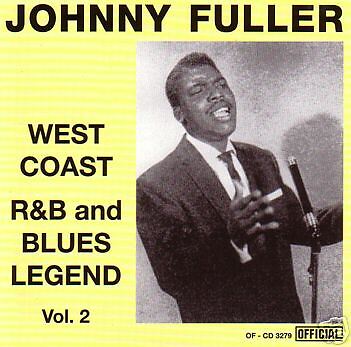
Johnny Fuller   +20.05.1985


Johnny Fuller (April 20, 1929 – May 20, 1985)[2] was an American West Coast and electric blues singer and guitarist.[1] Fuller showed musical diversity, performing in several musical genres including rhythm and blues, gospel and rock and roll. His distinctive singing and guitar playing appeared on a number of 1950s San Francisco Bay Area recordings, although he ceased performing regularly by the late 1970s.[1] He worked as an auto mechanic from 1968 to 1983. His best known recording, "Haunted House", was later covered with some success by Jumpin' Gene Simmons. His other better known tracks were "Crying Won't Make Me Stay", "All Night Long", "You Got Me Whistling" and "Johnny Ace's Last Letter."[1][2]
He is not to be confused with, nor was related to, the American blues musician, Jesse Fuller.
Fuller was born in Edwards, Mississippi, United States.[2] He relocated with his family in 1945 to Vallejo, California.[3][4]
His musical styling often masked his upbringing in the Deep South, but he spent the majority of his life in the San Francisco Bay Area. As such, he is usually classified as a West Coast bluesman, although he did not stick with one particular genre.[1] Fuller recorded for a number of independent record labels, sometimes those associated with Bob Geddins. These included Heritage, Hollywood, Flair, Specialty, Aladdin, Imperial and Checker Records. His debut recording was made in 1948 on the obscure Jaxyson record label, with a couple of gospel based songs. In 1954, he began a regular recording career which lasted until 1962.[4] Fuller recorded twenty sides in 1954 alone for Geddins.[3]
Fuller had local hits with his singles "All Night Long" and the original version of "Haunted House," the latter of which was written and produced by Geddins. Fuller's ability to switch styles, saw him appear in late 1950s rock and roll package tours, performing on the same bill as Paul Anka and Frankie Avalon.[1] However, this same factor lost his black audience, which left him neglected in the 1960s blues revival.[3]
In 1974, Fuller issued his debut album, Fuller's Blues which was well received,[3][5] but saw little commercial success. Fuller played at the San Francisco Blues Festival in 1973 and 1977.
He latterly worked as a mechanic in a local garage until his death from lung cancer in Oakland, California, in May 1985, at the age of 56.


Willie Foster   +20.05.2001


Although Willie Foster was a noted bluesman and accomplished harmonica player in his own right, he's best-known for playing alongside other blues greats, especially Muddy Waters. Foster discovered the blues and bought his first harmonica as a young man in the '20s, and as a teenager met Waters, who he would play with off and on throughout the years. But Foster didn't receive his first paying musical gig until the '50s, when he began playing at a St. Louis nightclub. It was during that decade that Waters and Foster played a concert together at New York City's famed Carnegie Hall. Foster kept playing throughout the years (despite being dealt such life-altering blows as losing a leg and being considered legally blind). The day after he performed at a private party in Jackson, TN, on May 19, 2001, Foster passed away from an apparent heart attack.
http://www.allmusic.com/artist/willie-foster-mn0002293406

http://www.hurriyetdailynews.com/bluesman-willie-foster-dead-at-79.aspx?pageID=438&n=bluesman-willie-foster-dead-at-79-2001-05-22


Willie J Foster - Love Everybody 


https://www.youtube.com/watch?v=82F68tcTZRA 


Ray Manzarek  +20.05.2013

http://blueskalender.blogspot.de/p/ray-manzarek-20.html


Raymond Daniel „Ray“ Manzarek (eigentlich Raymond Manczarek; * 12. Februar 1939 in Chicago, Illinois, USA; † 20. Mai 2013 in Rosenheim, Deutschland) war ein US-amerikanischer Musiker und Schriftsteller. Bekannt wurde er als Organist der Rockgruppe The Doors.
Leben
Manzarek wurde 1939 als Sohn einer polnischstämmigen Einwandererfamilie, in der dritten Generation in den Vereinigten Staaten, in Chicago geboren. Schon früh begann er mit klassischen Klavierstunden – wohl eher im Kontext einer bürgerlichen Erziehung – und seine Begabung bildete sich langsam heraus.
Nach seinem College-Abschluss 1960 beschloss Manzarek, an der University of California in Los Angeles zu studieren, wo er Jim Morrison kennenlernte. Die aufstrebenden Intellektuellen schlossen schnell Freundschaft, Morrison bewohnte sogar einige Zeit mit Ray und dessen Freundin Dorothy dieselbe Wohnung. Manzarek machte in dieser Zeit erste ausgiebige Drogenerfahrungen: Vornehmlich konsumierte er Marihuana, allerdings auch das aufkommende LSD.
Nach dem Tod Morrisons und der Auflösung der Band versuchte auch Ray Manzarek sich als Solo-Interpret zu verwirklichen, hatte allerdings keinen großen Erfolg. Erwähnen ließe sich beispielsweise das Album The Golden Scarab (1974), seine Zusammenarbeit mit Nite City oder die elektronische Adaption der Carmina Burana (1983).
Im Jahr 2002 gründete Manzarek zusammen mit Robby Krieger, Ty Dennis und dem Frontmann der Band The Cult, Ian Astbury die Band The Doors of the 21st Century, die sich nach einem abermaligen Rechtsstreit mit John Densmore und den Eltern von Jim Morrison im Jahr 2005 „Riders on the Storm“ nannte.[1][2] Zuletzt traten Manzarek und Krieger als Ray Manzarek and Robby Krieger of The Doors auf.
Aufgrund eines Gallengangskarzinoms ließ sich Manzarek von Friedrich Douwes in der St.-Georg-Klinik in Bad Aibling behandeln. Angesichts seines schlechten Zustands wurde er in eine Klinik in Rosenheim verlegt, wo er im Alter von 74 Jahren an den Folgen seiner Krankheit verstarb.[3][4]
Zitat
    „Die Gegenwart ist doch entsetzlich. Wir leben in genau dem zynischen Alptraum, vor dem wir in den Sechzigern immer gewarnt hatten.“

– Ray Manzarek: Pressekonferenz im Sommer 1997.

Raymond Daniel Manczarek Jr. (February 12, 1939 – May 20, 2013), known as Ray Manzarek, was an American musician, singer, producer, film director, and author, best known as a founding member and keyboardist of The Doors from 1965 to 1973. He was a co-founding member of Nite City from 1977 to 1978, and of Manzarek–Krieger from 2001 to his death.
Biography
Early life and career
Manzarek was of Polish descent, born and raised on the South Side of Chicago, Illinois, as were his parents, Helena and Raymond Manzarek, Sr.[1] Growing up, he took private piano lessons from Bruno Michelotti and others. He originally wanted to play basketball, but he only wanted to play power forward or center. When he was sixteen his coach insisted either he play guard or not at all and he quit the team. Manzarek said later if it was not for that ultimatum, he might never have been with the Doors. He went to Everett Elementary School on South Bell Street and attended St. Rita High School in Chicago.[2] He graduated from DePaul University with a degree in economics and played in many shows at the school.
From 1962 to 1965, he studied in the Department of Cinematography at the University of California, Los Angeles (UCLA), where he met film student Jim Morrison. At UCLA, he also met Dorothy Fujikawa, whom he married. At the time Manzarek was in a band called Rick and the Ravens with his brothers Rick and Jim.[3] Forty days after finishing film school, thinking they had gone their separate ways, Manzarek and Morrison met by chance on Venice Beach in California. Morrison said he had written some songs, and Manzarek expressed an interest in hearing them, whereupon Morrison sang rough versions of "Moonlight Drive", "My Eyes Have Seen You" and "Summer's Almost Gone". Manzarek liked the songs and co-founded the Doors with Morrison at that moment.
Manzarek met drummer John Densmore and guitarist Robby Krieger at a Transcendental Meditation lecture. Densmore says, "There wouldn't be any Doors without Maharishi."[4]
In January 1966, the Doors became the house band at the London Fog on the Sunset Strip. According to Manzarek, "Nobody ever came in the place...an occasional sailor or two on leave, a few drunks. All in all it was a very depressing experience, but it gave us time to really get the music together." The same day the Doors were fired from the London Fog, they were hired to be the house band of the Whisky a Go Go. Their first performance at the Whisky was with the group Them.[5]
The Doors' first recording contract was with Columbia Records. After a few months of inactivity, they learned they were on Columbia's drop list. At that point, they asked to be released from their contract. After a few months of live gigs, Jac Holzman "rediscovered" the Doors and signed them to Elektra Records.
The Doors lacked a bassist, so Manzarek usually played the bass parts on a Fender Rhodes PianoBass. His signature sound is that of the Vox Continental combo organ, an instrument used by many other psychedelic rock bands of the era. He later used a Gibson G-101 Kalamazoo combo organ (which looks like a Farfisa) because the Continental's plastic keys frequently broke, according to Manzarek.
Manzarek occasionally sang for the Doors, including the live recording "Close To You" and on the B-side of "Love Her Madly," "You Need Meat (Don't Go No Further)." He also sang on the last two Doors albums, recorded after Morrison's death, Other Voices and Full Circle. Additionally, he provided one of several guitar parts on the song "Been Down So Long."
Later career and influence
Manzarek played in several groups after the Doors, including Nite City.[5] He recorded a rock adaptation of Carl Orff's Carmina Burana with Philip Glass, played with Iggy Pop, backed one track on the eponymous 1987 album Echo & the Bunnymen, backed San Francisco poet Michael McClure's poetry readings and did improvisational composition with poet Michael C. Ford.[6] He also worked extensively with "Hearts of Fire" screenwriter and former SRC front man Scott Richardson[7] on a series of spoken word and blues recordings entitled "Tornado Souvenirs".
Manzarek produced Los Angeles, the 1980 inaugural album of the punk band X,[8] also contributing on keyboards.[9]
His memoir, Light My Fire: My Life with The Doors, was published in 1998. The Poet in Exile (2001) is a novel exploring the urban legend that Jim Morrison may have faked his death. Manzarek's second novel, Snake Moon, released in April 2006, is a Civil War ghost story.
In 2000, a collaboration poetry album entitled Freshly Dug was released with British singer, poet, actor and pioneer Punk rocker Darryl Read. Read had previously worked with Manzarek on the Beat Existentialist album in 1994, and their last poetical and musical collaboration was in 2007 with the album Bleeding Paradise.
Also in 2000, he co-wrote, directed the film Love Her Madly,[10] which was credited to a story idea by Jim Morrison.[11] The film was shown at the closing night of the 2004 Santa Cruz Film Festival,[12] but otherwise received limited distribution and critical review.
In 2006, he collaborated with composer and trumpeter Bal. The album that resulted, Atonal Head, is an exploration in the realm of electronica. The two musicians integrated jazz, rock, ethnic and classical music into their computer-based creations.
On August 4, 2007, Manzarek hosted a program on BBC Radio 2 about the 40th anniversary of the recording of "Light My Fire" and the group's musical and spiritual influences.
In April 2009, Manzarek and Robby Krieger appeared as special guests for Daryl Hall's monthly concert webcast Live From Daryl's House. They performed several Doors tunes ("People Are Strange", "The Crystal Ship", "Roadhouse Blues" and "Break on Through (To the Other Side)") with Hall providing lead vocals.
After living many years in Hollywood, Manzarek moved to Napa County, California, to a house that he remodeled extensively.[13] In his last years he played with local bands in the Napa area.[14]
In 2009, Manzarek collaborated with "Weird Al" Yankovic, by playing keyboards on the single "Craigslist", which is a pastiche of The Doors.[15] On the day of Manzarek's death, Yankovic published a personal video of this studio session which he said had been an "extreme honor" and "one of the absolute high points of my life".[16]
Manzarek was a co-producer on a few tracks for Universal Recording artist Michael Barber. A track appeared on the Internet, titled "Be Ok", on Barber's Universal Records debut.
In May 2010, Manzarek recorded with slide guitarist Roy Rogers in Studio D in Sausalito. Their album, Translucent Blues, released in mid-2011, was ranked No. 3 on the Top 100 Roots Rock Albums of 2011 by The Roots Music Report.[17]
In February 2012, Manzarek recorded Breakn' a Sweat with DJ Skrillex and his fellow members Robby Krieger and John Densmore.
Personal life and death
Manzarek married Dorothy Aiko Fujikawa in Los Angeles on December 21, 1967, with Jim Morrison and his long time companion, Pamela Courson, as witnesses. Manzarek and Fujikawa remained married until his death. They had a son, Pablo, and three grandchildren.[8]
Around early 2013, he was diagnosed with a rare cancer called Cholangiocarcinoma (bile duct cancer) and traveled to Germany for special treatment. On May 20, 2013, Manzarek died at a hospital in Rosenheim, Germany, at the age of 74.[18][19] Robby Krieger said, "I was deeply saddened to hear about the passing of my friend and bandmate Ray Manzarek today. I'm just glad to have been able to have played Doors songs with him for the last decade. Ray was a huge part of my life and I will always miss him."[19] John Densmore said, "There was no keyboard player on the planet more appropriate to support Jim Morrison's words. Ray, I felt totally in sync with you musically. It was like we were of one mind, holding down the foundation for Robby and Jim to float on top of. I will miss my musical brother."[20]
Greg Harris, President and CEO of the Rock and Roll Hall of Fame, said in reaction to Manzarek's death that "The world of rock 'n' roll lost one of its greats with the passing of Ray Manzarek."[21] Harris also said that "he was instrumental in shaping one of the most influential, controversial and revolutionary groups of the '60s. Such memorable tracks as 'Light My Fire', 'People are Strange' and 'Hello, I Love You' – to name but a few – owe much to Manzarek's innovative playing."[22] At 9:31 on May 21, The Whiskey a Go Go and other clubs that the Doors played, dimmed their lights in his memory. An invitation-only memorial service (Ray's celebration of life) was held on June 9 in the Napa Opera House.


RAY MANZAREK-RIDERS ON THE STORM 


The doors & Scott Stapp - Riders on the storm 


The Doors featuring Pat Monahan - Love Me Two Times


Joe „Guitar“ Hughes +20.05.2003


Joe „Guitar“ Hughes (* 29. September 1937 in Houston, Texas; † 20. Mai 2003 ebd.) war ein US-amerikanischer Blues-Gitarrist. Zu seinen Vorbildern zählen Johnny „Guitar“ Watson, ebenfalls aus Houston, und Johnny Copeland, mit dem er Mitte der 1950er in einer Band namens „Dukes of Rhythm“ musizierte.[1]
1958 bis 1963 leitete Hughes die Hausband eines Juke Joint. Daneben nahm er einige Singles auf. 1963 wurde er Mitglied der Upsetters, bekannt als die Band von Little Richard. 1965 schloss er sich zunächst Bobby „Blue“ Bland, dann Al „TNT“ Braggs an.[1]
Nach einer längeren Durststrecke brachte Hughes ab der zweiten Hälfte der 1980er eine Reihe erfolgreicher Alben heraus. Joe „Guitar“ Hughes starb am 20. Mai 2003 nach einem Herzinfarkt.


Joe "Guitar" Hughes (September 29, 1937 – May 20, 2003[1]) was an American blues musician, from Houston, Texas, United States.
Career

Hughes was inspired by Clarence "Gatemouth" Brown and Johnny "Guitar" Watson – "anyone who had fire in their playing and a good shuffle".[2] His first band was the Dukes Of Rhythm in the 1950s, which also included his friend Johnny Copeland.[3] He worked with Little Richard and in Bobby Bland's band in the 1960s.[2]

He toured in Europe starting in the 1980s and released Texas Guitar Master on the Dutch label Double Trouble Records in 1986. The album included a live track with Hughes and fellow guitarist Pete Mayes.[2] If You Want to See The Blues was released by Black Top Records in 1989.[3]

Hughes died of a heart attack on May 20, 2003.
http://en.wikipedia.org/wiki/Joe_%22Guitar%22_Hughes


Joe "Guitar" Hughes - Going Fishing 


Donnerstag, 28. Januar 2016

28.01. Luke Jordan, Baby Tate, Blind Arvella Gray, Cash McCall, Drink Small, John Marx, Harpdog Brown * Chico Chism, Jaybird Coleman, Joe McCoy +


1892 Luke Jordan*
1906 Blind Arvella Gray*
1916 Baby Tate - Charles Henry Tate*
1933 Drink Small*
1941 Cash McCall*
1950 Jaybird Coleman+
1950 Joe McCoy+
1962 Harpdog Brown*
2007 Chico Chism+

2016 Paul Kantner+
John Marx*


Happy Birthday


Luke Jordan  *28.01.1892


Luke Jordan (* 28. Januar 1892 in Bluefield, West Virginia, USA[1]; † 25. Juni 1952 in Lynchburg, Virginia) war ein US-amerikanischer Blues-Gitarrist und Sänger.
Im August 1927 nahm er bei Victor Records in Charlotte (North Carolina), seine ersten Stücke auf, weitere folgten in New York im November 1929. Dann beendete die Große Depression seine kurze Karriere. Seine bekanntesten Lieder sind Church Bells Blues, Pick Poor Robin Clean und Cocaine Blues, welches mehrmals gecovert wurde.[2]
Am 15. August 2001 wurde ihm von der James River Blues Society ein Gedenkschild in Lynchburg geweiht.

Luke Jordan (January 28, 1892 – June 25, 1952)[1] was an American blues guitarist and vocalist of some renown in his local area of Lynchburg, Virginia.
He was born in Appomattox County, Virginia, United States, and his professional career started at age 35, when he was noticed by Victor Records. He went to Charlotte, North Carolina in 1927 to record several records. These records sold moderately well, and Victor decided to take Jordan to New York in 1929, for two more sessions. He recorded very few known tracks in his career.
He died in Lynchburg in June 1952.[1] His song, "Church Bells Blues" was later recorded by Ralph Willis.


If I Call You Mama (LUKE JORDAN, November 1929) Ragtime Blues Guitar Legend 


Baby Tate - Charles Henry Tate  *28.01.1916


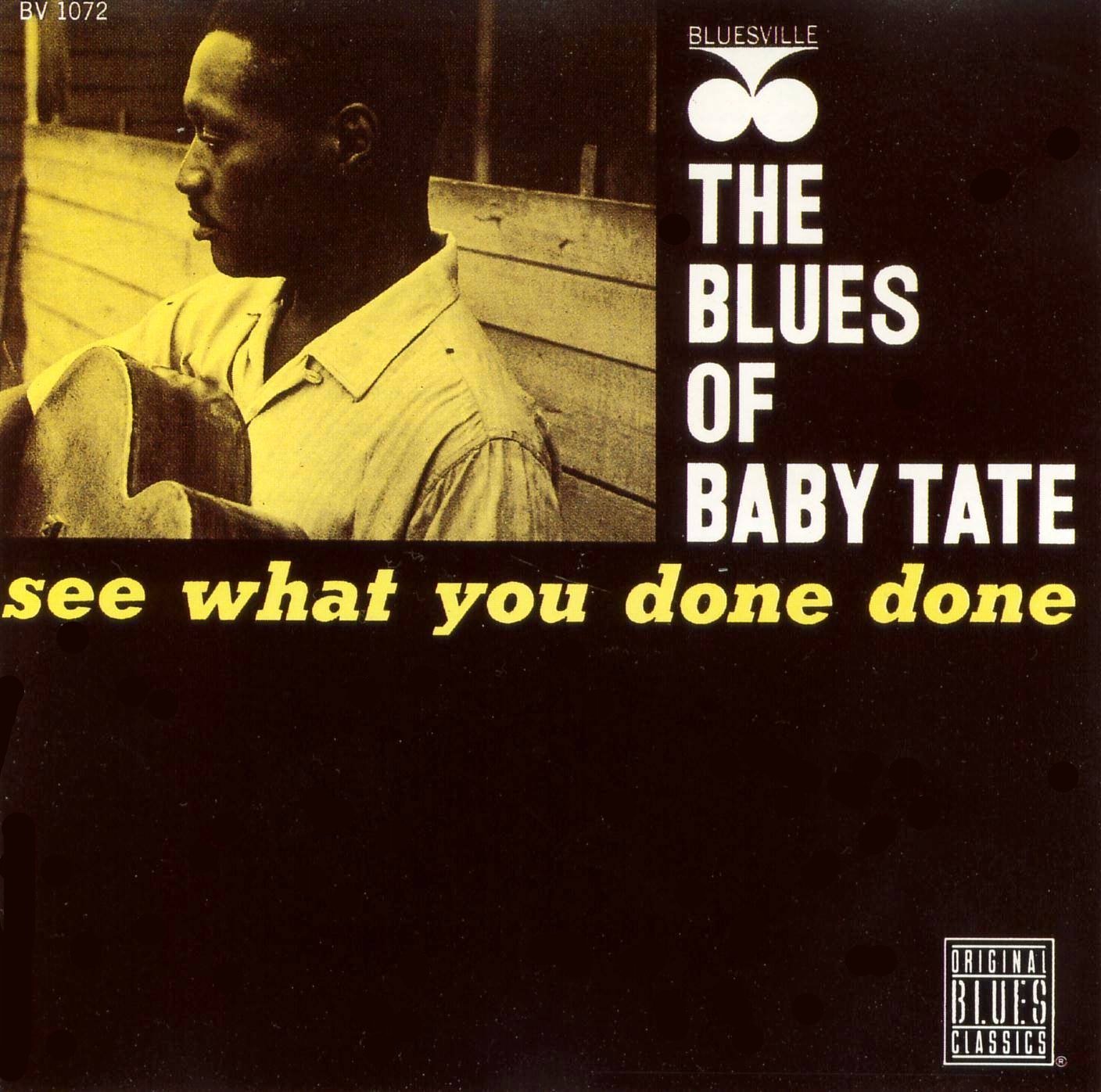
Baby Tate (January 28, 1916 – August 17, 1972)[2] was an American Piedmont blues guitarist, who in a sporadic career spanning five decades, worked variously with guitarists Blind Boy Fuller and Pink Anderson, as well as harmonica player Peg Leg Sam.[1] His playing style was influenced by Blind Blake, Buddy Moss, Blind Boy Fuller, Josh White, and Willie Walker, and to some extent Lightnin' Hopkins.
Born Charles Henry Tate in Elberton, Georgia,[2] he was raised in Greenville, South Carolina. In his adolescence, Tate started performing locally, after seeing Blind Blake in Elberton. Tate later formed a trio with Joe Walker (the brother of Willie Walker) and Roosevelt "Baby" Brooks and, up to 1932, played in the local area. As The Carolina Blackbirds, they appeared on the radio station, WFBC, broadcasting from The Jack Tar Hotel,[4] but for the rest of the 1930s worked for a living, mainly as a mason.[1]
Baby Tate served in the United States Army infantry during World War II in the south of England, and did not return to the Spartanburg/Greenville club circuit until 1946. Nevertheless, in 1950 Tate claimed to have recorded several (unreleased) tracks for the Kapp label. Relocating to Spartanburg, South Carolina, he performed solo before forming an occasional duo with Pink Anderson; a working relationship that endured through to the 1970s when Anderson suffered from stroke.[1]
Tate released his only album, Blues of Baby Tate: See What You Done Done, in 1962, and twelve months later appeared in Sam Charters' documentary film The Blues. Throughout the 1960s Tate performed irregularly across the US.[1] Utilising harmonica player, Peg Leg Sam, or guitarists Baby Brooks or McKinley Ellis, Tate recorded nearly sixty tracks in 1970 and 1971 for Peter B. Lowry, but the proposed album remained unreleased once Tate unexpectedly died in the summer of 1972.[5] He appeared at a concert at the State University of New York at New Paltz, New York as a result of Lowry's efforts in the Spring of 1972.
Tate died from the effects of a heart attack, in the VA Hospital in Columbia, South Carolina, in August 1972, at the age of 56.[1]
In January 2011, Baby Tate was nominated for The 10th Annual Independent Music Awards in the Blues Song category for "See What You Done Done".[6]
Smithsonian Folkways released a compilation album on February 16, 2010, titled Classic Appalachian Blues. It featured the Baby Tate number, "See What You Done Done.

Bad Blues - Carolina bluesman Baby Tate 


https://www.youtube.com/watch?v=8f-YL02pumY 


Blind Arvella Gray  *28.01.1906


Arvella Gray (* 28. Januar 1906 in Somerville, Texas; † 7. September 1980 in Chicago, Illinois; wirklicher Name James Dixon) war ein afroamerikanischer Bluessänger und Gitarrist, der den Großteil seines Lebens als Straßenmusikant in Chicago, vor allem auf dem (Floh)Markt um die Maxwell Street Blues- und Gospelmusik gespielt hat.
Aufnahmen von ihm sind auf etlichen Schallplattensamplern, darunter And This Is Maxwell Street, drei selbst produzierten 45 rpm Platten sowie auf einem Album (Blind Arvella Gray The Singing Drifter) aus dem Jahre 1972, das 2005 als CD wiederveröffentlicht wurde, zu hören. Die Wiederveröffentlichung erhielt den Living Blues Award 2006.


Blind Arvella Gray (January 28, 1906 – September 7, 1980)[1] was an American blues, folk and gospel singer and guitarist.

His birth name was James Dixon, and he was born in Somerville, Texas, United States.[1] He spent the latter part of his life performing and busking folk, blues and gospel music at Chicago's Maxwell Street flea market and at rapid-transit depots. In the '60s, he recorded two singles for his own Gray label including "Freedom Rider" backed with "Freedom Bus."

Gray's only album, 1973's The Singing Drifter was reissued on the Conjuroo[2] record label in 2005. The re-issue producer was Cary Baker, who wrote the liner notes for the original Birch Records vinyl LP.

Gray died in Chicago, Illinois in September 1980, at the age of 74.


Good Morning Blues: Bind Arvella Gray 

https://www.youtube.com/watch?v=B8Jc5uf0a_k


Cash McCall  *28.01.1941 


Cash McCall (born Maurice Dollison Jr., January 28, 1941, New Madrid, Missouri) is an American electric blues guitarist, singer and songwriter. He is best known for his 1966 R&B hit, "When You Wake Up". McCall's long career has seen him evolve in musical styles from gospel to soul to the blues.[1] He is not to be confused with the 1960 film of the same name.
Cash joined the United States Army, and then settled in Chicago where he had lived for a period as a child. In 1964, he played guitar and sang, alongside Otis Clay, with the Gospel Songbirds, who recorded for Excello Records. Cash later joined another gospel singing ensemble, the Pilgrim Jubilee Singers.[1]
Billed under his birth name, his debut solo single release was "Earth Worm" (1963). Three years later he co-wrote "When You Wake Up" with the record producer, Monk Higgins. His initial soul styled demo was issued by Thomas Records, who chose to call him Cash McCall.[1][2] The song reached #19 on the US Billboard R&B chart.[3] This led to McCall touring with Lou Christie and Mitch Ryder in Dick Clark's Caravan of Stars. However, subsequent releases for both the Thomas and Checker labels failed to chart.[1] These included the song, "It's Wonderful To Be In Love".[4] In 1967, McCall co-wrote "That's How It Is (When You're in Love)", a Top 30 R&B hit for Otis Clay.[5][6]
Under the tutelage of Willie Dixon, McCall went on to become a session musician and songwriter for Chess Records.[1] In the late 1960s, McCall, along with Jimmy Dawkins and Johnny Twist, played guitar on some of George "Wild Child" Butler's early recordings.[7]
McCall gravitated towards the blues in the 1970s. He issued Omega Man (1973) before relocating to Los Angeles in 1976 and, by 1983, McCall had released No More Doggin'.[1] In 1985, McCall and his band, appeared at the Long Beach Blues Festival. In 1987, Stony Plain Records released the album, Cash Up Front. The collection included notables such as Nathan East and Welton Gite (bass); Chuck Findley (flugelhorn, trumpet); Hank Cicalo (sound engineer) and Bernie Grundman (mastering); Les McCann and Richard Tee (piano); plus Phil Upchurch (rhythm guitar).[8]
McCall co-produced Willie Dixon's Grammy Award clinching Hidden Charms (1988), and played in Dixon's All-Stars band. Since then he has toured as a solo artist, and appeared with the Chicago Rhythm and Blues Kings for whom he has written several tracks. He has also provided backing to the singer known as Big Twist, and performed in the Chicago Blues Review.[1] McCall's songs have been recorded by The Blind Boys of Alabama, The Mighty Reapers, Margie Evans, Tyrone Davis and Mitty Collier.
http://en.wikipedia.org/wiki/Cash_McCall_%28musician%29


Cash McCall at Club Lingerie (Live)


https://www.youtube.com/watch?v=ahbvCPU-MJk 


Drink Small   *28.01.1933


Drink Small (born January 28, 1933)[1] is an African American soul blues and electric blues guitarist, singer, and songwriter. He is known as the 'Blues Doctor', and has been influenced by gospel and country music and Blind Boy Fuller.
Small was born in Bishopville, South Carolina, United States.[1] He was self taught on the guitar and organised a local gospel group, the Six Stars. He had eclectic musical influences including Tennessee Ernie Ford, Merle Travis, John Lee Hooker and Fats Domino.[3]
He was rated as one of the best gospel guitarists in the 1950s, before he turned his attention to secular music later in that decade. In 1959, he released the single "I Love You Alberta" on Sharp Records.[1][3] Small had a long career, recording spasmodically for small record labels, before issuing six albums between 1990 and 2008.[2] He recorded dirty blues tracks such as "Tittie Man" and "Baby, Leave Your Panties Home",[4] with more righteous offerings such as "The Lord Been Good to Me".[5]
Small appeared at the 2005 New Orleans Jazz & Heritage Festival.[3] He also performed at the first Julius Daniels Memorial Blues Festival in Denmark, South Carolina, in October 2010.

http://en.wikipedia.org/wiki/Drink_Small    

http://www.columbialivingmag.com/drink-small-the-blues-doctor

 
Drink Small, "The Blues Doctor" 


John Marx *28.01.


https://www.facebook.com/john.marx.146 


Call today for lessons with Blues Guitar Great. John Marx. 818-345-8950
Every so often a great musician is revealed to us that goes beyond the norm. A players player that has their art down and passion for the music ingrained into everything they do. At Join the Band we have blues great John Marx. He is the blues jewel of Los Angeles.
I first heard John play over 20 years ago in a small blues club in Burbank. I left very humbled by his dedication to the blues and how he approached every note and chord. He is a true student and scholar of the blues. Anyone that has spent any time with him knows he is a true blues man. He’s knowledge and passion for the blues is both encyclopedic and infectious. Check out John at one of his many gigs in the LA area or sit in on his Blues Workshops at our JTB studio and you will know you have been in the room with a true artist. Sitting in to play with him is a master lesson in rhythm, feel, and subtlety. You can’t BS your way around John. Music is first and BS is sent out the back door.
John is a natural teacher and loves to share his passion for the blues. His true love of the blues is very evident in every JTB workshop he teaches. The “Join the Band Blues Workshop with John Marx” is our most popular workshop.
Born and raised in East Baltimore Maryland, John began singing in church and for audiences at the age of six. He played the drums from ages ten to fifteen, and then took up the guitar to better accompany his singing.
Over the years John has found himself either on stage or in a recording studio with Albert Collins, Lowell Fulson, The Drifters, Gladys Knight, Carmelo Garcia, George Benson, The Dells, Al Duncan, Luther Tucker, Lee Oskar, Gabor Szabo, The Platters, Larry Hopkins, Luis Gasca, The Coasters, Charlie Musselwhite, Jimmy Smith, Jesse Ed Davis, Lightning Hopkins, Sleepy John Estes, Luther Tucker, Larry Davis, Cash Mc Call, Earl King, Floyd Dixon, and many others. He also recorded and toured with great harmonica player William Clarke.
John Marx and the Blues Patrol : complete set Azar's 6-19-13 


Harpdog Brown *28.01.1962


Harpdog Brown is a gifted singer and imaginative harmonica player of note that has been in Canada’s Blues scene since 1982.
Born in Edmonton, Alberta and based in Vancouver, British Columbia, he’s crossed tens of thousands of miles playing club dates and festivals in Canada, North Western United States and Germany.
Over the years Harpdog has issued 6 CD’s to critical acclaim. In 1995 his Home is Where The Harp Is won the coveted Muddy Award for the best NW Blues Release of the year, from the Cascade Blues Association in Portland. As well that year it was nominated for a Juno for the best Blues Release in Canada. Teamed up with Graham Guest on piano, his CD Naturally was voted #1 Canadian Blues Album of 2011 by The Blind Lemon Survey.
Harpdog resides in Vancouver, BC where he leads his own trio and quartet of hot local players churning out blues on the jazzy mellower side. He also leads The Harpdog Brown Band which is a gutsy traditional Chicago blues band with John R Hunter (drums), Jordan Edmonds (guitar) and George Fenn (bass). In 2014 they released “What It Is” consisting mainly new originals and a few classic covers you don’t get from your average blues band. As Holger Peterson says on the jacket, Harpdog’s best work yet. Check it out.

Genesis Theater with Harpdog Brown & The Travelin' Blues Show_set one part 1 


Genesis Theater with Harpdog Brown & The Travelin' Blues Show_Set one part 2 


R.I.P.


Chico Chism  +28.01.2007


Napoleon „Chico“ Chism (* 23. Mai 1927 in Shreveport, Louisiana; † 28. Januar 2007 in Phoenix (Arizona)[1]) war ein US-amerikanischer Blues-Schlagzeuger (auch Gesang).
Chism arbeitete ab den 1950er Jahren u. a. mit TV Slim (Flatfoot Sam 1957), später mit Choker Campbell, Clifton Chenier, Little Junior Parker, Sonny Boy Williamson II., Rosco Gordon, Sunnyland Slim, Muddy Waters, Memphis Slim, Lowell Fulson, Otis Rush, Junior Wells und Freddie King. Mit seiner Band Chico Chism & His Jetnanairs veröffentlichte er 1959 die Single Hot Tomales & Barbeque. In den 1970ern betrieb Chism das Label Cher-Kee Records, auf dem er auf Singles Musik unbekannter Chicagoer Blues-, Soul- und Gospelmusiker wie Highway Man, Eddie Burks, Johnny Christian und Willie Davis vertrieb.
Chism spielte Anfang des Jahrzehnts in Howlin’ Wolf letzter Band; nach dessen Tod 1976 gehörte er der Eddie Shaw’s Wolf Gang an. 1979 war er im Rahmen der Blues Legends Tour mit Eddie C. Campbell, Willie Davenport und Billy Emerson auf Europatournee. Chism trat Anfang der 1980er Jahre in Chicago in Bluesclubs wie Rosa’s und Kingston Mines auf. 1986 zog er nach Arizona, wo er mit dem Produzenten Bob Corritore arbeitete; dabei entstanden in Phoenix Aufnahmen mit Bo Diddley, R. L. Burnside, Henry Gray, Mojo Buford, Louisiana Red, Jimmy Rogers, Smokey Wilson, Little Milton, Big Pete Pearson, Pinetop Perkins und John Brim. 1999 erschienen Aufnahmen von Chico Chism & His Jetnanairs auf dem Album Red River Blues. Er starb im Alter von 79 Jahren an den Folgen eines Schlaganfalls, den er 2002 erlitt. 2009 wurde er posthum in die Arizona Blues Hall of Fame aufgenommen.

CHICO CHISM is an Arizona Blues Ambassador. He is known all over the state as one of the most unique and memorable Blues stars to ever call Arizona home. Chico is best known for his work with Chester Burnett, the famous "Howlin' Wolf". Chico played drums with the Howlin' Wolf during the middle 1970's. When the Howlin' Wolf passed away, he continued playing with the band known as "Eddie Shaw and the Wolf Gang". He was band leader for Roscoe Gordon for two years. During Chico's time in the Blues clubs of Chicago, he played with many great Blues artists including: Eddie Boyd, Sunnyland Slim, Sonny Boy Williamson, Willie Mabon, Muddy Waters, Big Joe Turner, Memphis Slim and many more. Chico's drumming was included on a vast number of studio sessions on several major Chicago Blues labels. He toured on the road throughout the United States and Europe with such people as: Otis Rush, T-Bone Walker, Freddy King, Lowell Fulsom and Junior Wells. In 1987, after an extended time of playing in Europe, Chico moved to Phoenix, Arizona. That same year, the weekly news/arts/entertainment newspaper, THE NEW TIMES, named Chico's band the "Best Blues Band" in their yearly "Best of Phoenix" issue.
Chico Chism passed away on January 28, 2007 at the age of 79 in Phoenix, Arizona.
Chico Chism was inducted into the Arizona Music and Entertainment Hall of Fame (AMEHOF) on February 13, 2011 at the Orpheum Theater in Phoenix, AZ. 

 
Chico Chism And The Chiztones 

Chico Chism The Late Ted Kowal on bass Tim Dustin-guitar R.D.Olson drums ,harmonica,vocals filmed by Walkin Cane Mark 1990 

 https://www.youtube.com/watch?v=woPQJfwlIOM


Jaybird Coleman  +28.01.1950


Burl C. „Jaybird“ Coleman (* 20. Mai 1896 in Gainesville, Alabama; † 28. Januar 1950 in Tuskegee, Alabama) war ein US-amerikanischer Bluesmundharmonikaspieler, -gitarrist und -sänger. Obwohl sein Mundharmonikaspiel nicht richtungsweisend war, ist er doch ein gutes Beispiel für den Sound der Mundharmonika im Country Blues der frühen 1930er Jahre.[1]
Coleman war das Kind einer Pächterfamilie und arbeitete und wuchs auf der Farm seiner Eltern auf, die neben ihm noch drei weitere Kinder aufzogen. Im Alter von zwölf Jahren begann er mit dem Mundharmonikaspiel. Er spielte auf Partys für seine Familie und seine Freunde. Mit dem Blues wurde er während seiner Dienstzeit in der US-Army bekannt, wo er im Ersten Weltkrieg in der Truppenbetreuung beschäftigt war. Nach seiner Entlassung übersiedelte er nach Birmingham, Alabama wo er an Straßenecken auftrat und manchmal auch bei der Birmingham Jug Band mitspielte. Seine erste Platte nahm er 1927 auf, seine Aufnahmekarriere endete aber bereits 1930. In den 1930er und 1940er Jahren spielte er als Straßenmusikant in ganz Alabama.
Er starb 1950 an Krebs. 1993 veröffentlichte Document Records seine Werke.[2] Seine Werke sind auch auf vielen verschiedenen Zusammenstellungen von Country Blues vertreten.

Burl C. "Jaybird" Coleman (May 20, 1896 – January 28, 1950) was an American country blues harmonica player, guitarist and singer.
Born in Gainesville, Alabama, United States, the son of sharecroppers and one of four children. He was born, raised and worked on a farm, and picked up and learned the harmonica at 12 years of age. Coleman began performing the blues as an entertainer for American soldiers while serving in the United States Army. It was during this period that he was given the nickname "Jaybird" due to his independent manner.[1][2] In the early 1920s, he teamed with fellow bluesman Big Joe Williams as a performer in the Birmingham Jug Band which toured through the American South.[1]
Coleman made his first recordings as a solo artist in 1927. His career as a recording artist lasted only until 1930, after which he performed mostly on street corners throughout Alabama.[2]
He died of cancer at the age of 53 in Tuskegee, Alabama in 1950.

 
Jaybird Coleman - Coffee Grinder Blues 

Burl C. "Jaybird" Coleman (May 20, 1896 January 28, 1950) was an American country blues harmonica player, guitarist and singer.

Born in Gainesville, Alabama, the son of sharecroppers and one of four children. He was born, raised and worked on a farm, and picked up and learned the harmonica at 12 years of age. Coleman began performing the blues as an entertainer for American soldiers while serving in the United States Army. It was during this period that he was given the nickname "Jaybird" due to his independent manner. In the early 1920s, he teamed with fellow bluesman Big Joe Williams as a performer in the Birmingham Jug Band which toured through the American South.

Coleman made his first recordings as a solo artist in 1927. His career as a recording artist lasted only until 1930, after which he performed mostly on street corners throughout Alabama.

He died of cancer at the age of 53 in Tuskegee, Alabama in 1950.


Joe McCoy  +28.01.1950


Joe McCoy (* 11. Mai 1905 in Jackson, Mississippi; † 28. Januar 1950 in Chicago, Illinois) war ein US-amerikanischer Blues-Gitarrist und Sänger. Er war der ältere Bruder von Papa Charlie McCoy. Bekannt war er als Kansas Joe McCoy, trat aber auch unter Pseudonymen wie Hillbilly Plowboy, Mud Dauber Joe, Hamfoot Ham, Georgia Pine Boy und Hallelujah Joe auf.
In den 1920er-Jahren spielte McCoy in Memphis, unter anderem in der Beale Street Jug Band. Hier lernte er seine Frau Lizzie Douglas kennen, die als Memphis Minnie bekannt wurde. 1929 nahmen sie zusammen den Hit Bumble Bee auf.
1930 zog das Paar nach Chicago und feierte dort bis zu ihrer Scheidung Erfolge. In den späten 1930er-Jahren bildete McCoy mit seinem Bruder die Band Harlem Hamfats, die auch die Sängerin Rosetta Howard begleiteten. Er nahm auch Solo-Titel auf, die er selbst komponierte, wie One More Greasing, Oh Red What You Gonna Do und Why Don’t You Do Right.
Bei Ausbruch des Zweiten Weltkrieges wurde Charlie McCoy zum Militär eingezogen, während Joe wegen gesundheitlicher Probleme verschont blieb. Er gründete Big Joe & His Washboard Band, mit denen er bis zu seinem Tod im Alter von nur 44 Jahren auftrat.

Kansas Joe McCoy (May 11, 1905 – January 28, 1950)[1] was an American Delta blues musician and songwriter.[2]
Career
McCoy played music under a variety of stage names but is best known as "Kansas Joe McCoy". Born in Raymond, Mississippi, he was the older brother of the blues accompanist Papa Charlie McCoy. As a young man, McCoy was drawn to the music scene in Memphis, Tennessee where he played guitar and sang vocals during the 1920s. He teamed up with future wife Lizzie Douglas, a guitarist better known as Memphis Minnie, and their 1929 recording of the song "Bumble Bee" on the Columbia Records label was a hit.[3] In 1930, the couple moved to Chicago where they were an important part of the burgeoning blues scene. Following their divorce, McCoy teamed up with his brother to form a band known as the Harlem Hamfats that performed and recorded during the second half of the 1930s.
In 1936, the Harlem Hamfats released a record with the song "The Weed Smoker's Dream" on it. McCoy later refined the tune, changed the lyrics and titled the new song "Why Don't You Do Right?" for Lil Green, who recorded it in 1941. It was covered a year later by both Benny Goodman and Peggy Lee, becoming Lee's first hit single. "Why Don't You Do Right?" remains a jazz standard and is McCoy's most enduring composition.
At the outbreak of World War II Charlie McCoy entered the military, but a heart condition kept Joe McCoy from service. Out on his own, he created a band known as 'Big Joe and his Rhythm' that performed together throughout most of the 1940s. The band featured Robert Nighthawk on harmonica and Charlie on mandolin.[4] In 1950, at the age of 44, McCoy died of heart disease in Chicago, only a few months before Charlie. They are both buried in Restvale Cemetery in Alsip, Illinois.
Led Zeppelin vocalist Robert Plant took his and Memphis Minnie's recording of "When the Levee Breaks," which was in his personal collection, and presented it to guitarist Jimmy Page, who revamped it and slightly altered it lyrically, and helped record it on Led Zeppelin's 1971 album, Led Zeppelin IV.
McCoy's songs have also been covered by Bob Dylan, John Mellencamp, The Ink Spots, Ella Fitzgerald, Jo Ann Kelly, Cleo Laine and A Perfect Circle.
Pseudonyms
McCoy also performed and recorded under the names Bill Wither, Georgia Pine Boy, Hallelujah Joe, Big Joe McCoy and His Washboard Band, and The Mississippi Mudder.[4] He also used the names Hamfoot Ham, Hillbilly Plowboy, and Mud Dauber Joe.[1]
Posthumous recognition
Like many blues musicians of his era, Joe McCoy's grave site was originally unmarked. A tribute concert[5] took place in October 2010 to celebrate the music of Joe and Charlie and to buy gravestones for each of them; they were installed on May 31, 2011.

 
Kansas Joe McCoy - What's The Matter With You? 

From the Too Late, Too Late Blues: Newly Discovered Titles & Alternate Takes Vol. 1 (1926-1944)...DOCD-5150

Recorded Chicago, January 9, 1935...Joe McCoy (as Georgia Pine Boy), vocal/guitar; Jimmie Gordon, piano


https://www.youtube.com/watch?v=Y-IeR7Cde8I