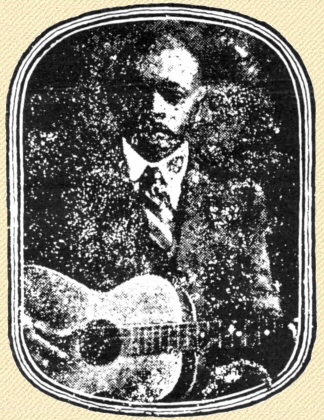
1934 Arthur "Blind" Blake+
1942 Albert White*
1943 Geno Washington (born William Francis Washington)*
1954 Jon Lawton*
1968 Eduard Nijenhuis*
1969 Magic Sam+
1942 Albert White*
1943 Geno Washington (born William Francis Washington)*
1954 Jon Lawton*
1968 Eduard Nijenhuis*
1969 Magic Sam+
Happy Birthday
Geno Washington (born William Francis Washington) *Dez. 1943 gen. Datum unbekannt

Geno Washington (* Dezember 1943 in Evansville, eigentlich William Francis Washington, Indiana) ist ein US-amerikanischer R&B-Musiker, der seine größten Erfolge in Großbritannien feierte.
Zwischen 1966 und 1969 veröffentlichte "The Ram Jam Band" 5 Alben mit Geno als Mitglied. Seit Anfang 1976 erschienen von ihm 8 Solo-Alben. Er war zudem derjenige, der Ian Brown auf einer Geburtstagsfeier in Manchester (England) den Rat erteilte, Sänger zu werden. Dieser gründete daraufhin die legendäre britische Gitarrenband "The Stone Roses".
Die Band "Dexys Midnight Runners" widmeten Geno Washington ein Lied, das seinen Vornamen trägt.
Geno Washington (born William Francis Washington, December 1943, Evansville, Indiana) is an American R&B singer who released five albums with The Ram Jam Band between 1966 and 1969, and eight solo albums beginning in 1976.
Music career 1960s to 1980s
Early to late 1960s
Washington was stationed in England with the United States Air Force during the early 1960s. While stationed in East Anglia, Washington became known as a frequent stand-in at gigs around London. When guitarist Pete Gage saw him at a nightclub in 1965, he asked Washington to join his new group, that was to become Geno Washington & The Ram Jam Band.
They had two of the biggest selling UK albums of the 1960s, both of which were live albums. Their most commercially successful album, Hand Clappin, Foot Stompin, Funky-Butt ... Live! was in the UK Albums Chart for 38 weeks in 1966, and was only out-sold by The Sound of Music and Bridge Over Troubled Water.[citation needed] The other album was Hipster Flipsters Finger Poppin' Daddies. They had a number of moderate UK Singles Chart hits during 1966–1967 on the Pye label: "Water" (which reached no.39), "Hi Hi Hazel" (no.45), "Que Sera Sera" (no.43) and "Michael (The Lover)" (no.39). They managed to build up a strong following with the crowds and due to their touring and energetic performances. Like their Pye label mates and rivals, Jimmy James and the Vagabonds, they became popular with the mod scene. The band broke up in the autumn of 1969 and the band members went their own ways while Geno Washington continued as a solo artist before returning to the United States. Keyboard player Geoffrey K. Pullum became an academic linguist, and is today a professor at the University of Edinburgh and a well-known linguistics blogger at the Language Log and Lingua Franca websites.[1]
The band's name came from the Ram Jam Inn, an old coaching inn on the A1 (Great North Road) at Stretton, near Oakham, Rutland. Gage later formed Vinegar Joe with Elkie Brooks and Robert Palmer.
The 1970s
Washington left the UK to return to the United States and disappeared from the music industry for a length of time. He studied hypnosis and meditation, made acquaintance with The Beach Boys and recorded some music with them that was never released. He later recorded three albums for the DJM label, Geno's Back (1976), Live (1976), That's Why Hollywood Loves Me (1979).
The 1980s
He was encouraged to make a comeback in 1980 due to the rekindled interest in him resulting from the Dexys Midnight Runners hit single, "Geno", but he initially declined, as he was completing his degree in hypnotism. But soon he was back in the UK touring extensively and playing many gigs particularly in South East London.
The 1990s to present
Washington has been active on stage, recording and releasing new music on various labels, with titles such as "Change Your Thoughts You Change Your Life", "Live Sideways", "Loose Lips", "Put Out the Cat", "The Return of the G", "Take This Job and Stuff It" and "What's in the Pot?".
As of 2007, Washington and his band could be regularly seen touring in the UK.
In January 2009 he released a single "I'm Doing 99 Years" and the proceeds from the single's sales will go to the victims of crime and child abuse.[2]
In July 2009 he headlined the Kelvedon Free Music Festival.
In August 2010, Geno Washington & the Ram Jam Band were one of the headline acts at Rhythm Festival,[3] and appeared at the Gulbenkian Theatre, Canterbury in October 2010. More recently, in October 2014, they performed in the Spiegeltent at the Canterbury Festival of Arts.[4]
Television and film career
Washington has appeared on television since the 1960s. In 1966 he appeared in Episode 11 of Ready Steady Go!. This episode also featured other stars such as Françoise Hardy, Cilla Black, Wayne Fontana and the Spencer Davis Group. In 1967, along with the Ram Jam Band, he appeared on The Record Star Show and doubtless others in the 1960s. Since then he has appeared on Top Ten (1980) in 2000 and the mini series S.O.U.L.--Sounds of Underground London in 2003.
Geno appears in the movie A Bit of Tom Jones, which had its London premiere in 2009. The film, which was made by Tred Films in Tredegar in South Wales, stars Jonny Owen and Roger Evans, with a cast including Matt Berry, John Henshaw and Denise Welch. The film won the BAFTA Cymru "Best Film" award in 2010.[5]
He has embraced acting, taking a role in Paparazzo, a 1995 film starring Nick Berry and Fay Masterson. In 2007 he appeared as himself in an episode of Midsomer Murders, entitled "The Axeman Cometh", that also featured Suzi Quatro and Mike Read.[6]
Writing and public speaking
He is the author of The Blood Brothers, a war exploitation story. Washington has also penned children's stories. He has appeared as a motivational speaker.
Hypnotism
Washington is a member of the Guild of Hypnotists.[7] He has also included hypnotism as part of his act. In the past his show has consisted of some demonstrations of hypnotism in the first half and some "Get down soul music" in the second half.
Current and recent activities
He recently collaborated with comedian and musician Matt Berry for the track, "Get Here in Time." Also in other activities involving Matt Berry,[8] Geno is featured on a 2012 song by Berry called "Theme From Snuff Box".[9]
Personal
Geno met his wife Frenchie at the Bag O'Nails club in London, which is also the place where her sister met Peter Noone of Herman's Hermits, whom she married, making Geno Washington and Peter Noone brothers-in-law. This is also the same club where Paul McCartney met Linda Eastman.
Albert White *01.12.1942

Albert White begann mit dem Gitarrenspiel in den 1950er-Jahren. Mit 9 Jahren begann er sich für den Blues zu begeistern, besonders für die Gitarrenparts. Sein Onkel, Piano Red, gab ihm eine alte Gitarre und vermittelte ihm Gitarrenunterricht bei seinem Bandkollegen Wesley Jackson. In der High School hatte er seine erste Band, mit der er regelmäßig an verschiedenen Colleges auftrat.
Er spielte bis zu dessen Tod in Piano Reds Band "Piano Red and the Interns", wo er mit Beverly "Guitar" Watkins zusammenspielte, mit der ihn eine lebenslange Freundschaft verbindet. Nach dem Tod Piano Reds spielte er bis Anfang der 1970er-Jahre Gitarre bei den "Tams", danach bei Hank Ballard and the Midnighters. Heute ist er mit der Music Maker Revue unterwegs, einer Allstargruppe, die Geld für den Music Maker Relief Funds aufbringt, einer gemeinnützigen Organisation, die in Not geratene Musiker unterstützt.
Er spielte bis zu dessen Tod in Piano Reds Band "Piano Red and the Interns", wo er mit Beverly "Guitar" Watkins zusammenspielte, mit der ihn eine lebenslange Freundschaft verbindet. Nach dem Tod Piano Reds spielte er bis Anfang der 1970er-Jahre Gitarre bei den "Tams", danach bei Hank Ballard and the Midnighters. Heute ist er mit der Music Maker Revue unterwegs, einer Allstargruppe, die Geld für den Music Maker Relief Funds aufbringt, einer gemeinnützigen Organisation, die in Not geratene Musiker unterstützt.
When Albert was young he grew fascinated by the Blues and soon fell in love with the guitar. His Uncle, Piano Red, gave him an old guitar and encouraged Albert to take lessons from Wesley Jackson, Red’s band mate. From there, Albert began taking lessons every Saturday morning.
As Albert continued to improve, he wanted to play more and more. In high school, he had his own group and went out on the college circuit playing gigs. In ‘65, Red recruited Albert to play in his group where he stayed for seven years. With the death of his uncle, Albert formed his own group and was booked by Hit Attractions out of Charlotte, North Carolina, once again, playing the college circuit. During that time he recorded with Clarence Carter on the Peacock Record label and performed back up with Ben E. King and Hank Ballard.
As Albert continued to improve, he wanted to play more and more. In high school, he had his own group and went out on the college circuit playing gigs. In ‘65, Red recruited Albert to play in his group where he stayed for seven years. With the death of his uncle, Albert formed his own group and was booked by Hit Attractions out of Charlotte, North Carolina, once again, playing the college circuit. During that time he recorded with Clarence Carter on the Peacock Record label and performed back up with Ben E. King and Hank Ballard.
Music Maker Blues Foundation - Jazzwoche Burghausen 2011 fragm. 3
Jon Lawton *01.12.1954
https://www.facebook.com/jon.lawton.967
http://www.tipofthetopmusic.com/home

Jon Lawton (guitar/vocals) has been a veteran of the California blues scene for over two decades. His blues influences included Muddy Waters, Little Walter, Johnny Shines, John Nicholas, Asleep at the Wheel, Elmore James, Robert Johnson and all the King family guitarists. Johnny also cites The Stones, Grateful Dead, David Bromberg, Bonnie Raitt, Pink Floyd, Buddy Rich, Count Basie, Frank Zappa among his early musical influences.
Prior to moving to the Golden State, Jon toured the mid-west with various popular regional blues/funk bands and backed up luminaries such as Luther Allison and John Hammond. Shortly after arriving in Santa Barbara, he joined its premier blues band The Pontiax, garnering rave reviews across the US, Europe, Canada. In 1990, Jon moved on to form Little Jonny and The Giants, which developed a solid SoCal following and performed at numerous venues and festivals with heavyweights such as Kim Wilson, John Hammond, James Harman, Gregg Allman, Koko Taylor, Fenton Robinson, Mighty Joe Young, Charlie Musselwhite, Magic Slim, Bob Dylan, Sista Monica and Anson Funderburg. Jon is now settled in the SF Bay Area where Little Jonny and the Giants continue releasing terrific CDs, performing all over California and collaborating with great artists such as Tom Ball, Paris Slim, RJ Mischo and many others!
http://www.tipofthetopmusic.com/about Prior to moving to the Golden State, Jon toured the mid-west with various popular regional blues/funk bands and backed up luminaries such as Luther Allison and John Hammond. Shortly after arriving in Santa Barbara, he joined its premier blues band The Pontiax, garnering rave reviews across the US, Europe, Canada. In 1990, Jon moved on to form Little Jonny and The Giants, which developed a solid SoCal following and performed at numerous venues and festivals with heavyweights such as Kim Wilson, John Hammond, James Harman, Gregg Allman, Koko Taylor, Fenton Robinson, Mighty Joe Young, Charlie Musselwhite, Magic Slim, Bob Dylan, Sista Monica and Anson Funderburg. Jon is now settled in the SF Bay Area where Little Jonny and the Giants continue releasing terrific CDs, performing all over California and collaborating with great artists such as Tom Ball, Paris Slim, RJ Mischo and many others!
Tip of the Top Blues Band LIVE! // Little Jonny's "Let's Rock"
Eduard Nijenhuis *01.12.1968

Drummer Eduard Nijenhuis and bass player Jan Markus have contracted a musical cooperation partnership.
Eduard (The Hague) and Jan (Zoetermeer) have known each other for years. They have been playing music in the area of The Hague Blues society for more than 10 years.
At the moment they are the rhythm section in the Fossen & Struijk Band and the Robbert Fossen Blues Band. The real deal Chicago bluesbands in The Netherlands. And they have their own band, The Dynaflow, with John Burki on guitar/vocals and Bas Janssen on keyboards.
Also for years, from 2006 - 2012, Jan and Eduard have been the leading rhythm section of the monthly blues sessions at the Jan Pet Blueslokaal in The Hague. Moreover, they regularly stand-in as a duo, making music as a drummer and a bass player, whenever being permitted and or asked for a gig, all over the country.
Bass player Jan Markus and drummer Eduard Nijenhuis form a blues rhythm section pur sang. They sense each other's limits as no one else could. For years they have been building experience as a performing duo. Their job is well done and well known for the blues world. Their music creativity has a straight sound rhythm. From real USA-shuffles right down to slow blues music for everyone's needs.
At the beginning of 2011 Jan and Eduard set up The Dynaflow rhythm section. The name Dynaflow signifies the famous transmission of the trade-mark Buick from General Motors of the 50’s. A very appropriate name for this musical partnership.
The Dynaflow is an experienced blues rhythm section. It is a recommendable formula for all blues musicians who would like to hire them for their rhythm section.
Eduard Nijenhuis, drummer
Eduard is a very creative drummer and he plays the beat with precision. Steve Gadd has had a great influence on him. He considers Steve as one of his examples and hero drummer.
By playing much abroad he developed his own style of music. He has also worked with the band Hypnoclan (jazz-rock, afro beat) and produced studio work and theatre productions.
At this moment Eduard is drummer in the Fossen & Struijk Band and the Robbert Fossen Blues Band and he is the drummer in 'The Dynaflow' with John Burki on guitar/cocals, Bas Janssen on keyboards and Jan Markus on bassguitar. He is also doing gigs with Tail Dragger (USA), Little Jimmy Reed (UK) and Super Chikan (USA) when they are in The Netherlands for there European tours.
Eduard’s musical career is impressive.
He has played with the following musicians: René ten Cate, Nicko Christiansen, Vincent de Koning, George Benson, Karel de Rooy, Jan Reinen, Roy Hargrove, Mo Sax, Steamy Windows, Loud Jazz, Wouter Kiers, Robbert Fossen, Jos Diergaarde, Walter Nijenhuis and the Magic Brettels, Boy Mosterdijk, Bart van Ballegooien, John Lagrand, Thys Vlazsaty, Hypnoclan, Rinus Gerritsen, Jaap de Jonckheere, Jeen Rabs, Bas Paardekoper, Roy Cruz, Ger van Dijk, Boris van der Lek, Frenk van Meeteren, John Burki, John Primer, Arie Brouwer, Rob Lagendijk, Curtis Darby, Dicky Greenwood, Monique de Jong, Eef Guitar, Tail Dragger, Bob Corritore, Mr. Boogie Woogie, Fat Harry van Dorth, Dave Chavez, Super Chikan, Lil' Jimmy Reed, Bob Hall, Ian Siegal, Archie Lee Hooker, Lola Gulley and many more.
Eduard’s equipment is a Yamaha Custom and Zildjian basin. In his opinion he considers music as a language which everyone understands.

Super Chikan "Hookin' up" live @ Blues Club Lëtzebuerg
Amazing performance from this bluesman of Mississippi!!
James “Super Chikan” Johnson was born in the small Delta community of Darling in 1951
He plays with homemade guitar.
Chikan makes his own guitars (“Chiktars”) from auto mufflers, rifle butts, and boxes.
James “Super Chikan” Johnson knows the correct spelling of “chicken, ”
Super Chikan has raised chickens and worked as a truck driver. He started writing songs while on the road and cut his debut album “Blues Come Home to Roost” in 1997 for the aptly named Rooster Blues label. The album launched a unique musical career.
You never know for sure what Chikan will toss you next, but you can bet that it will be fun, and that it will be steeped in the tradition of the Mississippi Delta and the blues.
R.I.P.
Magic Sam +01.12.1969

Magic Sam, eigentlich Sam Maghett (* 14. Februar 1937 in Grenada, Mississippi; † 1. Dezember 1969) war ein US-amerikanischer Blues-Gitarrist und -Sänger.
1956 ging Magic Sam nach Chicago, wo er mit seinem herausragenden Gitarrenspiel in den Blues-Clubs Fuß fassen konnte. Ab 1957 machte er Aufnahmen und hatte mit All Your Love und Easy Baby erste Hits; 1960 wirkte auch der Jazzmusiker Boyd Atkins bei seinen Aufnahmen mit. 1963 wurde seine Single Feelin’ Good (We’re Gonna Boogie) ein US-weiter Hit. Nach Tourneen durch die Vereinigten Staaten, England und Deutschland nahm er die Alben West Side Soul und Black Magic auf.
Im Dezember 1969 starb Magic Sam an einem Herzinfarkt. Er wurde in Alsip, Illinois, beigesetzt.
Samuel "Magic Sam" Gene Maghett (February 14, 1937 – December 1, 1969) was an American Chicago blues musician. Maghett was born in Grenada, Mississippi and learned to play the blues from listening to records by Muddy Waters and Little Walter. After moving to Chicago at the age of nineteen, he was signed by Cobra Records and became well known as a bluesman after his first record, "All Your Love" in 1957. He was known for his distinctive tremolo-guitar playing.[1]
Life and career
After moving to Chicago in 1956, his guitar playing earned bookings at blues clubs on the West Side. Sam recorded for Cobra Records from 1957 to 1959, recording singles including "All Your Love" and "Easy Baby". They did not appear on the record charts, yet they had a profound influence, far beyond Chicago's guitarists and singers. Together with recordings by Otis Rush and Buddy Guy (also Cobra artists), they made a manifesto for a new kind of blues.[2] Around this time Sam also worked briefly with Homesick James Williamson.[2] Sam gained a following before being drafted into the U.S. Army. He served six months in prison for desertion and received a dishonorable discharge.[3]
In 1963, he gained national attention for his single "Feelin' Good (We're Gonna Boogie)". After successfully touring the U.S., Britain and Germany, he was signed to Delmark Records in 1967 where he recorded West Side Soul and Black Magic. He also continued performing live and toured with blues harp player Charlie Musselwhite and Sam Lay.
Sam's breakthrough performance was at the Ann Arbor Blues Festival in 1969,[4] which won him many bookings in the U.S. and Europe. His life and career was cut short when he suddenly died of a heart attack in December 1969. He was 32 years old. He is buried in the Restvale Cemetery in Alsip, Illinois.[5] In February 1970, the Butterfield Blues Band played at a benefit concert for Magic Sam, at Fillmore West in San Francisco. Also on the bill were Mike Bloomfield, Elvin Bishop, Charlie Musselwhite and Nick Gravenites.[6]
His guitar style, vocals, and songwriting ability have inspired and influenced many blues musicians ever since. In The Blues Brothers, Jake Blues dedicates the band's performance of "Sweet Home Chicago" to the "late, great Magic Sam".
The stage name Magic Sam was devised by Sam's bass player and childhood friend Mack Thompson at Sam's first recording session for Cobra as an approximation of "Maghett Sam". The name Sam was using at the time, Good Rocking Sam, was already being used by another artist.[7]
"Magic Sam had a different guitar sound," said his record producer, Willie Dixon. "Most of the guys were playing the straight 12-bar blues thing, but the harmonies that he carried with the chords was a different thing altogether. This tune "All Your Love", he expressed with such an inspirational feeling with his high voice. You could always tell him, even from his introduction to the music."[2]
Awards and recognition
1982 - Blues Foundation Blues Music Award: Magic Sam Live (Vintage or Reissue Album of the
Year (US)).[8]
1982 - Blues Foundation Hall of Fame: Magic Sam inducted (Performer).[9]
1984 - Blues Foundation Hall of Fame: West Side Soul (Classics of Blues Recordings - Albums
category)[9]
1990 - Blues Foundation Hall of Fame: Black Magic (Classics of Blues Recordings - Albums
category)[9]

„Blind“ Blake (* 1896 in Newport News, Virginia; † 1. Dezember 1934 in Milwaukee, Wisconsin) [1], auch Blind Arthur, eigentlich Arthur Blake, war ein Blues-Sänger und -Gitarrist.
Leben
Über Blakes Leben ist sehr wenig bekannt. Sein bürgerlicher Name war "Arthur Blake", die Autorenangaben für seine Songs sind Variationen von "Blind Arthur Blake" - bis zur Entdeckung seiner Todesurkunde (2011) wurde spekuliert, dass sein richtiger Name auch "Arthur Phelps" gewesen sein könnte. Seine Plattenfirma nannte Jacksonville in Florida als seinen Geburtsort, einige Blueshistoriker halten es aber auch für möglich, dass er aus Georgia von den Sea Islands stammt, da er den dortigen Dialekt beherrschte (dokumentiert in „Southern Rag“). Lt. Todesurkunde war sein Geburtsort Newport News, Virginia. Wie sein Name schon sagt, war Blake blind. Josh White war zeitweise sein Blindenjunge.
Blake lebte als Wandermusiker und musizierte an Strassenecken, samstäglichen Veranstaltungen und Grillfesten. In den 1910er Jahren kam er nach Georgia, in den frühen 1920er Jahren zog er nach Chicago. Dort erhielt er 1926 einen Plattenvertrag bei Paramount Records und nahm auch gemeinsam mit Johnny Dodds und Charlie Spand auf. Bereits sein Debüt „Early Morning Blues/West Coast Blues“ war ein Erfolg und führte dazu, dass Blake bis 1932 rund 80 Stücke aufnehmen konnte.
Der Einbruch des Plattenmarktes aufgrund der Weltwirtschaftskrise 1929 führte wie bei vielen Bluesmusikern auch bei Blind Blake zu einem Karriereknick und er begann für George Williams Vaudeville-Show „Happy Go Lucky“ zu arbeiten, wo er bis Ende 1930, Anfang 1931 blieb. Seine letzten Aufnahmen machte Blake 1932, danach ging Paramount Records bankrott. Im selben Jahr verschwand Blake aus Chicago.
Über seinen Tod existieren zahllose Spekulationen und Theorien. So sei er entweder 1934 in New York oder auch 1941 in Atlanta bei einem Verkehrsunfall ums Leben gekommen, habe sich zu Tode getrunken oder sei ermordet worden oder in den frühen 1930ern in Joliet oder St. Louis gestorben. Kürzlich (2011) vorgenommene Recherchen haben ergeben, dass er am 1. Dezember 1934 in Milwaukee (Wisconsin) an Tuberkulose gestorben ist.
Wirkung
Neben Blind Lemon Jefferson war Blind Blake einer der erfolgreichsten männlichen Blues-Musiker der 1920er Jahre, der frühe Erfolg der beiden führte in der Folge zu einem gesteigerten Interesse der Plattenfirmen an Country Blues-Musikern. Blake wird gelegentlich als "König der Ragtime-Gitarre" ("King Of Ragtime Guitar") bezeichnet, aufgrund seines virtuosen Gitarrenspiels, das starke Einflüsse aus Ragtime und Jazz aufweist. Sein „swingender“ Stil war stilprägend für den East Coast Piedmont Blues. 1990 wurde Blind Blake in die Blues Hall of Fame aufgenommen.
Arthur "Blind" Blake (1896 – December 1, 1934) was an American blues and ragtime singer and guitarist. He is known for his series of recordings for Paramount Records between 1926 and 1932 and the mystery surrounding his life.
Biography
Little is known of Blind Blake's life. Paramount Records promotional materials indicate he was born blind and give his birthplace as Jacksonville, Florida, and he appears to have lived there during various periods. He seems to have had relatives across the state line in Patterson, Georgia. Some authors have written that in one recording he slipped into a Geechee or Gullah dialect, suggesting a connection in the Sea Islands. Blind Willie McTell indicated that his real name was Arthur Phelps, but later research has shown this is unlikely to be correct.[1] In 2011 a group of researchers led by Alex van der Tuuk published various documents regarding Blake's life and death in Blues & Rhythm. One of these documents is his 1934 death certificate, which indicates he was born in 1896 in Newport News, Virginia, to Winter and Alice Blake, though his mother's name is followed by a question mark. Nothing else is known of Blake until the 1920s, when he emerged as a recording musician.[2]
Blind Blake recorded about 80 tracks for Paramount Records from 1926 to 1932.[3] He was one of the most accomplished guitarists of his genre with a diverse range of material. He is best known for his distinct guitar sound that was comparable in sound and style to a ragtime piano.[4] He appears to have lived in Jacksonville and to have gone to Chicago for his recording sessions, at one point having an apartment at 31st Street and Cottage Grove. According to van der Tuuk et al., he apparently returned to Florida during winters. By the 1930s he was reported to be playing in front of a Jacksonville hotel.[2]
Blake married Beatrice Blake, née McGee, around 1931, and the following year he made his final recording in the Paramount headquarters in Grafton, Wisconsin, just before the label went out of business. For decades nothing was known of him after this point, and he was rumored to have met a violent death; Reverend Gary Davis heard he was hit by a streetcar in 1934. The research of van der Tuuk et al. suggests that Blake stayed in Wisconsin, living in Milwaukee's Brewer's Hill neighborhood, where Paramount boarded many of its artists. He seems not to have found work as a musician. In April 1933 he was hospitalized with pneumonia, and never fully recovered. On December 1, 1934, after three weeks of decline, his wife Beatrice summoned an ambulance. Blake suffered a pulmonary hemorrhage and died on the way to the hospital. The cause of death was listed as pulmonary tuberculosis; he was buried at the Glen Oaks cemetery in Glendale, Wisconsin.[2]
Music
Blake's first recordings were made in 1926 and his records sold very well. His first solo record was "Early Morning Blues" with "West Coast Blues" on the B-side. Both are considered excellent examples of his ragtime-based guitar style and are prototypes for the burgeoning Piedmont blues. Blake made his last recordings in 1932, the end of his career aided by Paramount's bankruptcy. Stefan Grossman and Gayle Dean Wardlow think its possible that only one side of Blake's last record is actually by him.[5] "Champagne Charlie Is My Name" does not actually sound like Blake's playing or singing. His complex and intricate finger picking has inspired Reverend Gary Davis, Jorma Kaukonen, Ry Cooder, Arlen Roth, John Fahey, Ralph McTell, Leon Redbone and many others. French singer-songwriter Francis Cabrel refers to Blind Blake in the song "Cent Ans de Plus" on the 1999 album Hors-Saison.