Posts mit dem Label Johnson_James „Stump“ werden angezeigt. Alle Posts anzeigen

Montag, 5. Dezember 2016

05.12. Little Richard, Sonny Boy Williamson II, J.J. Cale, Bobby Slim James * James „Stump“ Johnson, Big Boy Henry +


1897 Sonny Boy Williamson II*
1932 Little Richard*
1938 J.J. Cale*
1969 James „Stump“ Johnson+
2004 Big Boy Henry+
Bobby Slim James*


Happy Birthday


Little Richard  *05.12.1932


Little Richard (* 5. Dezember 1932 in Macon, Georgia als Richard Wayne Penniman) ist ein amerikanischer Rock-’n’-Roll-Sänger, -Pianist und -Songwriter.
Während der erfolgreichsten Phase seiner Karriere bei Specialty Records Mitte der 1950er Jahre kombinierte der afroamerikanische Musiker Stilelemente aus Blues, Gospel sowie Rhythm and Blues unter der neuen Genrebezeichnung „Rock ’n’ Roll“ und überführte sie damit in den musikalischen Mainstream. Nach hohen Platzierungen in den von schwarzen Interpreten dominierten Rhythm-and-Blues-Charts gelang ihm der Crossover in den genre-unabhängigen amerikanischen Popmarkt. Sein schnelles und kraftvolles Pianospiel, sein lauter und überdrehter Gesang sowie seine energiereichen Konzerte inspirierten viele namhafte Musiker. Nach einem mehrjährigen Rückzug für religiöse Studien begann Little Richard in den 1960er Jahren ein Comeback, für das er seinen Sound in Richtung Soul und Funk weiterentwickelte. Ohne an seine früheren Verkaufserfolge anknüpfen zu können, steigerte er die Extravaganz seiner Bühnenauftritte durch Selbstinszenierung und Elemente der Travestie. Seit den 1980er Jahren steht Little Richard nur noch sporadisch im Aufnahmestudio oder auf der Bühne. Aufgrund seiner genreprägenden und vielgecoverten Songs und deren Charterfolge gehört Little Richard zu den Wegbereitern und Hauptvertretern des Rock ’n’ Roll, weshalb er 1986 als einer der ersten Musiker in die Rock and Roll Hall of Fame aufgenommen wurde.
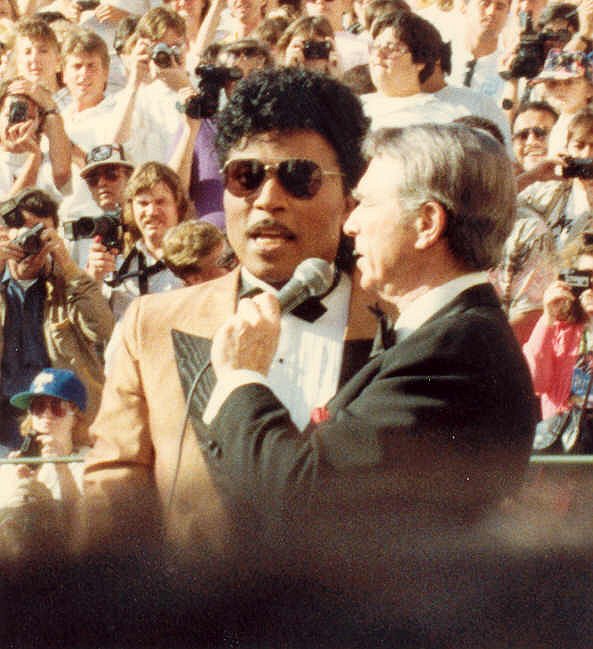
Richard Wayne Penniman (born December 5, 1932), known by his stage name Little Richard, is an American recording artist, songwriter, and musician. He has been an influential figure in popular music and culture for over six decades. Penniman's most celebrated work dates from the mid-1950s where his dynamic music and charismatic showmanship laid the foundation for rock and roll. His music also had a pivotal impact on the formation of other popular music genres, including soul and funk. Penniman influenced numerous singers and musicians across musical genres from rock to rap.
Penniman has been honored by many institutions, including inductions into the Rock and Roll Hall of Fame and the Songwriters Hall of Fame. He is the recipient of Lifetime Achievement Awards from The Recording Academy and the Rhythm and Blues Foundation. Penniman's "Tutti Frutti" (1955) was included in the Library of Congress' National Recording Registry in 2010, claiming the "unique vocalizing over the irresistible beat announced a new era in music."

Little Richard - Long Tall Sally 


Sonny Boy Williamson II  *05.12.1897


Sonny Boy Williamson II. (* 5. Dezember 1899[1] oder 1912[2] in Glendora, Mississippi; † 25. Mai 1965 in Helena, Arkansas, bürgerlicher Name Aleck/Alex „Rice“ Miller) war ein US-amerikanischer Bluesmusiker.
Sonny Boy Williamson II. war ein unehelicher Sohn von Millie Ford. Er übernahm dann den Nachnamen seines Stiefvaters Jim Miller. Um 1920 brachte er sich selbst das Mundharmonikaspielen bei. Später galt er als einer der inspirierendsten Mundharmonikaspieler des Blues. In den 30er Jahren heiratete er Mary Burnett, die Schwester von Chester Burnett, der sich später Howlin' Wolf nannte. In dieser Zeit spielten die beiden ab und zu zusammen. Ansonsten spielte Williamson ein paar Wochen oder Monate mit Musikern wie Elmore James, Willie Love oder Robert Johnson zusammen. Der wichtigste Partner aus dieser Zeit war allerdings Robert Lockwood, genannt Robert Junior. Sie traten das erste Mal 1931 zusammen auf und tourten ab 1938 zusammen durch die Südstaaten der USA.
Am 19. November 1941 hatte das Duo seinen ersten Auftritt im Radio. Zu diesem Zeitpunkt legte sich Sonny Boy Williamson auch seinen Künstlernamen zu. Da es schon einen bekannten Bluesmusiker namens Sonny Boy Williamson gab, ist er als „Sonny Boy Williamson II.“ bekannt. Im Jahre 1951 nahm er das Stück Eyesight to the blind auf, welches er später in Chicago unter dem Namen Born blind nochmals aufnahm. Dieses Stück findet sich auch auf dem Album Tommy von The Who wieder. In den nächsten vier Jahren nahm er weitere neun Alben auf. Ab 1954 lebte seine Frau in Milwaukee, während er in Chicago mit Tampa Red und in Detroit mit Baby Boy Warren Aufnahmen machte. Später kam er, genauer gesagt sein Vertrag, zu Chess Records. Einen großen Hit hatte Sonny Boy im Jahre 1955 mit Don´t start me talkin. Auf dieser Aufnahme sind auch Musiker wie Willie Dixon, Muddy Waters, Otis Spann, Jimmy Rogers und Fred Below zu hören. Bei Chess traf er auch wieder auf Robert Lockwood, mit dem er die nächsten fünf Jahre weitere Aufnahmen machte. Danach legte er eine Schaffenspause ein.
Am 12. Januar 1963 kehrte Sonny Boy nach einer längeren Pause wieder in die Chess-Studios zurück. Dort entstand der Song Help Me. Die B-Seite Bye bye bird wurde von John Mayall und den Bluesbreakers in ihr Programm aufgenommen. Dank dieses Erfolges ging er auf eine ausgedehnte Tournee durch Europa, wo er unter anderem mit Chris Barber, den Yardbirds, den Animals, Jimmy Page und Brian Auger auftrat. Mit den Yardbirds und den Animals nahm er dabei jeweils ein Live-Album auf. Er musste aber, als sein Visum auslief, wieder in die USA zurückkehren. 1965 reiste Sonny Boy Williamson II. nach Helena, um dort aufzutreten. Während dieses Auftrittes beobachtete sein Gitarrist Robbie Robertson, dass er ständig Blut ins Taschentuch spuckte. Am 25. Mai 1965 wurde er tot in seinem Bett aufgefunden und in Tutwiler, Mississippi, beigesetzt.
Er wurde 1980 posthum in die Blues Hall of Fame aufgenommen.

Alex Miller (possibly December 5, 1912[2] – May 25, 1965),[3][5] known professionally as Sonny Boy Williamson, was an American blues harmonica player, singer and songwriter, from Mississippi.[6] He is acknowledged as one of the most charismatic and influential blues musicians, with considerable prowess on the harmonica and creative songwriting skills. He recorded successfully in the 1950s and 1960s, and had a direct influence on later blues and rock performers.
His head stone found in or near Tutwiler, Mississippi, lists his name as Aleck Miller, his birth date as March 11, 1908 and his date of death as June 23, 1965.
Biography
Year of birth
Born Alex Ford (pronounced "Aleck") on the Sara Jones Plantation in Tallahatchie County, Mississippi, his date and year of birth are a matter of uncertainty. He claimed to have been born on December 5, 1899, but Dr. David Evans, professor of music and an ethnomusicologist at the University of Memphis,[7] claims to have found census record evidence that he was born around 1912, being seven on February 2, 1920, the day of the census.[8][9] His gravestone, set up by record company owner Lillian McMurry twelve years after his death, gives his date of birth as March 11, 1908,[10] but the birth date on that stone is most likely incorrect.[5]
Early years
He lived and worked with his sharecropper stepfather, Jim Miller, whose last name he soon adopted, and mother, Millie Ford, until the early 1930s. Beginning in the 1930s, he traveled around Mississippi and Arkansas and encountered Big Joe Williams, Elmore James and Robert Lockwood, Jr., also known as Robert Junior Lockwood, who would play guitar on his later Checker Records sides. He was also associated with Robert Johnson during this period. Miller developed his style and raffish stage persona during these years. Willie Dixon recalled seeing Lockwood and Miller playing for tips in Greenville, Mississippi in the 1930s. He entertained audiences with novelties such as inserting one end of the harmonica into his mouth and playing with no hands. At this time he was often known as "Rice" Miller — a childhood nickname stemming from his love of rice and milk[11] — or as Little Boy Blue.[12]
In 1941 Miller was hired to play the King Biscuit Time show, advertising the King Biscuit brand of baking flour on radio station KFFA in Helena, Arkansas with Lockwood.
It was at this point that the radio program's sponsor, Max Moore, began billing Miller as Sonny Boy Williamson, apparently in an attempt to capitalize on the fame of the well known Chicago-based harmonica player and singer Sonny Boy Williamson (birth name John Lee Curtis Williamson, died 1948). Although John Lee Williamson was a major blues star who had already released dozens of successful and widely influential records under the name "Sonny Boy Williamson" from 1937 onward, Aleck Miller would later claim to have been the first to use the name, and some blues scholars believe that Miller's assertion he was born in 1899 was a ruse to convince audiences he was old enough to have used the name before John Lee Williamson, who was born in 1914 (see year of birth section above).
Whatever the methodology, Miller became commonly known as "Sonny Boy Williamson," (universally distinguished by blues fans and musicians as "Sonny Boy Williamson number two" or "Sonny Boy Williamson the second") and Lockwood and the rest of his band were billed as the King Biscuit Boys.
Radio show in Memphis
In 1949 he relocated to West Memphis, Arkansas and lived with his sister and her husband, Howlin' Wolf. (Later, for Checker Records, he did a parody of Howlin' Wolf entitled "Like Wolf.") Sonny Boy started his own KWEM radio show from 1948 to 1950 selling the elixir Hadacol.
Sonny Boy also brought his King Biscuit musician friends to West Memphis, Elmore James, Houston Stackhouse, Arthur "Big Boy" Crudup, Robert Nighthawk and others to perform on KWEM Radio.
In the 1940s Williamson married Mattie Gordon, who remained his wife until his death.
Recording career
Trumpet Records
Williamson's first recording session took place in 1951 for Lillian McMurry of Jackson, Mississippi's Trumpet Records, three years after the death of John Lee Williamson, which for the first time allowed some legitimacy to Miller's carefully worded claim to being "the one and only Sonny Boy Williamson". McMurry later erected Williamson's headstone, near Tutwiler, Mississippi, in 1977.
Checker Records
When Trumpet went bankrupt in 1955, Sonny Boy's recording contract was yielded to its creditors, who sold it to Chess Records in Chicago, Illinois. Sonny Boy had begun developing a following in Chicago beginning in 1953, when he appeared there as a member of Elmore James's band. It was during his Chess years that he enjoyed his greatest success and acclaim, recording about 70 songs for Chess subsidiary Checker Records from 1955 to 1964. Sonny Boy's first LP record was titled Down and Out Blues and was released by Checker Records in 1959.
Ace Records
One single, "Boppin' With Sonny" b/w "No Nights By Myself" was released with Ace Records in 1955.[13]
1960s European tours
In the early 1960s he toured Europe several times during the height of the British blues craze backed on a number of occasions by The Authentics (see American Folk Blues Festival), recording with The Yardbirds (see album: Sonny Boy Williamson and The Yardbirds) and The Animals, and appearing on several TV broadcasts throughout Europe. During this time Sonny was quoted as saying of the backing bands who accompanied him, "those British boys want to play the blues real bad, and they do". According to the Led Zeppelin biography Hammer of the Gods, while in England Sonny Boy set his hotel room on fire while trying to cook a rabbit in a coffee percolator. The book also maintains that future Led Zeppelin vocalist Robert Plant purloined one of the bluesman's harmonicas at one of these shows as well. Robert Palmer's "Deep Blues" mentions that during this tour he allegedly stabbed a man during a street fight and left the country abruptly.
Sonny Boy took a liking to the European fans, and while there had a custom-made, two-tone suit tailored personally for him, along with a bowler hat, matching umbrella, and an attaché case for his harmonicas. He appears credited as "Big Skol" on Roland Kirk's live album Kirk in Copenhagen (1963).[14] One of his final recordings from England, in 1964, featured him singing "I'm Trying To Make London My Home" with Hubert Sumlin providing the guitar. Due to his many years of relating convoluted, highly fictionalized accounts of his life to friends and family, upon his return to the Delta, some expressed disbelief upon hearing of Sonny Boy's touring across the Atlantic, visiting Europe, seeing the Eiffel Tower, Big Ben, and other landmarks, and recording there.
Return to the U.S. and death
Upon his return to the U.S., he resumed playing the King Biscuit Time show on KFFA, and performed in the Helena, Arkansas area. As fellow musicians Houston Stackhouse and Peck Curtis waited at the KFFA studios for Williamson on May 25, 1965, the 12:15 broadcast time was closing in and Sonny Boy was nowhere in sight. Peck left the radio station to locate Williamson, and discovered his body in bed at the rooming house where he had been staying, dead of an apparent heart attack suffered in his sleep the night before.
Williamson is buried on New Africa Rd. just outside Tutwiler, Mississippi at the site of the former Whitman Chapel cemetery. His headstone was provided by Mrs. Lillian McMurry, owner of Trumpet Records; the death date shown on the stone is incorrect.[5]
Legacy
Recording anthology
Some of his better known songs include "Don't Start Me To Talkin'" (his only major hit, it reached the #3 position on the national Billboard R&B charts in 1955),"Fattenin' Frogs for Snakes", "Keep It To Yourself", "Your Funeral and My Trial", "Bye Bye Bird", "Nine Below Zero", "Help Me", "Checkin' Up on My Baby", and the infamous "Little Village", with dialogue 'unsuitable for airplay' with Leonard Chess. His song "Eyesight to the Blind" was performed by The Who as a key song in their rock opera Tommy (the only song in that opus not written by a band member) and it was later covered on the Aerosmith album Honkin' on Bobo.[15] His "One Way Out", reworked from Elmore James and recorded twice in the early 1960s, became popularized by The Allman Brothers Band in the early 1970s. In interviews in The Last Waltz, roots-rockers The Band recount jamming with Miller prior to their initial fame as Bob Dylan's electric backing band, and making never-realized plans to become his backing band. Many of his most famous recordings appeared on The Essential Sonny Boy Williamson and His Best.
Musical influence
Williamson's output of recordings, both issued and unissued, for Lillian McMurray's Trumpet label, can be found on Arhoolie, Alligator, Purple Pyramid, Collectables, plus a handful of other domestic and import imprints, while his years as a resident of the Chess/Checker house appear on various compilations on MCA/Chess. His European recordings reside on Alligator, Analogue Productions, Storyville, and others.
Williamson had an influence on modern day blues and blues rock artists, as is shown by the number of his songs that were covered, including
    Muddy Waters – "Nine Below Zero"
    Canned Heat – "Nine Below Zero" and "Help Me"
    Junior Wells – "Help Me"
    Howlin' Wolf – "Cool Disposition"
    B. B. King – "Eyesight to the Blind"
    Mose Allison – "Eyesight to the Blind"
    John Mayall's Bluesbreakers – "Help Me", "Checkin' Up on My Baby"
    Led Zeppelin – "Bring It On Home"
    Van Morrison – "Take Your Hands Out of My Pocket", "Help Me" – both on the 1974 live
    album It's Too Late to Stop Now. Morrison has often sung "Help Me" in live performances
    throughout his long career.
    The Allman Brothers Band – "One Way Out"
    New York Dolls – "Don't Start Me Talkin'"
    Ten Years After – "Help Me"
    The Who – "Eyesight to the Blind"
    Aerosmith – "Eyesight to the Blind"
    Gary Moore – "Eyesight to the Blind", "Don't Start Me To Talkin'"
    The Blues Brothers – "From the Bottom"
    Lester Butler – "I Cross My Heart"
    Rory Gallagher – "My Baby, She Left Me", and "Don't Start me Talkin"; on the Defender
    Nine Below Zero took their band name from his song.
    The Downchild Blues Band, also known as "Downchild", took their name from his song,
    "Mister Downchild".[16]
    John Popper of Blues Traveler notes Sonny Boy Williamson as a strong influence on his 
    harmonica playing.
    Joe Bonamassa – "Your Funeral and My Trial"
    Dr. Feelgood – "Checking Up On My Baby" on their live album, Stupidity
    The Doobie Brothers – "Don't Start Me To Talkin'" from their album "Toulouse Street"
    Joan Osborne – "Bring It On Home"
    Johnny Winter - "Help Me"

 http://mattizwoo.blogspot.de/2013/08/sonnny-boy-williamson-ii.html

Sonny Boy Williamson- "Bye Bye Bird" 1963 (Reelin' In The Years Archives) 


J.J. Cale  *05.12.2013


 http://mattizwoo.blogspot.de/2013/11/jj-cale.html


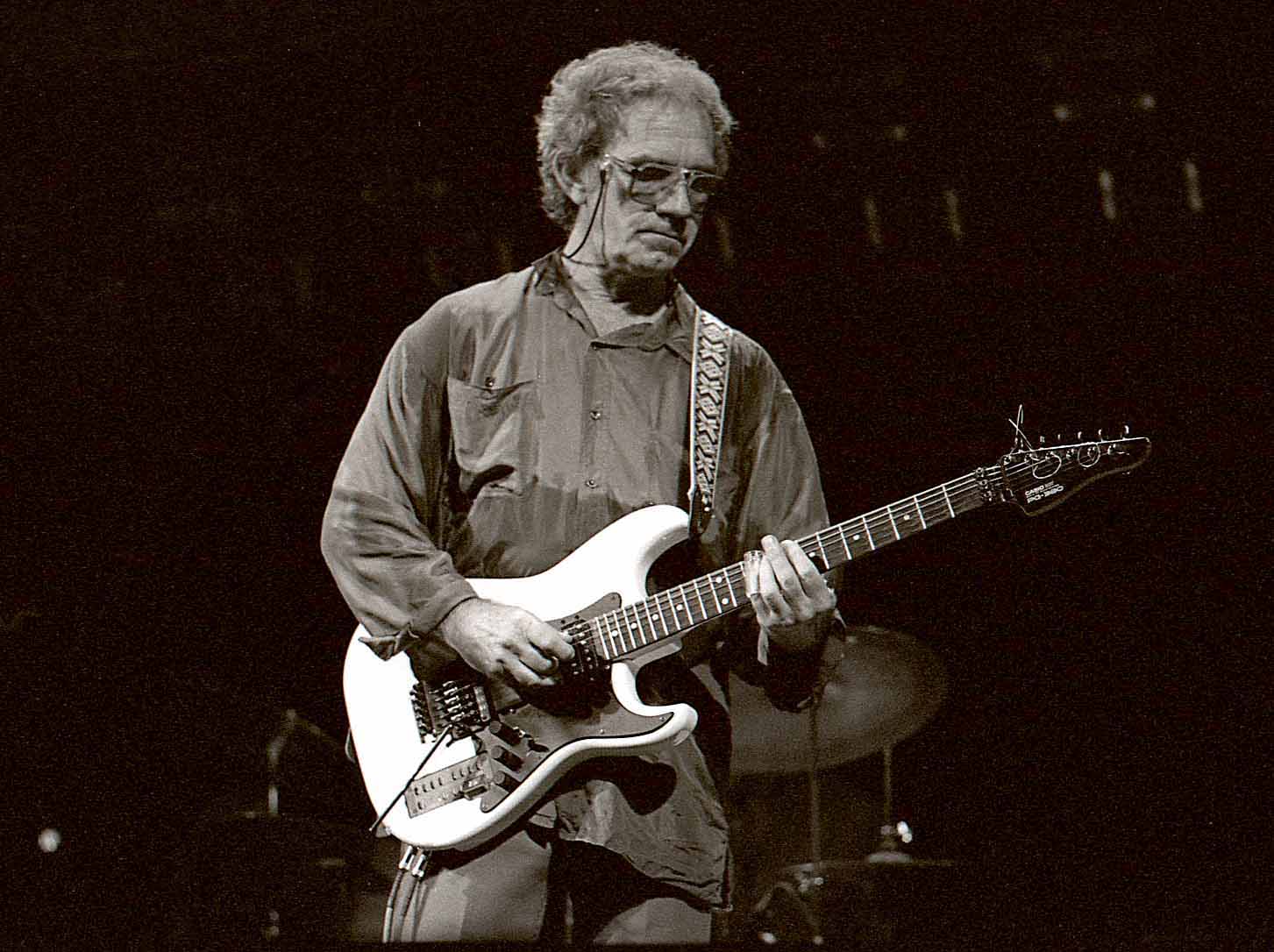
J.J. Cale (* 5. Dezember 1938 in Oklahoma City,[1] Oklahoma, als John Weldon Cale; † 26. Juli 2013 in San Diego, Kalifornien) war ein US-amerikanischer Musiker und Komponist. Er zählt zu den Begründern des Tulsa-Sounds, stilistisch zwischen Rockabilly, Blues, Jazz und Country einzuordnen. Er spielte oftmals alle Instrumente seiner Aufnahmen selbst.
Cale wuchs in Tulsa im US-Staat Oklahoma auf.[2] Der Name J.J. (ohne Leerzeichen und häufig auch ohne Punkte geschrieben) war ein Künstlername, der ihm in seinen Anfangsjahren als Musiker von einem Clubbesitzer des „Whisky a Go Go“ in Los Angeles gegeben wurde, da es bereits den Musiker John Cale (ex-Velvet Underground) gab. Fälschlicherweise wird selbst in seriösen Quellen (zum Beispiel im All Music Guide to the Blues) der Geburtsname von J.J. Cale mit „Jean Jacques“ angegeben. Diesen Namen hatte ein französischer Journalist ins Spiel gebracht, worauf er dann in einigen Biografien von J.J. Cale genannt wurde.
J.J. Cale war mit der Gitarristin Christine Lakeland verheiratet, die an den meisten seiner Touren als Bandmitglied teilnahm.[3]
Typisch für Cale sind kurze, eher sparsam instrumentierte Songs. Die Texte sind oft lakonisch und wurden ohne jedes Pathos vorgetragen, so dass seine Musik für typischen Rock zu ruhig ist. Dafür sind die Details der Musik sehr sorgfältig ausgearbeitet. Eric Clapton beschrieb in einem Interview diesen Stil: “… really, really minimal…, it’s all about finesse.” (etwa „… wirklich sehr minimalistisch; das Wesentliche sind die Feinheiten.“)[4]
Cale ließ sich für die Produktion einer Platte oft mehrere Jahre Zeit und hat in seiner Musik den sogenannten Laid-back-Stil (zurückgelehnt, entspannt) geprägt. Das bedeutet, dass er seine wohldosierten Soli immer leicht hinter dem eigentlichen Beat des jeweiligen Stückes spielte. Der Laid-back-Stil erinnert an den Stil von Billie Holiday, die ihn nach Cales eigenen Aussagen inspirierte.
J.J. Cale und Eric Clapton veröffentlichten im November 2006 das gemeinsame Album The Road to Escondido, das 2008 mit einem Grammy als Best Contemporary Blues Album (Bestes zeitgenössisches Bluesalbum) ausgezeichnet wurde. Christine Lakeland spielt auf diesem Album Gitarre.
Am 26. Juli 2013 starb J.J. Cale in La Jolla, San Diego, nach einem Herzinfarkt.
Rezeption
J.J. Cale, der die Öffentlichkeit eher mied und nur einen eigenen großen Hit hatte (Cocaine, 1977 Nr. 22 in der Bundesrepublik Deutschland, Nr. 2 in der Schweiz, Nr. 5 in Österreich), ist in Musikerkreisen wegen seiner Kompositionen hoch angesehen. Das Instrumentalstück Okie wurde als Erkennungsmelodie im damaligen SWF3-Radioclub mit Frank Laufenberg verwendet. J.J. Cale wurde insbesondere durch zahlreiche Interpretationen seiner Songs durch andere Musiker bekannt, wie die Coverversionen von After Midnight und Cocaine durch Eric Clapton.
2014 erschien das Album The Breeze – An Appreciation of JJ Cale, das eine Hommage von Eric Clapton & Friends ist.

John Weldon Cale[1] (December 5, 1938 – July 26, 2013), known as JJ Cale or J.J. Cale, was an American singer-songwriter and musician who was one of the originators of the Tulsa Sound, a loose genre drawing on blues, rockabilly, country, and jazz influences. Cale's personal style has often been described as "laid back".
Songs written by Cale that have been covered by other musicians include "After Midnight" by Eric Clapton, Phish and Jerry Garcia, "Cocaine" by Eric Clapton, "Clyde" by Waylon Jennings and Dr. Hook, and "Call Me the Breeze" by Lynyrd Skynyrd, John Mayer, Johnny Cash, Bobby Bare and Eric Clapton. In 2008 he was a Grammy Award winner, jointly with Clapton.
Life and career
Cale was born on December 5, 1938, in Oklahoma City, Oklahoma.[1] He was raised in Tulsa, Oklahoma, and graduated from Tulsa Central High School in 1956. Along with a number of other young Tulsa musicians, Cale moved to Los Angeles in the early 1960s, where he first worked as a studio engineer.[2] Finding little success as a recording artist, he later returned to Tulsa and was considering giving up the music business until Clapton recorded Cale's "After Midnight" in 1970. His first album, Naturally, established his style, described by Los Angeles Times writer Richard Cromelin as a "unique hybrid of blues, folk and jazz, marked by relaxed grooves and Cale's fluid guitar and laconic vocals. His early use of drum machines and his unconventional mixes lend a distinctive and timeless quality to his work and set him apart from the pack of Americana roots music purists."[3] In 2013 Neil Young remarked that of all the musicians he had ever heard, J.J. Cale and Jimi Hendrix were the two best electric guitar players.[4]
Some sources incorrectly give his real name as "Jean-Jacques Cale".[5] In the 2005 documentary, To Tulsa and Back: On Tour with J.J. Cale, Cale talks about Elmer Valentine, co-owner of the Sunset Strip nightclub Whisky a Go Go, who employed him in the mid-1960s, being the one that came up with the "JJ" moniker to avoid confusion with the Velvet Underground's John Cale. Rocky Frisco tells the same version of the story mentioning the other John Cale but without further detail.[6]
In this 2005 documentary J.J. Cale's style is also characterized by Eric Clapton as "...really, really minimal..." and he states precisely: "...it's all about finesse".
His biggest U.S. hit single, "Crazy Mama", peaked at #22 on the U.S. Billboard Hot 100 chart in 1972. In the 2005 documentary film To Tulsa and Back Cale recounts the story of being offered the opportunity to appear on Dick Clark's American Bandstand to promote the song, which would have moved it higher on the charts. Cale declined when told he could not bring his band to the taping and would be required to lip-sync the words.[7]
Cale often acted as his own producer, engineer and session player. His vocals, sometimes whispery, would be buried in the mix. He attributed his unique sound to being a recording mixer and engineer, saying; "Because of all the technology now you can make music yourself and a lot of people are doing that now. I started out doing that a long time ago and I found when I did that I came up with a unique sound."[8]
In live performances, Cale played with minimal stage lighting.
His catalogue is published for the World excluding North America by independent music publishers Fairwood Music (UK) Ltd.
Cale died of heart failure in July 2013, at the age of 74, in La Jolla, California.[9][10][11]
Covers
Songs written by Cale that have been covered by other musicians include "After Midnight" and "Cocaine" by Eric Clapton ("Cocaine" also was covered by Nazareth), "Call Me The Breeze" by Lynyrd Skynyrd, Johnny Cash, and Eric Clapton, "Clyde" by Waylon Jennings and Dr. Hook, "I Got the Same Old Blues" by Lynyrd Skynyrd, "Ride Me High" and "Travelin' Light" by Widespread Panic, "Bringing It Back" by Kansas, and "Magnolia" by Poco.
In 1974 Captain Beefheart covered the song "Same Old Blues" on his album Bluejeans & Moonbeams.
Santana covered "The Sensitive Kind" on their 1981 album Zebop!
The 1992 track "Run" on Spiritualized's debut album, Lazer Guided Melodies, is essentially a cover of Cale's "Call Me the Breeze" with some additional lyrics. Cale is given songwriting credit on the album.
George Thorogood & The Destroyers covered "Devil In Disguise" on their 2003 album Ride 'Til I Die.
As well as "After Midnight" on his self-titled debut album in 1970 and "Cocaine" on Slowhand in 1977, Eric Clapton has covered Cale's "I'll Make Love To You Anytime" on his 1978 album Backless. Other Clapton covers of Cale originals include "Travelin' Light" on his 2001 album Reptile, "River Runs Deep" and "Everything Will Be Alright" on his 2010 self-titled album Clapton, and "Angel" on his 2013 album Old Sock.
In 2014 Eric Clapton & Friends released the tribute album The Breeze: An Appreciation of JJ Cale. Here Cale's tunes are covered by Clapton with Tom Petty, Mark Knopfler, John Mayer, Don White, Willie Nelson, Christine Lakeland and others. In the video version of Call Me The Breeze for this album, Clapton declares of Cale He was a fantastic musician. And hew was my hero.

JJ Cale, Eric Clapton (After Midnight & Call me the Breeze) 


Bobby Slim James  *05.12.


https://www.facebook.com/bobby.s.james/photos_albums?lst=100002257761834%3A100000643089389%3A1480777349


In 1968 Bobby wrote and recorded his first record titled I Really Love You which became a major hit in England in the 1970’s. Bobby met O.V. Wright in the early 70’s while appearing at The Burning Spear. Recognizing his talent Mr. Wright invited Bobby to tour with him on the 'chitlin circuit' which proved to be an invaluable experience. Bobby had also taught himself to play the guitar and in 1973 he put his first band together. As guitarist and lead vocal Bobby began appearing at various clubs throughout the 1980's. Bobby performances continued throughout the 90's with club dates and venues such as pre-game entertainment for the Champion Chicago Bulls where he performed before audiences of thousands with his signature R&B style. In 1991 Bobby was featured in a stage production at ETA Theatre titled If Blues Was a Dolla. His character's name was "'Slim" and thereafter he became known as Bobby "Slim" James. In 1997 Bobby met Songwriter, Promoter and Publisher Bob Jones. In collaboration with Mr. Jones Bobby completed his CD Beyond the Blues. This new release contains a re-recording of the hit song I Really Love You along with other hot tunes. One of the biggest shows Mr. Jones booked was the First Blues Show of the Century. Also on this show was Bobby "Blue" Bland, Little Milton, Peggy Scott-Adams Mel Waiters and, of course, Bobby "Slim" James. Bobby has performed around Chicago with his Variety Blues Band. Some of the venues are: Blue Chicago on Clark; Kingston Mines; Buddy Guy’s Legends; 2002 Chicago Blues Fest; 2007 Chicago Blues Fest; Blue Chip Casino as well as numerous other clubs. Additionally, he has performed in many out-of-state events. Bobby also performs at a variety of private functions (i.e., retirement/birthday parties) by special requests. Bobby recently recorded a new CD in collaboration with Bob Jones. The CD titled Brand New Man has been released and is receiving rave reviews. Included on the CD is a song titled The Real Story which is autobiographical. This CD expresses my feelings about life which is optimism and a positive mental attitude which is expressed in the song Got To Believe. If your mind can conceive it, if deep down in your heart you believe it, do the work and achieve it. Aside from his many achievements in music, Bobby has established a reputation among his peers and audiences for his commitment, steadfastness and expertise to his profession. 


Chicago Blues Festival 2011 Bobby "Slim" James Band 


R.I.P.


James „Stump“ Johnson  +05.12.1969 


James „Stump“ Johnson (* 17. Januar 1902 in Clarksville, Tennessee; † 5. Dezember 1969 in St. Louis, Missouri) war ein US-amerikanischer Pianist und Sänger des St.-Louis-Blues.
Johnson, der auch die Pseudonyme Shorty George und Snitcher Roberts benutzte, kam mit seiner Familie um 1909 von Tennessee nach St. Louis. Prägenden Einfluss hatte Son Long, ein legendärer Pianist aus dem Rotlichtbezirk der Stadt. Erste Aufnahmen entstanden 1929 für das Label QRS; der Hokum-Blues The Duck’s Yas Yas war ein Party-Hit in St. Louis. Johnson spielte ihn drei Mal ein; er wurde von Tampa Red gecovert, die B-Seite The Snitchers Blues wurde von Red als Friendless Blues eingespielt.[1] Weitere Aufnahmen entstanden für OKeh und Brunswick sowie im September und Oktober 1929 für Paramount in Richmond, an denen Ike Rodgers und der Kornettist „Baby“ James mitwirkten. 1932 nahm er für Victor Records mit Roosevelt Sykes in Dallas auf.[2] Seine letzten Aufnahmen vor dem Zweiten Weltkrieg spielte er in Chicago am 2. August 1933 für Bluebird ein (Don’t Give My Lard Away/Stedy Grindin),[3]. Dorthaa Trowbridge, J.D. Short und Pinetop Sparks wirkten mit.
Nach Ableistung seines Militärdienstes in der US-Army arbeitete er im Restaurant seines Bruders Jesse in St. Louis. Ende 1954 hatte er ein kurzes Comeback, nachdem er von Charles „Lindy“ O'Brien aufgefunden und von Bob Koester interviewt wurde. Er arbeitete in den Nachkriegsjahren im Finanzamt der Stadtverwaltung von St. Louis und als Polizist im nahen Wellston.[1] Seine letzte Aufnahmesession hatte Stump Johnson 1964 für Euphonic, als er Songs für einen Film-Soundtrack (Blues Like Showers of Rain) beisteuerte, der 1970 erschien. [2]
2007 erschien ein Album, das den 1954 von Paul Affeldt aufgenommenen Titel Snitchers Blues enthielt sowie weitere, bislang unveröffentlichte Stücke.

James "Stump" Johnson (January 17, 1902 – December 5, 1969)[1] was an American blues pianist and singer from St. Louis.
Biography
James "Stump" Johnson was the brother of Jesse Johnson, "a prominent black business man," who around 1909[2] had moved the family from Clarksville, Tennessee, to St. Louis, where he ran a music store and was a promoter.[3] James, a self-taught piano player,[4] made a career playing the city's brothels.[5] He had an instant hit with the "whorehouse tune"[2] "The Duck's Yas-Yas-Yas," "a popular St. Louis party song."[6] The song's title is explained by quoting the lyrics more fully: "Shake your shoulders, shake 'em fast, if you can't shake your shoulders, shake your yas-yas-yas."[2]
He made a number of other recordings (some mildly pornographic) under various pseudonyms.[7] One of the more obscene tunes was a version of "Steady Grinding", which he recorded with Dorothea Trowbridge on August 2, 1933;[8] the song has the "defiant, sexually aggressive lyrics" early blueswomen were noted for,[9] "grind" being slang for copulating.

James "Stump" Johnson Don't Give My Lard Away (1933) 


https://www.youtube.com/watch?v=b6P7pIPMVpA 


Big Boy Henry  +05.12.2004


https://itunes.apple.com/us/album/beaufort-blues/id5401490

Born Richard Henry, this North Carolina country blues artist enjoyed a unique niche in his later life as a folk festival and club performer, bringing great pleasure to blues fans in a period when many older artists in this genre were passing away. He grew up on the North Carolina coast in the '20s and '30s, an era when bluesmen still played on street corners and juke joints were hopping at night with live music. The South Carolinian bluesman Fred Miller was one of his first big musical influences, and Henry assumed the traditional apprentice role in the country blues relationship, meaning he would "go around" with Miller to various functions where a few coins would be made and some blues would be sung. Henry quickly took over the vocal duties since his partner's singing abilities was in direct contrast to his excellent guitar technique. Miller moved to New York and Big Boy Henry began a series of journeys to the city in order to continue their relationship. This led to meetings with other Piedmont bluesmen such as the whooping harmonica player Sonny Terry and his sidekick Brownie McGhee. In 1951, Henry got the opportunity to record with backup from this famous duo, the blues equivalent of getting Rembrandt and Cezanne to help decorate. In a typical development in American blues recording history, these tracks were canned rather than released, although a release was finally arranged decades later. A defeated Henry limped back to his coastal digs in New Bern and decided to give up playing blues.

In the '50s and '60s, he worked on fishing and oystering crews and also ran a grocery store. He also did a touch of preaching in local churches, perhaps following the advice of fellow bluesman Son House as expressed in the song "Preachin' Blues": "I'm gonna become a Baptist preacher/And then I won't have to work." In 1971, he moved back to his first family home in Beaufort, not realizing that this would lead to a group of younger local musicians recognizing him. All it took was a little bit of their subsequent encouragement and he was ready to return to playing. As he got older, the guitarist's abilities were naturally hampered because of arthritis, but he still picked inventive single-string blues lines, tinkering with rhythms and bar-line blues structures with as much freedom as Lightnin' Hopkins. Younger North Carolina blues players such as the harmonica virtuoso Chris Turner and guitarist Billy Hobbs enjoyed the challenge of following the older man, who never failed to set the powerful musical mood known as "deep blues feeling." His vocal style was considered as powerful as ever in his senior years as he created his own inventive versions of blues standards and wrote his own songs as well, often touching on current events. The powerful song "Mr. President," written as an angry response to social welfare cuts undertaken by Ronald Reagan in the '80s, won him a W.C. Handy Award from the Blues Foundation. In 1995, he received the North Carolina Arts Council Folk Heritage award.

Henry's involvement with music goes well beyond performing. He has been actively involved with older members of his community in attempts to maintain and record one of the important coastal traditions, the work songs sung by himself and other African-Americans who fished on menhaden boats. His activities included organizing a group of retired fisherman into a singing group, the Menhaden Chantey Men.
http://www.allmusic.com/artist/big-boy-henry-mn0000758985/biography
Before his first marriage, he made a fair name for himself as a powerful singer and versatile guitarist on the thriving Carolina blues scene. In the Fifties he stopped playing music, and didn’t pick up a guitar again until thirty years later, encouraged by some young musicians who had heard tales of his early exploits. Throughout the 80s and 90s Big Boy appeared at prestigious festivals throughout the states and abroad and issued numerous self-produced cassettes and recordings with various labels.

Big Boy was the patriarch of the Carolina Blues. He was a saintly man, with tremendous compassion and patience for humanity. Big Boy weaves timeless parables into this his CD, “Beaufort Blues”. In “Old Bill” he points out the helplessness we all feel witnessing senseless sacrifice. In “John Henry” he rewrites an age old classic revealing this legend’s intimate character. And in “Vellevina” he lets us know what true love is all about. Big Boy passes the torch in this album to his son Luther who makes his debut singing an original song, giving us a glimpse of how Big Boy might have sounded in his prime.


Mr President - Big Boy Henry - Earliest Version - Acoustic Solo Studio Take 


Sonntag, 17. Januar 2016

17.01. Mick Taylor, Carlos Johnson, E.G. Kight James „Stump“ Johnson, Paul Rishell, Frank Bey * Johnny Otis, Junior Kimbrough, Simeon Dooley, "Chicago" Bob Nelson +


1902 James „Stump“ Johnson*
1946 Frank Bey*
1949 Mick Taylor*
1953 Carlos Johnson1966 E.G. Kight*

1961 Simeon Dooley (Blind Simmie Dooley)+
1998 Junior Kimbrough+
2012 Johnny Otis+
1950 Paul Rishell*


Happy Birthday


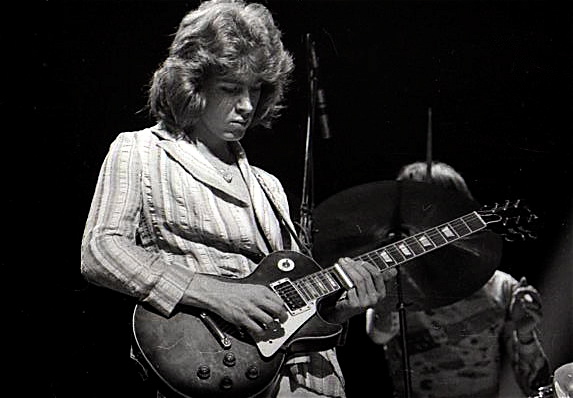
Mick Taylor  *17.1.1949 


Michael „Mick“ Kevin Taylor, Spitzname Little Mick (* 17. Januar 1948 [1] in Welwyn Garden City, Hertfordshire, England) ist ein britischer Musiker. Bekannt wurde er vor allem als Leadgitarrist der Rolling Stones. Taylor spielt auch Piano, Bass und Schlagzeug.
Leben
Mick Taylor gründete 1965 zusammen mit dem späteren Uriah Heep-Mitglied Ken Hensley die Band The Gods. Zu den weiteren Musikern gehörten Greg Lake und John Glascock. Taylor verließ die Band und nahm 1966 ein Angebot von John Mayall an, in dessen Band The Bluesbreakers als Nachfolger von Peter Green einzusteigen.
Gitarrist bei den Rolling Stones
Noch als Gitarrist bei John Mayall erhielt er ein Angebot, neuer Gitarrist bei den Rolling Stones zu werden, die sich im Juni 1969 von Brian Jones getrennt hatten. Er nahm das Angebot an und trat erstmals am 5. Juli 1969 als offizielles Bandmitglied mit den Stones auf. Das Konzert fand im Londoner Hyde Park vor etwa 500.000 Menschen statt. Aufgrund des plötzlichen Todes von Brian Jones wurde das Konzert dem ehemaligen Gitarristen und Mitbegründer der Rolling Stones gewidmet.
Einen Monat zuvor hatte Taylor bereits mit den Rolling Stones gearbeitet. Taylor spielte die Overdubs für zwei Titel – Country Honk und Live With Me – auf dem Album Let It Bleed ein. In der folgenden Woche wurde eine neue Version des Songs Country Honk erarbeitet, für die Taylor einen neuen Riff schrieb, nachdem er mit der ursprünglichen Version experimentiert hatte. Die neue Version des Liedes wurde unter dem Titel Honky Tonk Women veröffentlicht und sprang sofort nach ihrer Veröffentlichung im Juli 1969 an die Spitze der Charts.
Ähnlich wie Bill Wyman erschien Taylor auf der Bühne als introvertierter Musiker, der Mick Jagger und Keith Richards die Show überließ. Sein Zusammenspiel mit dem Rhythmusgitarristen Richards trieb die Band in einen rauheren, bluesorientierteren Sound. Etwa 1970 begannen Jagger und Taylor damit, intensiver zusammenzuarbeiten, weil Richards wegen seiner zunehmenden Drogenabhängigkeit immer häufiger nicht zu Studioterminen erschien. Ohne Richards nahmen Taylor und Jagger Songs wie Sway, Moonlight Mile, Winter, Till the Next Goodbye und Time Waits for No One auf, ohne dass Taylor je eine Bestätigung in Form von Tantiemen für seine Beteiligung an der Entstehung dieser Titel erhielt. Einzige Ausnahme bildete der Song Ventilator Blues aus dem Album Exile on Main Street (1972).
Im Dezember 1974 verkündete Taylor, dass er die Rolling Stones verlassen wolle. Ursache für diesen Entschluss war unter anderem Taylors zunehmende Frustration über die Art und Weise, in der Jagger und Richards seine künstlerischen Beiträge übergingen. Beispielsweise wurde Taylor nie als Mitautor der Songs genannt, für die er wichtige Beiträge geleistet hatte. Andererseits verschlechterte sich sein Verhältnis zu Richards in dieser Zeit immer mehr, was sich bei letzterem in zunehmenden Nörgeleien an Taylors Spielweise äußerte. Auf einer Party in London teilte Taylor schließlich Jagger seinen Entschluss mit. Taylors Ausstieg kam für die Rolling Stones zum ungünstigsten Zeitpunkt. Die Band musste in Kürze mit den Aufnahmen für ein neues Album in den Musicland Studios von Giorgio Moroder in München beginnen. Für die Aufnahmen wurden dann eine Reihe von Gastgitarristen verpflichtet. Unter diesen Gastmusikern waren auch Ry Cooder und Ron Wood, der später Taylors Nachfolger bei den Rolling Stones wurde.
Nach seinem Ausstieg war Taylor noch auf folgenden Stones-Alben zu hören: Metamorphosis, Sucking in the 70s, Made In The Shade, Through the Past Darkly (Big Hits Vol. 2), auf der Compilation Rewind (die erst in den 1990er Jahren erschien), Jump Back: The Best of the Rolling Stones, The Singles Collection: The London Years, Hot Rocks, More Hot Rocks, Forty Licks und Rarities.
Taylor spielt auch Gitarre auf Tops und Waiting on a friend vom Album Tattoo You (1981). Allerdings handelte es sich hierbei nicht um neue Aufnahmen, sondern um Titel vergangener Sessions, bei denen Taylor noch Mitglied der Rolling Stones war, da die Band keine Zeit hatte, neue Titel zu schreiben und gleichzeitig eine Tournee vorzubereiten.
In einem Artikel über die Rolling Stones, erschienen nach dem Ausstieg von Mick Taylor, schrieb der Musikkritiker Robert Palmer (The New York Times), dass „Taylor der beste Techniker ist, der je bei den Stones gespielt hat. Ein Bluesgitarrist mit einem Gespür eines Jazzmusikers für melodische Erfindungen, Taylor war nie ein Rock ’n Roller und nie ein Showman.“
Solokarriere
1984
Im Vergleich zu seinen sechs Jahren mit den Rolling Stones sind die Solotätigkeiten von Mick Taylor von Presse und Publikum weit weniger beachtet worden, obwohl er seitdem an einer Vielzahl von Projekten gearbeitet hat. Im Juni 1973 bat Richard Branson Taylor, an der Live-Premiere von Mike Oldfields Tubular Bells in der Londoner Queen Elizabeth Hall teilzunehmen. Ebenfalls 1973 war Mick Taylor auch auf dem Soloalbum The Tin Man was a Dreamer des Pianisten Nicky Hopkins sowie auf dem Livealbum von Billy Preston zu hören, das während dessen Tour als Vorgruppe der Rolling Stones im gleichen Jahr aufgenommen wurde.
Nachdem Taylor die Stones verlassen hatte, gründete er mit Jack Bruce, Carla Bley und Schlagzeuger Bruce Gary die Jack Bruce Band. Die Band ging im Jahre 1975 auf eine Europatour. Der Versuch, an die Erfolge der legendären Supergruppe Cream anzuknüpfen, war jedoch zum Scheitern verurteilt. Trotz vielversprechender Konzerte kamen die geplanten Studioaufnahmen aufgrund wachsender Differenzen zwischen Mick Taylor und Jack Bruce nicht zustande – mit Ausnahme des Titels Without a Word von 1974. Die Aufnahmen wurden schließlich erst 1995 auf dem Jack Bruce Album Live On The Old Grey Whistle Test (Sieben Titel mit Taylor an Gitarre) und 2003 auf dem Album der Jack Bruce Band – Live at Manchester Free Trade Hall ’75 offiziell veröffentlicht.
Im Jahre 1977 unterzeichnete Mick Taylor einen Vertrag mit CBS Records in New York. Im Dezember 1978 stellte er in einer Serie von Interviews mit verschiedenen Musikzeitschriften sein Soloalbum Mick Taylor vor, das 1979 veröffentlicht wurde. Das Album wurde zwar von der Kritik hoch gelobt, war kommerziell jedoch eine Enttäuschung.
Als Solokünstler war Mick Taylor nur mäßig erfolgreich. Er arbeitete unter anderem mit Lowell George von der amerikanischen Band Little Feat, John Phillips von The Mamas and the Papas, ging auf Tournee mit Alvin Lee (1981), machte eine Welt Reunion-Tournee mit John Mayall und John McVie und spielte im Studio (Infidels, 1983) und auf Tournee mit Bob Dylan (Real Live, 1984) zusammen.
Nach seinem Austritt aus den Rolling Stones arbeitete Mick Taylor gelegentlich mit einzelnen oder mehreren seiner früheren Bandkollegen zusammen und er spielt bei seinen Konzerten auch immer wieder einige Lieder der Rockband (z. B. Jumpin’ Jack Flash, Can’t You Hear Me Knocking oder No Expectations).
Am 14. Dezember 1981 stand Taylor fast während des ganzen Konzerts der Rolling Stones in der Kemper Arena in Kansas City mit der Band auf der Bühne. Sein Gastauftritt ließ bei einigen Fans Hoffnungen aufkeimen, dass er wieder Mitglied der Gruppe werden würde. Diese Hoffnungen erfüllten sich allerdings nicht.
Am 28. Dezember 1986 erschien bei Mick Taylors Konzert im New Yorker Lone Star Cafe Keith Richards an Taylors Seite, um mit diesem Key to the Highway und Can’t You Hear Me Knocking zu spielen. Taylor ist auch auf Richards’ erstem Soloalbum Talk Is Cheap in dem Stück I Could Have Stood You Up zu hören. In den frühen 1990er Jahren spielte Taylor in Bill Wymans Soloprojekt Rhythm Kings.
1989 wurde Mick Taylor gemeinsam mit den Rolling Stones in die Rock and Roll Hall of Fame aufgenommen. Im November und Dezember 2012 sowie Mai 2013 trat Taylor nochmals zusammen mit den Rolling Stones während derer Jubiläumskonzerte zum 50-jährigen Bestehen der Band auf. Auch bei der 14 on Fire Tour steht er auf der Bühne.


Michael Kevin "Mick" Taylor (born 17 January 1949) is an English musician, best known as a former member of John Mayall's Bluesbreakers (1966–69) and the Rolling Stones (1969–74). "He is regarded by many Stones aficionados as the best guitarist ever to play with the band, and appeared on some of their classic albums including Let It Bleed, Sticky Fingers and Exile on Main St."[1] Since resigning from The Rolling Stones in December 1974, Taylor has worked with numerous other artists and released several solo albums. From November 2012 onwards he has participated in The Rolling Stones "Reunion shows" in London and Newark and in the band's 50 & Counting... World Tour, which included North America, Glastonbury Festival and Hyde Park in 2013. The band decided to continue in 2014 with concerts in the UAE, Far East & Australia and Europe for the 14 On Fire tour. He was ranked 37th in Rolling Stone magazine's 2011 list of the 100 greatest guitarists of all time.[2] Former Guns N' Roses guitarist Slash states that Taylor had the biggest influence on him.[3]
Biography
1949–69: Early life
Taylor was born to a working-class family in Welwyn Garden City, but was raised in Hatfield, Hertfordshire, England, where his father worked as a fitter for De Havilland aircraft company.[4] He began playing guitar at age nine, learning to play from his mother's younger brother. As a teenager, he formed bands with schoolmates and started performing concerts under names such as The Juniors and the Strangers. They also appeared on television and put out a single.[5] Part of the band was recruited for a new group called The Gods, which included Ken Hensley (later of Uriah Heep fame). In 1966, The Gods opened for Cream at the Starlite Ballroom in Wembley.
In 1965, at age 16, Taylor went to see a John Mayall's Bluesbreakers performance at "The Hop" Community Centre, Welwyn Garden City.
    On the night in question, I had gone to The Hop with some guys from our band, former schoolmates and Ex-Juniors Mick Taylor and Alan Shacklock. It was after John Mayall had finished his first set without a guitarist that it became clear that for some reason Eric Clapton was not going to show up. A group of local musicians, which included myself, Robert 'Jab' Als, Herbie Sparks, and others, along with three local guitarists—Alan Shacklock, Mick Casey (formerly of the Trekkas) and Mick Taylor—were in attendance.
    —Danny Bacon, a drummer friend of the Juniors,
Taylor himself has said after seeing that Clapton hadn't appeared, but that his guitar had already been set up on the stage, he approached John Mayall during the interval to ask if he could play with them. Taylor mentioned that he'd heard their albums and knew some of the songs, and after a moment of deliberation, Mayall agreed. Taylor amended, "I wasn't thinking that this was a great opportunity... I just really wanted to get up on stage and play the guitar."
Taylor played the second set with Mayall's band, and after winning Mayall's respect, they exchanged phone numbers. This encounter proved to be pivotal in Taylor's career when Mayall began to look for a guitarist to fill Peter Green's vacancy the following year. Mayall contacted Taylor, and invited him to take Green's place.[6] Taylor made his debut with the Bluesbreakers at the Manor House, an old blues club in North London. For those in the music scene the night was an event... "Let's go and see this 17-year-old kid try and replace Eric".[7] Before he turned 18, Taylor toured and recorded the album Crusade with John Mayall's Bluesbreakers. From 1966 to 1969, Taylor developed a guitar style that is blues-based with Latin and jazz influences. He is the guitarist on the Bluesbreaker albums Diary of a Band, Bare Wires, and Blues from Laurel Canyon. Later on in his career, he further developed his skills as a slide guitarist.
1969–74: The Rolling Stones
After Brian Jones was removed from the The Rolling Stones in June 1969, John Mayall recommended Taylor to Mick Jagger. Taylor believed he was being called in to be a session musician at his first studio session with the Rolling Stones.[8] An impressed Jagger and Keith Richards invited Taylor back the following day to continue rehearsing and recording with the band. He overdubbed guitar on "Country Honk" and "Live With Me" for the album Let It Bleed, and for the single "Honky Tonk Women" released in the UK on 4 July 1969.[9][10] Taylor's onstage debut as a Rolling Stone, at the age of 20, was the free concert in Hyde Park, London on 5 July 1969. An estimated quarter of a million people attended for a show that turned into a tribute to Brian Jones, who had died three days before the concert.
The Rolling Stones' 1971 release Sticky Fingers included "Sway" and "Moonlight Mile" which Taylor and Jagger had completed in Richards' absence. At the time Jagger stated: "We made [tracks] with just Mick Taylor, which are very good and everyone loves, where Keith wasn't there for whatever reasons ... It's me and [Mick Taylor] playing off each other – another feeling completely, because he's following my vocal lines and then extemporizing on them during the solos."[11] However, Taylor was only credited as co-author of one track, "Ventilator Blues", from the album Exile on Main St. (1972).[12] Taylor was noted for his smooth lyrical touch and tone which contrasted with Richards's jagged and cutting technique.
After the 1973 European tour, Richards's drug problems had worsened and began affecting the ability of the band to function as a whole.[13] Between recording sessions, the band members were living in various countries and during this period Taylor appeared on Herbie Mann's London Underground (1974) and also appeared on Mann's album Reggae (1974).
1973–74: It's Only Rock 'n Roll
In November 1973, when the band was to begin work on the LP It's Only Rock 'n Roll at Musicland Studios in Munich, Taylor missed some of the sessions while he underwent surgery for acute sinusitis.[14] Not much was achieved during the first 10 days at Musicland. Most of the actual recordings were made in January (Musicland) and April 1974 (Stargroves). When Taylor resumed work with the band, he found it difficult to get along with Richards. At one point during the Munich sessions, Richards confronted him and said, "Oi! Taylor! You're playing too fuckin' loud. I mean, you're really good live, man, but you're fucking useless in the studio. Lay out, play later, whatever." Richards erased some of the tapes where Taylor had recorded guitar parts to some of the songs for It's Only Rock n' Roll.[15] Taylor was, however, present at all the sessions in April at Stargroves, England, where the LP was finished and most of the overdubs were recorded.
Not long after those recording sessions, Taylor went on a six-week expedition to Brazil, travelling down the Amazon River in a boat and exploring Latin music.
Just before the release of the album in October 1974, Taylor told Nick Kent from the NME magazine about the new LP and that he had co-written "Till the Next Goodbye" and "Time Waits for No One" with Jagger.[citation needed] Kent showed Taylor the record sleeve, which revealed the absence of any songwriting credits for Taylor.
    I was a bit peeved about not getting credit for a couple of songs, but that wasn't the whole reason [I left the band]. I guess I just felt like I had enough. I decided to leave and start a group with Jack Bruce. I never really felt, and I don't know why, but I never felt I was gonna stay with the Stones forever, even right from the beginning.
    We used to fight and argue all the time. And one of the things I got angry about was that Mick had promised to give me some credit for some of the songs – and he didn't. I believed I'd contributed enough. Let's put it this way – without my contribution those songs would not have existed. There's not many but enough, things like "Sway" and "Moonlight Mile" on Sticky Fingers and a couple of others.
In December 1974, Taylor announced he was leaving the Rolling Stones. The bandmates were at a party in London when Taylor told Mick Jagger he was quitting and walked out. Taylor's decision came as a total shock to many.[16] The Rolling Stones were due to start recording a new album in Munich, and the entire band was reportedly angry at Taylor for leaving at such short notice.[17]
When interviewed by Jann Wenner of Rolling Stone magazine in 1995, Mick Jagger stated that Taylor never explained why he had left, and surmised that "[Taylor] wanted to have a solo career. I think he found it difficult to get on with Keith." In the same interview Jagger said of Taylor's contribution to the band: "I think he had a big contribution. He made it very musical. He was a very fluent, melodic player, which we never had, and we don't have now. Neither Keith nor Ronnie Wood plays that kind of style. It was very good for me working with him ... Mick Taylor would play very fluid lines against my vocals. He was exciting, and he was very pretty, and it gave me something to follow, to bang off. Some people think that's the best version of the band that existed".[18] Asked if he agreed with that assessment, Jagger said: "I obviously can't say if I think Mick Taylor was the best, because it sort of trashes the period the band is in now." [19] Charlie Watts stated: "I think we chose the right man for the job at that time just as Ronnie was the right man for the job later on. I still think Mick is great. I haven't heard or seen him play in a few years. But certainly what came out of playing with him are musically some of the best things we've ever done".[20][page needed] Another statement, made by Keith Richards, is: "Mick Taylor is a great guitarist, but he found out the hard way that that's all he is."[21] Taylor later admitted in the 2012 documentary Crossfire Hurricane that he had become addicted to heroin and hoped to protect his family from the drug culture surrounding the band by leaving.[22]
In an essay about the Rolling Stones, printed after Taylor's resignation, music critic Robert Palmer of The New York Times wrote that "Taylor is the most accomplished technician who ever served as a Stone. A blues guitarist with a jazzman's flair for melodic invention, Taylor was never a rock and roller and never a showman."[citation needed]
Taylor has worked with his former bandmates on various occasions since leaving the Rolling Stones. In 1977 he attended London-based sessions for the John Phillips album Pay Pack & Follow, appearing on several tracks alongside Jagger (vocals), Richards (guitar) and Wood (bass) – taking notable solos on the songs "Oh Virginia" and "Zulu Warrior". A possibly apocryphal story is that after Taylor played a particularly jaw-dropping solo in the studio, Richards half-jokingly exclaimed, "That's why I never liked you, you bastard!".
On 14 December 1981 he performed with the band at their concert at the Kemper Arena in Kansas City, Missouri.[10] Keith Richards appeared on stage at a Mick Taylor show at the Lone Star Cafe in New York on 28 December 1986, jamming on "Key to the Highway" and "Can't You Hear Me Knocking"; and Taylor is featured on one track ("I Could Have Stood You Up") on Richards' 1988 album Talk is Cheap. The Rock and Roll Hall of Fame inducted Mick Taylor along with the Rolling Stones in 1989.[23] Taylor also worked with Bill Wyman's Rhythm Kings in the early 1990s.
In addition to his contributions to Rolling Stones albums released during his tenure with the band, Taylor's guitar is also on two tracks on their 1981 release Tattoo You: "Tops" and "Waiting on a Friend", both of which were originally recorded in 1972. (Taylor is sometimes mistakenly credited as playing on "Worried About You", but the solo on that track is performed by Wayne Perkins.)[24]
Taylor's onstage presence with the Rolling Stones is preserved on the album Get Yer Ya-Yas Out!, recorded over four concerts at Madison Square Garden in New York and the Civic Center in Baltimore in November 1969; in the documentary films Stones in the Park (released on DVD in 2001), Gimme Shelter (released in 1970) and Cocksucker Blues (unreleased); and in the concert film Ladies and Gentlemen: The Rolling Stones (shown in cinemas in 1974, and released on DVD and Blu-ray in 2010). Bootleg recordings from the Rolling Stones' tours from 1969 through 1973 also document Taylor's concert performances with the Rolling Stones.
In March 2010, rumours started circulating that Taylor had contributed guitar work on the upcoming Exile on Main Street special edition release. This expanded version of the original double album includes 10 outtakes or alternative versions of songs. Taylor later revealed (in an interview with a journalist from Cleveland) that he had indeed recorded new guitar overdubs for the CD, at Mick Jagger's request. On 17 April 2010 (National Record Store Day), the new Rolling Stones single "Plundered My Soul" came out, featuring recently recorded vocals and guitars by Jagger and Taylor.
Around this time, Eagle Rock Entertainment also announced that a first official release of the concert film Ladies and Gentlemen: The Rolling Stones was planned for autumn 2010. Apart from a one-off cinema screening in the past, the film had previously only been available on bootleg videos and DVDs.
1975–81: Post-Stones
Taylor worked on various side projects during his tenure with the Rolling Stones.
In June 1973, he joined Mike Oldfield onstage at the Queen Elizabeth Hall in a performance of Oldfield's Tubular Bells. Taylor was asked to take part in this project by Richard Branson as he felt Oldfield was unknown, having just been signed to Branson's fledgling label, Virgin Records. Taylor joined Oldfield once more for a BBC television broadcast in November 1973.
After his resignation from the Rolling Stones, Jack Bruce invited him to form a new band with keyboardist Carla Bley and drummer Bruce Gary. In 1975, the band began rehearsals in London with tour dates scheduled for later that year. The group toured Europe, with a sound leaning more toward jazz, including a performance at the Dutch Pinkpop festival, but disbanded the following year. A performance recorded on 1 June 1975 (which was finally released on CD in 2003 as "Live at the Manchester Free Trade Hall" by The Jack Bruce Band) and another performance from the Old Grey Whistle Test seem to be the only material available from this brief collaboration.
Taylor appeared as a special guest of Little Feat at the Rainbow Theatre in London, 1977, sharing slide guitar with then-frontman Lowell George on "A Apolitical Blues": this song appears on Little Feat's critically acclaimed live album Waiting for Columbus.[25] In the summer of 1977 he collaborated with Pierre Moerlen's Gong for the album Expresso II, released in 1978. Taylor began writing new songs and recruiting musicians for a solo album and worked on projects with Miller Anderson, Alan Merrill and others. He was present at many of the recording sessions for John Phillips' prospective second solo album. The recordings for Phillips' album took place in London over a prolonged period between 1973 and 1977. This led to Taylor working with Keith Richards and Mick Jagger who were also working on the Phillips' album. Atlantic Records eventually cancelled the project but copies of the sessions (under the titles "Half Stoned" and "Phillips '77") circulated among bootleg traders. The original tapes were rescued and restored and were officially released in 2002 as Pay Pack & Follow.
In 1977 Taylor signed a solo recording deal with Columbia Records. By April 1978 he had given several interviews to music magazines to promote the new album which was finished but would not be released for another year. In 1979 the album, titled Mick Taylor, was released by Columbia Records. The album material mixed rock, jazz and Latin-flavoured blues musical styles. The album reached No. 119 on the Billboard charts in early August with a stay of five weeks on the Billboard 200.[citation needed] CBS advised Taylor to promote the album through American radio stations but was unwilling to back the guitarist for any supporting tour.[citation needed] Already frustrated with this situation, Taylor took a break from the music industry for about a year.
In 1981, he toured Europe and the United States with Alvin Lee of Ten Years After, sharing the bill with Black Sabbath. He spent most of 1982 and 1983 on the road with John Mayall, for the "Reunion Tour" with John McVie of Fleetwood Mac and Colin Allen. During this tour Bob Dylan showed up backstage at The Roxy in Los Angeles to meet Taylor.[citation needed]
In 1983, Taylor joined Mark Knopfler and played on Dylan's Infidels album. He also appeared on Dylan's live album Real Live, as well as the follow-up studio album Empire Burlesque. In 1984, Dylan asked Mick Taylor to assemble an experienced rock and roll band for a European tour he signed with Bill Graham. Ian McLagan was hired to play piano and hammond organ, Greg Sutton to play bass and Colin Allen, a long-time friend of Taylor, on drums. The tour lasted for four weeks at venues such as Munich's Olympic Stadium Arena and Milan's San Siro Stadium, sharing the bill with Carlos Santana and Joan Baez, who appeared on the same bill for a couple of shows.
1988–present: Later work
Taylor guested with the Grateful Dead on 24 September 1988 at the last show of that year's Madison Square Garden run in New York. Taylor lived in New York throughout the 1980s. He battled with addiction problems before getting back on track in the second half of the 1980s and moving to Los Angeles in 1990.[citation needed] During this time Taylor did session work and toured in Europe, America and Japan with a band including Max Middleton (formerly of the Jeff Beck Group), Shane Fontayne, and Blondie Chaplin. In 1990 his CD "Stranger in This Town" was released by Maze Records backed up by a mini-tour including the record release party at the Hard Rock Cafe in as well as gigs at the Paradise Theater.
He began what was to be a significant series of collaborations with L.A. based Carla Olson with their "Live at the Roxy" album Too Hot For Snakes, the centerpiece of which is an extended seven-minute performance of "Sway". Another highlight is the lead track on the album, "Who Put the Sting (On the Honey Bee)," by Olson's then-bassist Jesse Sublett. It was followed by Olson's Within An Ace which featured Taylor on seven songs, he appeared on three songs from Reap The Whirlwind and then again on Olson's The Ring of Truth, on which he plays lead guitar on nine tracks including a twelve minute version of the Jagger and Taylor song "Winter". Further work by Olson and Taylor can be heard on the Olson produced Barry Goldberg album Stoned Again. Taylor went on to appear on Percy Sledge's Blue Night (1994), along with Steve Cropper, Bobby Womack and Greg Leisz.
After spending two years as a resident of Miami, during which time he played with a band called 'Tumbling Dice' featuring Bobby Keys, Nicky Hopkins and others, Taylor moved back to England in the mid-1990s. He released a new album in 2000 entitled A Stone's Throw. Playing at clubs and theatres as well as appearing at festivals has connected Taylor with an appreciative audience and fan base.
In 2003, Taylor reunited with John Mayall for his 70th Birthday Concert in Liverpool along with Eric Clapton. A year later, in autumn 2004, he also joined John Mayall and the Bluesbreakers for a UK theatre tour. He toured the US East Coast with the Experience Hendrix group during October 2007. The Experience Hendrix group appeared at a series of concerts which were a homage to Jimi Hendrix and his musical legacy. Taylor played with Mitch Mitchell, Billy Cox, Buddy Guy, Hubert Sumlin and Robby Krieger.
On 1 December 2010, Taylor reunited with Ronnie Wood at a benefit gig arranged by blues guitarist Stephen Dale Petit to save the 100 Club in London. Other special guests at the show were Dick Taylor (first bassist in the Rolling Stones) and blues/jazz trombonist Chris Barber. Taylor toured the UK with Petit, appearing as his special guest, featured on a Paul Jones BBC Radio 2 session with him and guested on Petit's 2010 Classic Rock magazine Album of the Year, The Crave.
For the 2010 re-release of Exile on Main Street Taylor worked with Mick Jagger at a London studio (November 2009) to record new guitar and vocal parts for the previously unreleased song, Plundered My Soul. The track was selected by the Rolling Stones for release as a limited edition single on National Record Store Day.
He also helped to promote the Boogie For Stu album, which was recorded by Ben Waters to honour Ian Stewart (original Stones pianist and co-founder of the band), by taking part in a concert to mark the CD's official launch at the Ambassadors Theatre, London on 9 March 2011. Proceeds from the event were donated to the British Heart Foundation. Although Mick Jagger and Keith Richards didn't show up, Taylor noticeably enjoyed performing with, amongst others, Charlie Watts, Ronnie Wood and Bill Wyman.
On 24 October 2012, the Rolling Stones announced, via their latest Rolling Stone magazine interview, that Bill Wyman and Mick Taylor were expected to join the Rolling Stones on stage at the upcoming November shows in London. Richards went on to say that the pair would strictly be guests. At the two London shows on 25 and 29 November, Taylor played on "Midnight Rambler".[26][27]
On 8 April 2013 episode of Late Night with Jimmy Fallon, Keith Richards stated that Taylor would be performing with the Stones for their upcoming 2013 tour dates.[28] During the Stones' '50 & Counting' North American tour Mick Taylor performed at every single show including sitting in on four songs at the Staples Center in Los Angeles.[29] On 29 June 2013, Taylor joined the band onstage for several songs during their headline set at the Glastonbury Festival.[30]
Guitar history
Throughout his career, Taylor has used various guitars, but is mostly associated with the Gibson Les Paul. His first Les Paul was bought when he was still playing with The Gods (from Selmer's, London in '65). He acquired his second Les Paul in 1967, not long after joining The Bluesbreakers: Taylor came to Olympic Studios to buy a Les Paul that Keith Richards wanted to sell.[31] On the '72/'73 tours Taylor used a couple of Sunburst Les Paul guitars without a Bigsby. Other guitars include a Gibson ES-355 for the recording of Sticky Fingers and Exile on Main Street, a Gibson SG on the 1969, 1970 and 1971 tours, and occasionally a Fender Stratocaster and a Fender Telecaster.
Personal life
Taylor has been married twice and has two daughters. Chloe (born 6 January 1971) is a daughter by his first wife Rose Millar. Taylor married Rose in 1975 after leaving the Stones, but the relationship was reportedly "on the rocks" before long[32] and resulted in divorce only a few years later.[33] His second daughter Emma was born from a short relationship with an American woman, who sang backing vocals with Taylor's band on one occasion.[34]
Taylor currently resides in Suffolk.


Mick Taylor Band - Live at The New Morning (Live in Paris)1995


https://www.youtube.com/watch?v=LDKBB47ACHY#t=24 


Carlos Johnson  *17.01.1953


Carlos Johnson (born January 17, 1953, Chicago, Illinois) is an American blues guitarist and singer. He is left-handed, but plays a right-handed instrument upside-down like players such as Otis Rush and Albert King. Johnson is known for his aggressive playing which has attracted audiences in Chicago blue scene since the 1970s. He has played on recordings of notable musicians including Billy Branch & The Sons of Blues and Son Seals.
In 1989, he made is first tour to Japan with Valerie Wellington, and caught attention of the Japanese blues fans. He revisited the country in 2004 as a supporting guitarist for Otis Rush who became unable to play the guitar due to the stroke he suffered earlier that year.[3] These concerts helped him build a fan base in Japan.
Though he has been active since the 1970s, he had to wait until 2000 to release an album under his own name. That year saw the release of his debut CD My Name Is Carlos Johnson recorded in Buenos Aires, Argentina from local Blues Special label.[1] He was featured on Billy Branch 's CD Billy Branch & The Sons of Blues featuring Carlos Johnson released in 2002. Johnson also made an album as a duo with Branch titled Don't Mess with the Bluesmen in 2004. Another CD In and Out from Mr. Kelly's Records followed the same year. In 2007, he released a live album Live At B.L.U.E.S. on Halsted recorded in Chicago.[4]
He toured Japan as a solo artist in 2007[2] and 2009.


Nouveau-Retro: Come On Chicago!—Carlos Johnson And The Serious Blues Band 


https://www.youtube.com/watch?v=aZ5fGWkaX8k 


E.G. Kight  *17.01.1966


E.G. Kight (born January 17, 1966) is an American Chicago blues singer, guitarist and songwriter. She has worked with many musicians including George Jones, Jerry Lee Lewis, Conway Twitty, Merle Haggard, Luther Allison, Hubert Sumlin, Pinetop Perkins, Taj Mahal, B.B. King, and Koko Taylor.[2][3] Kight has recorded seven albums to date, and received a number of Blues Music Awards nominations for both contemporary female artist, and song of the year.[2]
Kight is billed as the 'Georgia Songbird'.[1] Her main musical influence was Koko Taylor.
Eugenia Gail Kight was born in Dublin, Georgia, United States, and at the age of five was taught to play the guitar by her grandmother.[2] In her youth she watched Elvis Presley perform in Macon, Georgia.[4] Initially raised on a musical diet of gospel and country, she graduated towards the blues after hearing a recording of Koko Taylor. Already a professional musician in her mid-teens, Kight moved away from playing country songs and began her career in Chicago blues. She appeared regularly on Nashville Now in 1989, and toured extensively in the late 1990s and into the new millennium.[1][4]
Her 1997 album, Come into the Blues, included a version of "I've Been Loving You Too Long." In 2002, she performed at the ceremony when a statue of the song's writer, Otis Redding was unveiled at the Georgia Music Hall of Fame. The same year, Blue South Records released Trouble. Southern Comfort followed the next year,[2] and had piano work from Chuck Leavell plus her cover of John Prine's "Angel from Montgomery".[5]
In 2004, she released Takin' It Easy, which along with her own compositions included cover versions of Duke Ellington's "I Ain't Got Nothin' But the Blues," and the Allman Brothers Band' "Southbound." Guest musicians on the album were Ann Rabson, Chris Hicks (the Marshall Tucker Band), and Greg Piccolo (formerly with Roomful of Blues).[2] In the same year she was nominated for three Blues Music Awards.[1]
On Kight's 2008 album, It's Hot in Here, released by M.C. Records, the bulk of the tracks were either written or co-written by her.[2] It attained number one on the root blues chart and on Sirius XM Radio.[3]
Prior to Kight's latest album release, Lip Service (2011), she had two stays in hospital due to a combination of meningitis and encephalitis.[6][7] The album again had musical and production input from Paul Hornsby, and also a tribute to Taylor with "Koko's Song".[8][9] In addititon, Lip Service incorporated Kight's duet with John Németh.[7]
Her songs have been recorded by Taylor, Dorothy Moore, Saffire – The Uppity Blues Women, and Shakura S'Aida.[1] She endorses Taylor Guitars.[3] Kight continues to live in Dublin, Georgia, on land that has belonged to her family for four generations.
http://en.wikipedia.org/wiki/E.G._Kight  

https://egkight.wordpress.com/bio/


EG Kight LIVE at the 2nd National Women in Blues Festival 

 https://www.youtube.com/watch?v=OKs5zsu6zbM


James „Stump“ Johnson  *17.01.1902 


James „Stump“ Johnson (* 17. Januar 1902 in Clarksville, Tennessee; † 5. Dezember 1969 in St. Louis, Missouri) war ein US-amerikanischer Pianist und Sänger des St.-Louis-Blues.
Johnson, der auch die Pseudonyme Shorty George und Snitcher Roberts benutzte, kam mit seiner Familie um 1909 von Tennessee nach St. Louis. Prägenden Einfluss hatte Son Long, ein legendärer Pianist aus dem Rotlichtbezirk der Stadt. Erste Aufnahmen entstanden 1929 für das Label QRS; der Hokum-Blues The Duck’s Yas Yas war ein Party-Hit in St. Louis. Johnson spielte ihn drei Mal ein; er wurde von Tampa Red gecovert, die B-Seite The Snitchers Blues wurde von Red als Friendless Blues eingespielt.[1] Weitere Aufnahmen entstanden für OKeh und Brunswick sowie im September und Oktober 1929 für Paramount in Richmond, an denen Ike Rodgers und der Kornettist „Baby“ James mitwirkten. 1932 nahm er für Victor Records mit Roosevelt Sykes in Dallas auf.[2] Seine letzten Aufnahmen vor dem Zweiten Weltkrieg spielte er in Chicago am 2. August 1933 für Bluebird ein (Don’t Give My Lard Away/Stedy Grindin),[3]. Dorthaa Trowbridge, J.D. Short und Pinetop Sparks wirkten mit.
Nach Ableistung seines Militärdienstes in der US-Army arbeitete er im Restaurant seines Bruders Jesse in St. Louis. Ende 1954 hatte er ein kurzes Comeback, nachdem er von Charles „Lindy“ O'Brien aufgefunden und von Bob Koester interviewt wurde. Er arbeitete in den Nachkriegsjahren im Finanzamt der Stadtverwaltung von St. Louis und als Polizist im nahen Wellston.[1] Seine letzte Aufnahmesession hatte Stump Johnson 1964 für Euphonic, als er Songs für einen Film-Soundtrack (Blues Like Showers of Rain) beisteuerte, der 1970 erschien. [2]
2007 erschien ein Album, das den 1954 von Paul Affeldt aufgenommenen Titel Snitchers Blues enthielt sowie weitere, bislang unveröffentlichte Stücke.

James "Stump" Johnson (January 17, 1902 – December 5, 1969)[1] was an American blues pianist and singer from St. Louis.
Biography
James "Stump" Johnson was the brother of Jesse Johnson, "a prominent black business man," who around 1909[2] had moved the family from Clarksville, Tennessee, to St. Louis, where he ran a music store and was a promoter.[3] James, a self-taught piano player,[4] made a career playing the city's brothels.[5] He had an instant hit with the "whorehouse tune"[2] "The Duck's Yas-Yas-Yas," "a popular St. Louis party song."[6] The song's title is explained by quoting the lyrics more fully: "Shake your shoulders, shake 'em fast, if you can't shake your shoulders, shake your yas-yas-yas."[2]
He made a number of other recordings (some mildly pornographic) under various pseudonyms.[7] One of the more obscene tunes was a version of "Steady Grinding", which he recorded with Dorothea Trowbridge on August 2, 1933;[8] the song has the "defiant, sexually aggressive lyrics" early blueswomen were noted for,[9] "grind" being slang for copulating.

James "Stump" Johnson Don't Give My Lard Away (1933) 


https://www.youtube.com/watch?v=b6P7pIPMVpA 


Paul Rishell  *17.01.1950


http://thebluesmobile.com/paul-rishell-talks-with-elwood/

Paul Rishell (* 17. Januar 1950 in Brooklyn, New York) ist ein US-amerikanischer Bluesgitarrist.
Seine ersten musikalischen Erfahrungen sammelte er in den frühen 1960er-Jahren als Schlagzeuger in einer Band aus Connecticut, die Rock ´n Roll und Surfmusik spielte. 1963 spielte ihm ein Freund Aufnahmen von Son House, Robert Johnson, Charlie Patton und Blind Lemon Jefferson vor, damit begann seine lebenslange Liebe zum Blues. Bis 1970 verbesserte er sein Spiel auf der akustischen und elektrischen Gitarre immer mehr und er wurde ein begehrter Begleit- und Studiomusiker. Er trat gemeinsam mit Son House, Johnny Shines, Sonny Terry, Brownie McGhee und Howlin' Wolf auf. 1975 begann er seine Karriere als Solokünstler. Mitte der 1980er-Jahre nahm er eine Auszeit von der Musik, um eine Familie zu gründen, aber schon 1987 unterzeichnete er einen Plattenvertrag bei Tone-Cool Records. Seine erstes Album Blues on a Holiday erntete Begeisterung bei den Kritikern. Bei den Aufnahmen für sein zweites Tone-Cool-Album (Swear to Tell the Truth) lernte er Annie Raines kennen, mit der er seither auftritt, sowohl als Duo als auch mit einer Band.
Auszeichnungen
    Moving to the Country (W.C. Handy Award Acoustic Blues Album of the Year)
    Goin Home (2 Nominierungen W.C. Handy Award)
    Annie Raines & Paul Rishell (Nominierung W.C. Handy Award Acoustic Artist of the Year 2010)

Paul Rishell and Annie Raines are a country blues-inspired musical duo.[1] They met in 1993 during the recording of Paul Rishell's album Swear to Tell the Truth, and have released three albums as a duo, I Want You To Know, Moving To The Country, and Goin' Home. Moving to the Country won the Blues Music Award for 'Acoustic Blues Album of the Year' in 2000. They have also recorded and performed as members of John Sebastian's J-Band, and appeared on the soundtrack to A Prairie Home Companion.
In 2013, Rishell was nominated for two Blues Music Awards. Firstly in the 'Acoustic Album' category for his album, Talking Guitar, and also for 'Acoustic Artist'.

Paul Rishell & Annie Raines - Trouble Blues 


Frank Bey  *17.01.1946

http://beypaule.com/FrankBeyAnthonyPaule/Home.html


Frank Bey was born on January 17, 1946, in Millen, Georgia, located 42 miles south of Augusta. He was the seventh of gospel singer Maggie Jordan’s 12 children. He began singing in church at age 4 with the Rising Son Gospel Singers, a group that included his older brother Robert and two female cousins. They soon had radio programs of their own on two stations in the Augusta area. He also sang with his mother, often at local concerts with such gospel stars as the Five Blind Boys of Alabama, Harmonizing Four, Soul Stirrers, and Sister Rosetta Tharpe. At 14, Frank began singing with Robert Sharpe and the Untouchables, a local R&B band. He had to sneak out of the house to do it because his mother didn’t approve of secular music. At 17, he moved to Philadelphia to work as a driver for his friend Gene Lawson, Otis Redding’s advance publicity man. Redding often rode in the backseat, and on occasion, when one of Redding’s opening acts didn’t show up on time, Frank was asked to open. Later in the ‘60s, Bey led a racially integrated band called Modern Mixes that performed throughout the eastern regions of Canada and the United States. From 1973 to ’77, he was a featured vocalist with Moorish Vanguard, a large soul band that recorded one single for Polydor but broke up due to dissention within the group over a dispute with the label and James Brown, who claimed producer’s credit. Bey’s band mates stranded him in Florida and left him so devastated that he stopped singing for 17 years. He returned to Philadelphia, where he became a building contractor and opened a seafood restaurant and bar. He eventually resumed performing at the restaurant and later at Warm Daddy’s, the Philadelphia club at which Noel Hayes first encountered him in 1999. Bey had recorded his first CD, Steppin’ Out on his own Magg label, in 1996, but ill health prevented him from properly promoting it. The singer spent over four years on kidney dialysis before receiving a transplant. Though weakened, Bey never stopped performing throughout the ordeal. He recorded his second CD, Blues in the Pocket for Jeffhouse Records in Philadelphia. A year later KPOO radio host, Noel Hayes first brought him to San Francisco to work with Anthony Paule and his band.


John Lennon's IMAGINE - Performed by the Frank Bey & Anthony Paule Band 


R.I.P.


Johnny Otis  +17.01.2012


Johnny Otis (* 28. Dezember 1921[1] in Vallejo, Kalifornien; † 17. Januar 2012 in Los Angeles, eigentlich John Veliotes[2]) war ein US-amerikanischer Bandleader, Multiinstrumentalist, Musikproduzent und Talentsucher, der vor allem in den 1950er Jahren populär war. 1994 wurde er in die Rock and Roll Hall of Fame aufgenommen und erhielt den Pioneer Award der R&B Foundation. 2000 wurde er außerdem Mitglied der Blues Hall of Fame.
Leben
Schon als Teenager lernte der Sohn griechischer Einwanderer Schlagzeug spielen und trat zunächst mit der Schülerband Count Matthews & his West Coast House Rockers auf. Später spielte er unter anderem in den Orchestern von Count Basie und Harlan Leonard, bevor er 1945 sein eigenes Jazz-Orchester gründete. Schon bald kam dabei sogar ein rein instrumentaler Mini-Hit zustande: Harlem Nocturne. Ansonsten begleitete er mit seinem Orchester vor allem damalige Stars wie Lester Young oder Charles Brown.[3]
1947 gründete er dann eine Rhythm-and-Blues-Band, die er California Rhythm And Blues Caravan nannte. Die Musiker pickte er sich dabei meistens aus Talent-Wettbewerben heraus, darunter 1949 auch die 13-jährige Esther Phillips. Mit seiner Caravan-Band zog er durch die USA; neben ihm traten dabei neben „Little Esther (Phillips)“ unter anderem auch Little Miss Cornshucks, Mel Walker, Red Lythe, Pete Lewis, Devonia „Lady Dee“ Williams, Sallie Blair und The Robins auf.
In den 1950er Jahren hatte er einigen Erfolg. Inzwischen beherrschte er auch das Klavier und konnte zwischen 1950 und 1952 acht Songs hoch in den R&B-Charts platzieren, darunter den Klassiker Double Crossing Blues. Mit seinem Far Away Christmas Blues kam Otis erstmals in die Pop-Charts und das gleich auf Platz 4. In den 50ern und 60ern gab er mit seiner California Rhythm And Blues Caravan vielen damals noch unbekannten Musikern eine Startchance und betätigte sich auch als Produzent. Zu den Künstlern, mit denen er damals zusammenarbeitete, gehören Johnny Ace, Hank Ballard, Big Mama Thornton, mit der er den Leiber/Stoller-Song Hound Dog produzierte, Jackie Wilson, Big Joe Turner, T-Bone Walker, Marie Adams und Don Cherry. 1954 löste er seine Band auf, um als DJ bei einem Radiosender in Los Angeles zu arbeiten, doch schon kurze Zeit später gründete er eine neue Band, die Johnny Otis Show. 1957 und 1958 gelangen ihm mit der Band einige Hits wie Ma, He’s Making Eyes At Me. Sein damaliger Charts-Erfolg Willie and the Hand Jive feierte Jahre später als Cover-Version von Eric Clapton ein Revival.[4] Bis 1969 brachte Otis noch insgesamt vier Songs in die US-Pop-Charts; mit ihm spielten Musiker wie Johnny Guitar Watson oder Don Sugarcane Harris.
1965 kam seine Autobiografie Listen To The Lambs auf den Markt. 1971 erschien dann nach einem Auftritt auf dem Monterey Jazz Festival mit Eddie „Cleanhead“ Vinson, Gene Mighty Flea Conners, Esther Phillips, Big Joe Turner, Roy Milton, Pee Wee Crayton, Ivory Joe Hunter, Roy Brown, Margie und Delmar Evans sowie Otis' Sohn Shuggie Otis sein erstes Live-Album Live At Monterey, das ausgezeichnete Kritiken erntete. Im Laufe der 1970er Jahre zog sich Otis jedoch mehr und mehr aus der Musik-Szene zurück. Er begann zu malen und modellieren und wurde 1978 Priester seiner Landmark Community Church.
1981 meldete er sich dann mit der 31-köpfigen New Johnny Otis Show zurück, die eine Mischung aus Blues, Soul und Rock ’n’ Roll spielte. Diese Band löste er gelegentlich wieder auf und reformierte sie dann wieder, sodass er zwischendurch weiter seinen geistlichen Beruf ausüben konnte. Außerdem brachte er eine eigene Orangensaft-Marke auf den Markt und moderierte eine Radio-Sendung. 1990 eröffnete der Johnny Otis Market & Deli, in dem sich ein Café, ein Nachtclub und ein Drugstore vereinigten. In dem Nachtclub trat Otis weiterhin regelmäßig auf.

Johnny Otis[1] (born Ioannis Alexandres Veliotes, December 28, 1921 – January 17, 2012) was an American singer, musician, composer, arranger, bandleader, talent scout, disc jockey, record producer, television show host, artist, author, journalist, minister, and impresario.[2] A seminal influence on American R&B and rock and roll, Otis discovered artists such as Little Esther, Big Mama Thornton, Jackie Wilson, Little Willie John and Hank Ballard. Known as the original "King of Rock & Roll",[1] he is commonly referred to as the "Godfather of Rhythm and Blues".[3]
Personal life
Otis was born to Greek immigrants Alexander J. Veliotes, a Mare Island longshoreman and grocery store owner, and his wife, the former Irene Kiskakes, a painter.[1][4] He had a younger sister, Dorothy, and a younger brother, Nicholas A. Veliotes, former U.S. Ambassador to both Jordan (1978–1981) and Egypt (1984–1986)). He grew up in a predominantly black neighborhood in Berkeley, California, where his father owned a neighborhood grocery store. Otis became well known for his choice to live his professional and personal life as a member of the African-American community.[5][6][7] He wrote, "As a kid I decided that if our society dictated that one had to be black or white, I would be black."[8]
He was the father of musicians Shuggie Otis and Nicholas Otis.
Music career
Otis began playing drums as a teenager, when he purchased a set by forging his father's signature on a credit slip. Soon after he dropped out of Berkeley High School during his junior year, Otis joined a local band with pianist friend 'Count' Otis Matthews called the West Oakland Houserockers. By 1939, they were performing at many of the local functions, primarily in and around the Oakland and Berkeley area, and became quite popular among their peers.
Otis played in a variety of swing orchestras, including Lloyd Hunter's Serenaders,[9] and Harlan Leonard's Rockets,[10] until he founded his own band in 1945 and had one of the most enduring hits of the big band era, "Harlem Nocturne", an Earle Hagen composition. His band included Wynonie Harris, Charles Brown, and Illinois Jacquet, to name a few. In 1947, he and Bardu Ali opened the Barrelhouse Club in the Watts district of Los Angeles. He reduced the size of his band and hired singers Mel Walker, Little Esther Phillips and the Robins (who later became the Coasters).[11] He discovered the teenaged Phillips when she won one of the Barrelhouse Club's talent shows. With this band, which toured extensively throughout the United States as the California Rhythm and Blues Caravan, he had a long string of rhythm and blues hits through 1950.
Otis discovered tenor saxophonist Big Jay McNeely, who then performed on his uptempo "Barrelhouse Stomp". He began recording Little Esther and Mel Walker for the Newark, New Jersey-based Savoy label in 1949,[10] and began releasing a stream of hit records, including "Double Crossing Blues", "Mistrustin' Blues" and "Cupid Boogie"; all three reached no. 1 on the Billboard R&B chart. In 1950, Otis was presented the R&B Artist of the Year trophy by Billboard.[12] He also began featuring himself on vibraphone on many of his recordings.[10]
In 1951, Otis released "Mambo Boogie" featuring congas, maracas, claves, and mambo saxophone guajeos in a blues progression. This was to be the very first R&B mambo ever recorded.[13]
Saxophone guajeo in blues progression. "Mambo Boogie" by Johnny Otis (1951).
Around the time Otis moved to the Mercury label in 1951, he discovered vocalist Etta James, who was only 13 at the time, at one of his talent shows. He produced and co-wrote her first hit, "The Wallflower (Roll With Me, Henry)".
In 1952, while in Houston, Texas, Otis auditioned singer Willie Mae 'Big Mama' Thornton. Otis produced, co-wrote, and played drums on the original 1953 recording of "Hound Dog" (he and his band also provided the backup 'howling' vocals).[14] It was also co-written by Jerry Leiber and Mike Stoller, He had a legal dispute with the songwriting duo over the credits after he learned that Leiber and Stoller revised the contractual agreement prior to a new version of the song being recorded by singer Elvis Presley, which became an instant no. 1 smash hit. Claiming Leiber and Stoller illegally had the original contract nullified and rewrote a new one stating that the two boys (who were both 17) were the only composers of the song, Otis litigated. However, the presiding judge awarded the case to the defendants based on the fact that their signing of the first contract with Otis was 'null and void' since they were minors at the time.
One of Otis' most famous compositions is the ballad "Every Beat of My Heart", first recorded by The Royals in 1952 on Federal Records[15][16] but then became a hit for Gladys Knight and the Pips in 1961. He also produced and played the vibraphone on singer Johnny Ace's "Pledging My Love", which was at no. 1 on the Billboard R&B charts for 10 weeks. Another successful song for Otis was "So Fine", which was originally recorded by The Sheiks in 1955 on Federal and was a hit for The Fiestas in 1959. As an artist and repertory man for King Records he discovered numerous young prospects who would later become successful, including Jackie Wilson, Hank Ballard, and Little Willie John, among others.[10]
In addition to hosting his own television show titled "The Johnny Otis Show", he also became an influential disc-jockey in Los Angeles, hosting his own radio show on radio station KFOX in Long Beach, California in 1955.[17]
That same year, Otis started his own label, Ultra Records (which he changed to the name Dig after five single releases). Continuing to perform and appearing on TV shows in Los Angeles from 1957. On the strength of their success, he signed to Capitol Records. Featuring singer Marie Adams, and with his band now being credited as the Johnny Otis Show, he made a comeback, at first in the British charts with "Ma He's Making Eyes at Me" in 1957.[18] In April 1958, he recorded his best-known recording, "Willie and the Hand Jive", a clave-based vamp, which relates to hand and arm motions in time with the music, called the hand jive. This went on to be a hit in the summer of 1958, peaking at no. 9 on the U.S. Pop chart, and becoming Otis' only Top 10 single. The single reached no. 1 on the Billboard R&B chart. Otis' success with the song was somewhat short-lived, and he briefly moved to King Records in 1961, where he worked with Johnny "Guitar" Watson.[10]
In 1969, Otis landed a deal with Columbia Records and recorded "Cold Shot!" and the sexually explicit Snatch and the Poontangs (which had an "X" rating), both of which featured his son Shuggie and singer Delmar 'Mighty Mouth' Evans.[19] A year later, he recorded a double-live album of his band's performance at the Monterey Jazz Festival titled Johnny Otis Show Live at Monterey! with Little Esther Phillips, Eddie "Cleanhead" Vinson, Pee Wee Crayton, Ivory Joe Hunter, and The Mighty Flea, among others. A portion of the performance was featured in the Clint Eastwood film Play Misty For Me.
Although Otis' touring lessened throughout the 1970s, he started the Blues Spectrum label and released a fifteen album series entitled Rhythm and Blues Oldies, which featured 1950's R&B artists Louis Jordan, Roy Milton, Richard Berry, and even Otis himself.
During the 1980s, he had a weekly radio show which aired Monday evenings from 8 to 11 pm on Los Angeles radio station KPFK, where he played records and had guest appearances by such R&B artists as Screamin' Jay Hawkins.[20] Otis also recorded with his sons Shuggie on guitar and Nicky on drums, releasing a slew of albums, including The New Johnny Otis Show (1982), Johnny Otis! Johnny Otis! (1984), and Otisology (1985).[10] In the summer of 1987, Otis hosted his own Red Beans & Rice R&B Music Festival in Los Angeles which featured top-name acts and hosted a Southern-style red beans and rice cook-off. He moved the festival site to the city of San Dimas, where it ran annually for 20 years in association with the Los Angeles County Department of Parks and Recreation for twenty years until 2006.
Otis and his family moved from Southern California to Sebastopol, California, a small apple farming town in Sonoma County. He continued performing in the U.S. and Europe through the 1990s, headlining the San Francisco Blues Festival in 1990 and 2000. In 1993, he opened The Johnny Otis Market, a deli-style grocery store/cabaret, where he and his band played sold-out shows every weekend until its doors closed in 1995. He was inducted to both the Rock and Roll Hall of Fame and Blues Hall of Fame in 1994.[21]
Other work
In the 1960s, he entered journalism and politics, losing a campaign for a seat in the California State Assembly (one reason for the loss may be that he ran under his much less well known real name). He then became chief of staff for Democratic Congressman Mervyn M. Dymally.[22]
Otis also founded and pastored the New Landmark Community Gospel Church, which held weekly Sunday services in Santa Rosa, California. Landmark's worship services centered on Otis' preaching and the traditional-style performances of a vocal group and choir backed by Otis' rhythm section and an organist. The church closed its doors in mid-1998.
The Johnny Otis Show was relocated to sister station KPFA in Berkeley, California, where it aired every Saturday morning. After his market opened in Sebastopol in 1994, he would eventually broadcast from it, where his band would play live on the air. After Otis' retirement in late 2004, his grandson Lucky hosted the show at KPFA for two years until its final airing in late 2006, when Otis and his wife relocated back to Los Angeles.
Otis died of natural causes on January 17, 2012, in the Altadena area of Los Angeles just three days before Etta James, whom he had discovered in the early 1950s.

WILLIE AND THE HAND JIVE - Johnny Otis 


https://www.youtube.com/watch?v=jxU995zbfno 


Junior Kimbrough  +17.01.1998 


Junior Kimbrough (eigentlich David Kimbrough; * 28. Juli 1930 in Hudsonville, Mississippi; † 17. Januar 1998 in Holly Springs, Mississippi) war ein US-amerikanischer Blues-Musiker.
Kimbrough lebte im Norden von Mississippi in der Nähe von Holly Springs. Er nahm ab 1992 Platten für das Fat Possum Blues Label auf. Außerdem spielte er seine Musik in seiner Bar mit dem Namen „Junior's Place“ in Chulahoma, die viele Besucher aus aller Welt anzog, darunter Mitglieder der Band U2 und der Rolling Stones.
Junior Kimbrough starb am 17. Januar 1998 in Holly Springs, Mississippi. Nach seinem Tod unterhielten seine Söhne Kinney und David Malone Kimbrough, welche ebenfalls Musiker sind, die Bar in Chulahoma, bevor „Junior's Place“ am 6. April 2000 niederbrannte.
Die Band The Black Keys, deren Mitglieder Kimbrough als einen ihrer Haupteinflüsse nennen, veröffentlichte ihm zu Ehren im Jahr 2006 die EP Chulahoma, auf der ausschließlich Coverversionen von Kimbroughs Songs enthalten sind.

David "Junior" Kimbrough (July 28, 1930 – January 17, 1998) was an American blues musician. His best known work included "Keep Your Hands Off Her" and "All Night Long".[1] Music journalist Tony Russell stated "his raw, repetitive style suggests an archaic forebear of John Lee Hooker, a character his music shares with that of fellow North Mississippian R. L. Burnside".[2]
Overview
Junior Kimbrough was born in Hudsonville, Mississippi,[1] and lived in the North Mississippi Hill Country near Holly Springs. He recorded for the Fat Possum Records label. He was a long-time associate of labelmate R. L. Burnside, and the Burnside and Kimbrough families often collaborated on musical projects. This relationship continues today. Rockabilly musician and friend Charlie Feathers called Kimbrough "the beginning and end of all music." This is written on Kimbrough's tombstone outside his family's church, the Kimbrough Chapel Missionary Baptist Church near Holly Springs.
Beginning around 1992, Kimbrough operated a juke joint known as "Junior's Place" in Chulahoma, Mississippi, which attracted visitors from around the world, including members of U2, Keith Richards, and Iggy Pop. Kimbrough's sons, musicians Kinney and David Malone Kimbrough, kept it open following his death, until it burned to the ground on April 6, 2000.
Junior Kimbrough died of a heart attack in 1998 in Holly Springs following a stroke, at the age of 67.[1] According to his artist bio on the Fat Possum Records website, he is survived by his claimed 36 children.
Music
Kimbrough began playing guitar in his youth, and counted Lightnin' Hopkins as an early influence. In the late 1950s he began playing in his own style, which made use of mid-tempo rhythms and a steady drone he played with his thumb on the bass strings of his guitar. This style would later be cited as a prime example of regional north hill country blues.[3] His music is characterized by the tricky syncopations between his droning bass strings and his mid-range melodies. His soloing style has been described as modal and features languorous runs in the mid and upper register. The result was described by music critic Robert Palmer as "hypnotic". In solo and ensemble settings it is often polyrhythmic, which links it explicitly to the music of Africa. Fellow North Mississippi bluesman and former Kimbrough bassist Eric Deaton has suggested similarities between Junior Kimbrough's music and Malian bluesman Ali Farka Touré's.
Career
In 1966 Kimbrough traveled to Memphis, Tennessee from his home in North Mississippi and recorded for the R&B/gospel producer and owner of the Goldwax record label, Quinton Claunch. Claunch was a founder of Hi Records (whose entire catalog will be reissued by Fat Possum) and is known as the man that gave James Carr and O.V. Wright their start. Kimbrough recorded one session in one afternoon at American Studios. Claunch declined to release the recordings, deeming them too country. Forty some years later, Bruce Watson of Big Legal Mess Records approached Claunch to buy the original master tapes and the rights to release the recordings made that day. These songs were released by Big Legal Mess Records in 2009 as First Recordings. Kimbrough's debut release was a cover version of Lowell Fulson's "Tramp" released as a single on independent label Philwood in 1967. On the label of the record Kimbrough's name was spelled incorrectly as Junior Kimbell and the song "Tramp" was listed as "Tram?" The b-side was "You Can't Leave Me".
Among his other early recordings are two duets with his childhood friend Charlie Feathers in 1969. Feathers counted Kimbrough as an early influence and Kimbrough gave Feathers some of his earliest lessons on guitar.
Kimbrough recorded very little in the 1970s, contributing an early version of "Meet Me in the City" to a European blues anthology. With his band, the Soul Blues Boys, Kimbrough recorded again in the 1980s, releasing a single in 1982 ("Keep Your Hands Off Her" b/w "I Feel Good, Little Girl"). The High Water label recorded a 1988 session with Kimbrough and the Soul Blues Boys, releasing it in 1997 with his 1982 single as "Do The Rump".
Kimbrough came to national attention in 1992 with his debut album, All Night Long.[2] Robert Palmer produced the album for Fat Possum Records, recording it in a local church with Junior's son Kent "Kinney" Kimbrough (aka Kenny Malone) on drums and R. L. Burnside's son Garry Burnside on bass guitar. The album featured many of his most celebrated songs, including the title track, the complexly melodic "Meet Me In The City," and "You Better Run" a harrowing ballad of attempted rape. All Night Long earned near-unanimous praise from critics, receiving four stars in Rolling Stone. His stock continued to rise the following year after live footage of him playing "All Night Long" in one of his juke joints appeared in the Robert Mugge directed, Robert Palmer narrated film documentary, Deep Blues: A Musical Pilgrimage to the Crossroads. This performance was actually recorded earlier in 1990.
A second album for Fat Possum, Sad Days, Lonely Nights, followed in 1994. A video for the album's title track featured Kimbrough, Garry Burnside and Kent Kimbrough playing in Kimbrough's juke joint. The last album he would record, Most Things Haven't Worked Out, appeared on Fat Possum in 1997. Following his death in 1998 in Holly Springs, Fat Possum released two posthumous compilation albums of material Kimbrough recorded in the 1990s, God Knows I Tried (1998) and Meet Me in The City (1999). A greatest hits compilation, You Better Run: The Essential Junior Kimbrough, followed in 2002. Fat Possum also released a tribute album, Sunday Nights: The Songs of Junior Kimbrough, in 2005, which featured Iggy & The Stooges (Kimbrough once toured with frontman Iggy Pop), The Black Keys and Mark Lanegan. The Black Keys have released an album composed entirely of covers of Junior's music, Chulahoma. Richard Johnston, a Kimbrough protégé, keeps this musical tradition alive with one of Junior's sons, via live performances on Beale Street in Memphis.

 
Junior Kimbrough "Sad Days, Lonely Nights" 


Simeon Dooley (Blind Simmie Dooley) +17.01.1961


Simeon Dooley (* 3. Juli 1881 in Hartwell, Georgia; † 17. Januar 1961 in Spartanburg, South Carolina), bekannt als Blind Simmie Dooley, war ein US-amerikanischer Blues-Sänger und Gitarrist. Blind Gary Davis bezeichnete ihn neben Blind Blake und Blind Willie Davis als einen der größten Country Blues-Gitarristen.

Dooley brachte Pink Anderson das Gitarrespielen bei und trat mit ihm zusammen auf. Die beiden spielten auf der Straße und auf Partys, wenn Anderson nicht gerade mit Dr. Kerr’s Medicine Show unterwegs war.

1928 nahmen Dooley und Anderson in Atlanta für Columbia Records vier Stücke auf; zwei wurden im gleichen Jahr, die anderen im folgenden Jahr veröffentlicht. Die Platten verkauften sich gut.

Anderson wurde zu weiteren Aufnahmen eingeladen, Dooley nicht; Anderson weigerte sich jedoch, ohne Dooley aufzunehmen.

Simeon "Blind Simmie" Dooley (July 3, 1881 - January 17, 1961)[1] was an American country blues singer and guitarist.

Biography

Dooley was born in Hartwell, Georgia.[1]

Dooley met Pink Anderson in 1916 and taught him to play guitar. The two played on the street and at parties when Anderson was not traveling with Dr. Kerr's Medicine Show. In 1928 Dooley and Anderson went to Atlanta to record four pieces for Columbia Records. Two were published in the same year, the other two the following year. The records sold well. Anderson was invited to make further recordings without Dooley, however Anderson refused to be without Dooley.

Dooley died from heart disease in Spartanburg, South Carolina, at the age of 79.[1]
Musical style

Blind Gary Davis described Dooley, along with Blind Blake and Blind Willie Davis, as one of the biggest pre-war country blues guitarists.


Pink Anderson and Simmie Dooley - Every Day in the Week Blues


https://www.youtube.com/watch?v=nsiCPBuQQ3E  


"Chicago" Bob Nelson +17.01.2013


http://www.musicmaker.org/artists/chicago-bob-nelson/

"Chicago" Bob Nelson (July 4, 1944 – January 17, 2013)[1] was an American blues musician.[2]

"Chicago" Bob Nelson was a harmonica player and singer who is known for amalgamating Louisiana and Chicago blues styles. He was singular in being mentored by traditional rural southern blues harmonica practitioners and melding their approach with urban Chicago playing, thus creating his own distinctive sound.

Life and career

Robert Lee Nelson was born in Bogalusa, Louisiana, United States. His was a musical family. Bob's father, Versie Nelson, played upright bass and harmonica. From an early age Bob accompanied Versie to house parties, backyard barbecues and Saturday night fish fries around Bogalusa where cajun music, zydeco and blues were performed. Nelson recalled, "It was just people eating, jamming and having a good time!"[citation needed] Nelson began playing the harmonica at the age of eight. As a youngster he was encouraged and instructed by Versie's musical cohorts, Louisiana blues legends (and Excello recording artists) Slim Harpo (James Moore) and Lazy Lester (Leslie Johnson). Nelson credited Harpo, Lester, Sonny Boy Williamson II (Aleck Miller) and Jimmy Reed (all of whom he knew) as his primary influences, as well as Sonny Boy (John Lee) Williamson whose recordings he studied.[citation needed] Through listening to these artists, Nelson learned to use his instrument as a "second voice" to interpret and elucidate the emotion and themes of a song. Trips to Chicago to visit family were a major part of Nelson's childhood.

By the early 1960s he had taken up residence in Chicago. There he met and performed with Howlin' Wolf, Buddy Guy, Junior Wells, Earl Hooker and Muddy Waters.[1] The latter, having run into Nelson at nearly every blues venue in Chicago, bestowed upon him the moniker that continues to identify him today. Nelson later performed with Muddy Waters at the Newport Folk Festival. Throughout his career Nelson has toured extensively with Luther "Snake Boy" Johnson, Tinsley Ellis and John Lee Hooker.

Nelson died on January 17, 2013.


Chicago Bob Nelson: Live Torrita Blues 1996