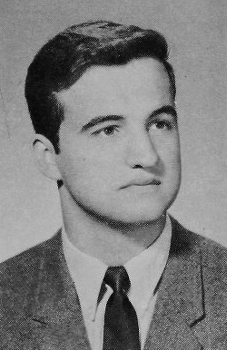
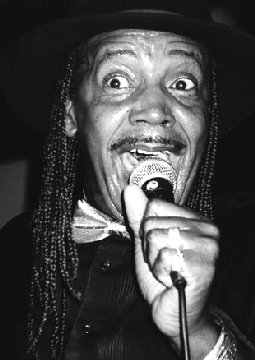
1927 Big Jay McNeely
1935 Otis Rush*
1935 Leroy Carr+
1937 Lefty Dizz*
1941 Frankie Lee*
1957 Pat Cohen*
1967 J.B. Lenoir+
1990 Sam Lawhorn+
Johnny Gale*
Elizabeth Lee*
1935 Leroy Carr+
1937 Lefty Dizz*
1941 Frankie Lee*
1957 Pat Cohen*
1967 J.B. Lenoir+
1990 Sam Lawhorn+
Johnny Gale*
Elizabeth Lee*
Happy Birthday
Big Jay McNeely *29.04.1927

Cecil James (Big Jay) McNeely (* 29. April 1927 in Los Angeles, Kalifornien) ist ein US-amerikanischer Rhythm-&-Blues-Tenor-Saxophonist.
Er war an der Entwicklung des exaltierten, extrovertierten Saxophonstils „Honkin“ und ab 1948 auch an der Entstehung des Rock ’n’ Roll beteiligt. Seine ersten Aufnahmen entstanden im Jahre 1948 für das Johnny-Otis-Orchester, insgesamt sechs Singles die als „Johnny Otis featuring Jay McNeely“ tituliert wurden. Die erste eigene Single unter seinem Namen entstand am 29. November 1948 für Savoy Records, produziert von Ralph Bass. Hier war sein größter Hitparadenerfolg mit The Deacon's Hop zu verzeichnen, der den ersten Rang der Rhythm-&-Blues-Hitparade belegte.
Häufige Wechsel der Plattenfirmen führten ihn im Oktober 1954 auch zu Federal Records, wo Ralph Bass inzwischen als Labelchef und Produzent angestellt war. Hier entstanden acht Singles, die jedoch allesamt weitgehend unbeachtet blieben. Als er im Juni 1959 bei dem winzigen Label Swingin' Records mit großer Routine einen weiteren Plattenvertrag unterschrieb, änderte sich seine Situation. Seine Eigenkomposition There Is Something On Your Mind (Gesang von Little Sonny Warner) drang bis auf Rang fünf der Rhythm & Blues-Charts vor und entwickelte sich zu seinem größten Umsatzerfolg. Der Song wurde nachfolgend von 14 Künstlern gecovert. Nach insgesamt sechs Singles verließ McNeely auch wiederum dieses Label. Big Jay McNeely geht noch heute auf Tournee und wiederholt dabei seine klassische Bühnenroutine, sein Tenorsaxophon liegend zu spielen.
Cecil James McNeely (born April 29, 1927, Watts, Los Angeles, California),[1] known as Big Jay McNeely, is an American rhythm and blues saxophonist.
Biography
Inspired by Illinois Jacquet and Lester Young, he teamed with his older brother Robert McNeely, who played baritone saxophone, and made his first recordings with drummer Johnny Otis, who ran the Barrelhouse Club that stood only a few blocks from McNeely's home.[1] Shortly after he performed on Otis's "Barrel House Stomp." Ralph Bass, A&R man for Savoy Records, promptly signed him to a recording contract. Bass's boss, Herman Lubinsky, suggested the stage name Big Jay McNeely because Cecil McNeely did not sound commercial. McNeely's first hit was "The Deacon's Hop," an instrumental which topped the Billboard R&B chart in early 1949.[1] The single was his most successful of his three chart entries.
Thanks to his flamboyant playing, called "honking," McNeely remained popular through the 1950s and into the early 1960s, recording for the Exclusive, Aladdin, Imperial, Federal, Vee-Jay, and Swingin' labels.[1] But despite a hit R&B ballad, "There Is Something on Your Mind," (1959) featuring Little Sonny Warner on vocals, and a 1963 album for Warner Bros. Records, McNeely's music career began to cool off. He quit the music industry in 1971 to become a postman.[1] However, thanks to an R&B revival in the early 1980s, McNeely left the post office and returned to touring and recording full-time, usually overseas.[1] His original tenor sax is enshrined in the Experience Music Project in Seattle, and he was inducted into The Rhythm & Blues Hall of Fame.
In 1989, Big Jay McNeely was performing at the Quasimodo Club in West Berlin the night the Berlin Wall came down, "and Cold War legend has it that Big Jay McNeely blew down the Berlin Wall in 1989 with his earth-shaking sonic sax torrents outside the Quasimodo Club in West Germany"[2]
Big Jay McNeely regularly performs at the International Boogie Woogie Festival in The Netherlands, and recorded an album with Martijn Schok, the festival's promoter, in 2009. The album was entitled Party Time, and one track from the album, "Get On Up and Boogie" (Parts 1, 2, and 3)", was featured on the vintage music compilation This is Vintage Now (2011).[3]
Tenor saxophone honkers
The honkers were known for their raucous stage antics and expressive, exhibitionist style of playing. They overblew their saxophones and often hit on the same note over and over, much like a black Southern preacher, until their audiences were mesmerized. The style began with Illinois Jacquet's lively solo on Lionel Hampton's smash 1942 hit "Flying Home." Jacquet refined the honking technique in 1944 on the first Jazz at the Philharmonic concert in Los Angeles. Among the other saxophonists who started having honking hits in the late 1940s were Hal Singer (with the number one R&B hit "Cornbread", Lynn Hope, Joe Houston, Wild Bill Moore, Freddie Mitchell, and many more.
McNeely was credited with being the most flamboyant performer. He wore bright banana- and lime-colored suits, played under blacklights that made his horn glow in the dark, used strobe lights as early as 1952 to create an "old-time-movie" effect, and sometimes walked off the stage and out the door, usually with the club patrons following along behind. At one point, in San Diego, police arrested him on the sidewalk and hauled him off to jail, while his band kept playing on the bandstand, waiting for him to return. The honking style was fading somewhat by the early 1950s, but the honkers themselves suddenly found themselves providing rousing solos for doo wop groups; an example was Sam "The Man" Taylor's eight-bar romp on The Chords' 1954 "Sh-Boom." Bill Haley also used honking sax men Joey D'Ambrosio and Rudy Pompilli on his rock and roll records, including "Rock Around the Clock." However, the rise of the electric guitar essentially ended the dominance of the tenor sax in rock and roll by 1956.
Biography
Inspired by Illinois Jacquet and Lester Young, he teamed with his older brother Robert McNeely, who played baritone saxophone, and made his first recordings with drummer Johnny Otis, who ran the Barrelhouse Club that stood only a few blocks from McNeely's home.[1] Shortly after he performed on Otis's "Barrel House Stomp." Ralph Bass, A&R man for Savoy Records, promptly signed him to a recording contract. Bass's boss, Herman Lubinsky, suggested the stage name Big Jay McNeely because Cecil McNeely did not sound commercial. McNeely's first hit was "The Deacon's Hop," an instrumental which topped the Billboard R&B chart in early 1949.[1] The single was his most successful of his three chart entries.
Thanks to his flamboyant playing, called "honking," McNeely remained popular through the 1950s and into the early 1960s, recording for the Exclusive, Aladdin, Imperial, Federal, Vee-Jay, and Swingin' labels.[1] But despite a hit R&B ballad, "There Is Something on Your Mind," (1959) featuring Little Sonny Warner on vocals, and a 1963 album for Warner Bros. Records, McNeely's music career began to cool off. He quit the music industry in 1971 to become a postman.[1] However, thanks to an R&B revival in the early 1980s, McNeely left the post office and returned to touring and recording full-time, usually overseas.[1] His original tenor sax is enshrined in the Experience Music Project in Seattle, and he was inducted into The Rhythm & Blues Hall of Fame.
In 1989, Big Jay McNeely was performing at the Quasimodo Club in West Berlin the night the Berlin Wall came down, "and Cold War legend has it that Big Jay McNeely blew down the Berlin Wall in 1989 with his earth-shaking sonic sax torrents outside the Quasimodo Club in West Germany"[2]
Big Jay McNeely regularly performs at the International Boogie Woogie Festival in The Netherlands, and recorded an album with Martijn Schok, the festival's promoter, in 2009. The album was entitled Party Time, and one track from the album, "Get On Up and Boogie" (Parts 1, 2, and 3)", was featured on the vintage music compilation This is Vintage Now (2011).[3]
Tenor saxophone honkers
The honkers were known for their raucous stage antics and expressive, exhibitionist style of playing. They overblew their saxophones and often hit on the same note over and over, much like a black Southern preacher, until their audiences were mesmerized. The style began with Illinois Jacquet's lively solo on Lionel Hampton's smash 1942 hit "Flying Home." Jacquet refined the honking technique in 1944 on the first Jazz at the Philharmonic concert in Los Angeles. Among the other saxophonists who started having honking hits in the late 1940s were Hal Singer (with the number one R&B hit "Cornbread", Lynn Hope, Joe Houston, Wild Bill Moore, Freddie Mitchell, and many more.
McNeely was credited with being the most flamboyant performer. He wore bright banana- and lime-colored suits, played under blacklights that made his horn glow in the dark, used strobe lights as early as 1952 to create an "old-time-movie" effect, and sometimes walked off the stage and out the door, usually with the club patrons following along behind. At one point, in San Diego, police arrested him on the sidewalk and hauled him off to jail, while his band kept playing on the bandstand, waiting for him to return. The honking style was fading somewhat by the early 1950s, but the honkers themselves suddenly found themselves providing rousing solos for doo wop groups; an example was Sam "The Man" Taylor's eight-bar romp on The Chords' 1954 "Sh-Boom." Bill Haley also used honking sax men Joey D'Ambrosio and Rudy Pompilli on his rock and roll records, including "Rock Around the Clock." However, the rise of the electric guitar essentially ended the dominance of the tenor sax in rock and roll by 1956.
Frankie Lee *29.04.1941

Life and career
Frankie Lee Jones was born in Mart, Texas.[5] His early involvement in music began by singing gospel music in church, before signing to Peacock Records in 1963.[1] Billed as Little Frankie Lee, he released three singles which included "Taxi Blues", a regional hit and his best known song.[3][6] After living with his friend Sonny Rhodes in Austin, Texas, Lee was recruited by Ike Turner to join the touring ensemble backing Ike & Tina Turner.[1] Lee later said of that time, "I'll never forget it. I dug the music and the way they performed. Tina in particular just knocked me out. It was amazing how she would go out and grab an audience - that's what I wanted to do. So I would just sit back and take notes. I learned a lot."[4] Lee then settled in Houston and worked with other musicians including Big Mama Thornton, Ted Taylor, Junior Parker and Joe Hinton.[1]
Lee befriended Albert Collins during this period and, in 1965, they both relocated to California, with Lee singing in Collins' band from that time until 1968.[1][5] In 1971, Lee was signed to Elka Records and his cousin, Johnny "Guitar" Watson, produced Lee's tracks. In the late 1970s, Lee's own backing ensemble included a young Robert Cray.[1]
His first album, The Ladies and the Babies, was released on HighTone in 1984. Allmusic journalist, Thom Owens, noted, "as one of the first albums on HighTone Records, the album helped set the stage for the numerous records and artists that teetered between soul and blues."[7]
Lee appeared at the Chicago Blues Festival with Sonny Rhodes, before relocating to New Jersey in 1986. He continued to perform live, gaining a growing reputation for the quality and energy of his live performances.[1] Flying Fish released Lee's second album, Sooner or Later (1992), on which he was backed by Doug Newby and the Bluz Blasters, with a guest appearance by Lucky Peterson.[5][4] Going Back Home (1994) appeared on the Blind Pig label.[1] Lee toured widely playing at American music festivals, in Europe and Japan.[4]
In 2004, Lee performed with Dan Treanor on the album, African Wind.[5]
Lee's final album, Standing at the Crossorads, was released in 2006 on Blues Express.[5] The album was produced by Dennis Walker, who had produced The Ladies and the Babies more than twenty years earlier. Lee was nominated for the Bay Area Blues Vocalist of the Year award.[8]
Frankie Lee died on April 24, 2015, in Sacramento, California, aged 73.
Lefty Dizz *29.04.1937
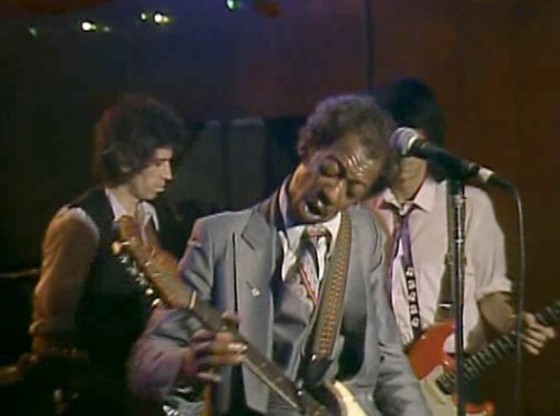
Lefty Dizz (* 29. April 1937 in Osceola, Arkansas als Walter Williams; † 7. September 1993 in Chicago, Illinois) war ein US-amerikanischer Chicago Blues-Gitarrist und Sänger.
Bekannt wurde er mit seiner Band Shock Treatment und durch seine Arbeit mit Junior Wells, J. B. Lenoir und Hound Dog Taylor. Lefty Dizz benutzte eine Rechtshänder Fender Stratocaster, die er wie später Jimi Hendrix einfach umdrehte, was ihm den Beinamen „Lefty“ einbrachte.[1] Dizz Gitarrensound erinnerte laut Hound Dog Taylor an Dizzy Gillespies Trompetenspiel. Er starb an Speiseröhrenkrebs.
http://de.wikipedia.org/wiki/Lefty_Dizz
Lefty Dizz (April 29, 1937 – September 7, 1993)[2] was an American Chicago blues guitarist and singer whose recorded work appeared on eight albums.[1]
He is best known for fronting his own band, Shock Treatment, and his work with Junior Wells, J. B. Lenoir and Hound Dog Taylor.[2] One commentator noted that "for wild-ass showmen in blues history ... one would certainly have to go a far piece to beat Lefty Dizz".[1] Lefty Dizz favoured a right-handed Fender Stratocaster, which he played with his left hand, hence the first part of his stage name.[3] Versions pertaining to the second part range from him playing the trumpet in the style of Dizzy Gillespie,[3] to the nickname being given by Hound Dog Taylor & the HouseRockers' drummer Ted Harvey, referring to "playing jazz in the alley".[1]
He was reputedly the brother of fellow blues musician Johnny Dollar.[4]
Biography
He was born Walter Williams in Osceola, Arkansas, United States.[1] He learned the rudiments of guitar playing whilst serving for four years in the United States Air Force. Unlike other left-handed players who re-strung the instrument to mirror the proper string order, Dizz played a right-handed guitar upside down, thereby reversing the order of the strings. After his discharge in 1956, he moved first to Detroit and then Chicago where he would settle permanently; there, he played under Lacy Gibson and Earl Hooker's guidance. He was proficient enough to join Sonny Thompson's band in 1958. He worked with Junior Cannady and John Lee Hooker, but a major career move in 1964 saw Lefty Dizz become a member of Junior Wells' backing ensemble. They toured around the world together until 1971, when Lefty Dizz joined Hound Dog Taylor and the HouseRockers. Lefty Dizz remained in situ until Taylor's death in 1975, when he formed Shock Treatment. It was with this band that he further developed his own flamboyant approach, which incorporated raunchy jokes alongside his own skilful but showmanship style of guitar playing.[5] His pleasant and joke-filled character was offset with sufficient intelligence to garner an economics degree at Southern Illinois University.[1]
Lefty Dizz performed at Chicago clubs such as the Kingston Mines, B.L.U.E.S. and the Checkerboard Lounge, as well as international touring. His playing was witnessed by members of the Rolling Stones and Foghat.[1] He played on the recording of Live at the Checkerboard Lounge, Chicago 1981 with Muddy Waters and Rolling Stones Jagger, Richards and Wood.[6] However, his studio recordings did not capture the essence of live performances.[7]
Lefty Dizz died from the effects of esophageal cancer on September 7, 1993, at the age of 56.
He is best known for fronting his own band, Shock Treatment, and his work with Junior Wells, J. B. Lenoir and Hound Dog Taylor.[2] One commentator noted that "for wild-ass showmen in blues history ... one would certainly have to go a far piece to beat Lefty Dizz".[1] Lefty Dizz favoured a right-handed Fender Stratocaster, which he played with his left hand, hence the first part of his stage name.[3] Versions pertaining to the second part range from him playing the trumpet in the style of Dizzy Gillespie,[3] to the nickname being given by Hound Dog Taylor & the HouseRockers' drummer Ted Harvey, referring to "playing jazz in the alley".[1]
He was reputedly the brother of fellow blues musician Johnny Dollar.[4]
Biography
He was born Walter Williams in Osceola, Arkansas, United States.[1] He learned the rudiments of guitar playing whilst serving for four years in the United States Air Force. Unlike other left-handed players who re-strung the instrument to mirror the proper string order, Dizz played a right-handed guitar upside down, thereby reversing the order of the strings. After his discharge in 1956, he moved first to Detroit and then Chicago where he would settle permanently; there, he played under Lacy Gibson and Earl Hooker's guidance. He was proficient enough to join Sonny Thompson's band in 1958. He worked with Junior Cannady and John Lee Hooker, but a major career move in 1964 saw Lefty Dizz become a member of Junior Wells' backing ensemble. They toured around the world together until 1971, when Lefty Dizz joined Hound Dog Taylor and the HouseRockers. Lefty Dizz remained in situ until Taylor's death in 1975, when he formed Shock Treatment. It was with this band that he further developed his own flamboyant approach, which incorporated raunchy jokes alongside his own skilful but showmanship style of guitar playing.[5] His pleasant and joke-filled character was offset with sufficient intelligence to garner an economics degree at Southern Illinois University.[1]
Lefty Dizz performed at Chicago clubs such as the Kingston Mines, B.L.U.E.S. and the Checkerboard Lounge, as well as international touring. His playing was witnessed by members of the Rolling Stones and Foghat.[1] He played on the recording of Live at the Checkerboard Lounge, Chicago 1981 with Muddy Waters and Rolling Stones Jagger, Richards and Wood.[6] However, his studio recordings did not capture the essence of live performances.[7]
Lefty Dizz died from the effects of esophageal cancer on September 7, 1993, at the age of 56.
Otis Rush *29.04.1935
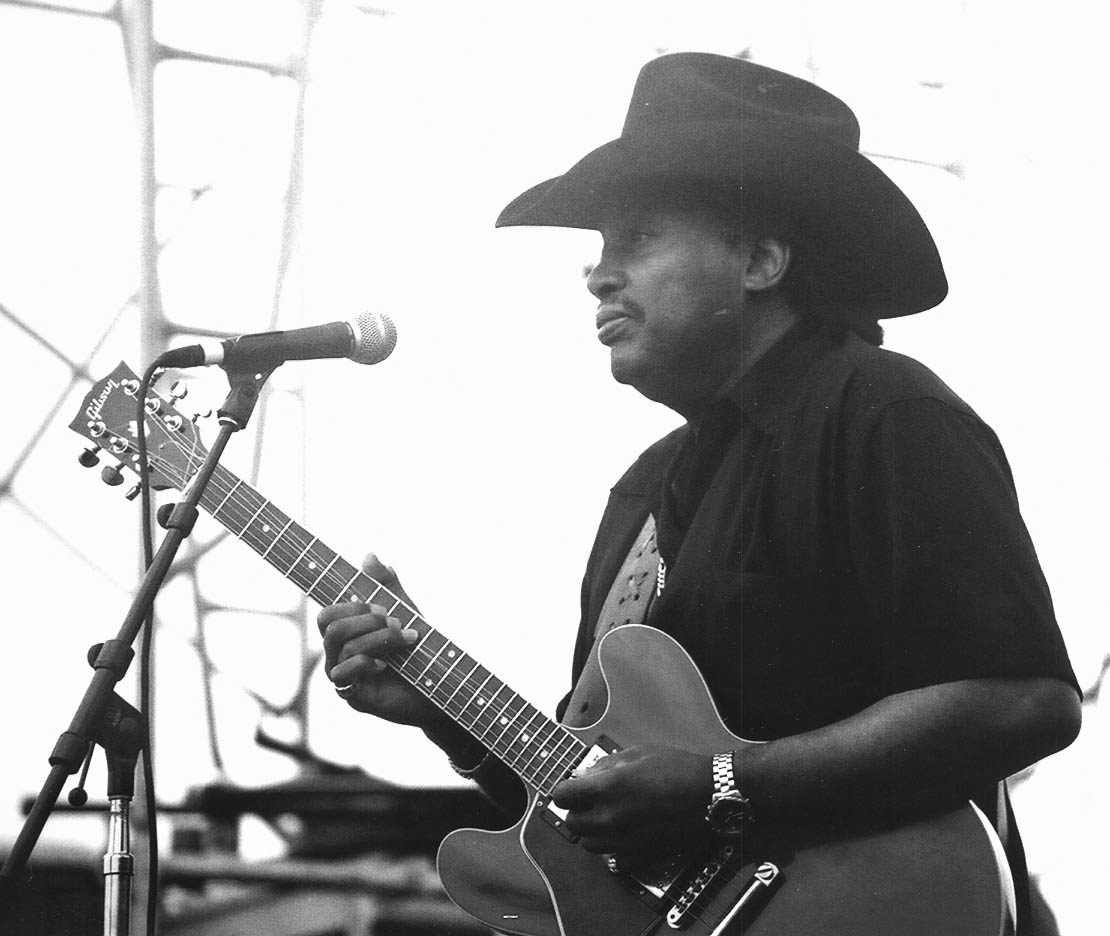

Nachdem er Anfang der 1950er-Jahre nach Chicago gezogen war, wurde Rush bald ein bekannter Gitarrist in der dortigen Blues-Szene. Ab 1956 machte er Aufnahmen und hatte 1957 zwei Hits mit All Your Love I Miss Lovin’ und I Can’t Quit You Baby, Letzteres von Willie Dixon. All Your Love (I Miss Lovin’) wurde im Laufe der Zeit mehrfach von berühmten Bands gecovert, einschließlich John Mayall auf Blues Breakers with Eric Clapton, Aerosmith, Stevie Ray Vaughan, Gary Moore auf Still Got the Blues und der Steve Miller Band.
In den 1960er-Jahren ging Rush auch in Europa auf Tournee. Eines seiner bekanntesten Alben ist Moanin’ in the Morning aus dem Jahr 1968. 1984 wurde er in die Blues Hall of Fame aufgenommen. 1999 gewann er einen Grammy für das Album Any Place I’m Goin’ in der Kategorie Best Traditional Blues Album.[1]
Der Stil von Otis Rush, bekannt als West Side Chicago Blues, wird mit dem von Luther Allison, Magic Sam, Buddy Guy und Albert King verglichen. Er beeinflusste Blues-Größen wie Michael Bloomfield, Eric Clapton, Peter Green und Stevie Ray Vaughan. Eine Besonderheit besteht in Rushs Gitarrentechnik. Rush ist Linkshänder und spielt Linkshänderinstrumente, die jedoch als Rechtshänder-Gitarren besaitet sind (siehe Foto rechts). Als Resultat liegen die Diskantsaiten auf Rushs Gitarren oben und werden beim Abschlagspiel zuerst angeschlagen. Die gleiche Reihenfolge der Besaitung wurde auch von den ebenfalls linkshändigen Gitarristen Albert King und Dick Dale eingesetzt.
http://de.wikipedia.org/wiki/Otis_Rush
Otis Rush - Gambler's Blues
https://www.youtube.com/watch?v=jCynaoAdP4g

Otis Rush (born April 29, 1935) is a former blues musician, singer and guitarist. His distinctive guitar style features a slow burning sound and long bent notes. With similar qualities to Magic Sam and Buddy Guy, his sound became known as West Side Chicago blues and was an influence on many musicians including Michael Bloomfield, Peter Green and Eric Clapton.
Rush is left-handed and, unlike many other left-handed guitarists, plays a left-handed instrument strung upside-down with the low E string at the bottom. He played often with the little finger of his pick hand curled under the low E for positioning. It is widely believed that this contributes to his distinctive sound. He has a wide-ranging, powerful tenor voice.
Career
After moving to Chicago, Illinois in 1948,[1] Rush made a name for himself playing in clubs on both the South Side and West Side blues scenes. From 1956 to 1958, he recorded for the Cobra Records and released eight singles, some featuring Ike Turner or Jody Williams on guitar. His first single "I Can't Quit You Baby" in 1956 reached No. 6 on Billboard's R&B chart.[1] During his tenure with Cobra, he recorded some of his well known songs such as "Double Trouble" and "All Your Love (I Miss Loving)."[2]
After Cobra Records went bankrupt in 1959, Rush landed a recording contract with Chess in 1960. He recorded eight tracks for the label, four of which were released on two singles that year. Six tracks including the two singles later came out on "Door To Door" album in 1969, a compilation also featuring Chess recordings by Albert King.
He also went into the studio for Duke Records in 1962, but only one single "Homework/I Have to Laugh" was issued from the label.[3] It also received a release in Great Britain on Vocalion VP9260 in 1963. In 1965, he recorded for Vanguard which can be heard on the label's compilation album, Chicago/The Blues/Today! Vol.2.
In the 1960s, Rush began playing in other cities in the U.S. and also to Europe, most notably the American Folk Blues Festival.
In 1969, the album Mourning in the Morning was released on Cotillion Records. Recorded at the FAME Studios in Muscle Shoals, Alabama, the album was produced by Michael Bloomfield and Nick Gravenites (then of Electric Flag). The sound that incorporated soul and rock was a brand new direction for Rush.
In 1971, Rush recorded the album Right Place, Wrong Time in San Francisco for Capitol Records, but Capitol decided not to release it. The album was finally released in 1976 when Rush purchased the master from Capitol and had it released by P-Vine Records in Japan. Bullfrog Records released it in the U.S. soon after. The album generally has since gained a reputation as one of the best works by Rush.[4][5]
In the 1970s, he also released some albums on Delmark Records and also from Sonet Records in Europe, but by the end of the decade he stopped performing and recording.
Otis Rush performing in 2002
Rush made a come back in 1985 making a U.S. tour and releasing the live album, Tops, recorded at the San Francisco Blues Festival.
In 1994, Rush released Ain't Enough Comin' In, the first studio album in 16 years.[2] Any Place I'm Goin' followed in 1998, and Rush earned his first Grammy Award for Best Traditional Blues Album in 1999.
Though he has not recorded a new studio album since 1998, he continued to tour and perform. In 2002, he was featured on the Bo Diddley tribute album Hey Bo Diddley – A Tribute!, performing the song "I'm A Man" produced by Carla Olson.
However, he suffered a stroke in 2004 which has kept him from performing since. In 2006, Rush released his latest CD, Live and From San Francisco on Blues Express Records, a live recording from 1999. Video footage of the same show was released on the DVD Live Part 1 in 2003.
Rush has two daughters and two sons from a previous marriage and 2 daughters from his second marriage, Lena and Sophia.
http://en.wikipedia.org/wiki/Otis_RushRush is left-handed and, unlike many other left-handed guitarists, plays a left-handed instrument strung upside-down with the low E string at the bottom. He played often with the little finger of his pick hand curled under the low E for positioning. It is widely believed that this contributes to his distinctive sound. He has a wide-ranging, powerful tenor voice.
Career
After moving to Chicago, Illinois in 1948,[1] Rush made a name for himself playing in clubs on both the South Side and West Side blues scenes. From 1956 to 1958, he recorded for the Cobra Records and released eight singles, some featuring Ike Turner or Jody Williams on guitar. His first single "I Can't Quit You Baby" in 1956 reached No. 6 on Billboard's R&B chart.[1] During his tenure with Cobra, he recorded some of his well known songs such as "Double Trouble" and "All Your Love (I Miss Loving)."[2]
After Cobra Records went bankrupt in 1959, Rush landed a recording contract with Chess in 1960. He recorded eight tracks for the label, four of which were released on two singles that year. Six tracks including the two singles later came out on "Door To Door" album in 1969, a compilation also featuring Chess recordings by Albert King.
He also went into the studio for Duke Records in 1962, but only one single "Homework/I Have to Laugh" was issued from the label.[3] It also received a release in Great Britain on Vocalion VP9260 in 1963. In 1965, he recorded for Vanguard which can be heard on the label's compilation album, Chicago/The Blues/Today! Vol.2.
In the 1960s, Rush began playing in other cities in the U.S. and also to Europe, most notably the American Folk Blues Festival.
In 1969, the album Mourning in the Morning was released on Cotillion Records. Recorded at the FAME Studios in Muscle Shoals, Alabama, the album was produced by Michael Bloomfield and Nick Gravenites (then of Electric Flag). The sound that incorporated soul and rock was a brand new direction for Rush.
In 1971, Rush recorded the album Right Place, Wrong Time in San Francisco for Capitol Records, but Capitol decided not to release it. The album was finally released in 1976 when Rush purchased the master from Capitol and had it released by P-Vine Records in Japan. Bullfrog Records released it in the U.S. soon after. The album generally has since gained a reputation as one of the best works by Rush.[4][5]
In the 1970s, he also released some albums on Delmark Records and also from Sonet Records in Europe, but by the end of the decade he stopped performing and recording.
Otis Rush performing in 2002
Rush made a come back in 1985 making a U.S. tour and releasing the live album, Tops, recorded at the San Francisco Blues Festival.
In 1994, Rush released Ain't Enough Comin' In, the first studio album in 16 years.[2] Any Place I'm Goin' followed in 1998, and Rush earned his first Grammy Award for Best Traditional Blues Album in 1999.
Though he has not recorded a new studio album since 1998, he continued to tour and perform. In 2002, he was featured on the Bo Diddley tribute album Hey Bo Diddley – A Tribute!, performing the song "I'm A Man" produced by Carla Olson.
However, he suffered a stroke in 2004 which has kept him from performing since. In 2006, Rush released his latest CD, Live and From San Francisco on Blues Express Records, a live recording from 1999. Video footage of the same show was released on the DVD Live Part 1 in 2003.
Rush has two daughters and two sons from a previous marriage and 2 daughters from his second marriage, Lena and Sophia.
https://www.youtube.com/watch?v=jCynaoAdP4g
Johnny Gale *29.04.
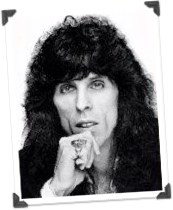
Johnny Gale has been a noted force in music since the 60’s. He is currently working with Little Isidore and the Inquisitors as musical director, guitarist and writer. Johnny penned the surf hit “Jitterbop” on the Hy-Sam release “Bring It On” by artist Little Leopold, and produced the release as well. His own album, 1994’s “Gale Force” (Guitar Recordings), was awarded “Best Guitar Record of 1994”. Johnny has worked as musical director for a number of legendary Rock and Roll stars, including Hank Ballard, Gary U.S. Bonds, The Drifters, The Jive Five, The Capris, The Chiffons, The Cadillacs, Ruth McFadden, and many, many more. Johnny is accomplished as an arranger, writer, guitarist, bassist, singer, and band leader. He is the one that gets called when things have to be done right the first time, and is a noted expert in the field R&B. He has received endorsements from Gibson Guitars and Laney Amps.
Producer, composer, arranger, vocalist and guitarist extraordinaire Johnny Gale is a renowned expert in the authentic stylings of classic soul, doo wop, r&b, blues and rock.
He discovered and co- produced Grammy nominated artist Ryan Shaw’s debut album entitled ‘This Is Ryan Shaw’. Original composition ‘We Got Love’ from that album has been featured on ABC TV’s ‘Brothers And Sisters’, the film ‘My Blueberry Nights’ and ‘Sex and The City’ Vol. 2 soundtrack album. Their music was featured on ‘Dancing With The Stars’ ‘So You Think You Can Dance’ and the Ellen Degeneres, Martha Stewart and Carson Daly TV shows.
Gale and co-producer Jimmy Bralower produced two tracks by Grammy nominated pedal steel guitarist Robert Randolph for the film ‘Who Do You Love’ and three tracks for the hit film ‘Bride Wars’ starring Kate Hudson and Anne Hathaway.
Johnny Gale has written and produced five number one chart records that have become standards in the Carolina Beach Music Scene. Johnny has performed and recorded with Cyndi Lauper, Dion, Ronnie Spector, Darlene Love, Phoebe Snow, Aaron Carter, M2M, Louden Wainwright III, Jules Shear, Joan Osborne, The Soul Survivors, Hank Ballard, the Dells, The Spaniels and literally hundreds of legendary doo wop groups.
Gale co-founded and produced two cult classic albums by the group ‘Little Isidore and the Inquisitors’, two award winning albums by artist Angel Rissoff, an award winning childrens album for Re-Bop records, singer/songwriter Andrew Fortier album with whom Gale co-wrote the song ‘I Say Grace’ covered by Decca international recording artist Haley Westenra, the great Gary Lovett album, and many other record productions for more local heroes. He has also been involved as a hit writer/producer of commercials for Lipton, Pepsi, Campbells, Nestle and others.
His own 1994 CD release entitled ‘Gale Force’ on Guitar/Relativity Records was awarded best guitar record of the year by Guitar Shop magazine.
Johnny Gale began a very meaningful professional relationship with friend Kenny Vance in 2000 when Kenny asked Johnny to produce five or six new tracks and help him complete work on a few unfinished cuts for the soundtrack album to the movie ‘Looking For An Echo’. Johnny has been musical director and arranger for Kenny Vance and the Planotones since 2001 and has produced and co-produced with Kenny a total of four CD’s for Kenny and the guys.
On stage as a player/performer, behind the scenes as musical director or in the recording studio as producer, arranger, composer and performer, Johnny Gale is the consummate professional and a fun hang.
He discovered and co- produced Grammy nominated artist Ryan Shaw’s debut album entitled ‘This Is Ryan Shaw’. Original composition ‘We Got Love’ from that album has been featured on ABC TV’s ‘Brothers And Sisters’, the film ‘My Blueberry Nights’ and ‘Sex and The City’ Vol. 2 soundtrack album. Their music was featured on ‘Dancing With The Stars’ ‘So You Think You Can Dance’ and the Ellen Degeneres, Martha Stewart and Carson Daly TV shows.
Gale and co-producer Jimmy Bralower produced two tracks by Grammy nominated pedal steel guitarist Robert Randolph for the film ‘Who Do You Love’ and three tracks for the hit film ‘Bride Wars’ starring Kate Hudson and Anne Hathaway.
Johnny Gale has written and produced five number one chart records that have become standards in the Carolina Beach Music Scene. Johnny has performed and recorded with Cyndi Lauper, Dion, Ronnie Spector, Darlene Love, Phoebe Snow, Aaron Carter, M2M, Louden Wainwright III, Jules Shear, Joan Osborne, The Soul Survivors, Hank Ballard, the Dells, The Spaniels and literally hundreds of legendary doo wop groups.
Gale co-founded and produced two cult classic albums by the group ‘Little Isidore and the Inquisitors’, two award winning albums by artist Angel Rissoff, an award winning childrens album for Re-Bop records, singer/songwriter Andrew Fortier album with whom Gale co-wrote the song ‘I Say Grace’ covered by Decca international recording artist Haley Westenra, the great Gary Lovett album, and many other record productions for more local heroes. He has also been involved as a hit writer/producer of commercials for Lipton, Pepsi, Campbells, Nestle and others.
His own 1994 CD release entitled ‘Gale Force’ on Guitar/Relativity Records was awarded best guitar record of the year by Guitar Shop magazine.
Johnny Gale began a very meaningful professional relationship with friend Kenny Vance in 2000 when Kenny asked Johnny to produce five or six new tracks and help him complete work on a few unfinished cuts for the soundtrack album to the movie ‘Looking For An Echo’. Johnny has been musical director and arranger for Kenny Vance and the Planotones since 2001 and has produced and co-produced with Kenny a total of four CD’s for Kenny and the guys.
On stage as a player/performer, behind the scenes as musical director or in the recording studio as producer, arranger, composer and performer, Johnny Gale is the consummate professional and a fun hang.
Pat Cohen *29.04.1957

Pat "Mother Blues" Cohen (* 29. April 1957 in Monroe, North Carolina) ist eine US-amerikanische Bluessängerin.
Leben
Sie wuchs in einer musikalischen Familie auf, in der der Blues einen wichtigen Stellenwert hatte. Bei Jamsessions auf der Terrasse ihres Onkels hörte und sang sie schon als kleines Mädchen diese Musik. Anfang der 1980er-Jahre begann ihre musikalische Karriere, als sie gefragt wurde, ob sie in einem lokalen Club des Ortes auftreten wolle, wo sie ins College ging.
“I had three days to find three musicians and put together 30 songs.They loved me—the rest is history because I’ve been singing the Blues ever since.” (Ich hatte drei Tage Zeit drei Musiker zu finden und 30 Songs zu lernen. Sie liebten mich- und der Rest ist Geschichte, denn ich singe seither den Blues.)
Jahrelang trat sie in New Orleans an sechs Tagen der Woche in verschiedenen Clubs und Veranstaltungsorten auf, darunter auch dem House of Blues. Als der Hurrikan Katrina New Orleans zerstörte, zog sie nach Greensboro, wo sie seither lebt. Zu dieser Zeit schloss sie sich der Music Maker Blues Revue an, mit der sie regelmäßig auftritt.
Ihr Gesangsstil und ihre Auftritte erinnern an ihre großen Idole Billie Holiday, Koko Taylor und Etta James. Neben Blues singt sie auch noch Jazz und Rhythm and Blues.
More About Pat:
Her first professional engagement came in the early 1980’s when she was asked to perform at a local club where she was attending college. “I had three days to find three musicians and put together 30 songs,” she said.
“They loved me—the rest is history because I’ve been singing the Blues ever since.”
For years, Pat sang in New Orleans six nights a week, performing at a wide array of venues including the House of Blues, until Katrina destroyed her home. She relocated to North Carolina and has recently started touring with the Music Maker Blues Revue. During her performances, “Mother Blues” unfurls the tapestry of her life experiences to her audience in soulful words and music. She shares the mettle, pathos and ocean-deep compassion of the famous female blues singers she idolizes—women like Billie Holiday, Koko Taylor and Etta James.
Pat Cohen is a dramatic and exotic performer whose talent should not be overlooked.
Her first professional engagement came in the early 1980’s when she was asked to perform at a local club where she was attending college. “I had three days to find three musicians and put together 30 songs,” she said.
“They loved me—the rest is history because I’ve been singing the Blues ever since.”
For years, Pat sang in New Orleans six nights a week, performing at a wide array of venues including the House of Blues, until Katrina destroyed her home. She relocated to North Carolina and has recently started touring with the Music Maker Blues Revue. During her performances, “Mother Blues” unfurls the tapestry of her life experiences to her audience in soulful words and music. She shares the mettle, pathos and ocean-deep compassion of the famous female blues singers she idolizes—women like Billie Holiday, Koko Taylor and Etta James.
Pat Cohen is a dramatic and exotic performer whose talent should not be overlooked.
Pat "Mother Blues" Cohen: Rock Me Baby
R.I.P.
J.B. Lenoir +29.04.1967

J. B. Lenoir (* 5. März 1929 in Monticello, Mississippi; † 29. April 1967 in Urbana, Illinois) war ein US-amerikanischer Blues-Sänger und -Gitarrist. Zu seinen bekanntesten Hits gehören Mama Talk to Your Daughter und der Eisenhower Blues.
Zu Lenoirs Vorbildern zählen Blind Lemon Jefferson, Lightnin’ Hopkins und Arthur Crudup. Nach einiger Zeit in New Orleans, wo er mit Sonny Boy Williamson II. und Elmore James in einem Lokal spielte,[1] zog es „J. B.“ (so sein amtlicher Vorname) Ende der 1940er Jahre nach Chicago. Dort wurde er von Big Bill Broonzy in die Bluescommunity eingeführt. 1951 nahm er seine erste Single auf, den Korea Blues; 1951/52 entstanden Aufnahmen für das Label J.O.B.. 1954 erschien Mama Talk to Your Daughter, ein Blues-Standard. Der ebenfalls in diesem Jahr aufgenommene Eisenhower Blues löste einen solchen Sturm der Entrüstung aus, dass er aus dem Verkauf genommen wurde und als Tax Paying Blues wieder aufgelegt wurde.[2] In den 1950er-Jahren war Lenoir für seine ungewöhnlichen Auftritte bekannt, besonders durch seinen Tigerfellfrack und seine hohe Stimme.
Über die Jahre wechselte Lenoir mehrfach die Plattenfirma. 1965 und 1966 nahm er zwei akustische Alben für den deutschen Promoter Horst Lippmann auf, Alabama Blues und Down in Mississippi, beide unter der Regie von Willie Dixon. Beide Songs thematisieren die Situation der Schwarzen im Süden der USA, die auch in den 1960er Jahren noch von Diskriminierung und organisierten Übergriffen des Ku-Klux-Klan geprägt war.
I never will go back to Alabama, that is not the place for me
You know they killed my sister and my brother,
And the whole world let them peoples go down there free
Gegen Ende seines Lebens wurden seine Texte immer politischer, so wendete er sich gegen den Rassismus (Alabama March, Shot On James Meredith) , aber auch gegen den Vietnamkrieg (Vietnam Blues) .
J. B. Lenoir starb 1967 völlig unerwartet, möglicherweise an den Folgen eines Autounfalls, in den er einige Wochen zuvor verwickelt gewesen war, und an Behandlungsversäumnissen in dem Krankenhaus, das er aufsuchte. Er war erst 38 Jahre alt. Er liegt auf dem Salem Church Cemetery in Monticello, Mississippi begraben.[3] 2011 wurde er in die Blues Hall of Fame der Blues Foundation aufgenommen.[4] „Alabama Blues“ wurde in die Wireliste The Wire's "100 Records That Set The World On Fire (While No One Was Listening)" aufgenommen.
John Mayall beklagte Lenoirs Tod in den Songs I'm Gonna Fight for You, J.B. und Death of J. B. Lenoir.
Der Dokumentarfilm Soul of a man von Wim Wenders (zweiter Teil der Dokumentarfilmreihe The Blues von Martin Scorsese) ist J. B. Lenoir, gewidmet. Nebst ihm werden noch zwei weitere Blues-Musiker porträtiert (Skip James und Blind Willie Johnson).
http://de.wikipedia.org/wiki/J._B._Lenoir
J. B. Lenoir /ləˈnɔːr/ (March 5, 1929 – April 29, 1967) was an American blues guitarist and singer-songwriter, active in the 1950s and 1960s Chicago blues scene.
Although his name is sometimes pronounced as French "L'n WAHR", Lenoir himself pronounced it "La NOR". The initials "J.B." had no specific meaning, his given name was simply "JB"
Life and career
Lenoir's guitar-playing father introduced him to the music of Blind Lemon Jefferson, whose music became a major influence.[1] During the early 1940s, Lenoir worked with blues artists Sonny Boy Williamson II and Elmore James in New Orleans.[2] Lenoir would eventually find musical influence in Arthur Crudup and Lightnin' Hopkins.[1]
In 1949, he moved to Chicago and Big Bill Broonzy helped introduce him to the local blues community. He began to perform at local nightclubs with musicians such as Memphis Minnie, Big Maceo Merriweather, and Muddy Waters, and became an important part of the city's blues scene.[2][3] He began recording in 1951 the J.O.B. and Chess Records labels. His recording of "Korea Blues" was licensed to and released by Chess,[4] as having been performed by 'J. B. and his Bayou Boys'.[5] His band included pianist Sunnyland Slim, guitarist Leroy Foster, and drummer Alfred Wallace.
During the 1950s Lenoir recorded on various record labels in the Chicago area including J.O.B., Chess, Parrot, and Checker. His more successful songs included "Let's Roll", "The Mojo" featuring saxophonist J. T. Brown, and the controversial "Eisenhower Blues" which his record company, Parrot, forced him to re-record as "Tax Paying Blues."[4]
Lenoir was known in the 1950s for his showmanship - in particular his zebra-patterned costumes - and his high-pitched vocals. He became an influential electric guitarist and songwriter, and his penchant for social commentary distinguished him from many other bluesmen of the time.[1] His most commercially successful and enduring release was "Mamma Talk To Your Daughter", recorded for Parrot in 1954 which reached #11 on the Billboard R&B chart and was later recorded by many other blues and rock musicians.[4] In the later 1950s (recording on the Checker label), he wrote several more blues standards including; "Don't Dog Your Woman", and "Don't Touch My Head!!!" (1956).
In 1963, Lenoir recorded for USA Records as 'J. B. Lenoir and his African Hunch Rhythm', developing an interest in African percussion.[1] However, he struggled to work as a professional musician and for a time took menial jobs, including working in the kitchen at the University of Illinois in Champaign.[citation needed] Lenoir was rediscovered by Willie Dixon, who recorded him with drummer Fred Below on the albums Alabama Blues and Down In Mississippi (inspired by the Civil Rights and Free Speech movements).[1] Lenoir toured Europe, and performed in 1965 with the American Folk Blues Festival in the United Kingdom.[6]
Lenoir's work had direct political content relating to racism and the Vietnam War.[7]
I never will go back to Alabama, that is not the place for me,
I never will go back to Alabama, that is not the place for me,
You know they killed my sister and my brother,
And the whole world let them peoples go down there free. ”
—"Alabama Blues", by J. B. Lenoir
Death
He died on April 29, 1967 in Urbana, Illinois, aged 38, from a heart attack related to injuries he suffered in a car accident three weeks earlier.[8]
Legacy
His death was lamented by John Mayall in the songs, "I'm Gonna Fight for You, J.B." and "Death of J. B. Lenoir".[9]
The 2003 documentary film The Soul of a Man, directed by Wim Wenders as the second instalment of Martin Scorsese's series The Blues, explored Lenoir's career, together with those of Skip James and Blind Willie Johnson.
In 2011, Lenoir was inducted to the Blues Hall of Fame.
Although his name is sometimes pronounced as French "L'n WAHR", Lenoir himself pronounced it "La NOR". The initials "J.B." had no specific meaning, his given name was simply "JB"
Life and career
Lenoir's guitar-playing father introduced him to the music of Blind Lemon Jefferson, whose music became a major influence.[1] During the early 1940s, Lenoir worked with blues artists Sonny Boy Williamson II and Elmore James in New Orleans.[2] Lenoir would eventually find musical influence in Arthur Crudup and Lightnin' Hopkins.[1]
In 1949, he moved to Chicago and Big Bill Broonzy helped introduce him to the local blues community. He began to perform at local nightclubs with musicians such as Memphis Minnie, Big Maceo Merriweather, and Muddy Waters, and became an important part of the city's blues scene.[2][3] He began recording in 1951 the J.O.B. and Chess Records labels. His recording of "Korea Blues" was licensed to and released by Chess,[4] as having been performed by 'J. B. and his Bayou Boys'.[5] His band included pianist Sunnyland Slim, guitarist Leroy Foster, and drummer Alfred Wallace.
During the 1950s Lenoir recorded on various record labels in the Chicago area including J.O.B., Chess, Parrot, and Checker. His more successful songs included "Let's Roll", "The Mojo" featuring saxophonist J. T. Brown, and the controversial "Eisenhower Blues" which his record company, Parrot, forced him to re-record as "Tax Paying Blues."[4]
Lenoir was known in the 1950s for his showmanship - in particular his zebra-patterned costumes - and his high-pitched vocals. He became an influential electric guitarist and songwriter, and his penchant for social commentary distinguished him from many other bluesmen of the time.[1] His most commercially successful and enduring release was "Mamma Talk To Your Daughter", recorded for Parrot in 1954 which reached #11 on the Billboard R&B chart and was later recorded by many other blues and rock musicians.[4] In the later 1950s (recording on the Checker label), he wrote several more blues standards including; "Don't Dog Your Woman", and "Don't Touch My Head!!!" (1956).
In 1963, Lenoir recorded for USA Records as 'J. B. Lenoir and his African Hunch Rhythm', developing an interest in African percussion.[1] However, he struggled to work as a professional musician and for a time took menial jobs, including working in the kitchen at the University of Illinois in Champaign.[citation needed] Lenoir was rediscovered by Willie Dixon, who recorded him with drummer Fred Below on the albums Alabama Blues and Down In Mississippi (inspired by the Civil Rights and Free Speech movements).[1] Lenoir toured Europe, and performed in 1965 with the American Folk Blues Festival in the United Kingdom.[6]
Lenoir's work had direct political content relating to racism and the Vietnam War.[7]
I never will go back to Alabama, that is not the place for me,
I never will go back to Alabama, that is not the place for me,
You know they killed my sister and my brother,
And the whole world let them peoples go down there free. ”
—"Alabama Blues", by J. B. Lenoir
Death
He died on April 29, 1967 in Urbana, Illinois, aged 38, from a heart attack related to injuries he suffered in a car accident three weeks earlier.[8]
Legacy
His death was lamented by John Mayall in the songs, "I'm Gonna Fight for You, J.B." and "Death of J. B. Lenoir".[9]
The 2003 documentary film The Soul of a Man, directed by Wim Wenders as the second instalment of Martin Scorsese's series The Blues, explored Lenoir's career, together with those of Skip James and Blind Willie Johnson.
In 2011, Lenoir was inducted to the Blues Hall of Fame.
Leroy Carr +29.4.1935

Leroy Carr (* 27. März 1905 in Nashville, Tennessee; † 29. April 1935 in Indianapolis) war ein einflussreicher US-amerikanischer Blues-Pianist und Sänger. Bekannt war er vor allem zusammen mit seinem langjährigen Partner, dem Gitarristen Francis "Scrapper" Blackwell, mit dem er als Duo auftrat und Aufnahmen machte.
Geboren in Nashville, kam Leroy Carr in jungen Jahren nach Indianapolis. Er brachte sich selbst das Klavierspielen bei. Er verließ die Schule, um sich auf der Straße durchzuschlagen. Da die Musik nicht genug einbrachte, musste er die verschiedensten Jobs annehmen. So war er auch beim Zirkus und bei der Armee. Zeitweise war er auch verheiratet.
1928 machten Carr und Blackwell erste Aufnahmen für Vocalion, darunter den Hit How Long How Long Blues. In den Jahren bis zu Carrs Tod gehörte das Duo zu den populärsten Blues-Interpreten in den Staaten und nahmen zahlreiche Bluesklassiker auf. Neben "How Long..." zählten noch "Midnight Hour Blues", "Blues Before Sunrise", "Hurry Down Sunshine", "Shady Lane Blues" und viele andere dazu. Carr erlag jedoch den Verlockungen des Alkohols. Seine Alkoholabhängigkeit führte schließlich im April 1935 zu seinem vorzeitigen Tod.
Leroy Carr gilt als der Komponist von über 200 Blues-Titeln, darunter How Long How Long Blues (später auch von T-Bone Walker sowie von Eric Clapton aufgenommen), We're Gonna Rock You (von Memphis Slim bearbeitet), Naptown Blues (von Wes Montgomery verjazzt), Prison Bound Blues, When The Sun Goes Down, Blues Before Sunrise und viele mehr. Allein für den How Long How Long Blues führt der All Music Guide 497 Treffer an. Er beeinflusste zahlreiche Blues-Musiker, darunter Größen wie Robert Johnson, Otis Spann und Champion Jack Dupree, um nur einige zu nennen.
1982 wurde Leroy Carr in die Blues Hall of Fame aufgenommen.
http://de.wikipedia.org/wiki/Leroy_Carr
Leroy Carr (March 27, 1905 – April 29, 1935)[1] was an American blues singer, songwriter and pianist who developed a laid-back, crooning technique and whose popularity and style influenced such artists as Nat King Cole and Ray Charles. He first became famous for "How Long, How Long Blues" on Vocalion Records in 1928.[2]
Life and career
Carr was born in Nashville, Tennessee, but raised in Indianapolis, Indiana. Although his recording career was cut short by an early death, Carr left behind a large body of work.[2] Some of his most famous songs include "Blues Before Sunrise" (1932), "Midnight Hour Blues" (1932), and "Hurry Down Sunshine" (1934). He had a long-time partnership with guitarist Scrapper Blackwell. His light bluesy piano combined with Blackwell's melodic jazz guitar worked to attract a sophisticated black audience. Carr's vocal style moved blues singing toward an urban sophistication, influencing such singers as T-Bone Walker, Charles Brown, Amos Milburn, Jimmy Witherspoon, Ray Charles among others.[3]
Count Basie and Jimmy Rushing used some of Carr's songs and Basie's band shows the influence of Carr's piano style.[4]
His music has been covered by artists such as Robert Johnson, Ray Charles, Big Bill Broonzy, Moon Mullican, Champion Jack Dupree, Lonnie Donegan and Memphis Slim.
Carr was an alcoholic and died of nephritis shortly after his thirtieth birthday.
Zusammen mit seinem Partner Scrapper Blackwell gehörte der Sänger und Pianist Leroy Carr zu den erfolgreichsten Bluesmusikern der 20er und 30er Jahre des 20. Jahrhunderts. Mit seinem lyrischen Stil prägte er den urbanen Blues und wurde Vorbild etwa für Nat King Cole und zahllose andere Pianisten.
Als Pianist war er nicht besonders aufregend. Doch seine mit sehnsuchtsvoller Stimme vorgetragenen Lieder, effektiv an der Gitarre von Scrapper Blackwell begleitet, wurden zu den größten Blueshits zwischen den beiden Weltkriegen.
„Blues before Sunrise“ oder „How Long How Long Blues“ sind nur die größten von ihnen. Der rauhe Deltablues war in diesen Nummern nicht mehr zu hören. Hier war ein Blues entstanden, der hervorragend in die großen Städte und in die neue Zeit passte: Es geht nicht um die Arbeit auf den Baumwollfeldern sondern vor allem um die Frauen, bzw. die Probleme mit oder auch ohne sie.
Leroy Carr, geboren 1905 in Nashville, brachte sich selbst das Klavierspiel bei und verließ die Schule, um sich einem Wanderzirkus als Musiker anzuschließen. Doch als er 16 war, ging er erstmal zur Army. Danach lebte er als Klavierspieler bei House rent parties, bei Tanzveranstaltungen oder als Begleiter von Sängern. Und wenn da das Geld nicht reichte, brannte er schwarz Whiskey und brachte ihn unter die Leute. Wobei er bald hier zu einem seiner besten Kunden wurde.
Mitte der 20er Jahre schloss er sich mit Scrapper Blackwell zusammen und machte so das Duospiel von Klavier und Gitarre populär. Zahllose Aufnahmen des Duos entstanden trotz der Wirtschaftskrise bis 1935. Doch dann starb Carr an den Folgen seines Alkoholkonsums. Wahrscheinlich hatte er sich eine Nierenentzündung zugezogen. Scrapper Blackwell wurde allein nie wieder so erfolgreich. Er wurde 1962 in Indianapolis in den Rücken geschossen und starb.
Das lyrische Spiel, der zurückgehaltene, ja manchmal schmalzige Gesang – das wurde für viele Nachfolger bis in die Gegenwart zum Vorbild. Etwa für den später als Popsänger zu einem der ersten farbigen Superstars gewordenen Nat King Cole. Auch wenn er sich eigentlich eher als Jazzpianist sah, konnte er seine Wurzeln im Blues nie ganz verleugnen. Und mit seinem lyrischen Spiel auf den Tasten verknüpfte er gekonnt den Blues a la Carr mit dem Jazz und dem Swing der Großstadt. Auch Swinggigant Count Basie, der auch mit seinem Orchester immer die Herkunft vom Blues deutlich machte, orientierte sich in seinem Klavierspiel an Carrs reduziertem Klavierstil.
Mindestens ebenso sehr wie von Carr wurde Charles Brown direkt von Cole beeinflusst. Mit seinem jazzigen Barblues wurde er zum Inbegriff des kalifornischen Westküstenblues. Und Cole und Brown wurden wiederum zu den großen Vorbildern für die ersten Schritte von Ray Charles am Klavier…
Leroy Carr (March 27, 1905 – April 29, 1935)[1] was an American blues singer, songwriter and pianist who developed a laid-back, crooning technique and whose popularity and style influenced such artists as Nat King Cole and Ray Charles. He first became famous for "How Long, How Long Blues" on Vocalion Records in 1928.[2]
Life and career
Carr was born in Nashville, Tennessee, but raised in Indianapolis, Indiana. Although his recording career was cut short by an early death, Carr left behind a large body of work.[2] Some of his most famous songs include "Blues Before Sunrise" (1932), "Midnight Hour Blues" (1932), and "Hurry Down Sunshine" (1934). He had a long-time partnership with guitarist Scrapper Blackwell. His light bluesy piano combined with Blackwell's melodic jazz guitar worked to attract a sophisticated black audience. Carr's vocal style moved blues singing toward an urban sophistication, influencing such singers as T-Bone Walker, Charles Brown, Amos Milburn, Jimmy Witherspoon, Ray Charles among others.[3]
Count Basie and Jimmy Rushing used some of Carr's songs and Basie's band shows the influence of Carr's piano style.[4]
His music has been covered by artists such as Robert Johnson, Ray Charles, Big Bill Broonzy, Moon Mullican, Champion Jack Dupree, Lonnie Donegan and Memphis Slim.
Carr was an alcoholic and died of nephritis shortly after his thirtieth birthday.
Zusammen mit seinem Partner Scrapper Blackwell gehörte der Sänger und Pianist Leroy Carr zu den erfolgreichsten Bluesmusikern der 20er und 30er Jahre des 20. Jahrhunderts. Mit seinem lyrischen Stil prägte er den urbanen Blues und wurde Vorbild etwa für Nat King Cole und zahllose andere Pianisten.
Als Pianist war er nicht besonders aufregend. Doch seine mit sehnsuchtsvoller Stimme vorgetragenen Lieder, effektiv an der Gitarre von Scrapper Blackwell begleitet, wurden zu den größten Blueshits zwischen den beiden Weltkriegen.
„Blues before Sunrise“ oder „How Long How Long Blues“ sind nur die größten von ihnen. Der rauhe Deltablues war in diesen Nummern nicht mehr zu hören. Hier war ein Blues entstanden, der hervorragend in die großen Städte und in die neue Zeit passte: Es geht nicht um die Arbeit auf den Baumwollfeldern sondern vor allem um die Frauen, bzw. die Probleme mit oder auch ohne sie.
Leroy Carr, geboren 1905 in Nashville, brachte sich selbst das Klavierspiel bei und verließ die Schule, um sich einem Wanderzirkus als Musiker anzuschließen. Doch als er 16 war, ging er erstmal zur Army. Danach lebte er als Klavierspieler bei House rent parties, bei Tanzveranstaltungen oder als Begleiter von Sängern. Und wenn da das Geld nicht reichte, brannte er schwarz Whiskey und brachte ihn unter die Leute. Wobei er bald hier zu einem seiner besten Kunden wurde.
Mitte der 20er Jahre schloss er sich mit Scrapper Blackwell zusammen und machte so das Duospiel von Klavier und Gitarre populär. Zahllose Aufnahmen des Duos entstanden trotz der Wirtschaftskrise bis 1935. Doch dann starb Carr an den Folgen seines Alkoholkonsums. Wahrscheinlich hatte er sich eine Nierenentzündung zugezogen. Scrapper Blackwell wurde allein nie wieder so erfolgreich. Er wurde 1962 in Indianapolis in den Rücken geschossen und starb.
Das lyrische Spiel, der zurückgehaltene, ja manchmal schmalzige Gesang – das wurde für viele Nachfolger bis in die Gegenwart zum Vorbild. Etwa für den später als Popsänger zu einem der ersten farbigen Superstars gewordenen Nat King Cole. Auch wenn er sich eigentlich eher als Jazzpianist sah, konnte er seine Wurzeln im Blues nie ganz verleugnen. Und mit seinem lyrischen Spiel auf den Tasten verknüpfte er gekonnt den Blues a la Carr mit dem Jazz und dem Swing der Großstadt. Auch Swinggigant Count Basie, der auch mit seinem Orchester immer die Herkunft vom Blues deutlich machte, orientierte sich in seinem Klavierspiel an Carrs reduziertem Klavierstil.
Mindestens ebenso sehr wie von Carr wurde Charles Brown direkt von Cole beeinflusst. Mit seinem jazzigen Barblues wurde er zum Inbegriff des kalifornischen Westküstenblues. Und Cole und Brown wurden wiederum zu den großen Vorbildern für die ersten Schritte von Ray Charles am Klavier…
Leroy Carr And Scrapper Blackwell - Blues Before Sunrise
Sam Lawhorn +29.04.1990

Lawhorn wuchs in Little Rock bei seinen Großeltern auf, da seine Eltern nach Chicago gegangen waren. Seine ersten musikalischen Eindrücke waren Straßenmusikanten und Bluessänger, die in Little Rock auftraten, so zum Beispiel Lightnin’ Hopkins, T-Bone Walker und Lowell Fulson. Lawhorns erstes Instrument war eine Ukulele, später eine akustische Gitarre, die er von seiner Mutter und seinem Stiefvater bekam, da die beiden das musikalische Interesse ihres Sohnes bemerkten und auch später das Geld für eine elektrische Gitarre beisteuerten.
Mit 15 Jahren begann seine musikalische Karriere, als er den Mundharmonikaspieler Elmore „Driftin’ Slim“ Mickle kennenlernte. Sonny Boy Williamson II. holte ihn in die King Biscuit Radio Show, wo er von Houston Stackhouse die Grundlagen des Slidegitarrenspiels lernte.
Die Jahre zwischen 1953 und 1958 verbrachte Sam Lawhorn bei der Armee. Nach der Entlassung ging er nach Memphis, wo er Aufnahmen mit Roy Brown, Eddie Boyd, The Five Royales und mit dem Mundharmonikaspieler Willie Cobbs machte. In den späten 1950er-Jahren ging er nach Chicago, wo er ein beliebter Musiker in der dortigen Clubszene wurde. So spielte er mit Muddy Waters’ Band und bei Aufnahmen der Band mit Big Mama Thornton, John Lee Hooker und Otis Spann.
Lawhorn hatte Probleme mit Alkohol, was seine Musikkarriere beeinträchtigte. 1973 entließ ihn Muddy Waters und er kehrte in die Clubs zurück. Auch auf Plattenaufnahmen wie zum Beispiel James Cottons Take Me Back und Junior Wells’ On Tap war er zu hören. Der jahrelange Alkoholmissbrauch ruinierte seine Gesundheit, und die Nachwirkungen eines Einbruchs, bei dem Lawhorn aus einem Fenster im dritten Stock gestoßen wurde, trugen zu seinem frühen Tod 1990 bei.[1]
Sammy David Lawhorn (July 12, 1935 – April 29, 1990) was an American Chicago blues guitarist,[1] best known as a member of Muddy Waters' band although he also accompanied many other blues musicians including Otis Spann, Willie Cobbs, Eddie Boyd, Roy Brown, Big Mama Thornton, John Lee Hooker, James Cotton and Junior Wells.[1]
Biography
Lawhorn was born in Little Rock, Arkansas. His parents soon separated with his mother remarrying, leaving the young Lawhorn cared for by his grandparents.[2] Nailing some baling twine to the side of their home he made his own diddley bow. Frequently visiting his mother and stepfather in Chicago, they bought him a ukulele to play, followed in turn by an acoustic and finally electric guitar.[1] By the age of fifteen, Lawhorn was proficient enough to accompany Driftin' Slim on stage, and with further guidance from Sonny Boy Williamson II, began playing with him on the King Biscuit Time radio program.[1][2]
Lawhorn was conscripted in 1953 and served in the United States Navy where, on a tour of duty in Korea, he was injured by enemy fire during aerial reconnaissance. He continued in service and was discharged in 1958, when he moved to Memphis, Tennessee. There he undertook recording sessions with The "5" Royales, Eddie Boyd, Roy Brown and Willie Cobbs. An argument arose with the latter over the writing credits for the song "You Don't Love Me." Finding work on his own in Chicago in 1958, Lawhorn soon relocated, despite having a guitar stolen at one of his early club performances.[1][2]
By the early 1960s, Lawhorn had found regular work as a club sideman to Junior Wells, Otis Rush and Elmore James, which led to him sitting in with Muddy Waters band on a couple of occasions. By October 1964, Lawhorn was invited to join the Muddy Waters band on a full-time basis. Over the next decade, he subsequently played on a number of Muddy Waters' albums including Live At Mister Kelly's, The London Muddy Waters Sessions, The Woodstock Album, and Folk Singer.[1][2]
Lawhorn's guitar work also featured when Muddy Waters' band supplied backing to John Lee Hooker, Big Mama Thornton and Otis Spann. Lawhorn's use of the tremolo arm on his guitar, and his overall playing expertise, saw him later credited by Muddy Waters as the best guitarist he ever had in his band. However, Lawhorn's career started to be hampered by his drinking. Passing out on stage over his amplifier, off stage whilst sitting in clubs, or missing shows altogether, led to Muddy Waters losing patience and firing Lawhorn in 1973. He was replaced by Bob Margolin.[1][2]
Lawson simply returned to playing in Chicago clubs, and remained in the recording industry with appearances on Junior Wells' On Tap, plus James Cotton's Take Me Back (1987). He also supplied his guitar skills to recorded work by Koko Taylor, Jimmy Witherspoon, Little Mack Simmons, and L. C. Robinson. His work in several Chicago haunts saw him play alongside his childhood idols in T-Bone Walker and Lightnin' Hopkins. Assistance proffered by Lawhorn to up and coming musicians of the time saw John Primer become a disciple.[1][2]
A combination of alcoholism and arthritis started to cause Lawhorn's health to fail. The latter was contributed to when he was thrown from a third floor window by a burglar, breaking both his feet and ankles.[1][2]
Lawhorn died in April 1990 at the age of 54 with his death certificate citing natural causes.
Willie Mae "Big Mama" Thornton-Life Goes On
Vocals : Willie Mae "Big Mama" Thornton
Guitar: Muddy Waters
Harmonica: James Cotton
Piano: Otis Spann
Guitar: Samuel Lawhorn
Bass: Luther Jonhson
Drums : Francis Clay
Guitar: Muddy Waters
Harmonica: James Cotton
Piano: Otis Spann
Guitar: Samuel Lawhorn
Bass: Luther Jonhson
Drums : Francis Clay


:format(jpeg):mode_rgb()/discogs-images/A-340682-1265558922.jpeg.jpg)
:format(jpeg):mode_rgb()/discogs-images/A-48420-1119906705.jpg.jpg)

.JPG)