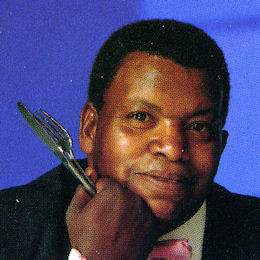
Posts mit dem Label Washington_Dinah werden angezeigt. Alle Posts anzeigen

Mittwoch, 14. Dezember 2016

14.12. DeFord Bailey, Judy Roderick, Linda Hopkins, Tracy K Mastaler, Ulrich Ellison * Dinah Washington, Oscar "Buddy" Woods +


1899 DeFord Bailey*
1924 Linda Hopkins*
1942 Judy Roderick*
1955 Oscar "Buddy" Woods+
1963 Dinah Washington+
1980 Ulrich Ellison*
Tracy K Mastaler*


Happy Birthday


DeFord Bailey  *14.12.1899


DeFord Bailey (* 14. Dezember 1899 in Carthage im Smith County in Tennessee; † 2. Juli 1982 in Nashville in Tennessee) war ein schwarzer, US-amerikanischer Old-Time-Musiker.
Inhaltsverzeichnis
Leben
DeFord Bailey wurde 1899 in Carthage im US-Bundesstaat Tennessee geboren. Durch eine Lähmungserkrankung im Kindesalter litt er an Kleinwüchsigkeit. Von seinem Vater und seinem Onkel erlernte er die Instrumente Banjo, Gitarre und Mundharmonika. 1925 entdeckte ihn der Mundharmonikaspieler Dr. Humphrey Bate und brachte ihn an die Grand Ole Opry in Nashville. Dort wurde er, obwohl Afroamerikaner, als "harmonica wizard", als "Hexenmeister der Harmonika" gefeiert. Besonders berühmt war sein "Pan America Blues", bei dem er mit der Mundharmonika eine Lokomotive nachahmte. 1927 und 1928 nahm er einige Platten auf.
Im Jahr 1941 kam die Kündigung von der Grand Ole Opry. Der offizielle Opry-Standpunkt lautet, dass der Musiker aufgrund seiner Faulheit entlassen wurde. Angeblich weigerte er sich, neue Stücke in sein Repertoire aufzunehmen. Laut DeFord Bailey und seinen Anhängern waren aber rassistische Gründe - er wurde in seinen späteren Jahren nur noch als Maskottchen angekündigt und seine Auftrittszeit wurde immer mehr verkürzt - sowie DeFords finanzielle Forderungen - er verdiente pro Auftritt nur fünf Dollar - für die Kündigungen verantwortlich. Nach seiner Entlassung aus der Grand Ole Opry schlug sich DeFord Bailey als Schuhputzer in Nashville durch. Nur noch bei wenigen Gelegenheiten, etwa wenn es ein Special von Countrystars aus den frühen Tagen dieser Musik in der Grand Ole Opry gab, trat er öffentlich auf. DeFord Bailey starb am 2. Juli 1982 in Nashville. Zu seinem Begräbnis erschienen viele alte Countrystars, etwa Roy Acuff oder Bill Monroe. DeFord Bailey gilt als Wegbereiter schwarzer Countrymusiker wie Charley Pride, Stoney Edwards und O.B. McClinton. Bill Monroe, der Vater der Bluegrass-Musik zählte DeFord Bailey stets zu seinen großen Vorbildern.
Pan American Blues wurde 2007 in die Grammy Hall of Fame aufgenommen. 2005 ist Bailey in die Country Music Hall of Fame aufgenommen worden.

DeFord Bailey (December 14, 1899 – July 2, 1982) was an American country music and blues star from the 1920s until 1941. Bailey was both the first performer to be introduced as playing on the Grand Ole Opry and also the first African-American performer on the show. He played several instruments but is best known for his harmonica tunes.
Career
A grandson of slaves,[3] Bailey was born near the Bellwood community in Smith County, Tennessee,[4][5] and learned to play the harmonica at the age of three[3][5] when he contracted polio (or as it was called at the time 'infantile paralysis').[5] During his year-long confinement to bed he developed his distinctive style of playing.[6] In 1918, he moved to Nashville performing locally as an amateur. His first documented radio appearance was June 19, 1926 on WSM in Nashville. On December 10, 1927, he premiered his trademark number, "Pan American Blues" (named for the Louisville and Nashville Railroad's Pan-American) on a show then known as the "WSM Barn Dance". At that time "Barn Dance" aired after NBC's classical music show, the "Music Appreciation Hour". While introducing Bailey, WSM station manager and announcer George D. Hay exclaimed on-air: “For the past hour, we have been listening to music largely from Grand Opera, but from now on, we will present ‘The Grand Ole Opry.’”[4]
Bailey also had several records issued in 1927-1928, all of them harmonica solos. In 1927 he recorded for Brunswick records in New York City,[7][8] while in 1928 he recorded eight sides[2] for Victor in Nashville,[7][8] of which three were issued on several labels, including Victor, Bluebird and RCA. Emblematic of the ambiguity of Bailey's position as a recording artist is the fact his arguably greatest recording, John Henry, was released separately in both RCA's 'race' and 'hillbilly' series.[9]
Bailey was a pioneer member of the WSM Grand Ole Opry, and one of its most popular performers, appearing on the program from 1927 to 1941.[10] During this period he toured with many major country stars, including Uncle Dave Macon, Bill Monroe, and Roy Acuff.[11] Like other black stars of his day traveling in the South and West, he faced many difficulties in finding food and accommodation because of the discriminatory Jim Crow laws.[12]
Bailey was fired by WSM in 1941 because of a licensing conflict with BMI-ASCAP, which prevented him from playing his best known tunes on the radio.[13] This effectively ended his performance career, and he spent the rest of his life shining shoes and renting out rooms in his home to make a living. Though he continued to play the harp, he almost never performed publicly. One of his rare appearances occurred in 1974, when he agreed to make one more appearance on the Opry. This became the occasion for the Opry's first annual Old Timers' Show.[4] He died on July 2, 1982 in Nashville. [2][14] and is buried in Greenwood Cemetery there.[15]
In 2005, Nashville Public Television produced the documentary DeFord Bailey: A Legend Lost.[16] The documentary was broadcast nationally through PBS. Later that year, Bailey was inducted into the Country Music Hall of Fame on November 15, 2005. Joining him in the 2005 class were country-pop superstar Glen Campbell and the band Alabama.[10] On June 27, 2007, the DeFord Bailey Tribute Garden was dedicated at the George Washington Carver Food Park in Nashville.[17] The Encyclopedia of Country Music called him "the most significant black country star before World War II." 
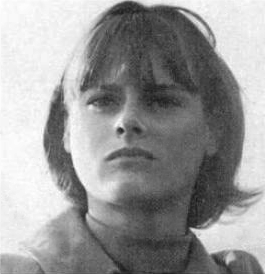
DeFord Bailey - Fox Chase 
DeFord Bailey - Fox Chase (From "National Life Grand Ole Opry" 1967) 


https://www.youtube.com/watch?v=_e7VBJTHWxo 


Judy Roderick  *14.12.1942


Judith Allen "Judy" Roderick (December 14, 1942 – January 22, 1992) was an American folk and blues singer and songwriter, described by Allmusic as: "One of the finest white folk/blues singers of the early to mid-'60s."
She was born in Wyandotte, Michigan to Howard and Emily Roderick, and grew up in Elkhart, Indiana.[2] She attended the University of Colorado in Boulder, and began singing blues, folk and country music and playing guitar in clubs there and in Denver.[1][3]
After moving to New York in the early 1960s, she was heard by manager Lee Silberstein, who secured her a record deal with Columbia Records.[4] Her first album, Ain't Nothin' But The Blues, produced by Bobby Scott, was released in 1964. Described at Allmusic as "an eclectic mix of traditional acoustic folk tunes and large arrangements of blues tunes", it featured John Hammond Jr. on harmonica. She performed at the 1964 Newport Folk Festival,[2] and at many leading club venues in the eastern United States, developing a loyal following,[1] but a second album for Columbia was never completed after Roderick and Scott disagreed on the direction it should take.[3][5]
She was signed for Vanguard Records by Maynard Solomon, and recorded her second and best-regarded album, Woman Blue, released in 1965. Again a mixture of blues and folk material, from a variety of sources, it featured musicians Artie Traum, Dick Weissman, Russ Savakus, Todd Sommer and Paul Griffin.[6] The song "Woman Blue" was a folk song recorded by many artists, usually titled "I Know You Rider", and made more popular by the Grateful Dead.[7] The album was issued by Fontana in the UK in 1966, and Roderick went to Britain to promote the record.[4] She was also featured on an album of Newport Folk Festival performances issued by Vanguard.[1][2] However, by the time of the Vanguard releases, her style of music was being overtaken by the emergence of folk rock, and sales of her records were disappointing.[3][5]
She began writing songs in collaboration with Bill Ashford, and returned to Colorado in 1969, forming a new band, 60,000,000 Buffalo. Their album of original material, Nevada Jukebox, produced by Bill Szymczyk, was released on the Atco label in 1972.[8] However, the band broke up the following year.[1]
Roderick moved to Hamilton, Montana, where she continued to perform, often with partner Dexter Payne in his swing band, The Big Sky Mudflaps; she sang some of the songs on two of the band's albums. In 1982, she and Payne formed a new band, Judy Roderick & The Forbears, and recorded a self-titled album with musicians including Mac Rebennack (Dr. John). The album received a limited independent release on cassette only in 1984.[4][2]
A diabetic since childhood, Judy Roderick died of a heart attack from complications due to the disease in 1992 at the age of 49.


Judy Roderick - Country Girl Blues (by EarpJohn) 


Linda Hopkins  *14.12.1924


Linda Hopkins (* 14. Dezember 1924 in New Orleans, Louisiana, USA) ist eine US-amerikanische Blues- und Gospel-Sängerin. Linda Hopkins wurde als Elfjährige von Mahalia Jackson entdeckt und bereits zu Lebzeiten zur Legende. Sie war der Star vieler musikalischer Revuen; in den 1990er Jahren tourte sie mit Maxine Weldon in der Show Wild Women Blues.

Linda Hopkins (born December 14, 1924)[2] is an African American actress and blues and gospel singer. She has recorded classic, traditional, and urban blues, and performed R&B and soul, jazz, and show tunes, all with distinction and style since the 1950s.[1]
Biography
Born Melinda Helen Matthews in New Orleans, Louisiana, United States,[2] the second child of the Reverend Fred Matthews, Sr. and Hazel Smith, Hopkins grew up in the section of New Orleans known by the locals as "Zion City". She went to school in "Gert Town" which bordered the Xavier University of Louisiana.
Known as "Lil Helen Matthews" as a child, she was discovered at the age of eleven by Mahalia Jackson when she persuaded Jackson to perform at a fundraiser at her home church, St. Mark's Baptist Church. Lil Helen opened the children's fundraising program with a rendition of Jackson's gospel hit, "God Shall Wipe Your Tears Away". Jackson was reportedly so impressed by Helen's determination and talent that she arranged for the young girl to join the Southern Harp Spiritual Singers in 1936. Hopkins remained with the group for a decade.
She first saw Bessie Smith perform Empty Bed Blues at The New Orleans Palace Theatre in 1936. Hopkins greatly admired Smith and later won critical plaudits for her rendition of Smith in the 1959 theatrical presentation Jazz Train.[1] Matthews left New Orleans in the 1950s, and, in 1951, began performing at Slim Jenkin's Night Club in the Oakland/Richmond area. There she met Johnny Otis and Little Esther Phillips who created her stage name, Linda Hopkins.[2] In 1952, Hopkins toured Hawaii and Japan for two years which included a stint with Louis Armstrong at The Brown Derby in Honolulu. She recorded for the Crystalette, Forecast, Federal and Atco labels and often appeared at the Apollo Theatre in Harlem.[2]
In 1960, Hopkins first toured Europe in the Broadway Express, the restaged production of Jazz Train. She recorded "Shake a Hand" with Jackie Wilson on the Brunswick label, which is her sole hit single reaching #21 on the US Billboard R&B chart.[1] She also attended Stella Adler's Acting School in New York City.[2]
During the 1970s, Hopkins performed in the Broadway musical, Purlie, and with Sammy Davis, Jr. for nine months. In addition, she performed at President Jimmy Carter's inaugural ball. In 1972 she was awarded a Tony and Drama Desk Award for her performance in Inner City.[2]
Hopkins starred in Me and Bessie, a one-woman show paying homage to blues singer Bessie Smith, conceived and written by Hopkins and Will Holt. The world premiere was in Washington, D.C. in 1974. After a run in Los Angeles it transferred to the Ambassador Theatre on Broadway. The critically acclaimed show ran for thirteen months and 453 performances, and Hopkins was nominated for the Drama Desk Award for Unique Theatrical Experience.[2]
In 1985, Black and Blue, written by Claudio Segovia and Hector Orezzoli, premiered in Paris at the Théâtre Musical Paris. The musical revue opened on Broadway in 1989 and ran for 829 performances. Hopkins received a Tony Award nomination for Best Performance by an Actress in a Musical. Wild Women Blues, conceived by Hopkins and produced by Mel Howard, premiered in Berlin in 1997. In 1998 Hopkins celebrated 50 years in show business.
In 2005, Motherin' The Blues: Linda Hopkins - The Continuing Legacy of The Blues Woman, researched and written by Erany Barrow-Pryor, Ph.D. through the Department of English at UCLA, was published.[3]
In October 2005, Hopkins received a star on the Hollywood Walk of Fame.


Linda Hopkins-Me and Dirty Blues 


Tracy K Mastaler  (Tracy K) *14.12.


In a business where safety nets are non existent and successful female harmonica players are a rarity, you have to admire the plucky and positive spirit of Tracy K. She’s a terrific entertainer with a committed sense of purpose. Through shear determination and talent she has indelibly stamped her versatility on the Canadian blues/roots scene with her singing, songwriting, and playing that little tin biscuit which has become her trademark asset. She’s a gifted award-winning writer whose broad catalogue includes songs for a Hollywood movie, for CBC's "Canada Reads, Ontario Rocks", and themed originals for festival workshops. 

Tracy K immerses herself into the audience at every live show, with fiery passion and an engaging energy that sets her apart as a performer. She’s shared stages with today's 'A-list' international blues performers and hires first rate players who give her music the professional edge. Among her personal reinventions is her contemporary blues band, wherein Tracy K kicks it up a notch with amplified harp and tests the limits of her throaty rasp inspired by vocal benchmarks Bonnie Raitt and Koko Taylor. Her acoustic Blues Duo with partner Jamie “Snakeman” Steinhoff reflects some of Tracy's fondest musical influences. Jamie's mastery on acoustic, dobro and lap steel guitars derives from his well-informed history of early blues and folk. 'Snakeman's Canned Heat Salsa' and 'Tracy K's Stolen Apple Jelly' sold at their shows create the homey vibe that you'd find at Chicago's legendary Maxwell Street Market back in the day. With their five-star rated album "Canned Heat" they tour house concerts and soft seaters, and have opened for Ramblin' Jack Elliot and shared a double bill with John Sebastian. Tracy K’s rarer forays into jazz range from single guitar accompaniment to a Billie Holiday tribute given the most lavish treatment with the Thunder Bay Symphony Orchestra.

Tracy K has always been sought out for her harmonizing skills over the years for live work and sessions, recently recording harmonies on a project at Ardent Studios in Memphis in early 2015. In the late 1980s Tracy K worked as a live and session vocalist in Toronto. Years later she would be included to perform at the Toronto Blues Society's Harmonica Workshop and their prestigious Women's Blues Revue. Tracy K's gig history lists blues, jazz and folk festivals, concerts, various tributes, fundraisers and women-in-blues events. Her touring map spans Canada into North Dakota, Minnesota, and Montana to Tennessee and Mississippi, and as far south as the Caribbean. Tracy K has been booked multiple times by many events including the Winnipeg Jazz Fest, Saskatchewan Mid-Winter Blues Fest, Live from the Rock Fest, Red Rock, Ontario (headlining in 2014), Thunder Bay Blues Fest, Greatwoods Music Fest in Manitoba and the Winnipeg BBQ & Bluesfest. She’s opened for blues legend James Cotton and shared a playbill (and photo) with Koko Taylor.

Tracy K was unknown to locals at the inaugural Thunder Bay Blues Festival. An instant hit with her crowd-pleasing manner she was back for an encore in 2003. She moved to Thunder Bay in 2004 positively impacting the local music community over the coming years. She created and hosted a weekly Sunday Night Blues Jam at the local Legion where she was dubbed by fans as 'Tracy K Jr.' whenever she sat in on drums! Twice she won regional competitions to represent Thunder Bay at the International Blues Challenge in Memphis Tennessee, as a band and then as a duo. In 2015 Tracy returned to Memphis as one of the judges. 2014 also saw Tracy K included by invite on Ruf Records 'Harmonica Ladies' compilation album and on the globally popular Mary4Music's "Keeping the Blues Alive: Volume Six". She has now moved back to Manitoba and it’s renown music scene where she is recording her next release. Not bad for a musician doubling as mom to three kids - now an empty nester, time has come for this undeniable musician to soar herself.


AWARDS

International Blues Challenge Regional Winner/Memphis Participant - Thunder Bay 2013 band & 2014 duo

International Songwriting Competition Award Recipient BLUES and PERFORMANCE

Ontario Independent Music Award BEST BLUES SONG

Toronto Blues Society Talent Search First Runner Up

Winnipeg Blues.com HARMONICA PLAYER of the Year

Winnipeg Blues.com FEMALE VOCALIST of the Year

Nominee for Winnipeg Blues.com ELECTRIC ACT of the Year


Tracy K and Jamie Steinhoff"Diddy Wah So" 


Ulrich Ellison  *14.12.1980


Für E-Gitarren Fans nicht nur ein Leckerbissen, sondern ein Pflichttermin !

Austin, Texas ist bekannt als ein Mekka für Gitarristen in Sachen Blues und Rock.

Seit acht Jahren mischt mit Ulrich Ellison auch ein Europäer dort kräftig mit.
Geboren in Graz, wuchs er mit der Musik der Eighties wie Mike Oldfield, Peter Gabriel oder The Police auf, doch die Plattensammlung seiner Eltern enthielt auch Miles Davis, Django Reinhard und Booker T.
Ein Musikstudium brachte ihn nach Wien, wo er bald von den Granden der Wiener Studioszene entdeckt wurde. Bereits mit 23 Jahren spielt er für zahlreiche Stars des Austropop.

Aber die Wiener Pop-/Rockszene war erst der Anfang: Nach abgeschlossenem Jazzstudium ergatterte Ellison ein US Scholarship. 2007 folgt der Sprung in die amerikanische Szene.
Inzwischen konnte er dort drei der begehrten Downbeat-Jazzpreise abräumen und zählt zu Austin´s bekanntesten Musikern.
Gerade erst (19.03.2015) wurde er beim Austin Music Award als “Best Blues/Funk/Soul Band" gekrönt !

200+ Konzerte im Jahr, Fernseh- und Festivalauftritte zählen mittlerweile zum Alltag.
Jetzt ist der Gitarrist auf seiner zweiten Europatournee und stellt sein neues Album „Dreamchaser” vor, das deutlich rockiger und blueslastiger als die bisherigen Releases ausgefallen ist.

Der Musiker beeindruckt sein Publikum mühelos und kontinuierlich mit einem Gitarrenstil, der leicht mit den Besten in der Welt konkurrieren kann. Die Vielfalt von verschiedenen Stilen wie Blues Rock, Jam und Jazz, seine Stimme und sein Gitarrenspiel hinterlassen einen dauerhaften Eindruck.

Ulrich Ellison (born December 14, 1980) is an American singer, songwriter, guitarist and Music Producer from Austin, Texas.[1][2][3] He is the founder of the group “Ulrich Ellison and Tribe” , which won the 2015 Austin Music Award for “Best Funk/Soul/Blues” live band.[4][5]

Life and career

Ellison was born and raised in Graz, Austria. He originally started on classical piano and got admitted to the Johann Josef Fux Konservatorium. His career as a guitarist started after moving to Vienna where he studied music at the University of Music and Performing Arts, Vienna, while playing for several Austrian pop and rock acts. In 2007 Ellison came to the United States on a Fulbright scholarship and studied jazz guitar at the Sarah and Ernest Butler School of Music at the University of Texas at Austin. In his two years as a US student he won three of the International Downbeat Awards in the category “Blues/Rock/Pop soloist, college winner”. After graduation he became sideman for several notable Austin acts, including soul singer Nakia and Grammy-nominated singer Abra Moore. In 2010 he founded the “Ulrich Ellison Trio” and has since then progressed his sound in several formations and different lineups.[3][6][7][8][9][10]
Awards and recognition

    2008 Downbeat Student Award, Winner, “Blues/Rock/Pop Soloist”[11]
    2009 Downbeat Student Award, listed for Outstanding Performance, “Blues/Rock/Pop
    Soloist”[11][12]
    2010 Downbeat Award, “Blues/Rock/Pop Soloist”, outstanding performance[11][not in
    citation given]
    2014 Austin Music Award, “Best Funk/Soul/Blues” live band
https://en.wikipedia.org/wiki/Ulrich_Ellison

Ullrich Ellison & Tribe: Live in Switzerland - FULL CONCERT 
SETLIST: (scroll down or click "show more" to see full list):
00:05 MACHETE
05:55 SLEEPLESS
12:15 CHANGE OF ONE MAN
17:32 I’LL BE ON MY WAY
25:00 THE TRAVELLER
32:30 RESCUE ME
37:27 ROLLIN + TUMBLIN
43:06 FEET BACK ON THE GROUND
47:18 RIVER OF LIFE
50:50 LITTLE WING
01:00:54 WAY DOWN ON THE GROUND
01:06:08 WAITING FOR A BETTER DAY
01:14:00 OUTTAKES - BONUS…

The concert took place April 22, 2016 at the NOIZZPRODUCTIONZZ Studios in Biel-Benken. Presented by RONS ROCKPALAST.

ULRICH ELLISON & TRIBE are:
ULRICH ELLISON - SABINE ELLISON - JOEL DUHON
check out here: http://ulrichellison.com


Ulrich Ellison Trio - Driftin Blues 
Ulrich Ellison - vocals, guitar

Brady Muckelroy - bass

David Sierra - drums


R.I.P.


Dinah Washington  +14.12.1963


Dinah Washington (* 29. August 1924 in Tuscaloosa, Alabama; † 14. Dezember 1963 in Detroit, Michigan; eigentlich Ruth Lee Jones) war eine US-amerikanische Sängerin des Swingjazz, Rhythm and Blues und der Popmusik.
Ihre Familie zog, als sie drei Jahre alt war, nach Chicago. Sie sang schon früh im Kirchenchor und wurde Mitglied in Salle Martin's Gospel Choir, der in der Umgebung von Chicago tourte. Als sie 15 Jahre alt war, gewann sie einen Amateurwettbewerb, der ihre Profikarriere einleitete. Ihre Aktivitäten teilten sich aber zunächst auf: Einerseits leitete sie den Kirchenchor, andererseits spielte sie Klavier in Clubs. Mit 18 Jahren wechselte sie vom Gospel zum Jazz.
1942 spielte sie in der Garrick Stage Bar, wo sie Joe Glaser hörte. Dieser empfahl sie an Lionel Hampton. Von 1943 bis 1946 sang sie in seiner Band; er veranlasste auch, dass sie ihren Namen in Dinah Washington änderte. Ihren ersten Hit hatte sie 1943 mit Evil Gal Blues, den Leonard Feather für sie schrieb und arrangierte. Begleitet wurde sie von Mitgliedern der Hampton-Band. Das Stück erschien bei dem kurzlebigen Label Keynote Records. In dieser Phase wurde ihr Gesang immer jazziger, wie auch Aufnahmen mit Lucky Thompson aus dem Jahr 1945 belegen.
Nach dem Ende des Keynote-Labels wechselte sie zu Mercury Records bzw. dessen Schwester-Label EmArcy. 1947 nahm sie ihre ersten R&B-Platten auf. Ihren ersten Hit in den Billboard-Charts hatte sie im Juni 1950 mit dem damals populären Johnny Green-Song I Wanna Be Loved (#22). Der nächste Erfolg gelang ihr im Dezember 1954 mit dem Song Teach Me Tonight von Gene De Paul und Sammy Cahn(#23).
1955 nahm sie ein Album mit dem Orchester von Quincy Jones auf (The Swingin' Miss D). 1957 trat sie beim Newport Jazz Festival auf. Ähnlich wie auch Ella Fitzgerald ließen ihre Produzenten sie auch Songbook-Alben aufnehmen; 1957 entstand das Fats Waller Songbook, 1958 nahm sie Songs von Bessie Smith auf. Ihren Durchbruch erlebte sie 1959 mit What a Diff'rence a Day Makes, der ihr bekanntester Titel werden sollte (Grammy Beste R&B-Darbietung). Ähnlich wie bei Nat King Cole oder bei Ray Charles veränderte sich ihr Songmaterial durch die Arrangements mehr zum künstlerischen Mainstream und zur populären Musik. So konzentrierte sie sich auf Balladen wie Unforgettable (1959) mit Streicherbegleitung. 1962 wechselte sie zu Roulette Records, wo sie bei ihren Platteneinspielungen von Studioorchestern begleitet wurde, jedoch das künstlerische Niveau der Mercury-Aufnahmen nicht halten konnte. Kurz vor ihrem Tod entstanden noch beachtliche Live-Aufnahmen von drei Radio-Mitschnitten aus dem Birdland-Club, bei denen sie unter anderem von Joe Zawinul begleitet wurde. Sie starb am 14. Dezember 1963 mit 39 Jahren an einer Überdosis aus Schlaftabletten und Alkohol.
Dinah Washington wurde 2003 in die Blues Hall of Fame aufgenommen. Drei ihrer Songs wurden bisher in die Grammy Hall of Fame aufgenommen: What a Diff'rence a Day Makes (1998), Teach Me Tonight (1999) und Unforgettable (2001).[1] Bekannt war sie als die Queen of Blues. In ihrem Gesang vereinte sie die Härte des Gospel-Shouting mit der Zärtlichkeit der gekonnt phrasierenden, kultivierten Balladensängerin. Sie beeinflusste mit ihrem Gesangsstil viele nachfolgende Künstler wie Nancy Wilson oder Diane Schuur.
Dinah Washington hatte ein turbulentes Privatleben und war sieben Mal verheiratet, unter anderem 1957 bis 1959 mit dem R&B-Saxophonisten Eddie Chamblee, der auch bei ihren Plattenaufnahmen dieser Zeit mitwirkte, und 1961 bis 1962 mit dem zwölf Jahre jüngeren Schauspieler Rafael Campos. Ihr letzter Ehemann war der American-Football-Profi Dick Lane, der sie auch leblos vorfand. Die Autopsie ergab eine letale Dosis von Secobarbital und Amobarbital.

Dinah Washington, born Ruth Lee Jones (August 29, 1924 – December 14, 1963), was an American singer and pianist, who has been cited as "the most popular black female recording artist of the '50s".[1] Primarily a jazz vocalist, she performed and recorded in a wide variety of styles including blues, R&B, and traditional pop music,[1] and gave herself the title of "Queen of the Blues".[2] She is a 1986 inductee of the Alabama Jazz Hall of Fame,[3] and was inducted into the Rock and Roll Hall of Fame in 1993.
Career
Ruth Lee Jones was born in Tuscaloosa, Alabama, and moved to Chicago as a child. She became deeply involved in gospel and played piano for the choir in St. Luke's Baptist Church while still in elementary school. She sang gospel music in church and played piano, directing her church choir in her teens and being a member of the Sallie Martin Gospel Singers. She sang lead with the first female gospel singers formed by Ms. Martin, who was co-founder of the Gospel Singers Convention. Her involvement with the gospel choir occurred after she won an amateur contest at Chicago's Regal Theater where she sang "I Can't Face the Music".[4]
After winning a talent contest at the age of 15, she began performing in clubs. By 1941-42 she was performing in such Chicago clubs as Dave's Rhumboogie and the Downbeat Room of the Sherman Hotel (with Fats Waller). She was playing at the Three Deuces, a jazz club, when a friend took her to hear Billie Holiday at the Garrick Stage Bar. Club owner Joe Sherman was so impressed with her singing of "I Understand", backed by the Cats and the Fiddle, who were appearing in the Garrick's upstairs room, that he hired her. During her year at the Garrick - she sang upstairs while Holiday performed in the downstairs room - she acquired the name by which she became known. She credited Joe Sherman with suggesting the change from Ruth Jones, made before Lionel Hampton came to hear Dinah at the Garrick.[5] Hampton's visit brought an offer, and Washington worked as his female band vocalist after she had sung with the band for its opening at the Chicago Regal Theatre.
She made her recording debut for the Keynote label that December with "Evil Gal Blues", written by Leonard Feather and backed by Hampton and musicians from his band, including Joe Morris (trumpet) and Milt Buckner (piano).[1][6][7] Both that record and its follow-up, "Salty Papa Blues", made Billboard's "Harlem Hit Parade" in 1944.[8]
She stayed with Hampton's band until 1946 and, after the Keynote label folded, signed for Mercury Records as a solo singer. Her first record for Mercury, a version of Fats Waller's "Ain't Misbehavin'", was another hit, starting a long string of success. Between 1948 and 1955, she had 27 R&B top ten hits, making her one of the most popular and successful singers of the period. Both "Am I Asking Too Much" (1948) and "Baby Get Lost" (1949) reached Number 1 on the R&B chart, and her version of "I Wanna Be Loved" (1950) crossed over to reach Number 22 on the US pop chart.[8] Her hit recordings included blues, standards, novelties, pop covers, and even a version of Hank Williams' "Cold, Cold Heart" (R&B Number 3, 1951). At the same time as her biggest popular success, she also recorded sessions with many leading jazz musicians, including Clifford Brown and Clark Terry on the album Dinah Jams (1954), and also recorded with Cannonball Adderley and Ben Webster.[1][7]
In 1959, she had her first top ten pop hit, with a version of "What a Diff'rence a Day Made",[9] which made Number 4 on the US pop chart. Her band at that time included arranger Belford Hendricks, with Kenny Burrell (guitar), Joe Zawinul (piano), and Panama Francis (drums). She followed it up with a version of Irving Gordon's "Unforgettable", and then two highly successful duets in 1960 with Brook Benton, "Baby (You've Got What It Takes)" (No. 5 Pop, No. 1 R&B) and "A Rockin' Good Way (To Mess Around and Fall in Love)" (No. 7 Pop, No. 1 R&B). Her last big hit was "September in the Rain" in 1961 (No. 23 Pop, No. 5 R&B).[8]
According to Richard S. Ginell at Allmusic:[1]
    "[Washington] was at once one of the most beloved and controversial singers of the mid-20th century - beloved to her fans, devotees, and fellow singers; controversial to critics who still accuse her of selling out her art to commerce and bad taste. Her principal sin, apparently, was to cultivate a distinctive vocal style that was at home in all kinds of music, be it R&B, blues, jazz, middle of the road pop - and she probably would have made a fine gospel or country singer had she the time. Hers was a gritty, salty, high-pitched voice, marked by absolute clarity of diction and clipped, bluesy phrasing..."
Washington was well known for singing torch songs.[10] In 1962, Dinah hired a male backing trio called the Allegros, consisting of Jimmy Thomas on drums, Earl Edwards on sax, and Jimmy Sigler on organ. Edwards was eventually replaced on sax by John Payne. A Variety writer praised their vocals as "effective choruses".[11]
Washington's achievements included appearances at the Newport Jazz Festival (1955–59), the Randalls Island Jazz Festival in New York City (1959), and the International Jazz Festival in Washington D.C. (1962), frequent gigs at Birdland (1958, 1961–62), and performances in 1963 with Count Basie and Duke Ellington.
Death
Early on the morning of December 14, 1963, Washington's seventh husband, football great Dick "Night Train" Lane, went to sleep with his wife, and awoke later to find her slumped over and not responsive. Doctor B. C. Ross came to the scene to pronounce her dead.[11] An autopsy later showed a lethal combination of secobarbital and amobarbital, which contributed to her death at the age of 39. She is buried in the Burr Oak Cemetery in Alsip, Illinois.


Dinah Washington - Long John Blues (w/ lyrics)
Written By Dinah Washington in 1948

LYRICS:
I've got a dentist who's over seven feet tall
Yes I've got a dentist who's over seven feet tall
Long John they call him, and he answers every call
Well I went to Long Johns office and told him the pain was killin'
Yes I went to Long Johns office and told him the pain was killin'
He told me not to worry, that my cavity just needed fillin'
He said "when I start drillin', I'll have to give you novocaine"
He said, "Yes, when I start drillin', I'll have to give you novocaine
Cause ev'ry woman just can't stand the pain"
He took out his trusted drill
And he told me to open wide
He said he wouldn't hurt me
But he'd fill my hole inside
Long John, Long John, you've got that golden touch
You thrill me when you drill me, and I need you very much
When he got through, he said "Baby that will cost you ten"
Yes when he got through, he said "Baby that will cost you ten
Six months from now, come back and see me again"
Say you're supposed to see your dentist
'Bout twice a year, that's right
But I think I feel it bobbin'
Yes I'll go back there tonight
Long John, Long John, don't ever move away
Say I hope I keep on achin' so I can see you every day.


Oscar "Buddy" Woods  +14.12.1955


Oscar "Buddy" Woods (c. 1895 – December 14, 1955)[1][2] was an American Texas blues guitarist, singer and songwriter.
Woods, who was an early blues pioneer in lap steel, slide guitar playing, recorded thirty-five tracks between 1930 and 1940. He recorded solo and as part of the duo, the Shreveport Home Wreckers, and with a six/seven piece group, the Wampus Cats. Early in his career he backed Jimmie Davis on some of his recordings. Woods's best known song was "Lone Wolf Blues", from which came his billing as 'The Lone Wolf'.[1]
Life and career
He was born around Natchitoches, Louisiana, United States, with the birth year variously listed as somewhere between 1892 and 1900. He relocated to Shreveport, Louisiana around 1925, where he started to work as a street musician and played for tips at juke joints.[1] Various sources claim that he learned the rudiments of playing a bottleneck slide guitar after watching an Hawaiian music ensemble, who toured Louisiana in the early part of the 1920s.[3] Woods teamed up with another guitar player, Ed Schaffer, and played billed as the Shreveport Home Wreckers at The Blue Goose Grocery and Market, which was a speakeasy in Shreveport.[4] In May 1930, the duo recorded for Victor Records in Memphis, Tennessee.[1]
In May 1932, the Shreveport Home Wreckers backed Jimmie Davis on four sides recorded in Dallas, Texas. They also recorded another two tracks on their own, and the released single saw them billed as 'Eddie and Oscar'. The significance of this mixed-race recording session spilled over into a joint tour - a unique sociological situation at that time in the South.[1]
Woods next recorded for Decca in March 1936 in New Orleans.[1] The tracks included Woods best known piece, "Lone Wolf Blues," and his first take of the self-penned "Don't Sell It, Don't Give It Away."[3] The releases sold well, and by the time Woods recorded again in October 1937, the Shreveport Home Wreckers had swelled in numbers to become the Wampus Cats. They backed both Woods, and a female singer and pianist, Kitty Gray,[5] on several tracks recorded in 1937 and the following year for Vocalion.[1]
In October 1940, Woods made his final five track recording for the Library of Congress.[1] Following the session, John Lomax wrote: "Oscar (Buddy) Woods, Joe Harris and Kid West are all professional Negro guitarists and singers of Texas Avenue, Shreveport.. The songs I have recorded are among those they use to cajole nickels and dimes from the pockets of listeners."[6] Local records suggest that Woods continued to live in Shreveport, and after his recording career was over, he played again as a street musician and at dances.[1]
Woods died in Shreveport in December 1955.[1]
Style and legacy
Woods played his guitar flat on his lap, in a similar manner to the Hawaiians, using a broken bottleneck slide technique. Lead Belly also used a slide technique, but held his guitar in the normal manner. It is suggested that the popularity of slide guitar playing in the Mississippi delta at that time, may have arisen from the appearance of Hawaiian musicians at the 1893 Chicago World's Fair.[7][8]
The Allmusic music journalist, Uncle Dave Lewis, noted of Woods, "in the style of lap steel, bottleneck blues slide guitar; some experts believe he may have been the primary force behind the creation of this whole genre".[1]
Woods guitar playing techiques were passed onto his protégé, Black Ace, who was approximately fifteen years younger than Woods, and had played with Woods around Shreveport.[6][7] The compilation album mentioned below, included both Woods and Black Ace tracks.[2]
The Shreveport Home Wreckers track, "Flying Crow Blues", was recorded in 1932. Robert Johnson used one set of its lyrics, almost word for word, for the final verse of his song, "Love in Vain" (1937).

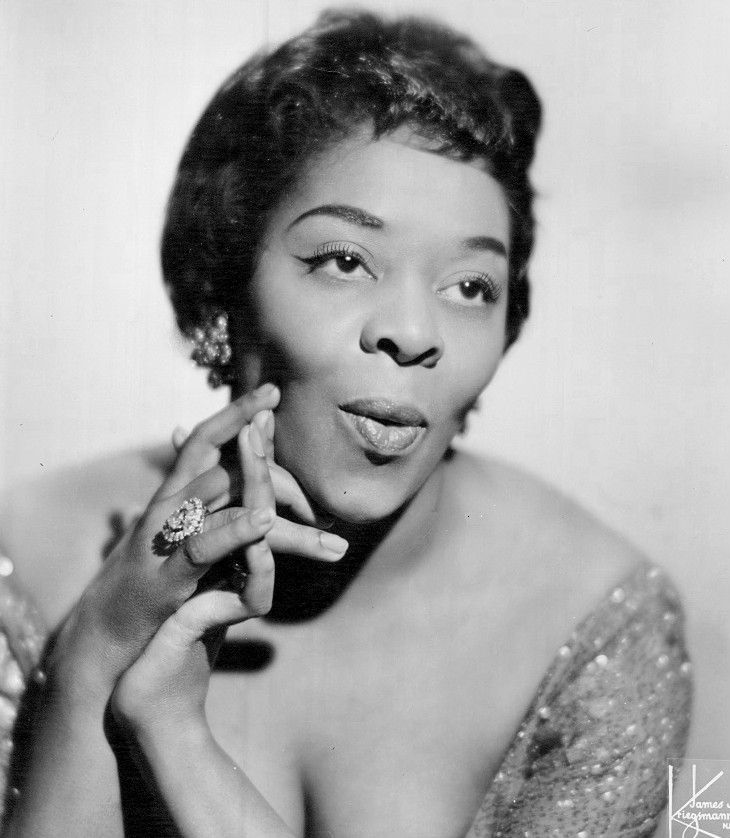
Lone Wolf Blues........Oscar Buddy Woods 
Oscar Buddy Woods was the pioneer of lap steel bottleneck blues guitar.This was recorded in New Orleans for Decca on March 21 1936. He was a Louisiana street singer known as the Lone Wolf and this was his signature tune. 


https://www.youtube.com/watch?v=M5iuGpLIK4c 

Montag, 29. August 2016

29.08. Dinah Washington, Nelsen Adelard, Dutch Tilders, Chris Beard, Earl Thomas Bridgeman, Paul Millns * Jimmy Reed, David Honeyboy Edwards, Kip Anderson +


1924 Dinah Washington*

1941 Dutch Tilders*

1944 Paul Millns*

1955 Nelsen Adelard*

1957 Chris Beard*

1960 Earl Thomas Bridgeman*

1976 Jimmy Reed+

2007 Kip Anderson+

2011 David Honeyboy Edwards+


Happy Birthday


Dinah Washington   *29.08.1924


Dinah Washington (* 29. August 1924 in Tuscaloosa, Alabama; † 14. Dezember 1963 in Detroit, Michigan; eigentlich Ruth Lee Jones) war eine US-amerikanische Sängerin des Swingjazz, Rhythm and Blues und der Popmusik.
Ihre Familie zog, als sie drei Jahre alt war, nach Chicago. Sie sang schon früh im Kirchenchor und wurde Mitglied in Salle Martin’s Gospel Choir, der in der Umgebung von Chicago tourte. Als sie 15 Jahre alt war, gewann sie einen Amateurwettbewerb, der ihre Profikarriere einleitete. Ihre Aktivitäten teilten sich aber zunächst auf: Einerseits leitete sie den Kirchenchor, andererseits spielte sie Klavier in Clubs. Mit 18 Jahren wechselte sie vom Gospel zum Jazz.
1942 spielte sie in der Garrick Stage Bar, wo sie Joe Glaser hörte. Dieser empfahl sie an Lionel Hampton. Von 1943 bis 1946 sang sie in seiner Band; er veranlasste auch, dass sie ihren Namen in Dinah Washington änderte. Ihren ersten Hit hatte sie 1943 mit Evil Gal Blues, den Leonard Feather für sie schrieb und arrangierte. Begleitet wurde sie von Mitgliedern der Hampton-Band. Das Stück erschien bei dem kurzlebigen Label Keynote Records. In dieser Phase wurde ihr Gesang immer jazziger, wie auch Aufnahmen mit Lucky Thompson aus dem Jahr 1945 belegen.
Nach dem Ende des Keynote-Labels wechselte sie zu Mercury Records bzw. dessen Schwester-Label EmArcy. 1947 nahm sie ihre ersten R&B-Platten auf. Ihren ersten Hit in den Billboard-Charts hatte sie im Juni 1950 mit dem damals populären Johnny Green-Song I Wanna Be Loved (#22). Der nächste Erfolg gelang ihr im Dezember 1954 mit dem Song Teach Me Tonight von Gene De Paul und Sammy Cahn(#23).
1955 nahm sie ein Album mit dem Orchester von Quincy Jones auf (The Swingin’ Miss D). 1957 trat sie beim Newport Jazz Festival auf. Ähnlich wie auch Ella Fitzgerald ließen ihre Produzenten sie auch Songbook-Alben aufnehmen; 1957 entstand das Fats Waller Songbook, 1958 nahm sie Songs von Bessie Smith auf. Ihren Durchbruch erlebte sie 1959 mit What a Diff’rence a Day Makes, der ihr bekanntester Titel werden sollte (Grammy Beste R&B-Darbietung). Ähnlich wie bei Nat King Cole oder bei Ray Charles veränderte sich ihr Songmaterial durch die Arrangements mehr zum künstlerischen Mainstream und zur populären Musik. So konzentrierte sie sich auf Balladen wie Unforgettable (1959) mit Streicherbegleitung. 1962 wechselte sie zu Roulette Records, wo sie bei ihren Platteneinspielungen von Studioorchestern begleitet wurde, jedoch das künstlerische Niveau der Mercury-Aufnahmen nicht halten konnte. Kurz vor ihrem Tod entstanden noch beachtliche Live-Aufnahmen von drei Radio-Mitschnitten aus dem Birdland-Club, bei denen sie unter anderem von Joe Zawinul begleitet wurde. Sie starb am 14. Dezember 1963 mit 39 Jahren an einer Überdosis aus Schlaftabletten und Alkohol.
Dinah Washington wurde 2003 in die Blues Hall of Fame aufgenommen. Drei ihrer Songs wurden bisher in die Grammy Hall of Fame aufgenommen: What a Diff’rence a Day Makes (1998), Teach Me Tonight (1999) und Unforgettable (2001).[1] Bekannt war sie als die Queen of Blues. In ihrem Gesang vereinte sie die Härte des Gospel-Shouting mit der Zärtlichkeit der gekonnt phrasierenden, kultivierten Balladensängerin. Sie beeinflusste mit ihrem Gesangsstil viele nachfolgende Künstler wie Nancy Wilson oder Diane Schuur.
Dinah Washington hatte ein turbulentes Privatleben und war sieben Mal verheiratet, unter anderem 1957 bis 1959 mit dem R&B-Saxophonisten Eddie Chamblee, der auch bei ihren Plattenaufnahmen dieser Zeit mitwirkte, und 1961 bis 1962 mit dem zwölf Jahre jüngeren Schauspieler Rafael Campos. Ihr letzter Ehemann war der American-Football-Profi Dick Lane, der sie auch leblos vorfand. Die Autopsie ergab eine letale Dosis von Secobarbital und Amobarbital.

http://de.wikipedia.org/wiki/Dinah_Washington 

Dinah Washington[needs IPA] (born Ruth Lee Jones; August 29, 1924 – December 14, 1963), was an American singer and pianist, who has been cited as "the most popular black female recording artist of the '50s".[1] Primarily a jazz vocalist, she performed and recorded in a wide variety of styles including blues, R&B, and traditional pop music,[1] and gave herself the title of "Queen of the Blues".[2] She was a 1986 inductee of the Alabama Jazz Hall of Fame,[3] and was inducted into the Rock and Roll Hall of Fame in 1993.

Life and career

Ruth Lee Jones was born in Tuscaloosa, Alabama, and moved to Chicago as a child. She became deeply involved in gospel and played piano for the choir in St. Luke's Baptist Church while still in elementary school. She sang gospel music in church and played piano, directing her church choir in her teens and being a member of the Sallie Martin Gospel Singers. She sang lead with the first female gospel singers formed by Ms. Martin, who was co-founder of the Gospel Singers Convention. Her involvement with the gospel choir occurred after she won an amateur contest at Chicago's Regal Theater where she sang "I Can't Face the Music".[4]

After winning a talent contest at the age of 15, she began performing in clubs. By 1941-42 she was performing in such Chicago clubs as Dave's Rhumboogie and the Downbeat Room of the Sherman Hotel (with Fats Waller). She was playing at the Three Deuces, a jazz club, when a friend took her to hear Billie Holiday at the Garrick Stage Bar. Club owner Joe Sherman was so impressed with her singing of "I Understand", backed by the Cats and the Fiddle, who were appearing in the Garrick's upstairs room, that he hired her. During her year at the Garrick - she sang upstairs while Holiday performed in the downstairs room - she acquired the name by which she became known. She credited Joe Sherman with suggesting the change from Ruth Jones, made before Lionel Hampton came to hear Dinah at the Garrick.[4] Hampton's visit brought an offer, and Washington worked as his female band vocalist after she had sung with the band for its opening at the Chicago Regal Theatre.

She made her recording debut for the Keynote label that December with "Evil Gal Blues", written by Leonard Feather and backed by Hampton and musicians from his band, including Joe Morris (trumpet) and Milt Buckner (piano).[1][5][6] Both that record and its follow-up, "Salty Papa Blues", made Billboard's "Harlem Hit Parade" in 1944.[7]

She stayed with Hampton's band until 1946 and, after the Keynote label folded, signed for Mercury Records as a solo singer. Her first record for Mercury, a version of Fats Waller's "Ain't Misbehavin'", was another hit, starting a long string of success. Between 1948 and 1955, she had 27 R&B top ten hits, making her one of the most popular and successful singers of the period. Both "Am I Asking Too Much" (1948) and "Baby Get Lost" (1949) reached Number 1 on the R&B chart, and her version of "I Wanna Be Loved" (1950) crossed over to reach Number 22 on the US pop chart.[7] Her hit recordings included blues, standards, novelties, pop covers, and even a version of Hank Williams' "Cold, Cold Heart" (R&B Number 3, 1951). At the same time as her biggest popular success, she also recorded sessions with many leading jazz musicians, including Clifford Brown and Clark Terry on the album Dinah Jams (1954), and also recorded with Cannonball Adderley and Ben Webster.[1][6]

In 1959, she had her first top ten pop hit, with a version of "What a Diff'rence a Day Made",[8] which made Number 4 on the US pop chart. Her band at that time included arranger Belford Hendricks, with Kenny Burrell (guitar), Joe Zawinul (piano), and Panama Francis (drums). She followed it up with a version of Irving Gordon's "Unforgettable", and then two highly successful duets in 1960 with Brook Benton, "Baby (You've Got What It Takes)" (No. 5 Pop, No. 1 R&B) and "A Rockin' Good Way (To Mess Around and Fall in Love)" (No. 7 Pop, No. 1 R&B). Her last big hit was "September in the Rain" in 1961 (No. 23 Pop, No. 5 R&B).[7]

According to Richard S. Ginell at AllMusic:[1]

    "[Washington] was at once one of the most beloved and controversial singers of the mid-20th century - beloved to her fans, devotees, and fellow singers; controversial to critics who still accuse her of selling out her art to commerce and bad taste. Her principal sin, apparently, was to cultivate a distinctive vocal style that was at home in all kinds of music, be it R&B, blues, jazz, middle of the road pop - and she probably would have made a fine gospel or country singer had she the time. Hers was a gritty, salty, high-pitched voice, marked by absolute clarity of diction and clipped, bluesy phrasing..."

Washington was well known for singing torch songs.[9] In 1962, Dinah hired a male backing trio called the Allegros, consisting of Jimmy Thomas on drums, Earl Edwards on sax, and Jimmy Sigler on organ. Edwards was eventually replaced on sax by John Payne. A Variety writer praised their vocals as "effective choruses".[4]

Washington's achievements included appearances at the Newport Jazz Festival (1955–59), the Randalls Island Jazz Festival in New York City (1959), and the International Jazz Festival in Washington D.C. (1962), frequent gigs at Birdland (1958, 1961–62), and performances in 1963 with Count Basie and Duke Ellington.

Death

Early on the morning of December 14, 1963, Washington's seventh husband, football great Dick "Night Train" Lane, went to sleep with his wife, and awoke later to find her slumped over and not responsive. Doctor B. C. Ross came to the scene to pronounce her dead.[4] An autopsy later showed a lethal combination of secobarbital and amobarbital, which contributed to her death at the age of 39. She is buried in the Burr Oak Cemetery in Alsip, Illinois.


Dinah Washington Long John Blues 


Nelsen Adelard   *29.08.1955 


Born into a show business family, Nelsen was already a professional musician at 15. A true "Blues Journeyman" Nelsen earned his stripes playing tough, gritty joints and taverns of the East Coast Blues Circuit. He opened for and shared the stage with such greats as Muddy Waters, James Cotton, Matt "Guitar" Murphy and Pine Top Perkins. Inspired by these legends, Nelsen developed a melodic driving style on both guitar and harmonics. A world class blues vocalist, Nelsen's voice is truly an expressive instrument. Striking the right balance of torment, and tenderness so essential to this style.
Nelsen recorded his first solo album "Blues Got A Hold On Me" with J Bird Records in 1999. Strong local sales and southern air play got him a deal for his second album with then fledgling label Hot Rod Records. Recording the basic tracks in LA and flying to Austin to put the finishing touches on the record with some of Austin's hottest session slingers. Jack Of All Trades was released to rave reviews in 2003.
His third album was a send up to the Louisiana style of Blues that has influenced Nelsen throughout his career. "Take Me Back" is a true showcase of Nelsen's vocal ability as well as showing off his songwriting skills, and his proficiency on guitar, harp and piano.
"Nelsen Adelard Unplugged" made it to #10 on the Living Blues Charts and features originals that have appeared on earlier albums plus some Blues standards. Engineered and produced by Richard Robinson ( Grammy Nominated engineer) who captures the raw organic dynamic of Nelsen's vocals as well as showing off his skills on guitar and harp. As Nelsen puts it "This album gives you an inside look into a weekend's worth of playing and singing with some dear friends"
2007 saw the re-release of Nelsen's first album. Aptly re-titled Blues Still Got A Hold On Me. Remastering by Richard Robinson brought the early album back to life getting strong airplay and remaining on the Roots Blues Charts for over 15 weeks.
The new release is South By Southwest. The title has nothing to do with Austin's annual music festival, but it best describes Nelsen's musical journey from Los Angeles to his new home in McComb Mississippi.
Recorded at Audiophile Studios located in the heart of the French Quarter in New Orleans, with Louisiana natives James Slaughter on bass and Greg Worley on drums the rhythms are simple but infectious and steeped in a southern groove.
The album starts out with two live songs borrowed from James Cotton's song book and taken from a show Nelsen did with his Los Angeles band before leaving town in July of 06. One More Mile and Rocket 88 give the listener a strong dose of the live shows that made Adelard a staple in the LA Blues scene for many years.
What follows are eight new originals. Spanning every facet of the Blues, From West Coast Jump, to Chicago Blues to New Orleans and back. There's even a Blues Rock number that's sure to raise some traditional eyebrows.
Adelard lives up to his "Jack Of All Trades" handle by writing and arranging all the originals as well as singing and playing guitar, harmonica and piano. He once again teams up with recording wizard Richard Robinson to cook up this very tasty slice of American Blues Pie.  
http://www.nelsenadelard.com/bio.html 


"Black and Blue" The Nelsen Adelard Band w/ Mark Norris SAX 


Dutch Tilders  *29.08.1941


Dutch Tilders (29 August 1941 – 23 April 2011), born Mattheus Frederikus Wilhelmus Tilders, anglicised as Matthew Tilders, was a Netherlands-born Australian blues singer-songwriter and guitarist. He performed and released material as a solo artist and also issued a blues-rock album with Kevin Borich, The Blues Had a Baby and They Called It Rock'n'Roll (November 1980). He has toured with John Mayall (1974), Brownie McGhee (1976, 1980s), and Taj Mahal (1986, 1990s). Tilders was diagnosed with oesophageal and liver cancer in May 2010 and died on 23 April 2011, aged 69. In May 2012 Australian Guitar magazine listed him in the top 40 on their Definitive Australian Guitarists of All Time.

Biography

Dutch Tilders was born on 29 August 1941 as Mattheus Frederikus Wilhelmus Tilders (anglicised as Matthew Frederick William Tilders)[1] in Nijmegen, Netherlands.[2][3] His father was Frederikus Theodorus Tilders (born 25 July 1913) and his mother was Cathiarina Maria (née Luermans, born 7 November 1909), his younger siblings are Wilhelmus B F (born 2 October 1942); Johanna C (born 30 May 1944); Frederikus T J (born 17 December 1945); Johannes B M (born 30 December 1947); and Bartholomeus (born 27 October 1951).[2] From the age of ten, Tilders was a member of the local church choir, after his voice broke he sang baritone and falsetto, and joined his secondary school's choir.[3][4]

The Tilders family emigrated to Melbourne, Australia in 1955, aboard the SS Fairsea.[2][3] Frederikus worked as a furniture upholsterer.[5] The family spent about a year at the Brooklyn Migrant Hostel, where Tilders worked in a local timber yard, before they moved to Frankston.[3][4] As a child Tilders had sung choral music, but later he moved towards blues music, his first paying gig was on harmonica at Collingwood Town Hall at the age of 15, at a concert also featuring Johnny O'Keefe.[3][4]

In 1959 Tilders bought his first guitar, to be able to accompany himself when playing in cafes around Melbourne.[4][6] His early influences were Big Bill Broonzy, Mississippi John Hurt and Blind Blake.[3][5][7] In 1961 he recorded a 10" album at a friend's home studio.[8] The following year he formed a duo with Shane Duckham on harmonica and they worked in the Sydney folk and blues circuit.[8] During the mid-to-late 1960s Tilders performed less frequently.[4][8]

In September 1970 Tilders appeared on TV talent show, New Faces, and was signed by one of the judges, Ron Tudor, to his Bootleg Records label.[8] Tilders released his self-titled debut album in 1972 with Brian Cadd producing and backing provided by members of Chain.[8] Australian musicologist, Ian McFarlane, described the album, which "proved the man's mastery of the blues form. One side featured Tilders playing down-home Mississippi delta acoustic blues, the flip Chicago electric blues".[8]

Tilders performed at Sunbury Pop Festivals in both January 1973 and the following year.[8] Later in 1974 he toured the United Kingdom supporting John Mayall; he also issued a split album with fellow blues-folk artist, Margret RoadKnight, Australian Jazz of the 70s Vol. 5 The Blues Singers.[8] The Canberra Times‍ '​s Michael Foster described Tilders' contributions "[he] takes side one with a selection of eight blues, all but one his own work. Like Miss Roadknight he sings the basic, 12-bar blues and like her he gets well into the feeling and expression which gave birth to the form and feeling of the blues".[9]

In the next year he used a backing band of Phil Colson on guitar (The Foreday Riders); Keith Dubber on trumpet and flugel horn; Rick Lock on drums (The Foreday Riders); John Power on bass guitar (Company Caine) and Don Reid on saxophone. They recorded his following album, Break.[8] Tony Catterall for The Canberra Times noted his style "ranges from the intimate blues-in-a-smoke-filled-café-late-at-night feeling of 'Diddie Wa Diddie' and 'Just a Dream' ... to the sheer "happy picking" of his own '21st Birthday Rag'".[10] "I'm a Mean Mistreater" was issued as a single from the album.[8]

In 1976 Tilders supported tours by US blues duo, Sonny Terry and Brownie McGhee, and then by B.B. King.[8] At their first gig King heard Tilders from backstage but had not seen him, King assumed that he was black and expressed surprise when the two were introduced.[4] For Tilders' next album, Working Man, he used a backing band of Jim Conway on harmonica (The Captain Matchbox Whoopee Band); Ray Arnott on drums, John Dubois on bass guitar, and Kerryn Tolhurst on mandolin and dobro (all from The Dingoes); and Jeff King on dobro (The Foreday Riders).[8][11]

Julie Meldrum of The Canberra Times felt he "confirms his position as the top blues performer in Australia. He continues to show his remarkable talent, which has already earned him recognition from Sonny Terry and Brownie McGee ... [he] has added a rustic flavour which makes his style more accessible than before".[12] In February 1977 the album provided a single, "Goodnight, Irene", which is a cover version of the Lead Belly 1933 blues standard.[8]

In March 1978 he appeared on Australian Broadcasting Corporation (ABC) TV series, Rocturnal, following Richard Clapton. The Canberra Times‍ '​s Bradley Wynne was impressed by Clapton and felt the "second best feature of the show was the mellow electric blues guitar" of Tilders "with that whisky Leadbelly voice".[13] In January the following year Tilders recorded a direct to disc album, Direct, which appeared in May – it was the second Australian album issued using that process.[8][14] He used a backing group of Conway with Bob Bertles on alto and soprano saxophones and Peter Howell on bass guitar with Lee Simmonds producing.[8][14]

Luis Feliu's favourable review in The Canberra Times finds Direct has "a few instrumental [tracks], a couple of romping boogie rockers and some soothing blues stories. His style is studied, synthesised from that of the old masters".[14] He compared it positively with work by Ry Cooder, Leon Redbone and Leo Kottke, where Tilders has "a strong faith in his music that gives blues lovers in Oz faith in him".[14]

During the late 1970s, Tilders also fronted bands such as the Elks, the Cyril 'B' Bunter Band, and Mickey Finn. Tilders had formed a friendship with McGhee, who considered Tilders a genuine bluesman.[4] McGhee was also collaborator and close friend of Big Bill Broonzy and the affinity between Tilders and McGhee led to several combined tours of Australian during the 1980s, generally accompanied by Conway.[4][15] In 1980 his backing band was the R&B Six, which included Mick Eliot on guitar; Charley Elul on drums; Peter Frazer on saxophone; Dave Murray on bass guitar and vocals; and Suzanne Petersen on flute and vocals.[4] Tilders and Petersen co-wrote "Tell Me How to Stop the Rain".[16]

In August 1980 Tilders worked with Kevin Borich on lead vocals and lead guitar, and his backing group The Express, to record another direct to disc album, The Blues Had a Baby and They Called It Rock'n'Roll, as a blues-rock crossover.[8] The Express line up were Michael Deep on bass guitar and John Watson on drums; they were joined in the studio by Bertles on saxophone.[8]

The Australian Women's Weekly‍ '​s Susan Moore described the album, which was issued in November, as "a vibrant blend of gruff, bluesy vocals and shivering, evocative guitar".[17] Borich told Moore that the recording process meant "[i]f you blow the last note, you have to go back and start all over again ... We didn't want a clinical sound, we wanted a completely live feeling".[17] The ensemble issued a single, "Bad Books", in April 1981.[8] In June that year Tilders opened for Scottish comedian, Billy Connolly.[18]

In September 1986, and again during the 1990s, Tilders toured with Taj Mahal.[3][19] In 1986, Tilders formed Dutch Tilders & The Blues Club with Martin Cooper on lead guitar; Winston Galea on drums and Barry Hills on bass guitar. In 1990, Cooper left the Blues Club and was replaced by Geoff Achison on lead guitar. In April 1990 they issued an album, The Blues Is My Life, which Foster noted displayed Tilders' "rough-edged voice and guitar, traditional blues from the darker side of life, but with a sometimes dour humour.[20] Also that year Tilders helped establish the Melbourne Blues Appreciation Society (MBAS) and later became its patron.[3][4] Dutch Tilders and The Blues Club followed with a live album, Live at the Station, in 1993, which was recorded at a gig at the Station Tavern and Brewery in Prahran in January.[8][21]

In 1994 his backing band were The Holey Soles with Ian Clarke on drums; Anthony Harkin on harmonica; and Hills on bass guitar.[8] The line up changed to Clarke; Peter Howell on bass guitar; and Luke Keoh on harmonica.[8] By 1996 he had formed the Dutch Tilders Band with former band mates, Galea and Hills, joined by Greg Dodd on guitar.[8] In 1998 he issued his next album, I'm a Bluesman, which was produced by Hills and included guest musicians: Steven Cepron on harmonica; Winston Galea on drums; Warren Hall on piano; David Lowry on guitar; Mick O’Connor on Hammond organ; and Suzanne Tilders on backing vocals.[8]

Tilders later worked with The Legends Band.[22] During the 2000s he issued three more albums, One More Time – Live at St Andrews (2001), Highlights of Bob Barnard's Jazz Party (2003) and Mine & Some I Adopted (2005). Tilders described his concept for the latter album, "[t]he idea was to show-case what I love to do best, playing solo, without the restrictions of an ensemble".[23] He categorised his style of music "[s]ome of it is not strictly blues but it has the basis of that genre. I like to think that the listener gets a good feeling and doesn't take me too seriously. I'm a little irreverent at times but tongue in cheek".[23]

In November 2009 Tilders performed at The Bridgetown Blues Festival, in Western Australia, front-lining "The Legends" tour of with seminal Australian Blues performers: Matt Taylor (harmonica, guitar & vocals); Barry "Little Goose" Harvey (drums); Martin Cooper (lead guitar); Bob Patient (keyboards)

In October 2010, Tilders reunited with Martin Cooper & Winston Galea from the Blues Club to perform at the 21st annual Wangaratta Festival of Jazz.[24] The following month he joined Barbara Blue, the "Queen of Memphis Blues", on her Australian tour.[6] Tilders curated a compilation album, Going on a Journey. Anthology of 50 Great Years Playing the Blues, in 2010.[25] On 23 April 2011 Matthew "Dutch" Tilders died, aged 69.[26][27]

Personal life

Dutch Tilders married four times.[22][28] One of his wives, Loma, is a school teacher and the mother of their son, Sonny.[29] The couple separated when Sonny was a child and Dutch had little contact with Sonny during his upbringing.[29] Tilders' solo album, Working Man (December 1976), was dedicated to Sonny and Sam Tilders.[11] Sonny was later a creative director for Creature Technology Company, which designs and builds animatronics.[29] Tilders' son Sam has a different mother.

In May 2010 Tilders' manager, Lynne Wright, announced that he had been diagnosed with oesophageal and liver cancer (although incorrectly reported in the media to be lung cancer).[26][27][30] Tilders wrote and recorded "Going on a Journey" after learning of his diagnosis, it became the title track of his final album.[30] In July that year a benefit concert was held with a line up of Tilders, Chain, Kevin Borich Express, Chris Finnen, Steve Russell, Geoff Achison, Lloyd Spiegel, Stevie Page, and Jeannie Lushes Band.[31][32] He retired from performing in January the following year due to the illness and ongoing treatment.


On 23 April 2011 Matthew "Dutch" Tilders died, aged 69.[26][27] Tilders was dubbed the "Godfather of Blues" in Australia, he is survived by two sons and four siblings.[22][28] Suzanne Petersen issued "Fine as Wine" in July 2011 as a tribute to Tilders.[33] In May 2012 Australian Guitar magazine listed Tilders in the top 40 on their Definitive Australian Guitarists of All Time. 
DUTCH TILDERS & THE BLUES CLUB "Baby please don't go" 


DUTCH TILDERS "Troubled in mind" 


Chris Beard  *29.08.1957


Chris Beard (born August 29, 1957)[3] is an American electric blues singer, guitarist, and songwriter. He has released four albums to date, the first of which was nominated for a Blues Music Award. He is dubbed 'Prince of the Blues'.[1]

Life and career

Beard was born in Rochester, New York, United States, the son of Joe Beard, a local blues musician.[3] Inspired by Buddy Guy and Matt Murphy, Beard quickly graduated from learning to play the guitar to performing with a local rhythm and blues group by his mid-teens. He played alongside his father before forming his own group after his graduation.[1] Beard played in the blues clubs around his home state for almost twenty years.[3]

Beard's debut album was Barwalkin', issued by JSP in June 1997. Produced by Johnny Rawls, it garnered Beard a nomination for a Blues Music Award for 'Best New Blues Artist'.[1][4] In 1999, Blues Beat magazine gave Beard the Muddy Waters Award as the 'New Talent of the Year'.[3] A further album, Born to Play the Blues, followed in April 2001, and then Live Wire (2005). Referring to the latter, the Allmusic journalist, Chris Nickson, stated "Beard cements his stature with this record, and sets himself up to take a place among the contemporary blues guitar greats.[5]

Beard has appeared at the Boundary Waters Blues Festival.

In August 2010, Beard released Who I Am and What I Do on Electro Glide Records. The album contained three tracks Beard co-wrote with Ronnie Baker Brooks.


Chris Beard: Treat Me Like I Treat You 


Earl Thomas Bridgeman  *29.08.1960


Earl Thomas is a Blues singer from California. He is also a songwriter. His songs have been covered by artists such as Tom Jones, Etta James, Solomon Burke and Screamin Jay Hawkins.He has twice been nominated for a Grammy Award and has won the San Diego Music Award four times.[1]

Background
Personal

Thomas was born Earl Thomas Bridgeman in Pikeville, Tennessee on August 29, 1960. He went to Humboldt State University.[2]

Music

He started out playing the Arcata clubs in the early 1980s while still at university.[3] He was at an open mike night at an Arcata and sang a Jackson Browne number, "Something Fine" which was the start of his performing.[4]

In the early 90's he had moved to San Diego.[5] His Blue...Not Blues album was released in 1991 received favorable reviews and he was referred to by one reviewer as " a pleasant surprise".[6][7]

In 2008, he played at the Russian River Blues Festival.

A two time GRAMMY® Award nominee and four time San Diego Music Award winner, Earl Thomas has been called "one of the most important blues figures of this decade" and most would agree that he is in a class by himself. A tireless Blues ambassador he performs shows throughout Europe, North and South America. He made his European debut in 1992 at Switzerland's renowned Montreux Jazz Festival and has since been a regular headliner there. He's released fifteen cds to date and is a successful songwriter with icons Etta James, Solomon Burke, Screamin Jay Hawkins, and Sir Tom Jones to name just a few of the artists who have covered an Earl Thomas song, and his own music is featured on mainstream, satellite, and internet radio, television, and feature films. He signed his first recording contract in the early 90s with Bizarre Straight Records after being discovered by legendary Hollywood music impresario Herb Cohen. His professional career began with the release of Blue...Not Blues, (Bizarre/Straight 1991) an album praised by Rolling Stone Magazine as "a pivatal blues recording" and "a game changer." His name is secure in Blues history.


EARL THOMAS & THE ROYAL GUARD I Sing The Blues 


Paul Millns  *29.08.1944


Paul Millns (* 29. August 1944 in Norfolk) ist ein britischer Bluespianist, Songwriter und Sänger.
Leben und Werk
Paul Millns begann seine Karriere gegen Ende der 1960er Jahre, als er mit Musikern wie Alexis Korner, Eric Burdon, Louisiana Red, Bert Jansch, Dr Hook’s Denis Le Courier, Peter Thorup von CCS, John Mayall, David Crosby, Murray Head, Ralph McTell und John Martyn auftrat und zusammenarbeitete. In Deutschland wurde er u.a. durch seinen Auftritt im Rockpalast im Jahr 1980 bekannt[1]. Im Songwriting wurde Millns durch Bob Dylan, Joni Mitchell und Tim Hardin beeinflusst, musikalisch gibt er auch Ray Charles als großen Einfluss an. Millns veröffentlichte bislang elf CDs mit eigenen Liedern. Auch schrieb er die Musik zu verschiedenen Filmen.

Born in Norfolk, Paul started his musical career in the late 60’s and early 70’s playing piano and keyboards for blues and soul bands, music which was always to influence his own singing and composing.

Paul well remembers the first experience of hearing Ray Charles sing ‘Georgia on my mind’ on the radio. ‘’I was about 15 years old, and when I heard the power and emotion of that voice, it blew me apart. It certainly put the current music like Cliff Richard and Billy Fury in the shade. I remember hitch-hiking to London at the beginning of the 60’s to see one of the first performances of Ray Charles in the UK, he was really the ‘genius’ in those days, and I spent the night after on Liverpool Street Station in a daze, trying to take it all in.’’ After that he was hooked on black American music. “Much of the time, you had to hitch-hike over a hundred miles to London just to buy a record of this music – remember it was just before soul and blues became very popular in the UK with Motown and Atlantic Records’’.

In the mid 60’s Paul came to London and went to college while he checked up on the thriving blues scene there. Eventually he joined several bands as a piano player, beginning with his own band ‘Sweet Thunder’, and subsequently touring the world in the bands of Alexis Korner, Eric Burdon, various visiting blues singers like Louisiana Red, Dr Hook’s Denis LeCourier, Peter Thorup of CCS, Bert Jansch and Jo Ann Kelly. Later as a solo artist, he worked opening for John Mayall, David Crosby, Murray Head, Ralph McTell and John Martyn.

SOLO CAREER

Paul was always writing while on the road. ‘’Like so many I had also been influenced by the 60’s singer/songwriter movement, especially Dylan, Joni Mitchell and Tim Hardin, and I sought to incorporate the blues and soul feeling with the writing. Unfortunately the bands I was playing in didn’t want to do my songs, they wanted to stick to the classic blues repertoire, so there was no help for it but to sing them myself.’’
In this Paul had early support from Tony Hall, an ex Radio Luxemburg DJ who had started his own record production company. He ensured the release in 1975 of the first solo album of Paul’s own songs on Phillips/Phonogram, called “PAUL MILLNS’’ and produced by the great arranger Del Newman. The first versions of “Too much between us’’, ’’Look at the Madman’’ and ‘’Sweet is the Wine’’ are here along with an epic performance of ‘’A Sailor’s tale’’.

Contractual problems caused Paul to leave Phillips soon after, and for a while he was signed to Rocket Records, owned by Elton John. Meanwhile Paul was off on his first solo tours in the United States and building up a strong reputation in Europe, especially Holland and Germany. In 1979, after leaving Rocket Records, a trip to Germany to record a soundtrack of original songs for a German feature film “GIBBI WESTGERMANY’’ directed by Christel Buschmann, brought increased recognition in Europe. A soundtrack album was released on Teldec Records, and it was followed by a new studio album in 1980 on Teldec called “HEARTBREAKING HIGHWAY’’, produced in Munich. It was during the recording of this album that Paul met the saxophone player Olaf Kubler, who was well known in Germany for his appearances with German artists like Amon Duul, Passport and Udo Lindenburg.

Olaf and Paul hit it off immediately and began a musical partnership that lasted on and off for many years and included the recording of Paul’s highly acclaimed album ‘’FINALLY FALLS THE RAIN’’ in 1984. This was recorded live and direct to disc in the famous Bauer Studios near Stuttgart where many renowned ECM recordings were made.Featuring just Paul and Olaf [playing flute and tenor], the critics praised its sound and performances. Highlights are a bluesy ‘’Down in the danger zone’’, the title song with Olaf’s haunting flute, Paul’s solo performance of ‘’Yesterday’s hero’’ about an old man reliving his life through old photographs, and Paul and Olaf tearing apart Sam Cook’s classic ‘’Bring it on home to me’’. It is still Paul’s biggest selling album. Brit award winning singer Eddi Reader recorded ‘’Finally falls the rain’’ with guitarists Mick Linnard and David Hughes.

Meanwhile, back in England, Paul had moved to Putney, south west London and joined friends Ralph McTell and Bert Jansch on the Mays Records label which resulted in the album ‘’TILL THE MORNING COMES’’ featuring a completely solo piano and voice performance of the songs. Tours supporting Ralph, Bert and John Martyn followed.

But recognition for Paul’s mix of soul and songs was always slow in Britain, so he returned to Europe where his reputation was enhanced by the release of ‘’REACHING OUT’’ in 1987. It was made in Holland and London, was produced by long-time friend and bass player Nigel Portman Smith, from Magna Carta, Chicken Shack, Eric Burdon’s Band (when Paul was playing piano) and for many years the successor to Danny Thompson in Pentangle. The album also featured the three Kokomo singers, Neil Hubbard from the Grease Band and Micky Moody from Whitesnake on guitars, and Nick Pentelow on saxophone. A storming version of “No one listens to the night”, complete with chanting Kokomo singers and brass arrangements by Steve Gregory, starts off the album, which also includes favourites like “Last train blues” and the moving “Martha”- the story of a woman committed to an institution.

For the next album, Paul journeyed in 1989 to New York to team up with some of Joe Jackson’s band to make‘’SECRET OPERATIONS’’, a record highly acclaimed in Europe, and it included a guest appearance by the great bass player DannyThompson. Highlights of this album include the first recorded version of ‘’Man overboard’’, the sinister title song, ‘’Katya’’ – an affecting song of low life on an Italian piazza, and a rocking version of ‘’Nobody home’’.

During the 80’s, appearances on European TV shows, especially a solo show on the biggest TV rock programme of the 80’s – ‘Rock Palast’ in Germany, maintained his profile there. He performed in USA and Canada, and toured regularly throughout Europe both solo and with the backing of top British musicians. In Scandinavia he often appeared together with top Danish blues guitarist and singer Peter Thorup, well known for his association with Alexis Korner and CCS. Critically acclaimed appearances were made at the main continental festivals and in Britain at the Edinburgh and Cambridge festivals. Two years running he appeared in a trio performance at the Edinburgh Arts Festival [the largest in Europe] together with the legendary Bert Jansch from Pentangle and Nigel Portman Smith on bass.

In 1994 Paul signed to Hamburg record label Hypertension, who put out the compilation album ‘’SIMPLY BLUE’’. Paul recalls, ‘’the record company wanted to release a kind of ‘’best of’’ CD, but I didn’t want to listen to old versions from many years before, so I re-recorded most of the numbers like ‘’Too much between us’’ and ‘’Till the morning comes’’ just at the piano, and added one or two live versions like ‘’Man overboard’’ and a ‘’lost’’ recording of me and Danny Thompson playing ‘’Sent off the field’’ live in the studio’’. The result, critics in Europe agreed, was a success and it particularly appealed to the many who were unaware of Paul’s early albums and songs.
On the strength of that, Hypertension released ‘’AGAINST THE TIDE’’ in 1995. Paul recorded this album of all new songs in London with the Pentangle rhythm section of Gerry Conway [drums] and Nigel Portman Smith [bass], and with great contributions from Ralph McTell, Bert Jansch and Fairport Convention’s Ric Sanders on violin. The band is heard at its best in ‘’Drive she said’’ and ‘’Unwelcome neighbour’’ [a chilling song of racial violence, and very popular in Germany since the rise of neo-nazi violence against immigrants there]. Other highlights include Paul’s own version of ‘’When love comes calling’’ with Ralph McTell on guitar – a song already picked up and recorded by other singers, and an outstanding duet with the great singer Christine Collister on ‘’Don’t wait too long’’.

Now early in 1998 came the new album ‘’UNSUNG HEROES’’, recorded in the summer of 1997 in Freiburg, Germany with the musicians Paul has most often worked with in the last years – Nigel Portman Smith on bass, Vladi Kempf on drums, and with Nick Pentelow on saxophone and Paul Henry on guitar on some tracks. This is an album of all new songs – maybe more ‘bluesy’ in tone than some of the recent albums, but with another amazingly wide range of songwriting, from the almost country rock mood of ‘’Sleeping by the telephone’’, the wry humour of ‘’Lovely day’’ and ‘’Forbidden kisses’’ [written in the classic American standards style], the oblique view of domestic violence in ‘’Daddy don’t come home’’, and the late night blues humour of ‘’Free delivery of the blues’’. Of course it also included Paul’s own version of ‘’Forget her’’ after Bonny Tyler recorded it in 1996.

Critics have always commented on the soul quality of Paul’s vocal style in the tradition of great smokey voices like early hero Ray Charles and Joe Cocker. This together with his piano style has always given his own performances of his songs a strong ‘bluesy’ character mostly absent from the work of other singer/songwriters. Recently, with several singers taking an interest in Paul’s repertoire, he has started to concentrate on writing for other performers.

The main breakthrough for Paul as a composer was Elkie Brooks recording ‘’Too much between us’’ for her hit album ’‘Pearls 2’’, and many other artists have performed and recorded his songs, including Bonny Tyler [‘’Forget her’’ on her 1996 album ‘’Free Spirits’’]. A trip in 1997 to Nashville, America’s songwriting city, to write with top US composers like Robert White Johnson and Karen Taylor Good, and a gig in the famous Bluebird Cafe, was so successful that Paul returned there in the spring of 1998.

Paul has composed music and songs for several European film productions, and music for Thames TV, Channel Four and BBC Two programmes, including TV Society and BAFTA award winners. A new direction in 1994 was Paul’s collaboration with writer David Lake in the first ‘’interactive book’’ – ‘’TEARS OF GLASS’’, a psychological thriller with its own soundtrack tape of Paul’s songs. Major Hollywood studios are interested in this project. He has recently enjoyed writing together with long time friend Benny Gallagher of Gallagher and Lyle fame and with Chris Neil, the producer and writer of Mike and the Mechanics and top selling artist Celine Dion.

2001 saw the release of the highly acclaimed and all acoustic album ‘FOOTSTEPS’ in Europe, followed by the solo album ‘STORIES I COULD TELL’ in 2003.

Besides a busy schedule touring in 2002 and 2003, including a first tour of Czechoslovakia, Paul was working on film music and ballet projects. He wrote the orchestral score for the BBC Documentary film ‘JLB – The man who saw the future’ directed by Jan Leman, and first shown in 2003. This film has been shown on BBC 4 and also BBC 2.

He is also involved in an ambitious project with Swiss painter Jurg Gabele in a piece of music composed and scored for orchestra and choir called ‘PAPILLONS’. This is based on the themes of some of Gabele’s paintings and involved Paul going to Russia to record it with full orchestra and choir.

Songs of Paul were recorded by John Wright and top Slovenian singer Tinkara. Meanwhile he was still touring, recording and writing new songs. A new album of songs ‘WHEN LOVE COMES CALLING’ was Paul’s first major release in the UK for a long time, in 2004.

2005
Paul was touring extensively in Europe, and towards the end of the year starting to record a new album of songs written recently. October 2005 also saw the premiere of ‘PAPILLONS’ as a concert work, with full orchestral performances in Switzerland and France, the premiere playing to a thousand people and excellent reviews. A CD of the work is now released and available through the website.

2006
marked the recording of an album of new compositions called ‘UNDERCOVER’ This was released in September in Europe. Paul’s music was also featured in a BBC arts documentary film ‘Who painted the Skating Minister ? ‘ shown on BBC 2 in August and directed by Jan Leman.

2007
saw Paul on the road in Europe, singing many of the songs from ‘Undercover’ as well as some old favourites.
In September ‘Undercover’ was released in the UK by Proper records.

2008
Paul continued touring, visiting Germany, Switzerland, Italy and Holland.

Highlights included a concert with the band in Le Noirmont in the Jura mountains. This was in the gallery of painter Jurg Gabele, responsible for the Papillons paintings on which Paul based the music of the Papillons project.  Also Paul took the band to Italy for the Folkest Festival in Spilimbergo, and he and Butch played a concert in the square of the beautiful Italian town of Assisi.
Paul was also invited to play his song ALL NONE THE WISER on stage at the Bremerhaven Ballet, choreographed by director Sergei Vanaev and danced by he and his daughter as part of an international Ballet Gala.
Paul released his first live DVD with the band in concert.

2009
Live performances in 2009 included trips to Germany [including concerts in beautiful churches of Stralsund and Leipzig], Holland and Italy.

Paul was also writing songs for the new album that would become CALLING ALL CLOWNS. Recording sessions for this album took place in Ingo Rau’s Amps factory Studio in Freiburg, Germany, and included Ingo on bass, Vladi on drums and Butch on harmonica and guitar. Old friend Nick Pentelow came from London to contribute some great saxophone and bass arrangements.

Paul’s first live DVD was also released featuring the band in concert, filmed and recorded in Gelsenkirchen in 2008

2010
In 2010 Paul was highly active with live performances, both solo and with his regular musicians, Butch, Vladi and Ingo.  Tours included Italy, Switzerland, Germany and Czech Republic, with more gigs in Austria, Holland and UK.

Highlights were a festival in Slovenia together with the famous Slovenian singer Tinkara [who recorded Last but one time], a concert in aid of Schools in Afghanistan with many German artists in Leipzig organized by old friends Robert Weinkauf, and two concerts at the end of the year in Rome held in the very beautiful Museo Centrale Montemartini [where Paul and Butch played surrounded by Roman antiquities and statues] .

Paul’s last album CALLING ALL CLOWNS was also released to fine reviews, and Paul’s compositions from this CD formed much of his live performance .

2011
Paul was extremely busy, touring, sometimes solo, with Butch Coulter, and with the full band. Playing live many songs from the new album Calling all Clowns and older material, he visited Germany, Italy with Vincenzo Barattin and Gigi Todesco, the Czech Republic, Austria, Switzerland, finishing up the year with a performance in London with his former English musicians.

In Switzerland the band played, amongst others, a great concert in Begnins, Cave du Margaux, the first association with Phil and Yvette Wick, which looks to be a long and fruitful relationship.


R.I.P.


Jimmy Reed   +29.08.1976


http://www.magnetmagazine.com/2010/11/10/the-chapin-sisters-can-feel-jimmy-reeds-baby-what-you-want-me-to-do/ 


Jimmy Reed (Geburtsname: Mathis James Reed; * 6. September 1925 in Dunleith, Mississippi; † 29. August 1976 in Oakland, Kalifornien) war ein US-amerikanischer Blues-Sänger und -Musiker.
Reed lernte die Grundlagen des Gitarre- und Harmonikaspiels von seinem Freund Eddie Taylor, der selbst als Halbprofi in Kneipen umherzog. Im Jahre 1943 ging Reed nach Chicago, wo er jedoch zunächst zum zweijährigen Militärdienst in die Marine eingezogen wurde. Nach seiner Entlassung und nach der Heirat mit Mary („Mama Reed“) arbeitete er 1945 in Gary/Indiana als Fleischpacker in der Fabrik. Hier bekam er Kontakt zur Bluesszene der Nachbarstadt Chicago, wo er kurzzeitig in die Band von John Brim's Gary Kings aufgenommen wurde, in der auch zeitweise Eddie Taylor spielte. Nachdem Reed beim Chicagoer Blues-Label Chess Records nicht akzeptiert wurde, ging er zum benachbarten Chance Records-Label, wo er mit Unterstützung von John Brim (Gitarre) und Morris Wilkerson (Schlagzeug) die Single High And Lonesome / Roll And Rhumba (Chance #1142) am 6. Juni 1953 einspielen durfte. Sie erschien im Juli 1953 ohne besondere Resonanz, Chance Records befand sich kurz danach im Liquidierungsprozess; Reed arbeitete mittlerweile wieder in einem Schlachthof in Chicago.
Dann hörte Reed von dem im April 1953 gegründeten Label Vee-Jay Records, das zunächst in seinem ehemaligen Wohn- und Arbeitsort Gary beheimatet war. Am 29. Dezember 1953 fand mit Jimmy Reed & His Trio (Eddie Taylor, Bass; Morris Wilkerson, Schlagzeug) eine erste Aufnahmesession statt, in der noch einmal High and Lonesome / Roll and Rhumba eingespielt wurden. Obwohl Vee Jay zuvor im Mai bereits die Spaniels aufgenommen hatte, entschied man sich als überhaupt erste Platte des Katalogs für Jimmy Reed (Vee-Jay #100). Das Privileg nützte nichts, denn die Single konnte nach ihrer Veröffentlichung im Juli 1953 keine Chartnotiz erlangen, während die Spaniels (Vee-Jay #101) bis auf Platz 10 der Rhythm & Blues-Charts vordrangen. Erfolglos blieb auch seine nächste Single I Found My Baby / Jimmy's Boogie (#105), die im Januar 1954 auf den Markt kam. Aber bereits seine dritte Single You Don’t Have to Go / Boogie in the Dark, die aus einer Aufnahmesession vom 30. Dezember 1953 stammte, kam nach ihrer Veröffentlichung im Oktober 1954 bis auf Rang fünf der Rhythm & Blues-Hitparade. Mit Rang drei schnitt die im Januar 1955 veröffentlichte Single Ain't That Lovin' You Baby / Baby, Don't Say That No More (#168) noch besser ab. Dieselbe Platzierung erreichte auch You've Got Me Dizzy / Honey, Don't Let Me Go, die im November 1956 herausgebracht wurde. Ein erstes Crossover gelang mit The Sun Is Shining / Baby, What's On Your Mind (#248), das nach seiner Veröffentlichung im Juni 1957 neben einem Platz 12 in den R&B-Charts auch bis auf Rang 65 der Pop-Hitparade gelangte. Reeds bester Crossover war dann das am 3. April 1957 aufgenommene Honest I Do / Signals of Love, das nach seiner Veröffentlichung im Oktober 1957 einen Rang 32 in den Pop-Charts erreichte und bis auf Platz 4 der R&B-Charts vordringen konnte. Sein erfolgreichster Hit überhaupt wurde im August 1961 mit Bright Lights, Big City / I'm Mr. Luck veröffentlicht und notierte an Rang Drei der R&B-Charts.
Reeds sich verstärkende Probleme mit Alkohol und seine Epilepsien verliefen parallel zum wirtschaftlichen Niedergang seiner Plattenfirma. Mit Katalog #709 nahm Reed Anfang 1966 den vielsagenden Titel Don't Think I'm Through seine letzte Single für Vee-Jay auf. Insgesamt hat Reed innerhalb von mehr als 12 Jahren bei Vee-Jay 39 Singles und zahlreiche LPs herausgebracht und brachte davon 18 Titel in die R&B- und 8 Titel in die Pop-Singles-Hitparade. Sein Manager Al Smith verschaffte ihm danach Mitte 1966 einen kurzlebigen Plattenvertrag mit dem neuen ABC-Bluesway-Label. Hier spielte er am 4. und 8. November 1966 insgesamt 12 Titel mit Begleitung durch Lefty Bates und Jimmy Reed jr. (Gitarre, Gesang), Jimmy Gresham (Bass) und Al Duncan (Schlagzeug) ein[1]. Keines der nächsten fünf weiteren Labels brachte ihm den einstigen Erfolg zurück. Um 1970 schwor Jimmy Reed dem Alkohol endgültig ab, aber die Spätfolgen waren ein fragiler Gesundheitszustand, der lange Tourneen verhinderte. Dennoch spielte er auf dem renommierten Ann Arbor Bluesfestival von 1972 und verstarb vier Jahre später. Er wurde posthum in die Blues Hall of Fame der Blues Foundation im Jahre 1980 so wie sein Album "I´m Jimmy Reed" 2008 und die Rock & Roll Hall of Fame im Jahre 1991 aufgenommen.
Stil
Reed schrieb die meisten Titel selbst. Er konnte sie jedoch nicht auswendig, sondern hatte meistens seine Frau „Mama Reed“ bei den Aufnahmesessions dabei. „Gib mir den Text, Mama Reed“ bat er sie, und ihre geflüsterte Soufflage ist etwa in „You Got Me Dizzy“ schwach zu hören[2]. Reed spielte Gitarre und Mundharmonika zugleich (die Harmonika war mit Hilfe eines Gestells um seinen Hals befestigt, ähnlich wie später bei Bob Dylan). Während Reed für den Boogie-Rhythmus auf der Gitarre sorgte und ein Harpsolo blies, spielte Eddie Taylor auf der Leadgitarre markante Blueslicks und Riffs, die in die Popgeschichte eingehen sollten. Reeds Vortrag war locker und leicht, eher distanziert und nicht so intensiv oder aufdringlich wie der anderer zeitgenössischer Bluesinterpreten. Eddie Taylor hat mit seiner Rhythmus- und Bassgitarre die meisten Sessions im Trio bestritten und war mitverantwortlich für den typischen Jimmy Reed-Sound. Taylor war die treibende Kraft beim Erfolg von Reed[3]. Reed war für Vee Jay der konstanteste Verkaufserfolg, zumal seine Platten ab 1957 fast regelmäßig auch als Crossover in die Pop-Hitparade kamen. Reed erreichte mit seinem entspannten Stil eine größere Zuhörerschaft als viele Interpreten vom legendären Chess Records.
Coverversionen/Statistik
Für Jimmy Reed sind BMI zufolge 164 Musiktitel urheberrechtlich registriert[4], von denen drei einen BMI-Award erhielten.
Reeds sauberer und entspannter Vortrag inspirierte spätere Interpreten zum Cover seiner Kompositionen. Meistgecoverte Titel sind Big Boss Man (37), Baby, What You Want Me to Do (31) und You Don’t Have to Go (10)[5]. So übernahm Elvis Presley Ain’t That Lovin‘ You, während Baby What You Want Me to Do von John Cale, wiederum Elvis Presley, Hot Tuna, Them, Grateful Dead, Van Halen oder den Byrds übernommen wurde. Der Big Boss Man ist in Fassungen von Grateful Dead, John Hammond, wiederum Elvis Presley zu hören, während Big Legged Woman durch Jerry Lee Lewis übernommen wurde. Honest I Do schließlich haben die Rolling Stones ziemlich authentisch gecovert.

Mathis James "Jimmy" Reed (September 6, 1925 – August 29, 1976)[1] was an American blues musician and songwriter, notable for bringing his distinctive style of blues to mainstream audiences. Reed was a major player in the field of electric blues, as opposed to the more acoustic-based sound of many of his contemporaries.[2] His music had a significant impact on many rock and roll artists who followed, such as Elvis Presley, Eric Clapton, Billy Gibbons, Hank Williams, Jr, Stevie Ray Vaughan, Jerry Garcia and the Rolling Stones.

Biography

Reed was born in Dunleith, Mississippi, in 1925, learning the harmonica and guitar from Eddie Taylor, a close friend.[3] After spending several years busking and performing in the area, Reed moved to Chicago, Illinois, in 1943 before being drafted into the US Navy during World War II. In 1945, Reed was discharged and moved back to Mississippi for a brief period, marrying his girlfriend, Mary "Mama" Reed, before moving to Gary, Indiana to work at an Armour & Co. meat packing plant. Mama Reed appears as an uncredited background singer on many of his songs, notably the major hits "Baby What You Want Me to Do", "Big Boss Man" and "Bright Lights, Big City".[3]

By the 1950s, Reed had established himself as a popular musician and joined the "Gary Kings" with John Brim, as well as playing on the street with Willie Joe Duncan. Reed failed to gain a recording contract with Chess Records, but signed with Vee-Jay Records through Brim's drummer, Albert King. At Vee-Jay, Reed began playing again with Eddie Taylor and soon released "You Don't Have to Go", his first hit record. This was followed by a long string of hits.

Reed maintained his reputation despite his rampant alcoholism; sometimes his wife had to help him remember the lyrics to his songs while recording. In 1957, Reed developed epilepsy, though the condition was not correctly diagnosed for a long time, as Reed and doctors assumed it was delirium tremens.[4]

In spite of his numerous hits, Reed's personal problems prevented him from achieving the same level of fame as other popular blues artists of the time, though he had more hit songs than many others. When Vee-Jay Records closed down, Reed's manager signed a contract with the fledgling ABC-Bluesway label, but Reed was never able to score another hit.

In 1968 he toured Europe with the American Folk Blues Festival.[2]

Jimmy Reed died in Oakland, California in 1976,[1] of respiratory failure,[5] eight days short of his 51st birthday. He is interred in the Lincoln Cemetery in Worth, Illinois.

In 1991 Reed was posthumously inducted into the Rock and Roll Hall of Fame.

Influence

The Rolling Stones have cited Reed as a major influence on their sound, and their early set lists included many of Reed's songs, including tracks like "Ain't That Lovin' You Baby", "The Sun is Shining" (also played at the Stones' 1969 Altamont concert), "Bright Lights, Big City" and "Shame, Shame, Shame" ; the B-side of their February 1964 hit single "Not Fade Away" was a pastiche of "Shame, Shame, Shame" entitled "Little by Little". Their first album, The Rolling Stones, (subtitled England's Newest Hit Makers in America), released in April 1964, featured both "Little by Little" and their cover of Reed's "Honest I Do".

The Yardbirds recorded an instrumental dedicated to him entitled "Like Jimmy Reed Again", which was released on the "definitive edition" of their album Having a Rave Up.

Van Morrison's group Them covered "Bright Lights, Big City" and "Baby, What You Want Me To Do", both of which can be found on The Story of Them Featuring Van Morrison.

"Big Boss Man" was sung regularly by Ron "Pigpen" McKernan with the Grateful Dead during the 1960s and early 1970s and appears on their live album Skull and Roses. It was revived a few times by Jerry Garcia with the Dead during the 1980s. Bob Weir of the Dead also played it a few times with Kingfish in the mid 70s, and more recently with Ratdog. Phil Lesh also plays it with Phil & Friends. The Grateful Dead have also performed "Baby What You Want Me to Do" with Brent Mydland on vocals.

Elvis Presley recorded several of Reed's songs, scoring a 1967 hit with "Big Boss Man" and recording several performances of "Baby, What You Want Me to Do" for his 1968 Comeback TV Special. (However, Presley's 1964 hit, "Ain't That Lovin' You Baby" is a different song than that recorded by Reed.) The song "Baby, What You Want Me to Do" was also covered by Wishbone Ash on their 1972 live album, Live Dates. "Baby What You Want Me to Do" was also frequently performed by Etta James and Hot Tuna. Johnny and Edgar Winter performed the song live in 1975 and included it on Johnny and Edgar Winter Together.

Reed's recordings of "Big Boss Man" and "Bright Lights, Big City" were both voted onto the list of The Rock and Roll Hall of Fame's 500 Songs that Shaped Rock and Roll.

Noted Austin, Texas, musicians, Omar Kent Dykes and Jimmie Vaughan released an album entitled On the Jimmy Reed Highway as a tribute to Reed.[6]

Bill Cosby covered four of Reed's songs – "Bright Lights, Big City", "Big Boss Man", "Hush Hush" and "Aw Shucks, Hush Your Mouth" – on his 1967 album Silver Throat: Bill Cosby Sings.

Steve Miller Band covered 5 of Reed's songs – "You're So Fine" on his 1968 album Sailor; "I Wanna Be Loved (But By Only You)", "Big Boss Man", "Caress Me Baby" and "Ain't That Lovin' You Baby" on his 1986 album Living in the 20th Century.

Neil Young historically plays Reed's music to his audience before his shows.

British punk pioneer Billy Childish and his band Thee Headcoats released an EP of Reed covers entitled The Jimmy Reed Experience on Get Hip Records in 1997.


Jimmy Reed-Honest I Do 


David Honeyboy Edwards   +29.08.2011


David Honeyboy Edwards (* 28. Juni 1915 in Shaw, Mississippi; † 29. August 2011 in Chicago, Illinois[1]) galt als der letzte noch lebende Vertreter des Delta Blues. Der US-amerikanische Gitarrist war ein Weggefährte Robert Johnsons.

Leben

Edwards wuchs in Mississippi in Armut auf und wandte sich schon früh dem Blues zu. Er lernte Big Joe Williams kennen, der ihn unter seine Fittiche nahm. Außerdem traf er auf Charlie Patton und Robert Johnson, mit denen er auch zusammen spielte.

Im Jahr 1942 spielte er erste Plattenaufnahmen für Alan Lomax ein. Anfang der 1950er Jahre machte er (damals unveröffentlicht gebliebene) Aufnahmen für Chess Records. Ab Mitte der 1950er Jahre lebte er in Chicago und spielte Blues mit nahezu jedem, der damals in der Bluesszene Rang und Namen hatte. Kommerzieller Erfolg stellte sich aber erst zu Beginn der 1970er Jahre ein, als Aufnahmen aus den 1950er Jahren von ihm auf einer Bluesanthologie erschienen, die sich recht gut verkaufte. 1972 lernte Honeyboy den Blues-Harp-Spieler Michael Frank kennen, der sein Manager wurde. Es folgten zahlreiche Auftritte des Duos Edwards/Frank bis heute. 1976 entstand die Honeyboy Edwards Blues Band, der es gelang, sich in Chicago einen Namen zu machen. Das Album Old Friends erschien 1979, das Edwards zusammen mit Sunnyland Slim, Big Walter Horton, Kansas City Red und Floyd Jones aufgenommen hatte.

2003 machte Edwards die "Delta-Blues-Tour" durch Deutschland mit Liz Mandville und Band (Chicago), Lars-Luis Linek (Mundharmonika und Gesang aus Hamburg) und Bertram Scholz (Gitarre und Gesang aus Neustadt in Holstein). 2004 und 2005 absolvierte Edwards zusammen mit Michael Frank und dem Bluesgitarristen Tom Shaka aus Austin, Texas, eine Tournee durch zwölf deutsche Städte.

Er wurde 1996 in die Blues Hall of Fame aufgenommen, 2010 erhielt er den Grammy Lifetime Achievement Award. Im Jahr 2000 war er als bester akustischer Blueskünstler für den Blues Music Award nominiert. Seine Autobiographie „The World Don’t Owe Me Nothing“ wurde 1999 in die „Blues Hall of Fame (Classics of Blues Literature)“ aufgenommen.

Nach seinem letzten Auftritt im April 2011 ist er nach einer Verschlechterung seines Gesundheitszustandes am 29. August 2011 in seiner Wohnung in Chicago einem Herzversagen erlegen. 

David "Honeyboy" Edwards (June 28, 1915 – August 29, 2011) was a Delta blues guitarist and singer from the American South.

Life and career

Edwards was born in Shaw, Mississippi.[1] Edwards was 14 years old when he left home to travel with blues man Big Joe Williams, beginning life as an itinerant musician which he led throughout the 1930s and 1940s. He performed with famed blues musician Robert Johnson with whom he developed a close friendship. Honeyboy was present on the night Johnson drank poisoned whiskey which killed him,[2] and his story has become the definitive version of Johnson's demise. As well as Johnson, Edwards knew and played with many of the leading bluesmen in the Mississippi Delta, which included Charley Patton, Tommy Johnson, and Johnny Shines. He described the itinerant bluesman's life:

    On Saturday, somebody like me or Robert Johnson would go into one of these little towns, play for nickels and dimes. And sometimes, you know, you could be playin' and have such a big crowd that it would block the whole street. Then the police would come around, and then I'd go to another town and where I could play at. But most of the time, they would let you play. Then sometimes the man who owned a country store would give us something like a couple of dollars to play on a Saturday afternoon. We could hitchhike, transfer from truck to truck, or if we couldn't catch one of them, we'd go to the train yard, 'cause the railroad was all through that part of the country then...we might hop a freight, go to St. Louis or Chicago. Or we might hear about where a job was paying off – a highway crew, a railroad job, a levee camp there along the river, or some place in the country where a lot of people were workin' on a farm. You could go there and play and everybody would hand you some money. I didn't have a special place then. Anywhere was home. Where I do good, I stay. When it gets bad and dull, I'm gone.[3]

Folklorist Alan Lomax recorded Edwards in Clarksdale, Mississippi in 1942 for the Library of Congress.[1] Edwards recorded 15 album sides of music.[1] The songs included "Wind Howlin' Blues" and "The Army Blues".[4] He did not record commercially until 1951, when he recorded "Who May Be Your Regular Be" for Arc under the name of Mr Honey.[1] Edwards claims to have written several well-known blues songs including "Long Tall Woman Blues" and "Just Like Jesse James." His discography for the 1950s and 1960s amounts to nine songs from seven sessions.[4] From 1974 to 1977, he recorded material for his first full-length LP, I've Been Around, released in 1978 on the independent Trix Records label by producer/ethnomusicologist Peter B. Lowry. Kansas City Red played for him for a brief period and Earwig recorded them in 1981 along with Sunnyland Slim and Floyd Jones on the album, "Old Friends Together for the First Times".[5]

His autobiography is entitled The World Don't Owe Me Nothing: The Life and Times of Delta Bluesman Honeyboy Edwards. Published in 1997 by the Chicago Review Press, the narrative recounts his life from childhood, his travels through the American South, and his arrival in Chicago in the early 1950s. A companion CD by the same title was released by Earwig Music shortly afterwards. His long association with the Earwig label and manager Michael Frank spawned many late career albums on a variety of independent labels from the 1980s on. He has also recorded at a Church turned-recording studio in Salina, Kansas and released albums on the APO record label Edwards continued the rambling life he describes in his autobiography as he still toured the world well into his 90s.

On July 17, 2011 his manager Michael Frank announced that Edwards would be retiring due to ongoing health issues.[6]

On August 29, 2011 Edwards died at his home, of congestive heart failure, at approx. 3 a.m.[7] According to events listings on the Metromix Chicago website, Edwards had been scheduled to perform at noon that day, at the Jay Pritzker Pavilion in Chicago's Millennium Park.


David "Honeyboy" Edwards - Sweet Home Chicago 


David Honey Boy Edwards 


Kip Anderson   +29.08.2007


Kip Anderson (January 24, 1938 – August 29, 2007) was an American soul blues and R&B singer and songwriter.[1] He is best known for his 1967 single, "A Knife and a Fork." He recorded for a plethora of record labels, worked as a radio DJ, and maintained a career lasting from the late 1950s to the 1990s, despite undertaking a decade long custodial sentence.[2] At various times Anderson worked with Sam Cooke, The Drifters, Jerry Butler and Jackie Wilson.
He was born Kiphling Taquana Anderson in Starr, Anderson County, South Carolina.[2][3][4]
Anderson had his first musical exposure in church, where he both sang and played the piano. After featuring in his high school band, Anderson met his future business partner, Charles Derrick, at Columbia's radio station, WOIC. In 1959, Anderson's debut single "I Wanna Be the Only One", was eventually released by Vee-Jay Records.[2] His follow-up release "Oh My Linda," featured guitar work from Mickey Baker.[1] Lack of commercial gains led to Anderson working as a disc jockey.[2]
Everlast Records released Anderson's third single "I Will Cry" (1962), and "Here I Am, Try Me," and "That's When the Crying Begins" (1964) followed; the latter reaching #79 on the Billboard Hot 100. His stock rose further with "I'll Get Along," "Woman How Do You Make Me Love You Like I Do," and "Without a Woman" (1966).[1]
In 1967, Anderson released "A Knife and a Fork" on Checker, which had been recorded at the Fame Studios in Alabama. "A Knife and a Fork" was a mid-tempo warning concerning his girlfriend's food consumption – "girl, you gonna let a knife and a fork dig your grave".[2] The single entered the US Billboard R&B chart. A follow-up release, "You'll Lose a Good Thing", issued on Excello, also made the Top 40 in the same chart. "I Went Off and Cried" (1968) remains alongside "A Knife and a Fork" as his most fondly remembered output. " A Knife and a Fork" was covered by Rockpile on their 1980 album, Seconds of Pleasure.[1][2]
A dependency on heroin started to affect his work by 1970, and Excello cancelled his recording contract.[1] Despite continuing to both record and perform in the 1970s, a ten year jail sentence in 1974 for possession of heroin, halted his activities. Later, Anderson opined about that time, "It probably saved my life."[2] While inside he formed a gospel group with other inmates, who performed under surveillance at local churches and community events.[1]
On release Anderson recorded a gospel album, before issuing more soul based material via Ichiban. His career as a DJ was also revived when he moved back to Anderson County.[2] He also hosted a gospel show on WRIX-FM, and served as vice president of Electric City Record's gospel division.[5] In 1996, Anderson duetted with Nappy Brown on the Best of Both Worlds joint album.[1]
Kip Anderson died in Anderson, South Carolina, in August 2007, at the age of 69.