1949 Dusty Hill*
1953 Jimmy Thackery*
1958 Sławek Wierzcholski*
1971 Thorbjörn Risager*
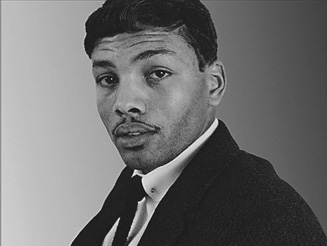
1997 Asie Payton*
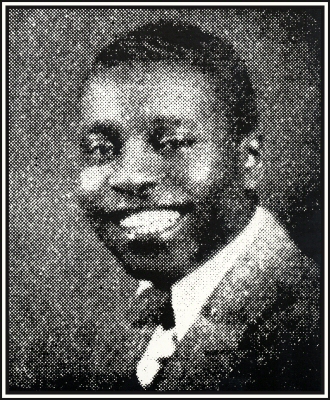
2004 Gatemouth Moore+
2010 Larry Dale+
Ro Land*
Happy Birthday
Dusty Hill *19.05.1949
Dusty Hill (* 19. Mai 1949 in Dallas, Texas als Joe Michael Hill) ist ein US-amerikanischer Bluesmusiker, der als Bassist und zweiter Sänger der Band ZZ Top bekannt wurde.
 Dusty wuchs im östlichen Dallas auf und besuchte dort auch die High School. Beeinflusst wurde er schon früh von seiner Mutter, die einerseits Sängerin und andererseits Fan von Elvis Presley, Little Richard und Lightnin' Hopkins war. Weiterhin wurde er von seinem älteren Bruder Rocky Hill beeinflusst, der Bluesgitarre spielte.[1] Als Rocky Hill seine erste Band gründete, spielte Dusty Hill dort Bass. Aus dieser Band wurde im Laufe der Jahre American Blues.
American Blues
American Blues wurde Anfang der 1960er als „The Starliners“ gegründet und wurde schon bald in „The Deadbeats“ umbenannt. Über einen Organisator wurde die Band schon früh als Backupmusiker für Größen wie Freddie King und Lightnin' Hopkins gebucht, die keine feste Band hatten. Dusty Hill lernte in dieser Zeit viel über professionelle Musik. Aus „The Deadbeats“ wurde „The Warlocks“ und daraus wurde wiederum „American Blues“. Als neuer Schlagzeuger stieß Frank Beard dazu. Das Markenzeichen der Band waren damals blau gefärbte Haare, um sich von den anderen aufstrebenden Bands abzuheben.
Die Band spielte eine Mischung aus Psychedelic- und Bluesrock. Als erste Single spielte die Band ein Cover von Tim Hardins „If I Had a Hammer“ für das örtliche Label Karma ein. Mit „Is Here“ (1967) und „Do Their Thing“ (1968) erschienen noch zwei Alben, die später mehrere Male wiederveröffentlicht wurden.
Die Band verließ die Szene Dallas und zog nach Houston. Dort trennte sich die Band aufgrund der verschiedenen Vorstellungen der Hills-Brüder. Dusty Hill wollte mehr Rockmusik, sein Bruder wollte stärkere Blueseinflüsse. So verließ dieser die Band und wurde Solokünstler. Mit Billy Gibbons wurde ein neuer Gitarrist gefunden und die Band ZZ Top gegründet.
ZZ Top
Zusammen mit dem Moving Sidewalks-Gitarrist Billy Gibbons und seinem bisherigen Bandkollegen Frank Beard gründete Hill Ende 1969 die Band ZZ Top. Als Musikstil entschied man sich für Bluesrock, Texas Blues und Southern Rock. In Bill Ham fand man einen Manager für die Band, der von 1969 bis September 2006 blieb.
Innerhalb der nächsten sechs Jahre gab ZZ Top fünf Alben heraus: Das erste Album ZZ Top’s First Album erschien 1971 unter dem Label Warner Bros. Records, bei dem die Band bis 1990 ihre Alben veröffentlichten.[2]
Bis 1976 wurde ZZ Top zu einer der meistverkauften Rockbands ihrer Zeit, dennoch machte die Band bis 1979 eine Pause. Die folgenden Alben waren moderner und die Band mischte elektronischen Sound mit ihrem normalen Stil.[3]
Bis zu dem Verkauf ihres 1983er international erfolgreichen Album „Eliminator“ ließen Hill und Gibbons sich ihre langen Bärte wachsen, die ebenso Markenzeichen der Band wurden wie Gibbons’ 1933 Ford Coupe und langbeinige Frauen in ihren Musikclips und die große Anzahl verschiedener Gitarren und Bässe bei Liveauftritten. Einige Songs der Band gehören zu den meistgespielten Musikclips bei MTV.[3]
Mit dem 1994 erschienenen Album „Antenna“ wechselte ZZ Top mit einem besser dotierten Vertrag zu RCA Records, wo sie insgesamt vier Alben veröffentlichten.[2]
2004 wurde Hill zusammen mit seinen Bandkollegen in die Rock and Roll Hall of Fame aufgenommen.[4]
Fünf Jahre nach ihrem letzten Album erschien 2008 das 15te Album „Live from Texas“, diesmal bei Eagle Records.
Gastbeiträge
1990 war er Mitproduzent des Tributesalbum an Roky Erickson (Sänger von The 13th Floor Elevators) „Where the Pyramid Meets the Eye: A Tribute to Roky Erickson“.
Film und Fernsehen
Neben der rein musikalischen Karriere als Bassmusiker ist Hill als Mitglied von ZZ Top seit Anfang der 1980er mit der Filmszene verbunden. Von 1982 bis 2007 steuerte er (als Mitglied von ZZ Top) etliche Songs zu Soundtracks bei, so z. B. zu Ein Offizier und Gentleman, Die Sieger – American Flyers, Knight Rider, Stephen King’s The Stand – Das letzte Gefecht, Shang-High Noon, Die Sopranos und Ghost Rider.
Darüber hinaus hatte Dusty Hill selber Auftritte im Fernsehen. Einen der Stadtbewohner spielt er in der Serie Deadwood. Im Film Zurück in die Zukunft III stellt er zusammen mit seinen Bandkollegen eine Band auf dem Dorffest dar. Weitere Auftritte hatte Hill bei Mother Goose Rock 'n' Rhyme, Ein einfacher Plan, Raw, King of the Hill, Drew Carey Show und MADtv.
Privat
Dusty Hill ist verheiratet und hat eine Tochter aus einer früheren Beziehung.
Anfang 2000 wurde bei ihm Hepatitis C festgestellt und deshalb eine Tournee abgebrochen. 2007 musste ZZ Top erneut eine Tournee absagen, da bei Hill ein Tumor im Innenohr entdeckt wurde, welcher sein Gehör schädigen könnte. Der Tumor entpuppte sich als gutartig und konnte entfernt werden.
http://de.wikipedia.org/wiki/Dusty_Hill
 Joseph Michael "Dusty" Hill (born May 19, 1949) is the bassist, keyboardist and co-vocalist with the American rock group ZZ Top.[1]
History
Hill was born in Dallas, Texas and grew up in the Lakewood neighborhood of East Dallas. He attended Woodrow Wilson High School (Dallas) where he played the cello.
Along with his brother Rocky Hill and future fellow ZZ Top member Frank Beard, Dusty Hill played in local Dallas bands the Warlocks, the Cellar Dwellers, and American Blues. From 1966 to 1968, American Blues played the Dallas-Fort Worth-Houston circuit.
In 1968, the band decided to leave the Dallas–Fort Worth area and relocate to Houston. At this time, however, guitarist Rocky Hill wanted to focus on "straight blues," while Dusty wanted the band to rock more. Rocky left the band and Dusty and Beard moved to Houston, joining guitarist/vocalist Billy Gibbons of Houston psychedelic-rockers Moving Sidewalks in the recently formed ZZ Top just after they released their first single in 1969.
Dusty Hill's on-screen appearances include Back to the Future Part III, Mother Goose Rock 'n' Rhyme, WWE Raw and Deadwood, and as himself in the 11th season episode of King of the Hill, "Hank Gets Dusted", in which Hank Hill is said to be Dusty's cousin. He also made an appearance on The Drew Carey Show as himself auditioning for a spot in Drew's band, but is rejected because of his attachment to his trademark Texas beard.
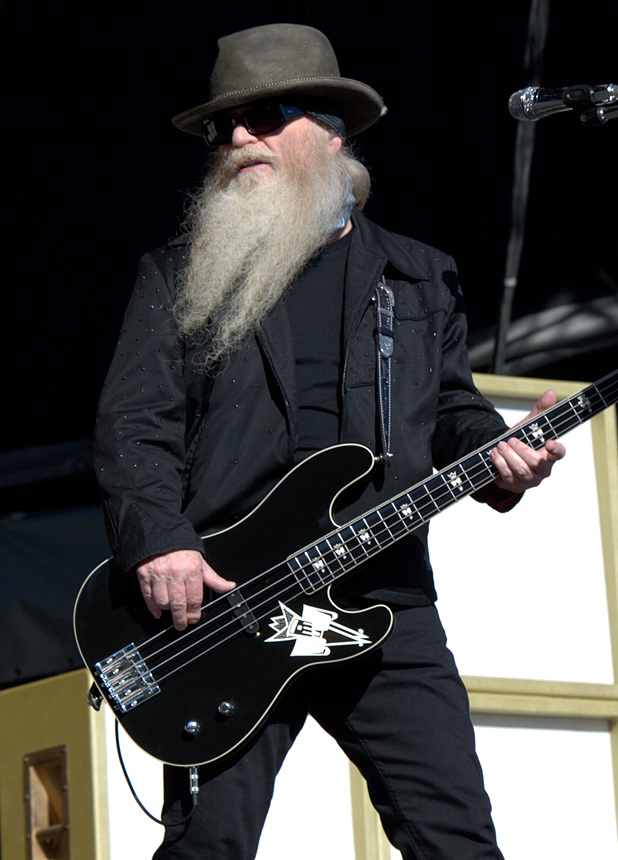 Joseph Michael "Dusty" Hill (born May 19, 1949) is the bassist, keyboardist and co-vocalist with the American rock group ZZ Top.[1]
History
Hill was born in Dallas, Texas and grew up in the Lakewood neighborhood of East Dallas. He attended Woodrow Wilson High School (Dallas) where he played the cello.
Along with his brother Rocky Hill and future fellow ZZ Top member Frank Beard, Dusty Hill played in local Dallas bands the Warlocks, the Cellar Dwellers, and American Blues. From 1966 to 1968, American Blues played the Dallas-Fort Worth-Houston circuit.
In 1968, the band decided to leave the Dallas–Fort Worth area and relocate to Houston. At this time, however, guitarist Rocky Hill wanted to focus on "straight blues," while Dusty wanted the band to rock more. Rocky left the band and Dusty and Beard moved to Houston, joining guitarist/vocalist Billy Gibbons of Houston psychedelic-rockers Moving Sidewalks in the recently formed ZZ Top just after they released their first single in 1969.
Dusty Hill's on-screen appearances include Back to the Future Part III, Mother Goose Rock 'n' Rhyme, WWE Raw and Deadwood, and as himself in the 11th season episode of King of the Hill, "Hank Gets Dusted", in which Hank Hill is said to be Dusty's cousin. He also made an appearance on The Drew Carey Show as himself auditioning for a spot in Drew's band, but is rejected because of his attachment to his trademark Texas beard.
ZZ Top - La Grange - Billy Gibbons - Dusty Hill - Frank Beard - HD
Jimmy Thackery *19.05.1953
 Jimmy Thackery (* 19. Mai 1953 in Pittsburgh, Pennsylvania) ist ein US-amerikanischer Blues-Sänger, Gitarrist und Komponist. Stilistisch ist er dem Electric-Blues und dem Bluesrock zuzuordnen.
Mit seinem harten, schnörkellosen Gitarrenspiel und seinem direkten, unverstellten Gebaren bei Bühnenshows erspielte er sich eine Fangemeinde sowohl bei den Anhängern des geradlinigen Blues, als auch bei den Fans des Roots Rock. Von den frühen 1970er bis in die späten 1980er Jahre war Jimmy Thackery Bandmitglied und Leadgitarrist der Nighthawks, einer Bluesband aus Washington, D.C. Mit den Nighthawks spielte er ein gutes Dutzend Alben ein, bevor er Ende der 1980er Jahre eine Solokarriere startete. Im Laufe dieser Karriere formierte er zunächst die Band Jimmy Thackery & the Assassins, ab 1991 dann das Trio Jimmy Thackery & the Drivers.
http://de.wikipedia.org/wiki/Jimmy_Thackery
Jimmy Thackery (born May 19, 1953, Pittsburgh, Pennsylvania, United States)[1] is an American Blues singer and guitarist.
Career
Thackery spent fourteen years as part of The Nighthawks, the Washington, D.C. based blues and roots rock ensemble. After leaving the Nighthawks in 1986, Thackery toured under his own name.
Born in Pittsburgh and raised in Washington, Thackery co-founded The Nighthawks with Mark Wenner in 1972 and went on to record over twenty albums with them. In 1986 he began touring with The Assassins, a six-piece original blues, rock and R&B ensemble which he had previously helped start as a vacation band when The Nighthawks took one of their rare breaks. Originally billed as Jimmy Thackery and The Assassins, the band toured the U.S. Northeast, Mid-Atlantic, South, and Texas regions. The Assassins released a variety of recordings on the Seymour record label, two on vinyl (No Previous Record and Partners in Crime) and the 1989 CD Cut Me Loose.
In the wake of the Assassins 1991 break-up, Thackery has been leading a trio, Jimmy Thackery and the Drivers, whose early recordings were for the San Francisco, California based Blind Pig Records. In 2002 Thackery released, We Got It, his first album on Telarc and in 2006, In the Natural State with Earl and Ernie Cate on Rykodisc. In 2007, he released Solid Ice again with The Drivers.[2] His latest album 'Feel the Heat' was released in April 2011.
Career
Thackery spent fourteen years as part of The Nighthawks, the Washington, D.C. based blues and roots rock ensemble. After leaving the Nighthawks in 1986, Thackery toured under his own name.
Born in Pittsburgh and raised in Washington, Thackery co-founded The Nighthawks with Mark Wenner in 1972 and went on to record over twenty albums with them. In 1986 he began touring with The Assassins, a six-piece original blues, rock and R&B ensemble which he had previously helped start as a vacation band when The Nighthawks took one of their rare breaks. Originally billed as Jimmy Thackery and The Assassins, the band toured the U.S. Northeast, Mid-Atlantic, South, and Texas regions. The Assassins released a variety of recordings on the Seymour record label, two on vinyl (No Previous Record and Partners in Crime) and the 1989 CD Cut Me Loose.
In the wake of the Assassins 1991 break-up, Thackery has been leading a trio, Jimmy Thackery and the Drivers, whose early recordings were for the San Francisco, California based Blind Pig Records. In 2002 Thackery released, We Got It, his first album on Telarc and in 2006, In the Natural State with Earl and Ernie Cate on Rykodisc. In 2007, he released Solid Ice again with The Drivers.[2] His latest album 'Feel the Heat' was released in April 2011.
Thorbjörn Risager *19.05.1971

Thorbjørn Risager[1] (* 19. Mai 1971 in Gundsø) ist ein dänischer Musiker, der sich im Spannungsfeld von Blues, R&B, Rock, Jazz und Soul bewegt. Er studierte am renommierten Rytmisk Musikkonservatorium in Kopenhagen. 2002 gründete der Gitarrist, Sänger und Songschreiber mit Musikern aus der Kopenhagener Bluesszene das Septett Thorbjørn Risager Blue7, mit dem er 2004 das Debütalbum Live 2004 einspielte.
2005 wurde Risager als dänischer Bluesmusiker des Jahres ausgezeichnet. Ab der zweiten CD From The Heart erschienen seine Alben nicht mehr unter Thorbjørn Risager Blue7, sondern nur noch unter seinem Namen. Seit der 2014er Veröffentlichung Too Many Roads firmiert die für die Aufnahmen zum Oktett erweiterte Formation unter Thorbjørn Risager & The Black Tornado. [2]
Außer mit seiner Band tritt Risager auch im Duo mit dem Pianisten Emil Balsgaard auf. Als seine Vorbilder nennt er Ray Charles und B. B. King.
http://de.wikipedia.org/wiki/Thorbj%C3%B8rn_Risager
In the blues world, a big voice is often accompanied by a big ego (or at least a medium sized one…)
But the Danish singer Thorbjørn Risager, praised for his rough and strong voice by an unanimous choir of critics from a growing number of countries – 15 the last time we counted them – is a soft-spoken gentleman off stage. He is the leader of his seven-piece band mainly for practical reasons – to bring any little issue into a group discussion can be quite time-consuming. He is also composing most of the band’s music, and during the performance he is the obvious center of attention, even if the band has a charming way of passing round the task of introducing the songs between them, so that each musician gets his word in.
And this is a real smooth organization, who has divided all practical tasks such as web master, CD sales on gigs etc between themselves. Which makes life easier in the midst of their heavy touring schedule. Since the start, they have played in 15 countries, and only from Feb – Aug 2010 they have concerts booked in 11 European countries.
But the 38-year-old Dane had other plans for his life. He studied to be a school teacher, and worked in this profession for some years, before he decided to let the music take over. He studied at the Rhythmic Conservatory in Copenhagen, a quite unique education where many of the teachers are jazz- or rock musicians, and where the emphasis is on Rhythmic music of all genres.
In 2003 he started his band, selected musicians he liked both musically and personally, and the fact that up until today only one of them left and was replaced, at an early stage of the band’s career, proves that the choice was excellent.
But of course Thorbjørn’s musical interest started long before this. He played the saxophone from the age of 12, then guitar – but the singing was more of a coincidence at first. He was exposed to the blues through a neighbour, a middle-aged gentleman who was friends with his parents, and who started playing blues records to the young Thorbjørn. That’s how his life-long love story with the blues started, with B B King as his biggest hero. Ray Charles is one of his other obvious influences, but today, with almost 40 recorded songs from his own pen, he has definitely defined his own sound and style.
His mixture of genres is something that is sometimes mentioned by critics, who are looking for something of more homogenity. But this is Thorbjørn’s deliberate choice. To hear a band that plays one shuffle after another, or only jump blues through an entire CD or concert, might please some critics but there’s definitely a risk that the audience will get bored.
And this is why Thorbjørn and his band have created their specific sound by other means, especially his characteristic raunchy voice and the band’s typical sound, with its horns, solo performances and rolling, almost big-band-like grooves. So he weaves threads of soul, gospel, rock, R&B and funk into his music, to create a variety and keep the audience interested, something that the band succeeds with on each single gig.
Biography
In the blues world, a big voice is often accompanied by a big ego (or at least a medium sized one…)
But the Danish singer Thorbjørn Risager, praised for his rough and strong voice by an unanimous choir of critics from a growing number of countries – 15 the last time we counted them – is a soft-spoken gentleman off stage. He is the leader of his seven-piece band mainly for practical reasons – to bring any little issue into a group discussion can be quite time-consuming. He is also composing most of the band’s music, and during the performance he is the obvious center of attention, even if the band has a charming way of passing round the task of introducing the songs between them, so that each musician gets his word in.
And this is a real smooth organization, who has divided all practical tasks such as web master, CD sales on gigs etc between themselves. Which makes life easier in the midst of their heavy touring schedule. Since the start, they have played in 15 countries, and only from Feb – Aug 2010 they have concerts booked in 11 European countries.
But the 38-year-old Dane had other plans for his life. He studied to be a school teacher, and worked in this profession for some years, before he decided to let the music take over. He studied at the Rhythmic Conservatory in Copenhagen, a quite unique education where many of the teachers are jazz- or rock musicians, and where the emphasis is on Rhythmic music of all genres.
In 2003 he started his band, selected musicians he liked both musically and personally, and the fact that up until today only one of them left and was replaced, at an early stage of the band’s career, proves that the choice was excellent.
But of course Thorbjørn’s musical interest started long before this. He played the saxophone from the age of 12, then guitar – but the singing was more of a coincidence at first. He was exposed to the blues through a neighbour, a middle-aged gentleman who was friends with his parents, and who started playing blues records to the young Thorbjørn. That’s how his life-long love story with the blues started, with B B King as his biggest hero. Ray Charles is one of his other obvious influences, but today, with almost 40 recorded songs from his own pen, he has definitely defined his own sound and style.
His mixture of genres is something that is sometimes mentioned by critics, who are looking for something of more homogenity. But this is Thorbjørn’s deliberate choice. To hear a band that plays one shuffle after another, or only jump blues through an entire CD or concert, might please some critics but there’s definitely a risk that the audience will get bored.
And this is why Thorbjørn and his band have created their specific sound by other means, especially his characteristic raunchy voice and the band’s typical sound, with its horns, solo performances and rolling, almost big-band-like grooves. So he weaves threads of soul, gospel, rock, R&B and funk into his music, to create a variety and keep the audience interested, something that the band succeeds with on each single gig.
Here’s a presentation of the band
Thorbjørn Risager – the story
100 gigs/year in a dozen countries: crossover success for unique combination of talents Thorbjørn Risager’s exceptional voice has made many US critics – not only one, but a whole bunch of them – refer to Ray Charles and other vocal giants to find something to compare him with. Delbert McClinton, Bob Seger och David Clayton-Thomas have also been mentioned, by journalists who probably couldn’t have imagined that such vocalists existed on this side of the Atlantic.
But it doesn’t end with that powerful voice – actually it starts there! The ability to write music with components from many genres, especially blues, rock och soul but also jazz, funk, New Orleans, singer-songwriter, roots, and fuse it into a richly varied brew, created a new sound, well actually a new genre. The choice of musicians, done more than eight years ago, was very fortunate.
Thorbjørn chose persons that he really wanted to work with, and only two members have changed since 2002. Their energy, tight interplay, and friendliness, is mentioned by everyone who works with the band. And each musician has his special responsibility: finances, technique, CD sales, web page, transports etc. Thorbjørn himself is a modern democratic leader, at the same time as he is doing most of the songwriting. But the arrangements are always a teamwork, and the band gets together at their rehearsal space every single Thursday, except when on tour. 6 CD’s in 7 years – all of these except the debut containing 90 – 100 % originals – is also pretty unique.
And with about 100 concerts per year in a dozen countries (and 60 of these abroad – through the years they have performed in 17 countries!) they are one of Denmark’s most successful music exports. In other words: they are one of the Danish bands which is playing the largest amount of concerts abroad! And this in spite of the fact that they don’t play a typically broad genre such as pop, rock or hiphop, or are signed to a ”major label”. That they are a seven-piece band should make it harder to get booked, but the music itself and the hard, long-term work from the band and their agent/manager has given great results!
But the Danish singer Thorbjørn Risager, praised for his rough and strong voice by an unanimous choir of critics from a growing number of countries – 15 the last time we counted them – is a soft-spoken gentleman off stage. He is the leader of his seven-piece band mainly for practical reasons – to bring any little issue into a group discussion can be quite time-consuming. He is also composing most of the band’s music, and during the performance he is the obvious center of attention, even if the band has a charming way of passing round the task of introducing the songs between them, so that each musician gets his word in.
And this is a real smooth organization, who has divided all practical tasks such as web master, CD sales on gigs etc between themselves. Which makes life easier in the midst of their heavy touring schedule. Since the start, they have played in 15 countries, and only from Feb – Aug 2010 they have concerts booked in 11 European countries.
But the 38-year-old Dane had other plans for his life. He studied to be a school teacher, and worked in this profession for some years, before he decided to let the music take over. He studied at the Rhythmic Conservatory in Copenhagen, a quite unique education where many of the teachers are jazz- or rock musicians, and where the emphasis is on Rhythmic music of all genres.
In 2003 he started his band, selected musicians he liked both musically and personally, and the fact that up until today only one of them left and was replaced, at an early stage of the band’s career, proves that the choice was excellent.
But of course Thorbjørn’s musical interest started long before this. He played the saxophone from the age of 12, then guitar – but the singing was more of a coincidence at first. He was exposed to the blues through a neighbour, a middle-aged gentleman who was friends with his parents, and who started playing blues records to the young Thorbjørn. That’s how his life-long love story with the blues started, with B B King as his biggest hero. Ray Charles is one of his other obvious influences, but today, with almost 40 recorded songs from his own pen, he has definitely defined his own sound and style.
His mixture of genres is something that is sometimes mentioned by critics, who are looking for something of more homogenity. But this is Thorbjørn’s deliberate choice. To hear a band that plays one shuffle after another, or only jump blues through an entire CD or concert, might please some critics but there’s definitely a risk that the audience will get bored.
And this is why Thorbjørn and his band have created their specific sound by other means, especially his characteristic raunchy voice and the band’s typical sound, with its horns, solo performances and rolling, almost big-band-like grooves. So he weaves threads of soul, gospel, rock, R&B and funk into his music, to create a variety and keep the audience interested, something that the band succeeds with on each single gig.
Biography
In the blues world, a big voice is often accompanied by a big ego (or at least a medium sized one…)
But the Danish singer Thorbjørn Risager, praised for his rough and strong voice by an unanimous choir of critics from a growing number of countries – 15 the last time we counted them – is a soft-spoken gentleman off stage. He is the leader of his seven-piece band mainly for practical reasons – to bring any little issue into a group discussion can be quite time-consuming. He is also composing most of the band’s music, and during the performance he is the obvious center of attention, even if the band has a charming way of passing round the task of introducing the songs between them, so that each musician gets his word in.
And this is a real smooth organization, who has divided all practical tasks such as web master, CD sales on gigs etc between themselves. Which makes life easier in the midst of their heavy touring schedule. Since the start, they have played in 15 countries, and only from Feb – Aug 2010 they have concerts booked in 11 European countries.
But the 38-year-old Dane had other plans for his life. He studied to be a school teacher, and worked in this profession for some years, before he decided to let the music take over. He studied at the Rhythmic Conservatory in Copenhagen, a quite unique education where many of the teachers are jazz- or rock musicians, and where the emphasis is on Rhythmic music of all genres.
In 2003 he started his band, selected musicians he liked both musically and personally, and the fact that up until today only one of them left and was replaced, at an early stage of the band’s career, proves that the choice was excellent.
But of course Thorbjørn’s musical interest started long before this. He played the saxophone from the age of 12, then guitar – but the singing was more of a coincidence at first. He was exposed to the blues through a neighbour, a middle-aged gentleman who was friends with his parents, and who started playing blues records to the young Thorbjørn. That’s how his life-long love story with the blues started, with B B King as his biggest hero. Ray Charles is one of his other obvious influences, but today, with almost 40 recorded songs from his own pen, he has definitely defined his own sound and style.
His mixture of genres is something that is sometimes mentioned by critics, who are looking for something of more homogenity. But this is Thorbjørn’s deliberate choice. To hear a band that plays one shuffle after another, or only jump blues through an entire CD or concert, might please some critics but there’s definitely a risk that the audience will get bored.
And this is why Thorbjørn and his band have created their specific sound by other means, especially his characteristic raunchy voice and the band’s typical sound, with its horns, solo performances and rolling, almost big-band-like grooves. So he weaves threads of soul, gospel, rock, R&B and funk into his music, to create a variety and keep the audience interested, something that the band succeeds with on each single gig.
Here’s a presentation of the band
Thorbjørn Risager – the story
100 gigs/year in a dozen countries: crossover success for unique combination of talents Thorbjørn Risager’s exceptional voice has made many US critics – not only one, but a whole bunch of them – refer to Ray Charles and other vocal giants to find something to compare him with. Delbert McClinton, Bob Seger och David Clayton-Thomas have also been mentioned, by journalists who probably couldn’t have imagined that such vocalists existed on this side of the Atlantic.
But it doesn’t end with that powerful voice – actually it starts there! The ability to write music with components from many genres, especially blues, rock och soul but also jazz, funk, New Orleans, singer-songwriter, roots, and fuse it into a richly varied brew, created a new sound, well actually a new genre. The choice of musicians, done more than eight years ago, was very fortunate.
Thorbjørn chose persons that he really wanted to work with, and only two members have changed since 2002. Their energy, tight interplay, and friendliness, is mentioned by everyone who works with the band. And each musician has his special responsibility: finances, technique, CD sales, web page, transports etc. Thorbjørn himself is a modern democratic leader, at the same time as he is doing most of the songwriting. But the arrangements are always a teamwork, and the band gets together at their rehearsal space every single Thursday, except when on tour. 6 CD’s in 7 years – all of these except the debut containing 90 – 100 % originals – is also pretty unique.
And with about 100 concerts per year in a dozen countries (and 60 of these abroad – through the years they have performed in 17 countries!) they are one of Denmark’s most successful music exports. In other words: they are one of the Danish bands which is playing the largest amount of concerts abroad! And this in spite of the fact that they don’t play a typically broad genre such as pop, rock or hiphop, or are signed to a ”major label”. That they are a seven-piece band should make it harder to get booked, but the music itself and the hard, long-term work from the band and their agent/manager has given great results!
Sławek Wierzcholski *19.05.1958
 Sławomir Wierzcholski aka Sławek Wierzcholski (* 19. May 1958, Torun) – Polish blues singer, a harmonica virtuoso and songwriter. With his band Nocna Zmiana Bluesa (The Blues Nightshift) - the most popular blues band in Poland recorded total of 20 albums (3 LPs, 2 DVDs and 15 CDs), having recorded with such distinguished bluesmen as Charlie Musselwhite, Junior Wells or Luisiana Red.
Nocna Zmiana Bluesa - The Blues Nightshift - the most popular blues band in Poland. Established in 1982 by its leader Slawek Wierzcholski - a harmonica virtuoso, singer and songwriter.
The band have played thousands of gigs throughout the years in Poland and all over Europe in countries such as Russia, France, Greece, the Nederlands, Sweden and even in Zimbabwe. They opened for The Blues Brothers Band (Nürnberg 1989) and B.B.King (Warsaw 1996).
Slawek Wierzcholski & Nocna Zmiana Bluesa have issued total of 20 albums (3 LPs, 2 DVDs and 15 CDs), having recorded with such distinguished bluesmen as Charlie Musselwhite, Junior Wells or Luisiana Red.
Their CD "Polski blues" got an enthusiastic review in March 2000 issue of America's leading blues magazine Blues Revue.
These seasoned musicians form a band up to the highest world standards with nothing to be ashamed of when confronted with their beloved American roots that inspired them to develop their own unique sound.
Though they started as orthodox bluesmen, during their 30 years long career they have created their own style based on accoustic instrumentation and fusion of blues, folk, jazz and singer/songwriter genre.
Sławek Wierzcholski - the most popular bluesman in Poland. Harmonica virtuoso, singer and songwriter. Learned to play harp from blues greats in clubs of Chicago. The leader of Nocna Zmiana Bluesa (The Blues Nightshift), the band he established in 1982 and with whom he has played thousands of gigs in Poland and other countries, such as Russia, France, Greece, the Nederlands, Sweden and even Zimbabwe.
Slawek has recorded total of 20 albums (3 LPs, 2 DVDs and 15 CDs). He also appeared in numerous radio and TV shows. As a sideman, Slawek played harmonica on several CDs of Polish pop and rock artists. He has also gigged and recorded with such distinguished bluesmen as Charlie Musselwhite, Junior Wells and Louisiana Red. With THE BLUES NIGHTSHIFT he opened for The Blues Brothers Band (Nürnberg 1989) and B.B.King (Warsaw 1996). He was the first bluesman from Poland to play at The World Harmonica Festival in Trossingen, Germany in 1997.
Slawek's harmonica can be heard on some movies and TV series soundtracks. He is the author of two harmonica nstruction books, TV harmonica course and has been a harmonica teacher at workshops in Poland and France. He is also a radio DJ, leading his own blues related show at the Polish Radio. He is also a contributor to Poland's blues magazine "Twój blues".
He and his band were chosen No1 harmonica player and No1 blues band in Poland in the "Blues Top" Polish surveys. His CD "Polski blues" got an enthusiastic review in March 2000 issue of America's leading blues magazine Blues Revue.
Chory na Bluesa - Sławek Wierzcholski i Nocna Zmiana Bluesa
Ro Land (Roland Zimmer) *19.05.

Ro Land ist Basist bei Inutero
Florian Zimmer, Gitarre und einprägsame Gesangsstimme, Marko Stolz am Schlagzeug und Roland Zimmer am Bass sind ein Bandprojekt der besonderen Art: 2006 bildete sich die Band, um zur Abschlussveranstaltung der Sommerakademie 2006 der Kulturstiftung Hohenmölsen einen Beitrag zu leisten. Da war Florian acht Jahre alt und spielte zusammen mit seinem Vater und einem befreundeten Schlagzeuger. "Flo & Co" war geboren und ab und an live zu hören. Bis Ende 2007, da löste sich die Band auf. Doch schon im Januar 2008 waren Vater und Sohn wieder da, mit Marko am Schlagzeug, und nun als Band Inutero. Ihren ersten Auftritt hatten sie zur Rocknacht in Borau, und da prägte Nirvana bereits den Stil der neuen Gruppe.
iNUTERO @ Woodstock Forever 2014, #3
R.I.P.
Gatemouth Moore +19.05.2004

Arnold Dwight Moore (November 8, 1913, Topeka, Kansas – May 19, 2004, Yazoo City, Mississippi), better known as Gatemouth Moore and later Reverend Gatemouth Moore, was an American blues and gospel singer, songwriter and pastor. A graduate of Booker T. Washington High School in Memphis, he claimed to have earned his nickname as a result of his loud speaking and singing voice.[1]
During his career as a recording artist, Moore worked with various jazz musicians, including Bennie Moten, Tommy Douglas and Walter Barnes, and had songs recorded by B.B. King and Rufus Thomas.[2]
His first billing in Chicago was as Gatemouth Moore at the Rhumboogie in early 1945 and later several times at the Club DeLisa (1946–1947 and 1948–1949), where suddenly, in the middle of singing his hit "I Ain't Mad at You Pretty Baby", he switched into a gospel song.[3]
In 1949, Moore was ordained as a minister First Church of Deliverance in Chicago and went on to preach and perform, as Reverend Gatemouth Moore, as a gospel singer and DJ at several radio stations in Memphis, Birmingham and Chicago.[1]
Moore holds distinctions as a survivor of the 1940 Natchez Rhythm Club Fire and as the first blues singer to perform at Carnegie Hall.[1] A brass note on Beale Street Walk of Fame was dedicated to Moore in 1996.[4] He was also featured in the The Road to Memphis segment (directed and photographed by Richard Pearce) of the Martin Scorsese executive produced 2003 documentary The Blues.
http://en.wikipedia.org/wiki/Gatemouth_Moore


Asie Payton
Larry Dale +19.05.2010
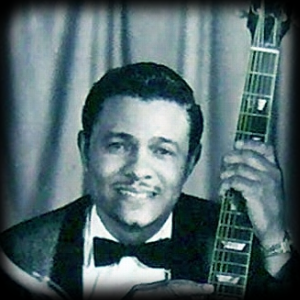
Larry
Dale, eigentlich Ennis Lowery, (* 7. Januar 1923 in Wharton, Texas; †
19. Mai 2010 in New York) war ein afroamerikanischer Bluessänger und
Gitarrist.
Anfang der 1950er Jahre wurde Ennis Lowery vom Gitarrespiel B.B. Kings inspiriert. Bald darauf machte er erste Plattenaufnahmen, zunächst als Begleitmusiker von Bob Gaddy und Paul Williams (auf dem Jackson/Jax Label), mit Big Red McHouston & His Orchestra sowie unter dem inzwischen angenommenen Künstlernamen "Larry Dale" (für das RCA-Sublabel Groove Records) mit einer Band, der auch der Gitarrist Mickey Baker und der Pianist Champion Jack Dupree angehörten.
Dale arbeitete mit dem Pianisten Bob Gaddy in den Clubs von New York, war aber auch ein gefragter Studiomusiker, der unter anderem bei allen vier 1956er bis 1958er Sessions von Dupree für die RCA-Sublabel Groove und Vik und auf dem bekanntesten Dupree-Album, dem 1958 für das Atlantic-Label eingespielten „Blues from the Gutter“ zum Einsatz kam. Seine Spielweise auf dieser LP hat Brian Jones (von den Rolling Stones) begeistert („Yeah! I have to play this… what a sound“).
Dale lieferte seine besten Aufnahmen zur Wende der 1950er zu den 1960er Jahren ab: Für Glover Records spielte er 1960 den Party-Blues „Let the Doorbell Ring“ und „Big Muddy“ ein, dann wiederbelebte er 1962 für Atlantic den Sticks McGhee-Hit „Drinkin' Wine-Spo-Dee-O-Dee“.
Anfang der 1950er Jahre wurde Ennis Lowery vom Gitarrespiel B.B. Kings inspiriert. Bald darauf machte er erste Plattenaufnahmen, zunächst als Begleitmusiker von Bob Gaddy und Paul Williams (auf dem Jackson/Jax Label), mit Big Red McHouston & His Orchestra sowie unter dem inzwischen angenommenen Künstlernamen "Larry Dale" (für das RCA-Sublabel Groove Records) mit einer Band, der auch der Gitarrist Mickey Baker und der Pianist Champion Jack Dupree angehörten.
Dale arbeitete mit dem Pianisten Bob Gaddy in den Clubs von New York, war aber auch ein gefragter Studiomusiker, der unter anderem bei allen vier 1956er bis 1958er Sessions von Dupree für die RCA-Sublabel Groove und Vik und auf dem bekanntesten Dupree-Album, dem 1958 für das Atlantic-Label eingespielten „Blues from the Gutter“ zum Einsatz kam. Seine Spielweise auf dieser LP hat Brian Jones (von den Rolling Stones) begeistert („Yeah! I have to play this… what a sound“).
Dale lieferte seine besten Aufnahmen zur Wende der 1950er zu den 1960er Jahren ab: Für Glover Records spielte er 1960 den Party-Blues „Let the Doorbell Ring“ und „Big Muddy“ ein, dann wiederbelebte er 1962 für Atlantic den Sticks McGhee-Hit „Drinkin' Wine-Spo-Dee-O-Dee“.
Larry
Dale (January 7, 1923 – May 19, 2010)[1][2] was an American blues
singer and guitarist. He was born in Wharton, Texas, United
States.[1]
During the early 1950s Ennis Lowery (his legal name) took initial inspiration on guitar playing from B.B. King, soon making his first recordings as a sideman for Paul Williams & His Orchestra (on Jax Records) and for Big Red McHouston & His Orchestra, and under his then chosen moniker "Larry Dale" (for the RCA subsidiary Groove Records) with a band that included Mickey Baker and pianist Champion Jack Dupree.
Dale worked the New York club circuit with the pianist Bob Gaddy. He also was a frequent session guitarist in the New York studios, playing on all four of Dupree's 1956–58 sessions for RCA's Groove and Vik subsidiaries, and on the best known Dupree LP, 1958's Blues from the Gutter, for Atlantic. His playing on that album inspired Brian Jones of The Rolling Stones.
Dale made most of his best sides as a leader when the decade turned from the 1950s to the 1960s. For Glover Records he recorded the party blues "Let the Doorbell Ring" and "Big Muddy" in 1960, then revived Stick McGhee's "Drinkin' Wine-Spo-Dee-O-Dee" in 1962 on Atlantic.
He died in New York in May 2010, at the age of 87.
During the early 1950s Ennis Lowery (his legal name) took initial inspiration on guitar playing from B.B. King, soon making his first recordings as a sideman for Paul Williams & His Orchestra (on Jax Records) and for Big Red McHouston & His Orchestra, and under his then chosen moniker "Larry Dale" (for the RCA subsidiary Groove Records) with a band that included Mickey Baker and pianist Champion Jack Dupree.
Dale worked the New York club circuit with the pianist Bob Gaddy. He also was a frequent session guitarist in the New York studios, playing on all four of Dupree's 1956–58 sessions for RCA's Groove and Vik subsidiaries, and on the best known Dupree LP, 1958's Blues from the Gutter, for Atlantic. His playing on that album inspired Brian Jones of The Rolling Stones.
Dale made most of his best sides as a leader when the decade turned from the 1950s to the 1960s. For Glover Records he recorded the party blues "Let the Doorbell Ring" and "Big Muddy" in 1960, then revived Stick McGhee's "Drinkin' Wine-Spo-Dee-O-Dee" in 1962 on Atlantic.
He died in New York in May 2010, at the age of 87.


:format(jpeg):mode_rgb()/discogs-images/A-1053895-1263882005.jpeg.jpg)