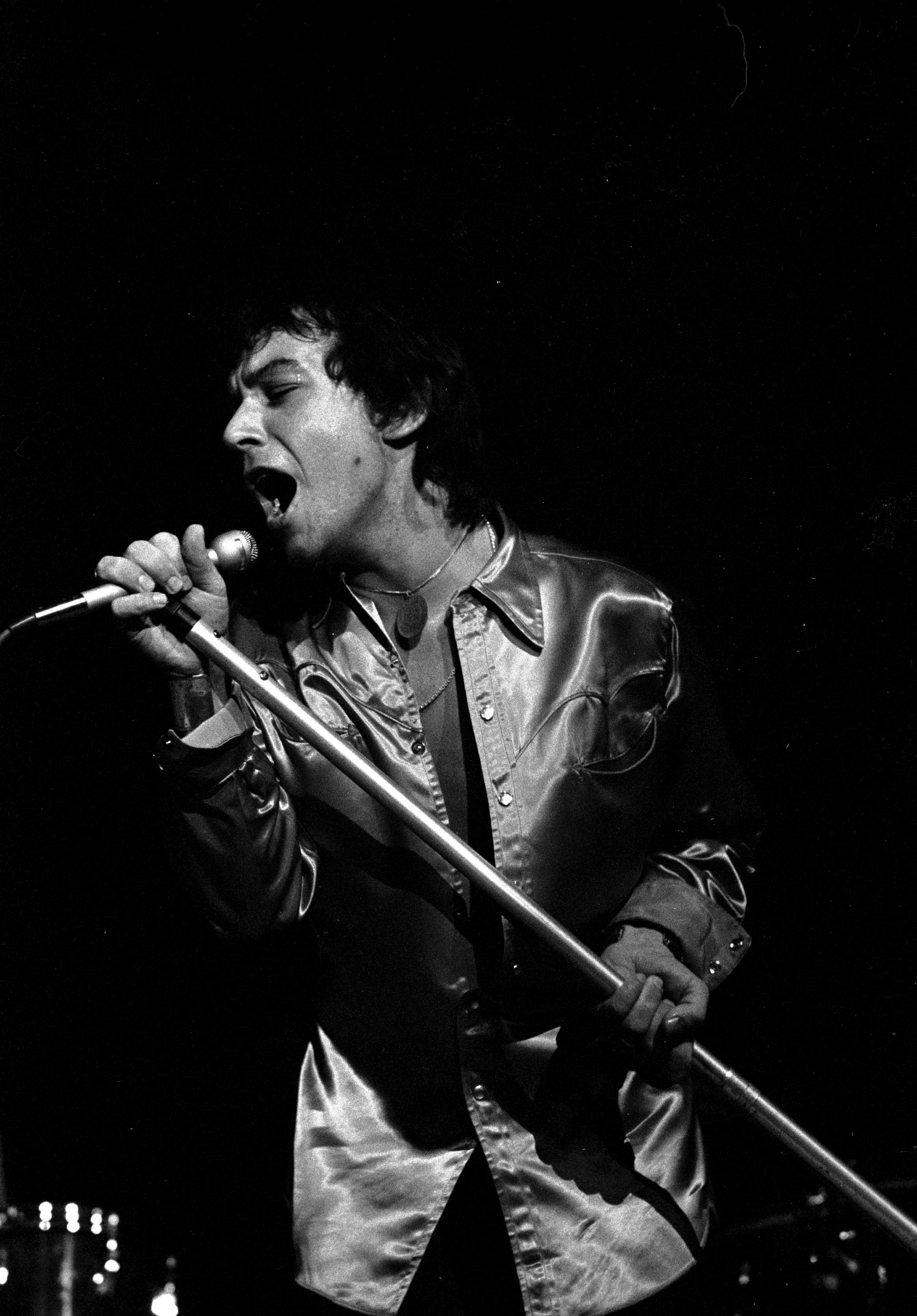
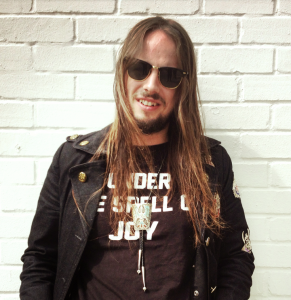
1948 Steve Winwood*
1949 James Montgomery*
1950 Günter Holwas*
1952 André Greiner-Pol*
1952 Guy Davis*
1972 Big John Greer+
1976 Wynona Carr+
1981 Parru Casco*
1950 Günter Holwas*
1952 André Greiner-Pol*
1952 Guy Davis*
1972 Big John Greer+
1976 Wynona Carr+
1981 Parru Casco*
Happy Birthday
André Greiner-Pol *12.05.1952
.jpg)
André Greiner-Pol (* 12. Mai 1952 in Ost-Berlin; † 15. Dezember 2008; kurz AGP) war ein deutscher Rockmusiker.
André Greiner-Pols Vater war Kurt Greiner-Pol, Leiter des Erich-Weinert-Ensembles der Nationalen Volksarmee. André Greiner-Pol gründete die Bluesrock-Band Freygang, die sich in den 1980er Jahren zu einer der wichtigsten Bands der DDR-Untergrundbewegung entwickelte. Häufig wurde seine Musik verboten, bis zu einem „lebenslangen“ Berufsverbot.[1] Ab 1989/90 gehörte er der Prenzlauer-Berg-Szene an, war Mitbegründer der Kulturstätte „Tacheles“ und gründete im April 1990 mit anderen Musikern die Partei „Autonome Aktion Wydoks“,[1] die zur Kommunalwahl im Mai 1990 in Ost-Berlin antrat, jedoch erfolglos blieb. Er spielte mit Freygang nach 1990 neun Alben ein und veröffentlichte als Autor mehrere Bücher bei Buschfunk. Er starb am 15. Dezember 2008 an einem Herzinfarkt.
http://de.wikipedia.org/wiki/Andr%C3%A9_Greiner-Pol
Der verbotene Held mit dem dreckigsten Blues David Ensikat
an alle stadtbezirksraete fuer kultur == ho-bezirksdirektion gaststaetten == s p i e l v e r b o t == mit wirkung vom 6. juli 1983 ist der amateurtanzkapelle „f r e y g a n g“ die spielerlaubnis xv / iv24 und gruppenregistrierkarte entzogen worden. damit ist die gruppe nicht mehr auftrittsberechtigt. herrn andre greiner-pol wurde die spielerlaubnis 3159 / 75 fuer 2 jahre entzogen ... mit sozialistischem gruss juergen schuchardt stadtrat magistrat von berlin hauptstadt der ddr abteilung kultur.
Freygang, einen besseren Namen konnte André Greiner-Pol seiner Band gar nicht geben. Ihre Geschichte, jedenfalls die, aus der der Mythos „Freygang“ stammt, die DDR-Geschichte, kann man als fortwährenden Freigang verstehen. Umgeben von Mauern, Erpressung und Verboten steigt einer auf die Bühne, immer wieder, tut so, als dürfe er alles, tut so, als würde er singen, verrenkt sich wie eine Kreuzung aus Udo Lindenberg und Joe Cocker, lässt seine langen, krausen Haare fliegen, spielt den Blues, lässt seine Musiker den Blues spielen, stößt seine Texte raus, die nicht von Liebesleid und Friedenskampf handeln, wie die der offiziellen DDR-Tanzmusiker.
Seine Lyrik geht so: Manchmal sitz ich in der Kneipe am gedeckten Tisch / und bestell mir was zu essen, so für mich, so für mich. / Und am Tisch gegenüber, am gedeckten Tisch, / lutscht ein fettes Schwein am Eisbein, so für sich, so für sich. / Mich packt der Ekel, wenn ich das so seh / und der Kellner bringt das Essen / doch ich steh auf, zahl und geh.
Am Anfang stand der Knast, sechs Wochen Rummelsburg, weil er einem Freund helfen wollte, rüber, in die große Freiheit zu gelangen. Der Freund hat’s nicht geschafft, und André Greiner-Pol hätte noch viel länger sitzen können. Aber er war 25 und wollte endlich seine Band. Konnte er haben, er musste da nur etwas unterschreiben.
Drei Jahre Freigang nach den Regeln der Stasi und immer mehr nach seinen. Bis er die Herren endgültig von seiner Untauglichkeit überzeugen konnte. Er war wirklich keiner fürs Geheime, kein Mitmacher, kein Flüsterer.
Das beschissene Konzert im Spreewald, Januar ’83. Zuerst fehlt der Sprit, dann wird die Anlage nass. Kaum etwas funktioniert. Eine Prügelei mit dem Aushilfstechniker, zwei Besoffene, die auf die Bühne steigen, der eine grunzt ins Mikro, der andere torkelt ins Schlagzeug und landet auf der Geige. Auf der Rückfahrt: Motorschaden, Trampen. Ein Wartburg hält, der Fahrer sieht, wen er da mitnehmen soll, die langhaarigen Penner, bedauert, „hinten alles voll“, und André Greiner-Pol tritt gegen’s Auto: „Verpiss dich!“ Zwei Wochen später die Vorladung der Polizei „zur Klärung eines Sachverhalts“, Beleidigung, Sachbeschädigung, 2500 Mark Strafe. Und endlich ein Grund fürs Spielverbot, „mit sozialistischem gruß“.
Freygang ist längst berühmt genug, um Säle zu füllen, das sind die mit dem dreckigsten Blues, den heftigsten Texten. Jetzt, verboten, werden sie zu Helden. Da helfen die Gerüchte. Was für schlimme Sachen sie auf der Bühne gemacht haben sollen, Hosen runtergelassen, onaniert und, noch viel schlimmer, Staat und Partei in den Dreck gezogen.
Was soll man gegen so einen Ruf machen? Ihn genießen! André Greiner-Pol verdient Geld mit seinem Wolga, er fährt Schwarztaxi. Und er tritt mit den Freygängern auf, wann immer es das Auftrittsverbot zulässt, in der Provinz, unter anderem Namen, in anderen Bands. Nach zwei Jahren wieder offiziell, nach einem weiteren wieder inoffiziell.
„dem amateurtanzmusiker andre greiner-pol, wohnh. zionskirchstr. 79, 1054 Berlin, wurde die spielerlaubnis 3159 / 75 mit wirkung vom 17. 10. 1986 entzogen. auftritte bitte ich zu verhindern.“
In diesen Tagen trifft André Greiner-Pol den Sänger der Band Drudenfuß auf der Schönhauser. Drudenfuß soll für die Erdgastraßenbauarbeiter in der Sowjetunion spielen, aber die Musiker haben keine Lust. Sollen die Freygänger mitfahren, die haben doch jetzt Zeit. Sie machen Passbilder mit Schlips, nennen sich O. K. Rockband und fahren in den Ural. Vier Wochen saufen und rocken auf dem Permafrostboden und Ausschau halten nach den paar Frauen, die’s da gibt. Greiner-Pols Bedingung war: An der Trasse müssen wir sagen, wer wir sind.
Im September ’87 tritt die Punkband Feeling B in Dresden auf. Sie tragen einen Sarg hinein, feierlich, stellen ihn auf die Bühne. Heraus springt André Greiner-Pol, der Untote. Mit Aljoscha Rompe, Feeling B, singt er ein wildes Duett. In der Szene weiß kaum jemand, wie alt die beiden wirklich sind.
Rompe ist vor ein paar Jahren gestorben, seine viel jüngeren Musiker haben mit Rammstein große Karriere gemacht. André Greiner-Pol ist Freygänger geblieben, die alten Lieder immer wieder und neue, die wie die alten klingen. Sollte er denn alles ändern, nur weil der neue Staat ihn nicht so ernst nahm wie der alte? Sie haben ihn König genannt und Kapitän, er war der Sänger oben auf der Bühne, der nicht mal singen konnte, und trotzdem haben sie ihm zugejubelt.
Im Dezember 2008 ist er gestorben, Herzinfarkt.
an alle stadtbezirksraete fuer kultur == ho-bezirksdirektion gaststaetten == s p i e l v e r b o t == mit wirkung vom 6. juli 1983 ist der amateurtanzkapelle „f r e y g a n g“ die spielerlaubnis xv / iv24 und gruppenregistrierkarte entzogen worden. damit ist die gruppe nicht mehr auftrittsberechtigt. herrn andre greiner-pol wurde die spielerlaubnis 3159 / 75 fuer 2 jahre entzogen ... mit sozialistischem gruss juergen schuchardt stadtrat magistrat von berlin hauptstadt der ddr abteilung kultur.
Freygang, einen besseren Namen konnte André Greiner-Pol seiner Band gar nicht geben. Ihre Geschichte, jedenfalls die, aus der der Mythos „Freygang“ stammt, die DDR-Geschichte, kann man als fortwährenden Freigang verstehen. Umgeben von Mauern, Erpressung und Verboten steigt einer auf die Bühne, immer wieder, tut so, als dürfe er alles, tut so, als würde er singen, verrenkt sich wie eine Kreuzung aus Udo Lindenberg und Joe Cocker, lässt seine langen, krausen Haare fliegen, spielt den Blues, lässt seine Musiker den Blues spielen, stößt seine Texte raus, die nicht von Liebesleid und Friedenskampf handeln, wie die der offiziellen DDR-Tanzmusiker.
Seine Lyrik geht so: Manchmal sitz ich in der Kneipe am gedeckten Tisch / und bestell mir was zu essen, so für mich, so für mich. / Und am Tisch gegenüber, am gedeckten Tisch, / lutscht ein fettes Schwein am Eisbein, so für sich, so für sich. / Mich packt der Ekel, wenn ich das so seh / und der Kellner bringt das Essen / doch ich steh auf, zahl und geh.
Am Anfang stand der Knast, sechs Wochen Rummelsburg, weil er einem Freund helfen wollte, rüber, in die große Freiheit zu gelangen. Der Freund hat’s nicht geschafft, und André Greiner-Pol hätte noch viel länger sitzen können. Aber er war 25 und wollte endlich seine Band. Konnte er haben, er musste da nur etwas unterschreiben.
Drei Jahre Freigang nach den Regeln der Stasi und immer mehr nach seinen. Bis er die Herren endgültig von seiner Untauglichkeit überzeugen konnte. Er war wirklich keiner fürs Geheime, kein Mitmacher, kein Flüsterer.
Das beschissene Konzert im Spreewald, Januar ’83. Zuerst fehlt der Sprit, dann wird die Anlage nass. Kaum etwas funktioniert. Eine Prügelei mit dem Aushilfstechniker, zwei Besoffene, die auf die Bühne steigen, der eine grunzt ins Mikro, der andere torkelt ins Schlagzeug und landet auf der Geige. Auf der Rückfahrt: Motorschaden, Trampen. Ein Wartburg hält, der Fahrer sieht, wen er da mitnehmen soll, die langhaarigen Penner, bedauert, „hinten alles voll“, und André Greiner-Pol tritt gegen’s Auto: „Verpiss dich!“ Zwei Wochen später die Vorladung der Polizei „zur Klärung eines Sachverhalts“, Beleidigung, Sachbeschädigung, 2500 Mark Strafe. Und endlich ein Grund fürs Spielverbot, „mit sozialistischem gruß“.
Freygang ist längst berühmt genug, um Säle zu füllen, das sind die mit dem dreckigsten Blues, den heftigsten Texten. Jetzt, verboten, werden sie zu Helden. Da helfen die Gerüchte. Was für schlimme Sachen sie auf der Bühne gemacht haben sollen, Hosen runtergelassen, onaniert und, noch viel schlimmer, Staat und Partei in den Dreck gezogen.
Was soll man gegen so einen Ruf machen? Ihn genießen! André Greiner-Pol verdient Geld mit seinem Wolga, er fährt Schwarztaxi. Und er tritt mit den Freygängern auf, wann immer es das Auftrittsverbot zulässt, in der Provinz, unter anderem Namen, in anderen Bands. Nach zwei Jahren wieder offiziell, nach einem weiteren wieder inoffiziell.
„dem amateurtanzmusiker andre greiner-pol, wohnh. zionskirchstr. 79, 1054 Berlin, wurde die spielerlaubnis 3159 / 75 mit wirkung vom 17. 10. 1986 entzogen. auftritte bitte ich zu verhindern.“
In diesen Tagen trifft André Greiner-Pol den Sänger der Band Drudenfuß auf der Schönhauser. Drudenfuß soll für die Erdgastraßenbauarbeiter in der Sowjetunion spielen, aber die Musiker haben keine Lust. Sollen die Freygänger mitfahren, die haben doch jetzt Zeit. Sie machen Passbilder mit Schlips, nennen sich O. K. Rockband und fahren in den Ural. Vier Wochen saufen und rocken auf dem Permafrostboden und Ausschau halten nach den paar Frauen, die’s da gibt. Greiner-Pols Bedingung war: An der Trasse müssen wir sagen, wer wir sind.
Im September ’87 tritt die Punkband Feeling B in Dresden auf. Sie tragen einen Sarg hinein, feierlich, stellen ihn auf die Bühne. Heraus springt André Greiner-Pol, der Untote. Mit Aljoscha Rompe, Feeling B, singt er ein wildes Duett. In der Szene weiß kaum jemand, wie alt die beiden wirklich sind.
Rompe ist vor ein paar Jahren gestorben, seine viel jüngeren Musiker haben mit Rammstein große Karriere gemacht. André Greiner-Pol ist Freygänger geblieben, die alten Lieder immer wieder und neue, die wie die alten klingen. Sollte er denn alles ändern, nur weil der neue Staat ihn nicht so ernst nahm wie der alte? Sie haben ihn König genannt und Kapitän, er war der Sänger oben auf der Bühne, der nicht mal singen konnte, und trotzdem haben sie ihm zugejubelt.
Im Dezember 2008 ist er gestorben, Herzinfarkt.
Guy Davis *12.05.1952

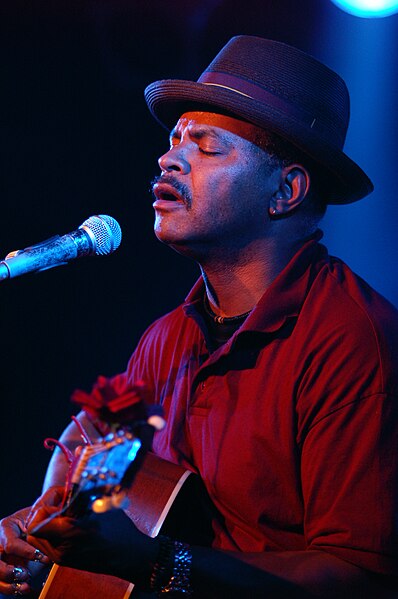 Guy Davis (* 12. Mai 1952 in New York City, New York) ist ein US-amerikanischer Blues-Gitarrist, Sänger und Schauspieler. Er ist der Sohn der Schauspieler und Bürgerrechtler Ossie Davis und Ruby Dee.
Davis, der als 13-Jähriger durch einen Auftritt des berühmten Bluesgitarristen Buddy Guy zu einer eigenen Musikkarriere inspiriert wurde, erhielt 1978 die Möglichkeit, sein Debüt-Album Dreams About Life auf dem bekannten Folkways-Label von Moses Asch zu veröffentlichen. Anfang der 80er Jahre begann er seine Schauspielkarriere, unter anderem mit einer wiederkehrenden Rolle in der Soap Opera One Life to Live. Außerdem ergatterte er 1984 eine Hauptrolle in Beat Street, einem Kinofilm über die Hip-Hop- und Breakdance-Kultur.
Theater
In der Folgezeit suchte er nach Möglichkeiten, seine beiden größten Leidenschaften, die Bluesmusik und die Schauspielerei miteinander zu verbinden. Dies gelang ihm schließlich ab 1991 durch die Mitwirkung in verschiedenen Theaterstücken und Musicals. Neben seiner Mitwirkung in Mulebone, der Broadway-Version eines Theaterstücks von Zora Neale Hurston and Langston Hughes mit Musik von Taj Mahal, wurde insbesondere zwei Jahre später seine Verkörperung des legendären Bluesmusikers Robert Johnson in der Off-Broadway-Produktion Robert Johnson: Trick the Devil von den Kritikern begeistert aufgenommen und 1993 durch den Keeping the Blues Alive Award (KBA) der Blues Foundation in der Kategorie Theater ausgezeichnet, der ihm von Robert Cray überreicht wurde. Im Frühjahr 1995 spielte er zusammen mit seinen berühmten Eltern, Ruby Dee und Ossie Davis, in Two Hah Hahs and a Homeboy, einem Theaterstück über die afro-amerikanische Kultur und Musik, das Guy Davis zusammen mit ihnen geschrieben hatte.
Musik
Ab 1995 konzentrierte sich Guy Davis vor allem auf seine musikalische Karriere. 17 Jahre nach seinem Debüt nahm er mit dem Live-Album Stomp Down the Rider erstmals wieder ein reguläre Langspielplatte auf, diesmal für Red House Records. Hier präsentierte er seine Version des modernen Country Blues.
Etliche seiner weiteren Alben wurden für verschiedene Kategorien des Handy Awards nominiert, einem dem Grammy ähnlichen Preis, jedoch speziell für Bluesmusik.
http://de.wikipedia.org/wiki/Guy_Davis_%28Musiker%29
Guy Davis (born May 12, 1952) is an American blues guitarist and banjo player, and actor. He is the son of the actors Ruby Dee and Ossie Davis.[1]
Davis' roots
Davis says his blues music is inspired by the southern speech of his grandmother. Though raised in the New York City area, he grew up hearing accounts of life in the rural south from his parents and especially his grandparents, and they made their way into his own stories and songs. Davis taught himself the guitar (never having the patience to take formal lessons) and learned by listening to and watching other musicians. One night on a train from Boston to New York he picked up finger picking from a nine-fingered guitar player. His first exposure to the blues was at a summer camp in Vermont run by Pete Seeger's brother John Seeger, where he learned how to play the five-string banjo.
Acting
Throughout his life, Davis has had overlapping interests in music and acting. Early acting roles included a lead role in the 1984 film Beat Street opposite Rae Dawn Chong and on television as Dr. Josh Hall on One Life to Live from 1985 to 1986. Eventually, Davis had the opportunity to combine music and acting on the stage. He made his Broadway musical debut in 1991 in the Zora Neale Hurston/Langston Hughes collaboration Mulebone, which featured the music of Taj Mahal.
In 1993, he performed Off-Broadway as legendary blues player Robert Johnson in Robert Johnson: Trick the Devil. He received rave reviews and became the 1993 winner of the Blues Foundation's "Keeping the Blues Alive Award” presented to him by Robert Cray at the W.C. Handy Awards ceremony.
Davis creates his own work: looking for more ways to combine his love of blues, music, and acting, Davis created material for himself. He wrote In Bed with the Blues: The Adventures of Fishy Waters—an engaging and moving one-man show. The Off-Broadway debut in 1994 received critical praise from The New York Times and the Village Voice.
Davis' writing projects have also included a variety of theatre pieces and plays. Mudsurfing, a collection of three short stories, received the 1991 Brio Award from the Bronx Council of the Arts. The Trial, (later renamed, The Trial: Judgement of the People), an anti-drug abuse, one-act play that toured throughout the New York City shelter system, was produced Off-Broadway in 1990, at the McGinn Cazale Theater. Davis also arranged, performed and co-wrote the music for an Emmy award winning film, To Be a Man. In the fall of 1995, his music was used in the national PBS series, The American Promise.
Music
For the past two decades, Davis has concentrated much of his efforts on writing, recording, and performing music. In the fall of 1995, he released his Red House records debut Stomp Down Rider, an album that captured Davis in a stunning live performance. The album landed on top lists all over the country, including in the Boston Globe and Pulse magazine.
Davis' next album, Call Down the Thunder, paid tribute to the blues masters, but leaned more heavily towards his own powerful originals. It too was named a top ten album of the year in the Boston Globe and Pulse, and Acoustic Guitar called it one of the “thirty essential CDs from a new generation of performers”.
Davis' third Red House disc, You Don't Know My Mind, which includes backing vocals by Olu Dara, explodes with passion and rhythm, and displays Davis' breadth as a composer and powerhouse performer. It was chosen as ‘Blues Album of the Year’ by the Association For Independent Music (formerly NAIRD). The San Francisco Chronicle gave the CD four stars, adding, "Davis' tough, timeless vocals blow through your brain like a Mississippi dust devil."
Charles M. Young summed up Davis' own take on the blues best when he wrote his review in Playboy magazine, "Davis reminds you that the blues started as dance music. This is blues made for humming along, stomping your foot, feeling righteous in the face of oppression and expressing gratitude to your baby for greasing your skillet."
Davis’ fourth album was, Butt Naked Free, the first of all of the albums since that have been produced by John Platania, former guitarist for Van Morrison. In addition to John on electric guitar, it includes musician friends such as Levon Helm (The Band), multi-instrumentalist, Tommy “T-Bone” Wolk (Hall & Oates, Carly Simon, ‘Saturday Night Live’ Band), drummer Gary Burke (Joe Jackson), and acoustic bassist, Mark Murphy (Walt Michael & Co., Vanaver Caravan). The musicians all performed “Waitin’ On the Cards to Fall” from this album on the Conan O'Brien show.
Of the fifth album, Give In Kind, music critic Dave Marsh wrote, “Davis never loses sight of the blues as good time music, the original forum for dancing on top of one's sorrows. Joy made more exquisite, of course, by the sorrow from which it springs.”
It was this album that caught the ear of Ian Anderson, founder and lead singer of Jethro Tull, who invited Davis to open for them during the summer of 2003. He wrote in his invitation, “Folk Blues (Sonny Terry, J.B. Lenoir) is where I started. Hearing Guy is like coming home again.”
Many notables in the entertainment world who call themselves Davis fans include Jackson Browne, Maya Angelou, and Jessica Lange, who had Davis perform his cover version of the Bob Dylan song, “What’s a Sweetheart Like You (Doing in a Dump Like This)” for a special fundraiser she and her husband Sam Shepard organized for Tibetan monks in Minnesota.
Chocolate to the Bone, Davis’ sixth album, followed, with more accolades and acclaim including a W.C. Handy award nomination for “Best Acoustic Blues Album”. Davis has been nominated for nine ‘Handy Awards’ over the years including for “Best Traditional Blues Album”, “Best Blues Song” (“Waiting On the Cards to Fall”) and as “Best Acoustic Blues Artist” two times. His latest album, Legacy, was picked as one of the Best CDs of the Year by National Public Radio (NPR), and the lead track on it, “Uncle Tom’s Dead” was chosen as one of the Best Songs of the Year. This of course is ironic as FCC rules won’t allow it to be played on the air, but it’s a fitting tribute nonetheless. The only other artist on both lists was Brian Wilson of the Beach Boys fame.
The cover for this album was drawn by Guy Davis. The tongue-in-cheek cartoon strip that is included in the liner notes, is a collaboration between the two men. A winery in California completes the triumvirate as it is headed by a man also named Guy Davis.[2] He created a limited edition wine in their honor with the label artwork done by illustrator Guy.
Davis has contributed songs on a host of tribute and compilation albums, including collections on bluesmen Charley Patton and Robert Johnson, for Putumayo Records collections including, From Mali to Memphis and the children’s album called, Sing Along With Putumayo, for tradition-based rockers like the Grateful Dead, songwriters like Nick Lowe, and for Bob Dylan’s 60th birthday CD called, A Nod to Bob, even on a Windham Hill collection of choral music, and alongside performers like Bonnie Raitt, Jackson Browne, and Bruce Springsteen for a collection of songs written by his friend, legendary folksinger, ‘Uncle’ Pete Seeger, called, Where Have All the Flowers Gone.
However, easily the proudest recording project he’s been involved with is the one produced by his friend Larry Long, called I Will Be Your Friend: Songs and Activities for Young Peacemakers, in which Davis contributed the title track. It's a CD collection of enriching songs combined together with a teacher’s aid kit to help teach diversity and understanding. It is all part of the national “Teaching Tolerance” campaign and continues to be distributed by the Southern Poverty Law Center, and sent to every public school in the country to help combat hatred.
Recent projects
Davis wrote a couple of songs and recorded with Dr. John for Whoopi Goldberg’s Littleburg series, and appeared and sang in Jack's Big Music Show, both for the Nickelodeon network, Nick Jr.
Davis has also done residency programs for the Lincoln Center Institute, the Kennedy Center, the State Theatre in New Jersey, and works with “Young Audiences of NJ”, doing classroom workshops and assembly programs all across the country and in Canada for Elementary, High School, and College students.
More recently, Davis appeared in the PBS special on the jazz and blues artist Howard Armstrong. And he was an honored guest at the Kennedy Center Awards, at which he received medals, alongside other recipients such as Warren Beatty, Elton John and composer John Williams, from the President of the United States.
Davis appeared at NYC's Lincoln Center Out of Doors Festival in a history of the blues concert, "Evolution of the Blues", along with Michael Hill (Michael Hill's Blues Mob), Paul Peress, and Paul Ossola.[3]
He also performed with Pete Seeger and Tao Rodríguez-Seeger at select venues, including a benefit concert that took place at McDaniel College in Westminster, Maryland in August 2008.
In 2012 Davis released an audio play called The Adventures of Fishey Waters: In Bed with the Blues. It is a compilation of "historical" tales in the form of a play accompanied by Davis in song.[4]
Awards
Davis has received three Blues Award nominations as well as the Foundation's "Keeping The Blues Alive" award in 1993 including:
“Best Acoustic Album of the Year”[5]
“Best Acoustic Artist of the Year”[5]
“Best Instrumentalist”
1991 BRIO award[6]
1993 AUDELCO Award for Best Actor
Davis' roots
Davis says his blues music is inspired by the southern speech of his grandmother. Though raised in the New York City area, he grew up hearing accounts of life in the rural south from his parents and especially his grandparents, and they made their way into his own stories and songs. Davis taught himself the guitar (never having the patience to take formal lessons) and learned by listening to and watching other musicians. One night on a train from Boston to New York he picked up finger picking from a nine-fingered guitar player. His first exposure to the blues was at a summer camp in Vermont run by Pete Seeger's brother John Seeger, where he learned how to play the five-string banjo.
Acting
Throughout his life, Davis has had overlapping interests in music and acting. Early acting roles included a lead role in the 1984 film Beat Street opposite Rae Dawn Chong and on television as Dr. Josh Hall on One Life to Live from 1985 to 1986. Eventually, Davis had the opportunity to combine music and acting on the stage. He made his Broadway musical debut in 1991 in the Zora Neale Hurston/Langston Hughes collaboration Mulebone, which featured the music of Taj Mahal.
In 1993, he performed Off-Broadway as legendary blues player Robert Johnson in Robert Johnson: Trick the Devil. He received rave reviews and became the 1993 winner of the Blues Foundation's "Keeping the Blues Alive Award” presented to him by Robert Cray at the W.C. Handy Awards ceremony.
Davis creates his own work: looking for more ways to combine his love of blues, music, and acting, Davis created material for himself. He wrote In Bed with the Blues: The Adventures of Fishy Waters—an engaging and moving one-man show. The Off-Broadway debut in 1994 received critical praise from The New York Times and the Village Voice.
Davis' writing projects have also included a variety of theatre pieces and plays. Mudsurfing, a collection of three short stories, received the 1991 Brio Award from the Bronx Council of the Arts. The Trial, (later renamed, The Trial: Judgement of the People), an anti-drug abuse, one-act play that toured throughout the New York City shelter system, was produced Off-Broadway in 1990, at the McGinn Cazale Theater. Davis also arranged, performed and co-wrote the music for an Emmy award winning film, To Be a Man. In the fall of 1995, his music was used in the national PBS series, The American Promise.
Music
For the past two decades, Davis has concentrated much of his efforts on writing, recording, and performing music. In the fall of 1995, he released his Red House records debut Stomp Down Rider, an album that captured Davis in a stunning live performance. The album landed on top lists all over the country, including in the Boston Globe and Pulse magazine.
Davis' next album, Call Down the Thunder, paid tribute to the blues masters, but leaned more heavily towards his own powerful originals. It too was named a top ten album of the year in the Boston Globe and Pulse, and Acoustic Guitar called it one of the “thirty essential CDs from a new generation of performers”.
Davis' third Red House disc, You Don't Know My Mind, which includes backing vocals by Olu Dara, explodes with passion and rhythm, and displays Davis' breadth as a composer and powerhouse performer. It was chosen as ‘Blues Album of the Year’ by the Association For Independent Music (formerly NAIRD). The San Francisco Chronicle gave the CD four stars, adding, "Davis' tough, timeless vocals blow through your brain like a Mississippi dust devil."
Charles M. Young summed up Davis' own take on the blues best when he wrote his review in Playboy magazine, "Davis reminds you that the blues started as dance music. This is blues made for humming along, stomping your foot, feeling righteous in the face of oppression and expressing gratitude to your baby for greasing your skillet."
Davis’ fourth album was, Butt Naked Free, the first of all of the albums since that have been produced by John Platania, former guitarist for Van Morrison. In addition to John on electric guitar, it includes musician friends such as Levon Helm (The Band), multi-instrumentalist, Tommy “T-Bone” Wolk (Hall & Oates, Carly Simon, ‘Saturday Night Live’ Band), drummer Gary Burke (Joe Jackson), and acoustic bassist, Mark Murphy (Walt Michael & Co., Vanaver Caravan). The musicians all performed “Waitin’ On the Cards to Fall” from this album on the Conan O'Brien show.
Of the fifth album, Give In Kind, music critic Dave Marsh wrote, “Davis never loses sight of the blues as good time music, the original forum for dancing on top of one's sorrows. Joy made more exquisite, of course, by the sorrow from which it springs.”
It was this album that caught the ear of Ian Anderson, founder and lead singer of Jethro Tull, who invited Davis to open for them during the summer of 2003. He wrote in his invitation, “Folk Blues (Sonny Terry, J.B. Lenoir) is where I started. Hearing Guy is like coming home again.”
Many notables in the entertainment world who call themselves Davis fans include Jackson Browne, Maya Angelou, and Jessica Lange, who had Davis perform his cover version of the Bob Dylan song, “What’s a Sweetheart Like You (Doing in a Dump Like This)” for a special fundraiser she and her husband Sam Shepard organized for Tibetan monks in Minnesota.
Chocolate to the Bone, Davis’ sixth album, followed, with more accolades and acclaim including a W.C. Handy award nomination for “Best Acoustic Blues Album”. Davis has been nominated for nine ‘Handy Awards’ over the years including for “Best Traditional Blues Album”, “Best Blues Song” (“Waiting On the Cards to Fall”) and as “Best Acoustic Blues Artist” two times. His latest album, Legacy, was picked as one of the Best CDs of the Year by National Public Radio (NPR), and the lead track on it, “Uncle Tom’s Dead” was chosen as one of the Best Songs of the Year. This of course is ironic as FCC rules won’t allow it to be played on the air, but it’s a fitting tribute nonetheless. The only other artist on both lists was Brian Wilson of the Beach Boys fame.
The cover for this album was drawn by Guy Davis. The tongue-in-cheek cartoon strip that is included in the liner notes, is a collaboration between the two men. A winery in California completes the triumvirate as it is headed by a man also named Guy Davis.[2] He created a limited edition wine in their honor with the label artwork done by illustrator Guy.
Davis has contributed songs on a host of tribute and compilation albums, including collections on bluesmen Charley Patton and Robert Johnson, for Putumayo Records collections including, From Mali to Memphis and the children’s album called, Sing Along With Putumayo, for tradition-based rockers like the Grateful Dead, songwriters like Nick Lowe, and for Bob Dylan’s 60th birthday CD called, A Nod to Bob, even on a Windham Hill collection of choral music, and alongside performers like Bonnie Raitt, Jackson Browne, and Bruce Springsteen for a collection of songs written by his friend, legendary folksinger, ‘Uncle’ Pete Seeger, called, Where Have All the Flowers Gone.
However, easily the proudest recording project he’s been involved with is the one produced by his friend Larry Long, called I Will Be Your Friend: Songs and Activities for Young Peacemakers, in which Davis contributed the title track. It's a CD collection of enriching songs combined together with a teacher’s aid kit to help teach diversity and understanding. It is all part of the national “Teaching Tolerance” campaign and continues to be distributed by the Southern Poverty Law Center, and sent to every public school in the country to help combat hatred.
Recent projects
Davis wrote a couple of songs and recorded with Dr. John for Whoopi Goldberg’s Littleburg series, and appeared and sang in Jack's Big Music Show, both for the Nickelodeon network, Nick Jr.
Davis has also done residency programs for the Lincoln Center Institute, the Kennedy Center, the State Theatre in New Jersey, and works with “Young Audiences of NJ”, doing classroom workshops and assembly programs all across the country and in Canada for Elementary, High School, and College students.
More recently, Davis appeared in the PBS special on the jazz and blues artist Howard Armstrong. And he was an honored guest at the Kennedy Center Awards, at which he received medals, alongside other recipients such as Warren Beatty, Elton John and composer John Williams, from the President of the United States.
Davis appeared at NYC's Lincoln Center Out of Doors Festival in a history of the blues concert, "Evolution of the Blues", along with Michael Hill (Michael Hill's Blues Mob), Paul Peress, and Paul Ossola.[3]
He also performed with Pete Seeger and Tao Rodríguez-Seeger at select venues, including a benefit concert that took place at McDaniel College in Westminster, Maryland in August 2008.
In 2012 Davis released an audio play called The Adventures of Fishey Waters: In Bed with the Blues. It is a compilation of "historical" tales in the form of a play accompanied by Davis in song.[4]
Awards
Davis has received three Blues Award nominations as well as the Foundation's "Keeping The Blues Alive" award in 1993 including:
“Best Acoustic Album of the Year”[5]
“Best Acoustic Artist of the Year”[5]
“Best Instrumentalist”
1991 BRIO award[6]
1993 AUDELCO Award for Best Actor
Steve Winwood *12.05.1948

Stephen Lawrence Winwood, genannt Steve (Stevie) Winwood (* 12. Mai 1948 in Handsworth, Birmingham, England) ist ein englischer Multi-Instrumentalist und Sänger.
 Bereits in jungen Jahren kam Steve Winwood, unterstützt von seinen Eltern Lillian und Lawrence, mit Musik in Berührung. Sein Vater beherrschte eine Reihe von Instrumenten, darunter Klarinette, Saxophon, Mandoline, Geige und Bass, und war auch in einer Band, die am Wochenende auf Hochzeiten und diversen Tanzveranstaltungen auftrat. Steve lernte klassische Gitarre und Klavier in der Schule und sehr bald spielten er und sein älterer Bruder Muff Winwood (* 14. Juni 1943) in der Band ihres Vaters mit. Darüber hinaus wurde Steve Pianist bei der Muff Woody Jazz Band seines Bruders, wodurch zusätzliche Blues- und Rhythm & Blues-Elemente in die Musik der Band einflossen.
Spencer Davis Group 1963–1967
Im Rahmen eines Auftritts der Muff Woody Jazz Band im Golden Eagle in Birmingham 1963 kam es zum Zusammentreffen der Winwood-Brüder mit dem Gitarristen Spencer Davis, Linguistikstudent an der University of Birmingham. Dieser war von den Brüdern tief beeindruckt und schlug eine Zusammenarbeit vor, womit unter Hinzunahme von Pete York (Schlagzeug) die Spencer Davis Group geboren war. Der Bandname täuscht, denn der musikalische Kopf der Band war der gerade erst 15-jährige Steve Winwood als Leadsänger, Leadgitarrist, Pianist bzw. Organist und später als Songschreiber. Kurz nach Gründung der Band bekamen sie von Chris Blackwell einen Plattenvertrag bei dessen Plattenlabel Island Records, welchem Steve Winwood über lange Jahre die Treue hielt.
Während die Band schnell als attraktiver Live-Act über Birmingham hinaus bekannt wurde, konnten sich die ersten Singles, darunter Coverversionen von John Lee Hookers Dimples und Ed Cobbs Every Little Bit Hurts, nicht in der Hitparade durchsetzen. Der Durchbruch gelang schließlich mit der von Jackie Edwards geschriebenen Nummer Keep On Running, die am Beginn des Jahres 1966 an die Spitze der britischen Charts kletterte. Die Nachfolge-Single Somebody Help Me, ebenfalls von Jackie Edwards, erreichte kurz darauf ebenfalls die Top-Position. Bei den Singles Gimme Some Lovin', später ein Hit für die Blues Brothers, und I’m a Man trat Steve Winwood nun auch als Songschreiber in Erscheinung, beide Singles wurden Top Ten Hits sowohl in Großbritannien als auch erstmals in den USA.
Traffic und Blind Faith 1967–1975
Umso überraschender kam daher im April 1967 die Ankündigung, die Spencer Davis Group zu verlassen, um zusammen mit Chris Wood, Jim Capaldi und Dave Mason die Band Traffic zu gründen. Bereits die erste Single Paper Sun entwickelte sich zu einer Top Ten Nummer und auch das Debütalbum Mr. Fantasy war sehr erfolgreich. Das Nachfolgealbum Traffic prolongierte den Erfolg, auch wenn Dave Mason die Band kurz vor Erscheinen des Albums zugunsten einer Solokarriere verlassen hatte. Nach einer überaus erfolgreichen Tournee durch die Vereinigten Staaten fiel die Gruppe schließlich zu Beginn des Jahres 1969 auseinander.
Das nächste Projekt begann zunächst als lose Zusammenarbeit – in Form von privaten Jam-Sessions – zwischen Winwood und Eric Clapton, dessen Band Cream sich ebenfalls gerade aufgelöst hatte. Mit der Hinzunahme von Ginger Baker war jedoch rasch eine neue sogenannte Supergroup geboren und Ric Grech von Family am Bass komplettierte das Line-Up von Blind Faith. Die Erwartungen in die Band als Quasi-Nachfolger von Cream waren enorm. Am 7. Juni 1969 gaben sie ihr Debüt als – eintrittsfreies – Open-Air-Konzert im Londoner Hyde Park vor über 100 000 Zuschauern, und kurz darauf erschien das hochkarätige Album Blind Faith, das zwar nur sechs Titel enthält, aber auf Grund der gelungenen Synthese von Blues, Rock und Pop einen Meilenstein des progressiven britischen Blues-Rock darstellt. Ohne genügend Zeit, um sich als Band zu entwickeln, und mit nur einem Album im Gepäck fanden sich Blind Faith als Headliner auf einer großen US-Tournee, bei der jedoch fokussiert Differenzen und unterschiedliche Vorstellungen über die künftige musikalische Ausrichtung von Blind Faith unter den vier individualistischen Bandmitgliedern zu Tage traten. Dies führte nach Abschluss der Tour im September 1969 zur Auflösung von Blind Faith.
Nach einem kurzen Gastspiel bei Ginger Baker's Air Force begannen die Aufnahme-Sessions zu Winwoods erstem Soloalbum Mad Shadows. Im Laufe dieser Sessions kamen zunächst Capaldi und später auch Wood hinzu und was als Soloprojekt begonnen hatte, endete schließlich mit dem Traffic-Album John Barleycorn Must Die. Im Laufe der folgenden Tournee stießen Jim Gordon, Reebop Kwaku Baah und auch wieder Dave Mason (wenn auch nur kurz) zu Traffic. Nach einigen weiteren sehr erfolgreichen Alben endete mit When The Eagle Flies und anschließender Tournee 1975 vorläufig das Kapitel Traffic.
Solokarriere
Daraufhin zog sich Steve Winwood die nächsten zwei Jahre zurück nach Gloucestershire und arbeitete dort in seinem Heimstudio, unterbrochen nur von kurzen Auftritten als Session-Musiker, darunter auch beim GO-Projekt des Japaners Stomu Yamashta. Im Jahre 1977 erschien schließlich das Debütalbum Steve Winwood, das musikalisch bereits in die zukünftige Richtung wies, aber kommerziell nur mäßig erfolgreich war. Der Durchbruch als Solokünstler sollte erst mit dem Nachfolge-Album Arc of a Diver 1980 erfolgen. Über zwei Jahre arbeitete Winwood in seinem Heimstudio an diesem Album, bei dem er alle Instrumente und Vocals selbst einspielte. Es verblieb fast ein Jahr in den US Billboard Charts und erreichte als beste Notierung Platz 3, außerdem enthielt es mit While You See a Chance auch den ersten Solo Top Ten Hit. 1982 folgte das Album Talking Back to the Night, wiederum im Alleingang eingespielt und produziert, wobei alle Songs der gemeinsamen Feder mit Will Jennings entsprangen, welcher schon an den meisten Songs von Arc of a Diver beteiligt war. Das Album etablierte Winwood zwar als Solokünstler, konnte jedoch weder kommerziell noch künstlerisch an den Riesenerfolg seines Vorgängers anknüpfen.
Für sein nächstes Album änderte Steve Winwood die bisherige Arbeitsweise, bei der er praktisch alles im Alleingang gemacht hatte. Mit Russ Titelman wurde ein erfahrener Produzent engagiert, und eine illustre Musikerrunde, darunter Chaka Khan, James Taylor, Joe Walsh von den Eagles oder auch Randy Brecker, begleitete Winwood auf Back in the Highlife, erschienen im Juli 1986. Das Album kletterte bis auf Platz 7 der US-Charts, die erste Singleauskopplung Higher Love war noch erfolgreicher und erreichte Platz 1. Für diesen Song erhielt Winwood im selben Jahr zwei Grammys: Record of the Year und Best Pop Vocal Performance, Male. Im Sog dieses Erfolges wurde im Jahre 1987 die Kompilation Chronicles veröffentlicht, die insgesamt zehn Songs der drei Vorgängeralben enthielt. Valerie vom Album Talking Back to the Night, hier in einer Remix-Version vertreten, erreichte 1987 Platz neun der US Charts. Das Album Chronicles markierte auch gleichzeitig Winwoods Abschied vom Label Island Records, bei dem er seit Beginn seiner Plattenkarriere veröffentlicht hatte.
1988 erschien das Album Roll With It bei Virgin Records, das sich deutlich mehr am Soul der 1960er Jahre orientierte, erkennbar auch an der Beteiligung der Memphis Horns. Sowohl das Album als auch die gleichnamige Single erreichten Platz 1 der US-Charts, die Nachfolgesingle Don't You Know What the Night Can Do schaffte es ebenfalls unter die Top Ten. Das Album markierte aber gleichzeitig auch das Ende einer überaus erfolgreichen Phase und mit den nachfolgenden Alben konnte Steve Winwood nie mehr an diese Erfolge anschließen.
Eingespielt mit einer Reihe von Nashville Musikern folgte 1990 Refugees of the Heart, das sich nur mehr auf den mittleren Rängen der Charts platzieren konnte. Für die Single One and Only Man arbeitete Winwood dabei erstmals nach langer Zeit wieder mit Jim Capaldi zusammen. Diese Zusammenarbeit mündete schließlich auch in einer kurzzeitigen Reunion von Traffic (wenn auch ohne Chris Wood, der bereits 1983 verstorben war) und dem Album Far From Home im Jahre 1994. Im Jahre 1997 erschien in enger Kooperation mit Narada Michael Walden das Solo-Album Junction Seven, das aber über weite Strecken ziemlich enttäuschend ausfiel und nicht an frühere Erfolge anschließen konnte. Überhaupt war es im Laufe der 1990er Jahre relativ ruhig um ihn geworden, wenn auch eine Reihe von Gastauftritten auf Alben bekannter Künstler vom hohen Ansehen und Rang Winwoods in der Musikbranche zeugen. So beteiligte sich Steve Winwood mit einer Reihe anderer Musikgrößen unter anderem auch an der Fortsetzung der Blues Brothers Blues Brothers 2000.
Erst im Jahre 2003 erschien mit About Time ein neues Solo-Album von Steve Winwood auf seinem eigenen Plattenlabel Wincraft Music. Zusammen mit Drummer Walfredo Reyes Jr. und dem Gitarristen José Pires de Almeida Neto entstand eine lateinamerikanisch geprägte Jazzrockplatte, die vor allem auch durch den Sound der Hammondorgel getragen wird (so gibt es zum Beispiel auf der Platte keinen Bass). Zwar entfernte sich Winwood damit weiter von seiner großen Hitparadenzeit der 1980er Jahre, andererseits wurde die Platte aber gerade von Fans aus seiner Zeit mit Traffic mit großer Zustimmung aufgenommen. Bekannter dürfte allerdings sein Vocals-Gastauftritt bei der Single Call On Me des schwedischen DJs Eric Prydz sein, die 2004 wochenlang die Charts dominierte und eine Remix-Version von Winwoods Valerie vom Album Talking Back to the Night ist.
Ende Februar 2008 gastierte er zusammen mit Eric Clapton nach genau 40 Jahren wieder gemeinsam für drei Konzerte im Madison Square Garden in New York City. Der Live-Mitschnitt wurde 2009 als DVD veröffentlicht. Im Jahre 2009 kam Winwood zu vier Live-Konzerten nach Deutschland. Im gleichen Jahr begab sich Winwood gemeinsam mit Eric Clapton auf Europa-Tournee, dabei spielten sie jeweils aus den Solo-Alben beider Künstler Hits als auch aus ihrer gemeinsamen kurzen Blind Faith-Karriere.
http://de.wikipedia.org/wiki/Steve_Winwood
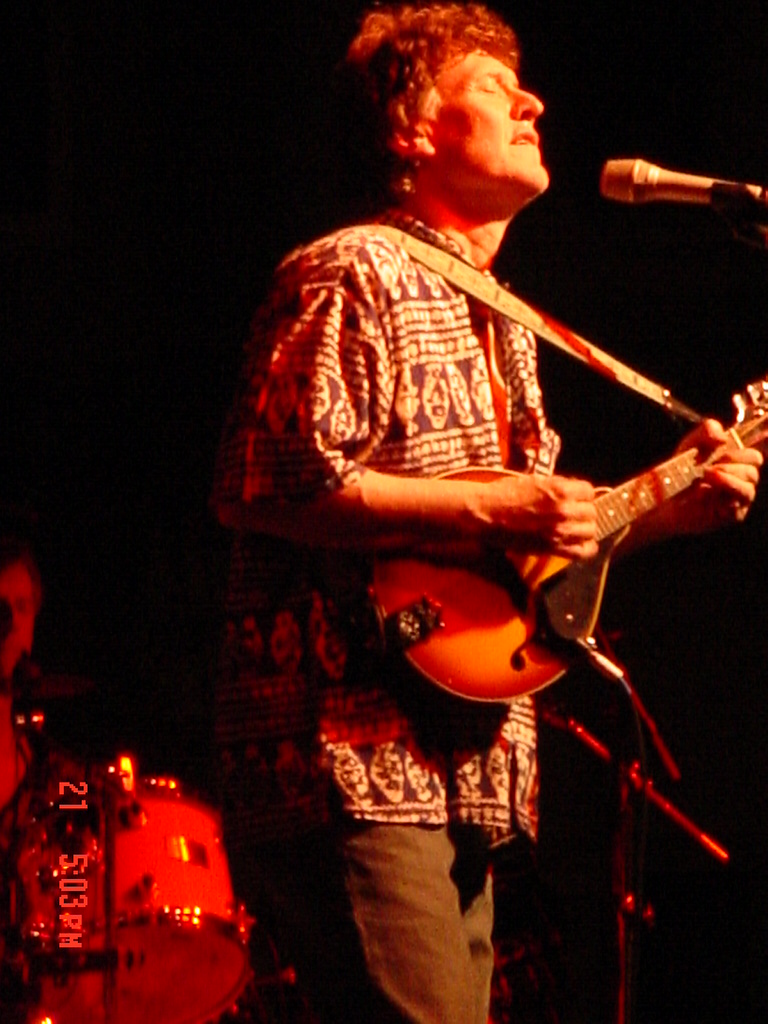
 Stephen Lawrence "Steve" Winwood (born 12 May 1948) is an English musician whose genres include rock, blue-eyed soul, rhythm and blues, blues rock, pop rock, and jazz. A multi-instrumentalist, he can play keyboards, bass guitar, drums, guitar, mandolin, violin, and other strings.
Winwood was a key member of The Spencer Davis Group, Traffic, Blind Faith and Go. He also had a successful solo career with hits including "Valerie", "Back in the High Life Again" and two US Billboard Hot 100 number ones; "Higher Love" and "Roll with It". He was inducted into the Rock and Roll Hall of Fame as a member of Traffic in 2004.[2]
In 2005 Winwood was honoured as a BMI Icon at the annual BMI London Awards for his "enduring influence on generations of music makers."[3] In 2008, Rolling Stone magazine ranked Winwood #33 in its 100 Greatest Singers of All Time.[4] Winwood has won two Grammy Awards.
Early life
Stephen Lawrence Winwood was born in Handsworth, West Midlands. His father, Lawrence, a foundryman by trade, was a semi-professional musician, playing mainly the saxophone and clarinet. Young Winwood became interested in swing and Dixieland jazz as a boy and started playing drums, guitar and piano. He first performed with his father and older brother, Muff, in the Ron Atkinson Band at the age of eight. Winwood was a choirboy at St John's Church of England, Perry Barr. He later admitted to having "sneaked a few plays" of the organ there. While he was still young the family moved from Handsworth to the semi-rural suburb of Kingstanding at the northern edge of the city.[5]

Career
Early years
While he was still a pupil at the Great Barr School,[6] Winwood was a part of the Birmingham rhythm and blues scene, playing the Hammond B-3 organ and guitar, backing blues singers such as Muddy Waters, John Lee Hooker, T-Bone Walker, Howlin' Wolf, B.B. King, Sonny Boy Williamson II, Eddie Boyd, Otis Spann, Chuck Berry and Bo Diddley on their United Kingdom tours, the custom at that time being for US singers to travel solo and be backed by pickup bands. At this time, Winwood was living on Atlantic Road in Great Barr, close to the Birmingham music halls where he played. Winwood had modelled himself on Ray Charles.[5]
Winwood joined the Spencer Davis Group at age 14,[7] along with his older brother, Muff, who later had success as a record producer. Steve's distinctive high tenor, singing voice and vocal style drew comparisons to Ray Charles.[8] At the end of 1965 the group had their first number one single with "Keep On Running"[9] and the money from this success allowed Winwood to buy his own Hammond B-3 organ.[5]
During this time Winwood joined forces with guitarist Eric Clapton as part of the one-off group Eric Clapton and the Powerhouse. Songs were recorded for the Elektra label, but only three tracks made the compilation album, What's Shakin'. Winwood co-wrote and recorded the hits "Gimme Some Lovin'" and "I'm a Man" before leaving the Spencer Davis Group. Winwood met drummer Jim Capaldi, guitarist Dave Mason, and multi-instrumentalist Chris Wood when they jammed together at The Elbow Room, a club in Aston, Birmingham.[10] After Winwood left the Spencer Davis Group in April 1967, the quartet formed Traffic.[11] Soon thereafter, they rented a cottage near the rural village of Aston Tirrold, Berkshire (now Oxfordshire) to write and rehearse new music.[10] The period at the cottage proved important in the band's development.[12]
Early in Traffic's formation, Winwood and Capaldi formed a songwriting partnership, with Winwood writing music to match Capaldi's lyrics. This partnership was the source of most of Traffic's material, including popular songs such as "Paper Sun" and "The Low Spark of High-Heeled Boys", and outlived the band, producing several songs for Winwood and Capaldi's solo albums. Over the band's history, Winwood performed the majority of their lead vocals, keyboard instruments, and guitars. He also frequently played bass and percussion up to and including the recording sessions for their fourth album.[citation needed]
Blind Faith and Traffic
Winwood with Traffic
Winwood formed the supergroup Blind Faith in 1969 with Eric Clapton, Ginger Baker and Ric Grech.[13] The band was short-lived owing to Clapton's greater interest in Blind Faith's opening act Delaney & Bonnie & Friends—Clapton left the band at tour's end. However, Baker, Winwood and Grech stayed together to form Ginger Baker's Air Force. The lineup consisted of 3/4 of Blind Faith (without Clapton, who was replaced by Denny Laine), 2/3 of Traffic (Winwood and Chris Wood, minus Capaldi) plus musicians who interacted with Baker in his early days, including Phil Seamen, Harold McNair, John Blood and Graham Bond. However, the project turned out to be just another short-lived one. Winwood soon went into the studio to begin work on a new solo album, tentatively titled Mad Shadows. However, Winwood ended up calling in Wood and Capaldi to help with session work, which prompted Traffic's comeback album John Barleycorn Must Die. In 1976, Winwood played guitar on the Fania All Stars’ Delicate and Jumpy record and performed as a guest with the band in their only UK appearance, a sold-out concert at the Lyceum Theatre, London. In 1972, Winwood recorded the part of Captain Walker in the highly successful orchestral version of The Who's Tommy. He recorded a 1973 album with Remi Kabaka, Aiye-Keta, for Antilles Records, and in 1976 provided vocals and keyboards on Go, a concept album by Japanese composer Stomu Yamashta.[citation needed]
Solo career
Weariness with the grind of touring and recording prompted Winwood to leave Traffic and retire to sessioning for some years.[14] Under pressure from Island Records, he resurfaced with his self-titled first solo album in 1977. This was followed by his 1980 hit Arc of a Diver (which included his first solo hit, "While You See a Chance") and Talking Back to the Night in 1982. Both albums were recorded at his home in Gloucestershire with Winwood playing all instruments. He continued to do sessions during this period, and in 1983 he co-produced and played on Jim Capaldi's top 40 hit "That's Love" and co-wrote the Will Powers top 20 hit "Kissing with Confidence".
In 1986, as his relationship was faltering he moved to New York. There he enlisted the help of a coterie of stars to record Back in the High Life in the US, and the album was a hit. He topped the Billboard Hot 100 with "Higher Love", and earned two Grammy Awards: for Record of the Year and Best Male Pop Vocal Performance. Winwood embarked on an extensive tour of North America in support of the album.[15]
All these albums were released on Island Records. However, at the peak of his commercial success, Winwood moved to Virgin Records and released Roll with It and Refugees of the Heart. The album Roll with It and the title track hit #1 on the USA album and singles charts in the summer of 1988. Another album with Virgin, Far from Home, was officially credited to Traffic, but nearly all the instruments were played by Winwood. Despite lacking a significant hit, it broke the top 40 in both the UK and USA.[16][17] His final Virgin album Junction Seven also broke the UK top 40,[18] but was Winwood's first commercial flop in the United States.
A new studio album, Nine Lives, was released 29 April 2008 by Wincraft Music through Columbia Records.[19][20] The album opened at #12 on the Billboard 200 album chart,[21] his highest US debut ever. In 2008, he was awarded an honorary doctorate from the Berklee College of Music to add to his honorary degree from Aston University, Birmingham. On 28 March 2012 Winwood was one of Roger Daltrey's special guest stars for "An Evening with Roger Daltrey and Friends" gig, in aid of the Teenage Cancer Trust at the Royal Albert Hall. In 2013 Winwood toured North America with Rod Stewart as part of the "Live the Life" tour. In 2014, Winwood toured North America with Tom Petty & The Heartbreakers.[citation needed]
Group work
In 1994, Capaldi and Winwood reunited Traffic for a new album, Far From Home, and a tour, including a performance at Woodstock '94 Festival. That same year, Winwood appeared on the A Tribute To Curtis Mayfield CD, recording Mayfield's "It's All Right". In 1995 and 1996, Winwood released Reach for the Light for the animated film Balto. In 1997, Winwood released a new album, Junction Seven, toured the US and sang with Chaka Khan at the VH-1 Honors.[22] In 1998, Winwood joined Tito Puente, Arturo Sandoval, Ed Calle and other musicians to form the band "Latin Crossings" for a European tour, after which they split without making any recordings. Winwood also appeared in the film Blues Brothers 2000, as a member of the Louisiana Gator Boys, appearing on stage with Isaac Hayes, Eric Clapton, and KoKo Taylor at the battle of the bands competition.[citation needed]
In 2003, Winwood released a new studio album, About Time on his new record label, Wincraft Music. 2004 saw his 1982 song "Valerie" used by Eric Prydz in a song called "Call on Me". It spent five weeks at #1 on the UK singles chart. Winwood heard an early version of Prydz's remix and liked it so much, he not only gave permission to use the song, he re-recorded the samples for Prydz to use.[23]
In 2005, his Soundstage Performances DVD was released, featuring recent work from the About Time album along with prior hits including "Back in the High Life". Winwood also performed hits from his days with Traffic as well as current recordings. In 2005, he accepted an invitation from 2008 Grammy Award winner Ashley Cleveland to appear on her album Men and Angels Say. This album of rock, blues and country arrangements of well known hymns includes "I Need Thee Every Hour" which features a vocal duet and organ performance. Christina Aguilera features Winwood (using the piano and organ instrumentation from the "John Barleycorn" track, "Glad") on one of her songs from her 2006 record Back to Basics, called "Makes Me Wanna Pray".
In July 2007, Winwood performed with Eric Clapton in the latter's Crossroads Guitar Festival. Among the songs they played together were "Presence of the Lord" and "Can't Find My Way Home" from their Blind Faith days. Winwood played several guitar leads in a six song set. The two continued their collaboration with three sold-out nights at Madison Square Garden in New York City in February 2008.[24] On 19 February 2008 Winwood and Clapton released a collaborative EP through iTunes titled Dirty City. Clapton and Winwood released a CD and DVD of their Madison Square Garden shows and then toured together in the summer of 2009.[25]
Personal life
Between 1978 and 1986 Winwood was married to Nicole Weir (d. 2005), who had contributed background vocals to some of his early solo work. The two married at Cheltenham Register Office.[26]
Winwood now lives in Nashville, Tennessee with his wife Eugenia Crafton, whom he married in 1987. They have four children and own a 300-year-old manor house in the Cotswolds, Gloucestershire, England.
 Stephen Lawrence "Steve" Winwood (born 12 May 1948) is an English musician whose genres include rock, blue-eyed soul, rhythm and blues, blues rock, pop rock, and jazz. A multi-instrumentalist, he can play keyboards, bass guitar, drums, guitar, mandolin, violin, and other strings.
Winwood was a key member of The Spencer Davis Group, Traffic, Blind Faith and Go. He also had a successful solo career with hits including "Valerie", "Back in the High Life Again" and two US Billboard Hot 100 number ones; "Higher Love" and "Roll with It". He was inducted into the Rock and Roll Hall of Fame as a member of Traffic in 2004.[2]
In 2005 Winwood was honoured as a BMI Icon at the annual BMI London Awards for his "enduring influence on generations of music makers."[3] In 2008, Rolling Stone magazine ranked Winwood #33 in its 100 Greatest Singers of All Time.[4] Winwood has won two Grammy Awards.
Early life
Stephen Lawrence Winwood was born in Handsworth, West Midlands. His father, Lawrence, a foundryman by trade, was a semi-professional musician, playing mainly the saxophone and clarinet. Young Winwood became interested in swing and Dixieland jazz as a boy and started playing drums, guitar and piano. He first performed with his father and older brother, Muff, in the Ron Atkinson Band at the age of eight. Winwood was a choirboy at St John's Church of England, Perry Barr. He later admitted to having "sneaked a few plays" of the organ there. While he was still young the family moved from Handsworth to the semi-rural suburb of Kingstanding at the northern edge of the city.[5]
Career
Early years
While he was still a pupil at the Great Barr School,[6] Winwood was a part of the Birmingham rhythm and blues scene, playing the Hammond B-3 organ and guitar, backing blues singers such as Muddy Waters, John Lee Hooker, T-Bone Walker, Howlin' Wolf, B.B. King, Sonny Boy Williamson II, Eddie Boyd, Otis Spann, Chuck Berry and Bo Diddley on their United Kingdom tours, the custom at that time being for US singers to travel solo and be backed by pickup bands. At this time, Winwood was living on Atlantic Road in Great Barr, close to the Birmingham music halls where he played. Winwood had modelled himself on Ray Charles.[5]
Winwood joined the Spencer Davis Group at age 14,[7] along with his older brother, Muff, who later had success as a record producer. Steve's distinctive high tenor, singing voice and vocal style drew comparisons to Ray Charles.[8] At the end of 1965 the group had their first number one single with "Keep On Running"[9] and the money from this success allowed Winwood to buy his own Hammond B-3 organ.[5]
During this time Winwood joined forces with guitarist Eric Clapton as part of the one-off group Eric Clapton and the Powerhouse. Songs were recorded for the Elektra label, but only three tracks made the compilation album, What's Shakin'. Winwood co-wrote and recorded the hits "Gimme Some Lovin'" and "I'm a Man" before leaving the Spencer Davis Group. Winwood met drummer Jim Capaldi, guitarist Dave Mason, and multi-instrumentalist Chris Wood when they jammed together at The Elbow Room, a club in Aston, Birmingham.[10] After Winwood left the Spencer Davis Group in April 1967, the quartet formed Traffic.[11] Soon thereafter, they rented a cottage near the rural village of Aston Tirrold, Berkshire (now Oxfordshire) to write and rehearse new music.[10] The period at the cottage proved important in the band's development.[12]
Early in Traffic's formation, Winwood and Capaldi formed a songwriting partnership, with Winwood writing music to match Capaldi's lyrics. This partnership was the source of most of Traffic's material, including popular songs such as "Paper Sun" and "The Low Spark of High-Heeled Boys", and outlived the band, producing several songs for Winwood and Capaldi's solo albums. Over the band's history, Winwood performed the majority of their lead vocals, keyboard instruments, and guitars. He also frequently played bass and percussion up to and including the recording sessions for their fourth album.[citation needed]
Blind Faith and Traffic
Winwood with Traffic
Winwood formed the supergroup Blind Faith in 1969 with Eric Clapton, Ginger Baker and Ric Grech.[13] The band was short-lived owing to Clapton's greater interest in Blind Faith's opening act Delaney & Bonnie & Friends—Clapton left the band at tour's end. However, Baker, Winwood and Grech stayed together to form Ginger Baker's Air Force. The lineup consisted of 3/4 of Blind Faith (without Clapton, who was replaced by Denny Laine), 2/3 of Traffic (Winwood and Chris Wood, minus Capaldi) plus musicians who interacted with Baker in his early days, including Phil Seamen, Harold McNair, John Blood and Graham Bond. However, the project turned out to be just another short-lived one. Winwood soon went into the studio to begin work on a new solo album, tentatively titled Mad Shadows. However, Winwood ended up calling in Wood and Capaldi to help with session work, which prompted Traffic's comeback album John Barleycorn Must Die. In 1976, Winwood played guitar on the Fania All Stars’ Delicate and Jumpy record and performed as a guest with the band in their only UK appearance, a sold-out concert at the Lyceum Theatre, London. In 1972, Winwood recorded the part of Captain Walker in the highly successful orchestral version of The Who's Tommy. He recorded a 1973 album with Remi Kabaka, Aiye-Keta, for Antilles Records, and in 1976 provided vocals and keyboards on Go, a concept album by Japanese composer Stomu Yamashta.[citation needed]
Solo career
Weariness with the grind of touring and recording prompted Winwood to leave Traffic and retire to sessioning for some years.[14] Under pressure from Island Records, he resurfaced with his self-titled first solo album in 1977. This was followed by his 1980 hit Arc of a Diver (which included his first solo hit, "While You See a Chance") and Talking Back to the Night in 1982. Both albums were recorded at his home in Gloucestershire with Winwood playing all instruments. He continued to do sessions during this period, and in 1983 he co-produced and played on Jim Capaldi's top 40 hit "That's Love" and co-wrote the Will Powers top 20 hit "Kissing with Confidence".
In 1986, as his relationship was faltering he moved to New York. There he enlisted the help of a coterie of stars to record Back in the High Life in the US, and the album was a hit. He topped the Billboard Hot 100 with "Higher Love", and earned two Grammy Awards: for Record of the Year and Best Male Pop Vocal Performance. Winwood embarked on an extensive tour of North America in support of the album.[15]
All these albums were released on Island Records. However, at the peak of his commercial success, Winwood moved to Virgin Records and released Roll with It and Refugees of the Heart. The album Roll with It and the title track hit #1 on the USA album and singles charts in the summer of 1988. Another album with Virgin, Far from Home, was officially credited to Traffic, but nearly all the instruments were played by Winwood. Despite lacking a significant hit, it broke the top 40 in both the UK and USA.[16][17] His final Virgin album Junction Seven also broke the UK top 40,[18] but was Winwood's first commercial flop in the United States.
A new studio album, Nine Lives, was released 29 April 2008 by Wincraft Music through Columbia Records.[19][20] The album opened at #12 on the Billboard 200 album chart,[21] his highest US debut ever. In 2008, he was awarded an honorary doctorate from the Berklee College of Music to add to his honorary degree from Aston University, Birmingham. On 28 March 2012 Winwood was one of Roger Daltrey's special guest stars for "An Evening with Roger Daltrey and Friends" gig, in aid of the Teenage Cancer Trust at the Royal Albert Hall. In 2013 Winwood toured North America with Rod Stewart as part of the "Live the Life" tour. In 2014, Winwood toured North America with Tom Petty & The Heartbreakers.[citation needed]
Group work
In 1994, Capaldi and Winwood reunited Traffic for a new album, Far From Home, and a tour, including a performance at Woodstock '94 Festival. That same year, Winwood appeared on the A Tribute To Curtis Mayfield CD, recording Mayfield's "It's All Right". In 1995 and 1996, Winwood released Reach for the Light for the animated film Balto. In 1997, Winwood released a new album, Junction Seven, toured the US and sang with Chaka Khan at the VH-1 Honors.[22] In 1998, Winwood joined Tito Puente, Arturo Sandoval, Ed Calle and other musicians to form the band "Latin Crossings" for a European tour, after which they split without making any recordings. Winwood also appeared in the film Blues Brothers 2000, as a member of the Louisiana Gator Boys, appearing on stage with Isaac Hayes, Eric Clapton, and KoKo Taylor at the battle of the bands competition.[citation needed]
In 2003, Winwood released a new studio album, About Time on his new record label, Wincraft Music. 2004 saw his 1982 song "Valerie" used by Eric Prydz in a song called "Call on Me". It spent five weeks at #1 on the UK singles chart. Winwood heard an early version of Prydz's remix and liked it so much, he not only gave permission to use the song, he re-recorded the samples for Prydz to use.[23]
In 2005, his Soundstage Performances DVD was released, featuring recent work from the About Time album along with prior hits including "Back in the High Life". Winwood also performed hits from his days with Traffic as well as current recordings. In 2005, he accepted an invitation from 2008 Grammy Award winner Ashley Cleveland to appear on her album Men and Angels Say. This album of rock, blues and country arrangements of well known hymns includes "I Need Thee Every Hour" which features a vocal duet and organ performance. Christina Aguilera features Winwood (using the piano and organ instrumentation from the "John Barleycorn" track, "Glad") on one of her songs from her 2006 record Back to Basics, called "Makes Me Wanna Pray".
In July 2007, Winwood performed with Eric Clapton in the latter's Crossroads Guitar Festival. Among the songs they played together were "Presence of the Lord" and "Can't Find My Way Home" from their Blind Faith days. Winwood played several guitar leads in a six song set. The two continued their collaboration with three sold-out nights at Madison Square Garden in New York City in February 2008.[24] On 19 February 2008 Winwood and Clapton released a collaborative EP through iTunes titled Dirty City. Clapton and Winwood released a CD and DVD of their Madison Square Garden shows and then toured together in the summer of 2009.[25]
Personal life
Between 1978 and 1986 Winwood was married to Nicole Weir (d. 2005), who had contributed background vocals to some of his early solo work. The two married at Cheltenham Register Office.[26]
Winwood now lives in Nashville, Tennessee with his wife Eugenia Crafton, whom he married in 1987. They have four children and own a 300-year-old manor house in the Cotswolds, Gloucestershire, England.


Günter Holly Holwas (* 12. Mai 1950 in Berlin-Mahlsdorf; † 11. Mai 2014 in Tauperlitz[1][2]) war ein deutscher Bluesmusiker und war der Initiator der Blues-Messen in Ost-Berlin.
Leben und Wirken
Holwas, dessen Vater Musiker war, wuchs in Berlin-Köpenick auf. Schon frühzeitig entdeckte er sein Interesse an der Musik, verspürte aber keinen Drang Berufsmusiker zu werden. Kurz nachdem er sich der Beatband Rentas angeschlossen hatte, erfolgte seine Verurteilung wegen Rowdy- und Bandentums. Nach Verbüßung der Haftstrafe arbeitete er als Kranführer im Kraftwerk Klingenberg und später als Arbeiter beim Altstoffhandel. Mit 19 Jahren war er bereits Vater geworden und 1970 wurde seine zweite Tochter geboren.
Seit der Geburt seiner 2 Töchter änderte sich sein Leben. Die Zeit nutzte er um sich autodidaktisch das Gitarrenspiel beizubringen. Inspiriert durch die umfangreiche Plattensammlung eines Freundes widmete er sich dem Blues. John Lee Hooker, B.B. King und Muddy Waters wurden seine musikalischen Vorbilder. 1975, als 25-jähriger, ereilte ihn die Einberufung zur Nationalen Volksarmee Holwas, der sich später selbst als der geborene Provokateur bezeichnete, verweigerte den Wehrdienst. Sein Entschluss Bausoldat zu werden, entsprang seiner Abneigung gegen jegliche Form von Autorität. Holwas versah seinen Dienst als Gärtner auf dem Grundstück von Admiral Waldemar Verner in Bad Saarow, dem damaligen Stellvertreter des Ministers für Nationale Verteidigung in der DDR. Mit Unterstützung Verners und seiner damaligen Frau, wurde Holwas nach einjähriger Dienstzeit vorzeitig entlassen.
Zurückgekehrt gründete er Hollys Bluesband. Ihren ersten Auftritt hatte die Band 1978 in der Umbauphase während eines Konzertes mit Engerling und der Hansi Biebl Band im Kino Vorwärts in Berlin-Karlshorst. Weitere Auftritte in der Ost-Berliner Bluesszene folgten.
Auf der Suche nach alternativen Auftrittsmöglichkeiten traf Holwas auf den Pfarrer Rainer Eppelmann, auch ein ehemaliger Bausoldat, und es entstand die Idee von den Blues-Messen. Holwas bot Eppelmann an die Kirche zu füllen und den Erlös einem kirchlichen Kinderheim zu spenden. Zur ersten Bluesmesse am 1. Juni 1979 machte er sein Versprechen wahr und mobilisierte in kürzester Zeit über zweihundert Blueser. In den Jahren von 1979 bis 1986 entwickelten sich die Blues-Messen zu einer spezifischen Form der Opposition in der DDR. Bereits 1980 löste sich seine Band wieder auf. Peter Pabst gründete die Jonathan Blues Band. Holly und Plant traten fortan als Duo auf. Als einer der Organisatoren der Blues-Messen war Holwas zwangsläufig in das Visier des Ministeriums für Staatssicherheit geraten. Mit Versprechen, Druck und Repressalien versuchte man ihn zur Beendigung der Veranstaltungen zu bewegen. Schließlich erteilte man ihm am 31. Juli 1981 ein lebenslanges Auftrittsverbot. Demonstrativ stellte Holwas daraufhin am 13. August 1981, dem 20. Jahrestages der Errichtung der Berliner Mauer, einen Ausreiseantrag und verließ am 27. November 1981 die DDR nach West-Berlin.
Holwas, für den die Bundesrepublik Deutschland keine Alternative zum Leben in der DDR darstellte, ging nach Kanada, wo er sich als Bluesmusiker durchschlug, u. a. als Begleitmusiker von Otis Rush und Carey Bell. Da er allein von der Musik nicht leben konnte, arbeitete er nebenher als Trucker. 1991 besuchter er zum ersten Mal das wiedervereinigte Deutschland. Schockiert darüber, wie schnell seine ostdeutschen Landsleute dem Konsumrausch erlegen waren, kehrte er zurück nach Kanada und lebte in einer Hippiekommune nördlich von Toronto in Ontario. 1995 brach er während eines Konzertes auf der Bühne zusammen. Drei Jahre später, nach dem dritten Herzinfarkt, folgte er dem Rat seiner Ärzte, änderte sein Leben und wurde von seiner Tochter zurück nach Deutschland geholt.
Anlässlich des 25. Jahrestages der ersten Blues-Messe fand am 22. Oktober 2005 in der Berliner Samariterkirche die Gedenkveranstaltung Blues für Ost-Berlin statt, auf der Holwas erstmals wieder auftrat. Inzwischen hat er Hollys Bluesband neu ins Leben gerufen und trat u. a. während des 12. Köpenicker Blues und Jazz Festival in Berlin auf. Am 31. August 2007 kam es in der Osterkirche in Berlin-Wedding unter dem Namen The Freedom Concert zu einer Neuauflage der Blues-Messe mit Günter Holwas.
In den Songs Berlin, Berlin, What Do You Want from Me, When I Find that Woman und I Cry auf seinem 1994er Album Made in Toronto verarbeitete Holwas seine Lebensgeschichte.
The Freedom Concert 2007 - Hollys Bluesband - Part One - Osterkirche Berlin Wedding
The Freedom Concert 2007 - Hollys Bluesband - Part Two - Osterkirche Berlin Wedding
The Freedom Concert 2007 - Hollys Bluesband - Part Three - Osterkirche Berlin Wedding
The Freedom Concert 2007 - Hollys Bluesband - Part Four - Osterkirche Berlin Wedding
Parru Casco *12.05.1981

R.I.P.
Big John Greer +12.05.1972

Big John Greer (* 21. November 1923[1] in Hot Springs, Arkansas; † 1972) war ein US-amerikanischer Jazz- und Rhythm-and-Blues-Tenorsaxophonist und -Sänger.
Big John Greer war vor allem bekannt durch seine Aufnahmen, die in den Jahren 1949 und 1955 entstanden sind. Greer war ein Freund von Henry Glover; sie studierten gemeinsam und Glover spielte später in Lucky Millinders Band, als Bull Moose Jackson 1948 die Gruppe verließ, um eine Solokarriere einzuschlagen. Glover riet dem Bandleader, Greer als Ersatz für Jackson zu holen. Greer wirkte dann bei Millinders Aufnahmen bis 1950 mit, die für RCA entstanden. Greer blieb bei RCA und spielte bei Wynonie Harris und Bull Moose Jackson. Erste Soloaufnahmen von Greer als Vokalist erschienen schon 1948 auf dem kleinen Label Sittin’ In With, ein Jahr später bei Victor. 1952 hatte er mit seiner Ballade „Got You on My Mind“ seinen einzigen Hit. 1954 wechselte er zum RCA-Sublabel Groove Records, für das er „Bottle It Up and Go“ und „Come Back Maybellene“ einspielte, die aber wenig Beachtung fanden. Greer konnte keine weiteren Hiterfolge mehr erreichen, auch nicht mit seinen Aufnahmen, die er 1955/56 für King Records einspielte. 1957 kehrte er in seine Heimatstadt Hot Springs in Arkansas zurück, wo er infolge von Alkoholismus mit nur 48 Jahren starb.
http://de.wikipedia.org/wiki/Big_John_Greer
Big John Greer (November 21, 1923 – May 12, 1972)[1] was an American blues tenor saxophonist and vocalist, best known for his recordings from 1948 to 1956, which included "Got You On My Mind" and "Bottle It Up And Go."[1][2]
Born John Marshall Greer in Hot Springs, Arkansas, United States, he was a friend of Henry Glover from childhood, and both attended college at Alabama A&M together.[2] Glover was playing in Lucky Millinder's band when Bull Moose Jackson left the group in 1948; Glover suggested that Greer be chosen as Jackson's replacement. Greer played with Bob Shad and appeared on Millinder's RCA recordings until 1950, when Millinder signed to King Records. Greer stayed with RCA and played with Wynonie Harris and Jackson among others. He sang lead vocals on his biggest hit, recorded in October, 1951 "Got You On My Mind".[2] In 1953 he switched to Groove Records, but did not make much impact on the American record charts there. In Augustus of 1954, he released "We Wanna See Santa Claus Do The Mambo", a Christmas hit to this day.[3] In 1956, he finally signed with King, but only recorded for them for about a year.[2] Greer also worked with Hal Singer and Bill Doggett.[1]
By 1957, Greer had developed extended troubles with alcoholism, and he moved back to his home town of Hot Springs, Arkansas, where he died in 1972 at age 48.
Born John Marshall Greer in Hot Springs, Arkansas, United States, he was a friend of Henry Glover from childhood, and both attended college at Alabama A&M together.[2] Glover was playing in Lucky Millinder's band when Bull Moose Jackson left the group in 1948; Glover suggested that Greer be chosen as Jackson's replacement. Greer played with Bob Shad and appeared on Millinder's RCA recordings until 1950, when Millinder signed to King Records. Greer stayed with RCA and played with Wynonie Harris and Jackson among others. He sang lead vocals on his biggest hit, recorded in October, 1951 "Got You On My Mind".[2] In 1953 he switched to Groove Records, but did not make much impact on the American record charts there. In Augustus of 1954, he released "We Wanna See Santa Claus Do The Mambo", a Christmas hit to this day.[3] In 1956, he finally signed with King, but only recorded for them for about a year.[2] Greer also worked with Hal Singer and Bill Doggett.[1]
By 1957, Greer had developed extended troubles with alcoholism, and he moved back to his home town of Hot Springs, Arkansas, where he died in 1972 at age 48.

Wynona Carr (August 23, 1924 – May 12, 1976) was an African-American gospel, R&B and rock and roll singer-songwriter, who recorded as Sister Wynona Carr when performing gospel material.
Biography
Wynona Merceris Carr was born in Cleveland, Ohio, where she started out as a gospel singer, forming her own five-piece group The Carr Singers around 1945 and touring the Cleveland/Detroit area. Being tipped by the Pilgrim Travelers, who shared a bill with Carr in the late 1940s, Art Rupe signed her to his Specialty label, giving Carr her new stage name "Sister" Wynona Carr (modelled after pioneering gospel singer Sister Rosetta Tharpe) and cutting some twenty sides with her from 1949 to 1954, including a couple of duets with Specialty's biggest gospel star at the time, Brother Joe May.
Not having too much success on the charts (except for "The Ball Game" [1952], which became one of Specialty's best selling gospel records and most recently featured in the movie 42), Carr grew increasingly unhappy with the straight gospel direction of her career and pleaded with Rupe to let her record "pops, jumps, ballads, and semi-blues". Rupe relented and from 1955 to 1959 Carr recorded two dozen rock & roll and R&B sides for Specialty, which, like her gospel songs, she mostly wrote herself. Despite scoring an R&B hit with "Should I Ever Love Again?" in 1957, overall the change from spiritual to secular music didn't help Carr much in terms of sales or recognition. Unfortunately she also contracted tuberculosis around this time, which kept her from doing the necessary promotional work and touring for two years, effectively ending her tenure with Specialty in the summer of 1959.
In 1961 Carr signed with Frank Sinatra's Reprise Records and released an unsuccessful pop album. She moved back to Cleveland, sinking into obscurity and suffering from declining health and depression; she died there in 1976.
Style and appreciation
Carr's contralto vocals have a sensual, husky quality quite unusual (or even inappropriate) for gospel singers in her day, which made her eventual switch to R&B and rock & roll seem a logical choice in retrospect. The same goes for her idiosyncratic use of metaphors and themes in her gospel songs: baseball ("The Ball Game"), boxing ("15 Rounds For Jesus") and a popular TV show ("Dragnet For Jesus"). This penchant for novelty-like songs also shows in Carr's later R&B repertoire, for instance "Ding Dong Daddy", "Nursery Rhyme Rock" and "Boppity Bop (Boogity Boog)".
Carr's gospel recordings are very much influenced by Sister Rosetta Tharpe, incorporating blues and jazz stylings and already touching on R&B with her take on Roy Brown's / Wynonie Harris' "Good Rockin' Tonight", entitled "I Heard The News (Jesus Is Coming Again)". Her early R&B material (for which she is probably best remembered now) was often uptempo, rock & roll-styled and similar in sound to fellow R&B/rock & roll artists on the Specialty roster like Little Richard, Lloyd Price and Larry Williams, with a strong New Orleans-style backbeat and a rich, warm production. Her final Specialty sessions, conducted by Sonny Bono in 1959, cut down on the rock & roll influences.
Both Carr's gospel and R&B recordings went largely unappreciated during the time they were released, but found a new audience when Specialty Records released two CDs, covering Carr's entire output on the label and adding previously unreleased material, such as a recording with Rev. C.L. Franklin (father of Aretha Franklin) and his New Bethel Baptist Church Choir in Detroit.
http://en.wikipedia.org/wiki/Wynona_Carr Biography
Wynona Merceris Carr was born in Cleveland, Ohio, where she started out as a gospel singer, forming her own five-piece group The Carr Singers around 1945 and touring the Cleveland/Detroit area. Being tipped by the Pilgrim Travelers, who shared a bill with Carr in the late 1940s, Art Rupe signed her to his Specialty label, giving Carr her new stage name "Sister" Wynona Carr (modelled after pioneering gospel singer Sister Rosetta Tharpe) and cutting some twenty sides with her from 1949 to 1954, including a couple of duets with Specialty's biggest gospel star at the time, Brother Joe May.
Not having too much success on the charts (except for "The Ball Game" [1952], which became one of Specialty's best selling gospel records and most recently featured in the movie 42), Carr grew increasingly unhappy with the straight gospel direction of her career and pleaded with Rupe to let her record "pops, jumps, ballads, and semi-blues". Rupe relented and from 1955 to 1959 Carr recorded two dozen rock & roll and R&B sides for Specialty, which, like her gospel songs, she mostly wrote herself. Despite scoring an R&B hit with "Should I Ever Love Again?" in 1957, overall the change from spiritual to secular music didn't help Carr much in terms of sales or recognition. Unfortunately she also contracted tuberculosis around this time, which kept her from doing the necessary promotional work and touring for two years, effectively ending her tenure with Specialty in the summer of 1959.
In 1961 Carr signed with Frank Sinatra's Reprise Records and released an unsuccessful pop album. She moved back to Cleveland, sinking into obscurity and suffering from declining health and depression; she died there in 1976.
Style and appreciation
Carr's contralto vocals have a sensual, husky quality quite unusual (or even inappropriate) for gospel singers in her day, which made her eventual switch to R&B and rock & roll seem a logical choice in retrospect. The same goes for her idiosyncratic use of metaphors and themes in her gospel songs: baseball ("The Ball Game"), boxing ("15 Rounds For Jesus") and a popular TV show ("Dragnet For Jesus"). This penchant for novelty-like songs also shows in Carr's later R&B repertoire, for instance "Ding Dong Daddy", "Nursery Rhyme Rock" and "Boppity Bop (Boogity Boog)".
Carr's gospel recordings are very much influenced by Sister Rosetta Tharpe, incorporating blues and jazz stylings and already touching on R&B with her take on Roy Brown's / Wynonie Harris' "Good Rockin' Tonight", entitled "I Heard The News (Jesus Is Coming Again)". Her early R&B material (for which she is probably best remembered now) was often uptempo, rock & roll-styled and similar in sound to fellow R&B/rock & roll artists on the Specialty roster like Little Richard, Lloyd Price and Larry Williams, with a strong New Orleans-style backbeat and a rich, warm production. Her final Specialty sessions, conducted by Sonny Bono in 1959, cut down on the rock & roll influences.
Both Carr's gospel and R&B recordings went largely unappreciated during the time they were released, but found a new audience when Specialty Records released two CDs, covering Carr's entire output on the label and adding previously unreleased material, such as a recording with Rev. C.L. Franklin (father of Aretha Franklin) and his New Bethel Baptist Church Choir in Detroit.
Wynona Carr - Please Mr Jailer