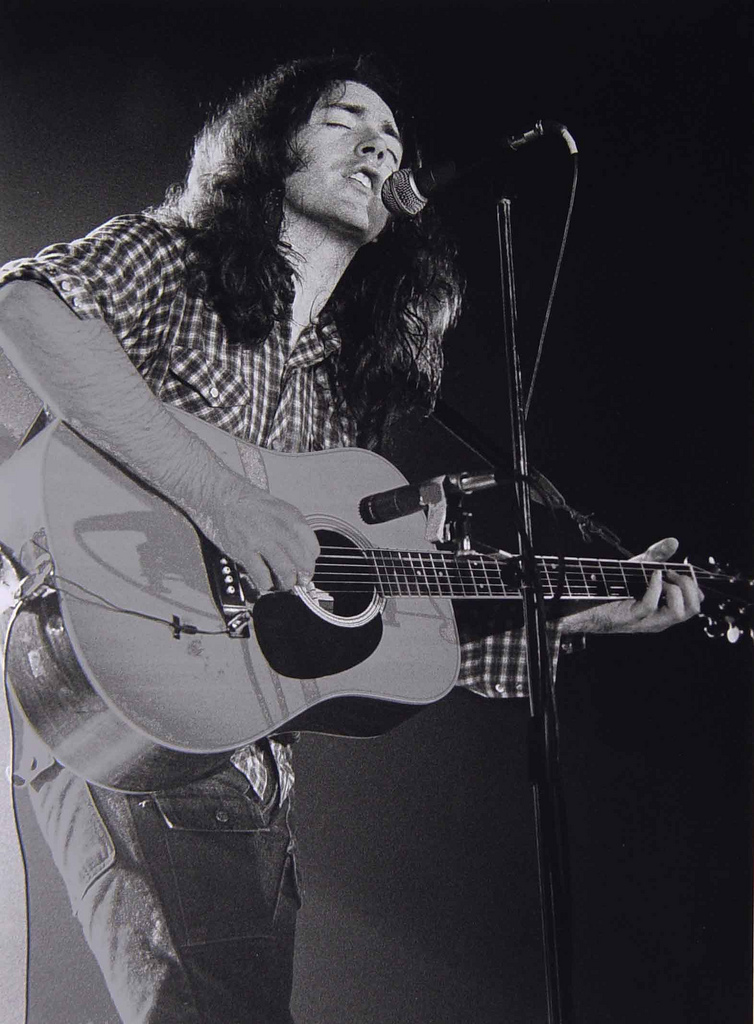
1893 Blind Lemon Jefferson*
1915 Wynonie Harris*
1934 Chick Willis*
1948 Han van Dam*
2006 Henry Townsend+
2016 Buckwheat Zydeco+
Dorothy Ellis*
Happy Birthday
Blind Lemon Jefferson *24.09.1893

„Blind“ Lemon Jefferson (* September 1893 in Coutchman, Texas; † Dezember 1929 in Chicago, Illinois) war ein in den 1920er Jahren sehr populärer und einflussreicher US-amerikanischer Bluessänger und -gitarrist. Er gilt als bedeutendster Vertreter und einer der Väter des Texas Blues und war der erste Country-Blues-Musiker, dessen Aufnahmen kommerziell erfolgreich waren. Sein Erfolg war ausschlaggebend für den Durchbruch des Country Blues in der Plattenindustrie und ermöglichte so indirekt auch anderen Musikern Aufnahmen und Karrieren.
Kindheit und JugendLange wurde 1897 als Geburtsjahr vermutet, jedoch ergaben Nachforschungen von Bruce Roberts 1996, dass er bereits im September 1893 als siebtes Kind der Farmerfamilie von Alec und Cassie Jefferson auf die Welt kam. Er war entweder von Geburt an praktisch blind oder erblindete in frühester Jugend, es wird jedoch als wahrscheinlich angenommen, dass er noch rudimentäre Sehfähigkeit besaß, als Indizien dafür werden seine Brille, seine (kurzfristige) Tätigkeit als Wrestler sowie die Tatsache, dass er unterwegs meist eine Schusswaffe trug, gewertet.
Als seine Familie während seiner frühen Jugend in die Gemeinde der Shiloh Primitive Baptist Church in Kirvin, Texas eintrat, begann er zu singen und Gitarre zu erlernen, um dort und in anderen Gemeinden zu spielen. Mit zunehmender Sicherheit auf dem Instrument spielte er auch in umliegenden Orten und bei Festen auf, die einzige Möglichkeit für ihn als Blinden, etwas Geld zu verdienen.
Umzug nach Dallas und Karrierebeginn
1912 zog er um nach Dallas, wo er weiterhin als Straßenmusiker arbeitete und bei Picknicks und Partys aufspielte.
In Dallas lernte er auch Leadbelly kennen, der ihn längere Zeit auf der Gitarre, der Mandoline sowie dem Akkordeon begleitete und ihm später das Stück Blind Lemon Blues widmete. 1918 zerbrach die Partnerschaft jedoch, als Leadbelly wegen Mordes ins Gefängnis kam. Während seiner Reisen durch die Lokale der Rotlichtbezirke in den größeren Städten von Oklahoma, Louisiana, Mississippi und bis an die Ostküste der USA wurde er gelegentlich von jungen Musikern begleitet, die ihm auch als Führer dienten, unter anderem Josh White, Aaron „T-Bone“ Walker sowie möglicherweise George Carter.
1922 oder 1923 heiratete Jefferson in Dallas Roberta (Nachname unbekannt), um 1925 wurde er Vater eines Sohnes. Die Ehe zerbrach jedoch wenige Jahre später wieder.
Aufnahmen und Ruhm
Seit 1923 hatte die Plattenfirma Paramount Records erstmals in ihrer Firmengeschichte einigen Erfolg durch ihre sogenannte Race Series, eine Schallplattenreihe mit Aufnahmen schwarzer Künstler für ein schwarzes Publikum. Bei den damaligen Blues-Aufnahmen handelte es sich zumeist um sogenannten Vaudeville oder auch Classic Blues, von Frauen gesungene Stücke, häufig mit orchestraler Begleitung und urbanem Hintergrund.
1925 gelang es Paramount, mit dem Schallplattenhändler R.T. Ashford aus Dallas einen Vertriebsvertrag abzuschließen. Dieser schlug Paramount vor, auch einen lokal in Dallas bekannten Musiker in ihr Portfolio aufzunehmen. Paramount gab diesem Wunsch nach. So nahm Blind Lemon Jefferson Ende 1925, Anfang 1926 in Chicago, Illinois zum ersten Mal auf und debütierte im März 1926 mit der Platte Booster Blues/Dry Southern Blues, die sich unmittelbar zu einem großen Hit entwickelte. Bis 1929 nahm er für Paramount 79 Singles auf, von der jede geschätzte 100.000 Mal verkauft wurde, darunter Matchbox Blues, Black Snake Moan und See that My Grave is Kept Clean. Zwei Singles erschienen auch beim Label Okeh und unter dem Pseudonym Deacon L. J. Bates.
Der große Bekanntheitsgrad von Blind Lemon Jefferson und seiner Zeitgenossen wie z. B. des Gitarristen Blind Blake und der Sängerin Ma Rainey machten Paramount zu einem der führenden Produzenten des Blues in den 1920er Jahren. Jefferson ermöglichte sein Erfolg, sich einen Wagen mit Chauffeur zu leisten.
Tod
Jefferson starb Ende Dezember 1929 vermutlich an einem Herzschlag während eines Schneesturms auf den Straßen von Chicago.
Der Pianist Will Ezell begleitete ihn auf der von Paramount Records bezahlten Überstellung nach Texas. Jefferson ist am Wortham Negro Cemetery (heute Wortham Black Cemetery) begraben. Sein Grab war allerdings lange Zeit nicht einmal gekennzeichnet, geschweige denn gepflegt („See That My Grave is Kept Clean“), bis 1967 ein Texas Historical Marker am ungefähren Ort seines Grabes errichtet wurde, die genaue Lage blieb unbekannt. 1996 waren Friedhof und Markierung wieder in schlechtem Zustand, bis 1997 ein neuer Granitgrabstein errichtet wurde.
Werk
Jeffersons Repertoire bestand anfangs ausschließlich aus geistlichen Liedern. Erst allmählich erweiterte er es zunehmend um Bluesstücke, für den Rest seiner Karriere sollte sich sein Repertoire stets aus beiden Genres zusammensetzen, er war nie ein reiner Bluessänger.
Got The Blues, Long Lonesome Blues und die später gefeierten Stücke wie Matchbox Blues und Black Snake Moan zeigen seinen ungewöhnlichen, recht bodenständigen Zugang zur Musik und den weiten Bogen seiner Themen, von Sex und Partys geprägte humorvolle Stücke, über Bilder betrügerischer Frauen, schwere Zeiten bis zu dunklen Themen über Gefängnis und Tod.
Der oft traurige Klang seiner hohen Stimme wurde durch seinen erstaunlich komplexen, einfallsreichen und schnellen Gitarrenstil ergänzt und aufgeheitert.
Rezeption
Jefferson wird als einer der ersten Repräsentanten des klassischen Blues und einer der besten Folk-Blues Sänger der 1920er Jahre betrachtet und hat Größen wie Louis Armstrong, Bessie Smith, Bix Beiderbecke, John Lee Hooker, Howlin' Wolf, B. B. King, Albert King, T-Bone Walker und den (damals acht Jahre alten) Lightnin’ Hopkins beeinflusst. Viele seiner Stücke wie der Klassiker See That My Grave is Kept Clean wurden von späteren Musikern (z. B. von Bob Dylan) gecovert.
Blind Lemon Jefferson wurde 1980 von der Blues Foundation in die Blues Hall of Fame aufgenommen, im Jahr 2010 wurde sein Song Match Box Blues ebenfalls in die Hall of Fame aufgenommen.
http://de.wikipedia.org/wiki/Blind_Lemon_Jefferson
"Blind" Lemon Jefferson (born Lemon Henry Jefferson; September 24, 1893 – December 19, 1929) was an American blues and gospel singer, guitarist, and songwriter from Texas. He was one of the most popular blues singers of the 1920s, and has been called "Father of the Texas Blues".[2]
Jefferson's performances were distinctive as a result of his high-pitched voice and the originality on his guitar playing.[2] Although his recordings sold well, he was not so influential on some younger blues singers of his generation, who could not imitate him as easily as they could other commercially successful artists.[3] Later blues and rock and roll musicians, however, did attempt to imitate both his songs and his musical style.[2]
Biography
Early life
Jefferson was born blind, near Coutchman in Freestone County, near present-day Wortham, Texas. He was the youngest of seven[4] (or possibly eight) children born to sharecroppers Alex and Clarissa Jefferson.[2] Disputes regarding his exact birth date derive from contradictory census records and draft registration records. By 1900, the family was farming southeast of Streetman, Texas, and Lemon Jefferson's birth date is indicated as September 1893 in the 1900 census.[5] The 1910 census, taken in May before his birthday, further confirms his year of birth as 1893, and indicated the family was farming northwest of Wortham, near Lemon Jefferson's birthplace.[6]
In his 1917 draft registration, Jefferson gave his birth date as October 26, 1894, further stating that he then lived in Dallas, Texas and had been blind since birth.[7] In the 1920 Census, he is recorded as having returned to Freestone County and was living with his half-brother, Kit Banks, on a farm between Wortham and Streetman.[8]
Jefferson began playing the guitar in his early teens, and soon after he began performing at picnics and parties. He became a street musician, playing in East Texas towns, in front of barbershops and on streetcorners.[2] According to his cousin, Alec Jefferson, quoted in the notes for Blind Lemon Jefferson, Classic Sides:
They were rough. Men were hustling women and selling bootleg and Lemon was singing for them all night... he'd start singing about eight and go on until four in the morning... mostly it would be just him sitting there and playing and singing all night.
In the early 1910s, Jefferson began traveling frequently to Dallas, where he met and played with fellow blues musician Lead Belly.[2] In Dallas, Jefferson was one of the earliest and most prominent figures in the blues movement developing in the Deep Ellum section of Dallas. Jefferson likely moved to Deep Ellum in a more permanent fashion by 1917, where he met Aaron Thibeaux Walker, also known as T-Bone Walker. Jefferson taught Walker the basics of blues guitar in exchange for Walker's occasional services as a guide. By the early 1920s, Jefferson was earning enough money for his musical performances to support a wife, and possibly a child.[2] However, firm evidence for both his marriage and any offspring is unavailable.
Beginning of recording career
Prior to Jefferson, very few artists had recorded solo voice and blues guitar, the first of which was vocalist Sara Martin and guitarist Sylvester Weaver. Jefferson's music is uninhibited and represented the classic sounds of everyday life from a honky-tonk to a country picnic to street corner blues to work in the burgeoning oil fields, a further reflection of his interest in mechanical objects and processes.[9]
Jefferson did what very few had ever done – he became a successful solo guitarist and male vocalist in the commercial recording world.[10] Unlike many artists who were "discovered" and recorded in their normal venues, in December 1925 or January 1926, he was taken to Chicago, Illinois, to record his first tracks. Uncharacteristically, Jefferson's first two recordings from this session were gospel songs ("I Want to be like Jesus in my Heart" and "All I Want is that Pure Religion"), released under the name Deacon L. J. Bates. This led to a second recording session in March 1926.[11] His first releases under his own name, "Booster Blues" and "Dry Southern Blues", were hits; this led to the release of the other two songs from that session, "Got the Blues" and "Long Lonesome Blues," which became a runaway success, with sales in six figures. He recorded about 100 tracks between 1926 and 1929; 43 records were issued, all but one for Paramount Records. Unfortunately, Paramount Records' studio techniques and quality were poor, and the resulting recordings were released with poor sound quality. In fact, in May 1926, Paramount had Jefferson re-record his hits "Got the Blues" and "Long Lonesome Blues" in the superior facilities at Marsh Laboratories, and subsequent releases used those versions. Both versions appear on compilation albums and may be compared.
Success with Paramount records
Largely due to the popularity of artists such as Blind Lemon Jefferson and contemporaries such as Blind Blake and Ma Rainey, Paramount became the leading recording company for the blues in the 1920s.[12] Jefferson's earnings reputedly enabled him to buy a car and employ chauffeurs (although there is debate over the reliability of this as well); he was given a Ford car "worth over $700" by Mayo Williams, Paramount's connection with the black community. This was a frequently-seen compensation for recording rights in that market. Jefferson is known to have done an unusual amount of traveling for the time in the American South, which is reflected in the difficulty of pigeonholing his music into one regional category.
Jefferson's "old-fashioned" sound and confident musicianship made him easy to market. His skillful guitar playing and impressive vocal ranges opened the door for a new generation of male solo blues performers such as Furry Lewis, Charlie Patton, and Barbecue Bob.[10] He sticks to no musical conventions, varying his riffs and rhythm and singing complex and expressive lyrics in a manner exceptional at the time for a "simple country blues singer." According to North Carolina musician Walter Davis, Jefferson played on the streets in Johnson City, Tennessee, during the early 1920s at which time Davis and fellow entertainer Clarence Greene learned the art of blues guitar.[13]
Jefferson was reputedly unhappy with his royalties (although Williams said that Jefferson had a bank account containing as much as $1500). In 1927, when Williams moved to OKeh Records, he took Jefferson with him, and OKeh quickly recorded and released Jefferson's "Matchbox Blues" backed with "Black Snake Moan."[11] It was his only OKeh recording, probably because of contractual obligations with Paramount. Jefferson's two songs released on Okeh have considerably better sound quality than on his Paramount records at the time. When he had returned to Paramount a few months later, "Matchbox Blues" had already become such a hit that Paramount re-recorded and released two new versions, under producer Arthur Laibly. In 1927, Jefferson recorded another of his now classic songs, the haunting "See That My Grave Is Kept Clean" (once again using the pseudonym Deacon L. J. Bates) along with two other uncharacteristically spiritual songs, "He Arose from the Dead" and "Where Shall I Be". Of the three, "See That My Grave Is Kept Clean" was so successful that it was re-recorded and re-released in 1928.
Death and grave
Jefferson died in Chicago at 10:00 am on December 19, 1929, of what his death certificate called "probably acute myocarditis".[14] For many years, apocryphal rumors circulated that a jealous lover had poisoned his coffee, but a more likely scenario is that he died of a heart attack after becoming disoriented during a snowstorm. Some have said that Jefferson died from a heart attack after being attacked by a dog in the middle of the night. More recently, the book, Tolbert's Texas, claimed that he was killed while being robbed of a large royalty payment by a guide escorting him to Union Station to catch a train home to Texas. Paramount Records paid for the return of his body to Texas by train, accompanied by pianist William Ezell.
Jefferson was buried at Wortham Negro Cemetery (later Wortham Black Cemetery). Far from his grave being kept clean, it was unmarked until 1967, when a Texas Historical Marker was erected in the general area of his plot, the precise location being unknown. By 1996, the cemetery and marker were in poor condition, but a new granite headstone was erected in 1997. In 2007, the cemetery's name was changed to Blind Lemon Memorial Cemetery and his gravesite is kept clean by a cemetery committee in Wortham, Texas.[15]
Discography and awards
Jefferson had an intricate and fast style of guitar playing and a particularly high-pitched voice. He was a founder of the Texas blues sound and an important influence on other blues singers and guitarists, including Lead Belly and Lightnin' Hopkins.
He was the author of many tunes covered by later musicians, including the classic "See That My Grave Is Kept Clean". Another of his tunes, "Matchbox Blues", was recorded more than 30 years later by The Beatles, albeit in a rockabilly version credited to Carl Perkins, who himself did not credit Jefferson on his 1955 recording.
The Rock and Roll Hall of Fame listed Jefferson's 1927 recording "Matchbox Blues" one of the 500 songs that shaped rock and roll.[16] Jefferson was among the inaugural class of blues musicians inducted into the Blues Hall of Fame in 1980.
Cover versions
Bukka White - "Jack O'diamonds" on Bukka White - 1963 Isn't 1962 released in the 1990s
Bob Dylan – "See That My Grave Is Kept Clean" on Bob Dylan
Grateful Dead – "See That My Grave Is Kept Clean" as "One Kind Favor" on Birth of the
Dead
Merl Saunders/Jerry Garcia/John Kahn/Bil Vitt – "See That My Grave Is Kept Clean" as
"One Kind Favor" on Keystone Encores Volume I
John Hammond – "See That My Grave Is Kept Clean" as "One Kind Favor" on John
Hammond Live
B.B. King – "See That My Grave Is Kept Clean" on One Kind Favor
Peter, Paul & Mary – "See That My Grave is Kept Clean," reworked as "One Kind Favor" on
In Concert
Kelly Joe Phelps – "See That My Grave Is Kept Clean" on Roll Away The Stone
Counting Crows – "Mean Jumper Blues". Counting Crows lead singer Adam Duritz
accidentally claimed credit for "Mean Jumper Blues" in the liner notes of the Deluxe
Edition reissue of the album August And Everything After. The cover was featured as part
of a selection of early demo tracks. Immediately after the error was brought to his
attention, Duritz apologized in his personal blog.[17]
Laibach – "See That My Grave Is Kept Clean" on SPECTRE[18]
Pat Donohue – "See that My Grave Is Kept Clean" as One Kind Favor (live on Garrison
Keillor's "A Prairie Home Companion") and later released on the CD Radio Blues.
Corey Harris - "Jack O'diamonds" on Fish Ain't Bitin' released 1997
"Blind" Lemon Jefferson (born Lemon Henry Jefferson; September 24, 1893 – December 19, 1929) was an American blues and gospel singer, guitarist, and songwriter from Texas. He was one of the most popular blues singers of the 1920s, and has been called "Father of the Texas Blues".[2]
Jefferson's performances were distinctive as a result of his high-pitched voice and the originality on his guitar playing.[2] Although his recordings sold well, he was not so influential on some younger blues singers of his generation, who could not imitate him as easily as they could other commercially successful artists.[3] Later blues and rock and roll musicians, however, did attempt to imitate both his songs and his musical style.[2]
Biography
Early life
Jefferson was born blind, near Coutchman in Freestone County, near present-day Wortham, Texas. He was the youngest of seven[4] (or possibly eight) children born to sharecroppers Alex and Clarissa Jefferson.[2] Disputes regarding his exact birth date derive from contradictory census records and draft registration records. By 1900, the family was farming southeast of Streetman, Texas, and Lemon Jefferson's birth date is indicated as September 1893 in the 1900 census.[5] The 1910 census, taken in May before his birthday, further confirms his year of birth as 1893, and indicated the family was farming northwest of Wortham, near Lemon Jefferson's birthplace.[6]
In his 1917 draft registration, Jefferson gave his birth date as October 26, 1894, further stating that he then lived in Dallas, Texas and had been blind since birth.[7] In the 1920 Census, he is recorded as having returned to Freestone County and was living with his half-brother, Kit Banks, on a farm between Wortham and Streetman.[8]
Jefferson began playing the guitar in his early teens, and soon after he began performing at picnics and parties. He became a street musician, playing in East Texas towns, in front of barbershops and on streetcorners.[2] According to his cousin, Alec Jefferson, quoted in the notes for Blind Lemon Jefferson, Classic Sides:
They were rough. Men were hustling women and selling bootleg and Lemon was singing for them all night... he'd start singing about eight and go on until four in the morning... mostly it would be just him sitting there and playing and singing all night.
In the early 1910s, Jefferson began traveling frequently to Dallas, where he met and played with fellow blues musician Lead Belly.[2] In Dallas, Jefferson was one of the earliest and most prominent figures in the blues movement developing in the Deep Ellum section of Dallas. Jefferson likely moved to Deep Ellum in a more permanent fashion by 1917, where he met Aaron Thibeaux Walker, also known as T-Bone Walker. Jefferson taught Walker the basics of blues guitar in exchange for Walker's occasional services as a guide. By the early 1920s, Jefferson was earning enough money for his musical performances to support a wife, and possibly a child.[2] However, firm evidence for both his marriage and any offspring is unavailable.
Beginning of recording career
Prior to Jefferson, very few artists had recorded solo voice and blues guitar, the first of which was vocalist Sara Martin and guitarist Sylvester Weaver. Jefferson's music is uninhibited and represented the classic sounds of everyday life from a honky-tonk to a country picnic to street corner blues to work in the burgeoning oil fields, a further reflection of his interest in mechanical objects and processes.[9]
Jefferson did what very few had ever done – he became a successful solo guitarist and male vocalist in the commercial recording world.[10] Unlike many artists who were "discovered" and recorded in their normal venues, in December 1925 or January 1926, he was taken to Chicago, Illinois, to record his first tracks. Uncharacteristically, Jefferson's first two recordings from this session were gospel songs ("I Want to be like Jesus in my Heart" and "All I Want is that Pure Religion"), released under the name Deacon L. J. Bates. This led to a second recording session in March 1926.[11] His first releases under his own name, "Booster Blues" and "Dry Southern Blues", were hits; this led to the release of the other two songs from that session, "Got the Blues" and "Long Lonesome Blues," which became a runaway success, with sales in six figures. He recorded about 100 tracks between 1926 and 1929; 43 records were issued, all but one for Paramount Records. Unfortunately, Paramount Records' studio techniques and quality were poor, and the resulting recordings were released with poor sound quality. In fact, in May 1926, Paramount had Jefferson re-record his hits "Got the Blues" and "Long Lonesome Blues" in the superior facilities at Marsh Laboratories, and subsequent releases used those versions. Both versions appear on compilation albums and may be compared.
Success with Paramount records
Largely due to the popularity of artists such as Blind Lemon Jefferson and contemporaries such as Blind Blake and Ma Rainey, Paramount became the leading recording company for the blues in the 1920s.[12] Jefferson's earnings reputedly enabled him to buy a car and employ chauffeurs (although there is debate over the reliability of this as well); he was given a Ford car "worth over $700" by Mayo Williams, Paramount's connection with the black community. This was a frequently-seen compensation for recording rights in that market. Jefferson is known to have done an unusual amount of traveling for the time in the American South, which is reflected in the difficulty of pigeonholing his music into one regional category.
Jefferson's "old-fashioned" sound and confident musicianship made him easy to market. His skillful guitar playing and impressive vocal ranges opened the door for a new generation of male solo blues performers such as Furry Lewis, Charlie Patton, and Barbecue Bob.[10] He sticks to no musical conventions, varying his riffs and rhythm and singing complex and expressive lyrics in a manner exceptional at the time for a "simple country blues singer." According to North Carolina musician Walter Davis, Jefferson played on the streets in Johnson City, Tennessee, during the early 1920s at which time Davis and fellow entertainer Clarence Greene learned the art of blues guitar.[13]
Jefferson was reputedly unhappy with his royalties (although Williams said that Jefferson had a bank account containing as much as $1500). In 1927, when Williams moved to OKeh Records, he took Jefferson with him, and OKeh quickly recorded and released Jefferson's "Matchbox Blues" backed with "Black Snake Moan."[11] It was his only OKeh recording, probably because of contractual obligations with Paramount. Jefferson's two songs released on Okeh have considerably better sound quality than on his Paramount records at the time. When he had returned to Paramount a few months later, "Matchbox Blues" had already become such a hit that Paramount re-recorded and released two new versions, under producer Arthur Laibly. In 1927, Jefferson recorded another of his now classic songs, the haunting "See That My Grave Is Kept Clean" (once again using the pseudonym Deacon L. J. Bates) along with two other uncharacteristically spiritual songs, "He Arose from the Dead" and "Where Shall I Be". Of the three, "See That My Grave Is Kept Clean" was so successful that it was re-recorded and re-released in 1928.
Death and grave
Jefferson died in Chicago at 10:00 am on December 19, 1929, of what his death certificate called "probably acute myocarditis".[14] For many years, apocryphal rumors circulated that a jealous lover had poisoned his coffee, but a more likely scenario is that he died of a heart attack after becoming disoriented during a snowstorm. Some have said that Jefferson died from a heart attack after being attacked by a dog in the middle of the night. More recently, the book, Tolbert's Texas, claimed that he was killed while being robbed of a large royalty payment by a guide escorting him to Union Station to catch a train home to Texas. Paramount Records paid for the return of his body to Texas by train, accompanied by pianist William Ezell.
Jefferson was buried at Wortham Negro Cemetery (later Wortham Black Cemetery). Far from his grave being kept clean, it was unmarked until 1967, when a Texas Historical Marker was erected in the general area of his plot, the precise location being unknown. By 1996, the cemetery and marker were in poor condition, but a new granite headstone was erected in 1997. In 2007, the cemetery's name was changed to Blind Lemon Memorial Cemetery and his gravesite is kept clean by a cemetery committee in Wortham, Texas.[15]
Discography and awards
Jefferson had an intricate and fast style of guitar playing and a particularly high-pitched voice. He was a founder of the Texas blues sound and an important influence on other blues singers and guitarists, including Lead Belly and Lightnin' Hopkins.
He was the author of many tunes covered by later musicians, including the classic "See That My Grave Is Kept Clean". Another of his tunes, "Matchbox Blues", was recorded more than 30 years later by The Beatles, albeit in a rockabilly version credited to Carl Perkins, who himself did not credit Jefferson on his 1955 recording.
The Rock and Roll Hall of Fame listed Jefferson's 1927 recording "Matchbox Blues" one of the 500 songs that shaped rock and roll.[16] Jefferson was among the inaugural class of blues musicians inducted into the Blues Hall of Fame in 1980.
Cover versions
Bukka White - "Jack O'diamonds" on Bukka White - 1963 Isn't 1962 released in the 1990s
Bob Dylan – "See That My Grave Is Kept Clean" on Bob Dylan
Grateful Dead – "See That My Grave Is Kept Clean" as "One Kind Favor" on Birth of the
Dead
Merl Saunders/Jerry Garcia/John Kahn/Bil Vitt – "See That My Grave Is Kept Clean" as
"One Kind Favor" on Keystone Encores Volume I
John Hammond – "See That My Grave Is Kept Clean" as "One Kind Favor" on John
Hammond Live
B.B. King – "See That My Grave Is Kept Clean" on One Kind Favor
Peter, Paul & Mary – "See That My Grave is Kept Clean," reworked as "One Kind Favor" on
In Concert
Kelly Joe Phelps – "See That My Grave Is Kept Clean" on Roll Away The Stone
Counting Crows – "Mean Jumper Blues". Counting Crows lead singer Adam Duritz
accidentally claimed credit for "Mean Jumper Blues" in the liner notes of the Deluxe
Edition reissue of the album August And Everything After. The cover was featured as part
of a selection of early demo tracks. Immediately after the error was brought to his
attention, Duritz apologized in his personal blog.[17]
Laibach – "See That My Grave Is Kept Clean" on SPECTRE[18]
Pat Donohue – "See that My Grave Is Kept Clean" as One Kind Favor (live on Garrison
Keillor's "A Prairie Home Companion") and later released on the CD Radio Blues.
Corey Harris - "Jack O'diamonds" on Fish Ain't Bitin' released 1997
Blind Lemon Jefferson-Easy Rider Blues
Wynonie Harris *24.09.1915

Wynonie „Mr. Blues“ Harris (* 24. August 1915 in Omaha, Nebraska; † 14. Juni 1969 in Los Angeles, Kalifornien) war ein US-amerikanischer Blues-und R&B-Sänger.
Wynonie Harris war zunächst Schlagzeuger und begann seine Karriere in den Clubs von Los Angeles und Chicago als Sänger und MC; in Chicago hörte ihn 1944 der Bandleader Lucky Millinder in einer Show im Rhumboogie Club und verpflichtete ihn als Sänger für seine Band. Harris war sowohl mit Millinders Big Band als auch mit Lionel Hamptons Orchester unterwegs. Seinen ersten Solohit hatte er 1945 mit „Who Threw the Whiskey in the Well“, das unter Millinders Namen auf Decca erschien. Harris verließ die Band im selben Jahr, ging nach Los Angeles zurück und nahm zahlreiche Platten unter eigenem Namen auf, begleitet von Johnny Otis (als Schlagzeuger), Illinois Jacquet, Oscar Pettiford, Lucky Millinder und anderen. Aufnahmen entstanden für die Label Philo („Baby Look at You“, 1945) und 1946 für Apollo die Hits „Wynonie's Blues“ und „Playful Baby“. In Nashville nahm er mit Jimmie Jackson und Herman Blount (später als Sun Ra bekannt) auf.
Nachdem er weniger erfolgreich für kleinere Labels aufgenommen hatte, kam er 1947 bei King Records unter Vertrag. Seine Version des R&B-Songs „Good Rocking Tonight“ von 1948 mit dem Saxophonisten Frank „Floorshow“ Culley gilt als eine der frühesten Rock'n'Roll-Aufnahmen und wurde ein #1-Hit in den Charts, dem bis 1952 noch zwölf weitere folgen sollten; das Stück, geschrieben von Roy Brown, wurde später auch von Elvis Presley aufgenommen. Weitere erfolgreiche Titel von Harris waren All She Wants to Do Is Rock (1949) und Bloodshot Eyes (1951).
Obwohl er noch unzählige Titel für Label wie Atco, King, Roulette und Chess einspielte, ließ Mitte der 1950er Jahre der Erfolg von Wynonie Harris nach und sein Alkoholismus machte ihm zu schaffen. Harris geriet zunehmend in Vergessenheit. Sein letzter Gastauftritt 1966 bei einer „Motortown Revue“ in Santa Monica soll Nick Tosches zufolge[1] ein Desaster gewesen sein. 1969 erkrankte er an Kehlkopfkrebs; er starb noch im selben Jahr.
1994 wurde Wynonie Harris in die Blues Hall of Fame aufgenommen.
Wynonie Harris (August 24, 1915[2] – June 14, 1969), born in Omaha, Nebraska, was an American blues shouter and rhythm and blues singer of upbeat songs, featuring humorous, often ribald lyrics. With fifteen Top 10 hits between 1946 and 1952, Harris is generally considered one of rock and roll's forerunners, influencing Elvis Presley among others.
Biography
Early life and family
Harris' mother, Mallie Hood Anderson, was fifteen and unmarried at the time of his birth. Harris' paternity is uncertain. Harris' wife, Olive E. Goodlow, and daughter Patricia Vest, have said that Harris' father was a Native American, named Blue Jay. Harris had no father figure in the house until 1920, when his mother married Luther Harris, fifteen years her senior.
In 1931 at age 16, Harris dropped out of high school in North Omaha. The following year his first child, daughter Micky, was born to Naomi Henderson. Ten months later, Harris' second child, son Wesley, was born to Laura Devereaux. Both children were raised by their mothers. Wesley became a singer in the Five Echoes and The Sultans. Later he became a singer and guitarist in Preston Love's band. Eventually, Wesley's grandson (Wynonie's Great Grandson), Jourdan Devereaux, under the pseudonym "L Oquence" began a music career in the genre of Hip-Hop.[3]
In 1935 Harris, age 20, started dating 16-year-old Olive E. Goodlow (Ollie) of neighboring Council Bluffs, Iowa, who came to Omaha to watch him perform. On May 20, 1936, Ollie gave birth to daughter Pattie (Adrianne Patricia). On December 11, 1936, they married. Later they lived in the Logan Fontenelle projects in North Omaha. Ollie worked as a barmaid and nurse; Wynonie sang in clubs as well as taking on some odd jobs. Wynonie's mother, Mallie Harris, was Pattie's main caretaker. In 1940, Wynonie and Ollie Harris moved to Los Angeles, California, leaving Pattie with Mallie in Omaha.
Early career
With dance partner Velda Shannon, Harris formed a dance team in the early 1930s.[4] The team performed around North Omaha's flourishing entertainment community, and by 1934 they were a regular attraction at the Ritz Theatre. It was not until 1935, however, that Harris was able to earn his living as an entertainer. While performing at Jim Bell's new Harlem nightclub with Velda Shannon, Harris began to sing the blues.
He also began traveling frequently to Kansas City, where he paid close attention to the blues shouters including Jimmy Rushing and Big Joe Turner. Harris became a local celebrity in Omaha during the depths of the Great Depression in 1935. Harris' break in Los Angeles was at a nightclub owned by Curtis Mosby. It was here that Harris became known as "Mr. Blues".
With Lucky Millinder
Due to the 1942-44 musicians' strike, Harris was unable to pursue a recording career. Instead, he relied on personal appearances. Performing almost continuously, in late 1943 he appeared at the Rhumboogie Club in Chicago. Harris was spotted by Lucky Millinder who asked him to join his band's tour. Harris joined on March 24, 1944, while the band was in the middle of a week-long residency at the Regal in Chicago. They moved on to New York City, where on April 7 Harris took the stage with Millinder's band for his debut at the Apollo Theatre in Harlem. It was during this performance that Harris first publicly performed "Who Threw the Whiskey in the Well" (a song recorded two years earlier by Doc Wheeler's Sunset Orchestra).
After the band's stint at the Apollo, they moved on to their regular residency at the Savoy Ballroom, also in Harlem. Here, Preston Love, Harris' childhood friend, joined Millinder's band replacing alto saxophonist Tab Smith. On May 26, 1944, Harris made his recording debut with Lucky Millinder and His Orchestra. Entering a recording studio for the first time, Harris sang on two of the five cuts that day, "Hurry, Hurry" and "Who Threw the Whiskey in the Well", for the Decca record label. Although lessening, the shellac embargo had not yet been removed, and release of the record was delayed.
Harris' success and popularity grew as Millinder's band toured the country. He and Millinder had a falling out over money. In September 1945 while playing in San Antonio, Texas, Harris quit Millinder's band. Three weeks later, upon hearing of Harris' separation from the band, a Houston promoter refused to allow Millinder's band to perform. Millinder called Harris and agreed to pay Harris' asking price of one-hundred dollars a night. The promoter re-instated the date, but it was the final time Harris and Millinder worked together. Bull Moose Jackson replaced Harris as the vocalist in the band.
In April 1945, a year after the song was recorded, Decca released "Who Threw the Whiskey in the Well".[4] It became the group's biggest hit; it went to number one on the Billboard R&B chart on July 14 and stayed there for eight weeks.[5][6] The song remained on the charts for almost five months, also becoming popular with white audiences.[7] an unusual feat for black musicians of that era. In California the success of the song opened doors for Harris. Since the contract with Decca was with Millinder (meaning Harris was a free agent), Harris could choose from the recording contracts with which he was presented.
Solo career
In July 1945, Harris signed with Philo, a label owned by the brothers Leo and Edward Mesner. Harris' band was assembled by Johnny Otis, and the group recorded the 78rpm record "Around the Clock". Although not a chart-topper, the song became popular and was covered by many artists, including Willie Bryant, Jimmy Rushing and Big Joe Turner.
Harris went on to record sessions for other labels, including Apollo, Bullet and Aladdin. His greatest success came when he signed for Syd Nathan's King label, where he enjoyed a series of hits on the U.S. R&B chart in the late 1940s and early 1950s. These included a 1948 cover of Roy Brown's "Good Rocking Tonight",[8] "Good Morning Judge" and "All She Wants to Do Is Rock". In 1946, Harris recorded two singles with pianist Herman "Sonny" Blount, who later earned fame as the eclectic jazz composer and bandleader Sun Ra.
In 1950, he released the double-sided hit, "Sittin' On It All the Time" b/w "Baby, Shame On You" (King 4330) and in 1951, he covered Hank Penny's "Bloodshot Eyes" (King 4461).[9][10]
Later career
Harris transitioned between several recording contracts between 1954 and 1964. In 1960 he cut six sides for Roulette Records that included a remake of his hit "Bloodshot Eyes" as well as "Sweet Lucy Brown", "Spread the News", "Saturday Night", "Josephine" and "Did You Get the Message".[11] He also became more indebted, and was forced to live in less glamorous surroundings.[4]
In 1964 Harris resettled for the last time in Los Angeles. His final recordings were three sides which he did for the Chess Records label (in Chicago) in 1964: "The Comeback", "Buzzard Luck" and "Conjured".[12] His final large-scale performance was at the Apollo, New York in November 1967, where he performed with Big Joe Turner, Big Mama Thornton, Jimmy Witherspoon and T-Bone Walker.
On June 14, 1969, aged 53, Harris died of esophageal cancer at the USC Medical Center Hospital in Los Angeles.[4]
Legacy
He was the subject of a 1994 biography by Tony Collins.[13]
Since the end of the twentieth century, there has been a resurgence of interest in his music. Some of his recordings are being reissued and he has been honored posthumously:
1994 Inducted into the W.C. Handy Blues Hall of Fame by the Blues Foundation in
Memphis, Tennessee.
1998 Inducted into the Nebraska Rock and Roll Hall of Fame in Lincoln.
2000 Inducted into the High School Hall of Fame at Central High School in Omaha,
Nebraska.
2005 Inducted into the Omaha Black Music Hall of Fame[14]
In 2011, Harris' song "Quiet Whiskey" was listed number 9 on AskMen.com top 10 Drinking Songs list.
Biography
Early life and family
Harris' mother, Mallie Hood Anderson, was fifteen and unmarried at the time of his birth. Harris' paternity is uncertain. Harris' wife, Olive E. Goodlow, and daughter Patricia Vest, have said that Harris' father was a Native American, named Blue Jay. Harris had no father figure in the house until 1920, when his mother married Luther Harris, fifteen years her senior.
In 1931 at age 16, Harris dropped out of high school in North Omaha. The following year his first child, daughter Micky, was born to Naomi Henderson. Ten months later, Harris' second child, son Wesley, was born to Laura Devereaux. Both children were raised by their mothers. Wesley became a singer in the Five Echoes and The Sultans. Later he became a singer and guitarist in Preston Love's band. Eventually, Wesley's grandson (Wynonie's Great Grandson), Jourdan Devereaux, under the pseudonym "L Oquence" began a music career in the genre of Hip-Hop.[3]
In 1935 Harris, age 20, started dating 16-year-old Olive E. Goodlow (Ollie) of neighboring Council Bluffs, Iowa, who came to Omaha to watch him perform. On May 20, 1936, Ollie gave birth to daughter Pattie (Adrianne Patricia). On December 11, 1936, they married. Later they lived in the Logan Fontenelle projects in North Omaha. Ollie worked as a barmaid and nurse; Wynonie sang in clubs as well as taking on some odd jobs. Wynonie's mother, Mallie Harris, was Pattie's main caretaker. In 1940, Wynonie and Ollie Harris moved to Los Angeles, California, leaving Pattie with Mallie in Omaha.
Early career
With dance partner Velda Shannon, Harris formed a dance team in the early 1930s.[4] The team performed around North Omaha's flourishing entertainment community, and by 1934 they were a regular attraction at the Ritz Theatre. It was not until 1935, however, that Harris was able to earn his living as an entertainer. While performing at Jim Bell's new Harlem nightclub with Velda Shannon, Harris began to sing the blues.
He also began traveling frequently to Kansas City, where he paid close attention to the blues shouters including Jimmy Rushing and Big Joe Turner. Harris became a local celebrity in Omaha during the depths of the Great Depression in 1935. Harris' break in Los Angeles was at a nightclub owned by Curtis Mosby. It was here that Harris became known as "Mr. Blues".
With Lucky Millinder
Due to the 1942-44 musicians' strike, Harris was unable to pursue a recording career. Instead, he relied on personal appearances. Performing almost continuously, in late 1943 he appeared at the Rhumboogie Club in Chicago. Harris was spotted by Lucky Millinder who asked him to join his band's tour. Harris joined on March 24, 1944, while the band was in the middle of a week-long residency at the Regal in Chicago. They moved on to New York City, where on April 7 Harris took the stage with Millinder's band for his debut at the Apollo Theatre in Harlem. It was during this performance that Harris first publicly performed "Who Threw the Whiskey in the Well" (a song recorded two years earlier by Doc Wheeler's Sunset Orchestra).
After the band's stint at the Apollo, they moved on to their regular residency at the Savoy Ballroom, also in Harlem. Here, Preston Love, Harris' childhood friend, joined Millinder's band replacing alto saxophonist Tab Smith. On May 26, 1944, Harris made his recording debut with Lucky Millinder and His Orchestra. Entering a recording studio for the first time, Harris sang on two of the five cuts that day, "Hurry, Hurry" and "Who Threw the Whiskey in the Well", for the Decca record label. Although lessening, the shellac embargo had not yet been removed, and release of the record was delayed.
Harris' success and popularity grew as Millinder's band toured the country. He and Millinder had a falling out over money. In September 1945 while playing in San Antonio, Texas, Harris quit Millinder's band. Three weeks later, upon hearing of Harris' separation from the band, a Houston promoter refused to allow Millinder's band to perform. Millinder called Harris and agreed to pay Harris' asking price of one-hundred dollars a night. The promoter re-instated the date, but it was the final time Harris and Millinder worked together. Bull Moose Jackson replaced Harris as the vocalist in the band.
In April 1945, a year after the song was recorded, Decca released "Who Threw the Whiskey in the Well".[4] It became the group's biggest hit; it went to number one on the Billboard R&B chart on July 14 and stayed there for eight weeks.[5][6] The song remained on the charts for almost five months, also becoming popular with white audiences.[7] an unusual feat for black musicians of that era. In California the success of the song opened doors for Harris. Since the contract with Decca was with Millinder (meaning Harris was a free agent), Harris could choose from the recording contracts with which he was presented.
Solo career
In July 1945, Harris signed with Philo, a label owned by the brothers Leo and Edward Mesner. Harris' band was assembled by Johnny Otis, and the group recorded the 78rpm record "Around the Clock". Although not a chart-topper, the song became popular and was covered by many artists, including Willie Bryant, Jimmy Rushing and Big Joe Turner.
Harris went on to record sessions for other labels, including Apollo, Bullet and Aladdin. His greatest success came when he signed for Syd Nathan's King label, where he enjoyed a series of hits on the U.S. R&B chart in the late 1940s and early 1950s. These included a 1948 cover of Roy Brown's "Good Rocking Tonight",[8] "Good Morning Judge" and "All She Wants to Do Is Rock". In 1946, Harris recorded two singles with pianist Herman "Sonny" Blount, who later earned fame as the eclectic jazz composer and bandleader Sun Ra.
In 1950, he released the double-sided hit, "Sittin' On It All the Time" b/w "Baby, Shame On You" (King 4330) and in 1951, he covered Hank Penny's "Bloodshot Eyes" (King 4461).[9][10]
Later career
Harris transitioned between several recording contracts between 1954 and 1964. In 1960 he cut six sides for Roulette Records that included a remake of his hit "Bloodshot Eyes" as well as "Sweet Lucy Brown", "Spread the News", "Saturday Night", "Josephine" and "Did You Get the Message".[11] He also became more indebted, and was forced to live in less glamorous surroundings.[4]
In 1964 Harris resettled for the last time in Los Angeles. His final recordings were three sides which he did for the Chess Records label (in Chicago) in 1964: "The Comeback", "Buzzard Luck" and "Conjured".[12] His final large-scale performance was at the Apollo, New York in November 1967, where he performed with Big Joe Turner, Big Mama Thornton, Jimmy Witherspoon and T-Bone Walker.
On June 14, 1969, aged 53, Harris died of esophageal cancer at the USC Medical Center Hospital in Los Angeles.[4]
Legacy
He was the subject of a 1994 biography by Tony Collins.[13]
Since the end of the twentieth century, there has been a resurgence of interest in his music. Some of his recordings are being reissued and he has been honored posthumously:
1994 Inducted into the W.C. Handy Blues Hall of Fame by the Blues Foundation in
Memphis, Tennessee.
1998 Inducted into the Nebraska Rock and Roll Hall of Fame in Lincoln.
2000 Inducted into the High School Hall of Fame at Central High School in Omaha,
Nebraska.
2005 Inducted into the Omaha Black Music Hall of Fame[14]
In 2011, Harris' song "Quiet Whiskey" was listed number 9 on AskMen.com top 10 Drinking Songs list.

Han van Dam *24.09.1948

Han van Dam, der auch als Pianist Barrel Bailey bekannt begann im Jahr 1968 mit dem legendären Oscar Benton Bluesband. Es gab vier Alben , auf denen seine Rolle in Oscar Benton war ähnlich dem Band Pianist Otis Spann von Muddy Waters. Von 1974 bis heute spielt Han in der Gruppe Barrelhouse, einer der führenden Blues - Bands in den Niederlanden. Seit 1974 zusammen, lassen sie noch neue Alben regelmäßig und auf vielen Festivals spielen.
Auf den 15 Alben , die bisher von Barrel freigegeben wurden, Han spielt hervorragend und seine Liebe zum Klavier Blues aus den dreißiger Jahren in den Duetten mit dem Sänger Tineke Schoemaker zu hören.
Han Lieblings Blues und Boogie Woogie - Pianisten gehören Jimmy Yancey, Montana Taylor, Cripple Clarence Lofton und Albert Ammons.
Auf den 15 Alben , die bisher von Barrel freigegeben wurden, Han spielt hervorragend und seine Liebe zum Klavier Blues aus den dreißiger Jahren in den Duetten mit dem Sänger Tineke Schoemaker zu hören.
Han Lieblings Blues und Boogie Woogie - Pianisten gehören Jimmy Yancey, Montana Taylor, Cripple Clarence Lofton und Albert Ammons.
HAN VAN DAM - SUITCASE BLUES

Han van Dam...Barrelhouse...Little Boogie Boy...Oscar Benton...16-10-2015...Pianolamuseum Amsterdam
Dorothy Ellis *24.09.

Dorothy “Miss Blues” Ellis is not only musically accomplished, but academically — having earned a Master’s Degree in Psychology from the University of Central Oklahoma — but it’s her passion for singing the blues that we celebrate her for. Whether you know her from her many blues festivals or her induction into the Oklahoma Blues Hall of Fame, Miss Blues’ signature song style is easily recognized by her fans as the “Texas Shout”.
For Dorothy Choncie Ellis, the road from Direct, Texas has been a long glorious trip. Orphaned at an early age, self determination and love for life and people has led her into many adventures of living. Think for a minute about the young girl from Direct, whose Mama carry instilled in her a love and respect for books and learning. From the cotton fields to servant quarters, Dorothy pursued education, earning a Master’s Degree in Counseling Psychology from the University of Central Oklahoma. Her journey has brought her close to a Doctorate, but she has other passions as well. All along the way, Dorothy belted out Big-Time Blues, and self-published "For Blacks Only" a collection of memories in 1979. Dorothy became "Miss Blues" when You is one black rat was blaring on the wind up Victrola. She has performed with Richard "Groove" Holmes, Little Joe Blue, Drink Small and others; she opened for Bo Diddley, has appeared at many blues festivals including Arcadia Blues Festival, Pinedale Blues Festival, Southwest Blues Heritage Fest, Dusk til Dawn Blues Festival and more. Miss Blues, Dorothy Ellis, has the soul of the blues inside her. Miss Blues and her blues band have played festivals all over the United States and the world! She was inducted into the Oklahoma Blues Hall of Fame in 2004! In 2007, Miss Blues was voted the Best Blues Band in Oklahoma and received a "Woody" award from the Oklahoma Gazette which called her "the state's first lady of the blues - all soul and she lets you know it! Belting out songs in a signature way that her many admirers have come to call the Texas Shout!"
For Dorothy Choncie Ellis, the road from Direct, Texas has been a long glorious trip. Orphaned at an early age, self determination and love for life and people has led her into many adventures of living. Think for a minute about the young girl from Direct, whose Mama carry instilled in her a love and respect for books and learning. From the cotton fields to servant quarters, Dorothy pursued education, earning a Master’s Degree in Counseling Psychology from the University of Central Oklahoma. Her journey has brought her close to a Doctorate, but she has other passions as well. All along the way, Dorothy belted out Big-Time Blues, and self-published "For Blacks Only" a collection of memories in 1979. Dorothy became "Miss Blues" when You is one black rat was blaring on the wind up Victrola. She has performed with Richard "Groove" Holmes, Little Joe Blue, Drink Small and others; she opened for Bo Diddley, has appeared at many blues festivals including Arcadia Blues Festival, Pinedale Blues Festival, Southwest Blues Heritage Fest, Dusk til Dawn Blues Festival and more. Miss Blues, Dorothy Ellis, has the soul of the blues inside her. Miss Blues and her blues band have played festivals all over the United States and the world! She was inducted into the Oklahoma Blues Hall of Fame in 2004! In 2007, Miss Blues was voted the Best Blues Band in Oklahoma and received a "Woody" award from the Oklahoma Gazette which called her "the state's first lady of the blues - all soul and she lets you know it! Belting out songs in a signature way that her many admirers have come to call the Texas Shout!"
Miss Blues - Billie's Blues
Miss Blues - Blood Running Cold
R.I.P.
Henry Townsend +24.09.2006

Henry 'Mule' Townsend (* 27. Oktober 1909 in Shelby, Mississippi; † 24. September 2006 in Mequon, Wisconsin) war ein US-amerikanischer Blues-Sänger, -Gitarrist und -Pianist. Zu seinen bekanntesten Stücken gehört Henry's Worried Blues.
Geboren in Mississippi, wuchs Townsend in Cairo in Illinois auf. In jungen Jahren ging er nach St. Louis, wo er Blues-Größen wie Lonnie Johnson hörte. 1929 machte er seine ersten Aufnahmen.
In den 1930er-Jahren spielte Townsend mit vielen der Großen des Blues, darunter Walter Davis, Roosevelt Sykes und Robert Johnson. Am 28. Juli 1935 begleitete er den Bluespianisten Aaron „Pinetop“ Sparks in Chicago bei 8 Titeln, darunter auch bei dem Bluesklassiker Everyday I Have the Blues. 1937 spielte er in Aurora, Illinois, eine legendäre Aufnahmesession mit Big Joe Williams, Robert Nighthawk und Sonny Boy Williamson I. ein.
Henry Townsend schrieb hunderte von Songs und wirkte bei zahllosen Aufnahmen bekannter Kollegen mit. Er wurde der Patriarch des St.-Louis-Blues. BBC drehte eine Dokumentation über ihn, und 1985 erhielt er den "National Heritage Fellowship", die höchste Auszeichnung der Vereinigten Staaten für einen Meister der traditionellen Künste. Seit 1995 nennt er einen Stern auf dem "St. Louis Walk of Fame" sein eigen.
Henry Townsend verstarb am 24. September 2006 im St. Mary's Ozaukee Krankenhaus in Mequon, Wisconsin - nur ein paar Stunden, nachdem ihm als einem der ersten Künstler, die Plattenaufnahmen auf dem Paramount Label gemacht haben, eine 'Klaviertaste' in Graftons Paramount Plaza Walk of Fame zu teil geworden war.
Henry 'Mule' Townsend (October 27, 1909 – September 24, 2006) was an American blues singer, guitarist and pianist.
Career
Townsend was born in Shelby, Mississippi and grew up in Cairo, Illinois. He left home at the age of nine because of an abusive father and hoboed his way to St. Louis, Missouri. He learned guitar while in his early teens from a locally renowned blues guitarist known as "Dudlow Joe".[1]
By the late 1920s he had begun touring and recording with pianist Walter Davis, and had acquired the nickname "Mule" because he was sturdy in both physique and character. In St. Louis, he worked with some of the early blues pioneers, including J.D. Short.[1]
Townsend was one of the only artists known to have recorded in nine consecutive decades. He first recorded in 1929,[2] and remained active up to 2006. By the mid 1990s, Townsend and his one-time collaborator Yank Rachell were the only active blues artists whose careers had started in the 1920s. He recorded on several different labels, including Columbia Records and Folkways Records.[3]
Articulate and self-aware with an excellent memory, Townsend gave many invaluable interviews to Blues enthusiasts and scholars. Paul Oliver recorded him in 1960 and quoted him extensively in his 1967 work Conversations with the Blues.[4] Thirty years later, Bill Greensmith edited thirty hours of taped interviews with Henry to produce a full autobiography, giving a vivid history of the Blues scene in St Louis and East St Louis in its prime.[5]
In 1985 he received the National Heritage Fellowship in recognition of being a master artist. In 1995 he was inducted into the St. Louis Walk of Fame.[6]
Townsend died, at the age of 96, on September 24, 2006, at St. Mary's Ozaukee Hospital, Mequon, Wisconsin, just hours after having been the first person to be presented with a 'key' in Grafton's Paramount Plaza Walk of Fame.
While [Henry Townsend] did not scorn his old recordings, he had no taste for spending his later years simply recreating them.
Blues, for him, was a living medium, and he continued to express himself in it, most remarkably in his songwriting.
-Tony Russell, The Guardian
On February 10, 2008, Townsend was posthumously awarded a Grammy, his first, at the 50th Annual Grammy Awards. The award, in the Best Traditional Blues Album category, was given for his performances on Last of the Great Mississippi Delta Bluesmen: Live In Dallas, released by The Blue Shoe Project. Townsend's son, Alonzo Townsend, accepted the award on his behalf.
On December 4, 2009, Henry Townsend was added to the Mississippi Blues Trail.

Buckwheat Zydeco at the 2007 New Orleans Jazz & Heritage Festival
Buckwheat Zydeco - Walking to New Orleans (Harvest the Music, Nov. 2, 2011)