1911 Willie Perryman (Piano Red)*
1984 Buddy Moss+
1988 Son House+
Happy Birthday
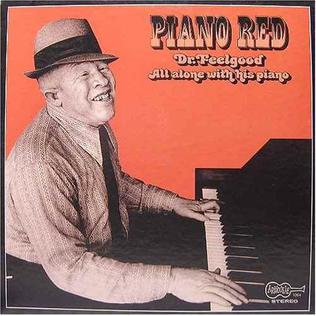
Willie Perryman (Piano Red, Dr. Feelgood) *19.10.1911

Willie Perryman (* 19. Oktober 1911 in Hampton, Georgia; † 25. Juli 1985 in Atlanta, Georgia) war ein US-amerikanischer Blues-Pianist und Sänger, der auch als Piano Red und Dr. Feelgood bekannt wurde.
Wie sein Bruder Rufus, der als Speckled Red auftrat und Alben aufnahm, war Willie Perryman Albino. Bereits in jungen Jahren spielte er in Honky Tonks und Juke Joints in Georgia, Alabama und Tennessee.
In den 1930ern trat Perryman mit Blind Willie McTell als „The Dixie Jazz Hounds“ auf. 1936 machten sie gemeinsam Aufnahmen, die jedoch nicht veröffentlicht wurden. Aus dieser Zeit stammt sein Spitzname „Piano Red“.
1950 hatte er mit Rockin’ with Red einen Riesenhit, der vielfach als eine frühe Rock-’n’-Roll-Aufnahme angesehen wird und später von einer Reihe bekannter Interpreten neu eingespielt wurde, darunter Little Richard, Little Jimmy Dickens und Jerry Lee Lewis. Weitere Hits von „Piano Red“ waren Red’s Boogie, The Wrong Yo Yo, Laying the Boogie und Just Right Bounce.
Anfang der 1960er machte Willie Perryman Aufnahmen unter dem Namen „Dr. Feelgood & the Interns“. Das Stück Doctor Feel-Good schaffte es 1962 in die Pop-Musik-Charts.
In den 1970ern und Anfang der 1980er ging Perryman mehrmals in Europa auf Tournee. Er spielte auch beim Amtsantritt von Bundeskanzler Helmut Schmidt und unterstützte den Wahlkampf von US-Präsident Jimmy Carter.
1984 wurde bei Willie Perryman Krebs diagnostiziert, an dem er im folgenden Jahr starb.
http://de.wikipedia.org/wiki/Piano_Red
William "Willie" Lee Perryman (October 19, 1911 – July 25, 1985),[1] usually known professionally as Piano Red and later in life as Dr. Feelgood, was an American blues musician, the first to hit the pop music charts. He was a self-taught pianist who played in the barrelhouse blues style (a loud percussive type of blues piano suitable for noisy bars or taverns). His performing and recording careers emerged during the period of transition from completely segregated "race music", to "rhythm and blues", which was marketed to white audiences. Some music historians credit Perryman's 1950 recording "Rocking With Red" for the popularization of the term rock and roll in Atlanta.[2] His simple, hard-pounding left hand and his percussive right hand, coupled with his cheerful shout, brought him considerable success over three decades.
Life
Perryman was born on a farm near Hampton, Georgia, where his parents Ada and Henry Perryman sharecropped. He was part of a large family, though sources differ on exactly how many brothers and sisters he had. Perryman was an albino African American, as was his older brother Rufus, who also had a blues piano career as "Speckled Red".[2]
When Perryman was six years old, his father gave up farming and moved the family to Atlanta to work in a factory. Not much is known about Perryman's education or early life, but he recalled that his mother bought a piano for her two albino sons. Both brothers had very poor vision, an effect of their albinism, so neither took formal music lessons, but they developed their barrelhouse style through playing by ear. Perryman sometimes recalled imitating Rufus's style after watching him play, but it is doubtful that his brother was a major influence. Rufus, nineteen years older than Perryman, left Georgia in 1925 and did not return until a 1960 visit. Another influence that Perryman cited in interviews was Fats Waller, whose records his mother brought home. Other influences were likely the local blues pianists playing at "house" or "rent" parties, which were common community fund-raisers of that era.[2]
By the early 1930s, Perryman was playing at house parties, juke joints, and barrelhouses in Georgia, Alabama, and Tennessee. He developed his percussive playing style and harsh singing style to compensate for the lack of sound systems and to overcome the noise of people talking in venues. He worked these circuits with other Georgia bluesmen, including Barbecue Bob, Charlie Hicks, Curley Weaver, and "Blind Willie" McTell.[2]
Perryman married in the early 1930s, and he and his wife Flora had two daughters. He obtained seasonal employment performing in Brevard, North Carolina, a mountain resort town, and commuted back and forth between there and Atlanta. The Brevard job brought him before white audiences; by 1934 he had also begun to play at white clubs in Atlanta. In Atlanta he would play at a white club until midnight and then head over to an African American club, where he would play until 4 am. Perryman developed a repertoire of pop standards, which were more popular among the white audiences, while continuing his blues sets in the African American clubs.[2]
Around 1936 he began to be billed as 'Piano Red', and made his first recordings with McTell in Augusta for Vocalion Records, although these were never released. He also began working as an upholsterer, a trade which he occasionally maintained through later years.[2]
In 1950, after spending the previous 14 years upholstering and playing music on weekends, Perryman recorded "Rockin' with Red" and "Red's Boogie" at the WGST radio studios in Atlanta for RCA Victor. Both songs became national hits, reaching numbers five and three respectively on the Billboard R&B chart, and "Rockin' with Red" has since been covered many times under many titles. This success, along with further hits "The Wrong Yo Yo" (allegedly written by Speckled Red), "Laying The Boogie" and "Just Right Bounce", allowed him to resume an active performing schedule. He also recorded sessions in New York City and Nashville during the early 1950s.
Red played for white teenagers' high school parties in peoples homes in Atlanta. You would arrange for him to be picked up at his home and returned and providing a "bottle" of booze for him as well as a very nominal fee.
During the mid-1950s Perryman also worked as a disc jockey on radio stations WGST and WAOK in Atlanta, broadcasting 'The Piano Red Show' (later 'The Dr. Feelgood Show') directly from a small shack in his back yard. A young James Brown made an appearance on his show in the late 1950s. Perryman's involvement had him appearing on a flatbed truck in many parades, which led to his song "Peachtree Parade". From the mid-1950s until the late 1960s, he recorded for several record labels, including Columbia, for whom he made several records, Checker, for whom he recorded eight sides with Willie Dixon on bass, and Groove Records, a subsidiary of RCA Victor, producing the first hit for that label.[3]
Signed to Okeh Records in 1961, Perryman began using the name Dr. Feelgood and the Interns, releasing several hits, including the much-covered "Doctor Feelgood". The persona was one he had initially adopted on his radio shows. The new career was short-lived, though, and Piano Red was never able to regain his former stature. In 1963, The Merseybeats recorded a cover of the b-side of "Doctor Feelgood," titled "Mr. Moonlight" (written by Roy Lee Johnson) as the B-side of their UK top 5 hit I Think of You. It was also recorded by the Beatles and appeared on the album Beatles for Sale in the United Kingdom and on the Beatles '65 album in the United States. In 1966, The Lovin' Spoonful recorded his song "Bald Headed Lena" on their second album, Daydream.
Perryman continued to be a popular performer in Underground Atlanta, and had several European tours late in his career, including appearances at the Montreux Jazz Festival, Berlin Jazz Festival, Chancellor Helmut Schmidt's inauguration, and on BBC Radio. During this time, he was befriended by Bill Wyman, Keith Richards, Mick Jagger, Eric Clapton, and Paul McCartney, and Pete Ham of Badfinger wrote a song in his honor.
Muhlenbrink's Saloon closed in 1979 and Perryman found himself without a regular job. That lasted until 1981, when he was hired to perform five nights a week at The Excelsior Mill in Atlanta. In 1984, he asked co-owner Michael Reeves to arrange a live recording and Reeves arranged for a mobile recording in October of that year.
In 1985, Red charted the song "Yo Yo", a duet with Danny Shirley, who would later become lead singer of Confederate Railroad.
Perryman was diagnosed with cancer that same year and died in July 1985 at Dekalb General Hospital in Decatur, Georgia. Among those who attended his funeral were the Governor of Georgia and the Mayor of Atlanta.[4]
The tapes from the Excelsior Mill remained in Reeves's possession for twenty-five years. In April 2010, he formed a partnership with author and producer David Fulmer to release a CD of the recording under the title The Lost Atlanta Tapes. The CD was released by Landslide Records on August 17, 2010.
William "Willie" Lee Perryman (October 19, 1911 – July 25, 1985),[1] usually known professionally as Piano Red and later in life as Dr. Feelgood, was an American blues musician, the first to hit the pop music charts. He was a self-taught pianist who played in the barrelhouse blues style (a loud percussive type of blues piano suitable for noisy bars or taverns). His performing and recording careers emerged during the period of transition from completely segregated "race music", to "rhythm and blues", which was marketed to white audiences. Some music historians credit Perryman's 1950 recording "Rocking With Red" for the popularization of the term rock and roll in Atlanta.[2] His simple, hard-pounding left hand and his percussive right hand, coupled with his cheerful shout, brought him considerable success over three decades.
Life
Perryman was born on a farm near Hampton, Georgia, where his parents Ada and Henry Perryman sharecropped. He was part of a large family, though sources differ on exactly how many brothers and sisters he had. Perryman was an albino African American, as was his older brother Rufus, who also had a blues piano career as "Speckled Red".[2]
When Perryman was six years old, his father gave up farming and moved the family to Atlanta to work in a factory. Not much is known about Perryman's education or early life, but he recalled that his mother bought a piano for her two albino sons. Both brothers had very poor vision, an effect of their albinism, so neither took formal music lessons, but they developed their barrelhouse style through playing by ear. Perryman sometimes recalled imitating Rufus's style after watching him play, but it is doubtful that his brother was a major influence. Rufus, nineteen years older than Perryman, left Georgia in 1925 and did not return until a 1960 visit. Another influence that Perryman cited in interviews was Fats Waller, whose records his mother brought home. Other influences were likely the local blues pianists playing at "house" or "rent" parties, which were common community fund-raisers of that era.[2]
By the early 1930s, Perryman was playing at house parties, juke joints, and barrelhouses in Georgia, Alabama, and Tennessee. He developed his percussive playing style and harsh singing style to compensate for the lack of sound systems and to overcome the noise of people talking in venues. He worked these circuits with other Georgia bluesmen, including Barbecue Bob, Charlie Hicks, Curley Weaver, and "Blind Willie" McTell.[2]
Perryman married in the early 1930s, and he and his wife Flora had two daughters. He obtained seasonal employment performing in Brevard, North Carolina, a mountain resort town, and commuted back and forth between there and Atlanta. The Brevard job brought him before white audiences; by 1934 he had also begun to play at white clubs in Atlanta. In Atlanta he would play at a white club until midnight and then head over to an African American club, where he would play until 4 am. Perryman developed a repertoire of pop standards, which were more popular among the white audiences, while continuing his blues sets in the African American clubs.[2]
Around 1936 he began to be billed as 'Piano Red', and made his first recordings with McTell in Augusta for Vocalion Records, although these were never released. He also began working as an upholsterer, a trade which he occasionally maintained through later years.[2]
In 1950, after spending the previous 14 years upholstering and playing music on weekends, Perryman recorded "Rockin' with Red" and "Red's Boogie" at the WGST radio studios in Atlanta for RCA Victor. Both songs became national hits, reaching numbers five and three respectively on the Billboard R&B chart, and "Rockin' with Red" has since been covered many times under many titles. This success, along with further hits "The Wrong Yo Yo" (allegedly written by Speckled Red), "Laying The Boogie" and "Just Right Bounce", allowed him to resume an active performing schedule. He also recorded sessions in New York City and Nashville during the early 1950s.
Red played for white teenagers' high school parties in peoples homes in Atlanta. You would arrange for him to be picked up at his home and returned and providing a "bottle" of booze for him as well as a very nominal fee.
During the mid-1950s Perryman also worked as a disc jockey on radio stations WGST and WAOK in Atlanta, broadcasting 'The Piano Red Show' (later 'The Dr. Feelgood Show') directly from a small shack in his back yard. A young James Brown made an appearance on his show in the late 1950s. Perryman's involvement had him appearing on a flatbed truck in many parades, which led to his song "Peachtree Parade". From the mid-1950s until the late 1960s, he recorded for several record labels, including Columbia, for whom he made several records, Checker, for whom he recorded eight sides with Willie Dixon on bass, and Groove Records, a subsidiary of RCA Victor, producing the first hit for that label.[3]
Signed to Okeh Records in 1961, Perryman began using the name Dr. Feelgood and the Interns, releasing several hits, including the much-covered "Doctor Feelgood". The persona was one he had initially adopted on his radio shows. The new career was short-lived, though, and Piano Red was never able to regain his former stature. In 1963, The Merseybeats recorded a cover of the b-side of "Doctor Feelgood," titled "Mr. Moonlight" (written by Roy Lee Johnson) as the B-side of their UK top 5 hit I Think of You. It was also recorded by the Beatles and appeared on the album Beatles for Sale in the United Kingdom and on the Beatles '65 album in the United States. In 1966, The Lovin' Spoonful recorded his song "Bald Headed Lena" on their second album, Daydream.
Perryman continued to be a popular performer in Underground Atlanta, and had several European tours late in his career, including appearances at the Montreux Jazz Festival, Berlin Jazz Festival, Chancellor Helmut Schmidt's inauguration, and on BBC Radio. During this time, he was befriended by Bill Wyman, Keith Richards, Mick Jagger, Eric Clapton, and Paul McCartney, and Pete Ham of Badfinger wrote a song in his honor.
Muhlenbrink's Saloon closed in 1979 and Perryman found himself without a regular job. That lasted until 1981, when he was hired to perform five nights a week at The Excelsior Mill in Atlanta. In 1984, he asked co-owner Michael Reeves to arrange a live recording and Reeves arranged for a mobile recording in October of that year.
In 1985, Red charted the song "Yo Yo", a duet with Danny Shirley, who would later become lead singer of Confederate Railroad.
Perryman was diagnosed with cancer that same year and died in July 1985 at Dekalb General Hospital in Decatur, Georgia. Among those who attended his funeral were the Governor of Georgia and the Mayor of Atlanta.[4]
The tapes from the Excelsior Mill remained in Reeves's possession for twenty-five years. In April 2010, he formed a partnership with author and producer David Fulmer to release a CD of the recording under the title The Lost Atlanta Tapes. The CD was released by Landslide Records on August 17, 2010.
R.I.P.
Buddy Moss +19.10.1984

Als Kind brachte sich der Sohn eines Kleinbauern das Spielen auf der Mundharmonika bei. In der Gegend von Augusta, wohin seine Familie gezogen war, spielte er auf Partys.
1928 ging Moss nach Atlanta, wo Curley Weaver und Barbecue Bob auf ihn aufmerksam wurden. Im Alter von 16 Jahren machte er 1930 mit den Georgia Cotton Pickers seine ersten Aufnahmen.
Moss brachte sich auch das Gitarrespielen selbst bei und konnte sich darin bald mit den Besten messen. Er trat mit Barbecue Bob und Blind Willie McTell auf. 1933 machte er in New York seine ersten Soloaufnahmen, begleitet von Fred McMullen und Curley Weaver. Mit der Sängerin Ruth Willis machten die drei als die Georgia Browns Aufnahmen.
1934 verkauften sich die Soloaufnahmen von Moss besser als die Platten von Weaver und McTell, darunter Stücke wie Some Lonesome Day, Dough Rollin' Papa und Insane Blues. 1935 machte er mit seinem neuen Partner Josh White Aufnahmen.
Im gleichen Jahr wurde Moss wegen Mordes an seiner Frau verurteilt und kam ins Gefängnis. Nach seiner Entlassung 1941 ging er mit Sonny Terry und Brownie McGhee nach New York. Von ihren gemeinsamen Aufnahmen wurden jedoch nur wenige veröffentlicht, und der erhoffte Erfolg blieb aus.
Obwohl er weiterhin auftrat, musste Moss sich seinen Lebensunterhalt mit Jobs als Farmarbeiter, Liftboy oder LKW-Fahrer verdienen. Als Musiker war er weitestgehend in Vergessenheit geraten.
1964 wurde Moss wieder „entdeckt“, gab wieder Konzerte und machte neue Aufnahmen. Er trat bei bedeutenden Festivals auf, z. B. beim Newport Folk Festival 1969.
Als Buddy Moss 1984 in Atlanta starb, war er erneut in Vergessenheit geraten.
Eugene "Buddy" Moss (January 16, 1914 – October 19, 1984) was, in the estimation of many blues scholars,[who?] one of the two most influential East Coast blues guitarists to record in the period between Blind Blake's final sessions in 1932 and Blind Boy Fuller's debut in 1935 (the other being Josh White). A younger contemporary of Blind Willie McTell, Curley Weaver and Barbecue Bob, Moss was part of a coterie of Atlanta bluesmen, and among the few of his era who had been involved in the blues revival of the 1960s and 1970s. A guitarist of uncommon skill and dexterity with a strong voice, he began as a musical disciple of Blind Blake, and may well have served as an influence on the later Piedmont-style guitarist Blind Boy Fuller. Although his career was halted in 1935 by a six-year jail term, and then by the Second World War, Moss lived long enough to be rediscovered in the 1960s, when he revealed his talent had persevered throughout the years. He was reputed to have been cankerous and mistrusting of others, the extent to which this is a case is subjective.
In later years, Moss credited friend and band-mate Barbecue Bob with being a major influence on his playing, which would be understandable given the time they spent together. Scholars also attribute Arthur "Blind" Blake as a major force in his development, with mannerisms and inflections that both share. It is also suggested by Alan Balfour and others that Moss may have been an influence on Blind Boy Fuller, as they never met and Moss' recording career ended before Fuller's began – Moss's first recordings display some inflections and nuances that Fuller had not put down on record until some years later.
Biography
Moss was one of 12 children born to a sharecropper in the Warren County town of Jewell, Georgia, midway between Atlanta and Augusta. There is some disagreement about his date of birth, some sources indicating 1906 and many others of more recent vintage claiming 1914. He began teaching himself the harmonica at a very early age, and he played at local parties around Augusta, where the family moved when he was four and remained for the next 10 years. By 1928, he was busking around the streets of Atlanta. "Nobody was my influence," he told Robert Springer of his harmonica playing, in a 1975 interview. "I just kept hearing people, so I listen and I listen, and listen, and it finally come to me."
By the time he arrived in Atlanta, he was good enough to be noticed by Curley Weaver and Robert "Barbecue Bob" Hicks, who began working with the younger Moss. It was Weaver and Bob that got him onto his first recording date, at the age of 16, as a member of their group the Georgia Cotton Pickers, on December 7, 1930 at the Campbell Hotel in Atlanta, doing four songs for Columbia: "I'm on My Way Down Home," "Diddle-Da-Diddle," "She Looks So Good," and "She's Comin' Back Some Cold Rainy Day." The group that day consisted of Barbecue Bob and Curley Weaver on guitars and Moss on harmonica. Moss would not record anything more for the next three years.
By 1933, Moss had taught himself the guitar, at which he became so proficient that he was a genuine peer and rival to Weaver. He frequently played with Barbecue Bob until his death of pneumonia on October 21, 1931, he found a new partner and associate in Atlanta blues legend Blind Willie McTell, performing together at local parties in the Atlanta area.
In January 1933, he made his debut as a recording artist in his own right for the American Record Company in New York City,[1] accompanied by Fred McMullen and Curley Weaver, cutting three songs, "Bye Bye Mama," "Daddy Don't Care," and "Red River Blues." Another eight songs followed over the next three days, and all 11 were released, more than McMullen or Weaver at those same sessions.
The debut sessions also featured Moss returning to the mouth harp, as a member of the Georgia Browns – Moss, Weaver, McMullen and singer Ruth Willis – for six songs done at the same sessions. But it was on the guitar that Moss would make his name over the next five years.
Moss's records were released simultaneously on various budget labels associated with ARC, and were so successful that in mid-September 1933, he was back in New York City along with Weaver and Blind Willie McTell. Moss cut another dozen songs for the company, this time accompanied by Curley Weaver, while he accompanied Weaver and McTell on their numbers.
These songs sold well enough, that he was back in New York City in the summer of 1934, this time as a solo guitarist/singer, to do more than a dozen tracks. At this point, Moss's records were outselling those of his colleagues Weaver and McTell, and were widely heard through the Southern and Border states. His "Oh Lordy Mama" from these sessions became well known as "Hey Lawdy Mama", a song interpreted by a variety of artists.[2] This body of recordings also best represents the bridge that Moss provided between Blind Blake and Blind Boy Fuller – his solo version of "Some Lonesome Day," and also "Dough Rollin' Papa," from 1934 advanced ideas in playing and singing that Blind Boy Fuller picked up and adapted to his own style, while one could listen to "Insane Blues" and pick up the lingering influence of Blind Blake.
By August 1935, Moss saw his per-song fee doubled from $5 to $10 (in a period when many men were surviving on less than that per week), and when he wasn't recording, he was constantly playing around Atlanta alongside McTell and Weaver. When Moss returned to the studio in the summer of 1935, it was with a new partner, Joshua Daniel White, "The Singing Christian". The two recorded a group of 15 songs in August 1935, and it seemed like Moss was destined to outshine his one-time mentors Weaver and McTell, when personal and legal disaster struck.
In an incident that has never been fully recounted or explained, Moss was arrested, tried, and convicted for the shooting murder of his wife and sentenced to a long prison term. (The above photograph was taken of Moss at the prison where he was incarcerated.) With the death of Blind Boy Fuller in 1941, his manager, J.B. Long, made efforts to secure Moss's release as a Fuller replacement, all to no avail until 1941, when a combination of Moss' own good behavior as a prisoner, the bribery of two parole boards, coupled with the entreaties of two outside sponsors (Long and Columbia Records) willing to assure his compliance with parole helped get him out of jail. J.B. Long finally effected his release to his custody with the understanding that Moss stay out of the State of Georgia for a decade. It was while working at Elon College for Long under the parole agreement that he met a group of other blues musicians under Long's management that included Sonny Terry and Brownie McGhee.
In October 1941, Moss, Terry and McGhee, a.o. went to New York City to cut a group of sides for Okeh Records/Columbia, including 13 numbers by Moss featuring his two new colleagues. Only three of the songs were ever released, and then events conspired to cut short Moss's recording comeback. The entry of the United States into World War II in December of the same year forced the government to place a wartime priority on the shellac used in the making of 78-rpm Gramophone records – there was barely enough allocated to the recording industry to keep functioning, and record companies were forced to curtail recordings by all but the most commercially viable artists; a ban on recording work by the Musicians' Union declared soon after further restricted any chance for Moss to record; and the interest in acoustic country blues, even of the caliber that he played, seemed to be waning, further cutting back on record company interest.
Moss continued performing in the area around Richmond, Virginia and Durham, North Carolina during the mid-'40s, and with Curley Weaver in Atlanta during the early 1950s, but music was no longer his profession or his living. His decade ban from Georgia is probably why he missed out on recording for Regal Records in Atlanta in 1949; the likes of Curley Weaver, Blind Willie McTell, and Frank Edwards were recorded then. He went to work on a tobacco farm, drove trucks, and worked as an elevator operator, among other jobs, over the next 20-odd years.
Although he still occasionally played in the area around Atlanta, Moss was largely forgotten. Despite the fact that reference sources even then referred to him as one of the most influential bluesmen of the 1930s, he was overlooked by the blues revival. In a sense, he was cheated by the fact that his recording career had been so short – 1933 to 1935 – and had never recovered from the interruption in his work caused by his stretch in prison. His difficult character made it difficult for many, Black and White, to deal with him.
Fate stepped in, in the form of some coincidences. In 1964, he chanced to hear that his old partner Josh White was giving a concert at Emory University in Atlanta. Moss visited White backstage at the concert, and the fans hanging around established legend White suddenly discovered a blues legend in their midst. Moss was persuaded to resume performing in a series of concerts before college audiences, most notably under the auspices of the Atlanta Folk Music Society and the Folklore Society of Greater Washington. He also had new recording sessions for the Columbia label in Nashville, but none of the material was issued during his lifetime.
A June 10, 1966 concert in Washington, D.C. was recorded and portions of it were later released on the Biograph label. Moss played the Newport Folk Festival in 1969, and appeared at such unusual venues as New York's Electric Circus during that same year. During the 1970s, he played the John Henry Memorial Concert in West Virginia for two consecutive years, and the Atlanta Blues Festival and the Atlanta Grass Roots Music Festival in 1976, and later at The National Folk Festival held at Wolf Trap Farm Park in Vienna, VA.
Moss died in Atlanta on October 19, 1984, once again largely forgotten by the public. In the years since, his music was once again being heard courtesy of the Biograph label's reissue of the 1966 performance and the Austrian Document label, which has released virtually every side that he released between 1930 and 1941. While there were some who tried to get him to record, his difficult personality made that impossible – once again, he was his own worst enemy – in spite of his immense talent and importance. As a result, his reputation has once again grown, although he is still not nearly as well known among blues enthusiasts as Blind Willie McTell or Blind Boy Fuller.
Son House +19.10.1988

Son House (eigentlich Eddie James House, Jr.; * 21. März 1902 in Riverton, Mississippi; † 19. Oktober 1988 in Detroit, Michigan) war ein bedeutender Blues-Sänger und -Gitarrist und beeinflusste Blues-Größen wie Robert Johnson und Muddy Waters.
House wurde auf einer Plantage geboren. Bereits als Jugendlicher wandte er sich der Religion zu, mit Anfang Zwanzig war er als baptistischer Pastor aktiv. Den moralischen Anforderungen des Amtes konnte er jedoch nicht gerecht werden, er trank viel und hatte Affären mit Frauen. Anfang der 1920er verbrachte er einige Zeit in Louisiana, kehrte jedoch 1926 nach Mississippi zurück, entdeckte den Blues, erlernte das Gitarrenspiel und spielte in Juke Joints und auf House parties, sein Amt gab er auf. [1]
1928 erschoss er – ihm zufolge in Notwehr – einen Mann und wurde zu Zwangsarbeit auf der Parchman Farm, dem Staatsgefängnis von Mississippi verurteilt, ein Jahr später jedoch wurde er nach erneuter Prüfung des Falles freigelassen. House zog nach Lula, Mississippi und traf dort auf Charley Patton und Willie Brown, mit denen er bis zu Pattons Tod oft zusammenspielte, Brown wechselte 1930 in seiner Funktion als Sideman von Patton zu House. Im August 1930 fand House auch zum ersten Mal Gelegenheit Aufnahmen zu machen. Die Aufnahmesitzung für Paramount Records galt eigentlich Charley Pattons Vertragsverlängerung, Patton hatte aber nach Aufforderung durch Art Laibley, dem Aufnahmeleiter bei Paramount [2], weitere Musiker mitgebracht, die alle Gelegenheit bekamen, Aufnahmen zu machen. So konnte Son House ebenso aufnehmen wie Willie Brown, Louise Johnson und die Gospelgruppe Delta Big Four. House nahm acht Stücke auf, alle acht Stücke wurden auch veröffentlicht, nur wenige Exemplare der Platten überlebten jedoch. Das einzige existierende Exemplar von „Mississippi County Farm Blues“/„Clarksdale Moan“, der letzten noch unbekannten von Houses Aufnahmen für Paramount, die lange als "Heiliger Gral" des Blues galt [3], wurde erst nach 75 Jahren im September 2005 wiederentdeckt und 2006 wiederveröffentlicht. [1]
1934, nach dem Tod von Charley Patton, ehelichte er noch im selben Jahr dessen Witwe Bertha Lee, mit der er bis zu ihrem Tod in den 50er Jahren zusammenlebte. 1941 und 1942 nahm ihn Alan Lomax noch einmal für die Library of Congress auf. 1943 siedelte House nach Rochester, New York um und zog sich vom Blues zurück. [1]
Nachdem er im Juni 1964 von Dick Waterman, Nick Perls und Phil Spiro wiederentdeckt worden war, half ihm Alan Wilson dabei, sich das Repertoire an Songs, das er in den 1930ern und Anfang der 1940er Jahre gespielt und aufgenommen, inzwischen aber vergessen hatte, neu zu erarbeiten.[4] Er trat 1965 beim Newport Folk Festival und 1967 in Europa beim American Folk Blues Festival auf. Er ging in den USA und Europa auf Tour und machte ab 1965 wieder Aufnahmen, zuerst für Columbia/CBS. Als einer der wenigen noch lebenden bedeutenden Musiker des Vorkriegsblues war er auch ein wichtiger Zeitzeuge und wurde vielfach interviewt. 1969 war er Gegenstand eines Dokumentarfilms ("Son House"). [1]
Aus gesundheitlichen Gründen trat Son House seit 1971 nicht mehr auf. 1980 wurde Son House in die Blues Hall of Fame aufgenommen, 1997 in die legendäre Wireliste The Wire’s “100 Records That Set The World On Fire (While No One Was Listening)”. Er starb 1988 in Detroit, wo er seit 1976 lebte.[1]
Werk
Son House spielte mit so bekannten Musikern wie Charley Patton, Willie Brown, Robert Johnson, Fiddlin’ Joe Martin und Leroy Williams. [1]
Son House war kein Virtuose auf der Gitarre, sein Spiel war rhythmisch, kraftvoll und gelegentlich aggressiv. Ergänzt wurde dies durch seinen leidenschaftlichen, kraftvollen und innovativen Vortragsstil. Seine religiöse Haltung fand auch Ausdruck in seinen Texten („Preachin’ the Blues“, „Judgement Day“, „John the Revelator“, „I Want to Live So God Can Use Me“).
Eddie James "Son" House, Jr. (March 21, 1902[1] – October 19, 1988) was an American blues singer and guitarist, noted for his highly emotional style of singing and slide guitar playing.
After years of hostility to secular music, as a preacher, and for a few years also as a church pastor, he turned to blues performance at the age of 25. He quickly developed a unique style by applying the rhythmic drive, vocal power and emotional intensity of his preaching to the newly learned idiom. In a short career interrupted by a spell in Parchman Farm penitentiary, he developed to the point that Charley Patton, the foremost blues artist of the Mississippi Delta region, invited him to share engagements, and to accompany him to a 1930 recording session for Paramount Records.
Issued at the start of The Great Depression, the records did not sell and did not lead to national recognition. Locally, Son remained popular, and in the 1930s, together with Patton's associate, Willie Brown, he was the leading musician of Coahoma County. There he was a formative influence on Robert Johnson and Muddy Waters. In 1941 and 1942, House and the members of his band were recorded by Alan Lomax and John W. Work for Library of Congress and Fisk University. The following year, he left the Delta for Rochester, New York, and gave up music.
In 1964, a group of young record collectors discovered House, whom they knew of from his records issued by Paramount and by the Library of Congress. With their encouragement, he relearned his style and repertoire and enjoyed a career as an entertainer to young white audiences in the coffee houses, folk festivals and concert tours of the American folk music revival billed as a "folk blues" singer. He recorded several albums, and some informally taped concerts have also been issued as albums. Son House died in 1988.[3]
In addition to his early influence on Robert Johnson and Muddy Waters, he became an inspiration to John Hammond, Alan Wilson (of Canned Heat), Bonnie Raitt, The White Stripes, Dallas Green and John Mooney.
Biography
Early life
The middle of three brothers, House was born in the hamlet of Lyon, north of Clarksdale, Mississippi[4] and continued to live in the rural Mississippi Delta until his parents separated. His father, Eddie House, Sr., was a musician, playing the tuba in a band with his many brothers, and sometimes playing guitar. He was a church member, but also a drinker. This caused him to leave the church for a time, before giving up drink and becoming a deacon. Young Eddie House adopted the family concern with religion and churchgoing. He also absorbed the family love of music, but confined himself to singing, showing no interest in the family instrumental band, and feeling entirely hostile to the Blues on religious grounds.[5]
Son's parents separated when he was about seven or eight. His mother took him to Tallulah, Louisiana, across the Mississippi River from Vicksburg, Mississippi. When Son was in his early teens, they moved to Algiers, New Orleans. Recalling these years, Son would later speak of his hatred of blues and his passion for churchgoing (he described himself as "churchy" and "churchified"). At fifteen, probably while living in Algiers, he began preaching sermons.[6]
At the age of nineteen, while living in the Delta, he married an older woman from New Orleans named Carrie Martin. This was a significant step for House; he married in church and against family opposition. The couple moved to her hometown of Centreville, Louisiana to help run Carrie's father's farm. After a couple of years, feeling used and disillusioned, House recalls "I left her hanging on the gatepost, with her father tellin' me to come back so we could plow some more." In later years, House was still angry and said of Carrie "She wasn't nothin' but one of them New Orleans whores". At around the same time, probably 1922, Son's mother died.[7]
House's resentment of farming extended to the many menial jobs he took in his young adult years. He moved around frequently, on one occasion taking off to East Saint Louis to work in a steel plant. The one job he enjoyed was on a Louisiana horse ranch, which later he celebrated by wearing a cowboy hat in his performances.[8] He found some relief from constant manual labor when, following a conversion experience "getting religion" in his early twenties, he was accepted as a paid pastor, first in the Baptist Church, then in the Colored Methodist Episcopal Church. However, like his father before him, he fell into habits which conflicted with his calling – drinking like his father, and probably also womanizing. This led him after several years of conflict to "leave the church" – i.e. cease his full-time commitment – although he still felt the need to preach sermons from time to time.[9]
Blues performer
In 1927 at the age of 25, House underwent a change of musical perspective as rapid and dramatic as a religious conversion. In a hamlet south of Clarksdale, Son heard one of his drinking companions, either James McCoy or Willie Wilson (his recollections differed), playing bottleneck guitar, a style he had never heard before. He immediately changed his attitude to blues, bought a guitar from a musician called Frank Hoskins, and within weeks was playing with Hoskins, McCoy and Wilson. Two songs he learned from McCoy would later be among his best-known: "My Black Mama" and "Preachin' The Blues". Another source of inspiration was Reuben Lacy, a much better known performer who had recorded for Columbia Records in 1927 (no titles released) and for Paramount Records in 1928 (two titles released). In an astonishing short time, with only these four musicians as models, House developed to professional standard a blues style based on his religious singing and simple bottleneck guitar style.[10]
After allegedly killing a man in self-defense, he spent time in prison in 1928 and 1929. The official story on the killing is that sometime around 1927 or 1928, he was playing in a juke joint when a man went on a shooting spree. Son was wounded in the leg, and shot the man dead. He received a 15-year sentence at the Mississippi State Penitentiary (Parchman Farm), of which he served two years.[11] House credited his re-examination and release to an appeal by his family, but also spoke of the intervention by the influential white planter for whom they worked.[12] The date of the killing and the duration of his sentence are unclear. House gave different accounts to different interviewers and searches by his biographer Daniel Beaumont found no details in the court records of Coahoma County or in the archive of the Mississippi Department of Corrections.[13]
On his release in 1929 or early 1930, Son was strongly advised to leave Clarksdale and stay away. He walked to Jonestown and caught a train to the small town of Lula, Mississippi, sixteen miles north of Clarksdale, and eight miles from the blues hub of Helena, Arkansas. Coincidentally, the great star of Delta Blues, Charley Patton, was also in virtual exile in Lula, having been expelled from his base in the Dockery Plantation. With his partner Willie Brown, Patton dominated the local market for professional blues performance. Patton watched House busking when he arrived penniless at Lula station, but did not approach him. He then observed Son's showmanship attracting a crowd to the café and bootleg whiskey business of a woman called Sara Knight, and invited him to be a regular musical partner with him and Brown. Son formed a liaison with Knight, and both musicians profited from association with her bootlegging activities.[14] The musical partnership is disputed by Patton's biographers Stephen Calt and Gayle Dean Wardlow. They consider that House's musicianship was too limited to play with Patton and Brown, who were also rumoured to be estranged at the time. They also cite one statement by House that he did not play for dances in Lula.[15] Beaumont concludes that Son became a firm friend of Patton, traveling with him to gigs but playing separately.[16]
Recording
In 1930, Art Laibly of Paramount Records traveled to Lula to convince Patton to record several more sides in Grafton, Wisconsin. Along with Patton came House, Brown, and pianist Louise Johnson, who would all end up recording sides for the label. House recorded nine songs during that session, eight of which were released; but these were commercial failures, and House would not record again commercially for 35 years. House continued to play with Patton and Brown, even after Patton's death in 1934. During this time, House worked as a tractor driver for various plantations around the Lake Cormorant area.
Alan Lomax first recorded House for the Library of Congress in 1941. Willie Brown, mandolin player Fiddlin' Joe Martin, and harmonica player Leroy Williams played with House on these recordings. Lomax returned to the area in 1942, where he recorded House once more. He then faded from the public view, moving to Rochester, New York, in 1943, working as a railroad porter for the New York Central Railroad and as a chef.[11]
Rediscovery
In 1964, after a long search of the Mississippi Delta region by Nick Perls, Dick Waterman and Phil Spiro, he ended up being "rediscovered" in Rochester, New York. House had been retired from the music business for many years, and was unaware of the 1960s folk blues revival and international enthusiasm regarding his early recordings.
He subsequently toured extensively in the US and Europe and recorded for CBS Records. Like Mississippi John Hurt, he was welcomed into the music scene of the 1960s and played at the Newport Folk Festival in 1964, the New York Folk Festival in July 1965,[17] and the October 1967 European tour of the American Folk Festival along with Skip James and Bukka White.
The young guitarist Alan Wilson (Canned Heat) was a fan of Son House. The producer John Hammond Sr asked Wilson, who was just 22 years old, to teach "Son House how to play like Son House," because Alan Wilson had such a good knowledge of the blues styles. The album The Father of Delta Blues – The Complete 1965 Sessions was the result.[18] Son House played with Alan Wilson live. It can be heard on the album John the Revelator: The 1970 London Sessions.
In the summer of 1970, House toured Europe once again, including an appearance at the Montreux Jazz Festival; a recording of his London concerts was released by Liberty Records. He also played at the two Days of Blues Festival in Toronto in 1974. On an appearance on the TV arts show Camera Three, he was accompanied by blues guitarist Buddy Guy.
Ill health plagued House's later years and in 1974 he retired once again, and later moved to Detroit, Michigan, where he remained until his death from cancer of the larynx. He was buried at the Mt. Hazel Cemetery. Members of the Detroit Blues Society raised money through benefit concerts to put a monument on his grave. He had been married five times.