Posts mit dem Label Embry_Johnny werden angezeigt. Alle Posts anzeigen

Freitag, 25. November 2016

25.11. Eddie Boyd, Jerry Portnoy, Jimmy Johnson, Johnny Embry, Eric Demmer * Fenton Robinson, Coco Robicheaux, Henry Lee "Shot" Williams, Little Willie Foster +


1914 Eddie Boyd*
1928 Jimmy Johnson (James Earl Thompson)*
1931 Johnny Embry*
1943 Jerry Portnoy*
1987 Little Willie Foster+
1997 Fenton Robinson+
2011 Henry Lee "Shot" Williams+
2011 Coco Robicheaux+
Eric Demmer*


Happy Birthday


Eddie Boyd Geb. 25.11.1914


Eddie Boyd (* als Edward Riley 25. November 1914 in Clarksdale, Mississippi; † 13. Juli 1994 in Helsinki, Finnland) war ein US-amerikanischer Bluesmusiker.
Eddie Boyd wurde auf einer Plantage im Coahoma County bei Clarksdale (Mississippi), geboren. Als sein Geburtsdatum wird bisweilen auch der 13. November 1914 angegeben.
Mit 15 Jahren musste Boyd fliehen, da er im Streit den Plantagenbesitzer mit der Mistgabel gestochen hatte. Er brachte sich zuerst das Gitarrespielen bei, wechselte dann zum Klavier und verdiente seinen Lebensunterhalt als Musiker im Mississippi-Delta. 1936 zog er nach Memphis, wo er fünf Jahre mit den Dixie Rhythm Boys spielte.
1941 folgte Boyd seinem Halbbruder Memphis Slim und seinem Vetter Muddy Waters nach Chicago, um sich nach besseren Bedingungen umzusehen. Er arbeitete in einem Stahlwerk und spielte abends in den Clubs mit Kollegen wie Muddy Waters, Johnny Shines und Sonny Boy Williamson I. Mit Letzterem machte er 1945 erste Plattenaufnahmen.
1952 hatte Boyd mit Five Long Years und 24 Hours für das Label J.O.B. die ersten Hits in den Rhythm&Blues-Charts; die Aufnahmen hatte er selbst finanziert. 1953 folgte der dritte Hit Third Degree. 1957 hatte Boyd einen schweren Autounfall, der ihn für drei Monate ans Bett fesselt. Zu dieser Zeit ließ seine Popularität nach.
1965 trat Boyd beim American Folk Blues Festival in Europa auf. Der Erfolg veranlasste ihn, in Europa zu bleiben. 1968 nahm er mit Fleetwood Mac das Album 7936 South Rhodes auf. Er ging mit John Mayall auf Tour und machte Aufnahmen mit Buddy Guy und Eric Clapton.
1970 heiratete Boyd eine Finnin und blieb mit ihr in Finnland, wo er unter anderem mit Jukka Tolonen zusammenarbeitete. Eddie Boyd nahm in den 1960er und 1970er Jahren mit vielen europäischen Blues Bands LPs auf, mit bekannten wie Cuby & Blizzards (Niederlande) oder unbekannten wie Ulli’s Bluesband (BRD). 1980 hatte er eine Herzoperation. 1986 trat er noch einmal beim Chicago Blues Festival auf.
Eddie Boyd starb 1994 im Meilahti-Krankenhaus in Helsinki.

Edward Riley Boyd known as Eddie Boyd (November 25, 1914 – July 13, 1994)[1] was an American blues pianist. He was born on Stovall's Plantation near Clarksdale, Mississippi.[2]
Life and career
Boyd moved to the Beale Street district of Memphis, Tennessee in 1936 where he played piano and guitar with his group, the Dixie Rhythm Boys. Boyd followed the great migration northward to the factories of Chicago in 1941.[2]
He wrote and recorded the songs "Five Long Years" (1952), "24 Hours" (1953), and the "Third Degree" (co-written by Willie Dixon, also 1953).[2] Boyd toured Europe with Buddy Guy's band in 1965 as part of the American Folk Blues Festival.[2] He later toured and recorded with Fleetwood Mac and John Mayall and the Bluesbreakers.
Tired of the racial discrimination he experienced in the United States, he first moved to Belgium[1] where he recorded with the Dutch band Cuby and the Blizzards. He settled in Helsinki, Finland in 1970,[2] where he recorded ten blues records, the first being Praise to Helsinki (1970). He married his wife, Leila, in 1977.
Boyd died in 1994 in Helsinki, Finland, just a few months before Eric Clapton released the chart-topping blues album, From the Cradle that included Boyd's "Five Long Years" and "Third Degree".


Eddie Boyd - Five Long Years 


Jerry Portnoy   *25.11.1943


Jerry Portnoy (* 25. November 1943 in Evanston, Illinois) ist ein US-amerikanischer Blues-Musiker, ein Virtuose auf der Mundharmonika.
Jerry Portnoy wurde in Evanston geboren, wuchs aber in der bluesgeschwängerten Umgebung von Chicagos Maxwell Street auf. Ende der 1960er-Jahre begann er seine Karriere als professioneller Musiker. In den 1970ern spielte Portnoy in der Band von Muddy Waters. 1980 gründete er zusammen mit Calvin „Fuzz“ Jones (Bass), Pinetop Perkins (Piano) und Willie „Big Eyes“ Smith (Schlagzeug), alle aus der Band von Muddy Waters, die Legendary Blues Band.
Im Jahre 1986 zog sich Portnoy vorübergehend aus dem Musikgeschäft zurück. 1987 gründete er mit Ronnie Earl die Broadcasters. Ab 1989 hatte er seine eigene Band, die Streamliners. Von 1991 bis 1993 spielte Portnoy in Eric Claptons Blues Band. Gelegentlich ist Jerry Portnoy, neben eigenen Auftritten, mit der „Muddy Waters Tribute Band“ unterwegs.
Portnoy fasste sein Können auf der Mundharmonika in Jerry Portnoy’s Blues Harmonica Masterclass zusammen, einem Lehrbuch mit drei CDs.

Jerry Portnoy (born November 25, 1943, Chicago, Illinois, United States) is an American harmonica blues musician, who has toured with Muddy Waters and Eric Clapton.
Biography
Portnoy grew up in Chicago. He first heard the blues played outside his father’s carpet store in the Maxwell Street market in the late 1940s and early 1950s. Maxwell Street was a mecca for blues musicians, who would play on the street for tips. Little Walter, Jimmy Rogers, Johnny Young, Big Walter Horton and many others all played on Maxwell Street.
Portnoy began to perform professionally in 1970, touring the Midwest with the band of Johnny Young (guitar/mandolin). Two years later, he left Johnny Young, but continued to perform around the Midwest in the bands of guitarist Johnny Littlejohn and, later, drummer Sam Lay. For a time, he was also a member of the house band at Buddy Guy's Checkerboard Lounge. He joined the Muddy Waters Blues Band in May 1974 and appeared on the albums I'm Ready, Muddy's "Mississippi" Waters Live, and King Bee. He remained until June 1980 when he and other members of Waters' band (pianist Pinetop Perkins, drummer Willie "Big Eyes" Smith and bassist Calvin "Fuzz" Jones) formed The Legendary Blues Band, where he remained until 1986.
Life of Ease was released in 1981 and Red Hot and Blue two years later. After a brief hiatus from touring and the music business, he returned to music in 1987 when Ronnie Earl asked him to help start a band which became the Broadcasters. He formed his own band, called the Streamliners, in 1989. They released the CD Poison Kisses in 1991 (later re-issued as Home Run Hitter with three extra tracks). That same year Eric Clapton invited Portnoy to join an all-star blues band for the six blues shows at London's Royal Albert Hall as part of Clapton's 24-night stand. In 1993, he joined Clapton's band and remained with it through 1996. During this time, the band recorded Clapton's blues album From the Cradle.
Portnoy has performed in twenty-eight foreign countries on six continents, including performances at the White House, Carnegie Hall, Radio City Music Hall, the Smithsonian, the Newport Jazz Festival and other major jazz and blues festivals worldwide. He was a Grammy Award nominee in 1996 for his work with the Muddy Waters Tribute Band on their recording You're Gonna Miss Me When I'm Dead and Gone, and released an instructional package, Jerry Portnoy's Blues Harmonica Masterclass, in 1997. In 2001, he released his second solo album, Down in the Mood Room.
Known for his dark, amplified tone, he has long been a favorite of both critics and peers. The New York Times (1987) said, "Mr. Portnoy crests like an alto saxophone." Down Beat Magazine (2002) said, "Portnoy has few equals as a harmonica player, blues or otherwise." Rick Estrin, a leading professional player as well, was quoted in Blues Revue (2002) as saying, "He can get so much sound out of that harp—such a beautiful, just enormous, fat, rich tone."[citation needed]
He currently has available an online harmonica playing tutorial.

Jerry Portnoy, Josh Fulero & La Argentina Blues Band: "My Babe". La Trastienda 27-05-12 


https://www.youtube.com/watch?v=SS8DoD9T-8o 


Jimmy Johnson (James Earl Thompson)  *25.11.1928


Jimmy Johnson (born James Earl Thompson,[1] November 25, 1928) is an American blues guitarist and singer.
Born in Holly Springs, Mississippi, United States, several of Johnson's brothers had careers in music; among them are soul musician Syl Johnson and Magic Sam bassist Mack Thompson. In his younger years he played piano and sang in gospel groups. He and his family moved to Chicago in 1950, where he worked as a welder and played guitar in his spare time. He began playing professionally with Slim Willis in 1959, changing his last name to Johnson like his brother Syl. As a guitarist he was influenced by both Buddy Guy and Otis Rush and he played with Freddy King, Albert King, Magic Sam, Otis Rush, and Eddy Clearwater among others.
In the 1960s he played more R&B music, working with Otis Clay, Denise LaSalle, and Garland Green. He also had his own group from the early 1960s, and by the mid 1960s he had released his first single. In 1965, he released the original version of "Don't Answer the Door" which was his only chart single reaching #16 on the Billboard R&B chart.[2] A year later, it became a #2 R&B hit for B. B. King[3] who featured it in his live shows and albums throughout the 1970s. By 1974, Johnson had returned to blues playing, working with Jimmy Dawkins and touring Japan with Otis Rush in 1975.[4]
His first solo material appeared on Alligator Records and Delmark Records in 1978-79, when he was fifty years old. He was an award-winner at the first Blues Music Awards held in Memphis in November 1980. His career continued to pick up until December 2, 1988, when his touring van crashed in Indiana, killing his keyboardist St. James Bryant and bassist Larry Exum.[4] Johnson was injured and took an extended hiatus from the music industry, but returned to record for Verve Records in 1994. In 2002, he recorded with his brother, Syl. He remained active and among other things toured Europe in 2009, playing both the UK as well as Copenhagen Blues Festival in Denmark.
He collaborated in 2014 Persian traditional music album Beyond Any Form.

 Jimmy Johnson, Chicago Blues Legends 


https://www.youtube.com/watch?v=WHsz8W88gFs 


Johnny Embry Geb. 25.11.1931 


http://www.wirz.de/music/embryfrm.htm


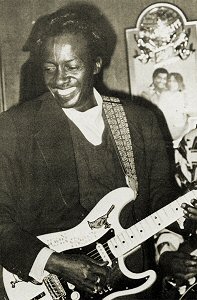
 Singer/bassist Queen Sylvia Embry and her guitarist husband John Embry were staples on Chicago’s blues scene in the ‘70s performing on both South and North Sides. This CD, now retitled Troubles, was originally released by Razor Records in 1979.

That same year, Razor issued the 45 “I Love the Woman/Johnny’s Bounce” and later released the original version of this album which was then entitled After Work.  John “Guitar” Embry and his ex-wife Queen Sylvia Embry remained friends and recorded this album on January 19, 1979, just 35 years ago; it was also during the perilous blizzard of 1979.  Like many sessions at Chess studios, the After Work studio session was recorded live to give the disc a more authentic sound. The original album did not include the single’s sides as the recording levels had not been properly set and the sound was more focused on John’s playing.  Half of the ten tracks were originals and the other half a mix of superb covers. The two sides from the 45 have been added to this re-release along with five other cuts featuring John and Sylvia. The result is a meaty 17 track CD; After Work had only 10 cuts.

John Embry was a superb blues guitar player.  He passed away in 1987, and only left us a small recorded legacy.  Schooled by the likes of Muddy Waters and Hound Dog Taylor and influenced by Buddy Guy, Albert King and Sammy Lawhorn, he was also befriended by Jimmy Reed who became his best friend.  Reed would stay with Embry every time he was in town.  Queen Sylvia passed in 1992 before her 51st birthday.  She was best known as the vocalist and bass player for Lefty Dizz and the Shock Treatment and also worked extensively with Jimmy Dawkins.  On the brink of huge success, cancer robbed her of her life and blues fans of a truly great artist.  Her recordings on Razor on L&R/Evidence have also been released on Arhoolie, Alligator, L+R, EPM and Leric/Delmark.

The album opens to their tune “Wonder Why” with Sylvia testifying in a style that hints a bit at her gospel background.  John offers up a huge and stinging guitar solo here that is superb.  The title track follows, a slow blues original by the Embrys.  John’s guitar rings out loud and clear as he plays with great support and a long solo as Sylvia testifies to us with power and poise. The first cover is next, “Lie to Me,” which swings nicely. “I’m Hurtin’” is pure Chicago blues, penned by Sylvia and with the former couple delivering the goods.  John offers up another immense solo here.  “I Found A Love” is a slow Wilson Pickett ballad on which the Embrys turn the heat up; drummer Woody Williams also shares the lead vocals.  It’s a great cover with the two vocalists belting some soaring, soulful harmonies, singing back and forth divinely.  Jimmy Reed’s “Goin’ to New York” follows; this is where the sequencing changes from the original album.  Williams backs Sylvia here again and it’s a great ride to the Big Apple with them.  Reed’s version is more laid back; Sylvia belts it out big time and John offers his immense guitar to the piece.

“Mustang Sally” follows, again with Williams in support.  Being that it was 1979 the “No Mustang Sally Rule” was not yet in effect, but even if it was, these guys would get a pass as they deliver a really fine rendition.  Williams starts it off soulfully as John provides a bouncing guitar line.  Sylvia comes in for the chorus and blows things away and then John offers up another burning solo.  Williams and the Queen finish by singing the chorus together, over and over, to close it out.

The next five tracks are the add-on cuts.  “Gonna Find My Baby” is soulful and the big guitar solo sound is sweet and even a little out of tune, but very cool. “Early Time Blues” is similar, with stinging vocals and guitar.  “Razor Sharp” is a beautiful and driving instrumental with John showing us what he could do.  He really laid it all out here.  “Keep Your Hands Off Her” brings Williams back for vocal support.  Recorded live, the audio quality of this one is lacking but the emotion in their playing makes up for it on this Roosevelt Sykes cut.  “Blues This Morning” is more sweet, straight up stuff that also is live.  John delivers another giant solo on this cut.

For track 13, Delmark returns to the original release with the re-sequenced “After Work” title track from the original album.  It is a thoughtful piece with John opening with an almost tender approach; he maintains that feel throughout the instrumental.  Another live cut; they come from a session at the Bold One Lounge.  “Worry Worry” follows with Riler Robinson offering up the vocals and some guitar for a nice twist. “62nd Street Luau” concludes the live stuff and the songs from the original album.  It’s a very short and soulful instrumental with a bit of a Hawaiian flare inside of some Chicago blues.

Taken from the 45 record, the final two cuts are the A and B sides that were previously released alone.  No tape of these songs remains.  “I Love the Woman” begins with a ringing guitar intro and John on vocals. It’s a nice change of pace with this single obviously focusing on John.  The final number, “Johnny’s Bounce,” is a cool cut but suffers a little from some surface noise from the 45.  The guitar work is really special, though, and we see what a great loss his early death delivered to Chicago’s music scene.

Delmark once again has given us a special piece of history to appreciate and savor note by note and song by song. Kudos to Bob Koester and his team for restoring this body of work and providing the recordings to us to enjoy.  I urge you to pick this one up as it offers the only glimpses on CD that is out there of this great duo and their bands. The recording on vinyl is long out of print but this 


Johnny "Guitar" Embry - I Love The Woman (1979) 


https://www.youtube.com/watch?v=QXc4CgYkHAU 


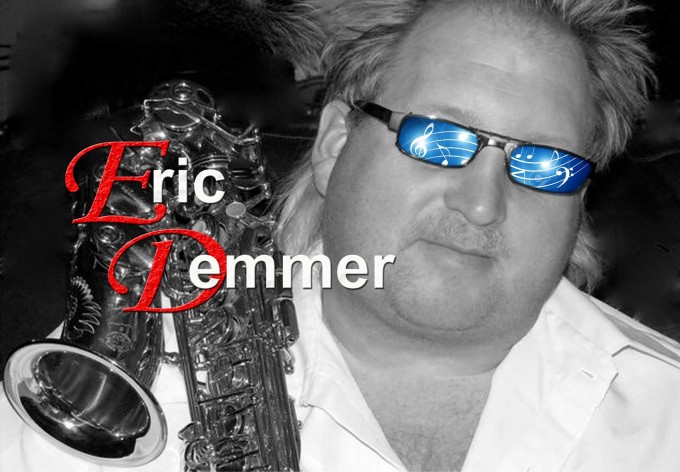
Eric Demmer  *25.11.


At the age of 10, ERIC found a saxophone under the Christmas tree. So began the journey of a natural-born musician, playing anywhere at any time with anyone. He grew up steeped in the blues and rock and roll of the 70's and 80's. He absorbed the sounds of The Rolling Stones, The Eagles, B.B. King, and fellow Texan, Stevie Ray Vaughn. One night, ERIC was invited to perform onstage with the legendary Clarence "Gatemouth" Brown. From that night forward, ERIC joined Gate's band and traveled all over the world for the next 12 years, until Gate's death in 2005. The journey with "Gate's" band led them to tour extensively as the opening act for Eric Clapton during his "From The Cradle" tour.

ERIC has performed with many well-known and respected musicians: Carlos Santana, B.B. King, George Duke, Joe Sample, David Sanborn, Todd Rundgren, Shamika Copeland, Johnnie "Clyde" Copeland, Johnnie "Be Good" Johnson (pianist with Chuck Berry), Duke Robillard, Buddy Guy, Delbert McClinton, The Allman Brothers, Dr. John, Kim Wilson, and many others.

ERIC describes his style of music as, "high energy, funky blues with a mix of jazz" and combines a variety of influences while reminding everyone that, "The real thing comes from the heart and soul".
http://www.ericdemmer.com/


Eric Demmer performs at Dan Electro's Guitar Bar (2 of 2) 9/19/2014 


R.I.P.


Fenton Robinson   +25.11.1997


 Fenton Robinson (September 23, 1935 — November 25, 1997[1]) was an American blues singer and exponent of the Chicago blues guitar.
Born in Greenwood, Mississippi, United States, Robinson left his home at the age of 18 to move to Memphis, Tennessee where he recorded his first single "Tennessee Woman" in 1957.[2] He settled in Chicago in 1962.[2] He recorded his signature song, "Somebody Loan Me a Dime", in 1967 on the Palos label, the nationwide distribution of which was aborted by a freak snow storm hitting the Windy City. Covered by Boz Scaggs in 1969, the song was misattributed, resulting in legal battles. It has since become a blues standard, being "part of the repertoire of one out of every two blues artists", according to 1997's Encyclopedia of Blues.[3]

Robinson re-recorded the song for the critically acclaimed album Somebody Loan Me a Dime in 1974, the first of three he would produce under the Alligator Records label.[4][5] Robinson was nominated for a Grammy Award for the second, 1977's I Hear Some Blues Downstairs.[4]

In the 1970s he was arrested and imprisoned for involuntary manslaughter in connection with a car accident. Paroled after nine months, he continued playing in Chicago clubs and later taught guitar.

Robinson died of complications from brain cancer,[1] in Rockford, Illinois.


FENTON ROBINSON / SOMEBODY LOAN ME A DIME


https://www.youtube.com/watch?v=dkG3kvcej74 


Coco Robicheaux   +25.11.2011 


http://www.greenparrot.com/coco-robicheaux-new-orleans-hoodoo-bluesman-has-died/ 


Curtis John Arceneaux (October 25, 1947 – November 25, 2011)[1] better known by the name Coco Robicheaux, was an American blues musician and artist, from Ascension Parish, Louisiana, United States.
He was born in Merced, California, the son of Herman Arceneaux from Ascension Parish in Louisiana and Virginia Grant of Waushara County, Wisconsin. His father was of Acadian (Cajun) descent, while on his mother's side his ancestry included English, Norwegian, Scottish, German, Dutch, Welsh, and Native American (Mohawk). Also on his mother's side he was a direct descendent of accused Salem witch Sarah Cloyce. He spent some of his preteen/early teens in France where his Air Force father was stationed for 3 years. The accent and other Cajun flails were manufactured. Curtis was a genius with an extremely high IQ. He could master and did master every musical instrument he tried. He was also an accomplished artist. He was a master story teller who could and did embellish every story he told. [2] He spent some of his childhood in the French countryside.[3] Arceneaux took his stage name from a Louisiana legend, in which a naughty child called Coco Robicheaux, is abducted by a werewolf (Loup Garou or Rougarou). Also, the name 'Coco Robicheaux' is repeated in the song "I Walk on Gilded Splinters" from Dr. John the Night Tripper's 1968 album, Gris-Gris.[4]
Robicheaux appeared in the episode "Hotshots", of the USA Network series Big Easy, playing a New Orleans musician named "Coco", who had sold his soul to the devil. Two of Robicheaux's songs were also featured in the episode, "Broken String" and "Spiritland". Coco Robicheaux appeared as himself in the second episode of HBO's Treme, first broadcast in the US on April 18, 2010.
Coco Robicheaux died in November 2011 in New Orleans, Louisiana, at the age of 64.[1]
One of his last recordings were for the Danish singer Naja Rosa Koppel´s album "The Place I Call Home" (2012)
His very last recording took place on his 64th birthday, one month before his death, with singer Frenchie Moe. Mike Hood, Leon "Kid Chocolate" Brown, Jimmy Carpenter and Jack Cruz also contributed to the song.

http://en.wikipedia.org/wiki/Coco_Robicheaux 


Coco Robicheaux - Cottonmouth 


https://www.youtube.com/watch?v=qztmuAWyBYo 


Henry Lee "Shot" Williams  +25.11.2011


http://www.soulbluesmusic.com/leeshotwilliams.htm

Henry Lee "Shot" Williams (May 21, 1938 – November 25, 2011) was an American blues singer. He got the nickname "Shot" from his mother at a young age, owing to his fondness for wearing suits and dressing up as a "big shot."
Williams grew up in the country close to his cousin and fellow blues man, Little Smokey Smothers. "Shot" moved to Detroit in 1954 and to Chicago in 1958. He joined Smothers there and began singing with Smokey's band in 1960 and a few years later joined Magic Sam's band as a vocalist. In 1962, Williams recorded his first singles for Chicago's Foxy label, "Hello Baby" and "I'm Trying." He recorded a series of singles for other labels, including King/Federal, Palos, Gamma, Shama and Tchula. His 1964 recording "Welcome to the Club" was a hit in Chicago, and was later covered by guitarist/singer Little Milton for Checker Records in 1965. Another regional hit, "I Like Your Style," came out in 1969 and was later covered by Junior Parker. Several more singles followed including the very popular "Drop Your Laundry Baby". His first album under his own name, "Country Disco", was released on the Roots label in 1977. In the 1980s, Williams released a slew of singles on labels like Tchula, 4-Way, True & Dis-Muke. He released an album on cassette with many of these cuts called "I Like Your Style". In 1994 the Japanese label Vivid Sound released an album called "A Shot of Rhythm and Blues" containing tracks Williams recorded in Memphis apparently for (but not released by) Quinton Claunch's SoulTrax imprint. The Black Magic label decided to give Lee a "Shot" behind his own band. The result, "Cold Shot" was released in 1995 and was voted the Best Blues Album of 1995 (New Recording - Soul/Blues) by the Living Blues readers' poll.[citation needed]
His debut for the Memphis-based Ecko Records, "Hot Shot", brought Williams home to the "Southern Soul Blues" world with the hit "I'll Take The Risk". In 2000 Williams scored another hit with "She Made A Freak Out Of Me", followed by "Somebody's After My Freak". Williams left the label again and recorded one disc for Charles Wilson's label called "Let The Good Times Roll" before returning to Ecko for four more successful albums, establishing him as one of the icons of the genre.[citation needed]
In 2008 Williams signed with CDS Records. His first CD for the label was released in 2008 and produced the hits "It's Friday (Time To Get Paid)" and "Wrong Bed". Two more albums were released by CDS Records, "I'm The Man For The Job" & "The First Rule Of Cheating" in 2010.


Lee Shot Williams - Hello baby - Foxy 


Little Willie Foster  +25.11.1987


https://www.pinterest.com/pin/529173024935561572/

Little Willy Foster or Little Willie Foster (April 20, 1922[nb 1] – November 25, 1987)[4] was an American Chicago blues harmonicist, singer, and songwriter.
Biography
Foster was born in Dublin, Mississippi, United States.[2] Born to Major Foster and Rosie Brown, Willy was raised on a plantation, around ten miles south of Clarksdale. His mother died when Willy was aged five and he was raised by his father, who was a local musician. Willy worked the fields from a young age and had little by way of a formal education. His father taught him to play the family's piano, although Willy later taught himself to master both the guitar and harmonica. By 1942, Foster worked briefly in Clarksdale itself. Around 1943, Foster relocated to Chicago.[2] He played the blues round the city, originally teaming up with Floyd Jones, Lazy Bill Lucas, and the latter's cousin, Leroy Foster. Having befriended Big Walter Horton, Little Willy Foster learned to play the harmonica in Horton's Chicago blues style. From the mid 1940s, this led to periodic work for Foster on Maxwell Street, and around the city's clubs, for over a decade.[1][2] Foster also worked during this time in a band comprising himself, Homesick James, Moody Jones and Floyd Jones.[1]
In January 1955, Foster recorded two sides for Parrot. These were his own compositions, "Falling Rain Blues" and "Four Day Jump". His accompaniment included playing from Lucas, Jones and Eddie Taylor.[1][2][4] Foster reportedly incurred the displeasure of the record label owner, Al Benson, for reporting him to the American Federation of Musicians, over underpaid dues on the recordings.[5] In March 1957, Foster was back in a recording studio in Chicago, where he waxed two more of his songs, "Crying the Blues" and "Little Girl".[2] Regarding the former title, AllMusic noted that it "reflected both his emotional singing and his wailing, swooping harmonica".[1]
From this point onwards, his personal life started to degenerate. Attending a house party, Foster was accidentally shot in the head by a woman playing with a hand gun. This led to semi-paralysis for Foster and seriously affected his ability to speak.[2] Although he made a slow recovery, Foster rarely played in public thereafter.[1] In January 1974, Foster voluntarily surrendered himself to the local police after he had shot dead his room mate. Pleading self-defense, his impaired judgement due to his previous brain injury, led to a verdict of not guilty due to insanity and Foster was sent to a state hospital in 1975.[2]
In November 1987, Foster died in Chicago from cancer, aged 65.[2][3]
In 1996, an album produced by Bobby Mack, who also played guitar on the work, was released.[1]
Foster's four released tracks have variously appeared on numerous compilation albums, issued both before and after his death.[4]
Confusion
The anomaly surrounding the spelling of his first name arises from the differences used on his two single releases.[4]
He is not to be confused, although often is in both literature and record listings etc., with another blues harmonica player, Willie James Foster (September 19, 1921 – May 20, 2001).


Little Willie Foster - Four Day Jump 


Montag, 31. Oktober 2016

31.10., Illinois Jacquet, Julia Lee, Ali Farka Touré, Johnny Moeller, Paul Winn,Sandy Carroll, Ethel Waters * Johnny Embry, Albert Lavada "Dr. Hepcat" Durst, Bobby Parker +


1896 Ethel Waters (Sweet Mama Stringbean)*

1902 Julia Lee*

1922 Illinois Jacquet*

1939 Ali Farka Touré*

1954 Genevieve Castorena*

1970 Johnny Moeller*

1971 Tomi Leino*

1977 Eva Taylor+

1985 Johnny Embry+

1995 Albert Lavada "Dr. Hepcat" Durst+

2013 Bobby Parker+

Paul Winn*

Sandy Carroll*


Happy Birthday 


Illinois Jacquet   *31.10.1922


Illinois Jacquet (eigentlich Jean-Baptiste Jacquet; * 31. Oktober 1922 in Broussard[1], Louisiana; † 22. Juli 2004 in New York) war ein berühmter Jazzmusiker. Der Tenor-Saxophonist war bekannt für seine stilübergreifenden Ideen und Kompositionen und spielte mit fast jeder Jazz- und Blues-Größe seiner Zeit zusammen.
Berühmt wurde er 1942 durch sein 80-Sekunden-Solo in Lionel Hamptons Flying Home. Seit 1981 trat er mit seiner eigenen Big Band auf. Jacquet galt als einer der größten Saxophonisten der Jazzgeschichte. Einem breiteren Publikum wurde er 1993 bekannt, als er gemeinsam mit dem damaligen US-Präsidenten und Hobby-Saxophonisten Bill Clinton zu dessen feierlicher Amtseinführung ein Duett gab. Sein letztes Konzert gab er am 16. Juli 2004 in New York; sechs Tage später erlag er einem Herzinfarkt.
Jean-Baptiste „Illinois“ Jacquet war der Sohn einer Sioux-Indianerin und eines kreolischen Eisenbahnarbeiters. Der Spitzname „Illinois“ leitete sich vom Indianerwort Illiniwek (= überlegener Mann) ab. Sein älterer Bruder war der Trompeter Russell Jacquet (1917–1990).
Jacquet begann mit drei Jahren als Stepptänzer in der väterlichen Big Band. Später spielte er dort zunächst Schlagzeug, anschließend Saxophon. Als Mitglied der Bigband Lionel Hamptons spielte Jacquet 1942 im Alter von 19 Jahren im Song Flying Home ein Solo in einem ganz neuen Stil. So wurden andere populäre Musiker auf ihn aufmerksam. 1945 sprang er für Lester Young bei der Count Basie-Band ein und nahm zahlreiche Hits mit ihr auf. 1946 gründete Jacquet seine erste eigene Band und ging schon früh mit ihr auf Welttournee.
1983 baute er sie zu einem großen Orchester aus, mit dem er über 20 Jahre lang durch die USA und Europa tourte. Jacquet begleitete auch Größen wie Louis Armstrong, Nat King Cole, Dizzy Gillespie, Charlie Parker, Jo Jones, Buddy Rich, Ella Fitzgerald und Miles Davis.
Zu Jacquets bekanntesten Stücken gehören Black Velvet, Robbin's Nest und Port of Rico. Seine Impulsivität machte ihn zum Publikumsmagneten der weltweiten Jazz at the Philharmonic-Tourneen. Sein Leben und Werk wurde 1992 in Arthur Elgorts Dokumentation Texas Tenor - The Illinois Jacquet Story verfilmt. Unter den Darstellern ist auch der legendäre Bassist Ray Brown.
Sein Grab befindet sich in New York auf dem Woodlawn Cemetery im Stadtteil Bronx, unmittelbar neben dem Grab von Miles Davis.


Jean-Baptiste Illinois Jacquet (October 31, 1922 – July 22, 2004) was an American jazz tenor saxophonist, best remembered for his solo on "Flying Home", critically recognized as the first R&B saxophone solo.[1]

Although he was a pioneer of the honking tenor saxophone that became a regular feature of jazz playing and a hallmark of early rock and roll, Jacquet was a skilled and melodic improviser, both on up-tempo tunes and ballads. He doubled on the bassoon, one of only a few jazz musicians to use the instrument.

Early life

Jacquet was born to a Black Creole mother and father, named Marguerite Traham and Gilbert Jacquet,[2] in Louisiana and moved to Houston, Texas, as an infant, and was raised there as one of six siblings. His father, was a part-time bandleader. As a child he performed in his father's band, primarily on the alto saxophone. His older brother Russell Jacquet played trumpet and his brother Linton played drums.[3]

At 15, Jacquet began playing with the Milton Larkin Orchestra, a Houston-area dance band. In 1939, he moved to Los Angeles, California, where he met Nat King Cole. Jacquet would sit in with the trio on occasion. In 1940, Cole introduced Jacquet to Lionel Hampton who had returned to California and was putting together a big band. Hampton wanted to hire Jacquet, but asked the young Jacquet to switch to tenor saxophone.

Career

In 1942, at age 19, Jacquet soloed on the Hampton Orchestra's recording of "Flying Home", one of the very first times a honking tenor sax was heard on record. The record became a hit. The song immediately became the climax for the live shows and Jacquet became exhausted from having to "bring down the house" every night. The solo was built to weave in and out of the arrangement and continued to be played by every saxophone player who followed Jacquet in the band, notably Arnett Cobb and Dexter Gordon, who achieved almost as much fame as Jacquet in playing it. It is one of the very few jazz solos to have been memorized and played very much the same way by everyone who played the song. He quit the Hampton band in 1943 and joined Cab Calloway's Orchestra. Jacquet appeared with Cab Calloway's band in Lena Horne's movie Stormy Weather. In the earlier years of Jacquet's career, his brother Linton Jacquet managed him on the chitlin circuit[2] Linton's daughter Brenda Jacquet-Ross sang in jazz venues in the San Francisco Bay Area in the 1990s-early 2000s, with a band called the Mondo Players.

In 1944, Illinois Jacquet returned to California and started a small band with his brother Russell and a young Charles Mingus. It was at this time that he appeared in the Academy Award-nominated short film Jammin' the Blues with Lester Young.[4] He also appeared at the first Jazz at the Philharmonic concert. In 1946, he moved to New York City, and joined the Count Basie orchestra, replacing Lester Young.[4] In 1952 Jacquet co-wrote 'Just When We're Falling in Love'; Illinois Jacquet (m) Sir Charles Thompson (m) S K "Bob" Russell (l). Jacquet continued to perform (mostly in Europe) in small groups through the 1960s and 1970s. Jacquet led the Illinois Jacquet Big Band from 1981 until his death. Jacquet became the first jazz musician to be an artist-in-residence at Harvard University, in 1983.[4] He played "C-Jam Blues" with President Bill Clinton on the White House lawn during Clinton's inaugural ball in 1993.

Jacquet's final performance was on July 16, 2004, at the Lincoln Center in New York.[4] Jacquet died in his home in Queens, New York of a heart attack on July 22, 2004. He was 81 years of age.[3]

Influence

His solos of the early and mid-1940s and his performances at the Jazz at the Philharmonic concert series, greatly influenced rhythm and blues and rock and roll saxophone style, but also continue to be heard in jazz. His honking and screeching emphasized the lower and higher registers of the tenor saxophone. Despite a superficial rawness, the style is still heard in skilled jazz players like Arnett Cobb, who also became famous for playing "Flying Home" with Hampton, as well as Sonny Rollins, Eddie "Lockjaw" Davis and Jimmy Forrest.


Illinois Jacquet - The Blues That's Me! (1969) 
Illinois Jacquet (ts)
Wynton Kelly (p)
Tiny Grimes (g)
Buster Williams (b)
Oliver Jackson (d)
"The Blues That's Me!" (1969) 


Julia Lee   *31.10.1902


Julia Lee (* 31. Oktober 1902 in Boonville (Missouri); † 8. Dezember 1958 in San Diego) war eine US-amerikanische Jazz- und Bluesmusikerin (Pianistin und Sängerin). Sie gilt als die bekannteste Jazz-, Blues- und Rhythm and Blues- Pianistin und -Sängerin aus Kansas City.
Lee war in Kansas City aufgewachsen und hatte schon als Kind zusammen mit einem Saiteninstrument-Trio ihres Vaters sowie bei Veranstaltungen ihrer Kirchengemeinde, aber auch auf Hauspartys Musik gemacht. Ihr Bruder war der Bandleader George E. Lee. Als Pianistin und Sängerin hauptberuflich tätig wurde sie 1917, zunächst im Ragtime-Stil als Kinopianistin, die Stummfilme begleitete, aber auch in den Clubs entlang der 12th Street. Dort wurde sie durch den Vortrag von Bluesnummern mit doppeldeutigen Texten bekannt.
Anschließend spielte sie seit der Gründung als Pianistin im Orchester ihres Bruders George E. Lee, einer sogenannten Territory Band der Region, die um 1920 gegründet wurde und McKinney’s Cotton Pickers Konkurrenz machte, aber auch als stärkster Konkurrent des Orchesters von Bennie Moten Orchestra galt. In den 20er Jahren scheint Lee's Band nicht zuletzt dank seines und seiner Schwester Gesang mit ulkigen Texten in Kansas City bekannter und attraktiver gewesen zu sein. Mary Lou Williams erinnert sich an Julia Lee aber auch als neben Margaret Johnson wichtigster Pianistin der Stadt. Julia arbeitete 15 Jahre lang im Orchester ihres Bruders, bevor sie - nach ersten Aufnahmen für das Merritt-Label (1927) - 1935 ihre Solokarriere startete.
1944 wurde sie im Rahmen der „History of Jazz“-Reihe von Capitol Records aufgenommen; sie sang nun vor den Bands von Jay McShann und Tommy Douglas. Später trat sie vor allem in einer kleinen Besetzung als Julia Lee and her Boy Friends auf. Zu den Boyfriends gehörten Musiker wie Benny Carter, Vic Dickenson, Ernie Royal, Red Norvo, Red Nichols, Nappy Lamare und Tommy Douglas. Nachdem sie mit „Come On Over To My House Baby“ einen regelrechten Hit in den Jukeboxen und im Radio hatte landen können, erhielt sie 1946 einen festen Vertrag. 1947 stand sie mit „Snatch It And Grab It“ zwölf Wochen lang auf Platz 1 der Rhythm and Blues Charts. Die Platte hatte eine damals beachtliche halbe Million Käufer gefunden. Weitere Hits schlossen sich an. Zwei Jahre später hielt sie neun Wochen lang den ersten Platz der Hitparade mit „King Size Papa“. 1949 spielte Julia Lee auf Einladung des aus Missouri stammenden US-Präsident Harry S. Truman im Weißen Haus. In den 1950ern produzierte sie weiterhin, war jedoch nur noch mäßig erfolgreich. Ein Jahr vor ihrem Tod spielte sie eine kleine Rolle in Robert Altmans in Kansas City gedrehten Film „The Delinquence“.
Lee steht mit ihrer Musik für einen frühen Übergang vom Kansas City Jazz zum Rhythm & Blues. Laut einer Liste der US-Musikzeitschrift Billboard stand sie auf Platz 12 der im Zeitraum von 1942 bis 1949 in Hinblick auf die Plattenverkäufe erfolgreichsten Rhythm & Blues-Künstler – und damit vor Dinah Washington, Billy Eckstine, Wynonie Harris, Charles Brown oder Roy Milton..

Julia Lee (October 31, 1902 – December 8, 1958)[2] was an American blues and dirty blues musician.[1]

Biography

Born in Boonville, Missouri, Lee was raised in Kansas City, and began her musical career around 1920, singing and playing piano in her brother George Lee's band, which for a time also included Charlie Parker. She first recorded on the Merritt record label in 1927 with Jesse Stone as pianist and arranger, and launched a solo career in 1935.

In 1944 she secured a recording contract with Capitol Records,[1] and a string of R&B hits followed, including "Gotta Gimme Whatcha Got" (#3 R&B, 1946), "Snatch and Grab It" (#1 R&B for 12 weeks, 1947, selling over 500,000 copies), "King Size Papa" (#1 R&B for 9 weeks, 1948), "I Didn't Like It The First Time (The Spinach Song)" (#4 R&B, 1949), and "My Man Stands Out".

As these titles suggest, she became best known for her trademark double entendre songs,[1] or, as she once said, "the songs my mother taught me not to sing". The records were credited to 'Julia Lee and Her Boy Friends', her session musicians including Jay McShann, Vic Dickenson, Benny Carter, Red Norvo, Nappy Lamare, and Red Nichols.[1][2]

She was married to Frank Duncan, a star catcher and manager of the Negro National League's Kansas City Monarchs. He, like Julia, was a native of Kansas City.

Although her hits dried up after 1949, she continued as one of the most popular performers in Kansas City until her death in San Diego, at the age of 56, from a heart attack.

Lotus Blossom - Julia Lee and her Boyfriends 


 https://www.youtube.com/watch?v=8qK5NefYVb8


Genevieve Castorena  *31.10.1954

Gypsy! Wild at Harp


Music has always been an influence in her life. As a child she would attend at least three or more church services, just to hear them sing. She also loves to dance, once given a harmonica as a birthday gift, it all seem to fit.
She has had the opportunity to listen to some of the world’s greatest blues harmonica players. Many of them have been her mentors. Feature artist include, Bullet Bill Tarsha, Bob Corritore, Charlie Musselwhite, Rick Estrin, Lazy Lester, Mark Harman, Billy Boy Arnold, Johnny Dyer, Rob Piazza, Jr Wells, and many others.
She has been playing for about twenty five years, and been in several blues bands, from LA, Las Vegas, to Phoenix. Wild hair and high energy have become her trade mark.

Real Bad Women 


Ali Farka Touré  *31.10.1939


Ali Farka Touré (* 31. Oktober 1939 in Kanau, Mali; † 7. März 2006 in Bamako) war ein malischer Musiker. Der „Bluesman of Africa“ (auch „König des Wüsten-Blues“) galt als einer der renommiertesten Musiker Afrikas. Das Rolling Stone Magazin kürte ihn unter die einhundert besten Gitarristen aller Zeiten.
Ali Farka Touré, nahe Timbuktu im Dorf Kanau am Niger geboren, entstammte einer Songhai-Familie. Sein Vater starb, als Touré noch ein Säugling war. Die Familie zog den Niger Richtung Niafunké hinunter, 200 Kilometer südlich von Timbuktu. Touré wuchs als Muslim auf.
Schon als Elfjähriger begann Touré, Gurkel zu spielen, eine einsaitige Gitarre. Später kamen die Njarka, eine einsaitige Fidel, sowie die viersaitige Ngoni hinzu. 1956 sah Ali Farka Touré einen Auftritt des guineischen Gitarristen Fodéba Keïta. Er lieh sich eine Gitarre und übertrug seine traditionelle Technik auf das westliche Instrument. Zur gleichen Zeit lernt der Autodidakt, Banjo, Schlagzeug (Perkussion) und Akkordeon zu spielen.
Nach der Unabhängigkeit Malis 1960 förderte der erste Staatschef Modibo Keita lokale Musiker und Künstler. Touré trat mit dem Kulturensemble „Troupe 117“ auf.
1968 unternahm Touré seine erste Auslandsreise, und zwar nach Sofia, Bulgarien, zu einem internationalen Kulturfestival. Die malischen Musiker spielten traditionelle Musik. Touré spielte Gitarre, Flöte, Djerkel und Njarka. Am 21. April kaufte er in Sofia seine erste Gitarre - alle bis dahin von ihm gespielten Gitarren hatte er sich ausleihen müssen. Im gleichen Jahr, bei einem Besuch in Bamako, spielte ihm ein dort studierender Freund Schallplatten von James Brown, Jimmy Smith, Albert King und John Lee Hooker vor. In späteren Jahren betonte Touré, dass er von John Lee Hookers Musik beeindruckt, aber nicht beeinflusst sei.
1970 zog Touré nach Bamako und begann als Techniker für „Radio Mali“ zu arbeiten. Bis 1973 war er Mitglied des Radio-Mali-Orchesters. In den frühen 1970er-Jahren gab ihm ein befreundeter Journalist den Tipp, Aufnahmen nach Paris zu schicken. Die Pariser Schallplattenfirma „SonAfric“ veröffentlichte sieben LPs Ali Farka Tourés - alle in Bamako aufgenommen. Trotz seiner Unzufriedenheit mit „SonAfric“ – er fühlte sich finanziell übergangen – profilierte er sich als einflussreicher Musiker in Mali. Touré war der erste, der westafrikanische Musikstile für die westliche Gitarre adaptierte. Die Themen seiner Lieder waren Freundschaft, Liebe, das Land, die Landwirtschaft, der Fluss Niger und die Fischerei, Erziehung, Gesundheit, Spiritualität und Mali.
1980 kehrte Touré nach Niafunké zurück. Sieben Jahre später verließ er das Land zum ersten Mal seit 1968 wieder, gab Konzerte in Europa und begann Songs bei „World Circuit“, einem britischen Weltmusiklabel, aufzunehmen. Der bekannte britische Musikjournalist und BBC-Moderator Andy Kershaw schrieb über Tourés Musik: „Mir wurde ganz überraschend eine Aufnahme von Ali Farka Touré zugeschickt. Ich hörte sie mir an und war überwältigt. Ich war nicht der einzige. Von allen Platten, die ich jemals im Radio gespielt hatte, rief diese die meisten Anfragen hervor. Mit ihrem rhythmisch gezupften Gitarrenstil und dem nasal und einsam klingenden Gesang war dies die westafrikanische Version des Delta Blues von Lightnin’ Hopkins oder John Lee Hooker.“ (Simon Broughton u. a: Weltmusik.)
2000 gab Touré die Musik vorübergehend auf, um sich ganz dem Reisanbau in Niafunké widmen zu können. Zudem engagierte er sich auf lokalpolitischer Ebene – 2004 wurde er zum Bürgermeister von Niafunké gewählt. Er war immer weniger gewillt zu reisen. So mussten die Aufnahmen von „Niafunké“ im Jahr 1999 mit einem mobilen Aufnahmestudio in einer verlassenen Ziegelei in Niafunké gemacht werden. Seinen größten Erfolg feierte er zusammen mit dem amerikanischen Musiker Ry Cooder, mit dem er während einer seiner raren Tourneen 1993 in den Vereinigten Staaten das Album Talking Timbuktu einspielte. Talking Timbuktu belegte 1994 auf nahezu allen Weltmusikcharts den ersten Rang.
Nach seinem Rückzug aus dem Musikgeschäft im Jahr 2000 begann Touré 2004 wieder für World Circuit aufzunehmen, zusammen mit dem Koraspieler Toumani Diabaté. Der erste Teil dieser Aufnahmen wurde 2005 veröffentlicht, und Touré trat zum ersten Mal seit Jahren wieder öffentlich auf. In den Jahren 2002 und 2003 war Touré in den beiden Musikdokumentationen African Blues und Feel Like Going Home zu sehen. Die letzte Aufnahme Ali Farka Tourés Savane wurde in der von der EBU ermittelten Bestenliste der Weltmusikcharts für das Jahr 2006 an Nummer eins geführt.
Ali Farka Touré starb im Alter von 66 Jahren an Knochenkrebs. Bis kurz vor seinem Tod, jedoch schon schwer erkrankt, beteiligte er sich an den Aufnahmen zum Debütalbum seines Sohnes Vieux Farka Touré.
http://de.wikipedia.org/wiki/Ali_Farka_Tour%C3%A9 

Ali Ibrahim "Farka" Touré (October 31, 1939 – March 7, 2006) was a Malian singer and multi-instrumentalist, and one of the African continent's most internationally renowned musicians.[1] His music is widely regarded as representing a point of intersection of traditional Malian music and its North American cousin, the blues. The belief that the latter is historically derived from the former is reflected in Martin Scorsese's often quoted characterization of Touré's tradition as constituting "the DNA of the blues".[2] Touré was ranked number 76 on Rolling Stone‍ '​s list of "The 100 Greatest Guitarists of All Time" [3] and number 37 on Spin magazine's "100 Greatest Guitarists of All Time".[4]

Biography

He was born in 1939 in the village of Kanau, on the banks of the Niger River in Gourma-Rharous Cercle in the northwestern Malian region of Tombouctou. His family moved to the nearby village of Niafunké when he was still an infant.[5] He was the tenth son of his mother but the only one to survive past infancy. "The name I was given was Ali Ibrahim, but it's a custom in Africa to give a child a strange nickname if you have had other children who have died",[5] Touré was quoted as saying in a biography on his Record Label, World Circuit Records. His nickname, "Farka", chosen by his parents, means "donkey", an animal admired for its tenacity and stubbornness: "Let me make one thing clear. I'm the donkey that nobody climbs on!"[5] Ethnically, he was part Songrai, part Fula.[5]

As the first African bluesman to achieve widespread popularity on his home continent, Touré was often known as "the African John Lee Hooker".[6] Musically, the many superpositions of guitars and rhythms in his music were similar to John Lee Hooker's hypnotic blues style. He usually sang in one of several African languages, mostly Songhay, Fulfulde, Tamasheq or Bambara[5] as on his breakthrough album, Ali Farka Touré, which established his reputation in the world music community.

His first North American concert was in Harrison Hot Springs, British Columbia[citation needed]. 1994's Talking Timbuktu, a collaboration with Ry Cooder, sold promisingly well in Western markets, but was followed by a hiatus from releases in America and Europe. He reappeared in 1999 with the release of Niafunké, a more traditional album focusing on African rhythms and beats. Touré was the mentor and uncle of popular Malian musician Afel Bocoum[citation needed].

Some of Ali Farka Touré's songs and tunes have been used in different programmes, films and documentaries.[7] For instance, his guitar riff on the song "Diaraby", from the album Talking Timbuktu, was selected for the Geo-quiz segment of The World PRI-BBC program, and was retained by popular demand when put to a vote of the listeners.[8] This song is likewise used in 1998 as a soundtrack for the film L'Assedio (Besieged) by the Italian director Bernardo Bertolucci. His songs Cinquante six, Goye Kur and Hawa Dolo from the album The Source are also used as a soundtrack in the French film Fin août, début septembre (Late August, Early September) directed in 1998 by Olivier Assayas.[7] The song "Lasidan" was featured in the award winning documentary "Sharkwater" by Rob Stewart.

In 2002 he appeared with Black American blues and reggae performer Corey Harris, on an album called Mississippi to Mali (Rounder Records). Toure and Harris also appeared together in Martin Scorsese's 2003 documentary film Feel Like Going Home,[7] which traced the roots of blues back to its genesis in West Africa. The film was narrated by Harris and features Ali's performances on guitar and njarka.

In 2004 Touré became mayor of Niafunké and spent his own money grading the roads, putting in sewer canals and fuelling a generator that provided the impoverished town with electricity.[5]

In September 2005, he released the album In the Heart of the Moon, a collaboration with Toumani Diabaté, for which he received a second Grammy award.[5] His last album, Savane, was posthumously released in July 2006. It was received with wide acclaim by professionals and fans alike and has been nominated for a Grammy Award in the category "Best Contemporary World Music Album".[citation needed] The panel of experts from the World Music Chart Europe (WMCE), a chart voted by the leading World Music specialists around Europe, chose Savane as their Album of the Year 2006, with the album topping the chart for three consecutive months (September to November 2006).[9] The album has also been listed as No. 1 in the influential Metacritic's "Best Albums of 2006" poll,[10] and No. 5 in its all-time best reviewed albums.[11] Ali Farka Touré has also been nominated for the BBC Radio 3 awards 2007.[12]

On March 7, 2006, the Ministry of Culture of Mali announced his death at age 66 in Bamako from bone cancer, against which he had been battling for some time. His record label, World Circuit, said that he recorded several tracks with his son, Vieux Farka Touré, for Vieux's debut album which was released in late 2006.

Ali Farka Touré - The River 


Johnny Moeller   *31.10.1970


http://sleepwalkguitar.com/artists/2011-artists/

Johnny Moeller (born Jon Kelly Moeller, October 31, 1970) is an American blues guitarist, currently with The Fabulous Thunderbirds.
Born in Fort Worth, Texas, he had early exposure to music in the home, as his father played a little boogie-woogie piano and was constantly listening to music. He started playing guitar in his early teen years and soon discovered Slim Harpo and Jimmy Reed in his father's record collection. Additionally, Moeller remembers hearings lots of both ZZ Top and The Fabulous Thunderbirds. Over the years Moeller's main influences have been from Freddie King, Lightnin' Hopkins, Earl King and Grant Green. Lesser, but meaningful influences come from a wide variety of other blues, soul and funk artists.
He began playing in Dallas and Fort Worth blues clubs whilst still in high school.[1] During the summers Moeller and his year and a younger half-brother Jay Moeller, who was already playing drums (and is now the drummer with The Fabulous Thunderbirds), traveled from their home in Denton down to Austin to "hang out" with their father. The summer they were 16 and 15 their father convinced Clifford Antone of the Austin blues club Antone's to let his sons periodically sit in with the evening's performers. The first night Moeller appeared on Antone's stage was with Little Charlie & The Nightcats.
After Moeller finished high school in Denton he moved to Austin and into the music scene that is 6th Street (Austin). He worked many of the city's well known venues and often soaked in the music of the constant stream of blues artists which Antone brought. Amongst those that played Antone's were Earl King, Albert Collins, and James Cotton.
Years later the Austin Chronicle quoted Antone (who also helped launch Stevie Ray Vaughan) as saying: "Johnny, nobody can burn like that kid. He's got the heart like Stevie had, about the only one I've seen with that kind of heart. Johnny's so quiet and bashful, just a sweet kid and sometimes those kids get overlooked."[2]
By the time Moeller had joined The Fabulous Thunderbirds in mid-2007 he had recorded, played regularly with, or toured North America, Europe and Scandinavia with Darrell Nulisch, Lou Ann Barton, Mike Barfield, Doyle Bramhall II, Gary Primich, and Guy Forsyth.
In 2008, Moeller guested on Steve Guyger's album, Radio Blues.[3]
Moeller was purportedly a childhood friend after which one of the characters in Mike Judge's Beavis and Butt-Head cartoon is modeled. The other character is modeled after Paul Size.


Johnny Moeller and Hal Henkel @ LsL 


https://www.youtube.com/watch?v=z4pP_08SnHs 


Paul Winn  *31.10.


Lead Vocals, Guitars, Keyboards

Paul grew up in a house full of music. His father was a guitarist in various bands and the family home was always full of musicians, instruments and bands rehearsing. Touring in a Kombi fitted to accommodate the family as well as band equipment, Paul spent many happy years watching his Dad on stage and sneaking up in the breaks to have a go himself. He began playing drums at the age of 7 when his Dad brought home an old Ludwig drum kit.

During his school years, Paul continued to study all aspects of drumming and percussion, while playing for amateur musicals and concert bands. He performed in his first professional band at the age of eleven and, throughout High School, he played with various cover bands on weekends while catching up with sleep on Mondays during class, thanks to the understanding of some very encouraging teachers. He also played guitar, sang and began writing his own songs. After High School he auditioned successfully for the Sydney Conservatorium of Music (Jazz Studies), where he began to learn piano.

At the same time, Paul performed lead roles in musicals such as Seymour in Little Shop of Horrors and Scarecrow in The Wiz, while pursuing voice training with several teachers that covered vocal styles from jazz to opera.

Since graduating, Paul has performed with many bands, both covers and originals. In 2003, recording began on the band's first album.


Paul Winn Band playing Steal My Kisses by Ben Harper 


Paul Winn live in NYC - Lay Down Sally 


Sandy Carroll  *31.10.


Returning to her Memphis roots in 1983, blues musician Sandy Carroll spent a year headlining at Lafayette’s Corner, following several years of performing on the road.  Lafayette’s Corner was situated on historic Beale Street, where Memphis blues was born.
Writing and recording the singles, “If You Got It” and “Memphis In May” in 1984, Sandy partnered with Jim Dickinson, NARAS Memphis chapter’s seven-time producer of the year.  “Memphis In May” became a regional hit and for several years, the unofficial theme song for the Memphis In May annual festivities.  Sandy performed at the Memphis in May Festival with the Memphis Horns (and special guest Rufus Thomas) and also at the first Beale Street Music Festival.  She sang the national anthem and “Memphis In May” in front of 30,000 people at the Memphis Showboats football game, as well. A year later, Sandy left for San Francisco to write and record.  After three years on the West Coast and a short stay in the Midwest, Sandy returned to Memphis.   In 1989, Albert King recorded Sandy’s, “If You Got It” which appeared on his final studio album, Red House.
She then starting writing songs for her own full-length debut album, Southern Woman, released in 1993.  Following the release, Sandy was invited on a month long tour of the United Kingdom.
Back in the States, Sandy continued promoting Southern Woman by performing at various festivals in the South, including Arts in the Park, Eureka Springs Blues Festival and the Southern Heritage Festival.  She maintained a heavy schedule on Beale Street playing in clubs such as Rum Boogie, Blues City, Black Diamond, Joyce Cobb’s, Kings Palace and Blues Hall.
One of Sandy’s more unique gigs was writing the Memphis Mad Dog football team theme song, “Mad Dog Boogie,” recorded by Southern-fried soul and blues musician Preston Shannon.
In 1997, the great Luther Allison recorded Sandy’s “Just As I Am” and “It’s a Blues Thing” on his final album, Reckless, which was nominated for a Grammy.  That same year, Sandy recorded and released her Memphis Rain CD, which was honored by the Memphis and Shelby County Film and Music Commission.  She went on to receive a nomination by NARAS’ Memphis chapter for Songwriter of the Year.
Sandy wrapped up the 1990s with performances and regular appearances at many venues throughout the South, most notably the Center for Southern Folklore, Elvis Presley’s on Beale, and headlined WEVL’s Blues on the Bluff.  Sandy also appeared on the Home Shopping Network playing piano for vocalist Becc Lester who was promoting an album which included the song, “Paint the Rain,” co-written by Sandy for Becc.
Beginning the new millennium with concerts, club and festival performances, Sandy appeared at Muscle Shoals Songwriters, Beale St. Caravan National Radio Show at B.B. Kings, W.C. Handy Festival and the (invitation only) International Songwriters Festival in Orange Beach, Alabama, where she opened for Dan Penn and Spooner Oldham.
In 2001, Sandy’s “Just As I Am” song was released by Inside Sounds on the compilation CD, Goin’ Down South.  She also recorded for the McCarty-Hite Weekend In Memphis CD and other Memphis area projects.
Also in 2001, Sandy was filmed by Memphis’ PBS station WKNO, along with great songwriters Keith Sykes, Teenie Hodges, Nancy Apple, Duane Jarvis and Delta Joe Sanders as part of the “In Their Own Voices” concert.  Premiered in 2001, the concert has been syndicated on PBS affiliates nationwide.
In 2002, Inside Sounds released a CD entitled Memphis Belles: Past, Present & Future that featured Sandy along with Ruby Wilson, Cybill Shepherd, Carla Thomas and other Memphis female artists.  Two years later, Sandy performed with her Memphis Belle pals at a concert at the Cannon Performing Arts Center in Memphis.
Sandy also appeared on the 2005 Inside Sounds CD, In the Mood for Memphis: Vol. 2, with a new rendition of “Memphis Rain.”
Sandy has also written with or for releases from Ellis Hooks, Don McMinn, Ana Popovic, Reba Russell, Barbara Blue, Nancy Apple, William Lee Ellis, Rocky Athas, Daddy Mac Blues Band and many others.
In January 2006, Sandy’s Delta Techno CD was released on Ringo Records.  Sandy and her husband, Grammy award-winning producer Jim Gaines, wrote and recorded the album, which features musicians James Solberg, Rocky Athas and co-writers William Lee Ellis and Jim Dickinson.
In 2007, Sandy released an EP, Rhythm of the Rivers, with five previously-unpublished songs and a reprise of “Bound for Glory.” The localized release featured “The Pickwick Song” popularized in Sandy’s home community.  Rhythm of the Rivers showed another side of Sandy’s music and writing, and the songs reflect her love for home – both her Memphis musical heritage and her childhood and present home by the Tennessee River at Pickwick.
In 2008, Sandy was awarded her own brass note on Memphis’ historic Beale Street, and in 2010 the note was formally presented and enshrined in front of the Hard Rock Café.
Sandy’s debut CD for Catfood Records, Just As I Am, was released in October, 2011.  Full of new, original material, this album was the realization of five years of writing, recording and performing.
In 2012, the single “Romeo and Juliet,” off the Just As I Am CD, stayed on the New Country Indie Chart for three months and reached #6.  “Slow Kisses” was Music Choice’s blues radio pick – along with “Heartfixin’ Man” … and the theme from “Help Mother Nature” was used in print ads for a corporate campaign.
Sandy also co-wrote cuts on Johnny Rawls’ Soul Survivor, Barbara Carr’s Keep the Fire Burning, James Armstrong’s Blues at the Border and the upcoming debut CD from Daunielle “Pie” Hill.  Sandy was one of the first inductees into her hometown’s Music Hall of Fame (Arts in McNairy) along with famous Memphis DJ, Dewey Phillips in 2013.
Sandy’s second CD for Catfood Records, Unnaturally Blonde, will be released in October, 2013.  It contains 10 original songs with some of Sandy’s offbeat perceptions and heartfelt universal life experiences.
Equally at ease in solo or full band settings, Sandy says “the intimacy of a solo show is a quiet nurturing, and the groove of a band is the rockin’ feast.  The studio is where the ingredients mix together.”
http://www.sandycarroll.com/index.php?option=com_content&view=article&id=36&Itemid=114


Sandy Carroll 


Ethel Waters (Sweet Mama Stringbean )  *31.10.1896


 http://www.imdb.com/media/rm3231684608/nm0914083?ref_=nmmd_md_nxt#

The child of a teenage rape victim, Ethel Waters grew up in the slums of Philadelphia and neighboring cities, seldom living anywhere for more than a few weeks at a time. "No one raised me, " she recollected, "I just ran wild." She excelled not only at looking after herself, but also at singing and dancing; she began performing at church functions, and as a teenager was locally renowned for her "hip shimmy shake". In 1917 she made her debut on the black vaudeville circuit; billed as "Sweet Mama Stringbean" for her tall, lithe build, she broke through with her rendition of "St. Louis Blues", which Waters performed in a softer and subtler style than her rivals, Ma Rainey and Bessie Smith. Beginning with her appearances in Harlem nightclubs in the late 1920s, then on the lucrative "white time" vaudeville circuit, she became one of America's most celebrated and highest-paid entertainers. At the Cotton Club, she introduced "Stormy Weather", composed for her by Harold Arlen: she wrote of her performance, "I was singing the story of my misery and confusion, the story of the wrongs and outrages done to me by people I had loved and trusted". Impressed by this performance, Irving Berlin wrote "Supper Time", a song about a lyncing, for Waters to perform in a Broadway revue. She later became the first African-American star of a national radio show. In middle age, first on Broadway and then in the movies, she successfully recast herself as a dramatic actress. Devoutly religious but famously difficult to get along with, Waters found few roles worthy of her talents in her later years.


Ethel Waters - His Eye Is On The Sparrow ( 1975 ) 


'Birmingham Bertha' - Ethel Waters - 1929 


R.I.P.


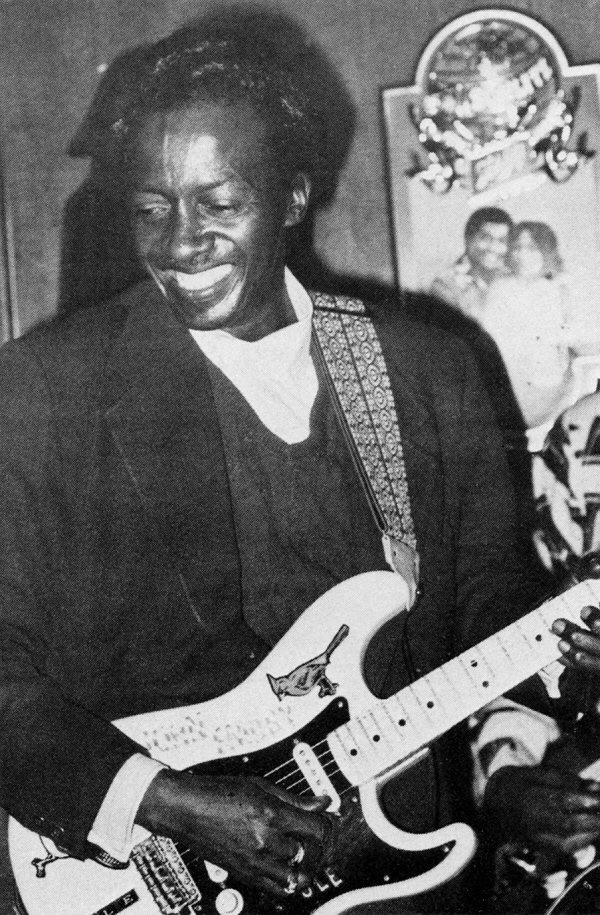
Johnny Embry   +31.10.1985 


 http://www.wirz.de/music/embryfrm.htm

 Singer/bassist Queen Sylvia Embry and her guitarist husband John Embry were staples on Chicago’s blues scene in the ‘70s performing on both South and North Sides. This CD, now retitled Troubles, was originally released by Razor Records in 1979.
That same year, Razor issued the 45 “I Love the Woman/Johnny’s Bounce” and later released the original version of this album which was then entitled After Work. John “Guitar” Embry and his ex-wife Queen Sylvia Embry remained friends and recorded this album on January 19, 1979, just 35 years ago; it was also during the perilous blizzard of 1979. Like many sessions at Chess studios, the After Work studio session was recorded live to give the disc a more authentic sound. The original album did not include the single’s sides as the recording levels had not been properly set and the sound was more focused on John’s playing. Half of the ten tracks were originals and the other half a mix of superb covers. The two sides from the 45 have been added to this re-release along with five other cuts featuring John and Sylvia. The result is a meaty 17 track CD; After Work had only 10 cuts.


Johnny "Guitar" Embry - I Love The Woman (1979) 


https://www.youtube.com/watch?v=QXc4CgYkHAU 


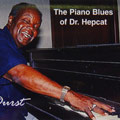
Albert Lavada "Dr. Hepcat" Durst +31.10.1995


http://www.docarts.com/piano_blues_of_dr_hepcat.html

Albert Lavada "Dr. Hepcat" Durst, pianist and first black disc jockey in Texas, was born in Austin on January 9, 1913. As a youth he taught himself to play piano in the church across the street from his home. Later, influenced by Boot Walden, Baby Dotson, Black Tank, and others, Durst became a master at playing the 1930s and 1940s barrelhouse blues.
He also had a talent for a pre-rap method of rhythmic "jive talk." During the mid-1940s this helped land him a job as an announcer for Negro League baseball games at the old Disch Field in Austin. When players such as Jackie Robinson were in Austin some whites attended, including a young World War II veteran, John B. Connally, Jr., who was impressed by the talented, smooth-talking Durst. Connally and another progressive young war veteran, Jake Pickleqv, owned KVET radio in Austin. Connally was also the station manager. In the late 1940s the two opened their station to African-American and Mexican-American broadcasts. In 1948 Pickle hired Durst as the first black disc jockey in Texas. "Dr. Hepcat's" cool jive-talk was a hit and made him a celebrity with the local white college students. He can be credited for introducing an entire generation of white Austin listeners to jazz, blues,qqv and rhythm and blues. While working as a disc jockey, Durst made two singles, "Hattie Green" and "Hepcat's Boogie." Both were recorded in 1949 for Uptown Records, which was owned by KVET program director Fred Caldwell. During the 1950s Durst managed a spiritual group, the Charlottes. He also wrote the hit gospel song "Let's Talk About Jesus" for the group Bells of Joy, and published a pamphlet called The Jives of Dr. Hepcat, a dictionary of jive-talk.
Durst retired from KVET in the early 1960s and gave up performing the blues to become a minister. He was ordained at Mount Olive Baptist Church in 1965 and was named an associate minister at Olivet Baptist Church in 1972. In the mid-1970s, convinced that God wanted him to use his talents, he returned to performing the blues. For the next several years, he played "boogie-woogie barrelhouse blues" at festivals, museums, and other venues.
In addition to his musical endeavors, Durst worked for the city of Austin as director of athletics for the Rosewood Recreation Center. He retired in 1979, after working there for thirty-five years. Durst was preceded in death by his wife, Bernice, who died in 1983; he himself died in Austin on October 31, 1995. They had two sons and numerous grandchildren and great-grandchildren. In 1995 Durst was inducted into the unofficial Rock Radio Hall of Fame. In 2008 he was one of the inaugural inductees for the Austin Music Memorial.

  b. 9 January 1913, Austin, Texas, USA, d. 31 October 1995, Austin, Texas. As a 12-year-old, Durst learned to play the piano in the church opposite his home. He later claimed his left hand was influenced by Albert Ammons and Meade ‘Lux’ Lewis and his right by renowned Texas bluesman, Robert Shaw, whom he met eight years later. Durst continued to play in an amateur capacity at house-rent parties and suppers while running recreation facilities in East Austin. His talent for jive talk landed him a job as an announcer at baseball games at Disch Field, which in turn brought him to the attention of the local radio station, KVET. As ‘Dr. Hepcat’, in 1948 he became the first black disc jockey in Texas, broadcasting six days a week. Programme director Fred Caldwell also owned Uptown Records, for whom Durst recorded ‘Hattie Green’ and ‘Hepcat’s Boogie’ in 1949. Shortly afterwards he re-recorded the first title for Don Robey’s Peacock label. In the late 50s, Durst managed the Chariottes spiritual group, who also recorded for Peacock. He gave up playing music in 1965 when he was ordained as a minister at the Mt. Olive Baptist Church, but returned to the piano a decade later. Durst was unusual for a Texas blues pianist by maintaining a strong left-hand pulse to his blues and boogie improvisations that accompanied his semi-improvised monologues.

http://www.allmusic.com/artist/lavada-durst-mn0000114526/biography 

 
http://www.allmusic.com/album/very-best-of-texas-blues-piano-mw0000666113  


Dr Hepcat ( Lavada Durst ) - Hattie Green 


Bobby Parker  +31.10.2013


Bobby Parker (* 31. August 1937 in Lafayette, Louisiana; † 31. Oktober 2013 in Bowie, Maryland[1]) war ein US-amerikanischer Blues-Gitarrist, Sänger und Songschreiber. Parker wurde von etlichen bekannten Musikern als Vorbild genannt, darunter Eric Clapton, Jimmy Page und vor allem Carlos Santana.

Parker, geboren in Louisiana, wuchs in Los Angeles auf. Er sah Auftritte von Jazz- und Bluesgrößen wie Count Basie, Duke Ellington, Lionel Hampton, T-Bone Walker, Lowell Fulson und Johnny Guitar Watson, und er entschied sich für eine Karriere als Bluesmusiker.

Bobby Parker spielte in den 1950ern als Gitarrist unter anderem bei Otis Williams and the Charms, Bo Diddley, Paul „Hucklebuck“ Williams, Sam Cooke und den Everly Brothers. 1961 zog er nach Washington, D.C., wo er eine Solokarriere begann.

Im gleichen Jahr hatte Parker mit Watch Your Step einen Hit, der später unter anderem von der Spencer Davis Group, Santana und Dr. Feelgood neu eingespielt wurde. Nach internationalen Erfolgen in den 1960ern wurde es in den 1970ern und 1980ern etwas ruhiger um Bobby Parker. Er trat hauptsächlich in der Gegend um Washington auf.

In den 1990ern nahm Parker seine ersten Alben auf, Bent Out of Shape (1993) und Shine Me Up (1995). Bei seinen Auftritten und Tourneen spielt er vor allem eigene Stücke.

Robert Lee "Bobby" Parker (August 31, 1937 – October 31, 2013[2]), was an American blues-rock guitarist, singer and songwriter.[3] He is best known for his 1961 song "Watch Your Step", a single for the V-Tone record label which reached the Billboard Hot 100; the song was performed by, and influenced, the Beatles among others.

Biography

Born in Lafayette, Louisiana, but raised in Los Angeles, California, Parker first aspired to a career in entertainment at a young age.[3] By the 1950s, Parker had started working on electric guitar with several blues and R&B bands of the time, with his first stint being with Otis Williams and the Charms. Over the next few years, he also played lead guitar with Bo Diddley (including an appearance on The Ed Sullivan Show),[3] toured with Paul Williams, Sam Cooke, Jackie Wilson, LaVern Baker, Clyde McPhatter, and the Everly Brothers. He first recorded, as Bobby Parks, with the Paul Williams band in 1956.[4]

His first solo single, "Blues Get Off My Shoulder", was recorded in 1958, while he was still working primarily with Williams' band. The B-side, "You Got What It Takes", also written by Parker, was later recorded for Motown by Marv Johnson, but with the songwriting credited to Berry Gordy, Gwen Fuqua and Roquel Davis. Parker told the Forgotten Hits newsletter in 2008:[5]

    "I wrote 'You've Got What It Takes,' that was MY song. Even had the Paul Hucklebuck Williams band playing on it behind me... And then Berry Gordy just stole it out from under me, just put his name on it. And what could I do? I was just trying to make a living, playing guitar and singing, how was I going to go on and fight Berry Gordy, big as he was, and Motown Records? There wasn't really nothing I could do about it - it was just too big and I didn't have any way to fight them..."

Parker also performed frequently at the Apollo Theater in Harlem, and in the late 1950s toured with Chuck Berry, Buddy Holly and Little Richard. By the early 1960s, he had settled into living in the Washington, D.C. area and played at blues clubs there after having left Williams' band.

He recorded the single "Watch Your Step" for the V-Tone label in 1961. The song was written by Parker, inspired by Dizzy Gillespie's "Manteca" and Ray Charles' "What'd I Say".[6] It reached no.51 on the Billboard Hot 100 in 1961,[7] although it did not make the national R&B chart. It was later covered by the Spencer Davis Group, Dr. Feelgood, Steve Marriott, Adam Faith, and Carlos Santana,[3] and was performed by the Beatles in concerts during 1961 and 1962. The song's guitar riff inspired the introduction to the Beatles' 1964 hit single "I Feel Fine",[8] and, according to John Lennon, also provided the basis for "Day Tripper".[6] In relation to the Beatles' use of the riff, Parker said: "I was flattered, I thought it was a cool idea. But I still had, (in the) back of my mind, (the idea) that I should have gotten a little more recognition for that."[9] Led Zeppelin also used the riff as the basis for their instrumental "Moby Dick."[10]

With the success of the song, both in the United States and overseas, he toured the UK in 1968 and recorded his next record, "It's Hard But It's Fair" produced by Mike Vernon and released on Blue Horizon. Jimmy Page was a fan of Parker's and wanted to sign up Parker with Swan Song Records. Page offered an advance of US$2000 to fund the recording of a demo tape, but Parker never completed the recording, and an opportunity for Parker to be exposed to an international audience was lost.[citation needed] On January 1, 2012, Parker's "Watch Your Step" sound recording became Public Domain in Europe, due to the 50 year copyright law limit in the E.U.[11][12]

For the next two decades, Parker played almost exclusively in the D.C. area. By the 1990s, he started to record again for a broader audience. He recorded his first official album, Bent Out of Shape, for the Black Top Records label in 1993, with a follow-up in 1995, Shine Me Up.[3] In 1993, he also was the headliner for the Jersey Shore Jazz and Blues Festival. Parker continued to perform as a regular act at Madam's Organ Blues Bar in Washington.

Bobby Parker died of a heart attack on October 31, 2013, at the age of 76.


Bobby Parker live at Montreaux Jazz Festival


Chill out (Carlos Santana & Bobby Parker)


Jam Session at Montreux (Carlos Santana,Buddy Guy,Bobby Parker & Nile Rodgers)