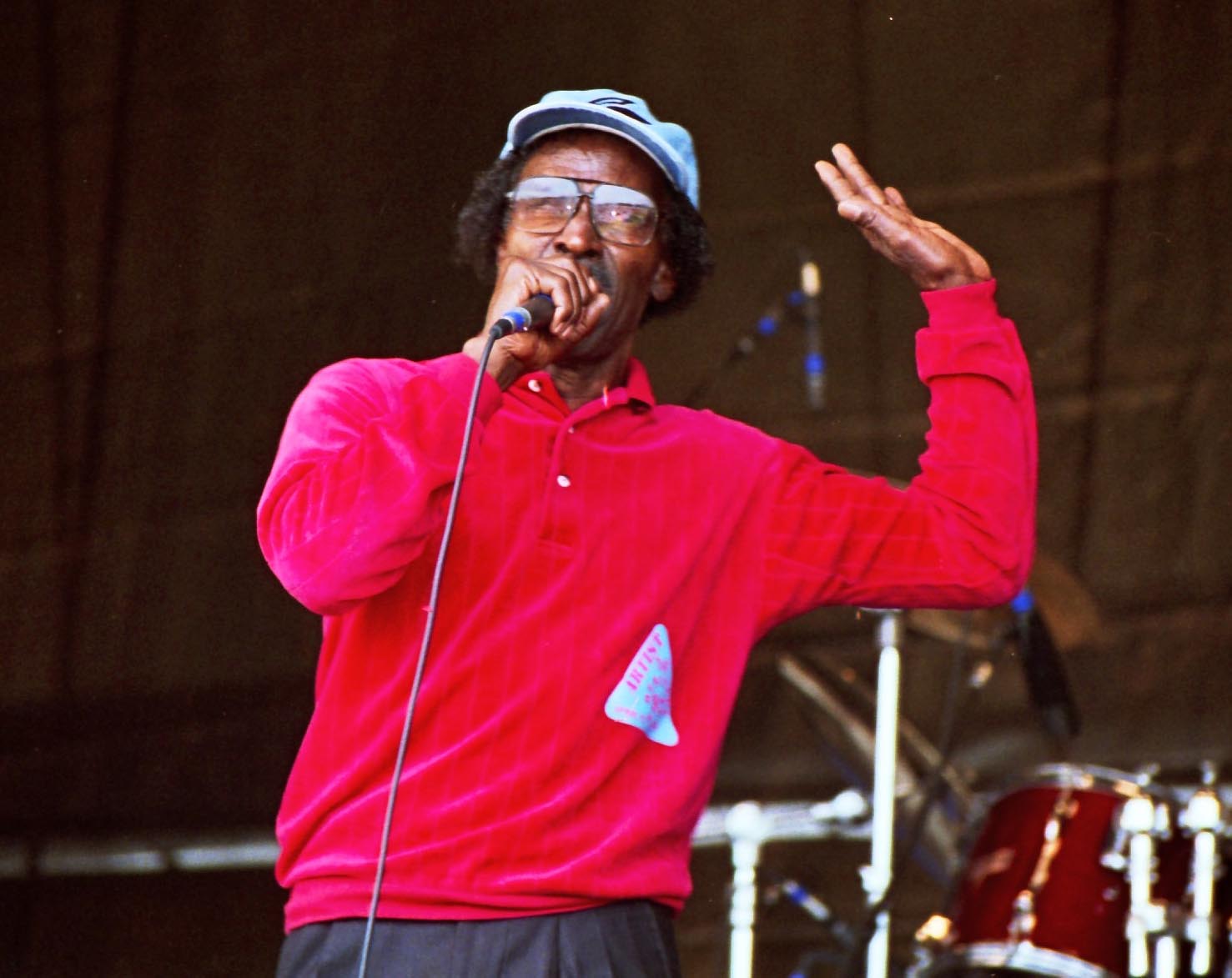
1925 Doctor Ross (Charles Isaiah Ross)*
1931 Barbecue Bob+
1941 Steve Cropper*
1942 Elvin Bishop*
1962 J.D. Short+
1969 Oscar Wills aka TV Slim+
1990 Jo Ann Kelly+
Happy Birthday
Steve Cropper *21.10.1941
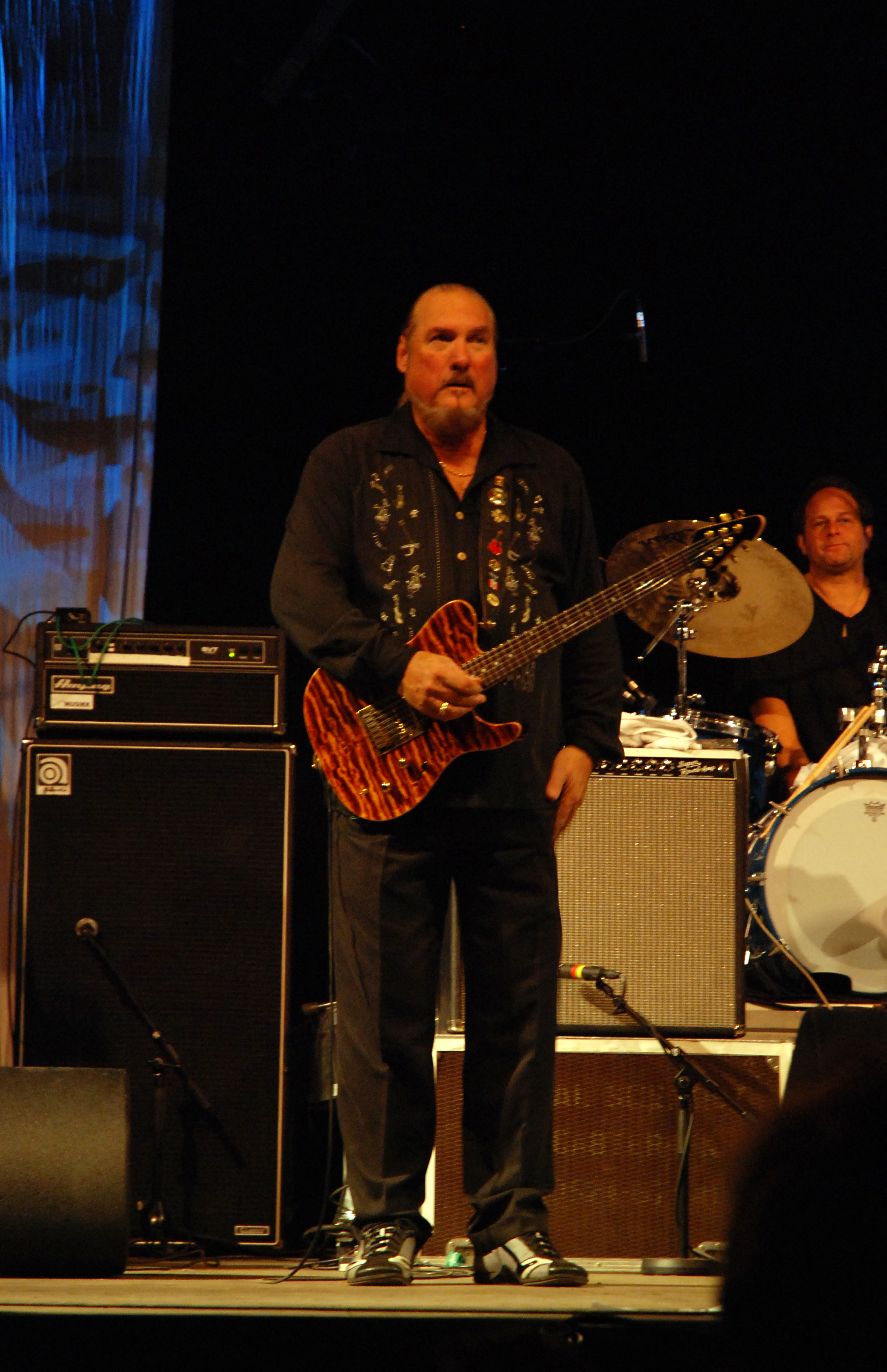
Steve Cropper wuchs zunächst auf einer Farm auf. Als er zehn Jahre alt war, zogen seine Eltern mit ihm nach Memphis, Tennessee, wo er das erste Mal in Kontakt mit der dort blühenden Soulmusik und dem Rhythm and Blues kam und zusammen mit seinem Schulfreund und späteren Mitmusiker Donald „Duck“ Dunn Gitarre spielen lernte. Ende der 1950er-Jahre wurde er Gitarrist bei The Mar-Keys und fand mit ihnen seinen Weg in die Tonstudios von Stax Records, in denen seine Karriere begann. Seine Tätigkeiten führten bald über das Gitarrespielen hinaus, und er wurde Produzent bei Stax.
Cropper landete seinen ersten Chart-Erfolg zusammen mit Booker T. & the M.G.’s im Jahre 1962 mit dem heute noch bekannten Instrumentalstück Green Onions. Da die M.G.’s auch die Hausband der Stax-Studios waren, spielte Cropper die Gitarre nahezu für alle Künstler bei Stax ein, unter ihnen Otis Redding, Carla Thomas, Rufus Thomas, Sam and Dave, Wilson Pickett und Eddie Floyd. Er schrieb zahlreiche Titel für diese Künstler, wie etwa Otis Reddings (Sittin’ On) The Dock of the Bay und Wilson Picketts In The Midnighthour. 1971 verließ er Stax-Records, nachdem sich das Management grundlegend verändert hatte und Cropper sich nicht mehr wohlfühlte. Die M.G.’s lösten sich auf und sollten aufgrund der tragischen Ermordung des Schlagzeugers Al Jackson, Jr. 1975 in dieser Form nicht wieder zusammenkommen. Cropper produzierte nun Alben von Jeff Beck, Tower of Power, John Prine, und Jose Feliciano und spielte auf Soloalben von John Lennon und Ringo Starr seine Gitarre ein. 1975 zog er nach Los Angeles.
In den 1970er-Jahren wurde er zusammen mit Donald „Duck“ Dunn Mitglied der Blues Brothers Band von John Belushi und Dan Aykroyd. In den 1990er-Jahren startete er mit Booker T. Jones und Donald Dunn eine Tournee als Begleitmusiker von Neil Young. Im Jahre 1996 wurde Steve Cropper vom britischen Musikmagazin Mojo zum zweitbesten Gitarristen aller Zeiten (nach Jimi Hendrix) gewählt. Heute lebt Cropper in Nashville und leitet die Insomnia Studios.
Steven Lee "Steve" Cropper (born October 21, 1941, Dora, Missouri, United States)[1] is an American guitarist, songwriter, and record producer. He is best known as the guitarist of the Stax Records house band, Booker T. & the M.G.'s, and has backed artists such as Otis Redding, Sam & Dave, Carla Thomas, Rufus Thomas and Johnnie Taylor, also acting as producer on many of these records. He later gained fame as a member of the Blues Brothers band.[2] Rolling Stone lists him 39th on their list of the 100 Greatest Guitarists of All Time.[3] Mojo ranks Cropper as the second-best guitarist ever. His nickname is "The Colonel."
Early life
When he was nine years old, Cropper moved with his family to Memphis, Tennessee.[1] At the age of ten, he strummed his brother-in-law's Gibson guitar for the first time.[citation needed] Cropper received his first guitar by mail order at 14 and started playing with local musicians. His guitar heroes at the time included Lowman Pauling of the "5" Royales, as well as Chet Atkins, Chuck Berry, Tal Farlow, Jimmy Reed, and the guitarist of the Bill Doggett band, Billy Butler.[1]
Career
Cropper and guitarist Charlie Freeman formed the Royal Spades, who eventually became the Mar-Keys. The name referred to the marquee outside Stax studios, known as Satellite Records at the time. Eventually the Mar-Keys began playing on sessions and had a hit single of their own with "Last Night" in 1961.
Besides being impressed with the young guitarist's playing, Stax Records president Jim Stewart saw professionalism and maturity beyond Cropper's years.[citation needed] When American Records founder Chips Moman left Stax, Cropper became the company's A&R man. He became a founding member of the Stax house band Booker T. & the M.G.'s, along with Hammond organ player Booker T. Jones, bassist Donald "Duck" Dunn and drummer Al Jackson Jr.. As a house guitarist he played on many recordings such as "(Sittin' on) the Dock of the Bay," co-written with and performed by Otis Redding, and Sam & Dave's "Soul Man" on which he was mentioned by name. When Cropper played on the song's remake by the Blues Brothers, lead singer John Belushi again mentioned Cropper.
At this time Cropper's fame was not limited to the United States. The Beatles favoured Cropper's playing, and his production on Otis Redding records. John Lennon and Paul McCartney made tentative plans to record in Memphis, and to work with the guitarist. However Brian Epstein cancelled the sessions, citing security problems.[4] Regarding this period, Rob Bowman, in his book Soulsville U.S.A.: The Story of Stax Records, quoted Booker T. Jones as saying:
“ We were writing sounds too, especially Steve. He's very sound-conscious, and he gets a lot of sounds out of a Telecaster without changing any settings —just by using his fingers, his picks, and his amps ”
Along with influential work with Booker T & The MG's, Cropper co-wrote "Knock on Wood" with Eddie Floyd, "In the Midnight Hour" with Wilson Pickett and "(Sittin' On) The Dock of the Bay" with Otis Redding. In 1969, Cropper released his first solo album, With a Little Help From My Friends.
When Cropper left Stax in the fall of 1970,[5] the label lost one of its most successful producers and songwriters. Cropper then set up TMI Studios with Jerry Williams and former Mar-Key Ronnie Stoots. There he played guitar and produced various musicians including Tower of Power, Rod Stewart, John Prine, José Feliciano, The Jeff Beck Group, Ringo Starr and John Lennon. It's little-known that Cropper also played guitar on the cover of The Velvet Underground's "Femme Fatale" that appears on fellow Memphians Big Star's Third/Sister Lovers.
By 1975, Cropper had moved to Los Angeles and along with Jackson and Dunn, reformed Booker T. & the M.G's. Jackson, whom Cropper called "the greatest drummer to ever walk the earth," was murdered in his Memphis home before the group could make their comeback. In 1978, Cropper and Dunn became members of Levon Helm's RCO All-Stars, and then went on to figure prominently in the Blues Brothers Band with the drummer Willie Hall. This led to two albums and two movie soundtracks. Cropper also re-recorded "(Sittin' On) The Dock of the Bay" (1979) for Sammy Hagar. Cropper lived in Los Angeles for the next thirteen years before moving to Nashville and reuniting with the Blues Brothers Band in 1988.
Cropper has a cameo in the "Weird Al" Yankovic mockumentary The Compleat Al (1985), where he plays a bit of "Soul Man" in an unsuccessful attempt to join Al's band.
In 1992, Booker T. & the M.G.'s were inducted into the Rock and Roll Hall of Fame, and Cropper appeared with a new line-up of the group for the Bob Dylan 30th Anniversary concert, on October 1992 at Madison Square Garden, performing songs by and backing Dylan, Eric Clapton, George Harrison, Tom Petty, Johnny Cash, Chrissie Hynde, Sinéad O'Connor, Stevie Wonder and Neil Young. The concert was recorded and later released as The 30th Anniversary Concert Celebration (1993). Young later recruited this line up of Booker T. and the M.G's, to tour with him and record as his studio band.
In 1996, Cropper was named "the greatest living guitar player" by Britain's Mojo magazine. When asked what he thought of Cropper, the guitarist Keith Richards said, "Perfect, man." In February 1998, Cropper released Play It, Steve! which included some of soul music's most enduring songs. The album title came from the "shout" of the title phrase by Moore on Sam & Dave's "Soul Man," and later by John Belushi (with the Blues Brothers).
In June 2004, Cropper appeared with Dunn and Jones as the backing band for Eric Clapton's Crossroads Guitar Festival, held at the Cotton Bowl in Dallas. Others who appeared included Joe Walsh and David Hidalgo.[6] On June 9, 2005, Cropper was inducted into the Songwriters Hall of Fame.
He co-produced The Memphis Album (2007), recorded by Australian soul singer Guy Sebastian. Cropper also played guitar on the following promotional tour, which was recorded and released two years later as The Memphis Tour. On March 2, 2008 Cropper and Sebastian were guests on the Vega Sunday Session with host Mark Gable from the rock band the Choirboys.[7] On July 29, 2008, Cropper and Felix Cavaliere released the album Nudge It Up A Notch. In August 2008, Cropper appeared at the Rhythm Festival alongside the Animals.[8]
On November 12, 2009, EMP/SFM presented Cropper with their "Founders Award." On October 17, 2010, Cropper was inducted into the Nashville Songwriters Hall of Fame.[9]
On August 9, 2011, Cropper released the album Dedicated which was his tribute to the "5" Royales. In 2013 he was a special guest at selected concerts as part of Peter Frampton's Guitar Circus Tour, including the first performance which featured Frampton, Robert Cray and Vince Gill.[10]
In April 2013, Cropper appeared with Jones and Matt Guitar Murphy as Booker T and the M.G.'s at Eric Clapton's 4th Crossroads Guitar Festival at Madison Square Garden in New York City.
Personal life
Cropper married his second wife, Angel, in the late 1980s. They have two children named Andrea and Cameron. The Croppers currently live in Tennessee.
Early life
When he was nine years old, Cropper moved with his family to Memphis, Tennessee.[1] At the age of ten, he strummed his brother-in-law's Gibson guitar for the first time.[citation needed] Cropper received his first guitar by mail order at 14 and started playing with local musicians. His guitar heroes at the time included Lowman Pauling of the "5" Royales, as well as Chet Atkins, Chuck Berry, Tal Farlow, Jimmy Reed, and the guitarist of the Bill Doggett band, Billy Butler.[1]
Career
Cropper and guitarist Charlie Freeman formed the Royal Spades, who eventually became the Mar-Keys. The name referred to the marquee outside Stax studios, known as Satellite Records at the time. Eventually the Mar-Keys began playing on sessions and had a hit single of their own with "Last Night" in 1961.
Besides being impressed with the young guitarist's playing, Stax Records president Jim Stewart saw professionalism and maturity beyond Cropper's years.[citation needed] When American Records founder Chips Moman left Stax, Cropper became the company's A&R man. He became a founding member of the Stax house band Booker T. & the M.G.'s, along with Hammond organ player Booker T. Jones, bassist Donald "Duck" Dunn and drummer Al Jackson Jr.. As a house guitarist he played on many recordings such as "(Sittin' on) the Dock of the Bay," co-written with and performed by Otis Redding, and Sam & Dave's "Soul Man" on which he was mentioned by name. When Cropper played on the song's remake by the Blues Brothers, lead singer John Belushi again mentioned Cropper.
At this time Cropper's fame was not limited to the United States. The Beatles favoured Cropper's playing, and his production on Otis Redding records. John Lennon and Paul McCartney made tentative plans to record in Memphis, and to work with the guitarist. However Brian Epstein cancelled the sessions, citing security problems.[4] Regarding this period, Rob Bowman, in his book Soulsville U.S.A.: The Story of Stax Records, quoted Booker T. Jones as saying:
“ We were writing sounds too, especially Steve. He's very sound-conscious, and he gets a lot of sounds out of a Telecaster without changing any settings —just by using his fingers, his picks, and his amps ”
Along with influential work with Booker T & The MG's, Cropper co-wrote "Knock on Wood" with Eddie Floyd, "In the Midnight Hour" with Wilson Pickett and "(Sittin' On) The Dock of the Bay" with Otis Redding. In 1969, Cropper released his first solo album, With a Little Help From My Friends.
When Cropper left Stax in the fall of 1970,[5] the label lost one of its most successful producers and songwriters. Cropper then set up TMI Studios with Jerry Williams and former Mar-Key Ronnie Stoots. There he played guitar and produced various musicians including Tower of Power, Rod Stewart, John Prine, José Feliciano, The Jeff Beck Group, Ringo Starr and John Lennon. It's little-known that Cropper also played guitar on the cover of The Velvet Underground's "Femme Fatale" that appears on fellow Memphians Big Star's Third/Sister Lovers.
By 1975, Cropper had moved to Los Angeles and along with Jackson and Dunn, reformed Booker T. & the M.G's. Jackson, whom Cropper called "the greatest drummer to ever walk the earth," was murdered in his Memphis home before the group could make their comeback. In 1978, Cropper and Dunn became members of Levon Helm's RCO All-Stars, and then went on to figure prominently in the Blues Brothers Band with the drummer Willie Hall. This led to two albums and two movie soundtracks. Cropper also re-recorded "(Sittin' On) The Dock of the Bay" (1979) for Sammy Hagar. Cropper lived in Los Angeles for the next thirteen years before moving to Nashville and reuniting with the Blues Brothers Band in 1988.
Cropper has a cameo in the "Weird Al" Yankovic mockumentary The Compleat Al (1985), where he plays a bit of "Soul Man" in an unsuccessful attempt to join Al's band.
In 1992, Booker T. & the M.G.'s were inducted into the Rock and Roll Hall of Fame, and Cropper appeared with a new line-up of the group for the Bob Dylan 30th Anniversary concert, on October 1992 at Madison Square Garden, performing songs by and backing Dylan, Eric Clapton, George Harrison, Tom Petty, Johnny Cash, Chrissie Hynde, Sinéad O'Connor, Stevie Wonder and Neil Young. The concert was recorded and later released as The 30th Anniversary Concert Celebration (1993). Young later recruited this line up of Booker T. and the M.G's, to tour with him and record as his studio band.
In 1996, Cropper was named "the greatest living guitar player" by Britain's Mojo magazine. When asked what he thought of Cropper, the guitarist Keith Richards said, "Perfect, man." In February 1998, Cropper released Play It, Steve! which included some of soul music's most enduring songs. The album title came from the "shout" of the title phrase by Moore on Sam & Dave's "Soul Man," and later by John Belushi (with the Blues Brothers).
In June 2004, Cropper appeared with Dunn and Jones as the backing band for Eric Clapton's Crossroads Guitar Festival, held at the Cotton Bowl in Dallas. Others who appeared included Joe Walsh and David Hidalgo.[6] On June 9, 2005, Cropper was inducted into the Songwriters Hall of Fame.
He co-produced The Memphis Album (2007), recorded by Australian soul singer Guy Sebastian. Cropper also played guitar on the following promotional tour, which was recorded and released two years later as The Memphis Tour. On March 2, 2008 Cropper and Sebastian were guests on the Vega Sunday Session with host Mark Gable from the rock band the Choirboys.[7] On July 29, 2008, Cropper and Felix Cavaliere released the album Nudge It Up A Notch. In August 2008, Cropper appeared at the Rhythm Festival alongside the Animals.[8]
On November 12, 2009, EMP/SFM presented Cropper with their "Founders Award." On October 17, 2010, Cropper was inducted into the Nashville Songwriters Hall of Fame.[9]
On August 9, 2011, Cropper released the album Dedicated which was his tribute to the "5" Royales. In 2013 he was a special guest at selected concerts as part of Peter Frampton's Guitar Circus Tour, including the first performance which featured Frampton, Robert Cray and Vince Gill.[10]
In April 2013, Cropper appeared with Jones and Matt Guitar Murphy as Booker T and the M.G.'s at Eric Clapton's 4th Crossroads Guitar Festival at Madison Square Garden in New York City.
Personal life
Cropper married his second wife, Angel, in the late 1980s. They have two children named Andrea and Cameron. The Croppers currently live in Tennessee.
Steve Cropper on 'In The Midnight Hour' and 'Knock On Wood'
Green Onions explained by Steve Cropper / Booker T & The MG's - Live, Minneapolis, MN 6/16/10
Elvin Bishop *21.10.1942
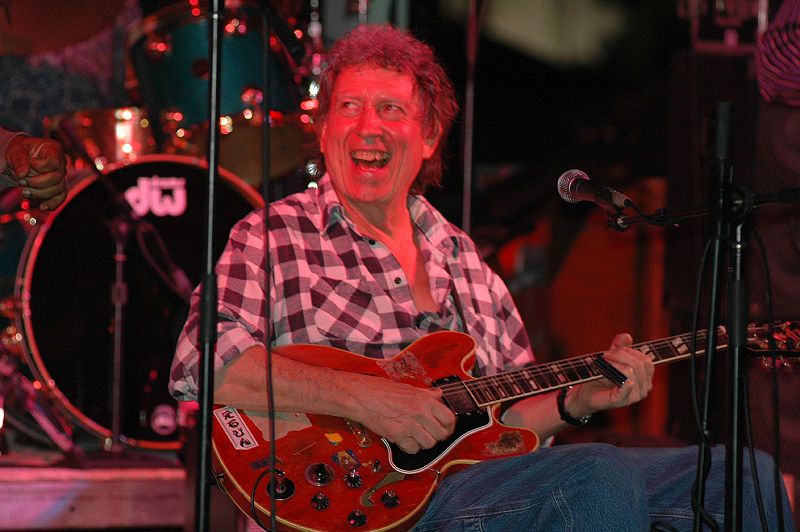
Bishop verbrachte die ersten Jahre seines Lebens auf einer Farm in Iowa ohne Strom und fließendes Wasser. Mit zehn Jahren zog er mit seiner Familie nach Oklahoma, wo er in einer Umgebung mit ausschließlich weißen Menschen aufwuchs, sodass er nur wenig von schwarzer Musik zu hören bekam. Eines Tages wurde er durch das Radio auf Jimmy Reeds Mundharmonika-Spiel aufmerksam. Da er jedoch keinerlei Verbindung zur schwarzen Blues-Szene hatte, dauerte es noch etwas, bis er diese Musik für sich entdeckte.
Im Jahre 1959 zog er nach Chicago, um die Universität zu besuchen. Er freundete sich schnell mit einigen Schwarzen an und befand sich bald mitten in der Blues-Szene Chicagos. Zwei Jahre später lernte Bishop Smokey Smothers kennen, der ihm beibrachte, Blues-Gitarre zu spielen. In den frühen 1960er-Jahren freundete er sich dann mit Paul Butterfield an. Bishop und Butterfield begannen bald gemeinsam öffentlich aufzutreten. Nachdem sie 1963 einen Job in der North Side Chicagos angenommen hatten, wurden sie lokal berühmt. Der richtige Erfolg setzte 1965 mit der Butterfield Blues Band ein. Bishop ist auf allen frühen BBB-Alben zu hören, bis er 1968 der Band den Rücken kehrte. Er zog nach San Francisco, wo er unter anderem mit Eric Clapton, Jimi Hendrix und B.B. King spielte.
1969 gründete er dann die Elvin Bishop Group. Noch im gleichen Jahr erschien das Debütalbum der Band, The Elvin Bishop Group, gefolgt von Feel It! (1970) und Rock My Soul (1972). 1974 erschien dann das Album Let It Flow, mit dessen Single Traveling Shoes die Band erstmals in die Charts kam. Nach der 1975er-Produktion Juke Joint Jump erschien noch im gleichen Jahr das Album Struttin' My Stuff. Der 1976er-Single Fooled Around and Fell in Love von diesem Album gelang der Durchbruch in höhere Regionen der Charts. Auf dem 1977er-Album Raisin' Hell ist eines der meist gut besuchten Live-Konzerte der Band festgehalten. Nach Hog Heaven (1978), Is You Is or Is You Ain't My Baby (1981) und einer Best Of-Platte von 1979, löste sich die Band schließlich auf.
Erst 1988 meldete sich Bishop mit dem Album Big Fun auf Alligator Records zurück. Es folgten Don't Let the Bossman Get You Down (1991), Ace in the Hole (1995), The Skin I'm In (1998), Hometown Boy Makes Good (1999), die Live-Alben That's My Partner! (2000), King Biscuit Flower Hour Presents in Concert (2001) und From the Front Row:Live (2003), sowie schließlich Party Till the Cows Come Home (2004) und Gettin' My Groove Back (2005). 1995 war Bishop mit B.B. King auf Tour gegangen und er betätigte sich durch die Zeiten auch als Studiomusiker, unter anderem für John Lee Hooker und Clifton Chenier.
Elvin Richard Bishop[1] (born October 21, 1942)[2] is an American blues and rock musician and guitarist.
Life and career
Bishop was born in Glendale, California, the son of Mylda (Kleege) and Elvin Bishop, Sr.[3] He grew up on a farm near Elliott, Iowa. His family moved to Tulsa, Oklahoma, when Bishop was ten. There he attended Will Rogers High School, winning a full scholarship to the University of Chicago as a National Merit Scholar finalist. He moved to Chicago in 1960 to attend the university, where he majored in physics. In 1963, he met harmonica player Paul Butterfield in the neighborhood of Hyde Park and joined Butterfield's blues band, and remained with them for five years. Their third album, The Resurrection of Pigboy Crabshaw, takes its name from Bishop's nickname.[2] During his time with the Butterfield Blues Band, Bishop met blues guitarist Louis Meyers at a show. Bishop convinced Meyers to trade his Gibson ES-345 for Bishop's Telecaster. Bishop liked the Gibson so much he never gave it back and has used it throughout his career. Bishop has nicknamed his Gibson ES-345 "Red Dog," a name he got from a roadie for the Allman Brothers Band.[4]
In 1968 he went solo and formed the Elvin Bishop Group, also performing with Mike Bloomfield and Al Kooper on their album titled The Live Adventures of Mike Bloomfield and Al Kooper. The group signed with Fillmore Records, which was owned by Bill Graham, who also owned the Fillmore music venues.[5]
Bishop sat in with the Grateful Dead on June 8, 1969 at the Fillmore West in San Francisco. He opened the second set with the lengthy blues jam, Turn on Your Lovelight without Pigpen or Jerry. He played two more songs with the Dead, The Things I Used to Do and Who's Lovin' You Tonight.[6]
Photo of the group in 1975.
In March 1971, The Elvin Bishop Group and The Allman Brothers Band co-billed a series of concerts at the Fillmore East. Bishop joined The Allman Brothers Band onstage for a rendition of his own song, Drunken Hearted Boy. Over the years, Bishop has recorded with many other blues artists including Clifton Chenier and John Lee Hooker. In late 1975, he played guitar for a couple of tracks on Bo Diddley's The 20th Anniversary of Rock 'n' Roll album, and in 1995, he toured with B.B. King.[2]
Bishop made an impression on album-oriented rock FM radio stations with Travelin' Shoes in 1975,[7] but a year later, in 1976, Bishop released his most memorable single, "Fooled Around and Fell in Love", which peaked at #3 in the US Billboard Hot 100 chart (and #34 in the UK charts). The recording featured vocalist Mickey Thomas and drummer Donny Baldwin who both later joined Jefferson Starship.
Bishop feels that the limitations of his voice have helped his songwriting.[8]
Bishop performing at the Riverwalk Blues Festival, Fort Lauderdale, Florida, in February 2006
Bishop appeared at the 1984 Long Beach Blues Festival. In 1988, he signed with Alligator Records and released Big Fun featuring Whit Lehnberg & The Carptones, 1991's Don't Let the Bossman Get You Down, 1995's Ace in the Hole, 1998's The Skin I'm In and That's My Partner (2000), on which he paired with an early Chicago blues teacher, Little Smokey Smothers. He later revisited Smothers in the studio, where the two recorded another album in 2009; Little Smokey Smothers & Elvin Bishop: Chicago Blues Buddies.
Bishop was inducted into the Oklahoma Jazz Hall of Fame in 1998.
In 2005, Bishop released his first new CD in five years, Gettin' My Groove Back.[9] In 2008, Bishop released The Blues Roles On, on September 23, 2008, switching labels to Delta Groove Music. He was supported by Tommy Castro, James Cotton, Warren Haynes, B.B. King, Derek Trucks, George Thorogood, Kim Wilson, John Németh and Angela Strehli. The album was nominated for Grammy Award for Best Traditional Blues Album. In 2010, Bishop released Red Dog Speaks.
His first live concert DVD, That's My Thing': Elvin Bishop Live in Concert, was recorded live at the Club Fox in Redwood City, CA on December 17, 2011. It was released on the Delta Groove label in October 2012. The DVD was nominated for Best Blues DVD of 2012 by the Blues Foundation. The same organisation announced that Bishop had six nominations for the 36th Blues Music Awards set to be held in May 2015.[10] He triumphed in three of them.[11]
Personal life
Bishop's daughter Selina, and ex-wife Jennifer Villarin, were murdered in August 2000[12] by Glenn Taylor Helzer, his brother Justin Helzer, and accomplice Dawn Godman. According to The Point Reyes Light, "Bishop, her mother Jenny Villarin, and a friend of Villarin, James Gamble, were murdered as part of an elaborate scheme to extort $100,000 from elderly Concord, California residents Ivan and Annette Stineman."[13][14] Both killers were sentenced to death for the murders; Justin Helzer committed suicide in San Quentin prison.
In popular culture
Charlie Daniels mentions Bishop in his 1975 song "The South's Gonna Do It", with the lyric, "Elvin Bishop sittin' on a bale of hay; he ain't good lookin', but he sure can play." Molly Hatchet also references Bishop in their 1978 song "Gator Country", with the lyrics, "Elvin Bishop out struttin' his stuff with little Miss Slick Titty Boom, I'm goin' back to the Gator Country and get me some elbow room."
"Fooled Around and Fell in Love" was included in the soundtrack album for Guardians of the Galaxy titled Awesome Mix Vol. 1.
Doctor Ross *21.10.1925
:format(jpeg):mode_rgb():quality(90)/discogs-images/A-266245-1373188578-9386.jpeg.jpg)
https://www.discogs.com/de/artist/266245-Doctor-Ross
Charles Isaiah Ross, bekannt als Doctor Ross (* 21. Oktober 1925 in Tunica, Mississippi; † 28. Mai 1993 in Flint, Michigan) war ein Afroamerikanischer Blues-Sänger und -Gitarrist, Mundharmonikaspieler und Schlagzeuger („One-Man-Band“).[1]
Er begann seine Schallplatten-Karriere im Jahre 1952 mit einer Aufnahme für das Label Chess, hatte ein Jahr später mit Einspielungen für das legendäre Sun-Label einige Verkaufserfolge, veröffentlichte anschließend auf diversen lokalen Labels, bis er Mitte der 1960er Jahre im Zuge des Folk-Revival von Pete Welding 'entdeckt' und für eine erste Langspielplatte auf dessen Label „Testament“ aufgenommen wurde. Von da an war er regelmäßiger Gast auf Folk- und Blues-Festivals in den USA und in Europa (z. B. auf dem American Folk Blues Festival 1965 und dem Montreux Blues Festival 1972) und nahm eine Vielzahl weiterer Alben auf.
Eric Clapton's Band Cream hat 1966 auf dem Album Fresh Cream den Doctor Ross Song „Cat's Squirrel“ gecovert.
http://de.wikipedia.org/wiki/Doctor_Ross
Doctor Ross (October 21, 1925 – May 28, 1993),[1] born Charles Isaiah Ross in Tunica, Mississippi, aka Doctor Ross, the harmonica boss, was an American blues singer, guitarist, harmonica player and drummer.[2]
Ross's blues style has been compared to John Lee Hooker and Sonny Boy Williamson. His recordings for Sun Records in the 1950s include "The Boogie Disease" and "Chicago Breakdown".
Biography
In 1951 Ross's material began to get air play in Mississippi and Arkansas. He recorded with Chess Records and Sun with a group that included folk instruments such as a washboard .[2]
In 1954 Ross moved to the Detroit area and began work with General Motors.[2] He recorded some singles with Fortune Records, including "Cat Squirrel" and "Industrial Boogie". He had an album come out on Testament Records and worked with the American Folk Blues Festival in Europe in 1965.[2]
He recorded an album with Blue Horizon Records while he was in London, and worked with Ornament Records in Germany in 1972.[3] Ross and his music were popular in Europe, more so than in his home country.[2]
Ross won a Grammy for his 1981 album Rare Blues, and subsequently enjoyed a resurgence of popularity and critical acclaim towards the end of his career.
He died in 1993, at the age of 67, and was buried in Flint, Michigan.
https://en.wikipedia.org/wiki/Doctor_Ross
DOCTOR ROSS THE HARMONICA BOSS
R.I.P.
Barbecue Bob +21.10.1931
Barbecue Bob erlernte das Gitarrenspiel von seinem Bruder Charley Hicks, der als Laughing Charley Lincoln ebenfalls ein bekannter Bluesgitarrist war. Die beiden Brüder übersiedelten 1923 nach Atlanta, wo sie häufig zusammen auftraten, hier wechselte Robert auch zur zwölfsaitigen Gitarre. Hicks bediente sich häufig des Bottleneckspiels. Sein Bluesstil erinnerte dabei eher an den Delta Blues als an den Gitarrenstil eines Blind Willie McTell, der in Georgia wahrscheinlich auch zum Umfeld von Barbecue Bob gehörte.
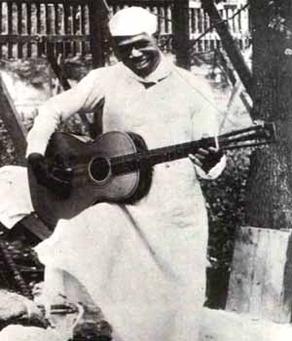
Seinen Spitznamen erhielt er 1927, als er von einem Talentscout der Firma Columbia Records als Strassenmusiker vor einem Barbecue-Restaurant entdeckt wurde, ein Werbefoto zeigte ihn dementsprechend in einer Küchenuniform mit Gitarre. Während seiner kurzen Karriere nahm er zwischen 1927 und 1930 mit 68 Stücken ein vergleichsweise umfangreiches Werk auf, drei der Stücke sind jedoch noch verschollen. Für seinen Bruder und seinen Jugendfreund Curley Weaver arrangierte er erste Aufnahmemöglichkeiten. Mit Curley Weaver und Buddy Moss, dem er die ersten Gitarrengriffe beibrachte, nahm er 1930 als Georgia Cotton Pickers auf. 1931 starb er an einer Tuberkulose in Verbindung mit einer Lungenentzündung.
Robert Hicks, better known as Barbecue Bob (September 11, 1902 – October 21, 1931) was an early American Piedmont blues musician. His nickname came from the fact that he was a cook in a barbecue restaurant. One of the two extant photographs of Bob show him playing his guitar while wearing a full length white apron and cook's hat.
Early life
He was born in Walnut Grove, Georgia. He and his brother, Charlie Hicks, together with Curley Weaver, were taught how to play the guitar by Curley's mother, Savannah "Dip" Weaver.[1] Bob began playing the 6-string guitar but picked up the 12-string guitar after moving to Atlanta, Georgia in 1923-1924. He became one of the prominent performers of the newly developing early Atlanta blues style.
In Atlanta, Hicks worked a variety of jobs, playing music on the side. While working at Tidwells' Barbecue in a north Atlanta suburb, Hicks came to the attention of Columbia Records talent scout Dan Hornsby. Hornsby recorded him and decided to use Hicks's job as a gimmick, having him pose in chef's whites and hat for publicity photos and dubbing him "Barbecue Bob".[1]
Career
During his short career he recorded 68 78-rpm sides. He recorded his first side, "Barbecue Blues", in March 1927.[2] The record quickly sold 15,000 copies and made him a best selling artist for Columbia's race series. Despite this initial success, it was not until his second recording session, in New York during June 1927, that he firmly established himself on the race market. At this session he recorded "Mississippi Heavy Water Blues", a song inspired by the major floods taking place in Mississippi at that time.[3] This song, as well as his other blues releases, gained considerable popularity, and his records sold much better than those of other local blues musicians.[1]
The two part duet with crosstalk, "It Won't Be Long Now" was recorded with his brother Charlie (a/k/a Charlie Lincoln, or Laughing Charlie) in Atlanta on November 5, 1927. In April 1928, Bob recorded two sides with the female vocalist Nellie Florence, whom he had known since childhood, and also produced "Mississippi Low Levee Blues", a sequel to "Mississippi Heavy Water Blues". In April 1930, he recorded "We Sure Got Hard Times Now", which contains bleak references to the early effects of The Depression. Although Barbecue Bob remained predominantly a blues musician, he also recorded a few traditional and spiritual songs including "When the Saints Go Marching In", "Poor Boy, Long Ways from Home" and "Jesus' Blood Can Make Me Whole".
Barbecue Bob also recorded as a member of The Georgia Cotton Pickers in December 1930, a group that included guitarist Curley Weaver and harmonica player Buddy Moss. As a group they recorded a handful of sides including their own adaptation of Blind Blake's "Diddie Wa Diddie" (recorded as "Diddle-Da-Diddle") and the Mississippi Sheiks' "Sitting on Top of the World" (recorded as "I'm On My Way Down Home"). These were the last recordings that Bob recorded.
He died in Lithonia, Georgia, of a combination of tuberculosis and pneumonia brought on by influenza, at the age of 29, on October 21, 1931. His recording of "Mississippi Heavy Water Blues" (about the 1927 flood) was apparently played at his graveside before burial.
Musical style
Bob developed a "flailing" or "frailing" style of playing guitar more often associated with the traditional clawhammer banjo (as did his brother, and, initially, Curley Weaver). He used a bottleneck regularly on his 12-string guitar, playing in an elemental style that relied on an open Spanish tuning reminiscent of Charley Patton. He had a strong voice that he embellished with growling and falsetto, and a percussive singing style.[1]
Influence
Bob had some influence on Atlanta blues musicians such as the young Buddy Moss (who played harmonica with him on The Georgia Cotton Pickers recordings), but his way of playing was quickly overshadowed by the finger-picked Piedmont blues style that rose in popularity by the late 1920s/early 30s as can be heard in the development of the recordings of Curley Weaver. Barbecue Bob's "Motherless Child Blues" was recorded and performed on stage by Eric Clapton. John Fahey attributes his arrangement of "Poor Boy a Long Ways From Home" to Barbecue Bob in his 1979 "Best Of" book of tablature. More correctly, Fahey attributes the song to his persona "Blind Joe Death," and writes "Death learned this from an old Columbia record by Barbecue Bob [14246-D], which the Death household at one time possessed." Bob's elder brother, Charley, also played blues and was recorded by Columbia under the name "Laughing" Charley Lincoln. However, he never received the same acclaim as his brother.
Jo Ann Kelly +21.10.1990

Jo Ann Kelly (* 5. Januar 1944 in Streatham, London, England; † 21. Oktober 1990) war eine britische Blues-Sängerin und Gitarristin. Sie wurde als "die unbestrittene Königin der britischen Country-Blues-Sänger" bezeichnet.
Die musikalische Laufbahn von Jo Ann Kelly begann in der britischen Blues-Szene der frühen 1960er. Mit ihrer außerordentlichen Stimme und dem von Memphis Minnie und Charley Patton beeinflussten Gitarrenstil beeindruckte sie 1964 das Publikum in den Londoner Clubs. Mit Tony McPhee machte sie erste Aufnahmen.
Meist trat sie alleine auf, gelegentlich jedoch auch mit anderen Musikern wie der John Dummer Blues Band. 1969 erschien ihr erstes Album. Sie trat mit Canned Heat auf, die ihr eine längerfristige Zusammenarbeit anboten, ebenso wie später Johnny Winter. Beide Angebote lehnte Jo Ann Kelly ab.
In den 1970ern trat sie weiterhin solo auf, ab und zu auch mit befreundeten Bands, wie etwa Tramp. 1979 half sie bei der Gründung der Blues Band, mit der sie Anfang der 1980er die Show "Ladies and the Blues" aufführte, einen Tribut an die großen Sängerinnen des Blues.
1988 wurde bei ihr ein Hirntumor diagnostiziert und entfernt. An den Folgen starb Jo Ann Kelly am 21. Oktober 1990.
Die musikalische Laufbahn von Jo Ann Kelly begann in der britischen Blues-Szene der frühen 1960er. Mit ihrer außerordentlichen Stimme und dem von Memphis Minnie und Charley Patton beeinflussten Gitarrenstil beeindruckte sie 1964 das Publikum in den Londoner Clubs. Mit Tony McPhee machte sie erste Aufnahmen.
Meist trat sie alleine auf, gelegentlich jedoch auch mit anderen Musikern wie der John Dummer Blues Band. 1969 erschien ihr erstes Album. Sie trat mit Canned Heat auf, die ihr eine längerfristige Zusammenarbeit anboten, ebenso wie später Johnny Winter. Beide Angebote lehnte Jo Ann Kelly ab.
In den 1970ern trat sie weiterhin solo auf, ab und zu auch mit befreundeten Bands, wie etwa Tramp. 1979 half sie bei der Gründung der Blues Band, mit der sie Anfang der 1980er die Show "Ladies and the Blues" aufführte, einen Tribut an die großen Sängerinnen des Blues.
1988 wurde bei ihr ein Hirntumor diagnostiziert und entfernt. An den Folgen starb Jo Ann Kelly am 21. Oktober 1990.
http://de.wikipedia.org/wiki/Jo_Ann_Kelly
The rock era saw a few white female singers, like Janis Joplin, show they could sing the blues. But one who could outshine them all -- Jo Ann Kelly -- seemed to slip through the cracks, mostly because she favored the acoustic, Delta style rather than rocking out with a heavy band behind her. But with a huge voice, and a strong guitar style influenced by Memphis Minnie and Charley Patton, she was the queen. Born January 5, 1944, Kelly and her older brother Dave were both taken by the blues, and born at the right time to take advantage of a young British blues scene in the early '60s. By 1964 she was playing in clubs, including the Star in Croydon, and had made her first limited-edition record with future Groundhogs guitarist Tony McPhee. She expanded to play folk and blues clubs all over Britain, generally solo, but occasionally with other artists, bringing together artists like Bessie Smith and Sister Rosetta Tharpe into her own music. After the first National Blues Federation Convention in 1968 her career seemed ready to take flight. She began playing the more lucrative college circuit, followed by her well-received debut album in 1969. At the second National Blues Convention, she jammed with Canned Heat, who invited her to join them on a permanent basis. She declined, not wanting to be a part of a band -- and made the same decision when Johnny Winter offered to help her. Throughout the '70s, Kelly continued to work and record solo, while also gigging for fun in bands run by friends, outfits like Tramp and Chilli Willi -- essentially pub rock, as the scene was called, and in 1979 she helped found the Blues Band, along with brother Dave, and original Fleetwood Mac bassist Bob Brunning. The band backed her on an ambitious show she staged during the early '80s, Ladies and the Blues, in which she paid tribute to her female heros. In 1988, Kelly began to suffer pain. A brain tumor was diagnosed and removed, and she seemed to have recovered, even touring again in 1990 with her brother before collapsing and dying on October 21. Posthumously, she's become a revered blues figure, one who helped clear the path for artists like Bonnie Raitt and Rory Block. But more than a figurehead, her recorded material -- and unreleased sides have appeared often since her death -- show that Kelly truly was a remarkable blueswoman.
http://www.allmusic.com/artist/jo-ann-kelly-mn0000133377
Louisiana Blues - Jo Ann Kelly (Blues) 1969
The picture on stage is Jo Ann Kelly with Son House. It doesn't get any better than that.
Jo Ann Kelly-Someday Baby Blues

J.D. Short (February 26, 1902 – October 21, 1962)[3] was an American Delta blues singer, guitarist[4] and harmonicist. He was a multi-instrumentalist, and possessed a distinctive vibrato laden, singing voice.[2] Early in his career, Short recorded under a number of pseudonyms, including Jelly Jaw Short.[1] His more noteworthy works included "Lonesome Swamp Rattlesnake" and "You're Tempting Me."
Born in Port Gibson, Mississippi, Short learned to play both the piano and guitar at a young age. He later mastered the harmonica, saxophone, clarinet and drums. Short performed locally in the Mississippi Delta at house parties, but relocated in 1923 to St. Louis, Missouri.[2][5]
Short went on to play along with the Neckbones, Henry Spaulding, David "Honeyboy" Edwards, Douglas Williams, and Big Joe Williams.[6] In the 1930s, Short recorded for the Vocalion label.[1] Henry Townsend in his autobiography, A Blue Life, told of incidents in St. Louis that affected both his and Short's lives. Seemingly due to jealousy of his musical standing, Short attacked and twice stabbed Townsend. Later, by way of revenge, Townsend shot Short in his genitals, which resulted in Short losing both of his testicles.[7] The account was also mentioned in Townsend's obituary in The Guardian.[8] Short continued performing in St. Louis after World War II, often as a one-man band and sometimes with his cousin, Big Joe Williams.[5]
Nevertheless, Short effectively disappeared from the music industry for over two decades, before re-emerging at the start of the blues revival period. He achieved belated national recognition, and went on to record further tracks for Delmark and Folkways.[6] Some of his recordings were later released on Sonet.[1]
Short was featured in the 1963 documentary film, The Blues, singing "Slidin' Delta".[2] However, he had already died in October 1962 of a heart attack, in St. Louis, at the age of 60.
Born in Port Gibson, Mississippi, Short learned to play both the piano and guitar at a young age. He later mastered the harmonica, saxophone, clarinet and drums. Short performed locally in the Mississippi Delta at house parties, but relocated in 1923 to St. Louis, Missouri.[2][5]
Short went on to play along with the Neckbones, Henry Spaulding, David "Honeyboy" Edwards, Douglas Williams, and Big Joe Williams.[6] In the 1930s, Short recorded for the Vocalion label.[1] Henry Townsend in his autobiography, A Blue Life, told of incidents in St. Louis that affected both his and Short's lives. Seemingly due to jealousy of his musical standing, Short attacked and twice stabbed Townsend. Later, by way of revenge, Townsend shot Short in his genitals, which resulted in Short losing both of his testicles.[7] The account was also mentioned in Townsend's obituary in The Guardian.[8] Short continued performing in St. Louis after World War II, often as a one-man band and sometimes with his cousin, Big Joe Williams.[5]
Nevertheless, Short effectively disappeared from the music industry for over two decades, before re-emerging at the start of the blues revival period. He achieved belated national recognition, and went on to record further tracks for Delmark and Folkways.[6] Some of his recordings were later released on Sonet.[1]
Short was featured in the 1963 documentary film, The Blues, singing "Slidin' Delta".[2] However, he had already died in October 1962 of a heart attack, in St. Louis, at the age of 60.
Oscar Wills aka TV Slim +21.10.1969

TV Slim (auch T.V. Slim, eigentlich Oscar Wills, * 10. Februar 1916 in Houston; † 21. Oktober 1969 bei Kingman, Arizona) war ein US-amerikanischer Blues- und Rhythm-&-Blues-Musiker (Gesang, auch Gitarre, Geige), Musikproduzent und Songwriter.
Leben und Wirken
Wills begann seine Karriere in Houston, wo er – beeinflusst durch die Musik von DeFord Bailey, Sonny Boy Williamson I., Sonny Boy Williamson II. und Guitar Slim – eigene Kompositionen schrieb. Den Song Dolly Bee konnte er an Don Robey für Junior Parkers Produktion auf Duke Records verkaufen, bevor er die Möglichkeit hatte, das Stück selbst aufzunehmen. Dazu gründete er das Label Speed Records. Mit seinem Song über den kleinen Gauner Flatfoot Sam hatte er einen kleineren lokalen Erfolg.[1][2] Die erste Version des Songs erschien 1957 auf dem kleinen Label Cliff Records, was Stan Lewis, später der Besitzer von Jewel/Paula Records, dazu veranlasste, Oscar Wills, der im Tagesjob Fernseher reparierte, zur Verwendung des Pseudonyms „TV Slim“ zu überreden. Die Single wurde dann unter „T. V. Slim and His Heartbreakers“ auf dem Chess-Sublabel Checker Records (#870) veröffentlicht.
Als Flat Foot Sam anschließend in einer Rhythm-&-Blues-orientierten Neuaufnahme in Cosimo Matassas Studio (mit Robert „Barefootin’“ Parker, Saxophon, Paul Gayten, Klavier, und Charles „Hungry“ Williams, Schlagzeug) von Argo (#5277)[3] veröffentlicht wurde, hatte TV Slim damit einen regionalen Hit. In den folgenden Jahren spielte TV Slim weitere Singles für die Label Speed, Checker, Pzazz, USA, Timbre, Excell und Ideel ein, mit denen er die Geschichte des Flat Foot Sam weiterführte, mit Flatfoot Sam Made a Bet, Flat Foot Sam Met Jim Dandy (1959) und Flat Foot Sam #2. Ferner nahm er vom Rock ’n’ Roll, Rockabilly und Rhythm & Blues beeinflusste Nummern auf, wie den musikalischen Etikette-Ratgeber Don’t Reach Cross My Plate, I Can’t Be Satisfied/Gravy Around Your Steak (Timbre 510), I’m a Real Man/You Won’t Treat Me (Ideel IM-5099), Your Kisses Changed Me (Speed 703) und Tired of Your Cheatin’ & Lying (S-102). TV Slim nahm noch 1968 in Los Angeles, produziert von Paul Gayten und mit dem Arrangement von Teddy Edwards, die Single Don’t Knock the Blues/My Heart’s Full of Pain auf (Pzazz 005[4]). Auf dem Rückweg von einem Auftritt in Chicago starb TV Slim im Oktober 1969 an den Folgen eines Autounfalls in der Nähe von Kingman (Arizona). Albert Collins coverte später TV Slims Song Don't Reach Cross My Plate.
Oscar "TV Slim" Wills's hilarious tale of a sad sack named "Flat Foot Sam" briefly made him a bankable name in 1957. Sam's ongoing saga lasted longer than Slim's minute or two in the spotlight, but that didn't stop him from recording throughout the 1960s.
Influenced by DeFord Bailey and both Sonny Boy Williamsons on harp and Guitar Slim on axe while living in Houston, Wills sold one of his early compositions, "Dolly Bee," to Don Robey for Junior Parker's use on Duke Records before getting the itch to record himself. To that end, he set up Speed Records, his own label and source for the great majority of his output over the next dozen years.
The first version of "Flat Foot Sam" came out on a tiny Shreveport logo, Cliff Records, in 1957. Local record man Stan Lewis, later the owner of Jewel/Paula Records, reportedly bestowed the colorful nickname of TV Slim on Wills; he was a skinny television repairman, so the handle fit perfectly.
"Flat Foot Sam" generated sufficient regional sales to merit reissue on Checker, but its ragged edges must have rankled someone at the Chicago label enough to convince Slim to recut it in much tighter form in New Orleans with the vaunted studio band at Cosimo's. This time, Robert "Barefootin'" Parker blew a strong sax solo, Chess A&R man Paul Gayten handled piano duties, and Charles "Hungry" Williams laid down a brisk second-line beat. It became Slim's biggest seller when unleashed on another Chess subsidiary, Argo Records.
Slim cut a torrent of 45s for Speed, Checker, Pzazz, USA, Timbre, Excell, and Ideel after that, chronicling the further adventures of his prime mealticket with "Flatfoot Sam Made a Bet," "Flat Foot Sam Met Jim Dandy," and "Flat Foot Sam #2." Albert Collins later covered Slim's Speed waxing of the surreal "Don't Reach Cross My Plate." Wills died in a car wreck outside Klingman, AZ, in 1969 en route home to Los Angeles after playing a date in Chicago.
Influenced by DeFord Bailey and both Sonny Boy Williamsons on harp and Guitar Slim on axe while living in Houston, Wills sold one of his early compositions, "Dolly Bee," to Don Robey for Junior Parker's use on Duke Records before getting the itch to record himself. To that end, he set up Speed Records, his own label and source for the great majority of his output over the next dozen years.
The first version of "Flat Foot Sam" came out on a tiny Shreveport logo, Cliff Records, in 1957. Local record man Stan Lewis, later the owner of Jewel/Paula Records, reportedly bestowed the colorful nickname of TV Slim on Wills; he was a skinny television repairman, so the handle fit perfectly.
"Flat Foot Sam" generated sufficient regional sales to merit reissue on Checker, but its ragged edges must have rankled someone at the Chicago label enough to convince Slim to recut it in much tighter form in New Orleans with the vaunted studio band at Cosimo's. This time, Robert "Barefootin'" Parker blew a strong sax solo, Chess A&R man Paul Gayten handled piano duties, and Charles "Hungry" Williams laid down a brisk second-line beat. It became Slim's biggest seller when unleashed on another Chess subsidiary, Argo Records.
Slim cut a torrent of 45s for Speed, Checker, Pzazz, USA, Timbre, Excell, and Ideel after that, chronicling the further adventures of his prime mealticket with "Flatfoot Sam Made a Bet," "Flat Foot Sam Met Jim Dandy," and "Flat Foot Sam #2." Albert Collins later covered Slim's Speed waxing of the surreal "Don't Reach Cross My Plate." Wills died in a car wreck outside Klingman, AZ, in 1969 en route home to Los Angeles after playing a date in Chicago.
Juvenile Delinquent - TV Slim