Posts mit dem Label Juke Boy Bonner werden angezeigt. Alle Posts anzeigen

Mittwoch, 29. Juni 2016

29.06. Robert "Bob" Brunning * Elizabeth Cotten, Juke Boy Bonner +


1943 Robert "Bob" Brunning*
1978 Juke Boy Bonner+
1987 Elizabeth Cotten+


Happy Birthday


Robert "Bob" Brunning  *29.06.1943
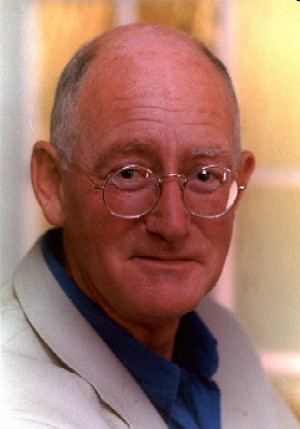


Robert "Bob" Brunning (29 June 1943 – 18 October 2011)[1][2] was a British musician who was, as a small part of a long musical career, the original bass guitar player with the blues rock band Fleetwood Mac.[3]

Career
Fleetwood Mac

When Peter Green left the Bluesbreakers in 1967, he decided to form his own group, naming it Fleetwood Mac after the rhythm section he wanted for the band – Mick Fleetwood and John McVie. Fleetwood joined up straight away, and slide guitar player Jeremy Spencer was recruited, but McVie preferred to stay with the Bluesbreakers, where he was earning a regular wage. In the meantime, Green hired Brunning on a temporary basis, hoping that McVie would change his mind.

After a few weeks McVie did change his mind, claiming that Bluesbreakers leader John Mayall was turning too far in the direction of jazz for his liking. So McVie joined, and Brunning stood down. Brunning did contribute bass guitar to one track on Fleetwood Mac's debut album Fleetwood Mac, that song being "Long Grey Mare".

Savoy Brown and teaching career

After his stint in Fleetwood Mac, he joined Savoy Brown before embarking on a career in teaching, training at The College of St. Mark & St. John, Chelsea.[4] His teaching career lasted 30 years and included appointments as the headmaster of Clapham Manor Primary School, Lambeth in the 1980s and Churchill Gardens Primary School, Pimlico in the 1990s.[5] He did not abandon music however, and played in the Brunning Sunflower Blues Band, Tramp, and later the DeLuxe Blues Band.

In 1972 he played bass guitar on the 22nd Streatham Cub Scouts LP Songs for Your Enjoyment. The album featured folk songs as well as the Scout theme song "Kumbaya".[6]

As an author

Brunning also authored many books, and wrote several about Fleetwood Mac, the British blues scene, and music in general. His works about his former group include Behind The Masks, published in 1990, 1998's Fleetwood Mac: The First 30 Years, and The Fleetwood Mac Story: Rumours and Lies'.

Death

Brunning died on 18 October 2011, aged 68, after suffering a massive heart attack at his home in Colliers Wood.

https://en.wikipedia.org/wiki/Bob_Brunning

 I started playing bass in my teens in Bournemouth on the UK's South Coast. I played with well known UK DJ Tony Blackburn plus a few garage bands. I moved to London in 1964, and joined the college band, Fives Company, whilst I was training to become a teacher. We recorded three singles for Pye records, and had a thoroughly good time.

When I quit college I joined Fleetwood Mac for a short time, and then gained promotion (!!) by moving to Savoy Brown - more money and more gigs! Listen to Taste And Try, Before You Buy to see what we sounded like! (Be warned - it may take a little while to download this track.) However, the lure of teaching was too strong, and I started my 30 years teaching career in 1969. But I never abandoned my beloved blues music.

I formed The Brunning Sunflower Blues Band with my ex Savoy Brown chum Bob Hall (piano). For a quick taste of The Brunning Sunflower Blues Band, listen to this - If You Let Me Love You, with Peter Green.

We also recorded a couple of albums with my old Fleetwood Mac mates Mick Fleetwood and Danny Kirwan under the name Tramp , with Jo-anne and Dave Kelly. Here is Put a Record On, from the group's first album.

In subsequent years I played and/or recorded with J.B. Hutto, Johnny Mars, Eddie Burns, Jimmy Dawkins, Lightnin' Slim, Whisperin' Smith, Homesick James, Snooky Prior, Eddie Taylor, John Wrencher, Erwin Heffer, Dr. Ross, Errol Dixon, Jimmy Rodgers, Dave Peabody, Otis Grand, Paul Lamb, Chuck Berry, Memphis Slim, Jimmy Witherspoon, Eddie Clearwater, Georgie Fame, Charley Musselwhite, and many more blues artists.

In 1980, The De Luxe Blues Band featuring Danny Adleer, Bob Hall, Mickey Waller and myself was formed. Sax player Dick Heckstall Smith would subsequently join us.

Twenty one yeary and two line ups later, the De Luxes are still recording and playing. Our new CD is available now.

I'm married, with three grown up children, and four grandchildren.

http://www.brunningonline.net/history.html 

Brunning Hall Sunflower Blues Band - Bullen Street Blues 


R.I.P.


Elizabeth Cotten   +29.06.1987


Elizabeth „Libba“ Cotten (* 5. Januar 1895 in Chapel Hill, North Carolina; † 29. Juni 1987 in Syracuse, New York) war eine einflussreiche US-amerikanische Folk- und Blues-Musikerin. Einem weiteren Publikum bekannt wurde sie erst im Alter von weit über 60 Jahren. Die Songs der Grammy-Gewinnerin wurden von so bekannten Bands und Musikern, wie Pete Seeger, Peter, Paul and Mary und Grateful Dead, aufgenommen. Ihr Stück Ain't Got No Honey Baby Now wurde 1940 von Blind Boy Fuller als Lost Lover Blues eingespielt.
Geburtsjahr und Datum sind umstritten, manche Quellen geben 1892 oder 1893 an oder einen anderen Tag im Januar.[1] Als Kind brachte sich Elizabeth Cotten zunächst das Spielen auf dem Banjo, dann auf der Gitarre selbst bei. Dabei hielt sie als Linkshänderin die Instrumente „verkehrt“ herum. Hieraus resultierte ihre einzigartige Gitarrentechnik, bei der sie beim Fingerpicking die Melodie auf den hohen Saiten mit dem Daumen und den Wechselbass auf den tiefen Saiten mit dem Zeigefinger spielte.
Elizabeth Cotten wird nachgesagt, dass sie Lieder nachspielen konnte, nachdem sie diese einmal gehört hatte. Ihr bekanntestes Stück, Freight Train, soll sie im Alter von 12 Jahren geschrieben haben.
Mit 11 verließ sie die Schule, um als Hausmädchen zu arbeiten. Vom selbstverdienten Geld kaufte sie ihre erste eigene Gitarre. Sie musizierte auf Partys und Festen. Mit 15 heiratete sie Frank Cotten und bekam bald eine Tochter.
Elizabeth Cotten gab die Musik fast vollständig auf. Die Familie zog mehrfach um, u. a. nach New York und Washington, D.C. Die Ehe mit ihrem Mann wurde 1940 geschieden, und sie zog zur Familie ihrer Tochter Lillie.
Mitte der 1940er lernte sie Ruth Crawford Seeger kennen, als sie deren Tochter zurückbrachte, die sich verlaufen hatte. Elizabeth arbeitete schließlich bei den Seegers, einer sehr musikalischen Familie, wo sie sich um die Kinder Mike, Pete und Peggy kümmerte.
Durch Zufall wurde Elizabeths musikalisches Talent entdeckt. 1957 produzierte Mike Seeger ihr erstes Album, Negro Folk Songs and Tunes, das später als Freight Train and other North Carolina Folk Songs neu veröffentlicht wurde. Ab 1960 trat sie vor Publikum auf, meist mit Mike Seeger. Mittlerweile war sie 65 bis 68 Jahre alt, je nach Geburtsjahr.
Elizabeth Cotten profitierte vom Folk- und Blues-Revival der 1960er. 1963 spielte sie auf dem ersten Philadelphia Folk Festival, 1964 auf dem Newport Folk Festival. Sie trat mit Blues-Größen, wie Mississippi John Hurt, John Lee Hooker und Muddy Waters, auf, gab aber auch eigene Konzerte.
1967 erschien ihr zweites Album, Shake Sugaree. 1984 gewann sie einen Grammy für das Album Elizabeth Cotten Live!. Sie wurde auch mit einer National Heritage Fellowship ausgezeichnet. 1989 wurde sie zu den 75 einflussreichsten afroamerikanischen Frauen gezählt, denen die Fotodokumentation „I Dream a World“ gewidmet war.
Inzwischen wohnte Elizabeth Cotten in Syracuse im Bundesstaat New York, wo sie 1987 verstarb, vermutlich 92 Jahre alt. Sie war bis zuletzt aufgetreten.
http://de.wikipedia.org/wiki/Elizabeth_Cotten 

Elizabeth "Libba" Cotten (née Neville) (January 5, 1895 – June 29, 1987) was an African American blues and folk musician, singer, and songwriter.

A self-taught left-handed guitarist, Cotten developed her own original style. Her approach involved using a right-handed guitar (usually in standard tuning), not re-strung for left-handed playing, essentially, holding a right-handed guitar upside down. This position required her to play the bass lines with her fingers and the melody with her thumb. Her signature alternating bass style has become known as "Cotten picking".

Early life

Elizabeth Nevills was born in Chapel Hill, North Carolina,[1] to a musical family. Her parents were George Nevill (also spelled Nevills) and Louisa (or Louise) Price Nevill. Elizabeth was the youngest of five children. At age seven, Cotten began to play her older brother's banjo. By eight years old, she was playing songs. At the age of 11, after scraping together some money as a domestic helper, she bought her own guitar.[2] The guitar, a Sears and Roebuck brand instrument, cost her $3.75.[2] Although self-taught, she became very good at playing the instrument.[3] By her early teens she was writing her own songs, one of which, Freight Train, became one of her most recognized. Cotten wrote Freight Train in remembrance of the nearby train that she could hear from her childhood home.

Around the age of 13, Cotten began working as a maid along with her mother. On November 7, 1910, at the age of 17, she married Frank Cotten.[4] The couple had a daughter named Lillie, and soon after young Elizabeth gave up guitar playing for family and church. Elizabeth, Frank and their daughter Lillie moved around the eastern United States for a number of years between North Carolina, New York, and Washington, D.C., finally settling in the D.C. area. When Lillie married, Elizabeth divorced Frank and moved in with her daughter and her family.

Re-discovery

Cotten had retired from the guitar for 25 years, except for occasional church performances. She didn't begin performing publicly and recording until she was in her 60s. She was discovered by the folk-singing Seeger family while she was working for them as a housekeeper.

While working briefly in a department store, Cotten helped a child wandering through the aisles find her mother. The child was Penny Seeger, and the mother was composer Ruth Crawford Seeger. Soon after this, Elizabeth again began working as a maid, caring for Ruth Crawford Seeger and Charles Seeger's children, Mike, Peggy, Barbara, and Penny. While working with the Seegers (a voraciously musical family) she remembered her own guitar playing from 40 years prior and picked up the instrument again to relearn almost from scratch.[2]

Later career and recordings

In the later half of the 1950s, Mike Seeger began making bedroom reel to reel recordings of Cotten's songs in her house.[5] These recordings later became the album Folksongs and Instrumentals with Guitar, which was released on Folkways Records. Since that album, her songs, especially her signature track, Freight Train—which she wrote when she was 11—have been covered by Peter, Paul, and Mary, Jerry Garcia, Bob Dylan, Joan Baez, Devendra Banhart, Laura Gibson, Laura Veirs, His Name Is Alive, Doc Watson, Taj Mahal and Geoff Farina. Shortly after that first album, she began playing concerts with Mike Seeger, the first of which was in 1960 at Swarthmore College.[5]

In the early 1960s, Cotten went on to play concerts with some of the big names in the burgeoning folk revival. Some of these included Mississippi John Hurt, John Lee Hooker, and Muddy Waters at venues such as the Newport Folk Festival and the Smithsonian Festival of American Folklife.

The new-found interest in her work inspired her to write more material to play, and in 1967 she released a record created with her grandchildren, which took its name from one of her songs, Shake Sugaree.

Using profits from her touring, record releases, and from the many awards given to her for her own contributions to the folk arts, Elizabeth was able to move with her daughter and grandchildren from Washington, D.C., and buy a house in Syracuse, New York. She was also able to continue touring and releasing records well into her 80s. In 1984, she won the Grammy Award for "Best Ethnic or Traditional Recording" for the album on Arhoolie Records, Elizabeth Cotten Live. When accepting the award in Los Angeles, her comment was, "Thank you. I only wish I had my guitar so I could play a song for you all." In 1989, Cotten was one of 75 influential African-American women included in the photo documentary, I Dream a World.

Elizabeth Cotten died in June 1987, at Crouse-Irving Hospital in Syracuse, New York, at the age of 92.

Unique style

Elizabeth Cotten began writing music while toying around with her older brother's banjo. She was left-handed so she played the banjo in reverse position. Later, when she transferred her songs to the guitar, she formed a unique style, since on the banjo the uppermost string is not a bass string, but a short high pitched string called a drone string. This required her to adopt a unique style for the guitar. She first played with the "all finger down strokes" like a banjo.[2] Later, she evolved her playing into a unique style of finger picking. Her signature, alternating bass style is now known as Cotten picking. Her finger picking techniques influenced many other musicians.

Liner notes

    Seeger, Mike. Liner Notes accompanying Freight Train and Other North Carolina Folk Songs and Tunes, by Elizabeth Cotten. Washington, DC : Smithsonian Folkways, 1989 reissue of the 1958 album Folksongs and Instrumentals with Guitar.

Re: Elizabeth Cotten - Freight Train


https://www.youtube.com/watch?v=Tm5-WdB_aVE#t=73  


Freight Train Elizabeth Cotton 


Dienstag, 22. März 2016

22.03. Juke Boy Bonner, Keith Relf, Chris Stainton, Leo Bud Welch, Guy Verlinde * Frank Edwards, Rod Price +


1932 Juke Boy Bonner*
1932 Leo Bud Welch*
1943 Keith Relf*
1944 Chris Stainton*
1976 Guy Verlinde*
2002 Frank Edwards+
2005 Rod Price+


Happy Birthday


Juke Boy Bonner  *22.03.1932


Weldon H. Philip Bonner, bekannt als Juke Boy Bonner (* 22. März 1932 in Bellville, Texas; † 29. Juni 1978 in Houston, Texas), war ein Afroamerikanischer Blues-Sänger, -Gitarrist und -Mundharmonikaspieler („The One Man Trio“).
Weldon Bonner begann bereits als Teenager, Gitarre zu spielen. 1947 gewann er einen Talentwettbewerb in Houston, der ihm einen Auftritt bei einem örtlichen Radiosender verschaffte. 1956 reiste er nach Oakland, wo er eine erste Schallplattenaufnahme auf Bob Geddins' Plattenlabel Irma mit Lafayette „Thing“ Thomas an der Lead-Gitarre machte („Rock with Me Baby“/„Well Baby“). Als Nächstes nahm er 1960 für Eddie Shulers Goldband Records mit Katie Webster am Piano auf, aber auch hieraus resultierte kein wirklich durchschlagender Erfolg.
Erst als Mitte der 1960er Jahre der Herausgeber der britischen Blues-Zeitschrift „Blues Unlimited“, Mike Leadbitter, auf ihn aufmerksam wurde und 1967/68 eine Single auf dem gleichnamigen Label sowie eine erste eigene Langspielplatte auf Flyright Records lancierte, begann für ihn eine internationale Karriere mit Auftritten in den Vereinigten Staaten, Großbritannien und Kontinental-Europa (zum Beispiel auf dem American Folk Blues Festival 1969).
Seine besten Aufnahmen entstanden in den späten 1960er Jahren aus Gedichten, die er während seiner zahlreichen Krankenhausaufenthalte schrieb und anschließend vertonte (Ghetto Poet). Sie wurden vor allem auf Chris Strachwitz’ Arhoolie Records und Bruce Bastins Flyright Label veröffentlicht.
Juke Boy Bonner starb im Jahre 1978 an Leberzirrhose.
http://de.wikipedia.org/wiki/Juke_Boy_Bonner 

Weldon H. Philip Bonner, better known as Juke Boy Bonner (March 22, 1932 – June 29, 1978)[1] was an American blues singer, harmonica player, and guitarist. He was influenced by Lightnin' Hopkins, Jimmy Reed, and Slim Harpo. He accompanied himself on guitar, harmonica, and drums in songs such as "Going Back to the Country", "Life is a Nightmare", and "Struggle Here in Houston".[2]
Career
Born in Bellville, Texas,[3]:47 Bonner was one of nine children; his parents died while he was very young. Raised by a neighbor's family, he moved in with his older sister in 1945. At the age of twelve he taught himself the guitar.[1] He gained the nickname "Juke Boy" as a youth, because he frequently sang in local juke joints.[3]:47 Starting a musical career as teenager, he won the first prize at local disc jockey Trummie Cain's weekly talent show at the Lincoln Theater in Houston, Texas in 1948. Through this he secured a 15 minute radio slot on a show operated by record retailer Henry Atlas. After having three children with his wife, she left him to look after the children by himself.
Between 1954 and 1957, he recorded several singles for the Oakland, California based Irma record label,[3]:48 but not all were released at the time. In 1960 he recorded again, this time for the Goldband Records, Storyville Records, and Jan & Dill Records labels. In 1963 he was diagnosed with a large stomach ulcer, and had to have almost half of his stomach removed in surgery. The shock of this operation, plus the social climate of the times (which included civil rights riots and the assassination of President John F. Kennedy) led Bonner to begin writing poetry, some of which was published in the Houston Forward Times weekly newspaper.[3]:50 Recovering from surgery, Bonner worked as an RCA record distributor in Houston. Once his strength returned he began playing gigs again in the local area.
In 1967, Bonner recorded his first album for the Flyright label. Chris Strachwitz's Arhoolie label released two albums, I'm Going Back to The Country (1968) and The Struggle (1969) (Arhoolie would later issue some of Bonner's unreleased 1967-1974 recordings on 2003's Ghetto Poet). Bonner recorded mostly original song material through his recording career. He was a guest at the Ann Arbor Blues Festival, the American Folk Blues Festival, and the Montreux Blues and Rock Festival.[3]:51 Bonner toured Europe in 1969 with Clifton Chenier and Magic Sam.[3]:51
In 1972, he released an LP for Sonet Records, and in 1975 another one for the Houston based Home Cooking Records label. However, Bonner was not able to support himself from his music, due to little demand for his work. Although he would continue to play and record sporadically, he had no choice but to take a minimum wage job at a chicken processing plant in Houston.[1]
Death
Bonner's last performance was at a Juneteenth festival at Houston's Miller Outdoor Theatre.[3]:51 Less than two weeks later, on June 29, 1978,[3]:51 he died in his apartment, aged forty-six, of cirrhosis of the liver.

JUKE BOY BONNER Live 1975 


https://www.youtube.com/watch?v=F6LhkSzah1A 


Keith Relf  *22.03.1943


Keith Relf (* 22. März 1943 in Richmond, Surrey, England; † 14. Mai 1976 in London) war ein englischer Musiker und Sänger. Er wurde vor allem als Sänger und Mundharmonikaspieler der Band The Yardbirds bekannt.
1963 gründete er die Band The Yardbirds, bei der unter anderem Eric Clapton, Jeff Beck und Jimmy Page mitspielten. Mit ihrem 1966er-Album The Yardbirds (auch als Roger The Engineer bekannt) setzten sie neue Maßstäbe im psychedelischen Bluesrock.
Anfang 1968 hatte die Band keine Platte mehr in den Charts, Jimmy Page wollte eine eigene Band gründen, so wie es auch Relf vorhatte.
Am 7. Juli 1968 löste Relf die Yardbirds auf. Als The New Yardbirds bestand die Band noch bis Ende des Jahres, da noch eine Tournee zu beenden war. Die New Yardbirds nannten sich Ende 1968 in Led Zeppelin um. Relf wurde Mitbegründer der Band Renaissance, mit der er 1969 und 1971 zwei Alben aufnahm. Sängerin dieser Band war seine Schwester Jane Relf.
Relfs nächste Band war 1975 Armageddon. Vor den Aufnahmen des zweiten Albums starb Relf in seiner Wohnung nach einem Stromschlag durch eine nicht geerdete Elektrogitarre. Dass dieser Unfall in der Badewanne passiert sei, ist eine verbreitete, aber falsche Legende.
http://de.wikipedia.org/wiki/Keith_Relf 

Keith Relf (22 March 1943 – 14 May 1976) was an English musician, best known as the lead vocalist and harmonica player for The Yardbirds.
Musical career
Relf started playing in bands around the summer of 1956 as a singer, guitarist, and harmonica player. Despite his suffering from respiratory problems,[1] his blues harp was a key part of the Yardbirds' sound and success, according to many, and his vocals may have been as important a contribution to the band,[2] as that of their three lead guitarists Eric Clapton, Jeff Beck, and Jimmy Page - who were augmented by bassist Paul Samwell-Smith, guitarist/bassist Chris Dreja, and drummer Jim McCarty.
Relf co-wrote many of the original Yardbirds songs ("Shapes of Things", "I Ain't Done Wrong", "Over Under Sideways Down", "Happenings Ten Years Time Ago"), later showing a leaning towards acoustic/folk music as the sixties unfolded ("Only the Black Rose").[3] He also sang an early version of "Dazed and Confused" in live Yardbirds concerts, a song later recorded by the band's successor group Led Zeppelin.[4]
His debut solo single, "Mr. Zero", peaked at No. 50 in the UK Singles Chart in May 1966.[5]
After The Yardbirds broke up in July 1968, Relf formed the acoustic duo Together, with fellow Yardbird Jim McCarty, followed immediately by Renaissance (which also featured his sister Jane Relf).[6] After leaving Renaissance in 1970, he started producing other artists: Steamhammer, folk-rock band Hunter Muskett, the acoustic world music group Amber, psychedelic band Saturnalia,[7] and blues-rock band Medicine Head (with whom he also played bass guitar).[8] In 1974, he formed progressive/rock group Armageddon - their self-titled debut, Armageddon, was recorded in England and released in the United States on A&M Records. The album's original liner notes used the term "supergroup"; their personnel (besides Relf) included drummer Bobby Caldwell (previously a member of Captain Beyond and Johnny Winter's band), guitarist Martin Pugh (from Steamhammer, The Rod Stewart Album, and later of 7th Order),[9] and bassist Louis Cennamo (also formerly of Renaissance and Steamhammer).[10]
Personal life and death
In 1966, he married April Liversidge. They had two sons, Danny and Jason.[11]
Relf was 33 when he died from electrocution, in the basement of his home, while playing his improperly earthed (i.e., grounded) guitar.[12] At the time, it is said that Relf was in the process of putting back together the original Renaissance line-up - which would eventually be called Illusion.[13]
Legacy
Relf's posthumous 1992 Rock and Roll Hall of Fame induction with the Yardbirds was represented by his widow April, and son Danny.

Jeff Beck and Yardbirds talk about Keith Relf's death 


https://www.youtube.com/watch?v=NElZVWeEnas 


Jeff Beck/Keith Relf/Yardbirds Playing the Blues 
De : Jeff BeckAndFriends
Jeff and Keith just jamming to the Blues in the studio.
00:00 I Ain't Done Wrong (Early Wah Wah Effect using a volume pedal? Jeff's solo 1:23)
3:36 Steeled Blues (Steel Slide Effect,Keith on harp,wah wah sound)
6:10 New York City Blues (nice Fuzz, I love the lyrics on this song plus Keith vocals along with his harp playing,Jeff's solo 8:50)
The Yardbirds http://en.wikipedia.org/wiki/Yardbirds
The Blues http://en.wikipedia.org/wiki/The_blues


Chris Stainton  *22.03.1944


Christopher Stainton (* 22. März 1944 in Woodseats, Sheffield, England) ist ein britischer Musiker und Songschreiber, der zunächst als Bassgitarrist, später vor allem als Keyboarder in verschiedenen Bands aktiv war. Lange Jahre gehörte er zur Begleitband von Joe Cocker, mit dem er unter anderem dessen ersten Hit „Marjorine“ schrieb.
Stainton startete seine Karriere im Jahr 1959 als Bassist in der britischen Band Johnny Storm and the Mariners, die sich später in Johnny Tempest & the Cadillacs umbenannten. Ab 1966 war er Mitglied von Joe Cocker & the Grease Band.[1] Er schrieb diverse Songs mit Cocker, unter anderem war er Co-Autor des Songs „Marjorine“,[2] den Stainton und Cocker mit diversen Sessionmusikern (darunter Albert Lee und Jimmy Page) aufnahmen und der 1968 unter Cockers Namen als Single veröffentlicht wurde; mit einer Notierung auf Platz 48 der Top 50 wurde „Marjorine“ Cockers erster Hit in den britischen Charts.[3] Im gleichen Jahr nahmen sie das Album With a Little Help from My Friends auf; neben „Marjorine“ trug Stainton darauf als Songschreiber zu zwei weiteren Liedern bei. Mit Songs unter anderem aus dem Repertoire dieser und der folgenden Langspielplatte „Joe Cocker!“ traten Cocker und die Grease Band am 17. August 1969 als erster Act des dritten Tags auf dem Woodstock-Festival auf.
Ab 1970 widmeten sich die Grease-Band-Mitglieder nicht nur diesem einen Projekt, sondern spielten alle nebenher für verschiedene Musiker oder Bands. So gehörte Stainton 1970 zum Lineup der Spooky Tooth;[4] im selben Jahr war er aber weiter mit Cocker auf der Mad-Dogs-and-Englishmen-Tournee und dem gleichnamigen Album aktiv. 1972 wurde aus der Grease Band die Chris Stainton Band. Ab 1974 spielte er in Glen Turner’s Tundra, die er auch, gemeinsam mit Chris Kimsey, produzierte, und ab 1975 wieder mit der neu formierten Grease Band. Danach spielte er unter anderem für die Band Boxer, Bryn Haworth und Maddy Prior. Ab 1979 war er regelmäßiges Mitglied in Eric Claptons Band, tourte gemeinsam mit Clapton und Roger Waters; ab 1989 spielte er daneben auch erneut mit Joe Cocker. Am 29. November 2002 war er einer der Musiker beim Concert for George, dem Konzert für den ein Jahr zuvor verstorbenen George Harrison.
Seither tourt er regelmäßig mit Clapton, Cocker oder Bill Wyman’s Rhythm Kings.


Christopher Robert "Chris" Stainton (born 22 March 1944, Woodseats, Sheffield, South Yorkshire, England) is an English session musician, keyboard player and songwriter, who first gained recognition with Joe Cocker in the late 1960s. In addition to his collaboration with Cocker, Stainton is best known for his work with Eric Clapton, The Who, Andy Fairweather Low, and Bryan Ferry.
Career
After passing his 11+ examination, Stainton attended Rowlinson Technical School, Norton, Sheffield. Stainton's musical career began in 1959, when he played bass guitar with a local Sheffield band, 'Johnny Tempest and the Mariners'. The Mariners became 'The Cadillacs', before Stainton joined Joe Cocker in The Grease Band during 1966.[1] Stainton co-wrote "Marjorine", Cocker's first UK Singles Chart hit in 1968.[2] His time as a Cocker backing musician came to a zenith on the Mad Dogs and Englishmen tour, in the United States and Canada in 1970.[1] His initial involvement with Cocker lasted until the end of 1972.[3] Throughout that decade Stainton appeared with musicians such as Spooky Tooth (1970), The Chris Stainton Band (1972–73), Tundra (1974), Bryn Haworth Band (1976–77), Boxer (1977), Maddy Prior Band (1978), Rocks (1978) and Elkie Brooks (1978).
By 1979 he teamed up with Eric Clapton for the first time, beginning an intermittent working relationship that has lasted to the present time. He joined Clapton on Roger Waters's The Pros and Cons of Hitchhiking tour during 1984, and also toured again with Joe Cocker on and off from 1988 until 2000.
In 1985 Stainton and Clapton both appeared in the George Harrison produced film Water in a mock 'charity concert' – the Concert for Cascara.
In November 2002, Stainton appeared at the Concert for George, and has more recently appeared as one of Bill Wyman's Rhythm Kings.[4]
Stainton has been a member of the Eric Clapton band virtually full-time since 2002, touring world-wide almost every year until the present time. He toured with Clapton on his 2008 North American and European tour, which included a three night collaboration with Steve Winwood at Madison Square Garden in February 2008, and toured with Winwood and Clapton in 2009 and 2010.
In July 2012, Stainton was announced as a keyboardist for The Who's 2012–2013 Quadrophenia & More Tour (he played piano on three songs on the original Quadrophenia album, "The Dirty Jobs", "5.15", and "Drowned"). He performed with the band at the closing ceremony of the London Olympics. However he subsequently withdrew prior to the start of the tour, to join Clapton on his tour of the US and Europe, that ultimately ended at O2 Arena Prage on 19 June 2013.
Most recently Stainton toured with Clapton in Japan, the Middle East and Europe in 2014.
Stainton is a Pro Tools aficionado and currently spends his time composing and recording music in his home studio.


Chris Stainton - little queen of spades ( piano solo ) 


Leo Bud Welch  *22.03.1932


http://www.leobudwelch.com/#!gallery/cff9


Zwei Nägel in einem Stück Holz, eine dazwischen gespannte Gitarrenseite: Das war Leo Welchs erste Gitarre, eine sogenannte Wall Guitar. Mit zehn oder elf Jahren trug er dann vom weit entfernten Postkasten die erste Gitarre ins Haus. Sein Cousin R. C. Welch hatte sie bestellt. Er verbot Leo damit zu spielen: „Don't mess with my guitar“. Aber Leo ließ sich nicht davon abhalten. Sobald der Cousin außer Haus war, spielte er – bis er erwischt wurde. Als R. C. hörte, dass Leo viel besser spielt als er selbst, erlaubte er ihm, weiter zu üben.
Leo wuchs mit elf Geschwistern in Bruce, Mississippi auf. 80 Kilometer von der nächsten Stadt entfernt. Das Motto der Stadt ist: „Wo Geld auf Bäumen wächst und Hoffnung und Träume niemals sterben“. Mit den Bäumen reich geworden ist der Sägewerksbesitzer Robert Bruce. Leo blieben die Hoffnung und die Träume. Er arbeitete als Baumwollpflücker, dann 35 Jahre lang für einen Hungerlohn als Holzfäller am Ufer des Mississippi River. Von Montag bis Freitag fällte er vom Morgengrauen bis zur Dämmerung im Mississippi-Delta Bäume.
Am Wochenende tauschte er zu Hause in Bruce die Kettensäge gegen die Gitarre und spielte auf Partys, bei Picknicks und in der Kirche. Auch wenn das Gitarrenspiel in den Kirchen in den 50er-Jahren nicht gerne gesehen wurde: Gitarren in der Kirche waren Teufelswerk. Leo Welch & the Rising Souls spielten trotzdem bei Messen. In der Kirche spielten sie Gospel, außerhalb den wenig gottgefälligen Blues. Für Leo ist das kein Widerspruch: „I believe in the Lord, but the blues speaks to life, too. Blues has a feeling just like gospel; they just don’t have a book (a Bible)“, sagte Leo in einem Interview.
Erste Platte mit 82 Jahren veröffentlicht
Sein Talent muss sich irgendwann herumgesprochen haben. Eines Tages erhielt er die Einladung, bei B.B. King vorzuspielen. Doch er wollte sich die Buskarte in das nur 170 Kilometer entfernte Memphis, Tennessee nicht leisten. Er wollte nicht verantworten, seine Frau und die vier Kinder hungernd zu Hause sitzen zu lassen und auf gut Glück das letzte Geld für ein Busticket zu verschwenden.
Dass man ihn heute auf Platte hören kann, ist einem Freund der Familie, Vencie Varnado, zu verdanken, der ihn mit 82 Jahren endlich dazu brachte, eine Platte – seine erste – aufzunehmen. Vencie wusste schon lange von Leos Talent. Er lud Leo ein, bei seinem Geburtstagsfest, zu spielen, nahm davon ein Video auf und beschloss, dass Leo eine Platte aufnehmen sollte. Allerdings brauchte er zwei Jahre, um Leo davon zu überzeugen, überhaupt bei einem Label anzurufen. Im Jänner 2014 erschien schließlich beim Blues-Label Fat Possum das Album „Sabougla Voices“.

Leo “Bud” Welch Sr. was born in Sabougla, Mississippi in 1932. Bud picked up a guitar for the first time in 1945. Bud and a cousin would sneak and play the guitar while the actual owner of the guitar (Bud’s older cousin) was away working. As he became confident in his ability to play guitar, Bud was caught red handed by the owner of the guitar, playing the forbidden to touch instrument. Bud’s older cousin was so impressed with his playing that he gave Bud free reign to continue playing the guitar. By 1947 at age 15, Bud could play well enough to perform publically and garnered the blessing of many elder guitar players. Bud was offered an audition by BB King but could not afford the trip to Memphis. Bud played the Blues continuously until 1975, at that time he converted to playing mostly Gospel, with the Sabougla Voices, which consisted of his sister and a sister-in-law. Bud also played with the Skuna Valley Male Chorus. Bud earned his living by carrying a chain saw up and down the hills and hollows of North Mississippi, logging for 35 years. Leo does not believe that Blues is the devil’s music but a way of expressing the highs and lows of one’s life through song. Bud has played his guitar for close family and friends for the past 65 years and has remained under the radar, undetected by the vast majority of Blues Aficionados. Leo’s debut album Sabougla Voices was released January 7, 2014 just two months before his 82nd birthday.


Leo Bud Welch - Girl In The Holler, 2015. 


Leo "Bud" Welch -- Got My Mojo Workin'-- Thacker Mountain Radio


Leo Bud Welch Blues Rules 2014 


Guy Verlinde  *22.03.1976

Lightnin' Guy


https://www.facebook.com/guy.verlinde


http://www.guyverlinde.com/downloads.html


BELGIAN BLUES AWARD WINNING ARTIST
After years of hard work Guy Verlinde is the Belgian blues pride. And even it may sound like a dusty cliché but he's by far he is "the hardest working performer" within the Belgian blues scene. In five years time: he released 6 albums; signed a record deal with the prestigious labels Parsifal (B) & Dixefrog Records (FR); in 2011 he won the Belgian Blues Awards and represented Belgium at the European Blues Challenge '12 in Berlin (D). Since a few years the European blues scene also discovered Guy Verlinde after several tours in Holland, Germany, France, Austria, Spain, Switzerland, Slowakia, Luxembourg, …
Guy Verlinde not only tours non-stop with his band "The Mighty Gators", but also performs as a "One Man Band" with his resonator & Weissenborn guitars & an old suitcase as a drumkit. Since 2011 he founded the only Hound Dog Taylor tribute band in Europe, to keep the legacy of Hound Dog Taylor alive. As he once got infected by the blues at a young age, Guy Verlinde also wants to introduce the blues to youngster. Therefore he has a "Blues in Schools" project. And he organizes two times a month a blues jam session in his home town Ghent for young blues musicians.
As his slide guitar & harp style are very emotional, unique & authentic, a Guy Verlinde show is always very energetic. As he says:" In a world of plastic & virtuality, people want real things". A Guy Verlinde show is all about energy and total surrender to the audience. This makes him a real crowd pleaser.
As a young blues musicians he already played the support act for great blues artists as: B.B. King (US), John Fogerty (US), Keb' Mo' (US), Kenny Wayne Sheppard (US), Jimmy Vaughan (US), Jim Shuler (US), Lucky Peterson (US), Otis Taylor (US), Ian siegal (UK), Shemekia Copeland (US), … In 2010 he recorded with Texan Blues artist Guy Forsyth (US) the album Banana Peel Sessions and in 2011 he toured Europe with his Chicago slide guitar hero Studebaker John.
THE BEGINNING
Guy Verlinde was born on the 22nd of March 1976 as Guy Verlinde in a small village near Bruges. As a child he was always obsessed with music: making his own toy guitars, being a bedroom dj, singing in the church choir, being a local playback star, playing in the local harmony …
But it all started to fall into place once he bought his first guitar and harp at the age of 16. After moving to Bruges, he discovered the blues through the massive record collection of a friend's father. Soon after he founded his first band Smokin' Chillums at the age of 17. They played intensively the Belgian & Dutch blues scene for 6 years. Because of his energetic performances his fans gave him the nickname "Guy Verlinde".
MIYAGI SAN
Every talent needs a master, a guide and a bullshit detector. After moving to the city of Ghent, he met slide guitar player Marino Noppe of the legendary bluesband Maxwell Street. He spent countless hours in his house, listening to old vinyl & blues stories, playing his old vintage guitars, … With Marino he learned everything about being a blues musician. As the backing guitar player of Maxwell Street he toured through the States and Europe playing with Hash Brown, Johnny Moeller and Louisiana Blues legend Roscoe Chenier.
HARPIN' & SLIDIN'
Together with Marino Noppe he started the band Mo' Rice where Guy Verlinde for the first time really focussed on the blues harp. During that time he developed himself as an energetic harp player influenced by Sonny Boy Williamson II, Junior Wells, James Cotton and Lester Butler, who had a big impact on his playing.
Since he started playing the guitar, Guy Verlinde felt attracted to the slide guitar. First influenced by Chris Whitley and later blown away by Hound Dog Taylor it became clear that this was his path to walk. Even though he incorporated the soul of the traditional slide guitar players as Fred McDowell, Bukka White, Elmore James … he also got inspired by contemporary artists like John Mooney, Anders Osborne, Sonny Landreth, Ben Harper and John Butler.

GUY VERLINDE & THE MIGHTY GATORS

Guy Verlinde & the Mighty Gators are currently Belgian's blues pride and deliver show after show high energy genuine foot stompin' blues & roots music. By playing in the 'Louisiana swamp & Chicago slide & harp'-tradition, he always succeeds in making everybody dance and sing along to his tight, groovy, honest riffs & licks. Guy is not only an excellent musician & singer, but also an all-round entertainer. It does not matter for whom he plays nor where, people always start shaking their asses and having a mighty good time, when Guy is on stage. Laissez le Bon Ton Roulet!!!
*******LINE UP*******
Guy Verlinde: vocals, slide guitar & harmonica
Toon Vlerick: guitar
Karl zosel: bass
Thierry Stiévenart: drumsGUY VERLINDE & THE MIGHTY GATORS
http://www.guyverlinde.com/theMightyGators.html
 ONE MAN BAND
It all started for Guy Verlinde with an acoustic guitar & a harp. And though he never picked cotton in the fields, but he surely had his share of bad luck and trouble, happiness and hope. You can hear these feelings and thoughts in his contemporary acoustic blues songs, with deep roots ranging from Flanders' clay, over the Mississippi Delta to the swamps of Louisiana. He also digs up some old songs people forgot about or which never hit the charts.
During his One Man Band shows Guy Verlinde takes his audience back to the roots of his musical career and plays a variety of resonator guitars, a weissenborn guitar, diatonic & chromatic harps and an old suitcase as a kick drum.  

 PLAYS HOUND DOG TAYLOR
"Hound Dog Taylor & the Houserockers" were all about rhythm and groove. Taylor's slide guitar style was raw and wild. The choice for Brewer Phillips on rhythm guitar (instead of a bass player) & Ted Harvey on drums, resulted in the deepest and roughest house rockin' blues in Chicago. From the late '50s through the mid '70s they probably played more gigs than any other band in town; always playing till late at night, making people party & forget their troubles.
Guy Verlinde pays tribute to Hound Dog Taylor by playing his music in the same setting as he did. Songs as: Take Five, Hawaiian Boogie, It's Allright, Give me Back My Wig, Let's Get Funky, Sadie … all are on the playlist. If you never got the chance to see "the Dog" live; this is a perfect alternative to recapture the magic of a Hound Dog Taylor concert.
*******LINE UP*******
Guy Verlinde: vocals & slide guitar
Richard van Bergen: rhythm guitar (Shiner Twins, Dede Priest, …)
Erik "King Berik" Heirman: drums (Studebaker John, Super Chikan, …)

BLUES IN SCHOOLS
Blues is generally regarded as the cradle of modern pop and rock music. Born from the Working Songs of the African-American slaves in the cotton fields of Mississippi, and considered as the "Devil's" party music of the Chicago blues clubs; this musical style formed the basis of the soul, funk, disco and rock & roll music. The Blues was the inspiration of many pop and rock musicians from the past like Jerry Lee Lewis, Elvis Presley, James Brown, The Rolling Stones, Jimi Hendrix, ... but also contemporary stars like Lady Gaga, Amy Winehouse, Adele, Eric Clapton, The White Stripes, Foo Fighters, Lenny Kravitz, ...
The "Blues in Schools" project is an educational musical program where Guy Verlinde gives young people an overview of the different styles (Delta Blues, Chicago Blues, ...), the most influential musicians (Muddy Waters, BB King, ...), the most important instruments (guitar, harmonica, ...) and highlights the socio-cultural background with stories and anecdotes. Each story is illustrated by live played musical examples.
*******LINE UP BAND*******
Guy Verlinde: vocals, slide guitar & harmonica
Karl Zosel: bass
Marcus Weymaere: drums

INA FORSMAN (FI)
Only 19 years old blues singer Ina Forsman is the rising star of the Finnish blues scene. When Ina was only 6 years old, she decided that she wants to become a singer. With determination & hard work she already toured at the age of 17. And after a mindblowing interpretation of Etta James`s song `All I could do is cry’ during the final of the TV show “Idols” at age 17. On that day everyone realized that a new blues star was born. After that, Finnish Blues harmonica legend Helge Tallqvist took her on the road for an education in the blues. Her blues journey was begun …
In 2014 Ina Forsman represented Finland at the European Blues Challenge in Riga this year. Her exceptional voice & her energetic stage performance touched the soul of Guy Verlinde. So both musicians decided to collaborate to tour the European mainland.
There are two concepts:
*******LINE UP DUO*******
    Guy Verlinde: resonator & Weissenborn guitars, harps & Vocals
    Ina Forsman: Vocals
InaForsman-LightninGuy-duo
*******LINE UP BAND*******
    Richard van Bergen (Rootbag) or Guy Verlinde: guitar
    Steven Troch (Fried Bourbon): harp
    René Stock (Electric Kings): Bass & Double Bass
    Erik Heirman (Studebaker John): drums
Sadie - Lightnin' Guy Verlinde Plays Hound Dog Taylor 


Lightnin' Guy & Steven Troch 


Ina Forsman & Guy Verlinde 


R.I.P.


Frank Edwards  +22.03.2002


http://www.allmusic.com/album/georgia-country-blues-mw0000673166

Frank Edwards (March 20, 1909 – March 22, 2002)[1] was an American blues guitarist, harmonica player and singer. He was variously billed as Mr. Frank, Black Frank and Mr. Cleanhead.[1]
Edwards was born in Washington, Georgia.[1]
He recorded for three record labels in his career; Okeh Records in 1940, Regal Records in 1949, and Trix Records in the mid-1970s. Some more recent sessions were done for the Music Maker Relief Foundation. His most noted recordings were "Three Women Blues" and "Terraplane Blues".[1]
Frank Edwards died of a heart attack[1] in Greenville, South Carolina, while being driven back to his Atlanta, Georgia home, after completing his final recordings at the age of 93.


Mr Frank Edwards Chicken Raid 


https://www.youtube.com/watch?v=-cxajUZ9tLM 


Rod Price  +22.03.2005


Rod Price (born Roderick Michael Price, 22 November 1947, Willesden, North London, United Kingdom[1] — died 22 March 2005, Wilton, New Hampshire, United States[2]) was an English guitarist who was best known for his work with the rock band Foghat.[2] He was known as 'The Magician Of Slide', and 'Slide King Of Rock And Roll', due to his slide guitar playing.[2]


Career


At the age of 21, Price joined the British blues band Black Cat Bones (replacing Paul Kossoff), which recorded one album, Barbed Wire Sandwich. The album was released at the end of 1969, when British blues was being supplanted by rock, and though artistically successful it was a commercial failure. The band dissolved, and Price joined Foghat when the group was first formed in London in 1971. He played on the band's first ten albums, released from 1972 through to 1980. His signature slide playing ability helped propel the band to being one of the most successful rock groups in the United States during the 1970s. His slide playing was featured distinctly on Foghat songs "Drivin' Wheel", "Stone Blue", and the group's biggest hit, "Slow Ride",[2] which was a top 20 hit in 1976. Price's final performance with Foghat was at the Philadelphia Spectrum on 16 November 1980. He was replaced by guitarist Erik Cartwright.
Price virtually disappeared from the music business until 1990, when he briefly joined forces with Foghat vocalist Dave Peverett. Foghat had actually split a few years after Price left, and drummer Roger Earl had reformed the band without Peverett, who decided to start up his own version of the band and invited Price to participate. Price was in and out of the band for the next couple of years, but agreed to commit totally to a reunion featuring all four original Foghat members in 1993.
Foghat then released Return Of The Boogie Men in September 1994. The album failed to gain as much commercial success as the band had previously earned, but nevertheless they hit the road and began touring regularly across North America, rebuilding their reputation as an excellent live act. Foghat released the Road Cases CD in 1998, a live recording which further cemented Price's slide virtuosity. A DVD entitled Two Centuries Of Boogie, recorded at a 1996 concert in Dayton, Ohio gives a close-up and first-hand view of Price's guitar abilities. It also features a very in-depth interview with the musician himself, as well as other members of Foghat.
Price once again left Foghat in 1999, after vocalist Dave Peverett was diagnosed with cancer. The singer returned to the band after several months of recuperation, but by this point Price had decided he wanted to step away from full-time road work and parted company with Foghat. He was replaced by guitarist Bryan Bassett.
Price began a solo career at the beginning of the 21st century, and returned to his blues roots. He released two CDs, Open (2002) and West Four (2003).[2] He toured and performed in blues clubs across the United States, and was featured at guitar seminars and workshops as well during this period.
Price died at his home in Wilton, New Hampshire, on 22 March 2005, after he fell down a flight of stairs when suffering a heart attack.[2] He was survived by his wife Jackie and five children.[2]
Price was married to Robyn Renzi in the 1970s but they divorced in 1979. The marriage produced no children.
During his long career, Price also collaborated with Shakey Vick's Blues Band, Champion Jack Dupree,[2] Duster Bennett, Eddie Kirkland,[3] Muddy Waters,[2] John Lee Hooker,[2] Willie Dixon,[2] and David "Honeyboy" Edwards.