1917 Leonard "Baby
Doo" Caston*
1924 Milwaukee
Slim*
1952 Gene
Taylor*
1962 Wolfgang
Voss*
1965 Carsten Bockau*
1982 DeFord Bailey+
1988 Eddie
„Cleanhead“ Vinson+
1992
Boogie Woogie Red+
Zed
Mitchell*
Ruth
LaMaster*
Happy Birthday
Gene Taylor *02.07.1952
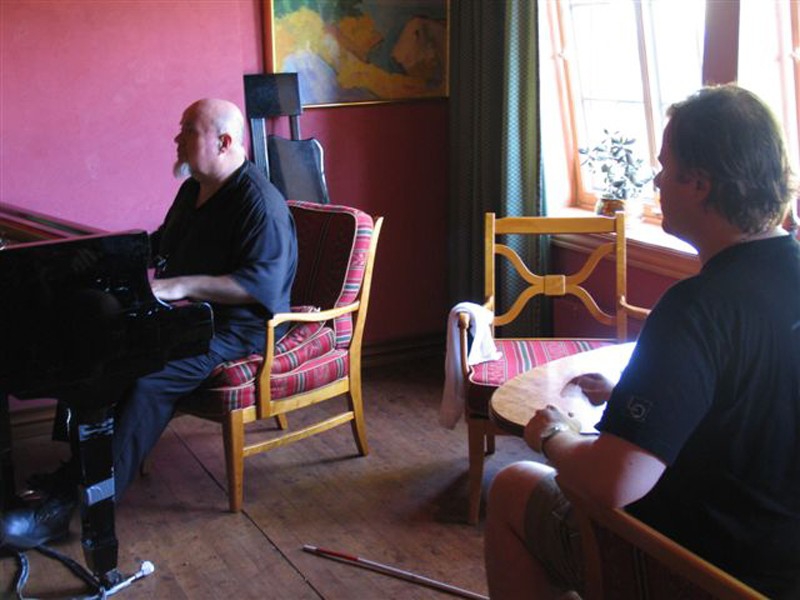
Gene Taylor (born July 2, 1952, Norwalk, California, United States) is an American blues, rock, and boogie-woogie pianist.
Taylor began his musical training as a drummer at age eight[1] but two years later he had picked up both the guitar and his initial piano skills from boogie-woogie pianist-neighbours.[2][3] Around the age of 16 he began working with some of the big names in the West Coast blues scene including Big Joe Turner and T-Bone Walker. In the mid-seventies he joined the James Harman Band[2] and had a stint as pianist for boogie group Canned Heat between November 1974 and May 1976. From 1981 to 1984 he toured with The Blasters, and in 1986 finally recorded his first solo album, Handmade. His The Return of the Formerly Brothers, recorded with Amos Garrett and Doug Sahm in 1987, won a Juno Award the following year.
From 1993 to 2007, Taylor played with The Fabulous Thunderbirds[4] amongst various other projects. He recorded an eponymous second solo album for Pacific Blues in 2003 partly accompanied by James Harman and Bill Bateman.[5] This album included a version of "Pinetop's Boogie Woogie".
Since 2007, he has been based in Belgium, playing and recording with Fried Bourbon,[6] CC Jerome's Jet Setters, Dave Alvin and Jo' Buddy. Currently he is touring as the Gene Tayler Trio, with drummer Nico Vanhove, and the guitarist Bart De Mulder. He played at the Brussels Boogie-Woogie Festival of 2012, which took place at the Théâtre St Michel on November 24.
Zed Mitchell *02.07.

Er besitzt die Fähigkeit, jede Saite einer Gitarre mit einer persönlichen Note zu spielen. So lässt der Saitenmagier sein Instrument mal rocken, dann virtuos klingen oder melancholische Klangteppiche weben. Wenn Zed Mitchell spielt, erklingt Bluesmusik mit einer inspirierenden Facette.
Der aus dem ehemaligen Jugoslawien stammende Gitarrist, Sänger und Komponist Zed Mitchell zählt zu den bekanntesten und bedeutendsten Gitarristen in Europa. Seine Lebensgeschichte ist so abwechslungsreich und inspirierend, dass sich manch ein Gitarrenspieler wünscht, eben solch eines führen zu dürfen: Schon immer fasziniert von seinem Instrument, spielte er als Jugendlicher mit einigen, im ehemaligen Jugoslawien recht bekannten Bands auf vielen Bühnen und eignete sich sein bis heute markantes Spiel an.
Schließlich fiel 1970 die Entscheidung, sein Leben der Musik zu widmen und so schrieb, sang und spielte er mit aller Leidenschaft gemeinsam mit seiner Band „Land“. Und nur vier Jahre später erzielten sie mit „Shoshana“ den ersten internationalen Single-Hit. Fernsehauftritte und Radiointerviews folgten auf diesen großen Erfolg – und schließlich spielte Zed Mitchell mehrere Jahre europaweit als Support-Act auf den Tourneen von Focus, Deep Purple oder Ian Gillian. Diese Zeit prägte sein Spiel. Er begann, Rockmusik und Bluesnoten zu vermischen, lotete die Grenzen seines Instrumentes aus und entwickelte einen neuen, eigensinnigen Powerblues, der schon damals Stimmungen perfekt einfangen und umsetzen konnte. Ende der siebziger Jahre erfüllte er sich einen weiteren Traum, als er in Belgrad die „Schule für Rock-Gitarre“ eröffnete. Dieser neuen Aufgabe widmete er sich einige Jahre, bis er 1988 nach München zog, um in den Arco-Studios zu arbeiten.
Dass Zed Mitchell seine eigene musikalische Sprache entwickeln konnte, verdankt er auch den Begegnungen und der Arbeiten an Projekten aus jener Zeit als Studiomusiker. Viele herausragende Produzenten wie Malcolm Luker oder Filmkomponist Nick Glennie- Smith, seinerseits die rechte Hand vom zweifachen Oscar-Gewinner Hans Zimmer, begleiteten ihn auf seinem Weg und führten zu einer steten Weiterentwicklung seines flinken Fingerspiels und der einfühlsamen Art, den Saiten der Gitarre bestimmte, gesetzte Noten zu entlocken. Diese Fähigkeiten wussten Künstler wie Tina Turner, Phil Collins oder auch Pink Floyd sehr für ihre Aufnahmen zu schätzen und auch Eros Ramazotti oder Natalie Cole buchten den Saitenmagier für ihre Studioaufnahmen. Auch deutsche Stars wie Curt Cress, Udo Lindenberg und Leslie Mandoki setzen auf die herausragende Spielweise von Zed Mitchell. Einen seiner größten Erfolge feierte Mitchell schließlich mit dem Münchner Symphonie Orchester, für die er alle akustischen und elektrischen Gitarren einspielte und deren CD sich mehr als eine Millionen Mal verkaufte. Stolz ist er, sich mit seinem Gitarrenspiel auf dem Soundtrack des Blockbusters Indianer Jones verewigt oder auch als Support-Act mit seiner Band für Weltstars wie Joe Cocker, Santana und B.B. King gespielt zu haben.
Gemeinsam mit vielen musikalischen Freunden der Blues- und Rock-Szene in Deutschland veröffentlichte Zed Mitchell 2008 sein Album „Springtime in Paris“, auf das 2010 „Summer in L.A.“ und letztlich ein Jahr später „Game is on“ folgten.
In diesen Alben zeigt sich die Eleganz und das perfekte Handwerk des Saitenmagiers: mitreißend präzise gespielt, sensibel und einfühlsam zelebriert oder feurig und ausdrucksstark interpretiert, baut Zed Mitchell Musikschlösser mit zahlreichen Facetten zum Tanzen, Rocken oder melancholischem Treiben. Die Dynamik seiner Fingerfertigkeit und die ausgeprägte Spielfreude sind in jeder Note spürbar, wenn nicht zum Greifen nah und zeigen, dass er als Profi-Musiker sein Handwerk in allen Genres perfekt beherrscht. So wundert es nicht, dass Zed Mitchell bis heute mit seinem Fachwissen und seinem Gespür zu den „Most wanted“ Musikern in Deutschland zählt. Musikliebhaber, Insider und andere Künstler zählen ihn zu der Spitze der Blues-Szene und nennen seinen Namen in einem Atemzug mit Künstlern wie Eric Clapton, Mark Knopfler, Gary Moore oder Robert Cray. Und wer Zed Mitchell einmal mit seiner charmanten Art live erlebt hat, wer den Blues in den von ihm gespielten Noten gehört hat, der weiß auch, warum das so ist.
http://www.zedmitchell.com/
The bandleader, singer, guitarist and composer Zed Mitchell, from Belgrad, began his career as professional musician in 1970. In that time he played with many well know bands in Yugoslavia.
In 1974 with his own band “LAND”, he had his first international hit-single called “SHOSHANA” for POLYDOR Europe. After this big success and many radio sessions as well as TV, he played as support group on tours for bands such as “FOCUS”, “DEEP PURPLE”, “IAN GILLAN BAND” and many more. He played concerts all around Europe.
At the end of the seventy’s, he founded the ”School for Rock Guitar in Belgrad.
From 1988 he worked in ARCO - STUDIOS in Munich, with producers Malcolm Luker and film composer Nick Glennie-Smith right hand of Hans Zimmer who’s become two Oscars. He made projects with Tina Turner, Phil Collins, Pink Floyd etc. Zed Mitchell worked in that time as studio musician and he played guitar for Eros Ramazotti (“La musica e”), Natalie Cole, also with German stars and producer: Curt Cress, Udo Lindenberg and Leslie Mandoki.
One of the biggest success Zed celebrated, was working with MSSO (Munich Symphonic Sound Orchestra). He played all acoustic and electric guitars. This CD is sold more than one million copies (POLYDOR, POLYSTAR) !!!.
He worked with world know composer Elmar Bernstein and played guitars for the BLOCKBUSTER – “INDIANA JONES” . His knowledge makes him very “wanted” artist under other Artists and Producers on the pulse of the music scene in Germany. Musicans and people from the music business assert, while he is simply one of the best in Europe.
With his band he played as support group with big stars such Joe Cocker (1993), Santana (1993) and B.B. King (on his last tour in Germany 2006).
With his album „Springtime in Paris“ which he recorded with many of his musical friends of the blues and rock-scene in Germany (Blues company, Klaus „Mojo“ Kilian, Rolf-Dieter Schnapka, Greg Mc Coy, James Simpson, Billy Allen), the singer and guitarist presents his variety, that causes a wave of excitement. Through his 13 tracks Zed Mitchell plays bluesrock in all his musical style. At the same time the musican masters all styles of his genre perfectly.
Zed Mitchell can easily be mentioned among people like Eric Clapton, Stevie Ray Vaughan, Mark Knopfler, Gary Moore, Jimi Hendrix or Robert Cray.
His Blues comes deep out of his soul and you can feel it with every tone.
http://www.zedmitchell.com/In 1974 with his own band “LAND”, he had his first international hit-single called “SHOSHANA” for POLYDOR Europe. After this big success and many radio sessions as well as TV, he played as support group on tours for bands such as “FOCUS”, “DEEP PURPLE”, “IAN GILLAN BAND” and many more. He played concerts all around Europe.
At the end of the seventy’s, he founded the ”School for Rock Guitar in Belgrad.
From 1988 he worked in ARCO - STUDIOS in Munich, with producers Malcolm Luker and film composer Nick Glennie-Smith right hand of Hans Zimmer who’s become two Oscars. He made projects with Tina Turner, Phil Collins, Pink Floyd etc. Zed Mitchell worked in that time as studio musician and he played guitar for Eros Ramazotti (“La musica e”), Natalie Cole, also with German stars and producer: Curt Cress, Udo Lindenberg and Leslie Mandoki.
One of the biggest success Zed celebrated, was working with MSSO (Munich Symphonic Sound Orchestra). He played all acoustic and electric guitars. This CD is sold more than one million copies (POLYDOR, POLYSTAR) !!!.
He worked with world know composer Elmar Bernstein and played guitars for the BLOCKBUSTER – “INDIANA JONES” . His knowledge makes him very “wanted” artist under other Artists and Producers on the pulse of the music scene in Germany. Musicans and people from the music business assert, while he is simply one of the best in Europe.
With his band he played as support group with big stars such Joe Cocker (1993), Santana (1993) and B.B. King (on his last tour in Germany 2006).
With his album „Springtime in Paris“ which he recorded with many of his musical friends of the blues and rock-scene in Germany (Blues company, Klaus „Mojo“ Kilian, Rolf-Dieter Schnapka, Greg Mc Coy, James Simpson, Billy Allen), the singer and guitarist presents his variety, that causes a wave of excitement. Through his 13 tracks Zed Mitchell plays bluesrock in all his musical style. At the same time the musican masters all styles of his genre perfectly.
Zed Mitchell can easily be mentioned among people like Eric Clapton, Stevie Ray Vaughan, Mark Knopfler, Gary Moore, Jimi Hendrix or Robert Cray.
His Blues comes deep out of his soul and you can feel it with every tone.
Leonard "Baby Doo" Caston *02.07.1917

Leonard "Baby Doo" Caston (June 2, 1917 – August 22, 1987)[1] was an American blues pianist and guitarist. He is best noted for the tracks "Blues At Midnight" and "I'm Gonna Walk Your Log".
Leonard Caston Sr. was born in Sumrall, Mississippi, United States,[1] and raised in Meadville, Mississippi from age eight. He lived in Chicago from 1934 to 1936 but then moved back to Mississippi after his family relocated to Natchez. He learned to play piano under the influence of Leroy Carr and Art Tatum; he has also credited Andy Kirk and Jimmy Rogers, as well as his relative Kim Weathersby, as stylistic influences.
In 1938 he returned to Chicago, where he met with Mayo Williams, a producer for Decca Records. Williams recorded him in a trio with Eugene Gilmore and Arthur Dixon; Dixon introduced him to his brother, Willie Dixon. Willie and Caston then formed the Five Breezes, along with Jimmy Gilmore, Joe Bell, and Willie Hawthorne, a group in the style of The Ink Spots. In 1940, Caston recorded his first solo record for Decca, "The Death of Walter Barnes", which also included Robert Nighthawk on harmonica.
The Five Breezes disbanded in 1941, and Caston began playing in the Rhythm Rascals Trio with Alfred Elkins and Ollie Crawford. The group did USO tours, and in 1945 performed at a conference for Dwight Eisenhower, Bernard Montgomery, and Georgy Zhukov. After the war, he recorded under his own name as well as for Roosevelt Sykes and Walter Davis, and did myriad studio sessions. He also recorded again with Dixon as the Four Jumps of Jive and the Big Three Trio, playing in both groups with Bernardo Dennis as well. Ollie Crawford joined this group soon after Dennis's departure. The Big Three Trio recorded for Columbia Records and Okeh Records.
The Big Three Trio's last sides were recorded in 1952, but the group did not officially break up until 1956. Caston continued performing for decades afterwards, returning to perform with Dixon in 1984.
Caston also released an album, Baby Doo's House Party, shortly before his death of heart disease in Minneapolis, Minnesota, in 1987.[1]
His son, Leonard Caston, Jr., is an R&B singer and songwriter who sang with The Radiants among other endeavors.
Leonard Caston Sr. was born in Sumrall, Mississippi, United States,[1] and raised in Meadville, Mississippi from age eight. He lived in Chicago from 1934 to 1936 but then moved back to Mississippi after his family relocated to Natchez. He learned to play piano under the influence of Leroy Carr and Art Tatum; he has also credited Andy Kirk and Jimmy Rogers, as well as his relative Kim Weathersby, as stylistic influences.
In 1938 he returned to Chicago, where he met with Mayo Williams, a producer for Decca Records. Williams recorded him in a trio with Eugene Gilmore and Arthur Dixon; Dixon introduced him to his brother, Willie Dixon. Willie and Caston then formed the Five Breezes, along with Jimmy Gilmore, Joe Bell, and Willie Hawthorne, a group in the style of The Ink Spots. In 1940, Caston recorded his first solo record for Decca, "The Death of Walter Barnes", which also included Robert Nighthawk on harmonica.
The Five Breezes disbanded in 1941, and Caston began playing in the Rhythm Rascals Trio with Alfred Elkins and Ollie Crawford. The group did USO tours, and in 1945 performed at a conference for Dwight Eisenhower, Bernard Montgomery, and Georgy Zhukov. After the war, he recorded under his own name as well as for Roosevelt Sykes and Walter Davis, and did myriad studio sessions. He also recorded again with Dixon as the Four Jumps of Jive and the Big Three Trio, playing in both groups with Bernardo Dennis as well. Ollie Crawford joined this group soon after Dennis's departure. The Big Three Trio recorded for Columbia Records and Okeh Records.
The Big Three Trio's last sides were recorded in 1952, but the group did not officially break up until 1956. Caston continued performing for decades afterwards, returning to perform with Dixon in 1984.
Caston also released an album, Baby Doo's House Party, shortly before his death of heart disease in Minneapolis, Minnesota, in 1987.[1]
His son, Leonard Caston, Jr., is an R&B singer and songwriter who sang with The Radiants among other endeavors.
Milwaukee Slim *02.07.1924
:format(jpeg):mode_rgb():quality(40)/discogs-images/R-3479914-1401188002-5560.jpeg.jpg)
b. Angelo Chambers, 2 July 1924, Denton, Texas, USA, d. 7 June 1993, St. Paul, Minnesota, USA. While living in Dallas, Chambers worked for a while as a waiter at a blues club where he also acted as emcee and developed an engaging stage presence. Later, he appeared regularly at blues clubs in many Midwestern cities. His day job was a bus driver but whenever the opportunity arose he would be on stage, singing, occasionally playing drums, and introducing other acts with considerable panache. Although he lived in several other cities, he eventually settled in St. Paul, Minnesota. There, he led his own band, the Blue Birds, and also worked with a band led by Harmonica Tom Schafer. In 1991 he recorded the single, ‘Mean And Evil Woman’, which became a local hit, as did the b-side, ‘Cleo’. These tracks appeared on his sole album, which was completed not long before his death. A cassette was prepared for a launch, which Milwaukee Slim was able to attend even though he was failing in health. The album itself was released two years later and included ‘Standing On The Outside Crying’, ‘Sweet Little Angel’, ‘You Got Me Thinkin’’, ‘I’m A Legend’, ‘Double Trouble Blues’, ‘Mean And Evil Woman’, and ‘Mean Old World’, as well as his hit singles.
Milwaukee Slim - Lemmon Avenue (1995)
01-Lemmon Avenue [00:04:33]
02-Don't Want You No More [00:05:30]
03-Cleo [00:03:16]
04-I'm Going To Leave You [00:04:29]
05-C.C. Rider [00:04:22]
06-Standing On The Outside Crying [00:04:58]
07-She's Acting Funny [00:03:51]
08-Rock Me [00:05:00]
09-Sweet Little Angel [00:04:56]
10-You Got Me Thinkin' [00:03:58]
11-No Use Waitin' [00:06:08]
12-I'm A Legend [00:03:43]
13-Double Trouble Blues [00:04:13]
14-Mean And Evil Woman [00:03:27]
15-Miss R.J. [00:04:17]
16-Mean Old World [00:03:39]
02-Don't Want You No More [00:05:30]
03-Cleo [00:03:16]
04-I'm Going To Leave You [00:04:29]
05-C.C. Rider [00:04:22]
06-Standing On The Outside Crying [00:04:58]
07-She's Acting Funny [00:03:51]
08-Rock Me [00:05:00]
09-Sweet Little Angel [00:04:56]
10-You Got Me Thinkin' [00:03:58]
11-No Use Waitin' [00:06:08]
12-I'm A Legend [00:03:43]
13-Double Trouble Blues [00:04:13]
14-Mean And Evil Woman [00:03:27]
15-Miss R.J. [00:04:17]
16-Mean Old World [00:03:39]
Ruth LaMaster *02.07.

Feel the Power of the HURRICANE!
Hurricane Ruth LaMaster is a vocal powerhouse with a style all her own. Hurricane Ruth earned her name because no one believed that such a large sound could come out of such a small woman!
“Ruth has a voice that was destined to be one of the greats of the Blues. Hurricane Ruth is small in stature but somehow this voice, this force of nature, comes out of her taking your breathe away. Voices like this, with this much passion, very rarely come into our lives.” – Peter Merrett, PBS106.7 – Melbourne, Australia
“Pipes like this are what people are hearing when they refer to someone “belting out the blues”. “ – Peter “Blewzzman” Lauro, Mary4Music.com
The POWER of Big Mama Thornton; FIRE of Janis Joplin; boundless stage ENERGY of Tina Turner, and SOULFULNESS of Aretha Franklin all rolled into a petite dynamo!
The great WILLIE DIXON once told Ruth “You’re the only hurricane I can appreciate”.
The Glendale tavern, in Beardstown, Illinois, was Milt LaMaster’s, (Ruth’s father), business. Sunday at the Glendale meant jam sessions. Musicians came to the Glendale from all over the region to perform. Many genres were represented; blues, jazz, country, and big band. All of these styles are represented in the music Ruth writes and performs today. Ruth remembers, at the tender age three, sitting on her Dad’s lap, while he played drums in these jams. She would keep time on the ride cymbal while he played. These Sunday sessions are some of Ruth’s earliest and fondest memories.
Ruth has performed with John Lee Hooker, B.B. King, Willie Dixon, Taj Mahal, Ramsey Lewis Trio, Sam & Dave, Fenton Robinson, Maynard Ferguson and his orchestra, and most recently; Kenny Wayne Shepherd, Royal Southern Brotherhood, and Ronnie Baker Brooks. Ruth’s vocals are deeply rooted in traditional blues, but make no mistake, she can rock the house! Ruth has opened for renowned rockers: Heart, Judas Priest, Joan Jett and The Blackhearts & Steppenwolf, just to name a few.
Hurricane Ruth - "Roll Little Sister"

Wolfgang Voss *02.07.1962

Greyhound´s Washboard Band
Waschbrett Wolf
waschbrett, percussion, bass drum, vocals, kazoo
schrubbt seit 1988 professionell auf seinem umfunktionierten Haushaltsgegenstand. Fingerhüte in den Größen 16-18 mm sind Handwerkszeug des Waschbrett Wolfs. Unter dem Motto ›Klappern gehört zum Handwerk‹, spielt er waschechte Rhythmen und verwandelt jede Bühne in eine dampfende, brodelnde Waschküche. Besonderes Schätzchen ist eine uralte, mit Naturfell bespannte Baßtrommel von 1917.
Als Waschbrettist ist er in diversen Bands aktiv, sammelt Waschbretter aus aller Welt, baut und vertreibt Musikwaschbretter und Louisiana Rubboards.
waschbrett, percussion, bass drum, vocals, kazoo
schrubbt seit 1988 professionell auf seinem umfunktionierten Haushaltsgegenstand. Fingerhüte in den Größen 16-18 mm sind Handwerkszeug des Waschbrett Wolfs. Unter dem Motto ›Klappern gehört zum Handwerk‹, spielt er waschechte Rhythmen und verwandelt jede Bühne in eine dampfende, brodelnde Waschküche. Besonderes Schätzchen ist eine uralte, mit Naturfell bespannte Baßtrommel von 1917.
Als Waschbrettist ist er in diversen Bands aktiv, sammelt Waschbretter aus aller Welt, baut und vertreibt Musikwaschbretter und Louisiana Rubboards.
Ostwestfalen hat einmal mehr seine Ausnahmestellung in der deutschen Bluesszene unterstrichen. „Greyhound’s Washboard Band“ aus Bielefeld erspielte sich mit druckvollem Akustik-Blues den Sieg bei der German Blues Challenge 2017 (GBC). Eine sechsköpfige Fachjury gab dem Trio von Greyhound George alias Jürgen Schildmann am Samstagabend beim Bluesfest in Eutin den Vorzug gegenüber vier Mitbewerberbands aus ganz Deutschland. Mit dem Gewinn des undotierten deutschen „Blues-Oscars“ qualifizierten sich Greyhound George (Gitarren), Andy Grünert (Mundharmonika) und Wolfgang Voss aus Bünde (Percussion) auch für die International Blues Challenge (IBC) Anfang 2018 in Memphis in den USA. Dort hatten Schildmann und Grünert die deutschen Farben schon 2016 als Duo vertreten.
Vorausgegangen war ein Online-Voting
Mit jeweils 30-minütigen Auftritten hatten sich die nominierten Wettbewerbbands am Haupttag des dreitägigen Bluesfestivals in Eutin dem Publikum und der Jury vorgestellt. Vorausgegangen war ein Online-Voting, bei dem sich die fünf Bands mit den meisten Stimmen für das Finale in Eutin qualifizierten.
http://www.nw.de/kultur_und_freizeit/kultur/21840843_Deutscher-Blues-Oscar-geht-nach-OWL.html Vorausgegangen war ein Online-Voting
Mit jeweils 30-minütigen Auftritten hatten sich die nominierten Wettbewerbbands am Haupttag des dreitägigen Bluesfestivals in Eutin dem Publikum und der Jury vorgestellt. Vorausgegangen war ein Online-Voting, bei dem sich die fünf Bands mit den meisten Stimmen für das Finale in Eutin qualifizierten.
Greyhound´s washboard Band
Greyhound´s Washboard Band uses musical instruments from the past incuding resonator guitars, washboard and a 100 year old bass drum to create their own roots-influenced blues sound.
This band really makes you feel the blues and puts a smile on your face at the same time.
Greyhound George, vocals, guitars
Wolfgang Voss, washboard and percussion
Andy Grünert, harmonica
The band has won the German Blues Challenge 2017 and will play at the IBC in Memphis next year. Don´t miss them!
Greyhound´s Washboard Band uses musical instruments from the past incuding resonator guitars, washboard and a 100 year old bass drum to create their own roots-influenced blues sound.
This band really makes you feel the blues and puts a smile on your face at the same time.
Greyhound George, vocals, guitars
Wolfgang Voss, washboard and percussion
Andy Grünert, harmonica
The band has won the German Blues Challenge 2017 and will play at the IBC in Memphis next year. Don´t miss them!

German Blues Challenge Greyhound's Washboard Band (D) 01.07.17
R.I.P.
DeFord Bailey +02.07.1982
 DeFord Bailey (* 14. Dezember 1899 in Carthage im Smith County in Tennessee; † 2. Juli 1982 in Nashville in Tennessee) war ein schwarzer, US-amerikanischer Old-Time-Musiker.
 DeFord Bailey wurde 1899 in Carthage im US-Bundesstaat Tennessee geboren. Durch eine Lähmungserkrankung im Kindesalter litt er an Kleinwüchsigkeit. Von seinem Vater und seinem Onkel erlernte er die Instrumente Banjo, Gitarre und Mundharmonika. 1925 entdeckte ihn der Mundharmonikaspieler Dr. Humphrey Bate und brachte ihn an die Grand Ole Opry in Nashville. Dort wurde er, obwohl Afroamerikaner, als "harmonica wizard", als "Hexenmeister der Harmonika" gefeiert. Besonders berühmt war sein "Pan America Blues", bei dem er mit der Mundharmonika eine Lokomotive nachahmte. 1927 und 1928 nahm er einige Platten auf.
Im Jahr 1941 kam die Kündigung von der Grand Ole Opry. Der offizielle Opry-Standpunkt lautet, dass der Musiker aufgrund seiner Faulheit entlassen wurde. Angeblich weigerte er sich, neue Stücke in sein Repertoire aufzunehmen. Laut DeFord Bailey und seinen Anhängern waren aber rassistische Gründe - er wurde in seinen späteren Jahren nur noch als Maskottchen angekündigt und seine Auftrittszeit wurde immer mehr verkürzt - sowie DeFords finanzielle Forderungen - er verdiente pro Auftritt nur fünf Dollar - für die Kündigungen verantwortlich. Nach seiner Entlassung aus der Grand Ole Opry schlug sich DeFord Bailey als Schuhputzer in Nashville durch. Nur noch bei wenigen Gelegenheiten, etwa wenn es ein Special von Countrystars aus den frühen Tagen dieser Musik in der Grand Ole Opry gab, trat er öffentlich auf. DeFord Bailey starb am 2. Juli 1982 in Nashville. Zu seinem Begräbnis erschienen viele alte Countrystars, etwa Roy Acuff oder Bill Monroe. DeFord Bailey gilt als Wegbereiter schwarzer Countrymusiker wie Charley Pride, Stoney Edwards und O.B. McClinton. Bill Monroe, der Vater der Bluegrass-Musik zählte DeFord Bailey stets zu seinen großen Vorbildern.
Pan American Blues wurde 2007 in die Grammy Hall of Fame aufgenommen. 2005 ist Bailey in die Country Music Hall of Fame aufgenommen worden.
http://de.wikipedia.org/wiki/DeFord_Bailey
DeFord Bailey (December 14, 1899 – July 2, 1982) was an American country music and blues star from the 1920s until 1941. Bailey was both the first performer to be introduced as playing on the Grand Ole Opry and also the first African-American performer on the show. He played several instruments but is best known for his harmonica tunes.
Career
A grandson of slaves,[3] Bailey was born near the Bellwood community in Smith County, Tennessee,[4][5] and learned to play the harmonica at the age of three[3][5] when he contracted polio (or as it was called at the time 'infantile paralysis').[5] He was confined to bed for a year, during which he began developing his distinctive style of playing.[6] In 1918, he moved to Nashville performing locally as an amateur,[7] with his first radio appearance as documented in the newspapers' radio schedules being June 19, 1926 on Nashville's WSM. [8] On December 10, 1927, he premiered his trademark number, "Pan American Blues" (named for the Louisville and Nashville Railroad's Pan-American) on a show then known as the "WSM Barn Dance". At that time "Barn Dance" aired after NBC's classical music show, the "Music Appreciation Hour". While introducing Bailey, WSM station manager and announcer George D. Hay exclaimed on-air: “For the past hour, we have been listening to music largely from Grand Opera, but from now on, we will present ‘The Grand Ole Opry.’”[4]
Bailey also had several records issued in 1927-1928, all of them harmonica solos. In 1927 he recorded for Brunswick records in New York City,[9][10] while in 1928 he recorded eight sides[2] for Victor in Nashville,[9][10] of which three were issued on several labels, including Victor, Bluebird and RCA. Emblematic of the ambiguity of Bailey's position as a recording artist is the fact his arguably greatest recording, John Henry, was released separately in both RCA's 'race' and 'hillbilly' series.[11]
Bailey was a pioneer member of the WSM Grand Ole Opry, and one of its most popular performers, appearing on the program from 1927 to 1941.[12] During this period he toured with many major country stars, including Uncle Dave Macon, Bill Monroe, and Roy Acuff.[13] Like other black stars of his day traveling in the South and West, he faced many difficulties in finding food and accommodation because of the discriminatory Jim Crow laws.[14]
Bailey was fired by WSM in 1941 because of a licensing conflict with BMI-ASCAP, which prevented him from playing his best known tunes on the radio.[15] This effectively ended his performance career, and he spent the rest of his life shining shoes and renting out rooms in his home to make a living. Though he continued to play the harp, he almost never performed publicly. One of his rare appearances occurred in 1974, when he agreed to make one more appearance on the Opry. This became the occasion for the Opry's first annual Old Timers' Show.[4] He died on July 2, 1982 in Nashville. [2][16] and is buried in Greenwood Cemetery there.[17]
In 2005, Nashville Public Television produced the documentary DeFord Bailey: A Legend Lost.[18] The documentary was broadcast nationally through PBS. Later that year, Bailey was inducted into the Country Music Hall of Fame on November 15, 2005. Joining him in the 2005 class were country-pop superstar Glen Campbell and the band Alabama.[12] On June 27, 2007, the DeFord Bailey Tribute Garden was dedicated at the George Washington Carver Food Park in Nashville.[19] The Encyclopedia of Country Music called him "the most significant black country star before World War II."
Career
A grandson of slaves,[3] Bailey was born near the Bellwood community in Smith County, Tennessee,[4][5] and learned to play the harmonica at the age of three[3][5] when he contracted polio (or as it was called at the time 'infantile paralysis').[5] He was confined to bed for a year, during which he began developing his distinctive style of playing.[6] In 1918, he moved to Nashville performing locally as an amateur,[7] with his first radio appearance as documented in the newspapers' radio schedules being June 19, 1926 on Nashville's WSM. [8] On December 10, 1927, he premiered his trademark number, "Pan American Blues" (named for the Louisville and Nashville Railroad's Pan-American) on a show then known as the "WSM Barn Dance". At that time "Barn Dance" aired after NBC's classical music show, the "Music Appreciation Hour". While introducing Bailey, WSM station manager and announcer George D. Hay exclaimed on-air: “For the past hour, we have been listening to music largely from Grand Opera, but from now on, we will present ‘The Grand Ole Opry.’”[4]
Bailey also had several records issued in 1927-1928, all of them harmonica solos. In 1927 he recorded for Brunswick records in New York City,[9][10] while in 1928 he recorded eight sides[2] for Victor in Nashville,[9][10] of which three were issued on several labels, including Victor, Bluebird and RCA. Emblematic of the ambiguity of Bailey's position as a recording artist is the fact his arguably greatest recording, John Henry, was released separately in both RCA's 'race' and 'hillbilly' series.[11]
Bailey was a pioneer member of the WSM Grand Ole Opry, and one of its most popular performers, appearing on the program from 1927 to 1941.[12] During this period he toured with many major country stars, including Uncle Dave Macon, Bill Monroe, and Roy Acuff.[13] Like other black stars of his day traveling in the South and West, he faced many difficulties in finding food and accommodation because of the discriminatory Jim Crow laws.[14]
Bailey was fired by WSM in 1941 because of a licensing conflict with BMI-ASCAP, which prevented him from playing his best known tunes on the radio.[15] This effectively ended his performance career, and he spent the rest of his life shining shoes and renting out rooms in his home to make a living. Though he continued to play the harp, he almost never performed publicly. One of his rare appearances occurred in 1974, when he agreed to make one more appearance on the Opry. This became the occasion for the Opry's first annual Old Timers' Show.[4] He died on July 2, 1982 in Nashville. [2][16] and is buried in Greenwood Cemetery there.[17]
In 2005, Nashville Public Television produced the documentary DeFord Bailey: A Legend Lost.[18] The documentary was broadcast nationally through PBS. Later that year, Bailey was inducted into the Country Music Hall of Fame on November 15, 2005. Joining him in the 2005 class were country-pop superstar Glen Campbell and the band Alabama.[12] On June 27, 2007, the DeFord Bailey Tribute Garden was dedicated at the George Washington Carver Food Park in Nashville.[19] The Encyclopedia of Country Music called him "the most significant black country star before World War II."
Eddie „Cleanhead“ Vinson +02.07.1988
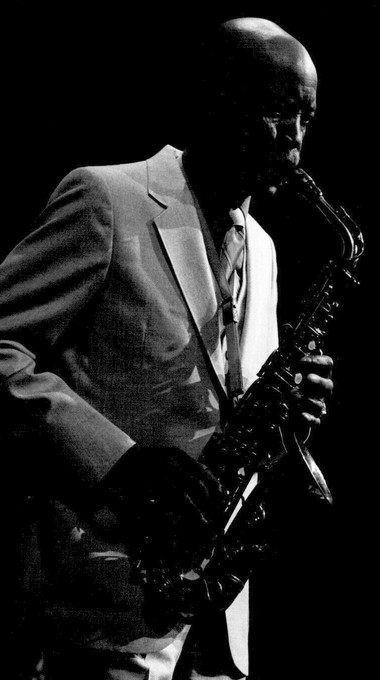 Eddie „Cleanhead“ Vinson (* 18. Dezember 1917 in Houston, Texas; † 2. Juli 1988 in Los Angeles) war ein US-amerikanischer Jazz- und Rhythm and Blues-Saxophonist, der auch als Blues-Sänger hervorgetreten ist.
Vinsons Eltern, beide Pianisten, brachten ihn früh mit Musik in Berührung. Bereits an der Highschool begann er Saxophon zu spielen. Er wurde 1935 Mitglied der Band von Chester Boone, der zu dieser Zeit auch T-Bone Walker angehörte. Von 1936 bis 1941 spielte er gemeinsam mit den Saxophonisten Arnett Cobb und Illinois Jacquet in der Band von Milt Larkin.
1941 ging er nach New York City und wurde Blues Shouter im Cootie Williams Orchestra, wo er Klassiker wie „Cherry Red“ einspielte. 1945 gründete er seine eigene Band, der auch der damals noch unbekannte John Coltrane angehörte. Hier entstanden einige seiner besten Stücke, u. a. „Kidney Stew“ und der legendäre „Cleanhead Blues“.
Kurzzeitig spielte er in der Band von Count Basie, und in den 1960er Jahren arbeitete er in der Johnny Otis Show. In den 1970er und 1980er Jahren hatte er mit seinem charakteristischen Mischstil aus Jazz und Blues vor allem in Europa Erfolg, er spielte allerdings auch in den USA ein Album mit der Gruppe Roomful of Blues und ein Live-Album mit Arnett Cobb und Alan Dawson ein.
http://de.wikipedia.org/wiki/Eddie_%E2%80%9ECleanhead%E2%80%9C_Vinson
 Eddie "Cleanhead" Vinson (December 18, 1917 – July 2, 1988) was an American jump blues, jazz, bebop and R&B alto saxophonist and blues shouter.[1] He was nicknamed Cleanhead after an incident in which his hair was accidentally destroyed by lye contained in a hair straightening product.[2]
Biography
Vinson was born in Houston, Texas. He was a member of the horn section in Milton Larkin's orchestra, which he joined in the late 1930s. At various times, he sat next to Arnett Cobb, Illinois Jacquet, and Tom Archia, while other members of the band included Cedric Haywood and Wild Bill Davis. After exiting Larkin's employment in 1941, Vinson picked up a few vocal tricks while on tour with bluesman Big Bill Broonzy. He then moved to New York and joined the Cootie Williams Orchestra from 1942 to 1945, recording such tunes as "Cherry Red". Vinson struck out on his own in 1945, forming his own large band, signing with Mercury Records, and enjoying a double-sided hit in 1947 with his R&B chart-topper "Old Maid Boogie", and the song that would prove to be his signature number, "Kidney Stew Blues".[3]
Vinson's jazz leanings were probably heightened during 1952-1953, when his band included a young John Coltrane. In the late 1960s, touring in a strict jazz capacity with Jay McShann, Vinson's career took an upswing. In the early 1960s Vinson moved to Los Angeles and began working with the Johnny Otis Revue. A 1970 appearance at the Monterey Jazz Festival with Otis spurred a bit of a comeback for Vinson. Throughout the 1970s he worked high-profile blues and jazz sessions for Count Basie, Otis, Roomful of Blues, Arnett Cobb, and Buddy Tate. He also composed steadily, including "Tune Up" and "Four", both of which have been incorrectly attributed to Miles Davis.[4] Vinson recorded extensively during his fifty-odd year career and performed regularly in Europe and the U.S.
He died in 1988, from a heart attack whilst undergoing chemotherapy,[5] in Los Angeles, California.
Eddie "Cleanhead" Vinson (December 18, 1917 – July 2, 1988) was an American jump blues, jazz, bebop and R&B alto saxophonist and blues shouter.[1] He was nicknamed Cleanhead after an incident in which his hair was accidentally destroyed by lye contained in a hair straightening product.[2]Biography
Vinson was born in Houston, Texas. He was a member of the horn section in Milton Larkin's orchestra, which he joined in the late 1930s. At various times, he sat next to Arnett Cobb, Illinois Jacquet, and Tom Archia, while other members of the band included Cedric Haywood and Wild Bill Davis. After exiting Larkin's employment in 1941, Vinson picked up a few vocal tricks while on tour with bluesman Big Bill Broonzy. He then moved to New York and joined the Cootie Williams Orchestra from 1942 to 1945, recording such tunes as "Cherry Red". Vinson struck out on his own in 1945, forming his own large band, signing with Mercury Records, and enjoying a double-sided hit in 1947 with his R&B chart-topper "Old Maid Boogie", and the song that would prove to be his signature number, "Kidney Stew Blues".[3]
Vinson's jazz leanings were probably heightened during 1952-1953, when his band included a young John Coltrane. In the late 1960s, touring in a strict jazz capacity with Jay McShann, Vinson's career took an upswing. In the early 1960s Vinson moved to Los Angeles and began working with the Johnny Otis Revue. A 1970 appearance at the Monterey Jazz Festival with Otis spurred a bit of a comeback for Vinson. Throughout the 1970s he worked high-profile blues and jazz sessions for Count Basie, Otis, Roomful of Blues, Arnett Cobb, and Buddy Tate. He also composed steadily, including "Tune Up" and "Four", both of which have been incorrectly attributed to Miles Davis.[4] Vinson recorded extensively during his fifty-odd year career and performed regularly in Europe and the U.S.
He died in 1988, from a heart attack whilst undergoing chemotherapy,[5] in Los Angeles, California.
Boogie Woogie Red +02.07.1992

Boogie Woogie Red (October 18, 1925 - July 2, 1992)[2] was a Detroit blues, boogie-woogie and jazz pianist, singer and songwriter.[1] He variously worked with Sonny Boy Williamson I, Washboard Willie, Baby Boy Warren, Lonnie Johnson, Tampa Red, John Lee Hooker and Memphis Slim.[2]
Biography
He was born Vernon Harrison in Rayville, Louisiana,[2] moving to Detroit in 1927.[1] In his adolescence, he began performing in local clubs and went on to work alongside Sonny Boy Williamson I, Baby Boy Warren and John Lee Hooker.[1]
In the mid 1970s, Red used to play solo piano at the Blind Pig, a small bar in Ann Arbor, Michigan. He recorded his own albums in 1974 and 1977, and toured Europe that same decade.[1] Red appeared on BBC Television's Old Grey Whistle Test in May 1973.[3]
He died in Detroit, in July 1992, at the age of 66.
Boogie Woogie Red - Brighton Polytecnic - Sussex - England (1973)


:format(jpeg):mode_rgb():quality(90)/discogs-images/R-3479914-1401188002-5560.jpeg.jpg)