1929 Golden "Big" Wheeler*
1932 Jesse Belvin*
1936 Big Voice Odom*
1951 Maurizio Bestetti*
1956 Mark Hummel*
1969 Nick Moss*
1979 Jackie Brenston+
2001 Rufus Thomas+
2008 André Greiner-Pol+
Happy Birthday
Golden "Big" Wheeler *15.12.1929

Golden "Big" Wheeler (December 15, 1929 – July 20, 1998)[2] was an American Chicago blues and electric blues singer, harmonicist and songwriter. He released two albums in his lifetime, and is best known for his recordings of the songs "Damn Good Mojo" and "Bone Orchard". He worked with the Ice Cream Men and Jimmy Johnson, and was the brother of fellow blues musician, James Wheeler.[2]
Biography
He was born Golden Wheeler in Baconton, Georgia. Wheeler left Georgia in 1941 and settled in Chicago, Illinois, in July 1954, where he befriended Little Walter.[3] His enthusiasm for playing the harmonica began when he was working as a taxicab driver.[1] One of his regular customers was the harmonica player Buster Brown, who later went on to have a hit record with "Fannie Mae" in 1960.[1] Wheeler fronted his own band by 1956, although he was a part-time musician, having to work for years as an auto mechanic to help raise his family.[1][3]
In 1993, Wheeler released his first album, Bone Orchard, where he was backed by a local outfit, the Ice Cream Men. Released by Delmark Records (Delmark 661), it recreated a 1950s feel with a double guitar and drum backing, with no bass guitar.[1][3] The Ice Cream Men comprised Johnny Burgin and Dave Waldman (guitars), plus Steve Cushing (drums). The album was produced by Robert G. Koester.[4]
His next issue was Jump In (1997), where his backing included a fuller sound incorporating his brother, James Wheeler, on guitar.[1][3] As well as the Wheeler brothers, other musicians utilised on the album were Baldhead Pete (drums), Allen Batts (piano) and Bob Stroger (bass), with Koester again producing the overall set.[5]
Golden "Big" Wheeler died of heart failure in Chicago in July 1998, at the age of 68.
Biography
He was born Golden Wheeler in Baconton, Georgia. Wheeler left Georgia in 1941 and settled in Chicago, Illinois, in July 1954, where he befriended Little Walter.[3] His enthusiasm for playing the harmonica began when he was working as a taxicab driver.[1] One of his regular customers was the harmonica player Buster Brown, who later went on to have a hit record with "Fannie Mae" in 1960.[1] Wheeler fronted his own band by 1956, although he was a part-time musician, having to work for years as an auto mechanic to help raise his family.[1][3]
In 1993, Wheeler released his first album, Bone Orchard, where he was backed by a local outfit, the Ice Cream Men. Released by Delmark Records (Delmark 661), it recreated a 1950s feel with a double guitar and drum backing, with no bass guitar.[1][3] The Ice Cream Men comprised Johnny Burgin and Dave Waldman (guitars), plus Steve Cushing (drums). The album was produced by Robert G. Koester.[4]
His next issue was Jump In (1997), where his backing included a fuller sound incorporating his brother, James Wheeler, on guitar.[1][3] As well as the Wheeler brothers, other musicians utilised on the album were Baldhead Pete (drums), Allen Batts (piano) and Bob Stroger (bass), with Koester again producing the overall set.[5]
Golden "Big" Wheeler died of heart failure in Chicago in July 1998, at the age of 68.
Jesse Belvin Geb. 15.12.1932
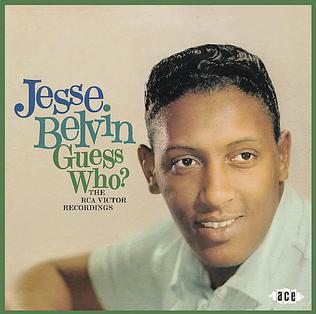
Jesse Lorenzo Belvin (* 15. Dezember 1932 in San Antonio; † 6. Februar 1960 in Fairhope, Arkansas) war ein amerikanischer R&B-Sänger, Pianist und Songwriter.
Leben
Der gebürtige Texaner wuchs in Los Angeles auf und kam schnell mit der aufblühenden örtlichen R&B-Szene in Kontakt. Jesse trat dem Vokalquartett Three Dots And A Dash bei, das 1951 vom Saxofonisten Big Jay McNeely für die Aufnahme von All the Wine Is Gone auf Imperial Records eingesetzt wurde. Er wurde der Anführer einer Clique um junge schwarze Musiker, darunter Richard Berry, Marvin Phillips, Sam Cooke, Eugene Church, Tony Allen und Gaynel Hodge.[1]
Mit Marvin Phillips in der Begleitung spielte Belvin 1952 erste Solo-Platten für Specialty Records ein. 1953 wurde eine Gemeinschaftsproduktion unter dem Namen Jesse & Marvin zu einem ersten Hit: Dream Girl kam bis auf den zweiten Platz der R&B-Charts.[2] Kurz darauf wurde Belvin allerdings zur Armee eingezogen.
Nachdem Jesse 1954 die Armee verlassen durfte, unterschrieb er einen Vertrag bei Modern Records in Los Angeles. Jesse Belvin hatte das Talent, in kurzer Zeit erfolgversprechende Lieder zu komponieren, wenn er auch selbst an einer Vermarktung nicht interessiert zu sein schien.[1] So verkaufte er die Autorenschaft seiner Melodien oft für wenige hundert Dollar. Earth Angel von den Penguins war sein bekanntestes Werk, das zu einem häufig gecoverten Doo-Wop-Standard wurde und als erste R&B-Platte gilt, der ein Crossover in den weißen Pop-Markt gelang.[2] So Fine von den Fiestas wird ihm ebenfalls zugeschrieben.[3]
Der Songwriter und Modern-Produzent George Motola spielte ihm in seinem Büro die unfertige Ballade Goodnight My Love (Pleasant Dreams) vor, für die Jesse die fehlende Bridge gewohnt spontan und passend intonierte. Der anwesende Songwriter John Marascalco kaufte sofort zur Hälfte die Songwriter-Credits.[3] Das Lied wurde ein R&B-Hit, den der DJ Alan Freed als Erkennungsmelodie für den Abspann seiner Radioshow einsetzte. Die Aufnahmeleitung bei den Sessions für Modern hatte meist der Arrangeur, Produzent und Orchesterleiter Maxwell Davis.[4] Jesse half auch bei Marvin & Johnny, dem neuen Projekt seines alten Partners Phillips, aus. Zudem war er an Aufnahmen der Sheiks und der Californians für Federal Records beteiligt und ist mit Eugene Church und Obediah „Young“ Jessie als The Cliques auf mehreren Modern-Singles zu hören.[4]
Im Jahr 1958 nahm Belvin mit Frankie Ervin und Johnny Guitar Watson als The Shields für George Motolas Tender Records den Titel You Cheated auf, der in die Pop-Charts kam.[2] Im gleichen Jahr übernahm Jesses Frau Jo Ann sein Management und konnte einen Vertrag mit dem Major-Label RCA Records aushandeln. Dort vermittelte ihm der Jazzer Shorty Rogers den Wert der eigenen Kompositionen, so dass beide zusammen mit den Gemahlinnen den Musikverlag Michele Music gründeten, um von nun an Jesses Urheberrechte zu bewirtschaften.[3]
Der A&R-Manager Dick Pierce und der Arrangeur Marty Paich planten für RCA eine Neuausrichtung des Images und Stils des R&B-Sängers. Mit seiner tiefen, warmen und entspannten Stimme sollte Belvin als eine Mischung aus Nat King Cole und Billy Eckstine den Pop-Markt erobern.[5] Tatsächlich gelangen ihm 1958 mit Funny auf Platz 81 und 1959 mit Guess Who auf Platz 31 zwei nationale Hits.[6] Sein durch den entspannten Gesang erworbener Beiname Mr. Easy war auch als Titel eines RCA-Albums für das folgende Jahr geplant. Das Album sollte Kollaborationen mit den RCA-Jazzern Art Pepper, Jack Sheldon, Frank Rosolino und Mel Lewis beinhalten.[3]
Am 6. Februar 1960 kamen Jesse Belvin und seine Frau Jo Ann jedoch nach einem Konzert in Little Rock, Arkansas, bei einem Unfall ums Leben. Einige Zeitungen und die befreundeten Musiker in Los Angeles diskutierten die Möglichkeit eines rassistisch motivieren Anschlags auf die Reifen des Unfallwagens.[7]
Jesse Belvins meist gelobtes Album Mr. Easy kam erst posthum heraus.[3] Da Belvin zum Zeitpunkt seines Todes 27 Jahre alt war, wird er gelegentlich im Zusammenhang mit dem Klub 27 genannt, der bekannte Musiker dieses Todesalters vereint.
Leben
Der gebürtige Texaner wuchs in Los Angeles auf und kam schnell mit der aufblühenden örtlichen R&B-Szene in Kontakt. Jesse trat dem Vokalquartett Three Dots And A Dash bei, das 1951 vom Saxofonisten Big Jay McNeely für die Aufnahme von All the Wine Is Gone auf Imperial Records eingesetzt wurde. Er wurde der Anführer einer Clique um junge schwarze Musiker, darunter Richard Berry, Marvin Phillips, Sam Cooke, Eugene Church, Tony Allen und Gaynel Hodge.[1]
Mit Marvin Phillips in der Begleitung spielte Belvin 1952 erste Solo-Platten für Specialty Records ein. 1953 wurde eine Gemeinschaftsproduktion unter dem Namen Jesse & Marvin zu einem ersten Hit: Dream Girl kam bis auf den zweiten Platz der R&B-Charts.[2] Kurz darauf wurde Belvin allerdings zur Armee eingezogen.
Nachdem Jesse 1954 die Armee verlassen durfte, unterschrieb er einen Vertrag bei Modern Records in Los Angeles. Jesse Belvin hatte das Talent, in kurzer Zeit erfolgversprechende Lieder zu komponieren, wenn er auch selbst an einer Vermarktung nicht interessiert zu sein schien.[1] So verkaufte er die Autorenschaft seiner Melodien oft für wenige hundert Dollar. Earth Angel von den Penguins war sein bekanntestes Werk, das zu einem häufig gecoverten Doo-Wop-Standard wurde und als erste R&B-Platte gilt, der ein Crossover in den weißen Pop-Markt gelang.[2] So Fine von den Fiestas wird ihm ebenfalls zugeschrieben.[3]
Der Songwriter und Modern-Produzent George Motola spielte ihm in seinem Büro die unfertige Ballade Goodnight My Love (Pleasant Dreams) vor, für die Jesse die fehlende Bridge gewohnt spontan und passend intonierte. Der anwesende Songwriter John Marascalco kaufte sofort zur Hälfte die Songwriter-Credits.[3] Das Lied wurde ein R&B-Hit, den der DJ Alan Freed als Erkennungsmelodie für den Abspann seiner Radioshow einsetzte. Die Aufnahmeleitung bei den Sessions für Modern hatte meist der Arrangeur, Produzent und Orchesterleiter Maxwell Davis.[4] Jesse half auch bei Marvin & Johnny, dem neuen Projekt seines alten Partners Phillips, aus. Zudem war er an Aufnahmen der Sheiks und der Californians für Federal Records beteiligt und ist mit Eugene Church und Obediah „Young“ Jessie als The Cliques auf mehreren Modern-Singles zu hören.[4]
Im Jahr 1958 nahm Belvin mit Frankie Ervin und Johnny Guitar Watson als The Shields für George Motolas Tender Records den Titel You Cheated auf, der in die Pop-Charts kam.[2] Im gleichen Jahr übernahm Jesses Frau Jo Ann sein Management und konnte einen Vertrag mit dem Major-Label RCA Records aushandeln. Dort vermittelte ihm der Jazzer Shorty Rogers den Wert der eigenen Kompositionen, so dass beide zusammen mit den Gemahlinnen den Musikverlag Michele Music gründeten, um von nun an Jesses Urheberrechte zu bewirtschaften.[3]
Der A&R-Manager Dick Pierce und der Arrangeur Marty Paich planten für RCA eine Neuausrichtung des Images und Stils des R&B-Sängers. Mit seiner tiefen, warmen und entspannten Stimme sollte Belvin als eine Mischung aus Nat King Cole und Billy Eckstine den Pop-Markt erobern.[5] Tatsächlich gelangen ihm 1958 mit Funny auf Platz 81 und 1959 mit Guess Who auf Platz 31 zwei nationale Hits.[6] Sein durch den entspannten Gesang erworbener Beiname Mr. Easy war auch als Titel eines RCA-Albums für das folgende Jahr geplant. Das Album sollte Kollaborationen mit den RCA-Jazzern Art Pepper, Jack Sheldon, Frank Rosolino und Mel Lewis beinhalten.[3]
Am 6. Februar 1960 kamen Jesse Belvin und seine Frau Jo Ann jedoch nach einem Konzert in Little Rock, Arkansas, bei einem Unfall ums Leben. Einige Zeitungen und die befreundeten Musiker in Los Angeles diskutierten die Möglichkeit eines rassistisch motivieren Anschlags auf die Reifen des Unfallwagens.[7]
Jesse Belvins meist gelobtes Album Mr. Easy kam erst posthum heraus.[3] Da Belvin zum Zeitpunkt seines Todes 27 Jahre alt war, wird er gelegentlich im Zusammenhang mit dem Klub 27 genannt, der bekannte Musiker dieses Todesalters vereint.
Jesse Lorenzo Belvin (December 15, 1932 – February 6, 1960) was an American R&B singer, pianist and songwriter popular in the 1950s, whose success was cut short by his death in a car crash aged 27.
Career
Belvin was born in Texarkana, Texas,[1][2] and moved with his family to Los Angeles at the age of five.
In 1950 he joined saxophonist Big Jay McNeely's backing vocal quartet, Three Dots and a Dash, and featured prominently on their record releases. In 1952 he joined Specialty Records. Although his early solo records were unsuccessful, his fourth record, "Dream Girl", credited to Jesse & Marvin and featuring Marvin Phillips on saxophone, reached #2 on the R&B charts in 1953.[3][4][5]
He was then drafted into the army, but continued to write songs. His composition "Earth Angel", eventually co-credited to Belvin and Hollywood Flames singers Curtis Williams and Gaynel Hodge after a legal dispute, was recorded by the Penguins, and became one of the first R&B singles to cross over onto the pop charts, selling a million copies in 1954/55.[4]
In 1956, he signed a contract with Modern Records, but also continued to sing for other labels under different names. His biggest hit was "Goodnight My Love" which reached #7 on the R&B chart. The piano on the session was reportedly played by the 11-year-old Barry White. The song became the closing theme to Alan Freed's rock and roll radio shows.[4]
Belvin’s other recordings for Modern were less successful, and in 1958 he recorded on Dot Records with a group, the Shields, who included lead singer Frankie Ervin and guitarist Johnny "Guitar" Watson. Their record, "You Cheated", reached #15 on the US pop chart and #11 on the R&B chart.[5] He also recorded with Eugene Church as the Cliques on a less successful single, "Girl of My Dreams" which was covered by the Four Lovers, two of whose members including Frankie Valli would later become the Four Seasons.
Inspired by his wife and manager Jo Ann to develop his style, he signed to RCA Records in 1959, and immediately had a Top 40 hit with "Guess Who", written by his wife.[6] He also recorded an album, Just Jesse Belvin, developing a more mature and sophisticated sound on ballads. His style was influenced by Nat "King" Cole and Billy Eckstine, and became a model for Sam Cooke and others. He acquired the nickname "Mr. Easy", and the record company began moulding him as a potential crossover star for white audiences, as well as a professional rival to Capitol Records' recording star Nat "King" Cole.[4]
He recorded a further series of tracks later in the year, with arranger Marty Paich and an orchestra including saxophonist Art Pepper. The songs included soulful covers of standards like "Blues in the Night", "In the Still of the Night", and "Makin' Whoopee", and were issued on the album Mr. Easy.
However, before the album was issued, and shortly after finishing a performance in Little Rock on a bill with Sam Cooke, Jackie Wilson, and Marv Johnson, Belvin and his wife were killed in a head-on collision at Hope, Arkansas. The concert was the first concert played before an integrated audience in the history of Little Rock, and was stopped twice by interruptions from whites in the audience, shouting racial epithets and urging the white teenagers in attendance to leave at once. There had also been several death threats on Belvin prior to the concert, which led to speculation that his car had been tampered with prior to the accident. The actual cause of the accident was the driver who nodded off and lost control. The driver had been recently fired for falling asleep at the wheel by another musical act.
Career
Belvin was born in Texarkana, Texas,[1][2] and moved with his family to Los Angeles at the age of five.
In 1950 he joined saxophonist Big Jay McNeely's backing vocal quartet, Three Dots and a Dash, and featured prominently on their record releases. In 1952 he joined Specialty Records. Although his early solo records were unsuccessful, his fourth record, "Dream Girl", credited to Jesse & Marvin and featuring Marvin Phillips on saxophone, reached #2 on the R&B charts in 1953.[3][4][5]
He was then drafted into the army, but continued to write songs. His composition "Earth Angel", eventually co-credited to Belvin and Hollywood Flames singers Curtis Williams and Gaynel Hodge after a legal dispute, was recorded by the Penguins, and became one of the first R&B singles to cross over onto the pop charts, selling a million copies in 1954/55.[4]
In 1956, he signed a contract with Modern Records, but also continued to sing for other labels under different names. His biggest hit was "Goodnight My Love" which reached #7 on the R&B chart. The piano on the session was reportedly played by the 11-year-old Barry White. The song became the closing theme to Alan Freed's rock and roll radio shows.[4]
Belvin’s other recordings for Modern were less successful, and in 1958 he recorded on Dot Records with a group, the Shields, who included lead singer Frankie Ervin and guitarist Johnny "Guitar" Watson. Their record, "You Cheated", reached #15 on the US pop chart and #11 on the R&B chart.[5] He also recorded with Eugene Church as the Cliques on a less successful single, "Girl of My Dreams" which was covered by the Four Lovers, two of whose members including Frankie Valli would later become the Four Seasons.
Inspired by his wife and manager Jo Ann to develop his style, he signed to RCA Records in 1959, and immediately had a Top 40 hit with "Guess Who", written by his wife.[6] He also recorded an album, Just Jesse Belvin, developing a more mature and sophisticated sound on ballads. His style was influenced by Nat "King" Cole and Billy Eckstine, and became a model for Sam Cooke and others. He acquired the nickname "Mr. Easy", and the record company began moulding him as a potential crossover star for white audiences, as well as a professional rival to Capitol Records' recording star Nat "King" Cole.[4]
He recorded a further series of tracks later in the year, with arranger Marty Paich and an orchestra including saxophonist Art Pepper. The songs included soulful covers of standards like "Blues in the Night", "In the Still of the Night", and "Makin' Whoopee", and were issued on the album Mr. Easy.
However, before the album was issued, and shortly after finishing a performance in Little Rock on a bill with Sam Cooke, Jackie Wilson, and Marv Johnson, Belvin and his wife were killed in a head-on collision at Hope, Arkansas. The concert was the first concert played before an integrated audience in the history of Little Rock, and was stopped twice by interruptions from whites in the audience, shouting racial epithets and urging the white teenagers in attendance to leave at once. There had also been several death threats on Belvin prior to the concert, which led to speculation that his car had been tampered with prior to the accident. The actual cause of the accident was the driver who nodded off and lost control. The driver had been recently fired for falling asleep at the wheel by another musical act.
Jesse Belvin - THE BLUES HAS GOT ME - 1953!
Big Voice Odom *15.12.1936
:format(jpeg):mode_rgb():quality(40)/discogs-images/A-1313379-1366384782-2402.jpeg.jpg)
Andrew Odom (December 15, 1936 – December 23, 1991) was an African American, Chicago and electric blues singer and songwriter, best known for his close resemblance to the singing style of Bobby Bland and B.B. King.[1][3]
He only recorded three solo albums in his lifetime, although he performed regularly as a journeyman around Chicago and further afield, until his death in 1991.
Life and career
Odom was born in Denham Springs, Louisiana, United States, the son of Lula Odom,[2] and learned to sing at his family's local church.[4] In 1955, Odom relocated to East St. Louis, Illinois,[5] and began work with Albert King and Johnny Williams.[1][4][5] In 1960, Odom moved on again, this time to his then lifelong home in Chicago. The following year, he recorded the song "East St. Louis" with the Little Aaron Band for the small outfit, Marlo Records.[1][5] Odom later met Earl Hooker, with whom he both recorded and performed for a number of years.[1] Another single of Odom's, "Turn On Your Love Light", was released by Nation Records in 1967, where he was billed as Andre Odom.[1][6]
When Earl Hooker was released from the hospital in 1968, he assembled a new band and began performing in the Chicago clubs and touring, against his doctor's advice. The band, with pianist Pinetop Perkins, harmonica player Carey Bell, bassist Geno Skaggs, and steel-guitar player Freddie Roulette, with vocalist Odom, was "widely acclaimed" and "considered [as] one of the best Earl had ever carried with him".[7] Based on a recommendation by Buddy Guy, Arhoolie Records recorded Two Bugs and a Roach by Hooker and his new band.[8] Hooker's later album, Don't Have to Worry (1969) included vocals performances by Odom, Johnny "Big Moose" Walker, and Hooker, as well as instrumental selections. It was stated that the session had a "coherence and consistency" that help make the album another part of Hooker's "finest musical legacy".[9]
Odom's debut album, Farther on the Road (1969), included his version of "Farther Up the Road", with accompaniment throughout by Earl Hooker on guitar and Johnny "Big Moose" Walker playing keyboards.[10] However, it remained unreleased for a few years.[1]
After Hooker's death in April 1970, Odom worked for the next decade as the singer with Jimmy Dawkins. In 1971, Delmark Records released Dawkins' second album All For Business, with Odom on vocals, and Otis Rush on guitar.[4][11] In 1974, Wasp Records issued as a single, "I Got This Bad Feeling", credited to B.B. Odom and the Earbenders.[12]
In 1982, Odom recorded his second solo album, Feel So Good, with accompaniment from Magic Slim and the Teardrops, which was originally issued by the small French record label, Black & Blue Records. It was subsequently reissued by Evidence Music in 1993.[1]
Flying Fish Records released Odom's third album in 1991. Goin' to California was co-produced by Steve Freund and included guitar work by Steve Katz, and was considered to be Odom's best recorded work.[1][4]
On December 23, 1991, Odom suffered a fatal heart attack, whilst driving from Buddy Guy's Legends to his next scheduled appearance at the Checkerboard Lounge, and was dead on arrival at Cook County Hospital, Chicago.[1][2]
Some of his work appeared on the compilation album, The Chicago Blues Box: The MCM Records Story.
He only recorded three solo albums in his lifetime, although he performed regularly as a journeyman around Chicago and further afield, until his death in 1991.
Life and career
Odom was born in Denham Springs, Louisiana, United States, the son of Lula Odom,[2] and learned to sing at his family's local church.[4] In 1955, Odom relocated to East St. Louis, Illinois,[5] and began work with Albert King and Johnny Williams.[1][4][5] In 1960, Odom moved on again, this time to his then lifelong home in Chicago. The following year, he recorded the song "East St. Louis" with the Little Aaron Band for the small outfit, Marlo Records.[1][5] Odom later met Earl Hooker, with whom he both recorded and performed for a number of years.[1] Another single of Odom's, "Turn On Your Love Light", was released by Nation Records in 1967, where he was billed as Andre Odom.[1][6]
When Earl Hooker was released from the hospital in 1968, he assembled a new band and began performing in the Chicago clubs and touring, against his doctor's advice. The band, with pianist Pinetop Perkins, harmonica player Carey Bell, bassist Geno Skaggs, and steel-guitar player Freddie Roulette, with vocalist Odom, was "widely acclaimed" and "considered [as] one of the best Earl had ever carried with him".[7] Based on a recommendation by Buddy Guy, Arhoolie Records recorded Two Bugs and a Roach by Hooker and his new band.[8] Hooker's later album, Don't Have to Worry (1969) included vocals performances by Odom, Johnny "Big Moose" Walker, and Hooker, as well as instrumental selections. It was stated that the session had a "coherence and consistency" that help make the album another part of Hooker's "finest musical legacy".[9]
Odom's debut album, Farther on the Road (1969), included his version of "Farther Up the Road", with accompaniment throughout by Earl Hooker on guitar and Johnny "Big Moose" Walker playing keyboards.[10] However, it remained unreleased for a few years.[1]
After Hooker's death in April 1970, Odom worked for the next decade as the singer with Jimmy Dawkins. In 1971, Delmark Records released Dawkins' second album All For Business, with Odom on vocals, and Otis Rush on guitar.[4][11] In 1974, Wasp Records issued as a single, "I Got This Bad Feeling", credited to B.B. Odom and the Earbenders.[12]
In 1982, Odom recorded his second solo album, Feel So Good, with accompaniment from Magic Slim and the Teardrops, which was originally issued by the small French record label, Black & Blue Records. It was subsequently reissued by Evidence Music in 1993.[1]
Flying Fish Records released Odom's third album in 1991. Goin' to California was co-produced by Steve Freund and included guitar work by Steve Katz, and was considered to be Odom's best recorded work.[1][4]
On December 23, 1991, Odom suffered a fatal heart attack, whilst driving from Buddy Guy's Legends to his next scheduled appearance at the Checkerboard Lounge, and was dead on arrival at Cook County Hospital, Chicago.[1][2]
Some of his work appeared on the compilation album, The Chicago Blues Box: The MCM Records Story.
Andrew'Big Voice'Odom ~ ''Feel So Good''(Modern Electric Chicago Blues 1982)
Mark Hummel Geb. 15.12.1956
http://www.markhummel.com/
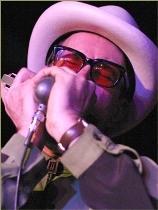
Mark Hummel (* 15. Dezember 1956 in New Haven, Connecticut) ist ein US-amerikanischer Mundharmonikaspieler.
Er wuchs in Los Angeles auf und entdeckte bereits in seiner Jugend die Leidenschaft für den Blues. Bluesharper wie Little Walter, James Cotton und Sonny Boy Williamson waren seine Vorbilder. Im Alter von 16 Jahren zog er nach Berkeley, California, wo er begann, mit lokalen Bluesmusikern wie Cool Papa, Boogie Jake, Mississippi Johnny Waters and Sonny Lane zusammen zu spielen.
1980 gründete er die Band The Blues Survivors. Nachdem 1985 die erste Platte auf den Markt kam, begann er mit seiner Band durch die gesamte USA, Kanada und Teile Europas zu touren. Er spielte zusammen mit Charlie Musselwhite, Brownie McGhee, Lowell Fulson und Eddie Taylor.
Von Plattenaufnahmen unterbrochen, ist Mark Hummel seit 1988 durchgehend auf Tournee. Er spielte auf verschiedenen Bluesfestivals, wie zum Beispiel beim San Francisco Blues Festival, Chicago Blues Festival, King Biscuit Blues Festival, Waterfront Blues Festival, Monterey Jazz Festival und war auch Jury-Mitglied bei den Hohner Harmonica World Championships in Deutschland.
Seit 1991 organisiert, produziert und gestaltet er seine alljährlichen Blues Harmonica Blowouts. An dieser Veranstaltungsreihe haben weitere Musiker der US-Bluesharps-Szene teilgenommen wie z. B. Charlie Musselwhite, James Cotton, Kim Wilson, RJ Mischo, James Harman und Annie Raines.
Im April 2008 kam er zusammen mit seiner Band "The Blues Survivors" - Rusty Zinn (g), Bob Welsh (b, g, p) und Marty Dodson (d) - zur "1. German Blues Harmonica Blowout Tour" nach Deutschland. Seine deutsche Booking Agentur "Crossroadblues Agency" konnte für diese Blowouts die drei Bluesharper Steve Baker, Keith Dunn und Doug Jay verpflichten.
Im November 2013 kam Hummel erneut auf eine Europa-/Deutschland-Tournee die unter dem Motto "Golden State - Lone Star Revue" stattfand. Das Thema war die Verschmelzung des "West Coast/California Blues" (Golden State) mit dem "Texas Blues" (Lone Star). Die mit ihm auf Tour gekommenen Musiker repräsentierten diese beiden US-Bundesstaaten: Hummel (Mundharmonika/Gesang), Little Charlie Baty (Gitarre) und RW Grigsby (Bass) standen für den West Coast Blues und Anson Funderburgh (Gitarre) sowie Wes Starr (Drums) für den rhythmus-orientierten Texas Blues.
Er wuchs in Los Angeles auf und entdeckte bereits in seiner Jugend die Leidenschaft für den Blues. Bluesharper wie Little Walter, James Cotton und Sonny Boy Williamson waren seine Vorbilder. Im Alter von 16 Jahren zog er nach Berkeley, California, wo er begann, mit lokalen Bluesmusikern wie Cool Papa, Boogie Jake, Mississippi Johnny Waters and Sonny Lane zusammen zu spielen.
1980 gründete er die Band The Blues Survivors. Nachdem 1985 die erste Platte auf den Markt kam, begann er mit seiner Band durch die gesamte USA, Kanada und Teile Europas zu touren. Er spielte zusammen mit Charlie Musselwhite, Brownie McGhee, Lowell Fulson und Eddie Taylor.
Von Plattenaufnahmen unterbrochen, ist Mark Hummel seit 1988 durchgehend auf Tournee. Er spielte auf verschiedenen Bluesfestivals, wie zum Beispiel beim San Francisco Blues Festival, Chicago Blues Festival, King Biscuit Blues Festival, Waterfront Blues Festival, Monterey Jazz Festival und war auch Jury-Mitglied bei den Hohner Harmonica World Championships in Deutschland.
Seit 1991 organisiert, produziert und gestaltet er seine alljährlichen Blues Harmonica Blowouts. An dieser Veranstaltungsreihe haben weitere Musiker der US-Bluesharps-Szene teilgenommen wie z. B. Charlie Musselwhite, James Cotton, Kim Wilson, RJ Mischo, James Harman und Annie Raines.
Im April 2008 kam er zusammen mit seiner Band "The Blues Survivors" - Rusty Zinn (g), Bob Welsh (b, g, p) und Marty Dodson (d) - zur "1. German Blues Harmonica Blowout Tour" nach Deutschland. Seine deutsche Booking Agentur "Crossroadblues Agency" konnte für diese Blowouts die drei Bluesharper Steve Baker, Keith Dunn und Doug Jay verpflichten.
Im November 2013 kam Hummel erneut auf eine Europa-/Deutschland-Tournee die unter dem Motto "Golden State - Lone Star Revue" stattfand. Das Thema war die Verschmelzung des "West Coast/California Blues" (Golden State) mit dem "Texas Blues" (Lone Star). Die mit ihm auf Tour gekommenen Musiker repräsentierten diese beiden US-Bundesstaaten: Hummel (Mundharmonika/Gesang), Little Charlie Baty (Gitarre) und RW Grigsby (Bass) standen für den West Coast Blues und Anson Funderburgh (Gitarre) sowie Wes Starr (Drums) für den rhythmus-orientierten Texas Blues.
Mark Hummel (born December 15, 1955, New Haven, Connecticut) is a Grammy nominated Blues Music Award winning American blues harmonica player, vocalist, songwriter, and long-time bandleader of The Blues Survivors. Since 1991, Hummel has produced the Blues Harmonica Blowout tour, of which he is also a featured performer. The shows have featured blues harmonica players such as James Cotton, Carey Bell, and Charlie Musselwhite. Although he is typically identified as performing West Coast blues, Hummel is also proficient in Delta blues, Chicago blues, swing and jazz styles.
Biography
Childhood
Mark Hummel was born in New Haven, Connecticut, and grew up in Los Angeles, California. Hummel and his family lived for a time in Aliso Village, a housing project in East Los Angeles that was demolished in 1999.[1] As Hummel explains in his forthcoming autobiography, his parents hired Mexican babysitters who often played R&B and soul music on the radio when they cared for him. It was through these babysitters that Hummel was first introduced to black music. Early on, he was also drawn to the music of Jimmy Reed and Slim Harpo.[2] Hummel did not start playing harmonica seriously until high school, and by the age of sixteen he was already playing in bands.[3]
Career
Hummel began working professionally after moving to the San Francisco Bay Area in the early 1970s.[3] A number of jazz and blues artists had already made their mark on Hummel at this point in his early career, including Billie Holiday, Count Basie, Ella Johnson, Lester Young, Jimmy Reed, Little Walter, Muddy Waters, Big Walter Horton, Paul Butterfield, Sonny Boy Williamson II, and Charlie Musselwhite.[3]
Once established in the East Bay in the 1970s, Hummel started performing with Boogie Jake, Sonny Lane, Cool Papa Sadler, and Mississippi Johnny Waters. He formed the Blues Survivors in 1980, and they have been his band ever since.[4] Since its inception the band has featured a number of popular performers before they became household names, such as King of the Hill creator and blues bassist Mike Judge. Other noteworthy members include Jimmy Bott, June Core, Rusty Zinn, Ronnie James, Chris Masterson, Charles Wheal and Joel Foy.[5] Over the years Hummel has also toured or recorded with Sue Foley, Charles Brown, Brownie McGhee, Willie "Big Eyes" Smith, Bob Stroger, Dave Myers, Jimmy Pugh, Kid Andersen and Frank "Paris Slim" Goldwasser.[6] Hummel has also toured with Lowell Fulson, Jimmy Rogers, and Eddie Taylor; live recordings from those tours are available on his CD compilation Chicago Blues Party. In addition to playing in blues clubs across the U.S. and throughout Europe, Hummel and the Blues Survivors have performed at the San Francisco Blues Festival, the Sonora Blues Festival, the Chicago Blues Festival, the King Biscuit Blues Festival, and the Monterey Jazz Festival.[7] He has also contributed CD reviews to Blues Wax, an online weekly blues music magazine.[8] Writing in Living Blues, Lee Hildebrand described Hummel's performance at the 1978 San Francisco Blues Festival as one that "epitomized the high musical quality of the entire weekend" festival.[9]
Jerry Portnoy, a blues harmonica player who used to play in Muddy Waters' band, described Hummel as a musician who possesses "tremendous chops and great knowledge, not only of traditional blues harmonica but other music as well - R&B and swing and big-band jazz. He brings a lot to the table when he plays."[10] He appeared on the cover of the August/September 2005 issue of Blues Revue magazine, and in April 2010, Hummel was a guest on the House of Blues Radio Hour, a syndicated weekly radio program hosted by Dan Aykroyd (in character as Elwood Blues).[11]
Hummel is also known for founding the Blues Harmonica Blowout tour, which he has produced regularly since 1991. The tour features a rotating lineup of veteran harmonica players backed by the Blues Survivors. Past tours have included Snooky Pryor, James Cotton, Charlie Musselwhite, Kim Wilson, Jerry Portnoy, Magic Dick, Rod Piazza, Paul DeLay, James Harman, Mitch Kashmar, Huey Lewis and many others.[12] Live recordings from these tours can be found on at least four CD releases from Mountain Top Productions and Electro-Fi Records (see discography below).
Hummel wrote a book about his musical travels for Mountain Top Publishing called Big Road Blues : 12 Bars On I-80 in 2012 that is available as a Kindle book or paperback.
Hummel currently endorses Sonny Jr. harmonica amplifiers, Seydel harmonicas, and Fat Bottom microphones.[13] He is a contributor to David Barrett's BluesHarmonica.com.[14]
In 2013, Hummel was nominated for a Blues Music Award in the 'Instrumentalist - Harmonica' category.[15]
As of 2012 Hummel toured with a California and Texas aggregation, Golden State-Lone Star Revue, a group that featured Anson Funderburgh and Little Charlie Baty on guitars plus RW Grigsby on bass, and Wes Starr on drums.
In 2014, Blind Pig's Remembering Little Walter album, that Hummel produced and performed on, was nominated for Best Blues CD at the Grammy Awards. It also won two Blues Music Awards for Best Blues CD and Best Traditional Blues CD. In April 2014, ElectroFi Records released Hummel's The Hustle Is Really On. It featured the Golden State-Lone Star Revue as well as Kid Andersen, Sid Morris, Doug James and June Core. The CD made the Living Blues Radio Charts for four months reaching number two.
Biography
Childhood
Mark Hummel was born in New Haven, Connecticut, and grew up in Los Angeles, California. Hummel and his family lived for a time in Aliso Village, a housing project in East Los Angeles that was demolished in 1999.[1] As Hummel explains in his forthcoming autobiography, his parents hired Mexican babysitters who often played R&B and soul music on the radio when they cared for him. It was through these babysitters that Hummel was first introduced to black music. Early on, he was also drawn to the music of Jimmy Reed and Slim Harpo.[2] Hummel did not start playing harmonica seriously until high school, and by the age of sixteen he was already playing in bands.[3]
Career
Hummel began working professionally after moving to the San Francisco Bay Area in the early 1970s.[3] A number of jazz and blues artists had already made their mark on Hummel at this point in his early career, including Billie Holiday, Count Basie, Ella Johnson, Lester Young, Jimmy Reed, Little Walter, Muddy Waters, Big Walter Horton, Paul Butterfield, Sonny Boy Williamson II, and Charlie Musselwhite.[3]
Once established in the East Bay in the 1970s, Hummel started performing with Boogie Jake, Sonny Lane, Cool Papa Sadler, and Mississippi Johnny Waters. He formed the Blues Survivors in 1980, and they have been his band ever since.[4] Since its inception the band has featured a number of popular performers before they became household names, such as King of the Hill creator and blues bassist Mike Judge. Other noteworthy members include Jimmy Bott, June Core, Rusty Zinn, Ronnie James, Chris Masterson, Charles Wheal and Joel Foy.[5] Over the years Hummel has also toured or recorded with Sue Foley, Charles Brown, Brownie McGhee, Willie "Big Eyes" Smith, Bob Stroger, Dave Myers, Jimmy Pugh, Kid Andersen and Frank "Paris Slim" Goldwasser.[6] Hummel has also toured with Lowell Fulson, Jimmy Rogers, and Eddie Taylor; live recordings from those tours are available on his CD compilation Chicago Blues Party. In addition to playing in blues clubs across the U.S. and throughout Europe, Hummel and the Blues Survivors have performed at the San Francisco Blues Festival, the Sonora Blues Festival, the Chicago Blues Festival, the King Biscuit Blues Festival, and the Monterey Jazz Festival.[7] He has also contributed CD reviews to Blues Wax, an online weekly blues music magazine.[8] Writing in Living Blues, Lee Hildebrand described Hummel's performance at the 1978 San Francisco Blues Festival as one that "epitomized the high musical quality of the entire weekend" festival.[9]
Jerry Portnoy, a blues harmonica player who used to play in Muddy Waters' band, described Hummel as a musician who possesses "tremendous chops and great knowledge, not only of traditional blues harmonica but other music as well - R&B and swing and big-band jazz. He brings a lot to the table when he plays."[10] He appeared on the cover of the August/September 2005 issue of Blues Revue magazine, and in April 2010, Hummel was a guest on the House of Blues Radio Hour, a syndicated weekly radio program hosted by Dan Aykroyd (in character as Elwood Blues).[11]
Hummel is also known for founding the Blues Harmonica Blowout tour, which he has produced regularly since 1991. The tour features a rotating lineup of veteran harmonica players backed by the Blues Survivors. Past tours have included Snooky Pryor, James Cotton, Charlie Musselwhite, Kim Wilson, Jerry Portnoy, Magic Dick, Rod Piazza, Paul DeLay, James Harman, Mitch Kashmar, Huey Lewis and many others.[12] Live recordings from these tours can be found on at least four CD releases from Mountain Top Productions and Electro-Fi Records (see discography below).
Hummel wrote a book about his musical travels for Mountain Top Publishing called Big Road Blues : 12 Bars On I-80 in 2012 that is available as a Kindle book or paperback.
Hummel currently endorses Sonny Jr. harmonica amplifiers, Seydel harmonicas, and Fat Bottom microphones.[13] He is a contributor to David Barrett's BluesHarmonica.com.[14]
In 2013, Hummel was nominated for a Blues Music Award in the 'Instrumentalist - Harmonica' category.[15]
As of 2012 Hummel toured with a California and Texas aggregation, Golden State-Lone Star Revue, a group that featured Anson Funderburgh and Little Charlie Baty on guitars plus RW Grigsby on bass, and Wes Starr on drums.
In 2014, Blind Pig's Remembering Little Walter album, that Hummel produced and performed on, was nominated for Best Blues CD at the Grammy Awards. It also won two Blues Music Awards for Best Blues CD and Best Traditional Blues CD. In April 2014, ElectroFi Records released Hummel's The Hustle Is Really On. It featured the Golden State-Lone Star Revue as well as Kid Andersen, Sid Morris, Doug James and June Core. The CD made the Living Blues Radio Charts for four months reaching number two.
Mark Hummel-Kim Wilson- Charlie Musselwhite Harp Blowout
Mark Hummel Creeper Returns
Maurizio Bestetti *15.12.1951

Ein echter Bluesman, der seit den 60er Jahren aktive Mailänder Gitarrist Maurizio Bestetti. Er ist ein Pionier des italienischen Blues, spielte in den Siebzigernfünf Jahre lang mitCooper Terry‚s Band, gründete später zusammen mit Gigi Cifarelli und Michele Bozza die “Tre Castelli Blues Band”, die ein Jahr lang die Blues House Band des “Capolinea” war, des Tempels des italienischen Jazz und u.a. mit Tony Scott und Louis Hayes spielte.
Nachdem er Mailand verlassen hatte, gründete Bestetti zusammen mit dem Bassisten Gigi Bonomelli und dem Schlagzeuger das Blues Power Trio: der explosive Stil des Gitarristen wird ruhiger und wendet sich mehr dem traditionellen Delta- und Chicago Blues hin. Mit dieser Band spielt er u.a. mit Louisiana Red, Chicago Bob Nelson, Lincoln Beau Beauchamps, als Solist mit Bob Margolin und mit den Mitgliedern der Blues Brothers Blue Lou Marini, John Tropea, Rusty Cloud, Eric Udel, Lee Finkelstein, Larry Farrell, mit denen er weiterhin spielt und gut befreundet ist.
Die aktuelle Besetzung der Band hat einen jazzigeren Einschlag mit einer groovigen Rhythmusgruppe bestehend aus dem Organisten und Pianisten Michael Lösch und dem Schlazeuger Enrico Tommasini.
Mit dieser Besetzung erscheint 2013 die neu CD “ THE WALKIN‘ MAN” (Cat Sound Records), die ausgezeichnete Rezensionen erhielt.
Nachdem er Mailand verlassen hatte, gründete Bestetti zusammen mit dem Bassisten Gigi Bonomelli und dem Schlagzeuger das Blues Power Trio: der explosive Stil des Gitarristen wird ruhiger und wendet sich mehr dem traditionellen Delta- und Chicago Blues hin. Mit dieser Band spielt er u.a. mit Louisiana Red, Chicago Bob Nelson, Lincoln Beau Beauchamps, als Solist mit Bob Margolin und mit den Mitgliedern der Blues Brothers Blue Lou Marini, John Tropea, Rusty Cloud, Eric Udel, Lee Finkelstein, Larry Farrell, mit denen er weiterhin spielt und gut befreundet ist.
Die aktuelle Besetzung der Band hat einen jazzigeren Einschlag mit einer groovigen Rhythmusgruppe bestehend aus dem Organisten und Pianisten Michael Lösch und dem Schlazeuger Enrico Tommasini.
Mit dieser Besetzung erscheint 2013 die neu CD “ THE WALKIN‘ MAN” (Cat Sound Records), die ausgezeichnete Rezensionen erhielt.
Maurizio Bestetti ,Italian Blues Legend, originally from Milan, began playing the Blues in 1964.
In 1970 he became a member of the Cooper Terry Group with whom he played for five years. he then dedicated himself to other experinces, returning to the Blues after a three year break, by joining the “Tre Castelli (three castles) Blues Band”, working alongside Gigi Cifarelli and Michele Bozza.
For a year, the group were the resident band at the “Capolinea Club” the Jazz Temple of Milan, after which Maurizio reunited for a brief period with his old friend Cooper Terry, playing with the “Blue Phantom Band”.
Following periods of alternation and different band formations, Maurizio had the opportunity to collaborate and work with Louisiana Red, Tony Scott, Louis Hayes, and Aida Cooper.
In 1994 he met bassist Gigi Bonomelli and percussionist Riccardo Orsi with whom he formed the semi -accoustic Blues trio, “Blues Power” changing a good part of his seasoned experiences in the Milan Blues scene for a quieter and more traditional style of playing.
The trio have the traditional characteristics of the “Downhome Blues” style, making their own interpretations of classic tracks from Delta and Chicago Blues, leaving aside the rowdiness of Rock Blues or Rythmn ‘n’ Blues.
Here we find a return to the old fashioned and more radical playing styles which come directly from the old Country Blues artists such as Blind Willie Johnson, Robert Johnson and Tampa Red, to name but a few.
Slide Guitar and Voice at a set volume (not too loud…softly softly) help to build an electric atmosphere on stage as these professional performers gradually unfold and tell the Story of the Blues.
This positive attitude to their music has been well confirmed by the review of their CD published in 1998 by SAAR RECORDS.
With these good reccomendations, Blues Power then participated in many music Festivals, e.g.
Nave Blues , Rovigo Deltablues , Bellinzona Piazza Blues (Swiss), Sestri Levante Blues Festival, Bordighera Jazz & Blues,Salento Estate,Bologna Blues & Gospel, Novigrad Blues Fest (Croatia), Trasimeno Blues Festival,Blues House Milan, Verona Estate, Fiemme Skj Jazz, Locarno Euro Blues (Swiss), Reggio Calabria “Jazz,Blues & Gospel”, National Preview of the Vim Venders Movie “The Soul of a Man” (Trieste) Valle Maggia Magic Blues (Swiss) Lario Jazz Festival,Rapperswil jazz'n'blues (Swiss) ,RAI (Italian Radio & Television) on 3 dedicated Live Broadcast.
All of which helped to confirm their validity as a seasoned & professional Blues Band, delightfully different in these times of mundane “Copy Bands”.
In 2001, Gigi Bonomelli left the band and his place was taken by Roberto Zecchinelli, a very capable Jazz Bassist who was immediately able to expertly insert himself into the delicate rythmic structure of the band, no mean task considering the perfectionism of “Best” and Orsi who would make heavy demands on the finest of players. fortunately, Zecchinelli is one of the finest.
with this line-up, they went on to work with Louisiana Red, Chicago Bob Nelson,Lincoln Beau Beauchamps and Blue Lou Marini, john Tropea,Rusty Cloud,Eric Udel,Lee Winkelstein,Larry Farrell. of the BLUES BROTHERS BAND,Bob Margolin ,MUDDY WATERS'S guitar player for over 15 years.In 2003, Maurizio was nominated for the “Italian Blues” Award, and was officially placed, by the Website “Blues & Blues” as being number Two amongst the Top Five Accoustic Guitarists in Italy.In 2006 Riccardo Orsi left the band and his place was taken by Mario Punzi a refined Drummer. During their concerts, an important aspect is presented in their performances of songs by great artists like, Muddy Waters and Willy Dixon. the songs are rendered with surprising naturalness and originality, demonstrating a deep understanding within the band, of the subtleties of the songs, and the development of their particular repertoire.
Blues Power on stage, demonstrate also, that we are not in the presence of “yet another “”Unplugged”” Fashion Band” jumping on the bandwagon just to be popular, but that we are privileged to be in front of seasoned, professional, mature and dedicated musicians who have chosen precisely, according to their characters, to follow the path that they have created.
Maurizio Bestetti also perform him with a" Hammond Trio ". He proposes a sort of jazzy blues, with Michael Loesh (hammond) and Enrico Tommasini (drums) two among the more appreciated jazz players in Italy.
(visualizza meno)
In 1970 he became a member of the Cooper Terry Group with whom he played for five years. he then dedicated himself to other experinces, returning to the Blues after a three year break, by joining the “Tre Castelli (three castles) Blues Band”, working alongside Gigi Cifarelli and Michele Bozza.
For a year, the group were the resident band at the “Capolinea Club” the Jazz Temple of Milan, after which Maurizio reunited for a brief period with his old friend Cooper Terry, playing with the “Blue Phantom Band”.
Following periods of alternation and different band formations, Maurizio had the opportunity to collaborate and work with Louisiana Red, Tony Scott, Louis Hayes, and Aida Cooper.
In 1994 he met bassist Gigi Bonomelli and percussionist Riccardo Orsi with whom he formed the semi -accoustic Blues trio, “Blues Power” changing a good part of his seasoned experiences in the Milan Blues scene for a quieter and more traditional style of playing.
The trio have the traditional characteristics of the “Downhome Blues” style, making their own interpretations of classic tracks from Delta and Chicago Blues, leaving aside the rowdiness of Rock Blues or Rythmn ‘n’ Blues.
Here we find a return to the old fashioned and more radical playing styles which come directly from the old Country Blues artists such as Blind Willie Johnson, Robert Johnson and Tampa Red, to name but a few.
Slide Guitar and Voice at a set volume (not too loud…softly softly) help to build an electric atmosphere on stage as these professional performers gradually unfold and tell the Story of the Blues.
This positive attitude to their music has been well confirmed by the review of their CD published in 1998 by SAAR RECORDS.
With these good reccomendations, Blues Power then participated in many music Festivals, e.g.
Nave Blues , Rovigo Deltablues , Bellinzona Piazza Blues (Swiss), Sestri Levante Blues Festival, Bordighera Jazz & Blues,Salento Estate,Bologna Blues & Gospel, Novigrad Blues Fest (Croatia), Trasimeno Blues Festival,Blues House Milan, Verona Estate, Fiemme Skj Jazz, Locarno Euro Blues (Swiss), Reggio Calabria “Jazz,Blues & Gospel”, National Preview of the Vim Venders Movie “The Soul of a Man” (Trieste) Valle Maggia Magic Blues (Swiss) Lario Jazz Festival,Rapperswil jazz'n'blues (Swiss) ,RAI (Italian Radio & Television) on 3 dedicated Live Broadcast.
All of which helped to confirm their validity as a seasoned & professional Blues Band, delightfully different in these times of mundane “Copy Bands”.
In 2001, Gigi Bonomelli left the band and his place was taken by Roberto Zecchinelli, a very capable Jazz Bassist who was immediately able to expertly insert himself into the delicate rythmic structure of the band, no mean task considering the perfectionism of “Best” and Orsi who would make heavy demands on the finest of players. fortunately, Zecchinelli is one of the finest.
with this line-up, they went on to work with Louisiana Red, Chicago Bob Nelson,Lincoln Beau Beauchamps and Blue Lou Marini, john Tropea,Rusty Cloud,Eric Udel,Lee Winkelstein,Larry Farrell. of the BLUES BROTHERS BAND,Bob Margolin ,MUDDY WATERS'S guitar player for over 15 years.In 2003, Maurizio was nominated for the “Italian Blues” Award, and was officially placed, by the Website “Blues & Blues” as being number Two amongst the Top Five Accoustic Guitarists in Italy.In 2006 Riccardo Orsi left the band and his place was taken by Mario Punzi a refined Drummer. During their concerts, an important aspect is presented in their performances of songs by great artists like, Muddy Waters and Willy Dixon. the songs are rendered with surprising naturalness and originality, demonstrating a deep understanding within the band, of the subtleties of the songs, and the development of their particular repertoire.
Blues Power on stage, demonstrate also, that we are not in the presence of “yet another “”Unplugged”” Fashion Band” jumping on the bandwagon just to be popular, but that we are privileged to be in front of seasoned, professional, mature and dedicated musicians who have chosen precisely, according to their characters, to follow the path that they have created.
Maurizio Bestetti also perform him with a" Hammond Trio ". He proposes a sort of jazzy blues, with Michael Loesh (hammond) and Enrico Tommasini (drums) two among the more appreciated jazz players in Italy.
(visualizza meno)
An evening with the BLUES from South to South - MAURIZIO BESTETTI
Nick Moss Geb. 15.12.1969

Nick Moss lernte erst einmal die Bass Gitarre zu spielen und wurde schon als Teenager Bandmitglied in Buddy Scott's Band. Nach zwei Jahren wurde er in die Jimmy Dawkins Band aufgenommen. Die nächste Aufgabe war für ihn die Legendary Blues Band, der er 1993 beitrat und mit ihnen ihr letztes Album "Money Talks" aufnahm. Bandleader Willie Big Eyes Smith war es der ihn überredete doch zur Lead-Gitarre zu wechseln, was er dann auch für weitere zwei Jahre bei der Legendary Blues Band tat. Nach deren Ende war es Jimmy Rogers der ihn rief und in seiner Band aufnahm. Mehr als drei Jahre spielte er mit dieser Blues-Legende bevor er dann seine Solo-Karriere startete. Sein erstes Album veröffentlichte er im Jahr 1999, First Offence (re-release 2003), seine Band waren zu der Zeit die Flip Tops, Lynwood Slim blies auf dem Album die Harp. Seine nächsten beiden Veröffentlichungen waren Got a new Plan und Count Your Blessings, beide wurden für den W.C.Handy Award nominiert genau wie die beiden Nachfolger Sadie Mae und Live at Chan's. In diesem Club in Rhode Island nahm er 2009 auch sein zweites Live Album Combo Plattern No.2 auf. Gerry Hundt spielte auf den Album die Harp. In 2008 produzierte Nick Moss das Magic Slim Album "Midnight Blues". Ab 2009 änderte sich der Band Name von The Flip Tops in Nick Moss Band. Sein neuntes Album Here I Am wurde für den Blues Award als bestes Album in der Kategorie Blues-Rock Album nominiert. 2014 erschien Time Ain't Free.
Nick Moss mag der Fackelträger des traditionellen Chicago Blues sein, er ist tief verwurzelt im Blues aber er liebt auch die Rock Musik von The Faces, Led Zeppelin, Free und Jimi Hendrix. Heute gehört Nick Moss mit seiner Band zu den jüngeren Chicago Blues Bands zu denen auch The Cash Box Kings und die Kilborn Alley Blues Band gehören.
Nick Moss (born 15.Dec.,1969, Chicago, Illinois, United States) is an American Chicago and electric blues musician. He has released ten albums to date, all on his own Blue Bella Records label. He has played alongside or with Buddy Scott, Jimmy Dawkins, Jimmy Rogers and The Legendary Blues Band; as well as more latterly fronting his own group, Nick Moss and the Flip Tops.[1] The music journalist Bill Dahl, stated Moss possesses "mastery of the classic Chicago sound."[2]
Biography
Moss originally learned to play the bass guitar, and joined Buddy Scott's backing band in his late teens. He played there for two years before moving on to join up with Jimmy Dawkins.[1] By 1993, he had joined The Legendary Blues Band, and played bass on their final album, Money Talks.[3] The band's frontman, Willie "Big Eyes" Smith, suggested Moss should switch to lead guitar and he spent over two years there before they split up.[1]
Moss moved on to play as Jimmy Rogers' band guitarist for another three years, before going solo. His debut album First Offence (re-released in 2003) was billed as by Nick Moss and the Flip Tops, and included a guest appearance from the harmonica playing Lynwood Slim.[1] His next two offerings, Got a New Plan (2001) and Count Your Blessings (2003) were both nominated for a W. C. Handy Award, as were the follow-ups Sadie Mae (2005) and Live at Chan's (2006).[2]
Nick Moss and the Flip Tops have recorded two live albums at Chan's, a Rhode Island club. The latter included the harp work of Gerry Hundt.[4] Moss and the Flip Tops played at Memphis in May, and the Ottawa Blues Festival in 2008.[5] The same year Moss produced Magic Slim's album, Midnight Blues. Moss has since dropped the "Flip Tops" from his band name, and now calls his group The Nick Moss Band.
Moss' band lineup has gone through many changes in the last decade, but the current lineup features Michael Ledbetter (vocals and rhythm guitar), Patrick Seals (drums), Nick Fane (bass and backup vocals), and Taylor Streiff (piano and organ).
Moss's ninth album, Here I Am, was released on November 22, 2011.[2] It was nominated for a Blues Music Award in 2013 in the 'Rock Blues Album' category.[6]
Moss' 10th album, Time Ain't Free, was released in March 2014.
Nick Moss Band Live @ Smoken' Joe's 6/10/13
R.I.P.
Rufus Thomas +15.12.2001

Rufus Thomas (* 26. März 1917 in Cayce, Mississippi; † 15. Dezember 2001 in Memphis, Tennessee) war ein US-amerikanischer Blues- und Soul-Sänger, Radiomoderator, Entertainer und Talentscout. Er ist der Vater der Soul-Sängerin Carla Thomas und des Stax-Pianisten Marvell Thomas.
Leben
Rufus Thomas begann seine Karriere in den 1930ern bei den Rabbit Foot Minstrels. In den 1940ern arbeitete er als Disc Jockey einer Radioshow bei WDIA in Memphis, einen der ersten schwarzen Radiostationen. Auf der Beale Street in Memphis betrieb er eine Talentshow, aus der unter anderem B. B. King, Bobby Blue Bland und Ike Turner hervorgingen.
Thomas’ Grab in Memphis
1953 hatte Thomas mit Bear Cat seinen ersten Hit, der als Antwort auf Big Mama Thorntons Hit Hound Dog zu verstehen ist. Die Aufnahme war der erste nationale Hit für Sun Records.[1] 1959 nahm er mit seiner Tochter Carla Cause I Love You auf. Vater und Tochter wurden damit die ersten Stars des Stax-Labels. Seine Tochter wurde der größere Star bei Stax und übertraf ihren Vater, der aber regelmäßig Platten veröffentlichte. Sein größter Hit war Walking The Dog, das später auch von den Rolling Stones und Aerosmith aufgenommen wurde und das zum Live-Programm von Grateful Dead und John Cale gehörte. Seine erfolgreichste Periode waren die frühen 1970er Jahre, in denen er mit Do the Funky Chicken, (Do The) Push and Pull, und The Breakdown Hitnummern in den R&B-Charts hatte. Der Konkurs von Stax-Records Mitte der 1970er Jahre beendete seine Karriere, ebenso wie die vieler anderer Künstler des Labels.
1992 wurde Rufus Thomas in die Rock and Roll Hall of Fame, 2001 in die Blues Hall of Fame aufgenommen. Er starb 2001 in Memphis an Herzversagen.
Rufus Thomas, Jr. (March 26, 1917 – December 15, 2001)[1][2] was an American rhythm and blues, funk, soul and blues singer, songwriter, dancer, DJ and comic entertainer from Memphis, Tennessee. He recorded for several labels including Chess and Sun in the 1950s, before becoming established in the 1960s and 1970s at Stax Records. He is best known for his novelty dance records including "Walking the Dog" (1963), "Do the Funky Chicken" (1969) and "(Do the) Push and Pull" (1970). According to the Mississippi Blues Commission, "Rufus Thomas embodied the spirit of Memphis music perhaps more than any other artist, and from the early 1940s until his death... occupied many important roles in the local scene."[3]
His career began as a tap dancer, vaudeville performer, and master of ceremonies in the 1930s, and he later also worked as a disc jockey on radio station WDIA in Memphis, both before and after his recordings became successful. He remained active into the 1990s, and as a performer and recording artist was often billed as "The World's Oldest Teenager". He was the father of singers Carla Thomas (with whom he recorded duets) and Vaneese Thomas, and keyboard player Marvell Thomas.
Early life
Born a sharecropper's son in the rural community of Cayce, Mississippi, Thomas moved to Memphis, Tennessee with his family around 1920.[3] His mother was "a church woman". Thomas made his debut as a performer at the age of six, playing a frog in a school theatrical production. By the age of 10, he was a tap dancer, performing on the streets as well as in amateur productions at Memphis' Booker T. Washington High School.[3][4] From the age of 13, he worked with Nat D. Williams, his high school history teacher who was also a pioneer black DJ at WDIA and columnist for black newspapers, as a master of ceremonies at talent shows in the Palace Theater on Beale Street.[4][5]
Early career as a performer
Thomas also began performing in traveling tent shows.[6] After graduating from high school, he attended one semester at Tennessee A&I University, but due to economic constraints left to pursue a career as a full-time entertainer. In 1936 he joined the Rabbit Foot Minstrels, an all-black revue that toured the South, as a tap dancer and comedian, sometimes part of a duo, Rufus and Johnny.[1] He married Cornelia Lorene Wilson in 1940, at a service officiated by Aretha Franklin's father, Rev. C. L. Franklin,[7] and the couple settled in Memphis. Thomas worked a day job in the American Finishing Company textile bleaching plant, which he continued to do for over 20 years.[3] He also formed a comedy and dancing duo, Rufus and Bones, with Robert "Bones" Couch, and they took over as MCs at the Palace Theater, often presenting amateur hour shows. One early winner was B. B. King, and others first discovered by Thomas later in the 1940s included Bobby Bland and Johnny Ace.[1][4][8]
In the early 1940s, Thomas began writing and performing his own songs. He regarded Louis Armstrong, Fats Waller and Gatemouth Moore as his musical influences.[3] He made his professional singing debut at the Elks Club on Beale Street, filling in for another singer at the last minute, and during the 1940s became a regular performer in Memphis nightclubs such as Currie`s Club Tropicana.[3] As an established performer in Memphis, aged 33 in 1950, Thomas recorded his first 78 rpm single, for Jesse Erickson's small Star Talent label in Dallas, Texas. Thomas said: "I just wanted to make a record. I never thought of getting rich. I just wanted to be known, be a recording artist..... [But] the record sold five copies and I bought four of them."[9] The record, "I'll Be a Good Boy" / "I'm So Worried", gained a Billboard review stating: "Thomas shows first class style on a slow blues".[10] He also recorded for the Bullet label in Nashville, Tennessee, when he recorded with Bobby Plater's Orchestra and was credited as "Mr. Swing"; the recordings were not recognised by researchers as being by Thomas until 1996.[11] In 1951 he made his first recordings at Sam Phillips' Sun Studio, for the Chess label, but they were not commercially successful.[11][12]
He began working as a DJ at radio station WDIA in 1951, and hosted an afternoon R&B show called Hoot and Holler. WDIA, featuring an African-American format, was known as "the mother station of the Negroes" and became an important source of blues and R&B music for a generation, its audience consisting of white as well as black listeners. Thomas used to introduce his shows saying: "I'm young, I'm loose, I'm full of juice, I got the goose so what's the use. We're feeling gay though we ain't got a dollar, Rufus is here, so hoot and holler."[13] He also used to lead tours of white teenagers on "midnight rambles" around Beale Street.[13]
His celebrity in the South was such that in 1953, at Sam Phillips' suggestion, he recorded an "answer record" to Big Mama Thornton's R&B hit, "Hound Dog", called "Bear Cat" released on Sun Records.[1] The record became the label's first national chart hit, reaching #3 on the Billboard R&B chart. However, a copyright-infringement suit placed by Don Robey, the original publisher of "Hound Dog", nearly bankrupted the record label.[1] After only one recording there, Thomas was one of the African-American artists released by Phillips,[1] as he oriented his label more toward white audiences and signed Elvis Presley, who later recorded Thomas' song "Tiger Man".[5][14][15] Thomas did not record again until 1956, when he made a single, "I'm Steady Holdin' On", for the Bihari brothers' Meteor label; musicians on the record included Lewie Steinberg, later a founding member of Booker T and the MGs.[11]
Stax Records
In 1960 he made his first recordings with his 17-year-old daughter Carla, for the Satellite label in Memphis, which changed its name to Stax the following year. The song, "Cause I Love You", featuring a rhythm borrowed from Jesse Hill's "Ooh Poo Pa Doo", was a regional hit; the musicians included Thomas' son Marvell on keyboards, Steinberg, and the 16-year-old Booker T. Jones.[5][7] The record's success led to Stax gaining production and distribution deal with the much larger Atlantic Records.[3]
Rufus Thomas continued to record for the label after Carla's record "Gee Whiz" reached the national R&B chart in 1961. He had his own hit with "The Dog", a song he had originally improvised in performance based on a Willie Mitchell bass line, complete with imitations of a barking dog. The 1963 follow-up, "Walking the Dog", engineered by Tom Dowd of Atlantic, became one of his most successful records, reaching #10 on the Billboard pop chart.[1][4][16][17] He became the first, and still the only, father to debut in the Top 10 after his daughter had first appeared there. The song was recorded in early 1964 by the Rolling Stones on their debut album, and was a minor UK chart hit for Merseybeat group the Dennisons later that year.[18]
As well as recording and appearing on radio and in clubs, Thomas continued to work as a boiler operator in the textile plant, where he claimed the noises sometimes suggested musical rhythms and lyrics to him, before he finally gave up the job in 1963,[3] to focus on his role as a singer and entertainer. He recorded a series of novelty dance tracks, including "Can Your Monkey Do the Dog'" and '"Somebody Stole My Dog" for Stax, where he was often backed by Booker T. & the MGs or the Bar-Kays. He also became a mentor to younger Stax stars,[1] giving advice on stage moves to performers like Otis Redding, who partnered daughter Carla on record.[4]
After "Jump Back" in 1964, the hits dried up for several years, as Stax gave more attention to younger artists and musicians. However, in 1970 he had another big hit with "Do the Funky Chicken", which reached #5 on the R&B chart, #28 on the pop chart, and #18 in Britain where it was his only chart hit.[19] Thomas improvised the song while performing with Willie Mitchell's band at a club in Covington, Tennessee, including a spoken word section that he regularly used as a shtick as a radio DJ: "Oh I feel so unnecessary - this is the kind of stuff that makes you feel like you wanna do something nasty, like waste some chicken gravy on your white shirt right down front." The recording was produced by Al Bell and Tom Nixon, and used the Bar-Kays, featuring guitarist Michael Toles. Thomas continued to work with Bell and Nixon as producers, and later in 1970 had his only number 1 R&B hit, and his highest pop charting record, with another dance song, "Do the Push and Pull".[17][20] A further dance-oriented release in 1971, "The Breakdown", climbed to number 2 R&B and number 31 Pop. In 1972, he featured in the Wattstax concert, and he had several further, less successful, hits before Stax collapsed in 1976.[1][4]
Later career
Thomas continued to record and toured internationally, billing himself as "The World's Oldest Teenager" and describing himself as "the funkiest man alive".[8] He "drew upon his vaudeville background to put [his songs] over on stage with fancy footwork that displayed remarkable agility for a man well into his fifties",[1] and usually performed "while clothed in a wardrobe of hot pants, boots and capes, all in wild colors."[3]
He continued as a DJ at WDIA until 1974, and worked for a period at WLOK before returning to WDIA in the mid 1980s to co-host a blues show.[3] He appeared regularly on television and recorded albums for various labels.[4] Thomas performed regularly at the Porretta Soul Festival in Italy; the outdoor amphitheater in which he performed was later renamed Rufus Thomas Park.[6]
He played an important part in the Stax reunion of 1988, and appeared in Jim Jarmusch's 1989 film Mystery Train, Robert Altman's 1999 film Cookie's Fortune, and D. A. Pennebaker’s documentary Only the Strong Survive.[1][3] Thomas released an album of straight-ahead blues, That Woman is Poison!, with Alligator Records in 1990, featuring saxophonist Noble "Thin Man" Watts.[8] In 1996, he and William Bell headlined at the Olympics in Atlanta, Georgia. In 1997, he released an album, Rufus Live!, on Ecko Records. In 1998, he hosted two New Year's Eve shows on Beale Street.[6]
In 1997, to commemorate his 80th birthday, the City of Memphis renamed a road off Beale Street, close to the old Palace Theater, as Rufus Thomas Boulevard.[4] He received a Pioneer Award from the Rhythm and Blues Foundation in 1992, and a lifetime achievement award from ASCAP in 1997.[4] He was inducted into the Blues Hall of Fame in 2001.[1]
Death and legacy
He died of heart failure in 2001, at the age of 84, at St. Francis Hospital in Memphis.[1] He is buried next to his wife Lorene, who pre-deceased him in 2000, at the New Park Cemetery in Memphis.[21]
Writer Peter Guralnick said of him:[5]
His music... brought a great deal of joy to the world, but his personality brought even more, conveying a message of grit, determination, indomitability, above all a bottomless appreciation for the human comedy that left little room for the drab or the dreary in his presence.
His career began as a tap dancer, vaudeville performer, and master of ceremonies in the 1930s, and he later also worked as a disc jockey on radio station WDIA in Memphis, both before and after his recordings became successful. He remained active into the 1990s, and as a performer and recording artist was often billed as "The World's Oldest Teenager". He was the father of singers Carla Thomas (with whom he recorded duets) and Vaneese Thomas, and keyboard player Marvell Thomas.
Early life
Born a sharecropper's son in the rural community of Cayce, Mississippi, Thomas moved to Memphis, Tennessee with his family around 1920.[3] His mother was "a church woman". Thomas made his debut as a performer at the age of six, playing a frog in a school theatrical production. By the age of 10, he was a tap dancer, performing on the streets as well as in amateur productions at Memphis' Booker T. Washington High School.[3][4] From the age of 13, he worked with Nat D. Williams, his high school history teacher who was also a pioneer black DJ at WDIA and columnist for black newspapers, as a master of ceremonies at talent shows in the Palace Theater on Beale Street.[4][5]
Early career as a performer
Thomas also began performing in traveling tent shows.[6] After graduating from high school, he attended one semester at Tennessee A&I University, but due to economic constraints left to pursue a career as a full-time entertainer. In 1936 he joined the Rabbit Foot Minstrels, an all-black revue that toured the South, as a tap dancer and comedian, sometimes part of a duo, Rufus and Johnny.[1] He married Cornelia Lorene Wilson in 1940, at a service officiated by Aretha Franklin's father, Rev. C. L. Franklin,[7] and the couple settled in Memphis. Thomas worked a day job in the American Finishing Company textile bleaching plant, which he continued to do for over 20 years.[3] He also formed a comedy and dancing duo, Rufus and Bones, with Robert "Bones" Couch, and they took over as MCs at the Palace Theater, often presenting amateur hour shows. One early winner was B. B. King, and others first discovered by Thomas later in the 1940s included Bobby Bland and Johnny Ace.[1][4][8]
In the early 1940s, Thomas began writing and performing his own songs. He regarded Louis Armstrong, Fats Waller and Gatemouth Moore as his musical influences.[3] He made his professional singing debut at the Elks Club on Beale Street, filling in for another singer at the last minute, and during the 1940s became a regular performer in Memphis nightclubs such as Currie`s Club Tropicana.[3] As an established performer in Memphis, aged 33 in 1950, Thomas recorded his first 78 rpm single, for Jesse Erickson's small Star Talent label in Dallas, Texas. Thomas said: "I just wanted to make a record. I never thought of getting rich. I just wanted to be known, be a recording artist..... [But] the record sold five copies and I bought four of them."[9] The record, "I'll Be a Good Boy" / "I'm So Worried", gained a Billboard review stating: "Thomas shows first class style on a slow blues".[10] He also recorded for the Bullet label in Nashville, Tennessee, when he recorded with Bobby Plater's Orchestra and was credited as "Mr. Swing"; the recordings were not recognised by researchers as being by Thomas until 1996.[11] In 1951 he made his first recordings at Sam Phillips' Sun Studio, for the Chess label, but they were not commercially successful.[11][12]
He began working as a DJ at radio station WDIA in 1951, and hosted an afternoon R&B show called Hoot and Holler. WDIA, featuring an African-American format, was known as "the mother station of the Negroes" and became an important source of blues and R&B music for a generation, its audience consisting of white as well as black listeners. Thomas used to introduce his shows saying: "I'm young, I'm loose, I'm full of juice, I got the goose so what's the use. We're feeling gay though we ain't got a dollar, Rufus is here, so hoot and holler."[13] He also used to lead tours of white teenagers on "midnight rambles" around Beale Street.[13]
His celebrity in the South was such that in 1953, at Sam Phillips' suggestion, he recorded an "answer record" to Big Mama Thornton's R&B hit, "Hound Dog", called "Bear Cat" released on Sun Records.[1] The record became the label's first national chart hit, reaching #3 on the Billboard R&B chart. However, a copyright-infringement suit placed by Don Robey, the original publisher of "Hound Dog", nearly bankrupted the record label.[1] After only one recording there, Thomas was one of the African-American artists released by Phillips,[1] as he oriented his label more toward white audiences and signed Elvis Presley, who later recorded Thomas' song "Tiger Man".[5][14][15] Thomas did not record again until 1956, when he made a single, "I'm Steady Holdin' On", for the Bihari brothers' Meteor label; musicians on the record included Lewie Steinberg, later a founding member of Booker T and the MGs.[11]
Stax Records
In 1960 he made his first recordings with his 17-year-old daughter Carla, for the Satellite label in Memphis, which changed its name to Stax the following year. The song, "Cause I Love You", featuring a rhythm borrowed from Jesse Hill's "Ooh Poo Pa Doo", was a regional hit; the musicians included Thomas' son Marvell on keyboards, Steinberg, and the 16-year-old Booker T. Jones.[5][7] The record's success led to Stax gaining production and distribution deal with the much larger Atlantic Records.[3]
Rufus Thomas continued to record for the label after Carla's record "Gee Whiz" reached the national R&B chart in 1961. He had his own hit with "The Dog", a song he had originally improvised in performance based on a Willie Mitchell bass line, complete with imitations of a barking dog. The 1963 follow-up, "Walking the Dog", engineered by Tom Dowd of Atlantic, became one of his most successful records, reaching #10 on the Billboard pop chart.[1][4][16][17] He became the first, and still the only, father to debut in the Top 10 after his daughter had first appeared there. The song was recorded in early 1964 by the Rolling Stones on their debut album, and was a minor UK chart hit for Merseybeat group the Dennisons later that year.[18]
As well as recording and appearing on radio and in clubs, Thomas continued to work as a boiler operator in the textile plant, where he claimed the noises sometimes suggested musical rhythms and lyrics to him, before he finally gave up the job in 1963,[3] to focus on his role as a singer and entertainer. He recorded a series of novelty dance tracks, including "Can Your Monkey Do the Dog'" and '"Somebody Stole My Dog" for Stax, where he was often backed by Booker T. & the MGs or the Bar-Kays. He also became a mentor to younger Stax stars,[1] giving advice on stage moves to performers like Otis Redding, who partnered daughter Carla on record.[4]
After "Jump Back" in 1964, the hits dried up for several years, as Stax gave more attention to younger artists and musicians. However, in 1970 he had another big hit with "Do the Funky Chicken", which reached #5 on the R&B chart, #28 on the pop chart, and #18 in Britain where it was his only chart hit.[19] Thomas improvised the song while performing with Willie Mitchell's band at a club in Covington, Tennessee, including a spoken word section that he regularly used as a shtick as a radio DJ: "Oh I feel so unnecessary - this is the kind of stuff that makes you feel like you wanna do something nasty, like waste some chicken gravy on your white shirt right down front." The recording was produced by Al Bell and Tom Nixon, and used the Bar-Kays, featuring guitarist Michael Toles. Thomas continued to work with Bell and Nixon as producers, and later in 1970 had his only number 1 R&B hit, and his highest pop charting record, with another dance song, "Do the Push and Pull".[17][20] A further dance-oriented release in 1971, "The Breakdown", climbed to number 2 R&B and number 31 Pop. In 1972, he featured in the Wattstax concert, and he had several further, less successful, hits before Stax collapsed in 1976.[1][4]
Later career
Thomas continued to record and toured internationally, billing himself as "The World's Oldest Teenager" and describing himself as "the funkiest man alive".[8] He "drew upon his vaudeville background to put [his songs] over on stage with fancy footwork that displayed remarkable agility for a man well into his fifties",[1] and usually performed "while clothed in a wardrobe of hot pants, boots and capes, all in wild colors."[3]
He continued as a DJ at WDIA until 1974, and worked for a period at WLOK before returning to WDIA in the mid 1980s to co-host a blues show.[3] He appeared regularly on television and recorded albums for various labels.[4] Thomas performed regularly at the Porretta Soul Festival in Italy; the outdoor amphitheater in which he performed was later renamed Rufus Thomas Park.[6]
He played an important part in the Stax reunion of 1988, and appeared in Jim Jarmusch's 1989 film Mystery Train, Robert Altman's 1999 film Cookie's Fortune, and D. A. Pennebaker’s documentary Only the Strong Survive.[1][3] Thomas released an album of straight-ahead blues, That Woman is Poison!, with Alligator Records in 1990, featuring saxophonist Noble "Thin Man" Watts.[8] In 1996, he and William Bell headlined at the Olympics in Atlanta, Georgia. In 1997, he released an album, Rufus Live!, on Ecko Records. In 1998, he hosted two New Year's Eve shows on Beale Street.[6]
In 1997, to commemorate his 80th birthday, the City of Memphis renamed a road off Beale Street, close to the old Palace Theater, as Rufus Thomas Boulevard.[4] He received a Pioneer Award from the Rhythm and Blues Foundation in 1992, and a lifetime achievement award from ASCAP in 1997.[4] He was inducted into the Blues Hall of Fame in 2001.[1]
Death and legacy
He died of heart failure in 2001, at the age of 84, at St. Francis Hospital in Memphis.[1] He is buried next to his wife Lorene, who pre-deceased him in 2000, at the New Park Cemetery in Memphis.[21]
Writer Peter Guralnick said of him:[5]
His music... brought a great deal of joy to the world, but his personality brought even more, conveying a message of grit, determination, indomitability, above all a bottomless appreciation for the human comedy that left little room for the drab or the dreary in his presence.
RUFUS THOMAS - Walking the Dog (1965)
Rufus Thomas - Funky Chicken (Live on Night Music 1989)
André Greiner-Pol +15.12.2008

http://www.freygang-band.com/andre.php?p=2
André Greiner-Pol (* 12. Mai 1952 in Ost-Berlin; † 15. Dezember 2008; kurz AGP) war ein deutscher Rockmusiker.
Biografie
André Greiner-Pols Vater war Kurt Greiner-Pol, Leiter des Erich-Weinert-Ensembles der Nationalen Volksarmee. André Greiner-Pol gründete die Bluesrock-Band Freygang, die sich in den 1980er Jahren zu einer der wichtigsten Bands der DDR-Untergrundbewegung entwickelte. Häufig wurde seine Musik verboten, bis zu einem „lebenslangen“ Berufsverbot.[1] Ab 1989/90 gehörte er der Prenzlauer-Berg-Szene an, war Mitbegründer der Kulturstätte „Tacheles“ und gründete im April 1990 mit anderen Musikern die Partei „Autonome Aktion Wydoks“,[1] die zur Kommunalwahl im Mai 1990 in Ost-Berlin antrat, jedoch erfolglos blieb. Er spielte mit Freygang nach 1990 neun Alben ein und veröffentlichte als Autor mehrere Bücher bei Buschfunk. Er starb am 15. Dezember 2008 an einem Herzinfarkt.
Biografie
André Greiner-Pols Vater war Kurt Greiner-Pol, Leiter des Erich-Weinert-Ensembles der Nationalen Volksarmee. André Greiner-Pol gründete die Bluesrock-Band Freygang, die sich in den 1980er Jahren zu einer der wichtigsten Bands der DDR-Untergrundbewegung entwickelte. Häufig wurde seine Musik verboten, bis zu einem „lebenslangen“ Berufsverbot.[1] Ab 1989/90 gehörte er der Prenzlauer-Berg-Szene an, war Mitbegründer der Kulturstätte „Tacheles“ und gründete im April 1990 mit anderen Musikern die Partei „Autonome Aktion Wydoks“,[1] die zur Kommunalwahl im Mai 1990 in Ost-Berlin antrat, jedoch erfolglos blieb. Er spielte mit Freygang nach 1990 neun Alben ein und veröffentlichte als Autor mehrere Bücher bei Buschfunk. Er starb am 15. Dezember 2008 an einem Herzinfarkt.
Wo Freygang ist, ist Unruhe. Der Unruheherd war Andre Greiner Pol, so schrieben wir.
In der Nacht zum 15.12.2008 starb er in Berlin völlig unerwartet als einer der wichtigsten Akteure der Indieszene des Ostens, deren Herz im Berliner Prenzlauer Berg schlug. Noch am Wochenende hatte er mit seiner Band Konzerte gegeben.
Andre Greiner Pol gehörte zu den markantesten Musikern und Querdenkern in der Ostberliner Blues- und Punkszene, in welcher Bands wie Feeling B, Rammstein, Inchtabokatables oder Tanzwut ihren Ursprung hatten.
1977 gründtete er Freygang und gab dieser Band ihr Gesicht, ihre Antriebe und Ihren ganz eigenen, völlig unangepaßten (Lebens-) Stil, eine Band, die dann zu DDR- Zeit mehr mit Verboten (auch schon mal von der Bühne weg verhaftet) als denn durch eine staatliche Spielerlaubnis gesegnet war.
Greiner Pol, der sich zwischendurch als Schwarz-taxifahrer und Kunstgewerbetreibender über Wasser hielt, engagierte sich fortan in verschiedenen musikalischen Projekten und trat bis zur Wende nur noch in Kirchen oder unter falschem Namen auf.
1989/90 stand er mitten in der brodelnden Prenzlauer Berg- Szene, gründete die Kult- und Kulturstätte „Tacheles“ oder eine eigene Partei
(Autonome Wydoks) zur Volkskammerwahl im März 1990 mit, spielte mit Freygang live in einem Stück des Berliner Ensembles, tourte und tourte.
Vor der Wende verboten, wurden nach 1990 neun Alben und mehrere Bücher bei BuschFunk veröffentlicht. Geradlinigkeit, Gerechtigkeitssinn und politisches Engagement vorgetragen mit einer Direktheit wie Urgewalt in der Stimme und Musik gehörten auch im vereinten Deutschland unbeirrbar zu seinem Selbstverständnis.
Wer ihn ein wenig kannte, spürte schnell hinter der rauen Haut, einen warmherzigen, offenen, streitbaren Menschen und Zeitgenossen, der noch Druck machen konnte und immer wieder aufstand.
Der Blues muß bewaffnet sein, sonst glaubt dir kein Schwein, sang Andre Greiner Pol auf dem letzen Album No. 9.
Seine Stimme wird auch weiter gehört werden.
Wir trauern mit allen! Machs gut Andre, und grüsse dort oben, in unserem Rockerhimmel!
Die Beisetzung findet am Montag, dem 22.12.08 um 12.00 Uhr im Friedhof an der Greifswalderstrassse, ein Gedenkkonzert findet am 16.01.2009 im Berliner Kesselhaus statt.
Peitsche Osten Liebe" - schon der Titel zeigt, dass André Greiner-Pol kein nettes Erinnerungsbuch eines altersweisen Rockmusikers vorlegen will. Die Initialen ergeben "Pol" - mit Peitsche, Osten und Liebe hatte der Gründer der Band Freygang seinen Namen in einer Symbolschrift buchstabiert. Wer mit dem Titel bizarre Bilder aus der Abteilung "Liebe Sünde" oder "Peep" assoziiert, liegt aber auch nicht ganz falsch. André Greiner-Pol war das Enfant terrible der späten DDR-Rockszene, er war ein sehr ungezogenes Kind. Seine Band Freygang verdiente sich den Ruf "legendär", weil jedes Konzert ein Abenteuer war. In den Achtzigerjahren war Freygang länger verboten als zugelassen. Immer wieder fielen Auftritte in letzter Sekunde aus, immer wieder tauchten Pol und Band unter fremden Namen auf der Bühne auf. Verboten wurde die Band nicht wegen ihrer direkten Texte, sondern wegen ihres für DDR-Verhältnisse unzüchtigen Auftretens. Wenn Freygang in Brandenburgischen Dorfsälen spielte, wurde der Ort von Hunderten Fans in Besitz genommen, der Alkohol floss, die Hüllen fielen. Die Ordnungswächter hatten eine andere Vorstellung vom "frohen Jugendleben". So wurden Eskapaden von Pol, mal ein sexistischer Spruch, mal ein Tritt gegen ein Auto, zum Anlass genommen, seine Band zu verbieten - 1986 "auf Lebenszeit". "Peitsche Osten Liebe" (Verlag Schwarzkopf und Schwarzkopf) könnte auf treue Fans auch wie ein Peitschenhieb wirken: Ausgerechnet der Sänger, der so oft in Konflikt mit den "staatlichen Organen" lag, hat dreieinhalb Jahre lang der Stasi Auskünfte gegeben. Der Herausgeber Michael Rauhut, der in der Gauck-Behörde auf 478 Seiten Akten von IM "Benjamin Karo" stieß und ihn zur Offenlegung drängte, stellt klar, dass der Musiker weder ein Überzeugungstäter noch ein machtgeiler Denunziant war. Pol wurde 1977 vor die Alternative gestellt, entweder wegen "Beihilfe zur Republikflucht" angeklagt zu werden oder Informationen aus der Szene zu liefern. Er hatte gerade Freygang gegründet, sechs Wochen im Rummelsburger Knast gesessen und wollte seine Band nicht gleich wieder aufgeben. So unterschrieb er, plauderte über Unverfängliches, widerstand aber auch nicht der Versuchung, einen Nebenbuhler anzuschwärzen. Bald galt er als unzuverlässig, schwänzte Treffen und ließ schließlich 1981 die Stasi-Leute in seiner Stammkneipe auffliegen. Obwohl er seine Stasi-Vergangenheit nachvollziehbar gemacht hat, sieht er der Buchveröffentlichung und den Diskussionen mit Bangen entgegen, fürchtet, alle würden sich auf diese Episode konzentrieren, die für ihn schon längst "kalter Kaffee" ist. "Aber eigentlich fühle ich mich immer befreit", sagt er. "Wer mich mag, wird mich verstehen, wer mich schon immer hasste, wird sich die Hände reiben." Er glaubt nicht, dass ein früheres Geständnis hilfreich gewesen wäre. 1992 hatten sich zwei Mitglieder der Punkband mit dem doppelsinnigen Namen "Die Firma" geoutet. Sie mussten danach ihre Band auflösen. "Das sollte mit Freygang nicht passieren. Nachdem wir endlich wieder spielen konnten, wollte ich die Band unter allen Umständen zusammenhalten." Glaubt man Pol, so hat sich die Stasi zum Schluss ohnehin nur noch für eins interessiert - für seine Sexstorys. "Die waren ganz still, wenn ich über Gruppensex philosophiert habe", schreibt er im Buch. In seinen mitunter drastischen Anekdoten führt er vor, dass das Motto "Sex & Drugs & Rock n Roll" auch in der DDR gelebt wurde. Er sagt: "Selbst Bands wie die Rolling Stones haben zugegeben, dass sie eigentlich wegen der Mädchen Musik gemacht haben. Ich hab nur aufgeschrieben, was für mich natürlich ist. Sogar meiner Mutter haben die Schilderungen gefallen." Wobei Sex für ihn auch eine ästhetische Kategorie ist. Wenn er andere Bands bewertet, kommt er oft zu Einschätzungen wie "nicht schlecht, aber irgendwie asexuell", "gute Musiker, aber nicht freakig genug". Sex schien bisher beim Thema Rock aus Ostdeutschland keine größere Rolle zu spielen. Pol vermittelt in Skizzen und Anekdoten einen kurzweiligen Einblick in den Alltag einer DDR-Independentband. Der Leser erfährt nicht nur, wie wichtig Achsschenkelbolzen beim Wolga M 21 waren, sondern auch wie frei und materiell unbeschwert die Bohemiens trotz der Verbote in der DDR leben konnten. Pol macht auch deutlich, dass Ostrocker keineswegs eine so traute Familie sind, wie es heute gern den Anschein hat, er berichtet vom Kampf um Reviere und Technik, natürlich auch um Frauen. Nach der Wende hatten es Pol und Freygang schwer, ihr Rebellentum zu beweisen. Zunächst waren die Musiker noch bei Besetzungen von Häusern wie dem "Eimer" und dem "Tacheles" beteiligt, Pol trat mit Gleichgesinnten zu den Kommunalwahlen an. Aber als sie 1990 auf einem Laster spielten, dabei die Straße an der Oberbaumbrücke sperrten und einen kilometerlangen Stau verursachten, kam zu Pols Entsetzen nicht mal die Polizei vorbei. Der sexuelle Freibeuter, Jahrgang 52, ist dann zahmer geworden. Dass er mit seiner Freundin eine achtjährige Tochter hat, erfährt man trotzdem nur nebenbei. Ein altes Image will gepflegt sein. EINE OSTBAND Freygang // André Greiner-Pol wurde 1952 geboren, sein Vater war Chef des Erich-Weinert-Ensembles der NVA, seine Mutter ging als Tänzerin in den Westen 1977 gründete sich Freygang, 1981 erfolgte das erste Spielverbot Buchpremiere von "Peitschen Osten Liebe. Das Freygang-Buch" am 22. Mai im Kaffee Burger, Torstraße. Mit Gästen. OSTKREUZ/HARALD HAUSWALD André Greiner-Pol, Gründer von Freygang, 1989 in seiner Wohnung.
Freygang-Gründer André Greiner-Pol gibt eine deftige Beichte ab: Erörterungen von Gruppensex mit der Stasi | Archiv - Berliner Zeitung - Lesen Sie mehr auf:
Freygang / André Greiner-Pohl - Stempellied | 2008 Berlin Babylon live
Freygang - Live in Ketzin 16.08.1983
1977 gründeten sie sich in Berlin. Vorerst war Rhythm & Blues ihr
Metier, welchen sie in den verschiedensten Besetzungen bis 1981
praktizierten. Als dann André Greiner-Pol ab ca. 1982 begann kritische
eigene Texte zu schreiben, die sie unbeirrt auch in ihren Konzerten
präsentierten, wurden sie für 12 Monate verboten. Danach konnten sie mit
ihren Live Auftritten große Erfolge feiern.
Nach einer weiteren verordneten Zwangspause von 2 Jahren wurden sie ein weiteres Mal geduldet, ehe das vorerst endgültige Aus durch eine weitere Sperrung der Band kam.
Unbeirrt machte die Band nach der Zwangspause weiter, trat bei den Bluesmessen in Ost-Berlin auf und erspielte sich mit ihren deutschsprachigen, schnörkellosen Texten (etwa in Bürokratie, Schwätzer und Haste was, biste was) und wegen ihrer Nähe zum Publikum deren Gunst, während die Distanz zu den anderen Bands der Szene wuchs und Freygang unter den Musikern als die schrägen Vögel der Szene galten. Gleichzeitig änderte sich auch der musikalische Stil der Band. Freygang orientierte sich zunehmend an der westdeutschen Band Ton Steine Scherben. Coverversionen wie "Ich will nicht werden was mein Alter" ist von Ton, Steine Scherben oder Ich bin ein "Mörder" von Mon Dyh entstanden und sind noch heute Bestandteil im Programm der Band. 1983, bevor Freygang erneut einen auf zwei Jahre befristeten Entzug der Auftrittslizenz durch die DDR-Behörden erfuhr, fand in Ketzin ein Konzert vor über 7000 Zuschauern statt, von dem ein Mitschnitt 1998 auf CD veröffentlicht wurde.
00:00 Intro/Ich, der Blues (Musikerlied 1)
06:45 Love Me Baby
10:01 Out Goes The Light
13:34 Mörder
17:52 Plattengott
24:10 Musikerlied 2
29:58 Bürokratie
34:13 Schwätzer
38:10 Alkohol
43:08 Ich will nicht werden was mein Alter ist
48:04 Haste Was Biste Was
52:00 Soul Francisco
58:10 Halte Durch
Recorded Live in Ketzin am 16.08.1983
Bandbesetzung:
André Greiner-Pol
Reiner Gaszak (Josta)
Wolf-Dieter Mohr (Mohrchen)
Karl-Heiz Prochaska (Charlie)
Wilfried Eckstein (Ecki)
Nach einer weiteren verordneten Zwangspause von 2 Jahren wurden sie ein weiteres Mal geduldet, ehe das vorerst endgültige Aus durch eine weitere Sperrung der Band kam.
Unbeirrt machte die Band nach der Zwangspause weiter, trat bei den Bluesmessen in Ost-Berlin auf und erspielte sich mit ihren deutschsprachigen, schnörkellosen Texten (etwa in Bürokratie, Schwätzer und Haste was, biste was) und wegen ihrer Nähe zum Publikum deren Gunst, während die Distanz zu den anderen Bands der Szene wuchs und Freygang unter den Musikern als die schrägen Vögel der Szene galten. Gleichzeitig änderte sich auch der musikalische Stil der Band. Freygang orientierte sich zunehmend an der westdeutschen Band Ton Steine Scherben. Coverversionen wie "Ich will nicht werden was mein Alter" ist von Ton, Steine Scherben oder Ich bin ein "Mörder" von Mon Dyh entstanden und sind noch heute Bestandteil im Programm der Band. 1983, bevor Freygang erneut einen auf zwei Jahre befristeten Entzug der Auftrittslizenz durch die DDR-Behörden erfuhr, fand in Ketzin ein Konzert vor über 7000 Zuschauern statt, von dem ein Mitschnitt 1998 auf CD veröffentlicht wurde.
00:00 Intro/Ich, der Blues (Musikerlied 1)
06:45 Love Me Baby
10:01 Out Goes The Light
13:34 Mörder
17:52 Plattengott
24:10 Musikerlied 2
29:58 Bürokratie
34:13 Schwätzer
38:10 Alkohol
43:08 Ich will nicht werden was mein Alter ist
48:04 Haste Was Biste Was
52:00 Soul Francisco
58:10 Halte Durch
Recorded Live in Ketzin am 16.08.1983
Bandbesetzung:
André Greiner-Pol
Reiner Gaszak (Josta)
Wolf-Dieter Mohr (Mohrchen)
Karl-Heiz Prochaska (Charlie)
Wilfried Eckstein (Ecki)
Jackie Brenston +15.12.1979

http://www.hoyhoy.com/artists/brenston.htm
Jackie Brenston (* 15. August 1930 in Clarksdale, Mississippi; † 15. Dezember 1979 in Memphis, Tennessee) war ein US-amerikanischer Rhythm and Blues-Musiker. Sein bekanntester Hit Rocket 88 gilt als eine der frühesten Rock’n’Roll-Aufnahmen.
Leben und Karriere
Nach dem Ende seines Militärdienstes 1947 lernte Brenston Saxofon spielen. Er spielte in der Band von Ike Turner, den „Kings Of Rhythm“. Am 3. oder 5. März 1951 nahmen sie Rocket 88 beim Memphis Recording Service, dem Vorläufer von Sun Records, auf. Turner hatte das Stück geschrieben, dennoch wurde Brenston als Autor genannt. Und obwohl es von den Kings Of Rhythm eingespielt worden war, erschien es unter dem Namen „Jackie Brenston and his Delta Cats“ auf Chess Records #1458. „Rocket 88“ war die Markenbezeichnung des neuesten Autos von Oldsmobile.
Rocket 88 war nach seiner Veröffentlichung im April 1951 für fünf Wochen auf dem ersten Rang der R&B-Hitparade und entwickelte sich zum anerkannten Prototyp zahlreicher zukünftiger Rock’n’Roll-Titel.[1] Bill Haley nahm das Stück ebenfalls auf – manche bezeichnen diese Version als die erste Rock’n’Roll-Aufnahme –, Little Richard benutzte das Piano-Intro unverändert für seinen Hit Good Golly Miss Molly.
Brenston konnte den Erfolg von Rocket 88 nicht wiederholen. Nach dem Versuch einer Solokarriere spielte er in der Band von Lowell Fulson, später wieder bei Ike Turner. In den 1960ern verfiel er zusehends dem Alkohol. Er starb an einem Herzinfarkt.
Leben und Karriere
Nach dem Ende seines Militärdienstes 1947 lernte Brenston Saxofon spielen. Er spielte in der Band von Ike Turner, den „Kings Of Rhythm“. Am 3. oder 5. März 1951 nahmen sie Rocket 88 beim Memphis Recording Service, dem Vorläufer von Sun Records, auf. Turner hatte das Stück geschrieben, dennoch wurde Brenston als Autor genannt. Und obwohl es von den Kings Of Rhythm eingespielt worden war, erschien es unter dem Namen „Jackie Brenston and his Delta Cats“ auf Chess Records #1458. „Rocket 88“ war die Markenbezeichnung des neuesten Autos von Oldsmobile.
Rocket 88 war nach seiner Veröffentlichung im April 1951 für fünf Wochen auf dem ersten Rang der R&B-Hitparade und entwickelte sich zum anerkannten Prototyp zahlreicher zukünftiger Rock’n’Roll-Titel.[1] Bill Haley nahm das Stück ebenfalls auf – manche bezeichnen diese Version als die erste Rock’n’Roll-Aufnahme –, Little Richard benutzte das Piano-Intro unverändert für seinen Hit Good Golly Miss Molly.
Brenston konnte den Erfolg von Rocket 88 nicht wiederholen. Nach dem Versuch einer Solokarriere spielte er in der Band von Lowell Fulson, später wieder bei Ike Turner. In den 1960ern verfiel er zusehends dem Alkohol. Er starb an einem Herzinfarkt.
Jackie Brenston (August 24, 1928 or 1930[note 1] – December 15, 1979) was an American R&B singer and saxophonist, who recorded, with Ike Turner's band, the first version of the pioneering rock and roll song "Rocket 88".
Biography
Brenston was born in Clarksdale, Mississippi, United States.[1] Returning to Clarksdale from army service in 1947, Brenston learned to play the tenor saxophone, linking up with Ike Turner in 1950 as sax player and occasional singer in his band. The local success of Turner’s Kings of Rhythm prompted B. B. King to recommend them to studio owner Sam Phillips in Memphis, Tennessee, where the band made several recordings in early March 1951, including "Rocket 88", on which Brenston sang lead and was credited with writing.
Phillips passed the recordings on to Chess Records in Chicago, who released "Rocket 88" as by "Jackie Brenston and his Delta Cats", rather than under Turner's name. The record soon reached #1 on the U.S. Billboard R&B chart and stayed at that position for over a month. Phillips' later claimed that this was the first rock and roll record,[1] this has often been repeated by others, although there are numerous other candidates. Phillips used the success of the record to start Sun Records the following year.
After one further recording session, Brenston and Turner parted company, and Brenston went on to perform in Lowell Fulson's band for two years. He returned to play in Turner's band from 1955 to 1962. Although he occasionally sang with the band, Turner apparently barred him from singing "Rocket 88".
By now an alcoholic, Brenston continued playing in local bands. After a final recording session with Earl Hooker in 1963, he worked occasionally as a truck driver before a fatal heart attack in Memphis at the age of 51.
Legacy
In 2007, Rev-Ola released a compilation of twenty-four vintage sides recorded by Brenston. Of his legacy, music author and historian Richie Unterberger wrote:
If ever there were a case of the record overshadowing the artist, it would be Jackie Brenston's 'Rocket 88.' ... Brenston is often dismissed as a footnote to his own landmark, with pianist/bandleader Ike Turner's role in the recording getting more ink, Brenston sometimes characterized as a journeyman who lucked into the spotlight almost by chance. ... [Brenston was] something of a journeyman R&B vocalist, but wasn't as inconsequential as some critics have opined.[2]
Notes
Although most published sources, and the US Social Security Death Index, give 1930 as his year of birth, the US Department of Veterans Affairs, and reportedly his gravestone, give 1928.
Biography
Brenston was born in Clarksdale, Mississippi, United States.[1] Returning to Clarksdale from army service in 1947, Brenston learned to play the tenor saxophone, linking up with Ike Turner in 1950 as sax player and occasional singer in his band. The local success of Turner’s Kings of Rhythm prompted B. B. King to recommend them to studio owner Sam Phillips in Memphis, Tennessee, where the band made several recordings in early March 1951, including "Rocket 88", on which Brenston sang lead and was credited with writing.
Phillips passed the recordings on to Chess Records in Chicago, who released "Rocket 88" as by "Jackie Brenston and his Delta Cats", rather than under Turner's name. The record soon reached #1 on the U.S. Billboard R&B chart and stayed at that position for over a month. Phillips' later claimed that this was the first rock and roll record,[1] this has often been repeated by others, although there are numerous other candidates. Phillips used the success of the record to start Sun Records the following year.
After one further recording session, Brenston and Turner parted company, and Brenston went on to perform in Lowell Fulson's band for two years. He returned to play in Turner's band from 1955 to 1962. Although he occasionally sang with the band, Turner apparently barred him from singing "Rocket 88".
By now an alcoholic, Brenston continued playing in local bands. After a final recording session with Earl Hooker in 1963, he worked occasionally as a truck driver before a fatal heart attack in Memphis at the age of 51.
Legacy
In 2007, Rev-Ola released a compilation of twenty-four vintage sides recorded by Brenston. Of his legacy, music author and historian Richie Unterberger wrote:
If ever there were a case of the record overshadowing the artist, it would be Jackie Brenston's 'Rocket 88.' ... Brenston is often dismissed as a footnote to his own landmark, with pianist/bandleader Ike Turner's role in the recording getting more ink, Brenston sometimes characterized as a journeyman who lucked into the spotlight almost by chance. ... [Brenston was] something of a journeyman R&B vocalist, but wasn't as inconsequential as some critics have opined.[2]
Notes
Although most published sources, and the US Social Security Death Index, give 1930 as his year of birth, the US Department of Veterans Affairs, and reportedly his gravestone, give 1928.
JACKIE BRENSTON BLUES HAS GOT ME AGAIN.wmv


:format(jpeg):mode_rgb():quality(90)/discogs-images/A-307270-1334384023.jpeg.jpg)


