Posts mit dem Label Duskin_Big Joe werden angezeigt. Alle Posts anzeigen

Freitag, 6. Mai 2016

06.05. Eddie C. Campbell, Shaun Murphy, Franco Paletta * Big Joe Duskin, Carey Bell, Michael Burks, Candye Kane +


1939 Eddie C. Campbell*
1948 Shaun Murphy*
2007 Big Joe Duskin+
2007 Carey Bell+
2012 Michael Burks+

2016 Candye Kane+
Franco Paletta*


Happy Birthday


Eddie C. Campbell  *06.05.1939


Eddie C. Campbell (born May 6, 1939, Duncan, Mississippi, United States)[1] is an American blues guitarist and singer, active in the Chicago blues scene.
Campbell moved to Chicago at the age of ten, and by age 12 was already learning ffrom musicians Muddy Waters, Magic Sam, and Otis Rush.[2] In his early years as a professional musician, Campbell played as a sideman with Howlin' Wolf, Little Walter, Little Johnny Taylor, and Jimmy Reed.[1] In 1976, Willie Dixon hired him to play in the Chicago Blues All-Stars.[1] Campbell's debut album, King of the Jungle, featuring Carey Bell on harmonica and Lafayette Leake on piano was released the next year.[2]
In 1984, Campbell left Chicago for Europe, living first in the Netherlands,[2] and later in Duisburg, Germany, where he remained for ten years before returning to Chicago.[1][2]
Campbell's latest album is Spider Eating Preacher (Delmark, 2012). It was nominated fro a Blues Music Award in 2013 in the 'Traditional Blues Album' category.[3]
In February 2013, Campbell suffered a stroke and a heart attack while on tour in Germany, leaving him paralyzed on the right side of his body. His wife Barbara then started an Eddie C. Campbell Assistance Fund to raise money to fly him back to Chicago for further medical treatment.
http://en.wikipedia.org/wiki/Eddie_C._Campbell 


EDDIE C CAMPBELL cha cha in blues live 2009 


https://www.youtube.com/watch?v=ACR7Csd9zsM 


Shaun Murphy  *06.05.1948


Shaun Murphy (* 1948 in Omaha, Nebraska; eigentlich Cheryl Murphy), auch bekannt als Stoney, ist eine US-amerikanische Rock- und Rhythm and Blues-Sängerin und Perkussionistin. Bekannt wurde sie in erster Linie durch ihre Arbeit mit Meat Loaf und später als Frontfrau von Little Feat.
Murphy wuchs in Omaha auf und zog dann zunächst nach Cedar Rapids in Iowa und später nach Detroit. Dort wurde sie bei einer Theater-Produktion von einem Angestellten Motowns entdeckt und bekam einen Plattenvertrag bei dem Label. 1971 nahm sie unter dem Namen Stoney zusammen mit dem damals noch unbekannten Sänger Meat Loaf unter der Leitung Jim Steinmans das Album Stoney & Meat Loaf auf. Danach trennte sich das Duo.
Stoney begann nun mit Bob Seger zusammenzuarbeiten. Nachdem sie 1975 auf seinem Album Beautiful Loser mitgesungen hatte, änderte sie ihren Namen in Shaun Murphy. In den 1980ern setzte sie die Arbeit mit Seger fort und tourte auch mit Eric Clapton. 1988 war sie bei Let It Roll erstmals auf einem Album der Rockband Little Feat zu hören, bei der sie 1993 Craig Fuller als Leadsänger ablöste. Nebenbei spielte sie in 1990er Jahren auf Alben von Alice Cooper, Michael Bolton, Maria Muldaur und anderen. Im Frühjahr 2009 trennten sich die übrigen Mitglieder von Little Feat von ihr. Sie gründete dann die Shaun Murphy Band.


Shaun Murphy (born Sheryl Murphy in Omaha, Nebraska, United States) is an American R&B singer songwriter, best known for her powerhouse singing style. Her recording career started in 1971 with Motown Records.
Biography highlights
Murphy moved to Detroit, Michigan, as a teenager, taking the name Stoney for many years. Shaun shared the stage with many Detroit-based bands, including Wilson Mower Pursuit and Jake Wade and the Soul Searchers, in venues such as Detroit's historic Grande Ballroom, as well as various large state fairground music venues. She was soon noticed by an employee of Motown in a touring theater production along with Texas native Meat Loaf. The two were signed by Rare Earth Records, a division of Motown Records, as Stoney and Meatloaf in 1971. The pairing was short-lived, and became defunct, as a decision of Motown management. Only Murphy was retained under contract after the breakup of the duo.
After a period of inactivity with the new division of Motown in Los Angeles, she made a decision to leave Motown, due to corporate changes within the company, and contacted Detroit music producer Punch Andrews for possible opportunities back in her high school home town. Murphy then relocated back to Detroit, to work with Bob Seger, in 1973, with the Borneo Band. Murphy had worked with Seger previously in his very early years prior to his later notoriety. She has continued on with Seger on most all studio session work since 1973, in addition to all of his tours since 1978.
She returned again to live in Los Angeles in 1985 to work with Eric Clapton on his Behind the Sun album. Murphy was then offered a position by Clapton as a member of his band to do the entire tour after hearing her vocal style. The Behind The Sun tour was featured at the first Live Aid concert in 1985.
Murphy's career in vocals has been both as band lead singer and session singer throughout her many years in the music industry. She has sung, toured, and recorded with such acts as the Moody Blues, Bob Seger, Herbie Hancock, Phil Collins, Glenn Frey, Joe Walsh, Maria Muldaur, Bruce Hornsby, Michael Bolton, J.J. Cale, Coco Montoya, Alice Cooper, Washington, D.C. legend Chuck Brown, and Little Feat, in addition to Broadway theater, in national road companies in two popular rock musicals, Hair and Sgt. Pepper's.
In 1993, she became a full-time member, as well as the first female member, of the Los Angeles based band Little Feat. She stayed on for the next fifteen years, recording and touring with them until 2009, when she decided to concentrate on her passion for the blues.
Current projects
In 2009, Murphy decided to go on her own. In September 2009 she released the album Livin' The Blues. A second album, The Trouble With Lovin', followed in 2010. Late in 2011, Murphy released a DVD and live album both titled Shaun Murphy Live at Callahan's, recorded at Callahan's Music Hall, Auburn Hills, Michigan.
Her album Ask for the Moon, released in 2012, was nominated for three Grammy Awards and won two Blues Blast music awards.
She released "Cry Of Love in 2013, to critical acclaim, featuring some of her all time favorite songs, winning the Jimi Award for Best Female Vocalist Of The Year.
Her newest CD "Loretta' has just been released in February, 2015, featuring a more guitar driven sound than her previous releases. There are a number of co-written songs, and some high profile guitar players on this one: Jack Pearson (Allman Bros. and Gregg Allman), Jimi Fiano (Bad Co. and Foghat), Rob McNelley (Bob Seger and Delbert McClinton)
More indepth information is included on her website at http://www.shaunmurphyband.com/.

The Shaun Murphy Band - "It Takes A Train" 


https://www.youtube.com/watch?v=772dlKt_y60 


Franco Paletta  *06.05.


“Franco Paletta and The Stingers are swingers and slingers with rapid rhythm, blazing guitar, hot harp and ferocious vocals! With his unique polished tone on harp and vocals, listening to Franco is double the pleasure. Be ready to shake, rattle and roll like you've never shook, rattled and rolled before! "HIRED!"....is all I'd be able to say.”
~ Peter "Blewzzman" Lauro, 2011 "Keeping The Blues Alive Award" Recipient, Mary4Music
Franco Paletta, following in the footsteps of distinguished Portland Oregon Blues legends, Curtis Salgado, Lloyd Jones, and the impossible to forget, Paul DeLay has been a popular mainstay on the Portland Blues scene since the late 80's. Franco has performed on stages from Memphis, Chicago, San Francisco, to Seattle...and had the pleasure of playing with such greats as Tommy Castro, Kenny Neal, and Magic Dick.
Playing in the harmonica styling of Little Walter, Sonny Boy Williamson, James Cotton, Big Walter, Kim Wilson, William Clarke, and Rod Piazza, “Franco blows the back off of it!" As good as his harp playing is, Franco's strong vocals are what thrills the listeners. His unique vocal style lets you know that you are listening to a true Blues Man......
Franco and his band, The Stingers, won the Cascade Blues Association Muddy Award for "Best New Act" in 2007, and represented the CBA at the International Blues Challenge, in Memphis, two of the last five years. Franco’s CD's, "Can't Kick Love"(2010), and "I Like It Just Like That"(2013) receive regular airplay on radio stations all around the world, including Europe and Sirius-XM's Bluesville.
"It's always great to hear a rollicking blues & boogie record standing out from the independent world. It's amazing to me this band remains unsigned. When I compare them to other great Northwest bands (The Insomniacs, John Nemeth) it occurs to me that they are every bit as polished and entertaining.” ~ Big Daddy, Blues Therapy Radio Station

Franco Paletta & The Stingers - Pretty Baby 


R.I.P.


Big Joe Duskin  +06.05.2007


Big Joe Duskin (* 10. Februar 1921, Birmingham, Alabama; † 6. Mai 2007)[1] war ein amerikanischer Blues- und Boogie-Woogie-Pianist.
Mit sieben Jahren begann Big Joe mit dem Klavierspiel. Er begleitete in der Kirche die Predigten seines Vaters Reverend Perry Duskin. Nach dem Umzug nach Cincinnati, Ohio hörte er im lokalen Radiosender Fats Waller und Pete Johnson, die seine ersten großen Einflüsse wurden. Big Joe spielte in lokalen Klubs. Während des Zweiten Weltkriegs spielte er weiterhin Klavier bei der Truppenbetreuung, wo er seine großen Idole Albert Ammons und Meade Lux Lewis kennenlernte.[2]
Nach dem Ende des Zweiten Weltkriegs nahm ihm sein Vater das Versprechen ab, nicht mehr zu spielen, solange er am Leben sei. Das wirkte sich für seine Karriere schlecht aus, da Reverend Perry 105 Jahre alt wurde. Big Joe wurde Polizist und arbeitete bei der Post.[3]
Anfang der 1970er-Jahre begann er, ermutigt vom Blueshistoriker Steven C. Tracy, mit Konzerttourneen in ganz Europa und den USA. Zu dieser Zeit entstand auch seine erste Platte, der zahlreiche weitere folgten. 2007 verstarb Big Joe Duskin an den Folgen seiner Zuckerkrankheit.
http://de.wikipedia.org/wiki/Big_Joe_Duskin 

Big Joe Duskin (February 10, 1921 – May 6, 2007)[1] was an American blues and boogie-woogie pianist. He is best known for his debut album, Cincinnati Stomp (1978), and the tracks "Well, Well Baby" and "I Met a Girl Named Martha".
Biography
Born Joseph L. Duskin in Birmingham, Alabama,[1] by the age of seven he had started playing piano. He played in church, accompanying his preacher father, the Rev. Perry Duskin. His family moved to Cincinnati, Ohio, and Duskin was raised near to the Union Terminal train station where his father worked.[2] On his local radio station, WLW, Duskin heard his hero Fats Waller play.[3] He was also inspired to play in a boogie-woogie style by Pete Johnson's, "627 Stomp".[4]
In his younger days Duskin performed in clubs in Cincinnati and across the river in Newport, Kentucky. While serving in the US Army in World War II, he continued to play and, in entertaining the US forces, met his idols Johnson, Albert Ammons and Meade Lux Lewis.[3]
After his military service ended, Duskin's father made him promise to stop playing while the elder Duskin was still alive. However, Rev. Duskin lived to the age of 105, and Joe found alternative employment as a police officer and a postal worker.[2] Therefore Duskin, effectively in the middle of his career, never played a keyboard for sixteen years.[3]
With the encouragement of a blues historian, Steven C. Tracy, by the early 1970s Duskin had begun playing the piano at festivals in the US and across Europe. By 1978, and with the reputation for his concert playing now growing, his first recording, Cincinnati Stomp, was released on Arhoolie Records.[2] The album contained Duskin's cover version of the track, "Down the Road a Piece" [5] and featured Muddy Waters' guitarist Bob Margolin.
He subsequently toured both Austria and Germany, and in 1987 made his inaugural visit to the UK.[3] The same year his part in John Jeremy's film, Boogie Woogie Special, recorded for The South Bank Show, increased Duskin's profile.[3][4] In 1988, accompanied by the guitar-playing Dave Peabody, Duskin recorded his second album, Don't Mess with the Boogie Man.[3] In the following decade, Duskin performed at both the New Orleans Jazz and Heritage Festival and the Chicago Blues Festival.[2]
His touring in Europe continued before he recorded his final album at the Quai du Blues in Neuilly, France.[3] Several Duskin albums were issued on European labels in the 1980s and 1990s. It was 2004 before Big Joe Jumps Again! (Yellow Dog Records) became his second US-based release, and his first studio recording for sixteen years. It featured Phillip Paul (drums), Ed Conley (bass), and Peter Frampton on guitar.[2]
Duskin was presented with a key to the city in 2004 by the Mayor of Cincinnati.[2] The following year he was awarded a National Heritage Fellowship by the Ohio Arts Council.[3]
Suffering from the effects of diabetes, Duskin was on the eve of having legs amputated, when he died in May 2007, at the age of 86.[3] The Ohio based Big Joe Duskin Music Education Foundation keeps his musical ideals alive by producing in-school music presentations for public school children.

Big Joe Duskin - Cincinnati Stomp 


https://www.youtube.com/watch?v=6w0oRAQUlSE 


Carey Bell   +06.05.2007


Carey Bell (eigentlich Carey Bell Harrington; * 14. November 1936 in Macon, Mississippi; † 6. Mai 2007 in Chicago, Illinois) war ein US-amerikanischer Blues-Musiker. Er spielte Blues Harp und war ein Vertreter des Chicago Blues.
Als Kind bewunderte Bell die Musik von Louis Jordan. Er wollte ebenfalls Saxophon spielen, doch das konnte sich seine Familie nicht leisten. Daher spielte er das „Mississippi saxophone“, die Blues Harp; das Spielen auf der Mundharmonika brachte er sich selbst bei. Seine Vorbilder waren DeFord Bailey, Big Walter Horton, Marion „Little Walter“ Jacobs sowie Sonny Boy Williamson I. und II. Mit 13 spielte er in der Band seines Patenonkels Lovie Lee.
1956 ging Bell mit Lee nach Chicago. Hier lernte Bell von Little Walter, Sonny Boy Williamson II. und Big Walter Horton. Mit der steigenden Popularität der elektrischen Gitarre verlor jedoch die Blues Harp an Attraktivität und Bell lernte bei Hound Dog Taylor elektrischen Bass zu spielen. Er spielte zeitweise Bass bei Robert Nighthawk, Johnny Young und Big Walter, spielte jedoch weiterhin Blues Harp in den Bands von Muddy Waters und Willie Dixon.
1972 erschien das Album Big Walter Horton with Carey Bell, im Jahr darauf Bells erstes Soloalbum. Bell spielte weiterhin bei Dixon, dessen Album Living Chicago Blues (1978) für einen Grammy nominiert wurde.
In den 1980ern war Bell hauptsächlich live zu hören, oftmals im Duo mit Louisiana Red. 1990 nahm er mit Junior Wells, James Cotton und Billy Branch das Album Harp Attack! auf, das ein Bestseller für die Plattenfirma Alligator wurde. Das Soloalbum Deep Down (1995) verschaffte Bell auch außerhalb der Blues-Szene Beachtung. Als bester Harmonikaspieler erhielt er in diesem Jahr auch den Living Blues Award. Auch in Deutschland war Bell aktiv. So nahm er 1994 mit der Berliner Bluesband East Blues Experience ein Album mit dem Titel "Good Unterstandig" auf.
Carey Bell war bis kurz vor seinem Tod auf Tour und brachte Alben heraus, häufig begleitet von seinem Sohn Lurrie Bell, einem Blues-Gitarristen.
Er starb 2007 in einem Chicagoer Krankenhaus an Herzversagen.
http://de.wikipedia.org/wiki/Carey_Bell 

Carey Bell (November 14, 1936 – May 6, 2007)[1] was an American blues musician who played harmonica in the Chicago blues style. Bell played harmonica and bass guitar for other blues musicians in the late 1950s, 1960s and early 1970s before embarking on a solo career. Besides his own albums, he recorded as an accompanist or duo artist with Earl Hooker, Robert Nighthawk, Lowell Fulson, Eddie Taylor, Louisiana Red, Jimmy Dawkins as well as a frequent partner with his son, guitarist Lurrie Bell. Blues Revue called Bell "one of Chicago’s finest harpists."[2] The Chicago Tribune said Bell is "a terrific talent in the tradition of Sonny Boy Williamson and Little Walter."[3]
Career
Early life
Bell was born Carey Bell Harrington in Macon, Mississippi.[4] As a child, Bell was intrigued by the music of Louis Jordan. Bell wanted a saxophone in order to be like his hero Jordan; however, Bell's family could not afford a saxophone he had to settle for the harmonica, colloquially known as a "Mississippi saxophone." Soon Bell was attracted by the blues harmonica greats: DeFord Bailey, Big Walter Horton, Marion "Little Walter" Jacobs, and Sonny Boy Williamson I and II. Bell taught himself to play. By the time he was eight, he was quite proficient on the instrument. When he was thirteen, Bell joined his pianist godfather Lovie Lee's blues band.
Chicago
In September 1956, Lovie Lee convinced Bell to go with him to Chicago.[4] Not long after arriving, Bell went to the Club Zanzibar, where Little Walter was appearing. Bell met Walter and later learned some harp playing from him and his main Chicago teacher, Big Walter Horton.[4] To help further his chances of employment as a musician, Bell learned how to play the electric bass from Hound Dog Taylor.[5]
Despite Bell's learning from some of the greatest blues harp players of the genre, he arrived in Chicago at an unfortunate time. The demand for harp players was decreasing there as electric guitar became the prominent blues instrument. To pay the bills, Bell continued to play bass and joined several bands as a bassist. In the late 1960s, he appeared regularly on the West Side of Chicago with guitarists Eddie Taylor and Royal Johnson, playing both harmonica and bass. In 1969, Bell toured Europe with the American Folk Blues Festival, and played at the Royal Albert Hall in London, appearing on a live recording of the event.
Debut through 1980s
In 1969, Delmark Records in Chicago released Bell's debut LP, Carey Bell's Blues Harp.[4] Bell played with Muddy Waters in late 1970 and 1971 and later with Willie Dixon's Chicago Blues All-Stars.[4] In 1972, Bell teamed up with Big Walter in the studio and released Big Walter Horton with Carey Bell for Alligator Records. A year later Bell released a solo project entitled Last Night for ABC Bluesway. Bell continued to play with Dixon as well as with his own groups, and in 1978, Bell was featured on the Grammy-nominated album Living Chicago Blues on Alligator. Also, in the 1970s, Bell appeared on two Bob Riedy Blues Band recordings.[6]
During the 1980s Bell continued to record for various labels and to tour. In 1990, Bell teamed up with fellow harpists Junior Wells, James Cotton and Billy Branch to record Harp Attack!.[4] A modern Blues classic, Harp Attack! became one of Alligator Records's best selling albums.[5]
Alligator years
Despite years in the business and work with Alligator, Bell's first full-length solo album for the label was not until Deep Down, released in 1995. In 1997, Bell released the second album on the label Good Luck Man. Second Nature (originally recorded in Finland a few years earlier) followed in 2004; an album with his guitarist son, Lurrie Bell (who shared the guitar duties with Carl Weathersby on Deep Down).
In 1998, Bell was awarded the Blues Music Award for Traditional Male Artist Of The Year.
Final work
In 2007, Delmark Records released a live set by Bell, accompanied by a band which included his son Lurrie, guitarist Scott Cable, Kenny Smith, Bob Stroger and Joe Thomas.
Death
Carey Bell died of heart failure on 6 May 2007 in Chicago.

Carey Bell - Live at the International Jazz Festival (Bern, Switzerland 2001) 


https://www.youtube.com/watch?v=By5IvFBIAt4 


Michael Burks   +06.05.2012


Michael „Iron Man“ Burks (* 30. Juli 1957 in Milwaukee, Wisconsin; † 6. Mai 2012 in Atlanta, Georgia[1]) war ein US-amerikanischer Bluesgitarrist.
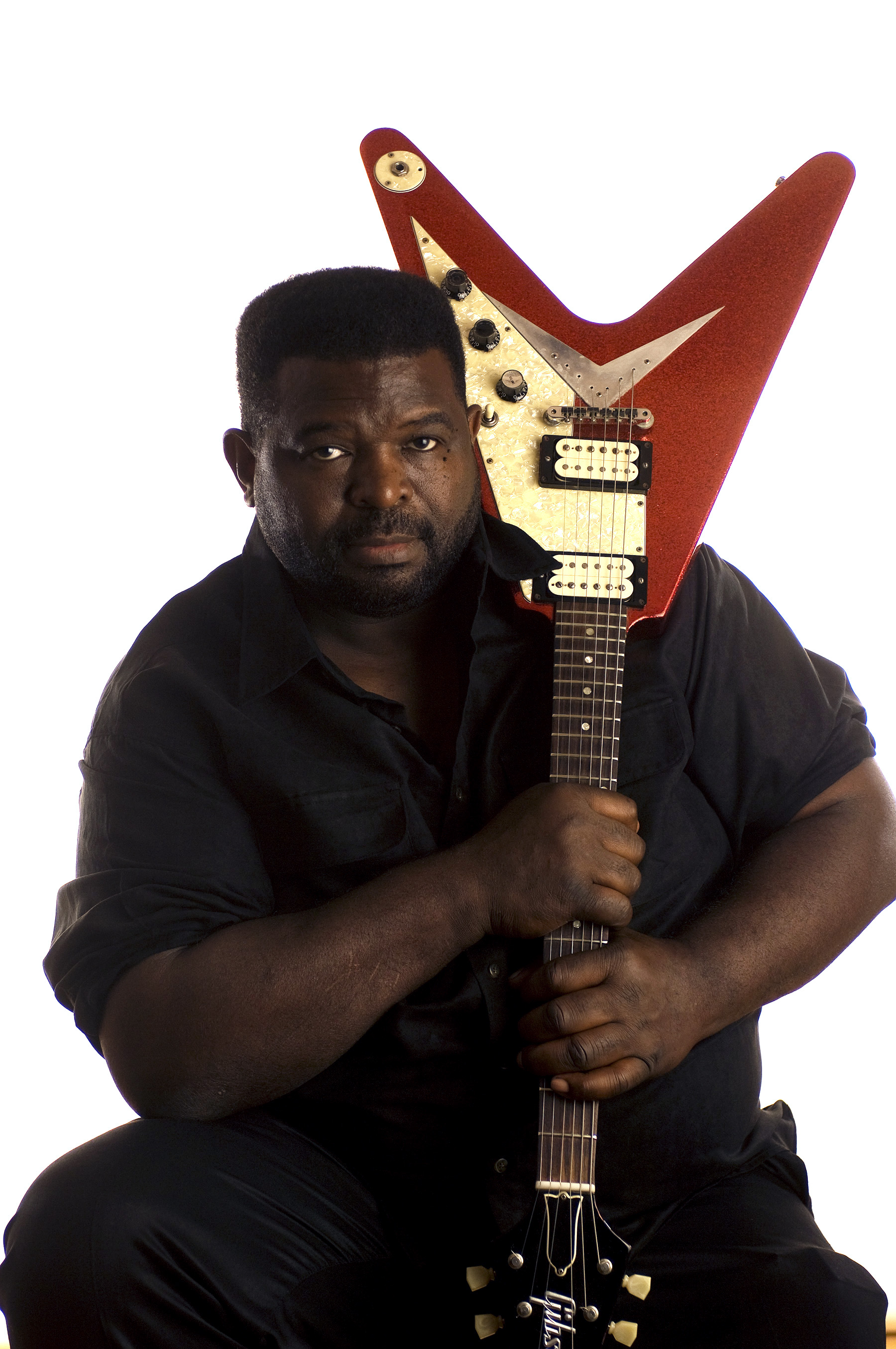
Burks kommt aus einer musikalischen Familie, in der der Blues einen großen Stellenwert hat. Schon sein Großvater Joe Burks spielte in lokalen Bars in Camden, Arkansas und auch sein Vater Frederik spielte nach der Arbeit in den Bluesklubs und unterstützte Tourmusiker, unter anderem Sonny Boy Williamson II.[2] Schon im Alter von zwei Jahren begann er mit dem Gitarrespielen, indem er Platten seines Vaters nachspielte. Er erhielt immer einen Dollar, wenn ihm das gelang, bis sein Vater von der Arbeit nach Hause kam. Seinen ersten öffentlichen Auftritt hatte er im Alter von sechs Jahren auf einer Reise nach Arkansas.[2]
In den frühen 1970er Jahren, nachdem sich sein Vater an der Hand schwer verletzt hatte, gingen er und seine Familie nach Arkansas, wo sie den „Bradley Ferry Country Club“ eröffneten, in dem Michael die Hausband leitete.[3] Sie unterstützten zahlreiche Blues- und Rhythm-’n-Blues-Stars, die dort auftraten. Tische in der Nähe der Bühne mussten schon zwei Wochen im Voraus reserviert werden.[2]
Als der Klub Mitte der 1980er Jahre schloss, nahm Burks einen Job bei Lockheed Martin an, spielte aber noch bei lokalen Festivals und in lokalen Klubs. Lockheed brachte sogar Kunden zu seinen Auftritten.[2] 1997 nahm er sein erstes Album, From the Inside Out, auf, das er selbst produzierte und das in den Medien stürmisch begrüßt wurde (Blues Access: „…das beeindruckendste Indiealbum in der jüngeren Zeit“; Living Blues:„…das beste Debütalbum des Jahres“). 2001 unterschrieb er bei Alligator Records, die bisher drei Alben von ihm veröffentlichten.[3] Seinen Stil beschrieb Michael Burks so: „Wirf Freddie King, Albert King, B.B. King, Albert Collins, Wes Montgomery und Chuck Berry in einen großen Topf, koche alles durch und du bekommst mich!“[4]
Am 6. Mai 2012 brach Burks nach einer Europatour auf dem Flughafen von Atlanta mit einem Herzinfark zusammen. Im Krankenhaus konnte er nicht mehr wiederbelebt werden. Burks starb im Alter von 54 Jahren.
http://de.wikipedia.org/wiki/Michael_Burks

Michael Burks (July 30, 1957 – May 6, 2012) was an American electric blues and soul blues guitarist, singer and songwriter. He is best known for his tracks, "I Smell Smoke" and "Hard Come, Easy Go", and variously worked with Johnnie Taylor, O. V. Wright, and Marquise Knox. He was the son of the bassist, Frederick Burks.[2]
The Allmusic journalist, Tim Sheridan once noted "... while his vocals are not stellar, he has a rich, gritty quality to his singing that is nicely matched to his guitar playing."[3] Burks was known as 'Iron Man' for his energetic and passion filled performances on stage. He was nominated five times for a Blues Music Award and, in 2004, Living Blues presented him with the Critics' Award for Best Guitarist.[4][5]
Life and career
Burks was born in Milwaukee, Wisconsin, United States,[6] and had a musical heritage. His father played the bass guitar, and performed with Sonny Boy Williamson II, whilst his grandfather had played in a delta blues style. Burks junior had learned to play the guitar by the age of five, and first played on stage in his cousin's band.[1] In the early 1970s, Burks moved with his family to Camden, Arkansas. It was there that Burks and his father built a 300 seater juke joint named the Bradley Ferry Country Club, where Burks duly led the house band.[1][6]
After the club closed in the mid 1980s, Burks was employed as a mechanic at Lockheed Martin. He continued to play at local clubs and music festivals, until 1997, when he recorded and produced his debut album, From the Inside Out. The magazine, Blues Access, stated it was "the most impressive indie in recent memory", and Living Blues described it as one of "the best debut discs of the year."[1] In 2001, Alligator Records signed Burks to a recording contract, and he released Make It Rain with them the same year. Make It Rain was produced by Jim Gaines and Bruce Iglauer. I Smell Smoke followed in 2003, and five years later Burks issued what turned out to be the final album in his lifetime, Iron Man, named for his long held nickname.[1][2][6]
Burks was a regular performer at the King Biscuit Blues Festival.[6] He also appeared at Memphis in May in 2004 and 2009. Burks had completed recording his fifth album, which was due to be released in July 2012.[4]
On May 6, 2012, upon returning from a tour of Europe, Burks collapsed at Hartsfield–Jackson Atlanta International Airport. He was shortly after pronounced dead from a heart attack, at a hospital in Atlanta, Georgia, aged 54.[2][6]
In 2013, Burks took the Blues Music Award "Contemporary Blues Album of the Year" and "Album of the Year" categories with his posthumous release, Show Of Strength.

Michael Burks - House Of The Rising Sun - LRBC 2008 


https://www.youtube.com/watch?v=PngBejMf9cQ 


Candye Kane +06.05.2016

Mittwoch, 10. Februar 2016

10.02. Larry Adler, Big Joe Duskin, Back Alley John, Rockin' Dopsie, Oscar Wills * Dave Van Ronk +


1914 Larry Adler*
1916 Oscar Wills aka TV Slim*
1921 Big Joe Duskin*
1932 Rockin' Dopsie*
1955 Back Alley John*
2002 Dave Van Ronk+


Happy Birthday


Larry Adler  *10.02.1914


Lawrence Cecil „Larry“ Adler (* 10. Februar 1914 in Baltimore, Maryland; † 7. August 2001 in London) war ein US-amerikanischer Mundharmonikaspieler und Autor.
Bereits seit den 1920ern wurde Adler für seine Virtuosität auf der Mundharmonika ausgezeichnet. Er spielte in den 1930ern Kompositionen von Gershwin ein, arbeitete mit Django Reinhardt und dessen Quintette du Hot Club de France, mit John Kirbys Sextett sowie Tanz- und Showorchestern zusammen. In den 1930er Jahren war er als Schauspieler in einigen Filmen zu sehen, 1944 folgte eine weitere Rolle in Musik für Millionen. 1948 absolvierte er einen Auftritt als er selbst in Drei kleine Biester.

Für die Mitarbeit an dem Soundtrack für den Film Die feurige Isabella erhielt er 1955 eine Oscar-Nominierung, obgleich sein Name wegen des McCarthyismus nicht auf dem Filmabspann auftauchte. Später verfasste er für Harper’s Queen eine Lebensmittel-Kolumne. Seine Autobiographie, die nach der Komposition It Ain’t Necessarily So von Gershwin betitelt ist, erschien 1985.

Durch seine Mitarbeit an der CD The Glory of Gershwin, die bis auf Platz zwei der britischen Albumcharts stieg, erhielt er Anfang der 1990er Jahre einen Eintrag in das Guinness-Buch der Rekorde als ältester Musiker, der die Top Ten erreichte. Die ausgekoppelte Single The Man I Love von Kate Bush mit Larry Adler erreichte Platz 27 der britischen Hitparade.[1]

Larry Adler starb am 7. August 2001 in London im Alter von 87 Jahren.

Lawrence "Larry" Cecil Adler (February 10, 1914[2] – August 6, 2001) was an American musician, one of the world's most skilled harmonica players. Ralph Vaughan Williams, Malcolm Arnold, Darius Milhaud and Arthur Benjamin composed for him. During his later career he collaborated with Sting, Elton John, Kate Bush and Cerys Matthews.
Biography
Adler was born in Baltimore, Maryland, to a Jewish family, and graduated from Baltimore City College high school.[3] He taught himself harmonica (which he called a mouth-organ)[4] and played professionally at 14. In 1927, he won a contest sponsored by the Baltimore Sun, playing a Beethoven minuet, and a year later he ran away from home to New York. After being referred by Rudy Vallée, Adler got his first theatre work, and caught the attention of orchestra leader Paul Ash, who placed Adler in a vaudeville act as "a ragged urchin, playing for pennies".[5] From there, he was hired by Florenz Ziegfeld and then by Lew Leslie again as an urchin. He broke the typecasting and appeared in a dinner jacket in the 1934 Paramount film Many Happy Returns, and was hired by theatrical producer C. B. Cochran to perform in London. He became a star in the United Kingdom and the Empire, where, it has been written, harmonica sales increased 20-fold and 300,000 people joined fan clubs.".[5]
Adler was one of the first harmonica players to perform major works written for the instrument, often written for him: these include Jean Berger's Concerto for Harmonica and Orchestra "Caribbean" (1941), Cyril Scott's Serenade (harmonica and piano, 1936), Vaughan Williams' Romance in D-flat (harmonica, piano and string orchestra; premiered New York, 1952), Milhaud's Suite Anglais (Paris, May 28, 1947), Arthur Benjamin's Harmonica Concerto (1953), and Malcolm Arnold's Harmonica Concerto, Op. 46 (1954, written for The Proms). He recorded all except the Scott Serenade, some more than once. Earlier, Adler had performed transcriptions of pieces for other instruments, such as violin concertos by Bach and Vivaldi - he played his arrangement of Vivaldi's Violin Concerto in A minor with the Sydney Symphony. Other works he played in harmonica arrangements were by Bartók, Beethoven (Minuet in G), Debussy, Falla, Gershwin (Rhapsody in Blue), Mozart (slow movement from the Oboe Quartet, K. 470), Poulenc, Ravel (Boléro), Stravinsky and Walton.
During the 1940s, Adler and the dancer, Paul Draper, formed an act and toured nationally and internationally. He moved to the United Kingdom in 1949 and settled in London, where he remained the rest of his life.
The 1953 film Genevieve brought him an Oscar nomination for his work on the soundtrack, though his name was originally kept off the credits in the United States due to blacklisting. He scored a hit with the theme song of the French Jacques Becker movie Touchez pas au grisbi with Jean Gabin, written by Jean Wiener.
In 1994 for his 80th birthday Adler and George Martin, produced an album of George Gershwin songs, The Glory of Gershwin, on which they performed "Rhapsody in Blue." The Glory of Gershwin reached number 2 in the UK albums chart in 1994.[6] Adler was a and showman. Concerts to support The Glory of Gershwin shoed he was a competent pianist. He each performance with Gershwin's "Summertime", playing piano and harmonica simultaneously. The album included Peter Gabriel, Oleta Adams, Elton John, Sting, Jon Bon Jovi and Richie Sambora, Meat Loaf, Sinéad O'Connor, Robert Palmer, Cher, Kate Bush, Elvis Costello, Courtney Pine, Issy Van Randwyck, Lisa Stansfield and Carly Simon, all of whom sang Gershwin tunes with an orchestra and Adler adding harmonica solos.
He died in St Thomas' Hospital, London, at 87, on August 7, 2001. He was cremated at Golders Green Crematorium, where his ashes remain.
Other fields
Apart from his career a musician, Adler appeared in movies, including Sidewalks of London (1938), in which he played a harmonica virtuoso. He was a prolific letter writer, his correspondence with Private Eye becoming popular in the United Kingdom. Adler wrote an autobiography — entitled It Ain't Necessarily So — in 1985, and was food critic for Harpers & Queen. He also appeared on the Jack Benny radio program[7] several times, entertaining disabled soldiers in the USA during World War II. A further biography, Me and My Big Mouth appeared in 1994 but he told The Free-Reed Journal: 'That's a lousy book and I don't like it; it's ghosted . ... [It] has a certain amount of factual material but the author completely missed my style and my voice. That's why I hate the book.'[8]
Personal life
Adler had four children, two grandchildren and two great grandchildren, one of whom was Peter Adler who fronted the band, Action, and others,[9] in Dublin, Ireland in the late 1960s. Adler was an atheist.[1] His brother, Jerry Adler (1918–2010) was also an harmonica player.

Larry Adler plays Summertime in three arrangements


https://www.youtube.com/watch?x-yt-cl=84503534&v=YoCM_NLQTcs&x-yt-ts=1421914688 


Larry Adler "St Louis Blues" 1935 


Big Joe Duskin  *10.02.1921 


https://mainlynorfolk.info/folk/records/bigjoeduskin.html

Big Joe Duskin (* 10. Februar 1921, Birmingham, Alabama; † 6. Mai 2007)[1] war ein amerikanischer Blues- und Boogie-Woogie-Pianist.
Mit sieben Jahren begann Big Joe mit dem Klavierspiel. Er begleitete in der Kirche die Predigten seines Vaters Reverend Perry Duskin. Nach dem Umzug nach Cincinnati, Ohio hörte er im lokalen Radiosender Fats Waller und Pete Johnson, die seine ersten großen Einflüsse wurden. Big Joe spielte in lokalen Klubs. Während des Zweiten Weltkriegs spielte er weiterhin Klavier bei der Truppenbetreuung, wo er seine großen Idole Albert Ammons und Meade Lux Lewis kennenlernte.[2]
Nach dem Ende des Zweiten Weltkriegs nahm ihm sein Vater das Versprechen ab, nicht mehr zu spielen, solange er am Leben sei. Das wirkte sich für seine Karriere schlecht aus, da Reverend Perry 105 Jahre alt wurde. Big Joe wurde Polizist und arbeitete bei der Post.[3]
Anfang der 1970er-Jahre begann er, ermutigt vom Blueshistoriker Steven C. Tracy, mit Konzerttourneen in ganz Europa und den USA. Zu dieser Zeit entstand auch seine erste Platte, der zahlreiche weitere folgten. 2007 verstarb Big Joe Duskin an den Folgen seiner Zuckerkrankheit.

Big Joe Duskin (February 10, 1921 – May 6, 2007)[1] was an American blues and boogie-woogie pianist. He is best known for his debut album, Cincinnati Stomp (1978), and the tracks "Well, Well Baby" and "I Met a Girl Named Martha".
Biography
Born Joseph L. Duskin in Birmingham, Alabama,[1] by the age of seven he had started playing piano. He played in church, accompanying his preacher father, the Rev. Perry Duskin. His family moved to Cincinnati, Ohio, and Duskin was raised near to the Union Terminal train station where his father worked.[2] On his local radio station, WLW, Duskin heard his hero Fats Waller play.[3] He was also inspired to play in a boogie-woogie style by Pete Johnson's, "627 Stomp".[4]
In his younger days Duskin performed in clubs in Cincinnati and across the river in Newport, Kentucky. While serving in the US Army in World War II, he continued to play and, in entertaining the US forces, met his idols Johnson, Albert Ammons and Meade Lux Lewis.[3]
After his military service ended, Duskin's father made him promise to stop playing while the elder Duskin was still alive. However, Rev. Duskin lived to the age of 105, and Joe found alternative employment as a police officer and a postal worker.[2] Therefore Duskin, effectively in the middle of his career, never played a keyboard for sixteen years.[3]
With the encouragement of a blues historian, Steven C. Tracy, by the early 1970s Duskin had begun playing the piano at festivals in the US and across Europe. By 1978, and with the reputation for his concert playing now growing, his first recording, Cincinnati Stomp, was released on Arhoolie Records.[2] The album contained Duskin's cover version of the track, "Down the Road a Piece" [5] and featured Muddy Waters' guitarist Bob Margolin.
He subsequently toured both Austria and Germany, and in 1987 made his inaugural visit to the UK.[3] The same year his part in John Jeremy's film, Boogie Woogie Special, recorded for The South Bank Show, increased Duskin's profile.[3][4] In 1988, accompanied by the guitar-playing Dave Peabody, Duskin recorded his second album, Don't Mess with the Boogie Man.[3] In the following decade, Duskin performed at both the New Orleans Jazz and Heritage Festival and the Chicago Blues Festival.[2]
His touring in Europe continued before he recorded his final album at the Quai du Blues in Neuilly, France.[3] Several Duskin albums were issued on European labels in the 1980s and 1990s. It was 2004 before Big Joe Jumps Again! (Yellow Dog Records) became his second US-based release, and his first studio recording for sixteen years. It featured Phillip Paul (drums), Ed Conley (bass), and Peter Frampton on guitar.[2]
Duskin was presented with a key to the city in 2004 by the Mayor of Cincinnati.[2] The following year he was awarded a National Heritage Fellowship by the Ohio Arts Council.[3]
Suffering from the effects of diabetes, Duskin was on the eve of having legs amputated, when he died in May 2007, at the age of 86.[3] The Ohio based Big Joe Duskin Music Education Foundation keeps his musical ideals alive by producing in-school music presentations for public school children.

Big Joe Duskin Memorial Video by Landman Productions 
This was a Memorial Video that I put together for Big Joe's Funeral. Big Joe Duskin was a Cincinnati Legend and a great man that was well loved by many throughout the world. He was a world class musician that lived an interesting life. My company has been working on a Documentary of his life since 2006. It should be done by late July. If you are interested in finding out when & where the World Premier Showing will be, leave me a message with your email telling me you are interested. Or, if you are interested in purchasing the DVD when it's done, let me know in your message and I will notify you in a few months when it's available. 


https://www.youtube.com/watch?x-yt-cl=84503534&v=68YgvpxGiQg&x-yt-ts=1421914688 


Back Alley John  *10.02.1955


Back Alley John (born John Carl David Wilson),[1] (February 10, 1955 – June 22, 2006) was a Canadian blues singer, songwriter and harmonica player.

Beginnings, 1969-1971: Ottawa to Venice, California

Born into a strict military family in Ottawa, Ontario, the young John Wilson rebelled and ran away from home, travelling to Venice Beach, California at the age of 14 in a stolen truck.[1] He stayed in Venice for approximately two years, making a living as a busking harmonica player, and it was in Venice that he acquired the name "Back Alley John". As his brother, Peter Wilson, recalls, "When he got (to Venice), he needed money and he had been playing harmonica since he was little, so he started busking. The street people there kind of took him under their wing and they said 'Listen John, you can't busk on the street 'cause you'll get arrested. You've gotta busk in the back alleys.' So he busked in the back alleys of Venice for a couple of years and that's how he was named Back Alley John."[2][1]

1971-1988: Venice to Ottawa and The Back Alley John Revue

Deported back to Canada, Back Alley John continued to develop his harmonica and singing skills in the Ottawa area. In 1980 together with guitarist Drew Nelson and drummer Sandy Smith, also professionally known as "Sandy Bone",[3] the Back Alley John Revue was formed.[4] They initially played in clubs in Ottawa and nearby towns and often busked on the streets of Ottawa during the early 1980s, particularly on Saturday afternoons in Ottawa's Byward Market, playing blues for passersby in front of the historic Chateau Lafayette House tavern,[5] sometimes gathering crowds numbering in the hundreds. Back Alley John's early reputation was enhanced in 1982 when he won the harmonica competition at the Ottawa Bluesfest, where the jury included Kim Wilson and John Hammond. He later performed with Kim Wilson and Hammond at Ottawa's National Arts Centre and joined Albert Collins on stage during a live performance. During this period, both Back Alley John and Drew Nelson were particularly supportive of the commencement of the blues career of Sue Foley who, in 1984 at the age of sixteen, was singing and playing guitar with Back Alley John. John identified his influences as including Robert Johnson, Lead Belly, Muddy Waters, Little Walter, Carrie Bell, Johnny Winter, John Hammond, Norm Clark and Dutch Mason.

The popularity of The Back Alley John Revue grew beyond Ottawa. The group toured Canada on several occasions, but did not release an album.

In 1987 the band reformed under the name "The Blue Lights", including Sandy Smith on drums, plus Drew Nelson and Sue Foley on guitars. The group became the house band of an establishment in Hull, Quebec that was regularly frequented by local musicians and many who were on tour.(citation required) Jeff Healey, Tom Lavin and Emmett "Maestro" Sanders[6] of Koko Taylor's band were among those who showed up to play. It was at this time that The Blue Lights recorded a 45rpm with Greg Labelle's Lowertown Records featuring Back Alley John's song "Mr. Postman" on the A side and Sue Foley singing Big Bill Broonzy's "All By Myself" on the B side.

1988-2006: Calgary

        He was a wealth of knowledge on the history of the blues, from the experience he gained by hanging and playing with the masters. I felt he was playing the real blues, not show or pop-styled blues, but the old stuff. Musically, what set John apart was his passion for the country blues style, and not glossing over the in-depth melodies and rhythms of this period of music.

            Lindsay Wilson, Remembering Back Alley John[7]

In 1988, Back Alley John fell seriously ill and decided to relocate to Calgary, Alberta, to be near his brother Peter.[8] It was in Calgary that Back Alley John developed his recording career, releasing four independently-distributed albums, and where he continued to develop his reputation as a blues performance artist. Back Alley John's records were generally produced or co-produced by Tim Williams, who is both a producer and performer, well known in blues and folk music circles.[9] Former Ottawa bandmate Sandy Smith joined Back Alley John in Calgary, playing and recording with him regularly.[10]

Back Alley John's recordings were subject to significant critical acclaim. By 1998, he was considered to have become one of the finest blues recording artists in North America.[11] In 1999, he was a "Canadian Real Blues Award" winner, cited by Real Blues Magazine[12] as the Best Canadian Unsigned Talent.[13] In 2002, Calgary country and blues singer Ralph Boyd Johnson[14] included the original song "(Hard Act to Follow) Back Alley John", referencing rougher elements of Back Alley John's life, on Johnson's debut album, Dyin' to Go.[15] Johnson had been housemates with Back Alley John and Billy Cowsill, the latter who had also produced Dyin' to Go.[16]

Back Alley John remained based in Calgary for nearly twenty years, until his death. During this period, Back Alley John was noted for his generosity in sharing his talent with others.[17]

Illness and death

        Music is life. Anything less would be uncivilized.

        Frequently-expressed sentiment of Back Alley John[1]

Back Alley John's career was cut short by respiratory disease, which resulted in him being in continuous third party care for the last two years of his life. Notwithstanding his physical challenges, which included hepatitis and severe oxygen deprivation, necessitating a wheelchair and constant use of an oxygen tank.[18] Back Alley John literally played the blues until his last breath.[8] He continued to record and to contribute to the recordings of others.[19] Two months before his death, having "flatlined in an ambulance, he somehow made his way to (Calgary's) Ambassador Motor Inn,[20] where he got onstage for a final performance.[1][21] 'He was so close to the end, really bad off, and I couldn't believe he could play,' (his brother) Peter said. 'It wasn't the John I knew, but he still sounded good. It was impressive, but it was heartwrenching, too.'"[8] As the late[22] Mick Joy, John's last steady bass player, close friend and roommate for seven years recalled, "In the final days, he wasn't getting enough oxygen, but it was amazing. He could barely breathe, but he could always pick up harp and blow the harp fine. It was like a mini-miracle every time."[18]

Back Alley John died in Calgary, Alberta on June 22, 2006.

Tributes: 2006 and 2008

On Canada Day, 2006, a memorial concert was held in Calgary in honour of Back Alley John.[8]

In February, 2008, Back Alley John was inducted into the Blues Hall of Fame of the Calgary Blues Music Association.[23]

Postscripts

Back Alley John's music continues to receive national radio play. Holger Petersen, founder and owner of Stony Plain Records, has been particularly supportive, through his Saturday Night Blues program on CBC Radio. Drew Nelson included "Please Come Home", a song co-written in the 1980s with Back Alley John, on Nelson's 2014 album, The Other Side.


Back Alley John / bill dowey and the blues devils


Rockin' Dopsie  *10.02.1932


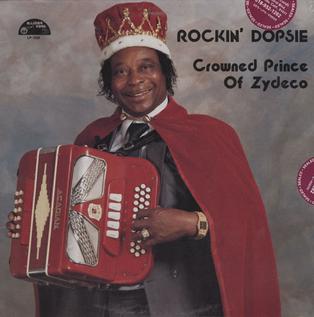
Rockin' Dopsie (a.k.a. Rockin' Dupsee) (February 10, 1932 – August 26, 1993) was born Alton Rubin in Carencro, Louisiana. He was a leading Zydeco musician and accordion player who enjoyed popular success first in Europe and later in the United States.[1]

Career

Dopsie began performing professionally in the late 1940s in Lafayette, Louisiana.[1] His first language was Louisiana Creole French.

Dopsie's debut album came out on Sonet Records of Sweden. He recorded five albums for that label over the next few years and made frequent European tours starting in 1979. His song "That Was Your Mother" with Paul Simon appeared on the Graceland album (1986). Dopsie later recorded with Bob Dylan and appeared in the film Delta Heat in 1992.[1]
Death and legacy

Since Dopsie's death from heart failure in 1993, his band, The Twisters, continues to perform. Now led by his son Dopsie Jr. (accordionist, vocalist and washboard player), with another son Alton Jr., on drums, the band is called Rockin' Dopsie, Jr. & The Zydeco Twisters.[2] Dopsie's younger son Dwayne also plays accordion and leads his own band, Dwayne Dopsie & the Zydeco Hellraisers.[3]

Dopsie is related to Chanda Rubin, who is a professional tennis championship player .


Rockin' Dopsie Jr. - Fire @ Oyster Fest 2012 


Oscar Wills aka TV Slim  *10.02.1916


TV Slim (auch T.V. Slim, eigentlich Oscar Wills, * 10. Februar 1916 in Houston; † 21. Oktober 1969 bei Kingman, Arizona) war ein US-amerikanischer Blues- und Rhythm-&-Blues-Musiker (Gesang, auch Gitarre, Geige), Musikproduzent und Songwriter.

Leben und Wirken

Wills begann seine Karriere in Houston, wo er – beeinflusst durch die Musik von DeFord Bailey, Sonny Boy Williamson I., Sonny Boy Williamson II. und Guitar Slim – eigene Kompositionen schrieb. Den Song Dolly Bee konnte er an Don Robey für Junior Parkers Produktion auf Duke Records verkaufen, bevor er die Möglichkeit hatte, das Stück selbst aufzunehmen. Dazu gründete er das Label Speed Records. Mit seinem Song über den kleinen Gauner Flatfoot Sam hatte er einen kleineren lokalen Erfolg.[1][2] Die erste Version des Songs erschien 1957 auf dem kleinen Label Cliff Records, was Stan Lewis, später der Besitzer von Jewel/Paula Records, dazu veranlasste, Oscar Wills, der im Tagesjob Fernseher reparierte, zur Verwendung des Pseudonyms „TV Slim“ zu überreden. Die Single wurde dann unter „T. V. Slim and His Heartbreakers“ auf dem Chess-Sublabel Checker Records (#870) veröffentlicht.

Als Flat Foot Sam anschließend in einer Rhythm-&-Blues-orientierten Neuaufnahme in Cosimo Matassas Studio (mit Robert „Barefootin’“ Parker, Saxophon, Paul Gayten, Klavier, und Charles „Hungry“ Williams, Schlagzeug) von Argo (#5277)[3] veröffentlicht wurde, hatte TV Slim damit einen regionalen Hit. In den folgenden Jahren spielte TV Slim weitere Singles für die Label Speed, Checker, Pzazz, USA, Timbre, Excell und Ideel ein, mit denen er die Geschichte des Flat Foot Sam weiterführte, mit Flatfoot Sam Made a Bet, Flat Foot Sam Met Jim Dandy (1959) und Flat Foot Sam #2. Ferner nahm er vom Rock ’n’ Roll, Rockabilly und Rhythm & Blues beeinflusste Nummern auf, wie den musikalischen Etikette-Ratgeber Don’t Reach Cross My Plate, I Can’t Be Satisfied/Gravy Around Your Steak (Timbre 510), I’m a Real Man/You Won’t Treat Me (Ideel IM-5099), Your Kisses Changed Me (Speed 703) und Tired of Your Cheatin’ & Lying (S-102). TV Slim nahm noch 1968 in Los Angeles, produziert von Paul Gayten und mit dem Arrangement von Teddy Edwards, die Single Don’t Knock the Blues/My Heart’s Full of Pain auf (Pzazz 005[4]). Auf dem Rückweg von einem Auftritt in Chicago starb TV Slim im Oktober 1969 an den Folgen eines Autounfalls in der Nähe von Kingman (Arizona). Albert Collins coverte später TV Slims Song Don't Reach Cross My Plate.

Oscar "TV Slim" Wills's hilarious tale of a sad sack named "Flat Foot Sam" briefly made him a bankable name in 1957. Sam's ongoing saga lasted longer than Slim's minute or two in the spotlight, but that didn't stop him from recording throughout the 1960s.

Influenced by DeFord Bailey and both Sonny Boy Williamsons on harp and Guitar Slim on axe while living in Houston, Wills sold one of his early compositions, "Dolly Bee," to Don Robey for Junior Parker's use on Duke Records before getting the itch to record himself. To that end, he set up Speed Records, his own label and source for the great majority of his output over the next dozen years.

The first version of "Flat Foot Sam" came out on a tiny Shreveport logo, Cliff Records, in 1957. Local record man Stan Lewis, later the owner of Jewel/Paula Records, reportedly bestowed the colorful nickname of TV Slim on Wills; he was a skinny television repairman, so the handle fit perfectly.

"Flat Foot Sam" generated sufficient regional sales to merit reissue on Checker, but its ragged edges must have rankled someone at the Chicago label enough to convince Slim to recut it in much tighter form in New Orleans with the vaunted studio band at Cosimo's. This time, Robert "Barefootin'" Parker blew a strong sax solo, Chess A&R man Paul Gayten handled piano duties, and Charles "Hungry" Williams laid down a brisk second-line beat. It became Slim's biggest seller when unleashed on another Chess subsidiary, Argo Records.

Slim cut a torrent of 45s for Speed, Checker, Pzazz, USA, Timbre, Excell, and Ideel after that, chronicling the further adventures of his prime mealticket with "Flatfoot Sam Made a Bet," "Flat Foot Sam Met Jim Dandy," and "Flat Foot Sam #2." Albert Collins later covered Slim's Speed waxing of the surreal "Don't Reach Cross My Plate." Wills died in a car wreck outside Klingman, AZ, in 1969 en route home to Los Angeles after playing a date in Chicago.


Juvenile Delinquent - TV Slim


R.I.P.


Dave Van Ronk  +10.02.2002


Dave Van Ronk (* 30. Juni 1936 in Brooklyn, New York; † 10. Februar 2002 in New York City) war ein US-amerikanischer Gitarrist, Sänger, Songschreiber und eine der treibenden Kräfte des Folk- und Blues-Revivals der 1960er. Er förderte u.a. Bob Dylan und Joni Mitchell.
Van Ronk besuchte eine High School in Queens, die er mit 15 Jahren vorzeitig verließ. Seit 1949 spielte er in einem Barbershop Quartett, Anfang der 1950er ging er zur Handelsmarine. Ab 1956 trat er als professioneller Musiker auf. Van Ronk interessierte sich intensiv für Jazz und Blues, entschied sich aber schließlich für den Blues. Seine Lieder orientierten sich am Werk von Blues-Legenden wie Furry Lewis und Mississippi John Hurt. Sein letztes Konzert gab er wenige Monate vor seinem Tod im Februar 2002.
Die meiste Zeit seines Lebens verbrachte Van Ronk im New Yorker Künstlerviertel Greenwich Village. 2004 wurde dort eine Straße nach ihm benannt. Seine Autobiografie diente als Inspiration für den Film Inside Llewyn Davis der Coen-Brüder.

David Kenneth Ritz "Dave" Van Ronk (June 30, 1936 – February 10, 2002) was an American folk singer, born in Brooklyn, New York, who settled in Greenwich Village, New York, and was eventually nicknamed the "Mayor of MacDougal Street".
He was an important figure in the acoustic folk revival of the 1960s. His work ranged from old English ballads to blues, gospel, rock, New Orleans jazz, and swing. He was also known for performing instrumental ragtime guitar music, especially his transcription of "St. Louis Tickle" and Scott Joplin's "Maple Leaf Rag".
Van Ronk was a widely admired avuncular figure in "the Village", presiding over the coffeehouse folk culture and acting as a friend to many up-and-coming artists by inspiring, assisting, and promoting them. Folk performers whom he befriended include Bob Dylan, Tom Paxton, Patrick Sky, Phil Ochs, Ramblin' Jack Elliott, Guthrie Thomas, and Joni Mitchell.
Bob Dylan recorded Van Ronk's arrangement of the traditional song "House of the Rising Sun" on Dylan's first album. A few years later the Animals had a No. 1 hit single with a rock version of the Van-Ronk arrangement of the song,[1] a hit which helped to inaugurate the folk-rock movement.[2]
Van Ronk received a Lifetime Achievement Award from the American Society of Composers, Authors and Publishers (ASCAP) in December 1997. He died in a New York hospital of cardiopulmonary failure while undergoing postoperative treatment for colon cancer.[3]
Life and career
Van Ronk was born in Brooklyn to a family that was "mostly Irish, despite the Dutch name."[4] He moved from Brooklyn to Queens in 1951 and began attending Holy Child Jesus Catholic School, whose students were mainly of Irish descent. He had been performing in a barbershop quartet since 1949, but left before finishing high school, and spent the next few years bumming around lower Manhattan and twice shipping out with the Merchant Marine.
His first professional gigs were with various traditional jazz bands around New York, of which he later observed: "We wanted to play traditional jazz in the worst way...and we did!" But the trad jazz revival had already passed its prime, and Van Ronk turned to performing blues he had stumbled across while shopping for jazz 78s, by artists like Furry Lewis and Mississippi John Hurt. Van Ronk was not the first white musician to perform African-American blues, but became noted for his interpretation of it in its original context. By about 1958, he was firmly committed to the folk-blues style, accompanying himself with his own acoustic guitar. He performed blues, jazz and folk music, occasionally writing his own songs but generally arranging the work of earlier artists and his folk revival peers. At one point, he was considered for a folk-pop trio with Peter Yarrow. Van Ronk's voice and style were considered too idiosyncratic and the role eventually went to Noel Paul Stookey,(who became the "Paul" in Peter, Paul and Mary).
He became noted both for his large physical stature and his expansive charisma, which bespoke an intellectual, cultured gentleman of many talents. Among his many interests were cooking, science fiction (he was active for some time in science fiction fandom, referring to it as "mind rot",[5] and contributed to fanzines), world history, and politics. During the 1960s he supported radical left-wing political causes and was a member of the Libertarian League and the Trotskyist American Committee for the Fourth International (ACFI, later renamed the Workers League,[6] predecessor to the Socialist Equality Party).[7] In 1974, he appeared at "An Evening For Salvador Allende", a concert organized by Phil Ochs, alongside such other performers as his old friend Bob Dylan, to protest the overthrow of the democratic socialist government of Chile and to aid refugees from the U.S.-backed military junta led by Augusto Pinochet. Although he was less politically active in later years, he remained committed to anarchist/socialist ideals and was a dues-paying member of the Industrial Workers of the World (IWW) almost until his death. After Ochs's suicide in 1976, Van Ronk joined the many performers who played at his memorial concert in the Felt Forum at Madison Square Garden, playing his bluesy version of the traditional folk ballad "He Was A Friend Of Mine".[8]
In 2000, he performed at Blind Willie's in Atlanta, clothed in garish Hawaiian garb, speaking fondly of his impending return to Greenwich Village. He reminisced over tunes like "You've Been a Good Old Wagon," a song teasing a worn-out lover, which he ruefully remarked had seemed humorous to him back in 1962. He was married to Terri Thal in the 1960s,[9] lived for many years with Joanne Grace, then married Andrea Vuocolo, with whom he spent the rest of his life. He continued to perform for four decades and gave his last concert just a few months before his death. He found it amusing to be called "a legend in his own time".
Van Ronk died before completing work on his memoirs, which were finished by his collaborator, Elijah Wald, and published in 2005 as The Mayor Of MacDougal Street.
In 2004, a section of Sheridan Square, where Barrow Street meets Washington Place, was renamed Dave Van Ronk Street in his memory.[10]
Cultural impact
Van Ronk can be described as an irreverent and incomparable guitar artist and interpreter of black blues and folk, with an uncannily precise ability at impersonation. Joni Mitchell often said that his rendition of her song "Both Sides Now" (which he called "Clouds") was the finest ever.
He is perhaps underestimated as a musician and blues guitarist. His guitar work, for which he credits Tom Paley as fingerpicking teacher, is noteworthy for both syncopation and precision. It shows similarities to Mississippi John Hurt's, but Van Ronk's main influence was the Reverend Gary Davis, who conceived the guitar as "a piano around his neck". Van Ronk took this pianistic approach and added a harmonic sophistication adapted from the band voicings of Jelly Roll Morton and Duke Ellington. He ranks high in bringing blues style to Greenwich Village during the 1960s, as well as introducing the folk world to the complex harmonies of Kurt Weill in his many Brecht-Weill interpretations, and being one of the very few hardcore traditional revivalists to move with the times, bringing old blues and ballads together with the new sounds of Dylan, Mitchell and Leonard Cohen. During this crucial period, he performed with the likes of Bob Dylan and spent many years teaching guitar in Greenwich Village, including to Christine Lavin, David Massengill, Terre Roche and Suzzy Roche. He influenced his protégé Danny Kalb and The Blues Project. The Japanese singer Masato Tomobe, American pop-folk singer Geoff Thais and the musician and writer Elijah Wald learned from him as well. Known for making interesting and memorable observations he once said, "Painting is all about space, and music is all about time." In his autobiography Bob Dylan states, "I'd heard Van Ronk back in the Midwest on records and thought he was pretty great, copied some of his recordings phrase for phrase. [...] Van Ronk could howl and whisper, turn blues into ballads and ballads into blues. I loved his style. He was what the city was all about. In Greenwich Village, Van Ronk was king of the street, he reigned supreme."[11]
Thanks to what he had learned from Davis, Van Ronk was among the first to adapt traditional jazz and ragtime to the solo acoustic guitar. His guitar arrangements of such ragtime hits as "St. Louis Tickle", "The Entertainer", "The Pearls" and "Maple Leaf Rag" continue to frustrate and challenge aspiring guitar players. He also did fine compositions of his own in the classic styles, such as "Antelope Rag".
His song "Last Call" is the source of the title of Lawrence Block's book When the Sacred Ginmill Closes.
Van Ronk was among the thirteen people arrested at the Stonewall Inn June 28, 1969—the night that the Stonewall Riots, which many cite as the start of the gay rights movement, began. The New York Times reported the next day that he was arrested and later parolled on his own recognizance for having thrown a heavy object at a patrolman.[12] City records reveal he was charged with felony assault in the second degree[13] and pled guilty to the lesser charge of harassment, classified in 1969 as a violation under pL 240.25. Articles published at the time in The New York Post and the Village Voice reveal that Van Ronk was pulled by police from the crowd outside and dragged inside the Stonewall.[14][15]
The Coen brothers film Inside Llewyn Davis follows a folk singer similar to Van Ronk, and incorporates anecdotes based on Van Ronk's life.[16][17] The release of the film coincides with Down in Washington Square: The Smithsonian Folkways Collection from Smithsonian Folkways which was released on October 29, 2013.
Unlike the title character in the Coen Brothers' film, Van Ronk was actually a swanky dresser who initiated many clothing styles in Greenwich Village during the early and mid 60s.
Personal characteristics
Van Ronk refused for many years to fly and never learned to drive (he would use trains or buses or, when possible, recruit a girlfriend or young musician as his driver), and he declined to ever move from Greenwich Village for any extended period of time (having stayed in California for a short time in the 1960s).[18] Van Ronk's trademark stoneware jug of Tullamore Dew was frequently seen on stage next to him in his early days.
Critic Robert Shelton described Van Ronk as "the musical mayor of MacDougal Street":
    [A] tall, garrulous hairy man of three quarters, or, more accurately, three fifths Irish descent. Topped by light brownish hair and a leonine beard, which he smoothed down several times a minute, he resembled an unmade bed strewn with books, record jackets, pipes, empty whiskey bottles, lines from obscure poets, finger picks, and broken guitar strings. He was Bob [Dylan]'s first New York guru. Van Ronk was a walking museum of the blues. Through an early interest in jazz, he had gravitated toward black music - its jazz pole, its jug-band and ragtime center, its blues bedrock... his manner was rough and testy, disguising a warm, sensitive core. Van Ronk retold the blues intimately... for a time, his most dedicated follower was [Bob] Dylan.

Dave Van Ronk - "Spike Driver Blues" from "Down in Washington Square" 


https://www.youtube.com/watch?x-yt-cl=84503534&v=mtUjmi3ewPU&x-yt-ts=1421914688 


Dave Van Ronk - "St. James Infirmary (Gambler's Blues)" from "Down in Washington Square" 


https://www.youtube.com/watch?v=56qo9sinSdc