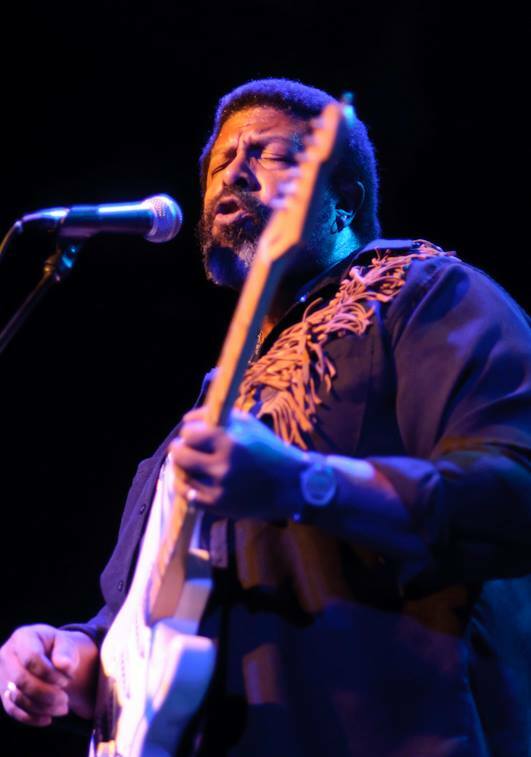
1913 Smiley Lewis*
1953 Kenny Brown*
1953 Ron Thompson*
2001 Ernie K-Doe+
2006 Joe
Weaver+
2007
George Melly+
Bob Lanza*
Melva Houston*
Younès
Grandjean*
Happy Birthday
Kenny Brown *05.07.1953
 Kenny Brown (born July 5, 1953 on the Air Force base in Selma, Alabama) is an American blues slide guitarist from Nesbit, Mississippi, United States. Skilled in the North Mississippi Hill Country blues style popularized by his mentor R. L. Burnside, Brown began his career by apprenticing with Mississippi Joe Callicott, Johnny Woods, and Mississippi Fred McDowell.[1][2] He has also cited Muddy Waters,[3] George "Mojo" Buford,[2] Jessie Mae Hemphill,[3][4] Junior Kimbrough,[2] Johnny Winter,[2] and Johnny Shines[2] as influences. He has recorded one album for the Fat Possum Records label (Stingray), and his most recent double album, Can't Stay Long, was released in June 2011 on Devil Down Records.[5]
In 1971, Brown began performing with R. L. Burnside, who claimed Brown as his "adopted son."[6] and affectionately called him "white boy on guitar"[1] and "my white son."[7] Both Brown and Burnside have noted the singularity of Brown's being a white musician playing in the previously predominantly African American genre of North Mississippi Hill Country blues.[1][8]
Brown's guitar work was featured in the 2006 film Black Snake Moan, where he provided backing for star Samuel L. Jackson's vocals.[9] He can also be seen in the film's climax as a guitarist in a blues band, playing alongside Burnside's grandson Cedric.
He has also performed with rock bands Widespread Panic[1] and the Jon Spencer Blues Explosion.[2]
Brown currently lives in Potts Camp, Mississippi, in the North Mississippi Hill Country.
Smiley Lewis *05.07.1913

Smiley Lewis (eigentlich Overton Amos Lemons, * 5. Juli 1913 in DeQuincy, Louisiana; † 7. Oktober 1966 in New Orleans), war ein US-amerikanischer Blues- und R&B-Sänger, dessen bekannteste Hits I Hear You Knocking und One Night von anderen Interpreten erfolgreich gecovert wurden.
Als Jugendlicher ging Lewis nach New Orleans, um dort Musik zu machen. Lewis - ein guter Gitarrist - trat ab 1946 als Trio mit dem Pianisten Tuts Washington und dem Schlagzeuger Herman Seal auf. „Wir waren das heißeste Trio in der Stadt und spielten in allen wichtigen Clubs im French Quarter“, erinnert sich Tuts.[1] Das blieb DeLuxe Records nicht verborgen, und so lud man das Trio im Jahre 1947 zu einem Aufnahmetest ein. Das Ergebnis war Turn On Your Volume Babe / Here comes Smiley (DeLuxe 1099), das im Oktober 1947 erschien. Mit Love Is Like a Gamble / Swimming Blues (DeLuxe 1108) kam im November 1947 die Nachfolgesingle heraus, beide tituliert als „Smiling Lewis“. Beide Songs - noch ohne Hitparadenresonanz - wurden übrigens von Leo Franks, einem Barkeeper aus dem French Quarter, komponiert.[2] Beide Singles zeigen den typischen Boogie-Woogie-Piano-Sound von Tuts Washington und die volle Shout-Stimme von Lewis. DeLuxe verlor danach das Interesse an Lewis.
Smiley Lewis bekam seine nächste Chance im März 1950, als der Interpret und Produzent Dave Bartholomew auf ihn aufmerksam wurde. Bartholomew hatte gerade Fats Dominos erste Single The Fat Man produziert und lud Lewis mit seiner Band zu einer Session ins Studio von Cosimo Matassa ein. Mit der Studio-Band als Begleitung entstand im März 1950 Tee Nah Nah / Lowdown (Imperial 5067). Der Titel verhalf ihm zum Durchbruch. Er vergrößerte seine Band um Joe Harris (Saxophon), Albert Fernandez (Trompete), James Provost (Bass) und Buddy Williams (Schlagzeug). Im Mai berichtete sogar Louisiana Weekly kurz über deren Tournee außerhalb der Stadt und dem Musikbox-Erfolg von Tee Nah Nah. Imperial Records beeilte sich deshalb, mit Slide Me Down / Growing Old im Juni 1950 (Imperial 5072) zwei weitere Aufnahmen aus der ersten Studiosession nachzulegen - diesmal ohne Erfolg. Nach ein paar weiteren erfolglosen Singles zahlte sich die Geduld von Imperial Records aus, als Bells Are Ringing im September 1952 mit einer # 10 (R&B-Charts) die erste nationale Hitparadennotiz für Lewis wurde. Die nachfolgende hohe Frequenz weiterer Singleveröffentlichungen fiel wiederum durch, auch Blue Monday vom März 1954. Als sein Label-Kollege Fats Domino den Song nach über zwei Jahren im Dezember 1956 coverte, machte er ihn zur # 1 der R&B-Charts.
Lewis’ größter Erfolg kam erst im Juli 1955 auf den Markt, als I Hear You Knocking (mit Huey Piano Smith auf dem Piano) bis zur # 2 der R&B-Charts vordrang. Es folgten wieder einige Misserfolge, bis er mit One Night (Of Sin) im März 1956 immerhin eine # 11 erreichte. Selbst der Versuch, mit dem Country-Standard You Are My Sunshine zu punkten, misslang. Imperial verlor nun die Geduld und brachte ab 1958 nur noch wenige Smiley-Lewis-Platten auf den Markt. Im September 1960 beendete Imperial Records dann den zehn Jahre bestehenden Plattenvertrag mit Lewis. Sein Produzent und Komponist der meisten Lewis-Titel Dave Bartholomew: „Wir konnten Smiley kommerziell einfach nicht in Fahrt bringen. Er hatte immer das beste Songmaterial, doch außerhalb von New Orleans verkauften sich seine Platten kaum“.[3] In der Tat hatte Lewis nicht mehr als 100.000 Exemplare einer einzigen Single verkaufen können. Lewis stand stets im Schatten seines Label-Kollegen Fats Domino, der einen sehr ähnlichen Musikstil pflegte, im selben Tonstudio aufnahm und die gleiche Begleitband nutzte.
Nach zweimaligem Label-Wechsel landete er schließlich bei Loma Records, wo er unter dem Produzenten Allen Toussaint im Dezember 1965 noch einmal The Bells Are Ringing aufnahm. Bereits krebskrank, kam er kurz darauf ins Krankenhaus, wo er im Oktober 1966 verstarb.
Andere Interpreten erzielten mit einigen Songs von Smiley Lewis wesentlich größere Erfolge. So machte Fats Domino aus Blue Monday einen Crossover-Hit mit # 5 der Pop-Charts. I Hear You Knocking wurde gleich dreimal erfolgreich gecovert. Gale Storms erste Platte schaffte auf Anhieb im Oktober 1955 die # 2 der Pop-Charts hiermit, Fats Domino kam damit im Dezember 1961 auf untere Ränge der US-Pop-Charts (# 67), und im November 1970 gelangte sie in der Fassung von Dave Edmunds zur # 4 in den US-Pop-Charts und sogar zur # 1 in England. Elvis Presley ließ One Night (Of Sin) im Oktober 1958 textlich entschärfen, brachte seine Version, lediglich als One Night tituliert, zu einer US-Pop # 4 und britischen # 1 und erreichte Millionsellerstatus. Shame, Shame, Shame wurde 1957 durch den Hollywoodfilm "Baby Doll" bekannt und 1964 von den Merseybeats aufgenommen.
http://de.wikipedia.org/wiki/Smiley_Lewis

 Singer, songwriter and guitarist Bob Lanza from the wilds of north New Jersey leaves no doubt as to motivation with a scorching second release following his debut Things Ain’t So Bad (2009). Years with Floyd Phillips and the Mudflaps and backing legends like James Cotton prepared his audition as a new blues guitar hero.
HIGHLIGHTS
The Bob Lanza Blues Band is a tight-knit blues unit, in true Chicago, Kansas City, style with
some Texas influences hanging out in north New Jersey.
Lanza has played with a lot of local blues bands, and few of the greats. He was bandleader for
Floyd Phillips and The Mudflaps for four years in the late 90’s into late 2001 when Floyd
passed away. The Band has backed James Cotton and Nashville legend Dave Perkins.
Bill Lagreca has taken over the bass spot in the BLBB. Bill is a veteran of the Nj music scene
having played with numerous local acts over the past few years. Bill lays a deep grove and is
the perfect fit the band. On harmonica and Vocals, the legendary “Snakeman” Dave Runyan.
On drums Jake O’Handley, another veteran of the NJ music scene. Jake has played with
Nightrain, Nasty Ned, and a host of others.
The band represented the New York Blues & Jazz Society at the 2011 International Blues
Challenge.
The Bob Lanza Blues Band was recognized and showcased as one of today’s best blues bands
in popular online show Raw Blues: The Series.

Die Sängerin Melva Houston wurde in Memphis/Tennessee, der Heimat vieler farbiger Bluesgrößen, als jüngste Tochter einer kinderreichen Familie geboren. Dort wuchs sie in der Tradition von Gospel, Blues und Jazz auf. Mit 13 Jahren gewann sie einen Nachwuchstalentwettbewerb, nachdem sie sich durch regelmäßige Auftritte in einer beliebten Radio-Show bereits einen Namen gemacht hatte. Von da an erlebte Melva in kurzer Zeit einen kometenhaften Aufstieg.
Mit 15 Jahren war sie Background-Sängerin der Plattenfirma Stax-Records, mit 16 sang sie bereits für Isaac Hayes. Als Background-Sängerin war sie so begehrt, daß sie mit Stars wie Wilson Pickett, Otis Redding, Sam and Dave und weiteren Größen des Stax-Record-Labels zahlreiche Aufnahmen machte. Schließlich tourte sie Mitte der 80er Jahre mit „The Platters“ durch Europa, machte 1988 und 1996 ausgedehnte Spanientourneen, wo sie sich als Solistin profilierte und damit überwältigende Erfolge erringen konnte. In North Carolina ist Melva Houston ständig gefragter Star bei renommierten Jazzfestivals. 1996 und 1997 war sie denn auch gefeierter Höhepunkt der Esslinger Jazztage.
In den letzten Jahren wandte sich Melva mehr und mehr dem Blues zu, wobei sie sich stets ihren musikalischen Wurzeln verpflichtet fühlte. Dabei versteht sie es aber auch ausgezeichnet, Blues mit den Idiomen des Jazz zuverbinden. So ist es nicht verwunderlich, daß sie Broadwaysongs mit der gleichen Überzeugungskraft zu interpretieren versteht wie die Jazzstandards von Gershwin, Ellington und Cole Porter oder Kompositionen von Thelonious Monk und Horace Silver. Als Sängerin hat sich Melva Houston durch einen eigenen Stil von ihren Vorbildern Dinah Washington, Ernestine Anderson, Carmen McRae und Nancy Wilson lösen können, ohne deren Einflüsse leugnen zu wollen.
The singer Melva Houston was born in Memphis/Tennessee, home of many black blues celebrities. Being the youngest daughter of large family, she grew up in the tradition of gospel, blues and jazz. At age 13, she won a young talent competition, after having made herself a name by performing regularly in a popular radio show. From then on, Melva experienced a meteoric rise within a short time.
At age 15, she was a background singer for the record company Stax-Records, at age 16 she was already singing for Isaac Hayes. She was such a popular background singer that she made numerous recordings with stars like Wilson Pickett, Otis Redding, Sam and Dave and other celebrities of the Stax-Record-Labels. In the 80s, she accompanied „The Platters“ on their European tour and 1988 und 1996 she went on long tours in Spain, where she acquired her status as a solist and was able to achieve an overwhelming success. In North Carolina, Melva Houston is a permanently sought-after star on renowned jazz festivals. Thus, 1996 and 1997 she was the celebrated highlight of the Esslinger Jazztage.
During the last years, Melva devoted herself more and more towards the blues, whereas she still felt obligated to her musical roots. Here she is an expert when it comes to combining the blues with the idioms of jazz. This way, it is not surprising that she knows how to interpret broadway songs with the same pursuasiveness as the jazz standards of Gershwin, Ellington and Cole Porter or compositions from Thelonious Monk and Horace Silver. As a singer, Melva Houston was able to detach herself through her unique style from her examples Dinah Washington, Ernestine Anderson, Carmen McRae and Nancy Wilson, without wanting to deny their influence on her.

 http://ombog2.com/bluesbus/jobast.htm
Smiley Lewis (July 5, 1913 – October 7, 1966[1]) was an American New Orleans rhythm and blues musician. The journalist Tony Russell, in his book The Blues - From Robert Johnson to Robert Cray, stated "Lewis was the unluckiest man in New Orleans. He hit on a formula for slow-rocking, small-band numbers like 'The Bells Are Ringing' and 'I Hear You Knocking' only to have Fats Domino come up behind him with similar music more ingratiatingly delivered. Lewis was practically drowned in Domino's backwash."[2]
Life and career
Lewis was born in DeQuincy, Louisiana, U.S., a rural hamlet near Lake Charles, to Jeffrey and Lillie Mae Lemons, as the second of three sons and given the name of Overton Amos Lemons.[3] His mother died while he was a child, and later Lewis named a song[4] and several automobiles after her. In his mid-teens, he hopped onto a slow-moving freight train with some friends, who jumped off when the train began to speed up. Lewis alone remained on the train, getting off when it reached its stop in New Orleans. He found boarding with a Caucasian family in the Irish Channel, eventually adopting their surname of Lewis.[5]
He began playing clubs in the French Quarter and "Tan bars" in the 7th Ward, at times billed as Smiling Lewis, a variation of the nickname earned by his lack of front teeth, and often accompanied by pianist Isidore "Tuts" Washington, whom he spent the mid-1930s with in Thomas Jefferson's Dixieland band. When the band dissolved, Lewis turned to going from one club to another, playing gigs for only tips.[6]
Lewis married Leona Robinson in 1938, the couple living with her mother until they began having children, when they moved to South Tonti Street while Lewis spent the daytime hours working odd manual labor jobs and the nights singing. During World War II, he joined Washington again, this time with Ernest "Kid" Mollier's band entertaining soldiers stationed at Fort Polk outside of Bunkie, Louisiana while also serving as the house band at the Boogie Woogie Club. The two formed a trio with drummer Herman Seals after the war ended, and again began playing the French Quarter and down Bourbon Street.
An invitation by David Braun to record a session with his DeLuxe Records followed in 1947 for the trio and resulted in the release of his debut record, Here Comes Smiley,[7] though Papa John French replaced Seals and played bass. The single "Turn On Your Volume" was a hit in local jukeboxes, but DeLuxe requested no more material and even left two other recorded sides unreleased. An invitation by Dave Bartholomew, who grew up in the same neighborhood as Lewis and was then beginning a production career with Imperial Records, led the trio to record a session in March 1950 that resulted in the song "Tee Nah Nah". Lewis scored his first national hit song with "The Bells Are Ringing" in 1952. In 1954 he recorded the original version of Bartholomew's song "Blue Monday", a hit for Fats Domino two years later.[8][9] In 1955 he achieved his biggest sales with the original recorded version of "I Hear You Knocking" (written by Bartholomew and Pearl King) featuring Huey Smith on piano.[10]
An attempt prompted by Imperial Records president Lew Chudd to attract new record buyers in 1957 saw Lewis recording pop and country music songs; the experiment failed and did nothing to boost Lewis's declining record sales. He was released from the label, and spent the early 1960s as an opening act for new performers, including Lee Dorsey, Irma Thomas, and Ernie K-Doe, the money short and Lewis arriving at gigs via the city bus. His career rounded out with a brief stint at Okeh Records in 1961 that consisted of one single, a 45 produced by Bill "Hoss" Allen in 1964 for Dot Records, and ended with a Loma Records release of "The Bells Are Ringing", remade with record producer Allen Toussaint.
He was hospitalized in 1965 and diagnosed with an ulcer; the operation led to the discovery that Lewis had stomach cancer, and quickly a benefit was organized by Bartholomew at La Ray's on Dryades Street. In the arms of his second wife, Dorothy Ester Lemons, whom he had married only six months prior, Lewis died on October 7, 1966, three days before the benefit.
Although Lewis' Imperial singles never sold more than 100,000 copies individually, they often lent themselves success to other artists.[10] Gale Storm's pop version of "I Hear You Knocking" found its way into the top five on the charts.[11] In the 1970s, Dave Edmunds covered the song as his first hit.[12]
Elvis Presley's cover of the Lewis song "One Night" (altering one risque lyric) was #4 on the U.S. Billboard Hot 100 chart, and #1 on UK Singles Chart.[13] Where Lewis' "I Hear You Knocking" had been too early to break from segregation involved in U.S. radio at the time of its release,[14] Dave Edmunds' cover of the song reached number one in the UK[12] and peaked at number four in the U.S.[15] His version of the song lyrics actually names Lewis (alongside Chuck Berry, Fats Domino and Huey Smith).
Lewis' track "Shame, Shame, Shame" appeared on the soundtrack accompanying a dramatic chase through a collapsing attic in the film Baby Doll in 1956. The song failed to find entry to the R&B chart. It was covered by The Merseybeats on their EP On Stage in 1964.[1] Later, Aerosmith included it on their blues album, Honkin' on Bobo. The song also provided the title for the fifth episode of HBO's original series Treme and included a re-written version of the song with lyrics critical of the government's response to Hurricane Katrina.
A short clip from "I Hear You Knocking" is included on Buchanan and Goodman's novelty hit, "The Flying Saucer (song)." There, in an ironic nod to his original stage name, he is referred to as "Laughing Lewis." Like everyone else whose music was appropriated for the record, Lewis did not get paid.
Ron Thompson *05.07.1953

Ron Thompson (born July 5, 1953) is an American electric blues and blues rock guitarist, singer and songwriter.[1] Thompson has released seven albums since 1983 on labels including Blind Pig. He has worked with Little Joe Blue, John Lee Hooker, Lowell Fulson, Etta James and Big Mama Thornton.
Thompson commented on his preferred style, "blues is like a medicine, or religion to me, it'll cleanse your soul".[2] Meanwhile, Mick Fleetwood stated, "Ron Thompson is my favorite guitarist".
Thompson was born in Oakland, California, United States, and had mastered basic guitar and slide guitar techniques by his mid-teens.[1] He was educated at Newark Memorial High School, in Newark, California.[2] In the early 1970s, Thompson played backing to Little Joe Blue, and worked solo and as a sideman in San Francisco Bay Area clubs. He joined John Lee Hooker's backing band in 1975, staying with him for three years. In 1980, Thompson formed his own group, the Resisters, and secured a recording contract with Takoma Records.[1] He played at the San Francisco Blues Festival in 1978, 1979 and 1983.
In 1983, he released his debut album, Treat Her Like Gold. Thompson also found employment separately working with Lowell Fulson, Etta James and Big Mama Thornton. Thompson's second album Resister Twister was released in 1987 and nominated for a Grammy Award,[3] plus 1990's Just Like a Devil, was taken from his work on Mark Naftalin's Blue Monday Party radio show.[1]
Thompson's 2007 album, Resonator was a purely acoustic production.
http://en.wikipedia.org/wiki/Ron_Thompson_%28blues_guitarist%29 Thompson commented on his preferred style, "blues is like a medicine, or religion to me, it'll cleanse your soul".[2] Meanwhile, Mick Fleetwood stated, "Ron Thompson is my favorite guitarist".
Thompson was born in Oakland, California, United States, and had mastered basic guitar and slide guitar techniques by his mid-teens.[1] He was educated at Newark Memorial High School, in Newark, California.[2] In the early 1970s, Thompson played backing to Little Joe Blue, and worked solo and as a sideman in San Francisco Bay Area clubs. He joined John Lee Hooker's backing band in 1975, staying with him for three years. In 1980, Thompson formed his own group, the Resisters, and secured a recording contract with Takoma Records.[1] He played at the San Francisco Blues Festival in 1978, 1979 and 1983.
In 1983, he released his debut album, Treat Her Like Gold. Thompson also found employment separately working with Lowell Fulson, Etta James and Big Mama Thornton. Thompson's second album Resister Twister was released in 1987 and nominated for a Grammy Award,[3] plus 1990's Just Like a Devil, was taken from his work on Mark Naftalin's Blue Monday Party radio show.[1]
Thompson's 2007 album, Resonator was a purely acoustic production.
Ron Thompson & His Resistors
Bob Lanza *05.07.
 Singer, songwriter and guitarist Bob Lanza from the wilds of north New Jersey leaves no doubt as to motivation with a scorching second release following his debut Things Ain’t So Bad (2009). Years with Floyd Phillips and the Mudflaps and backing legends like James Cotton prepared his audition as a new blues guitar hero.
HIGHLIGHTS
The Bob Lanza Blues Band is a tight-knit blues unit, in true Chicago, Kansas City, style with
some Texas influences hanging out in north New Jersey.
Lanza has played with a lot of local blues bands, and few of the greats. He was bandleader for
Floyd Phillips and The Mudflaps for four years in the late 90’s into late 2001 when Floyd
passed away. The Band has backed James Cotton and Nashville legend Dave Perkins.
Bill Lagreca has taken over the bass spot in the BLBB. Bill is a veteran of the Nj music scene
having played with numerous local acts over the past few years. Bill lays a deep grove and is
the perfect fit the band. On harmonica and Vocals, the legendary “Snakeman” Dave Runyan.
On drums Jake O’Handley, another veteran of the NJ music scene. Jake has played with
Nightrain, Nasty Ned, and a host of others.
The band represented the New York Blues & Jazz Society at the 2011 International Blues
Challenge.
The Bob Lanza Blues Band was recognized and showcased as one of today’s best blues bands
in popular online show Raw Blues: The Series.
Bob Lanza is a guitarist and singer from northern New Jersey. Bob spent four years as bandleader for Floyd Phillips and the Mudflaps, and has backed legends like James Cotton and Nashville’s Dave Perkins. He went out on his own after Floyd Philips died in 2001 and hasn’t looked back. Inspired as a child by a Muddy Waters concert, Lanza has loved the blues ever since. His style is based around Muddy’s urban blues, but he pulls in bits and pieces from Jump blues, Texas shuffles, and a deck stacked with Kings. Lanza’s blues are an amalgamation of traditional styles that form a singular vision of 21st Century Blues.
‘Til The Pain Is Gone is the latest offering from Bob Lanza and his band. It’s a sturdy mix of covers and originals centered on his powerful voice and ripping guitar. Surprisingly, the first lead guitar licks heard on the disc are from Bob Lanza’s son Jake. Jake Lanza gets three solo spots in lead track “Maudie.” Jake’s phrasing and tone is faultless and leaves the listener wanting more. Keyboardist Ed “Doc” Wall pulls double duty on organ and piano and guest vocalist Joe Cerisano pours out his lonesome soul to Maudie. It’s a credit to Bob Lanza’s confidence in his fellow musicians to highlight so many of them in the lead track of his new album. “Maudie” sets a high standard for the rest of the disc, which it unequivocally lives up to.
‘Til The Pain Is Gone is the latest offering from Bob Lanza and his band. It’s a sturdy mix of covers and originals centered on his powerful voice and ripping guitar. Surprisingly, the first lead guitar licks heard on the disc are from Bob Lanza’s son Jake. Jake Lanza gets three solo spots in lead track “Maudie.” Jake’s phrasing and tone is faultless and leaves the listener wanting more. Keyboardist Ed “Doc” Wall pulls double duty on organ and piano and guest vocalist Joe Cerisano pours out his lonesome soul to Maudie. It’s a credit to Bob Lanza’s confidence in his fellow musicians to highlight so many of them in the lead track of his new album. “Maudie” sets a high standard for the rest of the disc, which it unequivocally lives up to.
The Bob Lanza Blues Band | Raw Blues: The Series
Melva Houston *05.07.

Die Sängerin Melva Houston wurde in Memphis/Tennessee, der Heimat vieler farbiger Bluesgrößen, als jüngste Tochter einer kinderreichen Familie geboren. Dort wuchs sie in der Tradition von Gospel, Blues und Jazz auf. Mit 13 Jahren gewann sie einen Nachwuchstalentwettbewerb, nachdem sie sich durch regelmäßige Auftritte in einer beliebten Radio-Show bereits einen Namen gemacht hatte. Von da an erlebte Melva in kurzer Zeit einen kometenhaften Aufstieg.
Mit 15 Jahren war sie Background-Sängerin der Plattenfirma Stax-Records, mit 16 sang sie bereits für Isaac Hayes. Als Background-Sängerin war sie so begehrt, daß sie mit Stars wie Wilson Pickett, Otis Redding, Sam and Dave und weiteren Größen des Stax-Record-Labels zahlreiche Aufnahmen machte. Schließlich tourte sie Mitte der 80er Jahre mit „The Platters“ durch Europa, machte 1988 und 1996 ausgedehnte Spanientourneen, wo sie sich als Solistin profilierte und damit überwältigende Erfolge erringen konnte. In North Carolina ist Melva Houston ständig gefragter Star bei renommierten Jazzfestivals. 1996 und 1997 war sie denn auch gefeierter Höhepunkt der Esslinger Jazztage.
In den letzten Jahren wandte sich Melva mehr und mehr dem Blues zu, wobei sie sich stets ihren musikalischen Wurzeln verpflichtet fühlte. Dabei versteht sie es aber auch ausgezeichnet, Blues mit den Idiomen des Jazz zuverbinden. So ist es nicht verwunderlich, daß sie Broadwaysongs mit der gleichen Überzeugungskraft zu interpretieren versteht wie die Jazzstandards von Gershwin, Ellington und Cole Porter oder Kompositionen von Thelonious Monk und Horace Silver. Als Sängerin hat sich Melva Houston durch einen eigenen Stil von ihren Vorbildern Dinah Washington, Ernestine Anderson, Carmen McRae und Nancy Wilson lösen können, ohne deren Einflüsse leugnen zu wollen.
The singer Melva Houston was born in Memphis/Tennessee, home of many black blues celebrities. Being the youngest daughter of large family, she grew up in the tradition of gospel, blues and jazz. At age 13, she won a young talent competition, after having made herself a name by performing regularly in a popular radio show. From then on, Melva experienced a meteoric rise within a short time.
At age 15, she was a background singer for the record company Stax-Records, at age 16 she was already singing for Isaac Hayes. She was such a popular background singer that she made numerous recordings with stars like Wilson Pickett, Otis Redding, Sam and Dave and other celebrities of the Stax-Record-Labels. In the 80s, she accompanied „The Platters“ on their European tour and 1988 und 1996 she went on long tours in Spain, where she acquired her status as a solist and was able to achieve an overwhelming success. In North Carolina, Melva Houston is a permanently sought-after star on renowned jazz festivals. Thus, 1996 and 1997 she was the celebrated highlight of the Esslinger Jazztage.
During the last years, Melva devoted herself more and more towards the blues, whereas she still felt obligated to her musical roots. Here she is an expert when it comes to combining the blues with the idioms of jazz. This way, it is not surprising that she knows how to interpret broadway songs with the same pursuasiveness as the jazz standards of Gershwin, Ellington and Cole Porter or compositions from Thelonious Monk and Horace Silver. As a singer, Melva Houston was able to detach herself through her unique style from her examples Dinah Washington, Ernestine Anderson, Carmen McRae and Nancy Wilson, without wanting to deny their influence on her.
Melva Houston "Down Home Blues" at Bin 33
https://www.youtube.com/watch?v=WdPeheX7XWY

Younès Grandjean *05.07.
Im Jahr 2007 begann Younis klassische Gitarre mit seinem Onkel, DirektorKunst eines Theaters Neuenburg, dann, im Frühjahr 2009, übergibt er an der Gitarreelektrischer Daniel Bardet, Professor für Musik. Younis spielt sein erstes Konzert im Jahr 2011 auf der Hauptbühne des
Festivals für Musik der Stadt Neuenburg, mit denen er den musikalischen
Ansatz Live zu entdecken.Das erste Konzert des aktuellen Projekts Anfang 2013 im Caveau du King Bar. Die
Idee ist, ein konkretes musikalisches Projekt auf der Bühne zu
entwickeln, ohne auf anderen Musikern warten zu müssen, können sie
später in dem Projekt teilnehmen. Das Ziel des letzteren ist ein einzigartigen Gitarrenstil zu entwickeln, die zur Zeit nicht verweisen.Nach einer Reihe von Konzerten in Neuchâtel undTreffen mit dem Ingenieure von Earmaking, Ziel für die Zukunft ein Maximum an Konzerten in ganz Europa zu machen. Dieses Projekt materialisiert auf der Bühne mehr als die Studioaufnahmen auf dem Gebiet bekannt sein.
https://www.reverbnation.com/younesgrandjean
Younès Grandjean
R.I.P.
Joe Weaver +05.07.2006

Joe Weaver (August 27, 1934 – July 5, 2006) was an American Detroit blues, electric blues and R&B pianist, singer and bandleader. His best known recording was "Baby I Love You So" (1955), and he was a founding member of both The Blue Note Orchestra and The Motor City Rhythm & Blues Pioneers. Over his lengthy but staggered career, Weaver worked with various musicians including The Four Tops, Marvin Gaye, John Lee Hooker, Nathaniel Mayer, The Miracles, Martha Reeves, Nolan Strong & The Diablos, Andre Williams, Nancy Wilson, and Stevie Wonder. In addition, Weaver was a session musician in the early days of Motown Records and played in the house band at Fortune Records.[2] He was a key component in the 1950s Detroit R&B scene.[3]
Biography
Born in Detroit, Michigan, Weaver learned to play the piano from age nine. While at Northwestern High School he teamed up with fellow student Johnnie Bassett to form Joe Weaver and the Blue Notes.[1] They played jump blues and jazz numbers in the early 1950s, and won numerous talent contests, including several at the Warfield Theater in Hastings Street.[3] This led to becoming the house band there, backing both Little Willie John and John Lee Hooker.[1] In 1953, Joe Von Battle owner of JVB Records recorded their instrumental "1540 Special", which ended up being released by De Luxe Records. Weaver and his band later became session musicians for Fortune Records.[1][4] During this time they provided accompaniment to Nolan Strong & The Diablos and Andre Williams.[3] Their debut album A Fortune of Blues (1954) was accredited to Joe Weaver & His Blue Note Orchestra, and Baby I Love You So was issued the following year. Neither release was a commercial success, but they brought Weaver to the attention of Berry Gordy Jr.[1] They played on early Tamla recordings, most notably The Miracles million-selling "Shop Around".[3] Their tenure there was short-lived, although Blue Note Orchestra members James Jamerson, Eddie Willis, and Benny Benjamin, all later worked as part of Motown's in-house backing musicians, The Funk Brothers.[1]
Weaver himself though did not earn the recognition afforded to some of his progeny, and quit the music industry in the mid-1960s to look after his young daughters.[1] He worked on the production line at the Ford Motor Company in Detroit for almost thirty years.[3] He retired from Ford in 1999, but again teamed with Bassett to re-create the Blue Note Orchestra. The assemble recorded Baby I Love You So (2000) which was released by the Dutch label, Black Magic.[1] This is not to be confused with his 1955 single and album releases of the same title.
https://en.wikipedia.org/wiki/Joe_Weaver Biography
Born in Detroit, Michigan, Weaver learned to play the piano from age nine. While at Northwestern High School he teamed up with fellow student Johnnie Bassett to form Joe Weaver and the Blue Notes.[1] They played jump blues and jazz numbers in the early 1950s, and won numerous talent contests, including several at the Warfield Theater in Hastings Street.[3] This led to becoming the house band there, backing both Little Willie John and John Lee Hooker.[1] In 1953, Joe Von Battle owner of JVB Records recorded their instrumental "1540 Special", which ended up being released by De Luxe Records. Weaver and his band later became session musicians for Fortune Records.[1][4] During this time they provided accompaniment to Nolan Strong & The Diablos and Andre Williams.[3] Their debut album A Fortune of Blues (1954) was accredited to Joe Weaver & His Blue Note Orchestra, and Baby I Love You So was issued the following year. Neither release was a commercial success, but they brought Weaver to the attention of Berry Gordy Jr.[1] They played on early Tamla recordings, most notably The Miracles million-selling "Shop Around".[3] Their tenure there was short-lived, although Blue Note Orchestra members James Jamerson, Eddie Willis, and Benny Benjamin, all later worked as part of Motown's in-house backing musicians, The Funk Brothers.[1]
Weaver himself though did not earn the recognition afforded to some of his progeny, and quit the music industry in the mid-1960s to look after his young daughters.[1] He worked on the production line at the Ford Motor Company in Detroit for almost thirty years.[3] He retired from Ford in 1999, but again teamed with Bassett to re-create the Blue Note Orchestra. The assemble recorded Baby I Love You So (2000) which was released by the Dutch label, Black Magic.[1] This is not to be confused with his 1955 single and album releases of the same title.
Joe Weaver Solf Pillow
https://www.youtube.com/watch?v=JuuF2b1g9pM
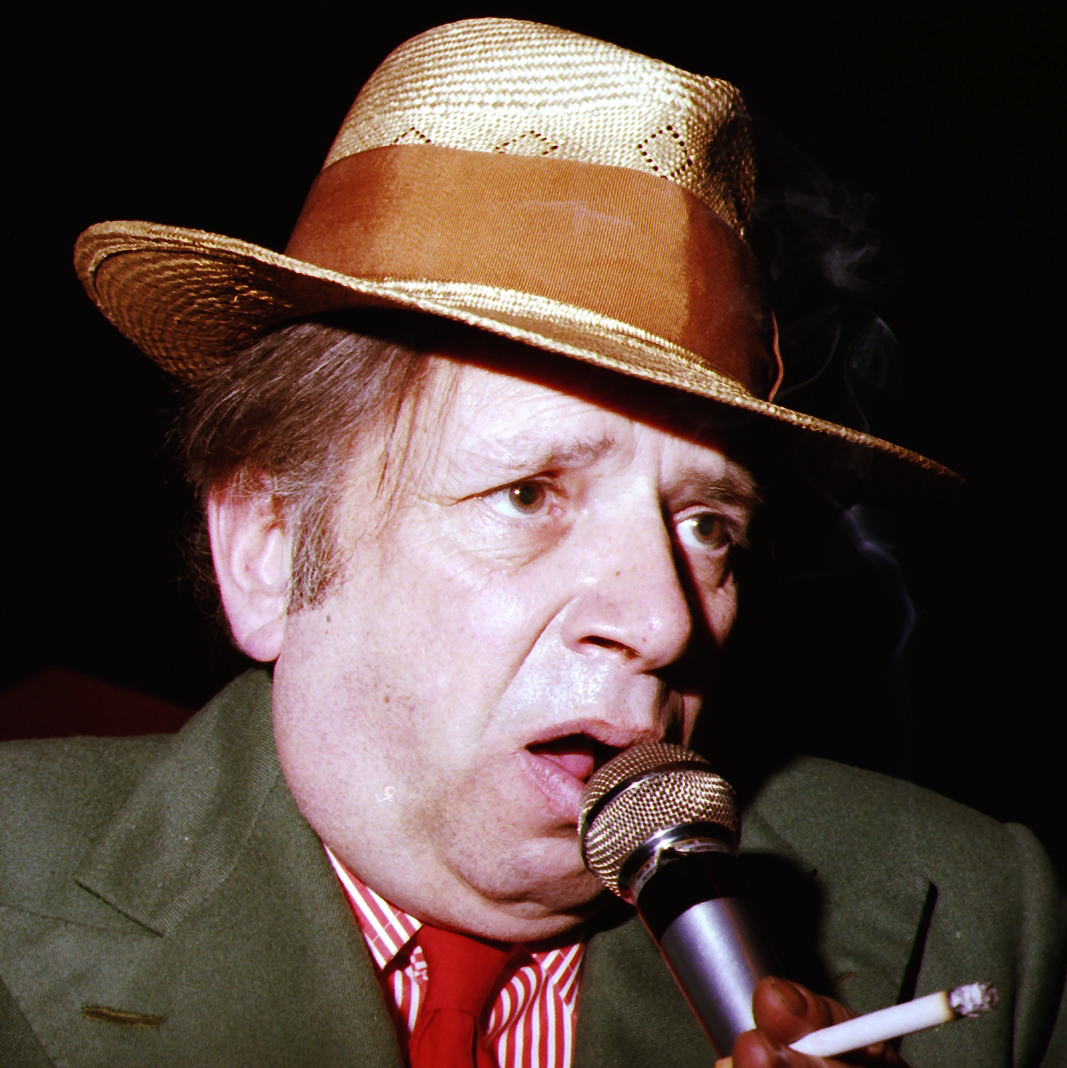
Alan George Heywood Melly (* 17. August 1926 in Liverpool; † 5. Juli 2007 in London) war ein britischer Autor und Jazz-Sänger.
Leben und Wirken
Von 1965 bis 1973 war er Fernseh- und Filmkritiker für The Observer. Er hielt ferner Lesungen über Kunstgeschichte mit einem Schwerpunkt auf dem Surrealismus. Später schrieb er eine Kolumne – Mellymobile – für die satirische Zeitschrift Punch.
Als Sänger war er im Vortrag von klassischen Bluessängern wie Bessie Smith beeinflusst. Während der Zeit des Trad-Jazz-Revivals (in den 1950er Jahren) arbeitete er mit Mick Mulligans Magnolia Jazz Band (mit dem Posaunisten Frank Parr). In den frühen 1970er Jahren sang er bei John Chiltons Feetwarmers und später auch mit der Band von Digby Fairweather. 1978 nahm er mit The Stranglers den eigens für ihn geschriebenen Titel 'Old Codger' auf.
Melly starb im Alter von 80 Jahren an Lungenkrebs. Er hinterlässt seine Ehefrau Diana und drei Kinder.

George Melly +05.07.2007
Alan George Heywood Melly (* 17. August 1926 in Liverpool; † 5. Juli 2007 in London) war ein britischer Autor und Jazz-Sänger.
Leben und Wirken
Von 1965 bis 1973 war er Fernseh- und Filmkritiker für The Observer. Er hielt ferner Lesungen über Kunstgeschichte mit einem Schwerpunkt auf dem Surrealismus. Später schrieb er eine Kolumne – Mellymobile – für die satirische Zeitschrift Punch.
Als Sänger war er im Vortrag von klassischen Bluessängern wie Bessie Smith beeinflusst. Während der Zeit des Trad-Jazz-Revivals (in den 1950er Jahren) arbeitete er mit Mick Mulligans Magnolia Jazz Band (mit dem Posaunisten Frank Parr). In den frühen 1970er Jahren sang er bei John Chiltons Feetwarmers und später auch mit der Band von Digby Fairweather. 1978 nahm er mit The Stranglers den eigens für ihn geschriebenen Titel 'Old Codger' auf.
Melly starb im Alter von 80 Jahren an Lungenkrebs. Er hinterlässt seine Ehefrau Diana und drei Kinder.
Alan
George Heywood Melly (17 August 1926 – 5 July 2007) was an English jazz
and blues singer, critic, writer and lecturer. From 1965 to 1973 he was
a film and television critic for The Observer and lectured on art
history, with an emphasis on surrealism.[1]
Early life and career
He was born in Liverpool, Lancashire, and was educated at Stowe School, where he discovered his interest in modern art, jazz and blues, and started coming to terms with his sexuality.
Interest in surrealist art
Melly once stated that he may have been drawn to surrealism by a particular experience he had during his teenage years. A frequent visitor to Liverpool's Sefton Park near his home, he often entered its tropical Palm House and there chatted to wounded soldiers from a nearby military hospital. It was the incongruity of this sight, men smoking among the exotic plants, dressed in their hospital uniforms and usually deficient a limb, that he felt he later recognised in the work of the Surrealists.
He joined the Royal Navy at the end of the Second World War because, as he quipped to the recruiting officer, the uniforms were "so much nicer". As he related in his autobiography Rum, Bum and Concertina, he was crestfallen to discover that he would not be sent to a ship and was thus denied the "bell-bottom" uniform he desired.[2] Instead he received desk duty and wore the other Navy uniform, described as "the dreaded fore-and-aft". Later, however, he did see ship duty. He never saw active combat, but was almost court-martialled for distributing anarchist literature.[3]
Post-war life and career
After the war, Melly found work in a London Surrealist gallery, working with E. L. T. Mesens and eventually drifted into the world of jazz, finding work with Mick Mulligan's Magnolia Jazz Band. This was a time (1948 onwards) when New Orleans and "New Orleans Revival" style jazz were very popular in Britain. In January 1963, the British music magazine NME reported that the biggest trad jazz event to be staged in Britain had taken place at Alexandra Palace. The event included Alex Welsh, Diz Disley, Acker Bilk, Chris Barber, Kenny Ball, Ken Colyer, Monty Sunshine, Bob Wallis, Bruce Turner, Mick Mulligan and Melly.[4]
He retired from jazz in the early 1960s when he became a film critic for The Observer and a writer on the Daily Mail's satirical newspaper strip Flook, illustrated by Trog. He was also scriptwriter on the 1967 satirical film Smashing Time. This period of his life is described in Owning Up.
He returned to jazz in the early 1970s with John Chilton's Feetwarmers, a partnership that ended only in 2003. He later sang with Digby Fairweather's band. He released six albums in the 1970s including Nuts in 1972 and Son of Nuts the next year.[5] He wrote a light column, Mellymobile, in Punch magazine describing their tours.
He was an Honorary Associate of the National Secular Society and a Distinguished Supporter of the British Humanist Association. George Melly was President of the BHA 1972-4, and was also an Honorary Associate of the Rationalist Association. He was also a member of the Max Miller Appreciation Society and on 1 May 2005 joined Roy Hudd, Sir Norman Wisdom and others in unveiling a statue of Miller in Brighton.
His singing style, particularly for the blues, was strongly influenced by his idol, Bessie Smith. While many British musicians of the time treated jazz and blues with almost religious solemnity, Melly rejoiced in their more bawdy side, and this was reflected in his choice of songs and exuberant stage performances. He recorded a track called "Old Codger" with the Stranglers in 1978 specially written for him by the band.
Melly, who was bisexual, moved from strictly homosexual relationships in his teens and twenties to largely heterosexual relationships from his thirties onwards.[6] He married twice and had a child from each marriage, though his first child Pandora was not known to be his until she was much older. He married his second wife, Diana Moynihan (née Dawson), in 1963.[1] She brought with her two children (Candy and Patrick) from two previous marriages, though Patrick later died from heroin overdose in his twenties. Their own son, Tom, was born two days after the wedding. Diana published an autobiography in 2005 of their life and (open) marriage together, which is included in the bibliography. The two participated in a televised celebrity couples quiz in the 1970s. Asked separately what made them decide to marry, Diana announced "I was pregnant!" and George, in his turn, merely said, "The less said about that, the better."
Brecon
George and Diana Melly had a country retreat, The Tower, at Scethrog in the Brecon Beacons, between 1971 and 1999. This was somewhere Melly could escape the jazz world and indulge his love of fishing on the River Usk. However, jazz followed him to Wales and this led to a series of celebrated performances in the area and in the South Wales valleys.
In 1984 the Brecon Jazz Festival was conceived by a group of jazz enthusiasts who gained widespread support from the local community. George Melly was the first musician to be contracted for the opening festival and remained a supporter until his death. He was a factor in the festival's success and served as its President in 1991.
As well as being the President of the Contemporary Arts Society for Wales, Melly was a contemporary art collector. His passion for surrealist art continued throughout his life and he lectured and wrote extensively on the subject.
His passion for fly-fishing never dwindled and in later life he sold several important paintings (by Magritte and Picasso) to enable him to buy a mile of the River Usk. In 2000 he published Hooked!, a book on fly-fishing.
Later years
He was still active in music, journalism and lecturing on surrealism and other aspects of modern art until his death, despite worsening health problems such as vascular dementia,[7] incipient emphysema and lung cancer.[8] His encouragement and support to gallery owner Michael Budd led to a posthumous exhibition for the modern abstract artist François Lanzi.[9]
In addition to age-related health problems, Melly suffered from environmental hearing loss because of long-term exposure to on-stage sound systems, and his hearing in both ears became increasingly poor. Despite these problems, however, Melly would often joke that he found some parts of his ailing health to be enjoyable. He often equated his dementia to a quite amusing LSD trip, and took a lot of pleasure from his deafness, which he said made many boring conversations more interesting.
On Sunday 10 June 2007, Melly made an appearance, announced as his last ever performance, at the 100 Club in London. This was on the occasion of a fund-raising event to benefit the charity supporting his carers.
He died at his London home of lung cancer and emphysema (which he had for the last two years of his life) aged 80 on 5 July 2007.[1] His Humanist funeral was held at the West London Crematorium, in Kensal Green. The hearse was led by a jazz band, including Kenny Ball on trumpet, playing a New Orleans funeral march. His cardboard coffin was covered with old snapshots and cartoons of Melly by his friends, as well as hand-drawn decorations.[10]
On 17 February 2008 BBC Two broadcast George Melly's Last Stand (produced by Walker George Films), an intimate portrayal of Melly's last months.
His sister Andrée Melly is an actress,[11] living in Ibiza with her husband, Oscar Quitak. His widow, Diana Melly, is an author. In the Channel 4 documentary Stoned in Suburbia Melly compared a joint of cannabis to a fine port after dinner, and said "it should be passed round to the right, you swines".
GEORGE MELLY
Ernie K-Doe +05.07.2001
Ernie K-Doe (* 22. Februar 1936 in New Orleans, Louisiana; † 5. Juli 2001 ebenda; eigentlich Ernest Kador, Jr.) war ein US-amerikanischer Sänger.
Leben und Wirken
Kador begann im Alter von sieben Jahren in einem Kirchenchor zu singen („Golden Choir Jubilees of New Orleans“). Später schloss er sich verschiedenen Gospelchören an.
Ernest Kador besang seine erste Single, Do, Baby Do, 1955 beim Label Specialty. 1959 folgte My Love for You unter dem Namen Ernie Kado bei Ember Records. Im Jahr 1959 wechselte er als Ernie K-Doe zum gerade neu gegründeten Plattenlabel Minit Records in New Orleans. Seine erste Platte hier war Make You Love Me (#604) im Dezember 1959. Dieser Titel geriet noch in Vergessenheit, doch bereits seine zweite Veröffentlichung, Hello My Lover (#614), verkaufte über 100.000 Exemplare.
Sein ganz großer Erfolg war das von Allen Toussaint komponierte und produzierte Mother-in-Law / Wanted $10,000 Reward (#623), ein im Februar 1961 veröffentlichter humorvoller Song über die stereotypen Probleme mit Schwiegermüttern, die offenbar aus der Hölle gesandt werden. Allein der Titel bedeutete einen enormen Kaufanreiz. Der Song mit der den Titel wiederholenden dumpfen Bass-Stimme von Benny Spellman brachte für Minit Records nicht nur die erste Nummer eins in den R&B-Charts, sondern war ein wertvoller Crossovererfolg, der auch in den Popcharts bis zur Topposition vordrang. Er wurde über eine Million mal verkauft.
Zusammen mit dem Musikproduzenten Allen Toussaint entstanden noch weitere Singles wie etwa Te-Ta-Te-Ta-Ta (Mai 1961), die jedoch an den Erfolg des Millionensellers nicht mehr anknüpfen konnten. Auch ein Wechsel zum Plattenlabel Duke Records im Jahre 1967 konnte K-Does abnehmende Popularität nicht mehr stoppen.
Ernest Kador, Jr. (February 22, 1933 – July 5, 2001),[1] known by the stage name Ernie K-Doe, was an African-American rhythm-and-blues singer best known for his 1961 hit single "Mother-in-Law", which went to number 1 on the Billboard pop chart in the U.S.
Early career
Born in New Orleans, K-Doe recorded as a member of the group the Blue Diamonds in 1954 before making his first solo recordings the following year. "Mother-in-Law", written by Allen Toussaint, was his first hit, reaching number 1 on both the Billboard pop chart and the Billboard R&B chart. K-Doe never had another top-40 pop hit, but "Te-Ta-Te-Ta-Ta" (number 21, 1961) and "Later for Tomorrow" (number 37, 1967) reached the R&B top 40.
Later career
In the 1980s K-Doe did radio shows on the New Orleans community stations WWOZ and WTUL. The shows were known for his explosively energetic announcements and frequent self-promotion (occasionally causing problems for the noncommercial station). K-Doe's catch phrases included "Burn, K-Doe, Burn!", "I'm a Charity Hospital Baby!" and (addressed to himself) "You just good, that's all!". For a time he billed himself as "Mister Naugahyde", until he was ordered to desist by the owners of the Naugahyde trademark. K-Doe then explained that it was a misunderstanding; he was actually referring to himself as "Mister M-Nauga-Ma-Hyde", a word he invented himself.
In the 1990s K-Doe began billing himself as "The Emperor of the Universe" and, wearing a cape and crown, became a famous local eccentric in New Orleans. He continued performing and occasionally recording until shortly before his death. Always an elaborate showman, one of K-Doe's most notable later performances was at the Aquarium of the Americas, in New Orleans, where he performed at a benefit for a local group aiding people with disabilities. The show ended with K-Doe performing seven continuous renditions of "Mother In Law" while dancing in front of the Gulf of Mexico shark tank exhibit dressed in a green plumed cape. Later recordings of note include "White Boy, Black Boy". While best known as a singer, he was also an accomplished drummer.
The song "Here Come the Girls" was released in 1970 in England, but was not a hit. It was re-released in 2007 as a result of its use in an advertising campaign for Boots stores and reached number 43. A cover by the Sugababes reached number 3 on the UK charts in 2008.
Death
K-Doe died in 2001 of kidney and liver failure from years of alcoholism. After a traditional jazz funeral, he was interred in the 200-year-old Duval tomb in Saint Louis Cemetery number 2, in his native New Orleans. He had burial space in his father's family cemetery in Erwinville, Louisiana, but his widow, Antoinette, as well as his fans and friends in New Orleans, wanted his remains in the city, so the Duval family offered him some of their burial space. He is buried in the same tomb with his second mother-in-law, with whom he was very close, and his best friend, Earl King.
After death
His widow, Antoinette K-Doe, continued to operate his music club and bar, Ernie K-Doe's Mother-in-Law Lounge, which housed a life-size statue of Him. The club was severely damaged by Hurricane Katrina in late 2005 and had to shut down. With the help of the Hands on Network and the musical artist Usher Raymond, Antoinette reopened the Mother-in-Law Lounge on August 28, 2006, in its original location at 1500 N. Claiborne Avenue.
Antoinette also led a tongue-in-cheek campaign for K-Doe's election for mayor of hurricane-ravaged New Orleans in 2006, five years after his death. She is quoted as saying, "He's the only one qualified—that's my opinion."[2] Although K-Doe's name did not appear on the ballot, the campaign generated revenue from sales of T-shirts and bumper stickers. Antoinette used the proceeds from these sales for rebuilding the Mother-in-Law Lounge and helping the New Orleans Musicians' Clinic, both of which were damaged by Hurricane Katrina.
In November 2007 the British-based high street beauty store and pharmacy Boots used his 1970 performance of the song "Here Come the Girls" as the soundtrack of a Christmas TV commercial.[3] This led to the re-release of the song as single in the UK in December 2007. A new Boots commercial, with a summer theme, featuring the song was aired between June and August 2008 . The same song was also sampled on the Sugababes' single "Girls", which was then itself used in another Boots commercial in November 2008.
Antoinette died in New Orleans on February 24, 2009, Mardi Gras day, after a heart attack.[4]
Ernie K-Doe was inducted into the Louisiana Music Hall of Fame in 2009.
Ernie K
Doe, "Mother-In-Law", rare TV appearance, 1996