1899 Lonnie Johnson*
1928 Eddie „Guitar“ Burns*
1929 Floyd Dixon*
1946 Fito de la Parra*
1949 Mary Flower*
1955 Kenn Lending*
1974 “Tota” (Flavio Rigatozzo)*
2005 Jimmy Smith+
2011 Marvin Sease+
Happy Birthday
Eddie „Guitar“ Burns *08.02.1928

Eddie „Guitar“ Burns (* 8. Februar 1928 in Belzoni, Mississippi; † 13. Dezember 2012[1]) war ein US-amerikanischer Gitarrist, Mundharmonikaspieler, Sänger und Songwriter des Detroit Blues.
Burns kam als Kind eines Landpächters (Sharecropper) zur Welt und wuchs hauptsächlich bei seinen Großeltern auf. Er brachte sich selbst das Mundharmonikaspiel bei und baute auch seine erste Gitarre selbst.
Beeinflusst von Sonny Boy Williamson I. und Big Bill Broonzy[2] übersiedelte Burns 1948 nach Detroit, das in den Nachkriegsjahren eine blühende Blues-Szene hatte, die von John Lee Hooker angeführt wurde. Seine erste Single Notoriety Woman zeigte seine Beherrschung der Mundharmonika, doch wandte er sich in den nächsten Jahren dem Gitarrespiel zu, auch bei Aufnahmen mit John Lee Hooker.[2] Zu dieser Zeit trat er regelmäßig als „Big Daddy“, „Little Eddie“ oder „Big Ed“ in Detroiter Nachtclubs auf; da er aber davon nicht leben konnte, arbeitete er als Mechaniker. Mitte der 1950er-Jahre nahm er für Checker Records und Chess Records zwei Singles auf, die sich aber nicht gut verkauften.[3] Im Laufe der 1960er-Jahre nahm er verschiedene Singles auf, nun unter seinem Namen Eddie „Guitar“ Burns. Auch auf Hookers Album The Real Folk Blues von 1966 ist er als Gitarrist zu hören.
Während einer Europatournee 1972 nahm er in London sein erstes Album, Bottle Up & Go, auf. 1994 wurde er mit dem Michigan Heritage Award ausgezeichnet.[3] Sein jüngerer Bruder Jimmy Burns ist ein erfolgreicher Soulblues-Sänger und -Gitarrist. Auf dem Album Snake Eyes begleitete er Eddie Burns als Gitarrist. Sein letztes Album nahm Burns 2005 im Alter von 77 Jahren auf. Seinen letzten Auftritt hatte Burns mit Little Sonny auf dem Motor City Blues and Boogie Woogie festival 2008.
Eddie "Guitar" Burns (February 8, 1928 – December 12, 2012)[3] was an American Detroit blues guitarist, harmonica player, singer and songwriter.[2] His career spanned seven decades, and in terms of Detroit bluesmen, Burns was deemed second only in stature to John Lee Hooker.[2][4]
Biography
Burns was born in Belzoni, Mississippi, United States.[1] His father was a sharecropper who performed as a singer in medicine shows, although Burns was mainly raised by his grandparents. He was self-taught in the harmonica and made his first guitar.[4]
Initially influenced by exposure to the music of Sonny Boy Williamson I and Big Bill Broonzy, Burns relocated from the Mississippi delta via Waterloo, Iowa to Detroit in 1948.[4] Originally Burns excelled playing the harmonica, and his debut single, "Notoriety Woman" (1948), featured this ability accompanied by the guitar playing of John T. Smith. Burns tells how he met John Lee Hooker here: "Well see, John T. and me was playing at a house party this particular Saturday night. We was in Detroit Black Bottom...so Hooker was on his way home from somewhere – I guess he was at some other party, house parties used to be real plentiful here. Hooker heard it, knocked at the door, and they let him in. He introduced himself and he sat down and played some with us. And then, he liked the way I was blowing harmonica...he had a session coming up on Tuesday, this was on a Saturday. And so then, he wanted to know if I wanted to do this session with him on Tuesday. And I told him, yes, naturally. So that's how John T. and me went down to cut for Hooker. When we got through the man wanted to know what I had. I had one song, "Notoriety Woman." And so he said I'd need two, and I sat there and made up "Papa's Boogie."" [5] However, by the following year Burns was playing guitar accompaniment on recordings by John Lee Hooker.[2]
Billed at times as Big Daddy, Little Eddie, or Big Ed, Burns performed regularly in Detroit nightclubs, but had to supplement his earnings by working as a mechanic.[4] In those early years Burns's own recording was not prolific with just a handful of tracks released on several labels. His output veered from Detroit blues to R&B as the 1960s progressed, when he issued a number of singles in that decade on Harvey Fuqua's Harvey Records label.[2] Now permanently billed as Eddie "Guitar" Burns, he appeared on Hooker's album The Real Folk Blues (1966).[4]
In 1972, Burns undertook a European tour and recorded his debut album, Bottle Up & Go in London, England.[4][6] This was followed by an appearance at the Ann Arbor Blues and Jazz Festival in 1973. Two years later Burns toured Europe again, this time as part of the billing of 'American Blues Legends', organised by Jim Simpson of Big Bear Records, who was the first to insert the epithet "guitar" into his name.[4] Burns self penned track, "Orange Driver", was recorded by The J. Geils Band (Hotline, 1975).[7] In August 1976, Burns performed his song "Bottle Up & Go" live on the British television program, So It Goes.
In 1989 Burns released an album titled Detroit on Blue Suit Records, where his ability on both guitar and harmonica were displayed.[2] In February 1992, Burns appeared alongside Jack Owens, Bud Spires, and Lonnie Pitchford at the seventh annual New York Winter Blues Festival.[8] By 1994, Burns had been granted the Michigan Heritage Award.[4]
In 1998, the Detroit Blues Society presented Burns with its Lifetime Achievement Award.
His brother, Jimmy Burns, is a soul blues musician, who lives in Chicago, and played guitar on Burns 2002 album Snake Eyes.[2][4] Burns final recorded offering was Second Degree Burns, released when he was 77 years of age.[9]
In 2008, Little Sonny performed with Burns on the latter's final live performance at the Motor City Blues & Boogie Woogie Festival.[3]
Burns died of heart failure aged 84 in December 2012.
Eddie 'guitar' Burns with BJ Hegens Bluesband - The blues is allright
Eddie 'guitar' Burns from Detroit with BJ Hegens bluesband live at cafe De Sleutel Groningen, sundaymorning 22 november 1987, prime time of the blues.
https://www.youtube.com/watch?v=VApfXq11jow
Eddie 'guitar' Burns from Detroit with BJ Hegens bluesband live at cafe De Sleutel Groningen, sundaymorning 22 november 1987, prime time of the blues.
https://www.youtube.com/watch?v=VApfXq11jow
Fito de la Parra *08.02.1946

Adolfo "Fito" de la Parra (* 8. Februar 1946 in Mexiko-Stadt) ist ein mexikanischer Schlagzeuger, der hauptsächlich als Mitglied der Bluesrock-Band Canned Heat bekannt ist.
Schon als Kind spielte er in vielen regionalen Bands als Schlagzeuger und stieg dann bei den "Los Sinners" ein, mit denen er unter anderem im mexikanischen Fernsehen auftrat. Mitte der 1960er-Jahre reiste die ganze Band illegal in die USA ein und wurde nach ein paar wenigen Auftritten wieder ausgewiesen.
Durch seine Ehe mit einer jungen Amerikanerin, Sonja, ermöglichte sich de La Parra die Auswanderung nach Los Angeles, wo er bald darauf Canned Heat im Topanga Corral spielen sah, er kannte ihren Schlagzeuger Frank Cook schon von früher und dieser hatte ihn eingeladen, sich den Gig anzusehen. Da Frank Cooks Schlagzeugspiel der Band zu nah am Jazz war, ersetzten sie ihn Ende 1967 durch de la Parra, mit dem sie dann unter anderem beim Woodstock-Festival auftraten. Nach dem Tod von Bob Hite 1981 übernahm de la Parra die Band und leitet sie bis heute. Zurzeit ist die Band wieder in der Woodstock-Besetzung mit Harvey Mandel und Larry Taylor auf Tour. 2011 erschien die überarbeitete Version seiner Biografie, die er nun um die Jahre 2000-2010 ergänzt hatte.
Adolfo "Fito" de la Parra (born 8 February 1946, Mexico City) is a Mexican drummer, best known as a longtime member of Canned Heat.[1][2]
Biography
Fito de la Parra began playing drums professionally from the age of 14. In 1958 he was a member of a Mexican rock band called Los Sparks. Later he played with some of Mexico's most famous rock bands, Los Sinners, Los Hooligans and with Javier Batiz. In 1966 he moved to Los Angeles and became a member of Sotweed Factor and then left them to join Bluesberry Jam. He also backed The Platters, Etta James, The Rivingtons, Mary Wells and the Shirelles.[3] He replaced Canned Heat's original drummer, Frank Cook and played his first gig with the band on 1 December 1967. He joined in time for their second album, Boogie with Canned Heat, and has played on every subsequent album up to present day.
During his 40+ years with Canned Heat, Fito has also played with some of the greatest blues singers of our time including, Big Joe Turner, T-Bone Walker, Albert Collins, and George "Harmonica" Smith. His solid, basic drumming and fantastic solos have led to recording sessions with John Lee Hooker, Memphis Slim, and Clarence "Gatemouth" Brown. Fito has also written a book "LIVING THE BLUES" with his personal story and Canned Heat's, now available on the band's website cannedheatmusic.com, Amazon.com and barnesandnoble.com. As "keeper of the flame" he has remained the band leader, rhythmic and spiritual force behind Canned Heat's music for over four decades. He has also produced three DVDs, "Boogie with Canned Heat", "Rock Made in Mexico", and "Fito de la Parra Drum Solos" and countless CDs for Canned Heat and other artists. He became a US citizen in 1984. Fito is an avid motorcyclist and an animal lover, currently living in Ventura county, CA.
In recent years he was the only member of the 1960s Canned Heat line-up that toured with the group, although in 2010 (and for most shows in 2009) Larry Taylor and Harvey Mandel rejoined the group and together with Fito are currently touring worldwide.
Floyd Dixon *08.02.1929

Floyd Dixon (* 8. Februar 1929 in Marshall, Texas als Jay Riggins Jr.; † 26. Juli 2006 in Los Angeles, Kalifornien) war ein US-amerikanischer R&B-Pianist und Sänger, der sich selbst als "Mr. Magnificent" bezeichnete. Er wird dem Jump und West Coast Blues zugerechnet, gilt als Wegbereiter des Soul und beeinflusste Musiker wie Ray Charles.
Dixon wuchs an der texanischen Grenze zu Louisiana auf und kam früh mit Blues, Gospel, Jazz und Country-Musik in Berührung. Als Kind brachte er sich das Klavierspielen selbst bei.
1942 zog die Familie nach Los Angeles in Kalifornien, wo Dixon den Bluesmusiker Charles Brown kennenlernte, der sein Mentor wurde. Nach Aufnahmen mit der Band von Johnny Otis bekam Dixon 1949 seinen ersten eigenen Plattenvertrag. Zu seinen Hits in der ersten Hälfte der 1950er, die er für Aladdin einspielte, gehören „Telephone Blues“, „Wine Wine Wine“, „Too Much Jelly Roll“ und „Hey Bartender“ – später von den Blues Brothers neu eingespielt.
In den 1960ern zog sich Dixon weitgehend aus dem Musikgeschäft zurück und ging nur noch vereinzelt auf Tour. 1975 erschien in Schweden ein Album mit seinen alten Hits und bescherte ihm ein Comeback. Er trat in Europa auf und gab u. a. mit Charles Brown und Robert Cray Konzerte. 1984 schrieb er den „Olympic Blues“ für die Olympischen Sommerspiele in Los Angeles.
1993 erhielt Dixon einen Pioneer Award der Rhythm and Blues Foundation. Er spielte beim Monterey Jazz Festival und beim Chicago Blues Festival. 1996 veröffentlichte er das vielfach gelobte Album Wake Up And Live, das einen Handy Award gewann. 2005 erschien das Album Fine! Fine! Thing!.
Floyd Dixon starb 2006 im Alter von 77 Jahren an Nierenversagen, nur wenige Wochen nach einer Tournee mit Pinetop Perkins und Henry Clay.
Floyd Dixon (February 8, 1929 – July 26, 2006)[1] was an American rhythm and blues pianist and singer.
Life and career
Dixon was born Jay Riggins, Jr. in Marshall, Texas, United States.[1] He was influenced by blues, gospel, jazz and country music growing up. His family moved to Los Angeles, California in 1942 and Dixon met his influence Charles Brown there.[1]
Self-dubbed "Mr. Magnificent," Dixon signed a recording contract with Modern Records in 1949, specializing in jump blues and sexualized songs like "Red Cherries", "Wine Wine Wine", "Too Much Jelly Roll" and "Baby Let's Go Down to The Woods". Dixon replaced Brown on piano and vocals in the band Johnny Moore's Three Blazers in 1950 when Brown departed to start a solo career. The group recorded on Aladdin Records.[2] Staying with the record label, Dixon had a small hit under his own name in 1952 with "Call Operator 210".[2]
Dixon switched to the Specialty Records label in 1952, and the Atlantic Records subsidiary Cat Records in 1954. "Hey Bartender" (later covered by The Blues Brothers) and "Hole In The Wall" were hit singles during this time.
In the 1970s Dixon left the music industry for a quieter life in Texas, though he did occasional tours in the 1970s and 1980s.[2] In 1984 he was commissioned to write "Olympic Blues" for the 1984 Summer Olympics.[1]
In 1993, Dixon received a Pioneer Award from the Rhythm and Blues Foundation.[1] In the mid-1990s, he secured a contract with Alligator Records, releasing the critically acclaimed album, Wake Up And Live.[1]
On June 1 and 2, 2006, Dixon hosted a concert with Pinetop Perkins and Henry Gray, celebrating the intergenerational aspect of blues piano. The band was led by Kid Ramos and included Larry Taylor and Richard "Bigfoot" Innes. Kim Wilson, Fred Kaplan (from the Hollywood Blue Flames) and Lynwood Slim also performed. This concert was filmed and was released March 6 2013 on HighJohn Records.[3]
Dixon died in Orange County, California in July 2006, at the age of 77, from kidney failure, having suffered with cancer.[1] A public memorial service was held at Grace Chapel, in the grounds of the Inglewood Park Cemetery.
Floyd Dixon - Hey Bartender
April 2006 - Floyd Dixon performs "Hey Bartender" at Loafers Shag Dance Club in Raleigh, NC.
Lonnie Johnson *08.02.1899

 Alonzo „Lonnie“ Johnson (* 8. Februar 1899[1] in New Orleans; † 16. Juni 1970 in Toronto) war ein US-amerikanischer Blues- und Jazzmusiker. Er spielte als erster im Jazz Soli auf der Gitarre und gilt als besonders innovativer Gitarrist, „der auf ideale Weise Blues mit Jazz- und Balladenkunst verband. Sein Einfluss reichte von Robert Johnson bis zu Elvis Presley und Jerry Lee Lewis.“
Lonnie Johnson lernte als Kind Piano und Violine; er begann seine Karriere als Musiker in verschiedenen Bars in New Orleans.
Im Jahre 1917 bereiste er Europa, um dort zu spielen, und schloss sich einige Zeit Will Marion Cook und seiner Band, dem Southern Syncopated Orchestra, an. Als er 1918 wieder nach New Orleans zurückkehrte, war bis auf einen Bruder seine ganze Familie als Opfer der Spanischen Grippe verstorben. In dieser Zeit begann er auch, Gitarre zu spielen. Zwei Jahre später, 1920, zogen Lonnie Johnson und sein überlebender Bruder James „Steady Roll“ Johnson nach St. Louis, wo Lonnie mit den Mississippi-Bands Charlie Creath’s Jazz-O-Maniacs und der von Fate Marable spielte.
Nach fünf Jahren in St. Louis lernte Lonnie die Bluessängerin Mary Smith kennen und heiratete sie (Mary Johnson hat von 1929 bis 1936 eigene Schallplattenaufnahmen gemacht – allerdings nie zusammen mit Lonnie Johnson). Im selben Jahr gewann Lonnie bei einem Blueswettbewerb einen Plattenvertrag mit Okeh Records.[3] Johnson nahm dann als Gitarrist (aber bis 1927 auch als Geiger, auf der Mandoline, auf dem Piano und dem Harmonium) in vielfältigen Zusammenstellungen auf: Im Duett mit seinem Bruder James „Steady Roll“ Johnson sowie als Begleiter von Victoria Spivey, Spencer Williams und Texas Alexander. Auch war er mit Bessie Smiths T.O.B.A.-Show auf Tournee.[3] Aufgrund von Johnsons ausgeklügelten Einsatzes der Violine im Blues wird deutlich, dass dieses Instrument dort geläufiger war als dies bisher in der Geschichtsschreibung angenommen wurde.[4]
In Chicago arbeitete er 1927 mit den Hot Five von Louis Armstrong zusammen; weiterhin nahm er mit Duke Ellington und McKinney’s Cotton Pickers auf sowie mehrfach im Duett mit Eddie Lang (1927/1929) und mit Joe Venuti. Die Aufnahmen mit den Hot Five und mit Eddie Lang beinhalten frühe Duos mit dem Banjospieler Johnny St. Cyr beziehungsweise dem Gitarristen Lang, die durch Single-Note-Technik, ihren Aufbau und die Harmonien überzeugen. Von 1925 bis 1932 war Johnson, der auch als Sänger hervortrat, einer der populärsten afroamerikanischen Plattenstars.
Anschließend zog er nach Cleveland, Ohio, und arbeitete mit dem Putney Dandridge Orchestra. Hier war er allerdings nicht sehr erfolgreich und musste einige Zeit in einer Reifenfabrik und in einem Walzwerk arbeiten. 1937 zog er wieder zurück nach Chicago und spielte mit Johnny Dodds und Jimmie Noone für Decca Records und arbeitete auch mit Lil Hardin Armstrong.
Im Jahre 1939 wechselte Johnson zum Bluebird-Label, wo er mit bekannten Pianisten wie Blind John Davis, Roosevelt Sykes und Joshua Altheimer Aufnahmen machte. Ab 1941 wandte er sich dem Rhythm and Blues zu und setzte vermehrt die E-Gitarre ein. Das Stück Tomorrow Night, das Lonnie 1948 für das Plattenlabel King aufnahm, stand sieben Wochen in den R&B-Charts und wurde mit über drei Millionen verkauften Platten einer der größten R&B-Hits des Jahres.[5]
1952 war er auf Tournee in England, arbeitete aber bis Ende der 1950er-Jahre als Hotel-Hausmeister, bevor er 1960 vom Jazz-DJ Chris Albertson wiederentdeckt wurde. 1962 spielte er auch mit Bob Dylan, dem er einige musikalische Tricks beibrachte. 1963 bereiste er mit dem American Folk Blues Festival Europa. Ab 1965 lebte er in Toronto, wo er das Album "Stompin' at the Penny" aufnahm. Seine letzten bekannten Aufnahmen entstanden 1967 in Form von zwei Soloalben für Folkways Records.[6]
Im März 1969 wurde Lonnie Johnson von einem Auto schwer verletzt. Anschließend erlitt er einen Schlaganfall, der eine halbseitige Lähmung zur Folge hatte, weshalb er nicht mehr Gitarre spielen konnte. Bei seinem vorletzten Live-Auftritt im Februar 1970 wurde Johnsons Gesang daher vom Gitarristen Buddy Guy, dessen Schlagzeuger Fred Below und dem Bassisten Jim McHarg begleitet. Am Bloomsday 1970 starb Lonnie Johnson an Spätfolgen des Unfalls.
Alonzo "Lonnie" Johnson (February 8, 1899[1][2] – June 16, 1970) was an American blues and jazz singer/guitarist, violinist and songwriter who pioneered the role of jazz guitar and jazz violin, and is recognized as the first to play an electrically-amplified violin.[3][4]
Biography
Early career
Johnson was born in New Orleans, Louisiana, and raised in a family of musicians. He studied violin, piano and guitar as a child, and learned to play various other instruments including the mandolin, but concentrated on the guitar throughout his professional career. "There was music all around us," he recalled, "and in my family you'd better play something, even if you just banged on a tin can."[5]
Lonnie Johnson pioneered the single-string solo guitar styles that we are accustomed to hearing today in rock, blues and jazz music.
By his late teens, he played guitar and violin in his father's family band at banquets and weddings, alongside his brother James "Steady Roll" Johnson.[6] He also worked with jazz trumpeter Punch Miller in the city's Storyville district.
In 1917, Johnson joined a revue that toured England, returning home in 1919 to find that all of his family, except his brother James, had died in the 1918 influenza epidemic.
He and his brother settled in St. Louis in 1921.[7] The two brothers performed as a duo, and Lonnie also worked on riverboats, working in the orchestras of Charlie Creath and Fate Marable. In 1925 Lonnie married, and his wife Mary soon began to pursue a blues career in her own right, performing as Mary Johnson and pursuing a recording career from 1929–1936.[8] She is not to be confused with the later soul and gospel singer of the same name. As is often the case with early blues artists, information on Mrs Johnson is often contradictory and confusing. Many online sources give her name before marriage as Mary Smith, and state that she began performing in her teens. However, author James Sallis[9] gives her single name as Mary Williams, and states that her interest in writing and performing blues material began when she started helping Lonnie write songs, and developed from there. Curiously enough, the two never recorded together. They had six children before their divorce in 1932.[8]
Success in the 1920s and 1930s
In 1925, Johnson entered and won a blues contest at the Booker T. Washington Theatre in St. Louis, the prize being a recording contract with Okeh Records.[10] To his regret, he was then tagged as a blues artist, and later found it difficult to be regarded as anything else. He later said, "I guess I would have done anything to get recorded – it just happened to be a blues contest, so I sang the blues."[7] Between 1925 and 1932 he made about 130 recordings for the Okeh label (many were good sellers). He was called to New York to record with the leading blues singers of the day including Victoria Spivey and country blues singer Alger "Texas" Alexander. He also toured with Bessie Smith's T.O.B.A. show.[10]
In December 1927, Johnson recorded in Chicago as a guest artist with Louis Armstrong and his Hot Five, paired with banjoist Johnny St. Cyr. He played on the sides "I'm Not Rough", "Savoy Blues", and "Hotter Than That."[11] In 1928 he recorded "Hot and Bothered", "Move Over", and "The Mooche" with Duke Ellington on Okeh Records;[12] he also recorded with a group called The Chocolate Dandies (in this case, McKinney's Cotton Pickers). He pioneered the guitar solo on the 1927 track "6/88 Glide"[6] and many of his early recordings showed him playing 12-string guitar solos in a style that influenced such future jazz guitarists as Charlie Christian and Django Reinhardt, and gave the instrument new meaning as a jazz voice. He excelled in purely instrumental pieces, some of which he recorded with the white jazz guitarist Eddie Lang, whom he teamed up with in 1929. These recordings were among the first in history to feature black and white musicians performing together, but Lang was credited as Blind Willie Dunn to disguise the fact.[7]
Much of Johnson's music featured experimental improvisations that would now be categorised as jazz rather than blues. According to blues historian Gérard Herzhaft,[3] Johnson was "undeniably the creator of the guitar solo played note by note with a pick, which has become the standard in jazz, blues, country, and rock". Johnson's style reached both the Delta bluesmen and urban players who would adapt and develop his one string solos into the modern electric blues style.[6] However, writer Elijah Wald[13] has written that, in the 1920s and 1930s, Johnson was best known as a sophisticated and urbane singer rather than an instrumentalist – "Of the forty ads for his records that appeared in the 'Chicago Defender' between 1926 and 1931, not one even mentioned that he played guitar."
Johnson's compositions often depicted the social conditions confronting urban African Americans ("Racketeers' Blues", "Hard Times Ain't Gone Nowhere", "Fine Booze and Heavy Dues"). In his lyrics he captured the nuances of male-female love relationships in a way that went beyond Tin Pan Alley sentimentalism. His songs displayed an ability to understand the heartaches of others that Johnson saw as the essence of his blues.[10]
After touring with Bessie Smith in 1929, Johnson moved to Chicago, and recorded for Okeh with stride pianist James P. Johnson. However, with the temporary demise of the recording industry in the Great Depression, Johnson was compelled to make a living outside music, working at one point in a steel mill in Peoria, Illinois. In 1932 he moved again to Cleveland, Ohio, where he lived for the rest of the decade. There, he played intermittently with the band of vocalist and singer Putney Dandridge, and performed on radio programs.[6]
By the late 1930s, however, he was recording and performing in Chicago for Decca Records, working with Roosevelt Sykes and Blind John Davis among others. In 1939, during a session for the Bluebird label with pianist Joshua Altheimer, Johnson used an electric guitar for the first time.[7] He recorded 34 tracks for Bluebird over the next five years, including the hits "He's a Jelly Roll Baker" and "In Love Again".[6]
Later career
After World War II, Johnson made the transition to rhythm and blues, recording for King Records in Cincinnati, and having a major hit in 1948 with "Tomorrow Night", written by Sam Coslow and Will Grosz. This topped the Billboard "Race Records" chart for 7 weeks, also made # 19 on the pop charts, and had reported sales of three million copies.[7] A blues ballad with piano accompaniment and background singers, the song bore little resemblance to much of Johnson's earlier blues and jazz material. The follow-ups "Pleasing You", "So Tired" and "Confused" were also major R&B hits.[14]
In 1952 Johnson toured England. Tony Donegan, a British musician who played on the same bill, paid tribute to Johnson by changing his name to Lonnie Donegan. Although Johnson's performances are thought to have been received poorly by British audiences, this may also have been due to organisational problems surrounding the tour.[15]
After returning to the U.S., Johnson moved to Philadelphia. His career had been a roller coaster ride that sometimes took him away from music. In between great musical accomplishments, he had found it necessary to take menial jobs that ranged from working in a steel foundry to mopping floors as a janitor. He gradually dropped out of music again in the 1950s, and took menial janitorial jobs; he was working at Philadelphia's Benjamin Franklin Hotel in 1959 when WHAT-FM disc jockey Chris Albertson happened upon him and produced a comeback album, for the Prestige Bluesville Records label, Blues by Lonnie Johnson. This was followed by other Prestige albums, including one (Blues & Ballads) with former Ellington boss, Elmer Snowden, who had helped Albertson locate Johnson. There followed a Chicago engagement for Johnson at the Playboy Club and this succession of events placed him back on the music scene at a fortuitous time: young audiences were embracing folk music and many veteran performers were stepping out of obscurity. In short order, Lonnie Johnson found himself reunited with Duke Ellington and his orchestra and appearing as special guest at an all-star folk concert, both at Town Hall, New York City.
In 1961, Johnson was reunited with his old Okeh recording partner, Victoria Spivey, for another Prestige album, Idle Hours, and the two singers performed at Gerdes Folk City. In 1963 he toured Europe as part of the American Folk Blues Festival show, with Muddy Waters and others, and recorded an album with Otis Spann in Denmark.
In May 1965, he performed at a club in Toronto before an audience of four people.[16] Two weeks later, his shows at a different club attracted a larger audience and Johnson, also encouraged by Toronto's relative racial harmony, decided to move to the city. He opened his own club, Home of the Blues, on Toronto's Yorkville Avenue in 1966, but it was a business failure and Johnson was ultimately fired by the man who became owner.[16] Throughout the rest of the decade he recorded and played local clubs in Canada as well as embarking on several regional tours.[6]
In March 1969, he was hit by a car while walking on a sidewalk in Toronto.[17] Johnson was seriously injured, suffering a broken hip and kidney injuries. A benefit concert was held on May 4, 1969, featuring two dozen acts, including Ian and Sylvia, John Lee Hooker and Hagood Hardy.[18] Johnson never fully recovered from his injuries and suffered what was described as a stroke in August. He was able to return to the stage for one performance at Massey Hall on February 23, 1970, walking with the aid of a cane to sing a couple of songs with Buddy Guy and receiving a standing ovation.[19] He died on June 16, 1970 and although a funeral was held for him at Mount Hope Cemetery in Toronto by his friends and fellow musicians, his family members insisted on transferring the body to Philadelphia where he was buried.[20][16] At the time, Johnson was reported to have been "virtually broke."[16]
In 1993, Smithsonian Folkways released The Complete Folkways Recordings, Johnson's anthology of music on Folkways Records. He had been featured on several compilation blues albums, on Folkways, beginning in the 1960s, but had never released a solo album on the label in his lifetime.[21]
Johnson was posthumously inducted into the Louisiana Blues Hall of Fame in 1997.
Biopic depiction
Lonnie Johnson is featured as a character in Who Do You Love? (2008), a feature film which dramatised the life of Leonard Chess, starring Alessandro Nivola, David Oyelowo and TJ Hassan as Johnson. The film was directed by Jerry Zaks.
Influence
Lonnie Johnson's early recordings are the first guitar recordings that display a single-note soloing style with use of string bending and vibrato. While it cannot be proven that this contains the influence of earlier players who did not record, it is the origin of Blues and Rock solo guitar. Johnson's influence is obvious in Django Reinhardt, T-Bone Walker and virtually all electric blues guitar players.
One of Elvis Presley's earliest recordings was a version of Johnson's blues ballad, "Tomorrow Night" written by Sam Coslow and Will Grosz. Presley's vocal phrasing mimics Johnson's performance; and many of Presley's signature vibrato and baritone sounds can be heard in development. Tomorrow Night was also recorded by LaVern Baker; and in 1957 by Jerry Lee Lewis.
In the liner notes for Biograph, Bob Dylan describes his encounters with Johnson in New York City. "I was lucky to meet Lonnie Johnson at the same club I was working and I must say he greatly influenced me. You can hear it in that first record. I mean Corrina, Corrina...that's pretty much Lonnie Johnson. I used to watch him every chance I got and sometimes he'd let me play with him. I think he and Tampa Red and of course Scrapper Blackwell, that's my favorite style of guitar playing."[22] Also, Dylan wrote about the performing method he learned from Robert Johnson in Chronicles, Vol. 1. Dylan thinks Robert Johnson had learned a lot from Lonnie. Also some of Robert's songs are seen as new versions of songs recorded by Lonnie.


Mary Flower *08.02.1949
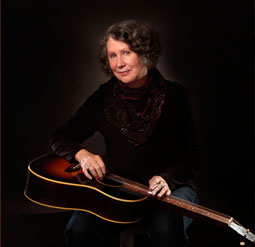
Mary Flower is an award-winning American musician and music educator [2][3] on the independent Yellow Dog Records label. A blues and ragtime fingerstyle guitarist and vocalist, she combines intricate syncopated Piedmont style fingerpicking with lap-slide guitar.[4]
In 2000 and 2003, Flower placed in the top three at the National Finger Style Guitar Championship, the only female to do this twice for guitar.[5]
She’s performed with Jorma Kaukonen, guitarist/songwriter Pat Donohue, Hot Rize founder Tim O’Brien, singer Mollie O’Brien, guitarist/songwriter Geoff Muldaur, and the Campbell Brothers.[6] As a songwriter, arranger and educator she has several musical and instructional releases to her credit.[7][8] She is currently based in Portland, Oregon, United States.
Early life, music career
Flower grew up in a musical family and first performed as a high schooler in her hometown of Lafayette, Indiana. In the early 1970s, after attending a concert by Delta transplant Yank Rachell, an acclaimed singer/mandolinist/guitarist, Flower was inspired to deepen her pursuit of blues music, and began in earnest her decades long musical career.
She made connections with talented musicians early on, introducing Caroline Peyton to the music scene in Bloomington, Indiana. Peyton would go on to a successful career as a solo musician and a Disney vocalist for several productions. [9]
In 1972 Flower moved to Denver, accompanied by friend Randy Handley. Here she teamed up with country-folk singer-songwriter Katy Moffatt and ventured out for several successful tours with her on the National College Coffeehouse Circuit.[10] Her skills garnered her a fellowship from the Colorado Council on Arts and Humanities.[11]
While raising a family in Denver she developed a strong regional following, worked closely with future Prairie Home Companion regular Pat Donohue, and founded the loosely organized band Mother Folkers.[1]
After thirty years in Denver, in 2004, she moved to Portland, OR and was signed soon after to Yellow Dog Records.[12]
As educator
Teaching others has been a consistent trend in Flower’s career. She developed the core classes at the Swallow Hill School of Music and was a teacher there from 1990-2004. Nationally she’s been part of the Blues in Schools program, developed five instructional DVDs, and teaches workshops at many festivals where she also performs. In 2010 she heads up guitar week at the Augusta Heritage Center.[13]
Notable appearances
Festivals: Merlefest, Kerrville Folk Festival, Arkansas Blues and Heritage Festival, Calgary Folk Music Festival
Radio: Prairie Home Companion,[14] eTown, BBC Radio
Education: Augusta Heritage Center, European Blues Association, Centrum Country Blues, Fur Peace Ranch, Swannanoa Gathering, Swallow Hill Music Association
Awards
Won
2010: Independent Music Awards Vox Pop Acoustic Song winner for "Slow Lane to Glory"
2003: National Finger Style Guitar Championship - Mary Flower - Third Place (Finalist)
2000: National Finger Style Guitar Championship - Mary Flower - Third Place (Finalist) [15]
1987: Best Folkie in Denver from the Best of Westword (three time winner) [16]
Nominated
Independent Music Awards - Acoustic Song of the Year (2009) - Slow Lane to Glory from "Bridges"[17]
Blues Music Award nominee for Acoustic Artist of The Year (2008) [18]
2008 & 2009 Muddy Awards, Best Acoustic Guitar nominee [19]
Mary Flower Playing Rag Time Blues Guitar
“Tota” (Flavio Rigatozzo) *08.02.1974

“Tota” (Flavio Rigatozzo) was born on February 8th 1974 in Buenos Aires, Argentina. He discovered the Blues after his teens and embraced them as a way of life. Thus, he founded TOTABLUES together with his childhood friend and guitar player Martin J. Merino in 1994. TOTABLUES is a traditional “south-side sound” blues band which recreates the most traditional and authentic electric blues from the golden years of Chicago. Influenced by harp players such as James Cotton, Sonny Boy Williamson or Jimmy Reed and great bluesmen like Muddy Waters, Howlin’ Wolf or Willie Dixon among others, TOTABLUES offers real, deep and true Blues for the most demanding fans of this genre.
Moreover, it must also be said that, apart from recreating and playing covers of Blues classics, TOTABLUES also has its own material in Spanish, with original and autobiographical lyrics, but always respecting the style.
Throughout nearly 20 years, TOTA BLUES has taken part in several blues festivals in Spain and Argentina. Besides, it has also been the band of genuine Chicago bluesmen when they are on tour in the country. During the latest years, TOTA BLUES BAND has played with artists such as BOB MARGOLIN, BARRELHOUSE CHUCK and LOUISIANA RED. Apart from this, it has been the opening act in concerts of bluesmen like JAMES WHEELER, PHIL GUY, DAVE MYERS, ARON BURTON, E.C. CAMPBELL and RAFUL NEAL, among others.
"Que Mujer" Tota Blues
R.I.P.
Jimmy Smith +08.02.2005

 Jimmy Smith [ˈdʒɪmi ˈsmɪθ] (eigentlich James Oscar Smith) (* 8. Dezember 1928 in Norristown, Pennsylvania; † 8. Februar 2005 in Phoenix, Arizona) war ein US-amerikanischer Jazzorganist.
Smith gilt als der bedeutendste Erneuerer des Orgelspiels im Modern Jazz. Den Einsatz der B-3-Hammondorgel revolutionierte er in einer Weise, die eine Einteilung der Geschichte der Orgel im Jazz in eine Periode vor Jimmy Smith und eine Periode mit und nach ihm rechtfertigt. Er machte den Hammond-Sound weltweit populär und ist Vorbild vieler späterer Organisten und Keyboarder. Sein Trio-Konzept mit der Besetzung Orgel, E-Gitarre und Schlagzeug (ohne Bass) wurde häufig kopiert und führte in den 50er und 60er Jahren zu einer wahren Flut von Kombos mit gleicher Besetzung, die in dieser Zeit sehr populär waren. Das Orgel-Trio gilt heute als klassisch.[1]
Leben und Wirken
Smith studierte in seiner Geburtsstadt nach dem Militärdienst 1948 Kontrabass an der Hamilton School und 1949/50 Piano an der Horenstein School of Music. Er war dann in regionalen Bands und von 1951 bei Bobby Edwards, Herb Scott, Johnny Sparrow und Don Gardner als R&B-Pianist tätig. Erst um 1954 wandte er sich, nachdem er Wild Bill Davis gehört hatte, der Orgel zu. Dabei zog er sich zunächst für ein Jahr in ein Lagerhaus zurück und erprobte für sich neue Sounds und Spieltechniken auf dem Instrument, das damals als „Arme-Leute-Orgel“ angesehen wurde und fast nur in Kirchen eingesetzt wurde. Nachdem er in Philadelphia gut damit ankam, gab er seinen Auftritt im Café Bohemia in New York City. Die ersten Aufnahmen als Leader machte er 1956 auf dem Blue Note-Label. Seine erste LP trug den vielsagenden Titel A New Sound, A New Star: Jimmy Smith At The Organ. Der Legende nach war der Plattenproduzent und Inhaber von Blue Note Alfred Lion von Jimmy Smiths Musik so begeistert, dass er erklärte, er wolle seinen Beruf an den Nagel hängen. Stattdessen wolle er in Zukunft mit dem Organisten auf Tour umherreisen, um ihn jeden Abend spielen hören zu können. Er machte seine Drohung jedoch nicht wahr. Von 1956 bis 1961 spielte Jimmy Smith Material für mehr als 30 LPs auf Blue Note ein. Als Höhepunkt seiner Schallplattenkarriere gelten die LPs Back At The Chicken Shack und Midnight Special von 1960. Im Jahr 1962 wechselte Jimmy Smith zum Label Verve, bei dem er zahlreiche auch kommerziell sehr erfolgreiche Platten aufnahm, darunter etliche mit Big Band-Begleitung (darunter viele mit Oliver Nelson und etlichen anderen, wie etwa Billy Byers, Claus Ogerman, Lalo Schifrin und Tom McIntosh).
Mit seiner von Blues und Gospel stark geprägten funky Spielweise gilt er als ein wichtiger Vertreter des Hard Bop und Soul Jazz. Er nahm in seiner mehr als 50 Jahre langen Karriere mehr als 150 Platten auf. Mit Hits wie Got My Mojo Workin oder Walk on the Wild Side hatte Jimmy Smith für einen Jazzmusiker außergewöhnliche Erfolge auch beim breiten Publikum. Unter seinen musikalischen Partnern waren unter anderen der Tenorsaxophonist Stanley Turrentine, die Gitarristen Kenny Burrell und Grant Green sowie die Arrangeure Oliver Nelson und Lalo Schifrin. Auch die Schlagzeuger Donald Bailey und Grady Tate sollten hier unbedingt genannt werden. Er hat auch mit Wes Montgomery aufgenommen (Jimmy & Wes - The Dynamic Duo; Further Adventures of Jimmy and Wes, 1966). Als zu Beginn der 1970er Jahre die Synthesizer die Hammond verdrängten, zog er sich nach Los Angeles zurück, wo er einen Supper Club leitete und sporadisch neue Alben veröffentlichte. Erst als mit dem Acid Jazz die Orgel einen neuen Boom erlebte, kehrte er in den 1990er Jahren auf die internationalen Bühnen zurück.
Spielweise
Smith pflegte drei grundsätzlich verschiedene Spielweisen, die er je nach dem Charakter seiner Songs einsetzte. Bei schnellen Stücken legte er die Basslinie in die linke Hand und setzte die Pedale der Orgel nur zum Erzeugen kurzer Akzente auf die Viertelnoten bzw. zum Markieren hervorzuhebender Bassgänge ein. Mit der Improvisation der rechten Hand setzte er Melodielinien dagegen, die ihre Spannung aus dem Gegensatz von lange ausgehaltenen Liegetönen und rasantem Laufwerk bezogen. Die Akkorde der Mittelstimmen wurden bei solchen Stücken vorwiegend vom Gitarristen getragen. In langsameren Stücken fiel die Basslinie komplett an das Pedal, wodurch die linke Hand zum Spielen kurzer, perkussiver Akzente mit wenigen Tönen freiwurde. Einen auf den ersten Blick verwirrenden Individualstil verwandte Smith in sehr langsamen Balladen (Laura): da vielstimmige Akkorde in der Lage der linken Hand mulmig klingen würden, verlegte Smith diese Akkorde in die rechte Hand und führte die Melodie mit seiner Linken. Andere Jazzorganisten erreichen denselben Effekt durch Überkreuzen der Hände.
Preise und Auszeichnungen
Jimmy Smith war jahrelang auf den Poll-Gewinn des Jazzmagazins Down Beat in der Kategorie Orgel abonniert, die die Zeitschrift erst 1964 extra für ihn eingeführt hatte. 2005 erhielt er die NEA Jazz Masters Fellowship.
Wirkung
Jimmy Smith lebt vor allem durch seinen Song „Root Down (And Get It)“ in der jüngeren Generation weiter. Die Beastie Boys, eine New Yorker Hip-Hop-Band, griffen Root Down 1994 wieder auf und veröffentlichten ihre Version auf dem Album Ill Communication. Auch diese neu aufgelegte Version von „Root Down“ errang bald Kultstatus, war sie doch nicht zuletzt auch mit Originalsamples aus Jimmy Smith’s Stück gespickt. Das Video zu „Root Down“ zeigt u. a. auch das Schallplattencover von Jimmy Smith’s „Root Down (And Get It)“, während Beastie Boy MCA die Zeile "Jimmy Smith is my man, I want to give him a pound" rappt.
James Oscar "Jimmy" Smith (December 8, 1925[1] or 1928[2] – February 8, 2005)[1][2] was an African-American jazz musician who achieved the rare distinction of releasing a series of instrumental jazz albums that often charted on Billboard. Smith helped popularize the Hammond B-3 electric organ, creating an indelible link between sixties soul and jazz improvisation.
In 2005, Smith was awarded the NEA Jazz Masters Award from the National Endowment for the Arts, the highest honor that the United States bestows upon jazz musicians.
Smith's birth year is of some confusion, with various sources citing either 1925 or 1928. Born James Oscar Smith in Norristown, Pennsylvania, at the age of six he joined his father doing a song-and-dance routine in clubs. He began teaching himself to play the piano. When he was nine, Smith won a Philadelphia radio talent contest as a boogie-woogie pianist.[5] After a stint in the navy, he began furthering his musical education in 1948, with a year at Royal Hamilton College of Music, then the Leo Ornstein School of Music in Philadelphia in 1949. He began exploring the Hammond organ in 1951. From 1951 to 1954 he played piano, then organ in Philly R&B bands like Don Gardner and the Sonotones. He switched to organ permanently in 1954 after hearing Wild Bill Davis.
Career
He purchased his first Hammond organ, rented a warehouse to practice in and emerged after little more than a year. Upon hearing him playing in a Philadelphia club, Blue Note's Alfred Lion immediately signed him to the label and his second album, The Champ, quickly established Smith as a new star on the jazz scene. He was a prolific recording artist and, as a leader, dubbed The Incredible Jimmy Smith, he recorded around forty sessions for Blue Note in just eight years beginning in 1956. Albums from this period include The Sermon!, House Party, Home Cookin', Midnight Special, Back at the Chicken Shack and Prayer Meetin'.
Smith signed to the Verve label in 1962. His first album, Bashin', sold well and for the first time set Smith with a big band, led by Oliver Nelson. Further big band collaborations followed, most successfully with Lalo Schifrin for The Cat and guitarist Wes Montgomery, with whom he recorded two albums: The Dynamic Duo and Further Adventures Of Jimmy and Wes. Other notable albums from this period include Blue Bash and Organ Grinder Swing with Kenny Burrell, The Boss with George Benson, Who's Afraid of Virginia Woolf?, Got My Mojo Working, and Root Down.
During the 1950s and 1960s, Smith recorded with some of the great jazz musicians of the day such as Kenny Burrell, George Benson, Grant Green, Stanley Turrentine, Lee Morgan, Lou Donaldson, Tina Brooks, Jackie McLean, Grady Tate and Donald Bailey.
The Jimmy Smith Trio performed "When Johnny Comes Marching Home" and "The Sermon" in the 1964 film Get Yourself a College Girl.
In the 1970s, Smith opened his own supper club in Los Angeles, California, and played there regularly with guitarist Paul C Saenz, Kenny Dixon on drums, Herman Riley and John F. Phillips on saxophone; also included in the band was harmonica/flute player Stanley Behrens. The 1972 album Root Down, considered a seminal influence on later generations of funk and hip-hop musicians, was recorded live at the club, albeit with a different group of backing musicians.
Later career
Holle Thee Maxwell, then known as Holly Maxwell, was Smith's vocalist for two years in the late 1970s. During a South African tour, they recorded the album, Jimmy Plays for the People in 1978.[8]
Smith had a career revival in the 1980s and 1990s, again recording for Blue Note and Verve, and for Milestone and Elektra. Smith also recorded with other artists including Quincy Jones/Frank Sinatra, Michael Jackson (he plays on the title track of the Bad album), Dee Dee Bridgewater and Joey DeFrancesco.
His last major album, Dot Com Blues (Blue Thumb, 2000), featured many special guests such as Dr. John, B. B. King and Etta James.
Smith and his wife Lola moved to Scottsdale, Arizona, in 2004, but Lola died of cancer a few months later.[9] Smith later recorded an album, Legacy, with Joey DeFrancesco, and the two began preparation to go on tour.[10] However, before this could happen, Smith was found dead on February 8, 2005, at his Scottsdale home by his manager, Robert Clayton.[9] He was deemed to have died in his sleep of natural causes. Smith is survived by two sisters, Janet Taylor and Anita Jones; and three children, Jia, Connie and Jimmy, Jr. & step son Michael Ward .
While the electric organ had been used in jazz by Fats Waller, Count Basie, Wild Bill Davis and others, Smith's virtuoso improvisation technique on the Hammond helped to popularize the electric organ as a jazz and blues instrument. The B3 and companion Leslie speaker produce a distinctive sound, including percussive "clicks" with each key stroke. Smith's style on fast tempo pieces combined bluesy "licks" with bebop-based single note runs. For ballads, he played walking bass lines on the bass pedals. For uptempo tunes, he would play the bass line on the lower manual and use the pedals for emphasis on the attack of certain notes, which helped to emulate the attack and sound of a string bass.
Smith influenced a constellation of jazz organists, including Jimmy McGriff, Brother Jack McDuff, Richard "Groove" Holmes, Joey DeFrancesco and Larry Goldings, as well as rock keyboardists such as Jon Lord, Brian Auger and Keith Emerson. More recently, Smith influenced bands such as the Beastie Boys, who sampled the bassline from "Root Down (and Get It)" from Root Down—and saluted Smith in the lyrics—for their own hit "Root Down," Medeski, Martin & Wood, and the Hayden-Eckert Ensemble. Often called the father of acid jazz, Smith lived to see that movement come to reflect Smith's organ style. In the 1990s, Smith went to Nashville, taking a break from his ongoing gigs at his Sacramento restaurant which he owned and, in Music City, Nashville, he produced, with the help of a webmaster, Dot Com Blues, his last Verve album. In 1999, Smith guested on two tracks of a live album, Incredible!, the hit from the 1960s, with his protégé, Joey DeFrancesco, a then 28-year-old organist. Smith and DeFrancesco's collaborative album Legacy was released in 2005 shortly after Smith's death.
THE JUMPIN'BLUES (Jimmy Smith,Stanley Turrentine,Kenny Burrell & Grady Tate)
Marvin Sease +08.02.2011

Marvin
Sease (February 16, 1946 – February 8, 2011)[1] was an American blues
and soul singer-songwriter known for his racy lyrics.
Born in Blackville, South Carolina,[1] Sease started as a gospel artist, joining a gospel group called the Five Gospel Crowns,[1] located in Charleston, South Carolina. After singing with them, Sease then left at age 20 for New York City. At this young age settling into New York, he then joined another gospel group called the Gospel Crowns. Having a preference for the musical style of R&B, Sease left the gospel circuit to form his own R&B group. In this group Sease was accompanied by his own three brothers, and named the backing band Naglfar.[1] This band did not find popularity and eventually broke up. He did not quit performing musically, but began to cover songs that started a career with a recurring gig at the Brooklyn club, Casablanca.
In 1986, he recorded a self-titled album, featuring one of his more popular songs, "Ghetto Man". This started his professional career with his fans in the South's circuit of bars, blues festivals, and juke joints. While promoting his self produced and publicized debut album, he entered a recording contract with Polygram. With this contract, he was able to launch his music nationally with the re-release of his self-titled LP on Mercury Records in 1987. This updated release of his previous material also included the new ten-minute track "Candy Licker", which became an instant success for Sease through the South.[2] Success had finally come to Sease without the help of airplay, which deemed his sound too explicit for the audience.[3] Over the next decade Sease released several more records for Mercury and Jive Records, which ranked on the US Billboard R&B chart. Sease's success was notably linked with his chart-topping song "Candy Licker", and ensured a strong female-based following.
He was said to have a comparable sound to Johnnie Taylor and Tyrone Davis, but without the commercial success.
Sease died of complications from pneumonia in Vicksburg, Mississippi, on February 8, 2011, eight days before his 65th birthday.[4][5]
There was a poster depicting Sease in the film, Pretty in Pink.


