1911 Jesse "Babyface" Thomas*
1935 Jody Williams*
1935 Johnny Guitar Watson*
1946 Stan Webb*
1950 Hanse Schoierer*
1954 Fred James*
1970 Chris Kramer*
1974 Jason Ricci*
1976 Luciano José Fink*
1982 Brandon Santini*
2003 Ace Moreland+
Marty Christian*
Happy Birthday
Jason Ricci *03.02.1974
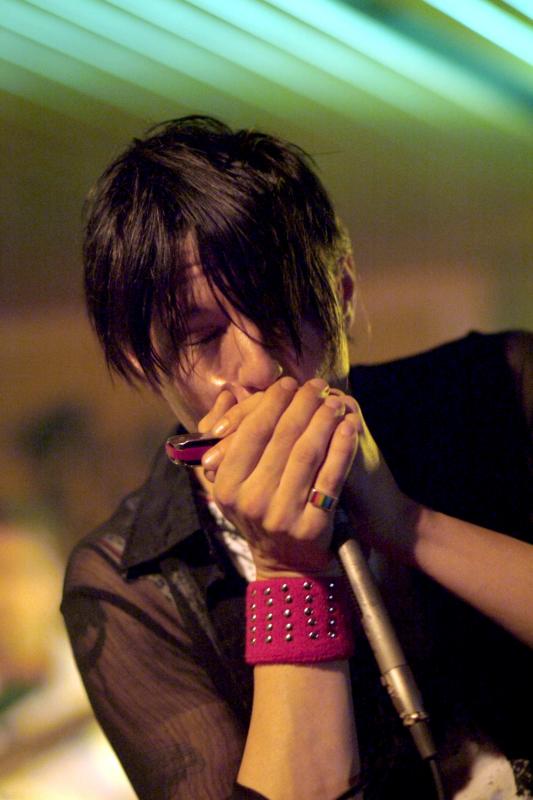
Jason Ricci (* 3. Februar 1974) ist ein amerikanischer Harmonikaspieler und Sänger.
Ricci wuchs in Portland, Maine auf. Seine musikalische Karriere begann er mit 14 Jahren in einer Punkband. Nachdem er die Liebe zum Blues und zur Harmonika entdeckt hatte, zog er nach Memphis, Tennessee. Hier verfiel er den Drogen, musste ein Jahr ins Gefängnis, ist aber nach eigenen Aussagen seither clean. Nachdem er mit R. L. Burnside und in anderen Bands auftrat, gründete er 2002 seine eigene Band, Jason Ricci and New Blood. Im Jahr 2010 löste sich die Band auf. Seitdem lebt er in New Orleans und tritt dort mit John Lisi and Delta Funk! auf.
Jason Ricci is an American harmonica player and singer. In addition to his solo albums, Ricci has appeared as a guest harmonica player on albums with Johnny Winter, Nick Curran, Ana Popovic, Walter Trout, Cedric Burnside, The Mannish Boys and Joe Louis Walker among others. Ricci was named "Best Harmonica Player" at the 2010 Blues Music Awards.
Biography
Raised in Portland, Maine, Jason Ricci is the son of Joseph Ricci (co-founder of Elan School),[1] and his first wife Cheryl Benton.[2] He has an older brother Noah, while shortly after Jason's birth, his parents divorced.[3] Ricci started playing music in punk bands at the age of 14.[4] After discovering a love of the harmonica and Blues music, he turned his attention in that direction. In 1995, Ricci moved from Portland to Memphis, TN, where shortly thereafter he placed first in the Sonny Boy Blues Society contest at 21 years of age.[5] Later that same year Ricci recorded his first album, Jason Ricci.
In Memphis, Ricci began playing with David Malone Kimbrough, son of Junior Kimbrough, and soon was a part of the bands of both Kimbroughs and was sitting in with R. L. Burnside.[6] This also marked a dark period for Ricci, as drug addiction led to a one-year stint in jail.[6]
In 1999, Ricci won the Mars National Harmonica Contest, and began playing with Keith Brown, later recording with him as well. In 2000, he received a two-page write up in Blues Access magazine by Adam Gussow (harmonica player for Satan and Adam) saying:
"I am convinced he along with New Jersey's Dennis Gruenling is one of the best harmonica players of his generation."
After 15 months with Big Al and the Heavyweights, and a brief period of living in Raleigh, North Carolina, Ricci started his own band, Jason Ricci & New Blood, in 2002. This band features Shawn Starski, who, in June 2008, was named by Guitar Player magazine as one of the "Top Ten Hottest New Guitarists." In 2005, Ricci was honored with the Muddy Waters Most Promising New Blues Artist award.
In 2007[7] Ricci and New Blood were signed to Eclecto Groove, a new subdivision of Delta Groove Productions. His first album with the label, titled Rocket Number Nine, was released October 23, 2007. Later in 2009 the band recorded Done With The Devil for the same Label. Done With The Devil signaled a new direction in Ricci's musical inspiration, as his study of the occult strongly influenced the writing on the album.[8] The band as a whole has been nominated for Blues Band of the Year three times by Blues Wax magazine. Ricci won the Blues Critic Award for Harmonica Player of the Year (2008) and was nominated for a Blues Music Award for Harmonica Player of the Year in 2009 and 2010.[9]
By January 2011, Ricci had relocated to New Orleans, and assembled a new band, Approved By Snakes, with guitarist John Lisi.[10]
Ricci received "Best Harmonica Player" at the May 6, 2010 Blues Music Awards.[11]
Personal life
Ricci is openly gay.[12] This has been a professional obstacle as well as an opportunity for Ricci to challenge both gay stereotypes and traditional blues expectations:
"The [gay] community doesn't like drum sets and guitars and actual live music. They're used to lip-synching, and dudes in dresses, and Madonna, and Cher, and techno beats. Those are the things that kept me from coming out earlier. I felt like I had nothing in common with the gay community, and I still don't feel like I have a lot in common with the community. I'm hoping that changes, but the majority of their icons are press-friendly little Mickey Mouse-doll figureheads that you're more likely to see on a show redecorating somebody's house than onstage at a blues festival...When I came out of the closet as a gay white male from an upper-middle-class suburban home, I came out as not just gay, but as a white guy, and as a guy who likes punk, and as a guy who didn't come from total poverty, and all those things that we associate with being 'blues' things. And when I did that, I wanted to sing about that. I wanted to write songs about what my life was like, and I wanted to use terminology that was modern."[13]
Ricci's openness with being gay has occasionally been a difficult issue in the traditionally conservative blues world, as he's been "disinvited" from a number of venues and events.
Raised in Portland, Maine, Jason Ricci is the son of the controversial businessman/politician/activist Joe Ricci. Ricci started playing music in punk bands at the age of 14. After discovering a love of the harmonica and Blues music, he turned his attention in that direction. In 1995, Ricci moved from Portland to Memphis, TN, where shortly there after he placed first in the Sonny Boy Blues Society contest at 21 years of age. Later that same year Ricci recorded his first album, Jason Ricci.
In Memphis, Ricci began playing with David Malone Kimbrough, son of blues great Junior Kimbrough, and soon was a part of the bands of both Kimbroughs and was sitting in with R. L. Burnside. This also marked a dark period for Ricci, as drug addiction led to a one-year stint in jail. Ricci claims to have been sober ever since.
In 1999, Ricci won the Mars National Harmonica Contest, and began playing with Keith Brown, later recording with him as well. In 2000, he received a two page write up in Blues Access magazine by Adam Gussow (harmonica player for Satan and Adam) saying:
"I am convinced he along with New Jersey's Dennis Gruenling is one of the best harmonica players of his generation."
After 15 months with Big Al and the Heavyweights, Ricci started his own band, Jason Ricci & New Blood, in 2002. This band features Shawn Starski, who, in June 2008, was named by Guitar Player Magazine as one of the "Top Ten Hottest New Guitarists." In 2005, Ricci was honored with the Muddy Waters Most Promising New Blues Artist award.
In 2007 Ricci and New Blood were signed to Eclecto Groove, a new subdivision of Delta Groove Records. His first album with the label, titled Rocket Number Nine, was released October 23, 2007. Later in 2009 the band recorded "Done With The Devil" for the same Label. The band as a whole has been nominated for Blues Band of the year three times by Blues Wax magazine. Ricci won the Blues Critic Award for Harmonica player of the year (2008) and was nominated for Harmonica Player of the year by the B.M.A. awards as well in 2009 and 2010.
Today, Jason Ricci and New Blood can be found playing almost 300 days per year in cities all over the United States, Canada, and Europe. Ricci has also accompanied guitarist Walter Trout on his recent European tours.
Jason received "Best Harmonica Player" at the May 6, 2010 Blues Music Awards at the Cook Convention Center in Memphis, Tennessee.
https://www.youtube.com/watch?v=hGBUvtNLLxo
Jody Williams *03.02.1935
Joseph Leon Williams (born February 3, 1935), better known as Jody Williams, is an American blues guitarist and singer. His singular guitar playing, marked by flamboyant string-bending, imaginative chord changes and a distinctive tone, was influential in the Chicago blues scene of the 1950s.
In 2013, Williams was inducted to the Blues Hall of Fame.
In the mid-1950s, Williams was one of the most sought-after session guitarists in Chicago, yet he was little known outside the music industry since his name rarely appeared on discs. His acclaimed comeback in 2000 led to a resurgence of interest in Williams’ early work, and his reappraisal as one of the great blues guitarists.
Born in Mobile, Alabama, United States, Williams moved to Chicago at the age of five. His first instrument was the harmonica, which he swapped for the guitar after hearing Bo Diddley play at a talent show where they were both performing. Diddley, seven years his senior, took Williams under his wing and taught him the rudiments of guitar. By 1951 Williams and Diddley were playing on the street together, with Williams providing backing to Diddley's vocals, accompanied by Roosevelt Jackson on washtub bass.[2][3] Williams cut his teeth gigging with a string of blues musicians, notably Memphis Minnie, Elmore James and Otis Spann. After touring with West Coast piano player Charles Brown, Williams established himself as a session player with Chess Records.[2] #
At Chess, Williams met Howlin’ Wolf, recently arrived in Chicago from Memphis, Tennessee, and was hired by Wolf as the first guitarist in his new Chicago-based band. A year later Hubert Sumlin moved to Chicago to join Wolf's band, and the dual guitars of Williams and Sumlin are featured on Howlin’ Wolf’s 1954 singles, "Evil Is Going On", and "Forty Four", and on the 1955 releases, "Who Will Be Next" and "Come To Me Baby." Williams also provided backing on Otis Spann’s 1954 release, "It Must Have Been The Devil", that features lead guitar work from B. B. King, one of Williams’ early heroes and a big influence on his playing.[2]
Williams’ solo career began in December 1955 with the upbeat saxophone-driven "Lookin' For My Baby", released under the name Little Papa Joe on the Blue Lake label. The label closed a few months later, leaving his slide guitar performance on "Groaning My Blues Away" unreleased. By this time, Williams was highly sought after as a session guitarist, and his virtuosity in this capacity is well illustrated by his blistering lead guitar work on Bo Diddley's "Who Do You Love?",[2] a hit for Checker Records in 1956. (Rock musician Marshall Crenshaw listed Williams' guitar solo on "Who Do You Love" as one of the greatest guitar solos ever recorded.[4]) Other notable session work from the 1950s include lead guitar parts on Billy Boy Arnold's "I Ain't Got You" and "I Wish You Would", Jimmy Rogers’ "One Kiss", Jimmy Witherspoon’s "Ain't Nobody's Business" and Otis Rush’s "Three Times A Fool".[5]
In 1957, Williams released "You May" on Argo Records, with the inventive b-side instrumental "Lucky Lou", the extraordinary opening riff of which Otis Rush copied on his 1958 Cobra Records side "All Your Love (I Miss Loving)".[2] Further evidence of Williams’ influence on Rush (they played on a number of sessions together) is Rush’s solo on Buddy Guy’s 1958 debut, "Sit And Cry (The Blues)", copied almost exactly from Williams’ "You May".
The frequency with which Williams found his distinctive guitar phrases being copied without credit led to increasing disenchantment with the music business. When the distinctive riff he created for Billy Stewart's 1956 Argo release, "Billy's Blues", was appropriated by Mickey Baker for the Mickey & Sylvia hit, "Love Is Strange", Chess Records took legal action. At the conclusion of the case in 1961, Williams gained neither credit nor compensation.[2] "I was ripped off," Williams later told John Sinkevics in the Grand Rapids Press.[6] In the early 1960s, Williams was making a living gigging with his Big 3 Trio (distinct from Willie Dixon’s group of the same name), but by the end of the decade, he had retired from the music industry altogether. He studied electronics and eventually became a technical engineer for Xerox, his job for over 25 years.
Only after his retirement did he consider picking up his guitar again, which had laid untouched under his bed all the while. "One day my wife said if I started playing again I might feel better about life in general," he told Hoekstra of the Chicago Sun-Times.[7] In March 2000, he went to see his old friend Robert Lockwood, Jr. play, and grew nostalgic for his music days. Back at home, an old tape of himself playing moved him to tears and inspired him to pick up his guitar again.[2] He returned to playing in public in June 2000, when he was featured at a club gig during the 2000 Chicago Blues Festival. He gained much encouragement in this period from Dick Shurman, who eventually produced his comeback album, Return of a Legend (2002), on which his bold playing belies his thirty-year break from music.[2] "He plays with a verve and vigor that sound as good today as it did on the classic records," wrote Vintage Guitar magazine.[8]
Williams continues to perform around the world, mainly at large blues festivals, and can often be seen sitting in with blues guitarist Billy Flynn at Chicago club appearances.
Williams is known for his imaginative chord selection, characterized by raised fives, and minor sixths and minor sevenths with flattened fives. He usually plays with an unusual open E tuning, originally taught to him by Bo Diddley.
Johnny Guitar Watson *03.02.1935

Johnny „Guitar“ Watson (* 3. Februar 1935 in Houston, Texas; † 17. Mai 1996 in Yokohama, Japan) war ein einflussreicher US-amerikanischer Blues-, Soul- und Funk-Musiker der 1950er- bis 1990er-Jahre.
Biografie
Schon als Teenager trat Watson in Texas mit aufstrebenden Blues-Musikern wie Albert Collins und Johnny Copeland auf. Im Alter von gerade 15 Jahren zog er nach Los Angeles, wo er in der Band von Chuck Higgins an den Tasten saß. 1953 spielte er erste Aufnahmen als Young John Watson ein, immer noch am Piano, doch bereits im folgenden Jahr machte er als Gitarrist mit dem avantgardistischen Track Space Guitar auf sich aufmerksam. 1955 hatte er mit Those Lonely Lonely Nights einen ersten Hit.
Nach 1960 experimentierte das musikalische Chamäleon Watson mit verschiedenen Spielarten des Jazz und spielte ein Piano-Album ein, das vollständig auf den Einsatz von Gitarren verzichtete. In den folgenden Jahren tourte der experimentierfreudige Texaner dann mit seinem Kollegen Larry Williams durch Großbritannien, veröffentlichte mehrere Alben und landete im Zuge dessen 1967 in Europa einen Hit mit der Joe-Zawinul-Komposition Mercy, Mercy, Mercy. Danach hielt er sich zunächst mit weiteren Veröffentlichungen zurück.
Zurück in den Staaten, änderte Watson im Laufe der frühen 1970er dann Stil und Image radikal und wandte sich nun – inspiriert durch das selbstbewusste Auftreten schwarzer Soulstars wie Marvin Gaye oder Curtis Mayfield – gezielt einem wesentlich soul-lastigeren Rhythm & Blues zu. Auf den 1973 und 1975 veröffentlichten Alben Listen und I Don’t Want To Be A Lone Ranger kombinierte Watson den traditionellen Blues mit Rock ‘n’ Roll, Motown-Soul und P-Funk, integrierte eigene Ideen zu Rap und Street Speech und destillierte daraus im Laufe der Jahre einen eigenständigen, „positiv“ klingenden West-Coast-R&B.
Spätestens mit dem 1976 erschienenen Album Ain’t That a Bitch wurde der mittlerweile immerhin 41-Jährige schließlich zu einem der Wegbereiter des Funk, den er fortan konsequent weiterentwickelte. Das Album wurde in die Wireliste The Wire's "100 Records That Set The World On Fire (While No One Was Listening)" aufgenommen.
In den Jahren bis 1981 brachte er für das Label DJM unter seinem eigenen Namen in rascher Folge sieben Studioveröffentlichungen heraus und hatte mit Songs wie Superman Lover, A Real Mother for Ya und Booty Ooty veritable Chart-Erfolge. Zudem spielte Watson 1978 und 1979 zwei Alben mit seinem Watsonian Institute ein, auf denen seine Begleitmusiker im Mittelpunkt standen. Watsons Markenzeichen war nun neben (Moog-)basslastiger Hook-Line, treibender Snare-Drum und den unverzichtbaren Blues-Gitarrensoli von hohem Wiedererkennungswert vor allem der breite Gesangsstil, in dem er bisweilen auch sozialkritische Lyrics humorvoll und selbstironisch vorzutragen wusste.
Trotz stilistischer Konzessionen blieb Watson stets entschieden im Blues verwurzelt. Beispielsweise veröffentlichte er seinen Klassiker von 1958 Love Bandit/Gangster Of Love – später von Steve Miller erfolgreich gecovert – 1962 sowie 1978 erneut. Ähnlich verfuhr er mit anderen Kompositionen, wie dem 1975 erstmals eingespielten Lone Ranger, der in einer wesentlich grooviger gemachten Version auch auf seinem 1980er-Album Love Jones zu finden ist. Die Werke dieser Periode zwischen 1975 und 1981 bilden gleichsam das Rückgrat der zahlreichen verfügbaren Best-Of-Compilations, obschon diese nur einen Bruchteil von Watsons Schaffen widerspiegeln.
In den 1980er-Jahren wurde es dann ruhiger um ihn. Nach einem Labelwechsel zu A&M brachte Watson Ende 1981 das Album That’s What Time It Is (Executive Producer: Herb Alpert) auf den Markt, das bei Kritikern wie Anhängern einen zwiespältigen Eindruck hinterließ. Anschließend legte er eine Schaffenspause ein, die bis 1985 anhielt, wiewohl der texanische Entertainer auch in dieser Zeit beinahe pausenlos durch die Clubs der Welt tourte. Dem Longplayer Strike on Computers folgte dann eine neuerliche Wartezeit bis zur Veröffentlichung seiner letzten Studioarbeit, Bow Wow, für die er 1994 eine Grammy-Nominierung für das beste R&B-Album erhielt. Auch diese Phase war geprägt durch ausgedehnte Tourneen rund um den Globus.
Watson hatte erheblichen Einfluss auf andere Größen der Rock- und Popmusik. Legendär ist die Antizipation des Gitarrenspiels per Mund, die Jimi Hendrix ein Jahrzehnt später zu seinem Markenzeichen perfektionierte. Manche seiner Alben (insbesondere Johnny Guitar Watson And The Family Clone) spielte Watson nahezu vollständig im Alleingang ein. Dem in dieser Hinsicht ähnlich vielseitigen Frank Zappa freundschaftlich verbunden, gastierte er auf dessen Alben One Size Fits All und Them or Us. Zappa gab an, dass das Watson-Stück Three Hours Past Midnight ihn inspiriert habe, Gitarrist zu werden.[1] Etliche der Songs von Johnny „Guitar“ Watson dienten später der Hiphop-Szene als Sample-Vorlagen. 1996 erhielt er gemeinsam mit Bo Diddley, Bobby Womack und den Isley Brothers den Pioneer Award der Rhythm & Blues Foundation.
Johnny „Guitar“ Watson starb im Mai 1996 im Alter von 61 Jahren auf offener Bühne während einer Tournee durch Japan im Blues Café, Yokohama, an Herzversagen. Watson wurde in Glendale in Kalifornien bestattet. 2008 wurde er in die Blues Hall of Fame aufgenommen.
“They called Elvis ‘The King’, but the sure-enough king was Johnny ‘Guitar’ Watson.“ (Etta James)
Im Jahr 2006 wurde der Song Gangster of Love als Titelsong für eine AXE-Werbung benutzt. Während die europäische Version mit Ben Affleck besetzt war, sah man in der amerikanischen Version Nick Lachey in der Hauptrolle.
John "Johnny 'Guitar'" Watson, Jr. (February 3, 1935 – May 17, 1996) was an American blues, soul, and funk musician and singer-songwriter.[1] A flamboyant showman and electric guitarist in the style of T-Bone Walker, Watson recorded throughout the 1950s and 1960s with some success. His creative reinvention in the 1970s with disco and funk overtones, saw Watson have hits with "Ain't That a Bitch", "I Need It" and "Superman Lover". His successful recording career spanned forty years, with his highest chart appearance being the 1977 song "A Real Mother For Ya".[2]
Early life
Watson was born in Houston, Texas.[3] His father John Sr. was a pianist, and taught his son the instrument. But young Watson was immediately attracted to the sound of the guitar, in particular the electric guitar as played by T-Bone Walker and Clarence "Gatemouth" Brown.
His grandfather, a preacher, was also musical. "My grandfather used to sing while he'd play guitar in church, man," Watson reflected many years later. When Johnny was 11, his grandfather offered to give him a guitar if, and only if, the boy didn't play any of the "devil's music". Watson agreed, but "that was the first thing I did."[citation needed] A musical prodigy, Watson played with Texas bluesmen Albert Collins and Johnny Copeland. His parents separated in 1950, when he was 15. His mother moved to Los Angeles, and took Watson with her.
Early career
In his new city, Watson won several local talent shows. This led to his employment, while still a teenager, with jump blues-style bands such as Chuck Higgins's Mellotones and Amos Milburn. He worked as a vocalist, pianist, and guitarist. He quickly made a name for himself in the African-American juke joints of the West Coast, where he first recorded for Federal Records in 1952.[4] He was billed as Young John Watson until 1954. That year, he saw the Joan Crawford film Johnny Guitar, and a new stage name was born.
Watson affected a swaggering, yet humorous personality, indulging a taste for flashy clothes and wild showmanship on stage. His "attacking" style of playing, without a plectrum, resulted in him often needing to change the strings on his guitar once or twice a show, because he "stressified on them" so much, as he put it.[5] Watson's ferocious "Space Guitar" album of 1954 pioneered guitar feedback and reverb. Watson would later influence a subsequent generation of guitarists. His song "Gangster of Love" was first released on Keen Records in 1957. It did not appear in the charts at the time, but was later re-recorded and became a hit in 1978, becoming Watson's "most famous song".[6]
He toured and recorded with his friend Larry Williams, as well as Little Richard, Don and Dewey, The Olympics, Johnny Otis and, in the mid-1970s with David Axelrod. In 1975 he is a guest performer on two tracks (flambe vocals on the out-choruses of "San Ber'dino" and "Andy") on the Frank Zappa album One Size Fits All.[7] He also played with Sam Cooke, Herb Alpert and George Duke. But as the popularity of blues declined and the era of soul music dawned in the 1960s, Watson transformed himself from southern blues singer with pompadour into urban soul singer in a pimp hat. His new style was emphatic - the gold teeth, broad-brimmed hats, flashy suits, fashionable outsized sunglasses and ostentatious jewelry made him one of the most colorful figures in the West Coast funk scene.
He modified his music accordingly. His albums Ain't That a Bitch (from which the successful singles "Superman Lover" and "I Need It" were taken) and Real Mother For Ya were landmark recordings of 1970s funk.[citation needed] "Telephone Bill", from the 1980 album Love Jones, featured Watson rapping.
Later career
The shooting death of his friend Larry Williams in 1980 and other personal setbacks led to Watson briefly withdrawing from the spotlight in the 1980s. "I got caught up with the wrong people doing the wrong things", he was quoted as saying by the New York Times.
The release of his album Bow Wow in 1994 brought Watson more visibility and chart success than he had ever known. The album received a Grammy Award nomination.
In a 1994 interview with David Ritz for liner notes to The Funk Anthology, Watson was asked if his 1980 song "Telephone Bill" anticipated rap music. "Anticipated?" Watson replied. "I damn well invented it!... And I wasn't the only one. Talking rhyming lyrics to a groove is something you'd hear in the clubs everywhere from Macon to Memphis. Man, talking has always been the name of the game. When I sing, I'm talking in melody. When I play, I'm talking with my guitar. I may be talking trash, baby, but I'm talking".
In 1995, he was given a Pioneer Award from the Rhythm & Blues Foundation in a presentation and performance ceremony at the Hollywood Palladium. In February 1995, Watson was interviewed by Tomcat Mahoney for his Brooklyn, New York-based blues radio show The Other Half. Watson discussed at length his influences and those he had influenced, referencing Guitar Slim, Jimi Hendrix, Frank Zappa and Stevie Ray Vaughan. He made a special guest appearance on Bo Diddley's 1996 album A Man Amongst Men, playing vocoder on the track "I Can't Stand It" and singing on the track "Bo Diddley Is Crazy".
His music was sampled by Redman (who based his "Sooperman Luva" saga on Watson's "Superman Lover" song), Ice Cube, Eazy-E, Snoop Dogg, Dr. Dre, Jay-Z, and Mary J. Blige. Snoop Dogg and Dr. Dre borrowed P-Funk's adaptation of Watson's catchphrase "Bow Wow Wow yippi-yo yippi-yay" for Snoop's hit "What's My Name".
"Johnny was always aware of what was going on around him", recalled Susan Maier Watson (later to become the musician's wife) in an interview printed in the liner notes to the album The Very Best of Johnny 'Guitar' Watson. "He was proud that he could change with the times and not get stuck in the past".
Death
Watson died of a myocardial infarction on May 17, 1996, collapsing on stage while on tour in Yokohama, Japan.[8] His remains were brought home for interment at Forest Lawn Memorial Park Cemetery in Glendale, California.
Influence
Watson, a recognized master of the Fender Stratocaster guitar, has been compared to Jimi Hendrix and allegedly became irritated when asked about this comparison, supposedly stating: "I used to play the guitar standing on my hands. I had a 150-foot cord and I could get on top of the auditorium – those things Jimi Hendrix was doing, I started that shit."[9]
Frank Zappa stated that "Watson's 1956 song 'Three Hours Past Midnight' inspired me to become a guitarist". Watson contributed to Zappa's albums One Size Fits All (1975), Them or Us (1984), Thing-Fish (1984) and Frank Zappa Meets the Mothers of Prevention (1985). Zappa also named "Three Hours Past Midnight" his favorite record in a 1979 interview.
Steve Miller not only did a cover of "Gangster of Love" on his 1968 album Sailor (substituting "Is your name "Stevie 'Guitar' Miller?" for the same line with Watson's name), he made a reference to it in his 1969 song "Space Cowboy" ("And you know that I'm a gangster of love") as well as in his 1973 hit song "The Joker" ("Some call me the gangster of love"). Miller had also borrowed the sobriquet for his own "The Gangster Is Back", on his 1971 album Rock Love.
Jimmie Vaughan, brother of Stevie Ray Vaughan, is quoted as saying: "When my brother Stevie and I were growing up in Dallas, we idolized very few guitarists. We were highly selective and highly critical. Johnny 'Guitar' Watson was at the top of the list, along with Freddie, Albert and B.B. King. He made magic."
Bobby Womack said: "Music-wise, he was the most dangerous gunslinger out there. Even when others made a lot of noise in the charts – I'm thinking of Sly Stone or George Clinton – you know they'd studied Johnny's stage style and listened very carefully to Johnny's grooves."[citation needed]
Etta James stated, in an interview at the 2006 Rochester Jazz Festival: "Johnny 'Guitar' Watson... Just one of my favorite singers of all time. I first met him when we were both on the road with Johnny Otis in the '50s, when I was a teenager. We traveled the country in a car together so I would hear him sing every night. His singing style was the one I took on when I was 17 – people used to call me the female Johnny 'Guitar' Watson and him the male Etta James... He knew what the blues was all about..."
James is also quoted as saying: "I got everything from Johnny... He was my main model... My whole ballad style comes from my imitating Johnny's style... He was the baddest and the best... Johnny Guitar Watson was not just a guitarist: the man was a master musician. He could call out charts; he could write a beautiful melody or a nasty groove at the drop of a hat; he could lay on the harmonies and he could come up with a whole sound. They call Elvis the King; but the sure-enough King was Johnny 'Guitar' Watson."[citation needed]
Pearl Jam recorded a song entitled "Johnny Guitar", about Watson, for their 2009 album Backspacer.
Watson's 1976 song "Superman Lover" features on the soundtrack of the video game Grand Theft Auto V.
Stan Webb *03.02.1946

Stan „The Man“ Webb (* 3. Februar 1946 in London) ist ein britischer Bluesrock-Gitarrist.
1964 formierte er seine erste Band Sounds of Blue, in der neben anderen Christine Perfect (danach bei Fleetwood Mac), Andy Silvester und Chris Wood (später bei Traffic) mitspielten. 1967 entstand daraus Chicken Shack.
1974 löste Webb Chicken Shack auf und spielte zunächst bei Savoy Brown, bevor er eine neue Band namens Broken Glass zusammenstellte, die allerdings nur für ein einziges Studioalbum zusammen blieb. Webb brachte eine neue Version von Chicken Shack auf die Beine, die in wechselnden Besetzungen und mit einigen Unterbrechungen (1982 etwa gab es die kurzlebige Band Stan Webb's Speedway) bis heute aktiv ist.
Stan Webb (born Stanley Frederick Webb, 3 February 1946) is the frontman and lead guitarist with the blues band Chicken Shack.
Career
Webb was born in Fulham, South West London. Initially playing in skiffle bands, Webb formed the first version of the blues band Chicken Shack with bassist Andy Silvester in 1965. The band played in Hamburg, Germany over the next couple of years. They signed to the Blue Horizon record label in 1967, where their label mates were the fledgling Fleetwood Mac. The group was then composed of Webb, Christine Perfect, drummer Dave Bidwell, and bassist Andy Silvester. Bidwell and Silvester would later become the rhythm section of the British blues ensemble, Savoy Brown. Webb also joined Savoy Brown for their album Boogie Brothers. Perfect later joined Fleetwood Mac becoming Christine McVie after her marriage to the band's bassist, John McVie.
Chicken Shack enjoyed their heyday in the mid to late 1960s, when R&B was popular in England. Chicken Shack's line-up has evolved over the years, with Webb being the only constant. Their music was traditional in make-up, and the group covered a variety of American blues standards, as well as composing their own songs Their repertoire included "I'd Rather Go Blind" by Ellington Jordan and Billy Foster. This song was originally recorded by Etta James.
In 2001, Webb released his first solo album in over eight years when Webb appeared on the Indigo Records label.
Chris Kramer *03.02.1970

Christian „Chris“ Kramer (* 1970 in Marl) ist ein deutscher Bluesmusiker.
Er tritt als Solo-Künstler oder mit Band auf.
Zu Kramers Band gehören:
Bass: Martin Engelien
Schlagzeug: Charly T. oder Wolf Simon.
Gitarre: Benni Bilgeri, Dennis Hormes oder Andreas „Schrader“ Dorn.
Die genaue Besetzung wird immer kurz vor dem jeweiligen Band-Konzert bekannt gegeben.
Kramer lernte von seinem Vater die ersten Töne auf der Harp. Mit 18 Jahren begann er dann als Bluesmusiker aufzutreten. Zunächst mit der Harp, später auch als Sänger und Gitarrist. Mit der Gründung der Gruppe „Crazy Chris Kramer and his Groovehands“ (mit dem Violinisten Bernd Kullack, dem Bassisten Wolfgang Engelbertz und dem Gitarristen Mirko van Stiphaut) erfüllte er sich einen Traum von einer stilistisch offenen Band. Sie präsentierten dem Publikum unterschiedliche Stile und Rhythmen und verbanden Musikrichtungen wie Blues, Funk, Bossa Nova, Klezmer, Jazz, Zigeunerswing, Country, Bluegrass sowie originelle Coverversionen von Pop- und Rockklassikern miteinander.
Kramer trat in mehreren unterschiedlichen Besetzungen auf. Mit Christoph John trat er als das Blues-Duo Bluebyrds auf. Er arbeitete auch mit den Gitarristen Manfred Portugall und Dirk Edelhoff und dem Schlagzeuger Josef Kirschgen zusammen.
2010 nahm ihn Peter Maffay mit auf seine Jubiläums-Tour „Tattoos 2010/2011“ und auch auf dem dazugehörigen Album ist Kramers Harp zu hören.
Chris Kramer was born on February 3rd 1970 in Marl, Germany. As a Cole miner´s son, naturally, he is from the Ruhr area of Germany.
The “Grafter” – mentality of his hard working ancestors runs in his blood as well as the special humor that is so typical for people that have learned to find something good in even the bad moments of life.
At the age of 13 he discovered the Blues. At 18 he started to seriously make music: Blues music.
After he finished his A-levels, the civilian service and training in industrial sales management he decided to make a career out of his hobby and since 1994 he lives on his music.
He has conducted countless harmonica – workshops and has written four extensive textbooks on the subject. His Blues duo – the Bluebyrds – was considered “Germany´s most wanted Blues duo” for a long time. After 10 years together and four CDs “Crazy” Chris and “Slidin” John parted ways.
Fred James *03.02.1954

Nashville producer Fred James is as much a documentarian as he is musician and entrepreneur, and his Bluesland Productions is considered one of the world's foremost independent music companies devoted to blues, soul, and American roots music. On February 3, 1954, Fred James was born in San Antonio, TX, the family moving to Wichita, KS, where he was raised. His father, Fred James, Sr., is a noted jazz trumpet player who recorded with the Johnny Harris Quartet in the '70s. His uncle, Doug James, is a New York studio musician who has worked with Paul Butterfield, Orleans, Blood, Sweat & Tears, and many others. With radio in the mid-'60s being very eclectic, and with jazz and blues constantly played around the house while he was growing up, Fred found that he liked it all, inspirations and influences coming from Louis Armstrong, Elvis Presley, Otis Redding, Buck Owens, and, according to the producer/musician, "all of the rock groups." His first attendance at a concert was the Jimmy Smith Trio with the Ramsey Lewis Trio; the second was a Dick Clark road show with Freddy "Boom Boom" Cannon, Keith Allison, Paul Revere & the Raiders, and the Animals.
To say his family is musical is an understatement, with two of his brothers also in the business as recording artists and studio musicians. James moved to Nashville in 1973, as it was still wide open to young talent in those days. He immediately found work in the studios and on the road with artists like Billy Joe Shaver, Vern Gosdin, and Townes Van Zandt, among others. Listed in Frets magazine as one of Nashville's top studio musicians, James had an artistic side that also leaned toward pursuing a career in songwriting. While writing for Mel Tillis' publishing company, he got his first cut with the Cornelius Brothers & Sister Rose. In 1977 he recorded his first LP, Alfred James, for the tiny Cascade label. By the early '80s James was playing guitar with Dr. Hook and the band was using the Memphis Horns to augment the lineup. When the tour was over, James was asked to become the singer and guitarist with the Memphis Horns. He did this for the next two years until the Horns became too busy in the studio to continue live work.
At this point he began writing for Audigram Music, home of J.J. Cale. He wrote "Full Moon on Main Street," which was nominated for a W.C. Handy Award as Best Blues Song of 1987. The following year he wrote "Lightning" for Johnny Winter's Winter of '88 album. The success of these two songs enabled James to start his own publishing company and really pursue the thriving "blues boom" of the '90s. Song after song started being recorded by artists like Koko Taylor, Johnny Winter, Junior Wells with Bonnie Raitt, Son Seals, C.J. Chenier, Katie Webster, and Charlie Musselwhite, and James secured five Grammy nominations in the process. He formed Freddie & the Screamers with members of the Amazing Rhythm Aces and Willie Dixon's band. The group recorded four CDs for various small labels in Europe, Australia, and the U.S.
The list of people Fred James has played guitar for is a veritable who's who of pop, soul, jazz, blues, and roots music: Johnny Copeland, Arthur Williams, the Jelly Roll Kings, Billy Joe Shaver, Bo Diddley, the Carter Brothers, the Memphis Horns, Dr. Hook, the Excello Legends, Tommy Tutone, Townes Van Zandt, Dickey Lee, the Delta Jukes, Black Tie, Vern Gosdin, Bobby Hebb, and many, many others. As a producer, he recorded the likes of the Sam Lay Blues Band, Homesick James, Frank Frost, Roscoe Shelton, and Earl Gaines for labels like Black Top, Evidence, Telarc, Ichiban, Appaloosa, Hightone, Black Magic, and on and on. With this success, Bluesland began acquiring classic master recordings from the '50s and '60s, purchasing the catalogs of Champion, Poncello, Ref-O-Ree, and Bullet/Sur-Speed/Delta. This classic blues and soul has been reissued all over the world.
He has performed across Europe with his wife, Mary-Ann Brandon, and also with Frank Frost and the Jelly Roll Kings, the Excello Legends (Roscoe Shelton and Earl Gaines), and Charles Walker and Johnny Jones. James was the guitarist for the Amazing Rhythm Aces since their 1990s reunion, and can also be heard on their Nothin' But the Blues disc. James has also recorded three solo albums and tours and performs with his own group when time permits. He started his own ROAD Records label in partnership with Brandon, with a release that features his father on trumpet and members of the Amazing Rhythm Aces guesting.
In his spare time he is usually found writing liner notes for Aim Records reissues of the Sound Stage Seven series featuring music by Moody Scott, Earl Gaines, and Geater Davis, and other labels like Black Magic Records, Ace Records (U.K.), and Germany's Bear Family Records. A book entitled The Big Bang: The American Musical Renaissance 1925-1975 was in the works in 2006.
Jesse "Babyface" Thomas *03.02.1911

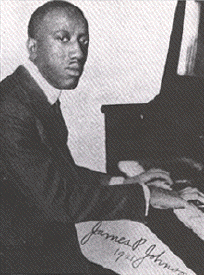
Jesse "Babyface" Thomas (February 3, 1911 – August 15, 1995[1][2]) was an American Texas blues guitarist and singer.[3] Known at different times as "Baby Face" or "Mule", and occasionally billed as "The Blues Troubadour", Jesse Thomas popped up all over the blues map in his eight decade career.
Born in Logansport, Louisiana, United States, Thomas is best known for the song "Blue Goose Blues", which he recorded for Victor in 1929. He recorded and performed throughout the 1940s and 1950s, based in the Los Angeles area.[4] He recorded for Specialty Records in 1953.[4]
His career spanned over 60 years – in 1994 he appeared at the Long Beach Blues Festival. The Texas bluesman, Ramblin' Thomas, was his brother,[5] and fellow Louisiana blues guitar player, Lafayette Thomas, was his nephew.
A longtime resident of the Lakeside neighborhood of Shreveport, Louisiana, Thomas died there on August 15, 1995 at the age of 84.
http://en.wikipedia.org/wiki/Jesse_Thomas_%28musician%29Born in Logansport, Louisiana, United States, Thomas is best known for the song "Blue Goose Blues", which he recorded for Victor in 1929. He recorded and performed throughout the 1940s and 1950s, based in the Los Angeles area.[4] He recorded for Specialty Records in 1953.[4]
His career spanned over 60 years – in 1994 he appeared at the Long Beach Blues Festival. The Texas bluesman, Ramblin' Thomas, was his brother,[5] and fellow Louisiana blues guitar player, Lafayette Thomas, was his nephew.
A longtime resident of the Lakeside neighborhood of Shreveport, Louisiana, Thomas died there on August 15, 1995 at the age of 84.

What You Doing To Me - Brandon Santini
Marty Christian *03.02.
http://www.martychristian.com/uploads/1/2/1/8/1218012/epk_marty_christian_2015.pdf
https://www.facebook.com/profile.php?id=584167999

“Marty Christian recalls the first sides of an acoustic Snooks Eaglin and at times, Van Morrison..." - Soul Bag - France
Marty Christian's original music draws on influences that range from Americana, Soul to Blues, passing through: New Orleans R&B, Memphis Soul singers, Chicago Blues with heavy doses of Swamp Pop from the city he has adopted as his new home: Lafayette, Louisiana.
With diverse influences such as: Arthur Alexander, Sam Cooke, James Carr, Ray Charles, John Hammond, Otis Redding, Johnny "Guitar" Watson, John Lennon, Roy Buchanan and Solomon Burke, Bluesicana (the title to his first album) is perhaps the best way to describe Christian's brand of songwriting: songs that start from the waters of the Blues and go wherever that river takes him: Americana with deep Blues roots.
Photo
"Marty Christian originally intended this as a solo project since his songs really didn’t fit his band Rue Boogaloo’s funky-bluesy grooves.
At least that’s what he thought until monster bassist Lee Allen Zeno (Buckwheat Zydeco) and jazz drummer Frank Kincel heard ’em. They wanted in and essentially shaped Christian’s solo affair with a Boogaloo foundation on most tracks.
Christian achieves an artistic milestone with a handful of songs that were written from a third-person perspective.
It’s something he has rarely done but through various encounters, the experiences of others were transformed sonically, such as the offshore worker yearning for reconciliation (“Louisiana, Hold My Baby”) and the ex-con trying to live clean (“Payment Down”).
On “Her Promised Land,” a young mother attempts to battle her way through insurmountable obstacles. The title song sports two versions, an electric and a heartfelt acoustic version.
Despite Christian’s folkie sensibility, he also defies strict categorization. His vocals occasionally border on soul-ish and he dives into blues, swamp pop and infectious, Zeno-powered funk at the drop of a hat.
"Betrayed Blues" Marty Christian - Acoustic Blues
Hanse Schoierer *03.02.1950

HANSE SCHOIERER, der "Chuck Berry vom Schlachthofviertel" (wie ihn einmal der "Münchner Merkur" genannt hat) rockt das Haus...
..und er kann den Spagat, nämlich den zwischen Kabarett, Unterhaltung und Party. Sein Steckbrief könnte so aussehen: Geboren 1950 in München, erster Auftritt 1965 mit seiner Schülerband, schulische Leistungen unterirdisch, Ausbildung und Arbeit in München und dann die Begegnung mit der Münchener Kleinkunstszene, die sein Leben veränderte. Erste Auftritte im legendären MUH und Song Parnass und dann ..... alles, nur kein Gleichmaß.
Er war Solokünstler mit Gitarre, im Kleinkunstduo mit Gitarre, Rockbandleader der „Schoierer Band“ mit Gitarre, Leader des Akustiktrios „Hanse Schoierer und die Groove-Gang“ mit Gitarre, Kleinkunstduo mit Schlagzeug, Fußbass und Gitarre und jetzt Solo mit virtueller Band „Freibier Shadows“, natürlich mit Gitarre.....
Und so sieht das Programm auch aus: Ein Auftritt wie eine Wundertüte, von Kleinkunst über Beat- und Rock`n`Roll bis zu den großen Rockklassikern. Kabarett mit Augenzwinkern, eigene Lieder mit Herz, Hirn und Humor zusammen mit den Songs anderer Musiklegenden, die sein Leben begleitet und ihn inspiriert haben. Sein Lebensmotto lautet: Mach einfach die Mädels glücklich und das Leben wird dich glücklich machen. Sein Programm ist der Gegenentwurf zu eine Depression: Hier darf gelacht, geklatscht und getanzt werden!
Man nennt ihn auch den Haberfeldtreiber, weil er mit dem Lied "Haberfeldtreiber" (Musik: Sepp Raith // Text: Sepp Raith / Hanse Schoierer) bekannt geworden ist und der nächste Hit steht schon in den Startlöchern: Der "Lebakassemme-Blues" ...
Und der große Gerhard Polt sagte einmal über ihn:
"Zum Schoierer Hanse würd ich sogar hingehen, wenn ich keine Zeit hätte!" Wenn das nix is´...
http://www.hanse-schoierer.de/info.html..und er kann den Spagat, nämlich den zwischen Kabarett, Unterhaltung und Party. Sein Steckbrief könnte so aussehen: Geboren 1950 in München, erster Auftritt 1965 mit seiner Schülerband, schulische Leistungen unterirdisch, Ausbildung und Arbeit in München und dann die Begegnung mit der Münchener Kleinkunstszene, die sein Leben veränderte. Erste Auftritte im legendären MUH und Song Parnass und dann ..... alles, nur kein Gleichmaß.
Er war Solokünstler mit Gitarre, im Kleinkunstduo mit Gitarre, Rockbandleader der „Schoierer Band“ mit Gitarre, Leader des Akustiktrios „Hanse Schoierer und die Groove-Gang“ mit Gitarre, Kleinkunstduo mit Schlagzeug, Fußbass und Gitarre und jetzt Solo mit virtueller Band „Freibier Shadows“, natürlich mit Gitarre.....
Und so sieht das Programm auch aus: Ein Auftritt wie eine Wundertüte, von Kleinkunst über Beat- und Rock`n`Roll bis zu den großen Rockklassikern. Kabarett mit Augenzwinkern, eigene Lieder mit Herz, Hirn und Humor zusammen mit den Songs anderer Musiklegenden, die sein Leben begleitet und ihn inspiriert haben. Sein Lebensmotto lautet: Mach einfach die Mädels glücklich und das Leben wird dich glücklich machen. Sein Programm ist der Gegenentwurf zu eine Depression: Hier darf gelacht, geklatscht und getanzt werden!
Man nennt ihn auch den Haberfeldtreiber, weil er mit dem Lied "Haberfeldtreiber" (Musik: Sepp Raith // Text: Sepp Raith / Hanse Schoierer) bekannt geworden ist und der nächste Hit steht schon in den Startlöchern: Der "Lebakassemme-Blues" ...
Und der große Gerhard Polt sagte einmal über ihn:
"Zum Schoierer Hanse würd ich sogar hingehen, wenn ich keine Zeit hätte!" Wenn das nix is´...
Lebakassemme-Blues

Ace Moreland was born in Miami, Oklahoma, in 1952. He was part Cherokee. A guitar player since age five, Moreland played in his first band by the time he was 12. Once he figured out the fret board, he concentrated on learning how to play slide guitar, harmonica, and drums.
After an apprenticeship on the Tulsa rock-blues scene, Ace and his left-handed guitar went t to Macon, Georgia in the ‘70s. He hung on the fringes of the Capircorn-Allman Brother scene for three years before returning to Oklahoma, where he gigged with local heroes like the Cate Brothers; opening slots for Bonnie Raitt, Taj Mahal, .38 Special, George Thorogood, John Hammond, Steve Gaines, Leon Wilkerson and much of the Lynyrd Skynyrd Band soon followed. Afterward, he relocated to Jacksonville, Florida with his band in 1987, forming Ace Moreland’s West Side Story and signing with King Snake Records. He played with his band and another band called the Midnight Creepers. In addition to playing guitars and a harmonica, he was a writer and a vocalist.
Oklahoma-born blues/rock singer, guitarist, and harmonica player. Part Cherokee Indian, Ace Moreland has cut two rocking discs at Bob Greenlee's Florida studios. Sizzlin' Hot, issued on King Snake in 1990, featured Edgar Winter on alto sax, while I'm a Damn Good Time, Moreland's 1992 follow-up, was released on Ichiban. Following 1996's Keepin' a Secret, Moreland spent the remainder of the decade out of the studio, finally returning in mid-2000 with Give It to Get It.
http://www.allmusic.com/artist/ace-moreland-mn0000591666/songs